Why I Don’t Do Powerscaling for Sun Wukong

Last updated: 05-03-2026

I am known in one small corner of the internet for being knowledgeable on the characters and events of the Chinese classic Journey to the West (Xiyouji西遊記, 1592, “JTTW” hereafter). As such, I receive a lot of questions across social media, but the single most frequent query put to me is: “Where do you scale Sun Wukong?” Comparing the power of mythic or fictional characters is a highly popular subject called “powerscaling” (a.k.a. “power scaling” and “power-scaling”).

I dislike and do not participate in powerscaling for a number of reasons. But instead of typing the same thing over and over again, I’ve decided to create a standard response that I can just link to whenever I’m asked the aforementioned question.

Table of Contents

1. What is Powerscaling?

For those who don’t know, powerscaling first takes “scans,” or examples of feats from the respective literature, and then uses complicated physics to calculate not only a character’s power (e.g. strength and speed) but also their cosmic rank (e.g. any level inside or outside of a universe or multiverse). The higher up the chain a character sits, the more physical power they have, such as the ability to manipulate or destroy things broadly ranging from a car, a building, a city, a mountain, a continent, or a whole planet to a star/solar system, a galaxy/galaxy cluster, or even a universe/multiverse and beyond; and higher ranks can transcend “physicality,” with characters having such command over time and space that they can erase a given enemy or universe (and everything in between) from existence.

2. Reasons Why I Don’t Powerscale

No matter how precisely someone quotes from canon or calculates equations, anything written is going to be incorrect for one reason: a divine figure or philosophical concept removed from its original religio-mythological context and forced through the screen of a modern scientific worldview is no longer that thing. It’s an artificial construct that defies accurate measurement.

For example, among his many powers and skills, Sun Wukong is famous for his ability to travel 108,000 li (33,554 mi / 54,000 km) in a single leap of his somersault cloud (see the 05-03-2026 update for an important message regarding the nimbus). Powerscalers will naturally want to quantify this by somehow calculating a real world speed, but they are forgetting—or are not aware of—two key details: 1) The feat is actually an allegory for instant Buddhist enlightenment (see here); and 2) JTTW doesn’t happen in our own universe; it happens in a realm based on the Buddhist disc world system (see here). How then are any calculations going to be correct if allegorical feats happening in a specific religious cosmos are forced to fit the structure and scientific laws of our universe?

I’m ok with quantifying feats for small scale, personal use, like for figuring out the dynamics of a fanfiction. But I draw the line when entire websites and/or online communities are dedicated to pitting religious figures against one another or (worse) against fictional characters to see who is the strongest, fastest, deadliest, etc. And then wiki articles are written and presented to the world like the contents are gospel. The very idea of pitting pantheon against pantheon or a pantheon against a modern franchise is offensive, even to a non-religious person like myself.

Also, even if we disregard the religio-mythological nature of Sun Wukong, how is it fair to pit him against modern fictional characters that have benefited from building upon thousands of years of world mythology, as well as have enjoyed decades of iterations? There is only one Monkey King (from the standard modern version of JTTW), while Superman, for instance, has benefited from nearly 90 years of innovation and power increases.

Powerscalers need to remember that the 1592 edition of JTTW was published almost 435 years ago, with a story cycle going back further to roughly the 11th century. It wasn’t written like modern Shonen comics or video games, where franchises try to one up the other by creating characters that are more and more powerful. The novel is basically a cultural encyclopedia of Chinese history, religion, myth, and folklore, with some fanfiction thrown in. And it’s important to recognize that the story itself serves as an allegory for the journey towards Buddhist enlightenment. Therefore, any of the feats performed by the Monkey King, especially during the pilgrimage, should be read as a service furthering that goal, not as an action requiring measurement.


3. Updates

Update: 05-03-26

I feel like a major aspect of the somersault cloud needs extra context. In section 3 of the power’s article, I discussed how the figure of 108,000 li is a religious allegory for the distance separating man from the Buddha’s paradise. Per the Sixth Chan Patriarch, the number comprises the “ten evils” (shi’e, 十惡) and “eight wrongs” (baxie, 八邪), two lists of negative thoughts and actions that hinder spiritual cultivation. Anyone who manages to rid themselves of these will attain enlightenment, allowing them to travel to the holy land instantly. But not everyone is capable of defeating these spiritual hindrances, so the distance separating them from the Buddha might as well be infinity. Therefore, it’s not wise to assign a real world distance and speed to the somersault cloud.

What Does Red Boy Look Like? A Resource for Artists and Cosplayers

Last updated: 04-30-2024

The demon Red Boy (Honghai’er, 紅孩兒) appears in chapters 40 to 42 of Journey to the West (Xiyouji西遊記, 1592; “JTTW” hereafter). He is described as the son of the Bull Demon King (Niu mowang, 牛魔王) and Princess Iron Fan (Tieshan gongzhu, 鐵扇公主), a rakshasi spirit (luocha nu, 羅剎女). Due to his bovine father, Red Boy is sometimes portrayed in modern media and fan art with horns, and because of his youthful appearance, he is often shown wearing a red stomacher. So how do these representations compare to his depiction in the novel, and who has produced the most authentic look? In this article, I will present the demon’s literary description, along with ancient depictions from dynastic China and Korea. My hope is that the information will be both interesting and useful, especially for artists and cosplayers looking to make a more authentic design.

This is part of a series of articles describing JTTW characters. See my previous entries on Sun Wukong and Zhu Bajie.

1. Ancient Depiction

The oldest art featuring Red Boy that I know of appears on the 14th-century Gyeongcheonsa pagoda (Kyŏngch’ŏnsa sipch’ŭng sŏkt’ap, 경천사십층석탑) from Korea. The second level of the pagoda’s multifaceted three-tiered base contains a total of 20 carved scenes from the JTTW story cycle. The 19th carving depicts the character’s defeat in a scene that would come to appear in the 1592 JTTW. [1] Reading it from left to right, Sha Wujing and Zhu Bajie stand by the dragon horse as they watch the cloud-borne Guanyin enact her divine plan of capturing Red Boy, who is shown impaled on a lotus throne full of celestial swords. And to the child-sage’s left, the Bodhisattva’s disciple, Hui’an/Mucha, hammers at the swords with his staff while sitting on Sun Wukong’s shoulders in a symbolic display of teamwork (fig. 1 & 2).

Fig. 3 (top) – The complete 19th JTTW carving on the second tier of Gyeongcheonsa pagoda (larger version). Image from Wall (2019). Fig. 4 (bottom) – A detail of Red Boy trapped on the lotus throne of swords (L) and an accompanying line drawing for clarity (R) (larger version). 

2. What the novel says

2.1. Physical appearance

The fullest description of Red Boy appears in chapter 41:

A face as if it had been powdered white,
And lips so ruddy, they seemed brushed with paint.
No dye could create such dark, coiled hair;
His eyebrows curved like new moons carved with knives.
Phoenix and dragon coiled on his battle kilt;
More husky than Nezha‘s frame he had.
With air imposing he lifted up his lance
And walked out the door, swathed in hallowed light.
He roared like thunder in the time of spring;
His striking eyes flashed like lightning bright.
If one would know his true identity,
Remember Red Boy, a name of lasting fame
(based on Wu & Yu, 2012, vol. 2, pp. 222-223).

面如傅粉三分白,唇若塗朱一表才。
鬢挽青雲欺靛染,眉分新月似刀裁。
戰裙巧繡盤龍鳳,形比哪吒更富胎。
雙手綽槍威凜冽,祥光護體出門來。
哏聲響若春雷吼,暴眼明如掣電乖。
要識此魔真姓氏,名揚千古喚紅孩。

This description speaks of porcelain doll-like beauty and a chubby body. The original Chinese states that his hair is “rolled or coiled at the temples” (binwan, 鬢挽). This could mean his hair is in buns or coils. I’ll leave it up to the reader as to which one you like more.

It’s important to highlight that the poem does not mention horns. An in-canon explanation for this could be because Red Boy’s mother, Princess Iron Fan, had already “attained the way of humanity” (i.e. a human form) via spiritual cultivation (Wu & Yu, 2012, vol. 3, p. 162). Perhaps this resulted in the demon-sage having a more human-like appearance. Or, given his own 300-plus years of austerities (Wu & Yu, 2012, vol. 2, p. 219), he too has attained human form.

Interestingly, Ming-era woodblock prints don’t portray him with horns either. See figures four and five below.

2.2. Clothing

Red Boy is described as being lightly clothed and barefooted:

With no other armor except a battle kilt of embroidered silk and with naked feet, the monster king took up the lance and walked outside (Wu & Yu, 2012, vol. 2, p. 222).

妖王掄槍拽步,也無甚麼盔甲,只是腰間束一條錦繡戰裙,赤著腳,走出門前。

So his attire consists of a single silken battle kilt, [2] which is, as mentioned in the poem above, embroidered with dragons and phoenixes. This would mean that Red Boy is bare-chested on top of having no footwear.

But what exactly does a “battle kilt” (zhanqun, 戰裙) look like? One example comes from a set of brigandine armor of the Qing dynasty (1636–1912). It covers the entire lower half of the body down to the ground (fig. 4). I imagine that Red Boy’s kilt would be red given his name and association with fire.

One late-Ming woodblock print portrays this clothing, adding a divine sash and an embroidered stomacher (fig. 3).

Fig. 3 (left) – An example of Qing-era brigandine armor with a battle kilt (larger version). Image found here. Fig. 4 (right) – A detail of Red Boy’s attire from Mr. Li Zhuowu’s Literary Criticism of Journey to the West (Li Zhuowu Xiansheng piping Xiyouji, 李卓吾先生批評西遊記, late-16th or early-17th-century) (larger version).

2.3. Weapon

Prior to walking outside to face the Monkey King, the demon calls for his giant, fiery spear:

“Bring me my lance,” he ordered. Those fiends who looked after weapons had two of them carry out a ten zhang eight chi fire-tipped lance [huojian qiang, 火尖槍] to hand over to the monster king (based on Wu & Yu, 2012, vol. 2, p. 222).

教取過槍來。有那一夥管兵器的小妖,著兩個擡出一桿丈八長的火尖槍,遞與妖王。

One zhang (丈) comprises ten chi (尺, a.k.a. “Chinese feet”), and one chi is roughly 12.3 in (31.8 cm). This makes one zhang 10.43 ft (3.18 m) (Jiang, 2005, p. xxxi). Therefore, Red Boy’s weapon is roughly 18.77 ft (5.724 m) long. That’s one long spear!

A woodblock print from the original 1592 JTTW shows an armored Red Boy wielding his weapon (fig. 5).

Fig. 5 – Red Boy wields his spear and holy flame against Monkey and Zhu Bajie (larger version). Image from the Newly Printed, Illustrated, Deluxe and Large Character, Journey to the West (Xinke chuxiang guanban dazi Xiyou ji, 新刻出像官板大字西遊記, 1592).

3. Popular depictions

As far as I know, there have not been any novel accurate portrayals of Red Boy in popular media. But I figured that I would post images from the most famous TV shows.

3.1. 1986 JTTW

He is portrayed with a hair tuft and coils, a red urna, a red cape, a red stomacher, and red slippers (fig. 6).
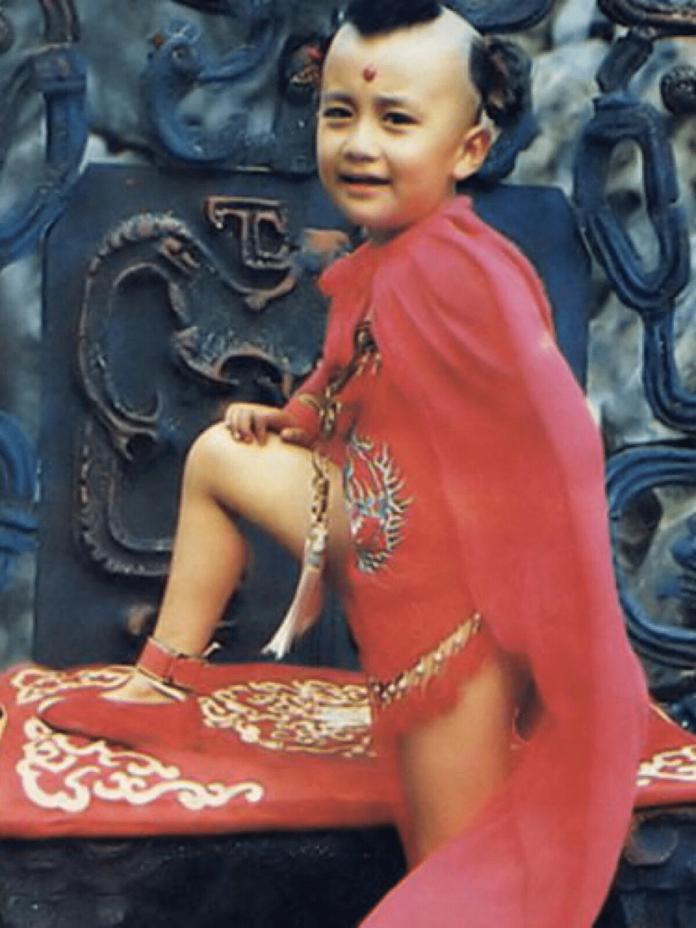
Fig. 6 – “Adorable Red Boy” (larger version). Image found here.

3.2. 1996 JTTW

He is portrayed by a young woman with two red ribbon-wrapped, white cloth-covered hair buns and a white undershirt and a red vest, red forearm cuffs, red shorts, and red slippers (fig. 7).

Fig. 7 – “Girl Red Boy” (larger version). Image found here.

3.3. 2011 JTTW

He is portrayed with a hair tuft, red horns, a dark red to brown suit of armor with a flame pattern, and a red cape (fig. 8).

Fig. 8 – “Armored Red Boy” (larger version). The original online source is no longer available.

4. Conclusion

JTTW chapter 41 describes Red Boy as having doll-like beauty with a powder white face, crescent moon-shaped eyebrows, and deep red lips. His dark hair is either wrapped in buns or hung in coils. He is shoeless, and the only clothing covering his husky body is a silken battle kilt embroidered with phoenixes and dragons. And his weapon is an 18.77 ft (5.724 m) long, fired-tipped spear.


Update: 03-25-24

It occurred to me that the following description …

With no other armor except a battle kilt of embroidered silk and with naked feet … (Wu & Yu, 2012, vol. 2, p. 222).

妖王掄槍拽步,也無甚麼盔甲,只是腰間束一條錦繡戰裙,赤著腳

… does not necessarily exclude other clothing. Red Boy could wear some kind of silk robe beneath the battle kilt. However, I think him being shirtless better fits with his ferocious nature.


Update: 04-30-24

Chapter 42 indicates that Red Boy has a full head of hair that is later shaved by Guanyin:

She took out from her sleeve a golden razor and approached the fiend. With a few strokes, she shaved his hair off and turned it into the style of the Tai Mountain Crowning the Head: the top was completely bald, but three tufts of hair were left around the edge so that they could be knotted together into three tiny braids (Wu & Yu, 2012, vol. 2, p. 250).

就袖中取出一把金剃頭刀兒,近前去,把那怪分頂剃了幾刀,剃作一個太山壓頂,與他留下三個頂搭,挽起三個窩角揪兒。

This contrasts with modern representations of Red Boy that already have this shaven hair style prior to being subjugated. Refer back to section 3.

Notes:

1) Chapter 42 reads:

After she received [treasure swords borrowed from heaven], the Bodhisattva [Guanyin] threw them into the air as she recited a spell: the swords were transformed into a thousand-leaf lotus platform. Leaping up, the Bodhisattva sat solemnly in the middle.

菩薩接在手中,拋將去,念個咒語,只見那刀化作一座千葉蓮臺。菩薩縱身上去,端坐在中間。

[…]

[Sun Wukong feigns defeat and tricks Red Boy into chasing him to Guayin’s domain] When the monster spirit suddenly discovered that Pilgrim was gone, he walked up to the Bodhisattva with bulging eyes and said to her, “Are you the reinforcement Pilgrim Sun brought here?” The Bodhisattva did not reply. Rolling the lance in his hands, the monster king bellowed, “Hey! Are you the reinforcement Pilgrim Sun brought here?” Still the Bodhisattva did not reply. The monster-spirit lifted his lance and jabbed at the heart of the Bodhisattva, who at once changed herself into a beam of golden light and rose into the air. Pilgrim followed her on her way up and said to her, “Bodhisattva, you are trying to take advantage of me! The monster-spirit asked you several times. How could you pretend to be deaf and dumb and not make any noise at all? One blow of his lance, in fact, chased you away, and you have even left behind your lotus platform.”

“Don’t talk,” said the Bodhisattva, “let’s see what he will do.” At this time, Pilgrim and [Mucha] both stood in the air shoulder to shoulder and stared down; they found the monster-spirit laughing scornfully and saying to himself, “Brazen ape, you’re mistaken about me! What sort of person do you think that I, Holy Child, happen to be? For several times you could not prevail against me, and then you had to go and fetch some namby-pamby Bodhisattva. One blow of my lance now has made her vanish completely. Moreover, she has even left the treasure lotus platform behind. Well, let me get up there and take a seat.” Dear monster-spirit. He imitated the Bodhisattva by sitting in the middle of the platform with hands and legs folded. When he saw this, Pilgrim said, “Fine! Fine! Fine! This lotus platform has been given to someone else!”

“Wukong,” said the Bodhisattva, “what are you mumbling again?”

“Mumbling what? Mumbling what?” replied Pilgrim. “I’m saying that the lotus platform has been given to someone else. Look! It’s underneath his thighs. You think he’s going to return it to you?”

“I wanted him to sit there,” said the Bodhisattva.

“Well, he’s smaller than you,” said Pilgrim, “and it seems that the seat fits him even better than it fits you.”

“Stop talking,” said the Bodhisattva, “and watch the dharma power.”

She pointed the willow twig downward and cried, “Withdraw!” All at once, flowers and leaves vanished from the lotus platform and the auspicious luminosity dispersed entirely. The monster king, you see, was sitting actually on the points of those swords. The Bodhisattva then gave this command to [Mucha]:

“Use your demon-routing cudgel and strike back and forth at the sword handles.”

Dropping from the clouds, [Mucha] wielded his cudgel as if he were demolishing a wall: he struck at the handles hundreds of times. As for that monster-spirit,

Both his legs were pierced till the points stuck out;
Blood spouted in pools as flesh and skin were torn.

Marvelous monster! Look at him! Gritting his teeth to bear the pain, he abandoned the lance so that he could use both hands to try to pull the swords out from his body … (Wu & Yu, 2012, vol. 2, pp. 246 and 249-250).

這妖精見沒了行者。走近前,睜圓眼,對菩薩道:「你是孫行者請來的救兵麼?」菩薩不答應。妖王撚轉長槍,喝道:「咄!你是孫行者請來的救兵麼?」菩薩也不答應。妖精望菩薩劈心刺一槍來。那菩薩化道金光,徑走上九霄空內。行者跟定道:「菩薩,你好欺伏我罷了,那妖精再三問你,你怎麼推聾裝啞,不敢做聲,被他一槍搠走了,卻把那個蓮臺都丟下耶?」菩薩只教:「莫言語,看他再要怎的。」

此時行者與木叉俱在空中,並肩同看。只見那妖呵呵冷笑道:「潑猴頭,錯認了我也。他不知把我聖嬰當作個甚人,幾番家戰我不過,又去請個甚麼膿包菩薩來卻被我一槍,搠得無形無影去了,又把個寶蓮臺兒丟了。且等我上去坐坐。」好妖精,他也學菩薩,盤手盤腳的坐在當中。行者看見道:「好好好,蓮花臺兒好送人了。」菩薩道:「悟空,你又說甚麼?」行者道:「說甚?說甚?蓮臺送了人了。那妖精坐放臀下,終不得你還要哩?」菩薩道:「正要他坐哩。」行者道:「他的身軀小巧,比你還坐得穩當。」菩薩叫:「莫言語,且看法力。」

他將楊柳枝往下指定,叫一聲:「退!」只見那蓮臺花彩俱無,祥光盡散,原來那妖王坐在刀尖之上。即命木叉:「使降妖杵,把刀柄兒打打去來。」那木叉按下雲頭,將降魔杵如築牆一般,築了有千百餘下。那妖精穿通兩腿刀尖出,血注成汪皮肉開。好怪物,你看他咬著牙,忍著痛,且丟了長槍,用手將刀亂拔 …

2) Padded silk armor was apparently used in ancient China as early as 600 CE (Dean, 1920, pp. 284-285).

Sources:

Dean, B. (1920). Helmets and Body Armor in Modern Warfare. United Kingdom: Yale University Press.

Jiang, Y. (2005). The Great Ming Code / Da Ming Lu. Vancouver, Wa: University of Washington Press.

Wall, B. (2019). Dynamic Texts as Hotbeds for Transmedia Storytelling: A Case Study of the Story Universe of the Journey to the WestInternational Journal of Communication 13, 2116-2142. Retrieved from https://ijoc.org/index.php/ijoc/article/view/10006/2648.

Wu, C., & Yu, A. C. (2012). The Journey to the West (Vols. 1-4) (Rev. ed.). Chicago, Illinois: University of Chicago Press.

Archive #42 – PDFs of Journey to the West Translations

Note: My blog is not monetized, so I am not making any money from this post. My hope is that the PDFs will make this legendary story more accessible to a wider audience. If you enjoyed the digital versions, please, please, please support the official releases.

Last updated: 04-06-2026

I’m happy to host a number of foreign language translations of the noted Chinese classic Journey to the West (Xiyou ji西遊記, 1592 CE), as well as a precursor and some later unofficial sequels.

1. The Precursor

  • The Story of How Tripitaka of the Great Tang Procures the Scriptures (Datang Sanzang qujing shihua大唐三藏取經詩話, c. late-13th-century)

2. The Original

As of this writing, I don’t yet have a modern Japanese translation. But you can read an original copy of the 1835 translation here.

3. Unofficial Sequels

I will add more languages to this archive as they become available. Please let me know if you have access to other editions.

1. The Precursor

1.1. The Story of How Tripitaka of the Great Tang Procures the Scriptures (Datang Sanzang qujing shihua, 大唐三藏取經詩話, c. late-13th-century)

A. English

This 17-chapter novelette, which likely served as a prompt for oral storytellers, is the earliest known printed edition of the JTTW story cycle. It involves the adventures of Tripitaka and Sun Wukong’s antecedent, the “Monkey Pilgrim” (Hou xingzhe, 猴行者). The tale is translated by Charles S. Wivell.

Archive #37 – The 13th-Century Version of Journey to the West

See also my chapter-by-chapter description and analysis here:

The Story of How Tripitaka of the Great Tang Procures the Scriptures: The Literary Precursor of Journey to the West

2. The Original

2.1. Journey to the West (Xiyou ji)

A. English

A.1. Complete

1) This is a PDF for The Journey to the West (2012 Rev. ed.) translated by Anthony C. Yu.

Archive #11 – PDFs of the Journey to the West 2012 Revised Edition

2) This is a text PDF for Journey to the West (1993/2020) translated by W. J. F. Jenner.

PDF File

Click to access Wu-Chengen-Journey-to-the-West-4-Volume-Boxed-Set-2003.pdf

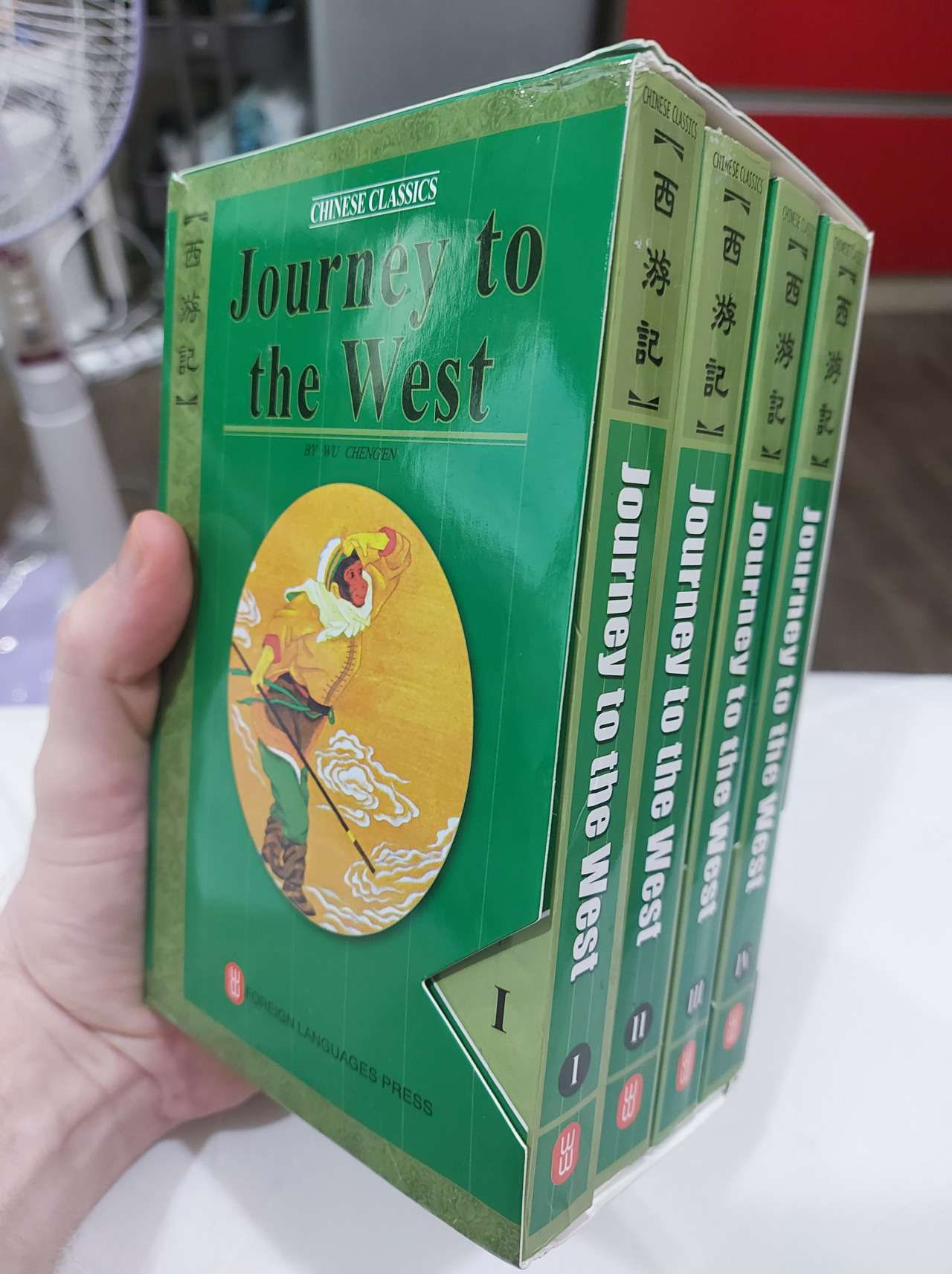
The four-volume box set in my collection (larger version).

A.2. Abridged

1) This is a PDF for Monkey (1942/1984) translated by Arthur Waley in 30 chapters (1 to 15, 18 and 19, 22, 37 to 39, 44 to 46, 47 to 49, and 98 to 100). See past book covers here.

PDF File

Click to access Wu-Chengen_-Arthur-Waley-Monkey-Grove-Press-1984.pdf

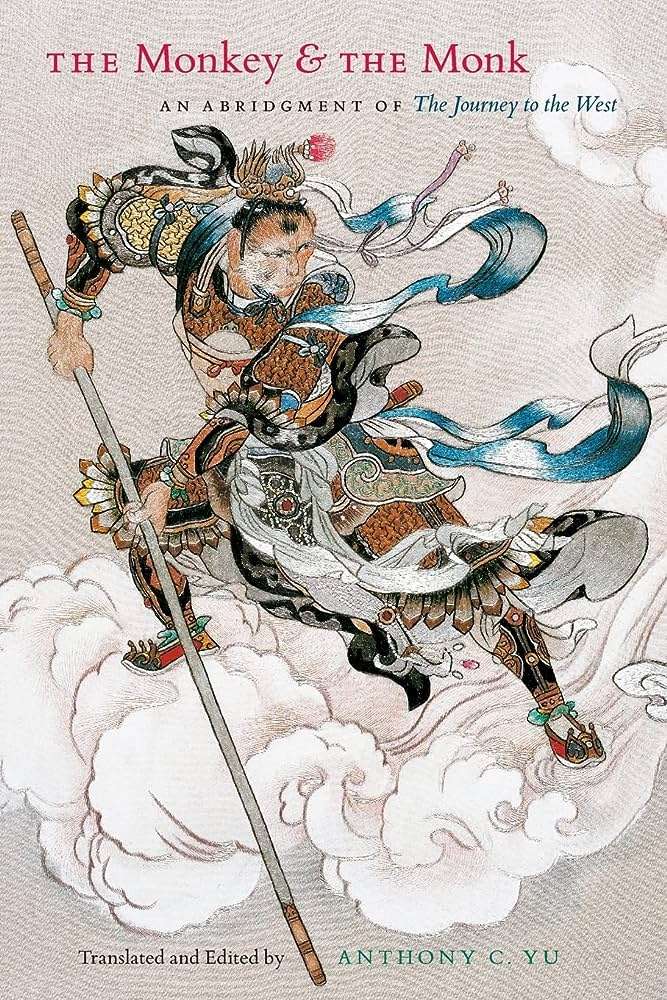
2) This is a PDF for The Monkey and the Monk (2006): An Abridgement of The Journey to the West translated by Anthony C. Yu in 31 chapters (1 to 15, 18 and 19, 22 and 23, 44 to 46, 53 to 55, 57 and 58, 84, and 98 to 100)

PDF File

Click to access Anthony-C.-Yu-The-Monkey-and-the-Monk_-An-Abridgment-of-The-Journey-to-the-West-2006.pdf

The official cover (larger version)

A.3. Audiobook

1) I just learned of “The Fifth Monkey” and their Journey to the West – An Audio Drama Series, which presents a new English translation alongside the original Chinese. They explain:

One reason that led our team to start this audio drama project is to correct some of the mistranslations found in the Yu/Jenner translations. Most of them are very minor and we certainly understand what could have led to those mistakes, but we think it is worth exploring how we can help bring a more accurate presentation of the original text in the English language (source).

The official logo (larger version).

2) YouTuber Sondley has recorded himself reading all 100 chapters of the Jenner edition.

B. French

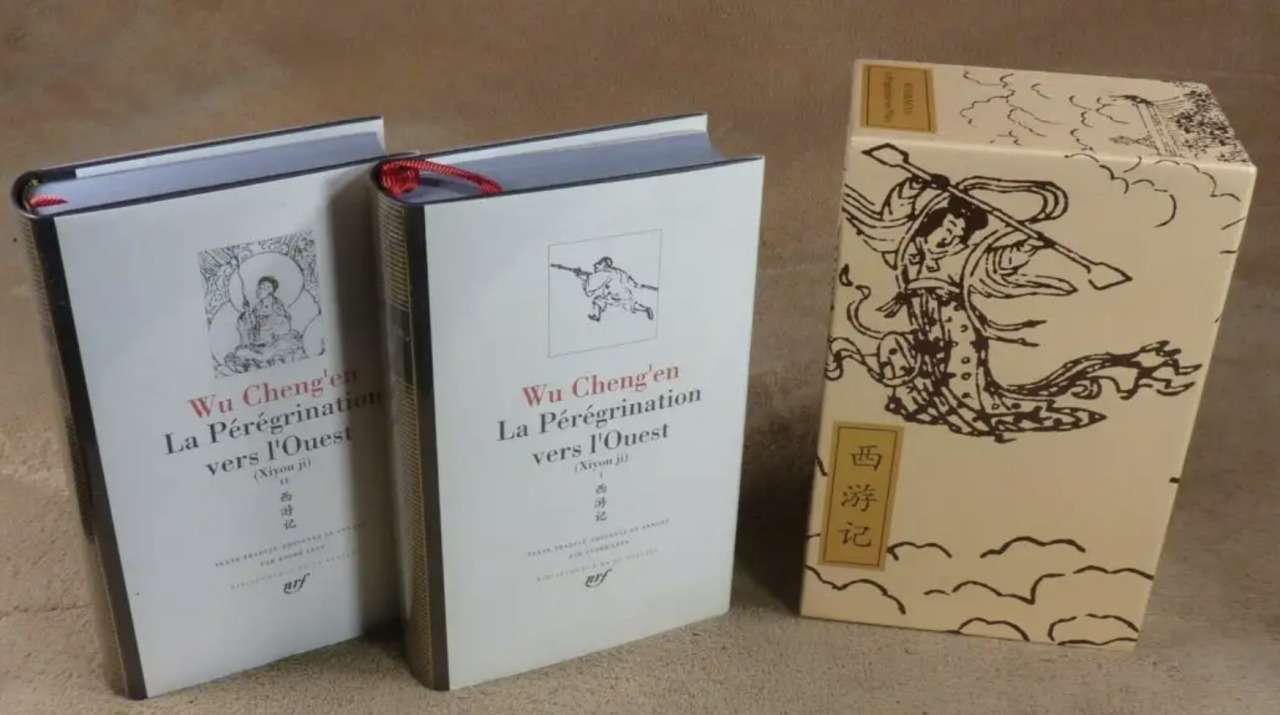
These are PDFs for La Pérégrination vers l’Ouest (Xiyou ji) (1991) translated by André Lévy in 100 chapters. I was told by one French academic that this edition “is one of the best available in Western languages.”

Thank you to arcanananas on Tumbler for volume one, and thank you to jyeet on the Journey to the West discord for volume two.

PDF Files

Vol. 1https://journeytothewestresearch.com/wp-content/uploads/2024/11/La-peregrination-vers-lOuest-v.1.pdf

Vol. 2https://journeytothewestresearch.com/wp-content/uploads/2023/08/French-JTTW-la-peregrination-vers-louest-Vol-2.pdf

The original two-volume boxed edition (larger version). Image found here.

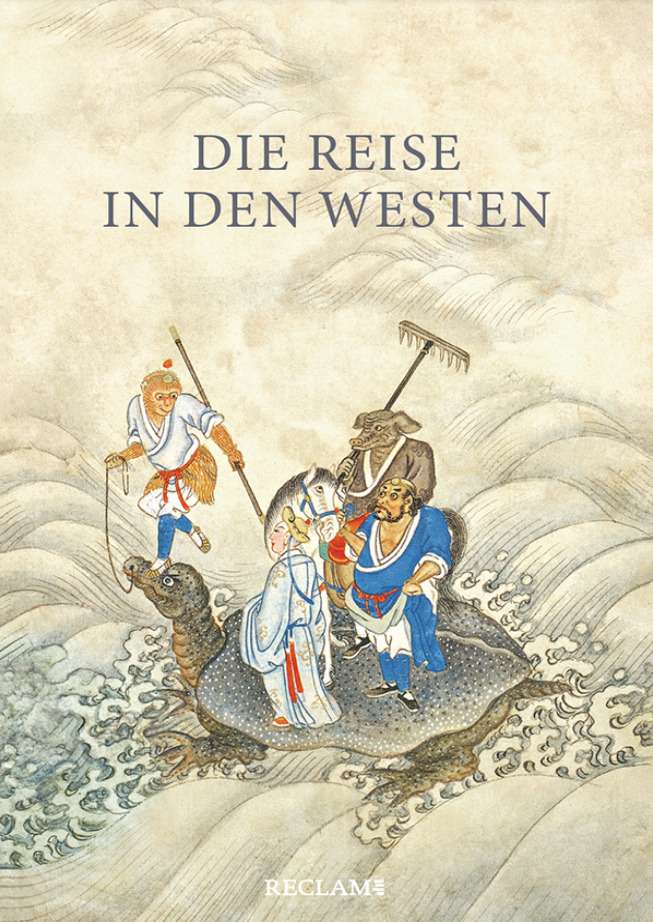
C. German

This is a PDF for Die Reise in den Westen. Ein klassischer chinesischer Roman (2016) translated by Eva Lüdi Kong in 100 chapters. It was awarded the Leipzig Book Fair prize in 2017. This version was converted from an ebook.

PDF File

Click to access German-JTTW-Die-Reise-in-den-Westen.pdf

The official cover (larger version)

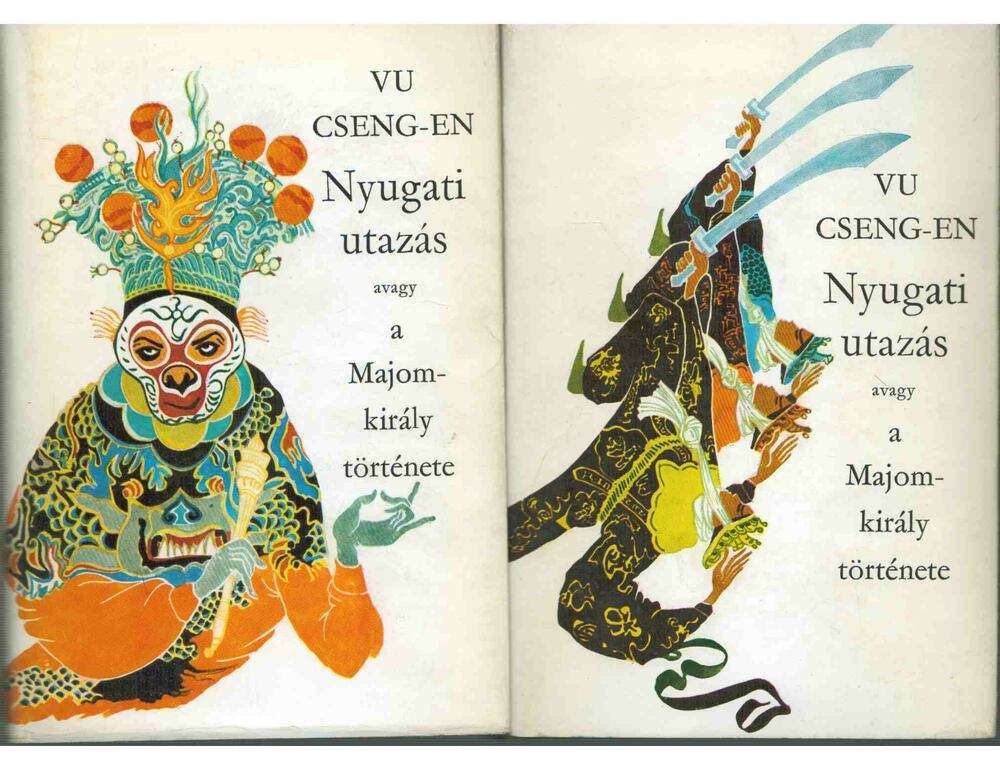
D. Hungarian

These are text PDFs for Nyugati utazás: avagy a majomkirály története (1969/1980) translated by Barnabás Csongor in two volumes. While the work covers the full 100 chapters, I’ve been told that it deletes the poems and occasionally paraphrases long-winded sections of text.

Thank you to Twitter user Jakabfi Károly for locating the files.

PDF Files

Vol 1https://journeytothewestresearch.com/wp-content/uploads/2023/08/Hungarian-JTTW-Nyugati-Utazas-Vol-1.pdf

Vol 2https://journeytothewestresearch.com/wp-content/uploads/2023/08/Hungarian-JTTW-Nyugati-Utazas-Vol-2.pdf

The official covers for volumes one and two (larger version). Image found here.

E. Italian

[Note 10-19-23: I was asked by the publisher to remove the PDF from the archive. I’m leaving the title here so others will know that an Italian translation exists.]

The Italian text is called Viaggio in occidente (1998/2008). It was translated by Serafino Balduzzi and published in two volumes. It is based on the French edition published in 1991. The work covers all 100 chapters.

F. Polish

This is a PDF for Małpi bunt (1976) translated by Tadeusz Żbikowski. It is a 14 chapter abridgement of the first 20 chapters of the original.

Thank you to Twitter user Friend_Pretend for locating the file.

PDF File

Click to access Polish-JTTW-Malpi-bunt-1976.pdf

The official cover (larger version).

G. Romanian

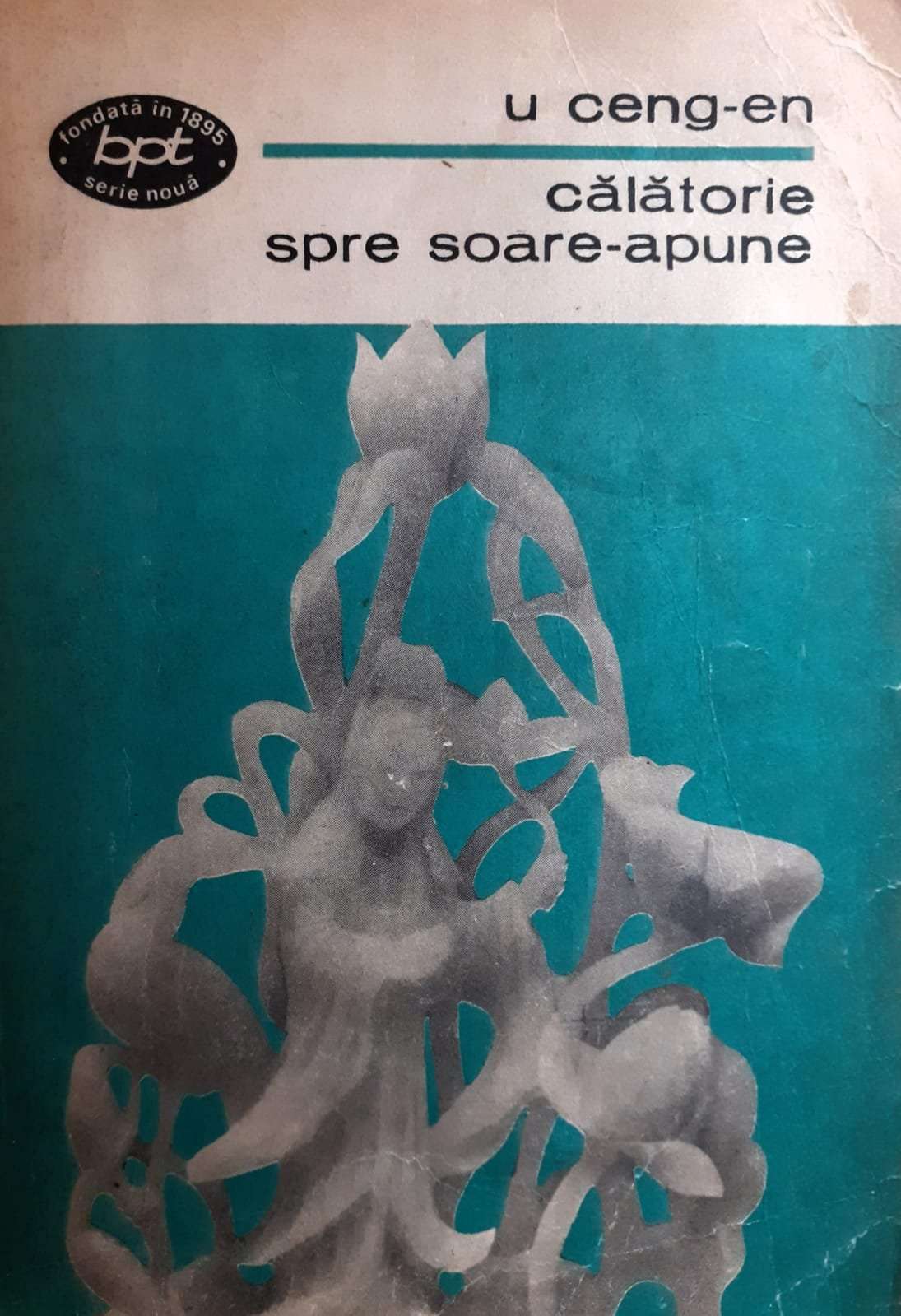
This is a text PDF for Călătorie spre soareapune (1971) translated by Corneliu Rudescu and Fănică N. Gheorghe. It appears to be an abridgment.

Thank you to greencicadarchivist on the Journey to the West discord for locating the file.

PDF File

Click to access Romanian-JTTW-U_Ceng_En_Calatorie_Spre_Soare_Apune_pdf.pdf

The official cover (larger version).

H. Russian

H.1. Complete

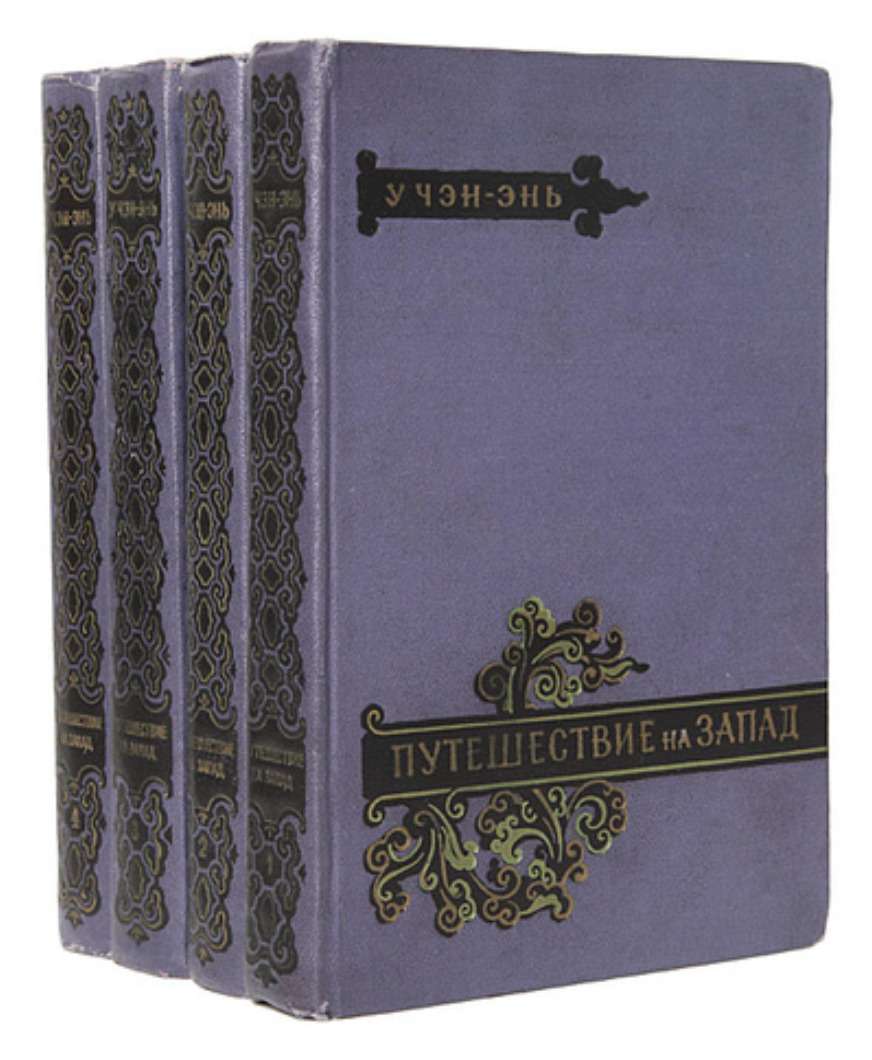
These are PDFs for Путеше́ствие на За́пад (1959) translated by A. Rogachev (vols. 1-2) and V. Kolokolov (vols. 3-4). It covers all 100 chapters.

PDF Files

Vol 1https://journeytothewestresearch.com/wp-content/uploads/2023/08/Russian-JTTW-Puteshestvie_Na_Zapad_T_1_-1959-Vol-1.pdf

Vol. 2https://journeytothewestresearch.com/wp-content/uploads/2023/08/Russian-JTTW-Puteshestvie_Na_Zapad_T_1_-1959-Vol-2.pdf

Vol. 3https://journeytothewestresearch.com/wp-content/uploads/2023/08/Russian-JTTW-Puteshestvie_Na_Zapad_T_1_-1959-Vol-3.pdf

Vol. 4https://journeytothewestresearch.com/wp-content/uploads/2023/08/Russian-JTTW-Puteshestvie_Na_Zapad_T_1_-1959-Vol-4.pdf

The four-volume hardcover edition (larger version).

H.2. Abridged

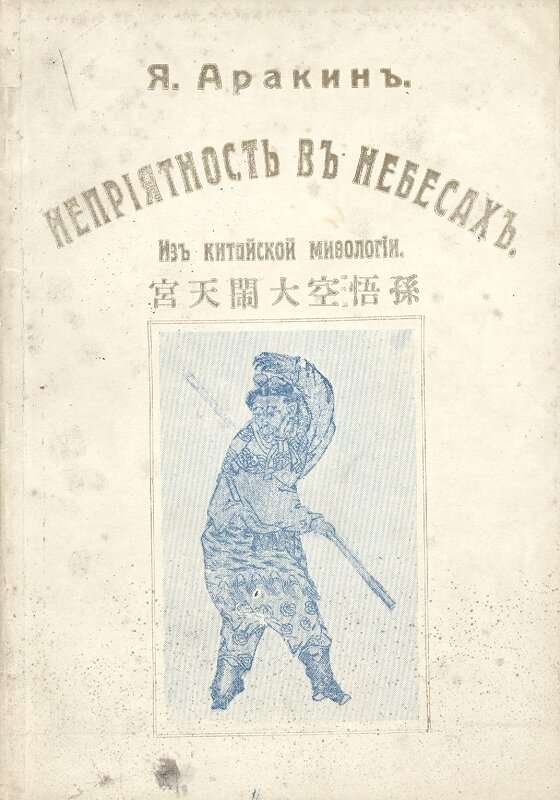
This is a text PDF for Неприятность в небесах. Из китайской мифологии (1926) translated by Yakov Arakin. It is a poetic retelling of the first seven chapters of the novel.

Thank you to Adelar Eleramo for locating the file.

PDF File

Click to access Russian-JTTW-poem-Yakov-Arakin.pdf

The official cover (larger version).

I. Spanish

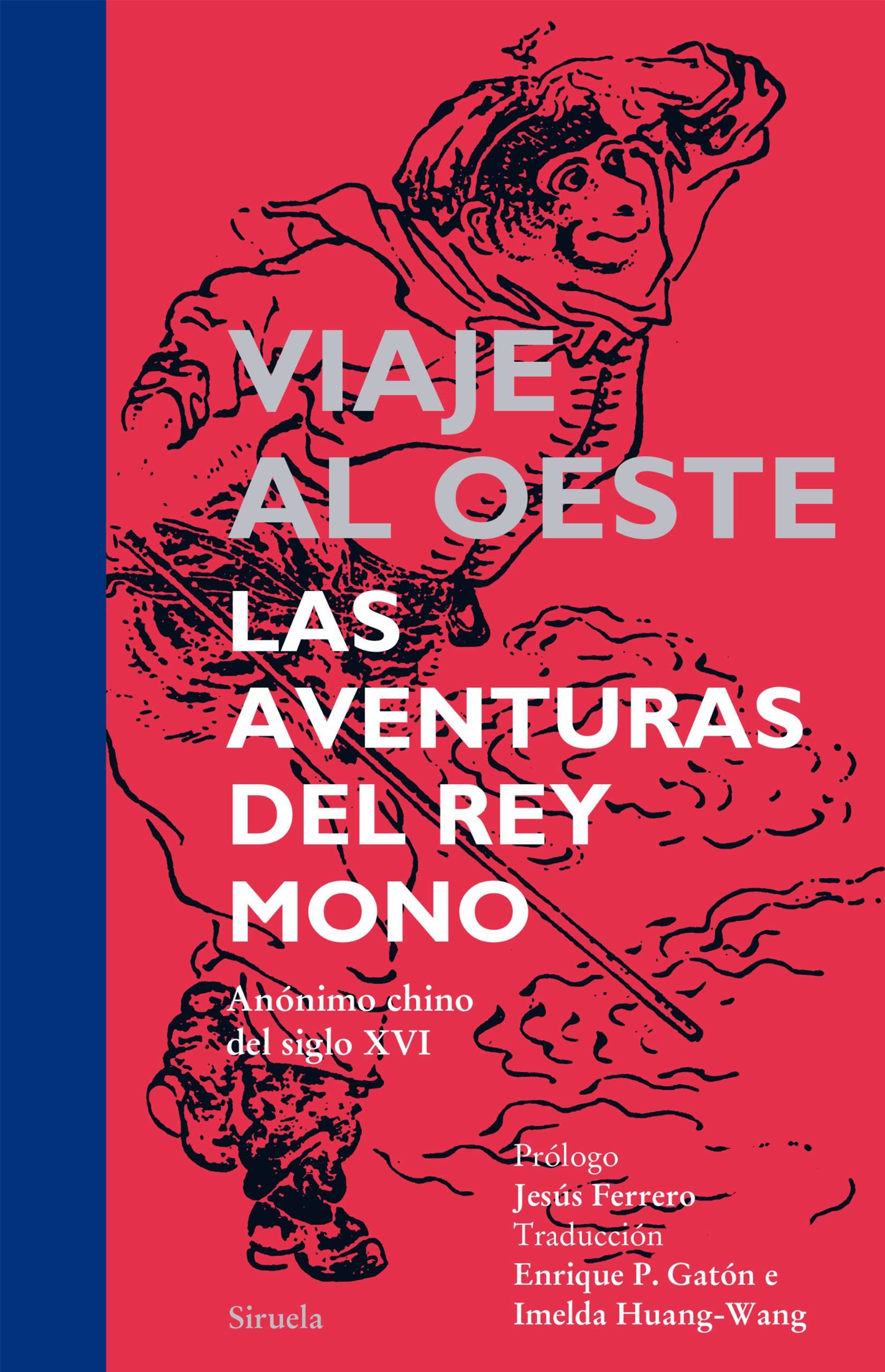
This is a text PDF for Viaje al Oeste: Las aventuras del Rey Mono (2022) translated by Enrique P. Gatón and Imelda Huang-Wang in 100 chapters.

PDF File

Click to access viaje-al-oeste-las-aventuras-del-rey-mono.pdf

The official cover (larger version)

J. Thai

This is a PDF for ไซอิ๋ว (2004/2010). It appears to be based on a four-volume edition translated by one Mr. Tin (นายติ่น) and published from 1906 to 1909. I believe it covers all 100 chapters.

Thank you again to greencicadarchivist for locating the file.

PDF File

Click to access Thai-JTTW-ไซอิ๋ว.pdf

The official cover (larger version)

K. Turkish

This is a PDF for Batı’ya Yolculuk (n.d.). I’m not sure who it was translated by. It appears to be all 100 chapters.

PDF File

Click to access Batiya-Yolculuk.pdf

The official cover (larger version)

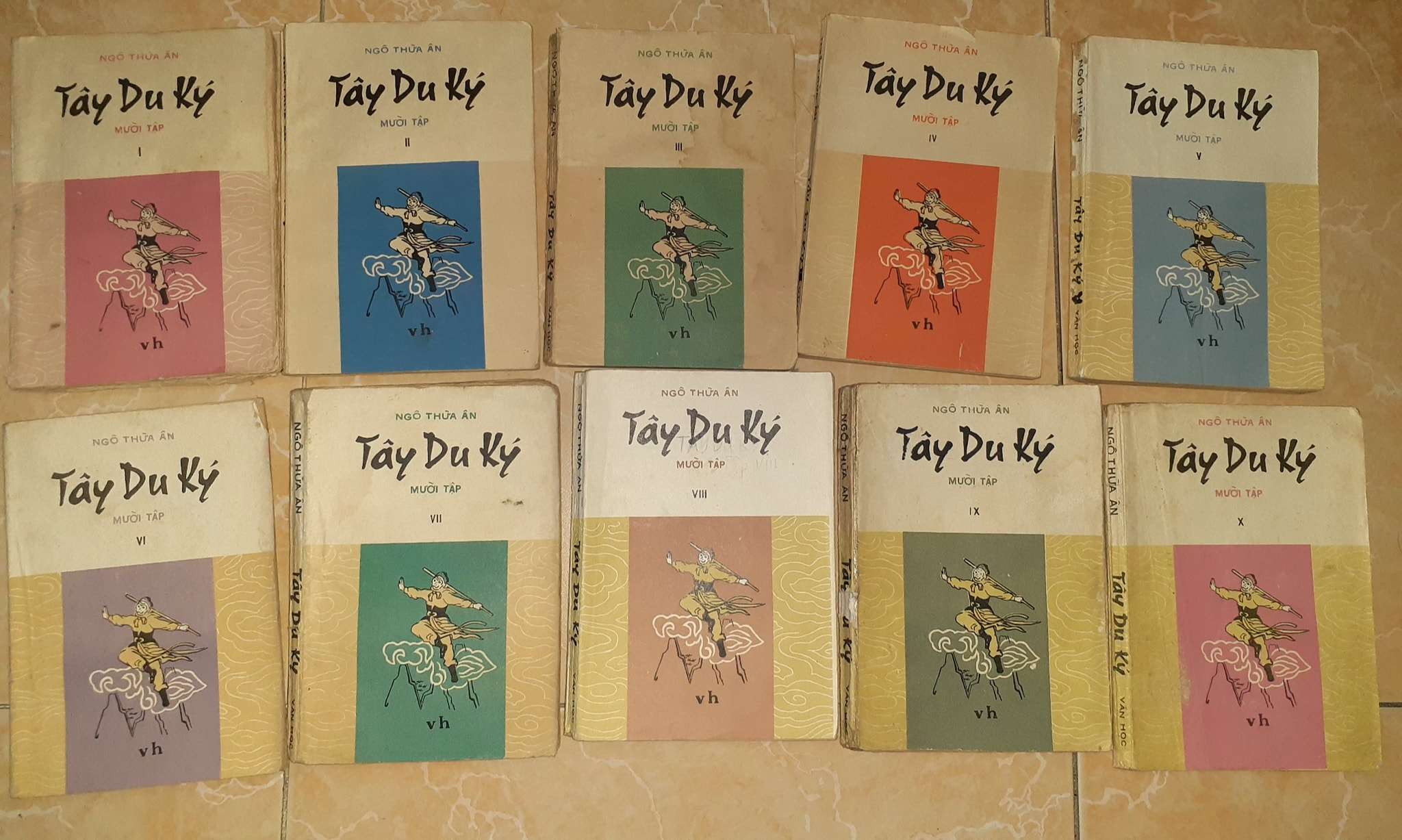
L. Vietnamese

This is a text PDF for Tây Du Ký translated by Như Sơn, Mai Xuân Hải, and Phương Oanh. The 100 chapters were originally split between 10 volumes and published from 1982 to 1988. The volumes were later transcribed and combined to make a single eBook via an online community in 2013 (see here). I have converted it into a PDF.

PDF File

Click to access Vietnamese-JTTW-Tay-Du-Ky.pdf

The covers for the original ten volumes (larger version). Image found here.

3. Unofficial Sequels

3.1. A Supplement to the Journey to the West (Xiyoubu)

A. English

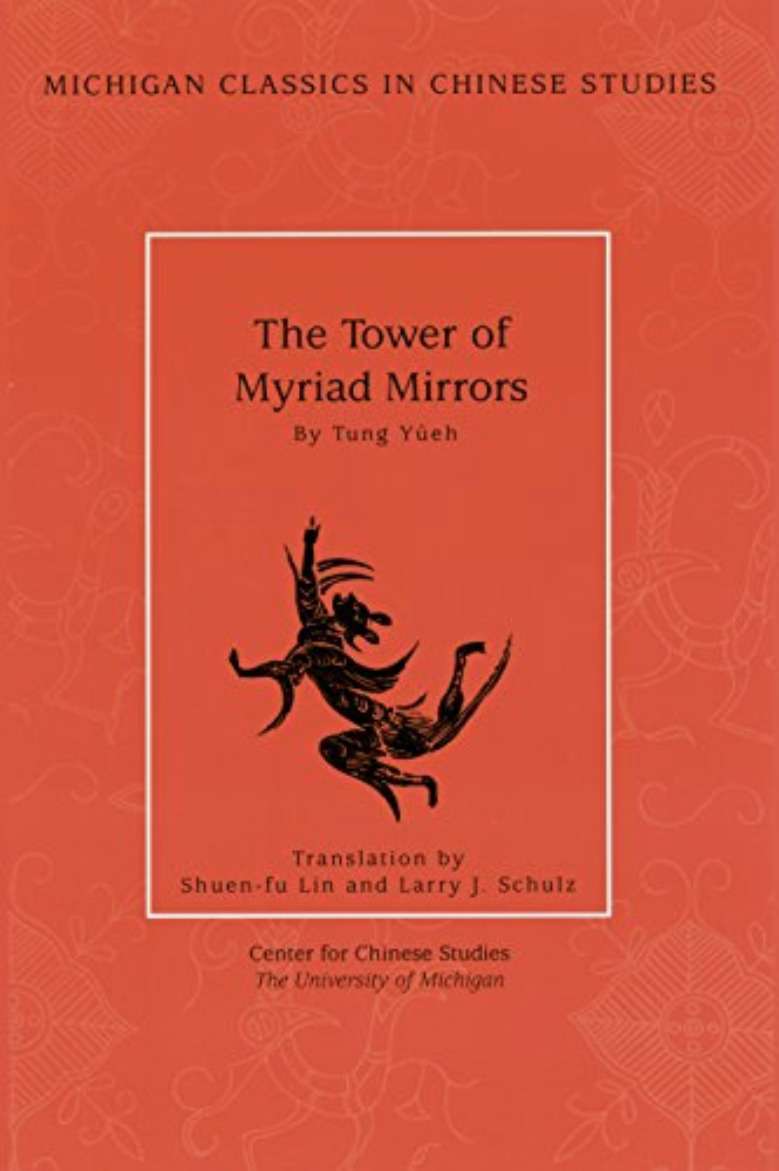
1) This is a PDF for Tower of Myriad Mirrors: A Supplement to Journey to the West (2000) translated by Shuen-fu Lin and Larry J. Schulz. This version was converted from Mobi.

See my previous article on the tale here.

PDF File

Click to access English-Xiyoubu-Lin-Shuen-fu_Dong-Yue-Schulz-Tung-Yueh-The-tower-of-myriad-mirrors_-a-supplement-to-Journey-to-the-West.pdf

The official cover (larger version)

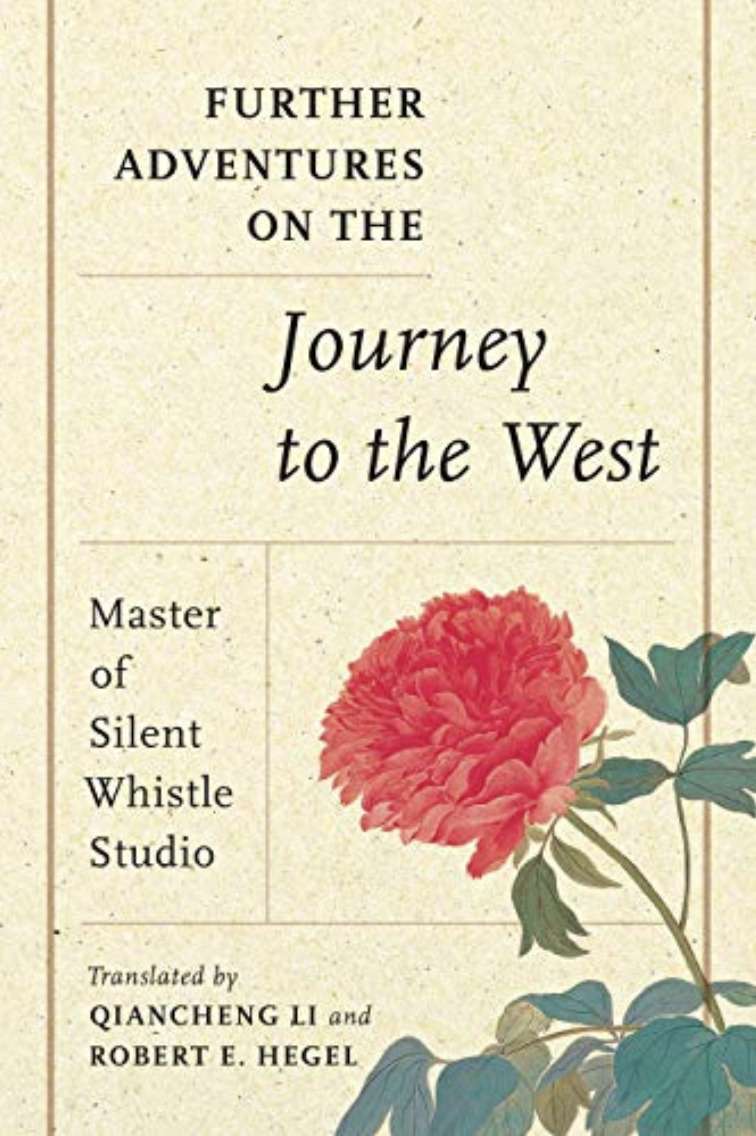
2) This is a PDF for Further Adventures on the Journey to the West – Master of Silent Whistle Studio (2020) translated by Qianchng Li and Robert E. Hegel.

PDF File

Click to access Further-Adventures-on-the-Journey-to-the-West-Master-of-Silent-Whistle-Studio-2020.pdf

The official cover (larger version)

B. Hungarian

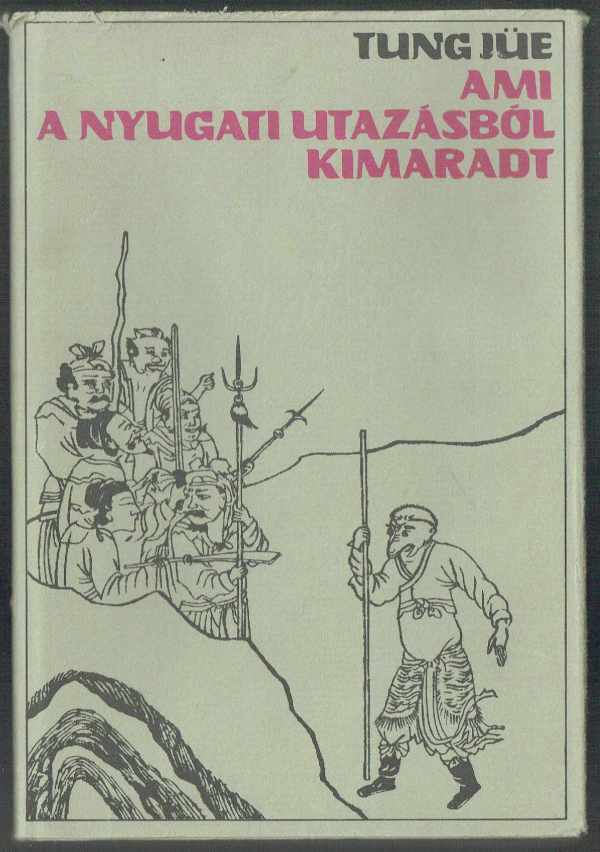
This is a text PDF for Ami a nyugati utazásból kimaradt (1957/1980) translated by Barnabás Csongor.

My thanks again to Twitter user Jakabfi Károly.

PDF File

Click to access Hungarian-Xiyoubu-tung_jue_ami_a_nyugati_utazasbol_kimaradt.pdf

The official cover (larger version).

3.2. Later Journey to the West (Hou Xiyouji, 後西遊記, 17th-century) 

A. Chinese-English

This 41-chapter book has been translated into English with AI by the Chinese Text Project (Ctext). You can READ IT HERE (turn off your VPN for access). The novel does not yet have an official translation.

See my previous articles on the subject here, here, and here.


Update: 08-17-23

I forgot to mention that I have previously archived two other Chinese classics. The first is Creation of the Gods (Fengshen yanyi, 封神演義, c. 1620; a.k.a. Investiture of the Gods), a sort of prequel to JTTW.

Archive #17 – PDFs of Creation of the Gods Library of Chinese Classics Chinese-English Bilingual Edition (Vols. 1-4)

The second is Journey to the South (Nanyouji南遊記, c. 1570s-1580s). This is NOT a direct sequel to JTTW. It instead follows the adventures of a martial god from Chinese folk religion. However, Sun Wukong makes a guest appearance in chapters one and seventeen.

Archive #40 – Journey to the South (Nanyouji) English Translation PDF


Update: 04-06-26

There is also Three Kingdoms (Sanguo yanyi三國演義; lit: “Romance of the Three Kingdoms,” 14th century.).

Archive #52 – PDFs of the Three Kingdoms Foreign Language Press English Translation (Vols. 1-4)

And Outlaws of the Marsh (a.k.a. Water MarginShuihu zhuan, 水滸傳, c. 1400).

Archive #53 – PDFs of Outlaws of the Marsh (a.k.a. Water Margin) Foreign Language Press English Translation (Vols. 1-4)

Interesting Facts about the Monkey King

Last updated: 08-28-2022

I recently posted a list of facts about Sun Wukong (孫悟空) to reddit. I am presenting an elongated version of it here, which serves as a summation of everything that I’ve learned over the years. It is by no means comprehensive. I’ll add more facts in the future as I learn of them. Enjoy.

Current count: 108

  1. He was likely influenced by the Hindu monkey god Hanuman (Ch: Ha nu man, 哈奴曼) in different waves, one possibly from the north (via Tibet) and another from the south (via Southeast Asia). But the parallels are most apparent from the standard 1592 edition of JTTW, suggesting that the author-compiler had access to some form of the Indian epic Rāmāyana (7th-c. BCE to 3rd-c. CE). The novel even includes material from the epic Mahābhārata (4th-c. BCE to 4th-c. CE).
  2. In my opinion, however, the greatest influence on his 1592 persona is a white ape antagonist from a Tang-era story. Similarities include: 1) both are supernatural primates possessed of human speech; 2) one thousand-year-old practitioners of longevity arts; 3) masters of Daoist magic with the ability to fly and change their appearance; 4) warriors capable of single-handedly defeating an army; 5) have a fondness for armed martial arts; 6) have an iron-hard, nigh-invulnerable body immune to most efforts to harm them; 7) have eyes that flash like lightning; 8) live in verdant mountain paradises (like Flower Fruit Mountain); and 9) reside in caves with stone furniture (like the Water Curtain Cave).
  3. He has the second longest association with the JTTW story cycle, appearing as the “Monkey Pilgrim” (Hou xingzhe, 猴行者) circa 1000 (or before). Sha Wujing’s earliest antecedent appeared during the 8th-century, while Zhu Bajie didn’t appear until the 14th-century.
  4. The oldest published mention of the Monkey Pilgrim is a eulogy appearing in a tale from Zhang Shinan’s (張世南) Memoirs of a Traveling Official (Youhuan jiwen, 遊宦紀聞, 13th-century). One scholar dates the story to around 1127.
  5. The oldest depictions of this character (late-11th to late-13th-century) appear in Buddhist cave art along the Silk Road in Northern China. He is almost always portrayed in a scene worshiping the Bodhisattva Guanyin.
  6. A 13th-century version of JTTW describes the Monkey Pilgrim as a white-clad scholar who is an ancient immortal from the very beginning of the tale. He was beaten with an iron rod as a young immortal after he stole magic peaches and was subsequently banished to the Mountain of Flowers and Fruit. He actively searches out the monk to protect him as the cleric’s two previous incarnations were eaten by a monster (Sha Wujing’s antecedent) in the past.

  7. This immortal fights with two staves (at different times), a golden-ringed monk’s staff and an iron staff (both borrowed from heaven). The monk’s staff can create destructive blasts of light, as well as transform into titanic creatures, including a club-wielding yaksha and an iron dragon. The iron staff isn’t shown to have any special powers. These weapons were later combined by storytellers, the rings from the former being added to the ends of the latter.

  8. He is called the “Monkey King” (Houwang, 猴王) as far back as the 13th-century version. This position is likely based on a jataka tale about the Buddha’s past life as a king of monkeys.
  9. The immortal is bestowed the title “Great Sage Steel Muscles and Iron Bones” (Gangjin tiegu dasheng, 鋼筋鐵骨大聖) at the end of the story by Tang Taizong.
  10. This immortal was heavily influenced by the Buddhist Saint Mulian (目連; Sk: Maudgalyayana).
  11. He was popular even in Korea and appeared in a set of carvings from a 14th-century stone pagoda.
  12. The earliest mention of the name “Sun Wukong” that I’m aware of appears in an early-15th-century zaju play. It depicts the character as a sex-crazed maniac who kidnaps a princess to be his wife, tries to seduce Princess Iron Fan, and later gets erectile disfunction when his golden headband tightens while trying to have sex with a young maiden in the Kingdom of Women.
  13. The dharma name “Wukong” (悟空) was likely influenced by a historical monk of that name who traveled to India during the 8th-century. The name means “Awakened to Emptiness”, thus referencing Buddhist enlightenment. I think the corresponding Sanskrit name would be something like “Bodhiśūnyatā” (but don’t quote me on this).

  14. The surname “Sun” (孫) means “grandson” but is an open reference to husun (猢猻, lit: “grandson of the barbarian”), the Chinese word for “macaque“. It was also a popular surname for supernatural primates in stories associated with the Lingyin Temple (靈隱寺), which also likely influenced the Monkey King.

  15. The 1592 edition of the novel associates the components of Sun (孫 = zi, 子 & xi, 系) (ch. 1 – see section 4.2 here) with the formation of a “holy embryo” (shengtai, 聖胎), an immortal spirit that lives on after the adherent dies.

  16. So taking all of the Buddhist and Daoist references into account, another translation for Sun Wukong would be “Immortal Awakened to Enlightenment”. This is a reference to the Buddho-Daoist philosophy of Zhang Boduan (張伯端, mid- to late-980s-1082), who believed that in order to become a true transcendent (xian, 仙), one had to achieve both the Daoist elixir of immortality and Buddha-nature (i.e. Buddhahood).

  17. The aforementioned zaju play calls him the “Great Sage Reaching Heaven” (Tongtian dasheng, 通天大聖).

  18. Said play also states that he has two sisters and two brothers. The sisters are respectively named the “Venerable Mother of Mount Li” (Lishan laomu, 驪山老母) and “Holy Mother Wuzhiqi” (Wuzhiqi shengmu, 巫支祇聖母). His older brother is called “Great Sage Equaling Heaven” (Qitian dasheng, 齊天大聖) and the younger the “Third Son Shuashua” (Shuashua sanlang, 耍耍三郎).

  19. His story in the 1592 version takes place not in our world but in one modeled after ancient Hindo-Buddhist cosmic geography, which features four island-like continents floating in a great ocean around the four respective faces of a cosmic mountain. And yet the novel was published during a time coinciding with the late Renaissance period in Europe, precisely 49 years after Copernicus suggested that the Earth orbits the sun.
  20. His home, the Mountain of Flowers and Fruit (Huaguo shan, 花果山), is located near the easternmost continent, while China is associated with the southernmost continent. This means that Monkey, within the novel, is not Chinese!
  21. He has had past lives (see the 11-24-20 update here).
  22. He’s not the only figure from world myth born from stone. In fact, “Birth from rock” (T544.1) is a mythic category appearing in Stith Thompson’s Motif-Index of Folk-Literature.

  23. While his stone birth (ch. 1) is likely based on that of Yu the Great (Dayu, 大禹), a legendary King of the Xia dynasty (more on this below), it may ultimately be linked to Tibetan stories of stone-born monkey deities.
  24. He was likely born during the late-Zhou Dynasty (circa 1046-256 BCE).
  25. He serves as a physical manifestation of the “Mind Monkey” (xinyuan, 心猿), a Buddho-Daoist philosophy denoting the disquieted thoughts that keep Man trapped in the illusory world of Saṃsāra (see the material below figure three here). This phrase is also surprisingly associated with sexual desire.
  26. Despite the association above, Monkey shows no interest in sex throughout the entire novel. This may be a response to the highly sexualized Sun Wukong from the zaju play.
  27. The novel also gives him the alchemical title “Squire of Metal/Gold” (Jingong, 金公), a possible “anagrammatic reading of the Chinese graph for lead or qian 鉛, which may be broken up into the two graphs of jin and gong” (Wu & Yu, 2012, vol. 1, p. 532 n. 3). Lead is an ingredient in external alchemy (see the material after figure two here). The title might also be referring to the earthly branch shen (申), which is associated with both metal and monkeys (Wu & Yu, 2012, vol. 1, p. 532 n. 3).
  28. The overall arc of his birth and early life were likely based on that of the historical Buddha to make his tale more familiar to readers. Similarities include: A) supernatural births that split open their respective mothers (Queen Maya vs stone egg); B) producing a radiant splendor in all directions upon their birth; C) being talented students that quickly master concepts taught to them; D) early lives as royals (Indian prince vs king of monkeys); E) shock at the impermanence of life; F) questing for a spiritual solution to said impermanence; and G) finding said solution via spiritual practices (Indic meditation vs Daoist elixir arts).

  29. His “Water Curtain Cave” (Shuilian dong, 水簾洞), the grotto-heaven where he and his people live in the Mountain of Flowers and Fruit, is associated with a different immortal in older religious literature. For instance, the Song-era text Master Ghost Valley’s Numinous Writ of the Essence of Heaven (Guigu zi tiansui lingwen鬼谷子天隨靈文) calls the titular character the “Master of the Waterfall Cave” (Shuilian dong zhu, 水濂洞主). In this case, the source uses a different lian (濂) in place of the lian (簾) associated with Monkey’s cave. But they both mean the same thing: a waterfall hiding a cave mouth (see the 12-11-21 update here). One 17th-century novel influenced by JTTW states that Master Ghost Valley lives in the Water Curtain Cave (Shuilian dong, 水簾洞; i.e. the same as Monkey’s home) with his student, the Warring States strategist Sun Bin (孫臏, d. 316 BCE). This means that two characters surnamed Sun (孫) live there in Chinese literature (see section II here).
  30. Despite modern media portraying him as an adult-sized humanoid character that is sometimes handsome and/or very muscular, the 1592 version describes him as an ugly, bald, and skinny Rhesus macaque that is less than four feet tall. This means that one of the most powerful warriors in the Buddho-Daoist cosmos is the size of a child.
  31. While commonly portrayed as a Daoist immortal, his first master, the Patriarch Subodhi (Xuputi zushi, 須菩提祖師) (ch. 1 & 2), is shown to live in India and have a strong connection to Buddhism, possibly even being a Bodhisattva.
  32. The breathing and energy circulation methods that Monkey uses to achieve immortality (ch. 2) are based on real Daoist elixir practices.
  33. The actual name for his famous 72 Transformations is “Multitude of Terrestrial Killers” (Disha shu, 地煞數), which is based on a popular set of malevolent stellar gods.
  34. This skill not only allows Monkey to transform into whatever he wants but also gives him a store of extra heads and possibly even extra lives like a video game (see section 4.4 # 3 here).
  35. He specifically learns the 72 Transformations (ch. 3) in order to hide from a trio of elemental calamities sent by heaven to punish cultivators for defying their fate and achieving immortality. This is the origin of the “Heavenly Tribulation” (tianjie, 天劫; zhongjie, 重劫) trope from modern Xianxia literature.
  36. But, surprisingly, he is not a true immortal, just long-lived and really hard to kill. The novel refers to him as a “bogus immortal” (yaoxian, 妖仙). This references Zhang Boduan’s aforementioned philosophy where one must obtain both the Daoist elixir (which Monkey did) and Buddha-Nature (which he hadn’t yet achieved) in order to be a true transcendent.
  37. While training under Subodhi (ch. 3), he expressly passes on learning the bureaucratic-style magic rites normally used by earthly priests to request something from heaven because the skills involved won’t result in eternal life. Instead, after achieving immortality, Monkey just commands the gods to do his bidding (see section II here).
  38. He can grow 100,000 feet (30,480 m) tall (ch. 1, 6, 61, and 97). This skill is called the “Method of Modeling Heaven on Earth” (Fatian xiangdi, 法天像地), and it is related to ancient Pre-Qin and Han concepts of astral-geography later used in the construction of imperial Chinese cities.
  39. His magic “immortal breath” (xianqi, 仙氣) can transform his hairs, his staff, and objects not in direct contact with his body into anything he desires. It can also change disembodied souls into “ether” for ease of transport, and evidence suggests that it can even grant some form of immortality.
  40. Monkey has 84,000 hairs on his body, and he can transform them into hundreds of thousands, millions, and even billions of hair clones (see the 03-19-22 update here).
  41. The novel only mentions him learning martial arts in passing (ch. 67 – see section 4.5 here), but one episode (ch. 51) features a battle between Monkey and a demon king in which they use a host of real world fighting techniques that are still known and practiced today.
  42. His favorite style of boxing is “Short Fist” (duanquan, 短拳) (see the 05-02-18 update here).
  43. His skill with the staff is so great that the novel compares it to techniques from two manuals listed among the Seven Military Classics of China (see the 08-07-18 update here).
  44. The bureaucratic mix-up that resulted in his soul being dragged to hell (ch. 3) is based on “mistaken summons” to the underworld and “return-from-death” narratives present in early Chinese “miraculous tales” (Zhiguai xiaoshuo, 志怪小説) (Campany, 1990).
  45. When he looks at his entry in the ledgers of hell, he learns that: 1) his soul number is “1,350”; 2) his real name is “Heaven-Born Stone Monkey” (Tianchan shihou, 天產石猴); and 3) he was fated to have a “good end” at the ripe old age of 342. This refers to a person’s pre-allotted lifespan (ming, 命) (Campany, 2005; Campany & Ge, 2002, pp. 47-52).
  46. The distance that his cloud-somersault can travel, 108,000 li (33,554 mi / 54,000 km), is based on a metaphor for instantaneous enlightenment. It comes from the Platform Sutra of the Sixth Chan Patriarch Huineng (惠能). The Chan Master explains that the common trope of the Buddha’s paradise being separated from the world of man by 108,000 li is based on a combination of the “Ten Evils” (Shi’e, 十惡) and “Eight Wrongs” (Baxie, 八邪) of Buddhism. Those who rid themselves of these spiritual flaws will achieve enlightenment and thus arrive instantly at the Buddha’s paradise.
  47. The initial depiction of his magic staff as a great iron pillar kept in the dragon kingdom treasury (ch. 3) is based on a metal column that the immortal Xu Xun (許遜) chained a demonic dragon to and then imprisoned in the aquatic realm in Chinese mythology.
  48. It’s a common misconception that his staff weighed down the Milky Way galaxy. This is based on a mistranslation. The W. J. F. Jenner edition claims that the weapon anchored said star cluster. However, the original Chinese states that it was used as a means to measure and set the depths of the Heavenly River (Tianhe, 天河; a.k.a. Milky Way).

  49. The weight of his staff is likely an embellishment on the weight of a heavy stone block lifted by the bandit-hero Wu Song (武松) in the Water Margin (Shuihu zhuan, 水滸傳, c. 1400). This episode and the JTTW episode where Monkey acquires his staff both involve a hero (Wu Song vs Sun Wukong) asking someone (a friend vs the Dragon King) to take them to a seemingly immovable object (stone block vs iron pillar). They then adjust their clothing before lifting the object with ease. Most importantly, the Chinese characters for the respective weights are visually similar. Sun’s staff is 13,500 catties (yiwan sanqian wubai jin, 一萬三千五百斤; 17,5560 lbs. / 7965.08 kg), while the stone block is 300 to 500 catties (sanwubai jin, 三五百斤; 390-650 lbs. / 177-295 kg). The characters in bold indicate the similarities between the two weights, where as those in red indicate the embellishments: 一萬五百斤.

  50. He singlehandedly defeats the “Nine Planets” (Sk: Navagraha; Ch: Jiuyao, 九曜, “Nine Luminaries”), personifications of the sun and planets from Hindu astrology (Gansten, 2009), during his rebellion (ch. 4) (Wu & Yu, 2012, vol. 1, pp. 170-172).
  51. His time as the Bimawen (弼馬溫, “To assist horse temperament”), a minor post overseeing the heavenly horse stables (ch. 4), is based on an ancient Chinese practice of placing monkeys in horse stables to ward off equine sicknesses. The belief was that the menstrual blood of female monkeys mixed with horse food somehow guarded against diseases. This is hilarious as the position links Sun Wukong to menstruation!

  52. His title “Great Sage Equaling Heaven” (Qitian dasheng, 齊天大聖) (ch. 4) was actually borrowed from the “Eastern Marchmount” (Dongyue, 東嶽; a.k.a. “Eastern Peak”), the god of Mt. Tai. This suggests that the older brother from the aforementioned zaju play is really the Eastern Marchmount.
  53. His time as the Guardian of the Immortal Peach Groves (ch. 5) is likely based on a Song-era Daoist scripture in which the aforementioned Sun Bin is tasked by his teacher, Master Ghost Valley, with protecting a tree laden with special fruit. He later captures a magic white ape stealing said produce (see section III here). The simian thief saves his life by offering Sun a set of secret religious texts. Both stories include: 1) a character surnamed Sun (孫) protecting special fruit (Sun Bin vs Sun Wukong); and 2) supernatural primates that steal and eat the fruit. Therefore, Monkey’s 1592 persona serves as both the guard and the thief!
  54. The elixir pills that he drunkenly eats in Laozi’s laboratory (ch. 5) likely influenced the senzu beans from the world famous Dragon Ball (Jp: Doragon Bōru,ドラゴンボール; Ch: Qilongzhu, 七龍珠) franchise.
  55. His conflict with Erlang (ch. 6) can be traced to ancient Han-era funerary rituals, and their battle of magic transformations shares parallels with ancient Greek tales and can ultimately be traced to even older stories from the Near East.
  56. His time in Laozi‘s furnace (ch. 7) is based on an episode from the aforementioned 13th-century version of JTTW. It may also be connected to a story of Laozi magically surviving a foreign king’s attempt to boil him in a cauldron.
  57. He is shown to be weak against spiritual fire and smoke (see the 06-28-22 update here).
  58. Smoke from the furnace irritates his eyes, giving him his famous “Fiery Eyes and Golden Pupils” (Huoyan jinjing, 火眼金睛). The former is likely based on the “actual red-rimmed eyes of [the Rhesus macaque]” (Burton, 2005, p. 148). The latter is likely based on the golden pupils of macaques (see section 2.1 here).
  59. The message that he leaves on the Buddha’s finger (ch. 7) is a popular form of graffiti in East Asia.
  60. His time under Five Elements Mountain (Wuxing shan, 五行山) (ch. 7) is based on stories of the aforementioned Wuzhiqi (無支奇/巫支祇) being imprisoned under a mountain by Yu the Great.
  61. He was pressed under the mountain during the late-Han Dynasty (202 BCE-220CE – see section II here).
  62. A religious precious scroll predating the 1592 edition states that Erlang instead traps Monkey beneath Mount Tai, and the aforementioned 15th-century zaju play states it was Guanyin and the Mountain of Flowers and Fruit.
  63. This punishment links him to a broader list of mythic baddies imprisoned in earth, including Lucifer, Loki, and the Titans of Tartarus. I plan to write a later article about “earth prisons” in world myth.
  64. One scholar suggests that being trapped under Five Elements Mountain is a symbolic death (remember that Monkey claims to be free of the Five Elements after attaining immortality), meaning that the hellish diet is his karmic punishment in the afterlife, and his later release is a symbolic reincarnation.
  65. Monkey’s mountain imprisonment was only part of his punishment. The other half was a hellish diet of hot iron pellets and molten copper, punishments straight from Buddhist canon.
  66. His golden headband (ch. 13) has three influences: 1) a historical ritual circlet worn as a physical reminder of right speech and action by Esoteric Buddhist yogins in ancient India; 2) adornments, likely based on stylized lingzhi mushrooms, worn by Daoist protector deities; and 3) an Iranic triple-crescent crown.
  67. The oldest depiction of Monkey with his headband that I know of appears in a late-Xixia (late-12th to early-13th-century) Buddhist cave grotto in Northwestern China.
  68. The earliest depiction of his double “curlicue-style” headband that I’m aware of is a 13th-century stone carving in Fujian.
  69. The secret spell that tightens his headband is likely the Akshobhya Buddha mantra.
  70. Along with the headband, his tiger skin kilt (ch. 13) can be traced to a list of ritual items prescribed for worshiping wrathful protector deities in Esoteric Indian Buddhism. These same ritual items came to be worn by the very protector deities that the yogins revered. This explains why some deities in Chinese folk religion (including Sun Wukong) are portrayed with the golden headband and tiger skin.

  71. Modern artists sometimes depict him with two long feathers protruding from the front of his golden headband, giving him the appearance of an insect. But the feathers (lingzi, 翎子) are actually associated with a different headdress called the “Purple Gold Cap” (zijin guan, 紫金冠), which is worn on top of the head. It was a military headdress later associated with heroes in Chinese opera (see section 2.2 here).
  72. Monkey is also shown to be weaker in water. For instance, he enlists Zhu Bajie to combat the water demon who turns out to be Sha Wujing (ch. 22) (Wu & Yu, 2012, vol. 1, p. pp. 422-423).
  73. The baby-shaped fruit that he eats (ch. 24) comes from a tree based on Indo-Persian lore.
  74. He claims to have eaten people when he was a monster in his youth (ch. 27) (Wu & Yu, 2012, vol. 2, p. 20).
  75. His greatest feat of strength is carrying two mountains while running at meteoric speeds (ch. 33). One is the axis mundi of the Hindo-Buddhist cosmos, while the other is the place from which (according to legend) Buddhism spread upon entering China. This episode is based on an older tale in which Erlang does the lifting.
  76. His doppelganger, the Six-Eared Macaque (ch. 56-58), is actually an aspect of his troubled mind. Once he kills him, Monkey takes one step closer to Buddhahood.
  77. He fights and is defeated by an ancient bird demon who is a spiritual uncle of the Buddha (ch. 77). This monster is based on the Hindu bird god Garuda.
  78. He and his religious brothers take human disciples in India (ch. 88), and Monkey later performs an arcane ritual in which he grants them superhuman strength (and possibly some form of immortality).
  79. His title, “Victorious Fighting Buddha” (Douzhan sheng fo, 鬥戰勝佛) (ch. 100), is based on a real world deity numbering among the “Thirty-Five Confession Buddhas“.
  80. The novel ranks him higher than Guanyin after his ascension (see the third quote here).
  81. As an enlightened Buddha, Monkey is eligible for his own “Buddha-Field” (Sk: Buddhakṣetra; Ch: Focha, 佛刹), essentially his own universe in which he will lead the inhabitants to enlightenment (Buswell & Lopez, 2014, p. 153).
  82. Despite his association with the Victorious Fighting Buddha, he is primarily worshiped as the Great Sage Equaling Heaven in East and Southeast Asian Chinese folk religion.
  83. Fighters of the Boxer Rebellion (Yihetuan yundong, 義和團運動, 1899-1901) believed that they could channel the Monkey King to gain his great combat skills.
  84. Modern ritual specialists known as “spirit-mediums” (Hokkien: Tangki, 童乩; Ch: Jitong, 乩童; lit: “Divining Child”) also channel the Great Sage, allowing his worshipers to have direct access to the divine. While they may use a staff to enhance the theater of their performance, the weapon surprisingly doesn’t serve a ritual function. They instead use a set of bladed or spiked weapons to draw blood intended to create evil-warding paper talismans (see the material below figure six here).
  85. Chinese folk religion recognizes more than one Great Sage, usually between three and five individuals.
  86. Monkey’s faith started in Fujian province, China and spread via boat to other countries within the Chinese diaspora. When he first started being worshiped is unknown. The first concrete references to his worship come from the 17th-century (see section III here). But the aforementioned 13th-century stone carving depicts him as a wrathful guardian, alongside other protector deities, Bodhisattvas, patriarchs, and eminent monks. This suggests that he might have been revered at an earlier time.
  87. He was even worshiped in 19th-century America!
  88. The iconic pose where he shades his eyes to search the horizon is likely based on a common motif associated with Chinese sea gods.
  89. He has a number of religious birthdays, one of which is the 16th day of the 8th lunar month (the day after the Mid Autumn Festival).
  90. There is a style of Chinese boxing named after him, “Great Sage Boxing” (Cantonese: Taishing kyun; Mandarin: Dasheng quan, 大聖拳). Another closely associated style is “Great Sage Axe Boxing” (Can: Taishing pek kwar kyun; Man: Dasheng pigua quan, 劈掛拳). These arts also have staff styles associated with the Monkey King.
  91. His time in Laozi’s furnace and ability to grow 100,000 feet tall influenced a Shaolin Monastery myth related to the founding of their famous staff fighting method. The story describes how a lowly kitchen worker jumped into an oven and remerged as a staff-wielding titan to battle mountain brigands attacking the monastery (see section 3 here).
  92. Mao Zedong, the leader of the Chinese Communist Party, was a fan of the Monkey King, even associating himself with the character in his poetry. Also, a CCP propaganda play of the 1960s associates the scripture pilgrims with members of the Communist Party, with Monkey referencing Mao.
  93. He shares several connections with Yu the Great (here and here). These include: A) both have stone births; B) Monkey’s staff was originally used by Yu as a drill and as a ruler to set the depths of the fabled world flood; C) Sun’s demonic sister Wuzhiqi was conquered by Yu in some stories; and D) both are legendary hero-kings.
  94. He shares a number of similarities with Wu Song. These include: A) both are reformed supernatural spirits originally trapped under the pressing weight of a mountain; B) slayers of tigers; C) Buddhist monks nicknamed “Pilgrim” (xingzhe, 行者), a title noting junior and traveling monks, as well as untrained riffraff that became clerics to avoid trouble with the law or taxes and military service (Wu Song is the latter and Monkey the former); D) martial arts monks who fight with staves; E) have moralistic golden headbands; and F) weapons made from bin steel (bin tie, 鑌鐵) (Wu Song’s Buddhist sabers vs Monkey’s magic staff).

  95. He shares a surprising number of similarities with the Greek hero Heracles (a.k.a. Hercules). These include: A) supernatural births via masculine heavenly forces (son of Zeus vs the stone seeded by heaven); B) quick to anger; C) big cat skins (Nemean lion vs mountain tiger); D) fight with blunt weapons (olive wood club vs magic iron staff); E) great strength; F) knocked out by a god during a fit of rage (Athena with a rock vs Laozi and his Diamond-Cutter bracelet); G) given punishment to atone for past transgressions (12 labors for killing family vs protecting the monk for rebelling against heaven); H) constantly helped by goddesses (Athena vs Guanyin); I) similar enemies (there’s a long list); tamer of supernatural horses (Mares of Diomedes vs Heavenly Horses); J) travel to lands peopled by women (Amazons vs Kingdom of Women); K) theft of fruit from the gardens of queenly goddesses (Hera’s golden apples of the Hesperides vs the Queen Mother’s immortal peaches); L) travel to the underworld; M) take part in a heavenly war (Gigantomachy vs rebellion in heaven); N) become gods at the end of their stories (god of heroes and strength vs Victorious Fighting Buddha); and O) worshiped in the real world (Greece and Rome vs East and Southeast Asia).

  96. He time travels to different points in Chinese history in an unofficial 17th-century sequel to JTTW.
  97. He has a total of eight children between two 17th-century novels. He has five sons in A Supplement to the Journey to the West (Xiyoubu, 西遊補, 1640), but only one of them is mentioned by name. “King Pāramitā” (Boluomi wang, 波羅蜜王) is portrayed as a sword-wielding general capable of fighting Sun for several rounds. His name is based on a set of virtues learned by Bodhisattvas on their path to Buddhahood. In Journey to the South (Nanyouji, 南遊記) he has two sons named “Jidu” (奇都) and “Luohou” (羅猴), who respectively represent the lunar eclipse demons Ketu and Rahu from Indian astrology. He also has a giant, monstrous daughter, “Yuebei Xing” (月孛星, “Moon Comet Star”), who is named after a shadowy planet representing the lunar apogee (or the furthest spot in the moon’s orbit) in East Asian astrology. Only the daughter plays a part in the story. She uses a magic skull, which can kill immortals three days after their name is called.

  98. He influenced the manga/anime hero Son Goku (a Japanese transliteration of 孫悟空) from the Dragon Ball Franchise.
  99. He almost appeared in an Indiana Jones movie!
  100. He has appeared in both Marvel and DC comic book series.
  101. The world’s tallest statue of Monkey is 40 ft (12.192 m) tall and resides at the Broga Sak Dato Temple (武來岸玉封石哪督廟) in Malaysia.
  102. He is the mascot of several entities in Taiwan, including the HCT delivery company, the Hang Yuan FC football team, and the Taipei Water Department.
  103. He has appeared in nearly 65 video games.
  104. He is the namesake for a Chinese satellite designed to search for dark matter.
  105. He is the namesake of a fossa on Pluto. This plays on his association with the underworld.
  106. He is the namesake of the Wukongopterus (Wukong yilong shu, 悟空翼龍屬), a genus of Chinese pterosaur.

  107. He is the namesake of Syntelia sunwukong, a Synteliid beetle from mid-Cretaceous Burma.
  108. A Covid-19 lab in Wuhan City, Hubei Province, China adopted the name “Fire Eyes” (Huoyan, 火眼) in honor of Monkey’s ability to discern evil spirits.

Sources:

Burton, F. D. (2005). Monkey King in China: Basis for a Conservation Policy? In A. Fuentes & L. D. Wolfe (Eds.), Primates Face to Face: Conservation Implications of Human-Nonhuman Primate Interconnections (pp. 137-162). Cambridge: Cambridge University Press.

Buswell, R. E., & Lopez, D. S. (2014). The Princeton Dictionary of Buddhism. N: Princeton University Press.
Campany, R. F. (1990). Return-from-Death Narratives in Early Medieval China. Journal of Chinese Religions, 18, pp. 91-125.

Campany, R. F., & Ge, H. (2002). To Live as Long as Heaven and Earth: A Translation and Study of Ge Hong’s Traditions of Divine Transcendents. Berkeley: University of California Press.
Campany, R. F. (2005). Living off the Books: Fifty Ways to Dodge Ming in Early Medieval China. In C. Lupke (Ed.), The Magnitude of Ming: Command, Allotment, and Fate in Chinese Culture (pp. 129-150), University of Hawaii Press.
Gansten, M. (2009). Navagrahas. In K. A. Jacobsen (Ed.), Brill’s Encyclopedia of Hinduism (Vol. 1) (pp. 647-653). Leiden: Brill.

Wu, C., & Yu, A. C. (2012). The Journey to the West (Vols. 1-4). Chicago, Illinois: University of Chicago Press.