Parallels Between Sun Wukong and Hercules

Last updated: 01-12-2026

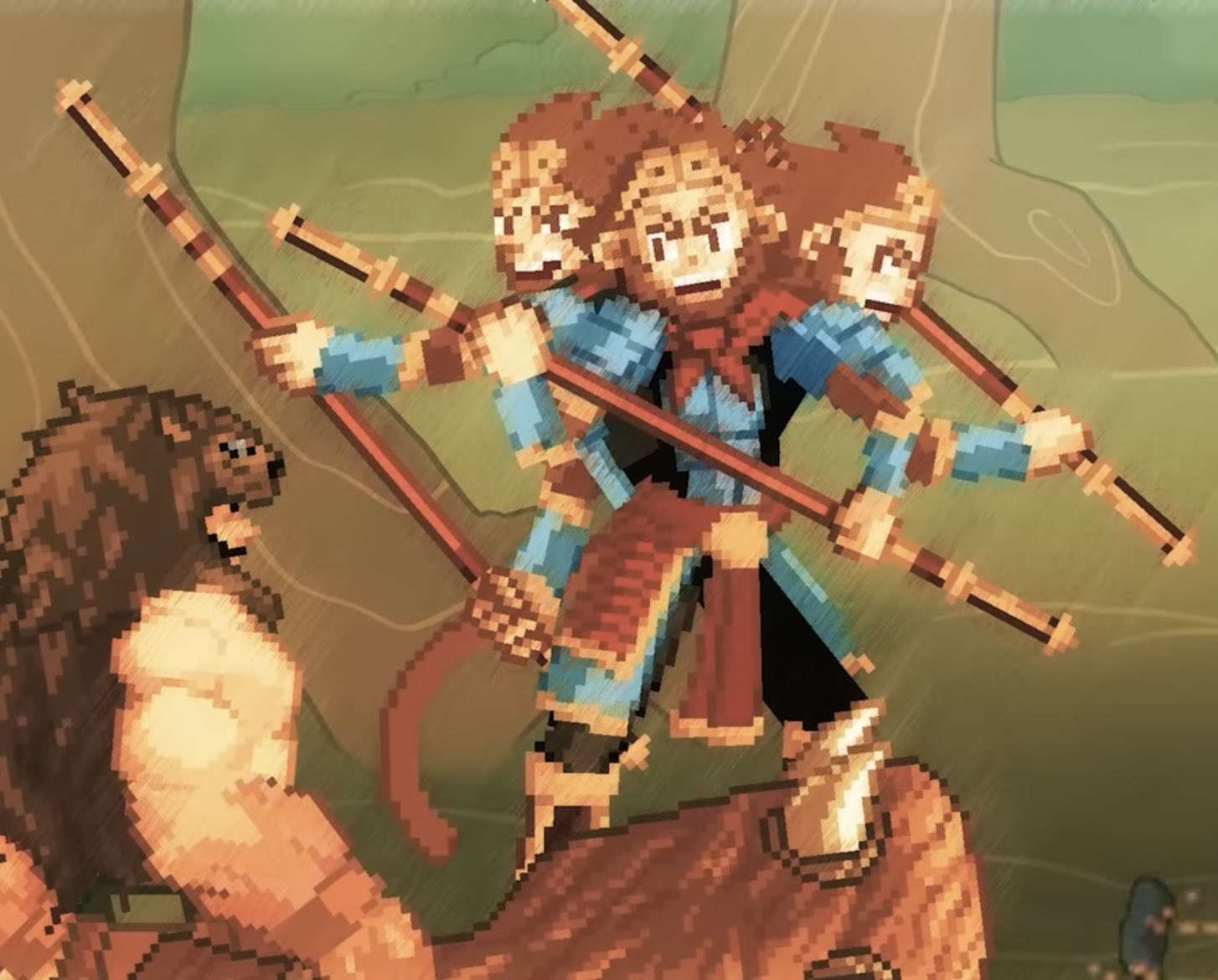
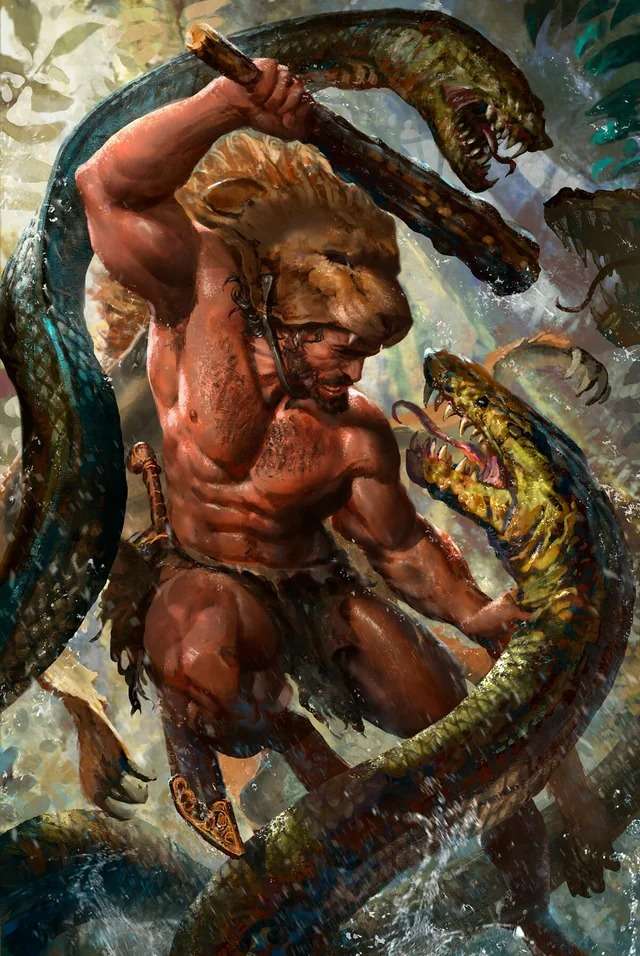
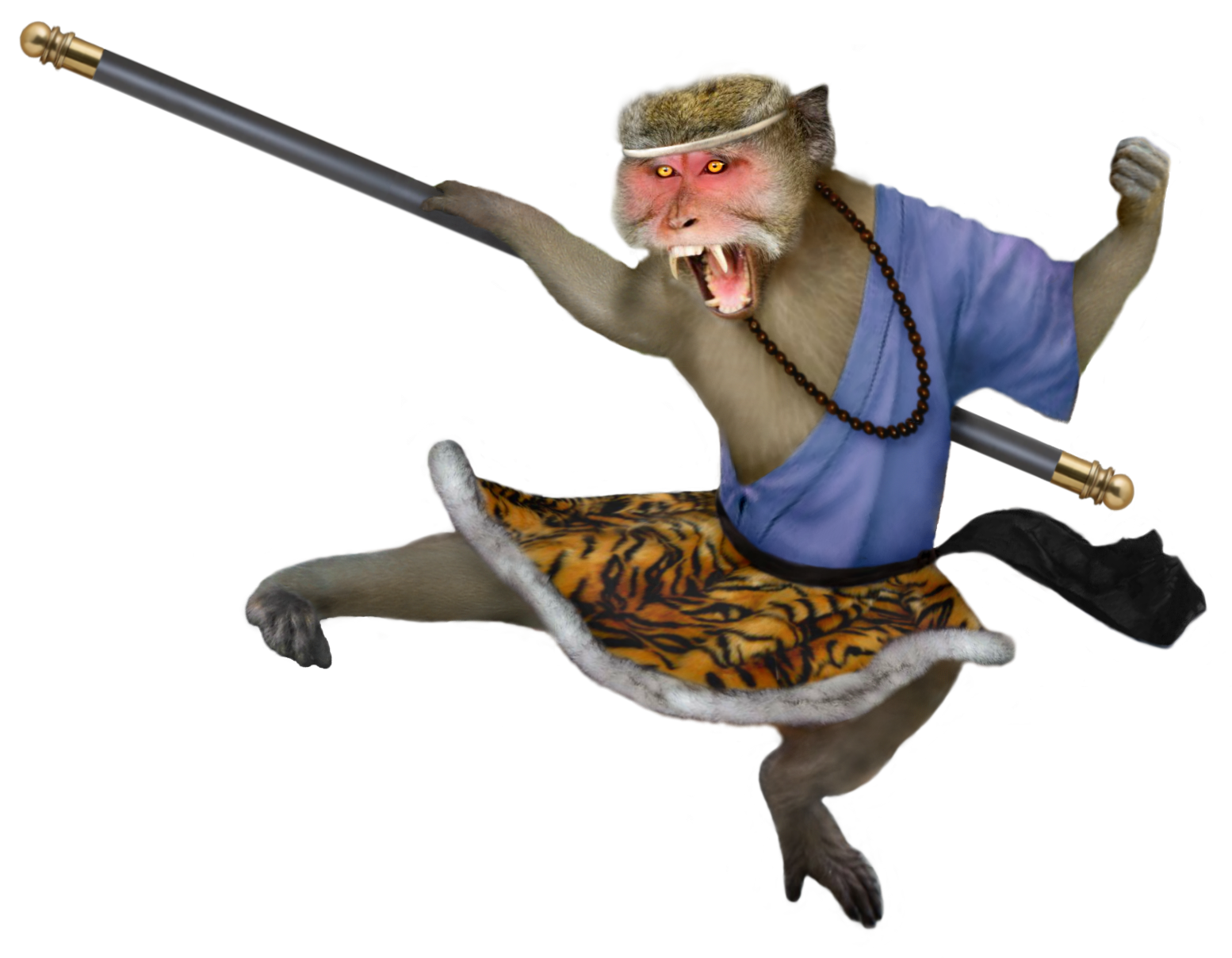
Here I present a list of parallels shared between Sun Wukong from Journey to the West (Xiyou ji西遊記, 1592 CE) and the Greco-Roman hero Hercules. I noticed many of the similarities myself, but I am also indebted to the list (that I also contributed to) posted on the DEATH BATTLE! Wiki. (Before continuing, I know the demi-god’s original Greek name is Heracles/Herakles, but I will use Hercules throughout the article as this is the name used by DEATH BATTLE!) Numbers one to sixteen below originally appeared in my Hercules vs Sun Wukong Death Battle Analysis, but I decided to split the information off into a new article in order to make the original a more manageable length. 

I should point out that this piece is only listing interesting parallels. It is NOT trying to prove that elements from the Greco-Roman demi-god’s story directly influenced that of our primate immortal. However, at the end, I do very briefly discuss possible antecedents that may have influenced both tales.

Current parallel count: 22

Listed in no particular order.

  1. Heavenly and earthly origins
  2. Bad tempers
  3. Wear big cat skins
  4. Wield blunt weapons
  5. Immensely strong
  6. Subdued by a blow from a deity
  7. Punished with difficult tasks for past crimes
  8. Aided by goddesses
  9. Similar animal enemies
  10. Tamer of horses
  11. Visit women lands
  12.  Steal divine fruit
  13. Save someone from the underworld
  14. Fight in heavenly wars
  15. Achieve godhood in respective narratives
  16. Worshiped in the real world
  17. Have doubles
  18. Attack enemies from within
  19. Blond hair/fur
  20. Disguised as women
  21. Compiled adventures
  22. Kill enemy in bee form with blunt weapon

See below for more details.

I. Details

1) Origins – Both are born of masculine heavenly forces and feminine earthly forces. Hercules is the half-human son of Zeus and the mortal Alkmene. Hesiod‘s Shield of Heracles reads:

But the father of men and gods wove another design in his mind, how he might fashion for gods and wheat-eating men a protector against disaster. He arose from Olympos by night, pondering a deception in his spirit, longing for sex with a fine-waisted woman. Quickly he came to Typhaonion, and from there Zeus the Counselor trod the peak of Mount Phikion. Taking his seat, he planned wondrous deeds in his heart. On that very night he slept with the slender-ankled daughter of Elektryon; he fulfilled his desire […] She bore him [Herakles] by submitting to the son of Kronos, lord of the dark clouds (Hesiod & Powell, 2017, p. 153 and 154; see also Pache, 2021).

The Monkey King is born from a stone seeded by heavenly and earthly energies. Chapter one of JTTW reads:

Since the creation of the world, it [the stone] had been nourished for a long period by the seeds of Heaven and Earth and by the essences of the sun and the moon, until, quickened by divine inspiration, it became pregnant with a divine embryo. One day, it split open, giving birth to a stone egg about the size of a playing ball. Exposed to the wind, it was transformed into a stone monkey endowed with fully developed features and limbs (Wu & Yu, 2012, p. 101).

Hinsch (2011) explains that Chinese works as far back as the Eastern Zhou and Han considered heaven masculine and described it as the father/husband/superior of the feminine earth, the mother/wife/inferior (pp. 157-158).

2) Temper – Both are quick to anger. In his youth, Hercules killed his music teacher for punishing him. The Bibliotheca Historica of Diodorus reads:

Linus [of Thrace] also, who was admired because of his poetry and singing, had many pupils and three of greatest renown, Heracles, Thamyras, and Orpheus. Of these three Heracles, who was learning to play the lyre, was unable to appreciate what was taught him because of his sluggishness of soul, and once when he had been punished with rods by Linus he became violently angry and killed his teacher with a blow of the lyre (3.67.2; Pache, 2021, p. 10).

Sun pushes over a magical, one-of-a-kind Ginseng Tree (Renshen shu, 人參樹) in retaliation for verbal abuse at the hands of some immortal youths. Chapter 25 of JTTW reads:

When the immortal lads found out the truth, they became even more abusive in their language; the Great Sage became so enraged that he ground his steel-like teeth audibly and opened wide his fiery eyes. He gripped his golden-hooped rod again and again, struggling to restrain himself and saying to himself, “These malicious youths! They certainly know how to give people a lashing with their tongues! All right, so I have to take such abuse from them. Let me offer them in return a plan for eliminating posterity: and none of them will have any more fruit to eat!” Dear Pilgrim! He pulled off a strand of hair behind his head and blew on it with his magic breath, crying “Change!” It changed at once into a specious Pilgrim, standing by the Tang Monk, Wujing, and Wuneng to receive the scolding from the Daoist lads. His true spirit rose into the clouds, and with one leap he arrived at the ginseng garden. Whipping out his golden-hooped rod, he gave the tree a terrific blow, after which he used that mountain-moving divine strength of his to give it a mighty shove (Wu & Yu, 2012, vol. 1, pp. 465-466).

3) Skins – Both wear the skins of big cats. Hercules wears the skin of the Nemean Lion. TheocritusIdylls (25) reads:

The fight ended, I fell to pondering how I could strip the shaggy hide from the dead brute’s limbs—a troublesome task indeed, for when I tried, I could not cut it either with iron or with stone or [otherhow]. But then some god put in my mind the thought to sever the lion’s skin with his own claws; and with these I flayed it speedily and wrapped it about my body to guard me from the rents and hurts of war (Theocritus & Gow, 1952, p. 213; see also March, 2021).

Monkey wears the skin of a mountain tiger. Chapter 14 of JTTW reads:

He [Sun] pulled off one strand of hair and blew a mouthful of magic breath onto it, crying, “Change!” It changed into a sharp, curved knife, with which he ripped open the tiger’s chest. Slitting the skin straight down, he then ripped it off in one piece. He chopped away the paws and the head, cutting the skin into one square piece. He picked it up and tried it for size, and then said, “It’s a bit too large; one piece can be made into two.” He took the knife and cut it again into two pieces; he put one of these away and wrapped the other around his waist. Ripping off a strand of rattan from the side of the road, he firmly tied on this covering for the lower part of his body (Wu & Yu, 2012, vol. 1, p. 310).

4) Weapons – Both are knowledgeable in multiple armaments but often wield blunt weapons in their adventures. Hercules uses an olive wood club (I’m unsure if it has an actual name). Theocritus’ Idylls (25) reads:

I set forth, taking my pliant bow, a hallow quiver filled with arrows, and in my other hand a club, made from a spreading wild olive, close-grained, with bark and pith intact, which I had found under holy Helicon and had pulled up entire with all it’s tangle of roots.

[…]

And I, holding in front of me with one hand my arrows … with the other raised my seasoned club over my head and brought it down on [the lion’s] skull; and full on the shaggy head of that invincible brute I broke the tough olive clean in two (Theocritus & Gow, 1952, p. 209 and 211).

Sun uses a black iron staff. Chapter three of JTTW reads:

[After a magic iron pillar followed his wish to shrink] He found a golden hoop at each end, with solid black iron in between. Immediately adjacent to one of the hoops was the inscription, “As-You-Will Gold-Banded Staff. Weight: Thirteen Thousand Five Hundred Catties” [Ruyi jingu bang zhong yiwan sanqian wubai jin如意金箍棒重一萬三千五百斤]” [1] … See how he displayed his power now! He wielded the rod to make lunges and passes, engaging in mock combat all the way back to the Water-Crystal Palace. The old Dragon King was so terrified that he shook with fear, and the dragon princes were all panic-stricken (Wu & Yu, 2012, vol. 1, p. 135).

5) Strength – Both are immensely strong. Hercules (in one version of the myth) holds up the sky. The Bibliotheca of Pseudo-Apollodorus reads:

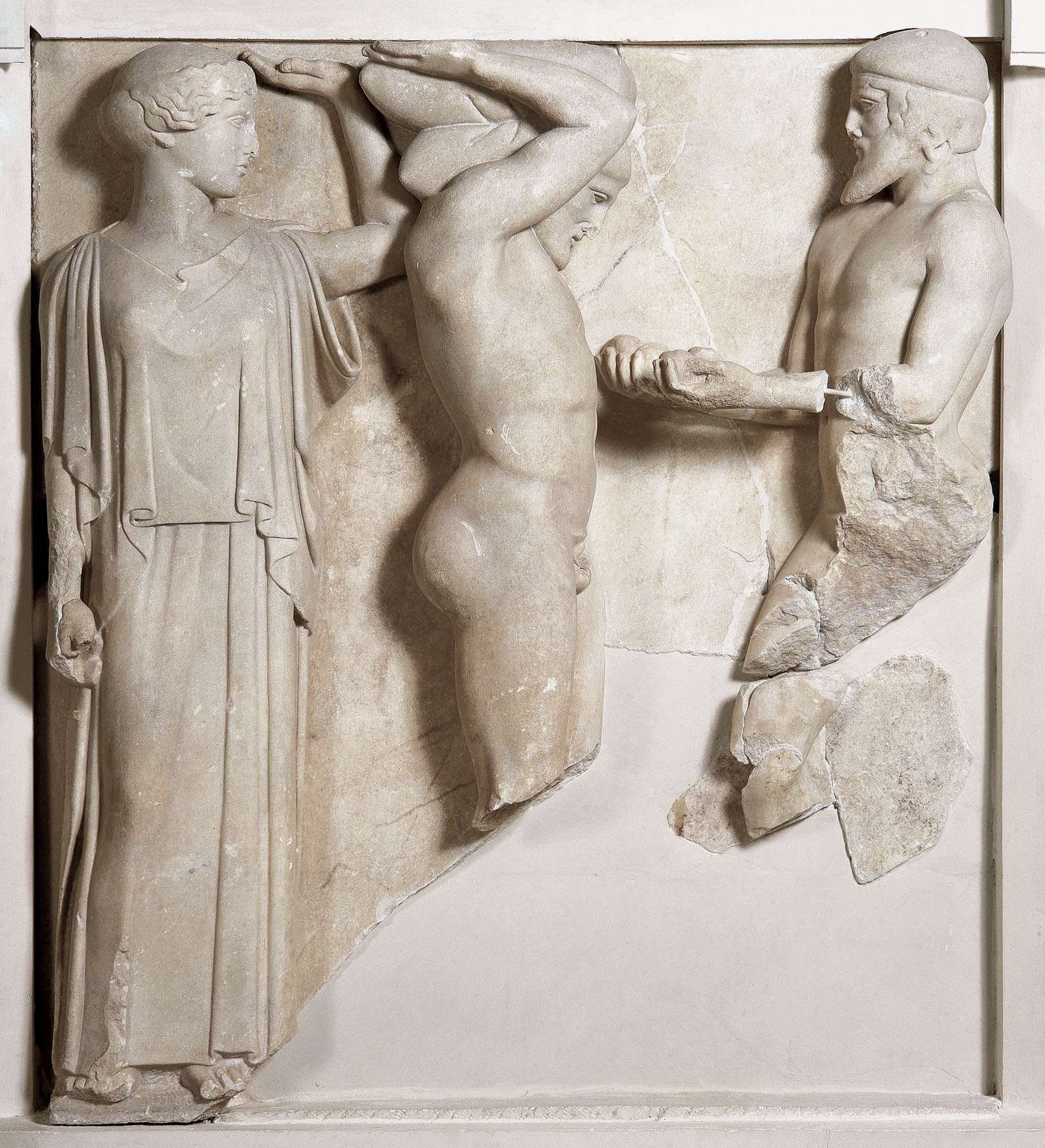
Now Prometheus had told Hercules not to go himself after the apples but to send Atlas, first relieving him of the burden of the sphere; so when he was come to Atlas in the land of the Hyperboreans, he took the advice and relieved Atlas. But when Atlas had received three apples from the Hesperides, he came to Hercules, and not wishing to support the sphere<he said that he would himself carry the apples to Eurystheus, and bade Hercules hold up the sky in his stead. Hercules promised to do so, but succeeded by craft in putting it on Atlas instead. For at the advice of Prometheus he begged Atlas to hold up the sky till he should> put a pad on his head [fig. 1]. When Atlas heard that, he laid the apples down on the ground and took the sphere from Hercules (2.5.11; see also Salapata, 2021).

Fig. 1 – A lovely Olympian Temple of Zeus metopes portraying Hercules (middle) resting the uplifted sky on his cushioned back. Athena (left) aids him in this task. Atlas (right) is shown with the golden apples (larger version). Image found on Wikipedia.

Monkey runs at great speed while bearing the weight of two mountains on his shoulders, one of which is the axis mundi of the Hindo-Buddhist cosmos and the abode of the gods. Chapter 33 of JTTW reads:

Knowing how to summon mountains, he [a demon being carried by Sun] resorted to the magic of Moving Mountains and Pouring Out Oceans. On Pilgrim’s [Monkey] back he made the magic sign with his fingers and recited a spell, sending the Sumeru Mountain into midair and causing it to descend directly on Pilgrim’s head. A little startled, the Great Sage bent his head to one side and the mountain landed on his left shoulder. Laughing, he said, “My child, what sort of press-body magic are you using to pin down old Monkey? This is all right, but a lopsided pole is rather difficult to carry.”

The demon said to himself, “One mountain can’t hold him down.” He recited a spell once more and summoned the Emei Mountain into the air. Pilgrim again turned his head and the mountain landed on his right shoulder. Look at him! Carrying two mountains, he began to give chase to his master with the speed of a meteor! The sight of him caused the old demon to perspire all over, muttering to himself, “He truly knows how to pole mountains!” (Wu & Yu, 2012, vol. 2, pp. 108-109).

6) Submission – Both are subdued with a blow by deities. Hercules is knocked out with a rock by Athena during his murderous rage. EuripidesHeracles reads:

Then in wild gallop he starts to slay his aged father; but there came a phantom [Athena], as it seemed to us on-lookers, of Pallas, with plumed helm, brandishing a spear; and she hurled a rock against the breast of Heracles, which held him from his frenzied thirst for blood and plunged him into sleep (1000-1006).

Sun is dazed by Laozi’s magic bracelet during his rebellion, allowing the primate to be captured by heaven. Chapter six of JTTW reads:

[Laozi] rolled up his sleeve and took down from his left arm an armlet, saying, “This is a weapon made of red steel, brought into existence during my preparation of elixir and fully charged with theurgical forces. It can be made to transform at will; indestructible by fire or water, it can entrap many things. It’s called the diamond cutter or the diamond snare … After saying this, Laozi hurled the snare down from the Heaven Gate; it went tumbling down into the battlefield at the Flower-Fruit Mountain and landed smack on the Monkey King’s head. The Monkey King was engaged in a bitter struggle with the Seven Sages and was completely unaware of this weapon, which had dropped from the sky and hit him on the crown of his head. No longer able to stand on his feet, he toppled over (Wu & Yu, 2012, vol. 1, p. 186).

7) Punishment – Both are given difficult tasks in order to atone for past transgressions. For killing his family, Hercules is tasked with serving his cousin, King Eurystheus, and completing the 12 Labors. The Bibliotheca of Pseudo-Apollodorus reads:

Now it came to pass that after the battle with the Minyans Hercules was driven mad through the jealousy of Hera and flung his own children, whom he had by Megara, and two children of Iphicles into the fire; wherefore he condemned himself to exile, and was purified by Thespius, and repairing to Delphi he inquired of the god where he should dwell. The Pythian priestess then first called him Hercules, for hitherto he was called Alcides. And she told him to dwell in Tiryns, serving Eurystheus for twelve years and to perform the ten [plus two] labours imposed on him, and so, she said, when the tasks were accomplished, he would be immortal (2.4.12; see also Hsu, 2021).

Monkey is directed to guard the Buddhist monk Tripitaka for rebelling against heaven. Chapter eight of JTTW reads:

Tathagata deceived me,” said the Great Sage, “and imprisoned me beneath this mountain. For over five hundred years already I have not been able to move. I implore the Bodhisattva to show a little mercy and rescue old Monkey!” “Your sinful karma is very deep,” said the Bodhisattva. “If I rescue you, I fear that you will again perpetrate violence, and that will be bad indeed.” “Now I know the meaning of penitence,” said the Great Sage. “So I entreat the Great Compassion to show me the proper path, for I am willing to practice cultivation.”

[…]

“If you have such a purpose, wait until I reach the Great Tang Nation in the Land of the East [China] and find the scripture pilgrim. He will be told to come and rescue you, and you can follow him as a disciple. You shall keep the teachings and hold the rosary to enter our gate of Buddha, so that you may again cultivate the fruits of righteousness. Will you do that?” ”I’m willing, I’m willing,” said the Great Sage repeatedly (Wu & Yu, 2012, vol. 1, p. 215).

8) Heavenly aid – Both are aided by goddesses. Hercules is helped by Athena. For example, Homer‘s Illiad reads”

[B]ut my [Athena] father Zeus is mad with spleen, ever foiling me, ever headstrong and unjust. He forgets how often I saved his son [Hercules] when he was worn out by the labors Eurystheus had laid on him. He would weep till his cry came up to heaven, and then Zeus would send me down to help him; if I had had the sense to foresee all this, when Eurystheus sent him to the house of Hades, to fetch the hell-hound from Erebos, he would never have come back alive out of the deep waters of the river Styx (8.366; See also Deacy, 2021).

Sun is helped by the Bodhisattva Guanyin. For example, the goddess tells him the following in chapter 15 of JTTW:

If on your journey you should come across any danger that threatens your life, I give you permission to call on Heaven, and Heaven will respond; to call on Earth, and Earth will prove efficacious. In the event of extreme difficulty, I myself will come to rescue you. Come closer, and I shall endow you with one more means of power.” Plucking three leaves from her willow branch, the Bodhisattva placed them at the back of Pilgrim’s head, crying, “Change!” They changed at once into three hairs with lifesaving power. She said to him: “When you find yourself in a helpless and hopeless situation, you may use these according to your needs, and they will deliver you from your particular affliction.” After Pilgrim had heard all these kind words, he thanked the Bodhisattva of Great Mercy and Compassion. With scented wind and colored mists swirling around her, the Bodhisattva returned to Potalaka (Wu & Yu, 2012, pp. 328-329).

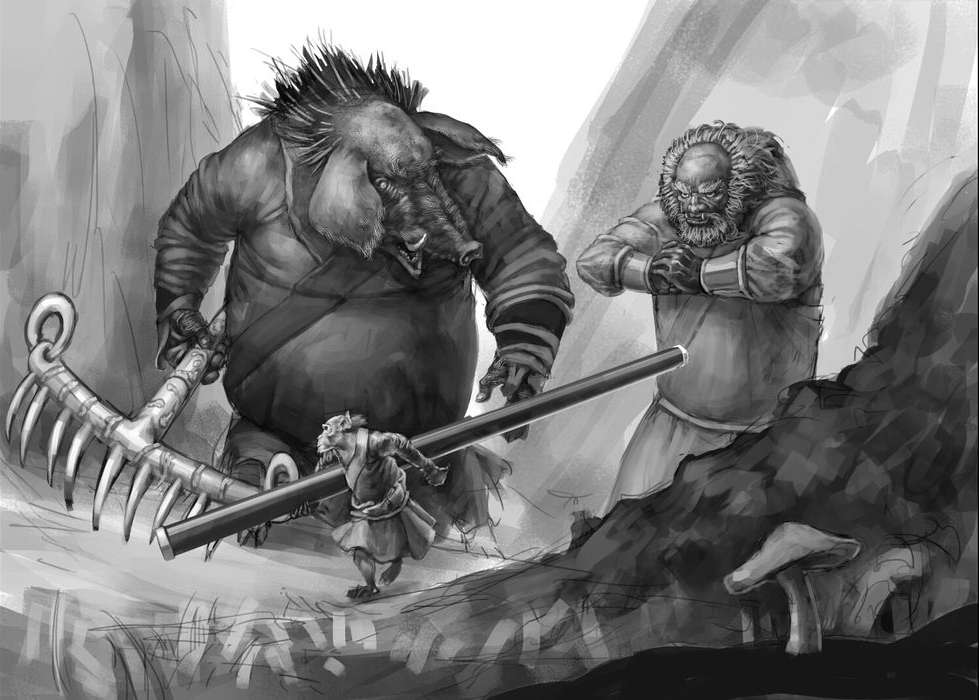
9) Enemies – Both face similar enemies: A) supernatural lions (Nemean Lion vs Lion demon); B) opponents that regrow their heads once severed but are eventually defeated with fire (Lernaean Hydra vs Bull Demon King); C) supernatural deer (Ceryneian Hind vs Great Immortal Deer Strength); D) supernatural boars (Erymanthian Boar vs Zhu Bajie); E) supernatural birds (Stymphalian birds vs Great Peng of 10,000 Cloudy Miles); and F) supernatural bulls (Cretan Bull vs Bull Demon King).

10) Tamer of horses – Both tame supernatural horses. Hercules tames the man-eating Mares of Diomedes. The Bibliotheca Historica of Diodorus reads:

The next Labour which Heracles undertook was the bringing back of the horses of Diomedes, the Thracian. The feeding-troughs of those horses were of brass because the steeds were so savage, and they were fastened by iron chains because of their strength, and the food they ate was not the natural produce of the soil but they tore apart the limbs of strangers and so got their food from the ill lot of hapless men. Heracles, in order to control them, threw to them their master Diomedes, and when he had satisfied the hunger of the animals by means of the flesh of the man who had taught them to violate human law in this fashion, he had them under his control (4.15.3; see also Ogden, 2021b).

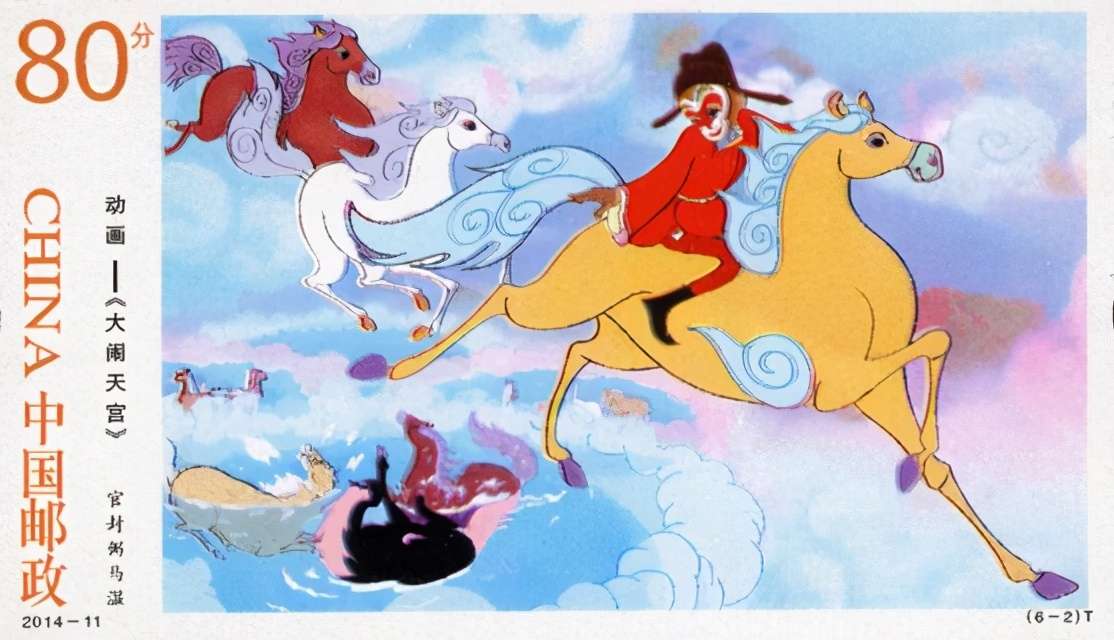
Monkey serves as the Keeper of the Heavenly Horses (fig. 2). Chapter four of JTTW reads:

Never resting, the [Sun] oversaw the care of the horses, fussing with them by day and watching over them diligently by night. Those horses that wanted to sleep were stirred up and fed; those that wanted to gallop were caught and placed in the stalls. When the celestial horses saw him, they all behaved most properly and they were so well cared for that their flanks became swollen with fat (Wu & Yu, 2012, vol. 1, p. 149).

Fig. 2 – A 2014 stamp featuring a scene from the classic 1960s animation Havoc in Heaven in which Sun Wukong serves as the keeper of the heavenly horses (larger version). Image found here.

11) Women lands – Both visit locations peopled entirely by women. Hercules visits the Amazons to get the heavenly war belt (zoster) of their Queen Hippolyte. The Bibliotheca of Pseudo-Apollodorus reads:

The ninth labour he [Eurystheus] enjoined on Hercules was to bring the belt of Hippolyte. She was queen of the Amazons, who dwelt about the river Thermodon, a people great in war; for they cultivated the manly virtues, and if ever they gave birth to children through intercourse with the other sex, they reared the females; and they pinched off the right breasts that they might not be trammelled by them in throwing the javelin, but they kept the left breasts, that they might suckle. Now Hippolyte had the belt of Ares in token of her superiority to all the rest. Hercules was sent to fetch this belt because Admete, daughter of Eurystheus, desired to get it. So taking with him a band of volunteer comrades in a single ship he set sail …

[After taking part in a small war elsewhere, Hercules finally arrived at his destination]

… Having put in at the harbor of Themiscyra, he received a visit from Hippolyte, who inquired why he was come, and promised to give him the belt. But Hera in the likeness of an Amazon went up and down the multitude saying that the strangers who had arrived were carrying off the queen. So the Amazons in arms charged on horseback down on the ship. But when Hercules saw them in arms, he suspected treachery, and killing Hippolyte stripped her of her belt. And after fighting the rest he sailed away and touched at Troy (2.5.9; see also Mayor, 2021).

Monkey and the other pilgrims travel through the “Woman Kingdom of Western Liang” (Xiliang nuguo, 西梁女國) in chapter 53 on their way to India (both Tripitaka and Zhu Bajie become pregnant from drinking magic water while there). In chapter 54, the group enters the capital in order to have their travel rescript signed by the queen, but she has other plans for the head monk:

The queen said, “This man from the Land of the East [China] is a royal brother of the Tang court. In our country, the rulers of various generations since the time when chaos divided had never seen a man come here. Now the royal brother of the Tang emperor has arrived, and he must be a gift from Heaven. We will use the wealth of an entire nation to ask this royal brother to be king; we are willing to be his queen. Such a sexual union will produce children and grandchildren, and the perpetuity of our kingdom will be assured (Wu & Yu, 2012, vol. 3, p. 49).

Sun helps arrange the marriage with the veiled purpose of ensuring that their travel rescript is signed (Wu & Yu, 2012, vol. 3, pp. 52-53).

12) Theft of fruit – Both steal supernatural fruit from the gardens of queenly goddesses. Hercules (in one version of the myth) steals Queen Hera‘s Golden Apples of the Hesperides. The Bibliotheca of Pseudo-Apollodorus reads:

But some say that he did not get them from Atlas, but that he plucked the apples himself after killing the guardian snake. And having brought the apples he gave them to Eurystheus. But he, on receiving them, bestowed them on Hercules, from whom Athena got them and conveyed them back again; for it was not lawful that they should be laid down anywhere (2.5.11; see also Salapata, 2021).

Monkey steals the Queen Mother’s immortal peaches. Chapter five of JTTW reads:

One day he saw that more than half of the peaches on the branches of the older trees had ripened, and he wanted very much to eat one and sample its novel taste. Closely followed, however, by the local spirit of the garden, the stewards, and the divine attendants of the Equal to Heaven Residence, he found it inconvenient to do so. He therefore devised a plan on the spur of the moment and said to them, “Why don’t you all wait for me outside and let me rest a while in this arbor?” The various immortals withdrew accordingly. That Monkey King then took off his cap and robe and climbed up onto a big tree. He selected the large peaches that were thoroughly ripened and, plucking many of them, ate to his heart’s content right on the branches. Only after he had his fill did he jump down from the tree. Pinning back his cap and donning his robe, he called for his train of followers to return to the residence. After two or three days, he used the same device to steal peaches to gratify himself once again (Wu & Yu, 2012, vol. 1, p. 162).

13) Chthonic saviors – Both travel to the land of the dead and bring someone back to life. Hercules goes to Hades to acquire Cerberus and saves Theseus in the process. The Bibliotheca of Pseudo-Apollodorus reads:

A twelfth labour imposed on Hercules was to bring Cerberus from Hades. Now this Cerberus had three heads of dogs, the tail of a dragon, and on his back the heads of all sorts of snakes. When Hercules was about to depart to fetch him, he went to Eumolpus at Eleusis, wishing to be initiated … [He sought ritual purification for his past misdeeds] … And having come to Taenarum in Laconia, where is the mouth of the descent to Hades, he descended through it … [He fended off the empty attacks of shades, rescued Theseus, sated the various ghosts with blood, and won a wrestling match against Menoetes] …When Hercules asked Pluto for Cerberus, Pluto ordered him to take the animal provided he mastered him without the use of the weapons which he carried. Hercules found him at the gates of Acheron, and, cased in his cuirass and covered by the lion’s skin, he flung his arms round the head of the brute, and though the dragon in its tail bit him, he never relaxed his grip and pressure till it yielded. So he carried it off and ascended through Troezen … [A]nd Hercules, after showing Cerberus to Eurystheus, carried him back to Hades (2.5.12; see also Hanesworth, 2021).

Sun travels to the Land of Darkness at least twice (ch. 3 & 97), the latter of which is the most important for our purposes. In chapter 97, he travels there in order to retrieve the spirit of a recently deceased benefactor:

With a series of cloud somersaults, that Great Sage went to the Region Below and crashed right into the Hall of Darkness … Pilgrim said, “Which one of you took away the soul of Kou Hong, the person who fed the monks in the Numinous Earth District of the Bronze Estrade Prefecture? Find out instantly and bring him to me.”

[…]

[After being led out] Kou Hong, who, on seeing Pilgrim, cried out, “Master! Master! Save me!” “You were kicked to death by a robber,” said Pilgrim. “This is the place of the Bodhisattva King Kṣitigarbha in the Region of Darkness. Old Monkey has come especially to take you back to the world of light so that you may give your testimony. The Bodhisattva is kind enough to release you and lengthen your age for another dozen years. Thereafter you’ll return here.” The squire bowed again and again.

Having thanked the Bodhisattva, Pilgrim changed the soul of the squire into ether by blowing on him. The ether was stored in his sleeve so that they could leave the house of darkness and go back to the world of light together. Astride the clouds, he soon arrived at the Kou house (Wu & Yu, 2012, vol. 4, pp. 338-339).

14) Heavenly war – Both take part in battles with heaven but on opposing sides. Hercules fights alongside the Olympian gods during the Gigantomachy. The Bibliotheca of Pseudo-Apollodorus reads:

But Earth, vexed on account of the Titans, brought forth the giants, whom she had by Sky. These were matchless in the bulk of their bodies and invincible in their might; terrible of aspect did they appear, with long locks drooping from their head and chin, and with the scales of dragons for feet. They were born, as some say, in Phlegrae, but according to others in Pallene. And they darted rocks and burning oaks at the sky. Surpassing all the rest were Porphyrion and Alcyoneus, who was even immortal so long as he fought in the land of his birth. He also drove away the cows of the Sun from Erythia. Now the gods had an oracle that none of the giants could perish at the hand of gods, but that with the help of a mortal they would be made an end of. Learning of this, Earth sought for a simple to prevent the giants from being destroyed even by a mortal. But Zeus forbade the Dawn and the Moon and the Sun to shine, and then, before anybody else could get it, he culled the simple himself, and by means of Athena summoned Hercules to his help. Hercules first shot Alcyoneus with an arrow, but when the giant fell on the ground he somewhat revived. However, at Athena’s advice Hercules dragged him outside Pallene, and so the giant died (1.6.1; see also Salowey, 2021).

Monkey fights against the Buddho-Daoist gods a few times. For instance, chapter four of JTTW reads:

Each displaying his divine powers, the Third Prince [Nezha] and Wukong battled for thirty rounds. The six weapons of that prince changed into a thousand and ten thousand pieces; the golden-hooped rod of Sun Wukong into ten thousand and a thousand. They clashed like raindrops and meteors in the air, but victory or defeat was not yet determined. Wukong, however, proved to be the one swifter of eye and hand. Right in the midst of the confusion, he plucked a piece of hair and shouted, “Change!” It changed into a copy of him, also wielding a rod in its hands and deceiving [Nezha]. His real person leaped behind Nata and struck his left shoulder with the rod. [Nezha], still performing his magic, heard the rod whizzing through the air and tried desperately to dodge it. Unable to move quickly enough, he took the blow and fled in pain. Breaking off his magic and gathering up his six weapons, he returned to his camp in defeat (Wu & Yu, 2012, vol. 1, p. 156).

15) Godhood – Both become deities at the end of their respective story cycles. Hercules joins the gods of Olympus after death. Reasons given for this apotheosis include his his 12 Labors, his Gigantomachy deeds, or simply his virtus (Romero-Gonzalez, 2021, p. 275). One account from the Bibliotheca Historica of Diodorus reads:

… Heracles, having abandoned hope for himself [due to exposure to hydra venom], ascended the pyre and asked each one who came up to him too put torch to the pyre. And when no one had courage to obey him Philoctetes alone was prevailed upon; and he, having received in return for his compliance the gift of the bow and arrows of Heracles, lighted the pyre. And immediately lightning also fell from the heavens and the pyre was wholly consumed.

After this, when the companions of Iolaus came to gather up the bones of Heracles and found not a single bone anywhere, they assumed that, in accordance with the words of the oracle, he had passed from among men into the company of the gods.

[Description of the kinds of sacrifices that the various Greek states made to Heracles as a hero and god following his death/ascension]

We should add to what has been said about Heracles, that after his apotheosis Zeus persuaded Hera to adopt him as her son and henceforth for all time to cherish him with a mother’s love, and this adoption, they say, took place in the following manner. Hera lay upon a bed, and drawing Heracles close to her body then let him fall through her garments to the ground, imitating in this way the actual birth; and this ceremony is observed to this day by the barbarians whenever they wish to adopt a son. Hera, the myths relate, after she had adopted Heracles in this fashion, joined him in marriage to Hebe (4.38.4-4.392; see also Romero-Gonzalez, 2021).

Sun is elevated to Buddhahood at the journey’s end. The Buddha says the following to Monkey in chapter 100 of JTTW:

“Sun Wukong, when you caused great disturbance at the Celestial Palace, I had to exercise enormous dharma power to have you pressed beneath the Mountain of Five Phases. Fortunately your Heaven-sent calamity came to an end, and you embraced the Buddhist religion. I am pleased even more by the fact that you were devoted to the scourging of evil and the exaltation of good. Throughout your journey you made great merit by smelting the demons and defeating the fiends. For being faithful in the end as you were in the beginning, I hereby give you the grand promotion and appoint you the Buddha Victorious in Strife [Dou zhansheng fo, 鬥戰勝佛] (Wu & Yu, 2012, p. 381).

16) Worship – Both are (were) worshiped. Hercules was worshiped by the ancient Greeks and Romans, while Sun is worshiped as the “Great Sage Equaling Heaven” in modern Chinese folk religion. It’s interesting to note that both deities are are believed to ward off evil.

II. Possible antecedents 

Scholars have previously noted how Hercules shares parallels with godly heroes of the ancient Near East. For example, here is one of two figures listed by Ogden (2021a):

Ninurta/Ningirsu, in the Akkadian epics Anzu and The Return of Ninurta to Nippur (both originally second millennium BC). He is the son of the storm-god and ruler of the gods, Enlil (cf. Zeus); he wears a lion-skin, carries a club and a bow (cf. Heracles’ equipment); he fights eleven or twelve monsters (cf. the Labors); after defeating them he brings them back to his city as trophies (cf. the demands of Eurystheus); and the beasts in question include a seven-headed serpent (cf. the Hydra), a wild bull (cf. the Cretan Bull), a stag (cf. the Cerynean Hind), the Anzubird (cf. the Stymphalian Birds), and a lion (cf. the Nemean Lion) (pp. xxiv-xxv).

Perhaps the Indic practices that would come to influence the Monkey King’s iconography were also influenced by the same ancient Indo-European sources.


Update: 09-27-25

I just thought of another parallel:

17. Doubles – Both have someone who looks exactly like them. Heracles’ double is his twin (half) brother Iphicles (Ἰφικλῆς). The Bibliotheca of Pseudo-Apollodorus reads:

But before Amphitryon reached Thebes, Zeus came by night and prolonging the one night threefold he assumed the likeness of Amphitryon and bedded with Alcmena and related what had happened concerning the Teleboans. But when Amphitryon arrived and saw that he was not welcomed by his wife, he inquired the cause; and when she told him that he had come the night before and slept with her, he learned from Tiresias how Zeus had enjoyed her. And Alcmena bore two sons, to wit, Hercules, whom she had by Zeus and who was the elder by one night, and Iphicles, whom she had by Amphitryon. When the child was eight months old, Hera desired the destruction of the babe and sent two huge serpents to the bed. Alcmena called Amphitryon to her help, but Hercules arose and killed the serpents by strangling them with both his hands. However, Pherecydes says that it was Amphitryon who put the serpents in the bed, because he would know which of the two children was his, and that when Iphicles fled, and Hercules stood his ground, he knew that Iphicles was begotten of his body (2.4.8; see also Pache, 2021).

Monkey’s double is the Six-Eared Macaque (Liu’er mihou, 六耳獼猴), who appears in JTTW chapters 56 to 58. Chapter 58 describes him as Wukong’s mirror image:

His looks were exactly the same as those of the Great Sage: he, too, had a golden headband clamped to his blond hair, a pair of fiery eyes with golden irises, a monk’s robe on his body, a tiger kilt tied around his waist, a gold-banded iron staff in one of his hands, and a pair of deerskin boots on his feet. He, too, had

A hairy face with the Thunder Lord’s beak, [2]
Empty cheeks unlike those of Saturn; 
[3]
Two forked ears on a big, broad head,
And fangs that have grown outward 
(based on Wu & Yu, 2012, vol. 3, p. 104).

See my previous article about Six Ears for more info.


Update: 10-04-25

And another:

18. Attack from within – Both are known for assaulting bad guys from inside their bodies. I, unfortunately, can’t find an English translation of the original fifth century BCE source for Heracles’ feat (due to its fragmentary nature), but Wickkiser (2021) provides a brief description: “Hellanicus, unlike Homer, provides details about how Heracles attacks the [sea creature] kētos: he climbs inside its mouth and enters its belly, where he ‘destroyed its flanks,’ cutting them from within” (p. 212). Also, Alexandra by Lycophron (3rd century BCE) gives the following account:

Alas! hapless nurse of mine burnt even aforetime by the warlike pineships of the lion that was begotten in three evenings [i.e. Heracles], whom of old Triton’s hound [i.e. kētos] of jagged teeth devoured with his jaws. But he, a living carver of the monster’s liver, seething in steam of cauldron on a flameless hearth, shed to ground the bristles of his head (source).

Attacking baddies from within is one of Monkey’s favorite methods. He successfully performs this in chapters 59, 66, 67, and 75 (Wu & Yu, 2012, vol. 3, pp. 129, 238, 249, and 380). Wukong attempts this twice in chapter 82, but only one is successful (Wu & Yu, 2012, vol. 4, pp. 104 and 110-111). Here’s an example from chapter 59:

“I’m now having a little fun in my esteemed Sister-in-law’s stomach! I am, as the saying goes, seeing right through you! I know how thirsty you must be, so let me send you a ‘sitting bowl’ to relieve your thirst.” Suddenly he shoved his foot down hard and unbearable pain shot through Rākṣasī‘s lower abdomen, sending her tumbling to the floor and moaning. “Please don’t refuse me, Sister-in-law,” said Pilgrim, “I’m presenting you with an added snack for your hunger.” He jerked his head upward, and unbearable pain coursed through Rākṣasī’s heart. She began to roll all over the ground, the pain turning her face yellow and her lips white. All she could do was to cry out, “Brother-in-law Sun, please spare my life!” (Wu & Yu, 2012, vol. 3, p. 129).

On a related note, I have posted an article that proposes a more natural reason for the two heroes to fight each other.

Story Idea: Sun Wukong vs Heracles / Hercules


Update: 10-17-25

And another:

19. Hair/fur color: Both have blond-colored hair/fur. EuripidesMadness of Heracles reads:

In Zeus’ glen first, in the Lion’s lair,
He [Heracles] fought, and the terror was no more there;
But the tawny beast’s grim jaws were veiling
His golden head, and behind swept, trailing
Over his shoulders, its fell of hair (source).

I again quote Chapter 58’s description of Monkey’s doppleganger:

His looks were exactly the same as those of the Great Sage: he, too, had a golden headband clamped to his blond hair, a pair of fiery eyes with golden irises, a monk’s robe on his body, a tiger kilt tied around his waist, a gold-banded iron staff in one of his hands, and a pair of deerskin boots on his feet. He, too, had

A hairy face with the Thunder Lord’s beak, 
Empty cheeks unlike those of Saturn; 

Two forked ears on a big, broad head,
And fangs that have grown outward 
(based on Wu & Yu, 2012, vol. 3, p. 104).

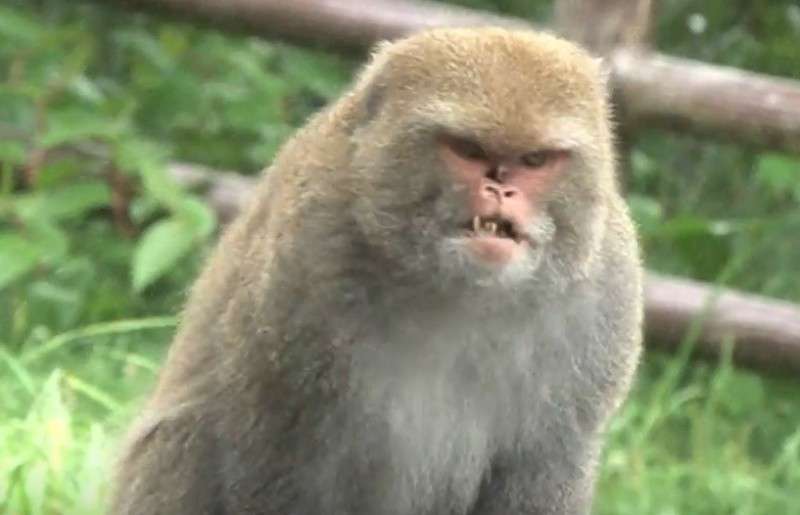
The original Chinese says the hair of Wukong and his double is huang (), or “yellow.” Macaque monkeys, like our hero, tend to have sandy blonde to light brown and even reddish fur (depending on the area of their body).


Update: 10-25-25

And another:

20. Feminine disguises – Both disguise themselves as women in order to hide their true identities. Plutarch’s Greek Questions reads:

Heracles, putting out with his six ships from Troy, encountered a storm ; and when his other ships had been destroyed, with the only one remaining he was driven by the gale to Cos. He was cast ashore upon the Laceter, as the place is called, with nothing salvaged save his arms and his men. Now he happened upon some sheep and asked for one ram from the shepherd. This man, whose name was Antagoras, was in the prime of bodily strength, and bade Heracles wrestle with him ; if Heracles could throw him, he might carry off the ram. And when Heracles grappled with him, the Meropes came to the aid of Antagoras, and the Greeks to help Heracles, and they were soon engaged in a mighty battle. In the struggle it is said that Heracles, being exhausted by the multitude of his adversaries, fled to the house of a Thracian woman ; there, disguising himself in feminine garb, he managed to escape detection (section 58; Matyszak, 2015, p. 123).

This story is only mentioned by Plutarch, however. Older writers don’t reference this defeat.

I think the most famous instance of Wukong taking on a feminine appearance happens in chapter 18, when he transforms into Zhu Bajie’s beleaguered wife:

Pilgrim said. “Old Man! Take your beloved daughter to the building in front, and then you can spend all the time you want with her. Old Monkey will be here waiting for him; if the monster doesn’t show up, don’t blame me. But if he comes at all, I’ll pull out the weeds of your troubles by the roots!” With great joy, old Mr. Gao led his daughter to the front building. Exercising his magic might, Pilgrim shook his body and changed at once into the form of that girl, sitting all by herself to wait for the monster (Wu & Yu, 2012, vol. 1, p. 374).

He goes on to act like a dissatisfied spouse, complaining that her family doesn’t know anything about Zhu’s family (i.e. his background) in order to learn more about him (Wu & Yu, 2012, vol. 1, p. 376).


Update: 01-10-26

Another deals more with their literary origins:

21. Compiled adventures – The stories of both heroes have been gathered from disparate sources. For Hercules, Grollios (1984) explains:

It is very fortunate that we possess today the work of a number of authors who undertook the difficult task of compiling and syncretizing the loose mass of myths that centred around Herakles in antiquity. They were called mythographoi and one of the most important among them was Pherekydes, a 5th century B.C. scholar from Athens, whose work survives only in fragments and references. Fortunately enough, another compiler called Apollodorus, who lived in Athens during the 1st century B.C., appears to have followed the work of Pherekydes quite closely in his own work, the Bibliotheke, which is today one of the most reliable sources (if not the most reliable) for the study of the myths about Herakles. There existed many other compilers, like Diodorus Siculus, Konon, Athenaeus, to mention just a few, who devoted part or the whole of their work to the preservation of myths, among which a large part was covered by myths concerning Herakles. It is mainly through their copious and scholastic collections that we are able today to possess a significant amount of information about the life and deeds of Herakles (p. XXVI).

The piecemeal origins of Sun Wukong’s adventures are discussed in this book:

Archive #33 – The Hsi-yu chi: A Study of Antecedents to the Sixteenth-Century Chinese Novel (1970)


Update: 01-12-26

And another:

22) Kill bee enemy – Both use their signature armaments to kill an opponent transformed into a bee. Hercules ends the shapeshifting warrior Periclymenus/Periklymenos, the son of King Neleus of Pylos, with his club. Frazer notes the following in his translation of [Pseudo] Apollodorus (1921):

As to Periclymenus, see the verses of Hesiod quoted by the Scholiast on Apollonius Rhodius, Argon. i. 156, according to whom Periclymenus received from Poseidon the power of turning himself into an eagle, an ant, a bee, or a snake; but Hercules, so says the scholiast, killed him with a blow of his club when he had assumed the form of a fly. According to another account, it was in the form of a bee that Periclymenus was slain by Hercules (Eustathius, on Homer, Od. xi. 285, pp. 1685 sq.; Scholiast on Homer, Il. ii. 336) (pp. 84-85, n. 1).

Monkey kills his doppelganger-turned-bee with his staff at the end of JTTW chapter 58:

When the macaque heard how Tathagata had announced his original form, he shook with fear; leaping up quickly, he tried to flee. Tathagata, however, at once ordered the Four Bodhisattvas, the Eight Diamond Kings, the five hundred arhats, the three thousand guardians of the faith, the mendicant monks, the mendicant nuns, the upasakas, the upasikas, Guanyin, and Moksa to have him completely encircled. The Great Sage Sun also wanted to rush forward, but Tathagata said, “Wukong, don’t move. Let me capture him for you.” The macaque’s hair stood on end, for he supposed that he would not be able to escape. Shaking his body quickly, he changed at once into a bee, flying straight up. Tathagata threw up into the air a golden almsbowl, which caught the bee and brought it down. Not perceiving that, the congregation thought the macaque had escaped. With a smile, Tathagata said, “Be silent, all of you. The monster-spirit hasn’t escaped. He’s underneath this alms bowl of mine:’ The congregation surged forward and lifted up the almsbowl; a sixth-eared macaque in his original form indeed appeared. Unable to contain himself anymore, the Great Sage Sun raised his iron rod and killed it with one blow on the head. To this day this species of monkey has remained extinct (Wu & Yu, 2012, vol. 3, p. 116).

Note:

1) Yu (Wu & Yu, 2012) uses “pounds” instead of the original jin (斤, a.k.a. catty) (vol. 1, p. 135). During the Ming dynasty when the novel was compiled, one jin equaled approximately 590 grams (Jiang, 2005, p. xxxi). I will therefore alter Yu’s translation to reflect more accurate measures.

2) This is comparing a monkey’s prognathic face with the beak of the Chinese thunder god, who is commonly portrayed as a bird man.

3) Saturn (Tuxing, 土星; lit: “Earth Star”) is mentioned here because the stellar deity is known for having a thickly-bearded face (see figure one on this article). The reference is saying that Sun Wukong’s sunken cheeks are hairless.

Sources:

Apollodorus. (1921). Apollodorus: The Library; With an English translation by Sir James George Frazer, F.B.A., F.R.S. (J. Frazer, Trans.). London: William Heinemann; New York: G. P. Putnam’s Sons.

Deacy, S. (2021). Heracles between Hera and Athena. In D. Ogden (Ed.), The Oxford Handbook of Heracles (pp. 387-394). United Kingdom: Oxford University Press.

Grollios, A. D. (1984). The Myths of Herakles as a Fighter (Publication No. 10867846) [Masters thesis, University of Glasgow]. ProQuest Dissertations & Theses Global.

Hanesworth, P. (2021). Labor XII: Cerberus. In D. Ogden (Ed.), The Oxford Handbook of Heracles (pp. 165-180). United Kingdom: Oxford University Press.

Hesiod, & Powell, B. B. (2017). The Poems of Hesiod: Theogony, Works and Days, and The Shield of Herakles. United States: University of California Press.

Hinsch, B. (2011). Women in Early Imperial China. Lanham, Md: Rowman & Littlefield Publishers.

Hsu, K. L. (2021). The Madness and the Labors. In D. Ogden (Ed.), The Oxford Handbook of Heracles (pp. 13-25). United Kingdom: Oxford University Press.

Jiang, Y. (2005). The Great Ming Code / Da Ming Lu. Vancouver, Wa: University of Washington Press.

March, J. (2021). Labor I: The Nemean Lion. In D. Ogden (Ed.), The Oxford Handbook of Heracles (pp. 29-44). United Kingdom: Oxford University Press.

Matyszak, P. (2015). Hercules: The First Superhero (An Unauthorized Biography). Canada: Monashee Mountain Publishing.

Mayor, A. (2021). The Girdle of the Amazon Hippolyte. In D. Ogden (Ed.), The Oxford Handbook of Heracles (pp. 124-134). United Kingdom: Oxford University Press.

Ogden, D. (2021a). Introduction. In D. Ogden (Ed.), The Oxford Handbook of Heracles (pp. xxi-xxxi). United Kingdom: Oxford University Press.

Ogden, D. (2021b). Labor VIII: The Mares of Diomede (and Alcestis). In D. Ogden (Ed.), The Oxford Handbook of Heracles (pp. 113-123). United Kingdom: Oxford University Press.

Pache, C. (2021). Birth and Childhood. In D. Ogden (Ed.), The Oxford Handbook of Heracles (pp. 3-12). United Kingdom: Oxford University Press.

Romero-Gonzalez, D. (2021). Deianeira, Death, and Apotheosis. In D. Ogden (Ed.), The Oxford Handbook of Heracles (pp. 266-280). United Kingdom: Oxford University Press.

Salapata, G. (2021). Labor XI: The Apples of Hesperides. In D. Ogden (Ed.), The Oxford Handbook of Heracles (pp. 149-164). United Kingdom: Oxford University Press.

Salowey, C. (2021). The Gigantomachy. In D. Ogden (Ed.), The Oxford Handbook of Heracles (pp. 235-250). United Kingdom: Oxford University Press.

Theocritus, & Gow A. S. F. (1952). Theocritus (Vols. 1-2). Kiribati: Cambridge University Press.

Wickkiser, B. (2021). Laomedon, Hesione, and The Sea-Monster. In D. Ogden (Ed.), The Oxford Handbook of Heracles (pp. 209-223). United Kingdom: Oxford University Press.

Wu, C., & Yu, A. C. (2012). The Journey to the West (Vols. 1-4) (Rev. ed.). Chicago, Illinois: University of Chicago Press.

Story Idea: Firearms and the Journey to the West Universe

From time to time I like to post a fun blog not directly related to (though sometimes informed by) my research. Regular articles will resume after this entry.

Last updated: 12-03-2024

I am currently reading Gunpowder Technology in the Fifteenth Century: A Study, Edition and Translation of the Firework Book (2024), and this got me thinking: what would the Journey to the West (Xiyouji西遊記, 1592) cosmos be like if there were guns? In this photo essay, I will briefly explore guns in Chinese folk religion, types of historical (mainly handheld) firearms used in ancient China, and, finally, ways that such weapons could be inserted into the narrative.

I. Folk Religion

I first set out to see if firearms play any part in Chinese folk religion. I found a few examples from Taiwan. The first is “Lord Red Flag” (Hongqi gong, 紅旗公; a.k.a. “Marshal of Sacred Righteousness,” Shengyi yuanshuai, 聖義元帥), a relatively recent martial god. He and his marshals are depicted holding rifles.

(Click on the pictures to enlarge them.)

Here’s a version without the cloak.

Even his tangki (spirit-medium) gets a chance to fire off some rounds.

Three more involve Prince Nezha. The first of two (from the same temple) is a traditional statue adorned with an M4 assault rifle and other modern weaponry.

Here’s a closeup of the rifle. Also, take note of the holstered revolver (i.e. the black pouch) on his waist.

The profile view shows clips on his belt (again, in black pouches), as well as a grenade on top of an ammo case at his feet.

The second is a three-headed and eight-armed Nezha with an anti-tank rocket launcher, a rocket round, and a grenade at his feet.

A third statue (my personal favorite) portrays the prince with an MP 40 submachine gun and modern military gear. The carving on the water is amazing. I first learned of it here.

I learned here and here that cannons are sometimes worshiped in East and Southeast Asia as fertility gods. (See the 09-29-24 update below for more info about cannons.)

I also learned that ritual guns sometimes appear in Chinese folk temples of Vietnam.

If present, the guns number among ritual weapons that are commonly found in martial god temples of Chinese folk religion. (But I’ve never personally seen a gun among said armaments in Taiwanese temples.) This Vietnamese article briefly mentions that the weapons are based on the eighteen arms of Chinese martial arts. And it’s interesting to note that a “hand canon” (chong, 銃) does appear among the eighteen arms listed in the Water Margin (Shuihu zhuan, 水滸傳, c. 1400):

Shi Jin daily sought Drill Instructor Wang’s tutelage in the eighteen (weapons of) martial arts. He taught him from the very beginning. Which eighteen martial arts?

Lance, hammer, bow, crossbow, hand cannon, whip, metal tablet, long sword, chain, truncheon, fu-axe, yue-axe, ge-halberd, ji-halberd, shield, staff and spear, and toothless rake. [1]

史進每日求王教頭點撥十八般武藝,一一從頭指教。 那十八般武藝?

矛錘弓弩銃,鞭簡(鐧)劍鏈撾,斧鉞並戈戟,牌棒與槍杈。

Perhaps this list influenced the ritual weapons in Vietnam.

II. Historical Firearms in Ancient China

Here is an example of a Yuan-era hand canon, minus the shaft.

Here is a “Three-Eyed Hand Canon” (Sanyan chong, 三眼銃), a three-barreled stick gun used during the Ming Dynasty.

You can see that they were attached to bladed polearms, which could be used offensively or defensively between reloading.

There were even five-barreled and shielded firearms called “Rapid-Thunder Hand Cannons” (Xunlei chong, 迅雷銃). So cool!

Here’s a Chinese video demonstrating the one and three-barreled versions:

III. Story Idea

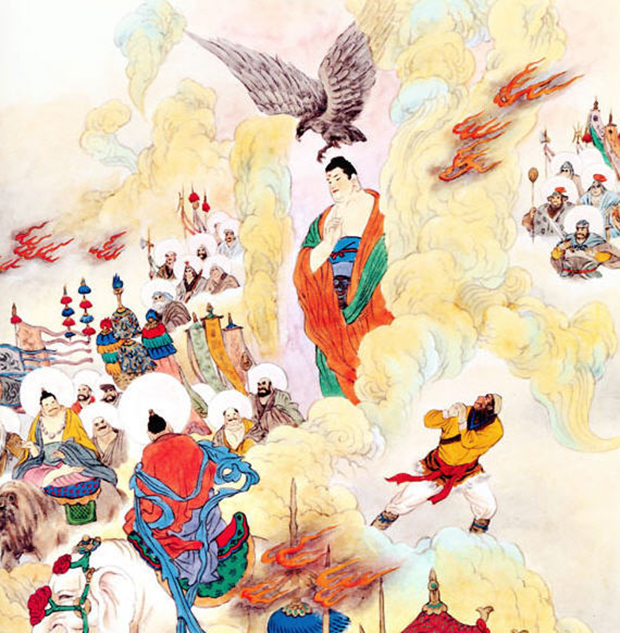
This brings me back to Journey to the West. How could firearms be inserted into a religious allegory? Well, for starters, a 950 CE wall mural in Dunhuang shows one of Mara‘s demons attacking the awakening Buddha with a “fire lance” (huoqiang, 火槍; upper right), a precursor of hand cannons. This is a clear example of a centuries-old association between firearms and spiritual warfare.

Here’s the full mural.

Now imagine that these weapons are wielded by celestial gunner-soldiers under the command of the “Star of Fiery Virtue” (Huode xingjun, 火德星君), the god of fire. In JTTW chapter 51, his literary troops utilize fire scimitars, fire bows, fire arrows, fire crows, fire horses, red (fire) rats, fire dragons, fire carts, fire gourds, fire banners, and fire rods in battle (Wu & Yu, 2012, vol. 3, p. 9). These are just a short step from firearms.

Given that the novel projects Ming-era concepts backwards to the Tang Dynasty, having gods wield such weapons hundreds of years before they were even invented wouldn’t be out of place in the JTTW universe. A writer could just say that the weapons were created in the realm above and eventually trickled down to mankind. Admittedly, I like the real history better because it shows the ingenuity of our predecessors, but the story requires a little tinkering.

Writers wanting to expand on the idea of firearms in heaven could take Ming gunners, their uniforms, and their strategies as models to work from. This page features a lovely figurine of such soldiers, including lots of juicy historical info. And the fact that the historical troops were part of the “Divine Machine Battalion” (Shenji ying, 神機營), which specialized in firearms, really solidifies their connection to the heavenly realm.

Who would make such weapons? There’s a fun answer for that: Laozi! The novel twice describes him forging mystical weapons belonging to our main characters. For example, Zhu Bajie mentions in chapter 19 that the high god made his rake: “This is divine ice steel greatly refined, / Polished so highly that it glows and shines. / Laozi wielded the large hammer and tong …” (Wu & Yu, 2012, vol. 1, p. 382). And Monkey claims in chapter 75 that the Daoist Patriarch created his staff: “The rod of steel nine cyclic times refined / Was forged in the stove by Laozi himself” (Wu & Yu, 2012, vol. 3, p. 375). So, on top of making alchemical medicines, Laozi could be heaven’s celestial gunsmith.

How could demons get ahold of celestial guns? Well, referring back to chapter 51, a buffalo-spirit uses the “diamond cutter” (jingang zhuo, 金鋼琢), an uber powerful, bracelet-like treasure-weapon also created by Laozi, to twice suck away all of the aforementioned fire weapons (Wu & Yu, 2012, vol. 3, pp. 9 and 23). Devil craftsmen would then have time to analyze the heavenly technology, which would allow them to eventually make their own (inferior?) copies.

Recall that the Great Peng demon is said in chapter 74 to have taken over a human kingdom by eating all of the inhabitants some 500 years ago, and the former population was replaced by spirits (Wu & Yu, 2012, vol. 3, p. 360). Firearms would definitely make a human-to-monster kingdom transition for less powerful demon kings a lot easier.

Another possibility is that a fiend could simply sneak into heaven to steal some. This may seem like an impossible task, but JTTW chapter 63 mentions something similar happening. The dragon-spirit “Princess All Saints” (Wansheng gongzhu, 萬聖宮(公)主) is said to have “[snuck] into heaven and stole[n] from before the Hall of Divine Mists the nine-leaf divine agaric planted by the Lady Queen Mother of the West” (Wu & Yu, 2012, vol. 3, p. 192). So, if someone can secretly infiltrate the realm above and steal divine vegetation, they could certainly steal heavenly armaments.

Perhaps the simplest way that demons could attain celestial firearms is by ambushing heavenly troops and commandeering their equipment.

I could see Red Boy (Honghai’er, 紅孩兒) using his powerful Samadhi flame to forge his own hand cannons, at least with the help of devil craftsmen. His association with fire only makes it natural that his own troops would carry firearms.

The only thing I can’t think of is how heavenly hand cannons would differ from their real world counterparts. Would they just use gunpowder and metal shot, or would it be more magical in nature, like shooting meteors? I’m open to suggestions from readers.


Update: 09-29-2024

The film Enoken no Songoku: Zenpen (エノケンの孫悟空 前編; a.k.a. “Enoken’s Songoku,” 1940) features the Monkey King mowing down demons with his staff-turned-machine gun.

There are at least two toys depicting the Great Sage with a gun. The first I learned about via a Facebook group post. I love how his sniper rifle is modeled on his magic staff. You can see the original packaging here.

And here is a Black Myth: Wukong-inspired figure with a powerful-looking rifle/shot gun combo. I saw it here.

Regarding cannons, I learned that a giant Western cannon was worshiped by court officials during the Ming. The History of the Ming (Mingshi, 明史, 1739) explains:

At this time, a ship arriving from the Great Western Ocean [i.e. the West] brought an enormous cannon, which got the name of the “Red Barbarian” [Hongyi, 紅夷]. It measured over two-zhang [20.86 ft/6.358 m] long, and weighed as much as 3,000 catties [3,902.18 lbs/1,770 kg]. It could demolish any stone city-walls, and its earthquake-like roar could be heard for several dozen li around. During the Tianqi [天啟] reign, the name of “Great General” [Da jiangjun, 大將軍] was given to it, and officials were sent to offer libations [si, 祀] to it (based on Needham, 1986, p. 392).

其後,大西洋船至,復得巨砲,曰紅夷。長二丈馀,重者至三千斤,能洞裂石城,震數十里。天啟中,錫以大將軍號,遣官祀之。

Needham (1986) suggests the cannon’s worship is connected to folk beliefs: “In Taoist folk-religion any device or machine of almost miraculous potency was something which should receive veneration” (p. 392 n. b).


Update: 10-05-24

I forgot to mention the “Gatling Gun Bodhisattva” (Jia-te-lin pusa, 加特林菩薩) from Chinese social media and Japanese manga. The following clip expounds the Heart Sutra of the Honored Gatling Gun Bodhisattva (Namo Jia-te-lin pusa Xinjing, 南無加特林菩薩心經).


Update: 11-23-24

Reader Danna Zhang left a wonderful comment about how Investiture of the Gods (Fengshen yanyi封神演義, c. 1620 CE), a sort of prequel to Journey to the West, also includes gunpowder weaponry:

Late comment, but FSYY also puts Ming dynasty gunpowder weapons into the 11th BCE Shang dynasty setting. Apart from the numerous mentions of “cannons go boom”, In Chapter 56, they broke Deng Jiugong’s ambush-disguised-as-wedding by hiding a cannon in the gift casket and using it to make a surprise attack, and in Chapter 88, Jiang Ziya suggests to King Wu that they need the “Sky-blasting Cannon” (轰天大炮) to breach the walls of Mianchi City.

At this point, I think the bronze age gunpowder weapon isn’t a bug, it'[s] a feature.


Update: 12-03-24

The Japanese Scroll of Battle Between Generations (異代同戱図巻, 17th-century) includes a depiction of Guanyin aiming a flintlock rifle, with the Dragon Girl waiting in attendance behind her.

Note:

1) The narration is based on my translation, while the weapons list is based on that from Lorge (2012). See page 147.

Source:

Lorge, P. A. (2012). Chinese Martial Arts: From Antiquity to the Twenty-First Century. United Kingdom: Cambridge University Press.

Needham, J. (1986). Science and Civilization in China. Volume 5: Chemistry and Chemical Technology; part 7, Military Technology: The Gunpowder Epic. Assisted by Ho Ping-yü et al. New York: Cambridge University Press.

Wu, C., & Yu, A. C. (2012). The Journey to the West (Vols. 1-4) (Rev. ed.). Chicago, Illinois: University of Chicago Press.


Does the Buddha Lie in Journey to the West?

I was recently directed to an online Chinese article by Ye Zhiqiu (叶之秋) (n.d.) in which they claim that the Buddha makes “four grand, overarching lies” (sige mitian dahuang, 四個彌天大謊) throughout the course of Journey to the West (Xiyouji, 西遊記, 1592; “JTTW” hereafter). They believe this is because the literary version of the Enlightened One is a master strategist who uses lies in a calculated attempt to usurp power from the Jade Emperor, ruler of the cosmos. This is admittedly a fascinating idea but one that falls apart under careful analysis. Ye (n.d.) displays a fundamental misunderstanding of the novel’s history and religious influences. Worse still, they appear to selectively interpret details to suit a possible agenda against Buddhism. In this article, I will show that there are far more plausible reasons for the Buddha’s statements than lying.

I. First Lie

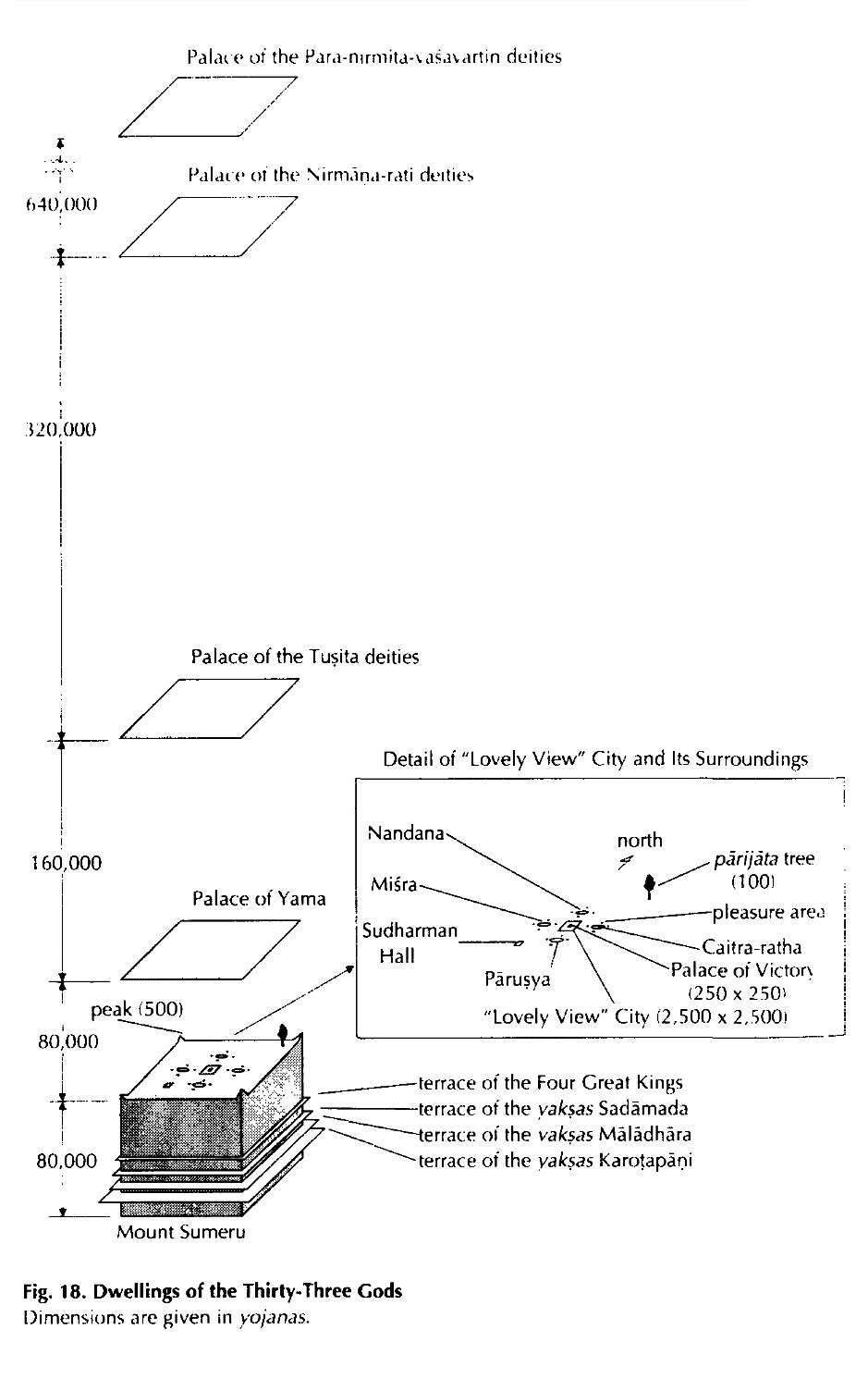
The Buddha states the following about the novel’s Hindo-Buddhist cosmos (ch. 8), which features four island-like continents floating in a great sea around a cosmic mountain (fig. 1):

I have watched the Four Great Continents, and the morality of their inhabitants varies from place to place. Those living on the East Pūrvavideha revere Heaven and Earth, and they are straightforward and peaceful. Those on the North Uttarakuru, though they love to destroy life, do so out of the necessity of making a livelihood. Moreover, they are rather dull of mind and lethargic in spirit, and they are not likely to do much harm. Those of our West Aparagodānīya are neither covetous nor prone to kill; they control their humor and temper their spirit. There is, to be sure, no illuminate of the first order, but everyone is certain to attain longevity. Those who reside in the South Jambūdvīpa, however, are prone to practice lechery and delight in evildoing, indulging in much slaughter and strife. Indeed, they are all caught in the treacherous field of tongue and mouth, in the wicked sea of slander and malice. However, I have three baskets of true scriptures which can persuade man to do good (Wu & Yu, 2012, vol. 1, pp. 204-205).

我觀四大部洲,眾生善惡,各方不一:東勝神洲者,敬天禮地,心爽氣平;北俱盧洲者,雖好殺生,只因糊口,性拙情疏,無多作踐;我西牛賀洲者,不貪不殺,養氣潛靈,雖無上真,人人固壽;但那南贍部洲者,貪淫樂禍,多殺多爭,正所謂口舌兇場,是非惡海。我今有三藏真經,可以勸人為善。

Ye (n.d.) claims that the Enlightened One is lying because most of the monsters show up not in the supposedly evil continent of South Jambūdvīpa (the Land of the East, i.e. China) but in the Buddha’s home of West Aparagodānīya (India). They even provide a long list of monsters encountered there. Also, the writer theorizes that the planned scripture pilgrimage is just a ploy to spread the Buddha’s influence to the Land of the East, making him the ruler of two of four continents. The implication here is that he is slowly chipping away at the Jade Emperor’s domain.

However, the Buddha was likely referring to the people in those particular continents and not the monsters. And most importantly, his words appear to mirror the views of foreign Buddhist monks. When the historical monk Xuanzang (玄奘; 602-664), on whom Tripitaka is based, planned to return home from India, his friends tried dissuading him by describing China in similarly negative terms. Brose (2021) comments:

For many of the monks he had befriended, the decision was hard to fathom. “India is the birthplace of the Buddha,” they reminded him. “Although the Great Sage is gone, his traces remain. To travel around and venerate them is enough to make one’s life content. Why would you want to give this up after having come here? China is a barbarian land where people are neglected, and the Dharma is despised. That is why no buddhas have ever been born there. The people have narrow aspirations and deep impurities, so sages do not go there. The air is cold and the land is dangerous. How can you think of returning there?” Xuanzang reportedly responded by quoting an exchange from the Vimalakīrti Sūtra, where the noble layman Vimalakīrti asks Śāriputra, “Why does the sun come to Jambudvīpa?” The answer: “To illuminate it and eliminate the darkness.” If Xuanzang remained in India, the true Dharma might never be known in China (pp. 61-62).

Additionally, Xuanzang is known to have left China illegally when he first began his journey. Brose (2021) explains:

Xuanzang almost didn’t make it to India. Before setting out on his pilgrimage, his initial request for a travel permit was denied by the [Tang] court and, after traveling over five hundred miles from the capital to the westernmost Chinese city of Liangzhou, the local governor ordered him to turn back. Hiding during the day and traveling at night, Xuanzang quietly continued on to the desert outpost of Guazhou. There, he learned that the court had issued a warrant for his arrest. The local prefect, it turned out, was a pious Buddhist and urged Xuanzang to leave quickly… (p. 16).

Conversely, the monk in JTTW is portrayed as a loyal Confucian-type person. Therefore, in order to frame Tripitaka as a faithful, law-abiding citizen of China, the novel had to provide a reason for his pilgrimage, one that the Tang emperor would give his blessing to. [1]

Fig. 1 – A diagram of the Hindo-Buddhist cosmos by MC Owens (larger version). Image from this talk.

II. Second Lie

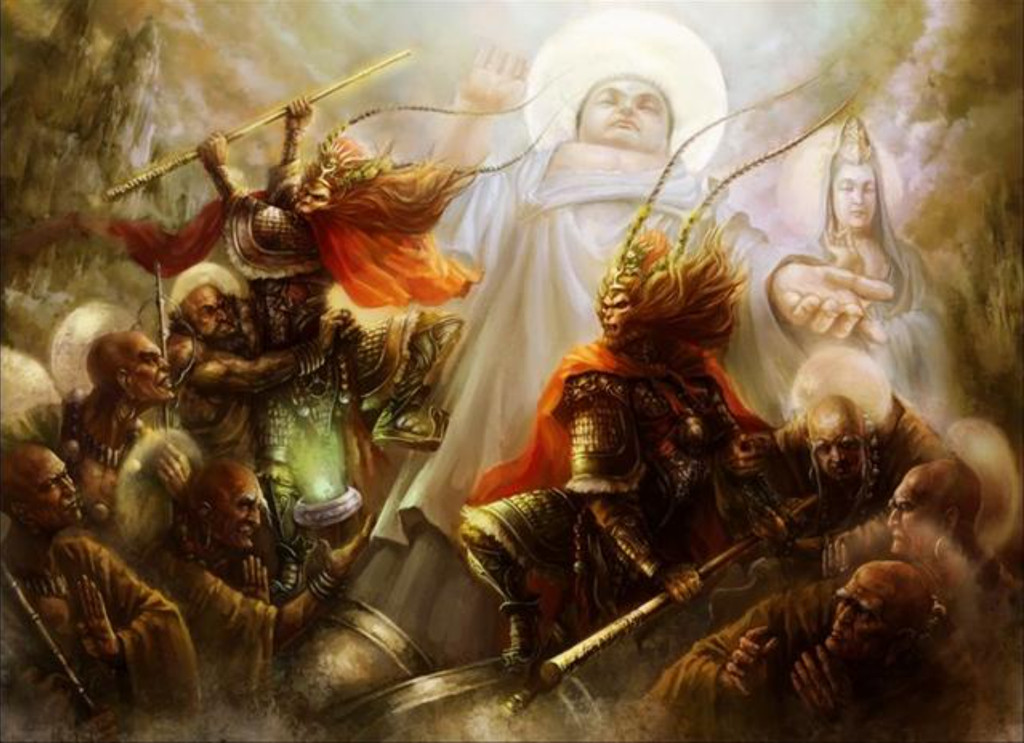
During Sun Wukong’s battle with the Six-Eared Macaque (ch. 58) (fig. 2), the Buddha reveals the doppelganger’s true identity, noting that he and Monkey are two of four celestial primates (hunshi sihou, 混世四猴, lit: “four monkeys of havoc”) with amazing abilities:

“The first,” said Tathāgata [the Buddha], “is the Stone Monkey of Numinous Wisdom, [2] who

Knows transformations,
Recognizes the seasons,
Discerns the advantages of earth,
And is able to alter the course of planets and stars.

The second is the Red-Buttocked Horse Monkey, who

Has knowledge of yin and yang,
Understands human affairs,
Is adept in its daily life
And able to avoid death and lengthen its life.

The third is the Tongbi Gibbon, who can

Seize the sun and the moon,
Shorten a thousand mountains,
Distinguish the auspicious from the inauspicious,
And manipulate planets and stars.

The fourth is the Six-Eared Macaque who has

A sensitive ear,
Discernment of fundamental principles,
Knowledge of past and future,
And comprehension of all things.

These four kinds of monkeys are not classified in the ten categories [of life], nor are they contained in the names between Heaven and Earth. As I see the matter, that specious Wukong must be a six-eared macaque, for even if this monkey stands in one place, he can possess the knowledge of events a thousand miles away and whatever a man may say in that distance” (Wu & Yu, 2012, vol. 3, p. 115).

如來道:「第一是靈明石猴,通變化,識天時,知地利,移星換斗;第二是赤尻馬猴,曉陰陽,會人事,善出入,避死延生;第三是通臂猿猴,拿日月,縮千山,辨休咎,乾坤摩弄;第四是六耳獼猴,善聆音,能察理,知前後,萬物皆明。此四猴者,不入十類之種,不達兩間之名。我觀假悟空乃六耳獼猴也。此猴若立一處,能知千里外之事;凡人說話,亦能知之。

Ye (n.d.) claims the Buddha concocted the list of supernatural primates in order to hide the fact that Six Ears was an aspect of the Monkey King’s mind. They reason that the falsehood was used to avoid offending the Daoist hierarchy who couldn’t figure out the doppelganger’s true identity.

I think the author’s issue here is that the Daoist gods considered Six Ears a real figure, while the Buddha knew him to be an aspect of Sun’s mind. Something being real and illusory at the same time may seem like a big contradiction, but it’s not in the JTTW cosmos. Campany (1985) explains that, as physical threats, the monsters enable Monkey and his religious brothers to build Buddhist merit (zhenguo, 正果; lit: “right fruit”) by fighting them. At the same time, being illusory aspects of the mind, the monsters help the pilgrims, especially Tripitaka, to understand that reality is empty (kong, 空). This is something that Wukong (悟空, “Aware of Emptiness”) reminds his master of throughout the journey.

Ye (n.d.) also points out that the listed powers of the Horse Monkey and Tongbi Gibbon don’t appear to be true, for they (under the guise of the commanders Ma and Liu and Beng and Ba – see section 2 here) are supposedly killed by Erlang’s forces in chapter six. They claim this proves that the two supernatural primates don’t actually exist. However, two things need to be said. One, the aforementioned underlings appear alive and well in chapter 28 (Wu & Yu, 2012, vol. 2, p. 32), meaning that they were not killed. And two, an irregularity in the story does not equate to a lie. The author hasn’t even come close to offering conclusive evidence of intent. Instead, I suggest that this is just an inconsistency born from the novel’s origin as individual oral tales that were eventually compiled, expanded, and published in book form. See, for instance, the 13th-century version of the story cycle. Therefore, irregularities are bound to pop up throughout the narrative.

But even if this lie was somehow true, how exactly does it further the Buddha’s supposed plan to take power from the Jade Emperor?

Fig. 2 – The Great Sage and Six Ears battle in the Western Paradise (larger version). Artist unknown.

III. Third Lie

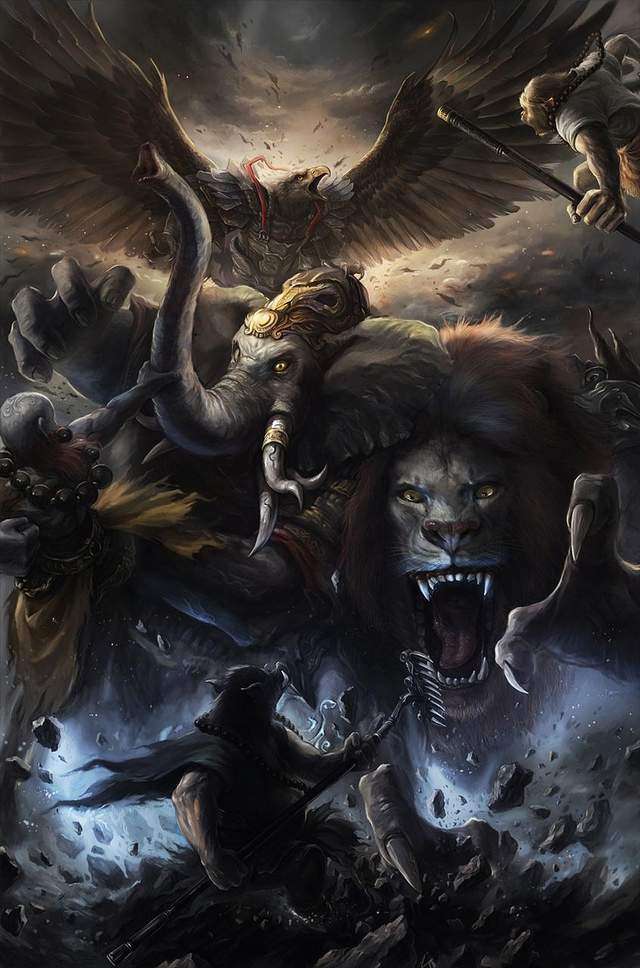
After the Buddha learns that the holy beasts of two bodhisattvas have escaped their respective mountain paradises and become man-eating demons on earth (ch. 77) (fig. 3), he has the following conversation with his disciples:

[…] Tathāgata left the lotus throne and went out of the monastery gate with the rest of the buddhas. There they saw Ānanda and Kāśyapa leading Mañjuśrī and Samantabhadra [3] on their way to the monastery also.

As the two bodhisattvas bowed to him, Tathagata asked, “How long have your beasts of burden been gone from your mountains?” “Seven days,” replied Mañjuśrī. “Seven days in the mountain,” said Tathāgata, “are equivalent to several thousand years on earth. I wonder how many lives they have taken down there. You must follow me quickly if we are to retrieve them.” With one bodhisattva standing on each side of him, the Buddha and his followers rose into the air (Wu & Yu, 2012, vol. 4, pp. 29-30).

如來即下蓮臺,同諸佛眾,徑出山門。又見阿儺、迦葉引文殊、普賢來見,二菩薩對佛禮拜。如來道:「菩薩之獸,下山多少時了?」文殊道:「七日了。」如來道:「山中方七日,世上幾千年。不知在那廂傷了多少生靈,快隨我收他去。」二菩薩相隨左右,同眾飛空。

Ye (n.d.) believes that the Buddha is lying about the corresponding time on earth in order to mask his guilt over not intervening sooner. As evidence, they cite the fact that the novel states “one day in heaven is equal to one year on Earth” (Wu & Yu, 2012, vol. 1, pp. 150 and 167). However, this could just be one of the aforementioned inconsistencies. One oral tradition may have said one day equals one year, while another said it equals one thousand years, and then both of these made it into the novel. But there is a more likely answer (see below).

They also claim that the respective Bodhisattvas’ mountain paradises are on earth, meaning they would be subject to the same time as the mortal world. This carries the implication that the beasts were eating people for at least a few hundred years and none of the Buddhist deities did anything to stop them. But the author clearly doesn’t understand earthly paradises like Mañjuśrī’s Mount Wutai (Wutai shan, 五臺山; lit: “Five Terrace/Platform Mountain”), which they mention by name in the article. Chou (2018) notes that a “central paradox of Mount Wutai” is that it is “both an earthly place and a Buddhist paradise (pure land)” (p. 142). Kōtatsu (Kōtatsu & Otowa, 1996) explains that Pure Lands (Jingtu, 净土) are “world[s] of another dimension” that are “temporally different from this one” (p. 45). Therefore, it seems more likely that the Enlightened One was referring to the time difference between Buddhist mountain paradises and the mortal realm. This is distinct from the Daoist heaven, which is expressly associated with the “one heavenly day = one earthly year” time dilation.

Additionally, Ye (n.d.) claims that Mañjuśrī is lying about the length of time his beast was absent because of a similar bout of guilt. It’s strange, though, that the writer’s answer for everything is “such and such Buddhist figure is being dishonest”. I’d be interested to read some of their other work to see if there’s a pattern of deconstructing Buddhism. JTTW clearly treats the religion with reverence, placing the Buddha and his disciples at the top of the novel’s cosmic hierarchy. Therefore, selectively interpreting details to support some agenda against Buddhism wouldn’t reflect positively on the author or their writing.

And again, I have to ask: How would this lie further the Buddha’s supposed plans?

Fig. 3 – Sun Wukong and his religious brothers battling the bird, elephant, and lion demons from Lion-Camel Cave (larger version). Artist unknown. Image found here. The elephant and lion are the missing holy beasts who became monsters on earth.

IV. Fourth Lie

After the Buddha captures the Great Peng (ch. 77) (fig. 4), the bird demon submits to Buddhism but stubbornly refuses to stop eating meat. The Enlightened One thinks for a moment and then offers him the following solution:

“In the four great continents of my domain,” said Tathāgata, “there are countless worshippers. I shall ask those who wish to do good to sacrifice first to your mouth” (Wu & Yu, 2012, vol. 4, p. 31).

我管四大部洲,無數眾生瞻仰,凡做好事,我教他先祭汝口。

Ye (n.d.) believes that the Buddha is deceptively bragging here in order to placate the uber powerful monster. At the same time, his statement about having dominance over the four continents is thought to be a lie since the Jade Emperor is the stated ruler of the cosmos. They reason that it’s evidence of the Enlightened One wanting to govern all four continents. But it’s important to remember that, as mentioned above, the novel takes place in a world modeled after Hindo-Buddhist cosmic geography, which Ye (n.d.) is fully aware of. The Daoist bureaucracy of JTTW is therefore a syncretic veil that has been draped over a pre-existing Buddhist structure. In the original system, the world is overseen by the Devarāja Śakra (Sk: Śakro devānāṃ indraḥ; Ch: Dishi, 帝釋) from the heaven of the thirty-three gods atop Mount Sumeru (Buswell & Lopez, 2014, pp. 739-740 and 921-922). (Interestingly, the novel hints that the Daoist bureaucracy is located in this very same heaven – see the material above figure two here). But despite the gods’ divine lifespans, as inhabitants of the Realm of Desire, they are still subject to death and therefore susceptible to the Wheel of Reincarnation (Buswell & Lopez, 2014, pp. 230-233). Only the Buddha can help such beings escape from the endless rounds of rebirth by leading them to enlightenment. He does this within the confines of his own domain or “Buddha-Field” (Sk: Buddhakṣetra; Ch: Focha, 佛刹). Buswell and Lopez (2014) explain:

[W]hen a buddha achieves enlightenment, a “container” or “inanimate” world is produced in the form of a field where the buddha leads beings to enlightenment. The inhabitant of that world is the buddha endowed with all the [qualities of an Enlightened One]. Buddha-fields occur in various levels of purification, broadly divided between pure and impure. Impure buddha-fields are synonymous with a world system (cakravāḍa), the infinite number of “world discs” in Buddhist cosmology that constitutes the universe; here, ordinary sentient beings (including animals, ghosts, and hell beings) dwell, subject to the afflictions of greed, hatred, and delusion. Each Cakravāḍa is the domain of a specific buddha, who achieves enlightenment in that world system and works there toward the liberation of all sentient beings… (p. 153).

Therefore, the JTTW cosmos is the Enlightened One’s Buddha-Field. But Ye (n.d.) appears to be aware of this fact (at least on some level), for they write: “The truth of the matter is that the Buddha is the lord of all sentient beings in the Buddhist schools of the four continents” (Zhenshi qingkuang shi, Rulai shi si dabu zhou fopai zhongsheng zhi zhu, 真實情況是,如來是四大部洲佛派眾生之主). So why would the writer still claim that the Buddha’s statement is a lie when they know it isn’t? This is a prime example of the author selectively interpreting facts.

Fig. 4 – A modern depiction of the Great Peng trapped above the Buddha’s head (larger version). Artist unknown.

V. Conclusion

Ye (n.d.) claims that the Buddha is a master strategist who makes “four grand, overarching lies” in a bid to usurp power from the Jade Emperor, ruler of the cosmos. But the writer demonstrates a fundamental misunderstanding of the novel’s history and religious influences. Worse still, they appear to selectively interpret details to suit a possible agenda against Buddhism. I show that the supposed falsehoods are instead likely based on the viewpoints of historical foreign monks, are inconsistencies within the JTTW narrative, reference Buddhist views of time, and reflect the Buddhist world system.

Notes:

1) The ruler’s decision to allow said pilgrimage is associated with a subplot in chapters 11 and 12 where he learns of countless orphaned souls in the underworld and searches for a monk to release them from their torments via a grand Buddhist ceremony. Tripitaka is chosen to lead the ceremony but is later convinced by the Bodhisattva Guanyin to halt the ritual until he has retrieved more appropriate scriptures from India.

2) Source altered slightly.

3) Yu (Wu & Yu, 2012) originally translates Puxian (普賢) as “Viśvabhadra” (vol. 4, pp. 29). I’ve changed it to “Samantabhadra” as this appears to be a more well-known version of the Bodhisattva’s name.

Sources:

Brose, B. (2021). Xuanzang: China’s Legendary Pilgrim and Translator. Boulder, Colorado: Shambhala Publications, Inc.

Buswell, R. E., & Lopez, D. S. (2014). The Princeton Dictionary of Buddhism. N: Princeton University Press.

Campany, R. (1985). Demons, Gods, and Pilgrims: The Demonology of the Hsi-yu Chi. Chinese Literature: Essays, Articles, Reviews (CLEAR), 7(1/2), 95-115. doi:10.2307/495195.

Chou, W. (2018). Mount Wutai: Visions of a Sacred Buddhist Mountain. Princeton; Oxford: Princeton University Press.

Kōtatsu, F., & Otowa, R. (1996). The Origin of the Pure Land. The Eastern Buddhist, 29(1), 33–51. http://www.jstor.org/stable/44362148.

Wu, C., & Yu, A. C. (2012). The Journey to the West (Vols. 1-4). Chicago: University of Chicago Press.

Ye, Z. (n.d.). Rulai fo sa de sige mitian dahuang [The Four Grand, Overarching Lies Cast by the Buddha]. Sohu. https://web.archive.org/web/20220731055723/https://m.sohu.com/n/474302290/.

Hercules vs Sun Wukong Death Battle Analysis

Last Updated: 10-04-2025

DEATH BATTLE! is a YouTube show that pits famous fictional and (now) mythological characters against one another to see who is the strongest. The outcome of each fight, usually ending in death, is supposedly based on research comparing the combatants’ respective canonical strengths and weaknesses. There are in total nine seasons with 161 episodes. The 162nd episode (episode 7 of season 9) will feature a battle between the hero Hercules from Greco-Roman myth and Sun Wukong from the Chinese Journey to the West (Xiyouji, 西遊記, 1592, JTTW hereafter) story cycle. I only learned about this upcoming fight a little over a week ago when I noticed via my website analytics that a DEATH BATTLE! staff member had linked to my research blog on their external site. Very little concrete information about the battle was released until a few days ago, so I’ve been scrambling to finish this article in preparation for the episode on June 20th, 2022. It can be watched here:

This may not seem very important to some of my followers and lurkers, but DEATH BATTLE! has 5.05 million subscribers, and their last video received 1.7 million views in just a week and the one before got 5 million in just 3 weeks! Therefore, the battle is likely to introduce many, many people to the Monkey King. For example, the primate hero’s fighter preview gained nearly 220,000 views in the first 24 hours, 260,000 as of June 18th, 2022. And as of the same date, Hercules’ fighter preview has 287,000 views.

Win or lose, the purpose of this article is to present accurate information about Sun Wukong. I will correct any mistakes that appear in the video. I will also present a list of surprising parallels shared between Hercules and Sun Wukong, suggesting that they might have been influenced by the same mythic tropes. See also my articles comparing Monkey with the Water Margin hero Wu Song and the historical Buddha.

Before continuing, I want to note that I know the original name is Heracles (or Herakles), but I will use Hercules throughout as this is the name chosen by the staff of DEATH BATTLE!

1. Analysis

1.1. The Death Battle

It’s official, Sun Wukong WON the fight. I will add my comments and corrections (in blue) to the official battle transcript:

An ancient scroll unfurls onscreen as a painted mountain manifests. An unseen narrator begins his story.

1. This was an interesting concept.

Muse: Our tale begins up top a great mountain, where the mighty Heracles sought a gift from the Gods.

As narrated, the legendary demigod finishes his trek up the mountain and calls out to the nearby Monkey King, Sun Wukong, who is sitting atop his Nimbus cloud and holding a divine fruit in his hand.

2. Just a tiny nitpick: The Nimbus cloud is not from JTTW but the Dragon Ball franchise. The novel refers to this skill as the Cloud-Somersault.

Hercules: Ho there! I’m in need of that apple. Relinquish it.

Wukong turns to face the hero and explains his own need for it.

Sun Wukong: Sorry, I’m supposed to find my master some vegetarian food.

3. I really like that the fight starts over fruit. As I note below (sec. 2, #12), both characters steal supernatural fruit (golden apples vs immortal peaches) from the gardens of queenly goddesses (Hera vs the Queen Mother of the West). So this was a nice nod to both myths.

But in hindsight, Monkey stealing the golden apples to feed his master doesn’t make much sense considering: 1) they are located in a land that’s much further west than the scripture monk’s final western destination, India; and 2) I don’t recall reading that the golden apples were anything other than treasures. To my knowledge, none of the associated myths treat them as foodstuff. Someone please correct me if I’m wrong.

However, the explanation is ignored. His short temper kicking in, Hercules draws his sword from its scabbard and threatens Wukong.

Hercules: You’ll find it… elsewhere.

With a shrug and groan of annoyance, Wukong passes the apple to Hercules, who catches it.

Muse: But Heracles was not so easily fooled.

4. Legitimate question: Is Hercules known for having supernatural perception? Are there examples of him seeing through illusions in his original mythos? If anyone knows, please leave a comment.

The hero’s satisfaction turns to indignation as he crushes the illusory fruit in his hand, revealing it to merely be strands of Wukong’s hair. With his scheme discovered, the trickster god pulls out a miniaturized Ruyi Jingu Bang from his ear and enlarges it to its standard size. Laughing with glee, he leaps from his cloud and clashes with Hercules’ sword,

5. Another tiny nitpick: The “standard size” in the animation was not large enough. The novel states that Monkey fights with the staff when it’s around 12 feet (3.65 m) long [1] and the width of a bowl (Wu & Yu, 2012, vol. 1, p. 135, for example). [2] This illustration (fig. 1) shows how big the staff should be in relation to Sun’s body size.

Fig. 1 – Monkey and his religious brothers on patrol (larger version). Artwork by @真·迪绝人 (see here and here). Image found here.

Muse: The Monkey King’s strike rang true, but he’d not so easily overwhelm the God of Strength.

Locked in a clash of weapons, Hercules slashes at Wukong, who dissipates into smoke. The monkey flies behind Hercules on his Nimbus and jabs the hero in the gut with his staff, sending him flying into a cliff below. The mighty demigod is hardly phased though and springs back with a powerful dropkick against the advancing Wukong, sending them down another level.

6. I personally thought Monkey relied far too much on turning into a puff of smoke. I think he instead would have preferred to meet Hercules head-on.

As they both land, Hercules attempts to slash him with his sword once again, but Sun Wukong disappears in a smoke cloud and strikes Hercules with his Ruyi Jingu Bang. As Hercules lies on the ground, the Monkey King extends the staff and brings it down on the hero, who raises his sword to block the strike, only for the blade to shatter. Quickly recovering, Hercules grabs the Ruyi Jingu Bang and pulls on it, bringing Sun Wukong down to him.

Hercules: I am Heracles!

With a single mighty punch to the jaw, Heracles sent the Monkey King soaring through the sky, hitting the edge of the scroll and forcing it to go higher up before landing on a nearby cloud. Before the Monkey King has time to even breathe, Hercules shoots an arrow at him, only narrowly missing.

Sun Wukong: Yikes!

As the hero continues his assault, Wukong begins to jump through the clouds in order to avoid all of his shots, and after beginning to fly with one of them, summons several clones with his hairs to try and reach Hercules. However, the God of Strength manages to shoot down almost all of the clones. One of them climbs onto the cloud Wukong is riding and grabs his tail. Wukong spins him around and launches himself and the clone at Hercules. The Wukongs turn into birds to reach Hercules faster, before turning into snakes to restrict his arms. Tired of the monkey’s shenanigans, Hercules breaks free and grabs his rattles.

7. Legitimate question: Does Hercules have unlimited arrows? Please let me know.

Regarding the transformations, this seemed so out of place during the battle as Monkey never uses animal forms offensively. He instead uses them for stealth or, most famously, to hide from from an opponent

Hercules: Die, demon!

The loud noise echoes through the skies, destroying every single Wukong clone. Reeling in pain from the noise, Wukong’s snake transformation comes undone as he tumbles down the mountain into the forest below.

Sun Wukong: Agony, agony!

8. Why would the rattles have any effect on Monkey? I don’t recall his ears being a weakness

Update: 06-24-22

A redditor explained the following: “It’s not so much that Wukong is weak to sound, more so that the krotalas [rattles] are so loud that the noise causes pain to whatever hears them…”

But the original sources don’t make this claim. For example, the Argonautica of Apollonius Rhodius reads: 

“For not even could Heracles, when he came to Arcadia, drive away with bow and arrow the birds that swam on the Stymphalian lake. I saw it myself. But he shook in his hand a rattle of bronze and made a loud clatter as he stood upon a lofty peak, and the birds fled far off, screeching in bewildered fear” (2.1052).

The Bibliotheca Historica of Diodorus reads:

“Heracles then received a Command to drive the birds out of the Stymphalian Lake, and he easily accomplished the Labour by means of a device of art and by ingenuity. The lake abounded, it would appear, with a multitude of birds without telling, which destroyed the fruits of the country round-about. Now it was not possible to master the animals by force because of the exceptional multitude of them, and so the deed called for ingenuity in cleverly discovering some device. Consequently he fashioned a bronze rattle whereby he made a terrible noise and frightened the animals away, and furthermore, by maintaining a continual din, he easily forced them to abandon their siege of the place and cleansed the lake of them” (4.13.2).

And Pausanias writes:

“There is a story current about the water of the Stymphalus, that at one time man-eating birds bred on it, which Heracles is said to have shot down. Peisander of Camira, however, says that Heracles did not kill the birds, but drove them away with the noise of rattles” (8.22.4).

As can be seen, no mention is made of the implements being painfully loud to anything other than the birds (please provide an example if you know otherwise). While uncertain of the true reason why the rattles appear in the story, Aston (2021) posits that they could reference cultic practices or even just the “noisy rattle[s] or clapper[s] … used by farmers to scare birds from their crops” (p. 102).

I can understand the rattles working if Monkey was still in bird form, but the clone attacking Hercules had already transformed into a snake at the point. And the rattle subsequently affects all of the clones. This doesn’t make any sense.

The scroll unfurls further, revealing the spot where the Monkey King landed, as he begins to laugh.

Muse: The Monkey King fell into a strange forest, in awe of such a wondrous fight. But should he mistake his fear, he might lose his head.

Hercules comes crashing down, instantly crushing Wukong’s head with his club. But to his shock, the beheaded body of the Great Sage gets right back up.

9. Crushing Monkey’s head would not be possible with the olive club, for it would break over his adamantine crown like when Hercules broke the weapon over the Nemean Lion‘s head (sec. 2, #3). Sun’s crown is one of the hardest parts of his body, easily taking direct blows from even sharp weapons wielded by demons with no issue (sec. 1.2, #3).

It think it would have made more sense for both heroes to have, at some point, exchanged blows with their respective blunt weapons (sec. 2, #4). But, again, the club wouldn’t have lasted long. This brings me back to my previous question about the number of Hercules’ arrows. If he ran out, then he would be weaponless after both his sword and club are destroyed.

So, I think at this point Sun would have placed his staff in his ear and offered to have a boxing match with the Greek hero. Something similar happens twice in JTTW. In chapter two, Monkey confronts a demon that had been terrorizing his children during his quest for immortality. But when the monster sees that the primate is not only small but also unarmed, he offers to fight him barehanded in order to avoid criticism from other demon kings. Sun ends up beating him so badly that the monster rushes to defend himself with his sword (Wu & Yu, 2012, vol. 1, p. 128). And in chapter 51, another demon uses a powerful treasure stolen from heaven to take away Monkey’s staff, leading the latter to challenge the monster to unarmed combat to show that he isn’t useless without his weapon. A poem describing the subsequent battle states that the combatants use real-world punching and kicking techniques, many of which are known and still practiced today. And while said poem claims that they are equally matched, all of the heavenly commanders agree that Monkey’s technique is faster and more polished (Wu & Yu, 2012, vol. 3, pp. 12-14)

Seeing Hercules and Sun duke it out, causing the earth to shake and mountains crumble, would be much more entertaining than the latter’s game of hopscotch among the clouds from the video.

Sun Wukong: I haven’t had such fun since I fought all of Heaven! Change!

Wukong transforms into a taller, three-headed and six-armed version of himself, with three separate Ruyi Jingu Bangs included.

Sun Wukong: Behold me, the Immortal Monkey King!

Hercules stares at his opponent’s transformation and laments his misfortune.

Hercules: Huh… Multiple heads. Of course.

10. A nice nod to the Lernean Hydra.

Both warriors begin to trade blows, Hercules managing to avoid a few of Wukong’s strikes before being disarmed of his club and becoming a victim of a staff combo before being kicked away. He shoots out three more arrows at the Monkey King, which seemingly manage to damage him, before his three-headed form dissipates into smoke, and the real Wukong jumps right back up to the clouds, before sending out his staff to hit Hercules once more. The hero merely watches before the staff suddenly grows into an enormous size mere inches away from his face.

11. Monkey does indeed use deceptive magic doubles in battle. One example happens in chapter 4 during his fight with Prince Nezha

“They clashed like raindrops and meteors in the air, but victory or defeat was not yet determined. Wukong, however, proved to be the one swifter of eye and hand. Right in the midst of the confusion, he plucked a piece of hair and shouted, ‘Change!’ It changed into a copy of him, also wielding a rod in its hands and deceiving [Nezha]. His real person leaped behind [Nezha] and struck his left shoulder with the rod. [Nezha] … heard the rod whizzing through the air and tried desperately to dodge it. Unable to move quickly enough, he took the blow and fled in pain” (Wu & Yu, 2012, vol. 1, p. 156).

Hercules: Huh?

He is suddenly crushed underneath the Ruyi Jingu Bang as Wukong sits on top of it and laughs. But the staff suddenly begins to shake, as Hercules begins to lift it from underneath.

Hercules: You’ve had your fun, beast, but I’ve had enough!

Hercules throws the staff away, forcing Wukong to get off it before changing its size once more, and preparing to strike a finishing blow. Hercules sees this and charges towards the Monkey King, clashing with the staff with only his fist. But as the blows make contact, two blue, divine versions of the two warriors can be seen holding the scroll, before preparing their weapons for a clash of their own. The club of Hercules’ celestial body leaves a trail of constellations, while the celestial Ruyi Jingu Bang leaves a trail of names of Four Symbols written in Chinese in its wake.

Muse: The gods watched their earthbound selves, and so joined in battle. The God of Strength mustered the heart of Olympus, while the Great Sage harnessed power equal to Heaven! Thus…

The two celestial bodies swing at each other, with the force of the blows turning the screen a blinding white. Slowly, the light fades away to reveal that Hercules’ celestial body has been impaled by the Ruyi Jingu Bang. The scroll floats back into view, covering the screen once more.

12. I think I understand what the Death Battle staff was going for when they portrayed each character in their celestial form. But this contradicts their promise to not use the heroes’ post-apotheosic versions. Therefore, this also seemed extremely out of place during the fight.

Muse: The Monkey King emerged victorious!

Returning back inside the scroll, Wukong’s attack manages to overpower Hercules, and its might destroys the God of Strength leaving nothing behind.

Sun Wukong: Wow, would you look at that! I struck him so hard he was reduced to nothingness!

13. I think this would have only killed Hercules’ mortal half, releasing the god within and prolonging the fight. While sources vary on what caused his apotheosis (virtus vs the 12 Labors vs Gigantomachy deeds), it’s clear that the son of Zeus become a god upon his fiery death (Romero-Gonzalez, 2021, p. 275).

Wukong laughs once more and grabs the apple, leaving the forest to rejoin his master.

Muse: With a formidable foe slain, stricken against the mountain’s breast, so ends our great tale of East and West.

14. I was honestly underwhelmed by the ending. It seemed like the staff ran out of time, money, or interest and decided to stop the episode prematurely. It should have gone on much longer since Hercules and Sun Wukong are the first two mythological characters to be featured. I also thought Hercules was splattered way too easily. I’m sure there could have been a different way to end the fight. It would have been more respectful to both pantheons if the heroes had simply come to a draw and, having developed a newfound respect for each other’s skills, parted as bond brothers.

But considering that the show is called “Death Battle!”, somebody needs to die (the fans would otherwise be upset). So, baring that in mind, I thought of an idea five days before the episode aired, but I must admit that it’s not very respectful to the Greek hero. In my scenario, Sun seemingly disappears, but he actually turns into an insect and flies into Hercules’ mouth and crawls into his stomach. There, Monkey beats him up from the inside using the iron staff or even his fists. Then he instantly takes on his 100,000 foot (30,480 m) tall cosmic form, causing Hercules’ mortal body to explode. This “attack from within” tactic appears in chapters 59, 75, and 82 of JTTW, [3] as well as chapter 11 of the late-13th-century version of the story cycle

Lasty, I didn’t think the sprite animation was appropriate for such a mythic showdown. I personally would have liked more dynamic, hand-drawn animation like that from the Omni-man vs Homelander episode.

Update: 06-24-22

The same redditor from above also explained that the show apparently has budgetary constraints on episode length and art style. This explains the seemingly abrupt ending and the sprite animation. Hand drawn animation is apparently only reserved for the very tip of the top-most requested matchups.

This still doesn’t change my opinion, though. This was their first battle between extremely famous mythological characters. The fight should have been more grand.

But this information still doesn’t change my opinion of the episode. Rooster Teeth should have allotted a larger budget and made the episode longer.

1.2. The Results

I will do the same for the official fight result transcript:

Boomstick: Talking about a herculean matchup.

Wiz: Heracles was among the greatest heroes in myth, but the Great Sage Equal to Heaven held many more advantages.

Boomstick: You’d think Sun might not measure up to the God of Strength… you know, strength, but he totally could. remember he carried Sumeru on his back, the mountain holding up the infinite celestial sky, like how Heracles held up the infinite celestial sphere.

1. The Death Battle researchers likely learned about this feat from my article. But nowhere do I write that the mountain upheld the sky. The Abhidharmakośa (Ch: Api damo jushe lun, 阿毗達磨俱舍論, 4th to 5th-century) contains an overview of the Hindo-Buddhist cosmos, and it states that the sun, moon, and stars orbit half way down the exposed portion of the mountain [4] in a whirlpool-like ring of wind (Vasubandhu, 2014, pp. 460; Sadakata, 1997, p. 38-40). But the source doesn’t associate this ring with any weight.

Conversely, native Chinese mythology views the sky as a solid object that must be propped up by mountains. And if one of these earthly pillars is damage, it will cause the sky to tilt and even tear, requiring divine repair. See, for example, the legend of Nuwa mending the sky (Birrell, 1999, pp. 69-72 and 96-97). But this has no baring on the discussion at hand as Journey to the West expressly describes the world according to Hindo-Buddhist cosmic geography.

Therefore, Sun’s feat should be scaled accordingly. But I’m not sure how this would be possible as the Buddhist and Greek concepts of the sky appear to be fundamentally different. I’ll have to read more on the latter concept to be sure.

Update: 06-25-22

I was contacted by a reader who said that the episode’s Sun Wukong researcher responded to me on the Death Battle discord, stating:

“To clarify, the basis for what Sumeru supports comes from the Buddhist cosmology lectures sourced in the character sheet. Though the article Jim wrote was what made me initially take note of the feat.

https://www.youtube.com/watch?v=6agAavZTEK0

https://www.youtube.com/watch?v=UMQeFiwacbQ” (per a screenshot emailed to me). 

But I’ve watched the videos and they don’t contradict what I wrote. The problem is that the researcher didn’t make a distinction between the “sky” (as stated in the Death Battle video) and “heaven.” I’ve already described the wind ring in which the celestial bodies orbit the midpoint of Mt. Sumeru. So, now I will give a brief and very simplified overview of the Buddhist cosmos to help readers form a better picture of what I’m arguing. As the axis mundi, Mt. Sumeru is located at the center of our earthly realm, with a ring of seven smaller mountains circling it. This landmass is surrounded by four island-like continents, one for each face of Sumeru, that float in a great sea resting on a disc of golden earth (kāñcanamaṇḍala). This is then supported by a disc of water (jalamaṇḍala) and finally a disc of wind (vāyumaṇḍala), each layer generally becoming larger as one descends. This grand creation is thought to float in “space” (ākāśa) (Sadakata, 1997, pp. 25-30), sometimes translated as “sky” (Buswell & Lopez, 2014, p. 26). There are indeed various layers of heavens on and above Mt. Sumeru, but they appear to be separate from this space/sky (fig. 2). The first two heavens, that of the Four Great Kings and the 33 Gods, are respectively located at the midpoint and summit of Mt. Sumeru. But the following four heavens float above it at varying heights (fig. 3) (Sadakata, 1997, pp. 56-62). Therefore, by running with Mt. Sumeru on one shoulder (and Mt. Emei on the other), Monkey would have supported both the landmass and the two earthly heavens, a monumental task to be sure. But he doesn’t support the four floating heavens above or, most importantly, the space/sky that they are located in. 

Having written the above, I want to note that I’m not claiming Hercules’ feat is stronger by default. I just want to present accurate information. I will at some point post an update with info about ancient Greek concepts of the sky.

Fig. 2 – A diagram of the Buddhist cosmos by MC Owens (larger version). Image from this talk. It’s the most simplistic, eye-catching version I’ve seen. The column of red, blue, and purple rings on the bottom represent the various layers of Hell. Fig. 3 – A diagram of the various heavens on and above Mt. Sumeru (larger version). From Sadakata, 1997, p. 60.

Wiz: As befitting heroes of myth they were on par in that they were both incomprehensibly strong, however, Wukong’s healing abilities meant he could bounce back from Heracles deadliest blows, whereas Heracles did not have a similar option.

Boomstick: But Heracles did have one way of putting the Monkey King down, his arrows dipped in hydra poison.

Wiz: The hydra poison threatened even the gods of Olympus, similar to the scorpion sting. Whether or not it would be fatal is questionable but it could have incapacitated Wukong, similar to how it affected Heracles himself.

2. The novel presents concepts with elemental states beyond heaven and earth. A prime example is Red Boy‘s Samādhi fire, which is considered more powerful than normal or even divine flames. [5] Likewise, the scorpion’s “horse-felling poison” (daoma du, 倒馬毒) likely falls into this separate category, for it was able to hurt even the Buddha! The bodhisattva Guanyin explains:

“Once upon a time she [the scorpion] happened to be listening to a lecture in the Thunderclap Monastery. When Tathagata saw her, he wanted to push her away with his hand, but she turned around and gave the left thumb of the Buddha a stab. Even Tathagata found the pain unbearable!” (Wu & Yu, 2012, vol. 3, p. 72).

The aforementioned monastery is located in the Western Paradise. This suggests that she might have been imbued with “dharma power” [6] over a certain period of time, making her a super powerful foe. Even the bodhisattva Guanyin fears her sting (Wu & Yu, 2012, vol. 3, p. 72). 

I suggest that the scorpion’s sting may be stronger than the hydra’s heavenly poison. [7] Therefore, I question if the latter would have the same effect on the Monkey King.

Boomstick: But that is one very specific win condition and we’re looking at this with every possible option in mind.

Wiz: With his variety of clones, transformations and numerous other spells, Wukong’s arsenal was far more versatile.

Boomstick: Like, there was nothing stopping him from making thousands of clones of himself and just sitting back, while they beat up Herc for him. Unsporting been like? Sure. In character? Absolutely.

Wiz: Even then, those arrows would have to actually strike Wukong, which would be extremely difficult. Yes, in some depictions Heracles could potentially shoot the sun of Helios, his arrows flying 90 times the speed of light. However, in his contest with the Buddha, Wukong leap to the edge of the universe in a single second. To do so he had to be moving over 1.4 quintillion times faster than light.

3. But even if the hydra venom was equally potent, there is no guarantee that Hercules’ arrows could pierce Sun’s adamantine hide. The novel is clear that Monkey’s frame is nearly indestructible. For instance, upon his capture, heaven fails to execute him:

“They then slashed him with a scimitar, hewed him with an ax, stabbed him with a spear, and hacked him with a sword, but they could not hurt his body in any way. Next, the Star Spirit of the South Pole ordered the various deities of the Fire Department to burn him with fire, but that, too, had little effect. The gods of the Thunder Department were then ordered to strike him with thunderbolts [lei xie ding, 雷屑釘, lit: “nails of thunder”], but not a single one of his hairs was destroyed.” (Wu & Yu, 2012, vol. 1, p. 188).

This invincibility follows him throughout the novel. For example, in chapter 75, Sun agrees to a demon lord’s offer to set the monk free if he can survive a blow to his head with a scimitar (fig. 4):

“‘When he heard this, Pilgrim smiled and said, ‘Fiend! If you have brush and paper in your cave, take them out and I’ll sign a contract with you. You can start delivering your blows from today until next year, and I won’t regard you seriously!’ Arousing his spirit, the old demon stood firmly with one foot placed in front of the other. He lifted up his scimitar with both hands and brought it down hard on the head of the Great Sage. Our Great Sage, however, jerked his head upward to meet the blow. All they heard was a loud crack, but the skin on the head did not even redden” (Wu & Yu, 2012, vol. 3, p. 373).

Fig. 4 – Page from a Journey to the West comic book showing Monkey’s hard head (larger version). Image found on Twitter.

Someone may argue that the scorpion’s sting pierced his face, but refer back to what I wrote about dharma power in comment #2, and see also note #6 below.

Also, the Death Battle crew lists astronomically large numbers without explaining how the figures were calculated (I make the same critic of the G1 Death Battle Fan Blog in my 06-19-22 update). These figures mean absolutely nothing without some sort of explanation.

But since the numbers are used in reference to Monkey’s feat of leaping out of the Buddha’s palm, I want to explain its significance for those who don’t understand (per this reddit post). Sadakata (1997) writes: “[Sun’s feat] reflects the world of the Flower Garland Sutra, where every phenomenon is located within the buddha-world” (p. 155). He goes on to discuss the Cosmic Buddha Vairochana, noting how Buddhist art from all over the world depicts the myriad Buddhas as his emanations. One Javanese example features images of the Five Dhyani Buddhas encircling a stupa dedicated to Vairochana, thereby “express[ing] the Mahayana idea that the buddhas emanate from Mahavairocana and penetrate the universe, that the ‘one’ is at the same time the ‘many'” (Sadakata, 1997, pp. 156-157). Therefore, in essence, the Buddha’s palm in the novel represents the universe.  

Update: 06-25-22

Another redditor wrote:

“[T]he Hydra venom doesn’t need to ‘pierce’ your body to make effect, it just needs to have skin contact, referring to the time Hercules died because he was tricked into using a robe with some hydra venom on it.”

I responded:

“I’m aware of how Hercules dies, but there’s still the question of whether or not the venom would be absorbed into Sun Wukong’s nearly indestructible skin. I don’t recall any similar episode where a substance is absorbed through his skin in JTTW. So assuming that it could is not the same as citing evidence that it would. I’m not trying to split hairs. I’m just a stickler for details.”

But I will concede that artistic license and the need to raise the stakes of the battle could warrant the venom effecting him even if the arrows can’t penetrate his skin. 

Boomstick: Making him way faster than Herc could ever hope to be.

Wiz: Heracles held might of mythic proportions, but barring a lucky shot. Sun Wukong’s versatile magic, similar strength and absolutely absurd speed overcame this foe fitting for heaven’s equal.

Boomstick: When fighting Sun Wukong, Heracles mythed his chance.

Wiz: The winner is the Monkey King, Sun Wukong.

2. List of Parallels

This has been split off into its own article to make the present post a more manageable length.

Parallels Between Sun Wukong and Hercules


Update: 06-19-22

I’ve been notified by several people that the G1 Death Battle Fan Blog has posted a prediction. This blog is independent from the actual content creators. In a 7 to 6 split, the blog predicts Hercules will win, explaining that he is stronger and faster. While seemingly thorough, portions of their analysis make no sense. For example, the section on speed reads:

As far as speed goes, the demigod also comes out on top. Taking into account Wukong growing his staff from Earth to the Underworld and the Heavens, then scaling that back to his speed, he could potentially move at 800 quadrillion times the speed of light. However, Heracles scaling to Zeus surpasses this by dozens of times, with him being able to send shockwaves across the entire firmament by simply nodding his head. Zeus nodding his head is an act that should have been done with extreme ease – at least more ease than Zeus actually wrestling Heracles – meaning that Heracles should reasonably scale. As the firmament and Olympus are on the outer sphere of the cosmos, which encircle each other, this would have had to cross the entire diameter, putting the feat at 29 quintillion times the speed of light, over 36 times faster than Wukong …

They scale Sun Wukong’s speed not by his Cloud-Somersault (a metaphor for instantaneous travel) or his ability to carry mountains with meteoric speed but by the magic growth of his staff into a pillar of heaven. Why? They also provide astronomically large numbers without explaining how the figures were calculated, a very common problem with such versus discussions.

In addition, they wrongly state that the 72 Transformations grant Monkey immortality. He actually first attains immortality via Daoist elixir arts. Furthermore, they claim that Sun’s immortality can be taken away from him, referencing his turn in Laozi’s Eight Trigrams furnace. While the extreme heat was meant to extract the elixir from his body, it doesn’t work as Monkey was able to hide in a cooler part of the furnace (Wu & Yu, 2012, vol. 1, p. 189). But we don’t know if this plan would have worked even if Sun had been stuck in direct heat. This is confusing an “intended result” with an “actual result.” But even if the heat could complete the job, how exactly is Hercules going to defeat Sun’s immortality. Does he also carry around a heavenly furnace? This is never explained in the analysis.

I don’t have time to analyze the entire article. I will reserve this space for the actual fight results.

Note: In light of new evidence, I’ve changed my opinion regarding the furnace. Please see the 06-28-22 update below.


Update: 06-23-22

I have finished adding my comments to the official fight and result transcripts of the battle (sec. 1.1 and 1.2). If any new evidence comes to light, I will make sure to further update the page.

I’m thrilled to announce that the episode has 1.1 million views after only two days! 925,000 plus of those were in the first 24 hours! I knew this fight would attract a lot of attention. I hope more and more people will finally read the novel and fall in love with Monkey’s adventures like I did oh so long ago.


Update: 06-26-22

When I originally watched the video, I skipped the character analysis straight to the fight. I only just now got around to reading the official transcript for the beginning, and I’m sorry to report that Monkey’s section is riddled with errors. Whomever wrote it has definitely never read the book. It would be like me writing a Death Battle transcript about Harry Potter based on a very lazy read of Wikipedia. I tried correcting the mistakes onsite, but my edits were reverted, and I was told that the transcript is off limits. Therefore, I’ve decided to add my corrections and comments here (in blue) like I did above.

But before continuing, I want to note that I’m upset because it appears that info from my research blog was likely used in the video and Death Battle wiki website without the specific articles being linked to. Sure, my general blog URL was added twice to an external site (here and here), but this is not the same as linking to the actual articles on the video/wiki so people can see where Death Battle got their information from. Make no mistake, this has little to do with publicity; my blog generates zero money for me. It’s just fair that my work be recognized if it’s being used, especially if it contributed to a video currently making money for its creators

3. Sun Wukong’s character analysis

Wiz: There once was a mighty monkey warrior, born of a mystic stone from the energy of the sun and moon. Upon birth, he graciously bowed to the cardinal directions and-

1. The stone was “nourished for a long period by the seeds of Heaven and Earth and by the essences of the sun and the moon” (Wu & Yu, 2012, vol. 1, p. 101). 

Boomstick: Shot lasers from his eyes! Strap in folks, this one’s a doozy.

2. This feat is likely based on the birth of the historical Buddha. See parallel #2 on this article.

Wiz: This monkey soon befriended a band of other primates and, rather narcissistically, named himself their handsome Monkey King.

3. Sun doesn’t just proclaim himself king, though the addition of “handsome” is pure ego on his part (he’s actually really ugly). He proves himself in a test of bravery by jumping through a waterfall to discover a long-forgotten immortal’s grotto-heaven (see the opening of this article).

Boomstick: But after a few centuries of monkeying about, he got a taste of the dreaded… midlife crisis!

Wiz: You see, the Monkey King was fierce and brave, yet he feared death, so he ventured to new lands in search of immortality.

4. Brave? Yes. Fierce? Not yet a warrior.

Boomstick: Turns out, he’d find a lot of it.

Wiz: Training under the Taoist master, Puti, he earned his first method of immortality and a new name. He would be the Monkey Awakened to the Void, spoken as: Sun Wukong.

5. Subodhi is a Buddho-Daoist sage with heavy Buddhist associations despite his normal portrayal as an immortal.

Boomstick: He also learned a bunch of magic. He can ride clouds, make thousands of clones, heal from fatal wounds like decapitation, and transform into basically anything: a bird, some vapor, a pitchfork, even an incredible fighting temple!

Popup: Though this technique is called “72 Earthly Transformations”, the scope of Sun Wukong’s shapeshifting is limited only by his imagination. The number actually references a collection of stars that the power is associated with.

6. Example #1 of info from my blog being used but not linked to. And the actual name for the technique is the “Multitude of the Terrestrial Killers” (Disha shu地煞數). [10]

Wiz: With his famous cloud somersault, he could traverse the world at incredibly high speed. At first, a single somersault could carry him 180,000 li [a typo for 108,000], li being a traditional Chinese unit equal to about 500 meters, making one somersault move 54,000 kilometers per second, fast enough to circle the entire Earth in one leap.

7. Example #2 of info from my blog being used but not linked to. I note this ability to encircle the earth in the opening paragraph here.

Boomstick: And he’d only get faster from there. Monkey would do whatever it took to prove he was the best of the best.

Wiz: When fighting the mighty deity Prince Nezha, his foe transformed into a more powerful visage with three heads and six arms.

8. This doesn’t happen until chapters later when Monkey first rebels. I’m not sure why they would introduce this fight so early.

Boomstick: But Sun was like, “Hey, I can do that too,” and then did just that.

Wiz: Sun Wukong eventually returned to his simian subjects and, with his newfound power, amassed a veritable army. However, he felt no weapon in their arsenal suited him.

Boomstick: So he barged into the Dragon King‘s palace and demanded he hand over a weapon worthy of a king who can match the power of Heaven. Yeah, Sun was pretty full of himself. But, he wound up taking a pillar, originally designed to measure the depths of the ocean.

Popup: Some translations claim this “golden-hooped rod” measured or held up the galaxy, but these are incorrect. It was originally used to gauge the depth of the Great Flood, a story regarding the rise of dynastic China.

9. Example #3 of info from my blog being used but not linked to. Here I discuss the error in translation that led to this common misconception.

Wiz: What seemed like a worthless rod to the Dragon King was actually the perfect weapon for Wukong. Weighing nearly eight tons, the Ruyi Jingu Bang can change size at his whim. It can shrink to the size of a needle or grow long enough to pierce the heavens.

10. The pillar was not “useless.” He considered it an item of great importance:

“‘That,’ said the Dragon King, ‘was the measure with which the Great Yu fixed the depths of rivers and oceans when he conquered the Flood. It’s a piece of magic iron, but of what use could it be to him [Monkey]?'” (Wu & Yu, 2012, p. 135).

And later, he even refers to it as a “divine treasure” (Wu & Yu, 2012, p. 142).

But the Dragon Queen suggests giving it to the rude and very powerful immortal anyway so that he will leave their kingdom (Wu & Yu, 2012, p. 135).

Also, the staff weighs nearly nine tons.

Boomstick: The same heavens that got pretty mad with Sun after he crossed his name out of the Ledger of Death, making himself double immortal! Wait, how does that work?

Wiz: And even more mad when he demanded to be formally acknowledged as “The Great Sage Equal to Heaven”.

11. This doesn’t happen until after serving as the Bimawen and subsequently rebelling. Again, they introduce something too early.

Boomstick: Okay, we got a headstrong goofball who quickly masters new powers and wants a fancy title. This is just Shonen anime!

Wiz: Now, the Monkey King may have lashed out, but it was because when he requested a place in Heaven, a place he truly believed he deserved, the Jade Emperor‘s court reduced him to a stable boy.

12. He didn’t request a place in heaven. The celestial bureaucracy just gave him a position to keep his unruly adventures in check (Wu & Yu, 2012, vol. 1, p. 143). Monkey only later “lashes out” upon learning of his low rank (Wu & Yu, 2012, vol. 1, p. 149).

Boomstick: Beneath all his antics, what Sun wanted most was to prove himself.

Wiz: Even with all the shenanigans, the Jade Emperor remained cautious and willing to placate Wukong.

Boomstick: By making him the watchdog of the Garden of Immortal Peaches. He totally ate that shit, didn’t he, Wiz?

13. It’s only at this point when Monkey battles Nezha, and when he proves too powerful, heaven placates him with the aforementioned sagely title and the above position (Wu & Yu, 2012, vol. 1, pp. 155-159).

Wiz: Oh yeah, Wukong got hammered, ate most of the peaches, ran around the Jade Palace in a fit, and found five gourds of immortality pills… which he promptly swallowed. All of them.

Boomstick: Ok, so that makes… how many layers of immortality now?

Wiz: I’d say a few… hundred? Thousand? If you count each individual peach and pill. When he sobered up, he knew he was in serious trouble, so naturally… he prepared for war.

14. This glosses over the reason for why Sun was drunk in the first place. He crashes the long-awaited immortal peach banquet and drinks all of the heavenly wine. Only then does he drunkenly stumble into Laozi’s laboratory and eat all of the alchemical pills (Wu & Yu, 2012, vol. 1, pp. 165-166).

Boomstick: Wow, that escalated quickly! What are they gonna do? Kill him? So, the Monkey King proved too strong for Heaven. He battled all their best fighters, and even matched Erlang Shen blow-for-blow in an epic battle of transformations! He’s that guy with the third eye.

Wiz: And Heaven’s greatest holy warrior. Yet, no matter Erlang’s form, Wukong always had a counter. Until Laozi threw in a convenient plot MacGuffin that captured the monkey. But even with Wukong in chains, Heaven had a problem.

15. Sun has no problem fighting Erlang, that is until his beloved monkey army is routed. He thereafter loses heart and flees, using a number of animal/structural transformations to escape (Wu & Yu, 2012, vol. 1, pp. 181-184). This is obviously different from the scenario described above. See this article by my friend Irwen Wong over at Journey to the West Library to learn how Erlang wins the majority of their encounters. 

Also, Laozi’s Diamond snare doesn’t capture Monkey. It simply hits Sun on the head, dazing him long enough for heaven to capture him (Wu & Yu, 2012, vol. 1, p. 186).

We cut to Boomstick.

Boomstick: He just wouldn’t die! Lightning, fire, even Laozi’s de-immortalizing furnace just made the monkey stronger!

16. The purpose of the Eight Trigrams furnace is not to remove one’s immortality but to produce the intense heat needed to manufacture alchemical elixirs (see section III of this article). This is an important distinction.

Laozi suggests that the reason why Monkey has a nearly indestructible body is because all of the immortal peaches and alchemical pills were likely refined in his lower elixir field. He then offers a possible solution:

“It would be better, therefore, if [he is placed] in the Brazier of Eight Trigrams, where he will be smelted by high and low heat. When he is finally separated from my elixir, his body will certainly be reduced to ashes” (Wu & Yu, 2012, vol. 1, pp. 188-189).

But as I note in my 06-19-22 critique of the G1 Death Battle Fan Blog,

“…it doesn’t work as Monkey was able to hide in a cooler part of the furnace. But we don’t know if this plan would have worked even if Sun had been stuck in direct heat. This is confusing an ‘intended result’ with an ‘actual result’.”

Note: In light of new evidence, I’ve changed my opinion regarding the furnace. Please see the 06-28-22 update below.

Wiz: Now, Wukong is not invincible. He has been hurt by the Scorpion Demoness’ poison, which could even harm the Buddha, an awaken divine being liberated from the cycle of life and death entirely.

17. Please see what I wrote about the scorpion above (sec. 1.2, #2)

[Random skit removed for brevity]

Boomstick: Ugh… But even after all that, Sun had one more challenger to contend with; the Buddha himself!

Wiz: Buddha approached Wukong with a contest: leap out of his hand, and he could have the Jade Emperor’s throne for himself.

Boomstick: Having no impulse control, the monkey agreed, and in an instant, somersaulted to the very edge of Heaven.

Wiz: But he had already lost. Because Buddha achieved Nirvana, he transcended the world, literally holding all of existence. So even at the edge of the universe, Wukong technically never left his hand.

18. This matches what I wrote above about the Buddha and the universe (sec. 1.2, #3).

Boomstick: For his rebellion, Sun was put in time out, sealed under a mountain for 500 years.

19. This is an understandable mistake as the phrase “500 years” is thrown around a lot in the novel. But as I explain here, chapter 14 states that the mountain trapped Monkey during the rein of a historical usurper (Wu & Yu, 2012, vol. 1, p. 306), revealing that his imprisonment actually lasts somewhere between 617 to 649 years.   

Wiz: But even Sun Wukong would find a chance at redemption. In his case, he was tasked with escorting and protecting a monk, Tang Sanzang, or Tripitaka, on a journey to the west.

Boomstick: With additional companions Pigsy and Sandy. The trip was a tough one, and Monkey abandoned it more than once. But through it all, he always returned to shine as the group’s powerhouse, saving Tripitaka’s life many, many times. Seriously, this guy could not stay out of trouble. It’s like Wiz on a blind date.

Wiz: Ahem. Wukong has cracked apart mountains, slayed hundreds of monsters, and survived the Yellow Wind Demon‘s storm that could destroy the universe. As in Heaven, Earth, the 18 layers of Hell, and more!

Popup: The storm is depicted differently across translations, but the original Chinese text uses “乾坤”, meaning “universe”, or more literally “every manifestation of nature”.

Boomstick: That’s cool and all, Wiz, but let’s answer the real question. Can he beat Goku?

Wiz: Um… maybe! During his journey, Wukong performed possibly his most legendary feat: holding up Mount Sumeru which, in traditional Mahayana Buddhism, is a mountain supporting the infinite cosmic sky.

Boomstick: And Sun just hauled it around on one shoulder. Just one! Because on his other shoulder… was a whole other mountain!

Popup: The other mountain was Mount Emei, one of the Sacred Mountain of China.

20. Example #4 of info from my blog being used but not linked to. This material of course comes from here.

Wiz: After 14 years of travel, the journey was complete, and Wukong had finally accomplished a truly great deed. For this, he was given his long-awaited place among the heavens.

Boomstick: As the Victorious Fighting Buddha! Now that’s got to be an anime.

Wiz: After so much time as a rebel, an outcast, and a truly unstoppable warrior, Sun Wukong had, at last, found his home.


Update: 06-28-22

I previously referenced Sun’s turn in Laozi’s Eight Trigrams furnace but stated that this should not be used as an anti-feat since the flames never actually hurt him (due to taking shelter in a cooler portion of the brazier) (06-19-22 update & sec. 4, #16). I also referenced Red Boy’s spiritually-cultivated Samādhi fire, noting that it is more powerful than earthly or even heavenly fire (sec. 1.2, #2). Regarding the latter, remember that Monkey easily survives an attempted execution by this celestial flame (sec. 1.2, #3). But it’s important to highlight that, in chapter 41, the combination of Samādhi fire and intense smoke is shown to override Monkey’s famous fire-protection spell:

His whole body covered by flame and smoke, the Great Sage found the intense heat unbearable and he dove straight into the mountain stream to try to put out the fire. Little did he anticipate that the shock of the cold water [11] was so great that the heat caused by the fire was forced inward into his body and he fainted immediately (Wu & Yu, vol. 2, p. 231).

And I was recently reminded of an additional episode where Sun has another brush with supernatural flames. In chapter 75, an ancient demon king places Monkey in a small, unassuming vase for execution, but the latter comments on the cool temperature inside. However, it turns out that this is an ultra powerful treasure “governed by the double primal forces of yin and yang” (Wu & Yu, 2012, vol. 3, p. 368), and the second that he speaks, the vessel assaults Sun first with fire, then biting snakes, and finally fire dragons. The first round of fire has no effect on him (nor do the snakes) but the fire dragons produce flames so hot that they also override the fire-protection spell:

He had hardly finished speaking when he felt some pain on his shanks. Rubbing them hurriedly with his hand, he found his shanks were turning flaccid because of the fire. More and more anxious, he thought to himself, “What’s to become of me? Even my shanks are weakened by the fire. I’ll be reduced to a cripple!” (Wu & Yu, 2012, vol. 3, p. 369)

What’s interesting is that the vase’s various torments are said to be “activated by the seven jewels, the eight trigrams, and the twenty-four solar terms” (Wu & Yu, 2012, vol. 3, p. 368) (emphasis mine). These are the same eight trigrams as Laozi’s furnace. So, this suggests that Sun’s time in the brazier would have actually hurt his body. While this might even destroy his form, the novel hints that, besides providing a surplus of extra heads, the 72 Transformations also grant Monkey extra lives just like a video game (see the 06-12-22 update here). But this “respawning” is never officially shown in the novel. So what would happen if Sun had been trapped inside the Eight Trigrams furnace in direct heat? Would he just keep regenerating over and over again until his extra lives were spent (or he escaped), or would the supernatural flames simply destroy his body once and for all? I’m not sure. Make of this what you will.

But my original point still stands: Hercules would not have been able to overcome Monkey’s immortality unless he was carrying around a heavenly furnace and managed to force and keep the primate hero inside for a given time.


Update: 07-01-22

I forgot to mention something regarding the various fire-related episodes in the last update: Sun Wukong’s abilities are presented inconsistently throughout the novel. This is best illustrated by two episodes. As mentioned above, in chapter 75, Monkey cries that he’ll be a cripple if the supernatural fire continues to burn his ankles. But he previously demonstrated the ability to heal using his immortal breath in Chapter 46:

With a swagger, Pilgrim walked down to the execution site. Leaning himself on a huge pillar, he untied his robe and revealed his stomach. The executioner used a rope and tied his neck to the pillar; down below, another rope strapped his two legs also to the pillar. Then he wielded a sharp dagger and ripped Pilgrim’s chest downward, all the way to his lower abdomen. Pilgrim used both his hands to push open his belly, and then he took out his intestines, which he examined one by one. After a long pause, he put them back inside, coil for coil exactly as before. Grasping the skins of his belly and bringing them together with his hands, he blew his magic breath on his abdomen, crying, “Grow!” At once his belly closed up completely (Wu & Yu, 2012, vol. 2, p. 309).

Prior to this, he quoted a fun poem about his abilities:

Cut off my head and I still can speak,
Sever my arms, I still can beat you up!
My legs amputated, I still can walk.
My belly, ripped open, will heal again,
Smooth and snug as a wonton people make:
A tiny pinch and it’s completely formed.
To bathe in boiling oil is easier still;
Like warm liquid cleanse me of dirt it will (Wu & Yu, 2012, vol. 2, p. 307).

This inconsistency is likely due to the standard 1592 edition of Journey to the West coalescing from independent oral stories developed and told over the centuries (see the late-13th-century version of the story, for example). Therefore, it’s important to remember that Monkey is only as fast, strong, or invulnerable as the story calls for him to be. This serves to heighten the drama, making the story more compelling.


Update: 05-20-23

Above, I mentioned that the DEATHBATTLE! video animated the characters as sprites. I didn’t like Monkey’s design at the time because he was so tiny that you couldn’t see any of the details. However, someone on twitter recently posted hi def and up-close images of him from the battle (fig. 8), and I have to say that he looks pretty good.

Fig. 8 – The three-headed, six-armed sprite Sun Wukong from the video (larger version). Image found on this tweet.


Update: 08-03-23

I want a Hercules-Sun Wukong (fig. 9 & 10) buddy cop movie:

One is a divine hero who is super strong, wears a big cat skin, and fights monsters with a blunt weapon. The other is a divine hero who is super strong, wears a big cat skin, and fights monsters with a blunt weapon. Both are extremely pissed and ready to clean up the streets.

Fig. 9 – Hercules kicking some hydra ass (larger version). Image found here. Fig. 10 – Monkey about to kick somebody’s ass (larger version). Image found here.


Update: 12-01-24

I have split the parallels off into their own article.

Parallels Between Sun Wukong and Hercules


Update: 10-04-25

I have split off material from this page to create a new article discussing a more natural reason for Hercules and Sun Wukong to fight each other.

Story Idea: Sun Wukong vs Heracles

Notes:

1) JTTW uses two measurement units when referring to the staff, the chi (尺, i.e. “Chinese foot”; 12.52 in / 31.8 cm) and the zhang (丈; 1 = 10 chi) (Jiang, 2005, p. xxxi). Monkey is said to fight with the staff at two lengths, “two zhang” (erzhang, 二丈, i.e. 20 chi) in chapter three and “12 or 13 chi” (丈二三) in chapter 88 (Wu & Yu, 2012, vol. 1, p. 135; vol. 4, p. 196). But twenty is likely a typo for 12 (zhanger, 丈二, 3.82 m / 12.53 ft.) since the pillar was already close to the former size when Sun first saw it in the dragon treasury. Therefore, this correction agrees with the latter measurement.

2) Translation slightly altered. Yu (Wu & Yu, 2012) writes that it’s the size of a “rice bowl” (vol. 1, p. 135), but this doesn’t appear in the original Chinese.

3) In chatper 59, for example, he invades the stomach of his former bond brother‘s wife in an attempt to procure a magic weapon needed to clear his master’s path to the west:

“I’m now having a little fun in my esteemed Sister-in-law’s stomach! I am, as the saying goes, seeing right through you! I know how thirsty you must be, so let me send you a ‘sitting bowl’ to relieve your thirst” Suddenly he shoved his foot down hard and unbearable pain shot through Rākṣasī’s lower abdomen, sending her tumbling to the floor and moaning. “Please don’t refuse me, Sister-in-law,” said Pilgrim, “I’m presenting you with an added snack for your hunger.” He jerked his head upward, and unbearable pain coursed through Rākṣasī’s heart. She began to roll all over the ground, the pain turning her face yellow and her lips white. All she could do was to cry out, “Brother-in-law Sun, please spare my life!” (Wu & Yu, 2012, vol. 3, p. 129).

4) Mt. Sumeru is said to be 160,000 yojanas (1 yojana = roughly 8 miles/12.87 km) tall, with 80,000 below a great ocean and 80,000 exposed above (Vasubandhu, 2014, pp. 454).

5) Three lines from a poem in chapter 41 read: “It’s not fire from Heaven, / Nor is it a wildfire. / It’s the realized samādhi fire born of the demon’s self-cultivation” (Wu & Yu, 2012, vol. 2, p. 225).

6) “Dharma power” (fali, 法力) is the strongest form of magic in Journey to the West. See this paper for an explanation of the novel’s Buddho-Daoist cosmic hierarchy, which places Buddhist deities at the top.

7) The hydra is the nigh-immortal offspring of the Titanic monsters Typhon and Echidna (Hesiod & Powell, 2017, p. 52).

8) Yu (Wu & Yu, 2012) uses “pounds” instead of the original jin (斤, a.k.a. catty) (vol. 1, p. 135). During the Ming dynasty when the novel was compiled, one jin equaled approximately 590 grams (Jiang, 2005, p. xxxi). I will therefore alter Yu’s translation to reflect more accurate measures.

9) Yes, this information comes from Wikipedia, but I’m the one who originally added it under the screenname “Ghostexorcist.” See this edit history, for example.

10) I follow the translation used in Meulenbeld (2019). Yu (Wu & Yu, 2012) simply translates this as the “Art of the Earthly Multitude” (vol. 1, p. 122).

11) This sounds like a case of thermal shock.

Sources:

Aston, E. (2021). Labor VI: The Stymphalian Birds. In D. Ogden (Ed.), The Oxford Handbook of Heracles (pp. 95-106). United Kingdom: Oxford University Press.

Birrell, A. (1999). Chinese Mythology: An Introduction. Baltimore: The Johns Hopkins University Press.

Deacy, S. (2021). Heracles between Hera and Athena. In D. Ogden (Ed.), The Oxford Handbook of Heracles (pp. 387-394). United Kingdom: Oxford University Press.

Hanesworth, P. (2021). Labor XII: Cerberus. In D. Ogden (Ed.), The Oxford Handbook of Heracles (pp. 165-180). United Kingdom: Oxford University Press.

Hesiod, & Powell, B. B. (2017). The Poems of Hesiod: Theogony, Works and Days, and The Shield of Herakles. United States: University of California Press.

Hinsch, B. (2011). Women in Early Imperial China. Lanham, Md: Rowman & Littlefield Publishers.

Hsing, I.T., & Crowell, W. G. (2005). Heracles in the East: The Diffusion and Transformation of His Image in the Arts of Central Asia, India, and Medieval China. Asia Major, 18(2), 103–154. http://www.jstor.org/stable/41649907

Hsu, K. L. (2021). The Madness and the Labors. In D. Ogden (Ed.), The Oxford Handbook of Heracles (pp. 13-25). United Kingdom: Oxford University Press.

Huntington, J. C., Bangdel, D. (2003). The Circle of Bliss: Buddhist Meditational Art. United Kingdom: Serindia Publications.

Jiang, Y. (2005). The Great Ming Code: Da Ming Lü. United States: University of Washington Press.

March, J. (2021). Labor I: The Nemean Lion. In D. Ogden (Ed.), The Oxford Handbook of Heracles (pp. 29-44). United Kingdom: Oxford University Press.

Mayor, A. (2021). The Girdle of the Amazon Hippolyte. In D. Ogden (Ed.), The Oxford Handbook of Heracles (pp. 124-134). United Kingdom: Oxford University Press.

Meulenbeld. (2019). Vernacular “Fiction” and Celestial Script: A Daoist Manual for the Use of Water Margin. Religions10(9), 518. MDPI AG. Retrieved from http://dx.doi.org/10.3390/rel10090518

Ogden, D. (2021a). Introduction. In D. Ogden (Ed.), The Oxford Handbook of Heracles (pp. xxi-xxxi). United Kingdom: Oxford University Press.

Ogden, D. (2021b). Labor VIII: The Mares of Diomede (and Alcestis). In D. Ogden (Ed.), The Oxford Handbook of Heracles (pp. 113-123). United Kingdom: Oxford University Press.

Pache, C. (2021). Birth and Childhood. In D. Ogden (Ed.), The Oxford Handbook of Heracles (pp. 3-12). United Kingdom: Oxford University Press.

Romero-Gonzalez, D. (2021). Deianeira, Death, and Apotheosis. In D. Ogden (Ed.), The Oxford Handbook of Heracles (pp. 266-280). United Kingdom: Oxford University Press.

Sadakata, A. (1997). Buddhist Cosmology: Philosophy and Origins. Japan: Kosei Publishing Company.

Salowey, C. (2021). The Gigantomachy. In D. Ogden (Ed.), The Oxford Handbook of Heracles (pp. 235-250). United Kingdom: Oxford University Press.

Salapata, G. (2021). Labor XI: The Apples of Hesperides. In D. Ogden (Ed.), The Oxford Handbook of Heracles (pp. 149-164). United Kingdom: Oxford University Press.

Shahar, M. (2008). The Shaolin Monastery: History, Religion, and the Chinese Martial Arts. Honolulu: University of Hawai’i Press.

Theocritus, & Gow A. S. F. (1952). Theocritus (Vol. 1-2). Kiribati: Cambridge University Press.

Vasubandhu (2014). Abhidharmakosabhasyam of Vasubandhu (Vol. 2) (L. de La Vallee Poussin & L. M. Pruden, Trans.). United States: Jain Publishing Company.

Wivell, C.S. (1994). The Story of How the Monk Tripitaka of the Great Country of T’ang Brought Back the Sūtras. In V. Mair (Ed.), The Columbia Anthology of Traditional Chinese Literature (pp. 1181-1207). New York: Columbia University Press.

Wu, C., & Yu, A. C. (2012). The Journey to the West (Vols. 1-4) (Rev. ed.). Chicago, Illinois: University of Chicago Press.

Story Idea: The Origin of Sun Wukong

Last updated: 02-22-2025

The following story sketch was originally posted on my external Historum blog on 01-20-2014. The site recently switched to a new server, but the blogs have yet to be migrated. I’m posting it here for posterity. Regular articles will resume after this entry.

Story Idea #1

As a lover of Chinese mythology and a former primatology major, I’ve always wanted to create my own primate-based character similar to Sun Wukong. I originally wanted him to be the son of Monkey or the son of one of his advisers or allies during his days as a demon. Either way, I thought he could train under Sun and gain similar powers. But then I decided that I wanted him to be a more civilized, yet more powerful version of the character; someone who is held in high regard by all beings of the six realms (demons, hungry ghosts, animals, humans, asuras, and devas) of Buddhist cosmology, as well as the Buddha himself. After reading about the ancient Chinese view of the gibbon, [A] a small, long-armed, arboreal ape native to Asia (fig. 1), I thought the character could be an ape immortal. It was only recently that I decided to pair him with a female since gibbons generally mate for life.

gibbon-jump-sachin-rai

Fig. 1 – A gibbon soaring through the treetops. Photo by Sachin Rai. A larger version can be found here.

1. Plot

This tale is meant to be a standalone story, but it includes details that explain the origin of Monkey and how his life parallels his spiritual parentage. I’ve drawn upon traditional Chinese religious and vernacular texts for inspiration. The notes below contain important information on the texts I used and why particular plot choices were made.

The Daodejing (道德經) reads:

The Dao (道, the way) gives birth to the One (yiqi, 一氣, the first breath);
The One gives birth to the Two (yin and yang, 陰陽);
The Two gives birth to the Three (San qing, 三清, the Three Pure Ones);
The Three gives birth to the Ten Thousand Things.
The Ten Thousand Things carry the Yin and enfold the Yang;
Kneading gently, they create harmony. [B]

In the beginning of the universe, the Three Pure Ones, the manifestations of the Dao, use the vital energies of the cosmos to create heaven, earth, and all living things. Among the first to be created are two gibbons, a male and a female (fig. 2). They become the progenitors of all apes and monkeys, just like the phoenix and his mate, the next to be created, are the progenitors of all birds. Being embodiments of yin and yang sexual forces, the pair propagates quickly. They frolic with their children and the following generations through the mountain tops soaking up qi (氣), prolonging their lives for thousands upon thousands of years. And Like modern apes, the pair shows a propensity for observation, watching the cyclical movement of the stars and planets and becoming aware of the ebb and flow of qi, studying the energy and cultivating its mysteries over endless eons.

Mated Gibbons

Fig. 2 – A pair of mated gibbons. A larger version can be found here.

Once their family grows to titanic proportions, the gibbons wield their arcane knowledge to create an island home, raising up Flower-Fruit Mountain (Huaguo shan, 花果山) from the ocean. There, they construct the Water Curtain Cave (Shuilian dong, 水簾洞) from which they continue to plumb the depths of the Dao. [C] Their exploration takes them to the heights of the mountain where heaven meets earth, using the corresponding yin (earth/female) and yang (heaven/male) energy to fuel their reenactment of the creation of the cosmos through sexual union. By chance, these powerful, creative sexual energies are absorbed by a boulder atop the mountain. [D]

As mated gibbons often do, the pair sings the most beautiful duets that echo throughout time and space. [E] The power of their song continues to increase as their immortal lives extend through the ages. It becomes so powerful that the duet is capable of crumbling mountains, churning the oceans, and shaking the very firmament of heaven. In fact, their song inadvertently topples one of the mountain pillars supporting the sky, and so the devi Nuwa (女媧) is forced to mend the heavens with five magic stones. [F] The primordial devas and spirits fear what might happen if the couple continues, so they plead with the gibbons to separate in order to avoid destroying the cosmos. They promise to allow the pair to see one another at some fixed period of time in the distant future.

The immortal lovers reluctantly agree and isolate themselves to two separate holy mountains; [G] the male becomes known as the “Eastern Ape Immortal” (東猿仙) and the “Ape Patriarch” (Yuan jiazhang, 猿家長), while the female becomes known as the “Western Ape Immortal” (Xi yuan xian, 西猿仙) and the “Ape Matriarch” (Yuan nu jiazhang, 猿女家長). The two are much sought after by animal, human, devil, and deva to teach them the essence of the Dao. Both become the religious teachers of countless beings, from the lowliest creature to the purest deva in the highest heaven. Former students include the Tathagata Buddha and the immortal Subodhi. [H]

The primordial devas are eventually superseded by deified humans after a great battle between the Shang and Zhou Dynasties. [I] The August Jade Emperor (Yuhuang dadi, 玉皇大帝) and the rest of the heavenly retinue go about setting the cosmos into order. The promise made by the primordial devas is lost to time.

It is during the interim when the previously mentioned boulder, having been nourished by the light of the sun and moon for centuries, births a stone embryo that is eroded by the elements into a stone monkey. He becomes the king of the monkeys on Flower-Fruit Mountain by rediscovering the Water Curtain Cave that the previous generations of his kin had forgotten long after the Ape Immortals went into exile. The monkey eventually trains under Subodhi, receiving the religious name Sun Wukong (孫悟空, Monkey Awakened to Vacuity) (fig. 3), and achieving great magical powers with which he later uses to rebel against heaven for not recognizing him as a full-fledged god. After being imprisoned by the Buddha for 600 years, Sun redeems himself by escorting the monk Tripitaka (Sanzang, 三藏) to India, and for this he is rewarded with Buddhahood, becoming the “Victorious Fighting Buddha” (Dou zhansheng fo, 鬥戰勝佛).

n8mflz

Fig. 3 – A modern depiction of Sun Wukong (larger version). A photomanipulation by the author.

After the fixed period of time has elapsed, the primordial gibbons request to leave their individual exile. The August Jade Emperor, however, refuses due to the potential for danger. Angered because heaven went back on its word, the immortal lovers leave their exile anyway, and so all of the devas, spirits, and devils struggle to keep them apart. This is an impossible task given that the two are among the highest immortals. A great battle ensues in which the pair uses their knowledge of the Dao to put the celestial army into disarray. For instance, the Ape Patriarch is a master of transformations; he grows to titanic proportions, multiplies his long arms, and captures the most powerful Daoist and Buddhist deities in his vice-like hands. The Ape Matriarch is a mistress of illusions; she clouds the minds of the soldiers, making them think they are fighting her when they are really fighting each other. [J] In addition, their individual songs have grown in power, now capable of destroying anything by separating the yin and yang forces therein (fig. 4).

Gibbon yawning

Fig. 4 – A gibbon yawning. Imagine powerful sound waves emanating from its mouth. A larger version can be found here.

The August Jade Emperor begs the Buddha to intervene like he had done for the rebelling Sun Wukong in the past. But considering that heaven went back on its word and the ape immortals are both friends and former teachers of the Enlightened One, the Tathagata sends their spiritual son, the Victorious Fighting Buddha, to ask them to pacify their rage instead of using trickery to halt the onslaught. [K] After a brief reunion, the pair acquiesces, and all three travel by cloud to the Buddha’s abode on Vulture Peak (Lingjiu shan, 靈鷲山) to discuss the matter. The immortal lovers opine the great injustice done to them by the heavenly hierarchy. The Buddha knows their duet is part of their primordial animal nature and is the ultimate expression of their love, which reaches back to the very beginning of time. Unfortunately, he realizes that the power of their song could destroy the universe if allowed to take place.

After some thought, the Tathagata gives them a lesson on the cyclical dissolution of the cosmos: at the end of each Mahakalpa (Da jie, 大劫), the universe is destroyed by a different element. There are fifty-six destructions by fire, seven by water, and one by wind. The latter is the most powerful, destroying all earthly and heavenly realms below the pure realm inhabited by the Buddha and his retinue. The Tathagata then suggests a compromise in which the couple can remain as his permanent guests of the Buddha realm, where they can frolic with the Victorious Fighting Buddha. This way the gibbons will be free to sing their melodious song without fear of negative effects. And when the end of the sixty-fourth Mahakalpa comes to a close, their song will serve the function of the wind element to bring about the dissolution of the universe to make way for the new one. [L]

2. Background information

A) The Chinese viewed the gibbon (Yuan, 猿) as symbolic of Confucian gentlemen and Daoist immortals. Their long arms were thought to be evidence of their expertise in soaking up qi. This resulted in long lives and occult powers (Geissmann, 2008).

B) This is based on chapter 42 of the Daodejing (道德經), the premiere holy text of Daoism. The original passage has been interpreted differently by different scholars. I’m using the interpretation presented in Laozi and Wilson, 2012, p. 197. The cited text, however, makes no mention of the Three Pure Ones. This is based on later Daoist texts and folk views on the supreme immortals. See Stevens, 1997, pp. 68-70.

C) JTTW never explains where the magical cave came from. This is my attempt to give it an origin story.

D) JTTW states the following about the boulder: “Since the creation of the world, it had been nourished for a long period by the seeds of Heaven and Earth and by the essences of the sun and moon, until, quickened by divine inspiration it became pregnant with a divine embryo” (Wu & Yu, 2012, p. 101). I’ve never been satisfied with the explanation for Monkey’s birth. Why would the rock produce a simian character? This is why I wrote that the Ape Immortals make love atop of the mountain, thereby impregnating the boulder with powerful, creative energies. In Daoist sexual practices, earth and heaven are often euphemisms for the feminine and masculine sexual energies of yin and yang (Wile, 1992, pp. 11-12 and 28-29). Therefore, what I have proposed is simply a difference in semantics.

E) Gibbon duets have an ethereal quality. Those wishing to listen to some can do so here and here (make sure your volume is not too high). It’s interesting to note that gibbons can naturally perform what takes professional opera singers years of dedicated practice to achieve (Lougheed, 2014).

F) The original mythology has the pillar being fallen by a water demon. I guess an explanation could be included somewhere that the original reason for the disaster, the gibbon song, was forgotten to time and confused with a different incident.

G) I wanted there to be a parallel between Monkey’s imprisonment and the pair’s exile, both of which are connected to mountains.

H) The Buddha’s tutelage under the gibbons happens in the distant past when he is still a Bodhisattva in the Tushita heaven. I listed Subodhi because I wanted there to be a further link between Monkey and the Ape Immortals. Therefore, the skills of Sun Wukong’s spiritual parents are transmitted to him by their former student.

I) This is based on the events in the 16th-century Chinese classic Fengshen Yanyi (封神演義), or Investiture of the Gods. In the story, chaos in heaven causes many gods to be reborn on earth as various heroes of the competing Shang and Zhou Dynasties. The King of Zhou wins the conflict and his strategist, an apprentice of the supreme immortal Yuanshi Tianzun (元始天尊), one of the Three Pure Ones, uses a magic list to deify the souls of those who died in battle. Thus, heaven is repopulated once more (Stevens, 1997, p. 60).

J) The strengths of each correspond to the skills passed on to the Buddha and the immortal Subodhi. Again, I wanted there to be a parallel between Monkey and his spiritual parents. The pair rebels like he did, but they do so because of injustice, not pride. However, I must say that lofty immortals would have surely evolved passed such earthly “wants and needs” (e.g. lust and anger). Daoist literature and vernacular Chinese fiction often describes immortals as being celibate. But the immortal love of the couple may transcend what might be expected of human-based immortals. That’s why I present them as living embodiments of yin and yang. Wile (1992) states: “The early [Daoist] texts are marked by the existential loneliness of yin and yang for each other, and their union consummates a cosmic synergy” (p. 29).

K) An example of trickery would be the way that the Buddha uses illusion to make Monkey think that he has left his palm in the seventh chapter of JTTW.

L) Buddhism recognizes a measurement of time called a Kalpa (jie, 劫), which can be many millions or even billions of years long depending on the tradition. Said traditions recognize between four and eighty kalpas (Buswell & Lopez, 2014, p. 409). The total of these respective ranges make up a Mahakalpa (dajie, 大劫), which is divided into four periods of nothingness, creation, subsistence, and finally destruction, each period being between one and twenty kalpas long (Buswell & Lopez, 2013, p. 496). For more information on the cyclical destruction of the universe by fire, water, and wind, see my article here.


Update: 01-17-21

Story idea #2

Last year I wrote an article that explored other stone-born figures from world mythology. In the conclusion I cautiously suggested that Wukong’s birth and later rebellion was influenced by the Hurrian myth the “Song of Ullikummi” (c. 1200 BCE), which appears in an extant Hittite cuneiform text comprising three fragmented clay tablets. For example, one scholar noted similarities between Ullikummi and a later figure from Greek mythology: “(1) The initial situation: the big stone; (2) a god fertilizes the stone; (3) the stone gives birth to a child; (4) the child thus created is a rebel against the gods; (5) the gods gather and plan countermeasures; (6) the enemy of the gods is rendered harmless” (see the linked article). Anyone who has read Journey to the West will no doubt notice the striking similarities with Monkey’s tale. Therefore, I think Ullikummi’s story would be a solid basis for a more authentic origin story for the Monkey King.

While the ancient tale is named after the eponymous stone monster (fig. 5), the story follows the machinations of Kumarbi, a resentful former ruler of the gods, who wishes to usurp the throne from his son, the storm god Tesub. Kumarbi sets about doing this by bedding a massive stone in an effort to produce a being powerful enough to rout the gods. Upon its birth, the doting father gives the creature a name meaning “Destroy Kummiya”, foreshadowing its intended fate to destroy Tesub’s home.

Fig. 5 – Ullikummi as a playable character from the online video game Final Fantasy XI (larger version).

Fearing that it may be killed by the gods before coming into full power, Kumarbi has the monster hidden in the underworld, where it is placed on the right shoulder of the Atlas-like god Upelluri. The creature quickly multiples in size, growing nine thousand leagues tall, eventually reaching heaven. When the goddess Ishtar fails to seduce the blind and deaf monster, the warrior god Astabi leads seventy deities into battle against the lithic menace only to be defeated and cast into the sea below. Tesub abandons the throne and, along with his vizier and brother Tasmisu, seeks the aid of Ea, the god of wisdom and witchcraft, who travels to the underworld in search of the creature’s origins. Upon questioning Upelluri, who effortlessly carries the weight of the heavens, earth, and sea, Ea learns a great weight, which turns out to be the monster, pains the titan’s right shoulder. In the end (of the third and final extant tablet), Ea calls for a tool originally used by the old gods to cleave heaven and earth and chisels Ullikummi free of Upelluri’s shoulder, thus breaking the monster’s base of power and leaving it vulnerable to attack by the gods. One scholar suggests there’s a missing fourth tablet that describes the monster’s ultimate defeat (again, see the linked article).

Xingtian

Fig. 6 – A modern depiction of Xingtian (larger version). Artist unknown.

Now, I’ve previously written a story sketch in which Master Subodhi’s school is actually a training ground for an immortal monastic army akin to the Shaolin Temple. I speculated that Wukong’s skill in martial arts and troop movement would come from his time serving as a soldier and eventual officer in this army. Additionally, I suggested that the baddie whom the army faces is the headless monster Xingtian (刑天) (fig. 6), who originally battled the supreme god Shangdi for control of the universe and was beheaded after his defeat. Perhaps he or a figure like him follows in Kumarbi’s footsteps and beds a stone, in this case the rock on the Mountain of Flowers and Fruits, in an effort to create a powerful son to finish what he started. Then, he works in the shadows, influencing the direction of Monkey’s life, leading to his famous rebellion against heaven. Wukong’s defeat of the seventy-two major gods in the heavenly army [1] would mirror Ullikummi routing the seventy gods led by Astabi. Likewise, the Jade Emperor’s call to the Buddha, leading to Monkey’s defeat, mirrors Tesub’s plea to Ea and the eventual downfall of the stone monster. Thoughts?


Update: 12-10-21

I’ve posted a piece about a folk Taoist white ape god. His story overlaps with Sun Wukong just like the spiritual parents I presented above.

The White Ape Perfected Man: Sun Wukong’s Divine Double


Update: 06-16-23

Story Idea #3

Another idea could predate Monkey’s stone birth and instead focus on a past life as a heavenly being. It would draw from three sources: First, the backstory of the Tang Monk, Tripitaka. Those who’ve read JTTW will know that his past life, an Arhat called Master Golden Cicada (Jinchan zi, 金蟬子), is exiled from paradise for ten lifetimes for falling asleep during the Buddha’s lecture.

Just like his master, Sun Wukong is formerly a celestial in paradise. A great name for this figure would be the “Arhat Steel Muscles and Iron Bones” (Gangjin tiegu luohan, 鋼筋鐵骨羅漢). This plays on a similar title given to Sun’s antecedent, the “Monkey Pilgrim” (Hou xingzhe, 猴行者), by Tang Emperor Taizong in the 13th-century oral version of JTTW. [3]

Second, the embellished life story of Song-era General Yue Fei (岳飛, 1103-1142). The Complete Vernacular Biography of Yue Fei (Shuo Yue quanzhuan, 說岳全傳, c. 17th-century; “The Biography of Yue Fei” hereafter) actually draws inspiration from the 1592 JTTW by portraying the general as a reincarnation of a bird monster-turned-Dharma protector from chapters 74 to 77. Originally called the “Peng Bird of Ten Thousand Cloudy Miles” (Yuncheng wanli peng, 雲程萬里鵬) in JTTW, the “Great Peng, the Golden-Winged King of Illumination” (Dapeng jinchi mingwang, 大鵬金翅明王) is exiled from paradise in chapter one of The Biography of Yue Fei for killing a stellar bat-spirit who farted during the Tathagata’s sermon on the Lotus Sutra. [4]

Just like the Great Peng bird, the Arhat Steel Muscles and Iron Bones kills a spirit for seemingly offending the Buddha. [5] I imagine the Enlightened One would admonish him by saying something like, “You are so sure of your strength, so proud of your physical gifts. And yet you don’t know how to defend the Dharma with it!” He then exiles the Arhat to live out ten lifetimes (à la Master Golden Cicada) where he’s a figure of great strength who is continually bested and humiliated and forced by circumstances to protect something weaker than him.

And third, the Buddha’s Jataka tales. The Tathagata has many birth stories where he is both humans and animals who embody an important lesson (Cowell, 1895). In fact, one tale depicts him as a Monkey King!

The Arhat is reborn in the lower three paths of reincarnation, and just like the Buddha, he has several past lives as animals. He works his way up the cosmic hierarchy by performing good deeds, such as a past life where he’s a man-eating tiger who comes to protect a small child. He attains the human-like form of a monkey in his final incarnation, leading to the events of JTTW.

I like this option a lot because this would make both Monkey and Tripitaka former Arhats who undergo prolonged trials that refine their spirits over many lifetimes. This would ultimately explain why both of them attain Buddhahood at the end of their respective character arcs, our hero becoming the “Buddha Victorious in Strife” (Dou zhansheng fo, 鬥戰勝佛) and the Tang Monk “Buddha of Candana Merit” (Zhantan gongde fo, 旃檀功德佛) (Wu & Yu, 2012, vol. 4, p. 381). I also like it because Sun Wukong’s past life references the Tibetan monkey bodhisattva Hilumandju, who is an avatar of the bodhisattva Avalokiteshvara (Guanyin) and a possible Buddhist syncretic version of the Hindu monkey god Hanumanji. What’s interesting about this legendary figure is that he mates with a rock ogress (see the 08-02-19 update here), which reminds one of Sun’s stone birth.


Update: 02-22-25

While I like elements from the first two story ideas, the third one is turning out to be more authentic and interesting.

I had previously referred to Monkey’s past life on this article as a Bodhisattva, but I changed this to an Arhat after finding evidence that Golden Cicada, Tripitaka’s past life, was a Buddhist saint. This includes the following:

  • Xuanzang was historically worshiped as one during the Song dynasty.
  • Two Yuan-Ming plays depict him as the reincarnation of Arhats.
  • The story of Golden Cicada is likely based on the Arhat Aniruddha, one of the ten principle disciples of the Buddha.
  • Two other principle disciples, the Arhats Ananda and Kasyapa, appear among the Tathagata’s retinue in JTTW (see here). 

In addition, my previous article on Sun Wukong’s first master, the Buddho-Daoist Sage Subodhi, suggests that he is the historical Arhat Subhuti, also one of the principle disciples. And if we insert the aforementioned Aniruddha as the original identity of Master Golden Cicada, that will make four of ten disciples appearing in the story. I stress this because maybe—within our fanfiction—Monkey’s previous life could be another principle disciple that has been conveniently inserted among the historical figures. That way, the Great Sage would have known both Golden Cicada (his master Tripitaka) and Subhuti (his master Subodhi) in the past!

This is neat because he (Arhat Steel Muscles and Iron Bones) and Golden Cicada could ideally be living out their respective transmigrational punishments around the same time. And this further stimulates my brain: what if each of Monkey’s incarnations have protected each of Tripitaka’s past lives?!?! 

Notes:

1) Koss (1981) writes: “Adding up the number of gods listed here [see Wu & Yu, 2012, p. 169] from the Twenty-Eight Constellations through the Deities of the Five Mountains and the Four Rivers, the number arrived at is seventy-three, if 東西星斗 [dongxi xingdou, the “Stars of East and West”] is counted as two, which Yu does in his translation, or seventy two, if the latter is taken as one, which is another possible interpretation” (p. 84).

2) This is how old the ledger of life and death lists Monkey as in chapter 3: “Heaven-born Stone Monkey. Age: three hundred and forty-two years. A good end” (Wu & Yu, 2012, vol. 1, p. 140).

3) In chapter 17, Tang Taizong names him the “Great Sage Steel Muscles and Iron Bones” (Gangjin tiegu dasheng, 鋼筋鐵骨大聖) (Wivell, 1994, p. 1207).

4) Chapter one of The Complete Vernacular Biography of Yue Fei reads:

Let’s talk about the Buddha Tathagata at the Great Thunderclap Monastery in the Western Paradise. One day, he sat on a nine-level lotus throne, and the Four Great Bodhisattvas, the Eight Great Vajra Warriors, the five hundred Arhats, the three thousand Heavenly Kings, nuns and monks, male and female attendants, all of the heavenly sages who protect the Dharma, gathered to listen to his lecture on the Lotus Sutra. His words were like flowers and precious jewels raining from the heavens. But, at that time, a star-spirit, the Maiden Earth Bat, who had been listening to the lecture from beneath the lotus throne, couldn’t bear it any longer and unexpectedly let out a stinky fart.

The Buddha was a great, merciful lord, so he didn’t mind even the slightest bit. But don’t sympathize with the Dharma protector above his head, the “Great Peng, the Golden-Winged King of Illumination,” whose eyes shone with golden light and whose back was a scene of auspiciousness. He became angry when he saw the nasty, filthy Maiden Earth Bat, and so he unfurled both his wings and dropped down to kill the spirit by pecking her on the head. The light-point of her soul shot out of the Great Thunderclap Monastery and went to the Lands of the East (China) in the world below to find a mother and reincarnate. She was reborn as a daughter of the Wang clan. She would later marry the Song Prime minister Qin Hui (1091-1155) and come to cruelly kill the righteous (i.e. Yue Fei) as a means to get revenge against today’s enemy. We will talk about this later.

Let’s return to the Buddha, who saw what happened with his all-seeing eyes and exclaimed, “Good! Good! It turns out that this is an episode of karma (cause and effect).” Then he called the Great Peng bird to come closer and shouted, “You evil creature! You already took refuge in my teachings. How can you not follow the five precepts by daring to commit such a horrible crime? I don’t need you here; you will descend to the mortal world to pay off your (karmic) debt and wait until you have fulfilled your work. Once that is completed, only then will I allow you to return to the mountain to achieve the right fruit (Buddhist merit).” The Great Peng complied with the decree, flying out of the Great Thunderclap Monastery directly to the Lands of the East to be reincarnated. We will stop here.

且說西方極樂世界大雷音寺我佛如來,一日端坐九品蓮臺,旁列著四大菩薩、八大金剛、五百羅漢、三千偈諦、比丘尼、比丘僧、優婆夷、優婆塞,共諸天護法聖眾,齊聽講說妙法真經。正說得天花亂墜、寶雨繽紛之際,不期有一位星官,乃是女土蝠,偶在蓮臺之下聽講,一時忍不住,撒出一個臭屁來。我佛原是個大慈大悲之主,毫不在意。不道惱了佛頂上頭一位護法神祗,名為大鵬金翅明王,眼射金光,背呈祥瑞,見那女土蝠污穢不潔,不覺大怒,展開雙翅落下來,望著女土蝠頭上,這一嘴就啄死了。那女土蝠一點靈光射出雷音寺,徑往東土認母投胎,在下界王門為女,後來嫁與秦檜為妻,殘害忠良,以報今日之讎。此是後話,按下不提。

且說佛爺將慧眼一觀,口稱:「善哉,善哉!原來有此一段因果。」即喚大鵬鳥近前,喝道:「你這孽畜!既歸我教,怎不皈依五戒,輒敢如此行兇?我這裡用你不著,今將你降落紅塵,償還冤債,直待功成行滿,方許你歸山,再成正果。」大鵬鳥遵了法旨,飛出雷音寺,徑來東土投胎不表。

5) A murderous Buddhist deity may seem weird, but Vajrapani (Jingang shou pusa, 金剛手菩薩; lit: “Bodhisattva Holding the Vajra Weapon”), a yaksha-turned-wrathful Dharma protector, is considered a bodhisattva (Buswell & Lopez, 2014, p. 955).

Sources:

Buswell, R. E. , & Lopez, D. S. (2014). The Princeton Dictionary of Buddhism. Princeton, NJ: Princeton University Press.

Cowell, E. B. (Ed.) (1895). The Jātaka, or Stories of the Buddha’s Former Births (Vols. 1-5). Cambridge: Cambridge University Press. Retrieved from https://archive.org/search?query=The+Ja%CC%84taka%2C+or%2C+Stories+of+the+Buddha%27s+former+births.

Geissmann, T. (2008). Gibbon paintings in China, Japan, and Korea: Historical distribution, production rate and context. Gibbon Journal, 4, 1-38. Received from http://www.gibbonconservation.org/07_publications/journal/gibbon_journal_4.pdf

Koss, N. (1981). The Xiyou ji in Its Formative Stages: The Late Ming Editions (Vols. 1-2). (Doctoral dissertation). Available from ProQuest Dissertations and Theses database. (UMI No. 8112445)

Laozi, & Wilson, W. S. (2012). Tao Te Ching: An All-New Translation. Boston & London: Shambhala

Lougheed, K. (2012, August 23). Helium reveals gibbon’s soprano skill. Retrieved January 20, 2014, from https://www.nature.com/news/helium-reveals-gibbon-s-soprano-skill-1.11257

Stevens, K. G. (1997). Chinese Gods: The Unseen World of Spirits and Demons. London: Collins & Brown.

Wile, D. (1992). Art of the Bedchamber: The Chinese Sexual Yoga Classics Including Women’s Solo Meditation Texts. Albany: State University of New York Press.

Wivell, C.S. (1994). The Story of How the Monk Tripitaka of the Great Country of T’ang Brought Back the Sūtras. In V. Mair (Ed.), The Columbia Anthology of Traditional Chinese Literature (pp. 1181-1207). New York: Columbia University Press.

Wu, C., & Yu, A. C. (2012). The Journey to the West (Vols. 1-4) (Rev. ed.). Chicago, Illinois: University of Chicago Press.

Yang, L., An, D., & Turner, J. A. (2011). Handbook of Chinese Mythology. Santa Barbara, Calif: ABC-CLIO.