Archive #47: The Newly Annotated Journey to the West With Illustrations (Xinshuo Xiyouji (tuxiang), 1749/1888)

I. Original Text

The Newly Annotated Journey to the West (Xinshuo Xiyouji, 新說西遊記, 1749) by Zhang Shushen (張書紳) is one of three popular editions of JTTW that circulated during the Qing Dynasty (1644-1911) and overshadowed the original. [1] It contains a running commentary dispersed throughout the pilgrims’ many adventures. Anthony C. Yu (Wu & Yu, 2012) describes Zhang’s work as having a Confucian bias:

In his unabridged hundred-chapter Xinshuo Xiyouji (The Journey to the West, Newly Interpreted) of 1749, Zhang Shushen declared in the section entitled “Xiyouji zongpi 西游記總批 (Overall Comments on The Journey to the West)” that “the book Xiyou has been designated by the ancients as a book meant to illuminate the Dao [a pointed dig at the 1662 edition titled Xiyou zhengdao shu, with the Daoist-leaning preface attributed to Yu Ji … ], by which it originally means the Dao of the sages, the worthies, and the Confucians (儒 Ru). To consider it an illumination of the Dao of immortals and Buddhism would be a mistake, indeed.” From a point of view clearly unsympathetic to the popular movement of Three-Religions-Joining-As-One (sanjiao heyi 三教合一, a possibly millennium-old notion … ), Zhang defended the story of the quest for Buddhist scriptures as an allegory of the classic Confucian doctrines on the illustration of virtue (mingde 明德) and the rectification of the mind (zhengxin 正心), ignoring the repeated and complex elaborations of zhengxin in Chan Buddhism also for at least a thousand years prior to his time (vol. 1, pp. 51-52).

I’ve decided to archive a scanned copy of this work for posterity.

A digital version of the text (interspersed with other commentaries) can be found here.

Book link

Click to access Journey-to-the-West-Newly-Annotated-by-Zhang-Shushen-Xinshuo-Xiyouji-compressed.pdf

II. Text With Illustrations

I’ve previously archived illustrated versions of JTTW, including the original 1592 edition, (images from) Li Zhuowu’s late-16th-century critique, and a circa 1835 Japanese translation. Here, I’d like to add another, the Newly Annotated Journey to the West With Illustrations (Xinshuo Xiyouji tuxiang, 新說西遊記圖像, 1888). The original text and commentary are the same, but this edition features a preface by Wang Tao (王韜), as well as over 100 woodblock prints.

The prints in the archived book below are admittedly a little fuzzy. This webpage has somewhat clearer versions.

Book link

Click to access Journey-to-the-West-Newly-Annotated-With-Illustrations-1888-compressed.pdf

Prints of Zhu Bajie and Sun Wukong from the opening illustrations (larger version).

Note:

1) The Qing versions are noted for having shoehorned Tripitaka‘s life story (chapter nine) into the original 100 chapters of the 1592 edition.

Sun Wukong Dough Figurines from Quanzhou, Fujian

Last updated: 10-12-2024

My blog currently hosts several articles related to Fujian Province, China, including Sun Wukong’s cult, some of his mainland temples, a 13th-century pagoda relief carving, and a rare Yuan-Ming Journey to the West (Xiyouji西遊記) puppet play entitled Tripitaka Seeks the Scriptures (Sanzang Qujing, 三藏取經). Here, I would like to add to the list by shining a spotlight on the traditional “decorated dough figurines” (zhuanggao ren, 粧糕人) of Maan Uiling (Wan Weilong, 萬偉龍; Insta: @maanuiling) from Quanzhou City.

This article will serve as a very basic introduction to dough figurines. The artform of food-based dolls has many names across Asia, including niemian ren or liat bin/bian jin/lin (捏面/麵人) and niesu or liat sok/so (捏塑) in Chinese and Hokkien-speaking countries, amezaiku (飴細工) in Japan, and to he in Vietnam.

I will update this piece when new information becomes available.

1. Uiling’s Work

I first learned about Uiling’s art from a Facebook post (video 1). It features Sun Wukong in whimsical, brightly-colored scenes of combat and worship.

Video 1 – A video of Great Sage dough figurines.

1.1. Brief Interview

Uiling was kind enough to answer some questions:

1. I would really like to learn more about the history and uses of decorated dough figurines. Are they related to religion?

The figurines are only available during the Yulanpen [i.e. Hungry Ghost] Festival in the seventh month of the lunar calendar. They are used to ward off evil spirits. In my seaside hometown of Quanzhou, Fujian, adults buy them for children to play with in order to drive away evil spirits.

[…]

The most popular figure purchased by everyone during the seventh lunar month is Sun Wukong, and there’s also Nezha, Three-Eyed Yang Jian [i.e. Erlang, 二郎], the Pagoda-Bearing Heavenly King [i.e. Li Jing, 李靖], Mother Guanyin, Lord Guan, Tripitaka riding the white horse, Mu Guiying, He Xiangu, and Iron Crutch Li bearing a hu-gourd.

你好,粧糕人是农历七月盂兰盆节才有的东西。用来镇邪。我的家乡在海边福建泉州,大人买来给小孩子拿在手上玩,驱逐鬼恶。

[…]

七月的时候大家买的比较多的是孙悟空,还有哪吒、三目杨戬、托塔天王、观音妈、关公、三藏骑白马、穆桂英、何仙姑、铁拐李有一粒葫芦。

(The demonifugic properties of the figurines no doubt explain why Sun Wukong is a popular subject of dough figurine makers. He is after all the demon queller par excellence.)

2. Can you tell me how you started making decorated dough figurines? Is this a family tradition? And can you walk me through the process? What materials do you use, and how long does it take to make the figurines?

The materials are wheat flour, glutinous rice flour, salt, honey, etc. It takes five hours to make one. I have enjoyed this since I was a child and have learned from people everywhere. I want to produce items that suit how I feel in my soul. I have written a book titled Quanzhou Clay Toys.

材料是面粉糯米粉盐蜂蜜等。制作目前是五个小时。我从小就喜欢这个,到处跟人学。我想做出适合我灵魂的感觉。我有写一本书《泉州土怂玩具》。

Those wishing to purchase his creations should download the REDnote (小红书) app. Then, search “泉郡粧糕宫.” If this doesn’t work, you can reach out to the artist on Facebook. Again, search “泉郡粧糕宫.”

1.2. Style Influences

Uiling’s version of Sun Wukong features long hair, something that may seem unique to the laymen (fig. 1).

Fig. 1 – Uiling’s version of the Monkey King (larger version). Screenshot from this Instagram video.

But this can be tied to his depiction in Fujian glove puppetry (fig. 1) and folk religion (fig. 2).

Fig. 1 (left) – A (porcelain or wood) Quanzhou glove puppet Monkey King head (larger version). Photo found here. Fig. 2 (right) – A Fujian Great Sage statue in my personal collection (larger version).

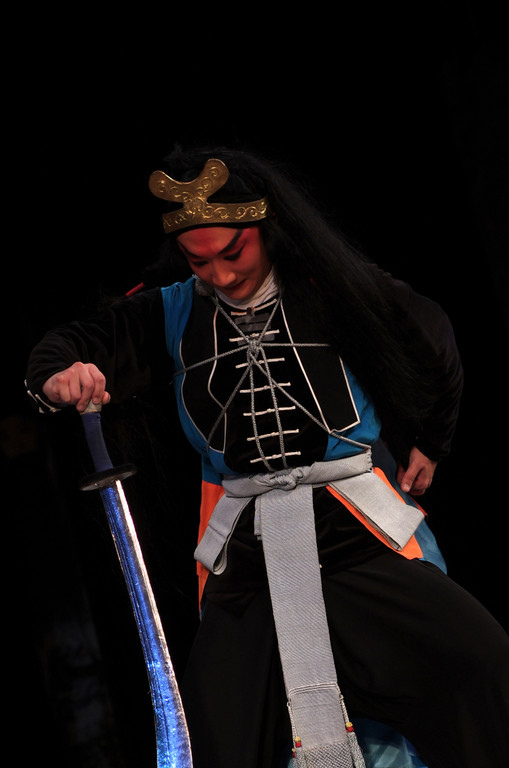
And these in turn are modeled on long-haired military monks (wuseng, 武僧) from Chinese opera (fig. 3).

Fig. 2 – A detail of the literary hero and military monk Wu Song from a Chinese opera about his adventures (larger version). Full version available on Wikimedia Commons.

2. Folk History

Several online articles link dough figurines to the origins of mantou pastries. Thankfully, I was able to find a dynastic source mentioning the legend. [1] The Song-era Records on the Origins of Things and Affairs (Shiwu jiyuan, 事物紀原, c. 11th-century) contains an entry reading:

Steamed Buns [Mantou, 饅頭]

The novel says: In the past, when Martial Marquis Zhuge [Zhuge wuhou, 諸葛武侯; i.e. Zhuge Liang, 諸葛亮] was leading an expedition to capture Meng [孟; i.e. Meng Hou, 孟获], people said that the land of the Man-barbarians [蠻] was permeated with sorcery. So, he had to pray to the gods in order to procure spirit-soldiers to help him. But the local custom involved killing sacrificial victims before the gods would send troops. However, the Martial Marquis refused, choosing instead to wrap mutton and pork in rice dough and shape them like human heads [rentou, 人頭]. After this “sacrifice,” the gods sent the soldiers.

From then on, later generations called these “steamed buns” [mantou, 饅頭; i.e. a homonym of “Man-barbarian heads”]. In Lu Di’s (Miscellaneous) Methods of Sacrifice [(Za) Ji fa, (雜)祭法] of the Jin Dynasty, steamed buns were used during the spring sacrifice as items offered to the gods. And Xu Shi’s “Rhapsody on Pasta” [Bing fu, 餅賦] also mentions this, so it’s suspected that steamed buns originated from the Martial Marquis.

饅頭

小說雲:昔諸葛武侯之徵孟獲也,人曰:蠻地多邪術,須禱於神,假陰兵一以助之。然蠻俗必殺人,以其首祭之,神則向之,為出兵也。武侯不從,因雜用羊豕之肉以包之,以面像人頭以祠,神亦向焉,而為出兵。後人由此為饅頭。至晉盧諦《祭法》春祠用饅頭,始列於祭祀之品,而束晢《餅賦》亦有其說,則饅頭疑自武侯始也。

It’s easy to see how this story was associated with our subject. Both the steamed buns and and figurines are humanoid representations that are shaped from rice dough. And both serve a religious function.

I hope to write more about this fascinating artform in the future.


Update: 10-12-24

Dr. Robin Ruizendaal, a noted scholar of traditional Chinese puppetry, recently posted a colorized photo of a dough figurine maker from the mid-20th century (fig. 3). His original description reads:

1940年代四川成都龍泉驛區賣捏麵人演偶戲
Dough puppet maker and vendor brings his merchandise to life on a small stage in Chengdu, Sichuan province (1940s).

The maker appears to be using his figurines as puppets to entertain/entice the young lads to buy some of his wares.

Fig. 3 – The dough maker and crowd (larger version).

Notes:

1) I learned about said source from Ma (2019, p. 981). However, I am not following their translation of the passage because it is different from the version I have.

Source:

Ma, B. (2019). History Of Medicine In Chinese Culture (Vols. 1-2). Singapore: World Scientific Publishing.

Story Idea: Firearms and the Journey to the West Universe

From time to time I like to post a fun blog not directly related to (though sometimes informed by) my research. Regular articles will resume after this entry.

Last updated: 12-03-2024

I am currently reading Gunpowder Technology in the Fifteenth Century: A Study, Edition and Translation of the Firework Book (2024), and this got me thinking: what would the Journey to the West (Xiyouji西遊記, 1592) cosmos be like if there were guns? In this photo essay, I will briefly explore guns in Chinese folk religion, types of historical (mainly handheld) firearms used in ancient China, and, finally, ways that such weapons could be inserted into the narrative.

I. Folk Religion

I first set out to see if firearms play any part in Chinese folk religion. I found a few examples from Taiwan. The first is “Lord Red Flag” (Hongqi gong, 紅旗公; a.k.a. “Marshal of Sacred Righteousness,” Shengyi yuanshuai, 聖義元帥), a relatively recent martial god. He and his marshals are depicted holding rifles.

(Click on the pictures to enlarge them.)

Here’s a version without the cloak.

Even his tangki (spirit-medium) gets a chance to fire off some rounds.

Three more involve Prince Nezha. The first of two (from the same temple) is a traditional statue adorned with an M4 assault rifle and other modern weaponry.

Here’s a closeup of the rifle. Also, take note of the holstered revolver (i.e. the black pouch) on his waist.

The profile view shows clips on his belt (again, in black pouches), as well as a grenade on top of an ammo case at his feet.

The second is a three-headed and eight-armed Nezha with an anti-tank rocket launcher, a rocket round, and a grenade at his feet.

A third statue (my personal favorite) portrays the prince with an MP 40 submachine gun and modern military gear. The carving on the water is amazing. I first learned of it here.

I learned here and here that cannons are sometimes worshiped in East and Southeast Asia as fertility gods. (See the 09-29-24 update below for more info about cannons.)

I also learned that ritual guns sometimes appear in Chinese folk temples of Vietnam.

If present, the guns number among ritual weapons that are commonly found in martial god temples of Chinese folk religion. (But I’ve never personally seen a gun among said armaments in Taiwanese temples.) This Vietnamese article briefly mentions that the weapons are based on the eighteen arms of Chinese martial arts. And it’s interesting to note that a “hand canon” (chong, 銃) does appear among the eighteen arms listed in the Water Margin (Shuihu zhuan, 水滸傳, c. 1400):

Shi Jin daily sought Drill Instructor Wang’s tutelage in the eighteen (weapons of) martial arts. He taught him from the very beginning. Which eighteen martial arts?

Lance, hammer, bow, crossbow, hand cannon, whip, metal tablet, long sword, chain, truncheon, fu-axe, yue-axe, ge-halberd, ji-halberd, shield, staff and spear, and toothless rake. [1]

史進每日求王教頭點撥十八般武藝,一一從頭指教。 那十八般武藝?

矛錘弓弩銃,鞭簡(鐧)劍鏈撾,斧鉞並戈戟,牌棒與槍杈。

Perhaps this list influenced the ritual weapons in Vietnam.

II. Historical Firearms in Ancient China

Here is an example of a Yuan-era hand canon, minus the shaft.

Here is a “Three-Eyed Hand Canon” (Sanyan chong, 三眼銃), a three-barreled stick gun used during the Ming Dynasty.

You can see that they were attached to bladed polearms, which could be used offensively or defensively between reloading.

There were even five-barreled and shielded firearms called “Rapid-Thunder Hand Cannons” (Xunlei chong, 迅雷銃). So cool!

Here’s a Chinese video demonstrating the one and three-barreled versions:

III. Story Idea

This brings me back to Journey to the West. How could firearms be inserted into a religious allegory? Well, for starters, a 950 CE wall mural in Dunhuang shows one of Mara‘s demons attacking the awakening Buddha with a “fire lance” (huoqiang, 火槍; upper right), a precursor of hand cannons. This is a clear example of a centuries-old association between firearms and spiritual warfare.

Here’s the full mural.

Now imagine that these weapons are wielded by celestial gunner-soldiers under the command of the “Star of Fiery Virtue” (Huode xingjun, 火德星君), the god of fire. In JTTW chapter 51, his literary troops utilize fire scimitars, fire bows, fire arrows, fire crows, fire horses, red (fire) rats, fire dragons, fire carts, fire gourds, fire banners, and fire rods in battle (Wu & Yu, 2012, vol. 3, p. 9). These are just a short step from firearms.

Given that the novel projects Ming-era concepts backwards to the Tang Dynasty, having gods wield such weapons hundreds of years before they were even invented wouldn’t be out of place in the JTTW universe. A writer could just say that the weapons were created in the realm above and eventually trickled down to mankind. Admittedly, I like the real history better because it shows the ingenuity of our predecessors, but the story requires a little tinkering.

Writers wanting to expand on the idea of firearms in heaven could take Ming gunners, their uniforms, and their strategies as models to work from. This page features a lovely figurine of such soldiers, including lots of juicy historical info. And the fact that the historical troops were part of the “Divine Machine Battalion” (Shenji ying, 神機營), which specialized in firearms, really solidifies their connection to the heavenly realm.

Who would make such weapons? There’s a fun answer for that: Laozi! The novel twice describes him forging mystical weapons belonging to our main characters. For example, Zhu Bajie mentions in chapter 19 that the high god made his rake: “This is divine ice steel greatly refined, / Polished so highly that it glows and shines. / Laozi wielded the large hammer and tong …” (Wu & Yu, 2012, vol. 1, p. 382). And Monkey claims in chapter 75 that the Daoist Patriarch created his staff: “The rod of steel nine cyclic times refined / Was forged in the stove by Laozi himself” (Wu & Yu, 2012, vol. 3, p. 375). So, on top of making alchemical medicines, Laozi could be heaven’s celestial gunsmith.

How could demons get ahold of celestial guns? Well, referring back to chapter 51, a buffalo-spirit uses the “diamond cutter” (jingang zhuo, 金鋼琢), an uber powerful, bracelet-like treasure-weapon also created by Laozi, to twice suck away all of the aforementioned fire weapons (Wu & Yu, 2012, vol. 3, pp. 9 and 23). Devil craftsmen would then have time to analyze the heavenly technology, which would allow them to eventually make their own (inferior?) copies.

Recall that the Great Peng demon is said in chapter 74 to have taken over a human kingdom by eating all of the inhabitants some 500 years ago, and the former population was replaced by spirits (Wu & Yu, 2012, vol. 3, p. 360). Firearms would definitely make a human-to-monster kingdom transition for less powerful demon kings a lot easier.

Another possibility is that a fiend could simply sneak into heaven to steal some. This may seem like an impossible task, but JTTW chapter 63 mentions something similar happening. The dragon-spirit “Princess All Saints” (Wansheng gongzhu, 萬聖宮(公)主) is said to have “[snuck] into heaven and stole[n] from before the Hall of Divine Mists the nine-leaf divine agaric planted by the Lady Queen Mother of the West” (Wu & Yu, 2012, vol. 3, p. 192). So, if someone can secretly infiltrate the realm above and steal divine vegetation, they could certainly steal heavenly armaments.

Perhaps the simplest way that demons could attain celestial firearms is by ambushing heavenly troops and commandeering their equipment.

I could see Red Boy (Honghai’er, 紅孩兒) using his powerful Samadhi flame to forge his own hand cannons, at least with the help of devil craftsmen. His association with fire only makes it natural that his own troops would carry firearms.

The only thing I can’t think of is how heavenly hand cannons would differ from their real world counterparts. Would they just use gunpowder and metal shot, or would it be more magical in nature, like shooting meteors? I’m open to suggestions from readers.


Update: 09-29-2024

The film Enoken no Songoku: Zenpen (エノケンの孫悟空 前編; a.k.a. “Enoken’s Songoku,” 1940) features the Monkey King mowing down demons with his staff-turned-machine gun.

There are at least two toys depicting the Great Sage with a gun. The first I learned about via a Facebook group post. I love how his sniper rifle is modeled on his magic staff. You can see the original packaging here.

And here is a Black Myth: Wukong-inspired figure with a powerful-looking rifle/shot gun combo. I saw it here.

Regarding cannons, I learned that a giant Western cannon was worshiped by court officials during the Ming. The History of the Ming (Mingshi, 明史, 1739) explains:

At this time, a ship arriving from the Great Western Ocean [i.e. the West] brought an enormous cannon, which got the name of the “Red Barbarian” [Hongyi, 紅夷]. It measured over two-zhang [20.86 ft/6.358 m] long, and weighed as much as 3,000 catties [3,902.18 lbs/1,770 kg]. It could demolish any stone city-walls, and its earthquake-like roar could be heard for several dozen li around. During the Tianqi [天啟] reign, the name of “Great General” [Da jiangjun, 大將軍] was given to it, and officials were sent to offer libations [si, 祀] to it (based on Needham, 1986, p. 392).

其後,大西洋船至,復得巨砲,曰紅夷。長二丈馀,重者至三千斤,能洞裂石城,震數十里。天啟中,錫以大將軍號,遣官祀之。

Needham (1986) suggests the cannon’s worship is connected to folk beliefs: “In Taoist folk-religion any device or machine of almost miraculous potency was something which should receive veneration” (p. 392 n. b).


Update: 10-05-24

I forgot to mention the “Gatling Gun Bodhisattva” (Jia-te-lin pusa, 加特林菩薩) from Chinese social media and Japanese manga. The following clip expounds the Heart Sutra of the Honored Gatling Gun Bodhisattva (Namo Jia-te-lin pusa Xinjing, 南無加特林菩薩心經).


Update: 11-23-24

Reader Danna Zhang left a wonderful comment about how Investiture of the Gods (Fengshen yanyi封神演義, c. 1620 CE), a sort of prequel to Journey to the West, also includes gunpowder weaponry:

Late comment, but FSYY also puts Ming dynasty gunpowder weapons into the 11th BCE Shang dynasty setting. Apart from the numerous mentions of “cannons go boom”, In Chapter 56, they broke Deng Jiugong’s ambush-disguised-as-wedding by hiding a cannon in the gift casket and using it to make a surprise attack, and in Chapter 88, Jiang Ziya suggests to King Wu that they need the “Sky-blasting Cannon” (轰天大炮) to breach the walls of Mianchi City.

At this point, I think the bronze age gunpowder weapon isn’t a bug, it'[s] a feature.


Update: 12-03-24

The Japanese Scroll of Battle Between Generations (異代同戱図巻, 17th-century) includes a depiction of Guanyin aiming a flintlock rifle, with the Dragon Girl waiting in attendance behind her.

Note:

1) The narration is based on my translation, while the weapons list is based on that from Lorge (2012). See page 147.

Source:

Lorge, P. A. (2012). Chinese Martial Arts: From Antiquity to the Twenty-First Century. United Kingdom: Cambridge University Press.

Needham, J. (1986). Science and Civilization in China. Volume 5: Chemistry and Chemical Technology; part 7, Military Technology: The Gunpowder Epic. Assisted by Ho Ping-yü et al. New York: Cambridge University Press.

Wu, C., & Yu, A. C. (2012). The Journey to the West (Vols. 1-4) (Rev. ed.). Chicago, Illinois: University of Chicago Press.


How Tall are the Main Characters from Journey to the West?

Last updated: 09-30-2024

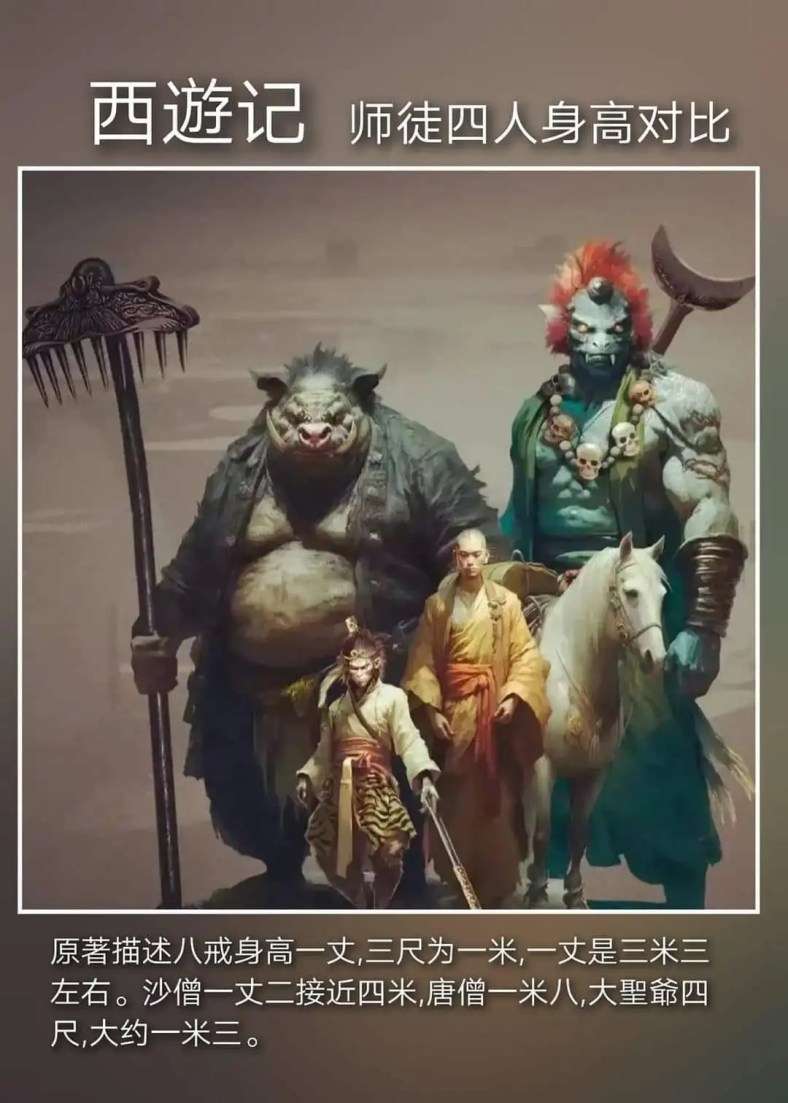
A member of a Monkey King Facebook group I belong to posted a Chinese informational graphic titled “Journey to the West: The Four Body Height Ratios of the Master and His Disciples” (Xiyou ji: Shitu siren shengao duibi, 西游记 师徒四人身高对比) (fig. 1). Each character is depicted with their correct corresponding height, ranging from Sun Wukong as the shortest to Sha Wujing as the tallest. The bottom of the picture provides some measurements:

The original novel describes Bajie’s body as being 1 zhang tall. Three chi is 1 meter. One zhang is around 3.3 meters. Sha Monk is 1.2 zhang, which is close to 4 meters. The Tang monk is 1.8 meters. The Lord Great Sage is 4 chi, or approximately 1.3 meters.

原著描述八戒身高一丈,三尺为一米,一丈是三米三左右。沙僧一丈二接近四米,唐僧一米八,大聖爺四尺,大约一米三。

The information is overgeneralized and at times conjectural, but I figured the picture would be interesting to my followers on Twitter. Little did I know that it would explode in popularity. As of this writing, my tweet has 940 likes (most of these received in a few days). This indicates that not many people were aware of the great height disparity between the pilgrims. I’ve therefore decided to write an article recording what Journey to the West actually says about each character’s height. 

I believe that the creator of the info graphic got their measurements from this essay, for it has the exact same title and very similar material (Zhongshi Damei Shenghuo [ZDS], 2020). I will use the claims therein to compare and contrast with the actual text from the novel.

Fig. 1 – The Chinese informational picture listing the pilgrims’ heights (larger version). I unfortunately don’t know who the original artist is. A reverse image search didn’t turn up anything. This page has the earliest appearance of the informational picture that I can find.

1. Measurements

ZDS (2020) uses a mixture of the ancient Chinese chi (尺) and zhang (丈) and the modern meter (mi, 米). The chi (and subsequently the zhang) varied at the local level at different times. During the Ming (1368-1644), when Journey to the West was published, the measurements equaled:

  • One chi (尺) = roughly 31.8 cm (12.3 in)
  • Ten chi = one zhang (丈)
  • one zhang (丈) = roughly 3.18 m (10.43 ft) (Jiang, 2005, p. xxxi).

Yes, the novel is set during the Tang (618-907), but many elements of the story (e.g. language, religion, mythos, martial arts, etc.) are filtered through the lens of the Ming. Therefore, it’s appropriate to use Ming-era measurements.

2. Heights

The characters are listed below from shortest to tallest.

(Note: I will be relying on the Wu & Yu (2012) translation. But since it uses “feet” instead of the original chi or zhang, I’ll alter the source throughout the article for more accuracy.)

2.1. Sun Wukong

See my previous articles discussing Monkey’s height (here and here).

ZDS (2020) states that Sun is “4 chi, that is less than 1.3 m [4.26 ft] or the same height as a child” (4 chi, yejiushi budao 1.3 mi, gen haitong yiban gao, 4尺,也就是不到1.3米,跟孩童一般高). But they miss an important distinction. The novel twice describes him as being “not four chi tall” (buman sichi, 不滿四尺), meaning that Monkey is an unknown height below 1.272 m (4.17 ft).

The phrase is first spoken by the Monstrous King of Havoc (Hunshi mowang, 混世魔王) in chapter 2:

When the Monstrous King saw him, he laughed and said, “You’re not four chi tall (emphasis added), nor are you thirty years old; you don’t even have weapons in your hands. How dare you be so insolent, looking for me to settle accounts?” (based on Wu & Yu, 2012, vol. 1, p. 128).

魔王見了,笑道:「你身不滿四尺,年不過三旬,手內又無兵器,怎麼大膽猖狂,要尋我見甚麼上下?」

The second is said hundreds of years later by the Great King Yellow Wind (Huangfeng dawang, 黃風大王) in chapter 21:

The old monster took a careful look and saw the diminutive figure of Pilgrim—less than four chi (emphasis added), in fact—and his sallow cheeks. He said with a laugh: “Too bad! Too bad! I thought you were some kind of invincible hero. But you are only a sickly ghost, with nothing more than your skeleton left!” (based on Wu & Yu, 2012, vol. 1, p. 408).

那怪仔細觀看,見行者身軀鄙猥,面容羸瘦,不滿四尺。笑道:「可憐,可憐。我只道是怎麼樣扳翻不倒的好漢,原來是這般一個骷髏的病鬼。」

Some readers may wonder why such a powerful character can be so tiny. This is because the novel describes Sun as a literal monkey. Refer back to this article for more information.

(Note: See the 4-27-24 update below for a more precise measurement.)

2.2. The Tang Monk

I have yet to formally write about Tripitaka‘s height.

ZDS (2020) suggests that the “Tang Monk should be about 1.8 m [5.90 ft]” (Tangseng yinggai zai 1.8 mi zuoyou, 唐僧应该在1.8米左右). This estimate is based on the size of a stone box used to imprison him in chapter 49:

Pilgrim … mov[ed] towards the rear of the palace. He looked, and sure enough there was a stone box, somewhat like a trough that people use in a pigpen or a stone coffin. Measuring it, he found it to be approximately six chi in length (emphasis added). He crawled on top of it and soon heard the pitiful sound of Tripitaka’s weeping coming from inside (Wu & Yu, 2012, vol. 2, p. 347).

行者 … 徑直尋到宮後看,果有一個石匣,卻像人家槽房裡的豬槽,又似人間一口石棺材之樣,量量足有六尺長短。卻伏在上面,聽了一會,只聽得三藏在裡面嚶嚶的哭哩。

Six chi is 1.9 m or 6.25 ft. Tripitaka would obviously be shorter given the inside thickness of the stone walls, but the novel doesn’t provide such detailed information. This means that the 1.8 m estimate is conjecture. So, what other proof is there?

ZDS (2020) also cites a poem from chapter 54 as evidence that the Tank Monk is “tall and handsome” (yougao youshuai, 又高又帅):

What handsome features!
What dignified looks!
Teeth white like silver bricks,
Ruddy lips and a square mouth.
His head’s flat-topped, his forehead, wide and full;
Lovely eyes, neat eyebrows, and a chin that’s long.
Two well-rounded ears betoken someone brave.
He is all elegance, a gifted man.
What a youthful, clever, and comely son of love,
Worthy to wed Western Liang’s gorgeous girl! (Wu & Yu, 2012, vol.  3, p. 55). [1]

丰姿英偉,相貌軒昂。齒白如銀砌,唇紅口四方。頂平額闊天倉滿,目秀眉清地閣長。兩耳有輪真傑士,一身不俗是才郎。好個妙齡聰俊風流子,堪配西梁窈窕娘。

Technically, yishen busu (一身不俗) can mean having a body that is “impressive” or “out of the ordinary,” but as Yu (2012) translates, it can also refer to one’s person. This is not the same as listing a particular height.

Hence, there isn’t enough information in the novel to officially say how tall Tripitaka is. But for those demanding some sort of answer, we can always speculate using real world data.

According to one study, out of a sample size of 28,044 Chinese men from 31 provinces/autonomous regions, the average modern height is 169 cm (5.54 ft). Additionally, this Chinese article references a study claiming that men from ancient times up to the Ming were between 165 cm (1.65 m or 5.41 ft) and 167 cm (1.67 m or 5.47 ft). This is obviously shorter than the 1.8 m suggested above.

Therefore, the most we can say is that the Tang Monk would be average historical height.

2.3. Zhu Bajie

I’ve written about Zhu Bajie’s height in the past (see here).

ZDS (2020) writes that Zhu’s “snout is 3 chi long” (zui chang 3 chi, 嘴长3尺). This is based on a descriptive poem from chapter 85:

A snout, pestlelike, over three chi long (emphasis added)
And teeth protruding like silver prongs
Bright like lightning a pair of eyeballs round,
Two ears that whip the wind in hu-hu sound.
Arrowlike hairs behind his head are seen;
His whole body’s skin is both coarse and green.
His hands hold up a thing bizarre and queer:
A muckrake of nine prongs which all men fear.

(Wu & Yu 2012, vol. 4, p. 149).

碓嘴初長三尺零,獠牙觜出賽銀釘。
一雙圓眼光如電,兩耳搧風唿唿聲。
腦後鬃長排鐵箭,渾身皮糙癩還青。
手中使件蹊蹺物,九齒釘鈀個個驚。

But, again, an important distinction is missed. Zhu’s nose is “over three chi long,” or larger than 95.4 cm (3.12 ft), which is over half the height of an average humanZDS (2020) says this measurement indicates that: “According to the laws of biology, (Zhu’s) body is approximately 3.5 m [11.48 ft]” (Anzhao shengwuxue de guilu, shenti yue 3.5 mi zuoyou, 按照生物学的规律,身体约3.5米左右). However, they never explain what laws they are referring to.

The only other information about Zhu’s size that I’m aware of appears in chapter 29. Upon entering a new kingdom, Tripitaka describes his two remaining disciples. [2] He starts with the pig spirit:

“My elder disciple has the surname of Zhu, and his given names are Wuneng and Eight Rules. He has a long snout and fanglike teeth, tough bristles on the back of his head, and huge, fanlike ears. He is coarse and husky, and he causes even the wind to rise when he walks (emphasis added) …” (Wu & Yu 2012, vol. 2, p. 51).

我那大徒弟姓豬,名悟能八戒,他生得長嘴獠牙,剛鬃扇耳,身粗肚大,行路生風 …

This tells us that Zhu has a large body capable of stirring the wind when he moves. But it’s important to note that Tripitaka’s subsequent dialogue assigns Sha Wujing a specific height (see below). This points to Zhu being shorter in comparison.

Therefore, just like the Tank Monk, there isn’t enough info to officially say how tall Zhu is. But we can again speculate using real world data.

My friend Barbara Campbell (blog) suggested that I use extinct prehistoric pigs as reference. A prime example is Megalochoerus homungous, which has been estimated to be 3.8 m (12.46 ft) long, 1.8 to 2.2 m (5.9 to 7.21 ft) at the shoulder, and up to 1,600 kg (3,527.39 lbs) (Uchytel, n.d.). A reconstruction by the paleo artist Roman Uchytel presents a towering creature with a head half as long as a man’s body (fig. 2). This is quite similar to the size of Zhu’s nose. Even with it’s head facing forward, a bipedal M. homungous would still be around 3.8 m (12.46 ft) tall. But as you’ll read below, this is too tall if Zhu is supposed to be shorter than Sha.

So how tall is Zhu? Your guess is as good as mine. But for those demanding some sort of answer, we can use human arm span to body height ratio, which is roughly 1:1. Using 1.8 m (5.9 ft), or the lower estimate for M. homungous‘ shoulder height, Zhu could be as much as 3.6 m (11.81 ft). But I am in no way comfortable with this estimate. It’s 100% pure conjecture, and I think it is still too tall.

Fig. 2 – A reconstruction of M. homungous by Roman Uchytel (larger version). Mr. Uchytel graciously gave me permission to use a watermarked version of his art for free. Please consult his website here.

2.4. Sha Wujing

I’ve previously mentioned Sha’s height in an article about Zhu Bajie’s appearance (refer back to here).

ZDS (2020) writes that Sha is “One zhangchi, nearly 4 m” (yizhang erchi, chabuduo 4 mi le, 一丈二尺,差不多4米了). This is based on Tripitaka’s continued dialogue with the foreign king in chapter 29:

“… My second disciple has the surname of Sha, and his religious names are Wujing and Monk. He is one zhang two chi tall and three span wide across his shoulders (emphasis added). His face is like indigo, his mouth, a butcher’s bowl; his eyes gleam and his teeth seem a row of nails” (Wu & Yu 2012, vol. 2, p. 51).

第二個徒弟姓沙,法名悟淨和尚,他生得身長丈二,臂闊三停,臉如藍靛,口似血盆,眼光閃灼,牙齒排釘。他都是這等個模樣,所以不敢擅領入朝。

This tells us that the monstrous monk is a whopping 3.816 m (12.51 ft) tall, with an exceptionally broad body.

Fun fact: Sha Wujing’s height is based on his giant antecedent, an obscure desert spirit appearing in the 7th-century biography of  the historical monk Xuanzang (on whom Tripitaka is based). The spirit comes to the cleric in a dream to admonish him for sleeping on the journey to India:

[Xuanzang] dreamed that he saw a giant deity several zhang tall (emphasis added), holding a halberd and a flag in his hands. The deity said to him, “Why are you sleeping here instead of forging ahead?” (based on Huili & Li, 1995, p. 28).

即於睡中夢一大神長數丈,執戟麾曰:「何不強行,而更臥也!」

“[S]everal zhang” would be 3 zhang (9.54 m or 31.29 ft) or more tall! That’s one big spirit!

3. Conclusion 

Journey to the West: The Four Body Height Ratios of the Master and His Disciples” is an informational picture that depicts the pilgrims with their correct corresponding heights. The bottom of the picture also provides measurements to supplement the illustration. These numbers were likely borrowed from ZDS (2020), an online article with the exact same name and very similar material. According to the essay, Sun Wukong is less than 1.3 m (4.26 ft), the Tang Monk is about 1.8 m (5.90 ft), Zhu Bajie is 3.5 m (11.48 ft), and Sha Wujing is nearly 4 m (13.12 ft). However, this information is overgeneralized and at times conjectural.

The original Chinese text of Journey to the West naturally gives more accurate information. But, unfortunately, the book only lists specific heights for two characters: Monkey is shorter than 1.272 m (4.17 ft) and Sha is 3.816 m (12.51 ft). As for the other two, not enough information is given for Tripitaka or Zhu to officially say how tall they are. However, speculating with real world historical height data suggests that the literary monk could be somewhere between 1.65 m (5.41 ft) and 1.67 m (5.47 ft), which is obviously shorter than the 1.8 m cited above. But even using prehistoric pigs as a reference, Zhu Bajie is the hardest to calculate since the novel indirectly implies that he is shorter than Sha. I used the lower end shoulder height estimate of the extinct M. homungous to suggest that Zhu could be as much as 3.6 m (11.81 ft) tall. But I think this is still too big.

On an interesting note, Sha’s great height is based on his giant antecedent, a desert spirit appearing in the historical Xuanzang’s 7th-century biography. The spirit is described as being 9.54 m (31.29 ft) or more!


Update: 08-26-23

Tumblr user @digitalagepulao has drawn lovely versions of the JTTW pilgrims (fig. 3). And while some of their heights may differ slightly from those discussed above, the overall ratios are correct. I love the designs.

This is for @digitalagepulao’s own “Expedition to the West au” (alternate universe) JTTW storyline based on a previous article of mine.

Fig. 3 – The height ratios for digitalagepulao’s JTTW character designs (larger version). Used with permission.


Update: 04-27-24

Chapter 37 gives a more precise measurement for Monkey’s height. He first transforms into a “tiny monk about two cun tall” (二寸長的小和尚兒) (based on Wu & Yu, 2012, vol. 2, p. 172). He shortly thereafter grows even bigger when a prince makes fun of him:

Tripitaka pulled open the box’s cover; Pilgrim [Sun Wukong] leaped out and began to hobble all over the place. The prince said, “This little midget! What can he know?” When Pilgrim heard this remark about his size, he at once resorted to magic. Straightening up his torso, he grew about three chi and four or five cun instantly (emphasis added). “If he can grow that rapidly,” said the soldiers, highly startled, “it will only be a few days before he pierces the sky.” When Pilgrim reached his normal height, however, he stopped growing (emphasis added) (based on Wu & Yu, 2012, vol. 2, pp. 174-175).

三藏扯開匣蓋兒,那行者跳將出來,呀的兩邊亂走。太子道:「這星星小人兒,能知甚事?」行者聞言嫌小,卻就使個神通,把腰伸一伸,就長了有三尺四五寸。眾軍士吃驚道:「若是這般快長,不消幾日,就撐破天也。」行者長到原身,就不長了。

As mentioned in section 1, one chi (尺) is roughly 12.3 in or 31.8 cm (Jiang, 2005, p. xxxi). Expanding on this, one chi equals 10 cun (寸; a.k.a. “Chinese inches”) (Jiang, 2005, p. xxxi). One cun would be about 1.25 in or 3.18 cm. Two cun would therefore be 2.5 in or 6.36 cm. Growing the stated additional height would then put our hero at 3 chi and 6 or 7 cun, which is roughly 3.86 ft or 1.176 m. This agrees with the aforementioned estimate of “not (or less than) four chi tall” (buman sichi, 不滿四尺) (Wu & Yu, 2012, vol. 1, pp. 128 and 408).


Update: 09-30-24

Tumblr user @heshemejoshi has drawn an awesome image of the pilgrims with their various height differences. The coloring almost makes it look like a dream.

Fig. 4 – The pilgrims “going west” (larger version).

Note:

1) “Western Liang’s gorgeous girl” is referring to the Queen of Womanland.

2) The Tang Monk had previously expelled Monkey from the group in chapter 27 (Wu & Yu, vol. 2, pp. 26-28).

Sources:

Huili, & Li, R. (1995). A Biography of the Tripiṭaka Master of the Great Ci’en Monastery of the Great Tang Dynasty. Berkeley: Numata Center for Buddhist translation and research.

Jiang, Y. (2005). The Great Ming Code / Da Ming Lu. Vancouver, Wa: University of Washington Press.

Uchytel, R. (n.d.). Megalochoerus. Prehistoric Fauna. Retrieved from https://prehistoric-fauna.com/Megalochoerus.

Wu, C., & Yu, A. C. (2012). The Journey to the West (Vols. 1-4) (Rev. ed.). Chicago, Illinois: University of Chicago Press.

Zhongshi Damei Shenghuo. (2020, August 18). Xiyou ji: Shitu siren shengao duibi [Journey to the West: The Four Body Height Ratios of the Master and His Disciples]. Sohu. Retrieved from https://www.sohu.com/a/413598842_120113471


Archive #39 – Journey to the West Adaptations

Last updated: 07-21-2025

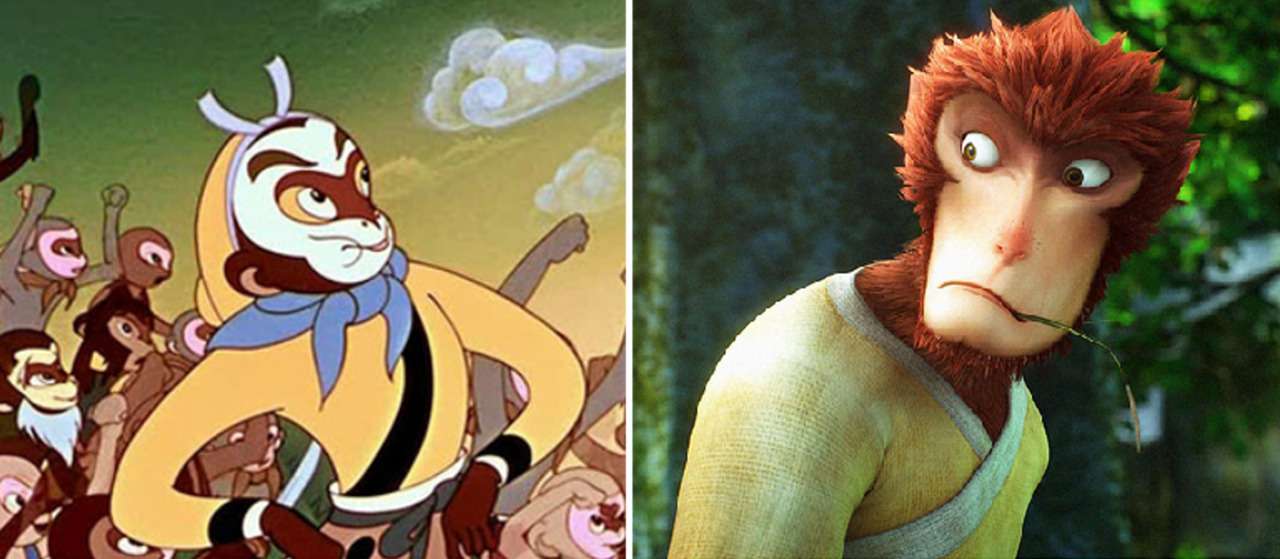
The Journey to the West Research blog is proud to host an entry by our friend Monkey Ruler (Twitter and Tumblr). They have graciously written an essay on the global nature of Journey to the West adaptations, as well as provided a link to their ongoing project recording JTTW media (fig. 1). As of the publishing of this article, it includes a long list of almost 570 movies, 90 TV shows, and 160 video games! – Jim

Fig. 1 – Depictions of Sun Wukong from adaptations produced over 50 years apart: (left) Havoc in Heaven (Danao tiangong, 大鬧天宮, 1961) and (right) Monkey King: Hero is Back (Xiyouji zhi Dasheng guilai, 西遊記之大聖歸來, lit: “Journey to the West: Return of the Great Sage,” 2015) (larger version). Courtesy of Monkey Ruler.

I. Media adaptations

This started out as a collection of Xiyouji (西遊記; lit: “Journey to the West,” 1592) movies and TV shows for the sake of a Master’s class project; it was simple enough to look for Xiyouji media and start adding them to a collection datasheet. But even when the project was over, I kept finding more and more adaptations, even stumbling across others trying to show the magnitude of how much this novel has encompassed popular culture throughout the centuries. It has been told and re-told again and again in oral and published literature, plays, art, songs, poems, etc., and now on the big and small screens. Audiences are re-introduced to the image of Sun Wukong and his fellow pilgrims with every new media addition.

What really inspired me was the book Transforming Monkey: Adaptations and Representation of a Chinese Epic (2018) by Hongmei Sun, where she explained in depth the cultural impact that Sun Wukong (fig. 2) and Xiyouji has had on Chinese media, as well as how this loose set of franchises have come to represent Chinese culture as these shows and movies have become more globally accessible. Xiyouji is such an iconic cultural universe that it can be both heavily entertaining while still being so personal to audiences of any generation depending on how the artist/writer portrays their interpretation of these characters and their stories. 

There hasn’t been a lot written about how these interpretations influence modern Xiyouji adaptations despite how the story has greatly influenced popular culture.

Fig. 2 – The front cover of Transforming Monkey (2018) (larger version).

Xiyouji is such an influential story, one that will continue to grow more and more globally known throughout time because it is such an all-encompassing piece that can cover politics, identities, and allegories, while still being a very personal and interpersonal work that artists or writers can relate to. 

However, even with these layers of meaning and symbolism to be found, the story never loses the charming and entertaining aspects that can and have captured audiences. Despite being published over 430 years ago (with a history stretching back even further), Xiyouji is still able to relate to modern audiences through its allegories of oppression, rebellion, and self-identity. It has the capability to resonate with any generation depending on what artists or writers at the time wish to highlight or personally connect with themselves or their current world around them, using Xiyouji as a medium for their own struggles.

As Xiyouji starts to become more and more globally known, it is important to understand and resonate that this is still a Chinese story and how to address further adaptations with cross-nation gaps in both translation and cultural differences. There are media forms that are far more exploitative of the mythical journey, creating impractical scenarios of the narrative and thus changing the message of the story and characters completely. However, there needs to be an acknowledgment of what doesn’t work as Xiyouji adaptations due to the ever-changing zeitgeist in not only its home of origin but introducing it to a global sphere as it adds influence. 

In order to see what works for adaptations, there needs to be an acknowledgment of what is the core of the story and just why it remains popular, story-beat or character-wise. For example, Sun Wukong can be used as a great model for positive ambivalence in media, moving away from set limits of a single stereotype and rather being a constant motion of new ideas and new identities. Monkey has been changed from a mischievous monkey to a revolutionary hero to a post-modern rebel against authority throughout the years. But even throughout the constant changes and interpretations, people never lose sight of what the nature of Sun Wukong is: rebelliousness, variability, optimism, and persistence. 

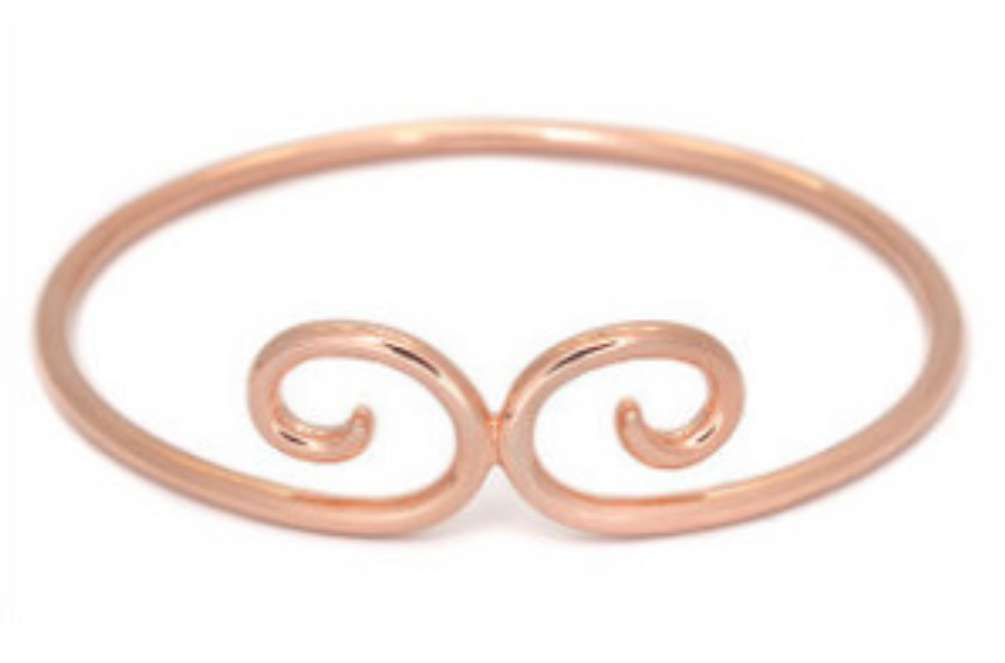
Monkey is a transcending character as he is able to mediate contradictions within his own design, one being his gold-banded staff, a symbol of breaking barriers, and his golden filet (fig. 3), a symbol of limits. These two simple but prominent pieces of iconography immediately tell audiences who the character is supposed to be and what they are about.

Fig. 3 – A modern replica of Monkey’s golden filet or headband (larger version).

While it is entertaining and able to be enjoyed by younger audiences, Xiyouji still has a deeper meaning that can be interpreted and recognized into adulthood. This is one of the few stories that I imagine can be adapted again and again without the issue of overlap as there are so many ways people can personally connect with these characters. 

Having that any generation, anyone really can find enjoyment in this media, and perhaps even be inspired to read the novel itself.

II. Archive link

Please consult the tabs at the bottom of the spreadsheet linked below. They are listed as “Movie Information,” “Movie Links,” “Honorary Shows,” “Game Information,” “Game Pictures,” “Honorary Games,” and “Sources.” – Jim

https://docs.google.com/spreadsheets/d/1GsiCGzE1DZDy2Vpc85wiVXSyLWpxMbxj/edit?usp=sharing&ouid=112097376285754662736&rtpof=true&sd=true


Update: 07-21-25

Monkey Ruler has officially posted a website called “Journey to the West Media.” They continue to update the page with movies, tv shows, video games, and now comic books.

https://www.journeytothewestmedia.com/