Review of DC Comics’ “The Monkey Prince Hates Superheroes”

Last updated: 04-11-2026

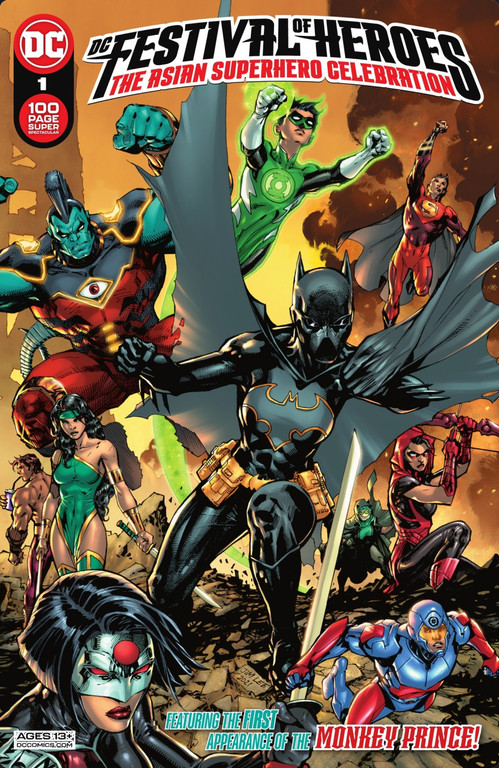
A follower on social media asked me to write an article about DC Comics’ new character, “Monkey Prince” (Ch: Hou wangzi, 猴王子), appearing in the story “The Monkey Prince Hates Superheroes” (Yang, 2021). He is part of a lineup of new and existing Asian characters in their DC Festival of Heroes: The Asian Superhero Celebration (2021). I was aware of the Monkey Prince prior to the request, and while I wasn’t a fan of his costume (more on this later), I was optimistic about the story as I’m a big fan of writer Gene Luen Yang’s masterful graphic novel American Born Chinese (2006). This new comic is 100 pages [1] and features art ranging from dark and gritty to bright and cute. It includes short episodes for many characters, including Batgirl (Cassandra Cain), Green Lantern (Tai Pham), Green Arrow (Connor Hawke), Super-Man (Kong Kenan), Robin (Damian Wayne), Cheshire Cat (Lian Harper), Grace Choi (an Asian Amazon), Red Arrow (Emiko Queen), Katana (Tatsu Toro), Atom (Ryan Choi), and, of course, the Monkey Prince. What’s interesting is that while he doesn’t appear among the heroes on the front cover of the standard edition, our supernatural simian is given top billing: “Featuring the first appearance of the Monkey Prince!” (fig. 1) (Chen, 2021, p. 1). There’s even a variant cover featuring the character (fig. 2).

DC editor Jessica Chen states the character was her idea, but that she worked with Gene Yang and artist Bernard Chang to craft “the origin and the essence of Monkey Prince together” (Aguilar, 2021). She also explains that her close connection to Sun Wukong and her yearning to make a comic book based on him: “Monkey King was kind of my first superhero, and after being at DC Comics, I’ve always wanted to somehow introduce Monkey King as a superhero because his origin story just kind of writes itself” (Aguilar, 2021). She was finally given the go ahead for this “passion project” last year by DC Editor-in-Chief Marie Javins (Aguilar, 2021).

Fig. 1 – The front cover of the standard edition of DC Festival of Heroes: The Asian Superhero Celebration (2021) (larger version). Fig. 2 – The variant cover with the Monkey Prince (larger version). Copyright DC Comics.

Table of Contents

1. Story Description

The story opens in an abandoned warehouse in Philadelphia, Pennsylvania, USA, where the evil Dr. Sivana has captured Shazam (a.k.a. Captain Marvel) and plans to slice him open with a laser a la Goldfinger (1964). However, unlike the Bond villain, Sivana uncharacteristically boasts about the prospect of cooking and eating the demigod’s heart, much to the disgust of his henchman and woman standing nearby. A broken, blue on white, Yuan-era vase in the foreground foreshadows Shazam’s deduction that the doctor has in fact been possessed by an ancient Chinese spirit hell-bent on eating the hero’s heart to gain immortality. While Sivana is visibly disturbed by this inference, Shazam is kind enough to tear open his own chest with an object retrieved from his ear. But instead of a warm, beating heart gushing blood, loads of large, multi-colored Valentine’s Day heart candies stamped “You suck” comically fall from the cavity. And with the added revelation of a wayward tail, the reader learns that the demigod is actually the transformed Monkey Prince and the item is his magic staff. The young hero then flies into action to save the hench people from a large explosion caused from their careless shooting. The blast separates the spirit from Sivana.

“Shifu Pigsy,” a master of magic and martial arts, arrives by cloud to chastise his young disciple’s sloppy work. We learn through subsequent conversations that the Monkey Prince is bitter towards his estranged father, the original Monkey King, leading him to quickly correct anyone who confuses him for his pater. With the help of a magic powder blown into his eyes by Shifu Pigsy, the Prince discovers that the invisible, disembodied spirit is a large, armored deer demon. The latter tries to justify his lust for immortality by stating the need to rule humanity for the damage that they’ve caused to the earthly realm. But when the real Shazam shows up and the spirit tries to attack him, the Monkey Prince is caught off guard and punched to the ground. This causes him to revert back to his human form, showing that his magical transformation is connected to his mental state. Shifu Pigsy calms his mind with sage advice, allowing the Prince to spring back into action.

Having survived the explosion, Dr. Sivana shoots Shazam with a ray gun but to no effect. The demigod attempts to apprehend his foe, but the spirit sneaks up behind him and bites down on his head. Luckily, the adamantine nature of Shazam’s magic body protects him from the attack long enough for the Monkey Prince to land a devastating blow with his staff, thus vanquishing the deer demon. Shazam, however, threatens to arrest the Prince because, unaware of the invisible spirit, he confused the simian character for his attacker. But the Monkey Prince preemptively strikes the demigod so hard that the impact destroys public property. Shifu Pigsy then recites a spell to activate the golden headband on the young hero’s mask, which painfully constricts to tame his rage. Once again, the Monkey Prince reverts to his human form, and we learn that the mask is used to protect his true identity.

Upon returning home to a Philadelphia suburb, we learn that the Prince’s adopted parents are actually the two hench people whom he had saved earlier that night (they are seemingly unaware of his magic heritage). Later at school, we not only learn that his human name is “Marcus” (Ch: Makusi, 馬庫斯), but that also one of his few friends just so happens to be Billy Batson, the kid alter-ego of Shazam. Billy tries to interest Marcus in a video of Shazam’s latest battle, but the latter refuses on the grounds that “superheroes suck” (Yang, 2021, p. 82). The Monkey Prince’s problem with superpowered beings is illustrated earlier during his confrontation with the demigod:

You superheroes think you’re better than everyone else! You think your powers and fancy capes make you the sole arbiters of right and wrong! Well, you know what? I am the mother-flipping Monkey Prince! And I actually am better than everyone else! I can beat you or any of your doofy superhero friends from here to next Sunday! (Yang, 2021, p. 80).

The story ends with a note suggesting that our hero will be getting his own comic: “The adventures of the Monkey Prince continue later this year!” (Yang, 2021, p. 82).

2. References to Journey to the West

There are several things from the story that call back to elements from the classic novel. The need to eat holy flesh to gain immortality refers to the many demons who attempt to cheat the cosmic hierarchy by trying to eat the monk Tripitaka. The Prince keeping his extending staff in his ear refers to the same thing his father does throughout the novel. Him tearing open his chest to reveal multiple hearts refers to one of the Monkey King’s tricks from chapter 79:

“In that case,” said the spurious Tang Monk [a transformed Monkey King], “bring me the knife quickly, so that I may cut open my chest. If I have a black heart, I’ll be pleased to present it to you.” Delighted, the befuddled king thanked him and asked the attendant to the throne to hand the spurious monk a curved dagger. Taking the dagger, the monk untied his robe and stuck out his chest. As he rubbed his belly with his left hand, he plunged the dagger into himself with his right hand and, with a loud ripping noise, tore open his own chest. A mass of hearts rolled out, so terrifying the onlookers that the civil officials paled in fright and the military officers turned numb. When he saw that, the royal father-in-law said in the hall, “This is a monk of many hearts!”

The spurious monk took those bloody hearts and manipulated them one by one for all to see: a red heart, a white heart, a yellow heart, an avaricious heart, a greedy heart, an envious heart, a petty heart, a competitive heart, an ambitious heart, a scornful heart, a murderous heart, a vicious heart, a fearful heart, a cautious heart, a perverse heart, a nameless obscure heart, and all kinds of wicked hearts. There was, however, not one single black heart! (Wu & Yu, 2012, vol. 4, pp. 49-50).

The Monkey Prince’s inability to transform his tail refers to his father’s weakness from the novel. This is best illustrated during his fight with Lord Erlang:

Rolling down the mountain slope, he [Sun Wukong] squatted there to change again—this time into a little temple for the local spirit. His wide-open mouth became the entrance, his teeth the doors, his tongue the Bodhisattva, and his eyes the windows. Only his tail he found to be troublesome, so he stuck it up in the back and changed it into a flagpole (Wu & Yu, 2012, vol. 1, p. 183).

Of course Pigsy, or Zhu Bajie/Wuneng (豬八戒/悟能), is a main character from the original novel. Like his comic book counterpart, he knows martial arts and magic. The name Pigsy is a nickname used in place of the original Chinese name from Arthur Waley’s famed abridgement, Monkey (1942). The golden headband is exactly like the one used by Tripitaka to reign in the Monkey King’s unruly nature. In the case of the Monkey Prince, his band is activated when his master recites the name of the Amitabha Buddha (Yang, 2021, p. 80). And the Prince’s angry, egotistical nature and boastful statements of superiority are just like his father. This is what leads to Sun Wukong’s rebellion against heaven and subsequent imprisonment by the Buddha.

3. The Story and Character Design

One problem any adaptation of Journey to the West is going to face is lack of originality. It’s all been rehashed before endless times. An adaptation has to be super accurate or just different enough for me to find it fresh and interesting. An example of the former is the 2011 TV show, while the latter is the Korean drama Hwayugi (2017-2018). For me, this story falls in the perilous middle ground. The Monkey Prince’s power set/weaknesses are just carbon copies of his father, and yet an effort has been made to differentiate both characters. Marcus is not an immortal monkey protecting a holy monk en route to the Western Paradise of ancient India. Instead, he’s a brooding, teenaged, half-human-half-monkey spirit demigod navigating a normal life in the modern United States, while also attempting to master heavenly arts and fight evil. Mr. Yang explains in an interview why he made the character a teenager:

Pretty early on, we knew we wanted the Monkey Prince to be a teenager. I think there’s something about the American conception of adolescence that ties very well with the character of the Monkey King from the original stories. He’s trying to figure himself out, he’s trying to gather power to himself, he’s really arrogant, but then he also has these moments of self-doubt. Even in the original, 500 years ago (Ching, 2021).

But this portrayal of the Monkey Prince is the first of several problems that I have with the present narrative. While I’m willing to keep an open mind for future installments, the current story structure is not original. It seemingly draws upon formulaic tropes from other young adult literature with teenaged demigods angry at their estranged fathers (e.g. Percy Jackson). And the fact that the Monkey Prince was transplanted onto this formula, and has been so heavily marketed over other Asian heroes, reads less like a bid at expanding diversity in comics and more like a ploy to drum up business in East Asia, where the Monkey King is insanely popular.

Second, the Monkey Prince’s addition to existing canon doesn’t feel natural. Mr. Yang claims making Marcus a teenager with a mystical background made it easier to connect him to Billy Batson, who’s also “a teenager with mythological ties” (Ching, 2021). But this connection is just way, way too forced. To recap, the young hero’s adopted parents just so happen to be the hench people of Dr. Sivana. This isn’t even acknowledged by Marcus, even after saving them. He just notes: “Because of my parents’ jobs, we move around a lot” (Yang, 2021, p. 82). The Prince also just so happens to go to the same school and is friends with Billy Batson. The story even mentions Billy is one of his few friends: “Not many kids here are nice to me. Heck, not many know I even Exist. Billy Batson is one of the few who do” (Yang, 2021, p. 82). So, the Monkey Prince wasn’t just shoe-horned into canon, he was hammered in whether it made sense or not.

Third, the comic doesn’t explain why Sun Wukong would take a Chinese wife after becoming a Buddha in the Western Paradise of India at the end of the novel. I hope this gaping plot hole will be addressed in later issues.

Fourth, making Zhu Bajie a sagely teacher to the Monkey Prince is not a well-thought-out idea. Zhu is the very symbol of gluttony and sloth throughout the original. After reaching the Western Paradise, the Buddha tells him: “Although you protected the sage monk on his way, you were still quite mischievous, for greed and lust were never wholly extinguished in you” (Wu & Yu, 2012, vol. 4, p. 382). When Zhu asks why he’s only promoted to an altar cleaner while the rest of his companions became Buddhas and arhats, the Enlightened One replies: “Because you are still talkative and lazy, … and you retain an enormous appetite” (Wu & Yu, 2012, vol. 4, p. 382). Therefore, he’s definitely not teacher material. [2]

Fifth, the term “Shifu Pigsy” is just grating to my inner reading voice. Why mix two languages when you could just call him “Zhu Shifu” or “Master Pig”? [3]

Sixth, Pigsy’s design, while similar to some Chinese depictions, is too cutesy. His description in the novel is far more grotesque: “He has a long snout and fanglike teeth, tough bristles on the back of his head, and huge fanlike ears. He is coarse and husky, and he causes even the wind to rise when he walks” (Wu & Yu, 2012, vol. 2, p. 51). The first drawing of Pigsy in the comic does portray him with large ears, but this is said to be a magic transformation that allows for better control when flying (Yang, 2021, p. 76).

Seventh, the golden fillet disappears when Marcus is in his everyday human attire. This goes against the point of the band. In the novel, it can’t be removed and thus serves as an ever-present reminder of self-restraint (Wu & Yu, 2012, vol. 1, pp. 319-320). Maybe this will be addressed later.

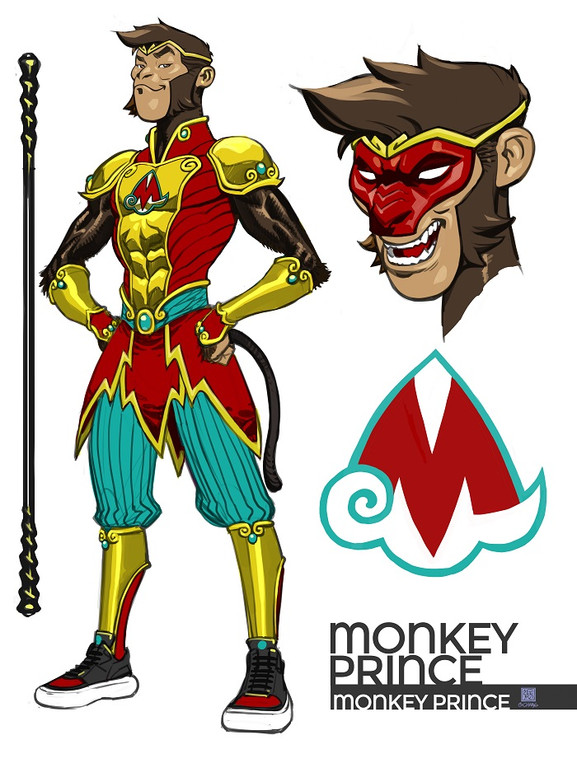
The eighth and biggest problem is the Monkey Prince’s design (refer back to fig. 2). His golden headband is bent into a subtle “M” (for Monkey), which likely borrows from the double “W” motif on Wonder Woman‘s chest. He even wears a vigilante-type mask and sports a large “M” logo on his chest. And the most egregious of all, he wears basketball sneakers! Mr. Yang explains that this costume and the Monkey Prince’s secret identity tie him to other heroes in the DC Universe. He also states that the logo is “not really an ‘M’ [but] a graphic presentation of Flower Fruit Mountain” where the monkey king was born (Ching, 2021). But this symbology doesn’t agree with the internal story details. Marcus is adamant in his hatred for superheroes, so why dress him like one? It just doesn’t make any sense.

The character designer Mr. Chang explains his reasoning for the final look:

Monkey Prince Is all about attitude and character. My initial reaction to the original Monkey King character is that he’s a rebel, a mischievous figure who defied the gods and wanted to do things his way. So, bringing that element into the design was a key factor. There are already a ton of previous adaptations of this great story, so I wanted to find a balance between the traditional uniform elements (in reflection for previous fans of the mythological hero) and our modern-day superhero elements you would find in heroes in the DC Universe and form that into a new, authentic variation for our times and story.

I was also initially drawn towards the curlicue motif, with it also representing clouds or wind, which the monkey would fly around on, and you can see that throughout his armor. I balanced the traditional deep red, for blood and family, with an old gold, for history and flashiness, and teal, a more modern and hip variation of traditional green or jade (Ching, 2021).

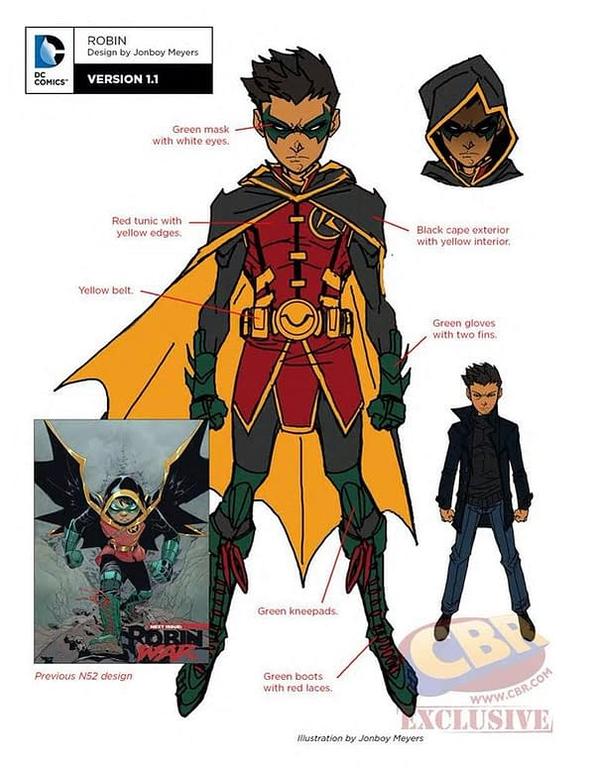
While I like some of the golden armor elements and the use of ruyi (如意) / lingzhi (靈芝) mushrooms (the “curlicue motif“), the striped teal paints and, especially, the sneakers just look tacky. Moreover, the design appears to be recycled from previous characters. Several people have commented online that the Monkey Prince is just a combination of Beast Boy‘s hair and body (fig. 3) and an altered version of Tim Drake‘s red and green Robin costume (fig. 4). Personally, I think his design is just a play on Damian Wayne, especially the hair, the red tri-panels with yellow borders at his waist, and the green pants (fig. 5). He is, after all, playing second fiddle to the Monkey King, like Robin does Batman.

Now, I have to address the sneakers. Why, why, why would a Chinese monkey demigod wear basketball sneakers? Well, according to Mr. Chang, it’s because a high school teenager like Marcus is bound to wear something with “some hotness to it” (Ching, 2021). Additionally, the designer admits that it’s also because he’s trying to (shamelessly) plug his own brand of shoes (Ching, 2021).

Fig. 3 – Detail of an advertisement featuring the design for Beast Boy in Fortnite (larger version). Image found here. Fig. 4 – Tim Drake’s costume (larger version). Take note of the staff. Image found on Wikimedia commons. Fig. 5 – Damian Wayne’s costume (larger version). Take note of the waist panels. Image found here. Copyright DC Comics.

4. My Rating

Overall, I would give “The Monkey Prince Hates Superheroes” 2 out of 5 stars 3 out of 5 stars (see the 06-16-21 update below). [4] I gave extra points for comical story elements and the technical proficiency of the art, but it’s hard to overlook problems with the writing and character design. This is a weak showing for the creative team involved. I think part of the problem is that not all parties had an intimate familiarity with Journey to the West. Mr. Chang admits that he only heard a few stories as a child and doesn’t know how the novel ends (Ching, 2021). Editor Chen states that her parents also told her stories (Aguilar, 2021), but I don’t know if she has ever read the novel. As for Mr. Yang, I’m sure he knows the story cover to cover, so I’d like to think that he was forced to sacrifice authenticity while working within certain constraints set by DC Comics.

Having said that, I’m honestly interested to see where the Monkey Prince story goes in future issues of his comic book. I will update this article as the narrative progresses.

5. What I Would Change

I would do away with the Monkey King taking a Chinese wife centuries after he became a Buddha. Instead, the son could be born during the Tang Dynasty (618–907) to Princess Iron Fan, the rakshasi wife of the Bull Demon King. Though seemingly impossible, there is precedent for this idea. An early 15th-century zaju play predating the novel describes Sun Wukong’s delight upon learning that the Princess is unmarried (Ning, 1986, pp. 139-140). He then resorts to seduction in an attempt to gain the iron fan needed to extinguish Flaming Mountain. For example, he recites a poem to her chocked full of sexual innuendo: “The disciple’s not too shallow. / the woman’s not too deep. / You and I, let’s each put forth an item, / and make a little demon” (Ning, 1986, p. 141). In addition, a 17th-century sequel to Journey to the West even describes the Monkey King having a number of sons with Princess Iron Fan. He faces one of his offspring, King Pāramitā (Boluomi wang, 波羅蜜王), during a final battle between all of the armies of the world (Dong, Lin, & Schulz, 2000, pp. 123-124). In our story, the son could have been conceived during chapter 60 of the original novel when Monkey shares a tender moment with the Princess while disguised as the Bull Demon King (Wu & Yu, 2012, vol. 3, p. 144).

Being a half-monkey spirit-half-rakshasa demigod, I’d like to think that the Prince’s base form would be more monkey-like. This would mean any lapse in concentration would cause him to revert to this state instead of a human form like in the original comic story.

I can already hear someone ask: “How can the Monkey Prince still be a teenager by the start of the story if he was born hundreds of years ago?” Well, this leads me to my next change. Instead of Zhu Bajie, it would make much more sense for his teacher to be the Bodhisattva Guanyin. After all, she tutors the children of several characters from the novel, including Muzha (木吒), 2nd son of Heavenly King Li Jing, and Red Boy (Hong hai’er, 紅孩兒; a.k.a. the “Child Sudhana,” Shancai tongzi, 善財童子), son of the Princess Iron Fan and Bull Demon King. [5] Already having a son under the goddess’ tutelage would make it easier for the Princess to send another child to learn from her. Also, Guanyin helped subdue both Monkey and Red Boy with golden fillets (Wu & Yu, 2012, vol. 1, pp. 316-320; vol. 2, pp. 251-252). Perhaps the Monkey Prince has a temper like his father and half-brother, so the goddess would make him wear Wukong’s fillet as it’s no longer needed once the latter attains Buddhahood (Wu & Yu, 2012, vol. 4, p. 383). Most importantly, the bodhisattva lives on the earthly paradise of Potalaka Mountain. The novel explains that one day in heaven equals one year on earth (Wu & Yu, 2012, vol. 1, pp. 150 and 167). A similar constricting of time would no doubt happen in Guanyin’s holy land. Therefore, the Monkey Prince would still be a teenager even after hundreds of years have passed on earth.

Next, I would completely do away with the tacky superhero costume. As a disciple of Guanyin, he would just wear a monk’s robe, the golden fillet, and possibly even sport a tiger skin skirt (like his father) since he would technically be a heavenly guardian. There would be no unnecessary logos, recycled costumes, or cursed sneakers. And the best part? This attire wouldn’t contradict the Monkey Prince’s hatred for superheroes, provided that was still a necessary plot element. Perhaps this hatred could be born from the fact that heroes like Shazam are given their powers (or happen upon them by accident), while the Prince’s abilities are the hard-won product of long years of spiritual cultivation.

My changes are less confident, however, when it comes to naturally fitting the Monkey Prince into existing canon. The first thing that comes to mind would involve the Shazam villain Sabbac, a hellish demon, causing havoc in Philidephlia’s Chinatown. Perhaps his assault could be related to the deplorable reports of Covid-related violence against Asians. A devotee of the goddess could pray to her in their time of need, and then the Monkey Prince is sent in her stead to exorcize the evil. But Shazam arrives while the Prince is battling the demon, and not knowing one from the other, he attacks them both. This might add fuel to the Monkey Prince’s dislike for Shazam.

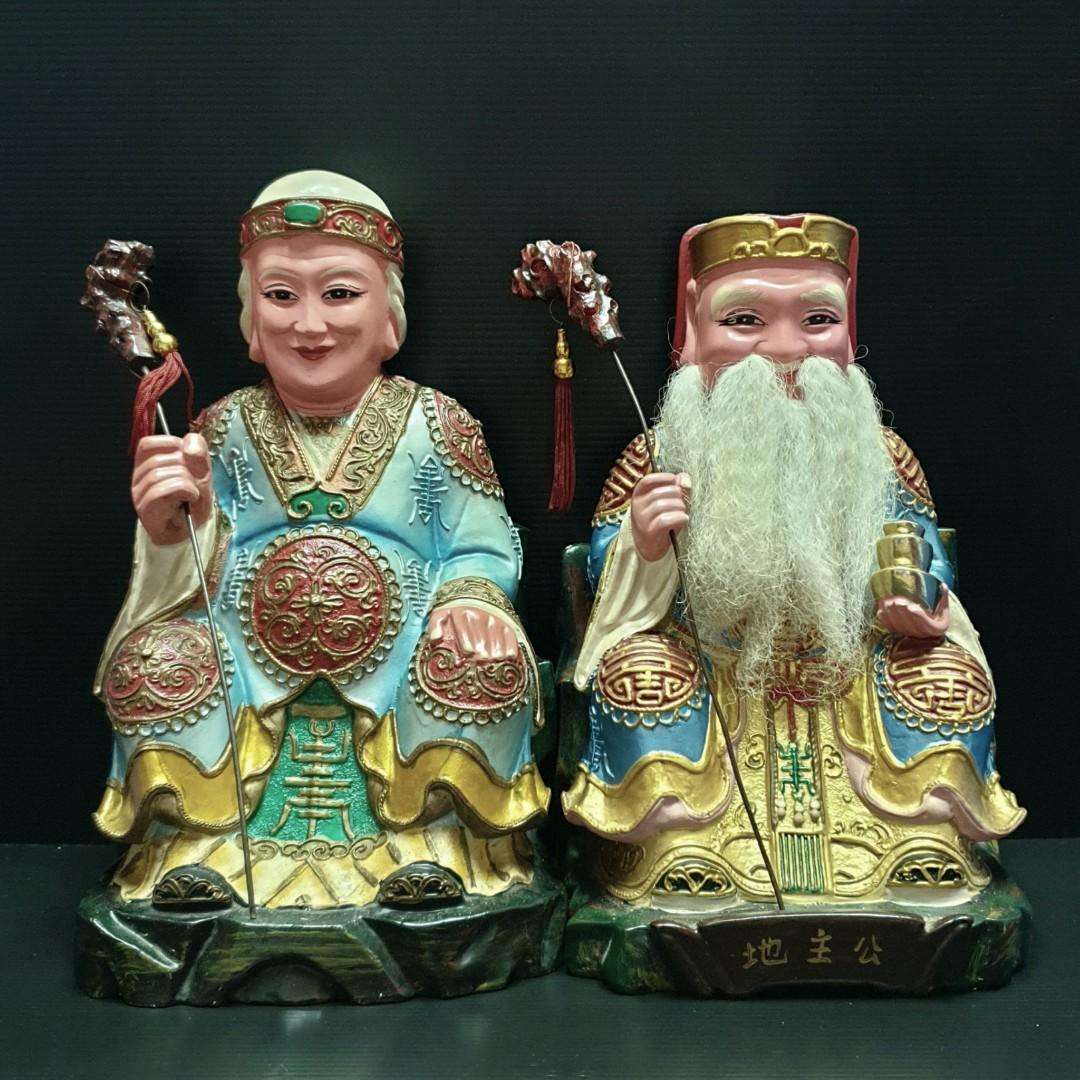
I personally think that the secret teen identity is a bit much, but if it is a necessary plot element, Guanyin could assign the Monkey Prince to watch over her flock in Philadelphia (and the rest of America?), [6] and at the same time allow him to experience a slice of modern teen life. And, again, if necessary, we can borrow from the original story and have the Prince attend high school, where he feels drawn to Billy Batson because of his godly aura. A local earth god (tudi gong, 土地公) and his wife (tudi po, 土地婆) (fig. 6) could be tasked by heaven to act like his grandparents to keep up the appearance of a normal human family.

Fig. 6 – Religious statues of the earth god (right) and his wife (left) in the author’s personal collection (larger version).


6. Updates

Update: 05-21-21

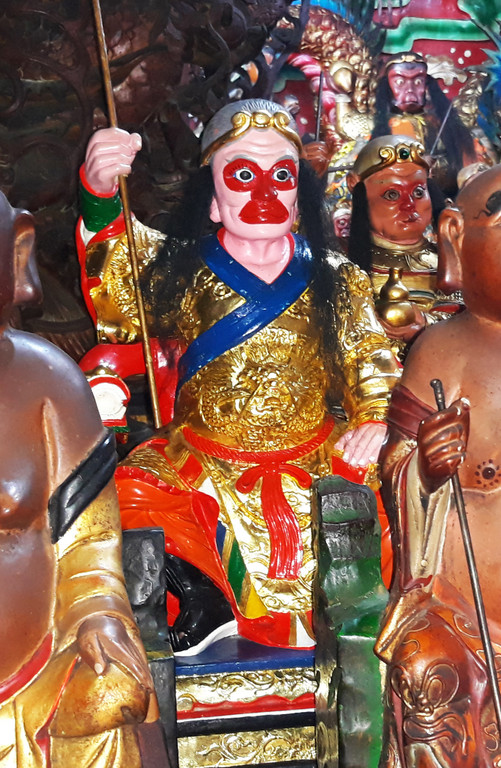
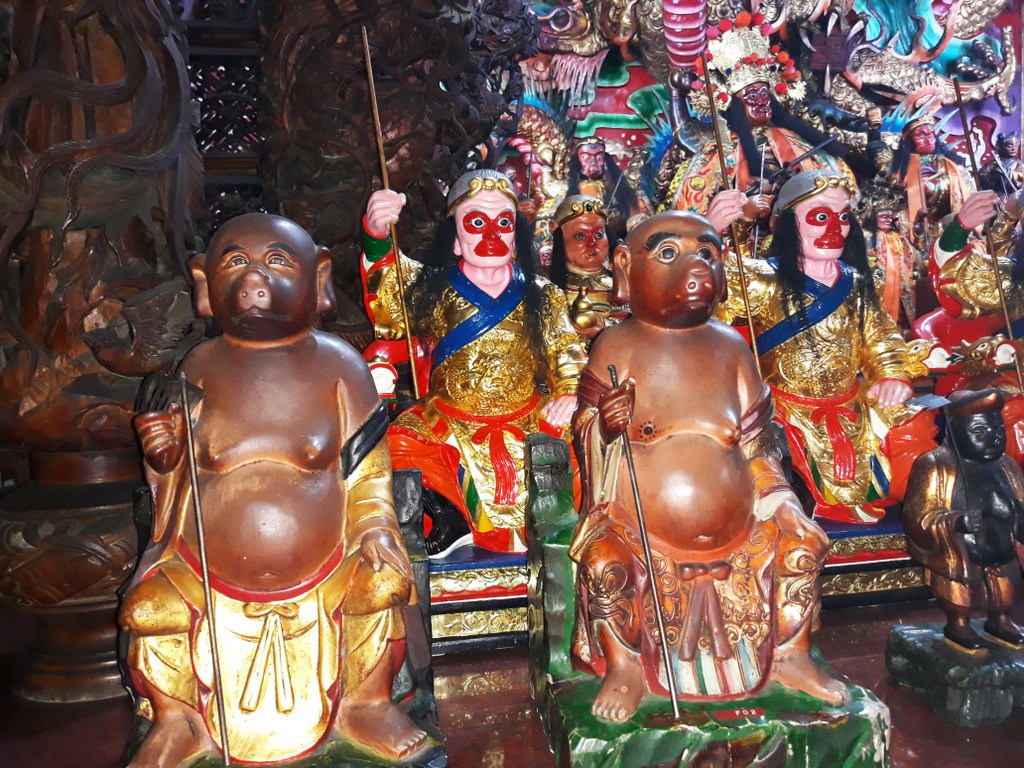
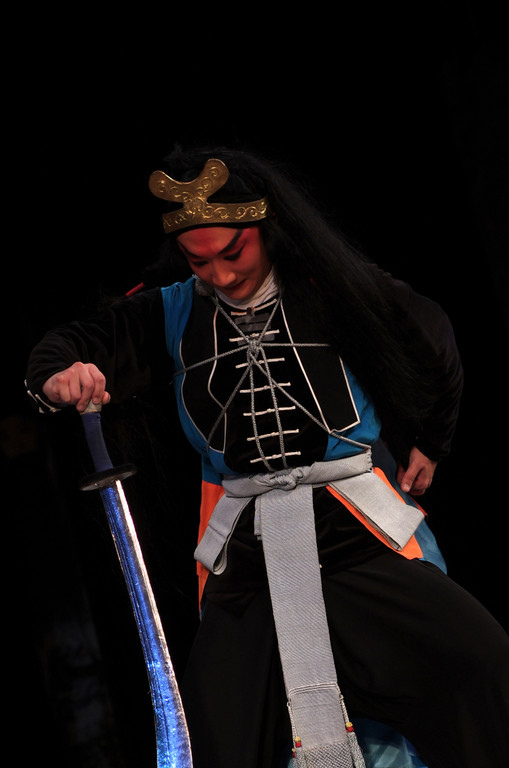
Last time I suggested changes to the Monkey Prince’s costume. One thing I forgot to mention was his hair. In order to be more authentic, there are two choices: 1) he can be bald (like his father in the original novel) since he’d be a Buddhist monk; or 2) he can have long hair since he’d be a martial monk (wuseng, 武僧). It’s interesting to note that religious statues of Sun Wukong sometimes depict him as a martial monk, complete with the golden fillet and long hair (fig. 7). This is heavily influenced by Chinese opera (fig. 8) (Bonds, 2008, pp. 177-178).

Fig. 7 – Detail of a religious statue of Sun Wukong as a martial monk (larger version). See the full version here. Photo taken by the author at one of the many temples in Taiwan dedicated to the Monkey King. Fig. 8. – A detail of the literary hero and martial monk Wu Song from a Chinese opera about his adventures (larger version). Full version available on Wikimedia Commons.


Update: 06-16-21

I’ve just posted my review of Marvel Comics’ Sun Wukong character. Reading the comic book equivalent of a train wreck has allowed me to view the Monkey Prince in a new, more positive light. I have, therefore, decided to increase my previous review score.

Review of Marvel Comics’ Sun Wukong


Update: 10-18-21

It has officially been confirmed that the Monkey Prince will be receiving his own 12-issue run in February 2022.

https://www.dccomics.com/blog/2021/10/16/dc%E2%80%99s-monkey-prince-new-series-to-debut-on-lunar-new-year-2022

DC has created an issue #0, which can be read here. I will review this comic at a later date.


Update: 12-13-21

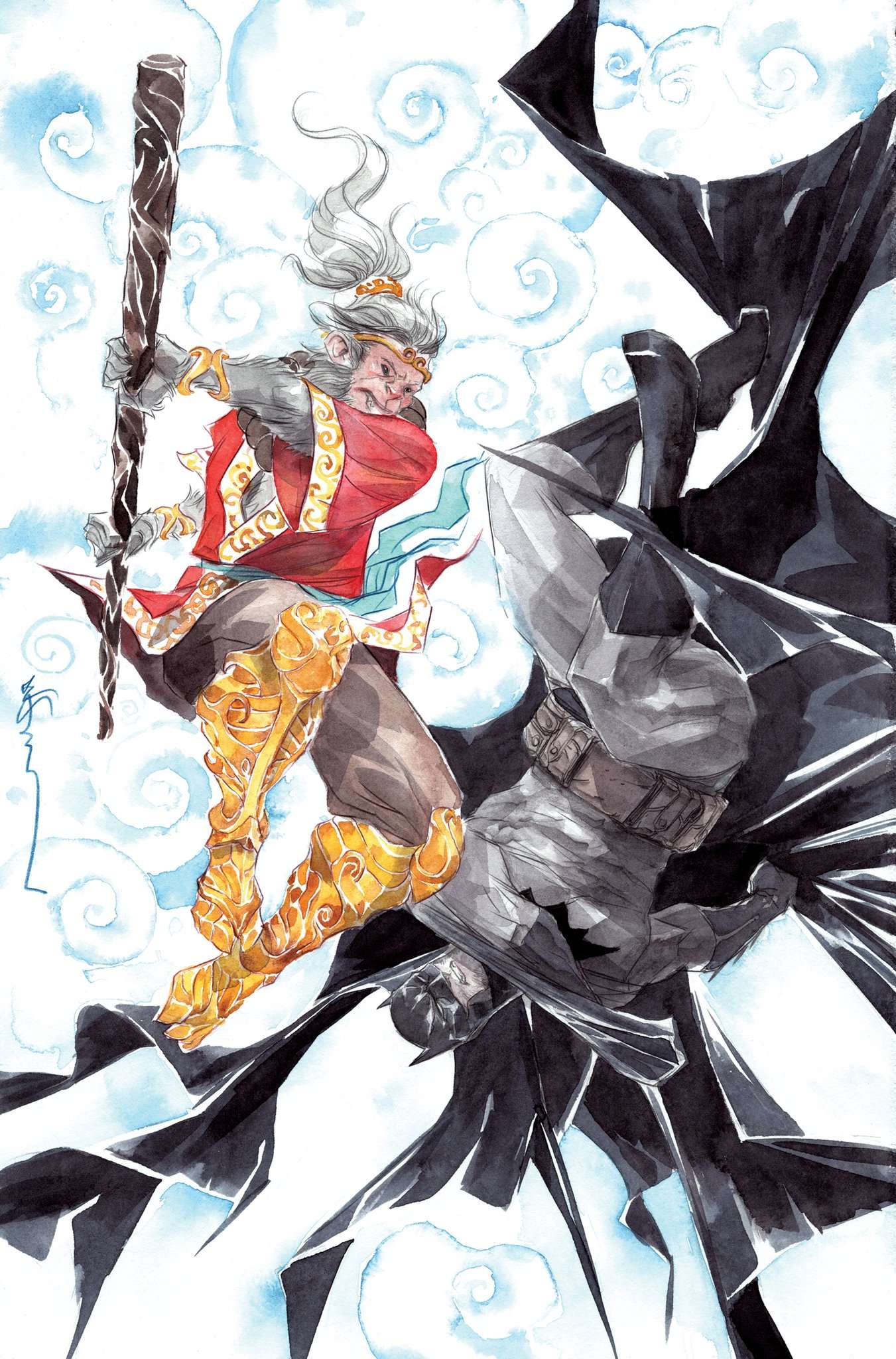
Thanks to a friend, I learned that a new Dustin Nguyen variant cover for issue #1 shows a long, white-haired Monkey Prince/King(?) fighting Batman (fig. 9). The issue description reveals that it is a prequel set in Gotham City:

Introducing the newest hero in the DCU, the great sage, equal to the heavens, better than his predecessor the legendary Monkey King, even better than the Justice League and definitely the Teen Titans (actually, all the heroes combined), everyone put your hands together for the Monkey Prince! Marcus Sun moves around a lot because his adoptive parents are freelance henchpeople, so this month he finds himself as the new kid at Gotham City High School, where a mysterious man with pig features asks Marcus to walk through a water curtain to reveal himself as who Marcus really is someone who has adventured through The Journey to the West, can transform into 72 different formations, can clone himself using his hairs, and is called the Monkey Prince! (see here)

This description indicates that Marcus first meets and begins his training under Pigsy while living in Gotham. It also shows (for some reason) that the hog immortal doesn’t do anything to curb the criminal activity of the boy’s adopted parents. Apparently, even celestials are oblivious to their henching gig. Ugh.

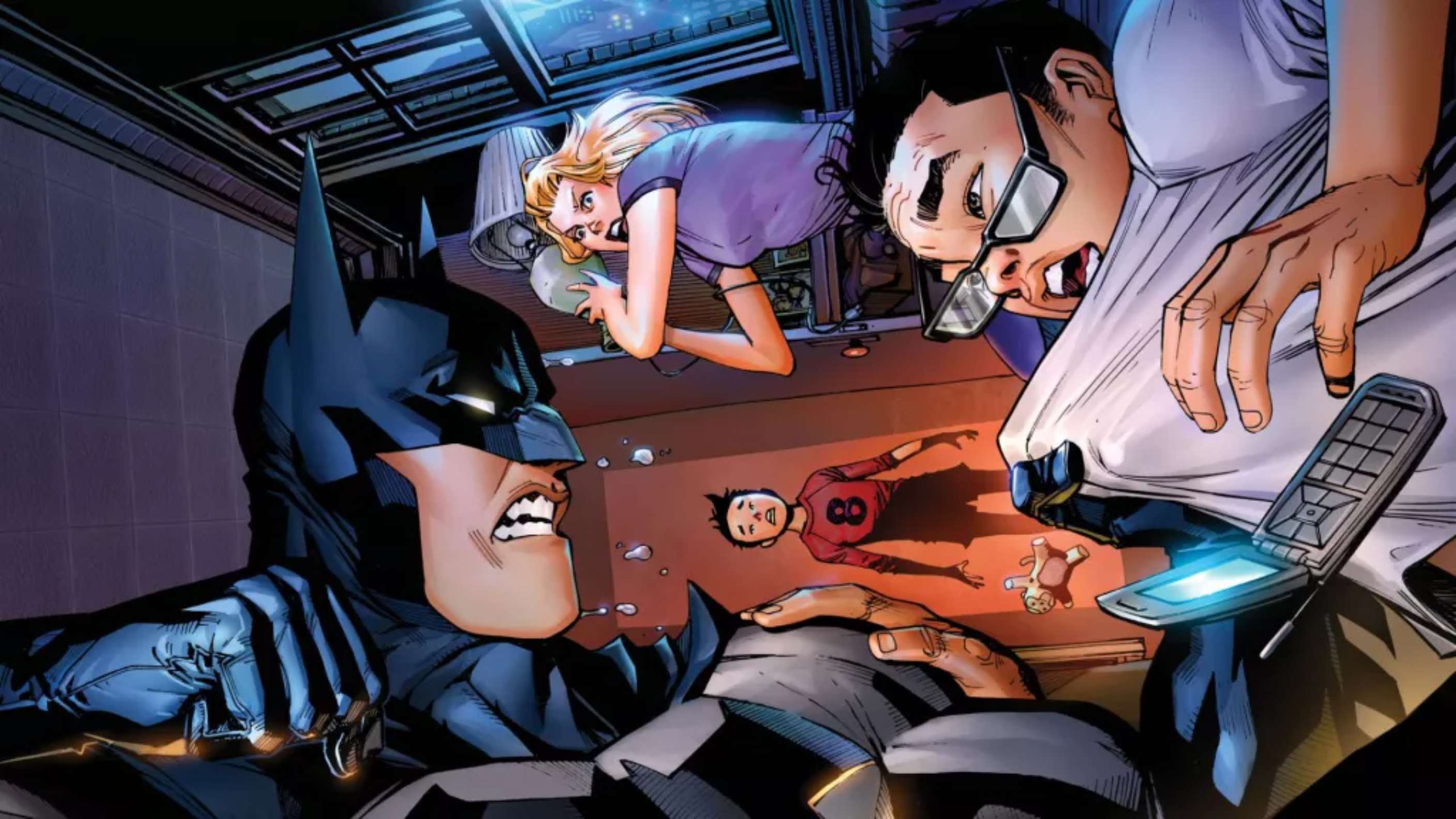
A cursory search shows that I missed a preview panel released in October showing Batman attacking a man and woman (the adopted parents), while a young Marcus helplessly watches from the background (fig. 10).

Fig. 9 – The new issue #1 variant cover by Dustin Nguyen (larger version). Fig. 10 – The Batman panel (larger version). Copyright DC Comics.

I don’t have high hopes for this upcoming issue for several reasons: 1) I’ve already mentioned everyone’s obliviousness to the adopted parents’ criminal activity; 2) The description confuses the Monkey King’s title “Great Sage Equaling Heaven” for a nickname of the Monkey Prince. Anyone who has actually read the novel would NEVER make this mistake; 3) It also says “high school,” while the panel clearly shows a young Marcus holding a stuffed Monkey; and most importantly, 4) Issue #0 was horrible. I won’t bother to give it a proper review. Just know that the story was a flashback involving a shotgun blast of Journey to the West characters (both heroes and villains) fighting against Darkseid‘s invasion of the heavenly realm (fig. 11). Once again, the characters are hammered into canon whether it makes sense or not. 

At this point, I probably won’t do any more reviews, but I will continue to read the series out of morbid curiosity. 

Fig. 11 – Monkey Prince #0 splash page with Journey to the West characters fighting Darkseid’s army (larger version). Copyright DC Comics. 


Update: 12-22-2021

I changed my mind about reviewing issue #0. Here is my analysis. Among my suggested changes, I named the character Sun Taizi (孫太子), or “Prince Sun.” This plays off of San Taizi (三太子), the “Third Prince,” one of the titles of Nezha, a heavenly vanguard in Sun Wukong’s religion, as well as a very important deity in his own right.

Review of DC Comics’ Monkey Prince #0 to #6


Update: 03-13-22

One of my previous complaints reads:

Seventh, the golden fillet disappears when Marcus is in his everyday human attire. This goes against the point of the band. In the novel, it can’t be removed and thus serves as an ever-present reminder of self-restraint (Wu & Yu, 2012, vol. 1, pp. 319-320). Maybe this will be addressed later.

This is indeed addressed in issue #2. Marcus throws away the headband, only for it to return later with the quaint ability to move about his body. It can never be removed, so when he isn’t in his Monkey Prince persona, Marcus wears the fillet where it can’t be seen (Yang, 2022, pp. 16 and 20-21).


Update: 04-11-26

A reddit member has posted a list of the Monkey Prince’s powers.

Respect Marcus Shugel-Shen, the Monkey Prince (DC Comics, Post-Flashpoint)
byu/rangernumberx inrespectthreads

Notes:

1) Though, the online version I bought through Google Play only has 84 pages.

2) Zhu Bajie and his brothers do briefly take students in chapter 88, but they only teach them how to wield weapons (Wu & Yu, 2012, vol. 4, pp. 198-203). This is not the same as the sagely teacher of magic presented in the comic.

3) Admittedly Yu (Wu & Yu, 2012) does use “Master Zhu” (vol. 4, p. 199), but that is far more accurate than mixing “Shifu” with “Pigsy,” a nickname used in place of the proper Chinese from the English abridgement Monkey (1942).

4) I’m willing to revise this in the future as the narrative progresses.

5) Muzha (a.k.a. Hui’an, 惠岸) is already Guanyin’s disciple by the start of Monkey’s rebellion. In chapter 6, the goddess sends him to help in case his skills are needed (Wu & Yu, 2012, vol. 1, p. 175). Red Boy is taken in by her at the end of chapter 42 and beginning of chapter 43 (Wu & Yu, 2012, vol. 2, pp. 251-252).

6) I’ll have to wait and see how far the Monkey Prince’s adventures take him in his ongoing comic.

Sources:

Aguilar, M. (2021). Jessica Chen Talks Returning Favorites and the Monkey Prince’s Debut in Festival of Heroes: The Asian Superhero Celebration. Comic Book. https://comicbook.com/comics/news/dc-festival-of-heroes-the-asian-superhero-celebration-jessica-chen/

Blum, J. (2022). DC’s New Bad Guys Eat Superheroes to Steal Their Powers. CBR. Retrieved from https://www.cbr.com/dc-villains-eat-superheroes-monkey-prince/

Bonds, A. B. (2008). Beijing Opera Costumes: The Visual Communication of Character and Culture. Honolulu: University of Hawai’i Press.

Chen, J. (Ed.). (2021). DC Festival of Heroes: The Asian Superhero Celebration [Google Play]. New York, NY: DC Comics. Retrieved from https://play.google.com/store/books/details/Minh_Le_DC_Festival_of_Heroes_The_Asian_Superhero?id=qXUrEAAAQBAJ

Ching, B. A. (2021). Meet the Monkey Prince: Yang and Chang Introduce DC’s Newest Hero. DC. https://www.dccomics.com/blog/2021/05/12/meet-the-monkey-prince-yang-and-chang-introduce-dcs-newest-hero

Dong, Y., Lin, S., & Schulz, L. J. (2000). The Tower of Myriad Mirrors: A Supplement to Journey to the West. Ann Arbor: Center for Chinese Studies, The University of Michigan.

Ning, C. Y. (1986). Comic Elements in the Xiyouji Zaju. (Doctoral dissertation). Available from ProQuest Dissertations and Theses database. (UMI No. 8612591)

Wu, C., & Yu, A. C. (2012). The Journey to the West (Vol. 1-4). Chicago, Illinois: University of Chicago Press.

Yang, G. L. (2022). Monkey Prince, (2) [Kindle]. New York, NY: DC Comics. Retrieved from https://www.amazon.com/Monkey-Prince-2022-2021-ebook/dp/B09RQ6581L

Yang, G. L. (2021). The Monkey Prince Hates Superheroes. In Jessica Chen (Ed.). DC Festival of Heroes: The Asian Superhero Celebration (pp. 70-82) [Google Play]. New York, NY: DC Comics. Retrieved from https://play.google.com/store/books/details/Minh_Le_DC_Festival_of_Heroes_The_Asian_Superhero?id=qXUrEAAAQBAJ

Archive #18 – Demons, Gods, and Pilgrims: The Demonology of the Hsi-yu Chi (1985)

Campany (1985) discusses methods by which demons of Journey to the West (Xiyouji西遊記, 1592) move up and down the Buddho-Daoist cosmic hierarchy. A PDF of the paper can be accessed in section II below. 

I. Summary

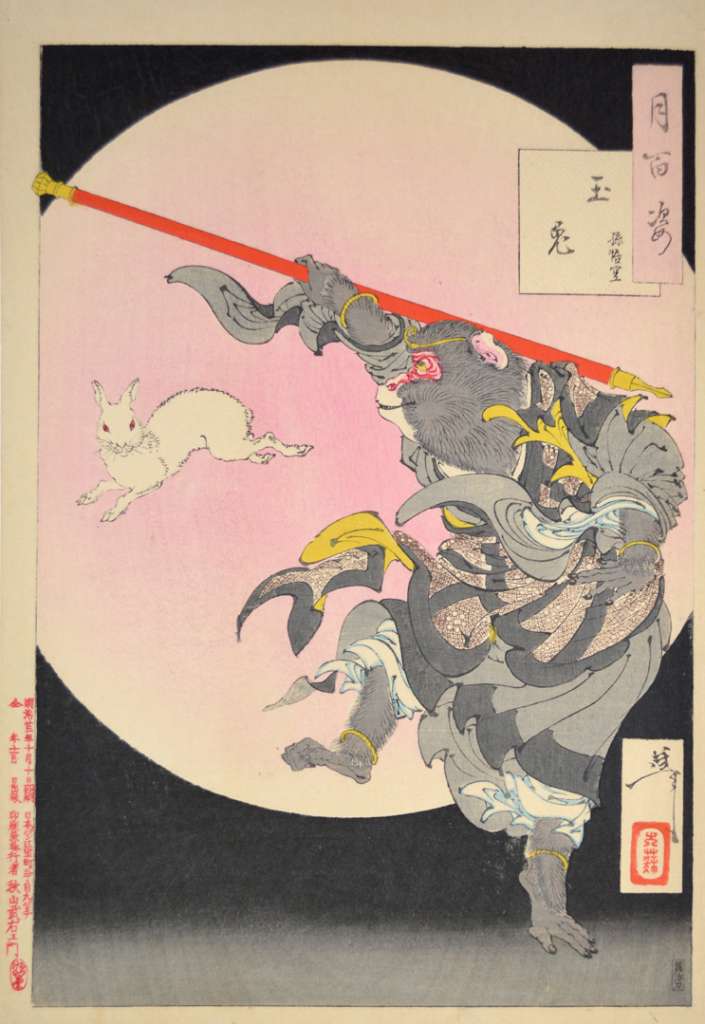
He begins by laying out the formulaic pattern of the episodes in which they appear: 1) a description of the demon’s mountain or aquatic home in poetic verse; 2) the initial encounter during which Tripitaka is tricked by the demon’s magic disguise; 3) the initial battle(s) between the disciples and the demon involving contests of magic and weapons, often described in poetic verse; 4) the battles end in a stalemate or defeat, and in the case of the latter the disciples are held captive in the demon’s stronghold; 5) Sun Wukong searches heaven and earth for the master of the demon, for the evil is usually a renegade celestial animal or protégé; 6) the demon is subdued by their master; and 7) the demon is either reintegrated or added to the cosmic order. An example of the former is the moon goddess’ jade hare (ch. 95) being taken back to heaven (fig. 1). An example of the latter is Red Boy (ch. 40-43) becoming a disciple of Guanyin.

There are two types of powerful demons who are subjugated by their master or an appropriate agent (e.g. a rooster god defeating a centipede demon). The first acquires magic powers via Daoist cultivation and, lacking celestial rank, causes havoc (think of Monkey as a young immortal). It is only through their subjugation and addition to the cosmic order that they achieve higher spiritual status. Apart from Red Boy, another example is the Black Bear spirit (ch. 16-17), who is subdued by Guanyin and installed as the guardian of her magic island. The second, being the most common, is one who previously held heavenly rank and was banished to earth. This exile is the result of breaking a rule, the need to burn off negative Buddhist karma, or because of a deficiency in their Daoist cultivation, requiring that they work their way back up the spiritual hierarchy. All five of the pilgrims fit into this category in one way or another.

Two types of demons are not subjugated by a heavenly master. The first is a lessor animal spirit who acts as a servant or soldier for a demon king. They attach themselves to this “upwardly mobile” demon because their master may aid in their own ascension via secrets of cultivation or the gift of longevity-bestowing food. Prime examples are all the (simian and non-simian) animal spirits who attach themselves to Sun Wukong after he establishes himself as a monster king. Such animal spirits are usually slaughtered after their master is defeated. The second are demons who peacefully cultivate themselves without endangering others. A prime example is the White Turtle of the Heaven-Reaching River (ch. 49 and 99) who cultivates human speech but still requires the intervention of the Buddha to evolve to human form.

Campany (1985) moves onto the hierarchy itself, noting how the level of a being’s attainment in spiritual cultivation does not affect their actual rank. This is because Daoism, Buddhism, and Confucianism are viewed differently in the novel. Demons who cause no harm during their cultivation are left alone, while violent offenders are subjugated and added to the hierarchy. And even if an animal spirit has Daoist powers, they are still considered inferior to humans, for they are born into a lower level of the six Buddhist paths of reincarnation. These spirits, however, can move up the hierarchy based on the amount of Buddhist merit, or “right fruit” (zhengguo, 正果), that they acquire through good deeds. Additionally, the Buddha and Guanyin are generally portrayed as higher in rank than Daoist gods, even the Jade Emperor, due to their “Dharma Power” (fali, 法力). Despite this, Sun Wukong is always quick to point out when a high-ranking god, Buddhist or Daoist, has violated Confucian norms. Therefore, the hierarchy presented in the novel follows the Ming-era syncretic emphasis on mental cultivation (xiu xin, 修心).

Fig. 1 – Yoshitoshi, Jade Rabbit: Sun Wukong, from the series One Hundred Views of the Moon, 1889 (larger version). From the Ronin Gallery.

The novel categorizes all beings as part of heaven, earth, or hell, each representing a realm within the hierarchy. Yet, it presents four ways to move between them: one, temporarily taking the form of a higher-ranking figure (human, immortal, deity, etc.) via magical transformation (hua, 化); two, reincarnating into a higher path (e.g. animal to human); three, attaining immortality via Daoist cultivation (or becoming human and then attaining immortality in the case of animal spirits); and four, being subjugated and added to the cosmic order.

The demons of Journey to the West are paradoxical on two counts: one, such beings are realistic, with detailed descriptions of their appearance, speech, and feelings, and yet they are often reduced to mere illusions brought forth by the unfocused or disquieted mind (Campany (1985) waits to explain this until the end); and two, they are evil from a Western perspective, but not wholly evil from an Eastern perspective. Their ambiguous nature is revealed by the Chinese hanzi used to describe them (e.g. yaojing 妖精; yaoguai, 妖怪), suggesting these beings are “undeveloped” or “bogus” and have yet to complete their cultivation. Additionally, the novel connects the demons and pilgrims with five elemental and yin-yang theory, each with its own creative/destructive or magnetic/repelling forces, suggesting a mutual relationship. This relationship is explained below.

Campany (1985) emphasizes that, while Tripitaka’s disciples are themselves former demons, what separates them from the others is “returning to the right path” (gui zheng, 歸正), or converting to Buddhism. As Daoists, they formerly cultivated the self, but as Buddhists they subsume the self to a larger whole by becoming Tripitaka’s disciples, thereby submitting to Buddhist law and cultivating Buddhist merit through their actions. This differs from demons who attempt to subsume the universe into themselves. They follow heretical practices (waidao, 外道) in pursuit of their continued self-cultivation, many seeking a “short cut” by attempting to eat Tripitaka. They don’t realize that accepting the Buddhist concept of “no self” would free them of their attachment to Daoist cultivation and that the accumulation of Buddhist merit would aid in their ascension through the cosmic hierarchy.

Powerful demons like Monkey who consider themselves greater than the universe would continue down the wrong path without the intervention of their master (or an appropriate agent) intervening to reintegrate or add them to the cosmic order. As Campany (1985) explains: “Submission of self is true cultivation of self” (emphasis in original) (p. 114). Therefore, demons rely on the pilgrims to redirect their cultivation to the right path of subsuming the self to a larger whole. An example is Lady Raksasi at the end of her story cycle.

Likewise, the pilgrims rely on the demons for several reasons: one, they help the pilgrims build Buddhist merit; two, via the concept of “non-duality“, the pilgrims learn there is no difference between themselves and the demons; and three, as mental obstacles, the demons help refine the pilgrim’s spiritual cultivation over the journey. This last point is particularly important as the illusionary nature of demons helps the pilgrims, especially Tripitaka, understand that all reality is empty (kong, 空). This is something that Wukong (悟空, “aware of emptiness”) reminds his master of throughout the quest.

Campany (1985) ends the paper by explaining the first paradox:

We now see that the juxtaposition of realistic descriptions of demons and reductions of them to miasma of the mind serves as a fascinating and entertaining contrapuntal expression of the central theme of the novel, the complementary relation and ultimate identity between illusion and enlightenment. Why do demons almost always appear according to the paradigm sketched in the first part of this paper? Why this repetition, this sameness, if not to underscore the miasmic quality of the demons even as narrative details convince us of their palpable sensory reality? Why do demons put up so stubborn a resistance, if not to impress upon us the arduousness of right cultivation? The consummate artistry with which the author bodies forth in his tale the relation between illusion and reality is itself a vehicle for the perception of this relation (Campany, 1985, p. 115).

II. PDF File


Disclaimer

This has been posted for educational purposes. No malicious copyright infringement is intended. Please support the official release.

Citation

Campany, R. (1985). Demons, Gods, and Pilgrims: The Demonology of the Hsi-yu Chi. Chinese Literature: Essays, Articles, Reviews (CLEAR), 7(1/2), 95-115. doi:10.2307/495195

Wu, C., & Yu, A. C. (2012). Journey to the West (Vol. 1) (Rev. ed.). Chicago: University of Chicago Press.

Monkey Boxing: The Connection Between Primates and Martial Arts in Ancient China

Last updated: 12-11-2021

Look up the terms “monkey” or “ape” in the dictionary and you’ll find that they serve as verbs meaning to mimic the movements or actions of another. This is because monkeys and apes have a propensity for observation and mimicry. Being primates ourselves, humans are no different. But interestingly this mimicry sometimes mirrors our primate cousins. Chinese martial arts, for example, has developed several primate-based fighting arts, including White Ape Connected Arms boxing (Baiyuan tongbei quan, 白猿通背拳) and several flavors of Monkey boxing (Houquan, 猴拳), and other styles have even adopted primate techniques, such as the monkey footwork of Praying Mantis boxing (Tanglang quan, 螳螂拳). Humans have long marveled at the physical prowess and acrobatic mastery of apes and monkeys, so it’s only natural that boxers would want to incorporate the powerful arm movements and awe-inspiring leaps and flips of primates into various fighting arts. But how long have our cousins been associated with martial arts in Chinese culture, and when and how did primate-based martial arts develop?

Two approaches can be used in an attempt to answer both questions. The first method involves charting similarities in techniques shared between modern regional primate-based Chinese martial arts styles and relying on folk lineages, ethnographic data, and (when possible) historical manuals to discover the earliest vestiges of primate boxing in China. A second method is to search for references to primate-based martial arts in the historical record. A benefit of the first approach would be pinpointing the areas in China where these styles likely first emerged in recent history. The downside is that martial arts are passed from teacher to student via embodied practices (e.g. fist and weapons forms and sparring), often without the material being recorded in a manual. This means such styles can’t be reliably traced beyond a certain time period. A benefit of the second approach is that it provides a deeper view of history, giving the researcher license to record not only the odd mention of historical boxing styles but also associations between primates and weapons and other forms of physical exercise in ancient folklore, literature, medicine, and religion. Obviously, the best approach would be a combination of the two. However, I lack the necessary encyclopedic knowledge of Chinese martial arts techniques. Such a grand project will have to wait for a more qualified researcher. I have instead decided to adopt the second approach.

This article is divided into five sections. The first presents a folk history for Tai Shing Pek Kwar, a popular modern form of Monkey boxing, to serve as an example of how such styles can be created. The second provides three references to premodern Monkey boxing appearing in military and travel writings of the 16th century during the late Ming (1368–1644), pointing to the commonplace nature of the style. Here, I suggest that the lack of evidence for pre-Ming references to primate-based boxing points to the style emerging during this time. This section also provides examples of armed techniques associated with apes in military literature of the 16th and 17th century. The third discusses the story of the noted literary monkey hero Sun Wukong (孫悟空), his portrayal as a master of armed and unarmed fighting, and how he bridges the gap between the aforementioned lack of pre-Ming boxing references and older material associating apes and monkeys with armed combat. The fourth presents ancient stories pitting a magic white ape against the martial skills of legendary Chinese heroes, including the archer Yang Youji (養由基, 7th c. BCE) and the swordswoman the Maiden of Yue (Yuenu, 越女, 5th c. BCE). And the fifth discusses ancient animal mimicry and suggests that primate-based boxing is tied to war-like shamanic totemic dances and yoga-like daoyin calisthenics (8th c. to 2nd c. BCE). [1]

Table of Contents

1. Tai Shing Pek Kwar Monkey Boxing

There are three main styles of monkey boxing:

  • Shaolin Monkey – This combative style is said to have developed among various animal styles at the famed Shaolin Monastery (Shaolin si, 少林寺) in Henan province, China. Matsuda (2013) claims this particular style to be thousands of years old (p. 50); however, this has no basis in history, as will be explained below.
  • Wushu Monkey – This modern, non-combative style focuses on gymnastic leaps and flips for entertainment purposes. It is used in both Chinese opera and the floor routines of form competitions (video 1) (Matsuda, 2013, pp. 54-56).
  • Tai Shing Pek Kwar Monkey – This is the Cantonese variant of the Mandarin Dasheng Pigua men (大聖劈掛門), or the “Great Sage Ax School” of boxing. This combative style is said to be quite young, being a little over 100 years old (Matsuda, 2013, p. 56).

To this I add one more:

Video 1 – The first half of this video shows a youth performing Wushu Monkey for a form competition.

Tai Shing Pek Kwar is a combination of two different styles. The first, which I will only describe briefly, is Pek Kwar kyun (Pigua quan, 劈掛拳), a style that mimics the swinging of an ax, relying on the lively arm movements to generate power, much like the Choy Li Fut style of southern China. It is said to have been created over two hundred years ago in Shandong (northern China) by a woodcutter named Ma Chi Ho (Matsuda, 2013, pp. 64-68). The weapons practiced by this style include the double-edged sword (jian, 劍), the single-edged saber (dao, 刀), and the staff (gun, 棍) (Matsuda, 2013, pp. 70-75).

The Tai Shing kyun (Dasheng quan, 大聖拳) style is said to have been founded in northern China around the year 1911 (the end of the Qing dynasty) by a prisoner named Kou Si (寇四). [2] After being sent to jail for murder, Kou discovered that his cell faced a forest where he could observe the day-to-day lives of a troupe of monkeys. He noted five distinct behaviors among them that when combined with his knowledge of Great Earth boxing (Di tang quan, 地趟拳), a type of ground combat, could be adapted for fighting.

  1. Lost Monkey (Mi Hou, 迷猴) – This form mimics the behavior of a frightened monkey, comprising periods of attack and retreat, with lots of rolling, low kicks, and quick, frantic running low to the ground (video 2).
  2. Stone Monkey (Shi Hou, 石猴) – This form mimics the behavior of an enraged alpha male, comprising slower but drastically more powerful fist, elbow, and knee strikes, all of which are delivered from a low stance.
  3. Tall Monkey (Qi Hou, 企猴) – This form mimics the behavior of a tall monkey, comprising longer, quicker swinging arm strikes and higher-level kicks.
  4. Drunken Monkey (Zui Hou, 醉猴) – This form mimics the behavior of intoxicated monkeys, comprising falls, swaying motions with broken footwork, and circular punches, all of which are delivered from a low stance.
  5. Wooden Monkey (Mu Hou, 木猴) – This form mimics the behavior of an intelligent, deceptive monkey, comprising quick, low attacks and rolls similar to the Lost Monkey, but feigning retreat only to turn and unleash strikes upon the pursuing opponent.

After perfecting the style, Kou Si is said to have named it “Great Sage boxing” in honor of the monkey hero Sun Wukong (Matsuda, 2013, pp. 86-116). This is a reference to the title taken by the character during his rebellion against heaven (see section 3 below). The weapons practiced by this style include the staff and the metal ring (Matsuda, 2013, pp. 118-131).

Video 2 – The Lost Monkey form.

2. Primates and Martial Arts During the Ming

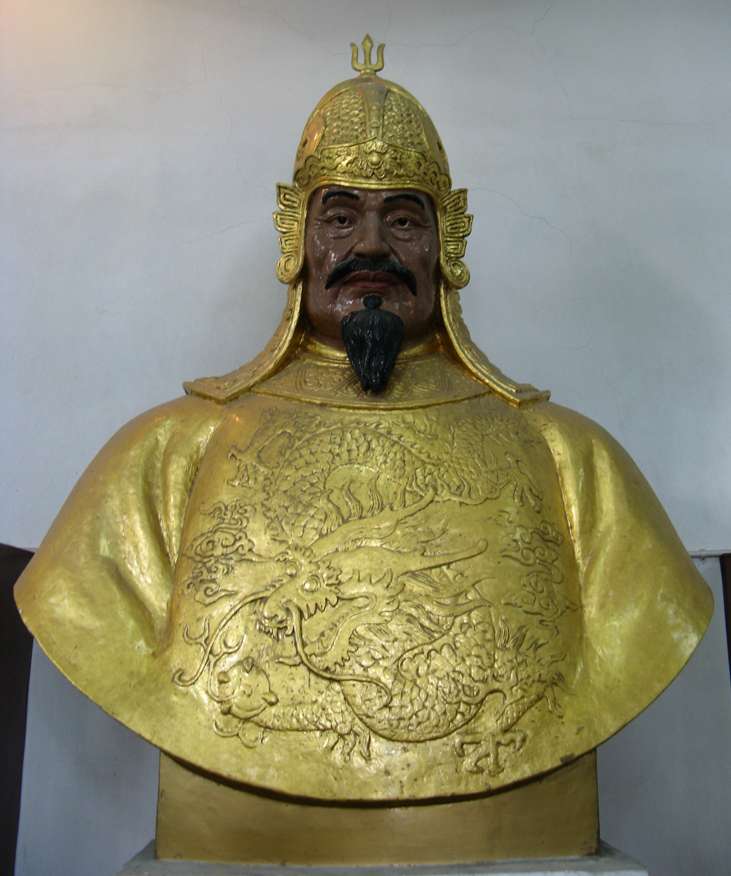
Textural evidence for Monkey boxing actually predates Kou Si’s lineage, appearing in late-Ming dynasty (1368–1644) records. The first reference appears in the eighteen volume edition of famed general Qi Jiguang‘s (戚繼光, 1528–1588) (fig. 1) New Treatise on Military Efficiency (Jixiao xinshu shiba juan ben, 紀效新書十八卷本), a military training manual completed in 1561 or 1562. The fourteenth chapter, titled “Chapter on the Fist Canon and the Essentials of Nimbleness” (Quanjing jieyao pian, 拳經捷要篇), reads:

Among the past and present fist specialists, the Song Great Founder had the Long Fist system with thirty-two positions. Moreover there are six pace and fist techniques, the Monkey Fist, and the Feinting Fist. The famous positions each have their own names, but in reality they are quite similar and scarcely differ from one another (Gyves, 1993, p. 34).

While Qi believed that boxing had no place in armed conflict, he thought such training was useful as it strengthened soldiers’ bodies, coordinated their limbs, improved their weapons skills, and bolstered their courage (Gyves, 1993, pp. 33-37). Qi gathered what he considered the most efficient techniques to achieve this goal, meaning that he consulted with many martial artists in the process. The fact that he mentions Monkey boxing suggests that it was a common style among fighters of this time.

Fig. 1 – A modern statue of General Qi Jiguang (larger version). Originally found on Wikipedia.

The second reference appears in Zheng Ruozeng’s (郑若曾, 1505–1580) Strategic Situation in Jiangnan (Jiangnan jinglue, 江南經略, 1564), which was written in response to the ever-present threat of the Woukou (倭寇), a conglomeration of Japanese, Chinese, and Korean sea bandits, invading China’s coastline. In the eighth volume, Zheng provides a long list of armed and unarmed martial arts, including the “thirty-six roads (forms) of Monkey boxing” (Houquan sanshiliu lu, 猴拳三十六路) (Zheng, 1564). Again, this suggests that Monkey boxing was quite common.

The third appears in scholar Wang Shixing’s (王士性, 1547–1598) A Journey to Mt. Song (Songyou ji, 嵩遊記), a travel log of the mountain on which the famed Shaolin monastery is located:

Martial monks again each came to present skills. With fists and staves contending, they struck as if flying. Their teacher with folded hands looked on. Among them was a monkey striker, spinning and leaping, just like a monkey… (Wells & Chang, 2004, p. 23).

This shows that a single Shaolin warrior monk practiced Monkey boxing. But does this mean the style was part of the monastery’s official curriculum at the time? The answer is no. According to Shahar (2008), textual evidence suggests that Shaolin officially took up boxing in the proceeding 17th century, and the first styles practiced were Drunken Eight Immortals boxing (Zui baxian quan, 醉八仙拳) and Lost Track boxing (Mizong quan, 迷蹤拳), and possibly followed by Plum Flower boxing (Meihua quan, 梅花拳) in the 18th- century. The monks adopted pugilism as a form of calisthenic exercise, later combining it with Daoyin (導引) calisthenics and spirituality to create a new form of self-cultivation. [3] Prior to this, the Shaolin monks were only known for their proficiency with the staff. Therefore, given the seeming commonplace nature of Monkey boxing during the late Ming, the monk could have learned the style from an outside source.

Modern folklore associated with one primate-based style, White Ape Connected Arms Boxing (Baiyuan tongbei / bi quan, 白猿通背 / 臂拳), traces its origins to religious and military figures of the Song dynasty (960–1279), centuries prior to the Ming (Lu, 2006, pp. 103-105, for example). However, it should be said that having a Song-era foundation is a reoccurring theme in many martial arts legends. For instance, the famed Song general Yue Fei (岳飛, 1103–1142) is commonly attributed Eagle Claw boxing (Yingzhao quan, 鷹爪拳) and Form-Intent boxing (Xingyi quan, 形意拳) (Liang & Yang, 2002, pp. 15-16, for example). But textual evidence for these styles don’t appear until the Ming and Qing, respectively. [4] Most importantly, the oldest source associated with White Ape Connected Arms Boxing, titled the Connected Arms Boxing Manual (Tongbi quan pu, 通臂拳谱), was written during the late Ming and finally published in 1665 during the early Qing (List of surviving Ming period martial arts, 2017). Likewise, concrete references to primate-based boxing do not predate the Ming. This might suggest such styles arose during this time when there was an explosion in the popularity of pugilism. But this tells us nothing about how primate-based boxing may have developed. The history of animal mimicry in Chinese martial arts can be traced to much older concepts based in medicine and religion. This is discussed in section 5 below.

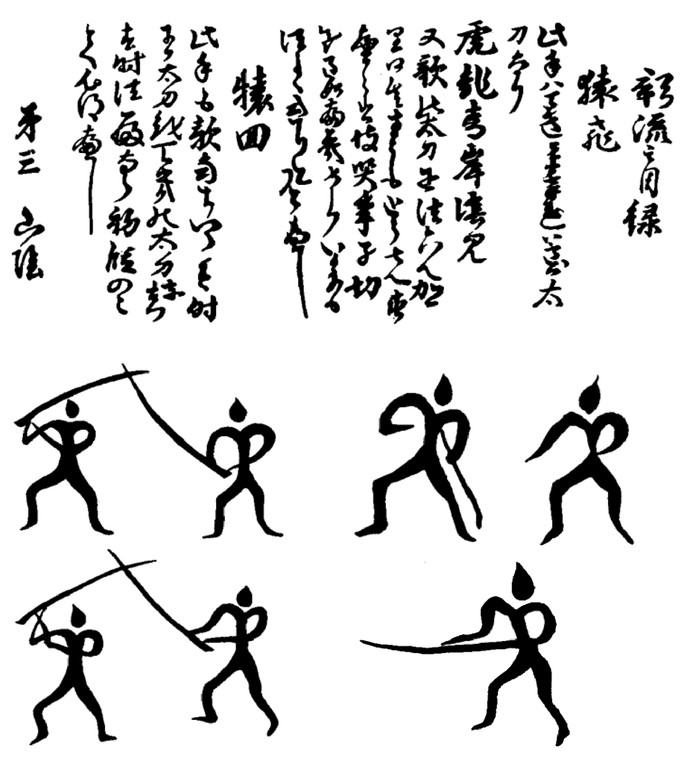
Fig. 2 – A compilation of images of the sword-fighting apes from the Collection of Military Works (c. 1621) (larger version). By the author. Fig. 3 – A compilation of the original stick figures and Japanese calligraphy from the fourteen volume edition of the New Treatise on Military Efficiency (1584) (larger version). From Qi, 1584/2001, p. 83. Note the similarities in stance and the position of the blades. 

As for the association between primates and armed combat during the Ming, the animals are occasionally referenced in the named fighting techniques of military literature. For example, the tenth volume of Qi Jiguang’s aforementioned manual includes a feinting lance technique titled “White Ape Trailing Sword Stance” (Baiyuan tuo dao shi, 白猿拖刀勢) (Yang & Xie, 1995, p. 336). The 35th volume of the Collection of Military Works (Wubei zhi, 武備志, c. 1621), a Ming treatise on military armaments and fighting techniques compiled by Mao Yuanyi (茅元儀, 1594–1640), includes “White ape exits cave” (Baiyuan chudong shi, 白猿出洞勢), a stance appearing in the sequence for an overhead sword guard. [5] (Incidentally, this is also the name of a fist set practiced in some lineages of Praying Mantis boxing). Additionally, the same volume includes a two-section sword manual, the first section of which portrays fanciful images of apes practicing with the “sprout saber” (miaodao, 苗刀) (Mao, 1621), a long, two-handed blade similar to the Japanese Katana (fig. 2). These strange images differ from the human-based figures in the rest of the source. It’s important to note that the original sword manual, called Saber Techniques of the Xinyou-Era (i.e. 1561) (Xinyou daofa, 辛酉刀法), is taken directly from the fourth volume of the revised fourteen volume edition of Qi’s New Treatise on Military Efficiency (Jixiao xinshu shisi juan ben, 紀效新書十四卷本, 1584). The first of the aforementioned two sections reproduces a series of sword-wielding stick figures taken from a Shadow School (Kage-ryu, 影流 / 陰流) manual of Japanese sword fighting. The section is prefaced by lively Japanese calligraphy, and the few words recognizable to readers of Chinese include “ape flying” (yuanfei, 猿飛) and “ape returning” (yuanhui, 猿回) (fig. 3), both of which are Kenjutsu techniques still practiced today (video 3). [6] This then might explain why the stick figures were changed to apes when the material was reproduced in the Collection of Military Works decades later. But I would also like to suggest that the change (as well as the allusion to the sword-wielding white ape from the lance technique mentioned earlier) was influenced by a famous first-century Chinese story about a talented swordswoman who has her skills tested by a magic white ape. This is discussed in section 4 below.

Video 3 – A modern demonstration of the “ape-flying” technique.

3. Sun Wukong the Monkey King

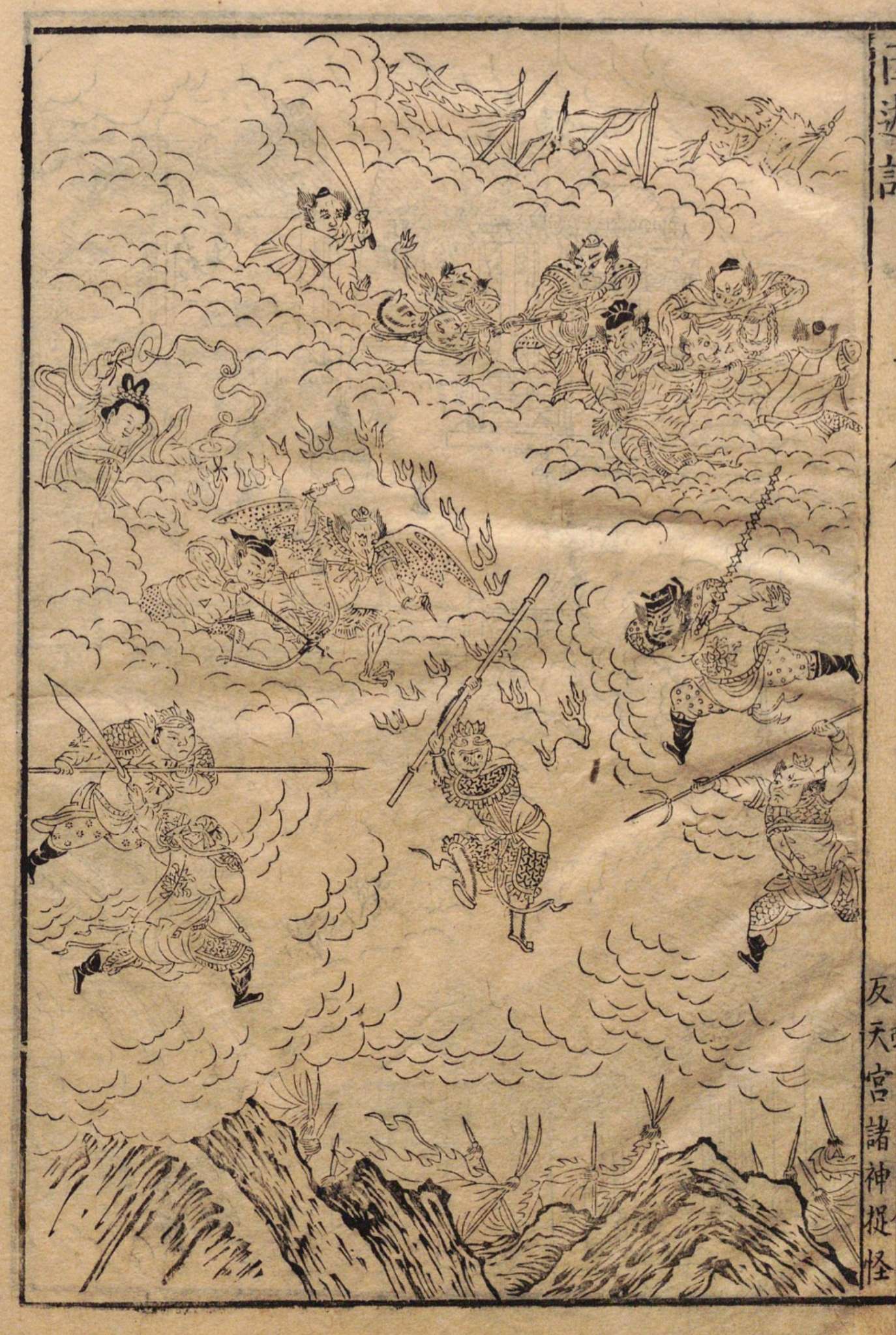
By far, the most famous weapon-bearing primate of the late Ming-period is Sun Wukong (孫悟空, a.k.a. “Monkey”), the simian protagonist of the highly popular Chinese novel Journey to the West (Xiyou ji, 西遊記, 1592). According to the tale, the stone-born monkey rules a mountain utopia before learning magic, martial arts, and the secret of immortality under a Buddho-Daoist sage. He soon thereafter acquires a magic, size-changing iron staff, which he uses to wage war against the celestial realm (fig. 4), proclaiming himself the “Great Sage Equaling Heaven” (Qitian dasheng, 齊天大聖, hence the name for Kou Si’s Monkey boxing). But his rebellion is eventually quelled by the Buddha, who imprisons the indestructible monkey demon beneath a mountain for his crimes. Five hundred years later, the repentant immortal is called upon to use his great strength, martial arts, and powers of transformation to protect the monk Tripitaka on a journey to procure scriptures from India.

Fig. 4 – A woodblock print of Sun Wukong fighting the heavenly army with his magic staff (larger version). From Mr. Li Zhouwu’s Literary Criticism of Journey to the West, late 16th century. 

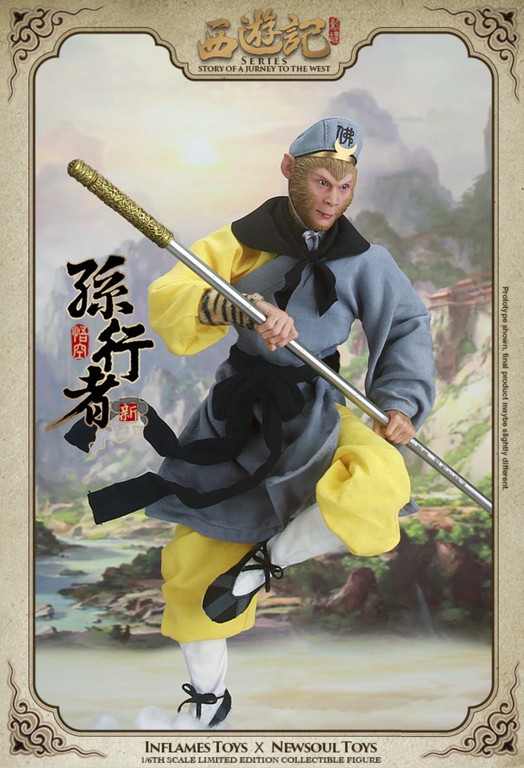
The narrative portrays Sun as a well-rounded martial artist proficient in both weapons and boxing. For example, during his rebellion with heaven, he trains his monkey children as soldiers, teaching them troop movement and weapons, including swords, spears, axes, and bows and arrows. But he is best known for his skill with the staff (fig. 5). One episode sees Monkey give a display of his martial prowess while he and his master travel through a spooky mountain. His skill is so great that the story likens it to the strategy taught in two of the Seven Military Classics of China:

“Going through this tall mountain and rugged cliff must have made master [Tripitaka] rather apprehensive, that’s all. Don’t be afraid! Don’t be afraid! Let old Monkey put on a show for you with my rod to calm your fears somewhat.” Dear Pilgrim! Whipping out his rod, he began to go through a sequence of maneuvers with his rod as he walked before the horse: up and down, left and right, the thrusts and parries were made in perfect accord with the Six Secret Teachings and Three Strategies [Liutao Sanlue, 六韜三略)]. [7] What the elder saw from the horse was a sight incomparable anywhere in the world (Wu & Yu, 2012, vol. 2, p. 105).

Fig. 5 – A modern action figure of Sun Wukong with his magic staff (larger version).

Furthermore, Monkey displays a mastery of unarmed fighting (fig. 6) in two episodes. A poem in chapter 51, for example, is important because it describes a battle between Sun and a buffalo demon in which they use real boxing techniques, many of which are still known and practiced to this day:

Hitching up his clothes and walking forward, the fiend assumed a boxing posture; his two fists upraised looked truly like two iron sledge hammers. Our Great Sage also loosened his legs at once and moved his body to attack; right before the cave entrance, he began to box with the demon king. This was quite a fight! Aha!

Opening wide the “Four Levels Posture”;
The double-kicking feet fly up.
They pound the ribs and chests;
They stab at galls and hearts.
“The Immortal pointing the Way”;
“Lao Zi Riding the Crane”;
“A Hungry Tiger Pouncing on the Prey” is most hurtful;
“A Dragon Playing with Water” is quite vicious.
The demon king uses a “Serpent Turning Around”;
The Great Sage employs a “Deer Letting Loose its Horns.”
The dragon plunges to Earth with heels upturned;
The wrist twists around to seize Heaven’s bag.
A green lion’s open-mouthed lunge;
A carp’s snapped-back flip.
Sprinkling flowers over the head;
Tying a rope around the waist;
A fan moving with the wind;
The rain driving down the flowers.
The monster-spirit then uses the “Guanyin Palm,”
And pilgrim counters with the “Arhat Feet.”
The “Long-Range Fist,” stretching, is more slack, of course.
How could it compare with the “Close-Range Fist’s” sharp jabs?
The two of them fought for many rounds—
None was the stronger, for they are evenly matched (Wu & Yu, 2012, vol. 3, pp. 12-13).

While the techniques are not Monkey boxing, the narrative certainly helped solidify the connection between primates and martial arts during the late Ming when references to the style were recorded.

Fig. 6 – Sun teaching a young human apprentice martial arts. Drawing by Celsohenrique on deviantart (larger version).

Sun Wukong’s image as a master of armed and unarmed combat led to his veneration among northern Chinese martial artists at the end of the Qing. As noted in this article, fighters of the anti-foreign Boxer Rebellion (1899–1901) were known to channel the spirit of the Monkey King (among other deities) in order to gain his martial prowess. A German catholic missionary active in Shandong in the late 19th and early 20th century recorded how four boxer youths were chosen as possible vessels, and after a ritual enticed the deity to earth, the “possessed” individual performed a frightening saber dance, indicating that the Great Sage had taken control. Additionally, Dudbridge (1970) cites one 17th-century source that describes Sun’s veneration in the southern Chinese province of Fujian for “appear[ing] in the clouds to beat back an attack from Japanese pirates” (p. 158). This refers to the preceding 16th century when China’s coast was plagued by the aforementioned Wokou pirates. Interestingly, Sun Wukong fighting pirates puts him in the same company as the Shaolin warrior monks, who used their martial arts skills to rout the same bandits during the 1550s (Shahar, 2008, pp. 68-70).

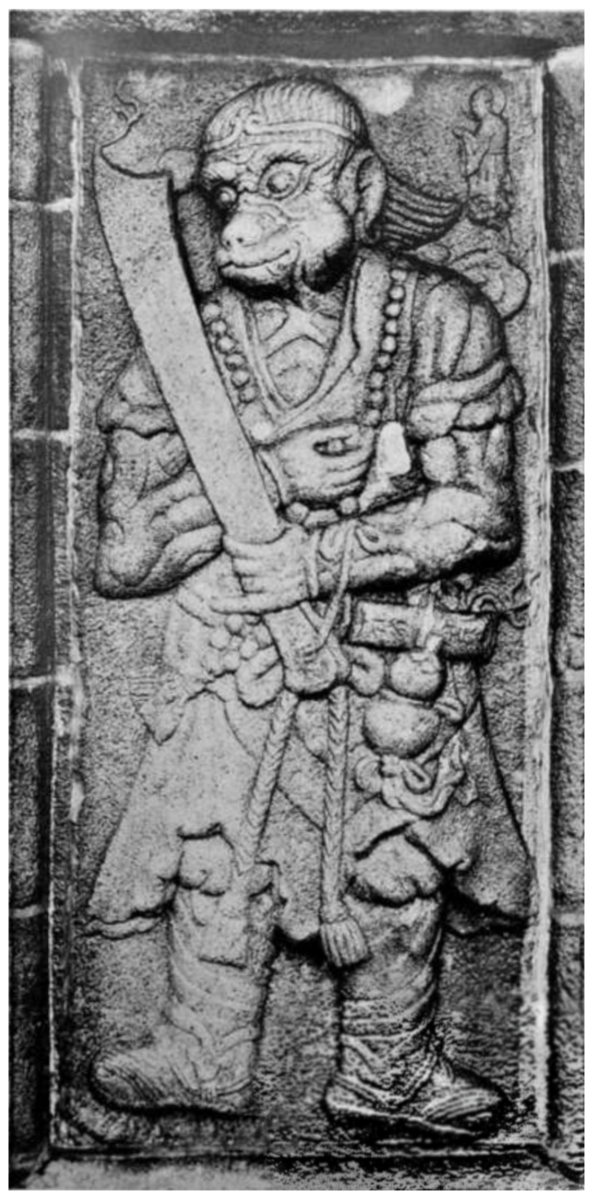
Fig. 7 – The Monkey Pilgrim stone relief carving, 1237, from the Kaiyuan Temple Western Pagoda, Quanzhou City, Fujian Province, China (larger version).

Monkey is important to this study because he bridges the gap between the lack of pre-Ming references to primate-based boxing and older material associating apes and monkeys with armed combat. Sun first appears as the “Monkey Pilgrim” (Hou xingzhe, 猴行者) in The Story of How Tripitaka of the Great Tang Procures the Scriptures (Da Tang Sanzang qujing shihua, 大唐三藏取經詩話), a seventeen chapter storytelling prompt dated to the late 13th century. The narrative presents our hero wielding two staves, one a golden-ringed monk’s staff and the other an iron staff, in defense of his Buddhist master. These two staves would later be combined by storytellers to create his signature weapon.

Older still, the Kaiyuan Temple (Kaiyuan si, 開元寺) of Fujian is home to a nearly life-sized carving of the hero (fig. 7), who is presented as a saber-wielding guardian deity. He appears alongside other such wrathful gods, as well as bodhisattvas, arhats, patriarchs, and eminent monks, on a stone pagoda that was erected in the year 1237. So, Monkey was associated with various weapons as far back as the 13th century.

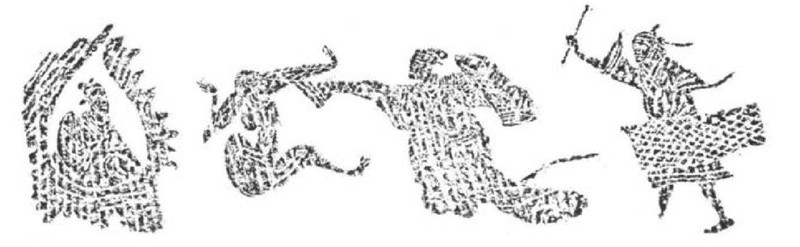
Fig. 8 – A Han-era stone tomb rubbing showing a sword-wielding hero striking at a fleeing white ape (center). A woman can be seen held captive in a teardrop-shaped cave (left). The hero is followed by an assistant beating a gong (right) (larger version). From Wu, 1987, p. 88.

Apart from possible Indian influences, Sun Wukong’s origins can be traced to a body of Han (206 BCE–220 CE) and Tang (618–907 CE) dynasty tales in which a magical white ape or gibbon (baiyuan, 白猿) kidnaps human woman and spoils their innocence (fig. 8). For example, the unnamed primate antagonist of “A Supplement to Jiang Zong’s Biography of a White Ape” (Bu Jiang Zong baiyuan zhuang, 補江總白猿傳, c. late 7th c.) is described as a 1,000-year-old hermit who lives in a mountain utopia, practices Daoist longevity arts, wields the power to fly and change his shape, and has supernatural strength and an iron-hard, nigh-invulnerable body immune to most efforts to harm him. Most importantly, he is depicted as a master of armed combat, one displaying a fondness for sword dancing. His blade is said to “circl[e] his body as fast as lightning and as round as a full moon.” [8] As noted above, this is not the first story involving a magic white ape who is fond of swordplay.

4. Magic Apes and Ancient Chinese Heroes

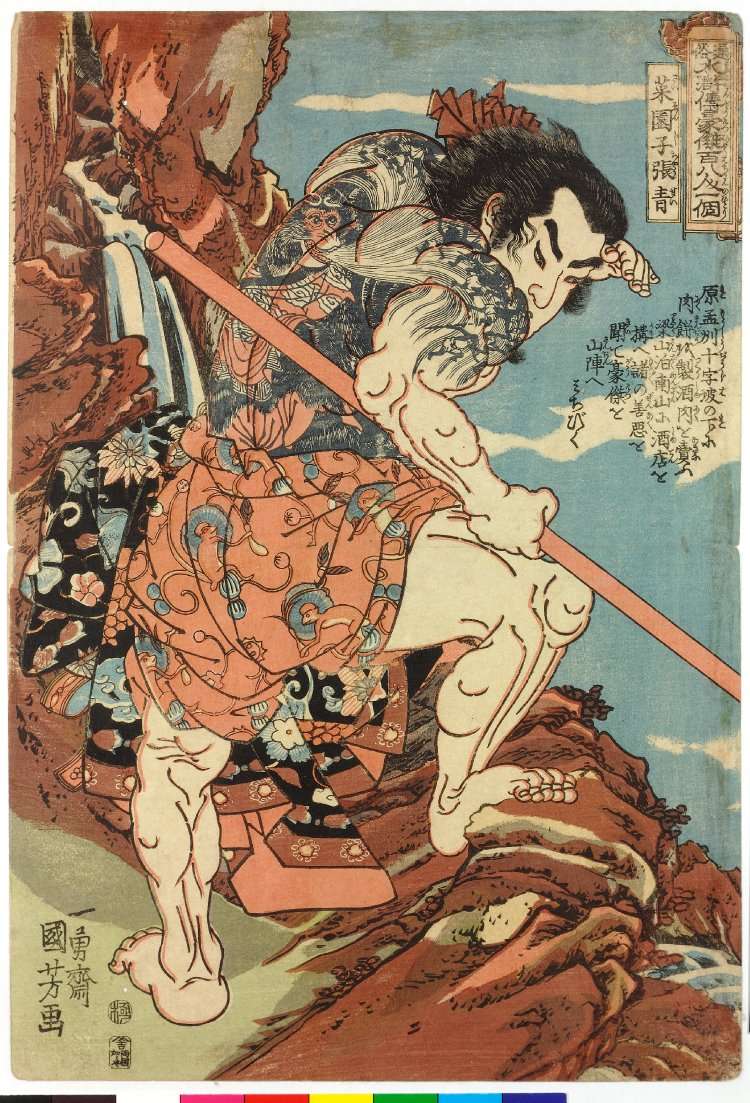
The Chinese classic the Water Margin (Shuihu zhuan, 水滸傳, c. 1400) describes the literary heroes Hou Jian (侯健), Lin Chong (林沖), and Zhang Qing (張清) (fig. 9) each having ape-like arms, denoting their great strength and agility. This same nickname was applied to powerful archers of the past. Ma (2010) writes:

[I]t is said that the Xiongnu warrior Liu Chong ‘had arms like an ape, was skilled at archery (yuanbei shanshe 猿臂善射), and could pull a bow of three hundred jin’ 斤 (Book of Wei《魏書》). Similarly, History of Ming describes General Chang Yuchun 常遇春 as ‘distinguished looking, with peerless courage and strength, had arms like those of an ape and was skilled at archery’; and in the same vein, Tang poet Cui Daorong 崔道融 wrote that ‘the ape-armed general runs as if on wings, sparing no one with his bow from a hundred paces’ (General Li’s Biography [Ti Li jianjun zhuan 題李將軍傳]) (p. 24).

Fig. 9 – A woodblock print of the hero Zhang Qing by Kuniyoshi produced between 1827 and 1830 (larger version). It is part of the artist’s “One of the 108 Heroes of the Popular Water Margin” series (Tsuzoku Suikoden goketsu hyakuhachinin no hitori, 通俗水滸傳濠傑百八人一個). Original image found here. Look closely and you’ll notice that the tattoo on Zhang’s back portrays Sun Wukong producing magical clones of himself from his mouth.

Oddly enough, the earliest tales mentioning archers and magic white apes do not liken one to the other. In fact, they are diametrically opposed. For example, a third-century BCE tale about the famed archer Yang Youji (養由基, 7th c. BCE) portrays the creature as an elusive target for his arrow:

Once in the palace of Jing 荊 there was a supernatural white ape. Even the skillful archers of Jing could not hit it. Then the king of Jing asked … Yang Youji to shoot it. Yang straightened his bow and went to the palace with arrows in his hands. Before shooting he aimed at a place where the [moving] ape had not yet arrived. When he let the arrow fly, the ape fell immediately. Thus Yang Youji could be called the archer who could hit a target before it was there (Wu, 1987, p. 103; see also Gulik, 1967, p. 41).

A similar version of the tale states that the ape recognizes Yang’s supernatural skill, anticipating the arrow and crying out in pain moments before actually being struck (Wu, 1987, p. 103; Gulik, 1967, p. 41).

Perhaps the most famous story associating the magic white ape with martial arts is the “Maiden of Yue” (Yuenu, 越女, 1st c. BCE), named after its protagonist, a peerless swordswoman of the 5th century BCE. The story describes how she participates in a sparring match with the shape-changing ape:

The Young Woman of Yue travelled north for her audience with the king [Goujian of Yue]. On the way, she met an old fellow who said his name was “Old Mr. Yuan” [Yuan gong, 袁公].

He said to the young woman, “I hear you fight well with a [sword]. I’d like to see a demonstration.”

She replied, “I wouldn’t presume to keep anything from you: you are welcome to test my skill, Sir.”

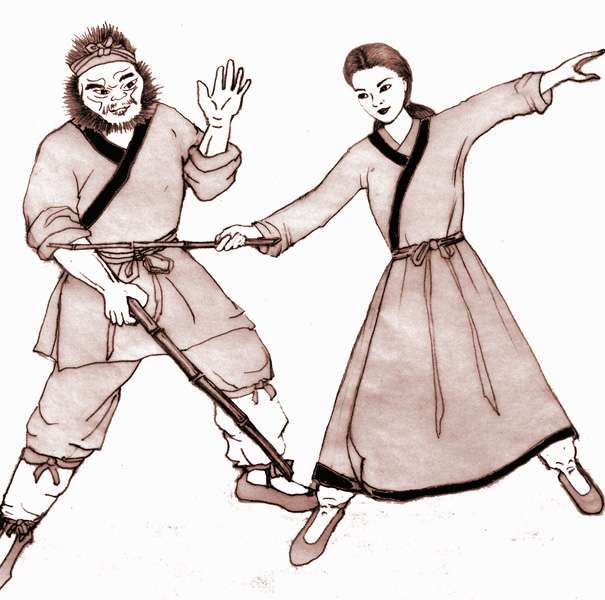
So Old Man Yuan drew out a length of Linyu bamboo. But the bamboo was rotten at one end. The end fell to the ground and the young woman immediately snatched it up. The old man wielded the top end of the staff and thrust towards the young woman, but [she] parried straight back, thrust three times, and finally raised her end of bamboo and drove home her attack against Old Man Yuan [fig. 10]. Old Man Yuan hopped off up a tree, turning into a white ape [baiyuan, 白猿, hence the surname]. Then each went their own way, and she went on to meet with the king. [9]

Upon meeting the king, the Maiden reveals that the secret to her fighting ability is the application of yin and yang energy, which are metaphorically described as the opening and closing of large and small swinging doors. This is “[t]he earliest extant published exposition of [the] theory applied directly to the martial arts” (Henning, 2001, p. 746), predating the artificial categorization of Chinese boxing into “internal” (neijia, 内家) and “external” (waijia, 外家) styles during the 17th century (Henning, 2007, p. 26). Therefore, the importance of the story in the annals of Chinese martial arts history can’t be overstated. Nor can the inclusion of the white ape. His supernatural challenge and subsequent defeat respectively tests and confirms the effectiveness of the theory.

This tale likely influenced the association between white apes and swordplay in later sources, such as the sword-dancing antagonist of the Tang-era “Supplement to Jiang Zong’s Biography of a White Ape” (section 3) and the sword-wielding primates of military literature (section 2). For example, “White Ape Trailing Sword Stance,” the aforementioned feinting lance technique from New Treatise on Military Efficiency (c. 1561/1562), may refer to Old Mr. Yuan’s defeat.

Fig. 10 – A modern drawing of the Maiden of Yue fighting Old Mr. Yuan by martial historian Stan Henning (larger version). From Henning, 2007, p. 24.

Our heroes’ respective stories make no reference to animal mimicry, the cornerstone of primate-based boxing. In fact, it’s the reverse in the second narrative: an ape mimics man. [10] The tales instead promote the idea of trained human skill conquering the raw, often magical, power of nature. In the case of the Maiden of Yue, her mastery of yin and yang energy enabled her to best the magic white ape. Yang Youji is more of a mythic figure capable of miraculous feats, such as sinking an arrow into a boulder simply because he mistook it for a rhino (i.e. mind over matter) (Selby, 2000, p. 131). But he succeeded in falling a white ape when many archers failed. These tales are, therefore, the antithesis of primate-based boxing, representing what might have been considered more “civilized” or “noble” forms of martial arts, namely the armed disciplines of archery and swordplay.

5. Animal Mimicry in Chinese Medicine and Religion

I suggested above that primate-based styles may have arisen during the Ming. But how the styles developed is likely tied to the long history of animal mimicry in China. For example, around the year 60 BCE (during the Han), the courtier Tan Changqing (檀長卿) is said to have been reprimanded for violating ritual norms by performing the dance of the “dog and macaque combat” (wu wei muhou yu goudou, 舞為沐猴與狗鬭) while at a drunken party (Harper, 2001, p. 18). This dance may have some connection to a funerary motif appearing in Han-era stone tombs in which dogs are shown intimidating apes, the motif representing the conquering of evil influences. [11] Tan’s display can’t be assigned a martial role, however, because it was likely a comical pantomime. [12] But this shows mimicking primates served a variety of purposes in Chinese culture.

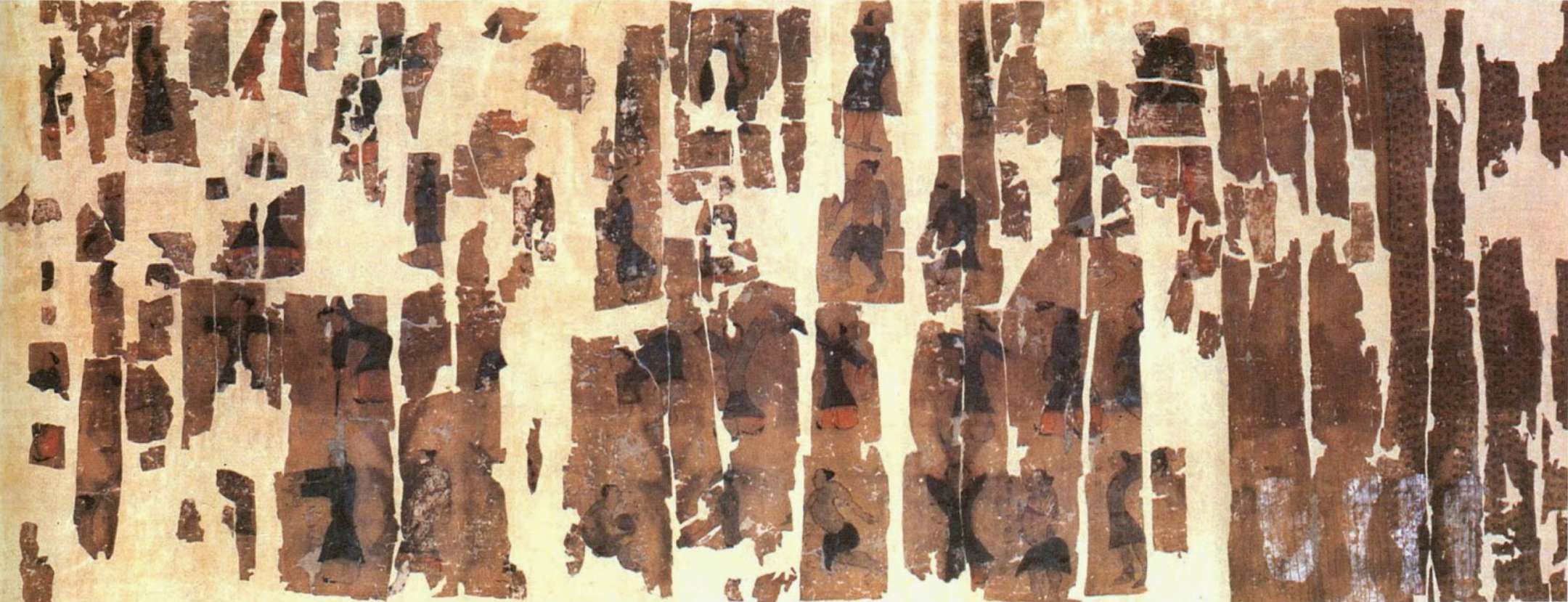
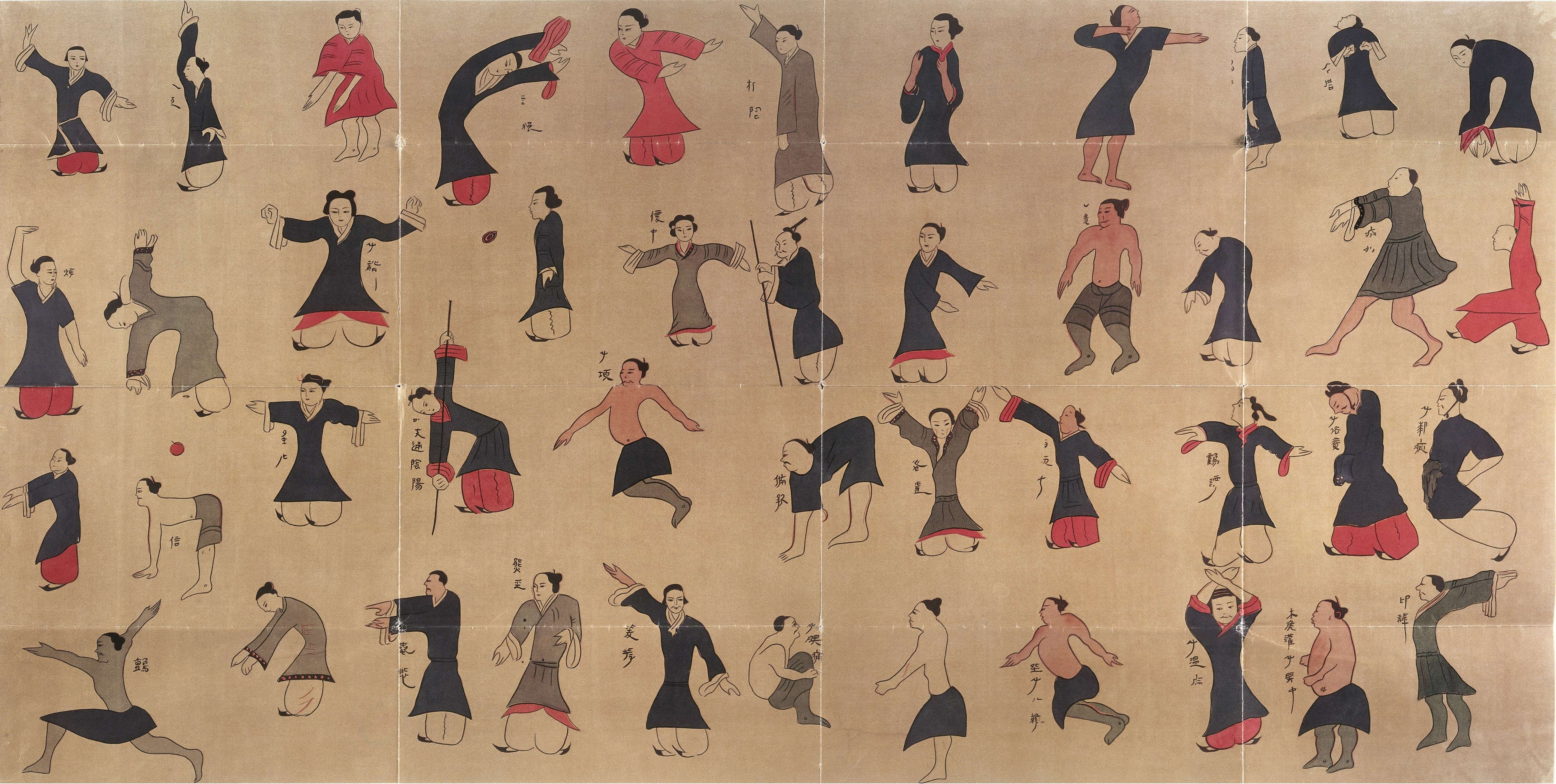
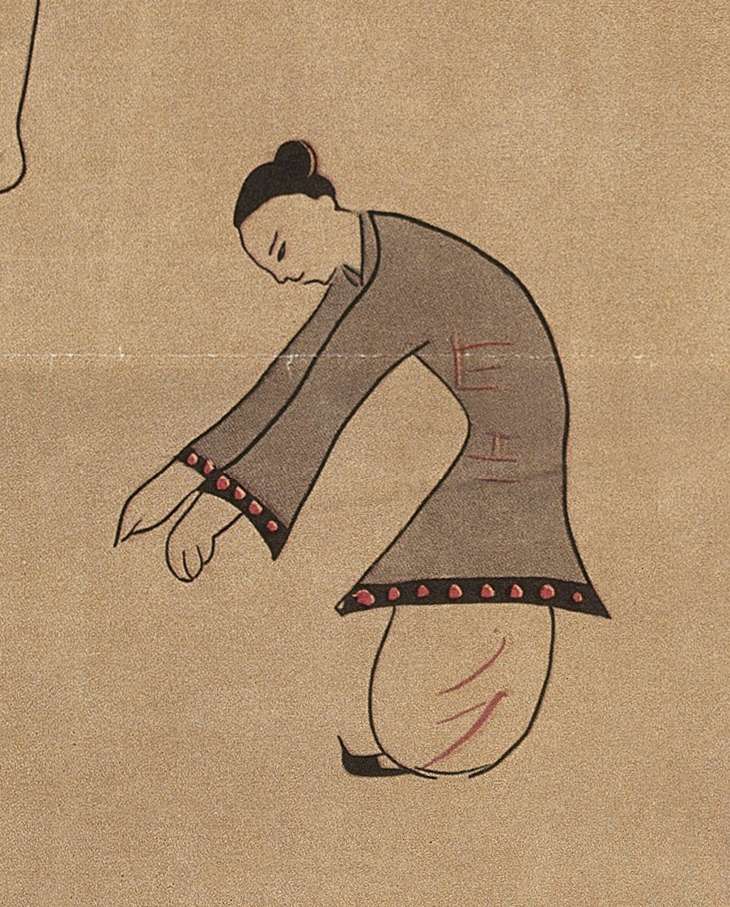
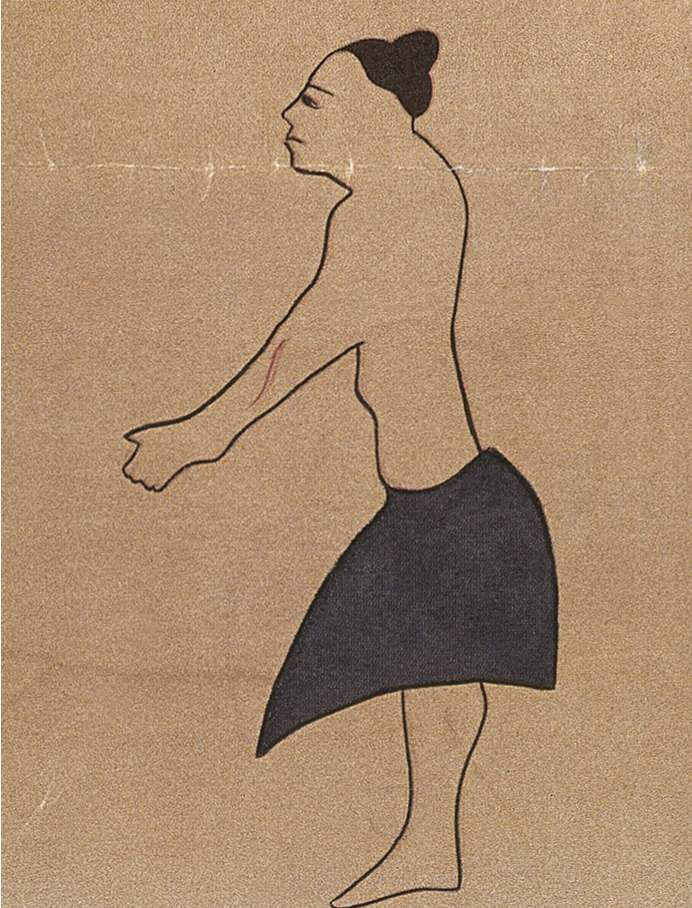
Primate-based movements figure in a number of ancient therapeutic exercises. For instance, the monkey appears in the Five Animals’ Frolic (Wuqin xi, 五禽戲), a 3rd-century system of daoyin calisthenics, which mimics the movements or behaviors of the tiger, deer, bear, monkey, and bird (in that order), each animal set strengthening a particular area of the body (Kohn, 2008, pp. 163-169). Movements mimicking the bear, monkey, and bird actually predate this system, appearing among forty-four exercises listed in the Illustrations of Guiding and Pulling (Daoyin tu, 導引圖, 168 BCE), the oldest known diagram of daoyin exercises, discovered in Mawangdui (馬王堆) (fig. 11 and 12). Primate-based exercises include the “Monkey Bawling to Pull Internal Hotness” (muhou guan yinling zhong, 沐猴灌引靈中) (#35) and “Gibbon Shouting” (yuanhu, 猿謼) (#40) (fig. 13 and 14) (Harper, 1998, pp. 315 and 316). [13]

The Masters of Huainan (Huananzi, 淮南子, 139 BCE), a compendium of Daoist, Confucian, and Legalist thought, references another primate-based daoyin set in a section criticizing such exercises as inferior to spiritual cultivation:

If you huff and puff,
exhale and inhale,
blow out the old and pull in the new,
practice the Bear Hang [xiongjing, 熊經], the Bird Stretch [niaoshen, 鳥伸],
the Duck Splash [fuyu, 鳧浴], the Ape leap [yuanjue, 蝯躩],
the Owl Gaze [chishi, 鴟視], and the Tiger Stare [hugu, 虎顧]:

This is what is practiced by those who nurture the body. They are not the practices of those who polish the mind (Liu & Major, 2010, p. 236).

Fig 11 – (Top left) The Illustrations of Guiding and Pulling, 2nd c. BCE, paint on silk, 142 x 70 cm (55.9 x 27.5 in) (larger version). Image originally found here. Fig. 12 – (Top right) A modern reconstruction (larger version). Image originally found on Wikipedia. Harper (1998) warns such reconstructions “should be regarded as conjectural in many details” since the original is in such poor condition (p. 191). Fig. 13 – (Bottom left) The reconstruction of “Monkey Bawling to Pull Internal Hotness” (larger version). Fig. 14 – (Bottom right) The reconstruction of “Gibbon Shouting” (larger version).

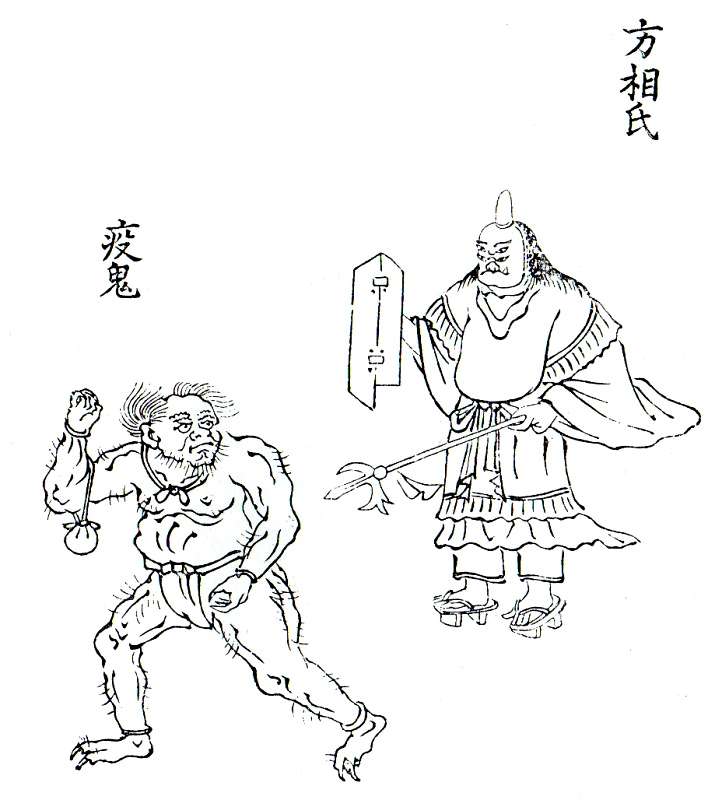
These therapeutic exercises likely find their origin in ancient Shamanic animal dances designed to drive away demonic illness and influences (Harper, 1985, pp. 487-488). One such dance was the seasonal Da Nuo (大儺 / 難; Jp: Tsuina, 追儺) ritual in which a bearskin-clad exorcist (Ch: fangxiangshi; Jp: hōsōshi, 方相氏) and his army of fur, feather, and horn-clad youths, representing twelve animal deities, expelled evil spirits from human dwellings. Evidence suggests that it may have been performed as early as the Shang (17th to 11th c. BCE), but the earliest concrete references come from the Eastern Zhou (8th to 3rd c. BCE) (Poo, 2009, p. 286). What’s interesting for our purposes is that the exorcism has a martial aspect; not only does the exorcist bear a lance and shield for ritual combat (fig. 15), but also the group travels throughout the given location dancing and shouting, with the youths beating drums and commanding twelve spirits by name to devour or eviscerate anthropomorphic representations of malevolent influences (Poo, 2009, pp. 287-288). So, by wearing animal products, the exorcist and his ritual army gained the strength of animal deities to combat dark forces.

Fig. 15 – A Japanese woodblock print portraying the Da Nuo exorcist expelling a “pestilence” spirit with his lance and shield (larger version). Originally found here. Note the four-eyed mask. This is based on the four golden-eyed bear skin worn by the exorcist in ancient Chinese records (Poo, 2009, p. 287).

It’s possible that the “twelve animals” of the Da Nuo exorcism refer to some precursor of the Chinese zodiacal animals (rat, ox, tiger, rabbit, dragon, snake, horse, goat, monkey, rooster, dog, and pig). If true, monkey fur could have been among the animal products worn by the ritual army. After all, monkeys have long been associated with curing illness and expelling evil in East Asia. [14] A modern example of exorcists who don monkey fur are the shamans of the Qiang ethnic group of Sichuan. The Qiang worship monkeys as the source and savior of their sacred knowledge, as well as the progenitor of their people, the latter being a myth cycle common among ethnic groups of Tibet and southwestern China.

Henning (2001) highlights the connection between animal totemism and animal boxing:

Another view is that at least some animal forms may hark back to a distant totemic past that still occupies a place in the Chinese psyche. This totemic influence is difficult if not impossible to trace in majority Han Chinese boxing styles; however, it can be seen in the combination of martial arts and dance practiced by some of China’s many national minorities. Cheng Dali, in his Chinese Martial Arts: History and Culture, points to Frog Boxing, practiced by the Zhuang Nationality of the Guangxi Zhuang Autonomous Region, as an example, the frog being considered their protector against both natural and man-made disasters (p. 16).

Therefore, the primate-based martial arts of the Ming could descend from totemic mimicry of apes and monkeys in Chinese spiritual practices. The development could have gone something like this:

  1. Early shamanic dances drawing on the totemic power of primate deities (via their fur) to exorcise evil influences through ritual combat, including the bearing of weapons, drumming, dancing, and the shouting of spells.
  2. The animal fur and martial dancing give way to calisthenics drawing on primate mimicry to expel sickness and strengthen the body.
  3. These calisthenic movements are adapted for fighting.

It’s even possible that the war-like shamanic dancing gave way directly to boxing. Martiality (wu, 武) and dance (wu, 舞) have long been associated in Chinese history, for drums and gongs were used to direct the movements of both troops and dancers (Lorge, 2012, p. 26-27). Musical accompaniment remains a staple of folk martial arts performances. A modern example of totemic mimicry, dancing, and martial arts is the Lion Dance (wushi, 舞獅) popular in Asian communities throughout the world (video 4).

Video 4 – Five lion dancing teams performing before a crowd. 

6. Conclusion

Apes and monkeys have been associated with armed and unarmed martial arts in Chinese culture for over two thousand years. Tai Shing Pek Kwar, a popular modern combat style of Monkey boxing created in the early 20th century, is predated by even older instances of Monkey boxing alluded to in military and travel writings of the 16th century, suggesting that it was a common form of pugilism. Additionally, military literature of the 16th and 17th century associates white apes with swordplay. The lack of historical references to primate-based boxing prior to the Ming (1368–1644) suggests such styles developed during the explosion in popularity of pugilism at this time. The image of the highly popular late Ming literary monkey hero Sun Wukong as a master of armed and unarmed martial arts, as well as his association with staff and sword fighting in 13th century oral literature and Buddhist art, respectively, helps bridge this gap between the lack of historical boxing references and older material associating primates with armed combat. He can be traced to a body of Han (206 BCE–220 CE) and Tang (618–907 CE) dynasty stories about magic white apes who, due to their supernatural abilities, were portrayed as the ultimate test of a warrior’s martial skills. The most famous of these tells how the Maiden of Yue, a talented swordswoman of the 5th century BCE, vets her yin-yang theory-based sword style by defeating a white ape-turned-old man in a sparring match. This story is important because it’s the first recorded association of yin-yang theory and martial arts in Chinese history. This tale and another involving the mythic archer Yang Youji are the antitheses of primate-based boxing because each touts the superiority of trained human skill over the raw, magical power of nature. Despite this, animal mimicry played a large role in early therapeutic yoga-like Daoyin calisthenics, such as the Five Animals Frolic (3rd c. CE) and those appearing in the Illustrations of Guiding and Pulling (168 BCE), which copied the movements of monkeys and apes (among other animals) to strengthen given areas of the body. These exercises likely find their origin in ancient war-like Shamanic animal dances designed to drive away demonic illness and influences, one example being the seasonal Da Nuo exorcism of the Eastern Zhou (8th to 3rd c. BCE). The Da Nuo exorcist and his ritual army wore animal products (fur, horns, feathers, etc.) to invoke the power of animal deities capable of driving away malevolent forces. Monkey fur may have been worn by members of the ritual army because the animal and its products have long been associated with curing illness and expelling evil in East Asia. Shamans among the modern Qiang ethnic group of Sichuan worship monkeys and draw on the power of their fur to perform exorcisms. Animal totemism plays a part in some animal-based martial arts, such as the Frog boxing of the Zhuang ethnic group. Therefore, the primate-based martial arts of the Ming may have been influenced by the ancient totemic mimicry of apes and monkeys in Chinese spiritual practices, those that formed the basis of later animal-based therapeutic exercises. This is where the historical study would benefit from modern ethnographic field research. A follow-up study might bridge the gap between the historical data and modern practice.


7. Updates

Update: 12-11-2021

I’ve written an article about a white ape immortal associated with revealing heavenly knowledge. One source claims the primate transcendent taught boxing to a modern Chinese monk.

The White Ape Perfected Man: Sun Wukong’s Divine Double

Notes:

1) A shorter paper with a similar focus is Ma (2010). The editor of the Journal of Chinese Martial Studies was gracious enough to provide me with a PDF copy of the article when I was nearing completion of this paper.

2) Regarding the name of the creator of Monkey boxing, Kou Si (寇四), kou (寇) means “bandit, foe, or enemy.” I find this especially interesting given that he was imprisoned for murder, the reasons for which range from accidentally killing a villager in a fight to purposely killing a military official to avoid service (Matsuda, 2013, pp. 86-87). It’s possibly that this name is simply a folk title given to an unknown creator, or one known to have been active in crime.

3) See chapters three and four.

4) The earliest mention of Eagle Claw appears in Qi Jiguang’s training manual. It refers to “Eagle Claw Wang’s grappling methods” (Yingzhao Wang zhi na, 鷹爪王之拿) (Gyves, 1993, p. 35). Qing-era manuals and family histories suggest that Xingyi was created by a certain Ji Jike (姬際可, fl. 1650) (Shahar, 2008, pp. 134-135).

5) For an English translation of the sword technique mentioning the stance, see Chen, 2018, pp. 73-75.

6) Qi, 1584/2001, p. 83. I’m indebted to the operator of the Great Ming Military blog for explaining the connection between the ape images and the visible characters from the Japanese calligraphy, as well as providing me with a digital copy of the fourteen volume edition of Qi’s training manual.

7) The original English translation omits the two named books from the Chinese version. It reads, “…the thrusts and parries were made in perfect accord with the manuals of martial arts” (Wu & Yu, 2012, vol. 2, p. 105).

8) Chen, 1998, p. 84. Some readers may have noticed the sword is a reoccurring theme in Sun Wukong’s history: 1) The Qing-era boxers are said to have performed a saber dance under his possession; 2) he is depicted with a saber on the Kaiyuan temple pagoda in Fujian; and 3) the magic white ape on whom he is likely based loves performing sword dances. In addition, two other sources mention Monkey’s association with the sword. First, a 15th-century Zaju play describes Guanyin giving Sun Wukong a Buddhist saber (jiedao, 戒刀) (apart from other magic items) to protect his master on the eve of their journey. Second, a 17th-century tale set in Fujian describes the Great Sage magically afflicting a merchant with painful leg sores using a “Bodhisattva Saber” (Pusa dao, 菩薩刀).

I don’t think that these have any unifying significance, however. For example, the saber requires less training and is cheaper than other implements of war. So, it was often the go to weapon for soldiers and bodyguards. Monkey’s association with the saber on the pagoda is likely tied to this same concept. As a guardian deity, he is portrayed with the same weapon used by mortals to protect others in times of need. The magic white ape is portrayed as a Daoist gentleman, one in possession of a pair of treasure swords (baojian, 寶劍), the kind used in Daoist ritual. His fancy for the sword may be based on Old Mr. Yuan from the Maiden of Yue (see section 4). Another literary character with Buddhist sabers is Wu Song from the Water Margin (Shuihu zhuan, 水滸傳, c. 1400). I explain footnote #2 of a past article that his sabers are based on real world Buddhist knives issued to monks. The same concept is no doubt tied to Monkey’s weapon from the play. Having said that, I will admit, though, that the saber from the pagoda may have had some influence on that mentioned in the 17th-century story. After all, the pagoda example is portrayed with a lick of heavenly flame, just like one would expect from a celestial sword. Also, both the story and the pagoda take place/are located in Fujian, home to the Great Sage’s cult.

9) Selby, 2000, pp. 155-156. The famous Tang poet Li Bai (李白) referenced Mr. Yuan’s defeat in one of his poems. A line reads “The White Ape was ashamed of his fencing” (Ma, 2010, p. 24). This is fascinating as Li Bai was also known to have been a proficient swordsmen in his youth (Liu, 1967, pp. 46-47).

10) This is based on an old concept in which primates were thought to progress through a type of magical evolution, similar to modern day Pokémon. The Baopuzi (抱朴子, 2nd c. CE) states that a monkey will transform into a gibbon after 800 years of life. It will then change into several legendary apes over some 3,500 years, before evolving into an old man (Ball, 1927, p. 117). Gulik (1967) cites a tale in which the soothsayer Zhou Qun (周羣 / 周群) learns the secrets of divination from a gibbon-turned-old man (p. 50).

11) As noted in this article, Sun Wukong’s capture at the mouth of Lord Erlang’s hound is tied to the Han-era tomb motif of dogs intimidating apes.

12) Ma (2010) translates the historical passage, noting those at the party were “drinking wine and making merry, then Tan Changqing, the high official of Changxin Palace, starts to dance, to imitate a monkey fighting with a dog, bringing laughter to all present” (p. 25).

13) Harper (1998) suggests an alternate reading for “Gibbon shout” (yuanhu, 猿謼) is “Gibbon Jump” (yuanjue, 蝯躩) based on graphical similarities to an exercise from the Huainanzi. (淮南子, 139 BCE) (p. 316, n. 1).

14) This is tied to a Song-era (and likely older) superstition from Sichuan where people would place monkeys in stables to ward off equine sickness (Eberhard, 1969, p. 52). This is why heaven appoints Sun Wukong the Bimawen (弼馬溫, a.k.a. Keeper of the Heavenly Horses), which is a pun on Bimawen (避馬瘟, “Avoid the horse plague”). Due to his former exalted position, earthly horses are shown to fear the Monkey King throughout the narrative (Wu & Yu, 2012, vol. 1, p. 309, for example).

In Japan, monkeys were also associated with horses and healing via the warding of evil. Apart from monkeys being kept in stables like their Chinese counterparts, their fur was applied to the harnesses and quivers of Samurai because the warriors believed it gave them more control over their mounts. Furthermore, monkey body parts have been consumed for centuries as curative medicines, and their hides have even been stuffed to make protective amulets (kukurizaru) to ward off illness. Likewise, a genre of painting depicts divine monkeys (saru gami), messengers of the mountain deity, performing Da Nuo-like dances to ensure a good rice harvest (Ohnuki-Tierney, 1987, pp. 43-50)

Sources:

Ball, K. M. (1927). Decorative Motives of Oriental Art. London, John Lane; New York, Dodd, Mead and Co.

Chen, J. (1998). A Supplement to Jiang Zong’s Biography of a White Ape. Renditions 49, pp. 76-85.

Chen, J. (2018). Ancient Art of Chinese Long Straight Sword. (n.p.): Chen Jiayi.

Dudbridge, G. (1970). The Hsi-yu chi: A Study of Antecedents to the Sixteenth-Century Chinese Novel. Cambridge: Cambridge Univ. Press.

Eberhard, W. (1969). The Local Cultures of South and East China. Leiden: E.J. Brill.

Gulik, R. H. (1967). The Gibbon in China: An Essay in Chinese Animal Lore. Leiden: E.J. Brill.

Gyves, C. M. (1993). An English Translation of General Qi Jiguang’s “Quanjing Jieyao Pian” (Master’s thesis). The University of Arizona, Arizona, USA.

Harper, D. (1985). A Chinese Demonography of the Third Century B.C. Harvard Journal of Asiatic Studies, 45 (2), pp. 459-498.

Harper, D. (1998). Early Chinese Medical Literature: The Mawangdui Medical Manuscripts. London: Wellcome Asian Medical Monographs.

Harper, D. (2001). Poets and Primates: Wang Yanshou’s Poem on the Macaque, Asia Major 14(2), pp. 1-25.

Henning, S. (2001). Written Texts: China. In T. A. Green (Ed.), Martial Arts of the World: An Encyclopedia, Volume Two: R–Z (pp. 745-748). Santa Barbara, Calif: ABC-CLIO.

Henning, S. (2007). The Maiden of Yue: Fount of Chinese Martial Arts Theory. Journal of Asian Martial Arts, 16(3), pp. 24-27.

Kohn, L. (2008). Chinese Healing Exercises: The Tradition of Daoyin. Honolulu: University of Hawaiʻi Press.

Liang, S. Y., and Yang, J. M. (2002). Xingyiquan: Theory, Applications, Fighting Tactics and Spirit. Boston: YMAA Publication Center.

List of Surviving Ming period Martial arts. (2017, December 3). Retrieved from http://greatmingmilitary.blogspot.com/p/list-of-surviving-ming-period-martial.html

Liu, J. Y. (1967). The Chinese Knight-Errant. Chicago: University of Chicago Press.

Liu, A., and Major, J. S. (2010). The Huainanzi: A Guide to the Theory and Practice of Government in Early Han China. New York: Columbia University Press.

Lorge, P. A. (2012). Chinese Martial Arts: From Antiquity to the Twenty-First Century. New York, NY: Cambridge University Press.

Lu, S. (2006). Combat Techniques of Taiji, Xingyi, and Bagua: Principles and Practices of Internal Martial Arts. Berkeley, Calif: Blue Snake Books.

Ma, L. (2010). From Ape Worship in Ancient China to Monkey Imitation in Modern Competition Wu Shu. Journal of Chinese Martial Studies 2, pp. 20-28.

Mao, Y. (1621). Wubei zhi: juan sanshiwu  [Collection of Military Works: Volume 35]. Retrieved from https://ctext.org/wiki.pl?if=gb&chapter=263135

Matsuda, M. (2013). Monkey Kung Fu: History & Tradition. (n.p.): Michael Matsuda.

Ohnuki-Tierney, E. (1987). The Monkey As Mirror: Symbolic Transformations in Japanese History and Ritual. Princeton: Princeton University Press.

Poo, M. (2009). Ritual and Ritual Texts in Early China. In J. Lagerwey and M. Kalinowski (Ed.). Early Chinese Religion, Part One: Shang Through Han (1250 BC-220 AD) (pp. 281-313). Leiden: Brill.

Qi, J. (2001). Jixiao xinshu shisi juan ben [New Treatise on Military Efficiency: Fourteen volume edition]. Beijing: Zhonghua shuju. (Original work published 1584)

Selby, S. (2000). Chinese Archery. Hong Kong: Hong Kong University Press.

Shahar, M. (2008). The Shaolin Monastery: History, Religion, and the Chinese Martial Arts. Honolulu: University of Hawai’i Press.

Wu, C., and Yu, A. C. (2012). The Journey to the West (Vols. 1-4) (Rev. ed). Chicago, Ill: University of Chicago Press.

Wu, H. (1987). The Earliest Pictorial Representations of Ape Tales: An Interdisciplinary Study of Early Chinese Narrative Art and Literature. T’oung Pao LXXIII, pp. 86-112.

Yang, J., and Xie, G. (Ed.) (1995). Zhongguo bingshu jicheng [Collection of Chinese Military Literature]. Beijing: Liaoshen shushe.

Zheng, R. Z. (1564). Jiangnan jinglue: juan ba shang [Strategic Situation in Jiangnan: vol. 8]. Retrieved from https://zh.wikisource.org/zh-hant/江南經畧_(四庫全書本)/卷8上

What Does Sun Wukong Look Like? A Resource for Artists and Cosplayers

Last updated: 05-03-2026

Type “Sun Wukong” into google images and you will be presented with an endless array of pictures that range from the familiar to the alien. A fanciful 1960s cartoon depiction of our hero sits to the left of a SMITE video game character with hulking muscles and a weapon more akin to a club than a staff. A toy version of Liu Xiao Ling Tong‘s much beloved 1986 TV portrayal sits above an anime character with blond hair and a shaved chest. It seems there are as many depictions of Wukong as he has transformations. But how do these myriad personas compare to his depiction in the novel, and who has produced the most authentic look? In this article I present the Monkey King’s literary description, along with ancient depictions that predate the novel. My hope is that the information will be both interesting and useful, especially for artists and cosplayers looking to make a more authentic design.

Table of Contents

1. Ancient Depictions

Some readers may be surprised to learn that stories about a “Monkey Pilgrim” (Hou xingzhe, 猴行者) go all the way back to the Song Dynasty (960–1279 CE). This predates the actual name Sun Wukong by centuries. The literary episodes we all know and love began life as oral tales that evolved over time and grew into an accepted storytelling cycle which started to solidify by the 15th century CE. [1] But the further we go back in time, the less familiar the recorded material becomes, and due to the memory-based nature of oral storytelling, [2] records for the earliest repertoires do not exist. Luckily, visual media from the Song survives, allowing us to see how artists of that time depicted the Monkey King.

One example, Eastern Thousand Buddha Cave (Dong qianfo dong, 東千佛洞) number two in the Hexi Corridor of Gansu Province, contains a late-Xixia dynasty (late-12th or early-13th century CE) mural of Xuanzang worshiping Guanyin from a riverbank, while Monkey stands behind him tending to a brown horse. The latter is portrayed with a plain circlet on his head, a homely face with an overbite, waist length hair (or possibly wearing a fur on his back), and light blue-green robes with a red apron and brown pants and sandals (fig. 1 and 2). The depiction is less simian in appearance, yet not wholly human.

Fig. 1 – An almost complete version of the Eastern Thousand Buddha Cave no. 2 painting (larger version). Photo by National Geographic. Fig. 2 – A detail of Monkey and Xuanzang (larger version). See figure 14 for an enhanced detail of Monkey’s head.

A second example, Yulin Cave (Yulin ku, 榆林窟) number three in Gansu, contains a late-Xixia wall painting with similar imagery. Xuanzang is again worshiping from a riverbank, but this time the subject of adoration is Samantabhadra. We see Monkey lacks the fillet but wears a monk’s robe with wrapped socks and sandals. This time he is far more monkey-like in appearance, complete with furry arms (fig. 3 and 4).

Fig. 3 – An almost complete version of the late-Xixia Yulin Cave no. 3 painting (larger version). Monkey and Xuanzang can be seen standing on the river bank on the upper left side. Fig. 4 – A detail of the two figures (larger version).

A third example is the 1237 CE stone relief carving from the western pagoda of the Kaiyuan Temple (開元寺) in Quanzhou, Fujian province. This muscular warrior wears a headband, earrings, bracelets, a rosary necklace, and arm bangles (all prescribed Esoteric Buddhist ritual accouterments), as well as a monk’s robe and sandals. He wields a broadsword in one hand, while the other thumbs the rosary at his chest. At his waist hangs a calabash gourd and a scroll of the Mahamayurividyarajni Sutra (Fomu da kongque mingwang jing, 佛母大孔雀明王經) (fig. 5) (Ecke & Demiéville, 1935). He has the large ears and protruding mouth of a monkey.

Fig. 5 – The monkey-headed warrior from Kaiyuan temple in Quanzhou, Fujian (larger version).

Writing in the 1250s, the Song poet Liu Kezhuang (劉克莊, 1187–1269) references our hero twice in his work. The second of two such references uses Monkey as a metaphor to describe the ageing 70-year-old’s appearance. A portion of the poem reads:

A back bent like a water-buffalo in the Zi stream,
Hair as white as the silk thread issued by the “ice silkworms”,
A face even uglier than Hou xingzhe [“Monkey Pilgrim”],
Verse more scanty than even He Heshi (Dudbridge, 1970, p. 46).

背傴水牛泅磵髪白氷蠶吐絲貌醜似猴行者詩痩於鶴何師

Ugliness is a subject I will return to several more times.

I mentioned earlier that the farther we go back in time the less familiar the recorded material becomes. Case in point is the The Story of How Tripitaka of the Great Tang Procures the Scriptures (c. late-13th century CE), the earliest published edition of Journey to the West. Despite referring to himself as the Monkey King, the Monkey Pilgrim is depicted as a white-clad scholar. Another difference is the fact that he fights with two different staves, one a ringed monk’s staff and the other an iron rod (these two would later be combined to create his signature weapon).

The majority of Song sources depict the Monkey Pilgrim as the size of an adult man but with the head of an ugly monkey. I think that these were likely influenced by early stage plays, which would obviously entail a human actor taking on the role.

2. What the Novel Says

2.1. Physical Appearance

The earliest descriptions of what Monkey looks like appear in chapter one. When he is first taken in by his teacher Subodhi, the sage tells him, “Though your features are not the most attractive, you do resemble a pignolia-eating macaque (husun [猢猻])” (Wu & Yu, 2012, vol. 1, p. 115). After he returns to the Mountain of Flowers and Fruit in chapter two, a demon king refers to Monkey’s height: “You’re not four feet tall” (Wu & Yu, 2012, vol. 1, p. 128).

In chapter 7, Monkey is subjected to Laozi’s eight trigrams furnace as punishment for his crimes against heaven. He survives the celestial fire but the smoke inside “…reddened his eyes, giving them a permanently inflamed condition. Hence they were sometimes called Fiery Eyes and Golden Irises [Huoyan jinjing, 火眼金睛]” (based on Wu & Yu, 2012, vol. 1, p. 189). The anthropologist Frances D. Burton (2005) explains that his fiery eyes are “a characteristic he shares with the actual red-rimmed eyes of M. mulatta [the Rhesus macaque]” (p. 148). I further suggest that the hue of his eyes are based on the golden irises of macaques (fig. 6).

Fig. 6 – A comparison of Rhesus macaque males with red-rimmed eyes during mating season (left) and other times (right) (larger version). Original image from Dubue, Allen, Maestripieri, & Higham (2014, p. 5).

In chapter 20, the reader learns that Monkey’s head is bald (fig. 7). An old man asks him, “[W]hy did you shave your hair to become a monk?” (Wu & Yu, 2012, vol. 1, p. 395).

In chapter 21, a demon king steps out of his cave to fight Sun but is surprised by his small stature:

The old monster took a careful look and saw the diminutive figure of Pilgrim [Monkey]—less than four feet, in fact—and his sallow cheeks. He said with a laugh: “Too bad! Too bad! I thought you were some kind of invincible hero. But you are only a sickly ghost, with nothing more than your skeleton left!” (Wu & Yu, 2012, vol. 1, p. 408).

那怪仔細觀看,見行者身軀鄙猥,面容羸瘦,不滿四尺。笑道:「可憐,可憐。我只道是怎麼樣扳翻不倒的好漢,原來是這般一個骷髏的病鬼。」

(Thank you to Jose Loayza for bringing this passage to my attention.)

His bald head is referred to again in chapter 27:

“But ever since Nirvana delivered me from my sins, when with my hair shorn I took the vow of complete poverty and followed you as your disciple, I had this gold fillet clamped on my head…” (Wu & Yu, 2012, vol. 2, p. 24).

自從涅槃罪度,削髮秉正沙門,跟你做了徒弟,把這個金箍兒勒在我頭上…

(Thank you to Stanley Setiawan for bringing this passage to my attention.)

Fig. 7 – Reggie the baboon from Paignton Zoo (circa 2005). His slick head was the result of his mom’s “over-zealous” grooming. Look at those ears! He’s the wrong genus and species, but you get the general idea what Sun Wukong would look like wearing the golden fillet (larger version).

Wukong’s bald pate is once again referenced in chapter 34:

The fiend then gave the rope a tug and pulled Pilgrim down before he gave that bald head seven or eight blows with the sword. The skin on Pilgrim’s head did not even redden at all (Wu & Yu, 2012, vol. 2, p. 128).

那怪將繩一扯,扯將下來,照光頭上砍了七八寶劍。行者頭皮兒也不曾紅了一紅。

In chapter 44, the Monkey King’s appearance is revealed in a dream to a group of monks by the personification of the planet Venus:

A bumpy brow, and golden eyes flashing;
A round head and a hairy face with sunken cheeks;
Gaping teeth, pointed mouth, a character most sly;
He looks more strange than the thunder god
[…] (based on Wu & Yu, 2012, vol. 2, p. 276).

磕額金睛晃亮,圓頭毛臉無腮。咨牙尖嘴性情乖。貌比雷公古怪。

In chapter 49, a monster who barely survived a battle with Sun Wukong describes his appearance to a friend: [H]e has a hairy face and a thunder god beak … forked ears and broken nose. A monk with fiery eyes and golden irises (based on Wu & Yu, 2012, vol. 2, p. 353).

In chapter 58, Sun Wukong’s doppelganger is described as having matching features:

A hairy face, a thunder god beak,
Empty cheeks unlike Saturn’s; [3]
Two forked ears on a big, broad head,
And fangs that have outward grown (based on Wu & Yu, 2012, vol. 3, p. 105).

…也是這等毛臉雷公嘴,朔腮別土星,查耳額顱闊,獠牙向外生。

In chapter 67, an old man chastises Monkey for offending him:

You! Look at your skeleton face, flattened brow, collapsed nose, sunken cheeks, and hairy eyes. A consumptive ghost, no doubt, and yet without any manners at all, you dare use your pointed mouth to offend an elderly person like me!” (based on Wu & Yu, 2012, vol. 3, p. 242).

你這廝骨撾臉,磕額頭,塌鼻子,凹頡腮,毛眼毛睛,癆病鬼,不知高低,尖著個嘴,敢來衝撞我老人家?

In chapter 75, he once again tests the hardness of his bald head:

“You come over here,” said the old demon, “and act as my chopping block first. If your bald head can withstand three blows of my scimitar, I’ll let you and your Tang Monk go past. But if you can’t, you’d better tum him over quickly to me as a meal.”

When he heard this, Pilgrim smiled and said, “Fiend! If you have brush and paper in your cave, take them out and I’ll sign a contract with you. You can start delivering your blows from today until next year, and I won’t regard you seriously!” Arousing his spirit, the old demon stood firmly with one foot placed in front of the other. He lifted up his scimitar with both hands and brought it down hard on the head of the Great Sage. Our Great Sage, however, jerked his head upward to meet the blow. All they heard was a loud crack, but the skin on the head did not even redden (Wu & Yu, 2012, vol. 3, p. 373).

老魔道:「你過來,先與我做個樁兒,讓我盡力氣著光頭砍上三刀,就讓你唐僧過去;假若禁不得,快送你唐僧來,與我做一頓下飯。」行者聞言笑道:「妖怪,你洞裡若有紙筆,取出來,與你立個合同。自今日起,就砍到明年,我也不與你當真。」

那老魔抖擻威風,丁字步站定,雙手舉刀,望大聖劈頂就砍。這大聖把頭往上一迎,只聞扢扠一聲響,頭皮兒紅也不紅。

We can see from these quotes several features that appear again and again. These include a furry face with sunken cheeks, fiery eyes, a broken or flat nose, a beak-like mouth with protruding fangs, and forked ears (with long earlobes, per the 06-02-25 update). The author-compiler of the novel uses these features over and over again to remind the reader just how ugly the Great Sage is. These same features are also shared by the Rhesus monkey and other macaque species (fig. 8). The multiple mentions of the Thunder God‘s beak refers to the monkey’s prognathic (protruding) mouth, which houses large canine teeth. The quotes also let us know that Sun Wukong is less than four feet tall and very skinny (e.g. having “sallow cheeks” and being like “a consumptive ghost”) just like a monkey (fig. 9). It’s important to note that Sun is described as being bald numerous times throughout the novel. This should come as no surprise since he was required to take the tonsure as a Buddhist monk. Modern depictions often deviate from the features mentioned here (more on this below).

Fig. 8 – A Bonnet macaque bearing its teeth. Photo by Hank Christensen. The furry face with sunken cheeks, a broken (flat) nose, beak-like mouth with protruding fangs, and forked ears are easily discernible. Fig. 9 – The short, skinny body of a Rhesus monkey. Photo by mario_ruckh via flickr.

2.2 Clothing and Accessories

The novel mentions Sun Wukong wearing different attire throughout his roughly 1,100 years of life. Here I will focus on that which is closely associated with his traditional iconography.

The clothing most often associated with Monkey is his suit of armor. He receives it from the dragon kings of the world’s oceans in chapter three:

“I have here a pair of cloud-treading shoes the color of lotus root[, said Aoshun, the Dragon King of the Northern Ocean]. Aorun, the Dragon King of the Western Ocean said, “I brought along a cuirass of chainmail made of yellow gold.” “And I have a cap with erect phoenix plumes, made of purple gold,” said Aoqin, the Dragon King of the Southern Ocean (based on Wu & Yu, 2012, vol. 1, p. 137).

北海龍王敖順道:「… 我這裡有一雙藕絲步雲履哩。」西海龍王敖閏道:「我帶了一副鎖子黃金甲哩。」南海龍王敖欽道:「我有一頂鳳翅紫金冠哩。」

Those wanting to make a novel accurate suit should consult Ming-era chainmail (fig. 10). However, the oldest drawing of Wukong wearing armor that I’m aware of depicts him with “mountain pattern” armor (fig. 11). Combinations of mountain pattern armor and feather caps can be seen in the 16th century CE scroll The Emperor’s Return to the Capital (Rubitu, 入蹕圖) (fig. 12), showing it was part of historical military regalia and not just the purview of Chinese opera (fig. 13). Modern depictions of Monkey tend to portray him wearing mountain pattern armor with ornate beast elements on the shoulders and waist. Those wishing to replicate this kind of armor should consult Ming-era statues of Buddhist protector deities, such as Skanda or the Four Heavenly Kings (this blog is especially good) (fig. 14, for example). Modern “Purple Gold Caps” (zijin guan, 紫金冠) with lingzi (翎子) feathers should be used for Sun’s phoenix feather cap (fig. 15).

Fig. 10 – Ming chainmail from the Wubei zhi (1621 CE) (larger version). Fig. 11 – A woodblock print of Sun wearing mountain pattern armor while fighting the heavenly army (larger version). From Mr. Li Zhuowu’s Literary Criticism of Journey to the West (late-16th century CE, “Mr. Li’s Criticism” hereafter). Fig. 12 – A detail of halberd-bearing soldiers wearing mountain pattern armor and feather caps from The Emperor’s Return to the Capital (16th century CE) (larger version). Image enhanced slightly for clarity. Fig. 13 – Monkey as portrayed in Beijing Opera (larger version). Photo by TAO Images Limited via Alamy. Fig. 14 – A 16th century CE brass statue of Skanda (larger version). This blog has photos from all sides. Fig. 15 – A modern example of a Purple Gold Cap (larger version). 

Contrary to popular belief, Sun does not wear the armor throughout the entire story. Though not openly stated, the novel suggests it is stripped from the monkey when he is captured by heavenly soldiers in chapter six: “They bound him with ropes and punctured his breast bone with a knife, so that he could transform no further” (Wu & Yu, 2012, vol. 1, p. 186). Obviously the knife wouldn’t have punctured the magic armor. And after heaven fails to execute him in chapter seven, several celestial report:

“Your Majesty, we don’t know where this Great Sage has acquired such power to protect his body. Your subjects slashed him with a scimitar and hewed him with an ax; we also struck him with thunder and burned him with fire. Not a single one of his hairs was destroyed (emphasis added). What shall we do?” (Wu & Yu, 2012, vol. 1, p. 188).

萬歲,這大聖不知是何處學得這護身之法,臣等用刀砍斧剁,雷打火燒,一毫不能傷損,卻如之何?

Prior to his turn in Laozi’s eight trigrams furnace in chapter seven, the story again references the knife in Monkey’s breastbone, suggesting he is still naked: “Arriving at the Tushita Palace, Laozi loosened the ropes on the Great Sage, pulled out the weapon from his breastbone, and pushed him into [furnace]” (Wu & Yu, 2012, vol. 1, p. 189). One late-Ming woodblock print actually portrays him naked upon his escape from the furnace (fig. 16). Most importantly, after being released from his 600 plus-year-long imprisonment under Five Elements Mountain, Monkey is twice described in chapter 14 as being “completely or stark naked” (chi lin lin, 赤淋淋; chi tiao tiao, 赤條條) (Wu & Yu, 2012, vol. 1, p. 309). (See the 06-22-23, 09-12-23, and 05-03-26 updates below for more evidence.)

Fig. 16 – Wukong in his birthday suit escaping from Laozi’s eight trigrams furnace (larger version). From Mr. Li’s Criticism (late-16th to early-17th century CE).

The lack of clothing leads to his second most identifiable and longest-worn piece of attire, a tiger skin kilt (hu pi qun, 虎皮裙). After killing the beast in chapter 14:

He pulled off one strand of hair and blew a mouthful of magic breath onto it, crying, “Change!” It changed into a sharp, curved knife, with which he ripped open the tiger’s chest. Slitting the skin straight down, he then ripped it off in one piece. He chopped away the paws and the head, cutting the skin into one square piece. He picked it up and tried it for size, and then said, “It’s a bit too large; one piece can be made into two.” He took the knife and cut it again into two pieces; he put one of these away and wrapped the other around his waist. Ripping off a strand of rattan from the side of the road, he firmly tied on this covering for the lower part of his body (Wu & Yu, 2012, vol. 1, p. 310).

好猴王,把毫毛拔下一根,吹口仙氣,叫:「變!」變作一把牛耳尖刀,從那虎腹上挑開皮,往下一剝,剝下個囫圇皮來。剁去了爪甲,割下頭來,割個四四方方一塊虎皮。提起來,量了一量道:「闊了些兒,一幅可作兩幅。」拿過刀來,又裁為兩幅。收起一幅,把一幅圍在腰間。路傍揪了一條葛籐,緊緊束定,遮了下體

Monkey’s most recognizable accessory is the self-control-inducing golden fillet (jingu, 金箍; a.k.a. jingu, 緊箍, lit: “tight fillet”), which he is tricked into wearing as a punishment shortly after murdering six bandits in chapter 14. As noted above, the band predates the novel, appearing in the 12th to 13th century CE Eastern Thousand Buddha Cave number two painting. This piece depicts the headgear as a simple circlet devoid of any decoration (fig. 17). This matches the novel’s description of “a thin metal band” (jinxian, 金線) (Wu & Yu, 2012, vol. 1, p. 310). But as can be seen from the Kaiyuan temple pagoda relief, there also exists a version with a double curlicue pattern in the center of the forehead (fig. 18). This has come to be the most popular version used in modern media.

Fig. 17 – Detail of the Monkey Pilgrim’s fillet from Eastern Thousand Buddha Cave no. 2 (c. 12th to 13th century CE) (larger version). Image enhanced slightly for clarity. Fig. 18 – Detail from the Kaiyuan Temple pagoda relief (1237 CE) (larger version).

As for other attire, there exists one passage in chapter 58 that describes how Monkey’s doppelganger copied even his clothing:

His looks were exactly the same as those of the Great Sage: he, too, had a gold fillet clamped to his blondish-brown hair, a pair of fiery eyes with golden irises, a monk’s robe on his body, a tiger kilt tied around his waist, a gold-banded iron staff in one of his hands, and a pair of deerskin boots on his feet (based on Wu & Yu, 2012, vol. 3, p. 105).

模樣與大聖無異:也是黃髮金箍,金睛火眼;身穿也是綿布直裰,腰繫虎皮裙;手中也拿一條兒金箍鐵棒;足下也踏一雙麂皮靴

Two things about this passage require explanation. First, Yu (Wu & Yu, 2012) originally translated huangfa (黃髮) as “brownish hair” (vol. 3, p. 105). But huang (黃) traditionally means “yellow.” If you refer back to figures six, eight, and nine, you will see that macaque monkeys have a light brown to blond coloring, so I changed the translation to reflect this.

Second, he translates mianbu zhiduo (綿布直裰) as “silk shirt” (Wu & Yu, 2012, vol. 3, p. 105). However, a better translation is “silk cloth zhiduo robe.” The zhiduo robe is known colloquially in English as “Buddhist monk” or “Taoist monk” robes. Also called haiqing (海青), such garments reach almost to the ground and have long, broad sleeves. The robe is closed by a tie on the right side of the torso (fig. 19).

Woodblock prints of Monkey from the original 1592 CE Journey to the West vary from page to page, but one is pretty accurate. He wears the robe (with tied cuffs), the tiger skin kilt, and boots (fig. 20).

Fig. 19 – A zhiduo/haiqing robe (larger version). Image found here. These robes can be any number of colors. Fig. 20 – A woodblock print of Sun Wukong with his master, Tripitaka (larger version).

There is a distinct order in which Sun Wukong wears the aforementioned clothing and accessories: the armor, then the tiger skin, and then the golden fillet. However, many modern depictions portray Monkey wearing both the armor and headband. This is obviously anachronistic within the novel’s fictional story line. (Admittedly, though, this is not unique to the modern era. See figure 11 for a 16th century CE example.) Furthermore, many depictions dismiss the tiger skin kilt altogether.

2.3. The Staff

Monkey’s staff is first introduced in chapter three when he travels to the undersea palace of the dragon king to procure a divine weapon. There, he is directed towards a massive iron pillar:

Wukong girded up his clothes and went forward to touch it: it was an iron rod more than twenty feet long and as thick as a barrel. Using all his might, he lifted it with both hands, saying, “It’s a little too long and too thick. It would be more serviceable if it were somewhat shorter and thinner.” Hardly had he finished speaking when the treasure shrunk a few feet in length and became a layer thinner. “Smaller still would be even better,” said Wukong, giving it another bounce in his hands. Again the treasure became smaller. Highly pleased, Wukong took it out of the ocean treasury to examine it. He found a golden ring at each end, with solid black iron in between. Immediately adjacent to one of the rings was the inscription, “The As-You-Will Gold-Banded Staff. Weight: 17,560 pounds” (based on Wu & Yu, 2012, p. 135). [4]

悟空撩衣上前,摸了一把,乃是一根鐵柱子,約有斗來粗,二丈有餘長。他儘力兩手撾過道:「忒粗忒長些,再短細些方可用。」說畢,那寶貝就短了幾尺,細了一圍。悟空又顛一顛道:「再細些更好。」那寶貝真個又細了幾分。悟空十分歡喜,拿出海藏看時,原來兩頭是兩個金箍,中間乃一段烏鐵。緊挨箍有鐫成的一行字,喚做:「如意金箍棒,重一萬三千五百斤。」

A poem in chapter 75 describes how the staff is decorated with magic symbols. Part of it reads:

The rod of bin steel nine cyclic times refined
Was forged in the stove by Laozi himself.
King Yu took it, named it “Treasure Divine,”
To fix the Eight Rivers and Four Seas’ depth.
In it were spread out tracks of planets and stars,
Its two ends were clamped in pieces of gold.
Its dense patterns would frighten gods and ghosts;
On it dragon and phoenix scripts were drawn.
Its name was one Rod of Numinous Yang,
Stored deep in the sea, hardly seen by men
[…] (based on Wu & Yu, 2012, vol. 3, p. 375)

棒是九轉鑌鐵煉,老君親手爐中煅。
禹王求得號神珍,四海八河為定驗。
中間星斗暗鋪陳,兩頭箝裹黃金片。
花紋密佈鬼神驚,上造龍紋與鳳篆。
名號靈陽棒一條,深藏海藏人難見。

So we see the staff is depicted as a rod of black iron or steel adorned on both ends with a single golden ring and decorated along the body with astronomical charts and an inscription towards one tip listing the weapon’s name and weight. The literary description greatly differs from modern media which often portrays it as entirely gold or red in color.

Those wishing to replicate the inscription on the staff can use figure 21 as a template. The characters are presented in “Small Seal Script” (Xiao Zhuan, 小篆), which hails from the Qin Dynasty (221–206 BCE) when written Chinese was standardized by Emperor Qin Shihuang. Using this will give the staff a more ancient look. I used the template years ago to create a replica staff for an archaeology course in college.

Fig. 21 – The small script template for Monkey’s staff (larger version).

As for “the tracks of stars and planets,” I recommend using the Dunhuang or Suchow star charts.

3. Popular Depictions

The following two sections include a small sampling of what I consider to be the least and most accurate portrayals in past and modern media. These are presented in no particular order.

3.1. The Least Accurate

1) SMITE video game – He’s basically a bodybuilder with mutton chops (fig. 22). The design includes the aforementioned headband plus armor anachronism. Why is he wearing a gladiator-style pauldron? The original illustration is by Brolo on deviantart.

Fig. 22 – “Do you even lift?” Wukong (larger version).

2) Warriors Orochi video game – Mutton chops, frosted tips, and an outfit borrowed from Prince’s wardrobe (fig. 23). Words fail me.

Fig. 23 – “Backup Dancer” Wukong (larger version).

3) The Forbidden Kingdom (2008) – Jet Li has a blond ponytail, mutton chops, and a soul patch (fig. 24). Need I say more?

Fig. 24 – “L’Oréal Paris” Wukong (larger version).

3.2. The Most Accurate

1) Yoshitoshi (1839-1892) – This Japanese artist produced many woodblock prints of our hero. Take for example his Modern Journey to the West series completed between 1864 and 1865. He portrays Sun Wukong as a red-faced snow macaque, which aligns more with the literary description (fig. 25).

Fig. 25 – Wukong salutes Xuanzang (larger version).

2) Journey to the West: Conquering the Demons (2013) – This dark comedy depicts the Great Sage as a short, ugly primate wearing golden armor (fig. 26).

Fig. 26 – Wukong prior to becoming Xuanzang’s disciple (larger version).

3) Journey to the West (2011) – This television series is a faithful adaptation of the novel. Although the actor who plays Sun Wukong is normal height, he wears a full silicone mask and clawed gloves to give the character a more primate look. His golden chainmail armor and staff are more accurate too. The latter even includes decorations on the shaft (fig. 27).

Fig. 27 – Wukong during his rebellion against heaven (larger version).

4. Conclusion

The novel portrays Sun Wukong as an ugly, bald Rhesus monkey less than four feet tall. (Per the 06-02-25 update, he also has long earlobes.) His traditional literary attire includes a phoenix feather cap, golden chainmail armor, and lotus root-colored boots. Later, he wears a golden fillet, a silk monk’s robe, a tiger skin kilt, and leather boots. He wields a rod of black iron/steel adorned on both ends with a single golden ring and decorated along the body with astronomical charts and an inscription towards one tip listing the weapon’s name and weight.


5. Updates

Update: 02-02-21

As mentioned above, the novel describes Wukong being “less than four feet, in fact” (Wu & Yu, 2012, vol. 1, p. 408). I have made a chart comparing his height with that of a 6 ft (1.82 m) human man (fig. 28). This should serve as a good illustration for just how short our hero is.

Fig. 28 – Size chart (larger version).


Update: 01-23-22

I’ve written an article suggesting a mantra for the secret spell that causes Sun Wukong’s golden headband to tighten. Similar to the above article, I had artists and fanfiction authors in mind when I wrote it.

The Tightening Spell of Sun Wukong’s Golden Headband


Update: 03-07-22

I’ve written a response to a comment on one of my Youtube videos. It discusses Sun Wukong’s height.

How Tall is the Monkey King? – A Debate


Update: 06-22-23

I previously noted a 16th century CE woodblock print that shows Sun Wukong naked upon escaping Laozi’s furnace (refer back to fig. 16). A woodblock print from the original 1592 CE Journey to the West also depicts him in his birthday suit (fig. 29). This adds to the evidence that Monkey doesn’t wear his armor during the entirety of the journey.

Fig. 29 – A naked Sun Wukong flees the furnace (larger version). 


Update: 09-12-23

In addition, in chapter 22, Sha Wujing mentions having his armor stripped from his body just before his planned execution:

Jade Emperor grew mightily enraged;
Hands clasped, he faced his counsel on the left.
Stripped of my hat, my armor, and my rank,
I had my whole body pushed to the block (Wu & Yu, 2012, vol. 1, p. 425).

玉皇即便怒生嗔,卻令掌朝左輔相:卸冠脫甲摘官銜,將身推在殺場上。

This supports the suggestion that Monkey’s armor was removed before heaven tried to execute him.


Update: 04-27-24

Here is another colorful description of Sun Wukong’s face:

A bumpy, scabrous face, a pair of yellow eyeballs, a sunken forehead, and long, protruding fangs—he seemed virtually an overcooked crab with meat inside and bones outside! (based on Wu & Yu, 2012, vol. 2, p. 155)

七高八低孤拐臉,兩隻黃眼睛,一個磕額頭,獠牙往外生。就像屬螃蟹的,肉在裡面,骨在外面。

In addition, chapter 37 gives a more precise measurement for Monkey’s height. He first transforms into a “tiny monk about two cun tall” (二寸長的小和尚兒) (based on Wu & Yu, 2012, vol. 2, p. 172). He shortly thereafter grows even bigger when a prince makes fun of him:

Tripitaka pulled open the box’s cover; Pilgrim [Sun Wukong] leaped out and began to hobble all over the place. The prince said, “This little midget! What can he know?” When Pilgrim heard this remark about his size, he at once resorted to magic. Straightening up his torso, he grew about three chi and four or five cun instantly (emphasis added). “If he can grow that rapidly,” said the soldiers, highly startled, “it will only be a few days before he pierces the sky.” When Pilgrim reached his normal height, however, he stopped growing (emphasis added) (based on Wu & Yu, 2012, vol. 2, pp. 174-175).

三藏扯開匣蓋兒,那行者跳將出來,呀的兩邊亂走。太子道:「這星星小人兒,能知甚事?」行者聞言嫌小,卻就使個神通,把腰伸一伸,就長了有三尺四五寸。眾軍士吃驚道:「若是這般快長,不消幾日,就撐破天也。」行者長到原身,就不長了。

One chi (尺) is roughly 12.3 in or 31.8 cm, and one chi equals 10 cun (寸; a.k.a. “Chinese inches”) (Jiang, 2005, p. xxxi). One cun would be about 1.25 in or 3.18 cm. Two cun would therefore be 2.5 in or 6.36 cm. Growing the stated additional height would then put our hero at chi and 6 or 7 cun, which is roughly 3.86 ft or 1.176 m. This agrees with the aforementioned estimate of “not (or less than) four chi tall” (buman sichi不滿四尺) (Wu & Yu, 2012, vol. 1, pp. 128 and 408).


Update: 06-02-25

A reader reminded me that I forgot to list one of Monkey’s features: long earlobes. A poem in chapter four reads:

The gold cuirass worn on his body was brilliant and bright;
The gold cap on his head also glistened in the light.
In his hands was a staff, the golden-hooped rod,
That well became the cloud-treading shoes on his feet.
His eyes glowered strangely like burning stars.
Hanging past his shoulders were two ears, forked and hard (emphasis added).
His remarkable body knew many ways of change,
And his voice resounded like bells and chimes.
This BanHorsePlague with beaked mouth and gaping teeth
Aimed high to be the Equal to Heaven Sage.

身穿金甲亮堂堂,頭戴金冠光映映。
手舉金箍棒一根,足踏雲鞋皆相稱。
一雙怪眼似明星,兩耳過肩查又硬
挺挺身才變化多,聲音響喨如鐘磬。
尖嘴咨牙弼馬溫,心高要做齊天聖。(Source)

Long earlobes are a symbol of wisdom and longevity (fig. 30), so the description here might be symbolic of his immortality.

Fig. 30 – An image of the Daoist high god Laozi and his long earlobes (larger version). Image found here.


Update: 05-03-26

Regarding the evidence for Monkey’s lack of armor throughout the story, here is another ancient woodblock print showing him without clothes upon escaping the furnace (fig. 31). It is included among a brief cache of illustrations from The Book to Enlightenment of the Journey to the West (Xiyou Zhengdao Shu, 西遊證道書, 1663), a Daoist commentary on the novel.

Fig. 31 – Monkey escapes from the furnace (larger version). 

I should also note that a reader disagrees with the idea that Sun Wukong is bald. See their comments below.

Notes:

1) The 15th century CE zaju play Journey to the West contains many familiar episodes that would come to appear in the final novel.

2) See the introduction of Dudbridge (1970), for example.

3) Saturn (Tuxing, 土星; lit: “Earth Star”) is mentioned here because the stellar deity is known for having a thickly-bearded face (see figure one on this article). The reference is saying that Monkey’s sunken cheeks are hairless.

4) Yu’s (Wu & Yu, 2012) original translation says “thirteen thousand five hundred pounds” (vol. 1, p. 135). However, the Chinese version uses jin (斤), known in English as “catty.” The catty and pound are two different measures of weight, the former being heavier than the latter. Therefore, the English text has been altered to show this. The catty during the Ming Dynasty when the novel was compiled equaled 590 grams (Jiang, 2005, p. xxxi), so 13,500 catties would equal 17,560 lbs.

Sources:

Burton, F. D. (2005). Monkey King in China: Basis for a Conservation Policy? In A. Fuentes & L. D. Wolfe (Eds.), Primates Face to Face: Conservation Implications of Human-Nonhuman Primate Interconnections (pp. 137-162). Cambridge: Cambridge University Press.

Dudbridge, G. (1970). The Hsi-Yu Chi: A Study of Antecedents to the Sixteenth-Century Chinese Novel. Cambridge: Cambridge Univ. Press.

Dubue, C., Allen, W. L., Maestripieri, D., & Higham, J. P. (2014). Is Male Rhesus Macaque Red Color Ornamentation Attractive to Females? Behavioral Ecology and Sociobiology 68(7), 1-10. Retrieved from https://www.researchgate.net/publication/262066733_Is_male_rhesus_macaque_red_color_ornamentation_attractive_to_females

Ecke, G., & Demiéville, P. (1935). The Twin Pagodas of Zayton: A Study of the Later Buddhist Sculpture in China. Cambridge, Mass: Harvard University Press.

Jiang, Y. (2005). The Great Ming Code / Da Ming Lu. University of Washington Press.

Wivell, C.S. (1994). The Story of how the Monk Tripitaka of the Great Country of T’ang Brought Back the Sūtras. In V. H. Mair (Ed.), The Columbia Anthology of Traditional Chinese Literature (pp. 1181-1207). New York: Columbia University Press.

Wu, C., & Yu, A. C. (2012). The Journey to the West (Vols. 1-4) (Rev. ed.). Chicago, Illinois: University of Chicago Press.