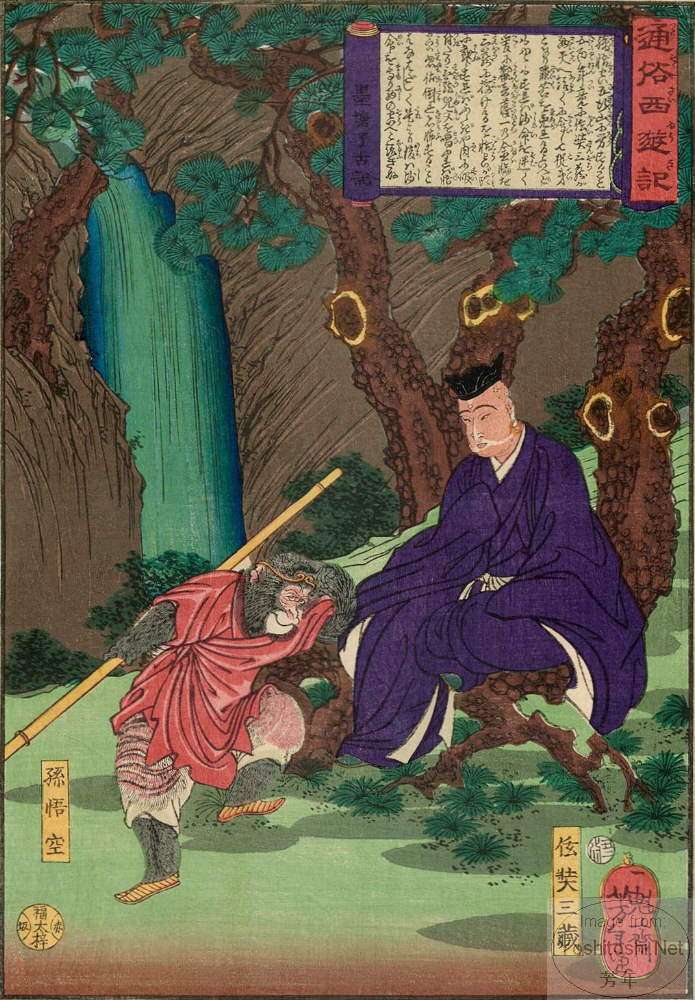
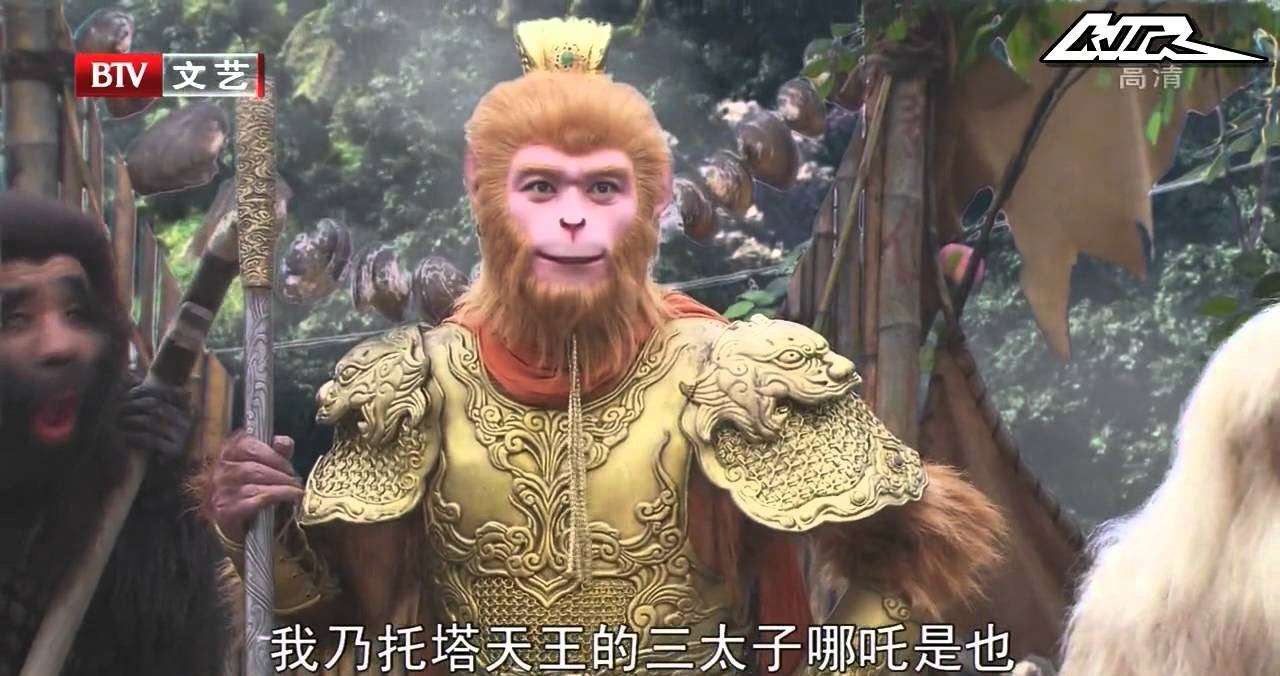
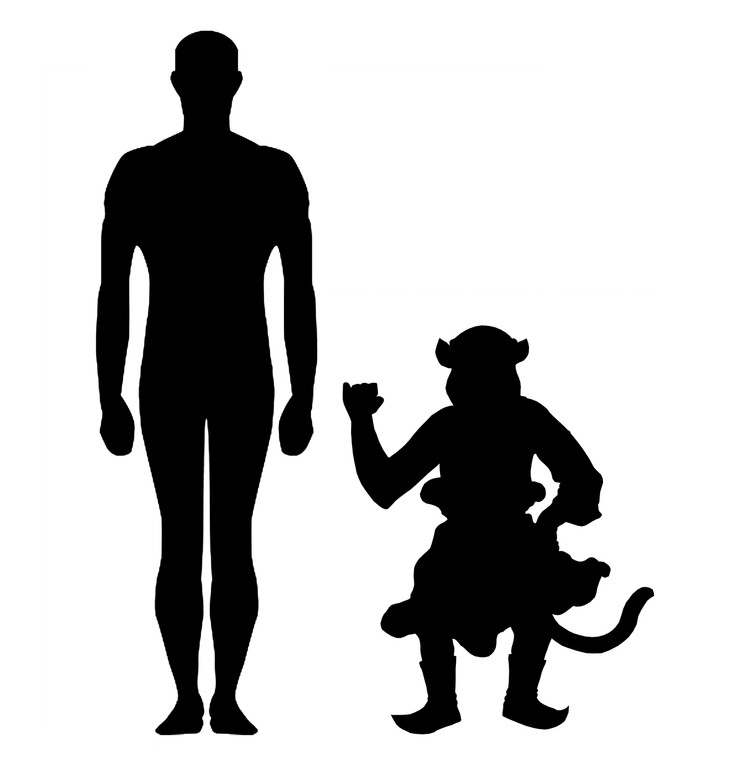
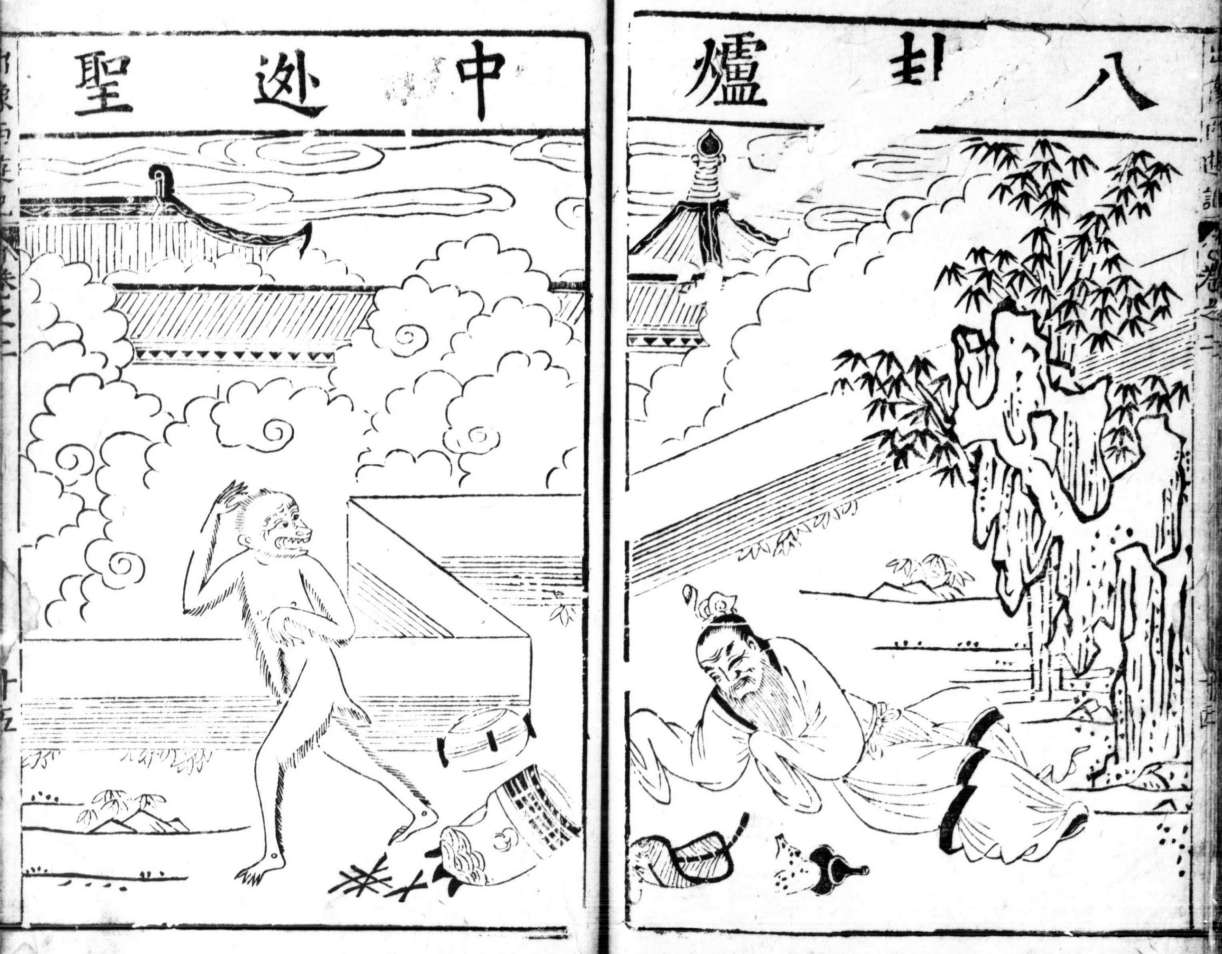
Story Idea: The Origin of Sun Wukong

Last updated: 02-22-2025

The following story sketch was originally posted on my external Historum blog on 01-20-2014. The site recently switched to a new server, but the blogs have yet to be migrated. I’m posting it here for posterity. Regular articles will resume after this entry.

This article describes three story ideas for the origins of Sun Wukong (孫悟空) from Journey to the West (Xiyou ji西遊記, 1592 CE, “JTTW” hereafter) that I’ve come up with over the years. Number one was the original focus of this piece, but I’ve since then come up with two other origins. Readers are free to choose which one they like most. Please let me know if you are interested in fleshing these out.

Table of Contents

Story Idea #1: Spiritual Son of Primordial Primates

I have included notes to explain why certain narrative choices were made, as well as to highlight what religious texts I drew ideas from.

As a lover of JTTW and a former primatology major, I’ve always wanted to create my own primate-based character similar to Sun Wukong. I originally wanted him to be the son of Monkey or the son of one of his advisers or allies during his days as a demon. Either way, I thought that he could train under Sun and gain similar powers. But then I decided that I wanted him to be a more civilized, yet more powerful version of the character; someone who is held in high regard by all beings of the six realms (demons, hungry ghosts, animals, humans, asuras, and devas) of Buddhist cosmology, as well as the Buddha himself. After reading about the ancient Chinese view of the gibbon, [A] a small, long-armed, arboreal ape native to Asia (fig. 1), I thought that the character could be an ape immortal. It was only recently that I decided to pair him with a female since gibbons generally mate for life.

A) The Chinese viewed the gibbon (Yuan, ) as symbolic of Confucian gentlemen and Daoist immortals. Their long arms were thought to be evidence of their expertise in soaking up qi. This resulted in long lives and occult powers (Geissmann, 2008).

Fig. 1 – A gibbon soaring through the treetops. Photo by Sachin Rai. A larger version can be found here.

Plot

The Daodejing (道德經) reads:

The Dao (道, the way) gives birth to the One (yiqi, 一氣, the first breath);
The One gives birth to the Two (yin and yang, 陰陽);
The Two gives birth to the Three (San qing, 三清, the Three Pure Ones);
The Three gives birth to the Ten Thousand Things.
The Ten Thousand Things carry the Yin and enfold the Yang;
Kneading gently, they create harmony. [B]

B) This is based on chapter 42 of the Daodejing (道德經), the premiere holy text of Daoism. The original passage has been interpreted differently by different scholars. I’m using the interpretation presented in Laozi and Wilson, 2012, p. 197. The cited text, however, makes no mention of the Three Pure Ones. This is based on later Daoist texts and folk views on the supreme immortals. See Stevens, 1997, pp. 68-70.

In the beginning of the universe, the Three Pure Ones, the manifestations of the Dao, use the vital energies of the cosmos to create heaven, earth, and all living things. Among the first to be created are two gibbons, a male and a female (fig. 2). They become the progenitors of all apes and monkeys, just like the phoenix and his mate, the next to be created, are the progenitors of all birds. Being embodiments of yin and yang sexual forces, the pair propagates quickly. They frolic with their children and the following generations through the mountain tops soaking up qi (氣), prolonging their lives for thousands upon thousands of years. And Like modern apes, the pair shows a propensity for observation, watching the cyclical movement of the stars and planets and becoming aware of the ebb and flow of qi, studying the energy and cultivating its mysteries over endless eons.

Fig. 2 – A pair of mated gibbons. A larger version can be found here.

Once their family grows to titanic proportions, the gibbons wield their arcane knowledge to create an island home, raising up Flower-Fruit Mountain (Huaguo shan, 花果山) from the ocean floor. There, they construct the Water Curtain Cave (Shuilian dong, 水簾洞) from which they continue to plumb the depths of the Dao. [C] Their exploration takes them to the heights of the mountain where heaven meets earth, using the corresponding yin (earth/female) and yang (heaven/male) energy to fuel their reenactment of the creation of the cosmos through sexual union. By chance, these powerful, creative sexual energies are absorbed by a boulder atop the mountain. [D]

C) JTTW never explains where the magical cave came from. This is my attempt to give it an origin story.

D) JTTW states the following about the boulder: “Since the creation of the world, it had been nourished for a long period by the seeds of Heaven and Earth and by the essences of the sun and moon, until, quickened by divine inspiration it became pregnant with a divine embryo” (Wu & Yu, 2012, p. 101). I’ve never been satisfied with the explanation for Monkey’s birth. Why would the rock produce a simian character? This is why I wrote that the Ape Immortals make love atop of the mountain, thereby impregnating the boulder with powerful, creative energies. In Daoist sexual practices, earth and heaven are often euphemisms for the feminine and masculine sexual energies of yin and yang (Wile, 1992, pp. 11-12 and 28-29). Therefore, what I have proposed is simply a difference in semantics.

As mated gibbons often do, the pair sings the most beautiful duets that echo throughout time and space. [E] The power of their song continues to increase as their immortal lives extend through the ages. It becomes so powerful that the duet is capable of crumbling mountains, churning the oceans, and shaking the very firmament of heaven. In fact, their song inadvertently topples one of the mountain pillars supporting the sky, and so the devi Nuwa (女媧) is forced to mend the heavens with five magic stones. [F] The primordial devas and spirits fear what might happen if the couple continues, so they plead with the gibbons to separate in order to avoid destroying the cosmos. They promise to allow the pair to see one another at some fixed period of time in the distant future.

E) Gibbon duets have an ethereal quality. Those wishing to listen to some can do so here and here (make sure your volume is not too high). It’s interesting to note that gibbons can naturally perform what takes professional opera singers years of dedicated practice to achieve (Lougheed, 2014).

F) The original mythology has the pillar being fallen by a water demon. I guess an explanation could be included somewhere that the original reason for the disaster, the gibbon song, was forgotten to time and confused with a different incident.

The immortal lovers reluctantly agree and isolate themselves to two separate holy mountains; [G] the male becomes known as the “Eastern Ape Immortal” (東猿仙) and the “Ape Patriarch” (Yuan jiazhang, 猿家長), while the female becomes known as the “Western Ape Immortal” (Xi yuan xian, 西猿仙) and the “Ape Matriarch” (Yuan nu jiazhang, 猿女家長). The two are much sought after by animal, human, devil, and deva to teach them the essence of the Dao. Both become the religious teachers of countless beings, from the lowliest creature to the purest deva in the highest heaven. Former students include the Tathagata Buddha and the immortal Subodhi. [H]

G) I wanted there to be a parallel between Monkey’s imprisonment and the pair’s exile, both of which are connected to mountains.

H) The Buddha’s tutelage under the gibbons happens in the distant past when he is still a Bodhisattva in the Tushita heaven. I listed Subodhi because I wanted there to be a further link between Monkey and the Ape Immortals. Therefore, the skills of Sun Wukong’s spiritual parents are transmitted to him by their former student.

The primordial devas are eventually superseded by deified humans after a great battle between the Shang and Zhou Dynasties. [I] The August Jade Emperor (Yuhuang dadi, 玉皇大帝) and the rest of the heavenly retinue go about setting the cosmos into order. The promise made by the primordial devas is lost to time.

I) This is based on the events in the Chinese classic Fengshen yanyi (封神演義, c. 1620), or Investiture of the Gods. In the story, chaos in heaven causes many gods to be reborn on earth as various heroes of the competing Shang and Zhou Dynasties. The King of Zhou wins the conflict and his strategist, an apprentice of the supreme immortal Yuanshi tianzun (元始天尊), one of the Three Pure Ones, uses a magic list to deify the souls of those who died in battle. Thus, heaven is repopulated once more (Stevens, 1997, p. 60).

It is during the interim when the previously mentioned boulder, having been nourished by the light of the sun and moon for centuries, births a stone embryo that is eroded by the elements into a stone monkey. He becomes the king of the monkeys on Flower-Fruit Mountain by rediscovering the Water Curtain Cave that the previous generations of his kin had forgotten long after the Ape Immortals went into exile. The monkey eventually trains under Subodhi, receiving the religious name Sun Wukong (孫悟空, Monkey Awakened to Vacuity) (fig. 3), and achieving great magical powers with which he later uses to rebel against heaven for not recognizing him as a full-fledged god. After being imprisoned by the Buddha for 600 years, Sun redeems himself by escorting the monk Tripitaka (Sanzang, 三藏) to India, and for this he is rewarded with Buddhahood, becoming the “Victorious Fighting Buddha” (Dou zhansheng fo, 鬥戰勝佛).

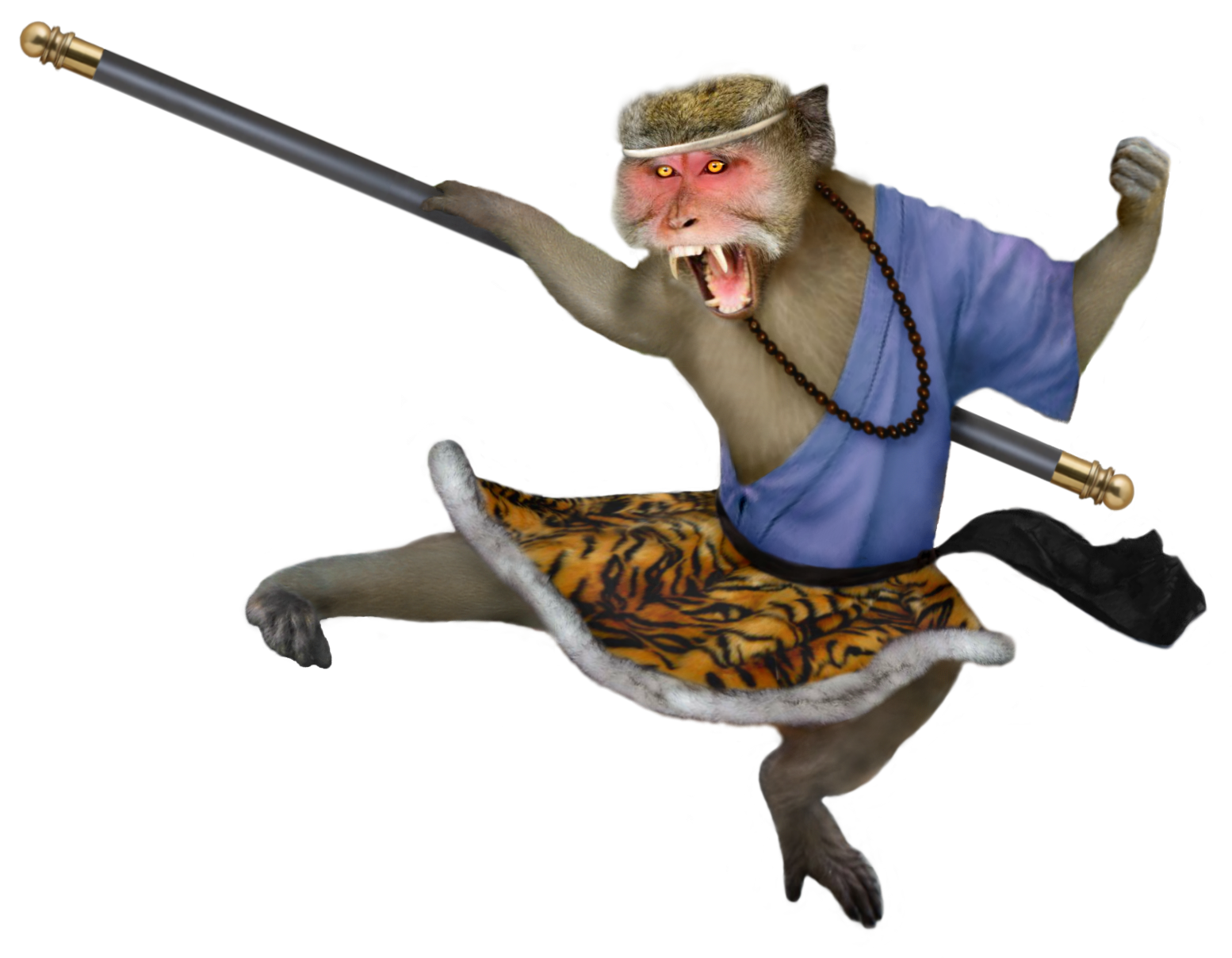
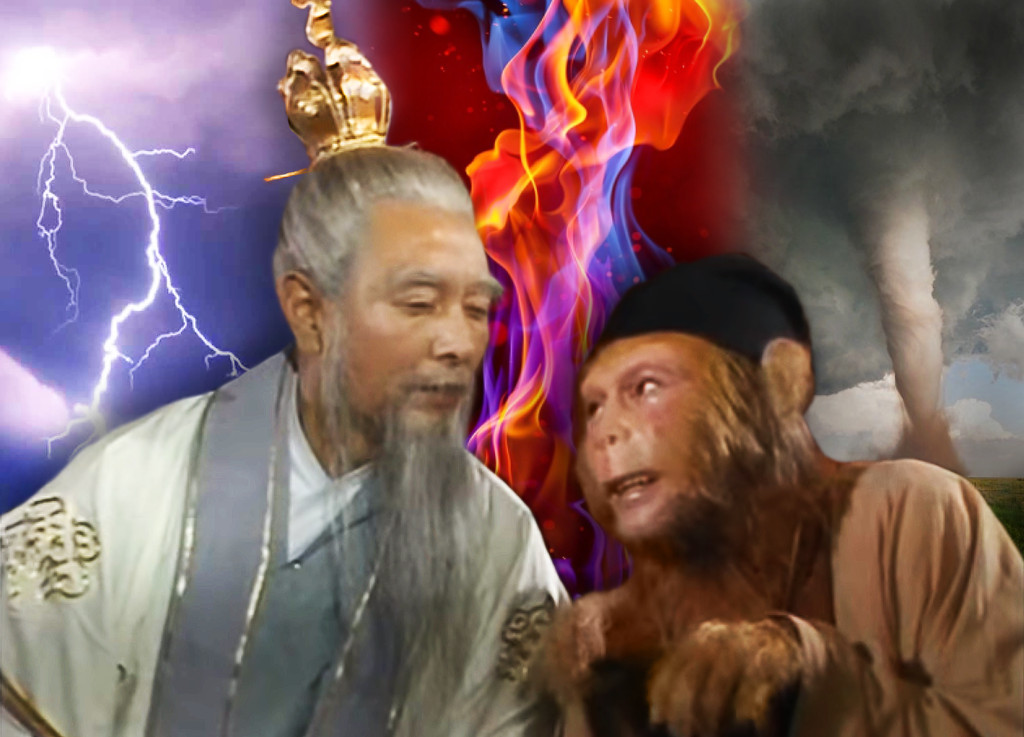
Fig. 3 – A modern depiction of Sun Wukong (larger version). A photomanipulation by the author.

After the fixed period of time has elapsed, the primordial gibbons request to leave their individual exile. The Jade Emperor, however, refuses due to the potential for danger. Angered because heaven went back on its word, the immortal lovers leave their exile anyway, and so all of the devas, spirits, and devils struggle to keep them apart. This is an impossible task given that the two are among the highest immortals. A great battle ensues in which the pair uses their knowledge of the Dao to put the celestial army into disarray. For instance, the Ape Patriarch is a master of transformations; he grows to titanic proportions, multiplies his long arms, and captures the most powerful Daoist and Buddhist deities in his vice-like hands. The Ape Matriarch is a mistress of illusions; she clouds the minds of the soldiers, making them think that they are fighting her when they are really fighting each other. [J] In addition, their individual songs have grown in power, now capable of destroying anything by separating the yin and yang forces therein (fig. 4).

J) The strengths of each correspond to the skills passed on to the Buddha and the immortal Subodhi. Again, I wanted there to be a parallel between Monkey and his spiritual parents. The pair rebels like he did, but they do so because of injustice, not pride. However, I must say that lofty immortals would have surely evolved passed such earthly “wants and needs” (e.g. lust and anger). Daoist literature and vernacular Chinese fiction often describes immortals as being celibate. But the immortal love of the couple may transcend what might be expected of human-based immortals. That’s why I present them as living embodiments of yin and yang. Wile (1992) states: “The early [Daoist] texts are marked by the existential loneliness of yin and yang for each other, and their union consummates a cosmic synergy” (p. 29).

Fig. 4 – A gibbon yawning. Imagine powerful sound waves emanating from its mouth. A larger version can be found here.

The Jade Emperor begs the Buddha to intervene like he had done for the rebelling Sun Wukong in the past. But considering that heaven went back on its word and the ape immortals are both friends and former teachers of the Enlightened One, the Tathagata sends their spiritual son, the Victorious Fighting Buddha, to ask them to pacify their rage instead of using trickery to halt the onslaught. [K] After a brief reunion, the pair acquiesces, and all three travel by cloud to the Buddha’s abode on Vulture Peak (Lingjiu shan, 靈鷲山) to discuss the matter. The immortal lovers opine the great injustice done to them by the heavenly hierarchy. The Buddha understands that their duet is part of their primordial animal nature and is the ultimate expression of their love, which reaches back to the very beginning of time. Unfortunately, he realizes that the power of their song could destroy the universe if allowed to take place.

K) An example of trickery would be the way that the Buddha uses illusion to make Monkey think that he has left his palm in the seventh chapter of JTTW.

After some thought, the Tathagata gives them a lesson on the cyclical dissolution of the cosmos: at the end of each Mahakalpa (Da jie, 大劫), the universe is destroyed by a different element. There are fifty-six destructions by fire, seven by water, and one by wind. The latter is the most powerful, destroying all earthly and heavenly realms below the pure realm inhabited by the Buddha and his retinue. The Tathagata then suggests a compromise in which the couple can remain as his permanent guests of the Buddha realm, where they can frolic with the Victorious Fighting Buddha. This way the gibbons will be free to sing their melodious song without fear of negative effects. And when the end of the sixty-fourth Mahakalpa comes to a close, their song will serve the function of the wind element to bring about the dissolution of the universe to make way for the new one. [L]

L) Buddhism recognizes a measurement of time called a Kalpa (jie, ), which can be many millions or even billions of years long depending on the tradition. Said traditions recognize between four and eighty kalpas (Buswell & Lopez, 2014, p. 409). The total of these respective ranges make up a Mahakalpa (dajie, 大劫), which is divided into four periods of nothingness, creation, subsistence, and finally destruction, each period being between one and twenty kalpas long (Buswell & Lopez, 2013, p. 496). 


Updates

Story Idea #2: Son of Primordial Evil

Update: 01-17-21

Last year, I wrote an article that explored other stone-born figures from world mythology. In the conclusion I cautiously suggested that Wukong’s birth and later rebellion was influenced by a Hurrian myth, the “Song of Ullikummi” (c. 1200 BCE), which appears in an extant Hittite cuneiform text comprising three fragmented clay tablets. For example, one scholar noted similarities between Ullikummi and a later figure from Greek mythology: “(1) The initial situation: the big stone; (2) a god fertilizes the stone; (3) the stone gives birth to a child; (4) the child thus created is a rebel against the gods; (5) the gods gather and plan countermeasures; (6) the enemy of the gods is rendered harmless” (see the linked article). Anyone who has read JTTW will no doubt notice the striking similarities with Monkey’s tale. Therefore, I think Ullikummi’s story would be a solid basis for a more authentic origin story for the Monkey King.

While the ancient tale is named after the eponymous stone monster (fig. 5), the story follows the machinations of Kumarbi, a resentful former ruler of the gods, who wishes to usurp the throne from his son, the storm god Tesub. Kumarbi sets about doing this by bedding a massive stone in an effort to produce a being powerful enough to rout the gods. Upon its birth, the doting father gives the creature a name meaning “Destroy Kummiya,” foreshadowing its intended fate to destroy Tesub’s home.

Fig. 5 – Ullikummi as a playable character from the online video game Final Fantasy XI (larger version).

Fearing that it may be killed by the gods before coming into full power, Kumarbi has the monster hidden in the underworld, where it is placed on the right shoulder of the Atlas-like god Upelluri. The creature quickly multiples in size, growing nine thousand leagues tall, eventually reaching heaven. When the goddess Ishtar fails to seduce the blind and deaf monster, the warrior god Astabi leads seventy deities into battle against the lithic menace only to be defeated and cast into the sea below. Tesub abandons the throne and along with his vizier and brother Tasmisu, seeks the aid of Ea, the god of wisdom and witchcraft, who travels to the underworld in search of the creature’s origins. Upon questioning Upelluri, who effortlessly carries the weight of the heavens, earth, and sea, Ea learns that a great weight, which turns out to be the monster, pains the titan’s right shoulder. In the end (of the third and final extant tablet), Ea calls for a tool originally used by the old gods to cleave heaven and earth and chisels Ullikummi free of Upelluri’s shoulder, thus breaking the monster’s base of power and leaving it vulnerable to attack by the gods. One scholar suggests that there’s a missing fourth tablet that describes the monster’s ultimate defeat (again, see the linked article).

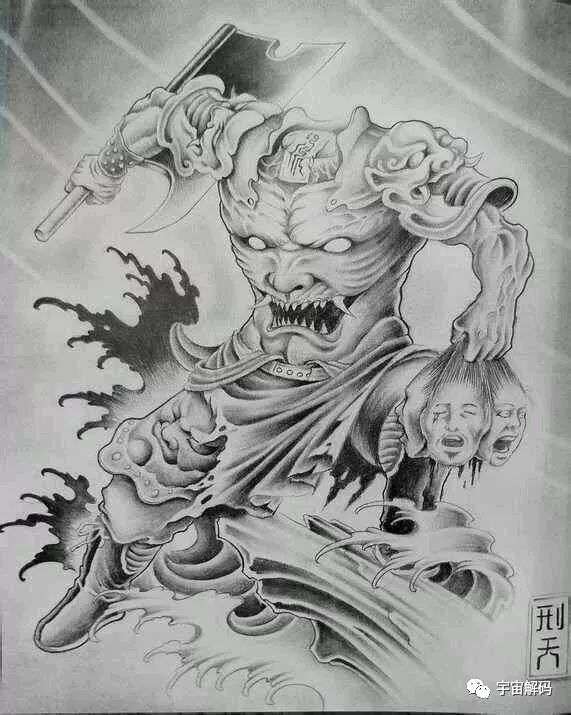
Fig. 6 – A modern depiction of Xingtian (larger version). Artist unknown.

Now, I’ve previously written a story sketch in which Master Subodhi’s school is actually a training ground for an immortal monastic army akin to the Shaolin Temple. I speculated that Wukong’s skill in martial arts and troop movement would come from his time serving as a soldier and eventual officer in this army. Additionally, I suggested that the baddie whom the army faces is the headless monster Xingtian (刑天) (fig. 6), who originally battled the supreme god Shangdi for control of the universe and was beheaded after his defeat. Perhaps he or a figure like him follows in Kumarbi’s footsteps and beds a stone, in this case the rock on the Mountain of Flowers and Fruits, in an effort to create a powerful son to finish what he started. Then, he works in the shadows, influencing the direction of Monkey’s life, leading to his famous rebellion against heaven. Wukong’s defeat of the seventy-two major gods in the heavenly army [1] would mirror Ullikummi routing the seventy gods led by Astabi. Likewise, the Jade Emperor’s call to the Buddha, leading to Monkey’s defeat, mirrors Tesub’s plea to Ea and the eventual downfall of the stone monster.

Thoughts?


Story Idea #3: Arhat Punished to Reincarnation

Update: 06-16-23

Another idea could predate Monkey’s stone birth and instead focus on a past life as a heavenly being. It would draw from three sources: First, the backstory of the Tang Monk, Tripitaka. Those who’ve read JTTW will know that his past life, an Arhat called Master Golden Cicada (Jinchan zi, 金蟬子), is exiled from paradise for ten lifetimes for falling asleep during the Buddha’s lecture.

Just like his master, Sun Wukong is formerly a celestial in paradise. A great name for this figure would be the “Arhat Steel Muscles and Iron Bones” (Gangjin tiegu luohan, 鋼筋鐵骨羅漢). This plays on a similar title given to Sun’s antecedent, the “Monkey Pilgrim” (Hou xingzhe, 猴行者), by Tang Emperor Taizong in the 13th-century oral version of JTTW. [2]

Second, the embellished life story of Song-era General Yue Fei (岳飛, 1103–1142). The Complete Vernacular Biography of Yue Fei (Shuo Yue quanzhuan, 說岳全傳, c. 17th century; “The Biography of Yue Fei” hereafter) actually draws inspiration from the 1592 JTTW by portraying the general as a reincarnation of a bird monster-turned-Dharma protector from chapters 74 to 77. Originally called the “Peng Bird of Ten Thousand Cloudy Miles” (Yuncheng wanli peng, 雲程萬里鵬) in JTTW, the “Great Peng, the Golden-Winged King of Illumination” (Dapeng jinchi mingwang, 大鵬金翅明王) is exiled from paradise in chapter one of The Biography of Yue Fei for killing a stellar bat-spirit who farted during the Tathagata’s sermon on the Lotus Sutra. [3]

Just like the Great Peng bird, the Arhat Steel Muscles and Iron Bones kills a spirit for seemingly offending the Buddha. [4] I imagine that the Enlightened One would admonish him by saying something like, “You are so sure of your strength, so proud of your physical gifts. And yet you don’t know how to defend the Dharma with it!” He then exiles the Arhat to live out ten lifetimes (à la Master Golden Cicada) where he’s a figure of great strength who is continually bested and humiliated and forced by circumstances to protect something weaker than him.

And third, the Buddha’s Jataka tales. The Tathagata has many birth stories where he is both humans and animals who embody an important lesson (Cowell, 1895). In fact, one tale depicts him as a Monkey King!

The Arhat is reborn in the lower three paths of reincarnation, and just like the Buddha, he has several past lives as animals. He works his way up the cosmic hierarchy by performing good deeds, such as a past life where he’s a man-eating tiger who comes to protect a small child. He attains the human-like form of a monkey in his final incarnation, leading to the events of JTTW.

I like this option a lot because this would make both Monkey and Tripitaka former Arhats who undergo prolonged trials that refine their spirits over many lifetimes. This would ultimately explain why both of them attain Buddhahood at the end of their respective character arcs, our hero becoming the “Buddha Victorious in Strife” (Dou zhansheng fo, 鬥戰勝佛) and the Tang Monk “Buddha of Candana Merit” (Zhantan gongde fo, 旃檀功德佛) (Wu & Yu, 2012, vol. 4, p. 381). I also like it because Sun Wukong’s past life references the Tibetan monkey bodhisattva Hilumandju, who is an avatar of the bodhisattva Avalokiteshvara (Guanyin) and a possible Buddhist syncretic version of the Hindu monkey god Hanumanji. What’s interesting about this legendary figure is that he mates with a rock ogress (see the 08-02-19 update here), which reminds one of Sun’s stone birth.


Authenticity

Update: 02-22-25

While I like elements from the first two story ideas, the third one is turning out to be more authentic and interesting.

I had previously referred to Monkey’s past life on this article as a Bodhisattva, but I changed this to an Arhat after finding evidence that Golden Cicada, Tripitaka’s past life, was a Buddhist saint. This includes the following:

  • Xuanzang was historically worshiped as one during the Song dynasty.
  • Two Yuan-Ming plays depict him as the reincarnation of Arhats.
  • The story of Golden Cicada is likely based on the Arhat Aniruddha, one of the ten principle disciples of the Buddha.
  • Two other principle disciples, the Arhats Ananda and Kasyapa, appear among the Tathagata’s retinue in JTTW (see here).

In addition, my previous article on Sun Wukong’s first master, the Buddho-Daoist Sage Subodhi, suggests that he is the historical Arhat Subhuti, also one of the principle disciples. And if we insert the aforementioned Aniruddha as the original identity of Master Golden Cicada, that will make four of ten disciples appearing in the story. I stress this because maybe—within our fanfiction—Monkey’s previous life could be another principle disciple that has been conveniently inserted among the historical figures. That way, the Great Sage would have known both Golden Cicada (his master Tripitaka) and Subhuti (his master Subodhi) in the past!

This is neat because he (Arhat Steel Muscles and Iron Bones) and Golden Cicada could ideally be living out their respective transmigrational punishments around the same time. And this further stimulates my brain: what if each of Monkey’s incarnations have protected each of Tripitaka’s past lives?!?!

Notes:

1) Koss (1981) writes: “Adding up the number of gods listed here [see Wu & Yu, 2012, p. 169] from the Twenty-Eight Constellations through the Deities of the Five Mountains and the Four Rivers, the number arrived at is seventy-three, if 東西星斗 [dongxi xingdou, the “Stars of East and West”] is counted as two, which Yu does in his translation, or seventy two, if the latter is taken as one, which is another possible interpretation” (p. 84).

2) In chapter 17, Tang Taizong names him the “Great Sage Steel Muscles and Iron Bones” (Gangjin tiegu dasheng, 鋼筋鐵骨大聖) (Wivell, 1994, p. 1207).

3) Chapter one of The Complete Vernacular Biography of Yue Fei reads:

Let’s talk about the Buddha Tathagata at the Great Thunderclap Monastery in the Western Paradise. One day, he sat on a nine-level lotus throne, and the Four Great Bodhisattvas, the Eight Great Vajra Warriors, the five hundred Arhats, the three thousand Heavenly Kings, nuns and monks, male and female attendants, all of the heavenly sages who protect the Dharma, gathered to listen to his lecture on the Lotus Sutra. His words were like flowers and precious jewels raining from the heavens. But, at that time, a star-spirit, the Maiden Earth Bat, who had been listening to the lecture from beneath the lotus throne, couldn’t bear it any longer and unexpectedly let out a stinky fart.

The Buddha was a great, merciful lord, so he didn’t mind even the slightest bit. But don’t sympathize with the Dharma protector above his head, the “Great Peng, the Golden-Winged King of Illumination,” whose eyes shone with golden light and whose back was a scene of auspiciousness. He became angry when he saw the nasty, filthy Maiden Earth Bat, and so he unfurled both his wings and dropped down to kill the spirit by pecking her on the head. The light-point of her soul shot out of the Great Thunderclap Monastery and went to the Lands of the East (China) in the world below to find a mother and reincarnate. She was reborn as a daughter of the Wang clan. She would later marry the Song Prime minister Qin Hui (1091-1155) and come to cruelly kill the righteous (i.e. Yue Fei) as a means to get revenge against today’s enemy. We will talk about this later.

Let’s return to the Buddha, who saw what happened with his all-seeing eyes and exclaimed, “Good! Good! It turns out that this is an episode of karma (cause and effect).” Then he called the Great Peng bird to come closer and shouted, “You evil creature! You already took refuge in my teachings. How can you not follow the five precepts by daring to commit such a horrible crime? I don’t need you here; you will descend to the mortal world to pay off your (karmic) debt and wait until you have fulfilled your work. Once that is completed, only then will I allow you to return to the mountain to achieve the right fruit (Buddhist merit).” The Great Peng complied with the decree, flying out of the Great Thunderclap Monastery directly to the Lands of the East to be reincarnated. We will stop here.

且說西方極樂世界大雷音寺我佛如來,一日端坐九品蓮臺,旁列著四大菩薩、八大金剛、五百羅漢、三千偈諦、比丘尼、比丘僧、優婆夷、優婆塞,共諸天護法聖眾,齊聽講說妙法真經。正說得天花亂墜、寶雨繽紛之際,不期有一位星官,乃是女土蝠,偶在蓮臺之下聽講,一時忍不住,撒出一個臭屁來。我佛原是個大慈大悲之主,毫不在意。不道惱了佛頂上頭一位護法神祗,名為大鵬金翅明王,眼射金光,背呈祥瑞,見那女土蝠污穢不潔,不覺大怒,展開雙翅落下來,望著女土蝠頭上,這一嘴就啄死了。那女土蝠一點靈光射出雷音寺,徑往東土認母投胎,在下界王門為女,後來嫁與秦檜為妻,殘害忠良,以報今日之讎。此是後話,按下不提。

且說佛爺將慧眼一觀,口稱:「善哉,善哉!原來有此一段因果。」即喚大鵬鳥近前,喝道:「你這孽畜!既歸我教,怎不皈依五戒,輒敢如此行兇?我這裡用你不著,今將你降落紅塵,償還冤債,直待功成行滿,方許你歸山,再成正果。」大鵬鳥遵了法旨,飛出雷音寺,徑來東土投胎不表。

4) A murderous Buddhist deity may seem weird, but Vajrapani (Jingang shou pusa, 金剛手菩薩; lit: “Bodhisattva Holding the Vajra Weapon”), a yaksha-turned-wrathful Dharma protector, is considered a bodhisattva (Buswell & Lopez, 2014, p. 955).

Sources:

Buswell, R. E. , & Lopez, D. S. (2014). The Princeton Dictionary of Buddhism. Princeton, NJ: Princeton University Press.

Cowell, E. B. (Ed.) (1895). The Jātaka, or Stories of the Buddha’s Former Births (Vols. 1-5). Cambridge: Cambridge University Press. Retrieved from https://archive.org/search?query=The+Ja%CC%84taka%2C+or%2C+Stories+of+the+Buddha%27s+former+births.

Geissmann, T. (2008). Gibbon paintings in China, Japan, and Korea: Historical distribution, production rate and context. Gibbon Journal, 4, 1-38. Received from http://www.gibbonconservation.org/07_publications/journal/gibbon_journal_4.pdf

Koss, N. (1981). The Xiyou ji in Its Formative Stages: The Late Ming Editions (Vols. 1-2). (Doctoral dissertation). Available from ProQuest Dissertations and Theses database. (UMI No. 8112445)

Laozi, & Wilson, W. S. (2012). Tao Te Ching: An All-New Translation. Boston & London: Shambhala

Lougheed, K. (2012, August 23). Helium reveals gibbon’s soprano skill. Retrieved January 20, 2014, from https://www.nature.com/news/helium-reveals-gibbon-s-soprano-skill-1.11257

Stevens, K. G. (1997). Chinese Gods: The Unseen World of Spirits and Demons. London: Collins & Brown.

Wile, D. (1992). Art of the Bedchamber: The Chinese Sexual Yoga Classics Including Women’s Solo Meditation Texts. Albany: State University of New York Press.

Wivell, C.S. (1994). The Story of How the Monk Tripitaka of the Great Country of T’ang Brought Back the Sūtras. In V. Mair (Ed.), The Columbia Anthology of Traditional Chinese Literature (pp. 1181-1207). New York: Columbia University Press.

Wu, C., & Yu, A. C. (2012). The Journey to the West (Vols. 1-4) (Rev. ed.). Chicago, Illinois: University of Chicago Press.

Yang, L., An, D., & Turner, J. A. (2011). Handbook of Chinese Mythology. Santa Barbara, Calif: ABC-CLIO.

Musings on Journey to the West and my new Great Sage Tattoo

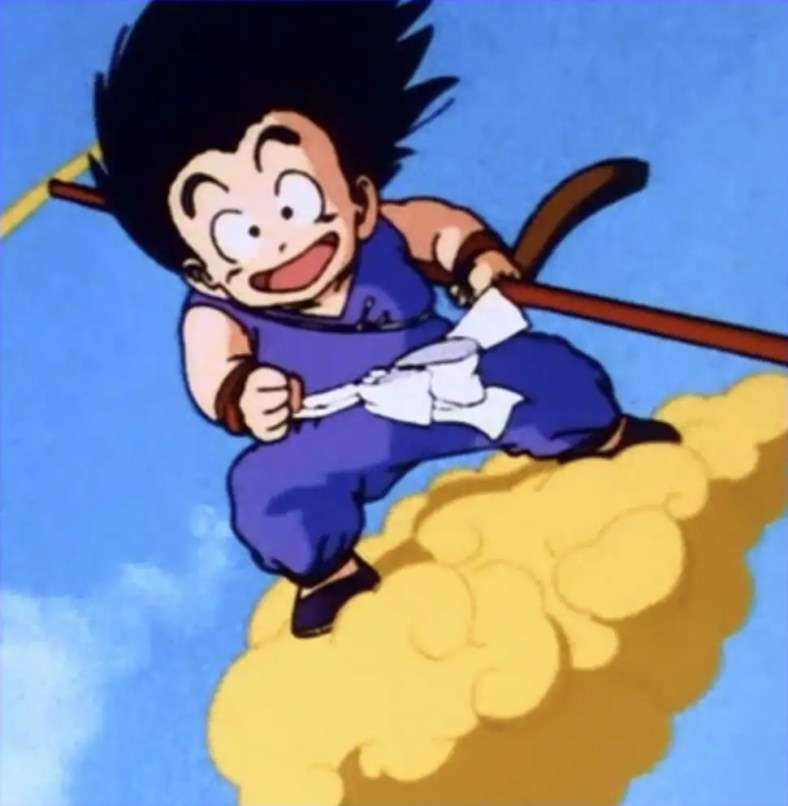
I was a big fan of mythology as a child, particularly enjoying the adventures of the Greek and Norse pantheons. Then, one day, my mother bought me a book on world mythology, and I read about a certain Sun Wukong, a monkey deity that reminded me of my favorite anime hero Son Goku from the Dragon Ball franchise. In my youthful naivety, I thought this monkey was a knockoff of my beloved Saiyan. For instance, both have monkey features, fly on clouds, and wield extending staves. But I was humbled to learn years later that the flow of influence actually went in the opposite direction.
Young Goku flying on his cloud (larger version).

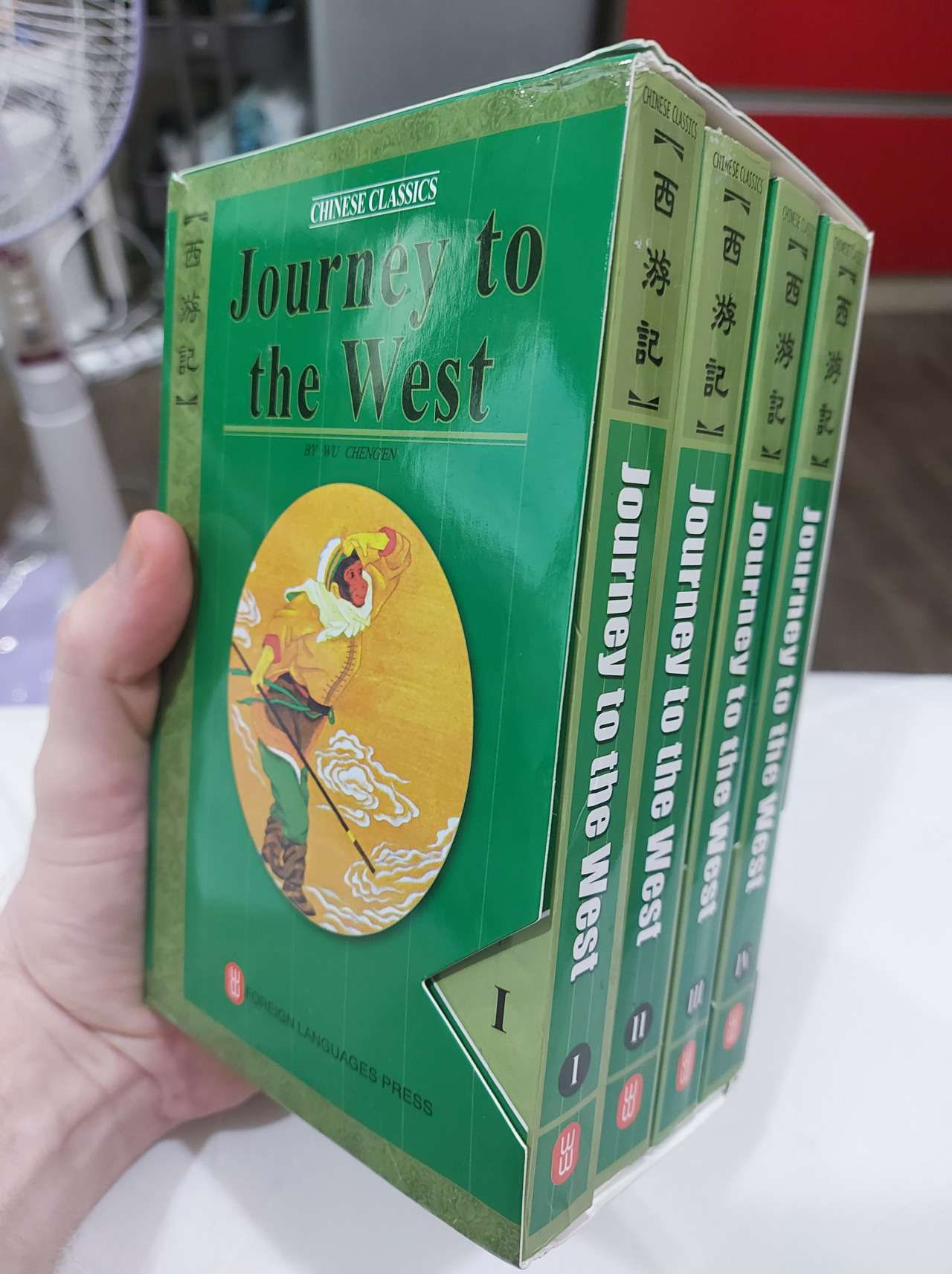
I don’t remember exactly howperhaps reading about it on the internetbut I confirmed the connection between both characters around 2001 while serving in the US Army 82nd Airborne Division. I shortly thereafter purchased the W. J. F. Jenner four-volume boxed edition of Journey to the West to learn more about Sun Wukong and his adventures. I immediately fell in love with the character, especially during the first seven chapters in which he comes to rebel against heaven. What’s not to love about a little stone monkey who, through his own hard work and determination, gains the power to bring the heavenly hierarchy to its knees? The fear that he continues to instill in gods even after his fall from grace and redemption, as well as the tit-for-tat relationship with his religious brother Zhu Bajie, still makes me laugh to this very day.

Journey to the West has been an integral part of my life for nearly 20 years. My foray into research did not happen until the latter part of college. This blog stands as a testament of my continued dedication to the novel. My love for the work grows deeper and deeper as I learn new things to share with my readers. This is especially true as the Anthony C. Yu 2012 revised edition has so much juicy background information. I often use it as a stepping stone to discover new concepts overlooked by previous scholarship.

The four-volume box set in my collection (larger version).

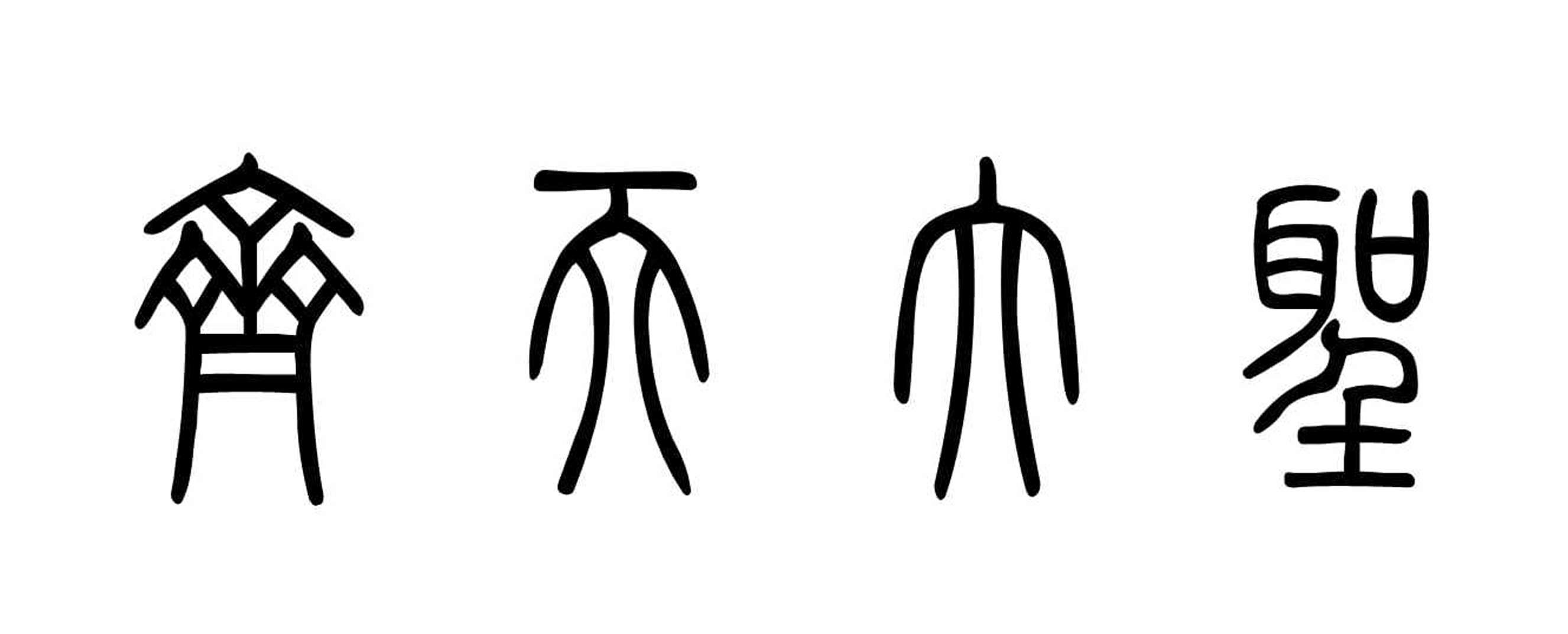
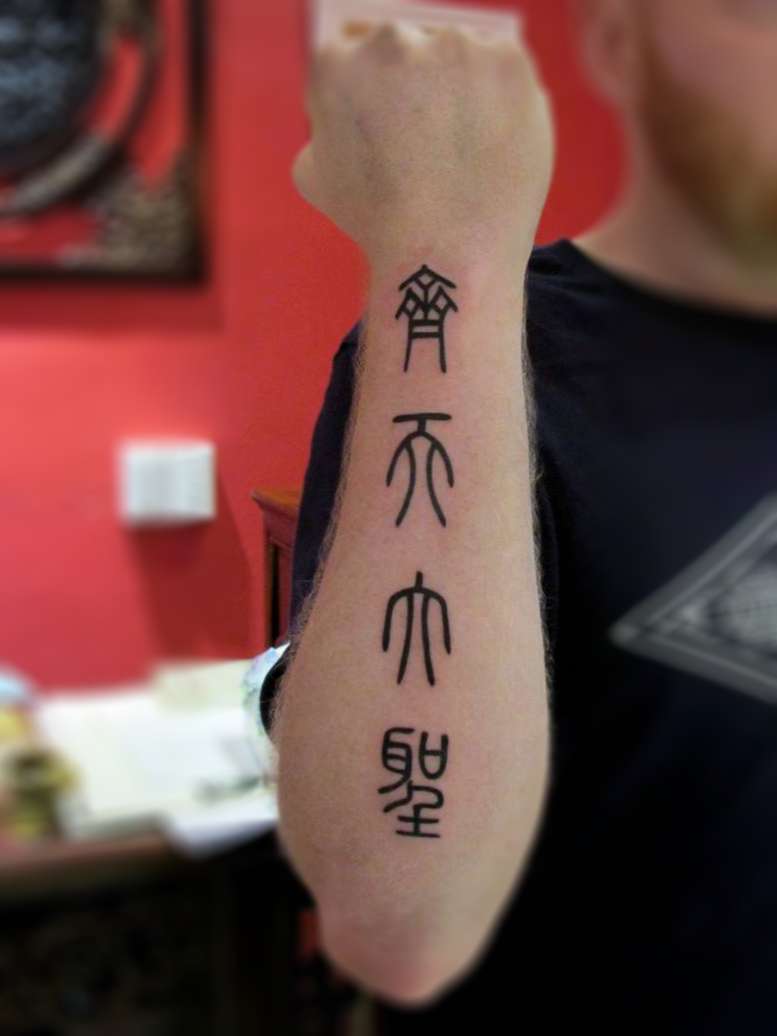
I’ve wanted to get a Monkey King tattoo for years but never liked anything I saw, not even my own novel accurate designs. I finally accepted that I would never find the bright, flashy piece that agreed with my strict standards of authenticity. I instead opted to start simple by getting the characters for “Great Sage Equaling Heaven” (Qitian Dasheng, 齊天大聖) because I felt it accurately reflected my interests. I chose Seal Script because I wanted the piece to have an ancient feel, something that is, if only briefly, arcane to even modern native readers like those in Taiwan where I live. I can’t wait to show it to some of my friends in Tainan who actively worship the Great Sage.

The seal script characters (larger version).

The piece was done by Judy Chang of the Red Room in Banqiao District, New Taipei City, Taiwan.

My tattoo (larger version).


Story Idea: Master Subodhi’s Curriculum II – Immortal Warriors and Shaolin Monks – Some Fun Monkey King Fanfiction Speculation

From time to time I like to post a fun blog not directly related to (though informed by) my research. A past example can be seen here. Regular articles will resume after this entry.

Last Updated: 05-15-2022

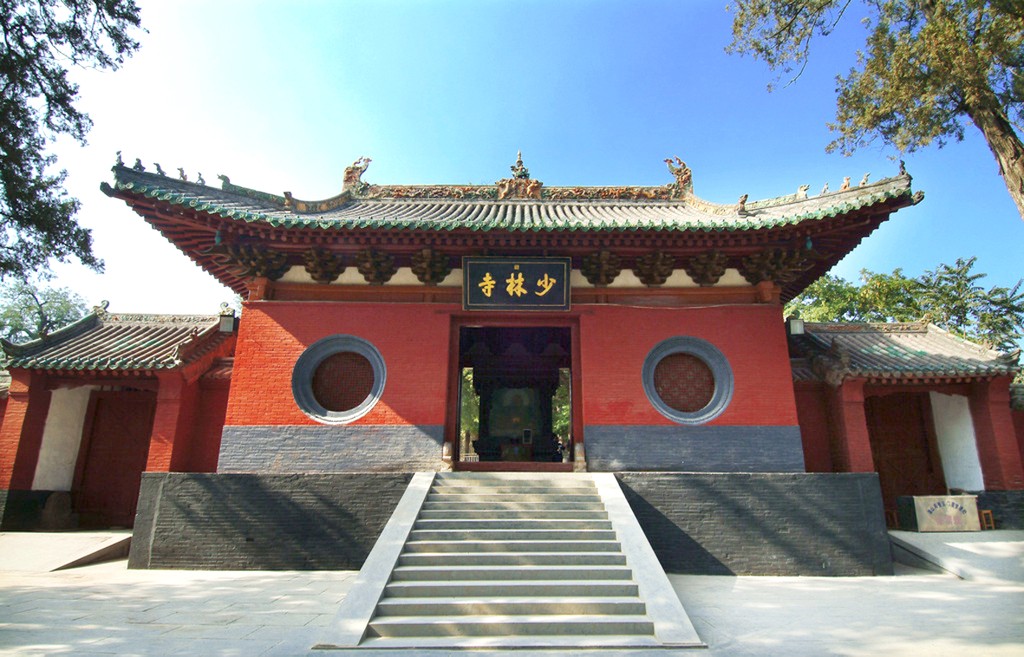
As noted in part one, the immortal sage Subodhi teaches Sun Wukong Chan (Zen) and Daoist philosophy; the secret of immortality; the 72 heavenly transformations; cloud-somersaulting; general Daoist magic; military arts like troop maneuvering, weapons, and boxing; and medicine. But why would a Daoist monk need to know how to wield weapons and fight in battle formations? In this piece, I would like to speculate that the Sage’s school is a training ground for an immortal monastic army! I am by no means suggesting that there is actual textual support for my conjecture. This is purely a fun exercise, fodder for fanfiction, if you will. I plan to supplement what we already know from the novel with historical information about monastic armies in China, particularly focusing on the warrior monks of the famed Shaolin Monastery (Shaolin si, 少林寺) (fig. 1).

Fig. 1 – The front gate of Shaolin (larger version).

Table of Contents

1. The Evolution of Shaolin’s Monastic Army: A Brief Survey

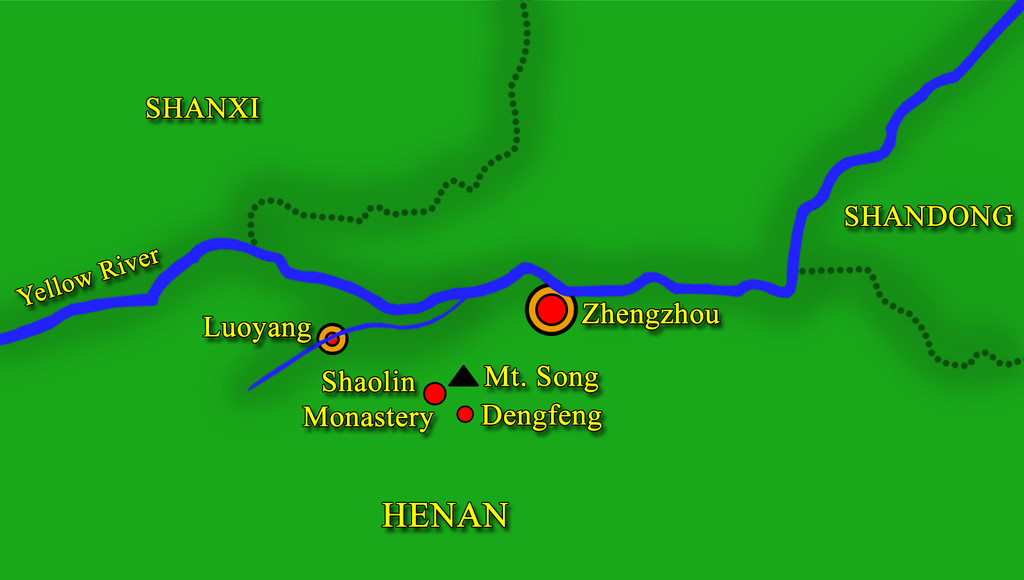
Founded in 496 during the Northern Wei Dynasty, the Shaolin monastery was built on Song Mountain, a mountain range located in Henan Province, China (fig. 2). It became the home of Chan Buddhism and a center for Buddhist learning, even attracting the likes of Xuanzang (on whom Tripitaka is based), whose request to move there in 645 was denied by the Tang Emperor Taizong (Shahar, 2008, p. 17). Despite being a school of higher religious learning, the monastery later came to be associated with elite warriors. The term “Warrior Monk” seems like an oxymoron considering that Buddhism is generally considered a religion of peace. However, evidence suggests that the monks may have first taken up arms to protect their property, for monasteries were often lavishly decorated and laden with treasures from rich donors, making them prime targets for bandits (Shahar, 2008, p. 18). For example, one of Shaolin’s worst bandit raids took place in 1356 when Red Turban rebels attacked, “peeling off the gold coating of the Buddha images and breaking the statues in search of hidden treasures,” eventually destroying part of the complex (Shahar, 2008, p. 85).

Fig. 2 – A map showing the location of Shaolin and the nearby town of Dengfeng in northern Henan (larger version). The ancient Sui and Tang capital of Luoyang is visible to the left, while the modern day capital of Zhengzhou is visible to the right. Henan shares a border with the provinces of Shanxi and Shandong to the north. Adapted from Shahar, 2008, p. 10. By the author.

The first documented case of Shaolin monks protecting their monastery took place in 610 when they repelled a bandit attack that saw many of their stupas burnt. Their combat experience would come in handy years later when, in 621, the monks aided Li Shimin, the future Emperor Taizong of the newly formed Tang Dynasty, by assaulting a stronghold and capturing the nephew of Wang Shichong, a former general of the defunct Sui Dynasty and the founder of a competing dynasty. Wang had captured valuable farmland belonging to Shaolin and established the stronghold there because it was located in a valley through which passed the strategically important route to the Sui capital of Luoyang. The monks’ intervention was not a display of loyalty to the fledgling Tang but solely a move to regain control of their property, a political gamble that paid off and benefited the monastery for centuries (Shahar, 2008, pp. 25-27). Three of the monks who took part in the battle were awarded titles by Li. One in particular was given the high military rank of Generalissimo (Da Jiangjun, 大將軍) (Shahar, 2008, p. 31). This wasn’t the last time Shaolin soldier monks came to the aid of the Chinese empire.

By the late-Ming Dynasty, Shaolin was famed far and wide for their mastery of the staff, their method appearing in various military encyclopedias. The interest in their martial prowess was likely spurred by news of their military victories during the 1550s against the Wokou (倭寇, “Dwarf/Japanese pirates”), a conglomeration of Japanese, Chinese, and Korean sea bandits who plagued China’s eastern and southeastern coasts (fig. 3). The Ming’s hereditary army was all but useless at this time, forcing local governments to rely more on prefectural level troops (xiang bing, 廂兵), including contingents of Buddhist warrior monks from different monasteries (Shahar, 2008, p. 68). Monks from Shaolin and sister temples were mobilized in the spring of 1553 and fought the pirates a total of four times through the autumn of 1555. Shahar (2008) explains:

The monks scored their biggest victory in the Wengjiagang battle. On July 21, 1553, 120 fighting monks defeated a group of pirates, chasing the survivors for ten days along the twenty-mile route southward to Wangjiazhuang (on the Jiaxing Prefecture coast). There, on July 31, the very last bandit was disposed of. All in all, more than a hundred pirates perished, whereas the monks suffered four casualties only. Indeed, the monks took pity on no one in this battle, one employing his iron staff to kill an escaping pirate’s wife (p. 69).

It’s interesting to note that the head priest who led the monastic army in their victory over the Wokou was himself from Shaolin and was documented to have single-handedly defeated eight armed monks from a neighboring temple who challenged his position (Shahar, 2008, pp. 69-70).

Fig. 3 – Detail from a Ming painting depicting soldiers fighting the Wokou (larger version). More information about the scroll can be seen here.

In a chapter titled “The Monastic Armies’ First Victory” (Seng bing shou jie ji, 僧兵首捷記, 1568), the geographer Zheng Ruoceng extolled Shaolin’s skill and called for their regular use, along with other holy warriors from sister temples, in combat:

In today’s martial arts, there is no one in the land who does not yield to Shaolin. Funiu [in Henan] should be ranked as second. The main reason [for Funiu’s excellence] is that its monks, seeking to protect themselves against the miners, studied at Shaolin. Third comes Wutai [in Shanxi]. The source of the Wutai tradition is the method of the “Yang Family Spear” (Yangjia qiang), which has been transmitted for generations in the Yang family. Together, these three [Buddhist centers] comprise hundreds of monasteries and countless monks. Our land is beset by bandits inside and barbarians outside. If the government issues an order for [these monks’] recruitment it will win every battle (Shahar, 2008, p. 70).

The warrior monks were just one type of disciple at Shaolin. For example, modern Shaolin has four types: 1) ordained monks; 2) ordained martial arts monks who often leave to open their own schools around the monastery or abroad; 3) non-ordained martial arts performers (a.k.a. “fake monks”); and 4) lay disciples. Only the first type strictly adheres to Buddhist dietary laws. The martial type are historically known for eating meat and drinking alcohol, associating the former with physical strength and fighting ability. During the Ming and Qing Dynasties, such monks lived in subsidiary shrines (fangtou, 房頭) away from the monastery proper or lived an itinerant lifestyle (Shahar, 2008, pp. 46-51). Therefore, the warrior monks who bloodied their hands during wartime and regularly ate meat lived away from the devout, vegetarian body within the main monastery. Their unruly nature was for the most part accepted because of the protection they provided.

2. Story Idea

Now the fun begins! Here I would like to take what we know about the novel (part one) and the above information to speculate on the martial history of Subodhi’s school.

Like Shaolin, Subodhi’s school is located in the mountains and most likely houses great heavenly treasures, the likes of which might be sought after by demon kings. Conflict with these demons would naturally necessitate the immortal monks take up arms in defense of their school. Continued conflict would allow them to hone their skills until their services might be called upon by one of two celestial factions vying for control of heaven during times immemorial, much like Li Shimin’s struggle against Wang Shichong. Chinese mythology is full of numerous baddies threatening the primacy of heaven. One in particular is the headless deity Xingtian (刑天) (fig. 4) from the Classic of Mountains and Seas (c. 4th–1st century BCE):

Xingtian and the Supreme God Di came to this place and struggled against each other for ultimate power. The Supreme God cut off Xingtian’s head and buried him at Eternally Auspicious Mountain. Xiangtian’s nipples then transformed into eyes, and his navel became a mouth. He performs a dance with an ax and shield (Strassberg, 2002, p. 171).

Xingtian was originally a retainer of the Flame emperor, who lost his bid for power against the Yellow Emperor. Xingtian then continued his master’s war, even refusing to die after being beheaded (Strassberg, 2002, p. 171).

Fig. 4 – A modern depiction of Xingtian (larger version). Artist unknown.

The deity’s sustained, obsessive defiance, illustrated by his war dance, could serve as an ever present threat working in the shadows, waiting and plotting. Perhaps untold millennia after his first defeat, Xingtian amasses a huge army that attacks the celestial realm via the Tianhe (天河, “Heavenly River), or the Milky Way, much like the Wokou attacked the Chinese coast by sea. The Yellow Emperor then calls up Master Subodhi’s immortal warriors to help neutralize the threat, emerging victorious and winning the admiration of deities throughout the cosmos like their Shaolin counterparts.

So where does Sun Wukong fit in to this fanciful yarn? As an ordained-martial monk, Monkey would regularly train in weapons and fight in the monastic army, possibly rising through the ranks due to his supernatural talent and becoming a general who leads an assault against Xingtian’s forces. (Perhaps he would even have to defend his position against older, jealous immortals, much like the aforementioned Shaolin monk during the Ming.) Sun’s time in the monastic army would explain why, as noted in part one, the young immortal knows how to train his monkey children to march, go on patrol, follow orders directed by flags and battle drums, and advance and retreat. Only a person who studied military classics and had prior experience with leading troops would have such knowledge.

This in turn would explain why Subodhi expels Monkey and warns him to never reveal the sage had been his teacher. Sun Wukong is a powerful immortal and seasoned fighter with vast magical powers. Combine that with little impulse control and you’ve got the makings of a demon. Heaven discovering that Subodhi had trained the very demon who came to rebel against it would stain the sage’s name and the achievements of his school.

I would love to see someone use this information to write a prequel set during Sun Wukong’s time in Subodhi’s monastery.


3. Updates

Update: 09-18-21

Sun is originally expelled from Subodhi’s school for flaunting his newfound powers of transformation (Wu & Yu, 2012, vol. 1, pp. 123-124). But given Monkey’s ability to acquire amazing powers in just three short years, perhaps Subodhi fears his student’s potential for exponential spiritual growth. Whether this is because he sees a spark of malice in his disciple or he’s just plain jealous (the former seems more likely), Subodhi could just use the transformation as an excuse to halt his progression. But imagine Sun after another three years! I imagine high-level cosmic beings like the Buddha would be interested in keeping an eye on his progress.


Update: 05-15-22

I’ve posted an article that expands on the ideas from above.

Story Idea: The REAL Reason Sun Wukong is Expelled from Subodhi’s School

Sources

Shahar, M. (2008). The Shaolin Monastery: History, Religion, and the Chinese Martial Arts. Honolulu: University of Hawai’i Press.

Strassberg, Richard (2002). A Chinese Bestiary: Strange Creatures from the Guideways Through Mountains and Seas. University of California Press.

Wu, C., & Yu, A. C. (2012). The Journey to the West (Vols. 1-4) (Rev. ed.). Chicago: University of Chicago Press.

Sun Wukong and the Three Heavenly Calamities

Last updated: 11-09-2022

In chapter two of Journey to the West (Xiyouji西遊記, 1592), Master Subodhi warns Sun Wukong that he must protect himself from “Three Calamities” (sanzai lihai, 三災利害) sent by heaven to punish him for achieving immortality and defying his fate (fig. 1). These punishments come every half millennia in the form of destructive elements:

Though your appearance will be preserved and your age lengthened, after five hundred years Heaven will send down the calamity of thunder [leizai, 雷災] to strike you. Hence you must be intelligent and wise enough to avoid it ahead of time. If you can escape it, your age will indeed equal that of Heaven; if not, your life will thus be finished. After another five hundred years Heaven will send down the calamity of fire [huozai, 火災] to burn you. The fire is neither natural nor common fire; its name is the Fire of Yin [yinhuo, 陰火], and it arises from within the soles of your feet to reach even the cavity of your heart, reducing your entrails to ashes and your limbs to utter ruin. The arduous labor of a millennium will then have been made completely superfluous. After another five hundred years the calamity of wind [feng zai, 風災] will be sent to blow at you. It is not the wind from the north, south, east, or west; nor is it one of the winds of four seasons; nor is it the wind of flowers, willows, pines, and bamboos. It is called the Mighty Wind [bifeng, 贔風], and it enters from the top of the skull into the body, passes through the midriff, and penetrates the nine apertures. [1] The bones and the flesh will be dissolved and the body itself will disintegrate. You must therefore avoid all three calamities (Wu & Yu, 2012, pp. 121-122).

雖駐顏益壽,但到了五百年後,天降雷災打你,須要見性明心,預先躲避。躲得過,壽與天齊;躲不過,就此絕命。再五百年後,天降火災燒你。這火不是天火,亦不是凡火,喚做『陰火』。自本身湧泉穴下燒起,直透泥垣宮,五臟成灰,四肢皆朽,把千年苦行,俱為虛幻。再五百年,又降風災吹你。這風不是東南西北風,不是和薰金朔風,亦不是花柳松竹風,喚做『贔風』。自顖門中吹入六腑,過丹田,穿九竅,骨肉消疏,其身自解。所以都要躲過。

These calamities are important because Monkey subsequently learns the 72 transformations in order to escape punishment by hiding under any one of a myriad number of disguises. Therefore, exploring the origins of the three calamities has merit.

Fig. 1 – Master Subodhi tells Sun about the Three Calamities (larger version). Photomanipulation by the author.

Table of Contents

1. Origins

The novel likely borrows from a Buddhist cosmological concept called the “Three Calamities” (sanzai, 三災). We first need some background before continuing. Buddhism recognizes a measurement of time called a Kalpa (jie, 劫), which can be many millions or even billions of years long depending on the tradition. Said traditions recognize between four and eighty kalpas (Buswell & Lopez, 2014, p. 409). The total of these respective ranges make up a Mahakalpa (dajie, 大劫), which is divided into four periods of nothingness, creation, subsistence, and finally destruction, each period being between one and twenty kalpas long (Buswell & Lopez, 2014, p. 496). The Three Calamities are responsible for the destruction of each Mahakalpa.

Kloetzli (1983) describes the cyclical destruction of each Mahakalpa by an element:

The destructions are of three kinds: those by fire, those by water and those by wind. […] The destructions succeed one another in the following sequence: seven by fire followed by a destruction by water. This cycle of eight destructions is repeated a total of seven times. This is then followed by seven more destructions by fire, followed by a final by wind. Thus there are 7 x 8 or 56 destructions by fire; 7 by water and a final 64th by wind [fig. 2] (p. 75).

Therefore, the Three Calamities from Journey to the West follow a similar cycle of destructive elements appearing at set time intervals: lightning, fire, and wind every 500 years in place of fire, water, and wind at the end of every Mahakalpa. And instead of destroying the universe, the elements are sent to kill those who have achieved immortality.

Fig. 2 – A chart mapping the cyclical destructions by fire, water, and wind. A larger version is available on the CBETA page.

The earliest mention of Buddhism’s Three Calamities in Chinese writing that I know of appears in scroll one of the Pearl Forest of the Dharma Garden (Fayuan zhulin, 法苑珠林), a Chinese Buddhist encyclopedia published in 688. So there was plenty of time between this work and the publishing of Journey to the West in 1592.

2. Influence on Xianxia Literature

I was interested to learn that Monkey’s calamities made their way into modern Xianxia (仙侠, “Immortal hero”) literature. For example, the author of the Immortal Mountain wordpress writes:

Heavenly Tribulation (天劫 tiānjié) (重劫 zhòngjié) – in some novels, a trial encountered by cultivators at key points in their cultivation, which they must resist and ultimately transcend. Because immortal cultivation (generally) goes against the Will of Heaven, the Heavens will send down tribulations to oppress high-level cultivators who make progress towards Immortality, often right when they enter a new cultivation stage. This typically takes the form of a lightning storm, with extraordinarily powerful bolts of lightning raining down from the Heavens to strike at the cultivator (source).

The trial by lightning is exactly like the calamity of thunder mentioned by Master Subodhi.

3. Conclusion

Subodhi teaches Monkey the 72 transformations with the expressed purpose of hiding from three calamities (sanzai lihai, 三災利害) of celestial lightening, fire, and wind. They are sent by heaven every 500 years to punish cultivators for defying their fate and achieving immortality. Each was likely influenced by the three calamities (sanzai, 三災) of Buddhist cosmology, which states that the universe is alternately destroyed by fire, water, or wind at the end of every Mahakalpa. Both concepts include destructive elemental forces that appear at given times.

The oldest mention of the original Buddhist calamities that I’m aware of appears in a 7th-century religious encyclopedia titled Pearl Forest of the Dharma Garden (Fayuan zhulin, 法苑珠林).

The literary thunder calamity would later come to influence the “Heavenly Tribulation” (tianjie, 天劫; zhongjie, 重劫) of modern Xianxia literature.


4. Updates

Update: 09-10-2018

The Xianxia translator Deathblade (twitter) was kind enough to direct me to an example of a tribulation from a popular Chinese television show . The scene (video 1) involves a 20,000-year-old child immortal experiencing a trial by lightning. The heavenly bolts tear at his clothing and draw blood, but he survives the ordeal.

Video 1 – Start watching from minute 13:08.

Deathblade also directed me to an example from an online Xianxia novel called I shall Seal the Heavens (Wo yu feng tian, 我欲封天). Chapter 385(!) describes how the anti-hero Meng Hao (孟浩) uses a sentient heavenly treasure to protect himself from powerful bolts of lightning, which instead seek out and kill nearby spiritual cultivators on the cusp of immortality:

The Heavenly Tribulation boomed as one lightning bolt after another shot down onto Meng Hao, who held the meat jelly upraised in his hand to defend himself. The lightning would subsequently disperse into the area around him. Any nearby Cultivators would let out bloodcurdling screams. Soon, the air filled with the sounds of cursing and reviling.

Meng Hao didn’t care. This was something he had learned from Patriarch Reliance. When you con someone and then end up getting cursed by them, you must maintain your cool. It was really a realm unto itself.

Throughout the years, Meng Hao had conned many people, and had refined that skill to the very pinnacle. Therefore, he continued to redirect the descending lightning to the various Cultivators in the three thousand kilometer region.

Wherever he went, he was surrounded by a lake of lightning, along with plaintive cursing. What he left behind was scorched corpses.

To the Cultivators here, it was nothing but a massacre, a slaughter in which no one could do anything to fight back. They couldn’t attack him, nor could they flee as… they were horrified to discover that Meng Hao’ speed was incredible, even if he was being struck by lightning!

(read more here)

The character uses trickery to protect himself from the bolts just like Monkey intended to do with his transformations.


Update: 04-02-2021

As I explained above, Wukong learns the 72 transformations in order to escape the heaven-sent punishments of thunder, fire, and wind. Monkey attains eternal life around his 342nd year when his soul is taken to Hell. He is immortal for over 160 years [2] at the time he’s imprisoned under Five Elements Mountain. This means his 500th year of immortality, the year that the calamity of thunder would be scheduled to strike him, takes place during his imprisonment under the celestial mountain. But this is never described in the story. I assume this is just one of many inconsistencies born from oral storytelling. Although, one could argue that, within the fictional universe, the thunder calamity was voided since Wukong was undergoing punishment at the behest of the Buddha.


Update: 08-29-22

It turns out that punishment by lightning appears in other works of religious vernacular fiction. For example, in The Battle of Wits between Sun and Pang (Sun Pang douzhi yanyi, 孫龐鬥智演義, 1636; a.k.a. The Former and Latter Annals of the Seven KingdomsQianhou qiguo zhi前後七國志):

Sun Bin [孫臏, d. 316 BCE] was overjoyed when he received the Heavenly Book [from the magic White Ape], and hurriedly went back to light the lamp and read it carefully. But during his reading, he felt an eerie, cold wind and heard the rolling of thunder. The Immortal Master Ghost Valley was meditating on the futon when he heard thunder in the air, so he got up and walked immediately to the door of Sun Bin’s room, only to see him reciting the Heavenly Book. When Ghost Valley heard this, he was taken aback. He pushed the door open and went in and said, “I hid this book in the stone box of the prayer cave. I haven’t passed it onto you because your fate has not yet arrived. Where did you get it?

Sun Bin told the story of the white ape. Ghost Valley said: “It turns out that the evil beast stole it and came to you, but unfortunately it was too early. Besides, when you received the Heavenly Book, you didn’t bathe and burn incense, and you didn’t wash your hands or rinse your mouth, thus blaspheming the gods and provoking a great tribulation [da zainan, 大災難] of 100 days.”

Sun Bin’s continence changed. He asked: “Can master save your disciple?”

Ghost Valley said: “If you want me to save you, you must not disobey my nightmare-suppression method.”

Sun Bin said: “I dare not.”

Ghost Valley said: “Due south behind the mountain is an empty stone tomb. You should sleep in the stone tomb with your head to the south and your feet to the north, with 49 grains of raw rice in your mouth. Cover it with your saliva but don’t swallow the grains. You will feel fully nourished. As long as you hide for forty-nine days, you will escape the great tribulation and protect yourself.”

Sun Bin said, “I sincerely receive your instructions.”

Ghost Valley led Sun Bin to the empty tomb at night. Sun complied with his master’s nightmare-suppression method and followed his instructions. A stele was erected in front of the tomb which read: “The Tomb of Sun Bin of the State of Yan” (Wumen xiaoke & Yanshui sanren, 1636).

Another example comes from the Lady of Linshui Pacifies Demons (Linshui pingyao, 臨水平妖, 17th-century). This time, it involves the immortal Lu Dongbin (呂洞賓; a.k.a. Lu Chunyang, 呂純陽) angering Guanyin, who dispatches thunder deities after him. And just like Sun learns the transformations to hide from the calamities, Lu takes the form of a bug to hide from his punishment:

As we take up our tale anew, Guanyin opened wide her eye of wisdom and saw Pure Yang Lü standing on top of the cloud. She cursed him, saying, “A dumb beast like that has no sense of propriety!” Then she sent the Five Thunders (Wu Lei [五雷]) to strike him. The Immortal Ancestor Lü saw them coming and for an instant was helpless with fright. Unable to escape back to his mountain, he hastily fled to Liang Hao’s study. 

He called to Licentiate Liang, “In a moment of distraction, I offended the Heavenly Court, which has dispatched the Five Thunders to strike me. Save me!” As he spoke, the sound of thunder rolled violently. Liang Hao was so frightened that his hands and feet were like ice, and he was unable to reply. Pure Yang Lü said, “If you are willing to rescue me, then that would give this poor Daoist a place to hide.” Liang Hao agreed with alacrity. Pure Yang Lü then turned himself into a tiny insect, ran under Liang Hao’s fingernails, and hid himself. He waited for an hour and three quarters, until the thunder no longer rolled. There was nothing the Five Thunders could do, so they were obliged to go back to the Purple Bamboo Grove [on Guanyin’s mountain], having failed to carry out the Buddha’s [Guanyin’s] orders. At this time, an hour and three quarters having already elapsed, Pure Yang Lü resumed his original form. He thanked Liang Hao and returned to Zhong Mountain, as he did not dare remain in these harrowing circumstances any longer (Fryklund, Lewis, & Baptandier, 2021, p. 6). 


Update: 11-09-22

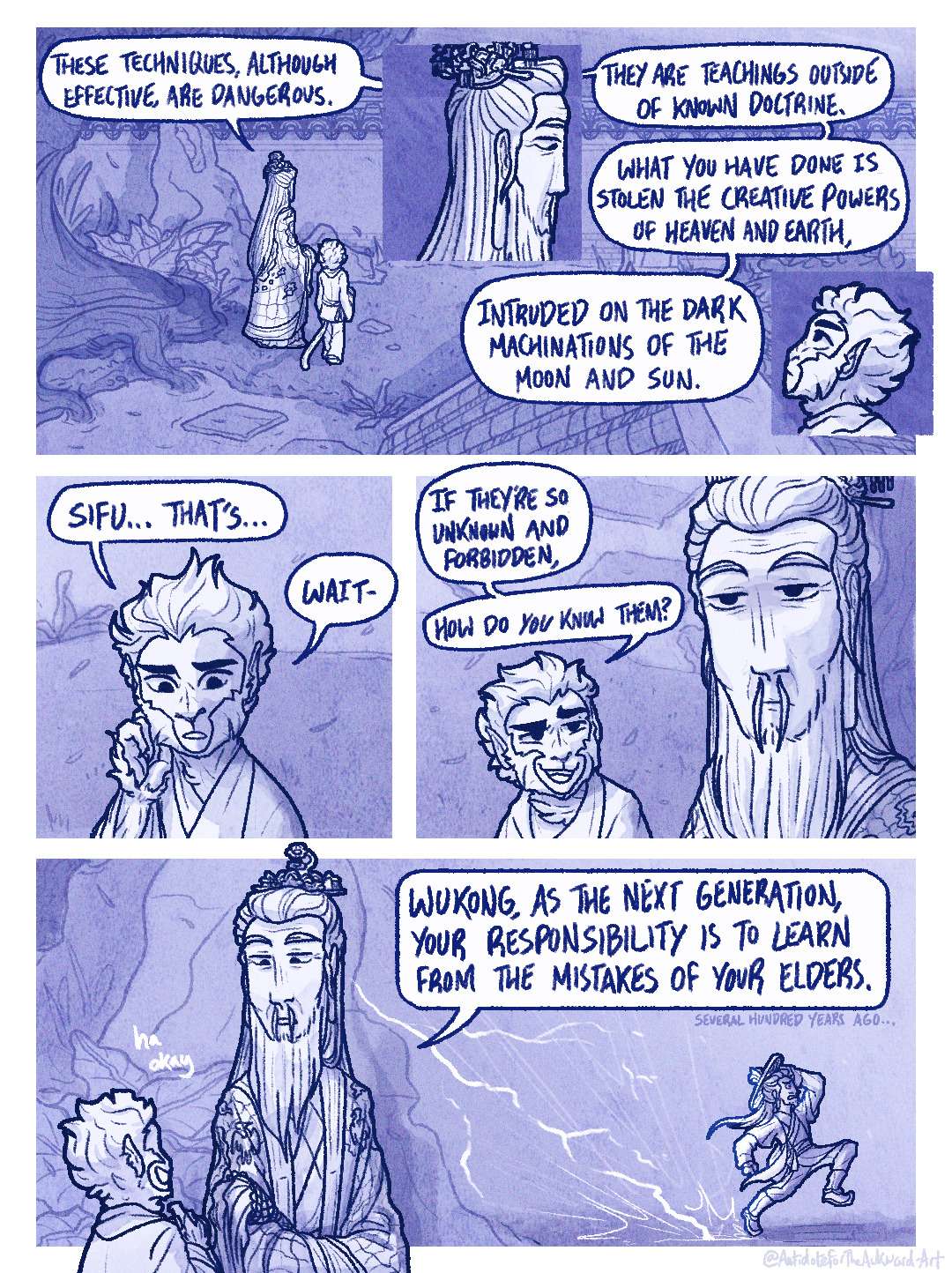
An artist known on Tumblr as “AntidoteForTheAwkward” has posted a wonderful comic (fig. 3) giving a reason for why the Patriarch Subhodi teachers Monkey the 72 transformations in order to avoid the heavenly calamities: personal experience.

Fig. 3 – AntidoteForTheAwkward’s comic (larger version). See the original post here.

Notes:

1) The eyes, ears, nose, mouth, genitals, and anus.

2) Wukong serves in heaven twice: first “for more than ten years” and second “for over a century” (Wu & Yu, 2012, vol. 1, pp. 150 and 166). Then he is punished to 49 days in Laozi’s furnace (Wu & Yu, 2012, vol. 1, p. 189). But the narrative revels “one day in heaven is equal to one year on Earth” (Wu & Yu, 2012, vol. 1, pp. 150 and 167). So this means his turn in the furnace lasts close to fifty years.

Sources:

Buswell, J., & Lopez, D. (2014). The Princeton Dictionary of Buddhism. Princeton, NJ: Princeton University Press.

Fryklund, K. I., Lewis, M. E., & Baptandier, B. (2021). The Lady of Linshui Pacifies Demons: A Seventeenth-Century Novel. Seattle, WA: University of Washington Press.

Kloetzli, R. (1983). Buddhist Cosmology: From Single World System to Pure Land: Science and Theology in the Images of Motion and Light. Oxford: Motilal Books.

Wu, C., & Yu, A. C. (2012). The Journey to the West (Vol. 1) (Rev. ed.). Chicago, Illinois: University of Chicago Press.

Wumen xiaoke, & Yanshui sanren (1636). Qianhou qiguo zhi [Annals of the Seven Kingdoms]. Retrieved from 

What Does Sun Wukong Look Like? A Resource for Artists and Cosplayers

Last updated: 05-03-2026

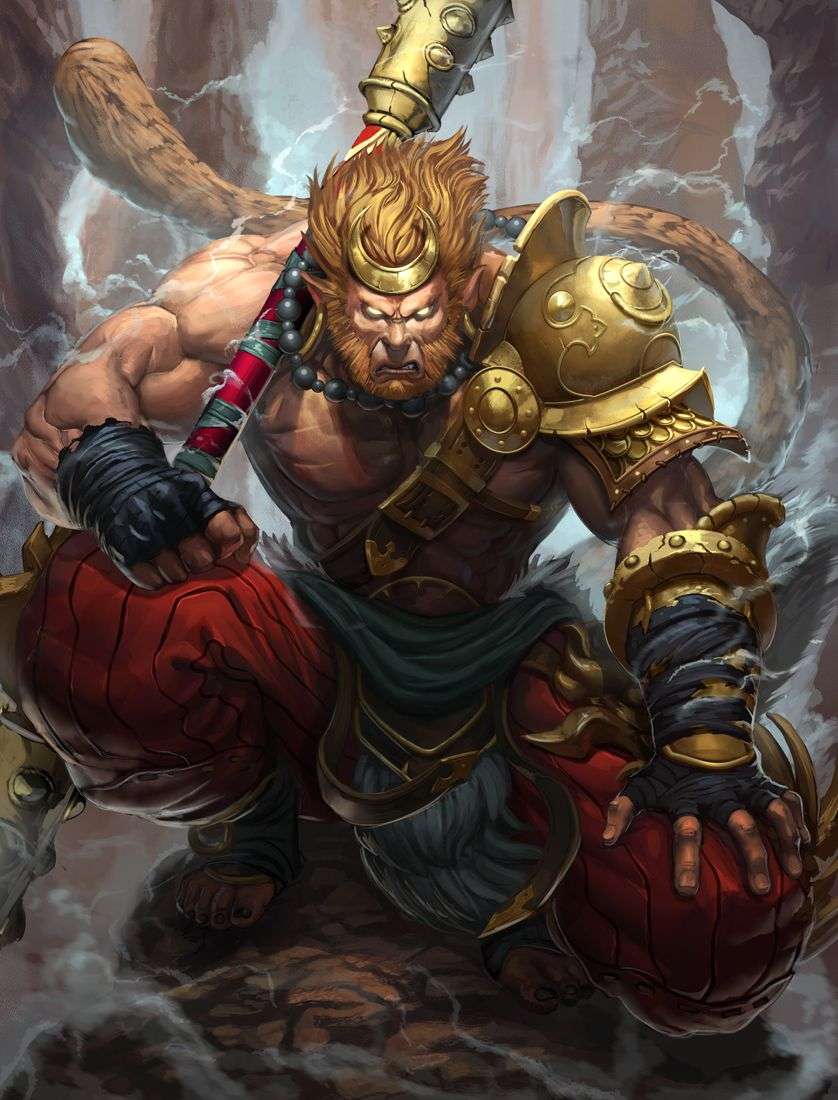
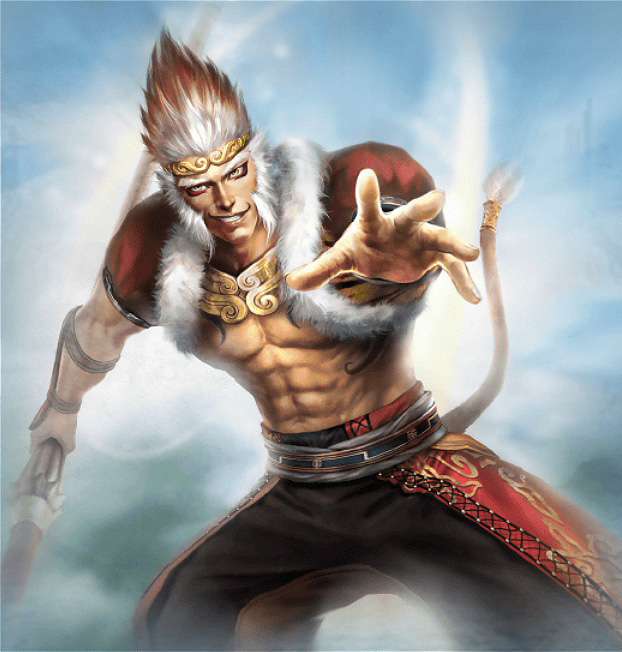
Type “Sun Wukong” into google images and you will be presented with an endless array of pictures that range from the familiar to the alien. A fanciful 1960s cartoon depiction of our hero sits to the left of a SMITE video game character with hulking muscles and a weapon more akin to a club than a staff. A toy version of Liu Xiao Ling Tong‘s much beloved 1986 TV portrayal sits above an anime character with blond hair and a shaved chest. It seems there are as many depictions of Wukong as he has transformations. But how do these myriad personas compare to his depiction in the novel, and who has produced the most authentic look? In this article I present the Monkey King’s literary description, along with ancient depictions that predate the novel. My hope is that the information will be both interesting and useful, especially for artists and cosplayers looking to make a more authentic design.

Table of Contents

1. Ancient Depictions

Some readers may be surprised to learn that stories about a “Monkey Pilgrim” (Hou xingzhe, 猴行者) go all the way back to the Song Dynasty (960–1279 CE). This predates the actual name Sun Wukong by centuries. The literary episodes we all know and love began life as oral tales that evolved over time and grew into an accepted storytelling cycle which started to solidify by the 15th century CE. [1] But the further we go back in time, the less familiar the recorded material becomes, and due to the memory-based nature of oral storytelling, [2] records for the earliest repertoires do not exist. Luckily, visual media from the Song survives, allowing us to see how artists of that time depicted the Monkey King.

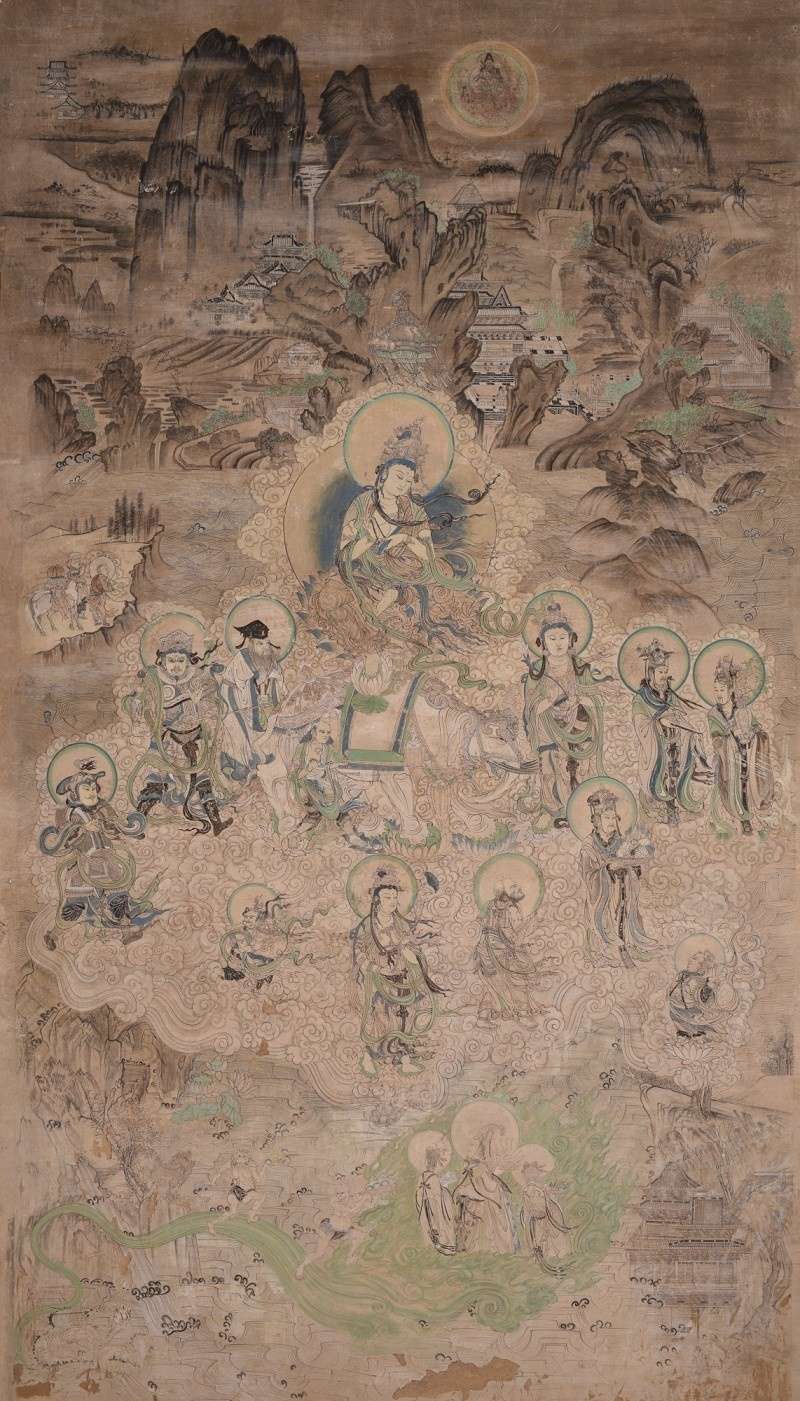
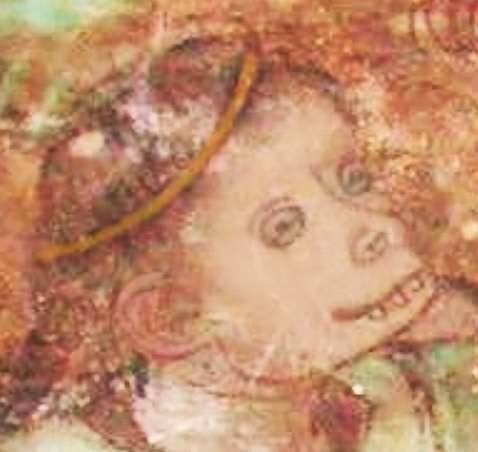
One example, Eastern Thousand Buddha Cave (Dong qianfo dong, 東千佛洞) number two in the Hexi Corridor of Gansu Province, contains a late-Xixia dynasty (late-12th or early-13th century CE) mural of Xuanzang worshiping Guanyin from a riverbank, while Monkey stands behind him tending to a brown horse. The latter is portrayed with a plain circlet on his head, a homely face with an overbite, waist length hair (or possibly wearing a fur on his back), and light blue-green robes with a red apron and brown pants and sandals (fig. 1 and 2). The depiction is less simian in appearance, yet not wholly human.

Fig. 1 – An almost complete version of the Eastern Thousand Buddha Cave no. 2 painting (larger version). Photo by National Geographic. Fig. 2 – A detail of Monkey and Xuanzang (larger version). See figure 14 for an enhanced detail of Monkey’s head.

A second example, Yulin Cave (Yulin ku, 榆林窟) number three in Gansu, contains a late-Xixia wall painting with similar imagery. Xuanzang is again worshiping from a riverbank, but this time the subject of adoration is Samantabhadra. We see Monkey lacks the fillet but wears a monk’s robe with wrapped socks and sandals. This time he is far more monkey-like in appearance, complete with furry arms (fig. 3 and 4).

Fig. 3 – An almost complete version of the late-Xixia Yulin Cave no. 3 painting (larger version). Monkey and Xuanzang can be seen standing on the river bank on the upper left side. Fig. 4 – A detail of the two figures (larger version).

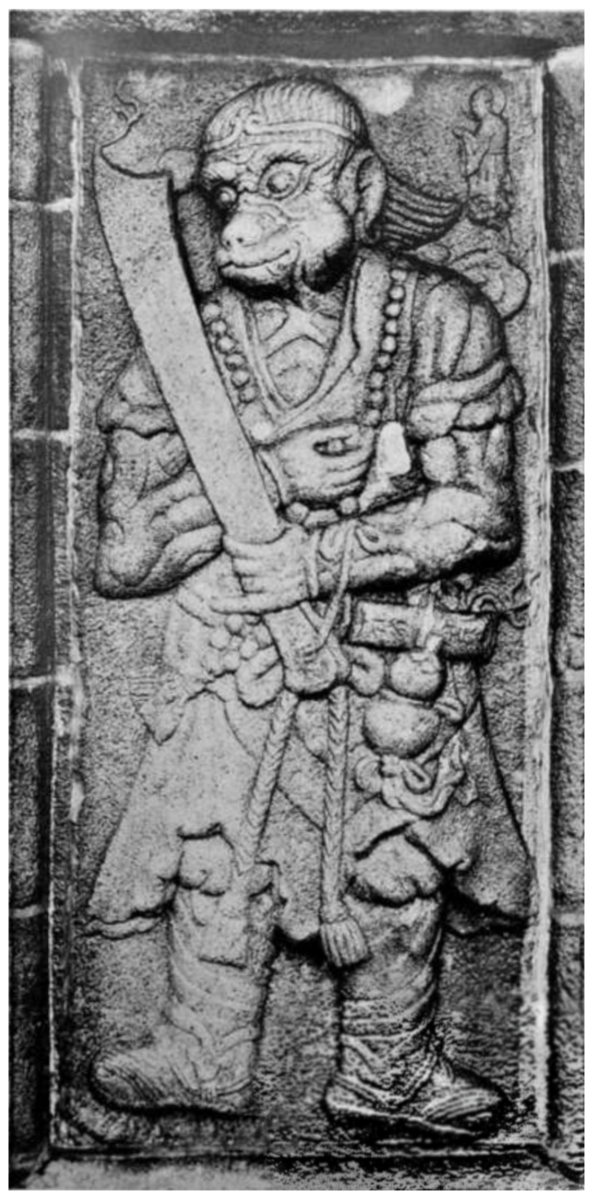
A third example is the 1237 CE stone relief carving from the western pagoda of the Kaiyuan Temple (開元寺) in Quanzhou, Fujian province. This muscular warrior wears a headband, earrings, bracelets, a rosary necklace, and arm bangles (all prescribed Esoteric Buddhist ritual accouterments), as well as a monk’s robe and sandals. He wields a broadsword in one hand, while the other thumbs the rosary at his chest. At his waist hangs a calabash gourd and a scroll of the Mahamayurividyarajni Sutra (Fomu da kongque mingwang jing, 佛母大孔雀明王經) (fig. 5) (Ecke & Demiéville, 1935). He has the large ears and protruding mouth of a monkey.

Fig. 5 – The monkey-headed warrior from Kaiyuan temple in Quanzhou, Fujian (larger version).

Writing in the 1250s, the Song poet Liu Kezhuang (劉克莊, 1187–1269) references our hero twice in his work. The second of two such references uses Monkey as a metaphor to describe the ageing 70-year-old’s appearance. A portion of the poem reads:

A back bent like a water-buffalo in the Zi stream,
Hair as white as the silk thread issued by the “ice silkworms”,
A face even uglier than Hou xingzhe [“Monkey Pilgrim”],
Verse more scanty than even He Heshi (Dudbridge, 1970, p. 46).

背傴水牛泅磵髪白氷蠶吐絲貌醜似猴行者詩痩於鶴何師

Ugliness is a subject I will return to several more times.

I mentioned earlier that the farther we go back in time the less familiar the recorded material becomes. Case in point is the The Story of How Tripitaka of the Great Tang Procures the Scriptures (c. late-13th century CE), the earliest published edition of Journey to the West. Despite referring to himself as the Monkey King, the Monkey Pilgrim is depicted as a white-clad scholar. Another difference is the fact that he fights with two different staves, one a ringed monk’s staff and the other an iron rod (these two would later be combined to create his signature weapon).

The majority of Song sources depict the Monkey Pilgrim as the size of an adult man but with the head of an ugly monkey. I think that these were likely influenced by early stage plays, which would obviously entail a human actor taking on the role.

2. What the Novel Says

2.1. Physical Appearance

The earliest descriptions of what Monkey looks like appear in chapter one. When he is first taken in by his teacher Subodhi, the sage tells him, “Though your features are not the most attractive, you do resemble a pignolia-eating macaque (husun [猢猻])” (Wu & Yu, 2012, vol. 1, p. 115). After he returns to the Mountain of Flowers and Fruit in chapter two, a demon king refers to Monkey’s height: “You’re not four feet tall” (Wu & Yu, 2012, vol. 1, p. 128).

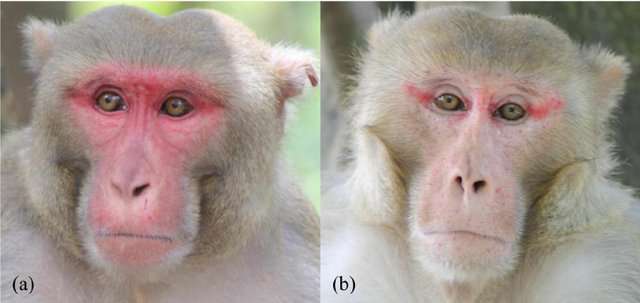
In chapter 7, Monkey is subjected to Laozi’s eight trigrams furnace as punishment for his crimes against heaven. He survives the celestial fire but the smoke inside “…reddened his eyes, giving them a permanently inflamed condition. Hence they were sometimes called Fiery Eyes and Golden Irises [Huoyan jinjing, 火眼金睛]” (based on Wu & Yu, 2012, vol. 1, p. 189). The anthropologist Frances D. Burton (2005) explains that his fiery eyes are “a characteristic he shares with the actual red-rimmed eyes of M. mulatta [the Rhesus macaque]” (p. 148). I further suggest that the hue of his eyes are based on the golden irises of macaques (fig. 6).

Fig. 6 – A comparison of Rhesus macaque males with red-rimmed eyes during mating season (left) and other times (right) (larger version). Original image from Dubue, Allen, Maestripieri, & Higham (2014, p. 5).

In chapter 20, the reader learns that Monkey’s head is bald (fig. 7). An old man asks him, “[W]hy did you shave your hair to become a monk?” (Wu & Yu, 2012, vol. 1, p. 395).

In chapter 21, a demon king steps out of his cave to fight Sun but is surprised by his small stature:

The old monster took a careful look and saw the diminutive figure of Pilgrim [Monkey]—less than four feet, in fact—and his sallow cheeks. He said with a laugh: “Too bad! Too bad! I thought you were some kind of invincible hero. But you are only a sickly ghost, with nothing more than your skeleton left!” (Wu & Yu, 2012, vol. 1, p. 408).

那怪仔細觀看,見行者身軀鄙猥,面容羸瘦,不滿四尺。笑道:「可憐,可憐。我只道是怎麼樣扳翻不倒的好漢,原來是這般一個骷髏的病鬼。」

(Thank you to Jose Loayza for bringing this passage to my attention.)

His bald head is referred to again in chapter 27:

“But ever since Nirvana delivered me from my sins, when with my hair shorn I took the vow of complete poverty and followed you as your disciple, I had this gold fillet clamped on my head…” (Wu & Yu, 2012, vol. 2, p. 24).

自從涅槃罪度,削髮秉正沙門,跟你做了徒弟,把這個金箍兒勒在我頭上…

(Thank you to Stanley Setiawan for bringing this passage to my attention.)

Fig. 7 – Reggie the baboon from Paignton Zoo (circa 2005). His slick head was the result of his mom’s “over-zealous” grooming. Look at those ears! He’s the wrong genus and species, but you get the general idea what Sun Wukong would look like wearing the golden fillet (larger version).

Wukong’s bald pate is once again referenced in chapter 34:

The fiend then gave the rope a tug and pulled Pilgrim down before he gave that bald head seven or eight blows with the sword. The skin on Pilgrim’s head did not even redden at all (Wu & Yu, 2012, vol. 2, p. 128).

那怪將繩一扯,扯將下來,照光頭上砍了七八寶劍。行者頭皮兒也不曾紅了一紅。

In chapter 44, the Monkey King’s appearance is revealed in a dream to a group of monks by the personification of the planet Venus:

A bumpy brow, and golden eyes flashing;
A round head and a hairy face with sunken cheeks;
Gaping teeth, pointed mouth, a character most sly;
He looks more strange than the thunder god
[…] (based on Wu & Yu, 2012, vol. 2, p. 276).

磕額金睛晃亮,圓頭毛臉無腮。咨牙尖嘴性情乖。貌比雷公古怪。

In chapter 49, a monster who barely survived a battle with Sun Wukong describes his appearance to a friend: [H]e has a hairy face and a thunder god beak … forked ears and broken nose. A monk with fiery eyes and golden irises (based on Wu & Yu, 2012, vol. 2, p. 353).

In chapter 58, Sun Wukong’s doppelganger is described as having matching features:

A hairy face, a thunder god beak,
Empty cheeks unlike Saturn’s; [3]
Two forked ears on a big, broad head,
And fangs that have outward grown (based on Wu & Yu, 2012, vol. 3, p. 105).

…也是這等毛臉雷公嘴,朔腮別土星,查耳額顱闊,獠牙向外生。

In chapter 67, an old man chastises Monkey for offending him:

You! Look at your skeleton face, flattened brow, collapsed nose, sunken cheeks, and hairy eyes. A consumptive ghost, no doubt, and yet without any manners at all, you dare use your pointed mouth to offend an elderly person like me!” (based on Wu & Yu, 2012, vol. 3, p. 242).

你這廝骨撾臉,磕額頭,塌鼻子,凹頡腮,毛眼毛睛,癆病鬼,不知高低,尖著個嘴,敢來衝撞我老人家?

In chapter 75, he once again tests the hardness of his bald head:

“You come over here,” said the old demon, “and act as my chopping block first. If your bald head can withstand three blows of my scimitar, I’ll let you and your Tang Monk go past. But if you can’t, you’d better tum him over quickly to me as a meal.”

When he heard this, Pilgrim smiled and said, “Fiend! If you have brush and paper in your cave, take them out and I’ll sign a contract with you. You can start delivering your blows from today until next year, and I won’t regard you seriously!” Arousing his spirit, the old demon stood firmly with one foot placed in front of the other. He lifted up his scimitar with both hands and brought it down hard on the head of the Great Sage. Our Great Sage, however, jerked his head upward to meet the blow. All they heard was a loud crack, but the skin on the head did not even redden (Wu & Yu, 2012, vol. 3, p. 373).

老魔道:「你過來,先與我做個樁兒,讓我盡力氣著光頭砍上三刀,就讓你唐僧過去;假若禁不得,快送你唐僧來,與我做一頓下飯。」行者聞言笑道:「妖怪,你洞裡若有紙筆,取出來,與你立個合同。自今日起,就砍到明年,我也不與你當真。」

那老魔抖擻威風,丁字步站定,雙手舉刀,望大聖劈頂就砍。這大聖把頭往上一迎,只聞扢扠一聲響,頭皮兒紅也不紅。

We can see from these quotes several features that appear again and again. These include a furry face with sunken cheeks, fiery eyes, a broken or flat nose, a beak-like mouth with protruding fangs, and forked ears (with long earlobes, per the 06-02-25 update). The author-compiler of the novel uses these features over and over again to remind the reader just how ugly the Great Sage is. These same features are also shared by the Rhesus monkey and other macaque species (fig. 8). The multiple mentions of the Thunder God‘s beak refers to the monkey’s prognathic (protruding) mouth, which houses large canine teeth. The quotes also let us know that Sun Wukong is less than four feet tall and very skinny (e.g. having “sallow cheeks” and being like “a consumptive ghost”) just like a monkey (fig. 9). It’s important to note that Sun is described as being bald numerous times throughout the novel. This should come as no surprise since he was required to take the tonsure as a Buddhist monk. Modern depictions often deviate from the features mentioned here (more on this below).

Fig. 8 – A Bonnet macaque bearing its teeth. Photo by Hank Christensen. The furry face with sunken cheeks, a broken (flat) nose, beak-like mouth with protruding fangs, and forked ears are easily discernible. Fig. 9 – The short, skinny body of a Rhesus monkey. Photo by mario_ruckh via flickr.

2.2 Clothing and Accessories

The novel mentions Sun Wukong wearing different attire throughout his roughly 1,100 years of life. Here I will focus on that which is closely associated with his traditional iconography.

The clothing most often associated with Monkey is his suit of armor. He receives it from the dragon kings of the world’s oceans in chapter three:

“I have here a pair of cloud-treading shoes the color of lotus root[, said Aoshun, the Dragon King of the Northern Ocean]. Aorun, the Dragon King of the Western Ocean said, “I brought along a cuirass of chainmail made of yellow gold.” “And I have a cap with erect phoenix plumes, made of purple gold,” said Aoqin, the Dragon King of the Southern Ocean (based on Wu & Yu, 2012, vol. 1, p. 137).

北海龍王敖順道:「… 我這裡有一雙藕絲步雲履哩。」西海龍王敖閏道:「我帶了一副鎖子黃金甲哩。」南海龍王敖欽道:「我有一頂鳳翅紫金冠哩。」

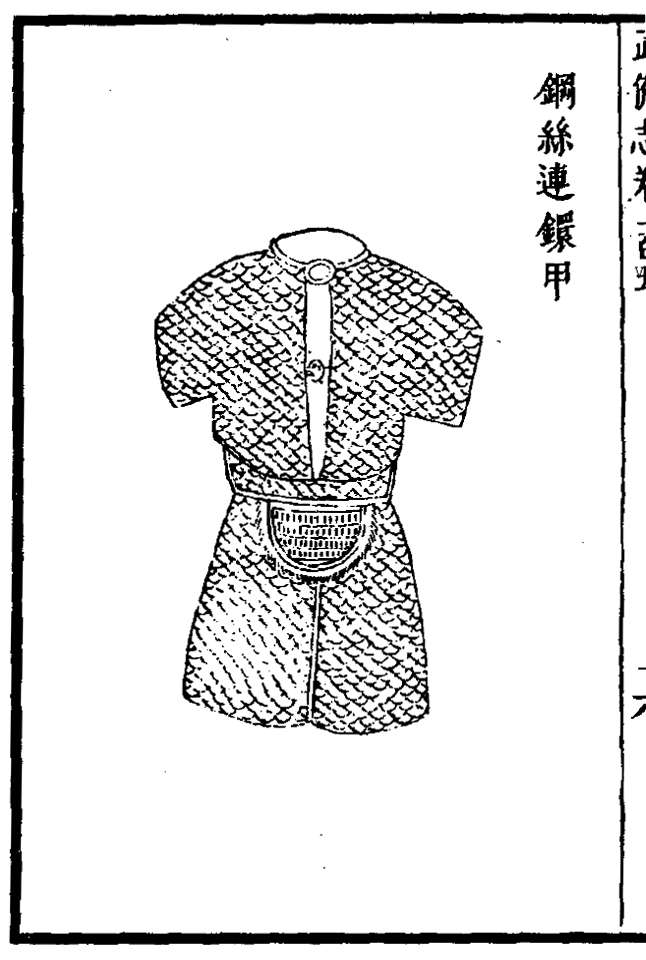
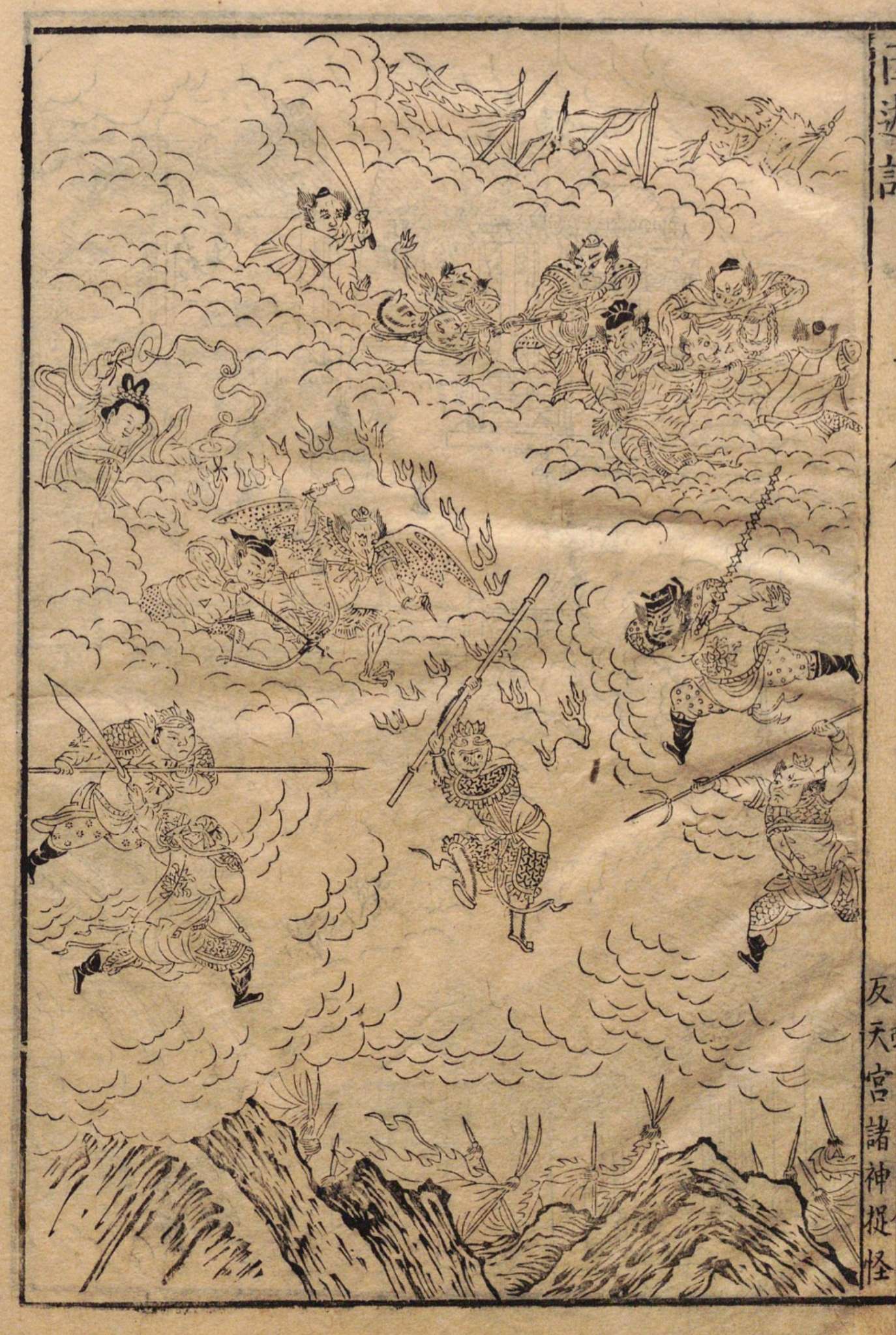
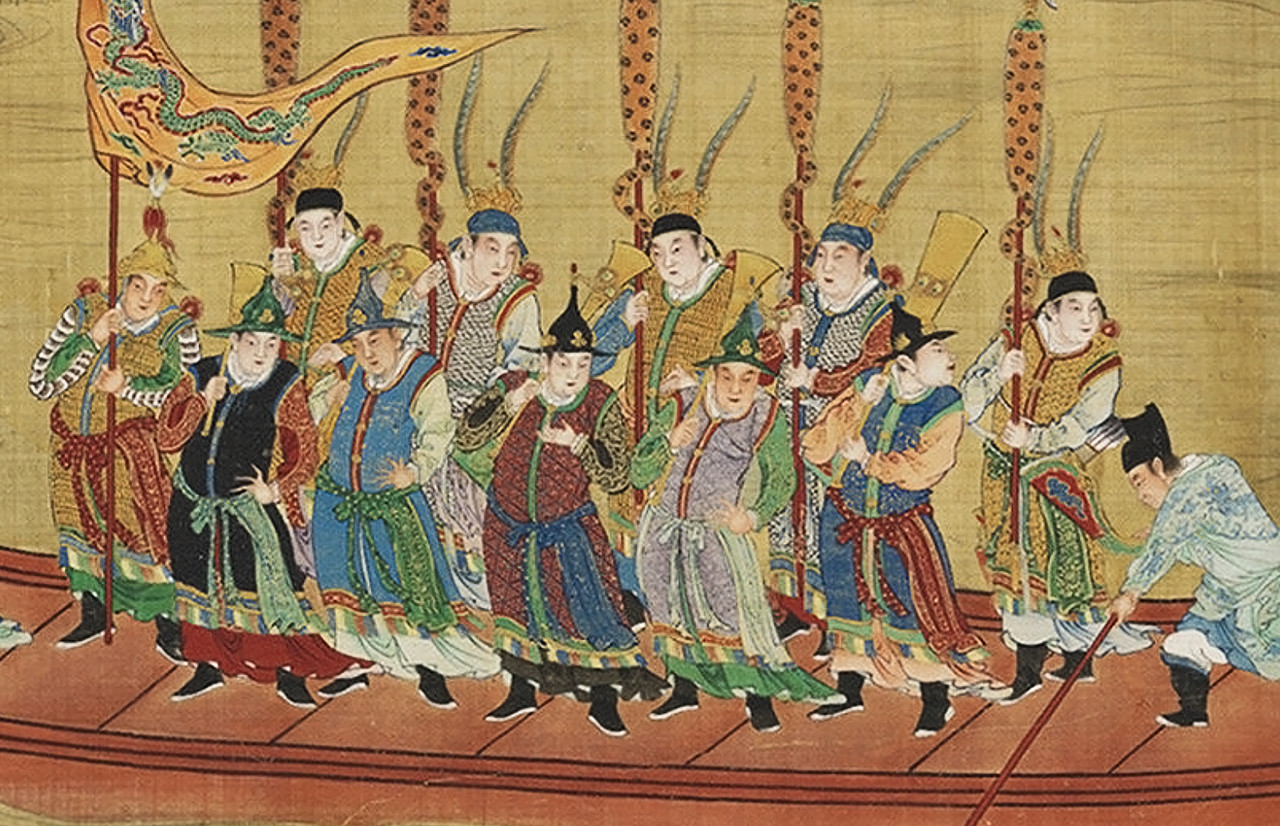
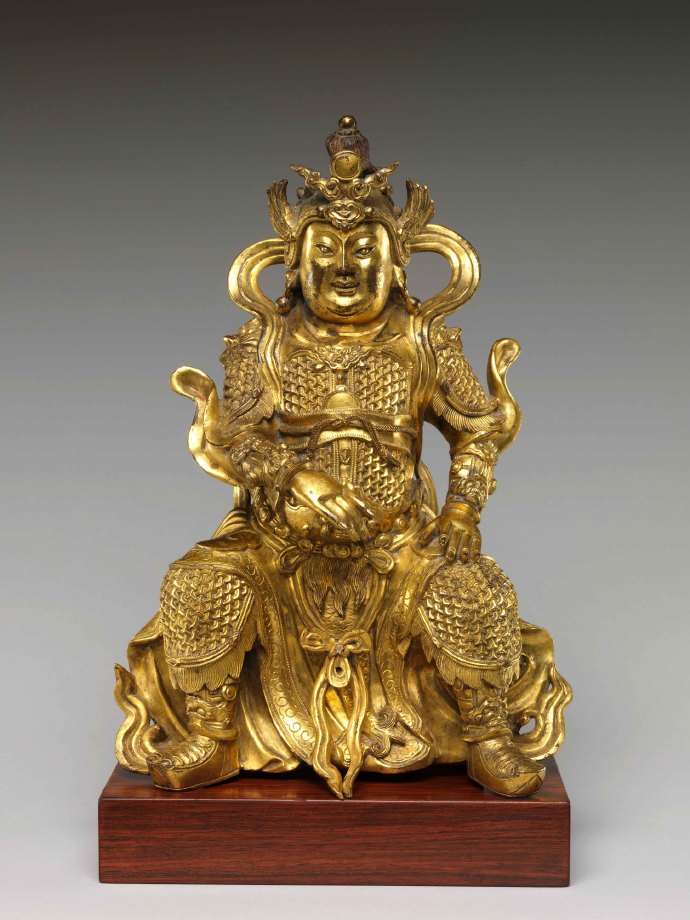
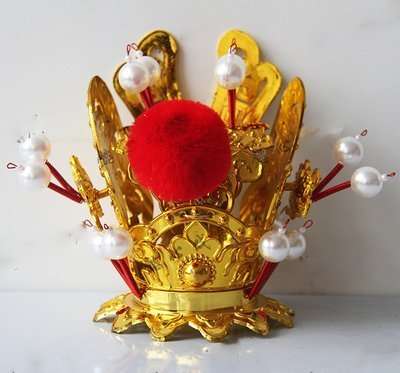
Those wanting to make a novel accurate suit should consult Ming-era chainmail (fig. 10). However, the oldest drawing of Wukong wearing armor that I’m aware of depicts him with “mountain pattern” armor (fig. 11). Combinations of mountain pattern armor and feather caps can be seen in the 16th century CE scroll The Emperor’s Return to the Capital (Rubitu, 入蹕圖) (fig. 12), showing it was part of historical military regalia and not just the purview of Chinese opera (fig. 13). Modern depictions of Monkey tend to portray him wearing mountain pattern armor with ornate beast elements on the shoulders and waist. Those wishing to replicate this kind of armor should consult Ming-era statues of Buddhist protector deities, such as Skanda or the Four Heavenly Kings (this blog is especially good) (fig. 14, for example). Modern “Purple Gold Caps” (zijin guan, 紫金冠) with lingzi (翎子) feathers should be used for Sun’s phoenix feather cap (fig. 15).

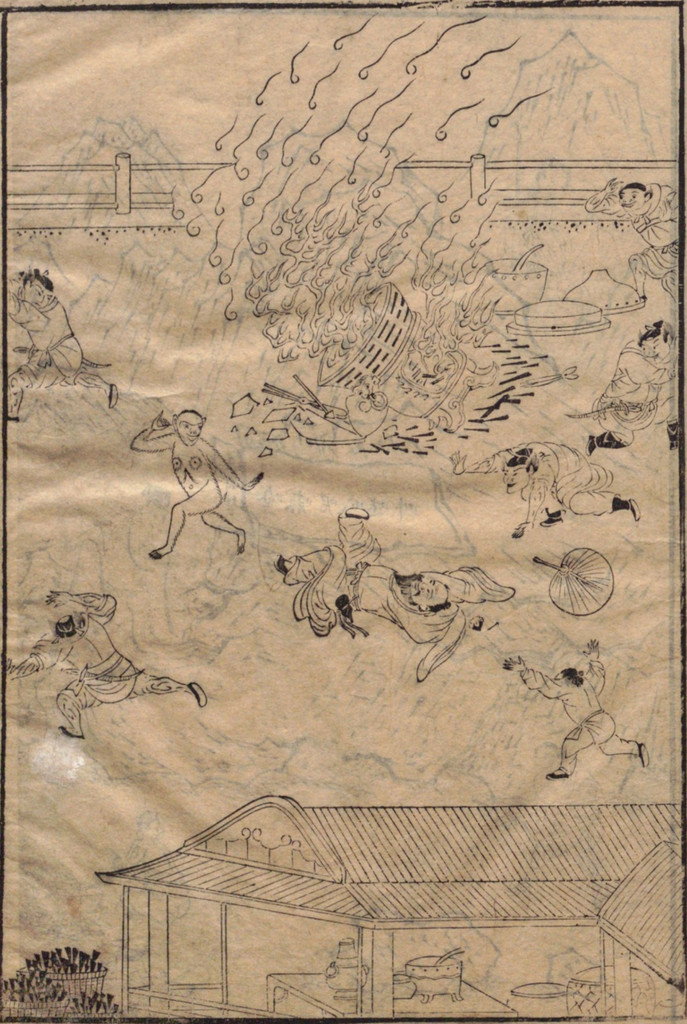
Fig. 10 – Ming chainmail from the Wubei zhi (1621 CE) (larger version). Fig. 11 – A woodblock print of Sun wearing mountain pattern armor while fighting the heavenly army (larger version). From Mr. Li Zhuowu’s Literary Criticism of Journey to the West (late-16th century CE, “Mr. Li’s Criticism” hereafter). Fig. 12 – A detail of halberd-bearing soldiers wearing mountain pattern armor and feather caps from The Emperor’s Return to the Capital (16th century CE) (larger version). Image enhanced slightly for clarity. Fig. 13 – Monkey as portrayed in Beijing Opera (larger version). Photo by TAO Images Limited via Alamy. Fig. 14 – A 16th century CE brass statue of Skanda (larger version). This blog has photos from all sides. Fig. 15 – A modern example of a Purple Gold Cap (larger version). 

Contrary to popular belief, Sun does not wear the armor throughout the entire story. Though not openly stated, the novel suggests it is stripped from the monkey when he is captured by heavenly soldiers in chapter six: “They bound him with ropes and punctured his breast bone with a knife, so that he could transform no further” (Wu & Yu, 2012, vol. 1, p. 186). Obviously the knife wouldn’t have punctured the magic armor. And after heaven fails to execute him in chapter seven, several celestial report:

“Your Majesty, we don’t know where this Great Sage has acquired such power to protect his body. Your subjects slashed him with a scimitar and hewed him with an ax; we also struck him with thunder and burned him with fire. Not a single one of his hairs was destroyed (emphasis added). What shall we do?” (Wu & Yu, 2012, vol. 1, p. 188).

萬歲,這大聖不知是何處學得這護身之法,臣等用刀砍斧剁,雷打火燒,一毫不能傷損,卻如之何?

Prior to his turn in Laozi’s eight trigrams furnace in chapter seven, the story again references the knife in Monkey’s breastbone, suggesting he is still naked: “Arriving at the Tushita Palace, Laozi loosened the ropes on the Great Sage, pulled out the weapon from his breastbone, and pushed him into [furnace]” (Wu & Yu, 2012, vol. 1, p. 189). One late-Ming woodblock print actually portrays him naked upon his escape from the furnace (fig. 16). Most importantly, after being released from his 600 plus-year-long imprisonment under Five Elements Mountain, Monkey is twice described in chapter 14 as being “completely or stark naked” (chi lin lin, 赤淋淋; chi tiao tiao, 赤條條) (Wu & Yu, 2012, vol. 1, p. 309). (See the 06-22-23, 09-12-23, and 05-03-26 updates below for more evidence.)

Fig. 16 – Wukong in his birthday suit escaping from Laozi’s eight trigrams furnace (larger version). From Mr. Li’s Criticism (late-16th to early-17th century CE).

The lack of clothing leads to his second most identifiable and longest-worn piece of attire, a tiger skin kilt (hu pi qun, 虎皮裙). After killing the beast in chapter 14:

He pulled off one strand of hair and blew a mouthful of magic breath onto it, crying, “Change!” It changed into a sharp, curved knife, with which he ripped open the tiger’s chest. Slitting the skin straight down, he then ripped it off in one piece. He chopped away the paws and the head, cutting the skin into one square piece. He picked it up and tried it for size, and then said, “It’s a bit too large; one piece can be made into two.” He took the knife and cut it again into two pieces; he put one of these away and wrapped the other around his waist. Ripping off a strand of rattan from the side of the road, he firmly tied on this covering for the lower part of his body (Wu & Yu, 2012, vol. 1, p. 310).

好猴王,把毫毛拔下一根,吹口仙氣,叫:「變!」變作一把牛耳尖刀,從那虎腹上挑開皮,往下一剝,剝下個囫圇皮來。剁去了爪甲,割下頭來,割個四四方方一塊虎皮。提起來,量了一量道:「闊了些兒,一幅可作兩幅。」拿過刀來,又裁為兩幅。收起一幅,把一幅圍在腰間。路傍揪了一條葛籐,緊緊束定,遮了下體

Monkey’s most recognizable accessory is the self-control-inducing golden fillet (jingu, 金箍; a.k.a. jingu, 緊箍, lit: “tight fillet”), which he is tricked into wearing as a punishment shortly after murdering six bandits in chapter 14. As noted above, the band predates the novel, appearing in the 12th to 13th century CE Eastern Thousand Buddha Cave number two painting. This piece depicts the headgear as a simple circlet devoid of any decoration (fig. 17). This matches the novel’s description of “a thin metal band” (jinxian, 金線) (Wu & Yu, 2012, vol. 1, p. 310). But as can be seen from the Kaiyuan temple pagoda relief, there also exists a version with a double curlicue pattern in the center of the forehead (fig. 18). This has come to be the most popular version used in modern media.

Fig. 17 – Detail of the Monkey Pilgrim’s fillet from Eastern Thousand Buddha Cave no. 2 (c. 12th to 13th century CE) (larger version). Image enhanced slightly for clarity. Fig. 18 – Detail from the Kaiyuan Temple pagoda relief (1237 CE) (larger version).

As for other attire, there exists one passage in chapter 58 that describes how Monkey’s doppelganger copied even his clothing:

His looks were exactly the same as those of the Great Sage: he, too, had a gold fillet clamped to his blondish-brown hair, a pair of fiery eyes with golden irises, a monk’s robe on his body, a tiger kilt tied around his waist, a gold-banded iron staff in one of his hands, and a pair of deerskin boots on his feet (based on Wu & Yu, 2012, vol. 3, p. 105).

模樣與大聖無異:也是黃髮金箍,金睛火眼;身穿也是綿布直裰,腰繫虎皮裙;手中也拿一條兒金箍鐵棒;足下也踏一雙麂皮靴

Two things about this passage require explanation. First, Yu (Wu & Yu, 2012) originally translated huangfa (黃髮) as “brownish hair” (vol. 3, p. 105). But huang (黃) traditionally means “yellow.” If you refer back to figures six, eight, and nine, you will see that macaque monkeys have a light brown to blond coloring, so I changed the translation to reflect this.

Second, he translates mianbu zhiduo (綿布直裰) as “silk shirt” (Wu & Yu, 2012, vol. 3, p. 105). However, a better translation is “silk cloth zhiduo robe.” The zhiduo robe is known colloquially in English as “Buddhist monk” or “Taoist monk” robes. Also called haiqing (海青), such garments reach almost to the ground and have long, broad sleeves. The robe is closed by a tie on the right side of the torso (fig. 19).

Woodblock prints of Monkey from the original 1592 CE Journey to the West vary from page to page, but one is pretty accurate. He wears the robe (with tied cuffs), the tiger skin kilt, and boots (fig. 20).

Fig. 19 – A zhiduo/haiqing robe (larger version). Image found here. These robes can be any number of colors. Fig. 20 – A woodblock print of Sun Wukong with his master, Tripitaka (larger version).

There is a distinct order in which Sun Wukong wears the aforementioned clothing and accessories: the armor, then the tiger skin, and then the golden fillet. However, many modern depictions portray Monkey wearing both the armor and headband. This is obviously anachronistic within the novel’s fictional story line. (Admittedly, though, this is not unique to the modern era. See figure 11 for a 16th century CE example.) Furthermore, many depictions dismiss the tiger skin kilt altogether.

2.3. The Staff

Monkey’s staff is first introduced in chapter three when he travels to the undersea palace of the dragon king to procure a divine weapon. There, he is directed towards a massive iron pillar:

Wukong girded up his clothes and went forward to touch it: it was an iron rod more than twenty feet long and as thick as a barrel. Using all his might, he lifted it with both hands, saying, “It’s a little too long and too thick. It would be more serviceable if it were somewhat shorter and thinner.” Hardly had he finished speaking when the treasure shrunk a few feet in length and became a layer thinner. “Smaller still would be even better,” said Wukong, giving it another bounce in his hands. Again the treasure became smaller. Highly pleased, Wukong took it out of the ocean treasury to examine it. He found a golden ring at each end, with solid black iron in between. Immediately adjacent to one of the rings was the inscription, “The As-You-Will Gold-Banded Staff. Weight: 17,560 pounds” (based on Wu & Yu, 2012, p. 135). [4]

悟空撩衣上前,摸了一把,乃是一根鐵柱子,約有斗來粗,二丈有餘長。他儘力兩手撾過道:「忒粗忒長些,再短細些方可用。」說畢,那寶貝就短了幾尺,細了一圍。悟空又顛一顛道:「再細些更好。」那寶貝真個又細了幾分。悟空十分歡喜,拿出海藏看時,原來兩頭是兩個金箍,中間乃一段烏鐵。緊挨箍有鐫成的一行字,喚做:「如意金箍棒,重一萬三千五百斤。」

A poem in chapter 75 describes how the staff is decorated with magic symbols. Part of it reads:

The rod of bin steel nine cyclic times refined
Was forged in the stove by Laozi himself.
King Yu took it, named it “Treasure Divine,”
To fix the Eight Rivers and Four Seas’ depth.
In it were spread out tracks of planets and stars,
Its two ends were clamped in pieces of gold.
Its dense patterns would frighten gods and ghosts;
On it dragon and phoenix scripts were drawn.
Its name was one Rod of Numinous Yang,
Stored deep in the sea, hardly seen by men
[…] (based on Wu & Yu, 2012, vol. 3, p. 375)

棒是九轉鑌鐵煉,老君親手爐中煅。
禹王求得號神珍,四海八河為定驗。
中間星斗暗鋪陳,兩頭箝裹黃金片。
花紋密佈鬼神驚,上造龍紋與鳳篆。
名號靈陽棒一條,深藏海藏人難見。

So we see the staff is depicted as a rod of black iron or steel adorned on both ends with a single golden ring and decorated along the body with astronomical charts and an inscription towards one tip listing the weapon’s name and weight. The literary description greatly differs from modern media which often portrays it as entirely gold or red in color.

Those wishing to replicate the inscription on the staff can use figure 21 as a template. The characters are presented in “Small Seal Script” (Xiao Zhuan, 小篆), which hails from the Qin Dynasty (221–206 BCE) when written Chinese was standardized by Emperor Qin Shihuang. Using this will give the staff a more ancient look. I used the template years ago to create a replica staff for an archaeology course in college.

Fig. 21 – The small script template for Monkey’s staff (larger version).

As for “the tracks of stars and planets,” I recommend using the Dunhuang or Suchow star charts.

3. Popular Depictions

The following two sections include a small sampling of what I consider to be the least and most accurate portrayals in past and modern media. These are presented in no particular order.

3.1. The Least Accurate

1) SMITE video game – He’s basically a bodybuilder with mutton chops (fig. 22). The design includes the aforementioned headband plus armor anachronism. Why is he wearing a gladiator-style pauldron? The original illustration is by Brolo on deviantart.

Fig. 22 – “Do you even lift?” Wukong (larger version).

2) Warriors Orochi video game – Mutton chops, frosted tips, and an outfit borrowed from Prince’s wardrobe (fig. 23). Words fail me.

Fig. 23 – “Backup Dancer” Wukong (larger version).

3) The Forbidden Kingdom (2008) – Jet Li has a blond ponytail, mutton chops, and a soul patch (fig. 24). Need I say more?

Fig. 24 – “L’Oréal Paris” Wukong (larger version).

3.2. The Most Accurate

1) Yoshitoshi (1839-1892) – This Japanese artist produced many woodblock prints of our hero. Take for example his Modern Journey to the West series completed between 1864 and 1865. He portrays Sun Wukong as a red-faced snow macaque, which aligns more with the literary description (fig. 25).

Fig. 25 – Wukong salutes Xuanzang (larger version).

2) Journey to the West: Conquering the Demons (2013) – This dark comedy depicts the Great Sage as a short, ugly primate wearing golden armor (fig. 26).

Fig. 26 – Wukong prior to becoming Xuanzang’s disciple (larger version).

3) Journey to the West (2011) – This television series is a faithful adaptation of the novel. Although the actor who plays Sun Wukong is normal height, he wears a full silicone mask and clawed gloves to give the character a more primate look. His golden chainmail armor and staff are more accurate too. The latter even includes decorations on the shaft (fig. 27).

Fig. 27 – Wukong during his rebellion against heaven (larger version).

4. Conclusion

The novel portrays Sun Wukong as an ugly, bald Rhesus monkey less than four feet tall. (Per the 06-02-25 update, he also has long earlobes.) His traditional literary attire includes a phoenix feather cap, golden chainmail armor, and lotus root-colored boots. Later, he wears a golden fillet, a silk monk’s robe, a tiger skin kilt, and leather boots. He wields a rod of black iron/steel adorned on both ends with a single golden ring and decorated along the body with astronomical charts and an inscription towards one tip listing the weapon’s name and weight.


5. Updates

Update: 02-02-21

As mentioned above, the novel describes Wukong being “less than four feet, in fact” (Wu & Yu, 2012, vol. 1, p. 408). I have made a chart comparing his height with that of a 6 ft (1.82 m) human man (fig. 28). This should serve as a good illustration for just how short our hero is.

Fig. 28 – Size chart (larger version).


Update: 01-23-22

I’ve written an article suggesting a mantra for the secret spell that causes Sun Wukong’s golden headband to tighten. Similar to the above article, I had artists and fanfiction authors in mind when I wrote it.

The Tightening Spell of Sun Wukong’s Golden Headband


Update: 03-07-22

I’ve written a response to a comment on one of my Youtube videos. It discusses Sun Wukong’s height.

How Tall is the Monkey King? – A Debate


Update: 06-22-23

I previously noted a 16th century CE woodblock print that shows Sun Wukong naked upon escaping Laozi’s furnace (refer back to fig. 16). A woodblock print from the original 1592 CE Journey to the West also depicts him in his birthday suit (fig. 29). This adds to the evidence that Monkey doesn’t wear his armor during the entirety of the journey.

Fig. 29 – A naked Sun Wukong flees the furnace (larger version). 


Update: 09-12-23

In addition, in chapter 22, Sha Wujing mentions having his armor stripped from his body just before his planned execution:

Jade Emperor grew mightily enraged;
Hands clasped, he faced his counsel on the left.
Stripped of my hat, my armor, and my rank,
I had my whole body pushed to the block (Wu & Yu, 2012, vol. 1, p. 425).

玉皇即便怒生嗔,卻令掌朝左輔相:卸冠脫甲摘官銜,將身推在殺場上。

This supports the suggestion that Monkey’s armor was removed before heaven tried to execute him.


Update: 04-27-24

Here is another colorful description of Sun Wukong’s face:

A bumpy, scabrous face, a pair of yellow eyeballs, a sunken forehead, and long, protruding fangs—he seemed virtually an overcooked crab with meat inside and bones outside! (based on Wu & Yu, 2012, vol. 2, p. 155)

七高八低孤拐臉,兩隻黃眼睛,一個磕額頭,獠牙往外生。就像屬螃蟹的,肉在裡面,骨在外面。

In addition, chapter 37 gives a more precise measurement for Monkey’s height. He first transforms into a “tiny monk about two cun tall” (二寸長的小和尚兒) (based on Wu & Yu, 2012, vol. 2, p. 172). He shortly thereafter grows even bigger when a prince makes fun of him:

Tripitaka pulled open the box’s cover; Pilgrim [Sun Wukong] leaped out and began to hobble all over the place. The prince said, “This little midget! What can he know?” When Pilgrim heard this remark about his size, he at once resorted to magic. Straightening up his torso, he grew about three chi and four or five cun instantly (emphasis added). “If he can grow that rapidly,” said the soldiers, highly startled, “it will only be a few days before he pierces the sky.” When Pilgrim reached his normal height, however, he stopped growing (emphasis added) (based on Wu & Yu, 2012, vol. 2, pp. 174-175).

三藏扯開匣蓋兒,那行者跳將出來,呀的兩邊亂走。太子道:「這星星小人兒,能知甚事?」行者聞言嫌小,卻就使個神通,把腰伸一伸,就長了有三尺四五寸。眾軍士吃驚道:「若是這般快長,不消幾日,就撐破天也。」行者長到原身,就不長了。

One chi (尺) is roughly 12.3 in or 31.8 cm, and one chi equals 10 cun (寸; a.k.a. “Chinese inches”) (Jiang, 2005, p. xxxi). One cun would be about 1.25 in or 3.18 cm. Two cun would therefore be 2.5 in or 6.36 cm. Growing the stated additional height would then put our hero at chi and 6 or 7 cun, which is roughly 3.86 ft or 1.176 m. This agrees with the aforementioned estimate of “not (or less than) four chi tall” (buman sichi不滿四尺) (Wu & Yu, 2012, vol. 1, pp. 128 and 408).


Update: 06-02-25

A reader reminded me that I forgot to list one of Monkey’s features: long earlobes. A poem in chapter four reads:

The gold cuirass worn on his body was brilliant and bright;
The gold cap on his head also glistened in the light.
In his hands was a staff, the golden-hooped rod,
That well became the cloud-treading shoes on his feet.
His eyes glowered strangely like burning stars.
Hanging past his shoulders were two ears, forked and hard (emphasis added).
His remarkable body knew many ways of change,
And his voice resounded like bells and chimes.
This BanHorsePlague with beaked mouth and gaping teeth
Aimed high to be the Equal to Heaven Sage.

身穿金甲亮堂堂,頭戴金冠光映映。
手舉金箍棒一根,足踏雲鞋皆相稱。
一雙怪眼似明星,兩耳過肩查又硬
挺挺身才變化多,聲音響喨如鐘磬。
尖嘴咨牙弼馬溫,心高要做齊天聖。(Source)

Long earlobes are a symbol of wisdom and longevity (fig. 30), so the description here might be symbolic of his immortality.

Fig. 30 – An image of the Daoist high god Laozi and his long earlobes (larger version). Image found here.


Update: 05-03-26

Regarding the evidence for Monkey’s lack of armor throughout the story, here is another ancient woodblock print showing him without clothes upon escaping the furnace (fig. 31). It is included among a brief cache of illustrations from The Book to Enlightenment of the Journey to the West (Xiyou Zhengdao Shu, 西遊證道書, 1663), a Daoist commentary on the novel.

Fig. 31 – Monkey escapes from the furnace (larger version). 

I should also note that a reader disagrees with the idea that Sun Wukong is bald. See their comments below.

Notes:

1) The 15th century CE zaju play Journey to the West contains many familiar episodes that would come to appear in the final novel.

2) See the introduction of Dudbridge (1970), for example.

3) Saturn (Tuxing, 土星; lit: “Earth Star”) is mentioned here because the stellar deity is known for having a thickly-bearded face (see figure one on this article). The reference is saying that Monkey’s sunken cheeks are hairless.

4) Yu’s (Wu & Yu, 2012) original translation says “thirteen thousand five hundred pounds” (vol. 1, p. 135). However, the Chinese version uses jin (斤), known in English as “catty.” The catty and pound are two different measures of weight, the former being heavier than the latter. Therefore, the English text has been altered to show this. The catty during the Ming Dynasty when the novel was compiled equaled 590 grams (Jiang, 2005, p. xxxi), so 13,500 catties would equal 17,560 lbs.

Sources:

Burton, F. D. (2005). Monkey King in China: Basis for a Conservation Policy? In A. Fuentes & L. D. Wolfe (Eds.), Primates Face to Face: Conservation Implications of Human-Nonhuman Primate Interconnections (pp. 137-162). Cambridge: Cambridge University Press.

Dudbridge, G. (1970). The Hsi-Yu Chi: A Study of Antecedents to the Sixteenth-Century Chinese Novel. Cambridge: Cambridge Univ. Press.

Dubue, C., Allen, W. L., Maestripieri, D., & Higham, J. P. (2014). Is Male Rhesus Macaque Red Color Ornamentation Attractive to Females? Behavioral Ecology and Sociobiology 68(7), 1-10. Retrieved from https://www.researchgate.net/publication/262066733_Is_male_rhesus_macaque_red_color_ornamentation_attractive_to_females

Ecke, G., & Demiéville, P. (1935). The Twin Pagodas of Zayton: A Study of the Later Buddhist Sculpture in China. Cambridge, Mass: Harvard University Press.

Jiang, Y. (2005). The Great Ming Code / Da Ming Lu. University of Washington Press.

Wivell, C.S. (1994). The Story of how the Monk Tripitaka of the Great Country of T’ang Brought Back the Sūtras. In V. H. Mair (Ed.), The Columbia Anthology of Traditional Chinese Literature (pp. 1181-1207). New York: Columbia University Press.

Wu, C., & Yu, A. C. (2012). The Journey to the West (Vols. 1-4) (Rev. ed.). Chicago, Illinois: University of Chicago Press.