Archive #18 – Demons, Gods, and Pilgrims: The Demonology of the Hsi-yu Chi (1985)

Campany (1985) discusses methods by which demons of Journey to the West (Xiyouji西遊記, 1592) move up and down the Buddho-Daoist cosmic hierarchy. A PDF of the paper can be accessed in section II below. 

I. Summary

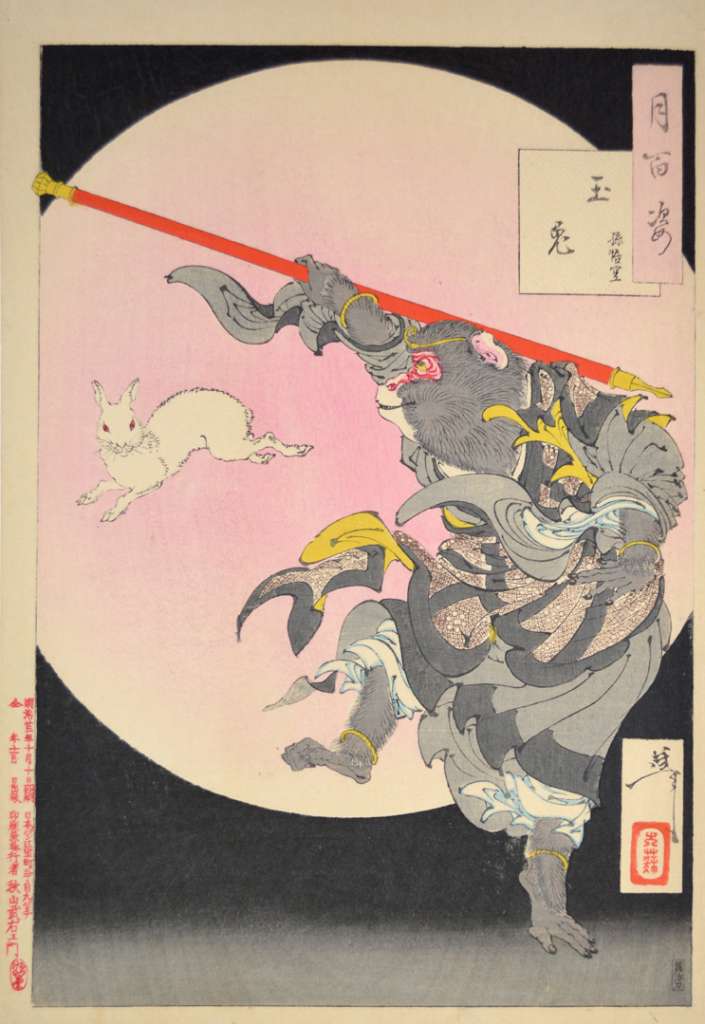
He begins by laying out the formulaic pattern of the episodes in which they appear: 1) a description of the demon’s mountain or aquatic home in poetic verse; 2) the initial encounter during which Tripitaka is tricked by the demon’s magic disguise; 3) the initial battle(s) between the disciples and the demon involving contests of magic and weapons, often described in poetic verse; 4) the battles end in a stalemate or defeat, and in the case of the latter the disciples are held captive in the demon’s stronghold; 5) Sun Wukong searches heaven and earth for the master of the demon, for the evil is usually a renegade celestial animal or protégé; 6) the demon is subdued by their master; and 7) the demon is either reintegrated or added to the cosmic order. An example of the former is the moon goddess’ jade hare (ch. 95) being taken back to heaven (fig. 1). An example of the latter is Red Boy (ch. 40-43) becoming a disciple of Guanyin.

There are two types of powerful demons who are subjugated by their master or an appropriate agent (e.g. a rooster god defeating a centipede demon). The first acquires magic powers via Daoist cultivation and, lacking celestial rank, causes havoc (think of Monkey as a young immortal). It is only through their subjugation and addition to the cosmic order that they achieve higher spiritual status. Apart from Red Boy, another example is the Black Bear spirit (ch. 16-17), who is subdued by Guanyin and installed as the guardian of her magic island. The second, being the most common, is one who previously held heavenly rank and was banished to earth. This exile is the result of breaking a rule, the need to burn off negative Buddhist karma, or because of a deficiency in their Daoist cultivation, requiring that they work their way back up the spiritual hierarchy. All five of the pilgrims fit into this category in one way or another.

Two types of demons are not subjugated by a heavenly master. The first is a lessor animal spirit who acts as a servant or soldier for a demon king. They attach themselves to this “upwardly mobile” demon because their master may aid in their own ascension via secrets of cultivation or the gift of longevity-bestowing food. Prime examples are all the (simian and non-simian) animal spirits who attach themselves to Sun Wukong after he establishes himself as a monster king. Such animal spirits are usually slaughtered after their master is defeated. The second are demons who peacefully cultivate themselves without endangering others. A prime example is the White Turtle of the Heaven-Reaching River (ch. 49 and 99) who cultivates human speech but still requires the intervention of the Buddha to evolve to human form.

Campany (1985) moves onto the hierarchy itself, noting how the level of a being’s attainment in spiritual cultivation does not affect their actual rank. This is because Daoism, Buddhism, and Confucianism are viewed differently in the novel. Demons who cause no harm during their cultivation are left alone, while violent offenders are subjugated and added to the hierarchy. And even if an animal spirit has Daoist powers, they are still considered inferior to humans, for they are born into a lower level of the six Buddhist paths of reincarnation. These spirits, however, can move up the hierarchy based on the amount of Buddhist merit, or “right fruit” (zhengguo, 正果), that they acquire through good deeds. Additionally, the Buddha and Guanyin are generally portrayed as higher in rank than Daoist gods, even the Jade Emperor, due to their “Dharma Power” (fali, 法力). Despite this, Sun Wukong is always quick to point out when a high-ranking god, Buddhist or Daoist, has violated Confucian norms. Therefore, the hierarchy presented in the novel follows the Ming-era syncretic emphasis on mental cultivation (xiu xin, 修心).

Fig. 1 – Yoshitoshi, Jade Rabbit: Sun Wukong, from the series One Hundred Views of the Moon, 1889 (larger version). From the Ronin Gallery.

The novel categorizes all beings as part of heaven, earth, or hell, each representing a realm within the hierarchy. Yet, it presents four ways to move between them: one, temporarily taking the form of a higher-ranking figure (human, immortal, deity, etc.) via magical transformation (hua, 化); two, reincarnating into a higher path (e.g. animal to human); three, attaining immortality via Daoist cultivation (or becoming human and then attaining immortality in the case of animal spirits); and four, being subjugated and added to the cosmic order.

The demons of Journey to the West are paradoxical on two counts: one, such beings are realistic, with detailed descriptions of their appearance, speech, and feelings, and yet they are often reduced to mere illusions brought forth by the unfocused or disquieted mind (Campany (1985) waits to explain this until the end); and two, they are evil from a Western perspective, but not wholly evil from an Eastern perspective. Their ambiguous nature is revealed by the Chinese hanzi used to describe them (e.g. yaojing 妖精; yaoguai, 妖怪), suggesting these beings are “undeveloped” or “bogus” and have yet to complete their cultivation. Additionally, the novel connects the demons and pilgrims with five elemental and yin-yang theory, each with its own creative/destructive or magnetic/repelling forces, suggesting a mutual relationship. This relationship is explained below.

Campany (1985) emphasizes that, while Tripitaka’s disciples are themselves former demons, what separates them from the others is “returning to the right path” (gui zheng, 歸正), or converting to Buddhism. As Daoists, they formerly cultivated the self, but as Buddhists they subsume the self to a larger whole by becoming Tripitaka’s disciples, thereby submitting to Buddhist law and cultivating Buddhist merit through their actions. This differs from demons who attempt to subsume the universe into themselves. They follow heretical practices (waidao, 外道) in pursuit of their continued self-cultivation, many seeking a “short cut” by attempting to eat Tripitaka. They don’t realize that accepting the Buddhist concept of “no self” would free them of their attachment to Daoist cultivation and that the accumulation of Buddhist merit would aid in their ascension through the cosmic hierarchy.

Powerful demons like Monkey who consider themselves greater than the universe would continue down the wrong path without the intervention of their master (or an appropriate agent) intervening to reintegrate or add them to the cosmic order. As Campany (1985) explains: “Submission of self is true cultivation of self” (emphasis in original) (p. 114). Therefore, demons rely on the pilgrims to redirect their cultivation to the right path of subsuming the self to a larger whole. An example is Lady Raksasi at the end of her story cycle.

Likewise, the pilgrims rely on the demons for several reasons: one, they help the pilgrims build Buddhist merit; two, via the concept of “non-duality“, the pilgrims learn there is no difference between themselves and the demons; and three, as mental obstacles, the demons help refine the pilgrim’s spiritual cultivation over the journey. This last point is particularly important as the illusionary nature of demons helps the pilgrims, especially Tripitaka, understand that all reality is empty (kong, 空). This is something that Wukong (悟空, “aware of emptiness”) reminds his master of throughout the quest.

Campany (1985) ends the paper by explaining the first paradox:

We now see that the juxtaposition of realistic descriptions of demons and reductions of them to miasma of the mind serves as a fascinating and entertaining contrapuntal expression of the central theme of the novel, the complementary relation and ultimate identity between illusion and enlightenment. Why do demons almost always appear according to the paradigm sketched in the first part of this paper? Why this repetition, this sameness, if not to underscore the miasmic quality of the demons even as narrative details convince us of their palpable sensory reality? Why do demons put up so stubborn a resistance, if not to impress upon us the arduousness of right cultivation? The consummate artistry with which the author bodies forth in his tale the relation between illusion and reality is itself a vehicle for the perception of this relation (Campany, 1985, p. 115).

II. PDF File


Disclaimer

This has been posted for educational purposes. No malicious copyright infringement is intended. Please support the official release.

Citation

Campany, R. (1985). Demons, Gods, and Pilgrims: The Demonology of the Hsi-yu Chi. Chinese Literature: Essays, Articles, Reviews (CLEAR), 7(1/2), 95-115. doi:10.2307/495195

Wu, C., & Yu, A. C. (2012). Journey to the West (Vol. 1) (Rev. ed.). Chicago: University of Chicago Press.

The Great Sage Detecting “Ping-Pong” Bottle

Last updated: 06-26-2021

Elliott (1955/1990) describes a curious glass bottle used in the worship of Sun Wukong in Singapore. Filled with “twelve o’clock water” and topped with a consecrated bulbous glass stem, it is said to make a pinging noise to signal the arrival of the monkey god in a home or temple:

There are, also, sometimes other pieces of apparatus, apart from images, which devotees like to keep in their own homes. An outstanding example is an article of equipment almost exclusively associated with the ‘Great Saint’ [大聖] which goes by the onomatopoeic name of ‘ping-pong’ [乒乓]. It consists of an ordinary bottle filled with ‘twelve o’clock water’, water drawn from a tap or well at midday. Into the neck is fitted a funnel-like piece of glass-ware open at the lower end of the funnel, which dips into the water but completely closes the top [fig. 1 and 2]. Everyday at noon, and sometimes at other hours as well, this apparatus gives off a sudden ‘pinging’ sound, as if bubbles were rising and forcing up the funnel in the bottle’s neck. When this occurs, the shen [神, god] is supposed to be revealing his presence in the temple or the home, and an immediate act of worship must be carried out by the persons there. These ‘ping-pong’ are invariably found in temples associated with the ‘Great Saint’. Devotees will purchase their own funnels and bring them to the temple for the dang-ki [童乩, spirit-medium] to consecrate them with a lick of his blood (p. 58).

Fig. 1 – The ping-pong bottle, a.k.a. “Great Sage bottle” (Dasheng ping, 大聖瓶), fitted with the bulbous stem, which is closed at the top and open at the bottom (larger version). Fig. 2 – A detail of the stem (larger version). Images found on google.

The device was also used in Hong Kong according to one personal account shared with me:

I believe the apparatus was used not just in Singapore. My mom told me that as a kid in HK in the 1940s/50s, her aunt also had something similar on the altar where she worshipped the [Great] Saint. And when the apparatus made a noise which signified his arrival, they would light up a joss stick.

I don’t know when the bottle was first associated with Sun Wukong, but the above information points to its active use in Asia as far back as the 1950s. It’s my understanding that the bottle is a rarity in modern practice, suggesting it flourished prior to mid-century.

Why the bottle was associated with the Great Sage is also a mystery to me. But the significance of twelve o’clock water may provide some clues. Astrological theory associates noon with wu (午), the seventh of twelve earthly branches, which is in turn identified with horses, the heart, fire yang, the summer solstice, and the direction south (Wu & Taylor, 2014, pp. 133-134). Readers may remember that Sun Wukong is appointed the keeper of the heavenly horses (bimawen, 弼馬溫) in chapter four of Journey to the West (Wu & Yu, 2012, pp. 148-149). Additionally, Chinese philosophy considers the heart to be the seat of the mind (xin, 心; alternatively translated “heart-mind”). This is important as Sun is called the “Mind Monkey” (xinyuan, 心猿; alternatively translated “Mind Ape”), which is a Buddho-Daoist concept denoting the disquieted, transient thoughts that keep man trapped in Samsara. Examples include the titles for chapters seven (“From the Eight Trigrams Brazier the Great Sage escapes; Beneath the Five Phases Mountain, Mind Monkey is still”) and fourteen (“Mind Monkey returns to the Right; The Six Robbers vanish from sight”). 

(Before I continue, I must warn that using the 16th-century novel as a source for modern folk religion surely overlooks beliefs that I am not aware of. The above info should therefore be considered purely speculative.)

A naturalistic explanation for the pinging noise is air escaping from the bottle due to changes in atmospheric pressure. However, I’d like to speculate on a possible esoteric reason. As mentioned above, noon is identified with fire yang, which is considered the height of yang power. In fact, the hours before wu and after zi (子, midnight) are considered the best time to practice Daoist exlixir cultivation. [1] And since heaven is the embodiment of yang, [2] it’s possible worshipers believe water collected at noon is infused with strong yang energy, thereby giving it the ability to detect the presence of celestial deities like the Great Sage.


Update: 08-11-20

J.D. Martinsen contacted me and noted that “drawing noon water” (da wushi shui, 打午時水) is a common practice in coastal China during the Dragon Boat Festival. The water is apparently known for its demonifugic and medicinal properties. In fact, this custom is even practiced in Taiwan where there is a common saying: “A sip of noon water is better than three years of herbal medicine” (wushi shui yin yi zui, jiao hao buyao chi san nian, 午時水飲一嘴,較好補藥吃三年) (Chen, 2011, p. 210). Therefore, this association with warding malevolent influences/sickness may explain why Sun Wukong is connected with noon water. He is after all the exorcist par excellence, as well as a healer.


Update: 06-23-21

An informant from Singapore, who is the head of a monkey god temple, shared with me some wonderful folk knowledge about the ping-pong bottle. The words below are gently edited for readability:

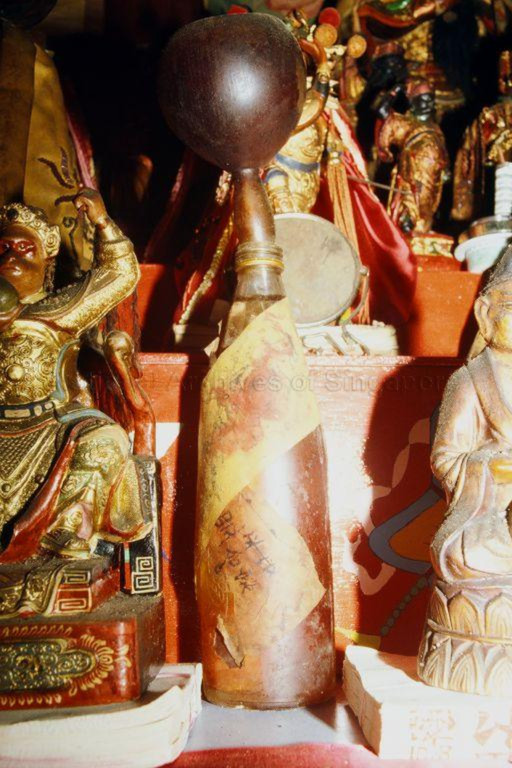
He fl[ies] at a high speed which generates high heat [and] causes the ping pong to sound. The water inside the bottle where you place the ping pong [is] changed on 五月初五 (端午節) [i.e. the Dragon Boat Festival]. Every year, the replacement water is collected from your rain water. The former water will [be] use[d] to bath[e] to purify our well-being. I have pour[ed] it into a large [pail]. And bottle it and give [it] to devotees to bath[e]. Talisman[s are] issued [when we change the water at noon] (fig. 3), [we] will paste [them] on the bottle on 端午節. [W]hen urgent or danger[rous] matters [happen], we will use the [ping pong holy] water to ward off bad omen[s].

My informant said some of this knowledge was revealed to him by the monkey god.

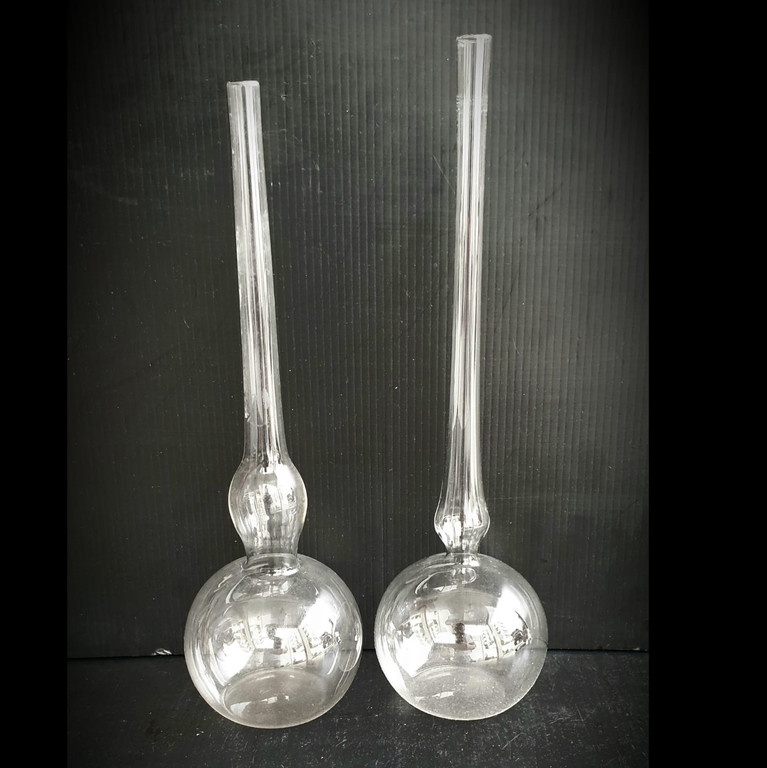
I was also told by a collector-seller that there are different-sized glass stems (fig. 4), though he believes their hand-made nature means no two are exactly the same. My informant states the stems with the “larger diameter will sound louder” when the Great Sage arrives.

Fig. 3 – Talismans on a ping-pong bottle (larger version). Photo taken at the Wallich Street “Tai Seng Yah” (Dasheng ye) temple in Singapore during the 1970s. Courtesy of Ronni Pinsler of the BOXS project. Fig. 4 – The different sizes of ping-pong stems (larger version). Photo from a private collector.


Update: 06-26-21

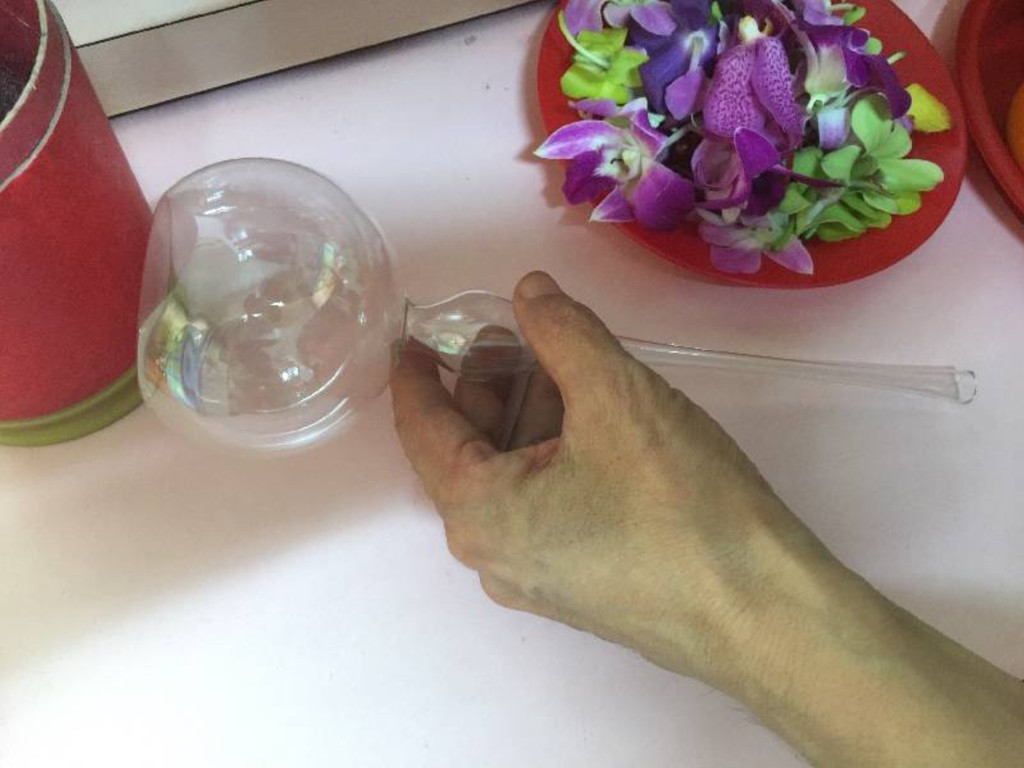
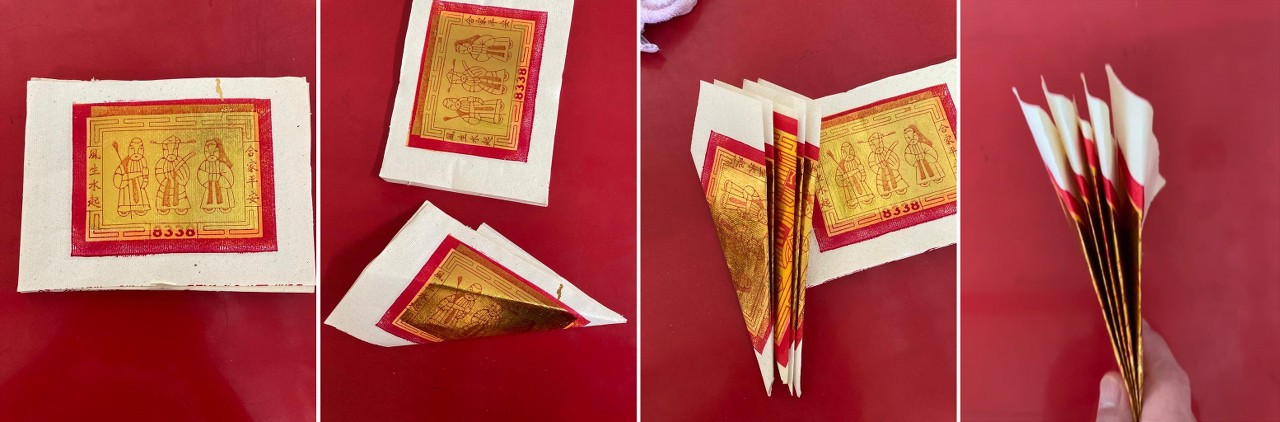
My informant tells me that a beer bottle can be used to hold the pingpong stem. It must be washed and all labels removed. The preparation for the stem is a little more involved. The stem must be washed along with five kinds of flowers. The types of flowers do not matter, but no white flowers are permitted. Also, slices of green lemon can be included, but no yellow lemons are permitted. This washing must be done on the first or the 15th of the lunar month. The holy water is gathered in a pail between 11am and noon from rain the day before the Dragon Boat Festival, for it is believed that it always rains on this day. This water is poured one index finger length from the rim. This ensures it will not overflow once the pingpong stem is inserted. Then triangle-folded joss paper (jin zhi, 金紙) (fig. 5 to 8) is waved three times around the pingpong (nuo pingpong, 挪乒乓) while prayers are said. Finally, the paper is left atop the pingpong bulb for a given time. The pingpong bottle must be placed next to a statue of the Great Sage.

Fig. 5 to 8 – The process of folding the joss paper into triangles (larger version). Photos by my informant.

Notes:

1) This is noted as early as the fourth-century CE work Wondrous Record of the Golden Casket on the Spirit Immortals’ Practice of Eating Qi (Shenxian shiqi jin’gui miaolu, 神仙食氣金櫃妙錄) (Kohn, 2008, p. 84).

2) See, for example, Clearly (2003), p. 391.

Sources:

Chen, X. (2011). Taiwan li shi shang de yi min yu she hui yan jiu [The History of Taiwanese Immigration and Social Studies]. Beijing: Jiu zhou chu ban she.

Cleary, T. F. (2003). The Taoist Classics: The Collected Translations of Thomas Cleary, Volume Two. Boston, Mass: Shambhala.

Elliott, A. J. (1990). Chinese Spirit-Medium Cults in Singapore. London: The Athlone Press. (Original work published 1955)

Kohn, L. (2008). Chinese Healing Exercises: The Tradition of Daoyin. Honolulu: University of Hawaiʻi Press.

Wu, C., & Yu, A. C. (2012). The Journey to the West (Vol. 1) (Rev. ed.). Chicago, Illinois: University of Chicago Press.

Wu, Z., & Taylor, W. K. (2014). Heavenly Stems and Earthly Branches – TianGan DiZhi: The Heart of Chinese Wisdom Traditions. London: Jessica Kingsley Publishers.

Story Idea: Sun Wukong Animated Music Short

From time to time I like to post a fun blog not directly related to (though sometimes informed by) my research. Past examples can be seen here and here. Regular articles will resume after this entry.

Back in 2010 I dreamed up an animation based around a modern adaptation of “In the Hall of the Mountain King” by the Finnish operatic metal band Apocalyptica. The original version of the song was composed by Edvard Grieg for Henrik Ibsen‘s play Peer Gynt in 1876. The play is based on an old Norwegian tale about a man named Per Gynt who travels the land rescuing maidens from the clutches of trolls. The music is used during the play to enhance the drama and action of a particular scene where Peer attempts to hide and then escape from the hall of the mountain king. This plot obviously shares many similarities with Journey to the West. Sun Wukong spends the majority of the novel rescuing Tripitaka from the mountain strongholds of various demon kings.

The animation would be completely silent to accommodate the music, the various notes acting as dialogue or sound effects. Below, I present the story with time stamps to indicate when the events are to take place. I recommend reading the material once, then listening to the song, and finally reading and listening in unison to better understand. You can possibly use the stopwatch on your phone and start it the same time as the music.

Apocalyptica’s arrangement of “In the Hall of the Mountain King”.

0:00 – 0:29 – The scene opens in a cave where a mountain demon is celebrating news that the Tang monk is headed to his territory. An imp runs in to inform him that Tripitaka has been spotted in the mountain with only two of his three disciples.

0:30 – 1:03 – The demon king leaves the cave and silently spies on them from afar as Tripitaka on his dragon-horse, Zhu Bajie and Sha Wujing walk down a path through the mountains. When it’s obvious that Wukong is off running errands for his master, the demon magically disguises himself as an elderly man or woman and waits for them, drawing them near.

  • The notes in this section sound like someone is sneaking around.

1:04 – 1:42 – He reveals his true form, grabs the monk, and orders his imps to attack Zhu Bajie and Sha Wujing. The two fight but are over powered by sheer numbers.

  • The change up from the sneaky notes is when he reveals his true self.
  • Each of the high-pitched notes here represent imps attacking the disciples in wave after wave, coming faster and faster until they are overwhelmed.

1:43 – 1:52 – The monk calls out Sun Wukong’s name. I imagine the words would come out as Chinese characters that drift through the air to Monkey’s ear. He forcefully turns his head towards the sound, his eyes flash with a fiery light.

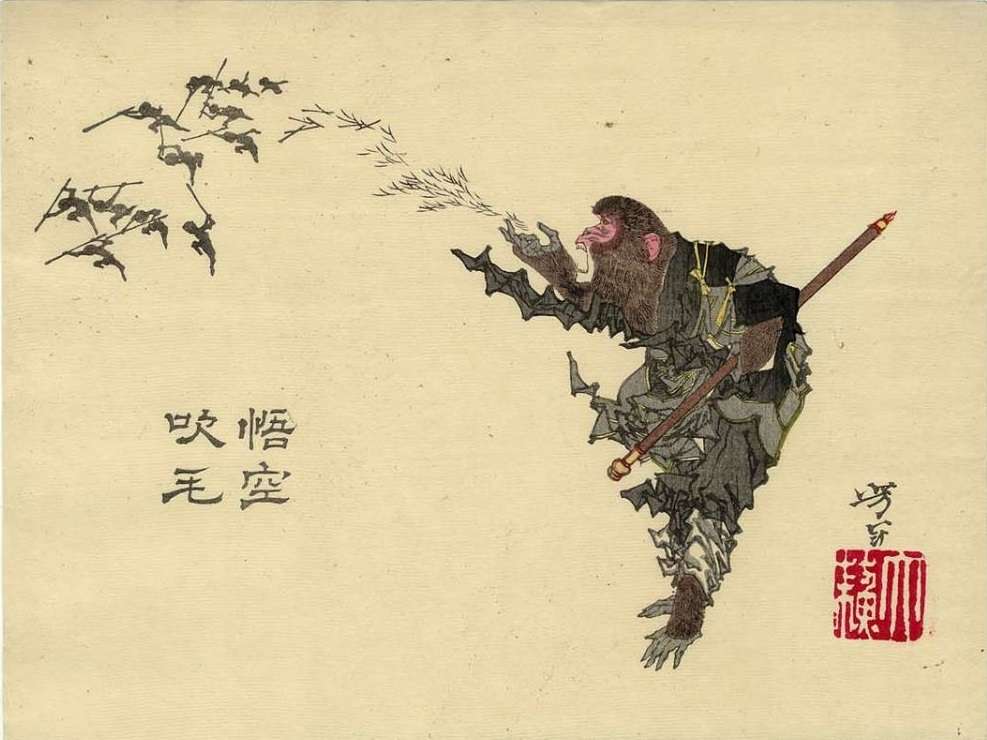
1:53 – 2:20 – Wukong lands in an explosion of multicolored clouds and light. He waves his staff in front of him, thus forcing the imps away from his brothers. He then pulls out magic hairs and blows on them, creating an army of monkeys to do battle with the imps. The monkeys do all manner of things to the imps while Wukong rolls around on the ground in laughter.

  • 1:58 – Wukong creates the army of monkeys. Also, notice how a few seconds in the notes sound almost like monkeys.

sc137582 - small

“Wukong Blows His Hair” (c. 1882) by Yoshitoshi (larger version).

2:21 – 2:26 – The imps run away in defeat. Monkey stands outside the cave screaming and hopping up and down while shaking his fist in order to entice the mountain demon outside.

  • 2:23 – Double hop while shaking fist and screaming obscenities. The words come out as Chinese characters. They could be “coward” or something demeaning like that. The particular sound of “bwah bwah” in the song at this point is when he screams and hops.
  • 2:26 – Second double hop, same.

2:27 – 2:31 – His trick works as the demon king pokes his head out of the doors and shakes his fist back at Wukong.

  • 2:28 – First fist shake and screams obscenity. Same “bwah bwah” sound but with lower register.
  • 2:31 – Second fist shake, same.

2:32 – 2:50 – The demon emerges with his armor and weapon ready to fight and the two begin their bout. The earth shakes, mountains crumble, forests tumble, and the gods shiver in the realm above.

2:51 – 3:08 – Both take to their clouds, the warriors circling each other, rising higher and higher into the heavens, leaving a double helix-like pattern in their wake.

3:09 – 3:12 – The demon makes one last attack with his weapon. Wukong disappears in a puff of smoke, only to reappear instantly in his 100,000-foot-tall cosmic form, breathing fire from a mouth full of tusk-like teeth, his eyes like the sun and moon. The demon realizes he is not Wukong’s match and flees in terror.

cosmic transformation

Monkey performs the cosmic transformation for his children (larger version). Original artist unknown. Found on this article.

3:13 – 3:16 – Wukong reverts to his original form and rockets towards earth with his staff held high.

3:17 – 3:21 – He lands a mortal blow to the demon and stands over his remains.

  • 3:17 – The exact moment the demon is turned into hamburger.

3:22 – 3:24 – Wukong kicks open the double door of the mountain stronghold. The view would be from the inside out (i.e. it’s dark and then the doors are kicked inward, revealing the dark silhouette of Monkey holding his staff against a bright background).

  • The “boom” at the end is when he kicks in the doors.

After the song stops, the animation silently ends with them all continuing their journey to India. The entire animation would probably be around three minutes and forty seconds long. I would really love to work with an animator to make this a reality.

Archive #16 – Sun Wukong and Chinese Medicine

Note: My blog is not monetized, so I am not making any money from this post. If you enjoyed the digital version, please, please, please support the official release.

Last updated: 09-22-2024

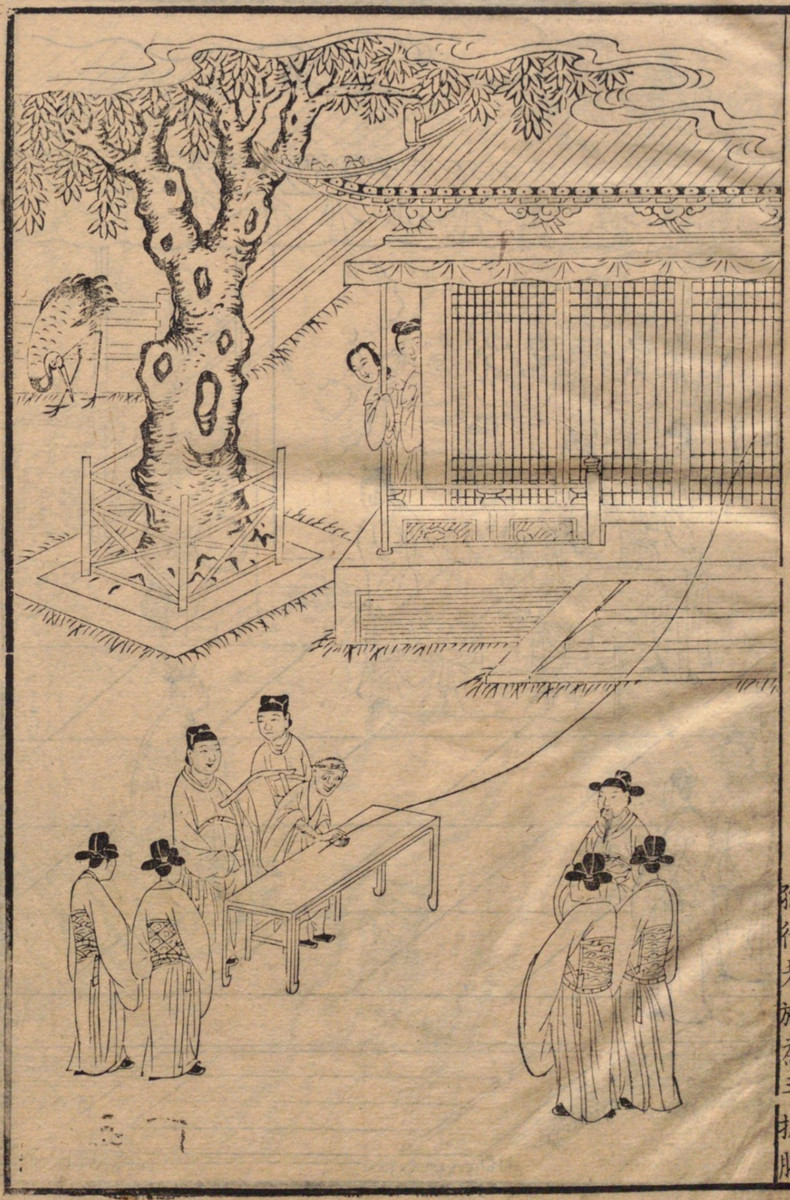
I noted in my previous article that medicine was among the skills acquired by Monkey while training under the Buddho-Daoist sage, Patriarch Subodhi. In Journey to the West (Xiyouji西遊記, 1592) chapters 68 to 69, Monkey works to diagnose the long-standing malady of the Scarlet-Purple Kingdom emperor. But due to the immortal’s monstrous appearance, Sun is forced to analyze the ruler from afar, using three magic hairs-turned-golden strings to measure the vibrations of the pulse from three locations of each forearm. He deduces that the illness is caused by fear and anxiety over the loss of the monarch’s queen, who had been kidnapped by a demon. Monkey then concocts three pills from a secret recipe and administers the elixir with dragon king saliva. The medicine causes the emperor to pass an obstruction in his bowels, thus restoring the natural qi flow in his body and curing him of his sickness.

Fig. 1 – Monkey uses golden threads to analyze the emperor’s pulse (larger version). From Mr. Li Zhuowu’s Literary Criticism of Journey to the West (late-16th century).

Table of Contents

1. Examples of Sun’s Medical Knowledge

1.1. Chapter 68

Monkey first assuages the fears of court officials by reciting a poem explaining the proper procedure for analyzing a patient:

Most mysterious is the physician’s art;
His mind must ever be alert and keen.
To look, listen, ask, and take-these four things If one is missing, his craft’s not complete.
One, we look at the patient’s complexion:
Is it moist, dry, fat, or thin in waking or sleep?
Two, we listen for clear or turbid voice
When he speaks lucid or frenetic words.
Three, we ask for the ailment’s cause and length.
For how he eats, drinks, and eliminates.
Four, we scan the conduits by taking the pulse,
To learn how submerged or floating in and out.
If we do not look, listen, ask, and take, In this life his ailment will ne’er him forsake!” (based on Wu & Yu, 2012, vol. 3, p. 268).

醫門理法至微玄,大要心中有轉旋。
望聞問切四般事,缺一之時不備全:
第一望他神氣色,潤枯肥瘦起和眠;
第二聞聲清與濁,聽他真語及狂言;
三問病原經幾日,如何飲食怎生便;
四才切脈明經絡,浮沉表裡是何般。
我不望聞並問切,今生莫想得安然。(source)

1.2. Chapter 69

Sun then follows through with the analysis:

We were telling you about the Great Sage Sun, who went with the palace attendant to the interior division of the royal palace. He stood still only after he had reached the door of the royal bedchamber. Then he told the attendant to take the three golden threads inside along with the instruction: “Ask one of the palace ladies or eunuchs to tie these three threads to the inch, the pass, and the foot sections of His Majesty’s left hand where the radial pulse are felt. Then pass the other ends of the threads out to me through the window shutters” [fig. 1].

The attendant followed his instruction. The king was asked to sit up on the dragon bed, while the three sections of his pulse were tied by the golden threads, and their other ends were then passed out to Pilgrim. Using the thumb and the index finger of his right hand to pick up one of the threads, Pilgrim first examined the pulse of the cun [寸] section; next, he used his middle finger and his thumb to pick up the second thread and examine the pulse of the guan [關] section; finally, he used the thumb and his fourth finger to pick up the third thread and examine the pulse of the chi [尺] section.

Thereafter Pilgrim made his own breathing regular and proceeded to determine which of the Four Heteropathic Pneumatics, the Five Stases, the Seven External Images of the Pulse, the Eight Internal Images of the Pulse, and the Nine Pulse Indications were present. [1] His pressure on the threads went from light to medium to heavy, and from heavy to medium to light, until he could clearly perceive whether the condition of the patient was repletion or depletion of energy and its cause. Then he made the request that the threads be untied from the king’s left wrist and be attached as before to the positions on his right wrist. Using now the fingers on his left hand, he then examined the pulse on the right wrist section by section. When he had completed his examination, he shook his body once and retrieved his hairs (based on Wu & Yu, 2012, p. 270).

話表孫大聖同近侍宦官到於皇宮內院,直至寢宮門外立定。將三條金線與宦官拿入裡面,吩咐:「教內宮妃后,或近侍太監,先繫在聖躬左手腕下,按寸、關、尺三部上,卻將線頭從窗櫺兒穿出與我。」真個那宦官依此言,請國王坐在龍床,按寸、關、尺,以金線一頭繫了,一頭理出窗外。行者接了線頭,以自己右手大指先托著食指,看了寸脈;次將中指按大指,看了關脈;又將大指托定無名指,看了尺脈。調停自家呼吸,分定四氣、五鬱、七表、八裡、九候、浮中沉、沉中浮,辨明了虛實之端。又教解下左手,依前繫在右手腕下部位。行者即以左手指,一一從頭診視畢,卻將身抖了一抖,把金線收上身來。

Finally he delivers a very detailed diagnosis:

“Your Majesty,” he cried in a loud voice, “on your left wrist the pulse of your cun section feels strong and tense, the pulse of your guan section feels rough and languid, and the pulse of your chi section feels hollow and sunken. On your right wrist the pulse of your cun section feels floating and smooth, the pulse of your guan section feels retarded and hesitant, and the pulse of your chi section feels accelerated and firm. Now, when the pulse of your left cun section feels strong and tense, it indicates an internal energetic depletion with pain in the cardiac system of functions. When the pulse of your left guan section feels rough and languid, it indicates sweating that has led to numbness in the flesh. When the pulse of your left chi section feels hollow and sunken, it indicates a pink tinge to your urine and blood in your stool. When the pulse of the cun section on your right wrist feels floating and smooth, it indicates a congestion blocking the pneumatic energy circulation and leading to cessation of menses. When the pulse of your right guan section feels retarded and hesitant, it indicates a stasis of alimentary matter in the stomach system with retention of fluids. When the pulse of your right chi section feels accelerated and firm, it indicates discomfort caused by sensations of stuffiness and chills caused by energetic depletion. To sum up, your illness has been caused by fear and anxiety, and it may be the manifestation type of an illness called the ‘Paired Birds in Severance’ [shuangniao shiqun, 雙鳥失群]” (based on Wu & Yu, 2012, vol. 3, pp. 270-271).

陛下左手寸脈強而緊,關脈濇而緩,尺脈芤且沉;右手寸脈浮而滑,關脈遲而結,尺脈數而牢。夫左寸強而緊者,中虛心痛也;關濇而緩者,汗出肌麻也;尺芤而沉者,小便赤而大便帶血也。右手寸脈浮而滑者,內結經閉也;關遲而結者,宿食留飲也;尺數而牢者,煩滿虛寒相持也。診此貴恙,是一個驚恐憂思,號為『雙鳥失群』之症。

Baring the strings, Monkey’s method of reading the pulse aligns with real Chinese medicinal practice. The area of the forearm analyzed by traditional Chinese doctors is known as cunkou (寸口, the “inch opening”), and this is broken up into the three spots cun (寸, “inch”), guan (關, “pass”), and chi (尺, “foot”) (fig. 2). The mirrored spots on each arm are believed to correspond to specific internal organs. For example, the cun spot (nearest the wrist) on the right hand corresponds to the lungs, while that of the left hand corresponds to the heart (Liao, 2011, pp. 55-56). Therefore, analyzing the pulse at these spots is believed to reveal the health of the corresponding organs.

Fig. 2 – The spots analyzed during pulse diagnosis (larger version). Picture originally found here.

2. The Elixir of Black Gold and its Historical Origins

Wukong selects his ingredients from among 808 requested substances in order to keep the recipe a secret from the foreign kingdom’s doctors. It is made from an ounce of powderized dahuang (大黃), which is said to “loosen phlegm and facilitate respiration [and] sweep out the chill and heat congealed in one’s stomach” (Wu & Yu, 2012, pp. 273-274); an ounce of shelled, powerderized badou (巴豆), which is said to “break up congestion and drain the intestines [and] take care of swellings at the heart and dropsy in the abdomen” (Wu & Yu, 2012, p. 274); half a flask of “Hundred-Grass Frost” (baicao shuang, 百草霜), or frying pan soot, which is said to “soothe a hundred ailments” (Wu & Yu, 2012, p. 274); and half a flask of dragon (horse) urine, which is said to “cure any kind of disease a human may have when it is ingested” (Wu & Yu, 2012, p. 274). The resulting paste is rolled into three pills and presented to the emperor as the “Elixir of Black Gold” (Wujin dan, 烏金丹) (video 1) (Wu & Yu, 2012, p. 276).

Video 1 – Episode 20 of the 1986 Journey to the West series portrays this story. See minute 19:19 for the preparation of the Elixir of Black Gold.

Andrew Schonebaum’s (2016) fascinating book Novel Medicine: Healing, Literature, and Popular Knowledge in Early Modern China explains the historical significance of the real world ingredients used in this elixir. He introduces the first two ingredients by way of their anthropomorphization as Badou Dahuang, the ruler of the fictional Hujiao (胡椒, black pepper) kingdom from the vernacular novel Annals of Herbs and Trees (Caomu chunqiu yanyi, 草木春秋演義, c. 17th/18th century), a work that gives human form to Chinese medicines, pitting armies of mortal, immortal, and demonic characters/remedies against one another. Badou is depicted as having the mandate of heaven (the right to rule) in his own country but wanting to invade the Han empire. This dual nature can be explained by the properties of the ingredients making up his name. Schonebaum (2016) writes:

[B]adou (croton) and dahuang (rhubarb), are two of the most common drugs in Chinese medicine. Badou is toxic and a strong purgative, and it was used to treat stagnation in the viscera and bowels, as well as to facilitate urination, eliminate malignant flesh, and purge vicious agents such as invading ghosts or worms. Dahuang is nontoxic and is sometimes referred to by the name “military general” because “the drug pushes away the old and brings in the new, like a military general putting down a riot and bringing peace” (pp. 99-100).

Regarding the “Elixir of Black Gold,” Schonebaum (2016) explains that “black gold” was the name of a common prescription and that badou and dahuang were part of its core, while other ingredients could be replaced with those of similar properties:

One commentator had never heard of this medicine, saying that it had a strange name, but this only reveals his own highbrow background (or general ignorance), since “black gold” was the name of various prescriptions common among hereditary doctors. In fact, it was mentioned in the Systematic Materia Medica repeatedly, and Xu Dachun recommends it in Medical Cases of Huixi, so it was not exclusively the purview of nonelite healers.

“Black gold pills” (wujin wan) was a name and a concoction similar to “elixir surpassing [the value of] gold” (shengjin dan) and “black spirit pills” (heishen wan). All of them were core formulas that could be modified in their effects by ingesting them with different liquids. These “black gold” medicines, along with the likes of “the prescription offering Guanyin’s all-encompassing help” (Guanyin puji fang) and “pills prepared with old ink” (gumo wan), treated a wide variety of ailments (in one medical manuscript, twenty-nine, forty, and seventy-one ailments, respectively), and were extremely common formula in the Qing. The “black gold” formulas had at their core the drugs dahuang and badou. One medical manuscript from the Republican period states in its introduction, “Black gold powder [wujin san] cures all ailments, just as the wind bends the grasses. Other names [of this prescription] are ‘pine smoke elixir’ [songyan dan] and ‘black spirit pills’ [heishen wan]. It cures thousands of illnesses, just as the sun melts the frost.”

Black gold pills (wan), powder (san), paste (gao), and elixir (dan) were commonly employed to cure gynecological issues. A prescription named “black gold powder” was first recorded in the Song work A Spring of Recipes in the Magic Park (Lingyuan fangquan) and was followed by references in the Southern Song prescription collection “Complete Collection of Effective Prescriptions for Women” (Furen daquan liangfang, 1237), Formulas for Universal Benefit (Puji fang, 1390), and other works. Over the centuries, numerous formulas, each with different ingredients, became known under the names “black gold powder,” “black gold pills,” and “black gold elixir.” The three designations of this formula result from the use of pitch (mo), a vernacular name for which is the “black gold” of these prescriptions.

Monkey’s prescription reflects a historical reality, namely that the advent of the imperial pharmacy (huimin yaoju) in the Song required doctors who had previously relied on simple medicines with one or two ingredients to employ formulas with numerous substances whose composition followed theories of systematic correspondences. From this conflict between empirical and theory-based recipes arose a new type of prescription eventually consisting of a nuclear formula that could be adapted to the requirements of a given patient’s disease by omitting or adding individual constituents in accordance with his pathological condition. Monkey is preparing simple, trusted medicine at the core, namely badou and dahuang, and adding to it many exotic, unobtainable ingredients (pp. 103-104).

As noted above, black gold medicines were sometimes used to treat gynecological issues. This makes Monkey’s prescription all the more comical as he had partly attributed the foreign emperor’s ails to a “cessation of the menses” (Wu & Yu, 2012, p. 271), obviously a woman’s problem. Schonebaum (2016) comments: “To understand this aspect of the carnivalesque comedy, or to realize that it was a mistake in the incorporation of medical materials into the novel, readers would have had to be quite familiar with medicine, at least enough to know that the medicine Monkey is preparing is consistent with his diagnosis” (p. 104).

Chapter three of Novel Medicine (2016) is archived here.

Click to access novel-medicine-healing-literature-and-popular-knowledge-in-early-modern-china-chapter-3-contains-jttw-ch.-68-69-material.pdf


4. Updates

4.1. Legendary Influence and Modern Ritual

Update: 09-22-24

As mentioned above, Sun Wukong analyzes the ailing king’s pulse from afar using three magic hairs-turned-golden threads. This is no doubt based on the story of the “Grand Emperor of Protecting Life” (Baosheng dadi, 保生大帝), the Daoist and folk religion god of medicine, curing an empress using the same method:

During the reign of Chengzu (1403–21), the Empress Wen suffered from an inflamed breast. A Taoist priest offered his skills, but the Emperor tested him by having him take her pulse with a string held on the other side of her bedroom wall. First the Emperor attached it to a cat. The Taoist said, “Not a bear, no not bear, it’s a cat.” Then the Emperor tied the string to a doorknob. The Taoist said that it was something of metal and wood, and not a human pulse. Finally, the Emperor tied the string to the woman’s breast and the Taoist said that the liver pulse was inflamed and the blood clotted, and that this indicated a breast infection which had to be treated by moxibustion. He offered to perform the operation by dangling a cord over the wall. He cured the ailment and vanished, refusing a reward of gold and office. In He Qiaoyuan’s version, the Emperor inquired about his name and discovered that he was the long-deceased Divine Doctor Wu Tao. In gratitude, the Emperor enfeoffed the god as Wanshou wuji baosheng dadi (Emperor Who Protects Life of Limitless Longevity) (Dean, 2014, p. 74).

What’s interesting is that this legend carried over into religious practices. A reader who contacted me in 2022 explains:

I observed a practice at [Sidian Xingji Temple (祀典興濟宮)] in Tainan where an individual would let the god Baosheng dadi check their pulse by resting three sticks of incense on their forearm. The temple brochure also mentions this procedure [fig. 3]. I believe this to be relevant to your article …

Fig. 3 – A detail from the aforementioned temple brochure showing the three incense sticks resting on a member’s wrist (larger version). Photo by Richard Malabarista.

Notes:

1) Yu (Wu & Yu, 2012) provides explanations for these terms in the end notes of his wonderful translation (pp. 448-449, n. 3-7).

Sources:

Dean, K. (2014). Taoist Ritual and Popular Cults of Southeast China. United States: Princeton University Press.

Liao, Y. (2011). Traditional Chinese medicine. Cambridge: Cambridge University Press.

Schonebaum, A. (2016). Novel Medicine: Healing, Literature, and Popular Knowledge in Early Modern China. Seattle: University of Washington Press

Wu, C., & Yu, A. C. (2012). The Journey to the West (Vol. 3) (Rev. ed.). Chicago, Illinois: University of Chicago Press.

The Monkey King Temples of Fujian Province, China

Last updated: 10-03-2024

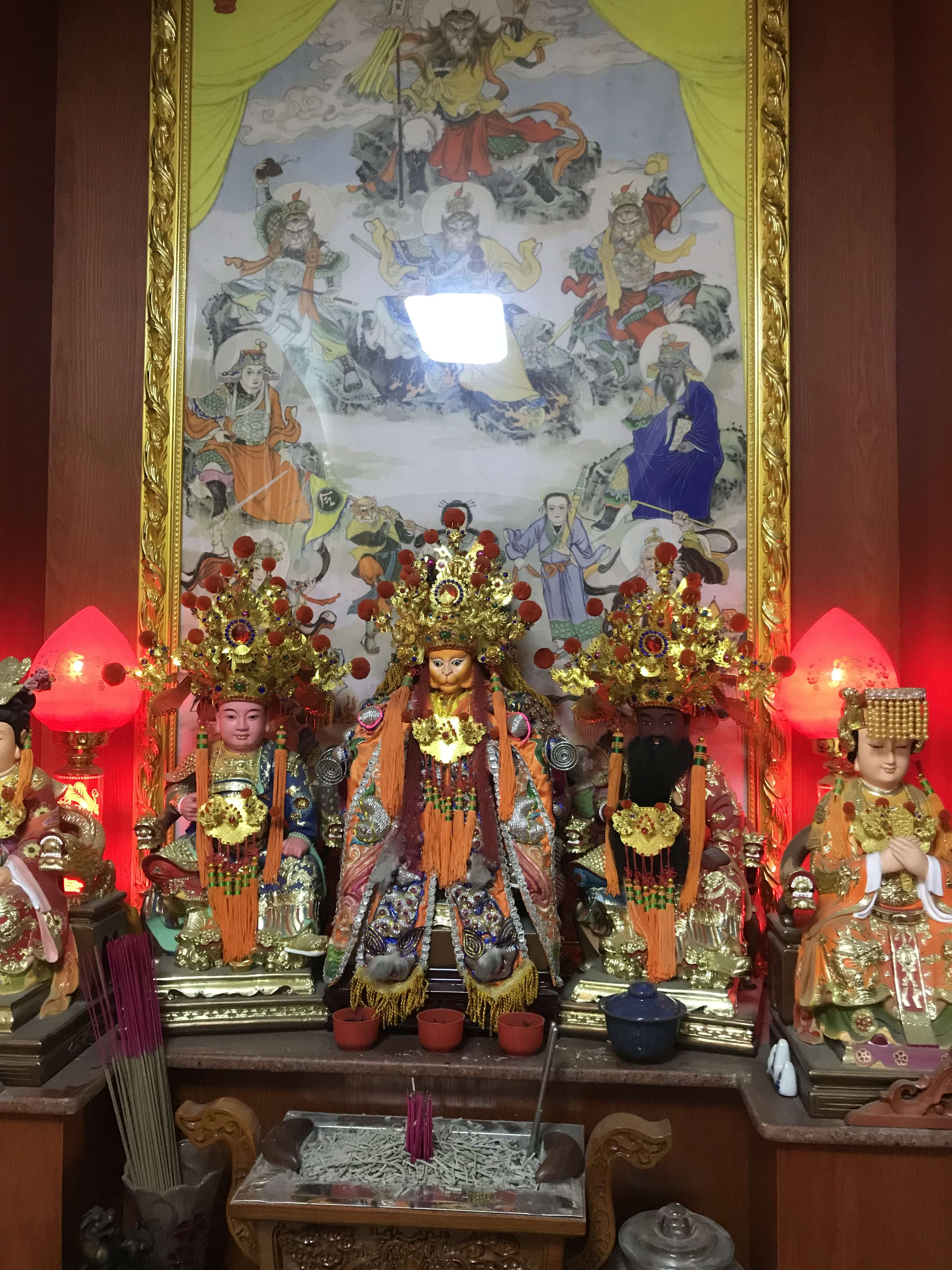
The Journey to the West Research blog is proud to host an entry by our friend Saie Surendra of Hanumovies.com. During the summer of 2019, he was lucky enough to visit several Great Sage Equaling Heaven temples in Fujian Province, China, including those dedicated to him and those hosting small shrines in his honor. This entry will serve as a list of such temples. – Jim

Saie

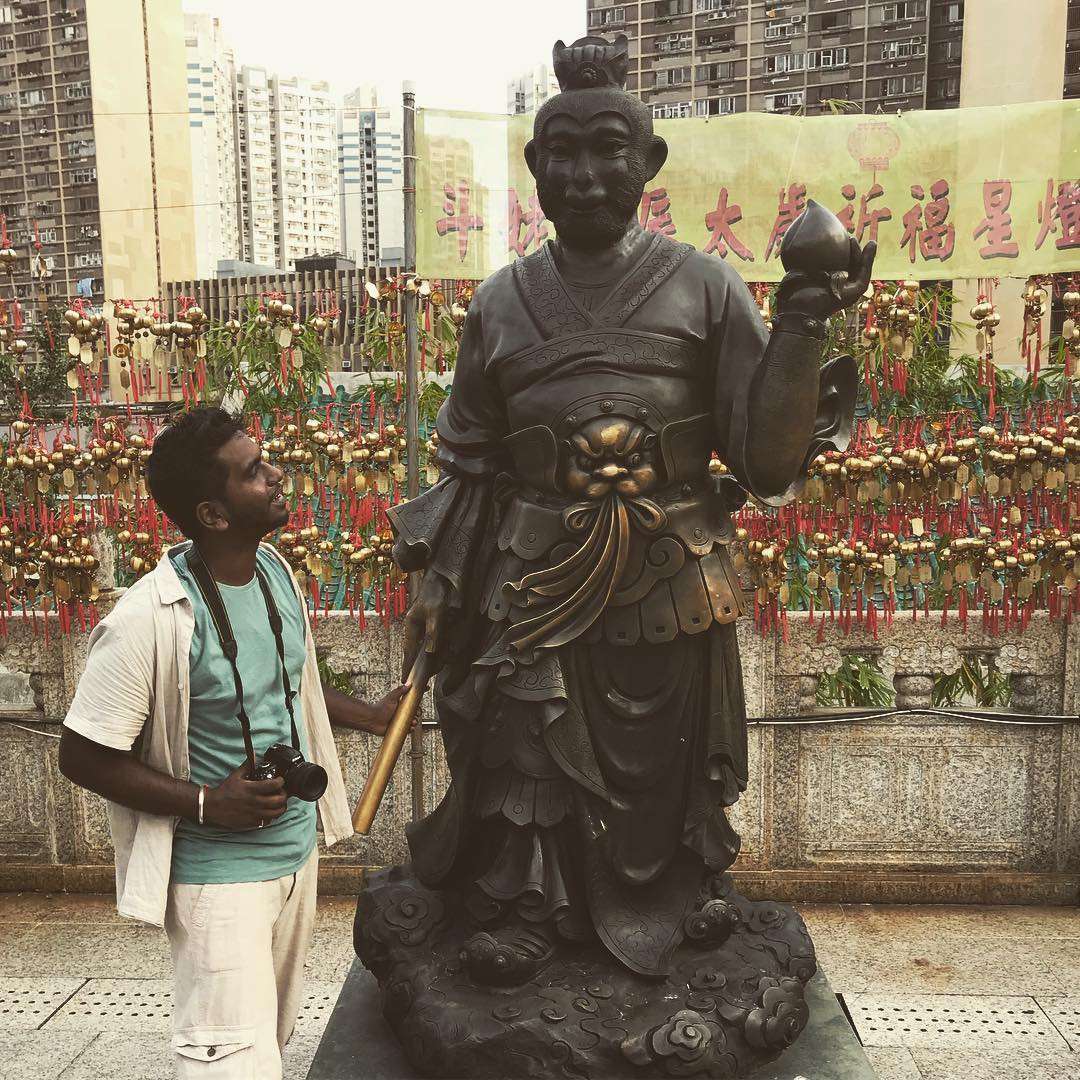
Saie admiring a Monkey King statue at the Wong Tai Sin temple in Kowloon, Hong Kong (larger version).

Table of Contents

I. My Journey

So how did my journey to the various Great Sage Equalling Heaven temples in Fujian begin? I guess I’ll start from the beginning. Growing up, I would often see images or figurines of the Hindu Monkey God Hanuman in fellow Sri Lankan and Indian homes. For those who don’t know, Hanuman is the Indian counterpart of Sun Wukong and potentially the first known Monkey God. I was curious and intrigued and wanted to know more, but I didn’t get many answers from the people I asked. “He protects us and can revive us from bad health” was the most common reply. I researched the many translations of the Ramayana (one of two great Indian epics within which Hanuman appears) and became enchanted by his many amazing feats and achievements. I was a huge film fan growing up, so I became obsessed with the idea of making films based on him. There have been TV adaptations of Hanuman’s story—I wasn’t a fan of the more human-like portrayals—but, sadly, major Indian studios have yet to make a proper movie about him.

Fast-forward to 2008. Jet Li and Jackie Chan star in the kung fu fantasy The Forbidden Kingdom. Looking back now, it isn’t the greatest film ever, but this is when I first met … Sun Wukong (cue the “Dagger House Prelude”). This was a turning point for me, my obsession multiplied tenfold. Since then I have watched tens, if not hundreds, of film and TV adaptations of Sun Wukong. I’ve also read endless articles and books (one example) in an effort to connect the dots between our (Hindu and Buddho-Daoist) ancestors’ worship of monkey deities. I’ve found there are just too many similarities to ignore.

At first, I had never heard of Sun Wukong’s worship, so when I found the one vague article online describing the Monkey King Festival (the 16th day of the 8th lunar month) in Hong Kong, I decided I would go! I didn’t know what to expect when Jim and I met at the Great Sage Treasure Temple (大聖寶廟) in Kowloon in September of 2018, but it was a big moment for me. Crowds of young and old gathered to worship the Great Sage Equalling Heaven; Daoist priests chanted from prayer books; rows of important businesspeople bowed in unison; martial arts schools performed colorful lion dances, each kwoon paying respect to the altar as they passed; giant paper effigies were burnt. It was a veritable feast for the eyes and ears. Through our interviews with the locals, we not only learned that the festival was considered a time for strengthening community bonds and to help those in need, but also that many adherents believed their faith originated in Fujian, more specifically the city of Fuzhou. This of course agrees with what past scholars have written about Sun’s worship in Fujian.

I have a question: If you ever found yourself in heaven, what would you do? You’d take some good videos to show your friends back on Earth, right? So that was the idea; I started making a documentary (video 1) based on the real people I met and the places I visited, saving my film ambitions for later.

Video 1 – Legends of a Monkey God: Episode 1 – Hong Kong

I was restless some months after returning from the Hong Kong Monkey God Festival. It was like experiencing Heaven for a week and then falling back to Earth like a meteor with many unanswered questions. I was unable to sit around in my miserable London life any longer, so I finally decided to travel where Sun’s worship supposedly began … Fuzhou.

Arriving in Fuzhou was like a pilgrimage in itself. Let me say, this was not an easy journey for me, nor for the translator friend I hired due to my poor Mandarin. The Hokkien accent of Fuzhou gave her a hard time. In addition, the many places I had researched and mapped online seemingly didn’t exist. We visited one after another, with the locals appearing clueless about the temples we inquired about. It was almost as if Sun Wukong’s worship was a secret and only initiated members were allowed access to his houses of worship. Now, there is a saying in India that goes: “You can’t just find Him, He has to invite you”. This saying holds true, for when we finally found one of the locations (see temple one below), a person inside told us about a man who could help me on my journey. I thought, “Hang on a minute … was this guy the savior goddess Guanyin? Was he going to introduce me to my … Sun Wukong?”

I was later introduced to Mr. You, the head of several temples, the Pingshan theatre, and the greatest Sun Wukong follower I have ever met. He set aside two whole days to drive us to several Monkey King temples around Fuzhou, during which time I shot video for another documentary (video 2). I wondered whether or not he wanted anything in return. I mean, no one does anything for free, right? It turns out he was more than happy just to share his Sun Wukong with me and invite me into his secret club! He would not accept any gifts from me. I felt like I was the Tang Monk! And here is the thing: Mr. You and his friends didn’t speak a single word of English—in fact, my Mandarin was unbearable to them—yet we somehow managed to communicate and establish a strong friendship between us, “Brothers bound by the love of Monkey”. I promised myself then that I would return with better Mandarin in a Fujian dialect.

Video 2 – Legends of a Monkey God: Episode 3 – Monkey King Temples of Fujian, China

What I took away from this trip was the fact that Sun Wukong is a deity that sits at the intersection of Buddhism, Daoism, and Confucianism. I saw effigies of him in temples of all the “Three Religions”, sometimes shared, sometimes strictly one faith. But the idea of religion in the East is not the same as that in the West. In the East, you find your own path, follow it to your goal; you don’t need to be on the same path as everyone else and no one judges you for making your own way. It’s just like the Indians say: “The destination is the same, paths are many. God is one, names and forms are many”. This ties in with the works of famed mythologist Joseph Campbell, who would call this the many “masks of God”.

II. Temple List

This list is not exhaustive and will be updated periodically. Most importantly, the following GPS coordinates should ONLY be used as a general guideline. It is highly recommended that those wishing to visit these places should hire the services of a knowledgeable guide. I recommend contacting Mr. You (WeChat id: you410631621)

(Note: Mr. You has died, so his WeChat no longer works.) 

A shrine in Mr. You’s house (larger version).


1. 玉封齐天府屏山祖殿

26°04’45.0″N 119°18’42.6″E
福建省福州市鼓楼区三界寺
Sanjie Temple, Gulou District, Fuzhou City, Fujian Province, China
38H6+MP Gulou District, Fuzhou, Fuzhou, Fujian, China

Pictures

https://drive.google.com/drive/folders/0Bwi3jyIV3-OhfmoyQ0RXN25PalhWbXVncUxwX0pFcDlSbVVDMFRvMm82dWttRlUxaGNVTWc?resourcekey=0-Dq0-f95II5gSZLh9VVu7qg&usp=sharing

IMG_6054


2. Name Unknown

26°04’10.1″N 119°19’56.1″E
福建省福州市晋安区
Eastern District Shangquan, Jin’an, Fuzhou City, Fujian Province, China
389J+QW Jin’an, Fuzhou, Fujian, China

Pictures

https://drive.google.com/drive/folders/0Bwi3jyIV3-Ohfmt2cGV2U1BsVW1iQjVHUEFIZXF6QV9vTndVNkxEdm1SRzA3UURpM25mWDA?resourcekey=0-KybFXH3lW6H0YU4dSIT8Yw&usp=sharing

IMG_6161


3. Name Unknown

26°01’46.8″N 119°15’56.1″E
福建省福州市仓山区百花洲路
Baihua Zhou Road, Cangshan District, Fuzhou City, Fujian Province, China
27H8+V6 Cangshan, Fuzhou, Fujian, China

Pictures

https://drive.google.com/drive/folders/0Bwi3jyIV3-OhfjFhWVdVTTU0bFRMOGo3eGNZSncyal8takVNNTZTLTFBRmNJV3BGOTFyTXc?resourcekey=0-Vp51fSJCx3nejStT3ZjO0g&usp=sharing

IMG_6298


4. 霞江清泉庵 (齊天大聖殿)

26°02’41.4″N 119°18’34.7″E
福建省福州市仓山区
28V5+WV Cangshan, Fuzhou, Fujian, China

Pictures

https://drive.google.com/drive/folders/0Bwi3jyIV3-OhfmEyMFJHR19OYzM0REhMNzE4bDZZaUd0bjgtdUVZb2h3MndZT0ZQWGVPMm8?resourcekey=0-24cQHhFFVobNPUo6hwLkxg&usp=sharing

For more pictures, see this article.

IMG_6353


5. Name Unknown

26°02’05.1″N 119°21’10.7″E
福建省福州市仓山区后坂路
Houban Road, Cangshan District, Fuzhou City, Fujian Province, China
29M3+W5 Cangshan, Fuzhou, Fujian, China

Pictures

https://drive.google.com/drive/folders/0Bwi3jyIV3-OhflVvT1dOM1RTcDRucXRxT0xfVHoxVFdDZkR4OGpGaGo4VzN1eEZBXzlNVVk?resourcekey=0-X8xhXb0INiwa1FF8kACplg&usp=sharing

IMG_6427


6. Name Unknown

26°06’23.6″N 119°14’30.2″E
福建省福州市闽侯县
Unnamed Road, Minhou County, Fuzhou City, Fujian Province, China
464R+JM Cangshan, Fuzhou, Fujian, China

Pictures

https://drive.google.com/drive/folders/0Bwi3jyIV3-OhflVVSzNCNWVDN25NU05La043NlRyczJSOVc0UkE1aDRfb0ZCeUV4cWJianc?resourcekey=0-cnBTjqM0ZCS0EaizWsGTTQ&usp=sharing

IMG_6662


7. 慈恩寺

26°08’54.4″N 119°08’56.9″E
福建省福州市闽侯县军民路
Junmin Rd, Minhou County, Fuzhou City, Fujian Province, China
44XX+9M Ganzhezhen, Minhou, Fuzhou, Fujian, China

Pictures

https://drive.google.com/drive/folders/0Bwi3jyIV3-OhfjUwekJoVTlhclJvVTJDS1NfdDdGXy1PQUg0RHU0WnZUMzI5UWdXRWlzVDQ?resourcekey=0-lDm_EQW1Dj6rEnzeU0BR0Q&usp=sharing

IMG_6681


8. Name Unknown

26°04’26.2″N 119°11’25.5″E
福建省福州市闽侯县
G316 Minhou County, Fuzhou City, Fujian Province, China
35FR+H5 Shangjiezhen, Minhou, Fuzhou, Fujian, China

Pictures

https://drive.google.com/drive/folders/0Bwi3jyIV3-OhfnFLWGVvWjktaFFfTS1wVHBMdFA2VmtpVW5aUU1qOGNrQ1RQVEo5TG1pTU0?resourcekey=0-_5j182ICuI-0ValCqUQfXg&usp=sharing

IMG_6742


9. Name Unknown

26°01’49.8″N 119°17’26.7″E
福建省福州市仓山区鹭岭路163号
163 Luling Road, Cangshan District, Fuzhou City, Fujian Province, China
27JR+68 Cangshan, Fuzhou, Fujian, China

Pictures

https://drive.google.com/drive/folders/0Bwi3jyIV3-Ohfmd5WmMza0xuQUtxWThwbmZFRVV5WXlreF9TYkF3ai1WZ01jeDAxQ09pcW8?resourcekey=0-ELD6KPHTI0RCsfAs8LaIUg&usp=sharing


III. Updates

Update: 02-15-21

Jim here. I have mirrored this article by creating a list of Monkey King temples that I’ve visited in Taiwan.

Qitian Dasheng Monkey King Temples in Taiwan


Update: 10-03-24

I just figured out that the photo links have not worked for several months. This is because my original university gmail account, which hosted the pictures, was shut down. Everything is fixed now.