The Worship of Sun Wukong the Monkey King: An Overview

Last updated: 10-04-2024

I’ve written several articles on the worship of the Monkey King. I’ve decided to post an overview for those not familiar with the subject. Unless cited here (or not based on personal field research), all information is cited in the respective linked articles below.

Warning: Self-mortification and blood below!

Sun Wukong is worshiped in southern China, Taiwan, and areas of Southeast Asia, including Malaysia, Singapore, and even Thailand and Vietnam, as the “Great Sage Equaling Heaven” (Qitian dasheng, 齊天大聖) (fig. 1). Variations of this title often include “Lord” (ye, 爺) or “Buddha Patriarch” (fozu, 佛祖) (e.g. Dasheng ye, 大聖爺; Dasheng fozu, 大聖佛祖). He is very rarely addressed as the “Victorious Fighting Buddha” (Dou zhansheng fo, 鬥戰勝佛), which is taken from the end of Journey to the West (1592) when our hero is bestowed Buddhahood for protecting the monk Tripitaka. This is the name of a real world deity (and member of the 35 Confession Buddhas) that was only later associated with Monkey in literature. I’ve even seen one temple that mixed such titles to call him the “Fighting Sage Buddha” (Dou zhan sheng fo, 鬥戰聖佛).

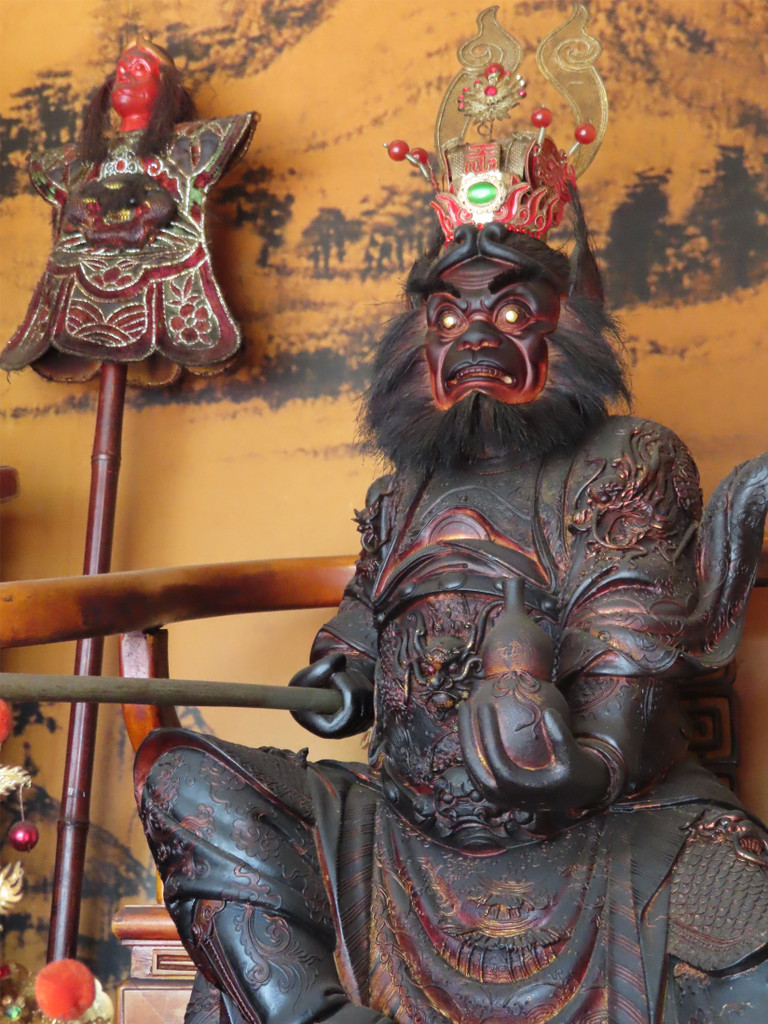
Fig. 1 – An awesome gourd-bearing Great Sage statue from Taiwan (larger version). It is one of a trinity. Photo by the author.

The Great Sage’s worship can be traced to Fujian province, China, from where it spread out to other countries, including 19th-century America. Published references to his worship in Fujian go back to at least the 17th-century, though one 13th-century stone pagoda depicts Monkey as a sword-wielding protector deity, among other heavenly guardians, bodhisattvas, patriarchs, and eminent monks, suggesting that he may have been revered in earlier times. But a 14th-century tomb shrine jointly dedicated to the Great Sage Equaling Heaven and the “Great Sage Reaching Heaven” (Tongtian dasheng, 通天大聖) in Baoshan, Fujian shows that he was indeed venerated prior to the publishing of Journey to the West (1592) (Wang, 2004). His worship was so well-known in Fujian during the early Qing-period that it was criticized in the famed Strange Tales from a Chinese Studio (Liaozhai zhiyi, 聊齋誌異, 1740), a collection of popular stories.

My friend Saie Surendra (Hanumovies.com) has visited several Great Sage temples in Fujian. I have personally visited 14 temples in Taiwan (so far). I even learned of a holy scripture associated with the monkey god titled The Great Sage Equaling Heaven’s True Scripture of Awakening People and Enlightening the World (Qitian Dasheng xingren jueshi zhenjing, 齊天大聖醒人覺世眞/真經). A brief analysis of the scripture by my friend Edward White (his blog) can be seen here.

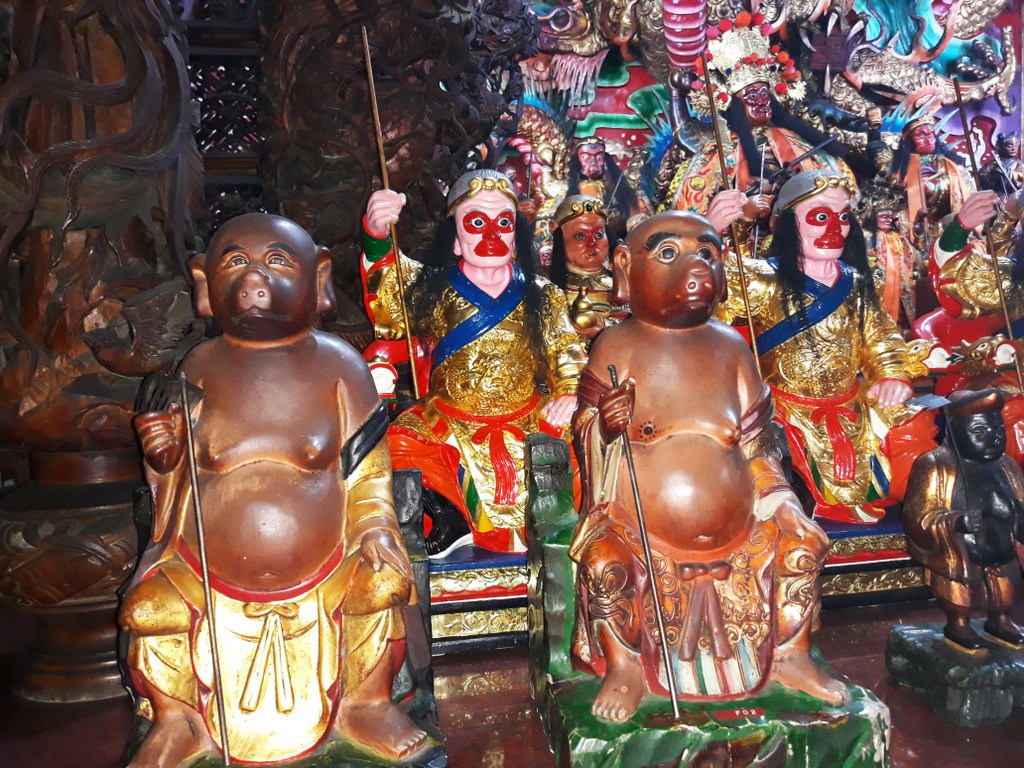
Much like Sun Wukong can multiple his body, his religion recognizes multiple Great Sages, each with their own holy and/or administrative function. Although, temples apparently believe each Great Sage is an emanation of the singular deity. This multiplicity of usually 3 to 5 figures (with dozens of soldier monkeys) may be traced to different sources. For instance, an early-15th-century zaju play predating the novel describes Monkey as one of three brothers and two sisters. It surprisingly refers to Wukong, the middle brother, as the aforementioned Great Sage Reaching Heaven, while the older brother is called the Great Sage Equaling Heaven. The youngest, the “Third Son Shuashua” (Shuashua sanlang, 耍耍三郎/爽爽三郎), appears as a white-faced figure among a color-coded trinity in one Fujian tradition (fig. 2). The Great Sage Reaching Heaven graces the trinity with a black face. Rounding out the group with a red face, the Cinnabar Cloud Great Sage (Danxia dasheng, 丹霞大聖), a separate figure not from the play, appears in a 17th to 18th-century pious novel which describes his evil deeds, punishment, and rehabilitation by a Fujian goddess. Therefore, the multiple Great Sages share a connection to theater and religious literature.

(Note: It might be confusing to see various media calling Sun Wukong both the Great Sage Equaling Heaven and Great Sage Reaching Heaven. However, assigning him the latter title appears to be a peculiarity of the early-15th-century zaju play. It’s important to note that an earlier zaju, The God Erlang Captures the Great Sage Equaling Heaven (Erlang shen suo Qitian dasheng / Erh-lang shen so Ch’i-t’ien Ta-sheng, 二郎神鎖齊天大聖), refers to Monkey with the correct title and calls his younger brother “…Reaching Heaven” (Dudbridge, 1970, p. 129).

Recall that that these similarly named deities were jointly worshiped in Fujian (Wang, 2004). Hence the confusion.)

Fig. 2 – An example of the Three Great Sages (larger version). Image found here.

As mentioned, various soldier monkeys serve in the Great Sage’s spiritual army. He leads five heavenly generals, representing the Chinese cardinal directions, each with their own armies. The demon queller, the “Third Prince” (San taizi, 三太子; a.k.a. Nezha), serves as his vanguard. The Third Prince can often be seen positioned on a table in front of the main altar, or riding a palanquin and leading the way during religious processions. At least in Taiwan, the power of this spiritual army needs to be replenished during a yearly trip south to the island’s oldest monkey god house of worship, Wanfu Temple (Wanfu an, 萬福庵), which is considered a fount of pure energy. This is done by retrieving scoops of holy incense ashes from the main incense pot and bringing them back to the home temple pot. I saw one temple protect the ashes in a small, metal, building-shaped altar sealed with blood-consecrated paper talismans. It was then shaded with two processional flags and an eight trigrams umbrella (video 1). I was told exposing the ashes/soldiers to sunlight was considered highly disrespectful.

Video 1 – A video of the incense ash-gathering ceremony. Shot by the author on November 7th, 2021.

While considered a full-fledged god or even Buddha, the Great Sage is not a supreme deity. In fact, Buddho-Daoist folk religion considers him to be an intermediary for higher-ranking figures. For example, in most traditions he is a subordinate of the Bodhisattva Guanyin. [1] One temple in Taiwan even believes he answers to the martial god Guan Yu. Either way, he is considered the exorcist par excellence and a protector of children. The little ones whom he takes as his godchildren are known in Singapore as “dedicated children” (khoe-kia). Those under his protection are believed to grow up to become well-behaved adults.

One Singaporean almanac lists the Great Sage as the “patron deity of athletes” (yundong ye de zushi, 运动业的祖师/運動業的祖師).

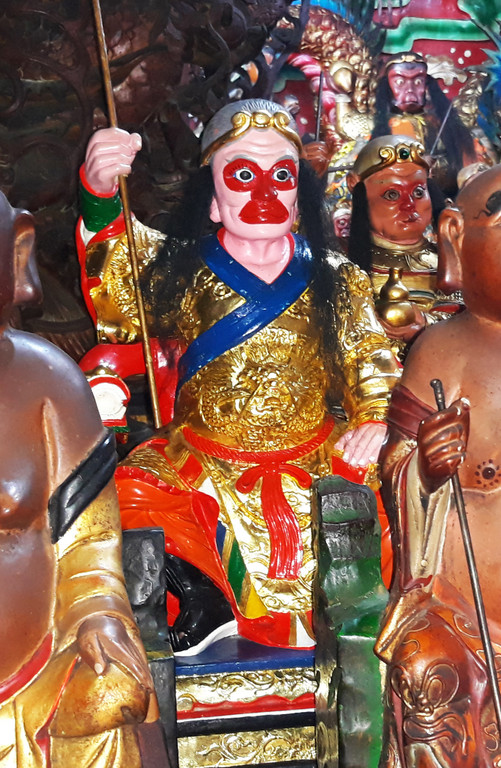
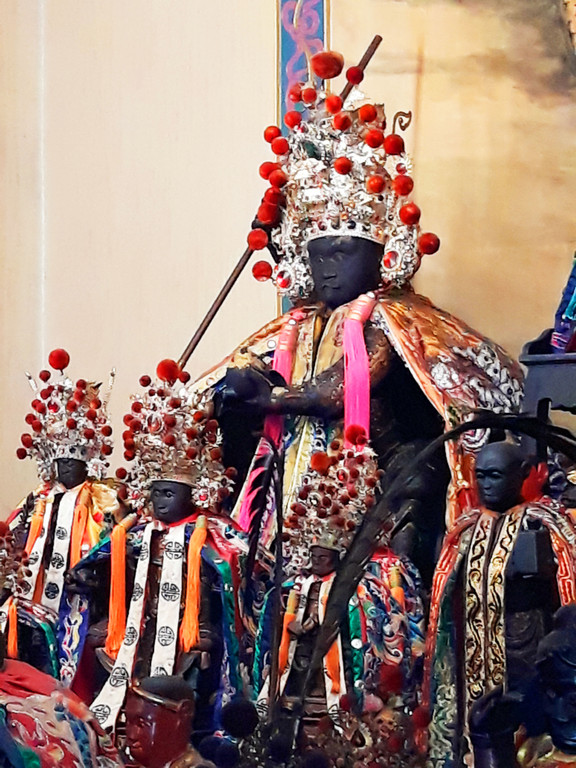
Religious statues of the Great Sage are generally portrayed as a seated or standing protector deity wearing golden armor, a feather cap, and sometimes the golden headband. The seated and standing postures are taken to represent his defensive and offensive functions, respectively. The former sits in a kingly fashion with knees splayed, holding a golden staff or fly-whisk in his right hand and a hu-gourd or immortal peach at chest or waist-level with his left (refer back to fig. 1). The latter stands on his left leg (sometimes supported by clouds) with the other bent high at the knee, while holding a staff in his right hand. The left holds a gourd (sometimes overhead and pointed at the viewer), or it shields his eyes like a sailor searching the horizon. This hand is positioned with the thumb near the left eye, or the arm wraps under the chin and the hand bends at the wrist to shield the eyes in a contorted manner. (Of course there will always be variations on these patterns.) The gaze of the monkey god is generally fierce, sometimes with golden pupils, and his likeness ranges from human-like to generally more primate-like. Baring white, black, and red examples based on the aforementioned Fujian trinity, the Great Sage’s face is generally flesh-toned with kisses of red but can sometimes be painted with a red, three leaf clover-like design similar to Wukong’s depictions in Chinese opera (fig. 3). But I’ve seen a few rare examples in Taiwan with harsh face patterns similar to plague gods (Stevens, 1997, p. 114). Many statues are carved with horn-like “ear-pressing tufts” on the sides of his head, giving him a wild appearance. This can be accentuated with carved and painted or applied hair on the head and sides of the face. Some statues acknowledge the link between Chinese religion and theater by depicting him as a martial monk (wuseng, 武僧) with long hair that hangs down to his chest (refer back to fig. 3). [2] While such examples generally portray him in the aforementioned armor, I’ve seen at least one figure from Singapore wearing a golden monk’s robe open at the chest. In contrast to the brightly-colored and gilded statues mentioned above, some Great Sage figures are dark and ashen. These tend to be decorated with ornate, metal headdresses and flashy imperial capes and sashes (fig. 4). The rarest statue I’ve ever seen depicts the Great Sage with six arms wielding a staff in each hand (fig. 5).

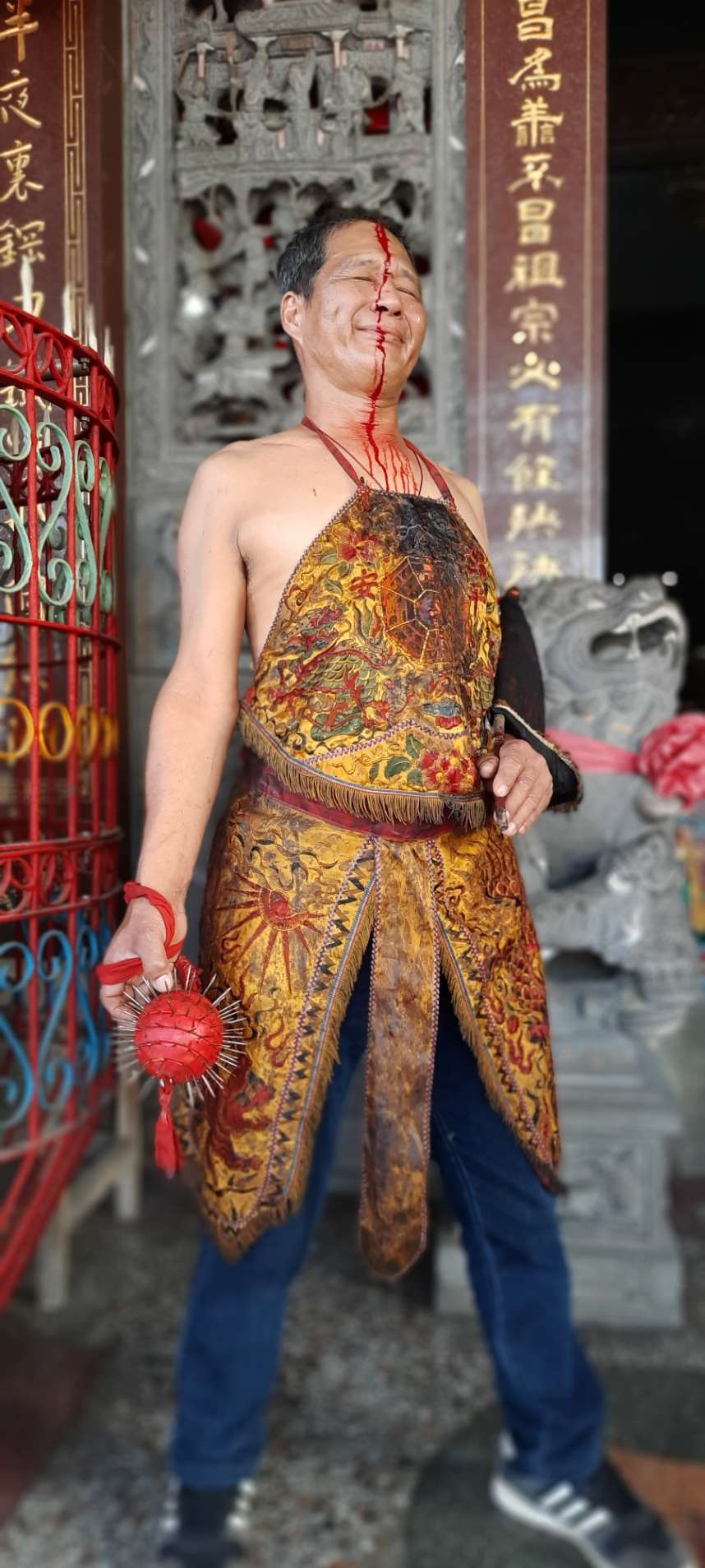
Fig. 3 (top left) – Detail of a Great Sage statue with the red, three leaf clove-like face pattern and the long hair and golden fillet of a martial monk (larger version). See the full version here. Fig. 4 (top right) – Dark, wooden Great Sage statues with bright ornamentation (larger version). Photos by the author. Fig. 5 (bottom left) – A three-headed, six-armed monkey god (larger version). Seen on Facebook. Fig. 6 (bottom right) – A spirit-medium channeling the Great Sage. He smiles in defiance after flogging his head with a spiked ball (larger version). Original photo by Cai Zhizhong (蔡志忠) (used with permission).

Spirit-mediums (Taiwanese Hokkien: Tangki, 童乩; Chinese: Jitong, 乩童; literally: “Divining Child”) play a large part in the Great Sage’s religion. They are believed to channel his spirit to interact with believers, generally answering their questions, blessing them or their belongings with paper talismans, or prescribing medicine. On special occasions, they also perform a complex self-mortification ceremony; for instance, the mediums of one Taiwanese temple walk a pattern in between five ritual fires representing heavenly generals of the five directions, while flogging themselves with the “Five Treasures of the Spirit-Medium” (jitong wubao, 乩童五寶): a seven-star sword (qixing jian, 七星劍), a crescent moon ax (yue fu, 月斧), a spiked club (tong gun, 銅棍; a.k.a. lang ya bang, 狼牙棒, “wolf-tooth club”), a sawfish nose sword (shayu jian, 鯊魚劍), and a spiked ball (ci qiu, 刺球) (fig. 6). However, I’ve found that self-mortification tends to be more extreme in Southeast Asia, with mediums piercing their cheeks and bodies with lances, swords, hooks, and even bicycles! The ritual serves several purposes. First, hacking, skewering, and poking the body with various weapons is considered a form of self-sacrifice. Second, the weapons that pierce the flesh are believed to imbue the mediums with spiritual power needed in their battle with demonic forces that pervade every corner of daily life. Third, the resulting blood is believed to have demonifugic properties, hence the reason it is smeared on paper talismans and clothing. Overall, the ritual is performed to exorcize evil spirits that cause bad luck and mental and physical illnesses.

Mediums wear ritual bibs normally associated with babies in Asian culture. As noted above, the Hokkien/Chinese word for spirit-medium means “Divining Child”. This refers to the centuries-old belief that children were the mouthpieces of gods. In fact, the mediums are known to speak in a shrill voice known as “shen (神, god) language”. The fact that their back is bare refers to ancient ShangZhou period rituals in which a sacrificial victim was exposed to the elements. However, it should be noted that, since the 1980s, more and more mediums in Singapore have taken to wearing flashy, Chinese opera-inspired costumes, including the golden fillet. [3] I’ve seen one such medium that even wears a faux fur cowl and gloves during performances.

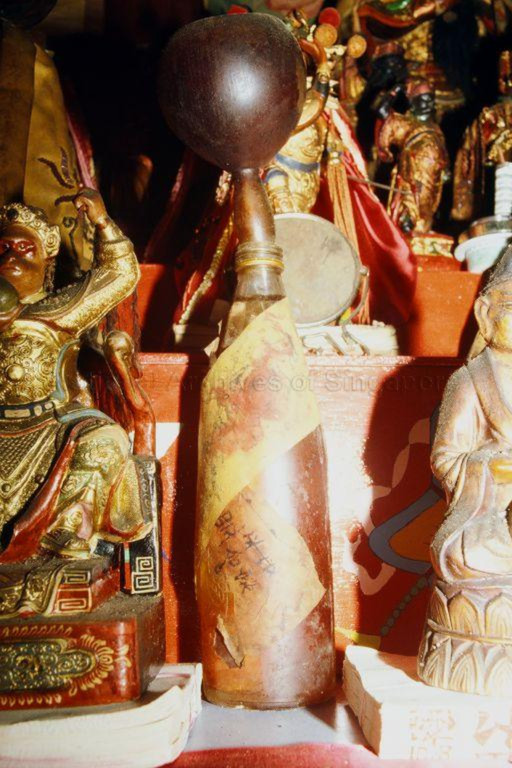
When not consulting a spirit-medium, the presence of the Great Sage can be determined by a glass vessel called the “Great Sage bottle” (Dasheng ping, 大聖瓶). It comprises a normal glass container (a tall beer bottle or something more elegant) filled with “noon water” (wushi shui, 午時水) and topped with a special bulbous glass stem. The bottle is believed to make a characteristic “ping-pong” (乒乓) chime upon the deity’s arrival in a temple or home, usually around 12 noon but also other times. I’ve heard of the vessels use in Taiwan and Hong Kong but mostly Singapore.

The Great Sage’s religious birthday is celebrated on different dates according to location. It is the 16th day of the 8th lunar month in Hong Kong [4] and Singapore (Elliott, 1955/1990, p. 82), the 23rd (Fuzhou) or 25th day (Putian) of the 2nd lunar month in Fujian (Doolittle, 1865, vol. 1, pp. 288; Dean & Zheng, 2010, p. 162, for example), the 12th day of the 10th lunar month in Taiwan (though, I’ve seen one HK source that lists this date as well), and the 16th day of the 1st lunar month in Malaysia. The celebration usually involves gifts of fruit, sweets, and liquor; self-mortification rituals by spirit-mediums; chanting performances by Daoist associations (see this video by me, for example); the burning of effigies and spirit money; group prayer; and sometimes lion/dragon dance performances by local martial arts clubs. (Regarding this last note, martial artists have revered Wukong for centuries. He was even channeled by fighters of the Boxer Rebellion during the 19th-century.) The Great Sage’s birthday was once the occasion for Olympic-like competitions for his spirit-mediums. For instance, one event from 1980s Hong Kong involved the medium washing his face and hands with boiling oil, biting ceramic bowls in half, and climbing a ladder of knives (video 1). But such practices have since been outlawed due to injury or death. I’ve been told this is the same in Singapore.

Video 2 – This video depicts the preparations and celebration of the Monkey King’s birthday (16th day of the 8th lunar month), complete with competitions of self-mortification by spirit-mediums. It was shot in the Sau Mau Ping area of Hong Kong during the 1980s. Subtitles added by Haiyan Wang.

I should point out that Great Sage worship is not unique to people of Chinese descent. He was at some point absorbed into the religion of the Qiang ethnic group. The Qiang people revere a golden, stone-born monkey that is believed to have both stolen fire from the celestial realm and helped recover lost religious knowledge by creating a drum from the skin of a goat that had eaten their sacred scriptures. Wukong is sometimes equated with the monkey deity given the similarities in their respective lithic origins and penchant for stealing from heaven. The Great Sage is particularly worshiped by the red shamans as their patron deity, or “father god” (abba mula), for his skills in exorcizing evil. He is also sometimes equated with the ancestor from Qiang myth, who is believed to be a monkey-turned-man who married a heavenly goddess and fathered the human race.

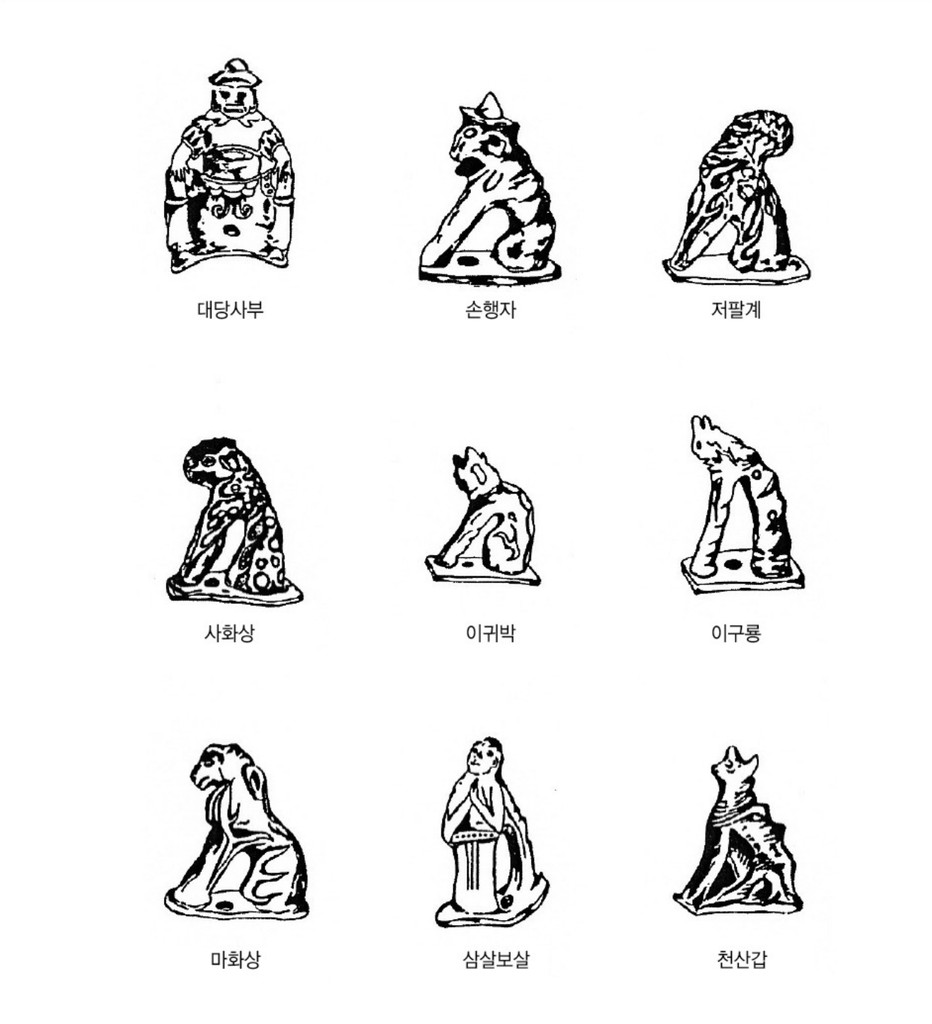
Interestingly, Sun Wukong is even revered in Korea. While not officially worshiped as a deity (at least not by people of non-Chinese descent), he appears with a host of other mythological animals on the roof-hips of royal palaces to guard such important structures against fires and evil spirits (fig. 7). These clay effigies are known as japsang or chapsang (잡상; Ch: zaxiang, 雜像; “miscellaneous figurines”). 

Fig. 7 – Drawings of the japsang effigies of Korea. The first four figures are commonly associated with Tripitaka, Sun Wukong, Zhu Bajie, and Sha Wujing (larger version). However, contemporary sources sometimes named the first figure Wukong. This would make since as he’s wearing armor.


Update: 12-10-21

I’ve just posted an article about a Taiwanese folk Taoist deity whose iconography is shockingly similar to the Great Sage. The “White Ape Perfected Man” (Baiyuan zhenren, 白猿真人) is depicted as a long-haired primate wearing a golden fillet and golden armor and bearing a fly whisk and (sometimes) and immortal peach.

This figure interests me as both he and the Monkey King have a centuries-long association with each other in popular literature. This likely led to the White Ape Perfected Man borrowing from the Great Sage’s religious imagery.

The White Ape Perfected Man: Sun Wukong’s Divine Double


Update: 12-26-21

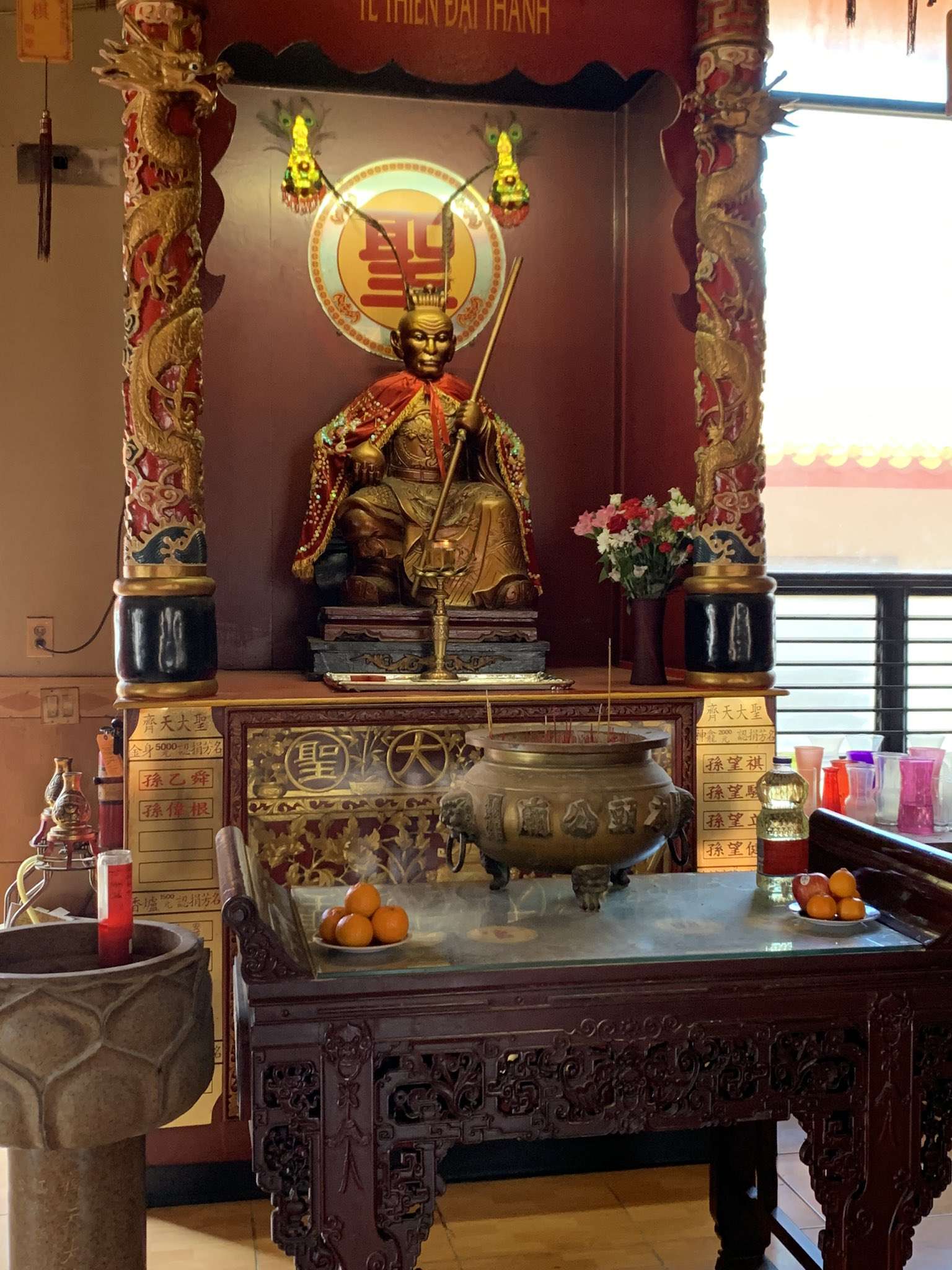
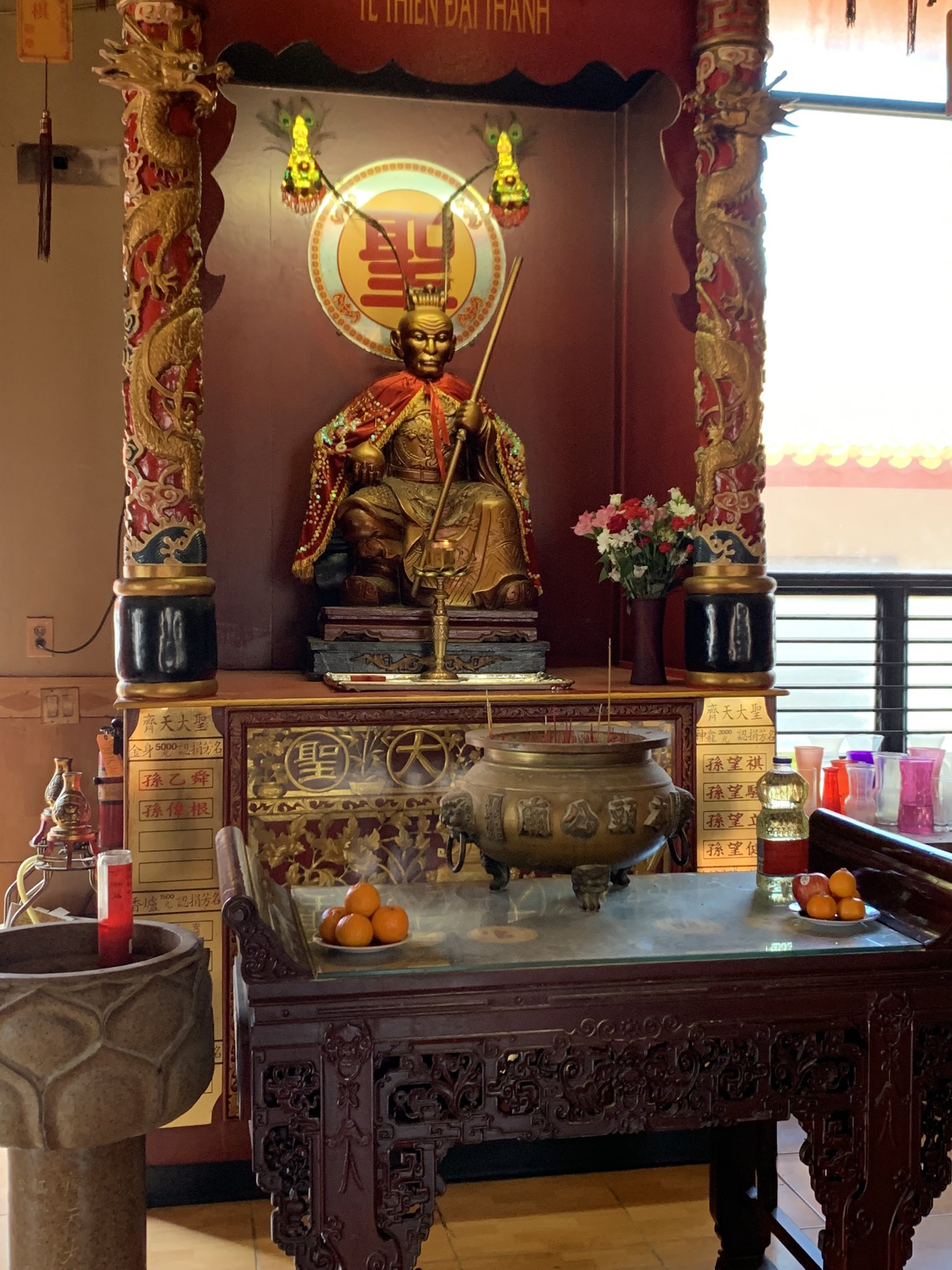
I learned that the Teo Chew Vietnamese Buddhist Temple of the Houston, Texas, USA, Chinatown has an altar to the Monkey King. An image from Twitter (fig. 8) is labeled “Tề Thiên Đại Thánh” (“Great Sage Equaling Heaven”, 齊天大聖). I have contacted the temple to learn more information.
Image

Fig. 8 – The Monkey King altar of the Teo Chew Temple of Houston, Texas, USA (larger version). Take note of the Vietnamese words at the top. Image found on Twitter.

A Facebook friend shared information about Sun Wukong’s worship in Vietnam.

The Monkey God is worshipped by some of the Chinese community in Vietnam alongside other popular deities like MaZu and Xuan Tian Shang Di. The Hoa-Viet immigrants probably brought his worship over during the war. Also interesting to note that in my mothers home province of Huế there are Vietnamese Lên Đồng medium shrines that channel the monkey god but it is not popular among Vietnamese since some of us see him as a fictional character, but his TangKi worship is more common within Chinese shrines in the southern regions.

They also shared this video of a 106-year-old monkey god temple in Bac Lieu City, eastern Ca Mau Peninsula, southern Vietnam (video #3).

Video #3 – The century old monkey god temple of Southern Vietnam.


Update: 01-09-22

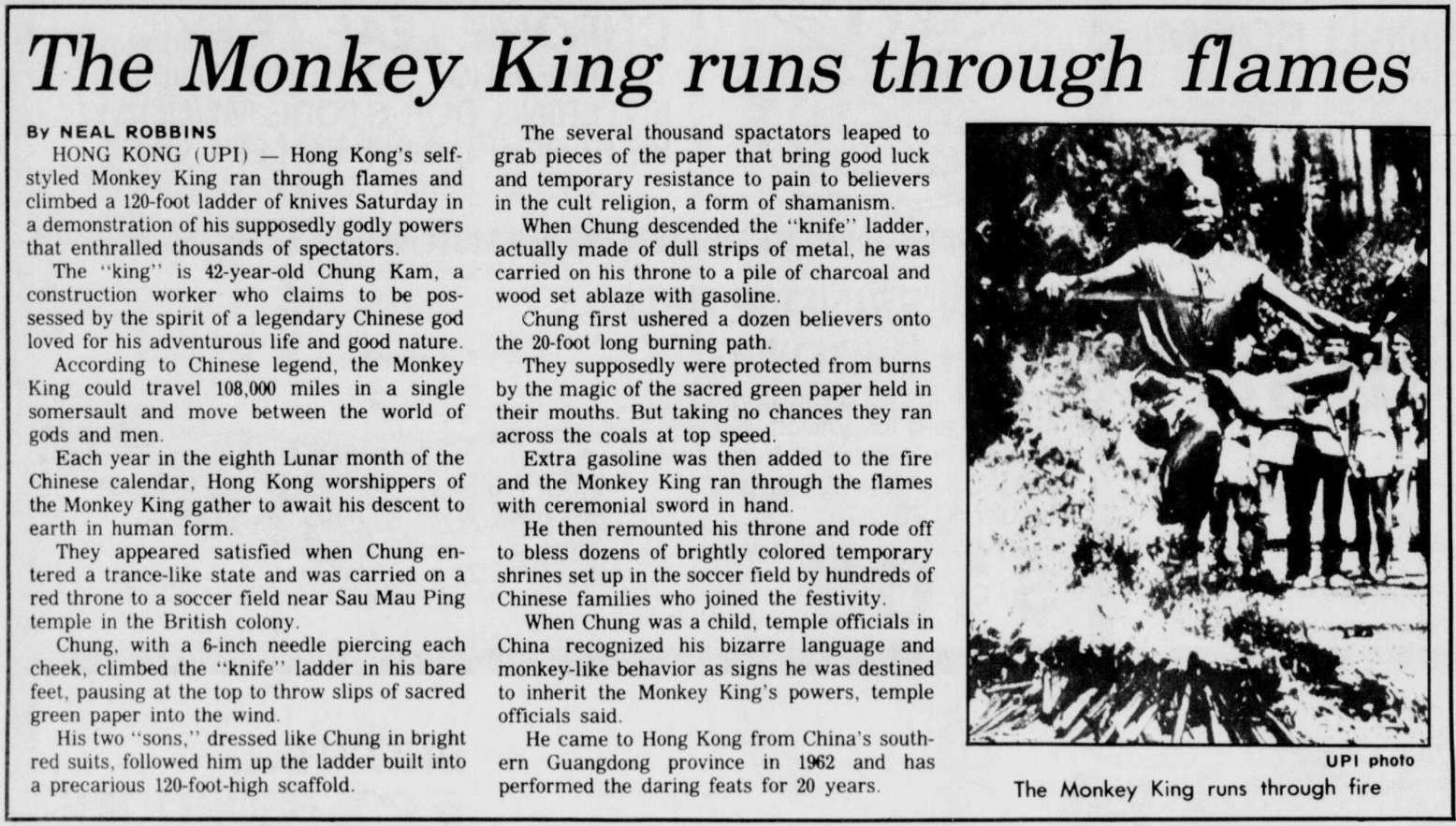
I was looking through US newspaper archives and was surprised to find a brief report on a Great Sage spirit-medium from Hong Kong (fig. 9). The medium is said to be Chung Kam, a 42-year-old construction worker from Guangzhou who has served as the monkey god’s vessel for 20 years. Mr. Chung is said to take part in an Olympic-like event in the the Sau Mau Ping area of Hong Kong (Robbins, 1982). So, this might be the very same medium from video #2.

Fig. 9 – The article explaining Mr. Chung’s exploits as the monkey god (larger version).


Update: 03-09-22

I’ve archived the Precious Scroll of Erlang (Erlang Baojuan, 二郎寳卷, 1562), which mentions Sun Wukong in a religious context 30 years before the standard Ming edition of Journey to the West (Xiyouji, 西遊記, 1592) was even published.

Archive #32 – The Precious Scroll of Erlang (Erlang baojuan) (1562)

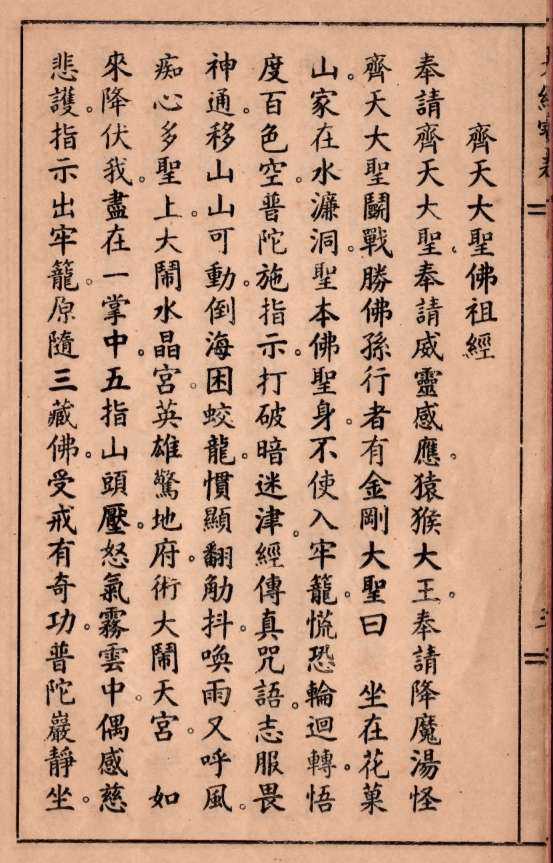
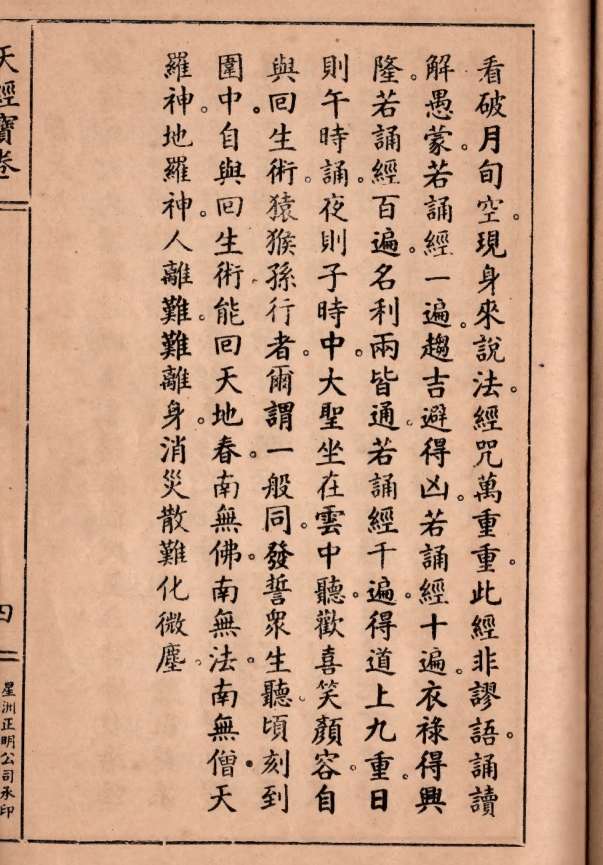
Also, my friend Edward White told me about another Monkey King-related religious work titled the Scripture of Patriarch Great Sage Equaling Heaven (Qitian dasheng fozu jing, 齊天大聖佛祖經) (fig. 10 & 11). This brief work appears in the Heavenly Classic Precious Scroll (Tianjing baojuan, 天經寶卷) (source). This is likely the product of modern spirit writing.

Fig. 10 – Page one (larger version). Fig. 11 – Page two (larger version).


Update: 03-20-22

I’ve previously discussed the place of tangki self-mortification in the Great Sage’s religion. Here (fig. 12) is a photograph showing five skewers through a tangki’s arm. They are Monkey King versions of the five camps generals. From bottom to top, they are Sun Wukong (孫悟空, green – east), the Great Sage Equaling Heaven (Qitian dasheng, 齊天大聖; red – south), the Buddha Victorious in Strife (Dou zhansheng fo, 鬥戰勝佛; gold/yellow – center), the Great Sage Buddha Patriarch (Dasheng fozu, 大聖佛祖; white – west), and the Black-Faced Great Sage (Heilian dasheng, 黑臉大聖; black – north). I’ve only seen these monkey-headed skewers in Singapore, which is exactly where they are from.

Fig. 12 – The five Great Sage skewers (larger version). Courtesy of the photographer Fang Terrance on Facebook.


Update: 03-27-22

I’ve written an article about a Southeast Asia tradition that depicts the Monkey King as a supreme deity representing Buddhism. He sits between others representing Confucianism and Daoism. 

The Monkey King and the “Three-Teachings” (三教) Trinity of Southeast Asia


Update: 04-15-22

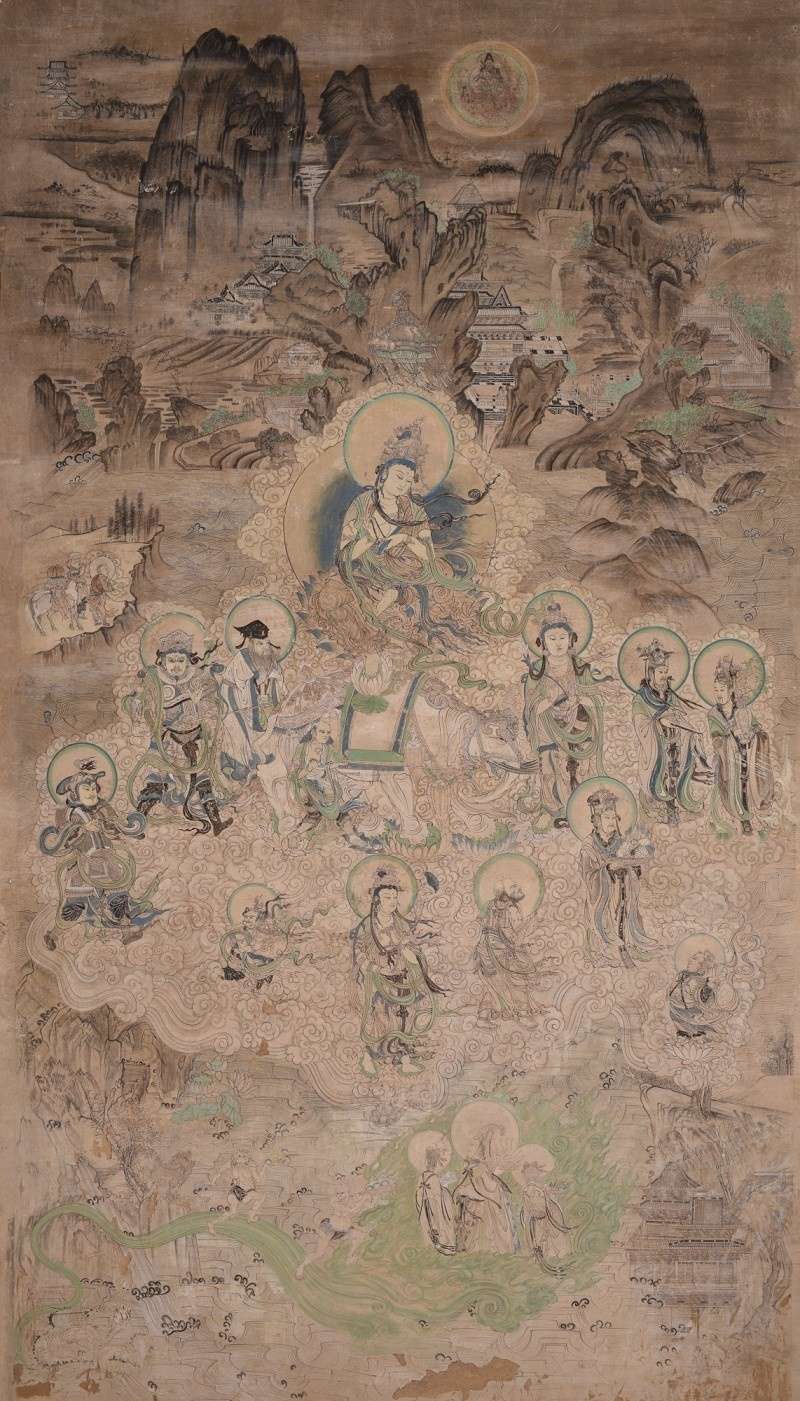
The “Equaling Heaven Palace” (Qitian Fu, 齊/齐天府), an ancestral monkey god temple in Fuzhou, Fujian Province, China, recognizes five Great Sages:

  1. The Great Sage Sun, the Victorious Fighting Buddha (Douzhan shengfo Sun dasheng, 鬥戰勝佛孫大聖).
  2. The Black (Faced) Great Sage [Reaching Heaven], the Demon-Subduing Buddha (Fumo tuofo hei [Tong tian] dasheng, 伏魔陀佛黑[通天]大聖). [5]
  3. The White (Faced) Great Sage [Third Son Shuashua], the Luolisha Buddha (Luolisha fo bai [Shuashua sanlang] dasheng, 囉哩沙佛白[耍耍三郎]大聖). [6]
  4. The (Red-Faced) Cinnabar Cloud Great Sage, the Sands of the Ganges River Buddha (Henghesha fo Danxia dasheng, 恆河沙佛丹霞大聖). [7]
  5. The Red Cloud Great Sage, the River-Inspecting Sage Buddha (Jianhe shengfo chixia dasheng, 監河聖佛赤霞大聖) (fig. 13) [8]

Fig. 13 – The Equaling Heaven Palace pantheon painting (larger version). Originally posted here.

Khmer worshipers appear to recognize four of the five:

  1. The Great Sage Equaling Heaven, the Fighting Buddha of Certain Victory (Qitian dasheng Zhandou bisheng fo, 齊天大聖戰鬥必勝佛) (ព្រះមហាទេពស្មើមេឃ)
  2. The Demon-Subduing Buddha (Great Sage Reaching Heaven) (Fumo tuofo, 伏魔陀佛; Tongtian dasheng, 通天大聖) (ស្វាខ្)
  3. The Luolisha Buddha” (The Third Son Shuashua) (Luolisha fo, 曪理沙佛; Shuashua sanlang, 耍耍三郎) (ស្វាស)
  4. Horizontal/Chaotic River Buddha” (Cinnabar Cloud Great Sage) (Henghe sha fo, 横河沙佛; Danxia dasheng, 丹霞大聖) (ស្វាក្រហម) (fig. 14)

Astute readers will notice that the main Great Sage’s name was slightly altered. The douzhan (鬥戰, “to fight or battle”) of Douzhan shengfo (鬥戰勝佛) was switched around to the more common zhandou (戰鬥), and the character bi (必, “certain”) was further added to embellish the name.

Two other Monkey Buddhas have changes to their names. Number three, Luolisha fo (曪理沙佛), uses a different luo (曪 instead of 囉) and li (理 instead of 哩). And number four, Henghe sha fo (横河沙佛), misspells the heng (横 instead of 恆), changing the original meaning of the name.

Fig. 14 – The four Great Sages recognized by the Khmer (larger version). Originally posted here.


Update: 04-18-22

I’ve written an article about Thai Great Sage worship.

The Monkey King’s Worship in Thailand


Update: 08-09-22

The following quote comes from William H. Hinton’s (1966) Fanshen: A Documentary of Revolution in a Chinese Village, a study of Communist land-reform in and around Long Bow Village (southern Shanxi Province, China) from 1945 to 1948. It mentions members of Sand Bank Village (NW of Long Bow) worshiping a powerful, vengeful Buddhist god named “Ch’i-t’ien”, who had a penchant for cursing people with dysentery. This is likely referring to the Monkey King’s religious title Qitian dasheng (齊天大聖). Hinton (1966) describes the common folk turning against Ch’i-t’ien once representatives of Sand Bank’s Communist Party somehow calculated that the people had paid more offerings to him than he had saved lives during a time of famine:

Finding superstition still a powerful weapon in the hands of the landlord class, the Communist Party organized a special campaign throughout the district to free the minds of the people from bondage to geomancy, astrology, spirit talking, and mud idols, and to convince them that they themselves could remold the world according to their own desires. An important breakthrough in this campaign came in Sand Bank, a village several miles northwest of Long Bow. There stood a shrine to the god Ch’i-t’ien, a very powerful Buddhist deity who, when displeased, could curse one and all with dysentery. Since people only too often died of this disease, Ch’i-t’ien was greatly to be feared. Many a stick of incense was burned before his image and many an offering of food was left for his spirit to eat. The Party members of Sand Bank decided to attack Ch’i-t’ien just like any landlord. They figured up just how much money they had spent humoring him over the years and discovered that it was enough to have saved many lives in the famine year. When they took these calculations to their Peasants’ Association, many young men and women got very angry. They went to the temple, pulled the god out of his shelter and carried him to the village office. Before a mass meeting they “settled accounts” with him by proving that he had squandered their wealth without giving any protection in return. Then they smashed his mud image with sticks and stones. Some of the older people tried to stop them. They prophesied that everyone involved would die of dysentery within a few days. But the young men and women went right ahead. When no one fell ill that night nor throughout the whole of the next day, the hold of Ch’i-t’ien on the village collapsed. Only a handful of old women ever burned incense before his ruined shrine again (pp. 189-190).

I know that the scholarly class has historically looked down on the Monkey King’s worship, but this is the first time I’ve read anything about the proletariat becoming disenchanted with him.

Also, to my knowledge, this is now the most northerly place where he has been worshiped. This distinction was previously held by southern Shandong


Update: 09-03-22

I’ve written an article about a new Monkey King statue that I received from Thailand.

My Great Sage Monkey King Statue from Thailand


Update: 10-04-24

I’ve written an article about Monkey King dough figurines From Quanzhou City, Fujian Province, China that are believed to have demonifugic properties.

Sun Wukong Dough Figurines from Quanzhou, Fujian

Notes:

1) I’ve had a few people ask me how a Buddha can be below a Bodhisattva. Normally, this isn’t the case, but Guanyin is just so incredibly popular in Asia. Her adoration in the east predates the Monkey King’s cult by many hundreds of years.

2) Martial monks in Chinese opera are portrayed with long hair and a golden fillet with an upturned crescent-shaped accent in the middle (Bonds, 2008, pp. 177-178).

3) For more info on Asian spirit-mediums, see Chan (2006).

4) I attended the Great Sage’s birthday in Hong Kong on this date.

5) The last two characters, tuofo (陀佛), appear in the Buddha Amitabha‘s Chinese name: Amituofo (阿彌陀佛).

6) I’m not sure how to translate this. It reads like a foreign term that I’m not familiar with.

7) “Sands of the Ganges River” (henghe sha, 恆河沙) is a popular phrase used in Buddhist literature to designate a very large number (examples from the Lotus Sutra). It’s also interesting to note that the Rhesus macaque is sometimes referred to as a “Ganges monkey” (henghe hou, 恆河猴). This might explain the origin of the primate deity’s name. Thanks to Irwen Wong of the Journey to the West Library blog for bringing this to my attention.

8) Apart from the original Victorious Fighting Buddha (Dou zhansheng fo, 鬥戰勝佛), the other four names do not appear among the 35 Confession Buddhas.

Source:

Bonds, A. B. (2008). Beijing Opera Costumes: The Visual Communication of Character and Culture. Honolulu: University of Hawai’i Press.

Chan, M. (2006). Ritual is Theatre, Theatre is Ritual: Tang-ki – Chinese Spirit Medium Worship. Singapore: Wee Kim Wee Centre, Singapore Management University.

Dean, K., & Zheng, Z. (2010). Ritual Alliances of the Putian plain. Volume Two: A Survey of Village Temples and Ritual Activities. Leiden: Brill.

Doolittle, J. (1865). Social Life of the Chinese: With Some Account of Their Religious, Governmental, Educational, and Business Customs and Opinions. With Special but not Exclusive Reference to Fuhchau (vol. 1 and 2). New York: Harper & Brothers.

Dudbridge, G. (1970). The Hsi-yu chi: A Study of Antecedents to the Sixteenth-Century Chinese Novel. Cambridge: Cambridge University Press.

Elliott, A. J. (1990). Chinese Spirit-Medium Cults in Singapore. London: The Athlone Press. (Original work published 1955)

Hinton, W. (1966). Fanshen: A Documentary of Revolution in a Chinese Village. New York: Monthly Review Pr.

Robbins, N. (1982, October 3). The Monkey King runs through flames. Brownsville Herald, p. 14A.

Stevens, K. G. (1997). Chinese Gods: The Unseen World of Spirits and Demons. London: Collins & Brown.

Wang, y. (2004). Sun Wukong De Yuanji Keneng Zai Fujian Baoshan [Sun Wukong’s Origin Could be In Baoshan, Fujian]. Yuncheng Xueyan Bao, 22(3), 30-34.


The Great Sage Detecting “Ping-Pong” Bottle

Last updated: 06-26-2021

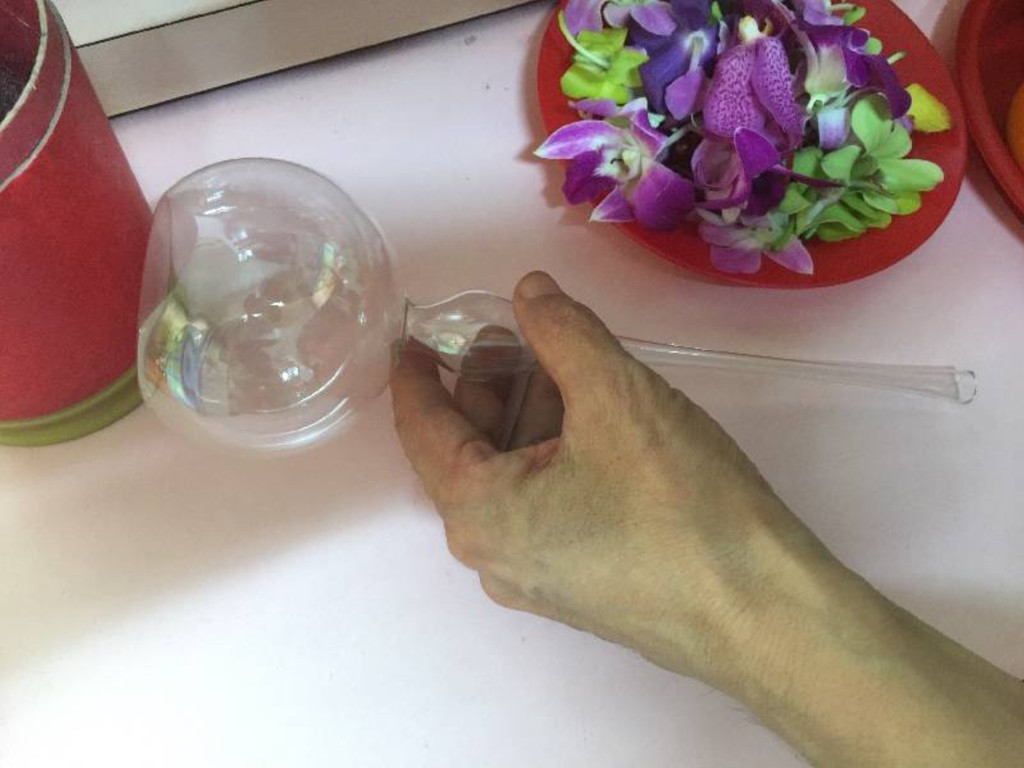
Elliott (1955/1990) describes a curious glass bottle used in the worship of Sun Wukong in Singapore. Filled with “twelve o’clock water” and topped with a consecrated bulbous glass stem, it is said to make a pinging noise to signal the arrival of the monkey god in a home or temple:

There are, also, sometimes other pieces of apparatus, apart from images, which devotees like to keep in their own homes. An outstanding example is an article of equipment almost exclusively associated with the ‘Great Saint’ [大聖] which goes by the onomatopoeic name of ‘ping-pong’ [乒乓]. It consists of an ordinary bottle filled with ‘twelve o’clock water’, water drawn from a tap or well at midday. Into the neck is fitted a funnel-like piece of glass-ware open at the lower end of the funnel, which dips into the water but completely closes the top [fig. 1 and 2]. Everyday at noon, and sometimes at other hours as well, this apparatus gives off a sudden ‘pinging’ sound, as if bubbles were rising and forcing up the funnel in the bottle’s neck. When this occurs, the shen [神, god] is supposed to be revealing his presence in the temple or the home, and an immediate act of worship must be carried out by the persons there. These ‘ping-pong’ are invariably found in temples associated with the ‘Great Saint’. Devotees will purchase their own funnels and bring them to the temple for the dang-ki [童乩, spirit-medium] to consecrate them with a lick of his blood (p. 58).

Fig. 1 – The ping-pong bottle, a.k.a. “Great Sage bottle” (Dasheng ping, 大聖瓶), fitted with the bulbous stem, which is closed at the top and open at the bottom (larger version). Fig. 2 – A detail of the stem (larger version). Images found on google.

The device was also used in Hong Kong according to one personal account shared with me:

I believe the apparatus was used not just in Singapore. My mom told me that as a kid in HK in the 1940s/50s, her aunt also had something similar on the altar where she worshipped the [Great] Saint. And when the apparatus made a noise which signified his arrival, they would light up a joss stick.

I don’t know when the bottle was first associated with Sun Wukong, but the above information points to its active use in Asia as far back as the 1950s. It’s my understanding that the bottle is a rarity in modern practice, suggesting it flourished prior to mid-century.

Why the bottle was associated with the Great Sage is also a mystery to me. But the significance of twelve o’clock water may provide some clues. Astrological theory associates noon with wu (午), the seventh of twelve earthly branches, which is in turn identified with horses, the heart, fire yang, the summer solstice, and the direction south (Wu & Taylor, 2014, pp. 133-134). Readers may remember that Sun Wukong is appointed the keeper of the heavenly horses (bimawen, 弼馬溫) in chapter four of Journey to the West (Wu & Yu, 2012, pp. 148-149). Additionally, Chinese philosophy considers the heart to be the seat of the mind (xin, 心; alternatively translated “heart-mind”). This is important as Sun is called the “Mind Monkey” (xinyuan, 心猿; alternatively translated “Mind Ape”), which is a Buddho-Daoist concept denoting the disquieted, transient thoughts that keep man trapped in Samsara. Examples include the titles for chapters seven (“From the Eight Trigrams Brazier the Great Sage escapes; Beneath the Five Phases Mountain, Mind Monkey is still”) and fourteen (“Mind Monkey returns to the Right; The Six Robbers vanish from sight”). 

(Before I continue, I must warn that using the 16th-century novel as a source for modern folk religion surely overlooks beliefs that I am not aware of. The above info should therefore be considered purely speculative.)

A naturalistic explanation for the pinging noise is air escaping from the bottle due to changes in atmospheric pressure. However, I’d like to speculate on a possible esoteric reason. As mentioned above, noon is identified with fire yang, which is considered the height of yang power. In fact, the hours before wu and after zi (子, midnight) are considered the best time to practice Daoist exlixir cultivation. [1] And since heaven is the embodiment of yang, [2] it’s possible worshipers believe water collected at noon is infused with strong yang energy, thereby giving it the ability to detect the presence of celestial deities like the Great Sage.


Update: 08-11-20

J.D. Martinsen contacted me and noted that “drawing noon water” (da wushi shui, 打午時水) is a common practice in coastal China during the Dragon Boat Festival. The water is apparently known for its demonifugic and medicinal properties. In fact, this custom is even practiced in Taiwan where there is a common saying: “A sip of noon water is better than three years of herbal medicine” (wushi shui yin yi zui, jiao hao buyao chi san nian, 午時水飲一嘴,較好補藥吃三年) (Chen, 2011, p. 210). Therefore, this association with warding malevolent influences/sickness may explain why Sun Wukong is connected with noon water. He is after all the exorcist par excellence, as well as a healer.


Update: 06-23-21

An informant from Singapore, who is the head of a monkey god temple, shared with me some wonderful folk knowledge about the ping-pong bottle. The words below are gently edited for readability:

He fl[ies] at a high speed which generates high heat [and] causes the ping pong to sound. The water inside the bottle where you place the ping pong [is] changed on 五月初五 (端午節) [i.e. the Dragon Boat Festival]. Every year, the replacement water is collected from your rain water. The former water will [be] use[d] to bath[e] to purify our well-being. I have pour[ed] it into a large [pail]. And bottle it and give [it] to devotees to bath[e]. Talisman[s are] issued [when we change the water at noon] (fig. 3), [we] will paste [them] on the bottle on 端午節. [W]hen urgent or danger[rous] matters [happen], we will use the [ping pong holy] water to ward off bad omen[s].

My informant said some of this knowledge was revealed to him by the monkey god.

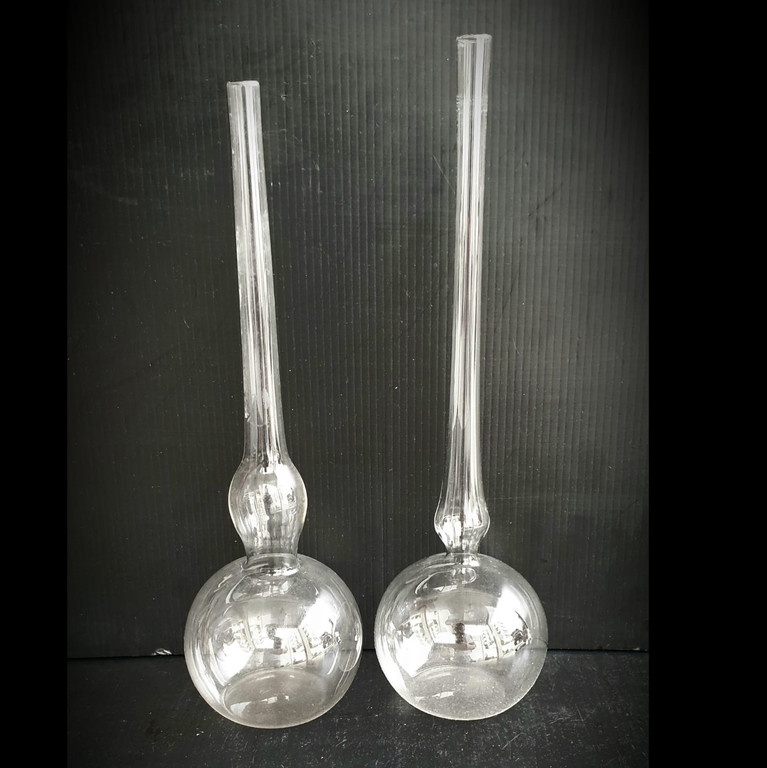
I was also told by a collector-seller that there are different-sized glass stems (fig. 4), though he believes their hand-made nature means no two are exactly the same. My informant states the stems with the “larger diameter will sound louder” when the Great Sage arrives.

Fig. 3 – Talismans on a ping-pong bottle (larger version). Photo taken at the Wallich Street “Tai Seng Yah” (Dasheng ye) temple in Singapore during the 1970s. Courtesy of Ronni Pinsler of the BOXS project. Fig. 4 – The different sizes of ping-pong stems (larger version). Photo from a private collector.


Update: 06-26-21

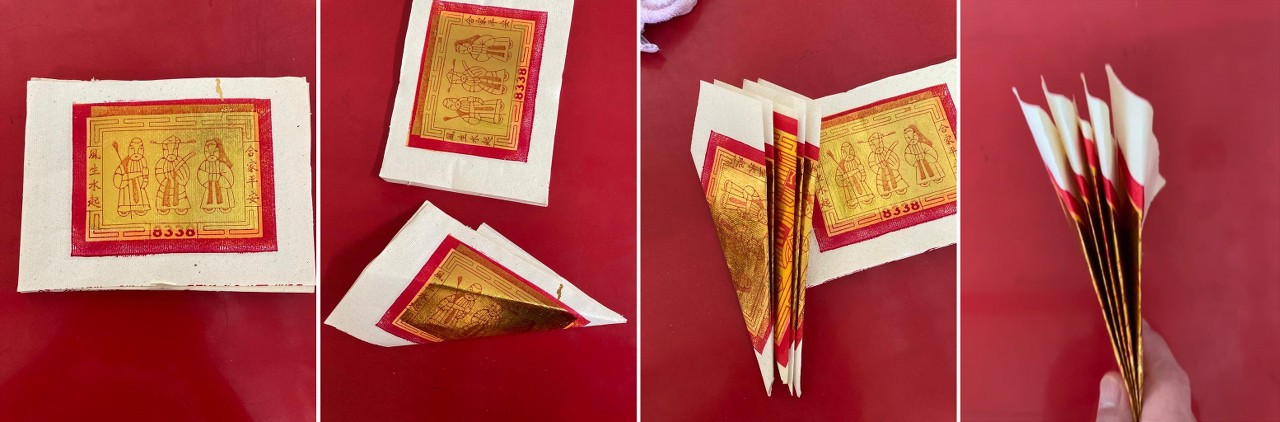
My informant tells me that a beer bottle can be used to hold the pingpong stem. It must be washed and all labels removed. The preparation for the stem is a little more involved. The stem must be washed along with five kinds of flowers. The types of flowers do not matter, but no white flowers are permitted. Also, slices of green lemon can be included, but no yellow lemons are permitted. This washing must be done on the first or the 15th of the lunar month. The holy water is gathered in a pail between 11am and noon from rain the day before the Dragon Boat Festival, for it is believed that it always rains on this day. This water is poured one index finger length from the rim. This ensures it will not overflow once the pingpong stem is inserted. Then triangle-folded joss paper (jin zhi, 金紙) (fig. 5 to 8) is waved three times around the pingpong (nuo pingpong, 挪乒乓) while prayers are said. Finally, the paper is left atop the pingpong bulb for a given time. The pingpong bottle must be placed next to a statue of the Great Sage.

Fig. 5 to 8 – The process of folding the joss paper into triangles (larger version). Photos by my informant.

Notes:

1) This is noted as early as the fourth-century CE work Wondrous Record of the Golden Casket on the Spirit Immortals’ Practice of Eating Qi (Shenxian shiqi jin’gui miaolu, 神仙食氣金櫃妙錄) (Kohn, 2008, p. 84).

2) See, for example, Clearly (2003), p. 391.

Sources:

Chen, X. (2011). Taiwan li shi shang de yi min yu she hui yan jiu [The History of Taiwanese Immigration and Social Studies]. Beijing: Jiu zhou chu ban she.

Cleary, T. F. (2003). The Taoist Classics: The Collected Translations of Thomas Cleary, Volume Two. Boston, Mass: Shambhala.

Elliott, A. J. (1990). Chinese Spirit-Medium Cults in Singapore. London: The Athlone Press. (Original work published 1955)

Kohn, L. (2008). Chinese Healing Exercises: The Tradition of Daoyin. Honolulu: University of Hawaiʻi Press.

Wu, C., & Yu, A. C. (2012). The Journey to the West (Vol. 1) (Rev. ed.). Chicago, Illinois: University of Chicago Press.

Wu, Z., & Taylor, W. K. (2014). Heavenly Stems and Earthly Branches – TianGan DiZhi: The Heart of Chinese Wisdom Traditions. London: Jessica Kingsley Publishers.

What Does Sun Wukong Look Like? A Resource for Artists and Cosplayers

Last updated: 06-02-2025

Type “Sun Wukong” into google images and you will be presented with an endless array of pictures that range from the familiar to the alien. A fanciful 1960s cartoon depiction of our hero sits to the left of a SMITE video game character with hulking muscles and a weapon more akin to a club than a staff. A toy version of Liu Xiao Ling Tong‘s much beloved 1986 TV portrayal sits above an anime character with blond hair and a shaved chest. It seems there are as many depictions of Wukong as he has transformations. But how do these myriad personas compare to his depiction in the novel, and who has produced the most authentic look? In this article I present the Monkey King’s literary description, along with ancient depictions that predate the novel. My hope is that the information will be both interesting and useful, especially for artists and cosplayers looking to make a more authentic design.

1. Ancient Depictions

Some readers may be surprised to learn that stories about a “Monkey Pilgrim” (Hou xingzhe, 猴行者) go all the way back to the Song Dynasty (960-1279 CE). This predates the actual name Sun Wukong by centuries. The literary episodes we all know and love began life as oral tales that evolved over time and grew into an accepted storytelling cycle which started to solidify by the 15th-century CE. [1] But the further we go back in time, the less familiar the recorded material becomes, and due to the memory-based nature of oral storytelling, [2] records for the earliest repertoires do not exist. Luckily, visual media from the Song survives, allowing us to see how artists of that time depicted the Monkey King.

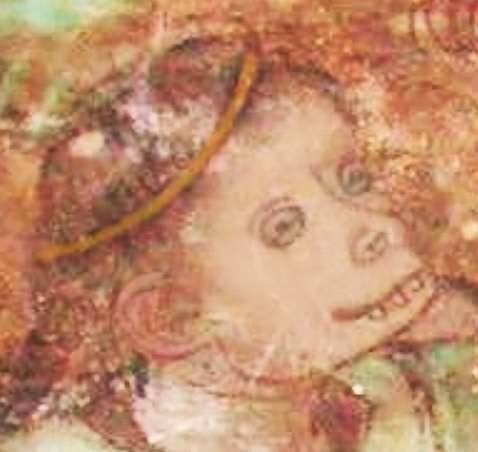
One example, Eastern Thousand Buddha Cave (Dong qianfo dong, 東千佛洞) number two in the Hexi Corridor of Gansu Province, contains a late-Xixia dynasty (late-12th or early-13th-century CE) mural of Xuanzang worshiping Guanyin from a riverbank, while Monkey stands behind him tending to a brown horse. The latter is portrayed with a plain circlet on his head, a homely face with an overbite, waist length hair (or possibly wearing a fur on his back), and light blue-green robes with a red apron and brown pants and sandals (fig. 1 and 2). The depiction is less simian in appearance, yet not wholly human.

Fig. 1 – An almost complete version of the Eastern Thousand Buddha Cave no. 2 painting (larger version). Photo by National Geographic. Fig. 2 – A detail of Monkey and Xuanzang (larger version). See figure 14 for an enhanced detail of Monkey’s head.

A second example, Yulin Cave (Yulin ku, 榆林窟) number three in Gansu, contains a late-Xixia wall painting with similar imagery. Xuanzang is again worshiping from a riverbank, but this time the subject of adoration is Samantabhadra. We see Monkey lacks the fillet but wears a monk’s robe with wrapped socks and sandals. This time he is far more monkey-like in appearance, complete with furry arms (fig. 3 and 4).

Fig. 3 – An almost complete version of the late-Xixia Yulin Cave no. 3 painting (larger version). Monkey and Xuanzang can be seen standing on the river bank on the upper left side. Fig. 4 – A detail of the two figures (larger version).

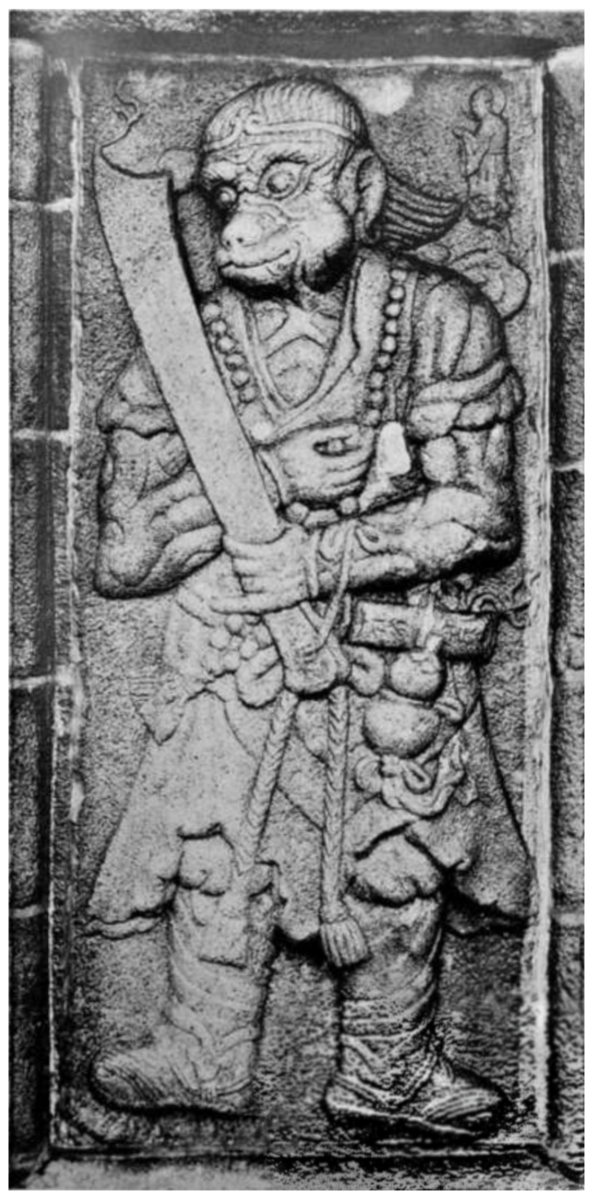
A third example is the 1237 CE stone relief carving from the western pagoda of the Kaiyuan Temple (開元寺) in Quanzhou, Fujian province. This muscular warrior wears a headband, earrings, bracelets, a rosary necklace, and arm bangles (all prescribed Esoteric Buddhist ritual accouterments), as well as a monk’s robe and sandals. He wields a broadsword in one hand, while the other thumbs the rosary at his chest. At his waist hangs a calabash gourd and a scroll of the Mahamayurividyarajni Sutra (Fomu da kongque mingwang jing, 佛母大孔雀明王經) (fig. 5) (Ecke & Demiéville, 1935). He has the large ears and protruding mouth of a monkey.

Fig. 5 – The monkey-headed warrior from Kaiyuan temple in Quanzhou, Fujian (larger version).

Writing in the 1250s, the Song poet Liu Kezhuang (劉克莊, 1187-1269) references our hero twice in his work. The second of two such references uses Monkey as a metaphor to describe the ageing 70-year-old’s appearance. A portion of the poem reads:

A back bent like a water-buffalo in the Zi stream,
Hair as white as the silk thread issued by the “ice silkworms”,
A face even uglier than Hou xingzhe [“Monkey Pilgrim”],
Verse more scanty than even He Heshi (Dudbridge, 1970, p. 46).

背傴水牛泅磵髪白氷蠶吐絲貌醜似猴行者詩痩於鶴何師

Ugliness is a subject I will return to several more times.

I mentioned earlier that the farther we go back in time the less familiar the recorded material becomes. Case in point is the The Story of How Tripitaka of the Great Tang Procures the Scriptures (c. late 13th-century CE), the earliest published edition of Journey to the West. Despite referring to himself as the Monkey King, the Monkey Pilgrim is depicted as a white-clad scholar. Another difference is the fact that he fights with two different staves, one a ringed monk’s staff and the other an iron rod (these two would later be combined to create his signature weapon).

The majority of Song sources depict the Monkey Pilgrim as the size of an adult man but with the head of an ugly monkey. I think that these were likely influenced by early stage plays, which would obviously entail a human actor taking on the role.

2. What the Novel Says

2.1. Physical Appearance

The earliest descriptions of what Monkey looks like appear in chapter one. When he is first taken in by his teacher Subodhi, the sage tells him, “Though your features are not the most attractive, you do resemble a pignolia-eating macaque (husun [猢猻])” (Wu & Yu, 2012, vol. 1, p. 115). After he returns to the Mountain of Flowers and Fruit in chapter two, a demon king refers to Monkey’s height: “You’re not four feet tall” (Wu & Yu, 2012, vol. 1, p. 128).

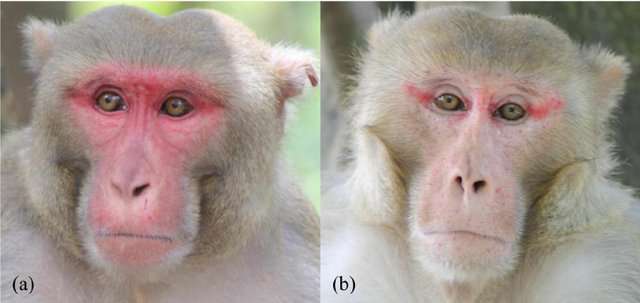
In chapter 7, Monkey is subjected to Laozi’s eight trigrams furnace as punishment for his crimes against heaven. He survives the celestial fire but the smoke inside “…reddened his eyes, giving them a permanently inflamed condition. Hence they were sometimes called Fiery Eyes and Golden Irises [Huoyan jinjing, 火眼金睛]” (based on Wu & Yu, 2012, vol. 1, p. 189). The anthropologist Frances D. Burton (2005) explains that his fiery eyes are “a characteristic he shares with the actual red-rimmed eyes of M. mulatta [the Rhesus macaque]” (p. 148). I further suggest that the hue of his eyes are based on the golden irises of macaques (fig. 6).

Fig. 6 – A comparison of Rhesus macaque males with red-rimmed eyes during mating season (left) and other times (right) (larger version). Original image from Dubue, Allen, Maestripieri, & Higham, 2014, p. 5.

In chapter 20, the reader learns that Monkey’s head is bald (fig. 7). An old man asks him, “[W]hy did you shave your hair to become a monk?” (Wu & Yu, 2012, vol. 1, p. 395).

In chapter 21, a demon king steps out of his cave to fight Sun but is surprised by his small stature:

The old monster took a careful look and saw the diminutive figure of Pilgrim [Monkey]—less than four feet, in fact—and his sallow cheeks. He said with a laugh: “Too bad! Too bad! I thought you were some kind of invincible hero. But you are only a sickly ghost, with nothing more than your skeleton left!” (Wu & Yu, 2012, vol. 1, p. 408).

那怪仔細觀看,見行者身軀鄙猥,面容羸瘦,不滿四尺。笑道:「可憐,可憐。我只道是怎麼樣扳翻不倒的好漢,原來是這般一個骷髏的病鬼。」

(Thank you to Jose Loayza for bringing this passage to my attention.)

His bald head is referred to again in chapter 27:

“But ever since Nirvana delivered me from my sins, when with my hair shorn I took the vow of complete poverty and followed you as your disciple, I had this gold fillet clamped on my head…” (Wu & Yu, 2012, vol. 2, p. 24).

自從涅槃罪度,削髮秉正沙門,跟你做了徒弟,把這個金箍兒勒在我頭上…

(Thank you to Stanley Setiawan for bringing this passage to my attention.)

Fig. 7 – Reggie the baboon from Paignton Zoo (circa 2005). His slick head was the result of his mom’s “over-zealous” grooming. Look at those ears! He’s the wrong genus and species, but you get the general idea what Sun Wukong would look like wearing the golden fillet (larger version).

Wukong’s bald pate is once again referenced in chapter 34:

The fiend then gave the rope a tug and pulled Pilgrim down before he gave that bald head seven or eight blows with the sword. The skin on Pilgrim’s head did not even redden at all (Wu & Yu, 2012, vol. 2, p. 128).

那怪將繩一扯,扯將下來,照光頭上砍了七八寶劍。行者頭皮兒也不曾紅了一紅。

In chapter 44, the Monkey King’s appearance is revealed in a dream to a group of monks by the personification of the planet Venus:

A bumpy brow, and golden eyes flashing;
A round head and a hairy face with sunken cheeks;
Gaping teeth, pointed mouth, a character most sly;
He looks more strange than the thunder god
[…] (based on Wu & Yu, 2012, vol. 2, p. 276).

磕額金睛晃亮,圓頭毛臉無腮。咨牙尖嘴性情乖。貌比雷公古怪。

In chapter 49, a monster who barely survived a battle with Sun Wukong describes his appearance to a friend: [H]e has a hairy face and a thunder god beak … forked ears and broken nose. A monk with fiery eyes and golden irises (based on Wu & Yu, 2012, vol. 2, p. 353).

In chapter 58, Sun Wukong’s doppelganger is described as having matching features:

A hairy face, a thunder god beak,
Empty cheeks unlike Saturn’s; [3]
Two forked ears on a big, broad head,
And fangs that have outward grown (based on Wu & Yu, 2012, vol. 3, p. 105).

…也是這等毛臉雷公嘴,朔腮別土星,查耳額顱闊,獠牙向外生。

In chapter 67, an old man chastises Monkey for offending him:

You! Look at your skeleton face, flattened brow, collapsed nose, sunken cheeks, and hairy eyes. A consumptive ghost, no doubt, and yet without any manners at all, you dare use your pointed mouth to offend an elderly person like me!” (based on Wu & Yu, 2012, vol. 3, p. 242).

你這廝骨撾臉,磕額頭,塌鼻子,凹頡腮,毛眼毛睛,癆病鬼,不知高低,尖著個嘴,敢來衝撞我老人家?

In chapter 75, he once again tests the hardness of his bald head:

“You come over here,” said the old demon, “and act as my chopping block first. If your bald head can withstand three blows of my scimitar, I’ll let you and your Tang Monk go past. But if you can’t, you’d better tum him over quickly to me as a meal.”

When he heard this, Pilgrim smiled and said, “Fiend! If you have brush and paper in your cave, take them out and I’ll sign a contract with you. You can start delivering your blows from today until next year, and I won’t regard you seriously!” Arousing his spirit, the old demon stood firmly with one foot placed in front of the other. He lifted up his scimitar with both hands and brought it down hard on the head of the Great Sage. Our Great Sage, however, jerked his head upward to meet the blow. All they heard was a loud crack, but the skin on the head did not even redden (Wu & Yu, 2012, vol. 3, p. 373).

老魔道:「你過來,先與我做個樁兒,讓我盡力氣著光頭砍上三刀,就讓你唐僧過去;假若禁不得,快送你唐僧來,與我做一頓下飯。」行者聞言笑道:「妖怪,你洞裡若有紙筆,取出來,與你立個合同。自今日起,就砍到明年,我也不與你當真。」

那老魔抖擻威風,丁字步站定,雙手舉刀,望大聖劈頂就砍。這大聖把頭往上一迎,只聞扢扠一聲響,頭皮兒紅也不紅。

We can see from these quotes several features that appear again and again. These include a furry face with sunken cheeks, fiery eyes, a broken or flat nose, a beak-like mouth with protruding fangs, and forked ears (with long earlobes, per the 06-02-25 update). The author-compiler of the novel uses these features over and over again to remind the reader just how ugly the Great Sage is. These same features are also shared by the Rhesus monkey and other macaque species (fig. 8). The multiple mentions of the Thunder God‘s beak refers to the monkey’s prognathic (protruding) mouth, which houses large canine teeth. The quotes also let us know that Sun Wukong is less than four feet tall and very skinny (e.g. having “sallow cheeks” and being like “a consumptive ghost”) just like a monkey (fig. 9). It’s important to note that Sun is described as being bald numerous times throughout the novel. This should come as no surprise since he was required to take the tonsure as a Buddhist monk. Modern depictions often deviate from the features mentioned here (more on this below).

Fig. 8 – A Bonnet macaque bearing its teeth. Photo by Hank Christensen. The furry face with sunken cheeks, a broken (flat) nose, beak-like mouth with protruding fangs, and forked ears are easily discernible. Fig. 9 – The short, skinny body of a Rhesus monkey. Photo by mario_ruckh via flickr.

2.2 Clothing and Accessories

The novel mentions Sun Wukong wearing different attire throughout his roughly 1,100 years of life. Here I will focus on that which is closely associated with his traditional iconography.

The clothing most often associated with Monkey is his suit of armor. He receives it from the dragon kings of the world’s oceans in chapter three:

“I have here a pair of cloud-treading shoes the color of lotus root[, said Aoshun, the Dragon King of the Northern Ocean]. Aorun, the Dragon King of the Western Ocean said, “I brought along a cuirass of chainmail made of yellow gold.” “And I have a cap with erect phoenix plumes, made of purple gold,” said Aoqin, the Dragon King of the Southern Ocean (based on Wu & Yu, 2012, vol. 1, p. 137).

北海龍王敖順道:「… 我這裡有一雙藕絲步雲履哩。」西海龍王敖閏道:「我帶了一副鎖子黃金甲哩。」南海龍王敖欽道:「我有一頂鳳翅紫金冠哩。」

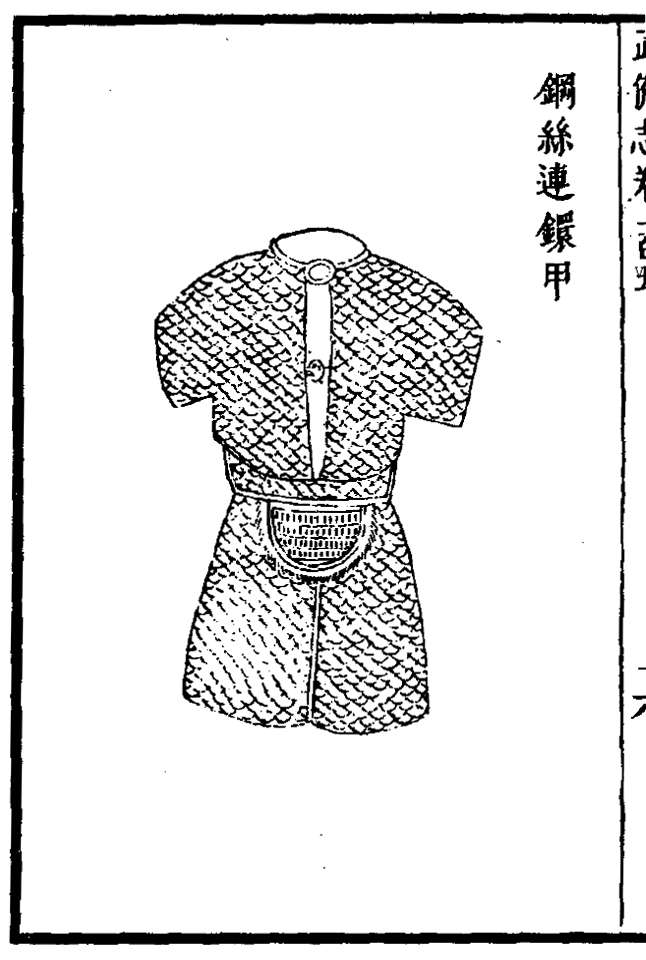
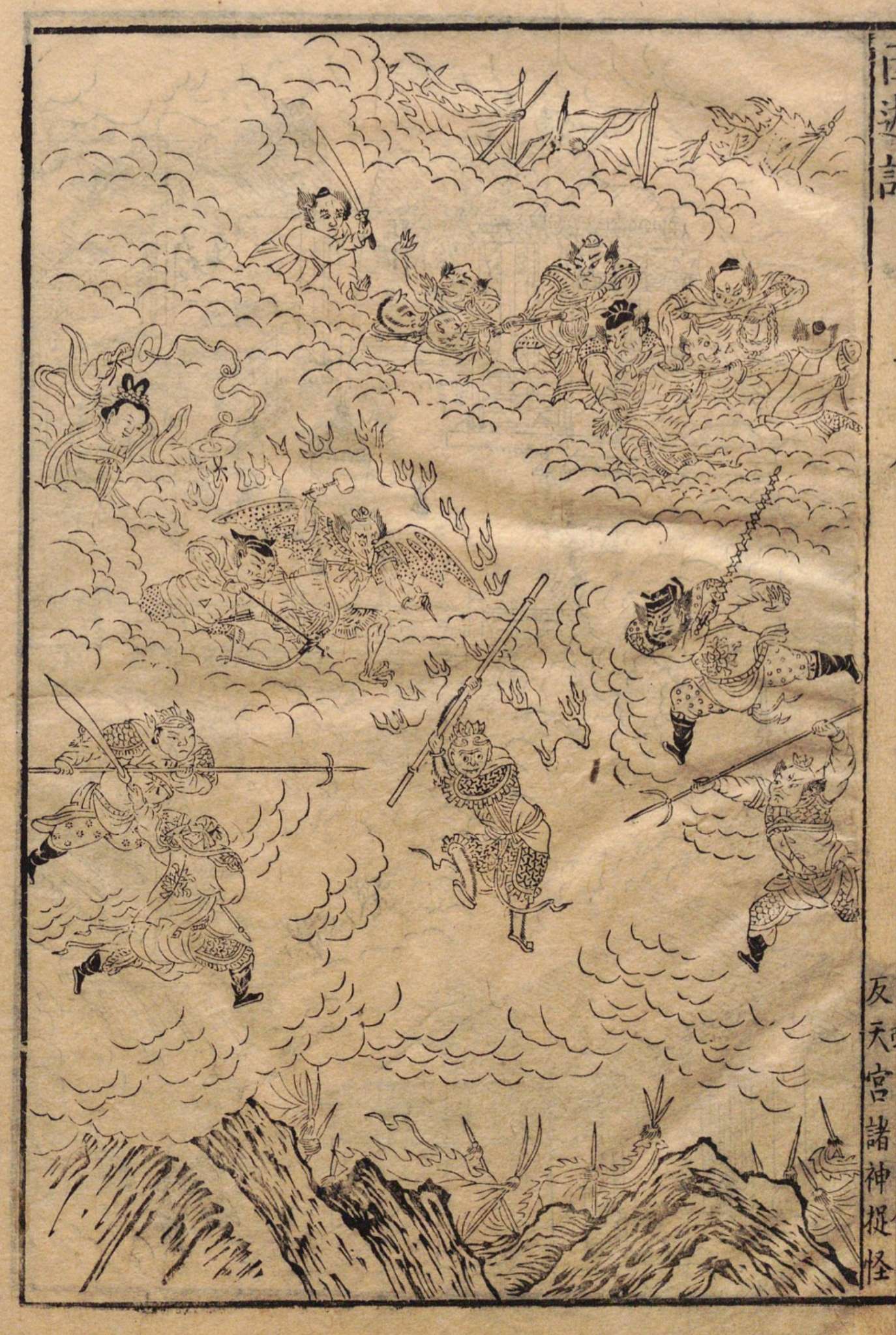
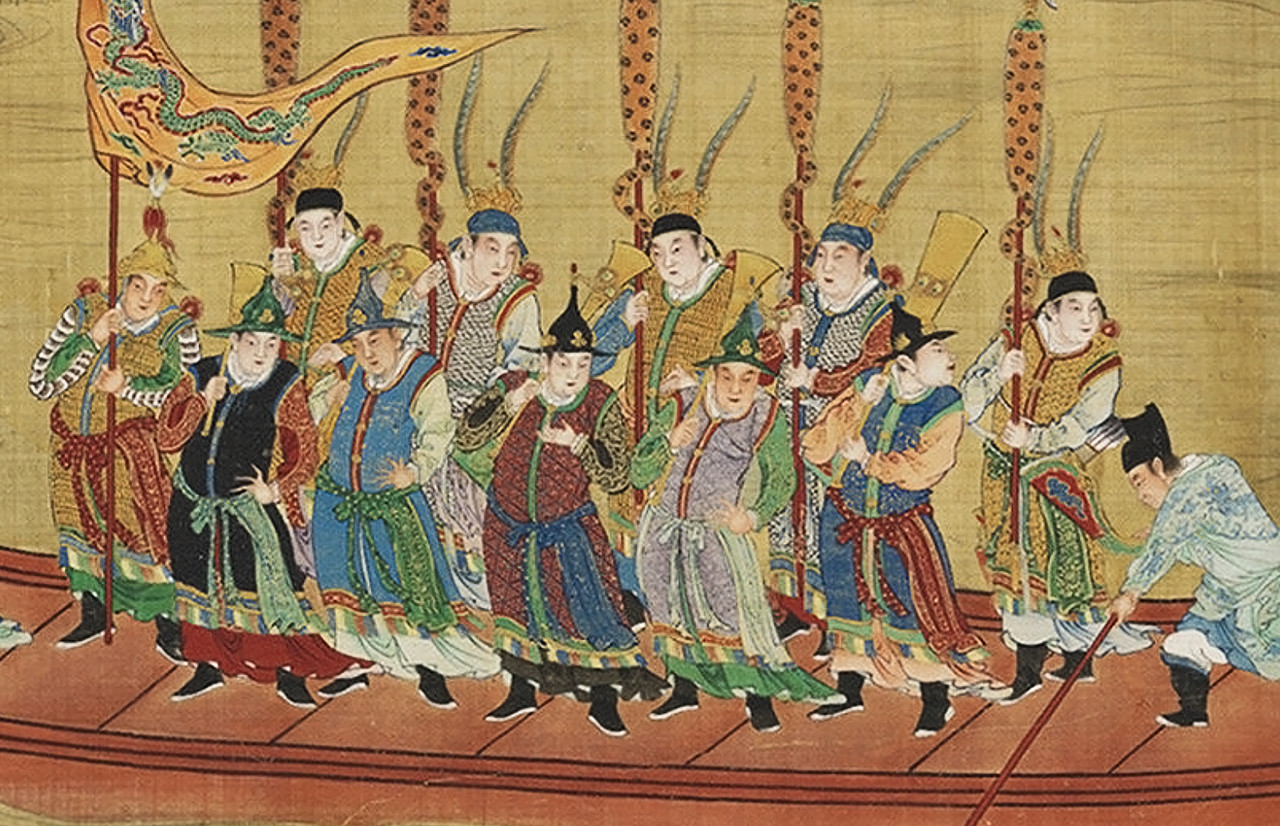
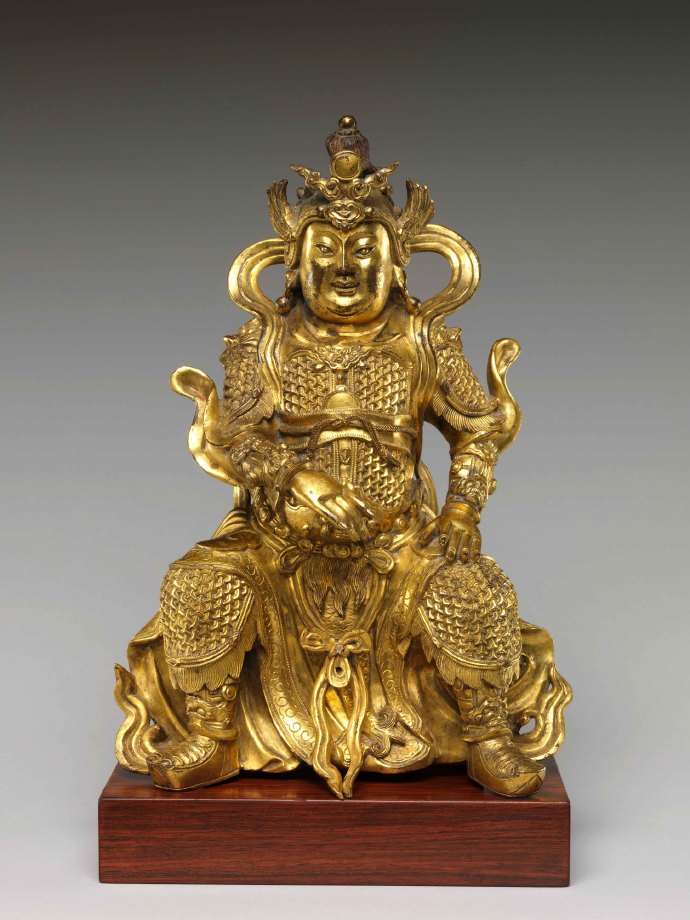
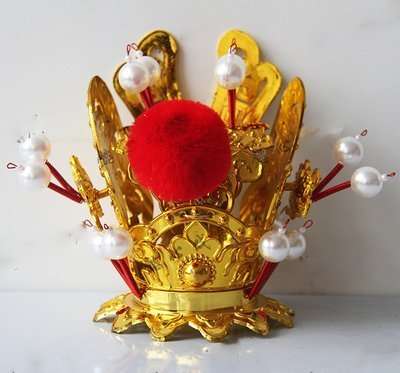
Those wanting to make a novel accurate suit should consult Ming-era chainmail (fig. 10). However, the oldest drawing of Wukong wearing armor that I’m aware of depicts him with mountain pattern” armor (fig. 11). Combinations of mountain pattern armor and feather caps can be seen in the 16th-century CE scroll The Emperor’s Return to the Capital (Rubitu, 入蹕圖) (fig. 12), showing it was part of historical military regalia and not just the purview of Chinese opera (fig. 13). Modern depictions of Monkey tend to portray him wearing mountain pattern armor with ornate beast elements on the shoulders and waist. Those wishing to replicate this kind of armor should consult Ming-era statues of Buddhist protector deities, such as Skanda or the Four Heavenly Kings (this blog is especially good) (fig. 14, for example). Modern “Purple Gold Caps” (zijin guan, 紫金冠) with lingzi (翎子) feathers should be used for Sun’s phoenix feather cap (fig. 15).

Fig. 10 – Ming chainmail from the Wubei zhi (1621 CE) (larger version). Fig. 11 – A woodblock print of Sun wearing mountain pattern armor while fighting the heavenly army (larger version). From Mr. Li Zhuowu’s Literary Criticism of Journey to the West (late-16th-century CE, “Mr. Li’s Criticism” hereafter). Fig. 12 – A detail of halberd-bearing soldiers wearing mountain pattern armor and feather caps from The Emperor’s Return to the Capital (16th-century CE) (larger version). Image enhanced slightly for clarity. Fig. 13 – Monkey as portrayed in Beijing Opera (larger version). Photo by TAO Images Limited via Alamy. Fig. 14 – A 16th-century CE brass statue of Skanda (larger version). This blog has photos from all sides. Fig. 15 – A modern example of a Purple Gold Cap (larger version). 

Contrary to popular belief, Sun does not wear the armor throughout the entire story. Though not openly stated, the novel suggests it is stripped from the monkey when he is captured by heavenly soldiers in chapter six: “They bound him with ropes and punctured his breast bone with a knife, so that he could transform no further” (Wu & Yu, 2012, vol. 1, p. 186). Obviously the knife wouldn’t have punctured the magic armor. And after heaven fails to execute him in chapter seven, several celestial report:

“Your Majesty, we don’t know where this Great Sage has acquired such power to protect his body. Your subjects slashed him with a scimitar and hewed him with an ax; we also struck him with thunder and burned him with fire. Not a single one of his hairs was destroyed (emphasis added). What shall we do?” (Wu & Yu, 2012, vol. 1, p. 188).

萬歲,這大聖不知是何處學得這護身之法,臣等用刀砍斧剁,雷打火燒,一毫不能傷損,卻如之何? 

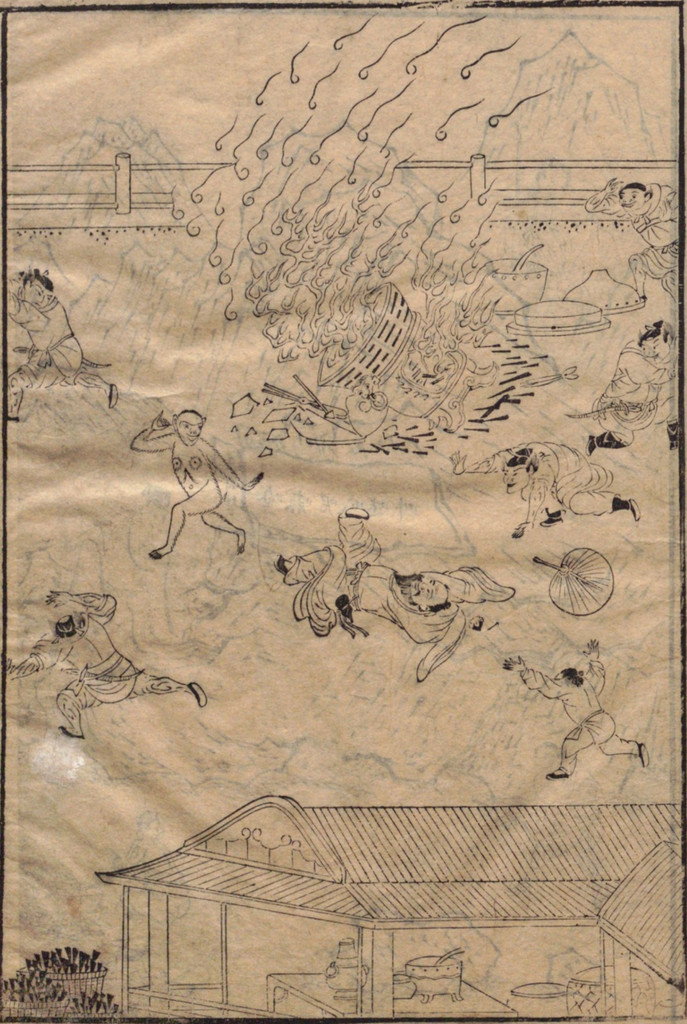
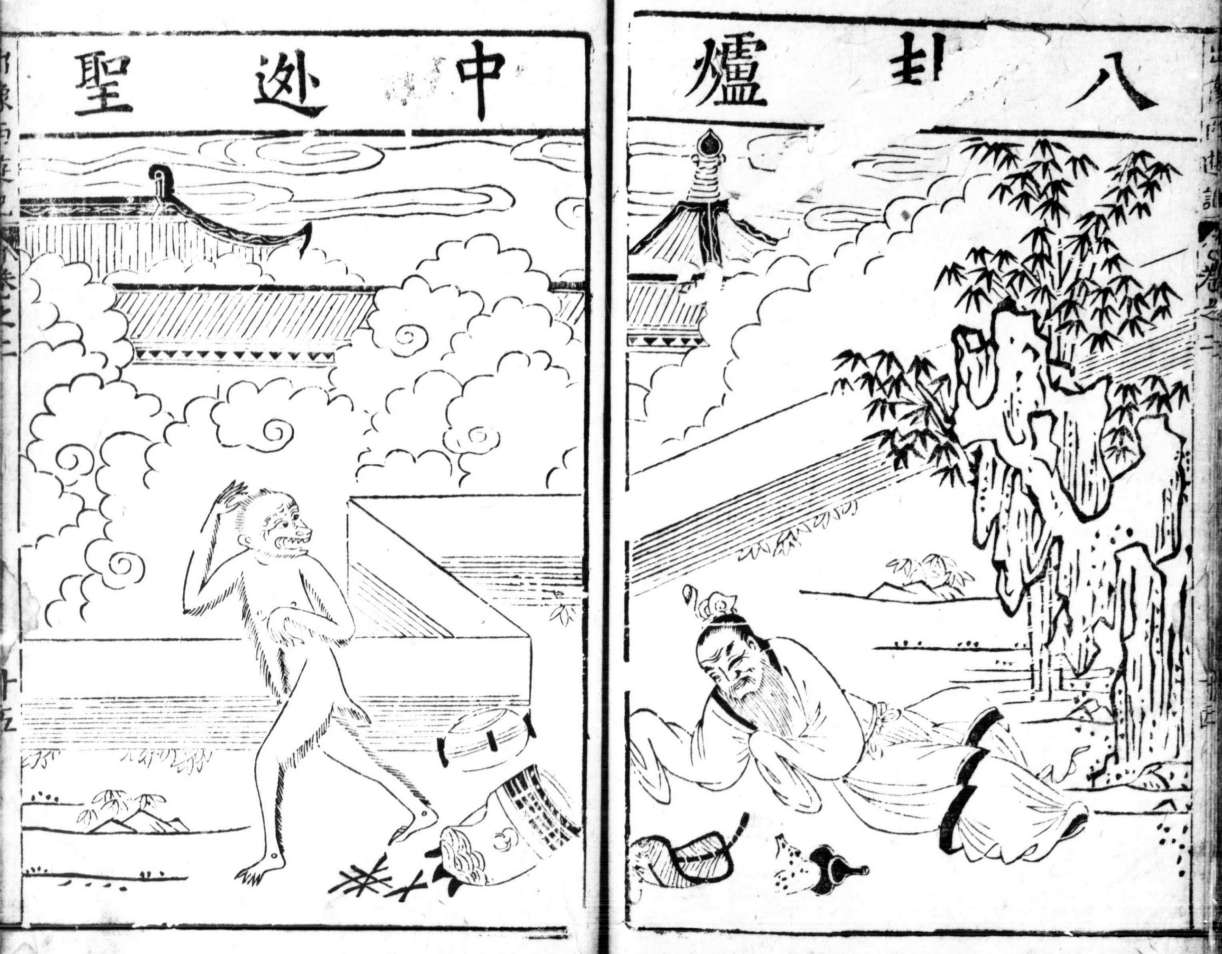
Prior to his turn in Laozi’s eight trigrams furnace in chapter seven, the story again references the knife in Monkey’s breastbone, suggesting he is still naked: “Arriving at the Tushita Palace, Laozi loosened the ropes on the Great Sage, pulled out the weapon from his breastbone, and pushed him into [furnace]” (Wu & Yu, 2012, vol. 1, p. 189). One late-Ming woodblock print actually portrays him naked upon his escape from the furnace (fig. 16). Most importantly, after being released from his 600 plus-year-long imprisonment under Five Elements Mountain, Monkey is twice described in chapter 14 as being “completely or stark naked” (chi lin lin, 赤淋淋; chi tiao tiao, 赤條條) (Wu & Yu, 2012, vol. 1, p. 309).

Fig. 16 – Wukong in his birthday suit escaping from Laozi’s eight trigrams furnace (larger version). From Mr. Li’s Criticism (late-16th to early-17th-century CE).

The lack of clothing leads to his second most identifiable and longest-worn piece of attire, a tiger skin kilt (hu pi qun, 虎皮裙). After killing the beast in chapter 14:

He pulled off one strand of hair and blew a mouthful of magic breath onto it, crying, “Change!” It changed into a sharp, curved knife, with which he ripped open the tiger’s chest. Slitting the skin straight down, he then ripped it off in one piece. He chopped away the paws and the head, cutting the skin into one square piece. He picked it up and tried it for size, and then said, “It’s a bit too large; one piece can be made into two.” He took the knife and cut it again into two pieces; he put one of these away and wrapped the other around his waist. Ripping off a strand of rattan from the side of the road, he firmly tied on this covering for the lower part of his body (Wu & Yu, 2012, vol. 1, p. 310).

好猴王,把毫毛拔下一根,吹口仙氣,叫:「變!」變作一把牛耳尖刀,從那虎腹上挑開皮,往下一剝,剝下個囫圇皮來。剁去了爪甲,割下頭來,割個四四方方一塊虎皮。提起來,量了一量道:「闊了些兒,一幅可作兩幅。」拿過刀來,又裁為兩幅。收起一幅,把一幅圍在腰間。路傍揪了一條葛籐,緊緊束定,遮了下體

Monkey’s most recognizable accessory is the self-control-inducing golden fillet (jingu, 金箍; a.k.a. jingu, 緊箍, lit: “tight fillet”), which he is tricked into wearing as a punishment shortly after murdering six bandits in chapter 14. As noted above, the band predates the novel, appearing in the 12th to 13th-century CE Eastern Thousand Buddha Cave number two painting. This piece depicts the headgear as a simple circlet devoid of any decoration (fig. 17). This matches the novel’s description of “a thin metal band” (jinxian, 金線) (Wu & Yu, 2012, vol. 1, p. 310). But as can be seen from the Kaiyuan temple pagoda relief, there also exists a version with a double curlicue pattern in the center of the forehead (fig. 18). This has come to be the most popular version used in modern media.
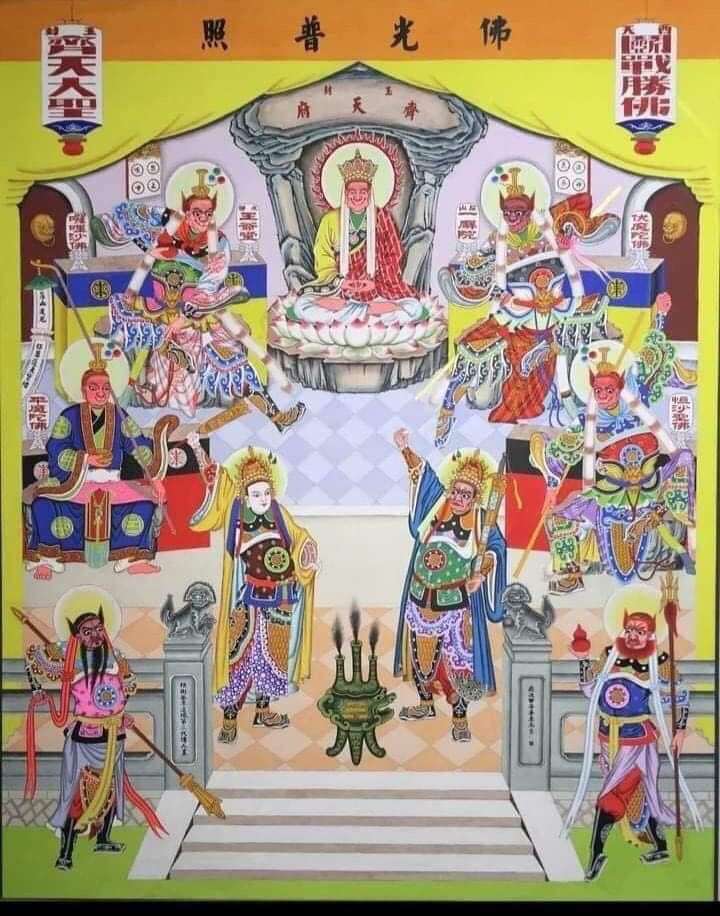
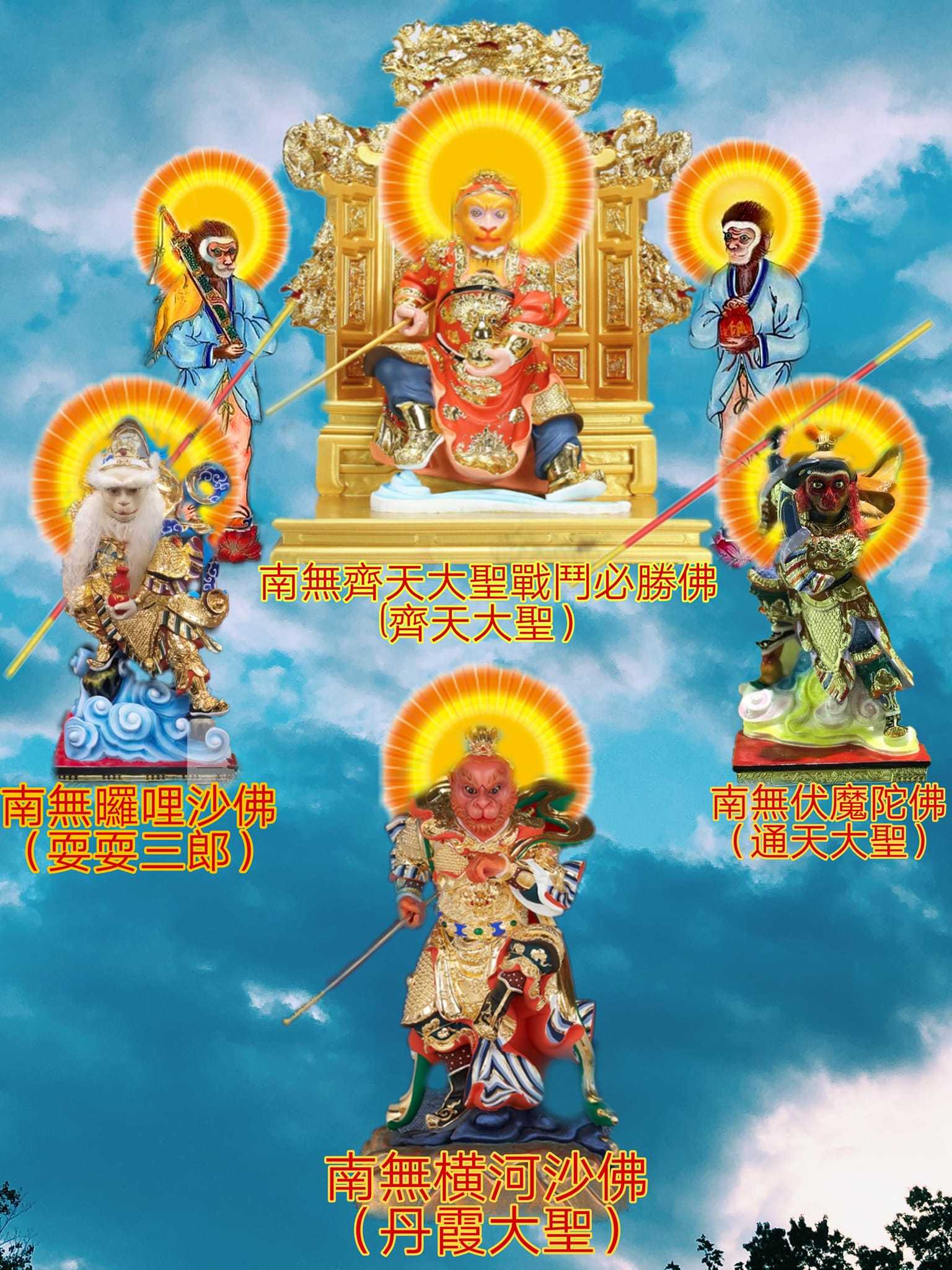
Fig. 17 – Detail of the Monkey Pilgrim’s fillet from Eastern Thousand Buddha Cave no. 2 (c. 12th to 13th-century CE) (larger version). Image enhanced slightly for clarity. Fig. 18 – Detail from the Kaiyuan Temple pagoda relief (1237 CE) (larger version).

As for other attire, there exists one passage in chapter 58 that describes how Monkey’s doppelganger copied even his clothing:

His looks were exactly the same as those of the Great Sage: he, too, had a gold fillet clamped to his blondish-brown hair, a pair of fiery eyes with golden irises, a monk’s robe on his body, a tiger kilt tied around his waist, a gold-banded iron staff in one of his hands, and a pair of deerskin boots on his feet (based on Wu & Yu, 2012, vol. 3, p. 105).

模樣與大聖無異:也是黃髮金箍,金睛火眼;身穿也是綿布直裰,腰繫虎皮裙;手中也拿一條兒金箍鐵棒;足下也踏一雙麂皮靴

Two things about this passage require explanation. First, Yu (Wu & Yu, 2012) originally translated huangfa (黃髮) as “brownish hair” (vol. 3, p. 105). But huang (黃) traditionally means “yellow.” If you refer back to figures six, eight, and nine, you will see that macaque monkeys have a light brown to blond coloring, so I changed the translation to reflect this.

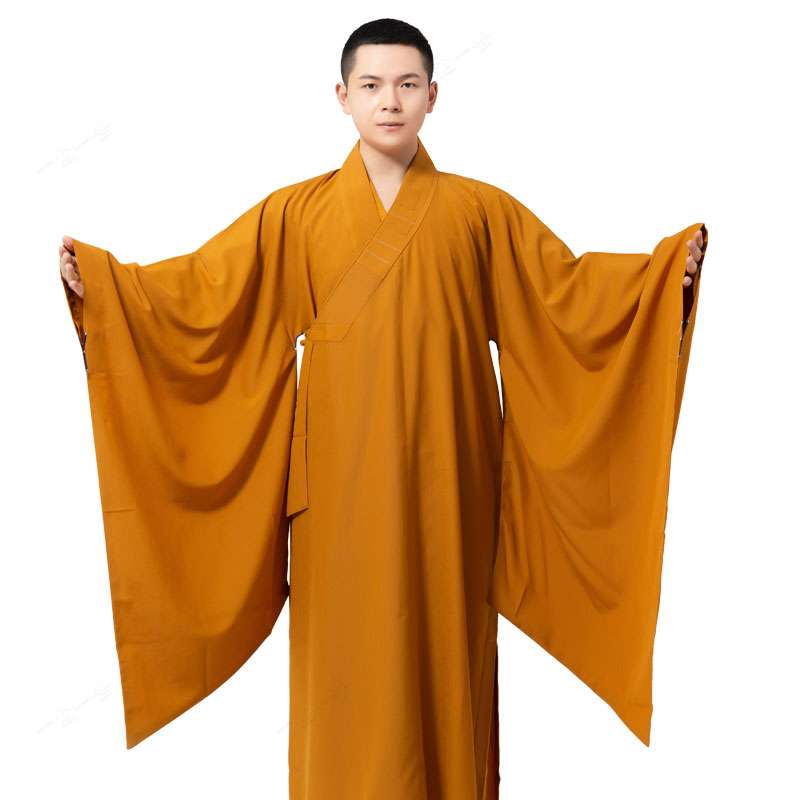
Second, he translates mianbu zhiduo (綿布直裰) as “silk shirt” (Wu & Yu, 2012, vol. 3, p. 105). However, a better translation is “silk cloth zhiduo robe.” The zhiduo robe is known colloquially in English as “Buddhist monk” or “Taoist monk” robes. Also called haiqing (海青), such garments reach almost to the ground and have long, broad sleeves. The robe is closed by a tie on the right side of the torso (fig. 19).

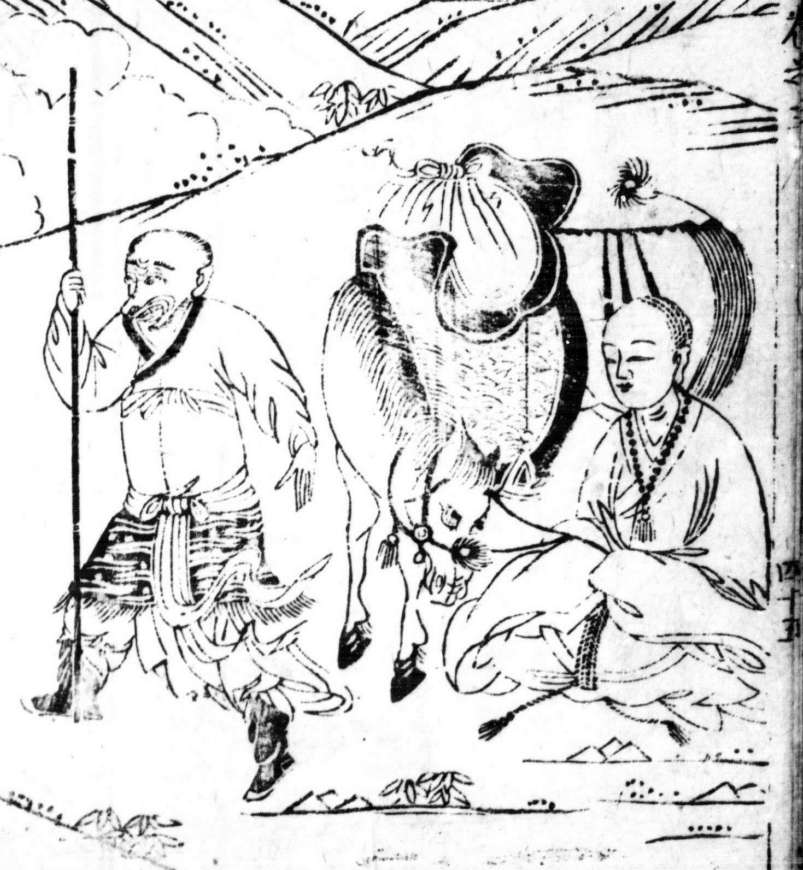
Woodblock prints of Monkey from the original 1592 CE Journey to the West vary from page to page, but one is pretty accurate. He wears the robe (with tied cuffs), the tiger skin kilt, and boots (fig. 20).

Fig. 19 – A zhiduo/haiqing robe (larger version). Image found here. These robes can be any number of colors. Fig. 20 – A woodblock print of Sun Wukong with his master, Tripitaka (larger version).

There is a distinct order in which Sun Wukong wears the aforementioned clothing and accessories: the armor, then the tiger skin, and then the golden fillet. However, many modern depictions portray Monkey wearing both the armor and headband. This is obviously anachronistic within the novel’s fictional story line. (Admittedly, though, this is not unique to the modern era. See figure 11 for a 16th-century CE example.) Furthermore, many depictions dismiss the tiger skin kilt altogether.

2.3. The Staff

Monkey’s staff is first introduced in chapter three when he travels to the undersea palace of the dragon king to procure a divine weapon. There, he is directed towards a massive iron pillar:

Wukong girded up his clothes and went forward to touch it: it was an iron rod more than twenty feet long and as thick as a barrel. Using all his might, he lifted it with both hands, saying, “It’s a little too long and too thick. It would be more serviceable if it were somewhat shorter and thinner.” Hardly had he finished speaking when the treasure shrunk a few feet in length and became a layer thinner. “Smaller still would be even better,” said Wukong, giving it another bounce in his hands. Again the treasure became smaller. Highly pleased, Wukong took it out of the ocean treasury to examine it. He found a golden ring at each end, with solid black iron in between. Immediately adjacent to one of the rings was the inscription, “The As-You-Will Gold-Banded Staff. Weight: 17,560 pounds” (based on Wu & Yu, 2012, p. 135). [4]

悟空撩衣上前,摸了一把,乃是一根鐵柱子,約有斗來粗,二丈有餘長。他儘力兩手撾過道:「忒粗忒長些,再短細些方可用。」說畢,那寶貝就短了幾尺,細了一圍。悟空又顛一顛道:「再細些更好。」那寶貝真個又細了幾分。悟空十分歡喜,拿出海藏看時,原來兩頭是兩個金箍,中間乃一段烏鐵。緊挨箍有鐫成的一行字,喚做:「如意金箍棒,重一萬三千五百斤。」

A poem in chapter 75 describes how the staff is decorated with magic symbols. Part of it reads:

The rod of bin steel nine cyclic times refined
Was forged in the stove by Laozi himself.
King Yu took it, named it “Treasure Divine,”
To fix the Eight Rivers and Four Seas’ depth.
In it were spread out tracks of planets and stars,
Its two ends were clamped in pieces of gold.
Its dense patterns would frighten gods and ghosts;
On it dragon and phoenix scripts were drawn.
Its name was one Rod of Numinous Yang,
Stored deep in the sea, hardly seen by men
[…] (based on Wu & Yu, 2012, vol. 3, p. 375)

棒是九轉鑌鐵煉,老君親手爐中煅。
禹王求得號神珍,四海八河為定驗。
中間星斗暗鋪陳,兩頭箝裹黃金片。
花紋密佈鬼神驚,上造龍紋與鳳篆。
名號靈陽棒一條,深藏海藏人難見。

So we see the staff is depicted as a rod of black iron or steel adorned on both ends with a single golden ring and decorated along the body with astronomical charts and an inscription towards one tip listing the weapon’s name and weight. The literary description greatly differs from modern media which often portrays it as entirely gold or red in color.

Those wishing to replicate the inscription on the staff can use figure 21 as a template. The characters are presented in “Small Seal Script” (Xiao Zhuan, 小篆), which hails from the Qin Dynasty (221-206 BCE) when written Chinese was standardized by Emperor Qin Shihuang. Using this will give the staff a more ancient look. I used the template years ago to create a replica staff for an archaeology course in college.

sun_wukong_staff_inscription___enlarged_by_ghostexorcist-d7681eb - small

Fig. 21 – The small script template for Monkey’s staff (larger version).

As for “the tracks of stars and planets,” I recommend using the Dunhuang or Suchow star charts.

3. Popular Depictions

The following two sections include a small sampling of what I consider to be the least and most accurate portrayals in past and modern media. These are presented in no particular order.

3.1. The Least Accurate

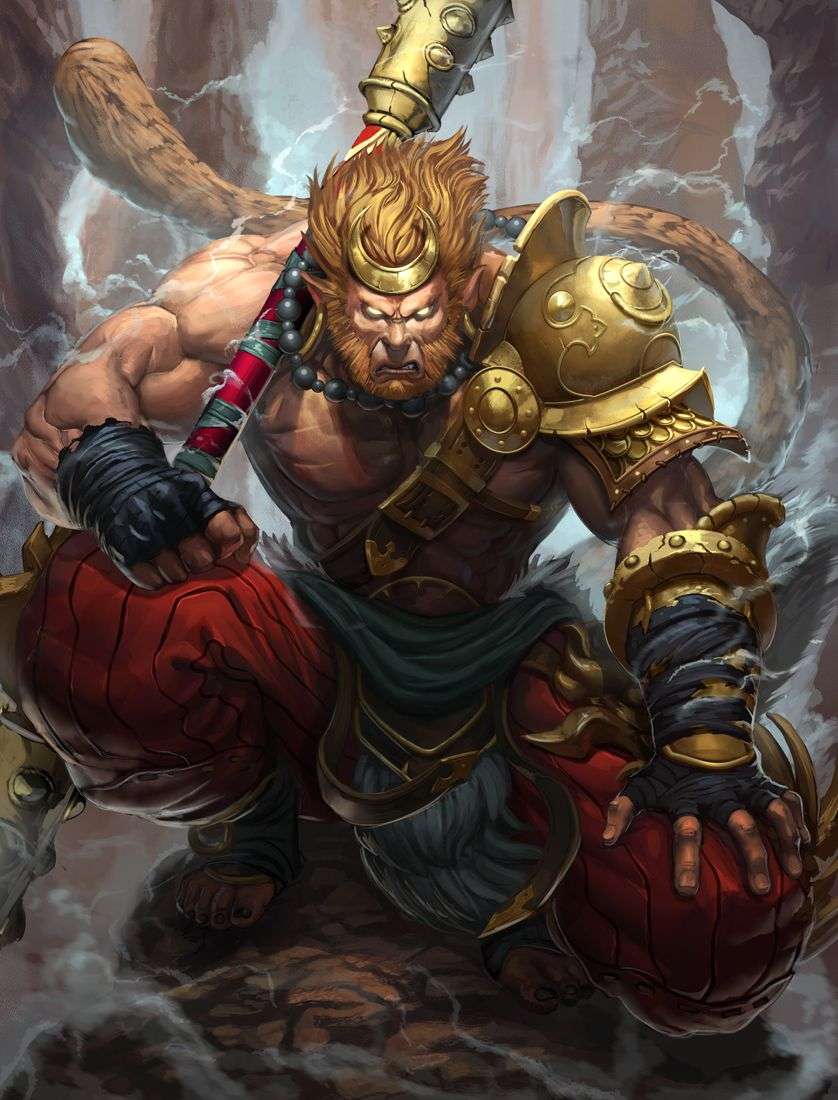
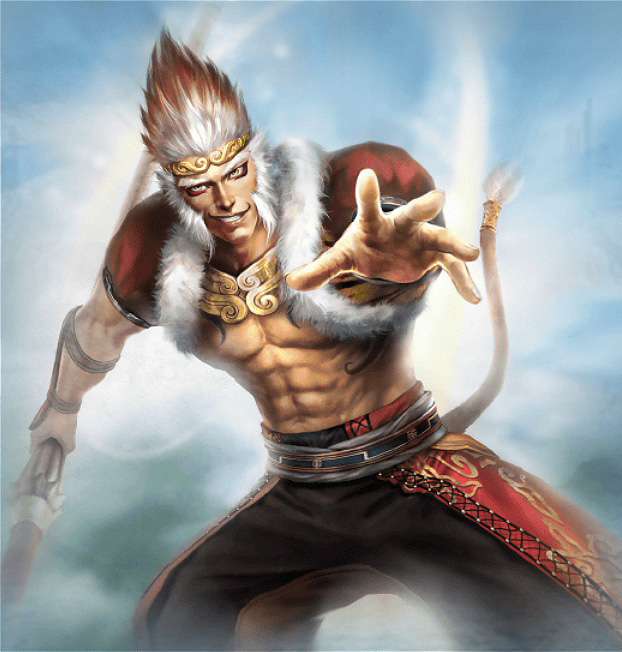
1) SMITE video game – He’s basically a bodybuilder with mutton chops (fig. 22). The design includes the aforementioned headband plus armor anachronism. Why is he wearing a gladiator-style pauldron? The original illustration is by Brolo on deviantart.

Fig. 22 – “Do you even lift?” Wukong (larger version).

2) Warriors Orochi video game – Mutton chops, frosted tips, and an outfit borrowed from Prince’s wardrobe (fig. 23). Words fail me.

Fig. 23 – “Backup Dancer” Wukong (larger version).

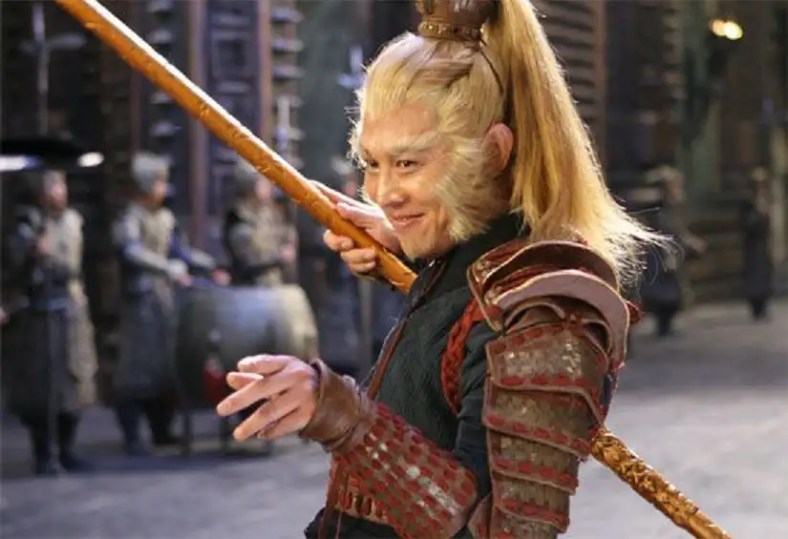
3) The Forbidden Kingdom (2008) – Jet Li has a blond ponytail, mutton chops, and a soul patch (fig. 24). Need I say more?

Fig. 24 – “L’Oréal Paris” Wukong (larger version).

3.2. The Most Accurate

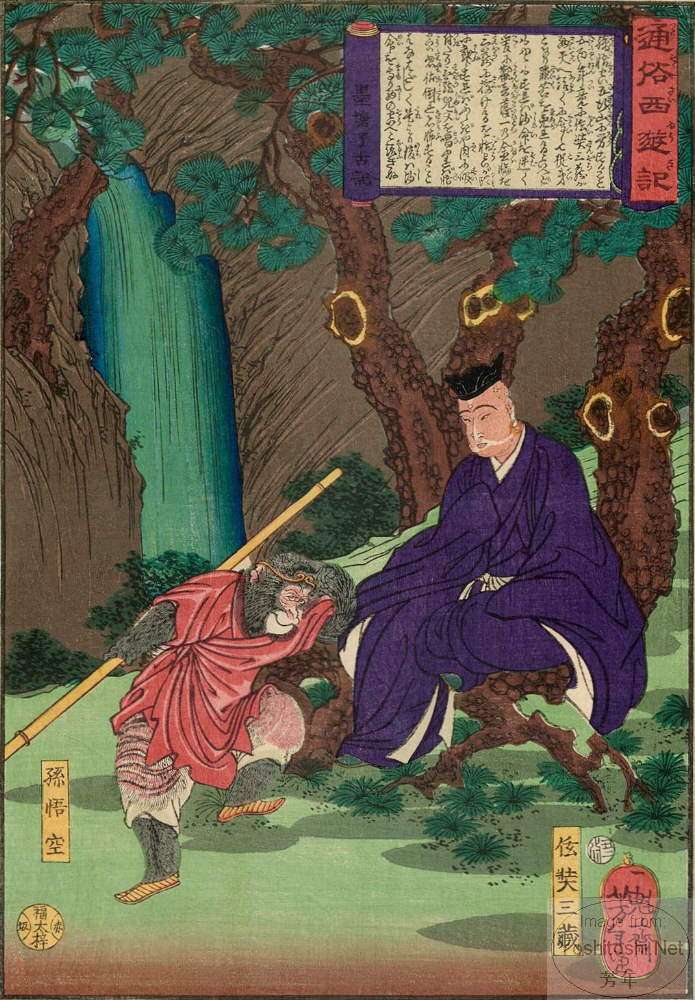
1) Yoshitoshi (1839-1892) – This Japanese artist produced many woodblock prints of our hero. Take for example his Modern Journey to the West series completed between 1864 and 1865. He portrays Sun Wukong as a red-faced snow macaque, which aligns more with the literary description (fig. 25).

Fig. 25 – Wukong salutes Xuanzang (larger version).

2) Journey to the West: Conquering the Demons (2013) – This dark comedy depicts the Great Sage as a short, ugly primate wearing golden armor (fig. 26).

Fig. 26 – Wukong prior to becoming Xuanzang’s disciple (larger version).

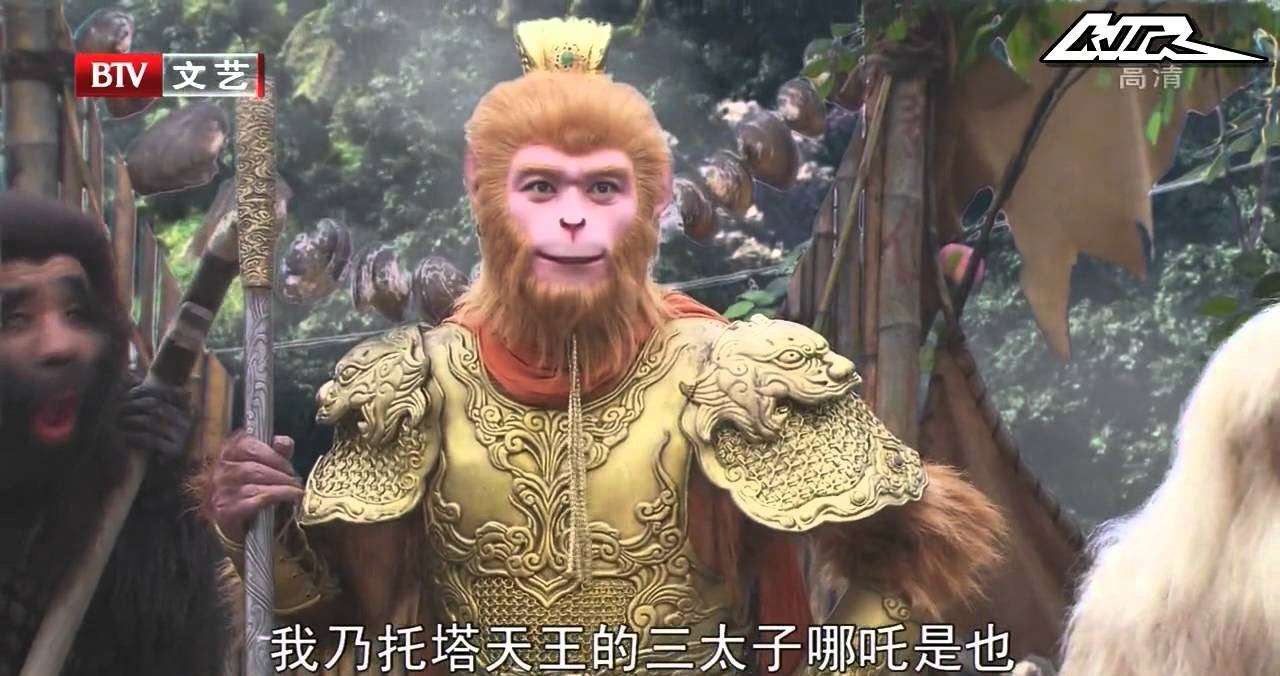
3) Journey to the West (2011) – This television series is a faithful adaptation of the novel. Although the actor who plays Sun Wukong is normal height, he wears a full silicone mask and clawed gloves to give the character a more primate look. His golden chainmail armor and staff are more accurate too. The latter even includes decorations on the shaft (fig. 27).

Fig. 27 – Wukong during his rebellion against heaven (larger version).

4. Conclusion

The novel portrays Sun Wukong as an ugly, bald Rhesus monkey less than four feet tall. (Per the 06-02-25 update, he also has long earlobes.) His traditional literary attire includes a phoenix feather cap, golden chainmail armor, and lotus root-colored boots. Later, he wears a golden fillet, a silk monk’s robe, a tiger skin kilt, and leather boots. He wields a rod of black iron/steel adorned on both ends with a single golden ring and decorated along the body with astronomical charts and an inscription towards one tip listing the weapon’s name and weight.


Update: 02-02-21

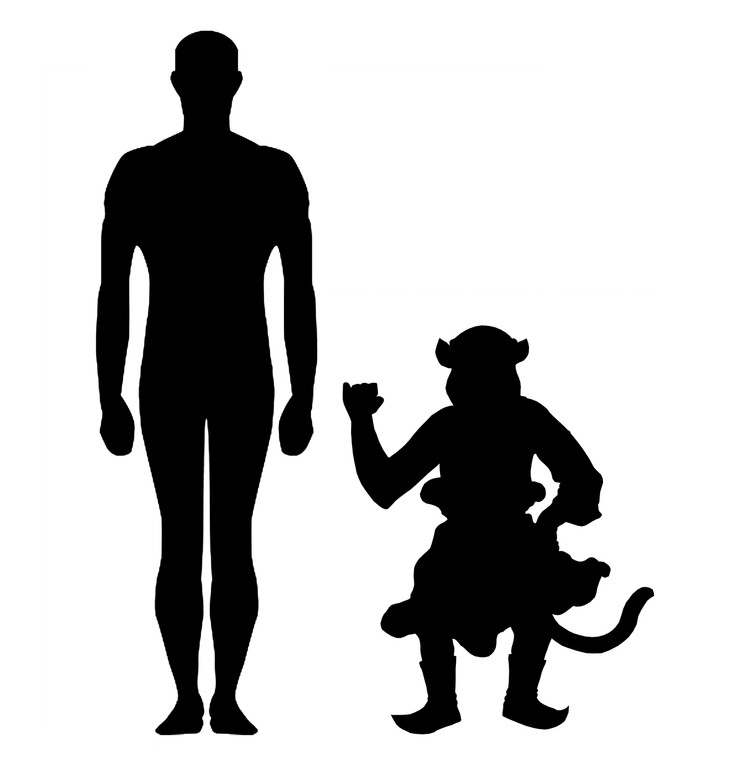
As mentioned above, the novel describes Wukong being “less than four feet, in fact” (Wu & Yu, 2012, vol. 1, p. 408). I have made a chart comparing his height with that of a 6 ft (1.82 m) human man (fig. 28). This should serve as a good illustration for just how short our hero is.

Fig. 28 – Size chart (larger version).


Update: 01-23-22

I’ve written an article suggesting a mantra for the secret spell that causes Sun Wukong’s golden headband to tighten. Similar to the above article, I had artists and fanfiction authors in mind when I wrote it.

The Tightening Spell of Sun Wukong’s Golden Headband


Update: 03-07-22

I’ve written a response to a comment on one of my youtube videos. It discusses Sun Wukong’s height.

How Tall is the Monkey King? – A Debate


Update: 06-22-23

I previously noted a 16th-century CE woodblock print that shows Sun Wukong naked upon escaping Laozi’s furnace (refer back to fig. 16). A woodblock print from the original 1592 CE Journey to the West also depicts him in his birthday suit (fig. 29). This adds to the evidence that Monkey doesn’t wear his armor during the entirety of the journey.

Fig. 29 – A naked Sun Wukong flees the furnace (larger version). 


Update: 09-12-23

In addition, in chapter 22, Sha Wujing mentions having his armor stripped from his body just before his planned execution:

Jade Emperor grew mightily enraged;
Hands clasped, he faced his counsel on the left.
Stripped of my hat, my armor, and my rank,
I had my whole body pushed to the block (Wu & Yu, 2012, vol. 1, p. 425).

玉皇即便怒生嗔,卻令掌朝左輔相:卸冠脫甲摘官銜,將身推在殺場上。

This supports the suggestion that Monkey’s armor was removed before heaven tried to execute him.


Update: 04-27-24

Here is another colorful description of Sun Wukong’s face:

A bumpy, scabrous face, a pair of yellow eyeballs, a sunken forehead, and long, protruding fangs—he seemed virtually an overcooked crab with meat inside and bones outside! (based on Wu & Yu, 2012, vol. 2, p. 155)

七高八低孤拐臉,兩隻黃眼睛,一個磕額頭,獠牙往外生。就像屬螃蟹的,肉在裡面,骨在外面。

In addition, chapter 37 gives a more precise measurement for Monkey’s height. He first transforms into a “tiny monk about two cun tall” (二寸長的小和尚兒) (based on Wu & Yu, 2012, vol. 2, p. 172). He shortly thereafter grows even bigger when a prince makes fun of him:

Tripitaka pulled open the box’s cover; Pilgrim [Sun Wukong] leaped out and began to hobble all over the place. The prince said, “This little midget! What can he know?” When Pilgrim heard this remark about his size, he at once resorted to magic. Straightening up his torso, he grew about three chi and four or five cun instantly (emphasis added). “If he can grow that rapidly,” said the soldiers, highly startled, “it will only be a few days before he pierces the sky.” When Pilgrim reached his normal height, however, he stopped growing (emphasis added) (based on Wu & Yu, 2012, vol. 2, pp. 174-175).

三藏扯開匣蓋兒,那行者跳將出來,呀的兩邊亂走。太子道:「這星星小人兒,能知甚事?」行者聞言嫌小,卻就使個神通,把腰伸一伸,就長了有三尺四五寸。眾軍士吃驚道:「若是這般快長,不消幾日,就撐破天也。」行者長到原身,就不長了。

One chi (尺) is roughly 12.3 in or 31.8 cm, and one chi equals 10 cun (寸; a.k.a. “Chinese inches”) (Jiang, 2005, p. xxxi). One cun would be about 1.25 in or 3.18 cm. Two cun would therefore be 2.5 in or 6.36 cm. Growing the stated additional height would then put our hero at chi and 6 or 7 cun, which is roughly 3.86 ft or 1.176 m. This agrees with the aforementioned estimate of “not (or less than) four chi tall” (buman sichi不滿四尺) (Wu & Yu, 2012, vol. 1, pp. 128 and 408).


Update: 06-02-25

A reader reminded me that I forgot to list one of Monkey’s features: long earlobes. A poem in chapter four reads:

The gold cuirass worn on his body was brilliant and bright;
The gold cap on his head also glistened in the light.
In his hands was a staff, the golden-hooped rod,
That well became the cloud-treading shoes on his feet.
His eyes glowered strangely like burning stars.
Hanging past his shoulders were two ears, forked and hard (emphasis added).
His remarkable body knew many ways of change,
And his voice resounded like bells and chimes.
This BanHorsePlague with beaked mouth and gaping teeth
Aimed high to be the Equal to Heaven Sage.

身穿金甲亮堂堂,頭戴金冠光映映。
手舉金箍棒一根,足踏雲鞋皆相稱。
一雙怪眼似明星,兩耳過肩查又硬
挺挺身才變化多,聲音響喨如鐘磬。
尖嘴咨牙弼馬溫,心高要做齊天聖。(Source)

Long earlobes are a symbol of wisdom and longevity (fig. 30), so the description here might be symbolic of his immortality.

Fig. 30 – An image of the Daoist high god Laozi and his long earlobes (larger version). Image found here.

Notes:

1) The 15th-century CE zaju play Journey to the West contains many familiar episodes that would come to appear in the final novel.

2) See the introduction of Dudbridge (1970), for example.

3) Saturn (Tuxing, 土星; lit: “Earth Star”) is mentioned here because the stellar deity is known for having a thickly-bearded face (see figure one on this article). The reference is saying that Monkey’s sunken cheeks are hairless. 

4) Yu’s (Wu & Yu, 2012) original translation says “thirteen thousand five hundred pounds” (vol. 1, p. 135). However, the Chinese version uses jin (斤), known in English as “catty.” The catty and pound are two different measures of weight, the former being heavier than the latter. Therefore, the English text has been altered to show this. The catty during the Ming Dynasty when the novel was compiled equaled 590 grams (Jiang, 2005, p. xxxi), so 13,500 catties would equal 17,560 lbs.

Sources:

Burton, F. D. (2005). Monkey King in China: Basis for a Conservation Policy? In A. Fuentes & L. D. Wolfe (Eds.), Primates Face to Face: Conservation Implications of Human-Nonhuman Primate Interconnections (pp. 137-162). Cambridge: Cambridge University Press.

Dudbridge, G. (1970). The Hsi-Yu Chi: A Study of Antecedents to the Sixteenth-Century Chinese Novel. Cambridge: Cambridge Univ. Press.

Dubue, C., Allen, W. L., Maestripieri, D., & Higham, J. P. (2014). Is Male Rhesus Macaque Red Color Ornamentation Attractive to Females? Behavioral Ecology and Sociobiology 68(7), 1-10. Retrieved from https://www.researchgate.net/publication/262066733_Is_male_rhesus_macaque_red_color_ornamentation_attractive_to_females

Ecke, G., & Demiéville, P. (1935). The Twin Pagodas of Zayton: A Study of the Later Buddhist Sculpture in China. Cambridge, Mass: Harvard University Press.

Jiang, Y. (2005). The Great Ming Code / Da Ming Lu. University of Washington Press.

Wivell, C.S. (1994). The Story of how the Monk Tripitaka of the Great Country of T’ang Brought Back the Sūtras. In V. H. Mair (Ed.), The Columbia Anthology of Traditional Chinese Literature (pp. 1181-1207). New York: Columbia University Press.

Wu, C., & Yu, A. C. (2012). The Journey to the West (Vols. 1-4) (Rev. ed.). Chicago, Illinois: University of Chicago Press.