Journey to the West Artist Spotlight #3: NingadudeXx

From time to time I like to post a fun blog not directly related to (though sometimes informed by) my research. Regular articles will resume after this entry.

Anyone who has read my blog will no doubt realize that I am an avid fan of researching the history and influences of Journey to the West (Xiyouji西遊記, 1592). But as an artist, I am also a fan of JTTW-related artwork. There are so many talented people in the world who post their original designs and comics online, so I’ve decided to feature some of them on my blog. My hope is that such posts will expose this art to a wider audience interested in JTTW, while also documenting modern day perceptions and depictions of the novel and its characters.

Our third artist goes by the username NingadudeXx on Tumblr and  They were kind enough to answer some interview questions, as well as allow permission to display a few of their pieces.

The previous artist spotlight entries can be seen here and here.

I. Q & A

1) Can you tell me a little about yourself?

Hello, I go by DSG! I currently have an art blog called NingadudeXx on Tumblr that I use as a personal portfolio for my artwork. I also have a YouTube channel under the same name, where I post my animations and animatics! My username originates from when I was very young playing Minecraft and didn’t know how to spell, so I ended up with a wonky spelling of my current username. I’ve been using this username out of habit over the past decade and found that my misspelling helps people separate my username from the other dozen Ninja Dude’s out there!

2) Are you self-taught or did you go to art school?

I graduated from a high school that had an arts program, which specialized in animation, film, sound-design, and gaming. Funnily enough, my animation teacher wasn’t much of an artist himself, but the assignments he gave us over the years helped me to improve my skills! Aside from that, I would say that I am mostly a self-taught artist who’s been drawing since I could hold a pencil. Currently, I go to college and I’m working towards getting a degree in the arts, more specifically animation. I work at my school as a digital media tutor, where I help students with graphic design projects involving Adobe programs.

3) What are your main sources of artistic inspiration?

Some big inspirations of mine are Bill Watterson, Charles Schultz, and Craig McCracken. My dad introduced me to comic books when I was young, so I began reading Calvin and Hobbes and Peanuts books at a young age. I also grew up watching Cartoon Network shows, more specifically all of Craig McCracken’s cartoons. Growing up with the early style of 2000s/2010s cartoons has significantly influenced my style over the years. My biggest animation inspiration would have to be Flying Bark Studios, who have created beautiful cartoons such as Lego Monkie Kid and Rise of the Teenage Mutant Ninja Turtles!

4) How did you learn about Journey to the West?

I learned about Journey to the West over 3 years ago now from watching Lego Monkie Kid! I’ve been captivated by the show and Journey to the West since. I love to research and watch any new media I can find that’s inspired by the novel!

5) Who is your favorite character?

My favorite character is Sun Wukong, who I find endlessly fascinating to draw and think about. I think he’s an incredible character that goes through many changes throughout his lifetime, as he ultimately becomes a better person despite the odds against him!

6) Do you have a favorite episode from the novel?

That’s a tough question. I really love everything about the novel! But if I had to choose a favorite section in general, I would have to say the beginning chapters of the novel, where we get to see how Wukong earns his various titles and gains all his abilities. Sun Wukong’s beginnings are an important aspect of his character, especially when compared to how he changes and grows during his journey to the west.

7) Does the novel have a special meaning to you?

This novel is a huge source of inspiration and strength for me. When times are tough, I often try to put myself in the mindset of my favorite characters and think about how they’d react/confront the problem at hand. While I didn’t grow up with the story when I was younger, I’m grateful to be reading and learning about this wonderful novel now!

8) Can you tell me about your ongoing JTTW-related projects?

I hope to make JTTW comics in the future depicting my favorite chapters and scenes from the novel! Until then, I’m always drawing Monkey King whenever I get a sliver of free time, which I usually post on my Tumblr or YouTube page.

II. Art and Thought Process

Note: Click each image to enlarge it.

1. For this piece, I wanted to draw Sun Wukong enjoying himself surrounded by his favorite stone fruits! Some of my favorite types of backgrounds to draw are the ones that involve twisty trees and grassy fields.

2. In this work, I wanted to capture the scene where Wukong breaks out of the Trigram Furnace after 49 long days and goes on a rampage in Heaven. I like to use strong shapes to emphasize emotion, so I made Wukong’s hair sharp and spiky to show his anger.

3. In this piece, I took clothing inspiration from the amazing painting The Great Sage Equaling Heaven by the talented Yang Ruifen. I try my best to include a lot of star/sun motifs in my Sun Wukong artwork, whether it be through the shape of his hair or by putting stars in his eyes. Or in this case, by putting a literal sun behind him!

4. A lot of my artwork is based on spur of the moment ideas, or is inspired by small things that happen in my life! In this case, I happened to eat some colorful and sweet gummies, which inspired the ‘gummy’ monkeys in this piece. It’s fun to find inspiration in small things that are otherwise considered mundane. Wukong is a very reactive and intense character, so I like to think that he has a lot on his mind. This piece was my way of showing that!

5. These two pieces I included together as a diptych! I was studying the attire and textures of the Beijing Opera Monkey King, and the 1996 Journey to the West version of Sun Wukong. I love contrasting warm oranges and yellows against a nice sky-blue color. I ended up entering this diptych into an arts competition at my college and won the illustration category!

6. For this animation, I focused more specifically on Monkie Kid’s version of Sun Wukong, mixed with my own idea of his character! I wanted to capture the feeling that Wukong is a very old being who has inspired many generations, having been in novels, cartoons, films, operas, etc. I wonder if the older Wukong gets, the more his identity gets muddled with other people’s perception of him? Maybe he feels like he must put on a mask of sorts around those who don’t know him personally.

Sun Wukong’s Four Mighty Commanders

Last updated: 04-30-2026

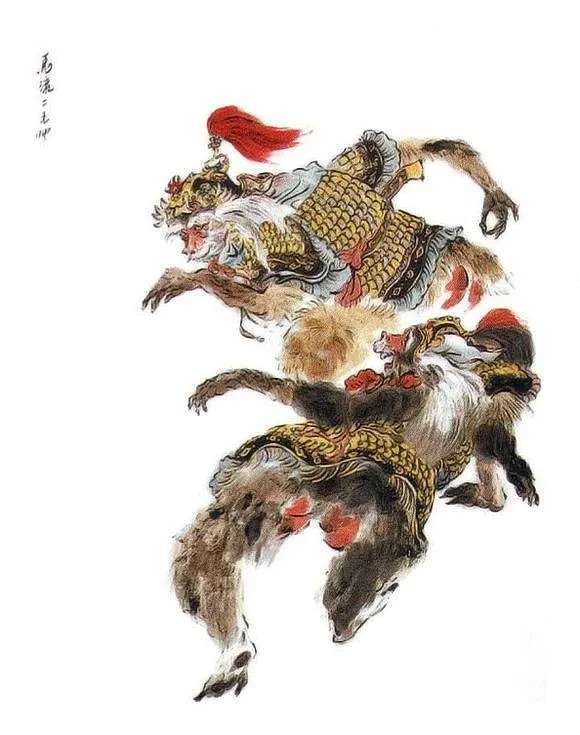
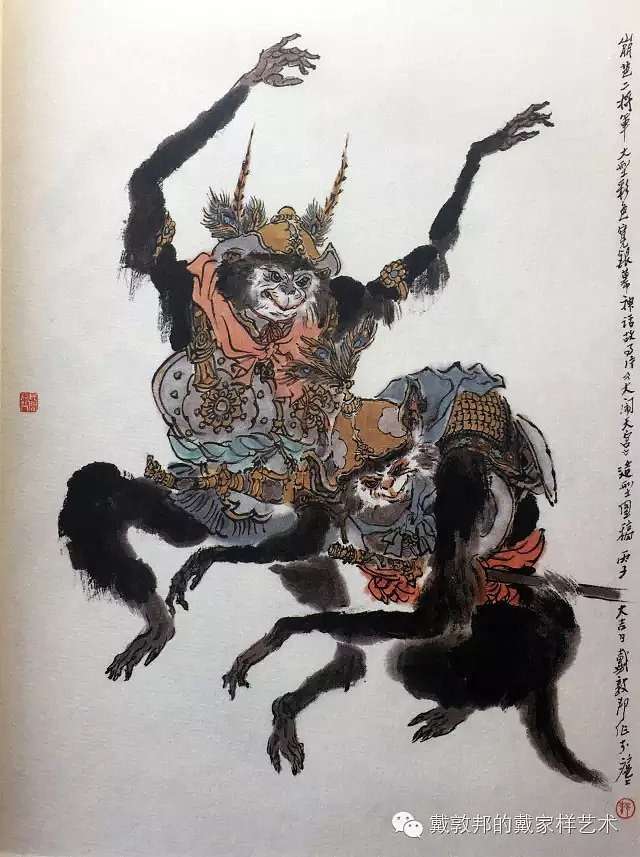
The Monkey King’s “Four Mighty Commanders” (Si Jianjiang, 四健將) (figs. 1 & 2) are minor characters appearing in chapters one, three to six, and 28 of Journey to the West (Xiyouji西遊記, 1592). They are presented as two elderly gibbons and two elderly horse-monkeys (i.e. macaques) who serve their monarch as advisors and makeshift tutors on spiritual and military matters. In fact, one of them is responsible for setting Wukong on his path towards immortality. They are later given high military rank and charged with training and governing Wukong’s monkey army. An outside observer may question the commanders’ ability to lead troops in battle since they are defeated in nearly every single skirmish. But it should be remembered that, while technically immortal, they can still be killed and only have access to mere earthly weapons. Yet, they choose to face celestial soldiers who wield divine weapons and have millennia of combat experience. This speaks to their great bravery.

Here, I have gathered all references to these characters that I know of. I’ve also included a section on the possible homophonic origins of their names, as well as a section describing their immortality.

This article was prompted by a question put to me on tumblr. Searching the site for “beng ba” and “ma liu” results in a number of posts with fan art and fiction, so this survey has merit. Hopefully it will benefit fans of the novel and/or those who wish to insert these characters into their fan media.

Fig. 1 – Marshals Ma and Liu (larger version). Fig. 2 – Generals Beng and Ba (larger version). Paintings by Dai Dunbang. Images found here.

Table of Contents

1. References

Chapter 1

Note: I have changed some of Yu’s (Wu & Yu, 2012) translations of primate names for more accuracy. Also, any bold text from this point forward is my emphasis.

[The Stone Monkey becomes the king of the primates through a test of bravery: leaping through a waterfall and discovering a long-forgotten immortal’s cave.]

The Handsome Monkey King thus led a flock of gibbons [yuanhou, 猿猴], macaques [mihou, 獼猴], and horse-monkeys [mahou, 馬猴], some of whom were appointed by him as his officers and ministers (based on Wu & Yu, 2012, vol. 1, p. 106).

美猴王領一群猿猴、獼猴、馬猴等,分派了君臣佐使。

[After 300-something years of ruling the Mountain of Flowers and Fruit, the Monkey King comes to realize that he too will someday die.]

From among the ranks a long-armed gibbon [tongbei yuanhou, 通背猿猴; lit: “(arms)-through-the back-gibbon”] [1] suddenly leaped forth and cried aloud, “If the Great King is so farsighted, it may well indicate the sprouting of his religious inclination. There are, among the five major divisions of all living creatures, only three species that are not subject to Yama, King of the Underworld.” The Monkey King said, “Do you know who they are?” The monkey said, “They are the Buddhas, the immortals, and the holy sages; these three alone can avoid the Wheel of Transmigration as well as the process of birth and destruction, and live as long as Heaven and Earth, the mountains and the streams.” “Where do they live?” asked the Monkey King. The monkey said, “They do not live beyond the world of the Jambudvipa, for they dwell within ancient caves on immortal mountains.” When the Monkey King heard this, he was filled with delight, saying, “Tomorrow I shall take leave of you all and go down the mountain. Even if I have to wander with the clouds to the comers of the sea or journey to the distant edges of Heaven, I intend to find these three kinds of people. I will learn from them how to be young forever and escape the calamity inflicted by King Yama” (based on Wu & Yu, 2012, vol. 1, p. 107).

只見那班部中,忽跳出一個通背猿猴,厲聲高叫道:「大王若是這般遠慮,真所謂道心開發也。如今五蟲之內,惟有三等名色不伏閻王老子所管。」猴王道:「你知那三等人?」猿猴道:「乃是佛與仙與神聖三者,躲過輪迴,不生不滅,與天地山川齊壽。」猴王道:「此三者居於何所?」猿猴道:「他只在閻浮世界之中,古洞仙山之內。」猴王聞之,滿心歡喜道:「我明日就辭汝等下山,雲遊海角,遠涉天涯,務必訪此三者,學一個不老長生,常躲過閻君之難。」

Chapter 3

[After returning from abroad, the Monkey King wishes to train his children in how to defend themselves with weapons since they had previously been plagued by the Demon King of Havoc.]

As they were speaking, four older monkeys [si ge laohou, 四個老猴] came forward, two horse-monkeys with red buttocks [chikao mahou, 赤尻馬猴] and two long-armed gibbons. Coming to the front, they said, “Great King, to be furnished with sharp-edged weapons is a very simple matter.” “How is it simple?” asked Wukong. The four monkeys replied, “East of our mountain, across two hundred miles of water, is the boundary of the Aolai Country. In that country there is a king who has numberless men and soldiers in his city, and there are bound to be all kinds of gold, silver, copper, and iron works there. If the great king goes there, he can either buy weapons or have them made” (based on Wu & Yu, 2012, vol. 1, p. 131).

正說間,轉上四個老猴,兩個是赤尻馬猴,兩個是通背猿猴,走在面前道:「大王,若要治鋒利器械,甚是容易。」悟空道:「怎見容易?」四猴道:「我們這山向東去,有二百里水面,那廂乃傲來國界。那國界中有一王位,滿城中軍民無數,必有金銀銅鐵等匠作。大王若去那裡,或買或造些兵器

[Wukong frets over not having a divine weapon that fits his taste.]

The four elder monkeys came forward and memorialized, “The great king is a divine sage, and therefore it is not fit for him to use an earthly weapon. We do not know, however, whether the great king is able to take a journey through water?” “Since I have known the Way,” said Wukong, “I have the ability of seventy-two transformations. The cloud somersault has unlimited power. I am familiar with the magic of body concealment and the magic of displacement. I can find my way to Heaven or I can enter the Earth. I can walk past the sun and the moon without casting a shadow, and I can penetrate stone and metal without hindrance. Water cannot drown me, nor fire burn me. Is there any place I can’t go to?” “It’s a good thing that the great king possesses such powers,” said the four monkeys, “for the water below this sheet iron bridge of ours flows directly into the Dragon Palace of the Eastern Ocean. If you are willing to go down there, Great King, you will find the old Dragon King, from whom you may request some kind of weapon. Won’t that be to your liking?” Hearing this, Wukong said with delight, “Let me make the trip!” (Wu & Yu, 2012, vol. 1, p. 133).

四老猴上前啟奏道:「大王乃是仙聖,凡兵是不堪用。但不知大王水裡可能去得?」悟空道:「我自聞道之後,有七十二般地煞變化之功,觔斗雲有莫大的神通;善能隱身遯身,起法攝法。上天有路,入地有門;步日月無影,入金石無礙;水不能溺,火不能焚。那些兒去不得?」四猴道:「大王既有此神通,我們這鐵板橋下,水通東海龍宮。大王若肯下去,尋著老龍王,問他要件甚麼兵器,卻不趁心?」悟空聞言,甚喜道:「等我去來。」

[He returns from the Dragon Kingdom with his magic iron staff.]

The Monkey King made the four old monkeys mighty commanders of his troops by appointing the two horse-monkeys with red buttocks as marshals Ma and Liu [Ma, Liu er yuanshuai, 馬、流二元帥], and the two long-armed gibbon as generals Beng and Ba [Beng, Ba er jiangjun, 崩、芭二將軍]. The four mighty commanders [si jianjiang, 四健將], moreover, were entrusted with all matters concerning fortification, pitching camps, reward, and punishment (based on Wu & Yu, 2012, vol. 1, p. 138).

猴王將那四個老猴封為健將,將兩個赤尻馬猴喚做馬、流二元帥,兩個通背猿猴喚做崩、芭二將軍。將那安營下寨、賞罰諸事,都付與四健將維持。

[The Monkey King becomes sworn brothers with six other animal demon kings.]

One day, the four mighty commanders had been told to prepare a great banquet in their own cave, and the six kings were invited to the feast. They killed cows and slaughtered horses; they sacrificed to Heaven and Earth. The various imps were ordered to dance and sing, and they all drank until they were thoroughly drunk. After sending the six kings off, Wukong also rewarded the leaders great and small with gifts. Reclining in the shade of pine trees near the sheet iron bridge, he fell asleep in a moment. The four mighty commanders led the crowd to form a protective circle around him, not daring to raise their voices (based on Wu & Yu, 2012, vol. 1, p. 139).

一日,在本洞吩咐四健將安排筵宴,請六王赴飲,殺牛宰馬,祭天享地,著眾怪跳舞歡歌,俱吃得酩酊大醉。送六王出去,卻又賞大小頭目。攲在鐵板橋邊松陰之下,霎時間睡著。四健將領眾圍護,不敢高聲。

[Wukong’s soul is taken to the underworld because he is fated to die at 342 year old. However, he inks out his name, as well as those of all other monkeys, from the ledgers of hell and then fights his way out of the world of darkness.]

While our Monkey King was fighting his way out of the city, he was suddenly caught in a clump of grass and stumbled. Waking up with a start, he realized that it was all a dream. As he was stretching himself, he heard the four mighty commanders and the various monkeys crying with a loud voice, “Great King! How much wine did you imbibe? You’ve slept all night long. Aren’t you awake yet?” “Sleeping is nothing to get excited about,” said Wukong, “but I dreamed that two men came to arrest me, and I didn’t perceive their intention until they brought me to the outskirts of the Region of Darkness. Showing my power, I protested right up to the Palace of Darkness and argued with the Ten Kings. I went through our ledger of births and deaths and crossed out all our names. Those fellows have no hold over us now.” The various monkeys all kowtowed to express their gratitude. From that time onward there were many mountain monkeys who did not grow old, for their names were not registered in the Underworld. When the Handsome Monkey King finished his account of what had happened, the four mighty commanders reported the story to the demon kings of various caves, who all came to tender their congratulations (Wu & Yu, 2012, vol. 1, p. 141).

這猴王打出城中,忽然絆著一個草紇繨,跌了個躘踵,猛的醒來,乃是南柯一夢。才覺伸腰,只聞得四健將與眾猴高叫道:「大王,吃了多少酒,睡這一夜,還不醒來?」悟空道:「睡還小可,我夢見兩個人來此勾我,把我帶到幽冥界城門之外,卻才醒悟。是我顯神通,直嚷到森羅殿,與那十王爭吵,將我們的生死簿子看了,但有我等名號,俱是我勾了,都不伏那廝所轄也。」眾猴磕頭禮謝。自此,山猴多有不老者,以陰司無名故也。

美猴王言畢前事,四健將報知各洞妖王,都來賀喜。

[Monkey is invited to heaven to be the keeper of the heavenly horses. This is a plan to keep his unruly adventures in check.]

He then called the four mighty commanders together for this admonition: “Be diligent in teaching and drilling the young ones. Let me go up to Heaven to take a look and to see whether I can have you all brought up there too to live with me.” The four mighty commanders indicated their obedience (Wu & Yu, 2012, vol. 1, p. 144).

即喚四健將,吩咐:「謹慎教演兒孫,待我上天去看看路,卻好帶你們上去同居住也。」四健將領諾。

Chapter 4

[He leaves heaven in rebellion when he learns that his post is the lowest in the celestial bureaucracy.]

ln a moment, he lowered the direction of his cloud and returned to the Flower-Fruit Mountain. The four mighty commanders were seen drilling troops with the Monster Kings of various caves. “Little ones,” this Monkey King cried in a loud voice, “old Monkey has returned!” (Wu & Yu, 2012, vol. 1, p. 150).

須臾,按落雲頭,回至花果山上。只見那四健將與各洞妖王,在那裡操演兵卒。這猴王厲聲高叫道:「小的們,老孫來了。」

[A demon suggests a rebellious title for Wukong.]

“Make me a banner immediately,” he ordered the four mighty commanders, “and inscribe on it in large letters, ‘The Great Sage, Equal to Heaven.’ Erect a pole to hang it on” (Wu & Yu, 2012, vol. 1, p. 151).

教四健將:「就替我快置個旌旗,旗上寫『齊天大聖』四大字,立竿張掛。

Chapter 5

[He is granted the empty title of “Great Sage Equaling Heaven” and charged with guarding the immortal peach groves. However, he eats most of the ripe fruit, and then he wrecks a long-awaited banquet just because he isn’t invited. He finally flees to earth.]

Lowering the direction of his cloud, he returned to the Flower-Fruit Mountain. There he was greeted by flashing banners and shining spears, for the four mighty commanders and the monster kings of seventy-two caves were engaging in a military exercise. “Little ones,” the Great Sage called out loudly, “I have returned!” The monsters dropped their weapons and knelt down, saying, “Great Sage! What laxity of mind! You left us for so long, and did not even once visit us to see how we were doing.” “It’s not that long!” said the Great Sage. “It’s not that long!” They walked as they talked, and went deep inside the cave dwelling. After sweeping the place clean and preparing a place for him to rest, and after kowtowing and doing homage, the four mighty commanders said, “The Great Sage has been living for over a century in Heaven. May we ask what appointment he actually received?”

“I recall that it’s been but half a year,” said the Great Sage, laughing. “How can you talk of a century?” “One day in Heaven,” said the commanders, “is equal to one year on Earth” (Wu & Yu, 2012, vol. 1, p. 166).

即按雲頭,回至花果山界。但見那旌旗閃灼,戈戟光輝,原來是四健將與七十二洞妖王,在那裡演習武藝。大聖高叫道:「小的們,我來也!」眾怪丟了器械,跪倒道:「大聖好寬心,丟下我等許久,不來相顧。」大聖道:「沒多時,沒多時。」

且說且行,徑入洞天深處。四健將打掃安歇,叩頭禮拜畢,俱道:「大聖在天這百十年,實受何職?」大聖笑道:「我記得才半年光景,怎麼就說百十年話?」健將道:「在天一日,即在下方一年也。」

[Wukong describes leaving heaven after trashing the banquet and eating Laozi’s elixir pills.]

The various monsters were delighted by these words, and they prepared a banquet of fruits and wine to welcome him. A stone bowl was filled with coconut wine and presented to the Great Sage, who took a mouthful and then exclaimed with a grimace, “It tastes awful! Just awful!” “The Great Sage,” said Beng and Ba, the two commanders, “has grown accustomed to tasting divine wine and food in Heaven. Small wonder that coconut wine now seems hardly delectable. But the proverb says, “Tasty or not, it’s water from home!” (Wu & Yu, 2012, vol. 1, p. 167).

眾怪聞言大喜。即安排酒果接風,將椰酒滿斟一石碗奉上。大聖喝了一口,即咨牙徠嘴道:「不好吃,不好吃。」崩、芭二將道:「大聖在天宮吃了仙酒、仙殽,是以椰酒不甚美口。常言道:『美不美,鄉中水。』」大聖道:「你們就是『親不親,故鄉人。』

[Heaven calls up forces to end his hijinks. The first to challenge him are the Nine Luminaries, anthropomorphic deities of the planets, moon, and sun.]

Hastily the little monsters reported inside, “Great Sage, disaster! Disaster! Outside there are nine savage deities who claim that they are sent from the Region Above to subdue the Great Sage.” Our Great Sage was just sharing the Heavenly wine with the four mighty commanders and the monster kings of seventy-two caves. Hearing this announcement, he said in a most nonchalant manner,

“If you have wine today, get drunk today;
Mind not the troubles in front of your door!”

Hardly had he finished speaking when still another flock of imps arrived to report, “Father, those nine savage gods have broken down the door, and are about to fight their way in!”

These reckless, witless gods!” said the Great Sage angrily. “They really have no manners! I was not about to quarrel with them. Why are they abusing me to my face?” He gave the order for the One-Horn Demon King to lead the monster kings of seventy-two caves to battle, adding that old Monkey and the four mighty commanders would follow in the rear. The Demon King swiftly led his troops of ogres to go out to fight, but they were ambushed by the Nine Luminaries and pinned down right at the head of the sheet iron bridge (Wu & Yu, 2012, vol. 1, pp. 170-171).

那小妖慌忙傳入道:「大聖,禍事了!禍事了!外面有九個兇神,口稱上界差來的天神,收降大聖。」

那大聖正與七十二洞妖王並四健將分飲仙酒,一聞此報,公然不理道:「今朝有酒今朝醉,莫管門前是與非。」說不了,一起小妖又跳來道:「那九個兇神惡言潑語,在門前罵戰哩。」大聖笑道:「莫採他。詩酒且圖今日樂,功名休問幾時成。」說猶未了,又一起小妖來報:「爺爺!那九個兇神已把門打破,殺進來也。」大聖怒道:「這潑毛神,老大無禮。本待不與他計較,如何上門來欺我?」即命獨角鬼王:「領帥七十二洞妖王出陣。老孫領四健將隨後。」那鬼王疾帥妖兵出門迎敵,卻被九曜惡星一齊掩殺,抵住在鐵板橋頭,莫能得出。

[…]

[The Monkey King singlehandedly defeats the Nine Luminaries.]

Devaraja Li then ordered the Four Great Devarajas and the Twenty-Eight Constellations to go out together to do battle. Without displaying the slightest panic, the Great Sage also ordered the One-Horn Demon King, the monster kings of seventy-two caves, and the four mighty commanders to range themselves in battle formation in front of the cave (Wu & Yu, 2012, vol. 1, p. 171).

李天王即調四大天王與二十八宿,一路出師來鬥。大聖也公然不懼,調出獨角鬼王、七十二洞妖王與四個健將,就於洞門外列成陣勢。

[…]

Beginning with the battle formation at dawn, they fought until the sun sank down behind the western hills. The One-Horn Demon King and the monster kings of seventy-two caves were all taken captive by the forces of Heaven. Those who escaped were the four mighty commanders and the troop of monkeys, who hid themselves deep inside the Water-Curtain Cave. With his single rod, the Great Sage withstood in midair the Four Great Devarajas, Li the Pagoda Bearer, and Prince Nata, and battled with them for a long time. When he saw that evening was approaching, the Great Sage plucked a handful of hairs, threw them into his mouth, and chewed them to pieces. He spat them out, crying, “Change!” They changed at once into many thousands of Great Sages, each employing a golden-hooped rod! They beat back Prince Nata and defeated the Five Devarajas.

In triumph the Great Sage collected back his hairs and hurried back to his cave. Soon, at the head of the sheet iron bridge, he was met by the four mighty commanders leading the rest of the monkeys. As they kowtowed to receive him they cried three times, sobbing aloud, and then they laughed three times, hee-heeing and ho-hoing. The Great Sage said, “Why do you all laugh and cry when you see me?” “When we fought with the Deva Kings this morning,” said the four mighty commanders, “the monster kings of seventy-two caves and the One-Horn Demon King were all taken captive by the gods. We were the only ones who managed to escape alive, and that is why we cried. Now we see that the Great Sage has returned unharmed and triumphant, and so we laugh as well.”

“Victory and defeat,” said the Great Sage, “are the common experiences of a soldier. The ancient proverb says,

You may kill ten thousand of your enemies,
But you will lose three thousand of your allies!

Moreover, those chieftains who have been captured are tigers and leopards, wolves and insects, badgers and foxes, and the like. Not a single member of our own kind has been hurt. Why then should we be disconsolate? Although our adversaries have been beaten back by my magic of body division, they are still encamped at the foot of our mountain. Let us be most vigilant, therefore, in our defense. Have a good meal, rest well, and conserve your energy. When morning comes, watch me perform a great magic and capture some of these generals from Heaven, so that our comrades may be avenged.” The four mighty commanders drank a few bowls of coconut wine with the host of monkeys and went to sleep peacefully. We shall speak no more of them (Wu & Yu, 2012, vol. 1, pp. 172-173).

這一場自辰時佈陣,混殺到日落西山。那獨角鬼王與七十二洞妖怪,盡被眾天神捉拿去了。止走了四健將與那群猴,深藏在水簾洞底。

這大聖一條棒,抵住了四大天神與李托塔、哪吒太子,俱在半空中,殺勾多時,大聖見天色將晚,即拔毫毛一把,丟在口中,嚼碎了,噴將出去,叫聲:「變!」就變了千百個大聖,都使的是金箍棒,打退了哪吒太子,戰敗了五個天王。

大聖得勝,收了毫毛,急轉身回洞,早又見鐵板橋頭,四個健將領眾叩迎,那大眾,哽哽咽咽大哭三聲,又唏唏哈哈大笑三聲。大聖道:「汝等見了我,又哭又笑,何也?」四健將道:「今早帥眾將與天王交戰,把七十二洞妖王與獨角鬼王盡被眾神捉了,我等逃生,故此該哭。這見大聖得勝回來,未曾傷損,故此該笑。」大聖道:「勝負乃兵家之常。古人云:『殺人一萬,自損三千。』況捉了去的頭目乃是虎豹狼蟲、獾獐狐狢之類,我同類者未傷一個,何須煩惱?他雖被我使個分身法殺退,他還要安營在我山腳下。我等且緊緊防守,飽食一頓,安心睡覺,養養精神。天明看我使個大神通,拿這些天將,與眾報仇。」四將與眾猴將椰酒吃了幾碗,安心睡覺不題。

Chapter 6

[Erlang is called in to capture Wukong.]

The Immortal Master fought the Great Sage for more than three hundred rounds, but the result still could not be determined. The Immortal Master, therefore, summoned all his magical powers; with a shake, he made his body a hundred thousand feet tall. Holding with both hands the divine lance of three points and two blades like the peaks that cap the Hua Mountain, this green-faced, saber-toothed figure with scarlet hair aimed a violent blow at the head of the Great Sage. But the Great Sage also exerted his magical power and changed himself into a figure having the features and height of Erlang. He wielded a compliant golden-hooped rod that resembled the Heaven-supporting pillar on top of Mount Kunlun to oppose the god Erlang. This vision so terrified the marshals, Ma and Liu, that they could no longer wave the flags, and so appalled the generals, Beng and Ba, that they could use neither scimitar nor sword. On the side of Erlang, the Brothers Kang, Zhang, Yao, Li, Guo Shen, and Zhi Jian gave the order to the plant-headed deities to let loose the falcons and dogs and to advance upon those monkeys in front of the Water-Curtain Cave with mounted arrows and drawn bows. The charge, alas,

Dispersed the four mighty commanders of monkey imps
And captured two or three thousand numinous fiends!

Those monkeys dropped their spears and abandoned their armor, forsook their swords, and threw away their lances. They scattered in all directions running, screaming, scuttling up the mountain, or scrambling back to the cave. It was as if a cat at night had stolen upon resting birds: they darted up as stars to fill the sky. The Brothers thus gained a complete victory, of which we shall speak no further (Wu & Yu, 2012, vol. 1, pp. 181-182).

真君與大聖鬥經三百餘合,不知勝負。那真君抖擻神威,搖身一變,變得身高萬丈,兩隻手舉著三尖兩刃神鋒,好便似華山頂上之峰,青臉獠牙,朱紅頭髮,惡狠狠,望大聖著頭就砍。這大聖也使神通,變得與二郎身軀一樣,嘴臉一般,舉一條如意金箍棒,卻就是崑崙頂上擎天之柱,抵住二郎神。諕得那馬、流元帥戰兢兢,搖不得旌旗;崩、芭二將虛怯怯,使不得刀劍。這陣上,康、張、姚、李、郭申、直健傳號令,撒放草頭神,向他那水簾洞外縱著鷹犬,搭弩張弓,一齊掩殺。可憐沖散妖猴四健將,捉拿靈怪二三千。那些猴拋戈棄甲,撇劍丟槍,跑的跑,喊的喊,上山的上山,歸洞的歸洞。好似夜貓驚宿鳥,飛灑滿天星。眾兄弟得勝不題。

Chapter 28

[Monkey returns to the Mountain of Flowers and Fruit after being kicked out of the pilgrimage. He discovers that the remainder of his children are plagued by human hunters that eat or force them to perform tricks.]

When the Great Sage heard these words, he became terribly angry. “Who is in charge in the cave now?” he asked. “We still have Ma and Liu, the two marshals,” said the little fiends, “[B]eng and Ba, the two generals, they are in charge.” “Report to them at once,” said the Great Sage, “and say that I’ve returned.” Those little fiends dashed inside the cave and cried, “Father Great Sage has come home!” When Ma, Liu, [B]eng, and Ba heard the report, they rushed out of the door to kowtow and to receive him inside the cave. The Great Sage took a seat in the middle as the various fiends all lined up before him to pay homage. “Father Great Sage,” they said, “we heard recently that you had regained your life so that you could protect the Tang Monk on his journey to the Western Heaven to acquire scriptures. Why are you not heading toward the West? Why do you come back to this mountain?”

“Little ones,” said the Great Sage, “you have no idea that the Tang Monk is wholly ignorant of who is worthy and who is foolish. For his sake, I caught fiends and overcame demons throughout the journey, using all my abilities. Several times I slew a monster, but, accusing me of doing evil and violence, he disowned me as his disciple and banished me back here. He even wrote me a formal letter of banishment as proof that he would never want to use me again.” Clapping their hands and roaring with laughter, the monkeys said, “Lucky! Lucky! What do you want to be a monk for? Come home and you can lead us to have a few years’ fun. Quick! Let’s bring out the coconut wine for the reception of Father.” “Let’s not drink wine just yet,” said the Great Sage. “Let me ask you, how often do those hunters come to our mountain?” “Great Sage,” said Ma and Liu, “there’s no telling of time. They are here every day to make trouble.” The Great Sage asked, “Why aren’t they here today?” Ma and Liu replied, “Just wait and you’ll see them come” (Wu & Yu, 2012, vol. 2, pp. 31-32).

大聖聞此言,更十分惱怒道:「洞中有甚麼人執事?」群妖道:「還有馬、流二元帥,崩、芭二將軍管著哩。」大聖道:「你們去報他知道,說我來了。」那些小妖,撞入門內報道:「大聖爺爺來家了。」那馬、流、奔、芭聞報,忙出門叩頭,迎接進洞。大聖坐在中間,群怪羅拜於前,啟道:「大聖爺爺,近聞得你得了性命,保唐僧往西天取經,如何不走西方,卻回本山?」大聖道:「小的們,你不知道,那唐三藏不識賢愚:我為他一路上捉怪擒魔,使盡了平生的手段,幾番家打殺妖精;他說我行兇作惡,不要我做徒弟,把我逐趕回來,寫立貶書為照,永不聽用了。」

眾猴鼓掌大笑道:「造化,造化。做甚麼和尚,且家來,帶攜我們耍子幾年罷。」叫:「快安排椰子酒來,與爺爺接風。」大聖道:「且莫飲酒,我問你那打獵的人,幾時來我山上一度?」馬、流道:「大聖,不論甚麼時度,他逐日家在這裡纏擾。」大聖道:「他怎麼今日不來?」馬、流道:「看待來耶。」

2. Name Meanings

This Chinese article suggests a naturalistic explanation for these odd-sounding names:

Beng-Ba [崩芭] should be a homophone of “bengba” [蹦巴], that is, bengda [蹦躂], which means that the monkey jumps up and down all day without a moment’s peace. Therefore, it became an alternative name for monkeys. Ma-Liu [馬流] is a homophone for “maliu” [麻溜], which means the monkey moves with speed and agility.

… 崩芭應為「蹦巴」諧音,即蹦躂,意指猴子整日蹦蹦跳跳,伏低竄高,沒個安靜時候,所以成了猴子別稱。馬流即「麻溜」諧音,意即猴子動作麻溜,敏捷迅速。

3. Immortality

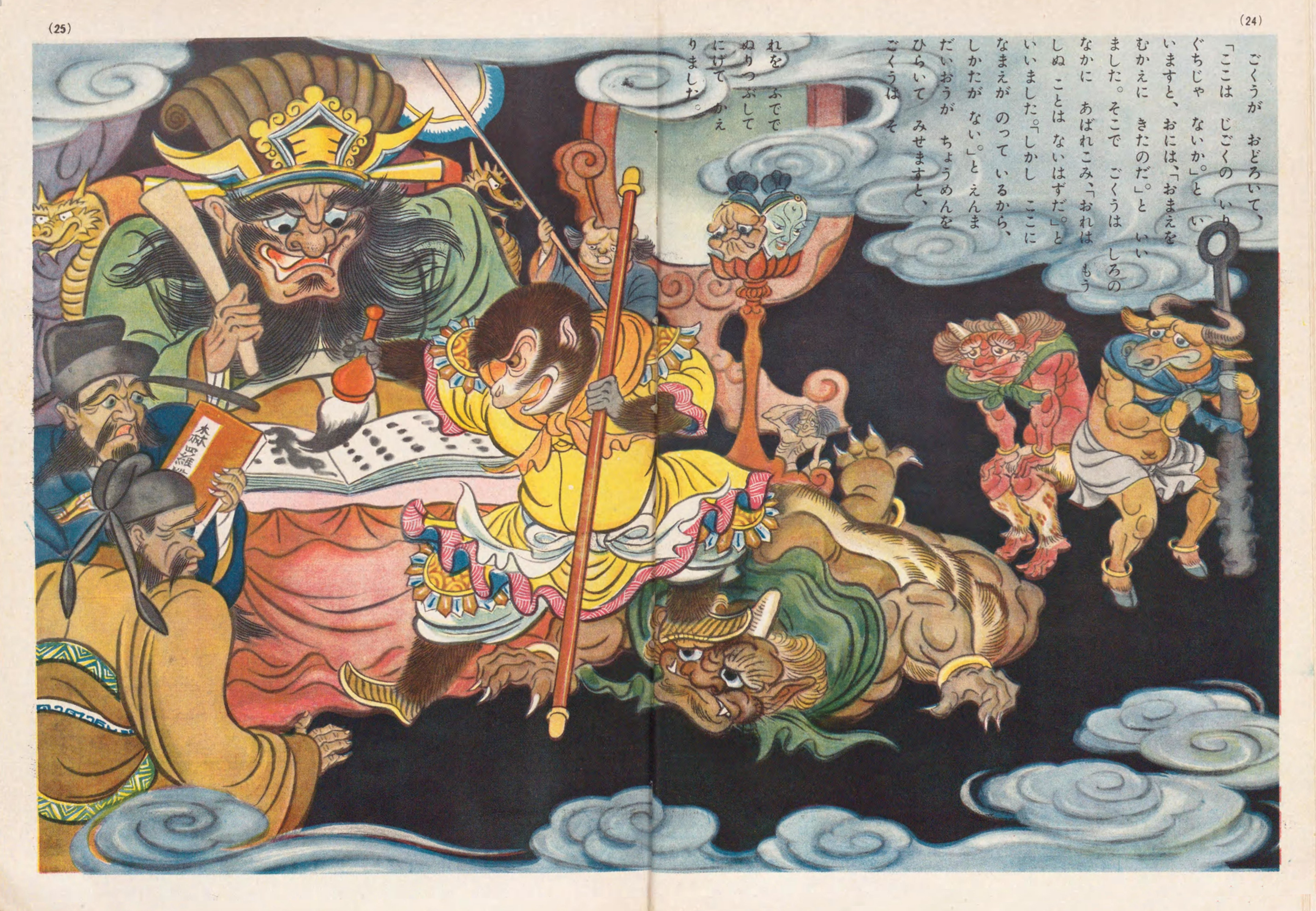
I mentioned in the introduction that the Four Mighty Commanders are technically immortal. This is the result of Wukong inking out the names of all monkeys from the ledgers of hell in chapter three (fig. 2). Wukong explains:

I went through our ledger of births and deaths [shengsi buzi, 生死簿子] and crossed out all our names. Those fellows have no hold over us now.” The various monkeys all kowtowed to express their gratitude. From that time onward there were many mountain monkeys [shanhou, 山猴] who did not grow old, for their names were not registered in the Underworld (Wu & Yu, 2012, vol. 1, p. 141).

將我們的生死簿子看了,但有我等名號,俱是我勾了,都不伏那廝所轄也。」眾猴磕頭禮謝。自此,山猴多有不老者,以陰司無名故也。

Their divine longevity is exhibited when they reappear in chapter 28, sometime after Wukong is released from his 600-plus year imprisonment under Five Elements Mountain. And this same chapter also reveals that they are still capable of dying if fatally wounded. The rank and file monkeys lament their fate at the hands of human hunters:

Those of us who were shot by arrows, pierced by spears, or clubbed to death they took away for food to be served with rice. The dead monkeys would be skinned and boned, cooked with sauce and steamed with vinegar, fried with oil, and sauteed with salt (Wu & Yu, 2012, vol. 2, p. 31).

他把我們中箭著槍的,中毒打死的,拿了去剝皮剔骨,醬煮醋蒸,油煎鹽炒,當做下飯食用。

Shotaro_Honda_1939 - Hell (small)

Fig. 2 – Monkey striking the names from the ledger (larger version). From the Japanese children’s book Son Goku (1939).


4. Updates

Update: 04-30-26

I forgot to mention that Commanders Beng, Ba, Ma, and Liu appear in folk religion statuary. “Nick” Thng Fu Jie, the serving Monkey King tangki (spirit-medium) at Singapore’s Palace of Treasured Virtue (Baode gong, 寶德宮) commissioned the Sect Arts of Singapore and Malaysia (Xima zongyi, 新马宗艺) idol shop to carve 72 statues in honor of the Great Sage’s 2025 religious festival (16th day of the 2nd lunar month). The commanders appear in idols 12 to 15 (fig. 3-6).

Fig. 3 – “12th: Accepting the first disciple” (larger version). Image found here.

Fig. 4 – “13th: Accepting the second disciple” (larger version). Image found here.

Fig. 5 – “14th: Accepting the third disciple” (larger version). Image found here.

Fig. 6 – “15th: Accepting the fourth disciple” (larger version). Image found here.

They also appear in this video by “Angela” Hakka Moi, a friend of the blog. She briefly interviews tangki Nick. 

Note:

1) This term refers to the belief that the long, agile arms of the gibbon were somehow connected (i.e. tongbi, 通臂), passing through the back (i.e. tongbei, 通背) (Gulik, 1967, p. 92-93). 

Sources:

Gulik, R. H. (1967). The Gibbon in China: An Essay in Chinese Animal Lore. Leiden: E.J. Brill.

Wu, C., & Yu, A. C. (2012). The Journey to the West (Vols. 1-4) (Rev. ed.). Chicago, Illinois: University of Chicago Press.

Archive #42 – PDFs of Journey to the West Translations

Note: My blog is not monetized, so I am not making any money from this post. My hope is that the PDFs will make this legendary story more accessible to a wider audience. If you enjoyed the digital versions, please, please, please support the official releases.

Last updated: 04-06-2026

I’m happy to host a number of foreign language translations of the noted Chinese classic Journey to the West (Xiyou ji西遊記, 1592 CE), as well as a precursor and some later unofficial sequels.

1. The Precursor

  • The Story of How Tripitaka of the Great Tang Procures the Scriptures (Datang Sanzang qujing shihua大唐三藏取經詩話, c. late-13th-century)

2. The Original

As of this writing, I don’t yet have a modern Japanese translation, but you can read an original copy of the 1835 translation here.

3. Unofficial Sequels

I will add more languages to this archive as they become available. Please let me know if you have access to other editions.

1. The Precursor

1.1. The Story of How Tripitaka of the Great Tang Procures the Scriptures (Datang Sanzang qujing shihua, 大唐三藏取經詩話, c. late-13th-century)

A. English

This 17-chapter novelette, which likely served as a prompt for oral storytellers, is the earliest known printed edition of the JTTW story cycle. It involves the adventures of Tripitaka and Sun Wukong’s antecedent, the “Monkey Pilgrim” (Hou xingzhe, 猴行者). The tale is translated by Charles S. Wivell.

Archive #37 – The 13th-Century Version of Journey to the West

See also my chapter-by-chapter description and analysis here:

The Story of How Tripitaka of the Great Tang Procures the Scriptures: The Literary Precursor of Journey to the West

2. The Original

2.1. Journey to the West (Xiyou ji)

A. English

A.1. Complete

1) This is a PDF for The Journey to the West (2012 Rev. ed.) translated by Anthony C. Yu.

Archive #11 – PDFs of the Journey to the West 2012 Revised Edition

2) This is a text PDF for Journey to the West (1993/2020) translated by W. J. F. Jenner.

PDF File

Click to access Wu-Chengen-Journey-to-the-West-4-Volume-Boxed-Set-2003.pdf

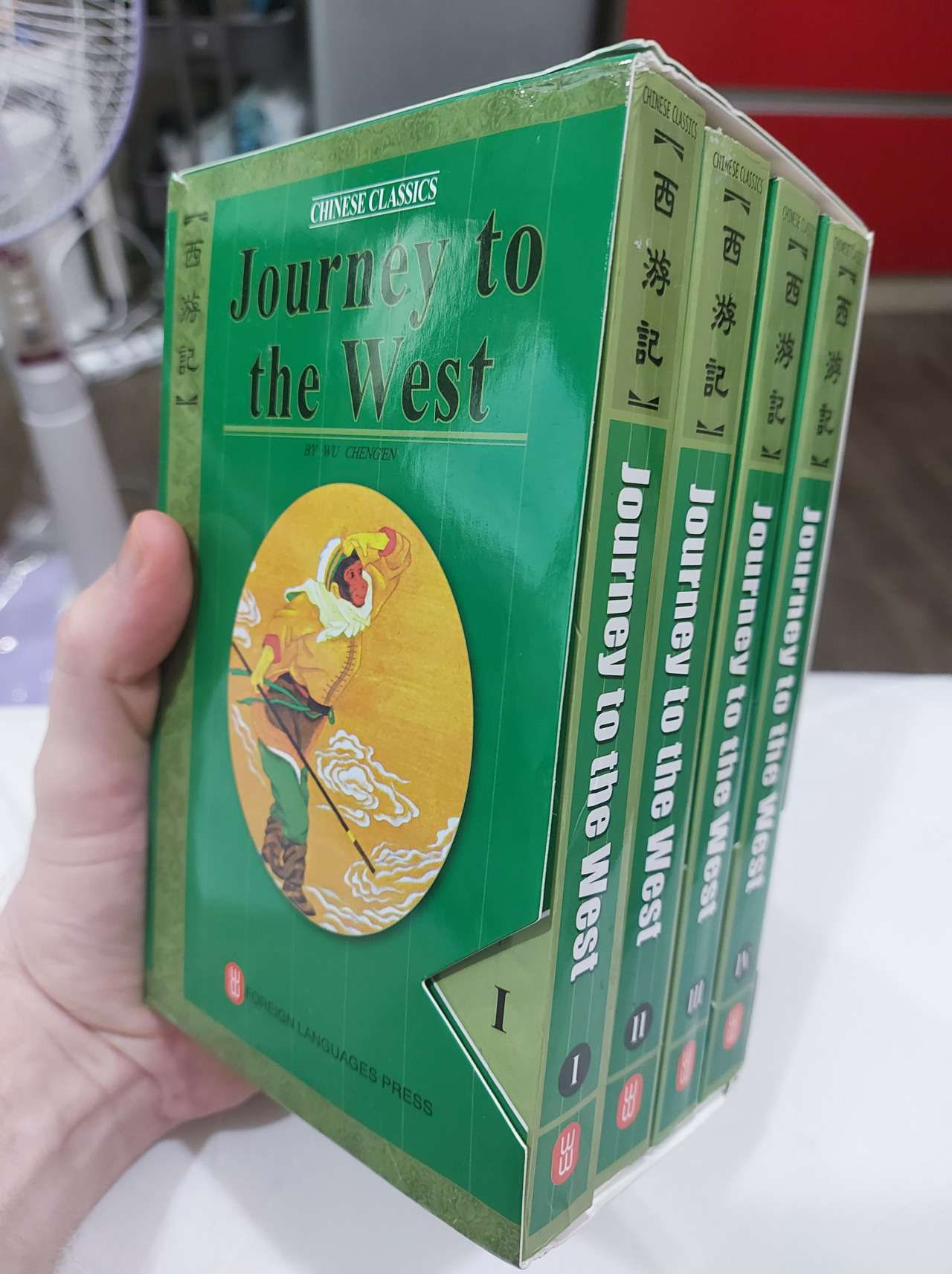
The four-volume box set in my collection (larger version).

A.2. Abridged

1) This is a PDF for Monkey (1942/1984) translated by Arthur Waley in 30 chapters (1 to 15, 18 and 19, 22, 37 to 39, 44 to 46, 47 to 49, and 98 to 100). See past book covers here.

PDF File

Click to access Wu-Chengen_-Arthur-Waley-Monkey-Grove-Press-1984.pdf

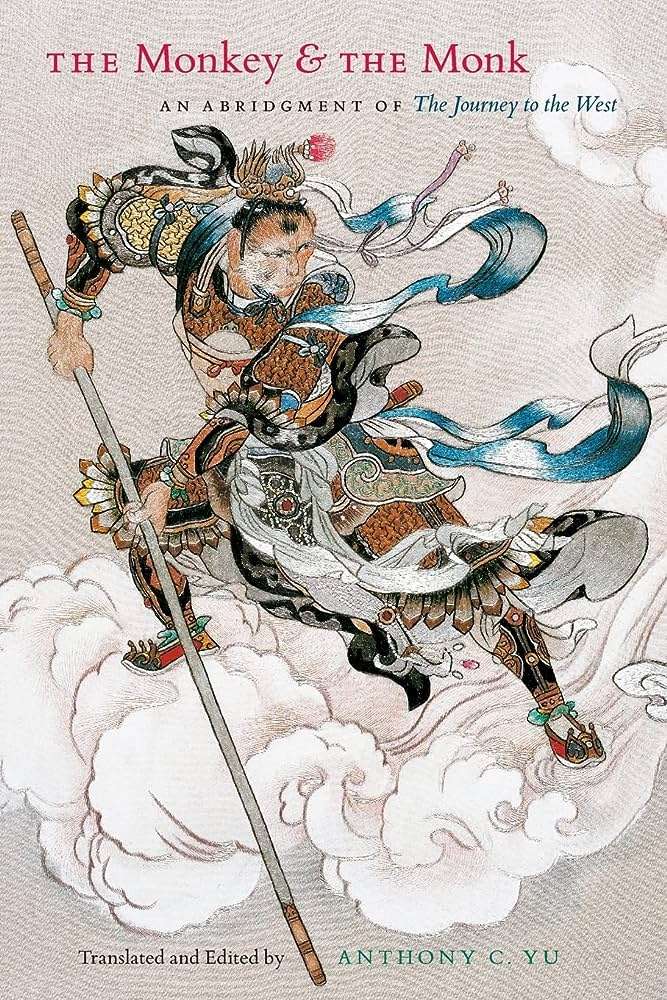
2) This is a PDF for The Monkey and the Monk (2006): An Abridgement of The Journey to the West translated by Anthony C. Yu in 31 chapters (1 to 15, 18 and 19, 22 and 23, 44 to 46, 53 to 55, 57 and 58, 84, and 98 to 100)

PDF File

Click to access Anthony-C.-Yu-The-Monkey-and-the-Monk_-An-Abridgment-of-The-Journey-to-the-West-2006.pdf

The official cover (larger version)

A.3. Audiobook

1) I just learned of “The Fifth Monkey” and their Journey to the West – An Audio Drama Series, which presents a new English translation alongside the original Chinese. They explain:

One reason that led our team to start this audio drama project is to correct some of the mistranslations found in the Yu/Jenner translations. Most of them are very minor and we certainly understand what could have led to those mistakes, but we think it is worth exploring how we can help bring a more accurate presentation of the original text in the English language (source).

The official logo (larger version).

2) YouTuber Sondley has recorded himself reading all 100 chapters of the Jenner edition.

B. French

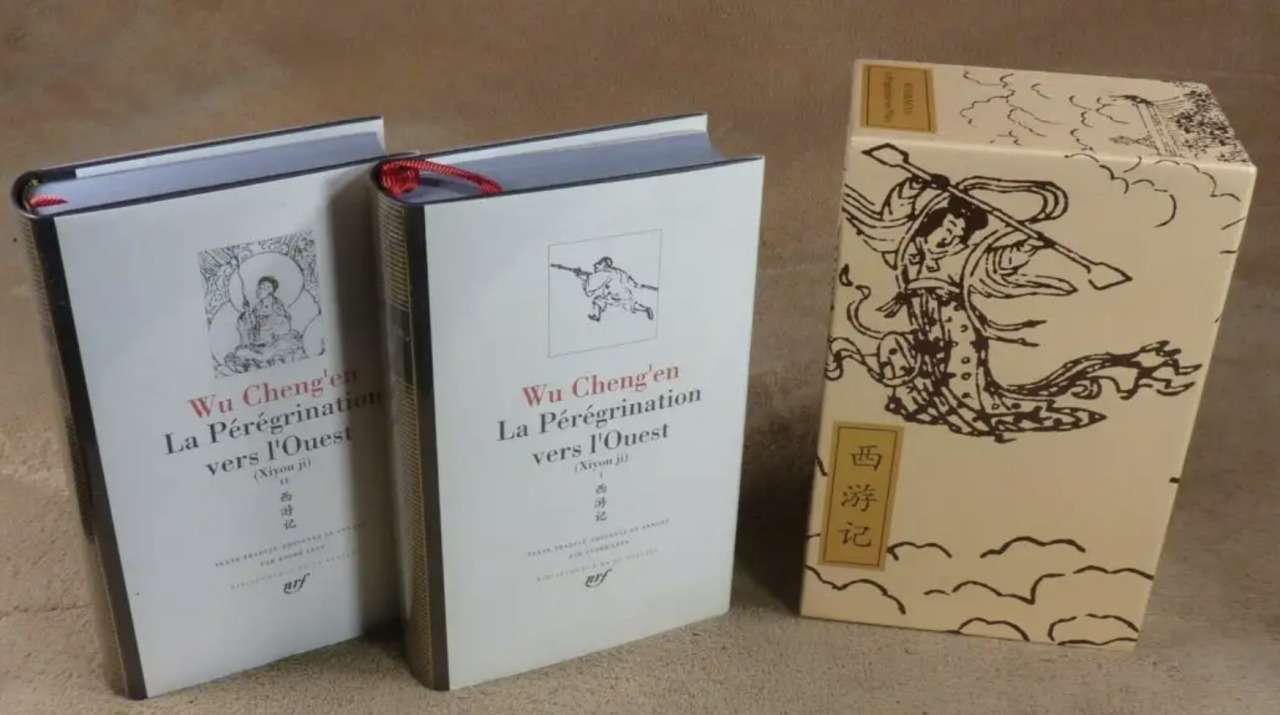
These are PDFs for La Pérégrination vers l’Ouest (Xiyou ji) (1991) translated by André Lévy in 100 chapters. I was told by one French academic that this edition “is one of the best available in Western languages.”

Thank you to arcanananas on Tumbler for volume one, and thank you to jyeet on the Journey to the West discord for volume two.

PDF Files

Vol. 1https://journeytothewestresearch.com/wp-content/uploads/2024/11/La-peregrination-vers-lOuest-v.1.pdf

Vol. 2https://journeytothewestresearch.com/wp-content/uploads/2023/08/French-JTTW-la-peregrination-vers-louest-Vol-2.pdf

The original two-volume boxed edition (larger version). Image found here.

C. German

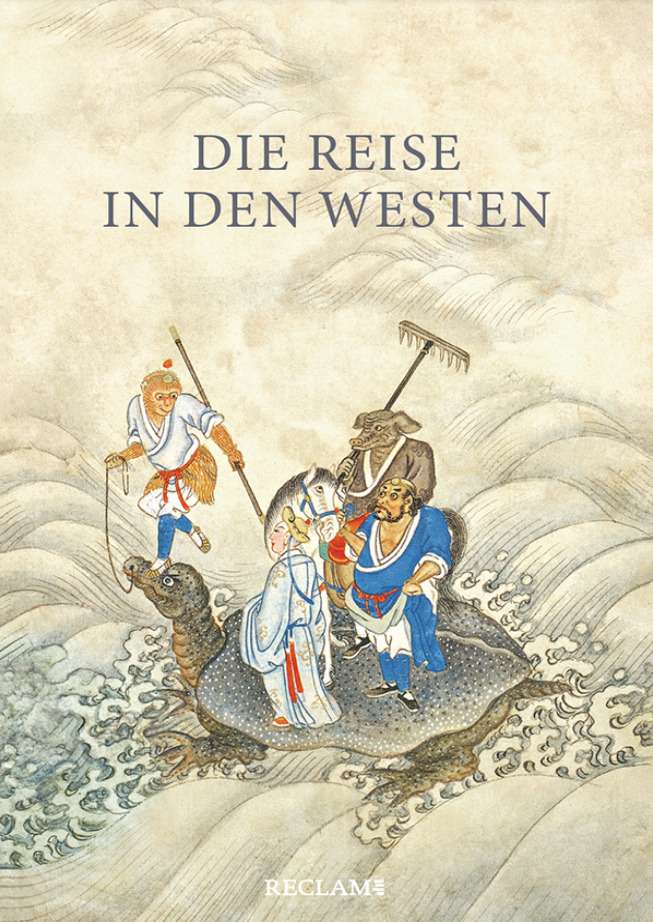
This is a PDF for Die Reise in den Westen. Ein klassischer chinesischer Roman (2016) translated by Eva Lüdi Kong in 100 chapters. It was awarded the Leipzig Book Fair prize in 2017. This version was converted from an ebook.

PDF File

Click to access German-JTTW-Die-Reise-in-den-Westen.pdf

The official cover (larger version)

D. Hungarian

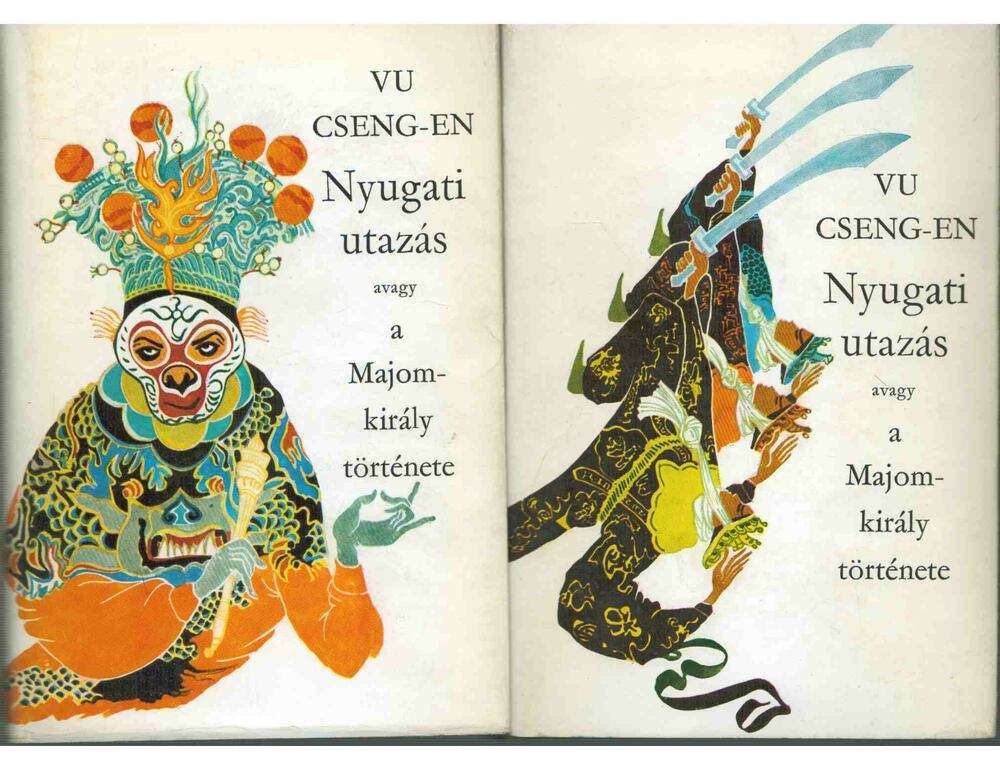
These are text PDFs for Nyugati utazás: avagy a majomkirály története (1969/1980) translated by Barnabás Csongor in two volumes. While the work covers the full 100 chapters, I’ve been told that it deletes the poems and occasionally paraphrases long-winded sections of text.

Thank you to Twitter user Jakabfi Károly for locating the files.

PDF Files

Vol 1https://journeytothewestresearch.com/wp-content/uploads/2023/08/Hungarian-JTTW-Nyugati-Utazas-Vol-1.pdf

Vol 2https://journeytothewestresearch.com/wp-content/uploads/2023/08/Hungarian-JTTW-Nyugati-Utazas-Vol-2.pdf

The official covers for volumes one and two (larger version). Image found here.

E. Italian

[Note 10-19-23: I was asked by the publisher to remove the PDF from the archive. I’m leaving the title here so others will know that an Italian translation exists.]

The Italian text is called Viaggio in occidente (1998/2008). It was translated by Serafino Balduzzi and published in two volumes. It is based on the French edition published in 1991. The work covers all 100 chapters.

F. Polish

This is a PDF for Małpi bunt (1976) translated by Tadeusz Żbikowski. It is a 14 chapter abridgement of the first 20 chapters of the original.

Thank you to Twitter user Friend_Pretend for locating the file.

PDF File

Click to access Polish-JTTW-Malpi-bunt-1976.pdf

The official cover (larger version).

G. Romanian

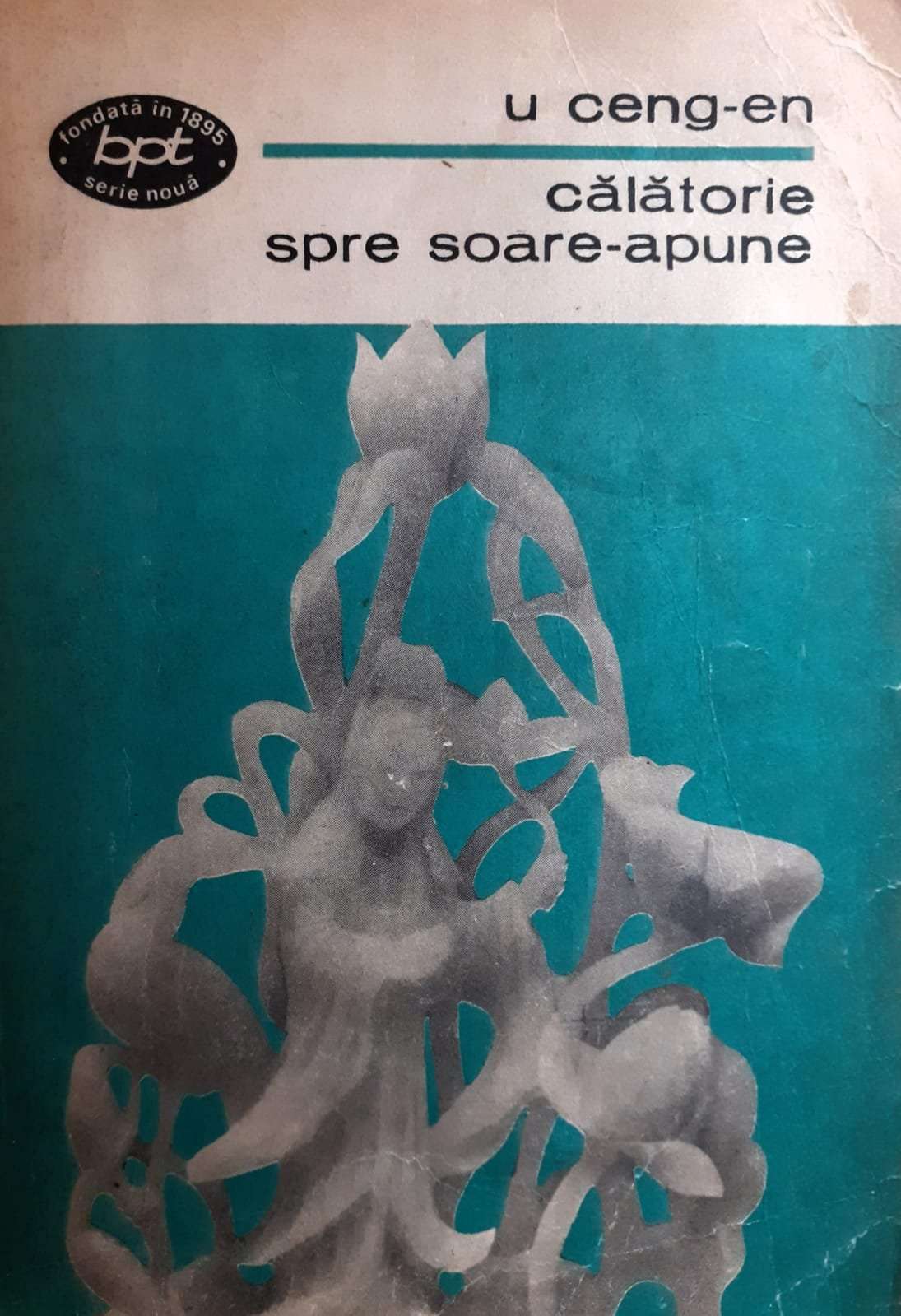
This is a text PDF for Călătorie spre soareapune (1971) translated by Corneliu Rudescu and Fănică N. Gheorghe. It appears to be an abridgment.

Thank you to greencicadarchivist on the Journey to the West discord for locating the file.

PDF File

Click to access Romanian-JTTW-U_Ceng_En_Calatorie_Spre_Soare_Apune_pdf.pdf

The official cover (larger version).

H. Russian

H.1. Complete

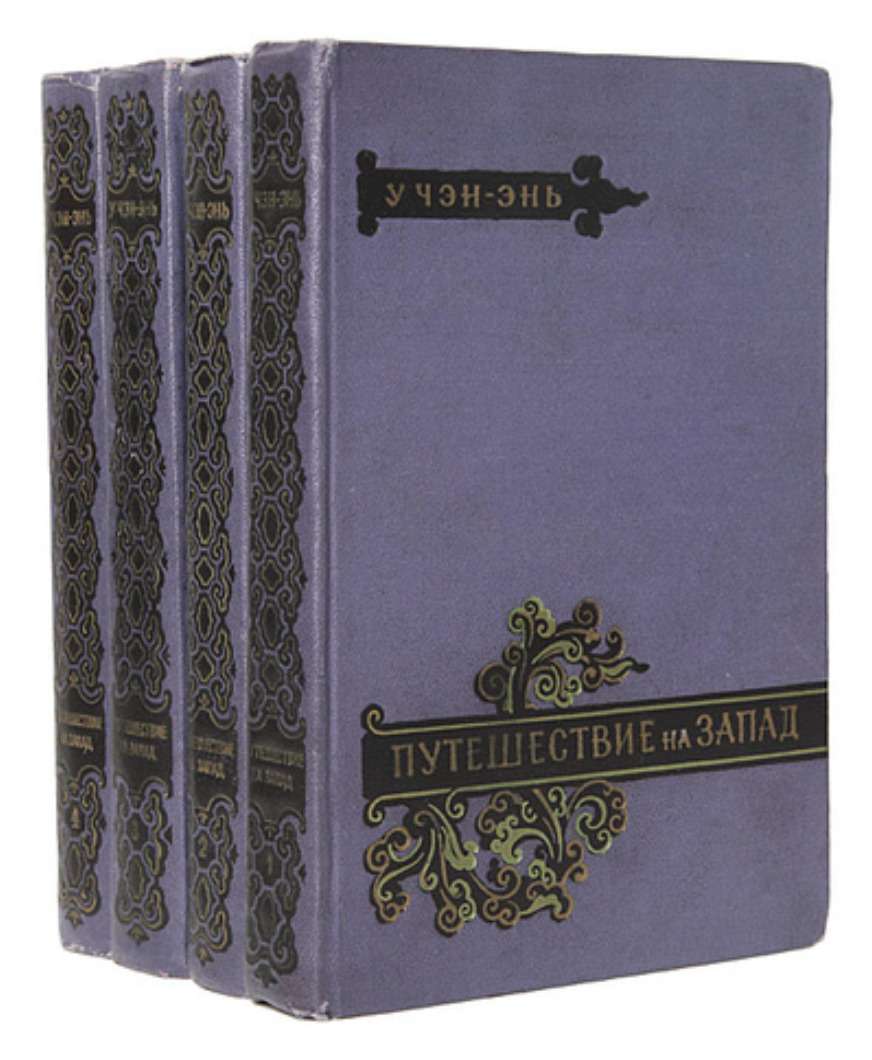
These are PDFs for Путеше́ствие на За́пад (1959) translated by A. Rogachev (vols. 1-2) and V. Kolokolov (vols. 3-4). It covers all 100 chapters.

PDF Files

Vol 1https://journeytothewestresearch.com/wp-content/uploads/2023/08/Russian-JTTW-Puteshestvie_Na_Zapad_T_1_-1959-Vol-1.pdf

Vol. 2https://journeytothewestresearch.com/wp-content/uploads/2023/08/Russian-JTTW-Puteshestvie_Na_Zapad_T_1_-1959-Vol-2.pdf

Vol. 3https://journeytothewestresearch.com/wp-content/uploads/2023/08/Russian-JTTW-Puteshestvie_Na_Zapad_T_1_-1959-Vol-3.pdf

Vol. 4https://journeytothewestresearch.com/wp-content/uploads/2023/08/Russian-JTTW-Puteshestvie_Na_Zapad_T_1_-1959-Vol-4.pdf

The four-volume hardcover edition (larger version).

H.2. Abridged

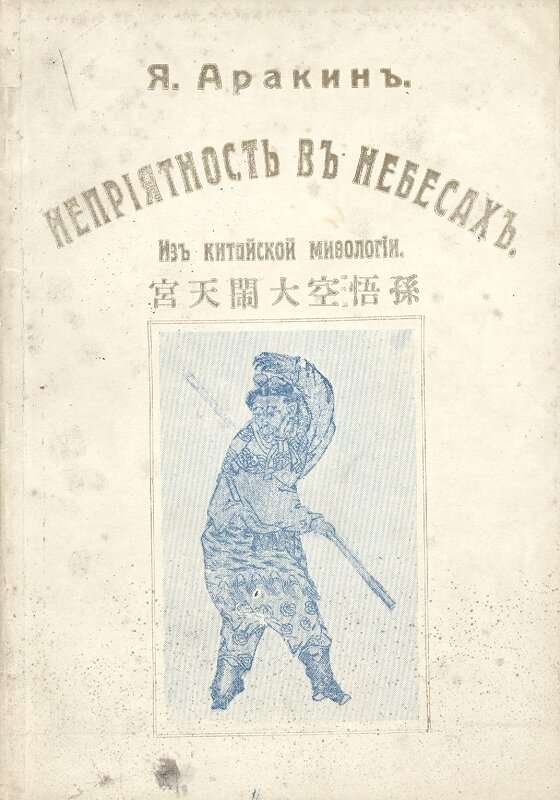
This is a text PDF for Неприятность в небесах. Из китайской мифологии (1926) translated by Yakov Arakin. It is a poetic retelling of the first seven chapters of the novel.

Thank you to Adelar Eleramo for locating the file.

PDF File

Click to access Russian-JTTW-poem-Yakov-Arakin.pdf

The official cover (larger version).

I. Spanish

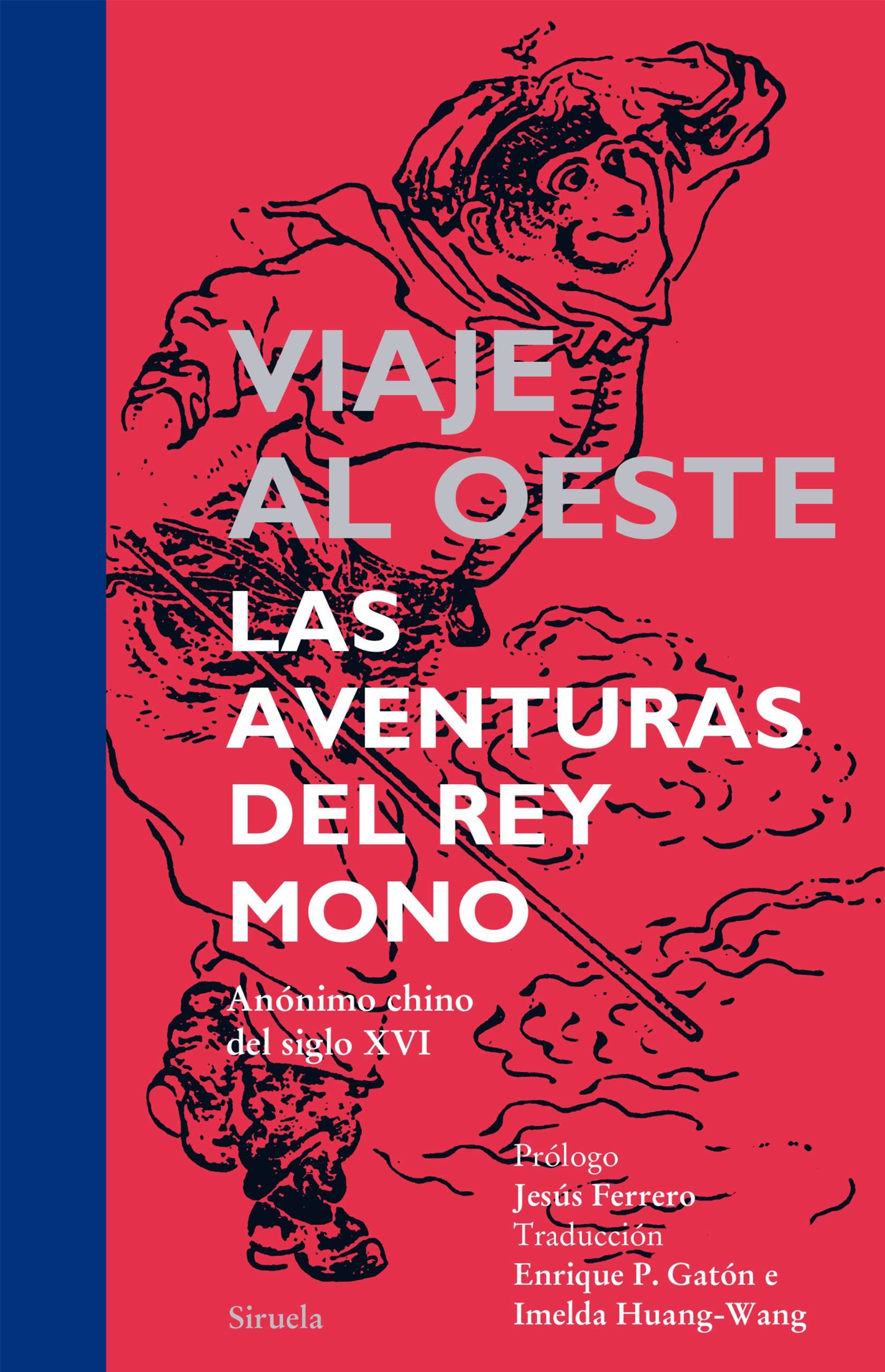
This is a text PDF for Viaje al Oeste: Las aventuras del Rey Mono (2022) translated by Enrique P. Gatón and Imelda Huang-Wang in 100 chapters.

PDF File

Click to access viaje-al-oeste-las-aventuras-del-rey-mono.pdf

The official cover (larger version)

J. Thai

This is a PDF for ไซอิ๋ว (2004/2010). It appears to be based on a four-volume edition translated by one Mr. Tin (นายติ่น) and published from 1906 to 1909. I believe it covers all 100 chapters.

Thank you again to greencicadarchivist for locating the file.

PDF File

Click to access Thai-JTTW-ไซอิ๋ว.pdf

The official cover (larger version)

K. Turkish

This is a PDF for Batı’ya Yolculuk (n.d.). I’m not sure who it was translated by. It appears to be all 100 chapters.

PDF File

Click to access Batiya-Yolculuk.pdf

The official cover (larger version)

L. Vietnamese

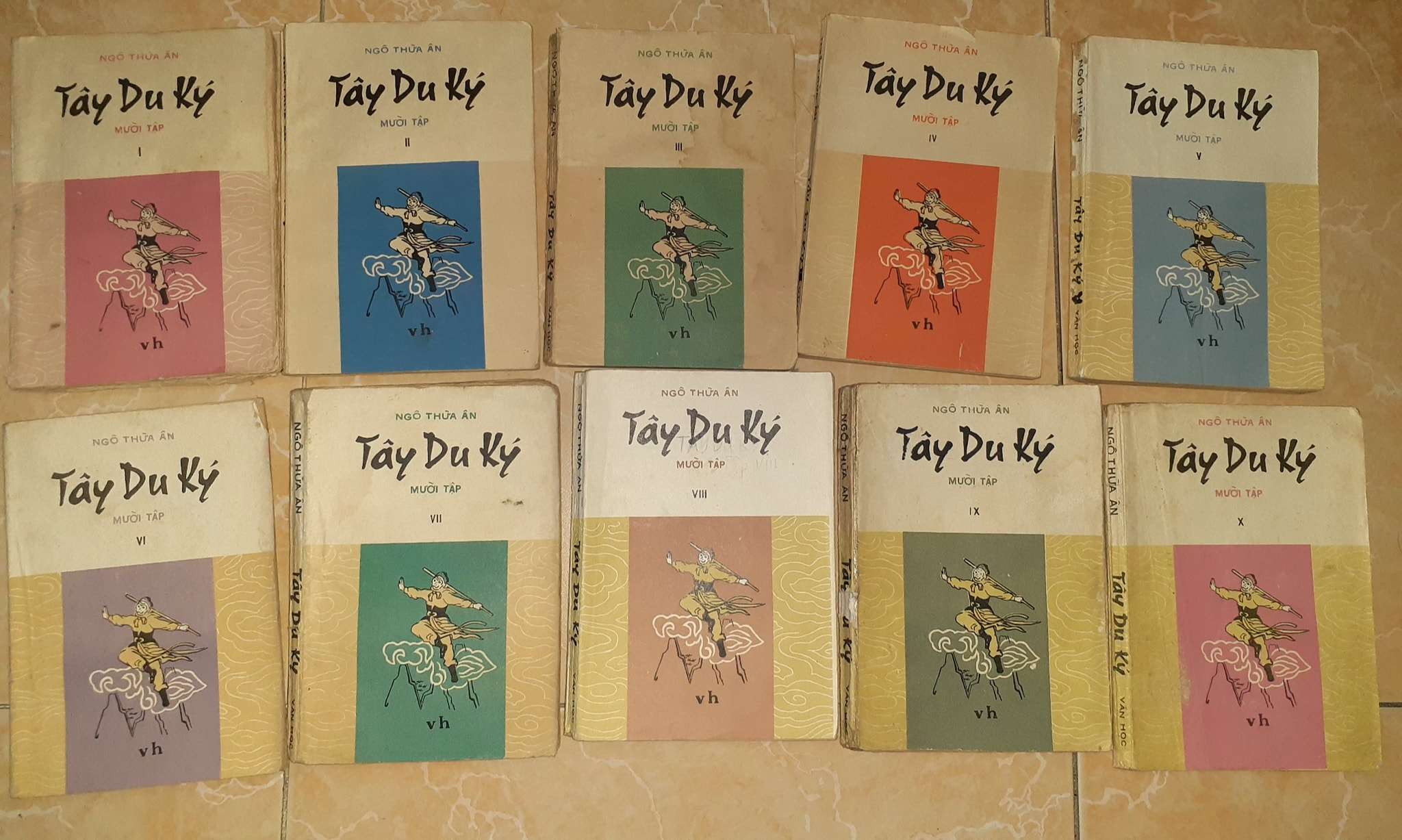
This is a text PDF for Tây Du Ký translated by Như Sơn, Mai Xuân Hải, and Phương Oanh. The 100 chapters were originally split between 10 volumes and published from 1982 to 1988. The volumes were later transcribed and combined to make a single eBook via an online community in 2013 (see here). I have converted it into a PDF.

PDF File

Click to access Vietnamese-JTTW-Tay-Du-Ky.pdf

The covers for the original ten volumes (larger version). Image found here.

3. Unofficial Sequels

3.1. A Supplement to the Journey to the West (Xiyoubu)

A. English

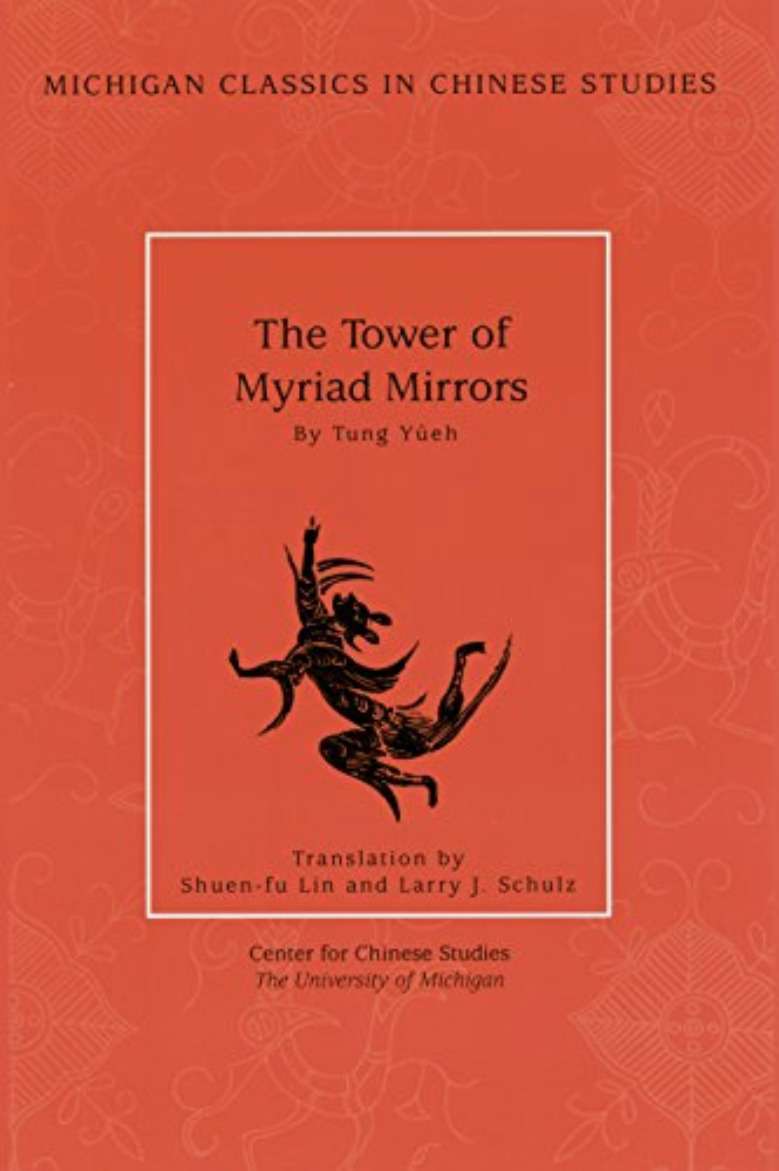
1) This is a PDF for Tower of Myriad Mirrors: A Supplement to Journey to the West (2000) translated by Shuen-fu Lin and Larry J. Schulz. This version was converted from Mobi.

See my previous article on the tale here.

PDF File

Click to access English-Xiyoubu-Lin-Shuen-fu_Dong-Yue-Schulz-Tung-Yueh-The-tower-of-myriad-mirrors_-a-supplement-to-Journey-to-the-West.pdf

The official cover (larger version)

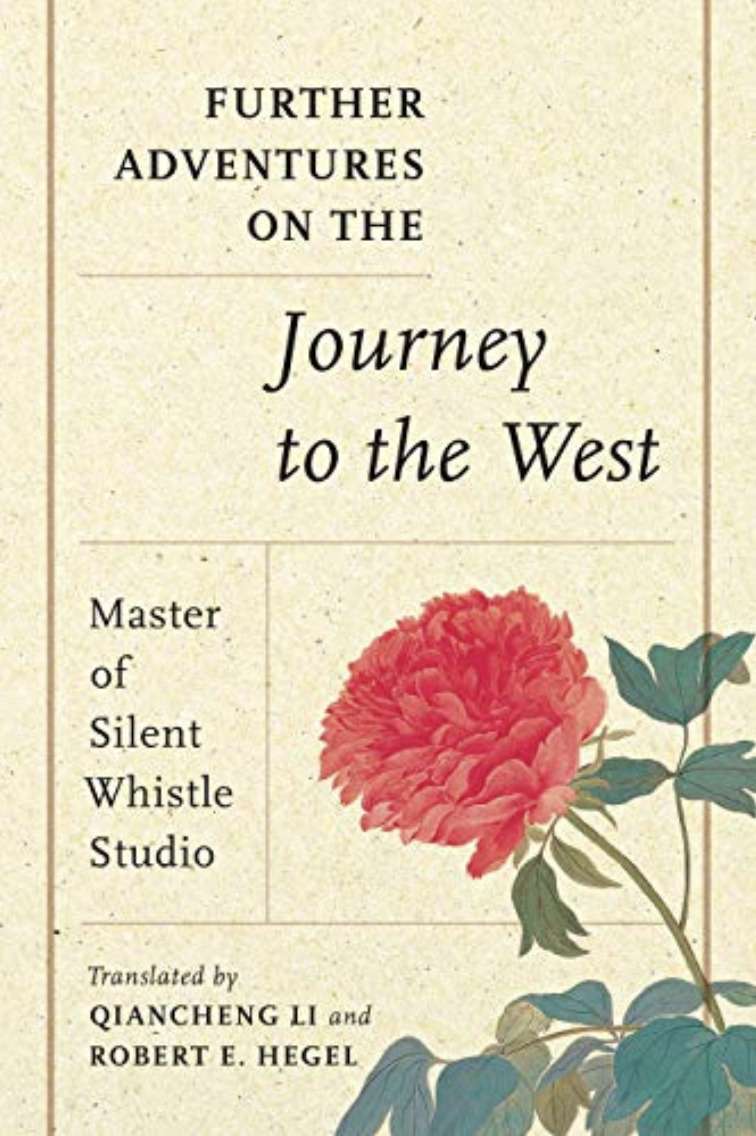
2) This is a PDF for Further Adventures on the Journey to the West – Master of Silent Whistle Studio (2020) translated by Qianchng Li and Robert E. Hegel.

PDF File

Click to access Further-Adventures-on-the-Journey-to-the-West-Master-of-Silent-Whistle-Studio-2020.pdf

The official cover (larger version)

B. Hungarian

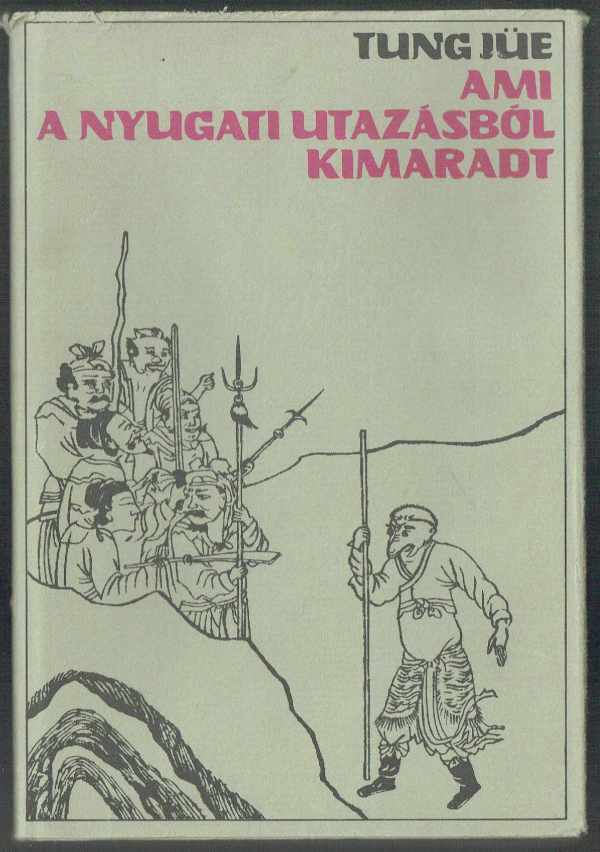
This is a text PDF for Ami a nyugati utazásból kimaradt (1957/1980) translated by Barnabás Csongor.

My thanks again to Twitter user Jakabfi Károly.

PDF File

Click to access Hungarian-Xiyoubu-tung_jue_ami_a_nyugati_utazasbol_kimaradt.pdf

The official cover (larger version).

3.2. Later Journey to the West (Hou Xiyouji, 後西遊記, 17th-century) 

A. Chinese-English

This 41-chapter book has been translated into English with AI by the Chinese Text Project (Ctext). You can READ IT HERE (turn off your VPN for access). The novel does not yet have an official translation.

See my previous articles on the subject here, here, and here.


Update: 08-17-23

I forgot to mention that I have previously archived two other Chinese classics. The first is Creation of the Gods (Fengshen yanyi, 封神演義, c. 1620; a.k.a. Investiture of the Gods), a sort of prequel to JTTW.

Archive #17 – PDFs of Creation of the Gods Library of Chinese Classics Chinese-English Bilingual Edition (Vols. 1-4)

The second is Journey to the South (Nanyouji南遊記, c. 1570s-1580s). This is NOT a direct sequel to JTTW. It instead follows the adventures of a martial god from Chinese folk religion. However, Sun Wukong makes a guest appearance in chapters one and seventeen.

Archive #40 – Journey to the South (Nanyouji) English Translation PDF


Update: 04-06-26

There is also Three Kingdoms (Sanguo yanyi三國演義; lit: “Romance of the Three Kingdoms,” 14th century.).

Archive #52 – PDFs of the Three Kingdoms Foreign Language Press English Translation (Vols. 1-4)

And Outlaws of the Marsh (a.k.a. Water MarginShuihu zhuan, 水滸傳, c. 1400).

Archive #53 – PDFs of Outlaws of the Marsh (a.k.a. Water Margin) Foreign Language Press English Translation (Vols. 1-4)

Archive #41 – PDFs of The Illustrated Journey to the West (Ehon Saiyuki, 繪本西遊記, 1835) – The First Complete Japanese Translation

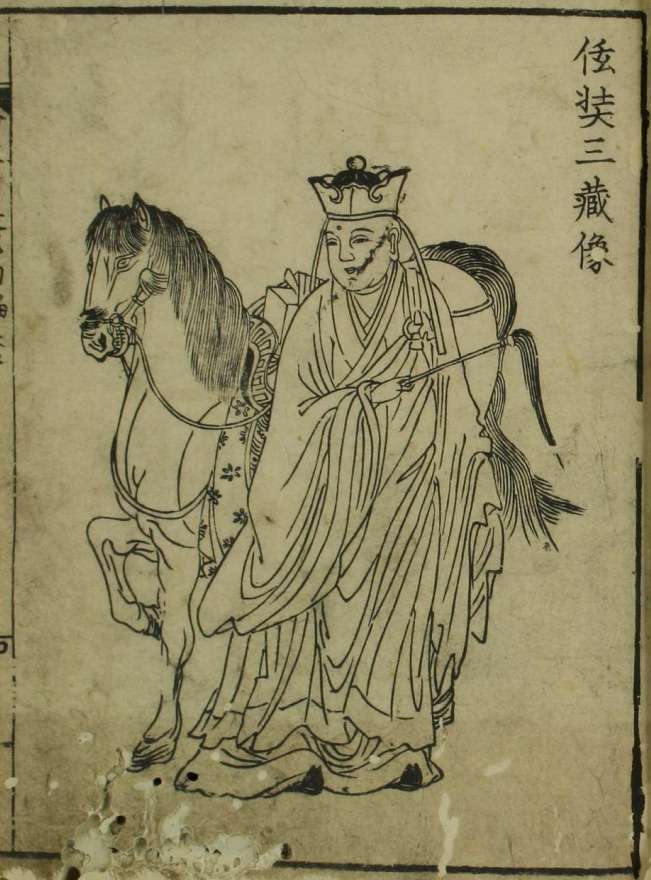
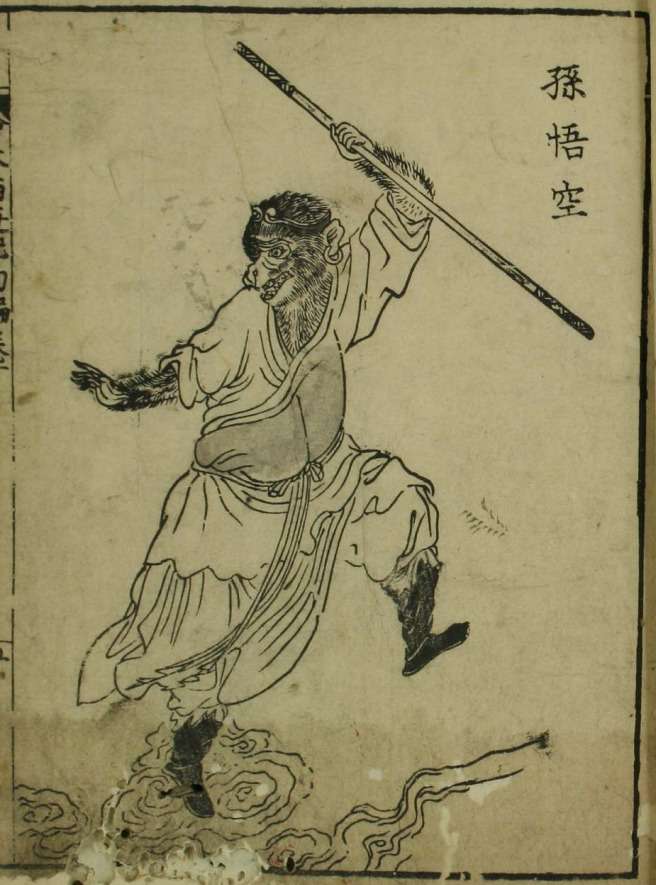
While the earliest known published edition of Journey to the West (Xiyouji西遊記) hails from the 13th-century, the standard 1592 edition of the novel appears to have arrived on Japan’s shores at a relatively late date. For example, the 18th-century translator Nishida Korenori (西田維則; penname: Kuchiki sanjin, 口木山人) began publishing Japanese translations of the stories in 1758, ultimately publishing a total of 26 chapters before his death. Others picked up where he left off, including Ishimaro Sanjin (石麻呂山人) (ch. 27-39 and later 40-47), Ogata Teisai (尾方貞斎) (ch. 48-53), and Gakutei Kyuzan 岳亭丘山 (ch. 54-65). This incomplete version, known as The Popular Journey to the West (Tsuzoku saiyuki, 通俗西遊記, 1758-1831) was published in five instalments over 31 volumes. The first complete version of the novel, The Illustrated Journey to the West (Ehon Saiyuki, 繪本西遊記), was published in 40 volumes a few years later in 1835 (Tanaka, 1988, as cited in Chien, 2017, p. 21).

The latter is full of breathtaking woodblock prints, which are, in my honest opinion, FAR superior to those appearing in the aforementioned standard edition. While commonly attributed to Hokusai (北斎), this art was the joint work of Ohara Toya (大原東野), Utagawa Toyohiro (歌川豐廣), and Katsushika Taito II (二代葛飾戴斗) (Van Rappard-Boon, 1982, p. 147). Most are black and white (fig. 1-4), but a few are in color.

Here, I would like to archive PDF scans of the complete Japanese translation of Journey to the West. I hope it is useful to my readers.

Fig. 1 – The monk Xuanzang/Sanzang (larger version). Fig. 2 – Sun Wukong (larger version). Fig. 3 – Zhu Wuneng/Bajie (larger version). Fig. 4 – Sha Wujing (larger version). Woodblock prints from vol. 1, pp. 8-11.

I. Archive Links

Vol. 1

Click to access Saiyuki-1835-No-1.pdf

Vol. 2

Click to access Saiyuki-1835-No-2.pdf

Vol. 3

Click to access Saiyuki-1835-No-3.pdf

Vol. 4

Click to access Saiyuki-1835-No-4.pdf

Vol. 5

Click to access Saiyuki-1835-No-5.pdf

Vol. 6

Click to access Saiyuki-1835-No-6.pdf

Vol. 7

Click to access Saiyuki-1835-No-7.pdf

Vol. 8

Click to access Saiyuki-1835-No-8.pdf

Vol. 9

Click to access Saiyuki-1835-No-9.pdf

Vol. 10

Click to access Saiyuki-1835-No-10.pdf

Vol. 11

Click to access Saiyuki-1835-No-11.pdf

Vol. 12

Click to access Saiyuki-1835-No-12.pdf

Vol. 13

Click to access Saiyuki-1835-No-13.pdf

Vol. 14

Click to access Saiyuki-1835-No-14.pdf

Vol. 15

Click to access Saiyuki-1835-No-15.pdf

Vol. 16

Click to access Saiyuki-1835-No-16.pdf

Vol. 17

Click to access Saiyuki-1835-No-17.pdf

Vol. 18

Click to access Saiyuki-1835-No-18.pdf

Vol. 19

Click to access Saiyuki-1835-No-19.pdf

Vol. 20

Click to access Saiyuki-1835-No-20.pdf

Vol. 21

Click to access Saiyuki-1835-No-21.pdf

Vol. 22

Click to access Saiyuki-1835-No-22.pdf

Vol. 23

Click to access Saiyuki-1835-No-23.pdf

Vol. 24

Click to access Saiyuki-1835-No-24.pdf

Vol. 25

Click to access Saiyuki-1835-No-25.pdf

Vol. 26

Click to access Saiyuki-1835-No-26.pdf

Vol. 27

Click to access Saiyuki-1835-No-27.pdf

Vol. 28

Click to access Saiyuki-1835-No-28.pdf

Vol. 29

Click to access Saiyuki-1835-No-29.pdf

Vol. 30

Click to access Saiyuki-1835-No-30.pdf

Vol. 31

Click to access Saiyuki-1835-No-31.pdf

Vol. 32

Click to access Saiyuki-1835-No-32.pdf

Vol. 33

Click to access Saiyuki-1835-No-33.pdf

Vol. 34

Click to access Saiyuki-1835-No-34.pdf

Vol. 35

Click to access Saiyuki-1835-No-35.pdf

Vol. 36

Click to access Saiyuki-1835-No-36.pdf

Vol. 37

Click to access Saiyuki-1835-No-37.pdf

Vol. 38

Click to access Saiyuki-1835-No-38.pdf

Vol. 39

Click to access Saiyuki-1835-No-39.pdf

Vol. 40

Click to access Saiyuki-1835-No-40.pdf

II. Thanks

I originally retrieved the PDF scans from this archive. My thanks to them.

Sources:

Chien, P. (2017). A Journey to the Translation of Verse in the Five English Versions of Xiyouji [Unpublished Master’s dissertation]. National Taiwan Normal University. Retrieved from http://rportal.lib.ntnu.edu.tw/bitstream/20.500.12235/95894/1/060025002l01.pdf

Van Rappard-Boon, C. (1982). Hokusai and His School: Japanese Prints C.1800-1840. Netherlands: Rijksprntenkabinet /  Rijksmuseum.

How Tall are the Main Characters from Journey to the West?

Last updated: 09-30-2024

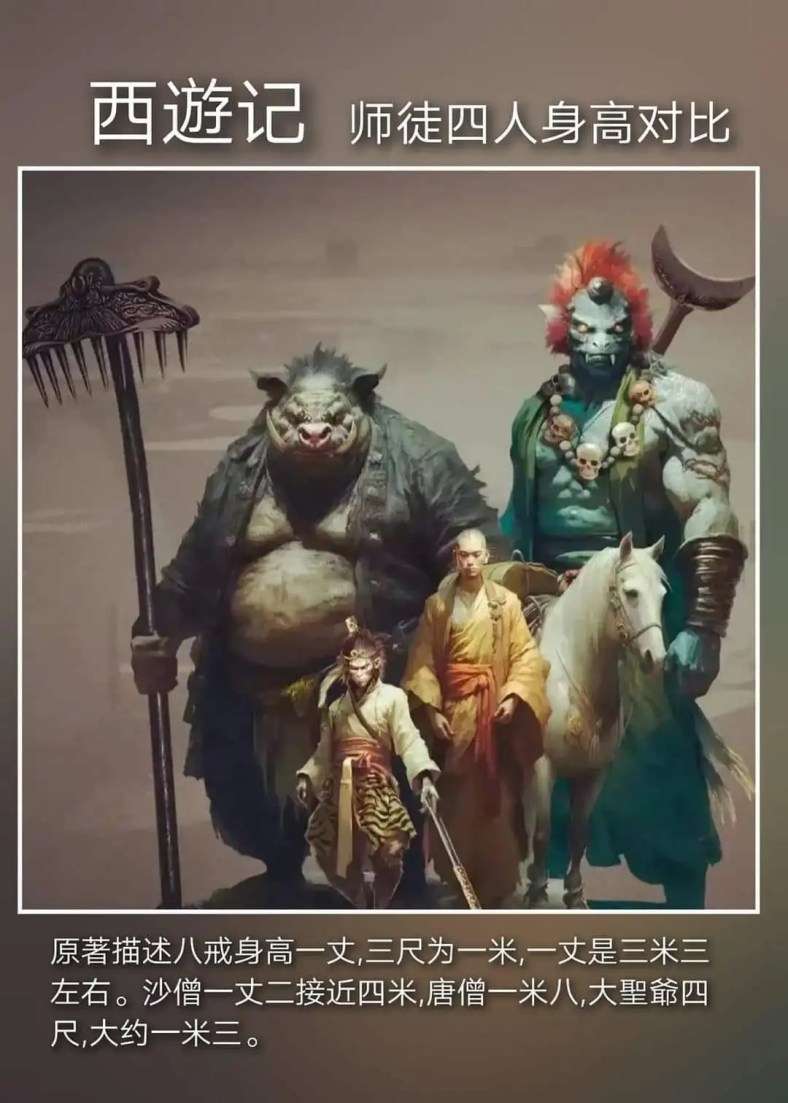
A member of a private Monkey King Facebook group I belong to posted a Chinese informational graphic titled “Journey to the West: The Four Body Height Ratios of the Master and His Disciples” (Xiyou ji: Shitu siren shengao duibi, 西游记 师徒四人身高对比) (fig. 1). Each character is depicted with their correct corresponding height, ranging from Sun Wukong as the shortest to Sha Wujing as the tallest. The bottom of the picture provides some measurements:

The original novel describes Bajie’s body as being 1 zhang tall. Three chi is 1 meter. One zhang is around 3.3 meters. Sha Monk is 1.2 zhang, which is close to 4 meters. The Tang monk is 1.8 meters. The Lord Great Sage is 4 chi, or approximately 1.3 meters.

原著描述八戒身高一丈,三尺为一米,一丈是三米三左右。沙僧一丈二接近四米,唐僧一米八,大聖爺四尺,大约一米三。

The information is overgeneralized and at times conjectural, but I figured the picture would be interesting to my followers on Twitter. Little did I know that it would explode in popularity. As of this writing, my tweet has 940 likes (most of these received in a few days). This indicates that not many people were aware of the great height disparity between the pilgrims. I’ve, therefore, decided to write an article recording what Journey to the West (Xiyouji西遊記, 1592) actually says about each character’s height. 

I believe that the creator of the info graphic got their measurements from this essay, for it has the exact same title and very similar material (Zhongshi Damei Shenghuo [ZDS], 2020). I will use the claims therein to compare and contrast with the actual text from the novel.

Fig. 1 – The Chinese informational picture listing the pilgrims’ heights (larger version). I, unfortunately, don’t know who the original artist is. A reverse image search didn’t turn up anything. This page has the earliest appearance of the informational picture that I can find.

Table of  Contents

1. Measurements

ZDS (2020) uses a mixture of the ancient chi (尺, a.k.a. Chinese foot) and zhang (丈, a.k.a. ten Chinese feet) and the modern meter (mi, 米). The chi (and subsequently the zhang) varied at the local level at different times. During the Ming (1368–1644), when Journey to the West was published, the measurements equaled:

  • One chi (尺) = roughly 31.8 cm (12.3 in)
  • Ten chi = one zhang (丈)
  • one zhang (丈) = roughly 3.18 m (10.43 ft) (Jiang, 2005, p. xxxi).

Yes, the novel is set during the Tang (618–907), but many elements of the story (e.g. language, religion, mythos, martial arts, etc.) are filtered through the lens of the Ming. Therefore, it’s appropriate to use Ming-era measurements.

2. Heights

The characters are listed below from shortest to tallest.

(Note: I will be relying on the Wu & Yu (2012) translation. But since it uses “feet” instead of the original chi or zhang, I’ll alter the source throughout the article for more accuracy.)

2.1. Sun Wukong

See my previous articles discussing Monkey’s height (here and here).

ZDS (2020) states that Sun is “4 chi, that is less than 1.3 m [4.26 ft] or the same height as a child” (4 chi, yejiushi budao 1.3 mi, gen haitong yiban gao, 4尺,也就是不到1.3米,跟孩童一般高). But they miss an important distinction. The novel twice describes him as being “not four chi tall” (buman sichi, 不滿四尺), meaning that Monkey is an unknown height below 1.272 m (4.17 ft).

The phrase is first spoken by the Monstrous King of Havoc (Hunshi mowang, 混世魔王) in chapter 2:

When the Monstrous King saw him, he laughed and said, “You’re not four chi tall (emphasis added), nor are you thirty years old; you don’t even have weapons in your hands. How dare you be so insolent, looking for me to settle accounts?” (based on Wu & Yu, 2012, vol. 1, p. 128).

魔王見了,笑道:「你身不滿四尺,年不過三旬,手內又無兵器,怎麼大膽猖狂,要尋我見甚麼上下?」

The second is said hundreds of years later by the Great King Yellow Wind (Huangfeng dawang, 黃風大王) in chapter 21:

The old monster took a careful look and saw the diminutive figure of Pilgrim—less than four chi (emphasis added), in fact—and his sallow cheeks. He said with a laugh: “Too bad! Too bad! I thought you were some kind of invincible hero. But you are only a sickly ghost, with nothing more than your skeleton left!” (based on Wu & Yu, 2012, vol. 1, p. 408).

那怪仔細觀看,見行者身軀鄙猥,面容羸瘦,不滿四尺。笑道:「可憐,可憐。我只道是怎麼樣扳翻不倒的好漢,原來是這般一個骷髏的病鬼。」

Some readers may wonder why such a powerful character can be so tiny. This is because the novel describes Sun as a literal monkey. Refer back to this article for more information.

(Note: See the 04-27-24 update below for a more precise measurement.)

2.2. The Tang Monk

I have yet to formally write about Tripitaka‘s height.

ZDS (2020) suggests that the “Tang Monk should be about 1.8 m [5.90 ft]” (Tangseng yinggai zai 1.8 mi zuoyou, 唐僧应该在1.8米左右). This estimate is based on the size of a stone box used to imprison him in chapter 49:

Pilgrim … mov[ed] towards the rear of the palace. He looked, and sure enough there was a stone box, somewhat like a trough that people use in a pigpen or a stone coffin. Measuring it, he found it to be approximately six chi in length (emphasis added). He crawled on top of it and soon heard the pitiful sound of Tripitaka’s weeping coming from inside (Wu & Yu, 2012, vol. 2, p. 347).

行者 … 徑直尋到宮後看,果有一個石匣,卻像人家槽房裡的豬槽,又似人間一口石棺材之樣,量量足有六尺長短。卻伏在上面,聽了一會,只聽得三藏在裡面嚶嚶的哭哩。

Six chi is 1.9 m or 6.25 ft. Tripitaka would obviously be shorter given the inside thickness of the stone walls, but the novel doesn’t provide such detailed information. This means that the 1.8 m estimate is conjecture. So, what other proof is there?

ZDS (2020) also cites a poem from chapter 54 as evidence that the Tank Monk is “tall and handsome” (yougao youshuai, 又高又帅):

What handsome features!
What dignified looks!
Teeth white like silver bricks,
Ruddy lips and a square mouth.
His head’s flat-topped, his forehead, wide and full;
Lovely eyes, neat eyebrows, and a chin that’s long.
Two well-rounded ears betoken someone brave.
He is all elegance, a gifted man.
What a youthful, clever, and comely son of love,
Worthy to wed Western Liang’s gorgeous girl! (Wu & Yu, 2012, vol.  3, p. 55). [1]

丰姿英偉,相貌軒昂。齒白如銀砌,唇紅口四方。頂平額闊天倉滿,目秀眉清地閣長。兩耳有輪真傑士,一身不俗是才郎。好個妙齡聰俊風流子,堪配西梁窈窕娘。

Technically, yishen busu (一身不俗) can mean having a body that is “impressive” or “out of the ordinary,” but as Yu (2012) translates, it can also refer to one’s person. This is not the same as listing a particular height.

Hence, there isn’t enough information in the novel to officially say how tall Tripitaka is. But for those demanding some sort of answer, we can always speculate using real world data.

According to one study, out of a sample size of 28,044 Chinese men from 31 provinces/autonomous regions, the average modern height is 169 cm (5.54 ft). Additionally, this Chinese article references a study claiming that men from ancient times up to the Ming were between 165 cm (1.65 m or 5.41 ft) and 167 cm (1.67 m or 5.47 ft). This is obviously shorter than the 1.8 m suggested above.

Therefore, the most we can say is that the Tang Monk would be average historical height.

2.3. Zhu Bajie

I’ve written about Zhu Bajie’s height in the past (see here).

ZDS (2020) writes that Zhu’s “snout is 3 chi long” (zui chang 3 chi, 嘴长3尺). This is based on a descriptive poem from chapter 85:

A snout, pestlelike, over three chi long (emphasis added)
And teeth protruding like silver prongs
Bright like lightning a pair of eyeballs round,
Two ears that whip the wind in hu-hu sound.
Arrowlike hairs behind his head are seen;
His whole body’s skin is both coarse and green.
His hands hold up a thing bizarre and queer:
A muckrake of nine prongs which all men fear.

(Wu & Yu 2012, vol. 4, p. 149).

碓嘴初長三尺零,獠牙觜出賽銀釘。
一雙圓眼光如電,兩耳搧風唿唿聲。
腦後鬃長排鐵箭,渾身皮糙癩還青。
手中使件蹊蹺物,九齒釘鈀個個驚。

But, again, an important distinction is missed. Zhu’s nose is “over three chi long,” or larger than 95.4 cm (3.12 ft), which is over half the height of an average humanZDS (2020) says this measurement indicates that: “According to the laws of biology, (Zhu’s) body is approximately 3.5 m [11.48 ft]” (Anzhao shengwuxue de guilu, shenti yue 3.5 mi zuoyou, 按照生物学的规律,身体约3.5米左右). However, they never explain what laws they are referring to.

The only other information about Zhu’s size that I’m aware of appears in chapter 29. Upon entering a new kingdom, Tripitaka describes his two remaining disciples. [2] He starts with the pig spirit:

“My elder disciple has the surname of Zhu, and his given names are Wuneng and Eight Rules. He has a long snout and fanglike teeth, tough bristles on the back of his head, and huge, fanlike ears. He is coarse and husky, and he causes even the wind to rise when he walks (emphasis added) …” (Wu & Yu 2012, vol. 2, p. 51).

我那大徒弟姓豬,名悟能八戒,他生得長嘴獠牙,剛鬃扇耳,身粗肚大,行路生風 …

This tells us that Zhu has a large body capable of stirring the wind when he moves. But it’s important to note that Tripitaka’s subsequent dialogue assigns Sha Wujing a specific height (see below). This points to Zhu being shorter in comparison.

Therefore, just like the Tank Monk, there isn’t enough info to officially say how tall Zhu is. But we can again speculate using real world data.

My friend Barbara Campbell (blog) suggested that I use extinct prehistoric pigs as reference. A prime example is Megalochoerus homungous, which has been estimated to be 3.8 m (12.46 ft) long, 1.8 to 2.2 m (5.9 to 7.21 ft) at the shoulder, and up to 1,600 kg (3,527.39 lbs) (Uchytel, n.d.). A reconstruction by the paleo artist Roman Uchytel presents a towering creature with a head half as long as a man’s body (fig. 2). This is quite similar to the size of Zhu’s nose. Even with it’s head facing forward, a bipedal M. homungous would still be around 3.8 m (12.46 ft) tall. But as you’ll read below, this is too tall if Zhu is supposed to be shorter than Sha.

So how tall is Zhu? Your guess is as good as mine. But for those demanding some sort of answer, we can use human arm span to body height ratio, which is roughly 1:1. Using 1.8 m (5.9 ft), or the lower estimate for M. homungous‘ shoulder height, Zhu could be as much as 3.6 m (11.81 ft). But I am in no way comfortable with this estimate. It’s 100% pure conjecture, and I think it is still too tall.

Fig. 2 – A reconstruction of M. homungous by Roman Uchytel (larger version). Mr. Uchytel graciously gave me permission to use a watermarked version of his art for free. Please consult his website here.

2.4. Sha Wujing

I’ve previously mentioned Sha’s height in the article about Zhu Bajie’s appearance (refer back to here).

ZDS (2020) writes that Sha is “One zhangchi, nearly 4 m” (yizhang erchi, chabuduo 4 mi le, 一丈二尺,差不多4米了). This is based on Tripitaka’s continued dialogue with the foreign king in chapter 29:

“… My second disciple has the surname of Sha, and his religious names are Wujing and Monk. He is one zhang two chi tall and three span wide across his shoulders (emphasis added). His face is like indigo, his mouth, a butcher’s bowl; his eyes gleam and his teeth seem a row of nails” (Wu & Yu 2012, vol. 2, p. 51).

第二個徒弟姓沙,法名悟淨和尚,他生得身長丈二,臂闊三停,臉如藍靛,口似血盆,眼光閃灼,牙齒排釘。他都是這等個模樣,所以不敢擅領入朝。

This tells us that the monstrous monk is a whopping 3.816 m (12.51 ft) tall, with an exceptionally broad body.

Fun fact: Sha Wujing’s height is based on his giant antecedent, an obscure desert spirit appearing in the 7th-century biography of  the historical monk Xuanzang (on whom Tripitaka is based). The spirit comes to the cleric in a dream to admonish him for sleeping on the journey to India:

[Xuanzang] dreamed that he saw a giant deity several zhang tall (emphasis added), holding a halberd and a flag in his hands. The deity said to him, “Why are you sleeping here instead of forging ahead?” (based on Huili & Li, 1995, p. 28).

即於睡中夢一大神長數丈,執戟麾曰:「何不強行,而更臥也!」

“[S]everal zhang” would be 3 zhang (9.54 m or 31.29 ft) or more tall! That’s one big spirit!

3. Conclusion 

Journey to the West: The Four Body Height Ratios of the Master and His Disciples” is an informational picture that depicts the pilgrims with their correct corresponding heights. The bottom of the picture also provides measurements to supplement the illustration. These numbers were likely borrowed from ZDS (2020), an online article with the exact same name and very similar material. According to the essay, Sun Wukong is less than 1.3 m (4.26 ft), the Tang Monk is about 1.8 m (5.90 ft), Zhu Bajie is 3.5 m (11.48 ft), and Sha Wujing is nearly 4 m (13.12 ft). However, this information is overgeneralized and at times conjectural.

The original Chinese text of Journey to the West naturally gives more accurate information. But, unfortunately, the book only lists specific heights for two characters: Monkey is shorter than 1.272 m (4.17 ft) and Sha is 3.816 m (12.51 ft). As for the other two, not enough information is given for Tripitaka or Zhu to officially say how tall they are. However, speculating with real world historical height data suggests that the literary monk could be somewhere between 1.65 m (5.41 ft) and 1.67 m (5.47 ft), which is obviously shorter than the 1.8 m cited above. But even using prehistoric pigs as a reference, Zhu Bajie is the hardest to calculate since the novel indirectly implies that he is shorter than Sha. I used the lower end shoulder height estimate of the extinct M. homungous to suggest that Zhu could be as much as 3.6 m (11.81 ft) tall. But I think that this is still too big.

On an interesting note, Sha’s great height is based on his giant antecedent, a desert spirit appearing in the historical Xuanzang’s 7th-century biography. The spirit is described as being 9.54 m (31.29 ft) or more!


4. Updates

Update: 08-26-23

Tumblr user @digitalagepulao has drawn lovely versions of the JTTW pilgrims (fig. 3). And while some of their heights may differ slightly from those discussed above, the overall ratios are correct. I love the designs.

This is for @digitalagepulao’s own “Expedition to the West au” (alternate universe) JTTW storyline based on a previous article of mine.


Fig. 3 – The height ratios for digitalagepulao’s JTTW character designs (larger version). Used with permission.


Update: 04-27-24

Chapter 37 gives a more precise measurement for Monkey’s height. He first transforms into a “tiny monk about two cun tall” (二寸長的小和尚兒) (based on Wu & Yu, 2012, vol. 2, p. 172). He shortly thereafter grows even bigger when a prince makes fun of him:

Tripitaka pulled open the box’s cover; Pilgrim [Sun Wukong] leaped out and began to hobble all over the place. The prince said, “This little midget! What can he know?” When Pilgrim heard this remark about his size, he at once resorted to magic. Straightening up his torso, he grew about three chi and four or five cun instantly (emphasis added). “If he can grow that rapidly,” said the soldiers, highly startled, “it will only be a few days before he pierces the sky.” When Pilgrim reached his normal height, however, he stopped growing (emphasis added) (based on Wu & Yu, 2012, vol. 2, pp. 174-175).

三藏扯開匣蓋兒,那行者跳將出來,呀的兩邊亂走。太子道:「這星星小人兒,能知甚事?」行者聞言嫌小,卻就使個神通,把腰伸一伸,就長了有三尺四五寸。眾軍士吃驚道:「若是這般快長,不消幾日,就撐破天也。」行者長到原身,就不長了。

As mentioned in section 1, one chi (尺) is roughly 12.3 in or 31.8 cm (Jiang, 2005, p. xxxi). Expanding on this, one chi equals 10 cun (寸; a.k.a. “Chinese inches”) (Jiang, 2005, p. xxxi). One cun would be about 1.25 in or 3.18 cm. Two cun would, therefore, be 2.5 in or 6.36 cm. Growing the stated additional height would then put our hero at 3 chi and 6 or 7 cun, which is roughly 3.86 ft or 1.176 m. This agrees with the aforementioned estimate of “not (or less than) four chi tall” (buman sichi, 不滿四尺) (Wu & Yu, 2012, vol. 1, pp. 128 and 408).


Update: 09-30-24

Tumblr user @heshemejoshi has drawn an awesome image of the pilgrims with their various height differences. The coloring almost makes it look like a dream.

Fig. 4 – The pilgrims “going west” (larger version).

Note:

1) “Western Liang’s gorgeous girl” is referring to the Queen of Womanland.

2) The Tang Monk had previously expelled Monkey from the group in chapter 27 (Wu & Yu, vol. 2, pp. 26-28).

Sources:

Huili, & Li, R. (1995). A Biography of the Tripiṭaka Master of the Great Ci’en Monastery of the Great Tang Dynasty. Berkeley: Numata Center for Buddhist translation and research.

Jiang, Y. (2005). The Great Ming Code / Da Ming Lu. Vancouver, Wa: University of Washington Press.

Uchytel, R. (n.d.). Megalochoerus. Prehistoric Fauna. Retrieved from https://prehistoric-fauna.com/Megalochoerus.

Wu, C., & Yu, A. C. (2012). The Journey to the West (Vols. 1-4) (Rev. ed.). Chicago, Illinois: University of Chicago Press.

Zhongshi Damei Shenghuo. (2020, August 18). Xiyou ji: Shitu siren shengao duibi [Journey to the West: The Four Body Height Ratios of the Master and His Disciples]. Sohu. Retrieved from https://www.sohu.com/a/413598842_120113471