The Newly Annotated Journey to the West (Xinshuo Xiyouji, 新說西遊記, 1749) by Zhang Shushen (張書紳) is one of three popular editions of JTTW that circulated during the Qing Dynasty (1644-1911) and overshadowed the original. [1] It contains a running commentary dispersed throughout the pilgrims’ many adventures. Anthony C. Yu (Wu & Yu, 2012) describes Zhang’s work as having a Confucian bias:
In his unabridged hundred-chapter Xinshuo Xiyouji (The Journey to the West, Newly Interpreted) of 1749, Zhang Shushen declared in the section entitled “Xiyouji zongpi 西游記總批 (Overall Comments on The Journey to the West)” that “the book Xiyou has been designated by the ancients as a book meant to illuminate the Dao [a pointed dig at the 1662 edition titled Xiyou zhengdao shu, with the Daoist-leaning preface attributed to Yu Ji … ], by which it originally means the Dao of the sages, the worthies, and the Confucians (儒 Ru). To consider it an illumination of the Dao of immortals and Buddhism would be a mistake, indeed.” From a point of view clearly unsympathetic to the popular movement of Three-Religions-Joining-As-One (sanjiao heyi 三教合一, a possibly millennium-old notion … ), Zhang defended the story of the quest for Buddhist scriptures as an allegory of the classic Confucian doctrines on the illustration of virtue (mingde 明德) and the rectification of the mind (zhengxin 正心), ignoring the repeated and complex elaborations of zhengxin in Chan Buddhism also for at least a thousand years prior to his time (vol. 1, pp. 51-52).
I’ve decided to archive a scanned copy of this work for posterity.
A digital version of the text (interspersed with other commentaries) can be found here.
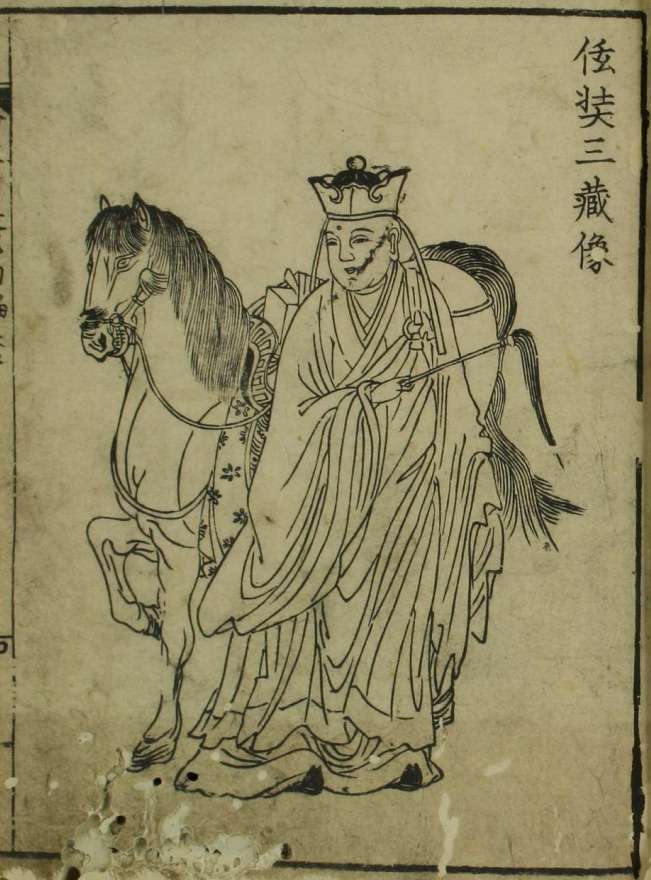
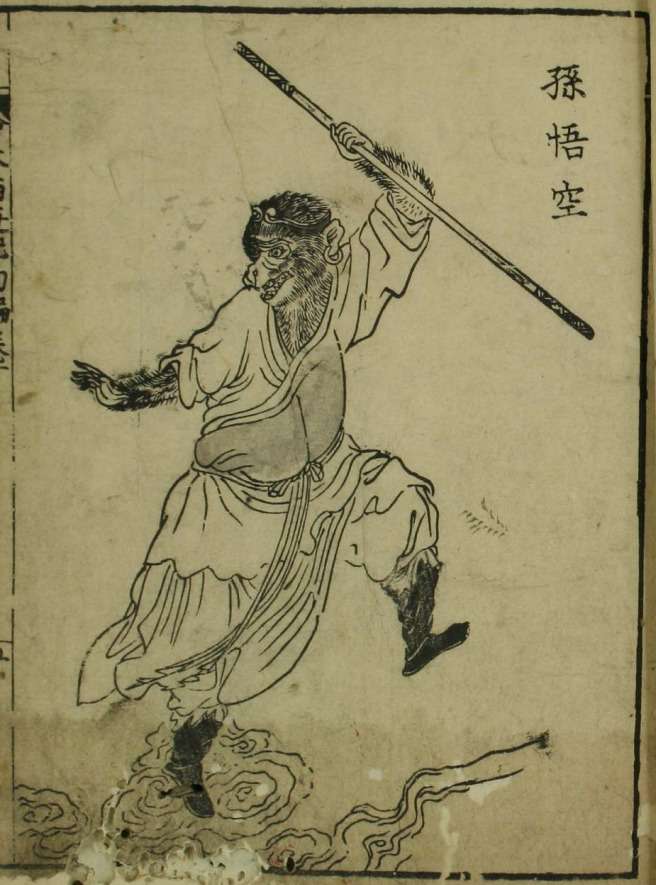
I’ve previously archived illustrated versions of JTTW, including the original 1592 edition, (images from) Li Zhuowu’s late-16th-century critique, and a circa 1835 Japanese translation. Here, I’d like to add another, the Newly Annotated Journey to the West With Illustrations (Xinshuo Xiyouji tuxiang, 新說西遊記圖像, 1888). The original text and commentary are the same, but this edition features a preface by Wang Tao (王韜), as well as over 100 woodblock prints.
The prints in the archived book below are admittedly a little fuzzy. This webpage has somewhat clearer versions.
Note: My blog is not monetized, so I am not making any money from this post. My hope is that the PDFs will make this legendary story more accessible to a wider audience. If you enjoyed the digital versions, please, please, please support the official releases.
Last updated: 04-06-2026
I’m happy to host a number of foreign language translations of the noted Chinese classic Journey to the West (Xiyou ji, 西遊記, 1592 CE), as well as a precursor and some later unofficial sequels.
1. The Precursor
The Story of How Tripitaka of the Great Tang Procures the Scriptures (Datang Sanzang qujing shihua, 大唐三藏取經詩話, c. late-13th-century)
I will add more languages to this archive as they become available. Please let me know if you have access to other editions.
1. The Precursor
1.1. The Story of How Tripitaka of the Great Tang Procures the Scriptures (Datang Sanzang qujing shihua, 大唐三藏取經詩話, c. late-13th-century)
A. English
This 17-chapter novelette, which likely served as a prompt for oral storytellers, is the earliest known printed edition of the JTTW story cycle. It involves the adventures of Tripitaka and Sun Wukong’s antecedent, the “Monkey Pilgrim” (Hou xingzhe, 猴行者). The tale is translated by Charles S. Wivell.
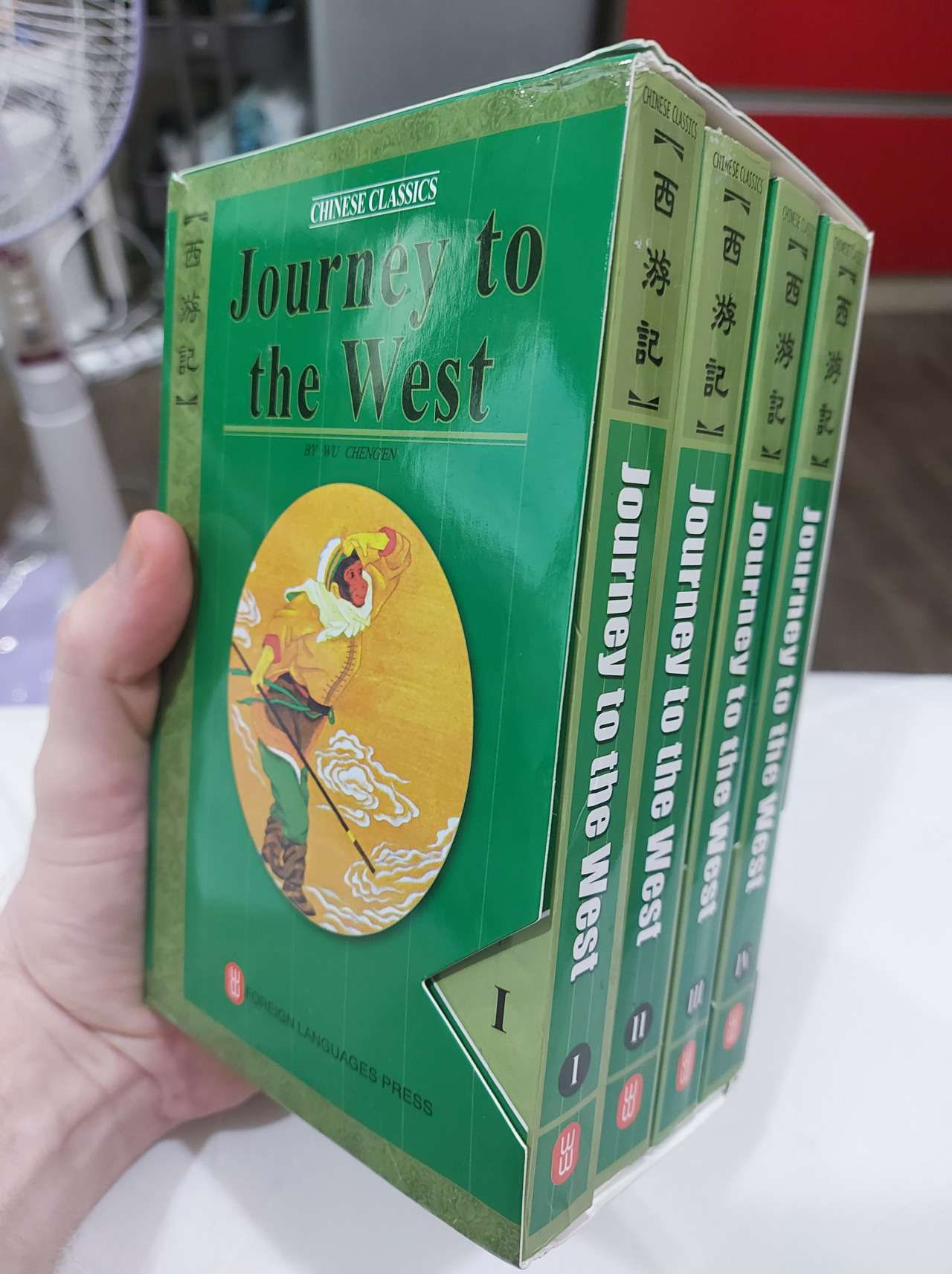
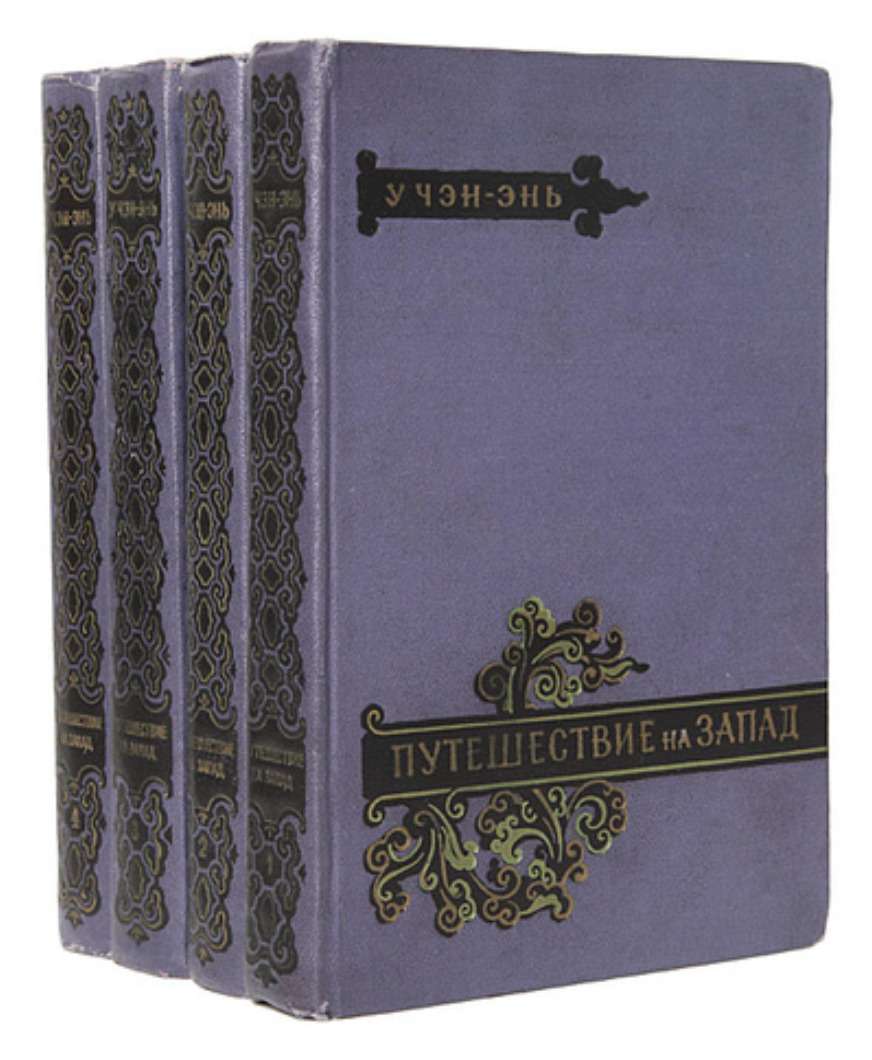
The four-volume box set in my collection (larger version).
A.2. Abridged
1) This is a PDF for Monkey (1942/1984) translated by Arthur Waley in 30 chapters (1 to 15, 18 and 19, 22, 37 to 39, 44 to 46, 47 to 49, and 98 to 100). See past book covers here.
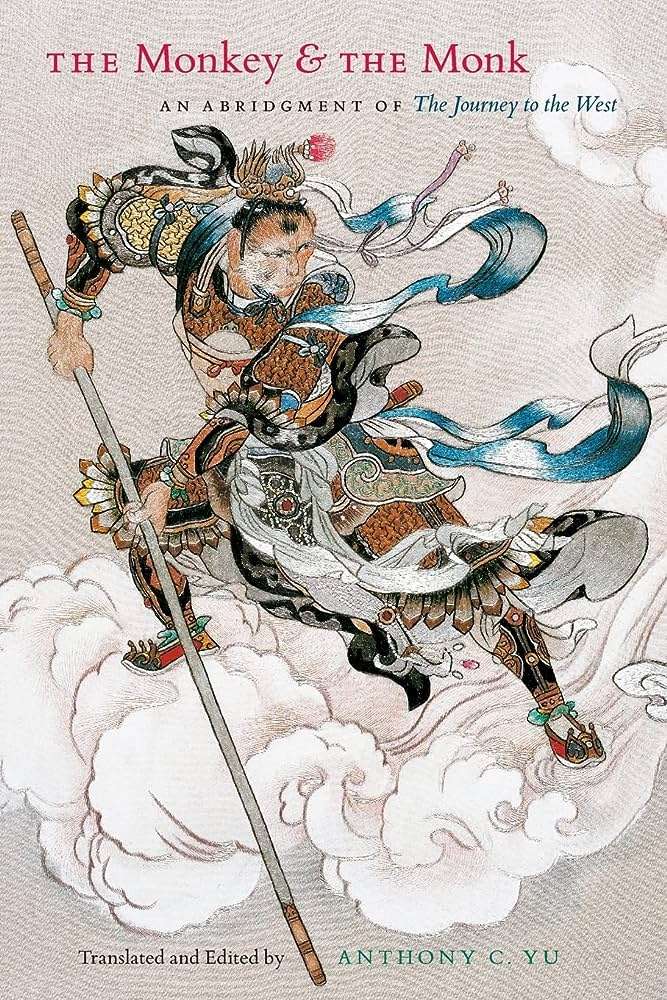
2) This is a PDF for The Monkey and the Monk (2006): An Abridgement of The Journey to the West translated by Anthony C. Yu in 31 chapters (1 to 15, 18 and 19, 22 and 23, 44 to 46, 53 to 55, 57 and 58, 84, and 98 to 100)
1) I just learned of “The Fifth Monkey” and their Journey to the West – An Audio Drama Series, which presents a new English translation alongside the original Chinese. They explain:
One reason that led our team to start this audio drama project is to correct some of the mistranslations found in the Yu/Jenner translations. Most of them are very minor and we certainly understand what could have led to those mistakes, but we think it is worth exploring how we can help bring a more accurate presentation of the original text in the English language (source).
2) YouTuber Sondley has recorded himself reading all 100 chapters of the Jenner edition.
B. French
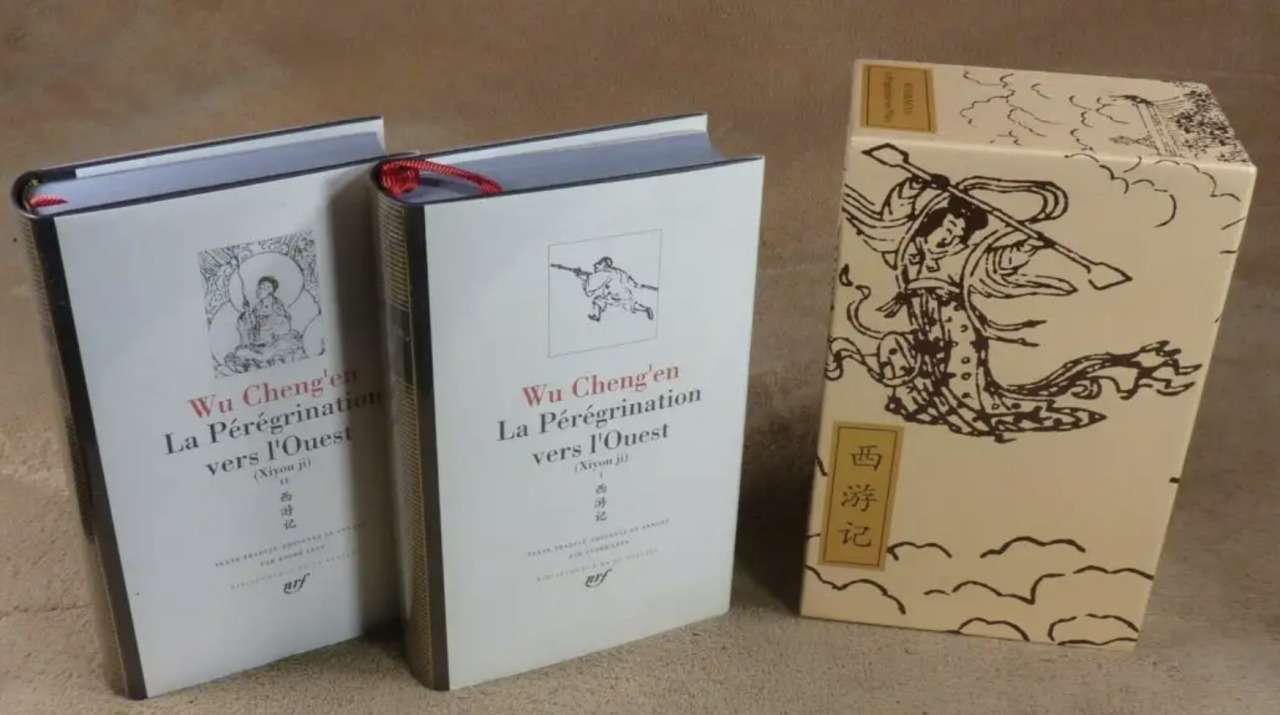
These are PDFs for La Pérégrination vers l’Ouest (Xiyou ji) (1991) translated by André Lévy in 100 chapters. I was told by one French academic that this edition “is one of the best available in Western languages.”
Thank you to arcanananas on Tumbler for volume one, and thank you to jyeet on the Journey to the West discord for volume two.
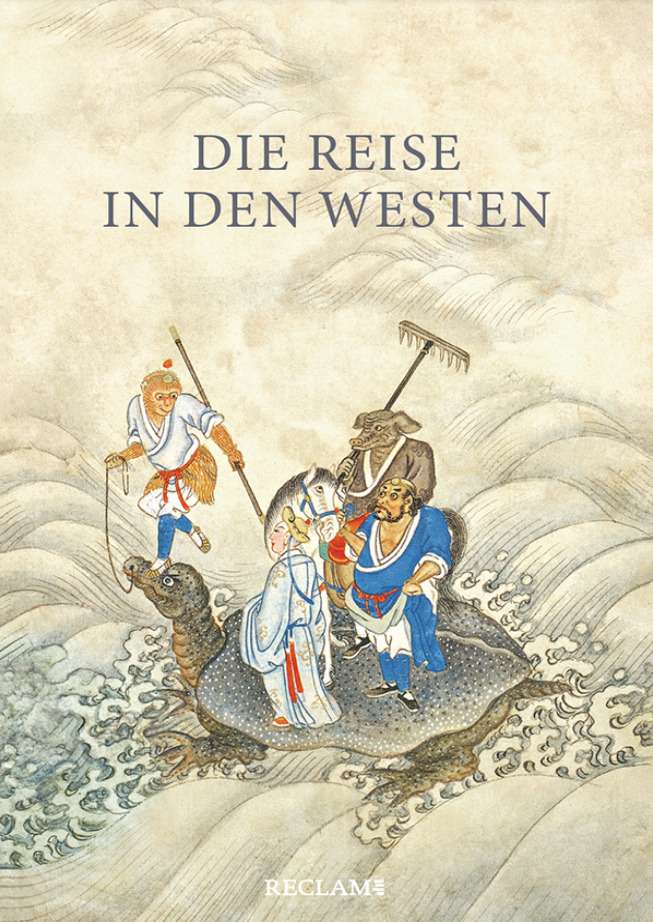
This is a PDF for Die Reise in den Westen. Ein klassischer chinesischer Roman (2016) translated by Eva Lüdi Kong in 100 chapters. It was awarded the Leipzig Book Fair prize in 2017. This version was converted from an ebook.
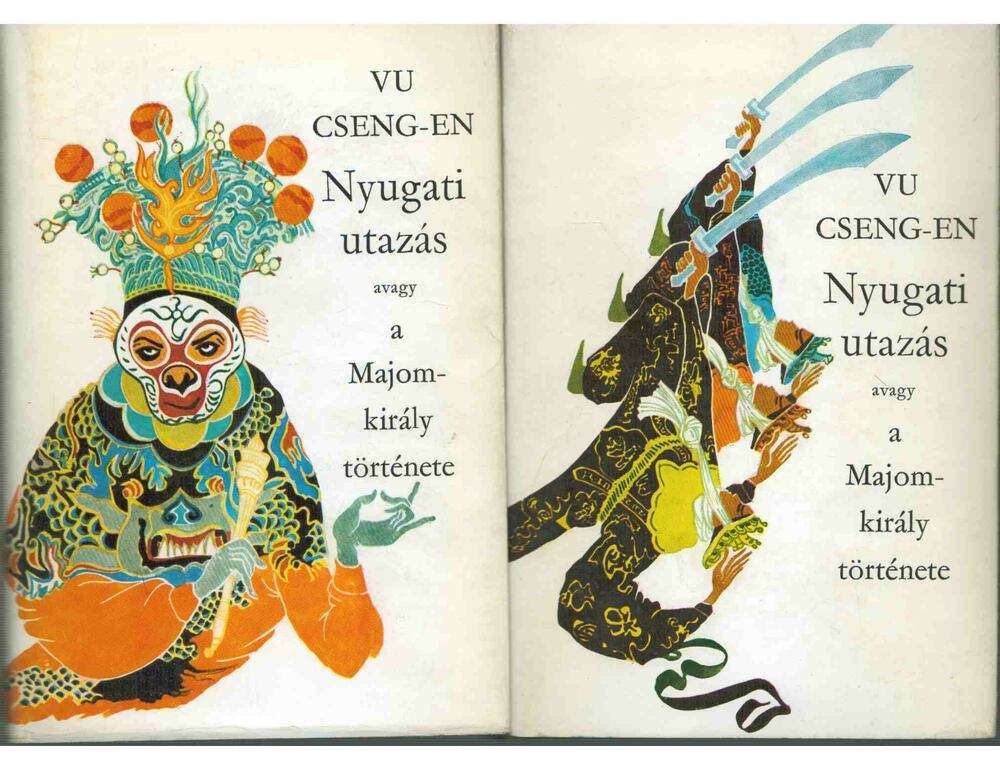
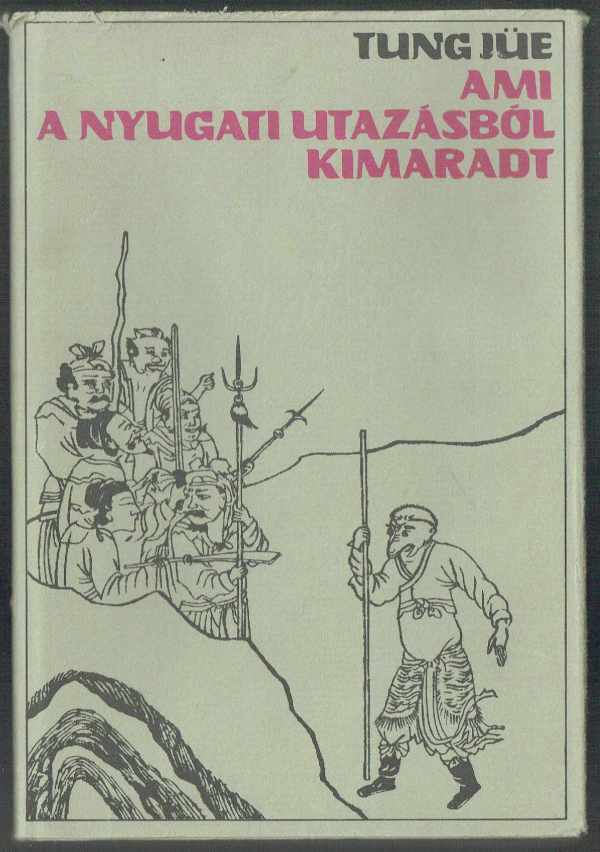
These are text PDFs for Nyugati utazás: avagy a majomkirály története (1969/1980) translated by Barnabás Csongor in two volumes. While the work covers the full 100 chapters, I’ve been told that it deletes the poems and occasionally paraphrases long-winded sections of text.
Thank you to Twitter user Jakabfi Károly for locating the files.
[Note 10-19-23: I was asked by the publisher to remove the PDF from the archive. I’m leaving the title here so others will know that an Italian translation exists.]
The Italian text is called Viaggio in occidente (1998/2008). It was translated by Serafino Balduzzi and published in two volumes. It is based on the French edition published in 1991. The work covers all 100 chapters.
F. Polish
This is a PDF for Małpi bunt (1976) translated by Tadeusz Żbikowski. It is a 14 chapter abridgement of the first 20 chapters of the original.
Thank you to Twitter user Friend_Pretend for locating the file.
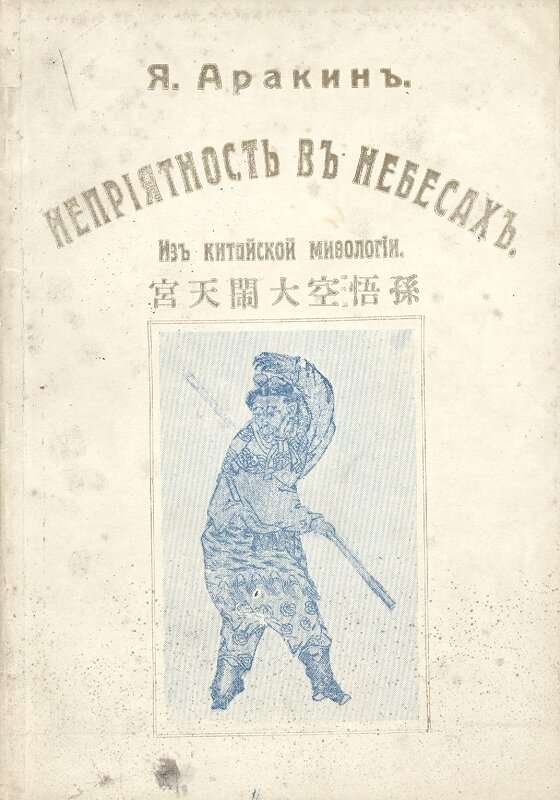
This is a text PDF for Неприятность в небесах. Из китайской мифологии (1926) translated by Yakov Arakin. It is a poetic retelling of the first seven chapters of the novel.
This is a PDF for ไซอิ๋ว (2004/2010). It appears to be based on a four-volume edition translated by one Mr. Tin (นายติ่น) and published from 1906 to 1909. I believe it covers all 100 chapters.
Thank you again to greencicadarchivist for locating the file.
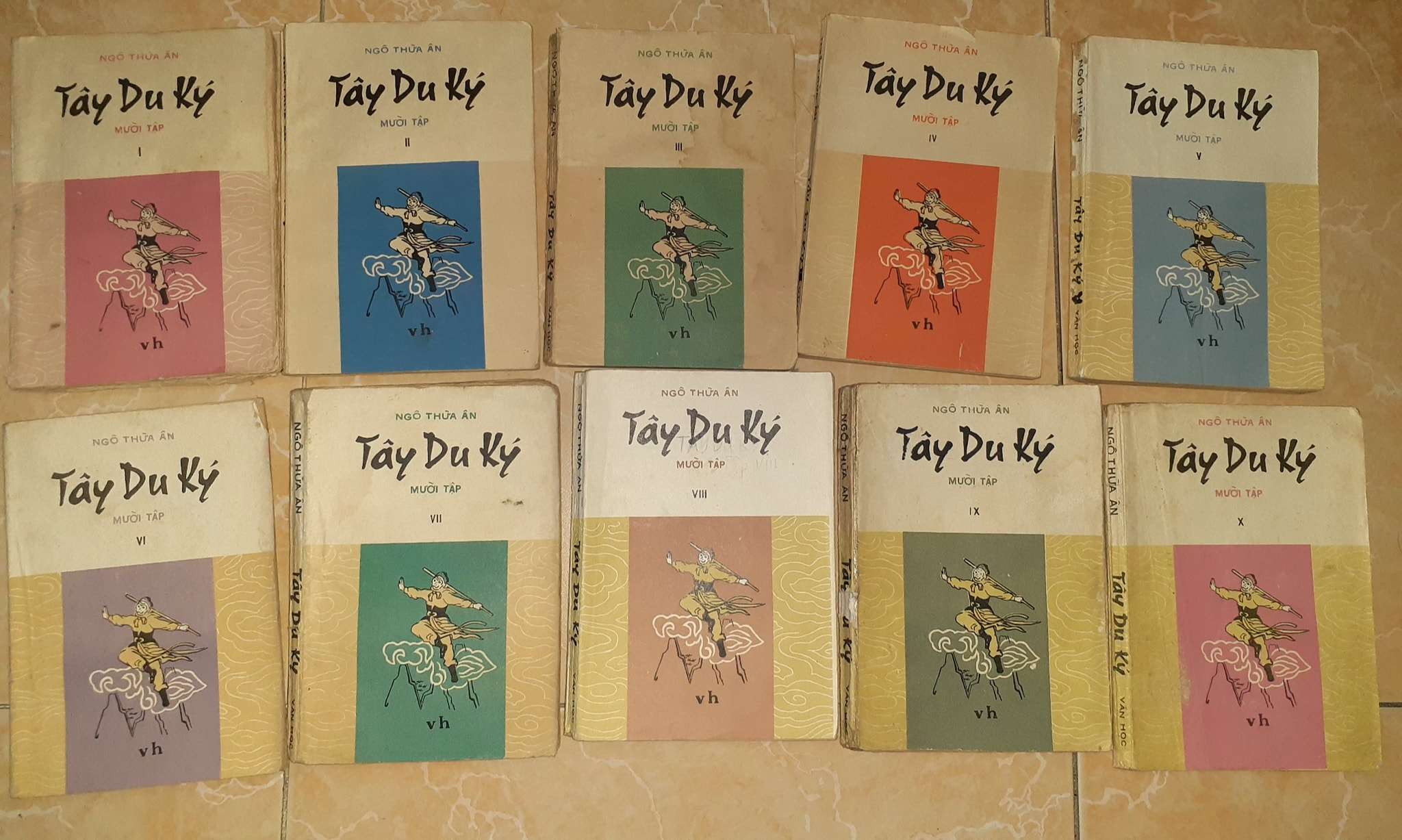
This is a text PDF for Tây Du Ký translated by Như Sơn, Mai Xuân Hải, and Phương Oanh. The 100 chapters were originally split between 10 volumes and published from 1982 to 1988. The volumes were later transcribed and combined to make a single eBook via an online community in 2013 (see here). I have converted it into a PDF.
3.1. A Supplement to the Journey to the West (Xiyoubu)
A. English
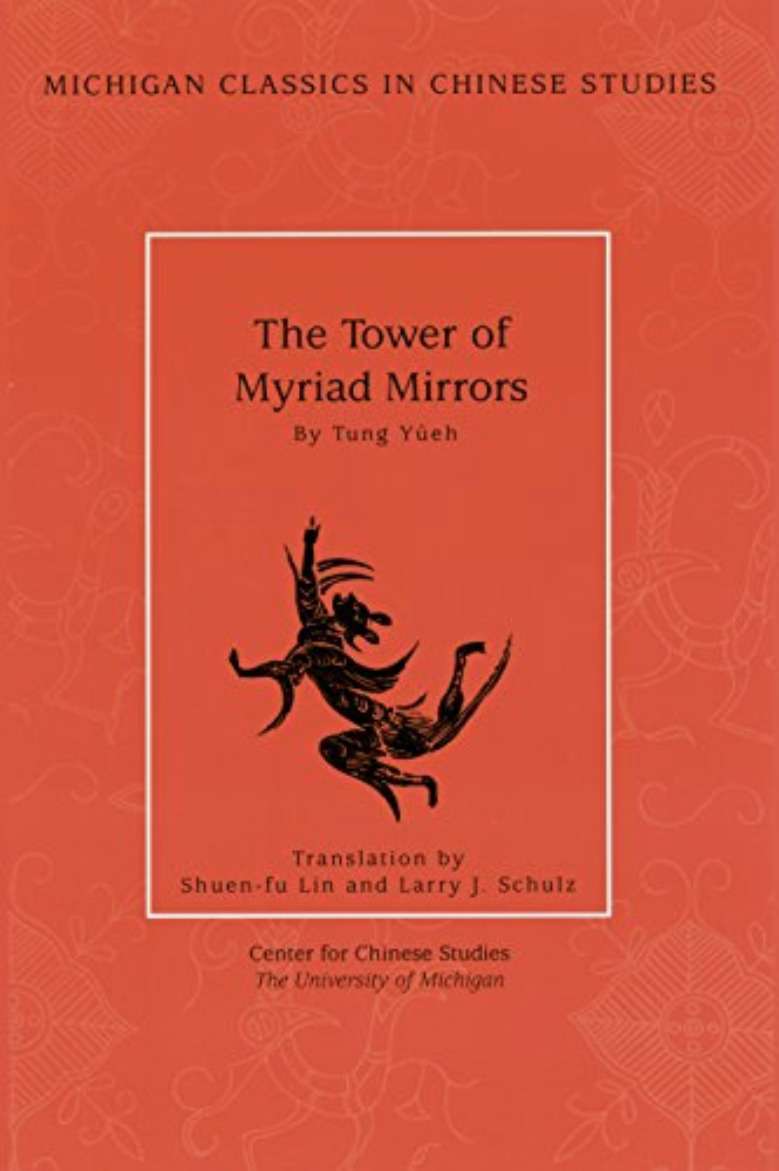
1) This is a PDF for Tower of Myriad Mirrors: A Supplement to Journey to the West (2000) translated by Shuen-fu Lin and Larry J. Schulz. This version was converted from Mobi.
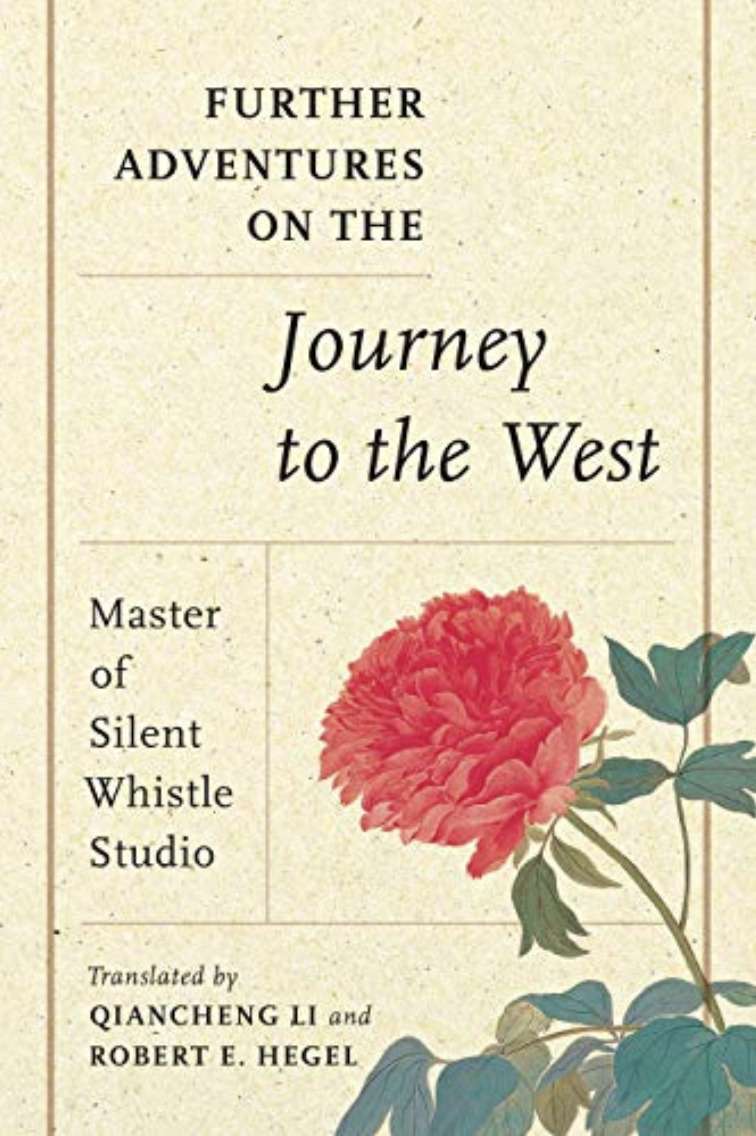
2) This is a PDF for Further Adventures on the Journey to the West – Master of Silent Whistle Studio (2020) translated by Qianchng Li and Robert E. Hegel.
3.2. Later Journey to the West (Hou Xiyouji, 後西遊記, 17th-century)
A. Chinese-English
This 41-chapter book has been translated into English with AI by the Chinese Text Project (Ctext). You can READ IT HERE(turn off your VPN for access). The novel does not yet have an official translation.
See my previous articles on the subject here, here, and here.
Update: 08-17-23
I forgot to mention that I have previously archived two other Chinese classics. The first is Creation of the Gods (Fengshen yanyi, 封神演義, c. 1620; a.k.a. Investiture of the Gods), a sort of prequel to JTTW.
The second is Journey to the South (Nanyouji, 南遊記, c. 1570s-1580s). This is NOT a direct sequel to JTTW. It instead follows the adventures of a martial god from Chinese folk religion. However, Sun Wukong makes a guest appearance in chapters one and seventeen.
While the earliest known published edition of Journey to the West (Xiyouji, 西遊記) hails from the 13th-century, the standard 1592 edition of the novel appears to have arrived on Japan’s shores at a relatively late date. For example, the 18th-century translator Nishida Korenori (西田維則; penname: Kuchiki sanjin, 口木山人) began publishing Japanese translations of the stories in 1758, ultimately publishing a total of 26 chapters before his death. Others picked up where he left off, including Ishimaro Sanjin (石麻呂山人) (ch. 27-39 and later 40-47), Ogata Teisai (尾方貞斎) (ch. 48-53), and Gakutei Kyuzan 岳亭丘山 (ch. 54-65). This incomplete version, known as The Popular Journey to the West (Tsuzoku saiyuki, 通俗西遊記, 1758-1831) was published in five instalments over 31 volumes. The first complete version of the novel, The Illustrated Journey to the West (Ehon Saiyuki, 繪本西遊記), was published in 40 volumes a few years later in 1835 (Tanaka, 1988, as cited in Chien, 2017, p. 21).
The latter is full of breathtaking woodblock prints, which are, in my honest opinion, FAR superior to those appearing in the aforementioned standard edition. While commonly attributed to Hokusai (北斎), this art was the joint work of Ohara Toya (大原東野), Utagawa Toyohiro (歌川豐廣), and Katsushika Taito II (二代葛飾戴斗) (Van Rappard-Boon, 1982, p. 147). Most are black and white (fig. 1-4), but a few are in color.
Here, I would like to archive PDF scans of the complete Japanese translation of Journey to the West. I hope it is useful to my readers.
The Journey to the West (Xiyouji, 西遊記, 1592; “JTTW” hereafter) story cycle has been popular in East Asia for nearly a millennium. Written and pictorial evidence points to it emerging in China by at least the 11th century. Tales of the Tang Monk and his animal companions were well-regarded in Korea by at least the 14th century (see here and here). I’m not sure when the standard version of the story first arrived in Japan, but it received piecemeal translations starting in the 18th century, and the first complete version was finished by 1835. [1]According to Shi (as cited in Chien, 2017), these translations “had a tremendous impact of spreading the story of Xuanzang far and wide in Japan” (p. 22).
JTTW came to influence all sorts of Japanese media (one example). In this article, I would like to focus on a lesser known Edo-period folktale from the Seven Wonders of Honjo (Honjo Nanafushigi, 本所七不思議) [2] called the “Foot Washing Manor” (Ashiarai Yashiki, 足洗邸; あしあらいやしき).
The story tells of a filthy, titanic foot that plagues a samurai night after night. Matthew Meyer kindly gave me permission to reproduce his version of the story, as seen on his website yokai.com:
Long ago lived a hatamoto (a high-ranking samurai) named Aji no Kyūnosuke. One night at his manor in Honjo, a loud, booming voice was heard heard. It echoed like thunder:
“WAAASH MYYY FOOOOOOT!”
Just then there was a splintering crack, and the ceiling tore open. An enormous foot descended into the mansion. The foot was covered in thick, bristly hair, and it was filthy. The terrified servants scrambled to gather buckets, water, and rags. They washed the foot until it was thoroughly clean. Afterwards, the giant foot ascended up through the roof and disappeared.
The following night, and every night thereafter, the same thing occurred. A booming voice would demand its foot be washed. A giant foot would crash through the roof. And the dutiful servants would wash it clean.
A few nights of this was all that Aji no Kyūnosuke could take. He ordered his servants not to wash the foot anymore. That night, the foot crashed through the ceiling and demanded to be washed as usual. When it was ignored, it thrashed around violently, destroying vast swaths of the mansion’s roof in the process.
Kyūnosuke complained to his friends about the nightly visitor and the destruction it was causing. They were very interested. One of them wanted to witness the event so badly that he offered to swap mansions with Kyūnosuke, and Kyūnosuke quickly agreed. However, after his friend moved in, the giant foot never appeared again (Meyer, n.d.).
This story shares many parallels with an event from JTTW chapter 97.
For context, the four monks are framed for the theft and murder of a rich layman who had originally hosted them for a month in the Bronze Estrade Prefecture (Tongtai fu, 銅臺府) of India. Sun Wukong captures the real perpetrators but is forced to release the bandits for fear that Tripitaka will chant the band-tightening spell for killing them. However, imperial troops later capture the monks with the stolen items, making them look guilty. And after allowing Tripitaka to be tortured—fulfilling one of the 81 predestined tribulations—Monkey escapes from the prison at night to affect his master’s release.
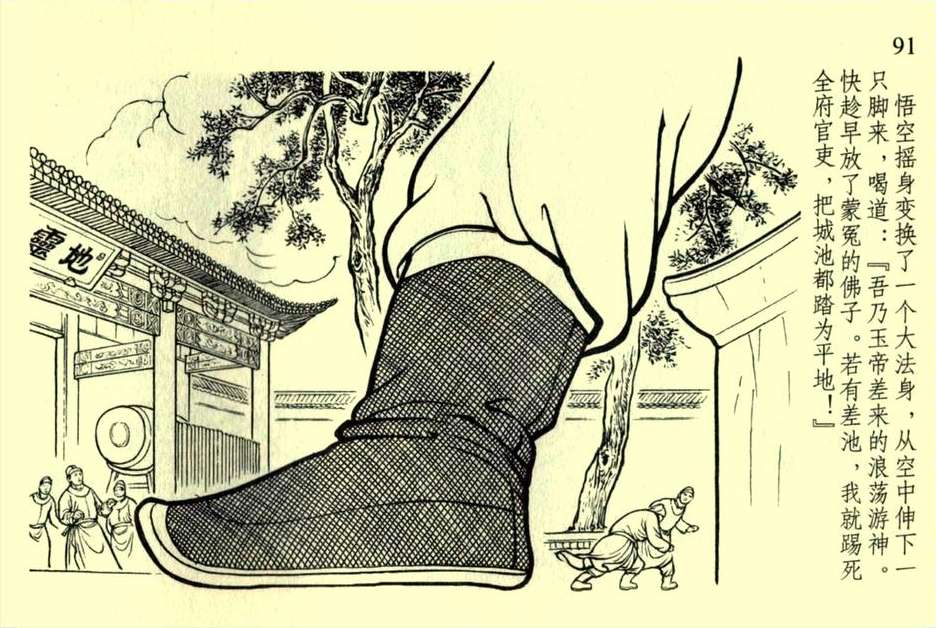
First, he imitates the voice of the slain layman at his wake and threatens heavenly retribution if his widow, the person who framed the monks, doesn’t recant her false claims. Second, he imitates the voice of the deceased uncle of the city magistrate who had imprisoned them and again threatens heavenly retribution if the official doesn’t reexamine the case. And third, at dawn he appears as a giant, disembodied foot (fig. 2) before the district-level magistrates and threatens to stomp the city and surrounding area into oblivion as heavenly retribution if they don’t put pressure on their superior to free his master:
Pilgrim flew out of the hall, and he found that it was beginning to grow light in the east. By the time he reached the Numinous Earth District [Di ling xian, 地靈縣], he saw that the district magistrate had already seated himself in the official hall. “If a midge speaks,” thought Pilgrim to himself, “and someone sees it, my identity may be revealed. That’s no good.” He changed, therefore, into the huge magic body [da fa shen, 大法身]: from midair he lowered a giant foot, [3] which completely filled the district hall. “Hear me, you officials,” he cried, “I’m the Wandering Spirit [Langdang youshen, 浪蕩遊神] sent by the Jade Emperor. I charge you that a son of Buddha has been wrongfully beaten in the jail of your prefecture, thus greatly disturbing the peace of the deities in the Three Regions. I am told to impart this message to you, that you should give him an early release. If there is any delay, my other foot will descend. It will first kick to death all the district officials of this prefecture. Then it will stamp to death the entire population of the region. Your cities finally will be trodden into dust and ashes!”
All the officials of the district were so terrified that they knelt down together to kowtow and worship, saying, “Let the noble sage withdraw his presence. We will go into the prefecture at once and report this to the magistrate. The prisoner will be released immediately. We beg you not to move your foot, for it will frighten these humble officials to death.” Only then did Pilgrim retrieve his magic body. Changing once more into a midge, he flew back inside the jail through the crack between the roof tiles and crawled back to sleep in the rack (Wu & Yu, 2012, p. 335-336).
Fig. 2 – A modern manhua depicting Monkey’s giant foot confronting the district-level magistrates (larger version). Comic found here. While the image shows Sun wearing shoes, the original Chinese doesn’t say whether are not his foot is covered.
3. Comparison
Both stories involve a single, giant foot threatening high-ranking members of society within the confines of their living or working quarters. The former is a samurai, while the latter are district-level magistrates. The threat involves death and the destruction of property. Danger looms over the Samurai’s household as the monstrous foot demands cleaning, and when its wants are ignored, it destroys part of the building in a fit of rage. Monkey, on the other hand, threatens to stomp everything (people and buildings) into oblivion if his demands for Tripitaka’s emancipation are not met. Also, the Japanese tale refers to the foot being “covered in thick, bristly hair” (Meyer, n.d.). This may be a reference to a furry monkey’s foot.
Now, someone might question what foot washing and release from prison have to do with each other. The two don’t appear to be related at all, but Meyer (n.d.) explains:
“[W]ashing your feet” is also a Japanese idiom for rehabilitating a criminal. A culprit whose ‘feet have been washed’ can be said to have paid his debt to society.
This is indeed an actual ceremony performed by criminals wishing to cleanse themselves of their negative past and reenter society (Clark, 1994, pp. 122-123). Therefore, both concepts are intimately related. Someone released from prison can be said to be rehabilitated, and this again is symbolized by said foot washing ceremony. Therefore, the monster in the Japanese tale is likely demanding that the Samurai do his part to help release or pardon a prisoner just like the JTTW episode.
4. Updates
Update: 04-09-23
The final act of Journey to the West: Conquering the Demons (Xiyou: Jiangmo pian, 西遊·降魔篇, 2013) includes a trio of demon hunters looking to defeat the Monkey King. One is a seemingly crippled old man who hobbles around on a crutch because of an underdeveloped right leg. But when the time comes, he uses qi energy to grow the appendage to giant proportions, calling it his “Heaven-Destroying Foot” (Tiancan jiao, 天殘脚).
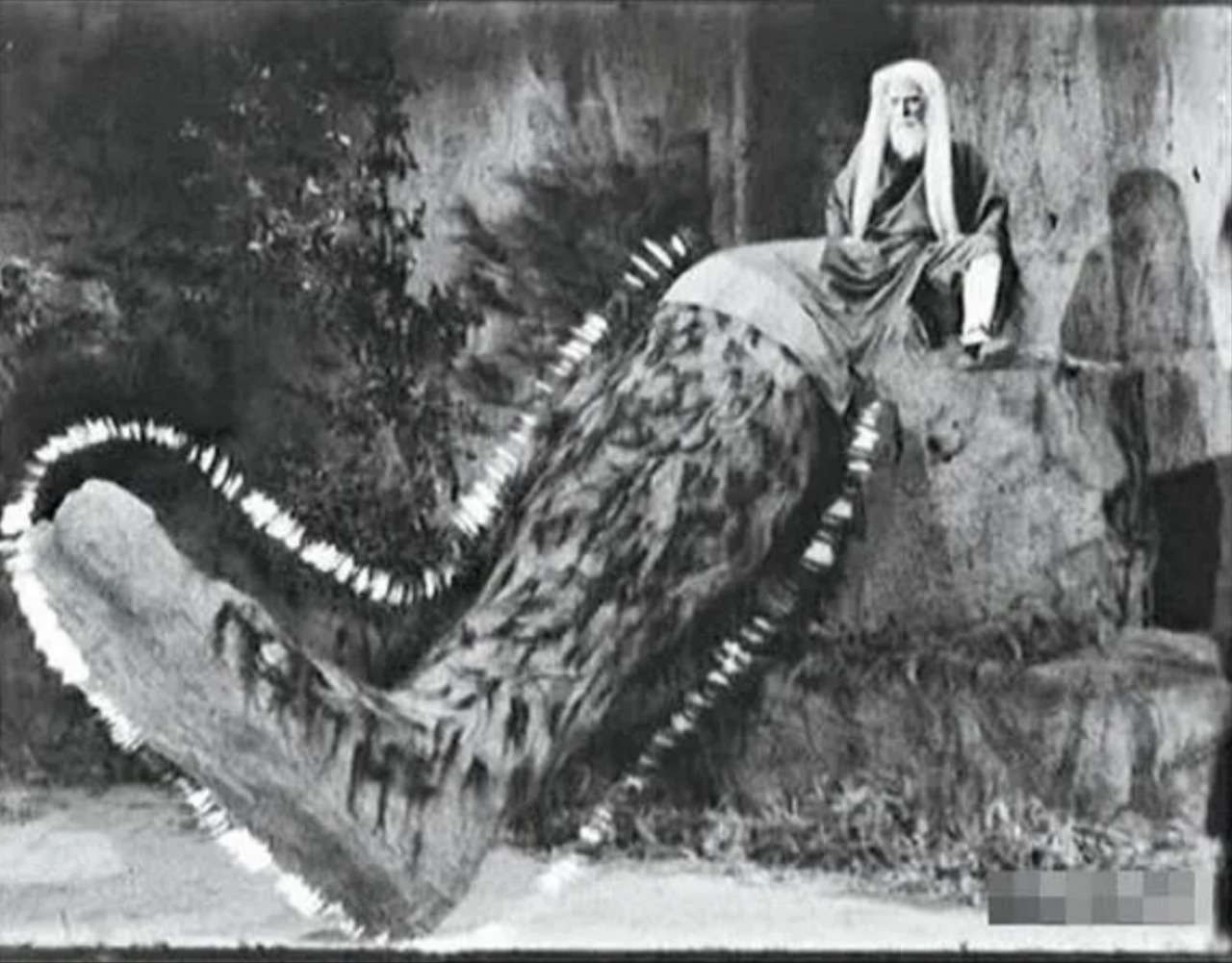
This character’s look and skill were copied directly from an HK martial arts film from 1965 commonly known in English as The Furious Buddha’s Palm (Rulai shenzhang nusui wanjian men, 如來神掌怒碎萬劍門; lit: “The Buddha Spirit Palm Shatters the 10,000 Sword Sect”). During the final battle, the main villain “Iron-Faced Asura” (Tiemian xiuluo, 鐵面修羅, played by Shih Kien) uses the same method to produce a giant foot. But what’s interesting for my purposes is that it appears to be covered in coarse hair like a primate (fig. 3).
A single, giant, destructive foot covered in hair sounds familiar doesn’t it? I wonder if this martial skill was influenced by the JTTW episode. This connection was first suggested to me by Jose Loayza (Twitter). A big thank you to him.
Note: A few hours after adding this update, it dawned on me that the “Buddha Spirit Palm” (Rulai shenzhang, 如來神掌) technique is used at the end of the film to combat the giant, monkey-like foot. This of course brings to mind the episode in JTTW when the Buddha defeats Sun Wukong with his palm by transforming it into Five Elements Mountain.)
Fig. 3 – A movie still of the Iron-Faced Asura summoning his hairy “Heaven-Destroying Foot” (larger version). Image found here.
1) The 18th-century translator Nishida Korenori (西田維則, d. 1765; penname: Kuchiki sanjin, 口木山人) began publishing Japanese translations of stories from JTTW in 1758, ultimately publishing a total of 26 chapters before his death. Others picked up where he left off, including Ishimaro Sanjin (石麻呂山人) (ch. 27-39 and later 40-47), Ogata Teisai (尾方貞斎) (ch. 48-53), and Gakutei Kyuzan 岳亭丘山 (ch. 54-65). This incomplete version, known as The Popular Journey to the West (Tsuzoku saiyuki, 通俗西遊記, 1758-1831) was published in five instalments over 31 volumes. The first complete version of the novel, The Illustrated Journey to the West (Ehon Saiyuki, 繪本西遊記), was published a few years later in 1835 (Tanaka, 1988, as cited in Chien, 2017, p. 21).
However, I should point out that two ancient precursors of the story cycle (one of which is discussed here) were mentioned in a 1633 catalog from Kozan Temple. This points to different versions of the narrative coming to Japan’s shores at different times.
Note: My blog is not monetized, so I am not making any money from this post. My hope is that these PDFs will make this legendary story more accessible to a wider audience. If you enjoyed the digital version, please, please, please support the official release.
Here I present PDFs comprising the complete four volume 2012 revised edition of The Journey to the West(Xiyouji, 西遊記)translated by Anthony C. Yu (October 6, 1938 – May 12, 2015). This is considered THE most accurate translation of the tale available. I hope those who read and enjoy the digital version will support the official release.
Yu was Carl Darling Buck Distinguished Service Professor Emeritus in the Humanities and Professor Emeritus of Religion and Literature in the Chicago Divinity School. I shared a long email correspondence with Prof. Yu, during which we became friends. He was always quick to answer my many questions. His translation remains a treasure trove of explanatory notes and sources.
Anthony C. Yu’s translation of The Journey to the West, initially published in 1983, introduced English-speaking audiences to the classic Chinese novel in its entirety for the first time […] With over a hundred chapters written in both prose and poetry, The Journey to the West has always been a complicated and difficult text to render in English while preserving the lyricism of its language and the content of its plot. But Yu has successfully taken on the task, and in this new edition he has made his translations even more accurate and accessible. The explanatory notes are updated and augmented, and Yu has added new material to his introduction, based on his original research as well as on the newest literary criticism and scholarship on Chinese religious traditions. He has also modernized the transliterations included in each volume, using the now-standard Hanyu Pinyin romanization system. Perhaps most important, Yu has made changes to the translation itself in order to make it as precise as possible (source).