Sun Wukong’s Names and Titles

Last updated: 03-21-2026

I was recently contacted by a reader who said they were researching the Monkey King’s various nicknames. I had never thought about this before, so I decided to write an article to help them out. I am indebted to Irwen Wong of the Journey to the West Library blog for helping me with some of the more obscure terms. If you know of others that I missed, please let me know in the comments below or by email (see the “contact” button).

The vast majority of the terms listed here come from the standard 1592 edition of Journey to the West (Xiyouji西遊記; “JTTW” hereafter) (Wu & Yu, 2012). I have also added a few terms from a precursor, The Story of How Tripitaka of the Great Tang Procures the Scriptures (Da Tang Sanzang qujing shihua大唐三藏取經詩話, c. late-13th-century) (Wivell, 1994). I did this to show that certain variations of names or titles have existed for centuries.

My translation of some names and titles will slightly differ from those appearing in Wu and Yu (2012).

Table of Contents

1. Mentioned in the Narrative

These are names or titles mentioned by the narrative.

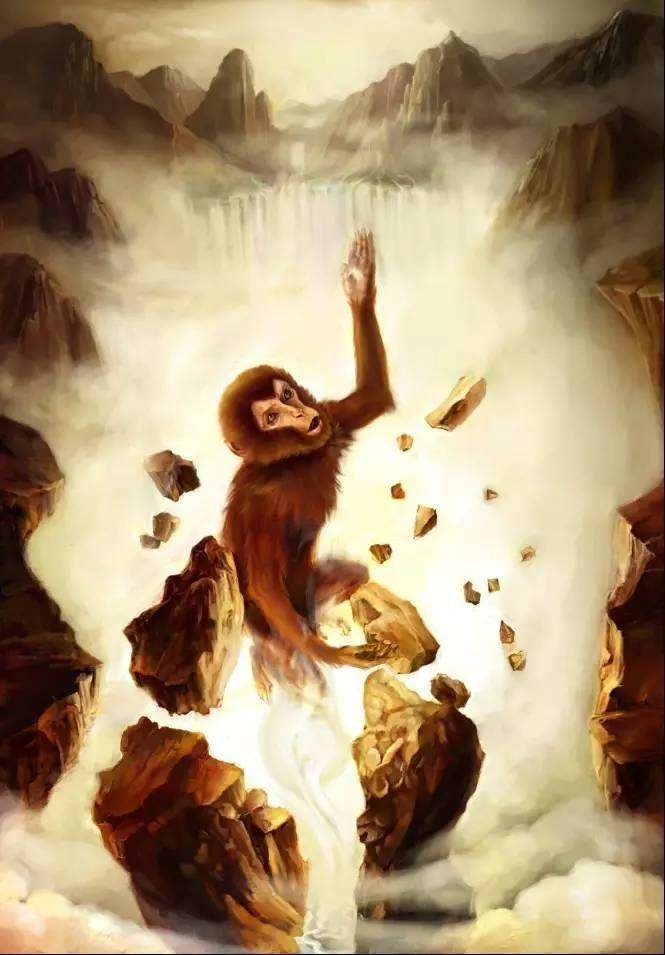
  1. Shihou (石猴, “Stone Monkey”) – Monkey’s first name according to chapter one (Wu & Yu, 2012, vol. 1, p. 104). This is related to his birth from stone (fig. 1).
  2. Tianchan Shihou (天產石猴, “Heaven-Born Stone Monkey”) – His REAL name as listed in the ledgers of hell in chapter three (Wu & Yu, 2012, vol. 1, p. 140).
  3. Xinyuan (心猿, “Mind Monkey/Ape”) – A Buddho-Daoist allegorical term for the disquieted thoughts and emotions that keep man trapped in Saṃsāra. It is used numerous times in chapter titles (e.g. ch. 7) and poems to refer to Monkey (see the material below figure three here).
  4. Jingong (金公, “Lord or Squire of Gold/Metal”) – A term used mainly in poems to refer to Monkey. It is an alternative reading of the component characters making up lead (qian, 鉛), namely jin (金) and gong (公). Lead was an important ingredient in immortal elixirs of external alchemy, and metal/gold (jin, 金) is connected to the earthly branch shen (申), which is associated with monkeys (see no. 9 here) (Wu & Yu, 2012, vol. 1, p. 83 and p. 532 n. 3).
  5. Taiyi Sanxian (太乙散仙, “Leisurely or Minor Immortal of the Great Monad”) – Monkey’s rank within the hierarchy of cosmic immortals (Wu & Yu, 2012, vol. 1, p. 471, for example). It essentially means that he is a divine being without a heavenly post.
  6. Taiyi Jinxian (太乙金仙, “Golden Immortal of the Great Monad”) – A seemingly embellished version of the previous term (Wu & Yu, 2012, vol. 2, p. 264, for example). It speaks of a higher rank. [1] (See the 07-26-25 update below for more info.)
  7. Lingming Shihou (靈明石猴, “Stone Monkey of Numinous Wisdom”) – The name of his magic species according to the Buddha in chapter 58 (Wu & Yu, 2012, vol. 3, p. 115). [2] He is the first of four spiritual primates.
  8. Nanbian Mihou (難辨獼猴, “Indistinguishable Macaques”) – A term referring to both Sun Wukong and the Six-Eared Macaque. [3]

Fig. 1 – Monkey’s birth from stone by Zhang Moyi (larger version). Found on this article.

2. Given by Characters

These are names, titles, or insults that are given to or directed at our hero by other characters.

  1. Hou Xingzhe (猴行者, “Monkey Pilgrim”) – Monkey’s original religious name in the 13th-century JTTW. It is given by Tripitaka at the beginning of the journey (Wivell, 1994, p. 1182). The Xingzhe (行者) portion of this name carried over to the 1592 edition. See nos. 12 & 13 below.
  2. Gangjin Tiegu Dasheng (鋼筋鐵骨大聖, “Great Sage Steel Muscles and Iron Bones”) – His divine title in the 13th-century JTTW. It is bestowed by Tang Emperor Taizong at the end of the journey (Wivell, 1994, p. 1207). [4] The Dasheng (大聖) portion of this name carried over to the 1592 edition. See sec. 3, nos. 7 & 8 below.
  3. Sun Wukong (孫悟空, “Monkey Awakened to Emptiness”) – The religious name given to him in chapter one by his first master, the Patriarch Subodhi (Wu & Yu, 2012, vol. 1, p. 115). It predates the 1592 JTTW, first appearing as early as the early-Ming zaju play (see here, for example). It’s important to note that the name “Wukong” (悟空) might have been influenced by a Tang-era monk who traveled throughout India just like Xuanzang (on whom Tripitaka is based).
  4. Liu Xiao Ling Tong (六小龄童) – Monkey’s name in the human world.
  5. Pohou (潑猴, “Reckless or Brazen Monkey”) – An insult used throughout JTTW (Wu & Yu, 2012, vol. 1, p. 118, for example).
  6. Shangxian (上仙, “High or Exalted Immortal”) – A respectful title used by the Dragon King of the Eastern Ocean in chapter three (Wu & Yu, 2012, vol. 1, p. 134).
  7. Huaguo Shan Shuilian Dong Tianchan Yaohou (花果山水簾洞天產妖猴, “Heaven-Born Demon Monkey from the Water-Curtain Cave of the Mountain of Flowers and Fruit”) – An insult used by King Qinguang, a Judge of Hell, in a memorial to the Jade Emperor in chapter three (Wu & Yu, 2012, vol. 1, p. 142).
  8. Xiandi (賢弟, “Worthy Little Brother”) – A nickname used by the Bull Demon King (Wu & Yu, 2012, vol. 1, p. 156, for example). Monkey is the smallest and therefore the last of seven sworn brothers (Wu & Yu, 2012, vol. 2, pp. 223-224).
  9. Yaoxian (妖仙, “Bogus Immortal”) – A category of nigh-immortal beings. He is called this by the Jade Emperor (ch. 4), the Buddha (ch. 7), and the Dragon King of the Eastern Sea in (ch. 14) (Wu & Yu, 2012, vol. 1, pp. 147-148, 193, and 318).
  10. Bimawen (弼馬溫, “To Assist Horse Temperament”) – A minor post overseeing the celestial horse stables. Monkey is given this position in chapter four by the Jade Emperor. Yu (Wu & Yu, 2012) translates this as “BanHorsePlague” (vol. 1, p. 148, for example). [5] This is sometimes used as an insult (Wu & Yu, 2012, vol. 1, p. 354, for example).
  11. Yaohou (妖猴, “Monster or Demon Monkey”) – An insult used numerous times throughout the novel (Wu & Yu, 2012, vol. 1, p. 154, for example).
  12. Sun Xingzhe (孫行者, “Pilgrim Sun”) – Monkey’s second religious name. It is given to him in chapter 14 by Tripitaka (Wu & Yu, 2012, vol. 1, p. 309). Refer back to no. 1. See also sec. 3, nos. 9 & 10 below.
  13. Xingzhe (行者, “Pilgrim”) – He is more commonly referred to by this name than Sun Xingzhe or Sun Wukong combined. [6] See section III here to learn about the significance of this title. Refer back to no. 1. Again, see sec. 3, no. 9 & 10 below.
  14. Sun Zhanglao (孫長老, “Elder Sun”) – A respectful title used by people he has helped (Wu & Yu, vol. 2, p. 85, for example).
  15. Dashixiong (大師兄, “Elder Religious Brother”) – A term used by Zhu Bajie and Sha Wujing (Wu & Yu, 2012, vol. 2, p. 74, for example).
  16. Houtou (猴頭, “Monkey/Ape Head”) – An insult used by various characters, especially Tripitaka (Wu & Yu, 2012, vol. 2, p. 26, for example).
  17. Maolian Heshang (毛臉和尚, “Hairy-Faced Monk”) – A term that describes his features (Wu & Yu, 2012, vol. 1, p. 407, for example).
  18. Maolian Lei Gong Zui de Heshang (毛臉雷公嘴的和尚, “Hairy-Faced, Thunder God-Beaked Monk) – A term that compares his elongated simian face to the beak of the bird-like thunder god Lei Gong (Wu & Yu, 2012, vol. 1, p. 351, for example). Variations include Lei Gong Zui Heshang (雷公嘴和尚, “Thunder God-Beaked Monk”) and Lei Gong de Nanzi/Hanzi (雷公嘴的男子/漢子, “Thunder God-Beaked Man”).
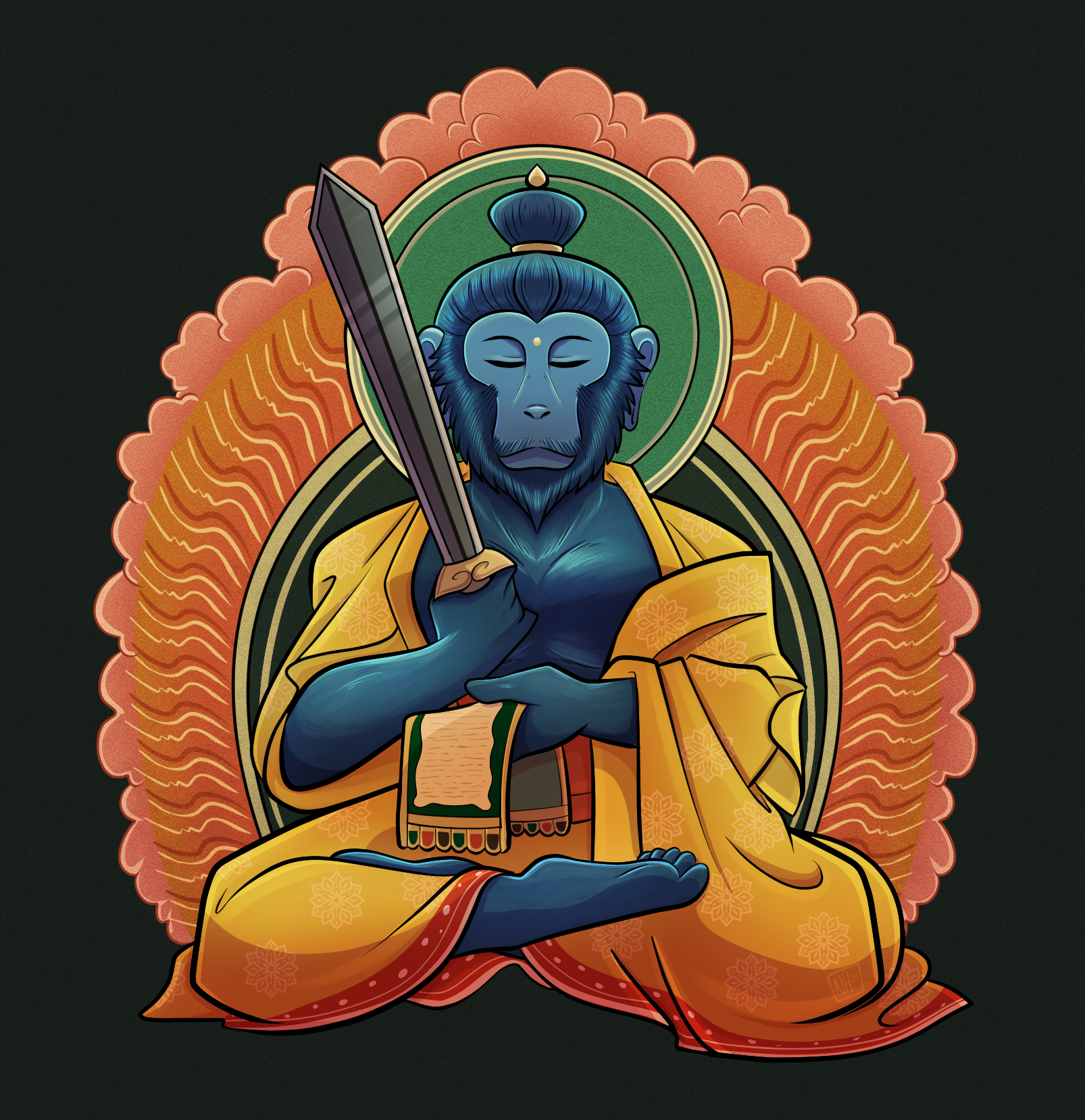
  19. Dou Zhansheng Fo (鬥戰勝佛, “Buddha Victorious in Strife or Victorious Fighting Buddha”) – His Buddha title bestowed by the Tathagata at the end of the journey in chapter 100 (fig. 2) (Wu & Yu, 2012, vol. 4, p. 381).

Fig. 2 – A religiously accurate drawing of Monkey as Dou zhansheng fo by NinjaHaku21 (larger version).

3. Self-Given

These are names, titles, or pseudonyms taken by Monkey himself. These do not include the names of the innumerable gods, monsters, or humans that he disguises himself as. They only refer to him personally.

  1. Huaguo Shan Ziyun Dong Bawan Siqian Tongtou Tie’e Mihou Wang (花果山紫雲洞八萬四千銅頭鐵額獼猴王, “Bronze-Headed, Iron-Browed King of the Eighty-Four Thousand Monkeys of the Purple Cloud Grotto on the Mountain of Flowers and Fruit”) – How he introduces himself to Tripitaka in the 13th-century JTTW (Wivell, 1994, p. 1182). The “Monkey King” (Mihou Wang, 獼猴王) portion of this name carried over to the 1592 edition but was represented with different Chinese characters. See nos. 2 & 3 below. This article discusses the term mihou (獼猴).
  2. Meihou Wang (美猴王, “Handsome Monkey King“) – The title that he takes upon ascending the throne in chapter one (Wu & Yu, 2012, vol. 1, p. 106).
  3. Hou Wang (猴王, “Monkey King”) – He is more commonly referred to by this name than Meihou wang. [7]
  4. Huaguo Shan Shuilian Dong Dongzhu (花果山水簾洞洞主, “Lord of the Water-Curtain Cave in the Mountain of Flowers and Fruit”) – How he introduces himself in chapter two to a demon king plaguing his people (Wu & Yu, 2012, vol. 1, p. 127).
  5. Huaguo Shan Shuilian Dong Tiansheng Shenren (花果山水簾洞天生聖人, “Heaven-Born Sage From the Water-Curtain Cave in the Mountain of Flowers and Fruit”) – How he introduces himself to the Ten Kings of Hell in chapter three (Wu & Yu, 2012, vol. 1, p. 140).
  6. Lao Sun (老孫, “Old Sun”) – A term that he uses many, many times throughout the novel. Yu (Wu & Yu, 2012) translates this as “Old Monkey” (vol. 1, p. 128, for example).
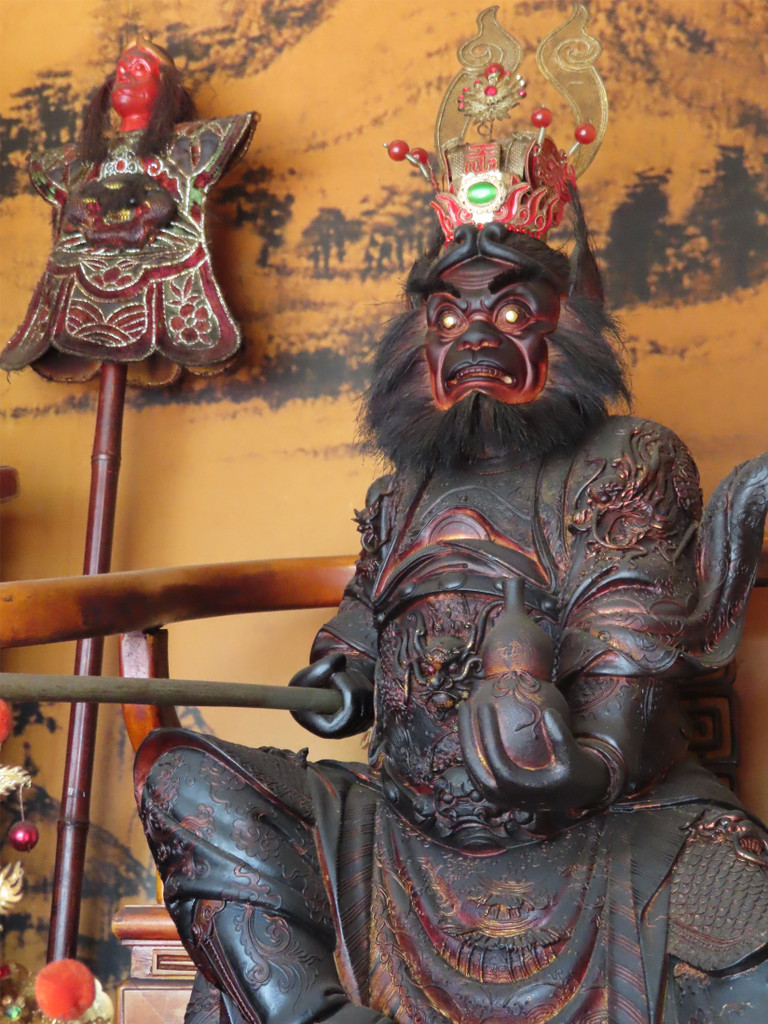
  7. Qitian Dasheng (齊天大聖, “Great Sage Equaling Heaven”) – The seditious title that he takes during his rebellion against heaven (Wu & Yu, 2012, vol. 1, p. 151). Monkey is worshiped by this name in modern Chinese Folk Religion (fig. 3). Refer back to sec. 2, no. 2.
  8. Dasheng (大聖, “Great Sage”) – He is more commonly referred to by this title than Qitian dasheng. [8] Variations include Dasheng Yeye (大聖爺爺, “[Paternal] Grandpa Great Sage”) and Sun Dasheng (孫大聖, “Great Sage Sun”). Refer back to sec. 2, no. 2.
  9. Zhexing Sun (者行孫, “Grimpil Sun”) – A pseudonym taken in chapter 34 when Monkey secretly escapes imprisonment and then presents himself as his own brother in an attempt to trick demons (Wu & Yu, 2012, vol. 1, p. 130). The strange English rendering is Yu’s (Wu & Yu, 2012) way of accounting for the change from Sun Xingzhe (, “Pilgrim Sun“) to Zhexing Sun (, “Grimpil Sun“). Refer back to sec. 2, no. 12. See also no. 10 below.
  10. Xingzhe Sun (行者孫, “Sun Pilgrim”) – A pseudonym taken in chapter 35 when he once again escapes capture and presents himself as a second brother (Wu & Yu, 2012, vol. 1, p. 133). This is a reversal of Sun Xingzhe (孫行者, “Pilgrim Sun”). Refer back to sec. 2, no. 12.
  11. Sun Waigong (孫外公, “([Maternal] Grandpa Sun”) – A name that he uses to taunt demons (Wu & Yu, 2012, vol. 1, p. 407, for example). It’s a cheeky way of saying, “I’m your elder, so you better submit to me.”
  12. Sun Yeye (孫爺爺, “([Paternal] Grandpa Sun”) – Same.
  13. Sun Erguan (孫二官, “Second Master Sun”) – A pseudonym taken in chapter 84 in order to investigate an anti-Buddhist kingdom under the guise of a horse trader. The other pilgrims take similar names (Wu & Yu, 2012, vol. 4, p. 132).

Fig. 3 – A Great Sage idol from Shengfo Tang (聖佛堂, “Sage Buddha Hall”) in Beigang Township, Yunlin County, Taiwan (larger version). It is one of many Monkey King Temples on the island. Photo by the author.


4. Updates

Update: 10-28-24

Someone on reddit questioned why I didn’t add a title for Monkey as the “Protector of the Peaches” or “Guardian of the Heavenly Peach Garden” (as mentioned by Wikipedia). This is how I responded:

This is what the novel says:

“We perceive,” said the Jade Emperor, “that your life is quite indolent, since you have nothing to do, and we have decided therefore to give you an assignment. You will temporarily take care of the Garden of Immortal Peaches. Be careful and diligent, morning and evening” (Wu & Yu, 2012, vol. 1, p. 160).

玉帝道:「朕見你身閑無事,與你件執事:你且權管那蟠桃園,早晚好生在意。」

The phrase “care for the Immortal Peach garden” (管蟠桃園) appears four times. But there is no official title for the position.


Update: 07-26-25

In section one, no. 6, I listed the title Taiyi Jinxian (太乙金仙, “Golden Immortal of the Great Monad”). However, this is only part of the term. The full title is Hunyuan yiqi shangfang taiyi jinxian (混元一氣上方太乙金仙), or “Golden Immortal of the Great Monad Atop the Primordial Breath of the Chaotic Origin.” The phrase “Atop the Primordial Breath … ” likely refers to the pristine, original energy of the universe that all Daoists wish to return to. Therefore, I believe this refers to his level of spiritual attainment—think of it in terms of cultivation literature—which is separate from his actual heavenly rank.


Update: 03-21-2026

It dawned on me that Pilgrim Sun (sec. 2, no. 12) and his “brothers,” Grimpil Sun and Sun Pilgrim (sec. 3, nos. 9 & 10), might be intentional references to the tripart monkey gods of religion and theater. For example, one Fujian tradition names the triad as the black-faced “Great Sage Reaching Heaven” (Tongtian dasheng, 通天大聖), the white-faced “Third Son Shuashua” (Shuashua sanlang, 耍耍三郎/爽爽三郎), and the red-faced “Cinnabar Cloud Great Sage” (Danxia dasheng, 丹霞大聖). The first two figures appear as brothers, along side the Great Sage Equaling Heaven and two sisters, in a pair of Yuan-Ming zaju plays (see the 12-20-23 update here.)

Notes:

1) The Jinxian (金仙) of Monkey’s title Taiyi Jinxian (太乙金仙, “Golden Immortal of the Great Monad”) is associated with far more lofty figures. For example, a poem in chapter one refers to the Patriarch Subodhi as the Dajue Jinxian (大覺金仙, “Golden Immortal of Great Awareness”) (see section 2.3 here).

2) I’m placing the name in this category because the Tathagata is stating a fact instead of bestowing it as a proper name.

3) Yu (Wu & Yu, 2012) translates this as the “macaque hard to distinguish” (vol. 4, p. 360). But I think that the original Chinese term is likely referring to both Sun and Six Ears. Their battle across the cosmos is counted in chapter 99 as the 46th of 81 hardships that Tripitaka was fated to endure (Wu &Yu, 2012, vol. 4, p. 360).

4) Wivell (1994) translates the name as “Great Sage of Bronze Muscles and Iron Bones” (p. 1207). But the gang (鋼) of Gangjin tiegu dasheng (鋼筋鐵骨大聖) means “steel.”

5) This references the homophonous term Bimawen (避馬瘟, “avoid the horse plague”), the historical practice of placing monkeys in horse stables to ward off equine sickness (see the 02-26-22 update here).

6) The term Xingzhe (行者, “pilgrim”) appears 4,355 times, while Sun xingzhe and Sun Wukong appear 239 and 127 times, respectively. Xingzhe is used numerous times to refer to other characters, such as Guanyin’s disciple Hui’an (惠岸行者, 6 times; a.k.a. Mucha or Mokṣa, 木叉行者, 9 times), but the vast majority refer to Monkey.

7) The term Hou wang (猴王, “Monkey King”) appears 185 times, while Meihou wang (美猴王) appears 42 times.

8) The term Dasheng (大聖, “Great Sage”) appears 1,273 times, while Qitian dasheng (齊天大聖) appears 103 times. I believe Dasheng is also used to refer to the Buddha a few times, so please keep this in mind.

Sources:

Wivell, C.S. (1994). The Story of How the Monk Tripitaka of the Great Country of T’ang Brought Back the Sūtras. In V. Mair (Ed.), The Columbia Anthology of Traditional Chinese Literature (pp. 1181-1207). New York: Columbia University Press.

Wu, C., & Yu, A. C. (2012). The Journey to the West (Vols. 1-4) (Rev. ed.). Chicago, Illinois: University of Chicago Press.

Archive #42 – PDFs of Journey to the West Translations

Note: My blog is not monetized, so I am not making any money from this post. My hope is that the PDFs will make this legendary story more accessible to a wider audience. If you enjoyed the digital versions, please, please, please support the official releases.

Last updated: 04-06-2026

I’m happy to host a number of foreign language translations of the noted Chinese classic Journey to the West (Xiyou ji西遊記, 1592 CE), as well as a precursor and some later unofficial sequels.

1. The Precursor

  • The Story of How Tripitaka of the Great Tang Procures the Scriptures (Datang Sanzang qujing shihua大唐三藏取經詩話, c. late-13th-century)

2. The Original

As of this writing, I don’t yet have a modern Japanese translation. But you can read an original copy of the 1835 translation here.

3. Unofficial Sequels

I will add more languages to this archive as they become available. Please let me know if you have access to other editions.

1. The Precursor

1.1. The Story of How Tripitaka of the Great Tang Procures the Scriptures (Datang Sanzang qujing shihua, 大唐三藏取經詩話, c. late-13th-century)

A. English

This 17-chapter novelette, which likely served as a prompt for oral storytellers, is the earliest known printed edition of the JTTW story cycle. It involves the adventures of Tripitaka and Sun Wukong’s antecedent, the “Monkey Pilgrim” (Hou xingzhe, 猴行者). The tale is translated by Charles S. Wivell.

Archive #37 – The 13th-Century Version of Journey to the West

See also my chapter-by-chapter description and analysis here:

The Story of How Tripitaka of the Great Tang Procures the Scriptures: The Literary Precursor of Journey to the West

2. The Original

2.1. Journey to the West (Xiyou ji)

A. English

A.1. Complete

1) This is a PDF for The Journey to the West (2012 Rev. ed.) translated by Anthony C. Yu.

Archive #11 – PDFs of the Journey to the West 2012 Revised Edition

2) This is a text PDF for Journey to the West (1993/2020) translated by W. J. F. Jenner.

PDF File

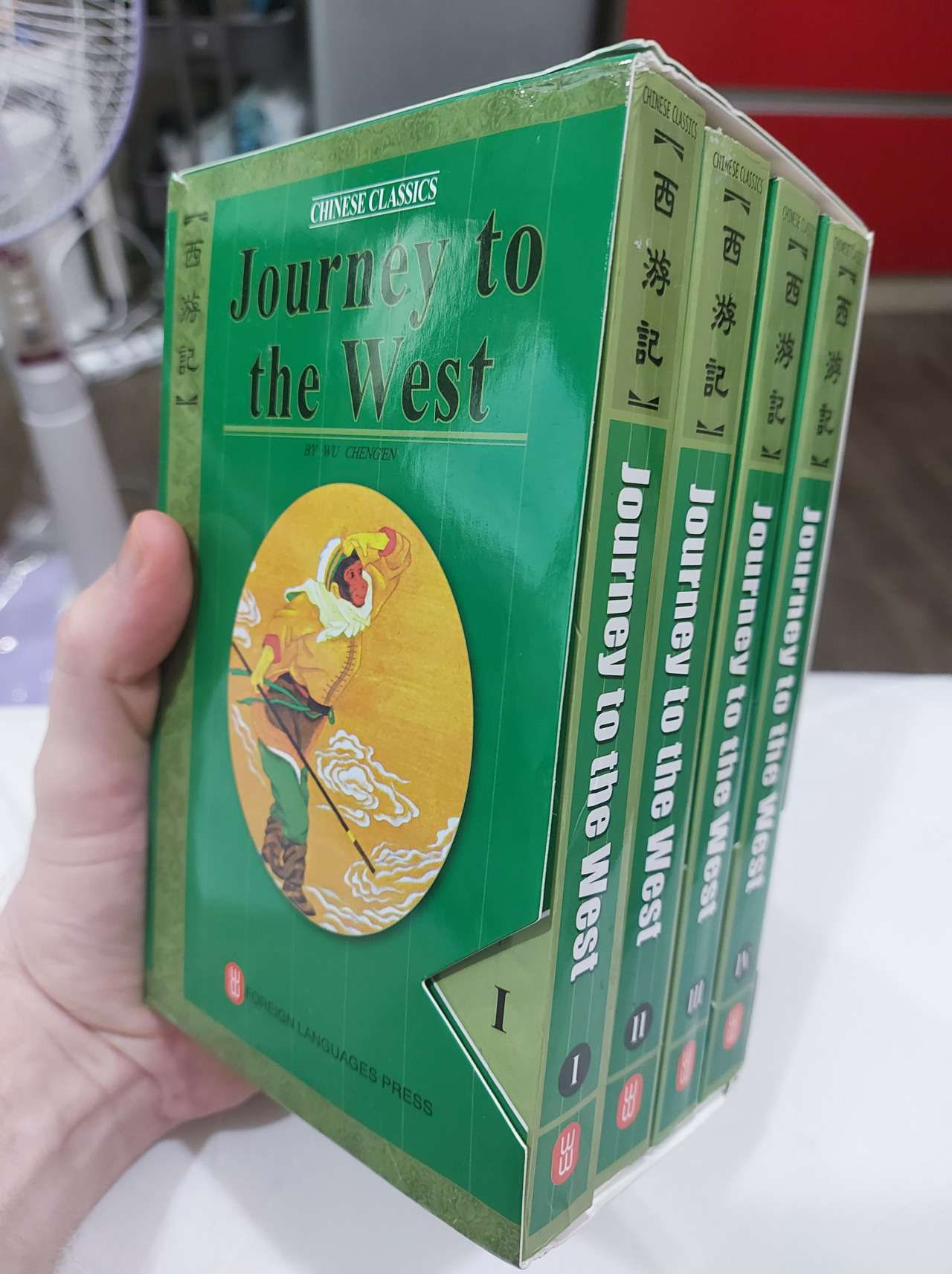
Click to access Wu-Chengen-Journey-to-the-West-4-Volume-Boxed-Set-2003.pdf

The four-volume box set in my collection (larger version).

A.2. Abridged

1) This is a PDF for Monkey (1942/1984) translated by Arthur Waley in 30 chapters (1 to 15, 18 and 19, 22, 37 to 39, 44 to 46, 47 to 49, and 98 to 100). See past book covers here.

PDF File

Click to access Wu-Chengen_-Arthur-Waley-Monkey-Grove-Press-1984.pdf

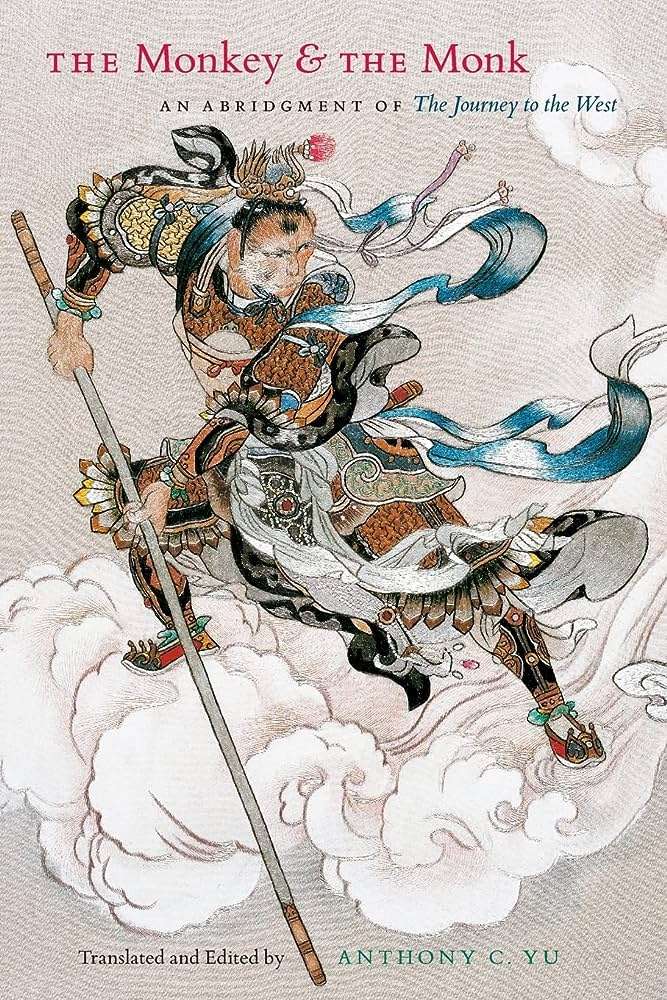
2) This is a PDF for The Monkey and the Monk (2006): An Abridgement of The Journey to the West translated by Anthony C. Yu in 31 chapters (1 to 15, 18 and 19, 22 and 23, 44 to 46, 53 to 55, 57 and 58, 84, and 98 to 100)

PDF File

Click to access Anthony-C.-Yu-The-Monkey-and-the-Monk_-An-Abridgment-of-The-Journey-to-the-West-2006.pdf

The official cover (larger version)

A.3. Audiobook

1) I just learned of “The Fifth Monkey” and their Journey to the West – An Audio Drama Series, which presents a new English translation alongside the original Chinese. They explain:

One reason that led our team to start this audio drama project is to correct some of the mistranslations found in the Yu/Jenner translations. Most of them are very minor and we certainly understand what could have led to those mistakes, but we think it is worth exploring how we can help bring a more accurate presentation of the original text in the English language (source).

The official logo (larger version).

2) YouTuber Sondley has recorded himself reading all 100 chapters of the Jenner edition.

B. French

These are PDFs for La Pérégrination vers l’Ouest (Xiyou ji) (1991) translated by André Lévy in 100 chapters. I was told by one French academic that this edition “is one of the best available in Western languages.”

Thank you to arcanananas on Tumbler for volume one, and thank you to jyeet on the Journey to the West discord for volume two.

PDF Files

Vol. 1https://journeytothewestresearch.com/wp-content/uploads/2024/11/La-peregrination-vers-lOuest-v.1.pdf

Vol. 2https://journeytothewestresearch.com/wp-content/uploads/2023/08/French-JTTW-la-peregrination-vers-louest-Vol-2.pdf

The original two-volume boxed edition (larger version). Image found here.

C. German

This is a PDF for Die Reise in den Westen. Ein klassischer chinesischer Roman (2016) translated by Eva Lüdi Kong in 100 chapters. It was awarded the Leipzig Book Fair prize in 2017. This version was converted from an ebook.

PDF File

Click to access German-JTTW-Die-Reise-in-den-Westen.pdf

The official cover (larger version)

D. Hungarian

These are text PDFs for Nyugati utazás: avagy a majomkirály története (1969/1980) translated by Barnabás Csongor in two volumes. While the work covers the full 100 chapters, I’ve been told that it deletes the poems and occasionally paraphrases long-winded sections of text.

Thank you to Twitter user Jakabfi Károly for locating the files.

PDF Files

Vol 1https://journeytothewestresearch.com/wp-content/uploads/2023/08/Hungarian-JTTW-Nyugati-Utazas-Vol-1.pdf

Vol 2https://journeytothewestresearch.com/wp-content/uploads/2023/08/Hungarian-JTTW-Nyugati-Utazas-Vol-2.pdf

The official covers for volumes one and two (larger version). Image found here.

E. Italian

[Note 10-19-23: I was asked by the publisher to remove the PDF from the archive. I’m leaving the title here so others will know that an Italian translation exists.]

The Italian text is called Viaggio in occidente (1998/2008). It was translated by Serafino Balduzzi and published in two volumes. It is based on the French edition published in 1991. The work covers all 100 chapters.

F. Polish

This is a PDF for Małpi bunt (1976) translated by Tadeusz Żbikowski. It is a 14 chapter abridgement of the first 20 chapters of the original.

Thank you to Twitter user Friend_Pretend for locating the file.

PDF File

Click to access Polish-JTTW-Malpi-bunt-1976.pdf

The official cover (larger version).

G. Romanian

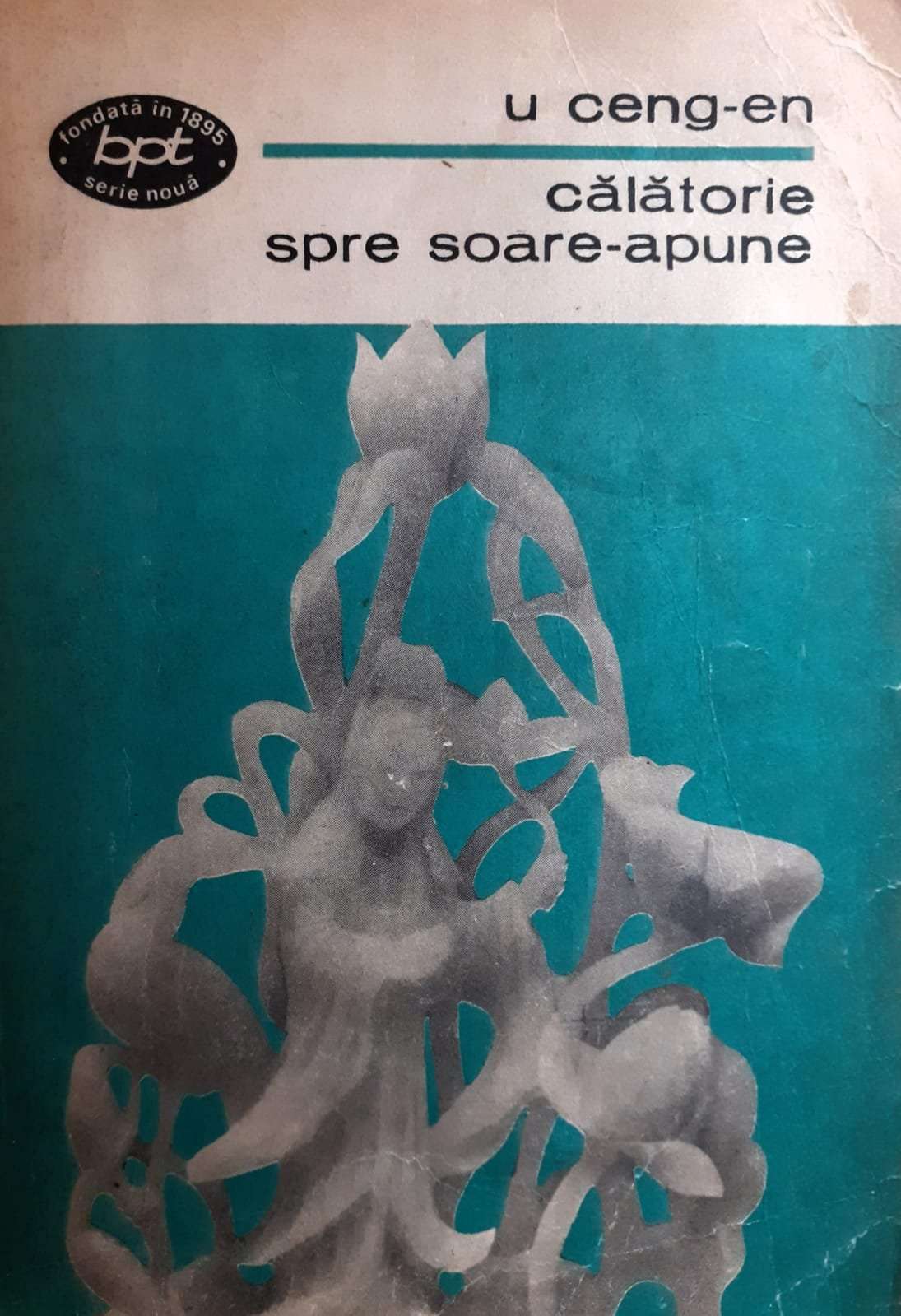
This is a text PDF for Călătorie spre soareapune (1971) translated by Corneliu Rudescu and Fănică N. Gheorghe. It appears to be an abridgment.

Thank you to greencicadarchivist on the Journey to the West discord for locating the file.

PDF File

Click to access Romanian-JTTW-U_Ceng_En_Calatorie_Spre_Soare_Apune_pdf.pdf

The official cover (larger version).

H. Russian

H.1. Complete

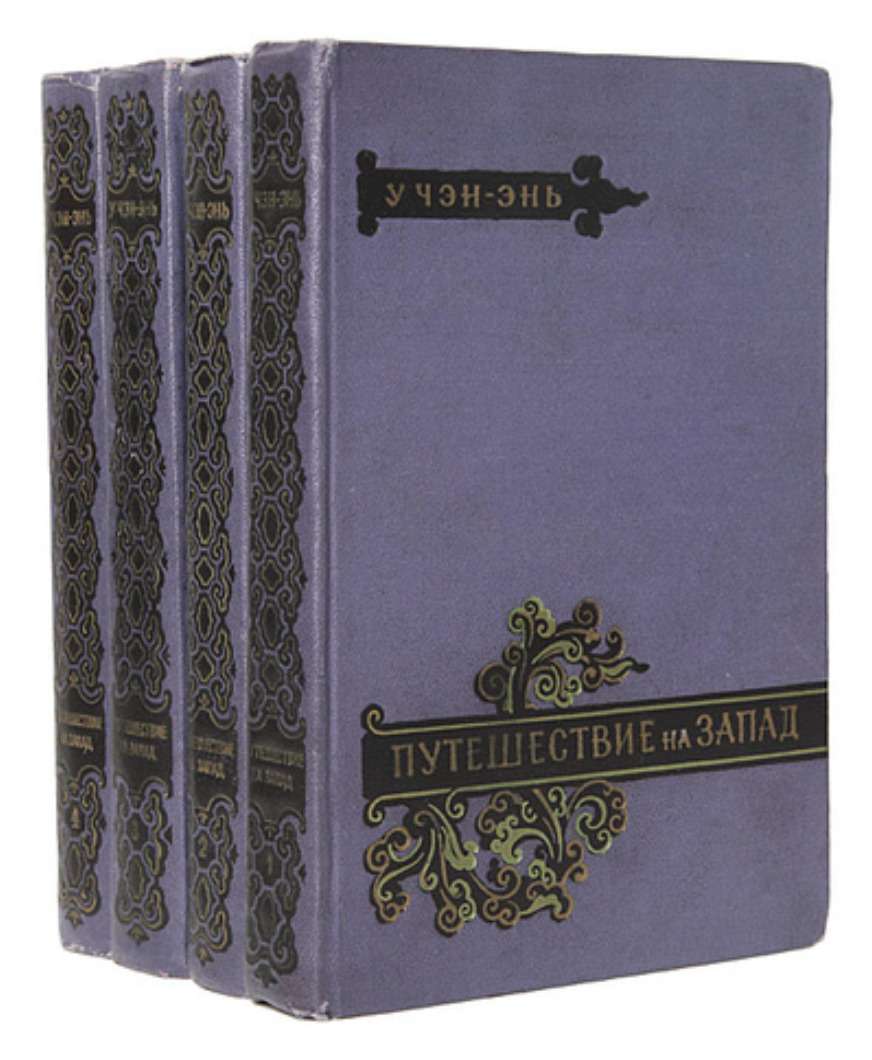
These are PDFs for Путеше́ствие на За́пад (1959) translated by A. Rogachev (vols. 1-2) and V. Kolokolov (vols. 3-4). It covers all 100 chapters.

PDF Files

Vol 1https://journeytothewestresearch.com/wp-content/uploads/2023/08/Russian-JTTW-Puteshestvie_Na_Zapad_T_1_-1959-Vol-1.pdf

Vol. 2https://journeytothewestresearch.com/wp-content/uploads/2023/08/Russian-JTTW-Puteshestvie_Na_Zapad_T_1_-1959-Vol-2.pdf

Vol. 3https://journeytothewestresearch.com/wp-content/uploads/2023/08/Russian-JTTW-Puteshestvie_Na_Zapad_T_1_-1959-Vol-3.pdf

Vol. 4https://journeytothewestresearch.com/wp-content/uploads/2023/08/Russian-JTTW-Puteshestvie_Na_Zapad_T_1_-1959-Vol-4.pdf

The four-volume hardcover edition (larger version).

H.2. Abridged

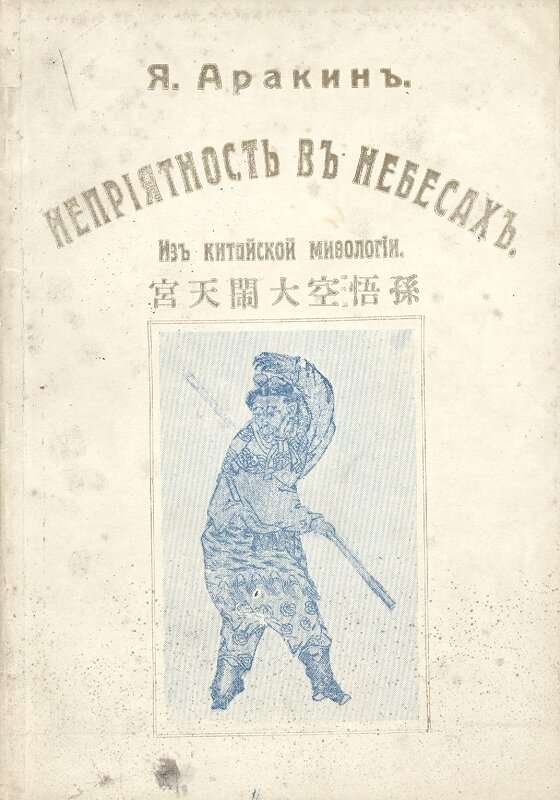
This is a text PDF for Неприятность в небесах. Из китайской мифологии (1926) translated by Yakov Arakin. It is a poetic retelling of the first seven chapters of the novel.

Thank you to Adelar Eleramo for locating the file.

PDF File

Click to access Russian-JTTW-poem-Yakov-Arakin.pdf

The official cover (larger version).

I. Spanish

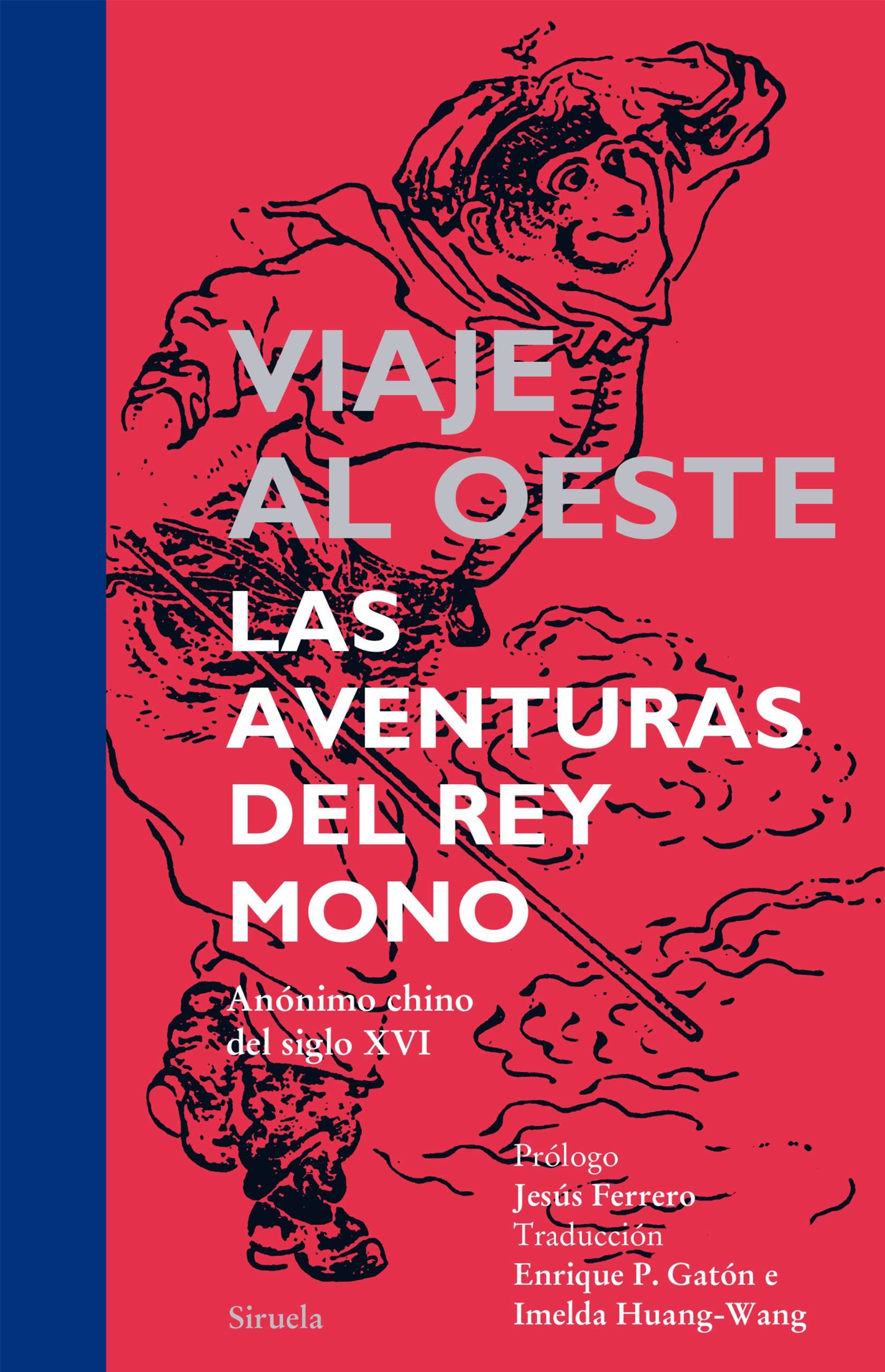
This is a text PDF for Viaje al Oeste: Las aventuras del Rey Mono (2022) translated by Enrique P. Gatón and Imelda Huang-Wang in 100 chapters.

PDF File

Click to access viaje-al-oeste-las-aventuras-del-rey-mono.pdf

The official cover (larger version)

J. Thai

This is a PDF for ไซอิ๋ว (2004/2010). It appears to be based on a four-volume edition translated by one Mr. Tin (นายติ่น) and published from 1906 to 1909. I believe it covers all 100 chapters.

Thank you again to greencicadarchivist for locating the file.

PDF File

Click to access Thai-JTTW-ไซอิ๋ว.pdf

The official cover (larger version)

K. Turkish

This is a PDF for Batı’ya Yolculuk (n.d.). I’m not sure who it was translated by. It appears to be all 100 chapters.

PDF File

Click to access Batiya-Yolculuk.pdf

The official cover (larger version)

L. Vietnamese

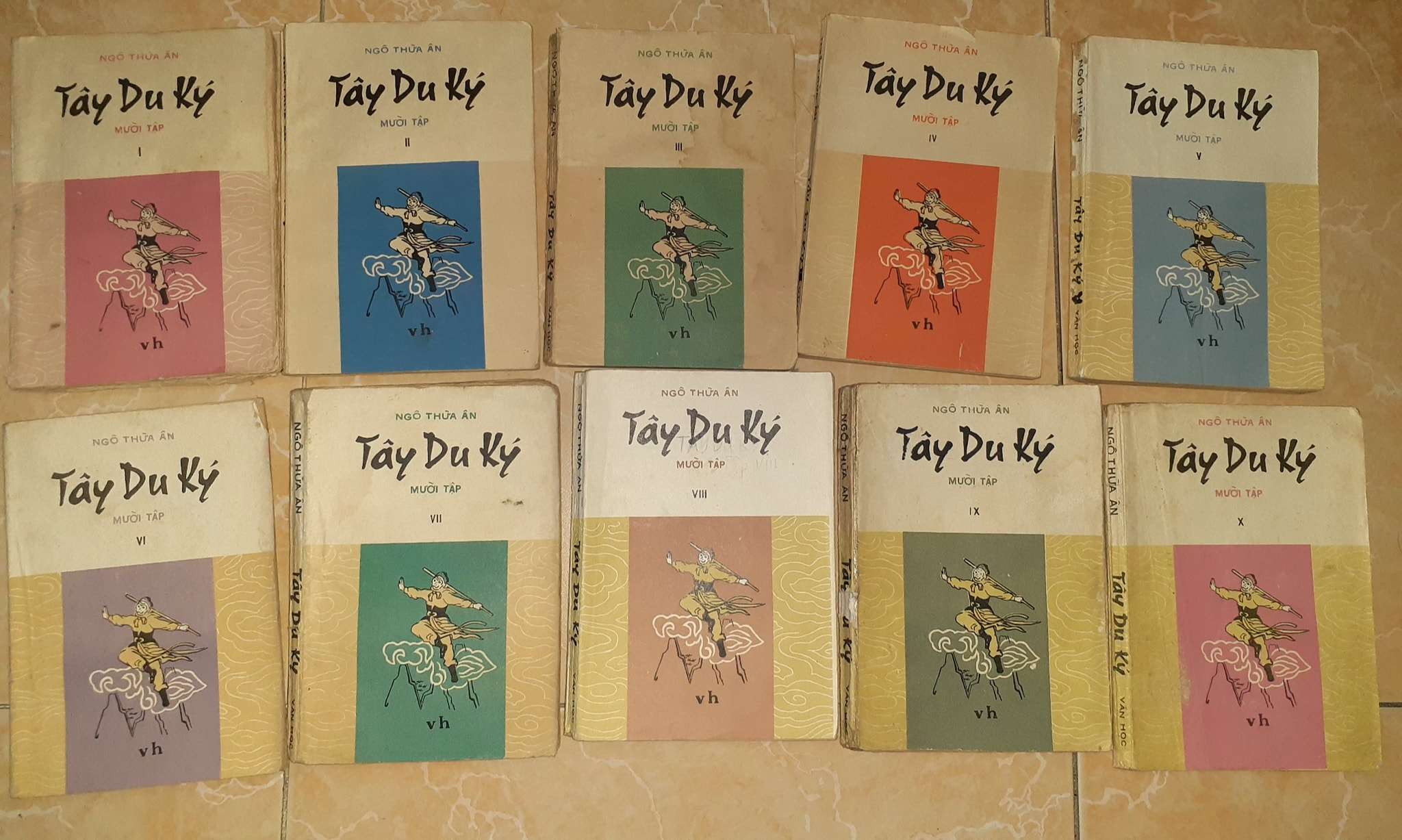
This is a text PDF for Tây Du Ký translated by Như Sơn, Mai Xuân Hải, and Phương Oanh. The 100 chapters were originally split between 10 volumes and published from 1982 to 1988. The volumes were later transcribed and combined to make a single eBook via an online community in 2013 (see here). I have converted it into a PDF.

PDF File

Click to access Vietnamese-JTTW-Tay-Du-Ky.pdf

The covers for the original ten volumes (larger version). Image found here.

3. Unofficial Sequels

3.1. A Supplement to the Journey to the West (Xiyoubu)

A. English

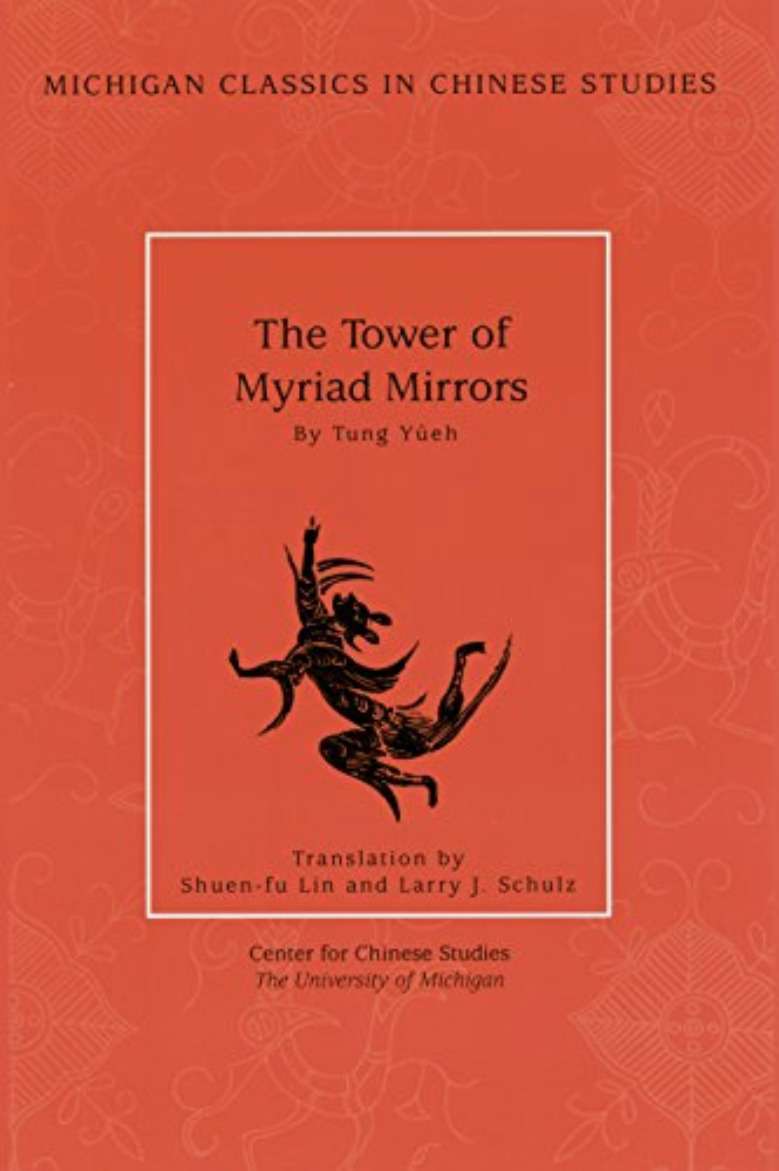
1) This is a PDF for Tower of Myriad Mirrors: A Supplement to Journey to the West (2000) translated by Shuen-fu Lin and Larry J. Schulz. This version was converted from Mobi.

See my previous article on the tale here.

PDF File

Click to access English-Xiyoubu-Lin-Shuen-fu_Dong-Yue-Schulz-Tung-Yueh-The-tower-of-myriad-mirrors_-a-supplement-to-Journey-to-the-West.pdf

The official cover (larger version)

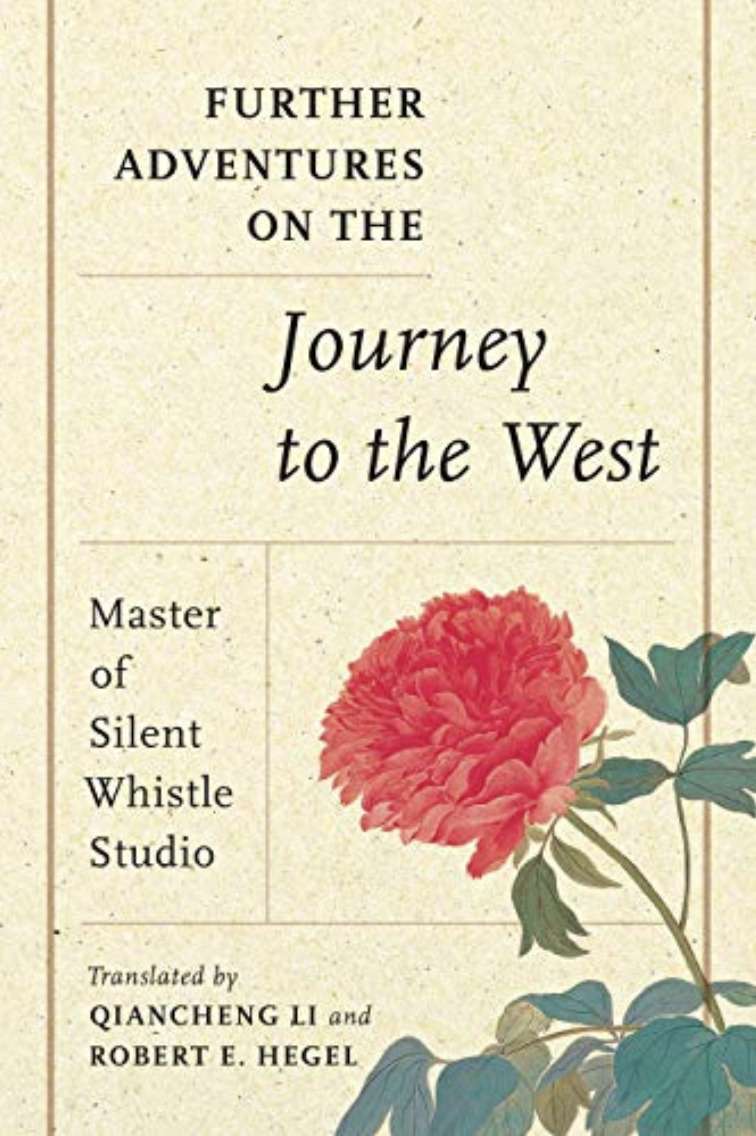
2) This is a PDF for Further Adventures on the Journey to the West – Master of Silent Whistle Studio (2020) translated by Qianchng Li and Robert E. Hegel.

PDF File

Click to access Further-Adventures-on-the-Journey-to-the-West-Master-of-Silent-Whistle-Studio-2020.pdf

The official cover (larger version)

B. Hungarian

This is a text PDF for Ami a nyugati utazásból kimaradt (1957/1980) translated by Barnabás Csongor.

My thanks again to Twitter user Jakabfi Károly.

PDF File

Click to access Hungarian-Xiyoubu-tung_jue_ami_a_nyugati_utazasbol_kimaradt.pdf

The official cover (larger version).

3.2. Later Journey to the West (Hou Xiyouji, 後西遊記, 17th-century) 

A. Chinese-English

This 41-chapter book has been translated into English with AI by the Chinese Text Project (Ctext). You can READ IT HERE (turn off your VPN for access). The novel does not yet have an official translation.

See my previous articles on the subject here, here, and here.


Update: 08-17-23

I forgot to mention that I have previously archived two other Chinese classics. The first is Creation of the Gods (Fengshen yanyi, 封神演義, c. 1620; a.k.a. Investiture of the Gods), a sort of prequel to JTTW.

Archive #17 – PDFs of Creation of the Gods Library of Chinese Classics Chinese-English Bilingual Edition (Vols. 1-4)

The second is Journey to the South (Nanyouji南遊記, c. 1570s-1580s). This is NOT a direct sequel to JTTW. It instead follows the adventures of a martial god from Chinese folk religion. However, Sun Wukong makes a guest appearance in chapters one and seventeen.

Archive #40 – Journey to the South (Nanyouji) English Translation PDF


Update: 04-06-26

There is also Three Kingdoms (Sanguo yanyi三國演義; lit: “Romance of the Three Kingdoms,” 14th century.).

Archive #52 – PDFs of the Three Kingdoms Foreign Language Press English Translation (Vols. 1-4)

And Outlaws of the Marsh (a.k.a. Water MarginShuihu zhuan, 水滸傳, c. 1400).

Archive #53 – PDFs of Outlaws of the Marsh (a.k.a. Water Margin) Foreign Language Press English Translation (Vols. 1-4)

The Monkey King and the “Three-Teachings” (三教) Trinity of Southeast Asia

Last updated: 11-07-2024

Ronni Pinsler of the BOXS project recently introduced me to the Huang Lao xianshi (黃老仙師; lit: “Immortal Master Yellow Elder) [1] folk religion sect of Malaysia and Singapore. It features an intriguing trinity with the Monkey King as Dasheng fozu, (大聖佛祖; lit: “Great Sage Buddha Patriarch”) in the center, the aforementioned deity to his right, and Taishang laojun (太上老君; lit: “Most High Elder Lord,” a.k.a. Laozi, 老子) to his left. Combined, they respectively represent Confucianism, Buddhism, and DaoismThis is shocking as Sun Wukong replaces the Buddha himself as a representative of the “Three Teachings” (sanjiao, 三教). Needless to say, his inclusion here elevates the Monkey King from a mid-tier god to a supreme one.

I. History?

There doesn’t appear to be any concrete information about when the trinity first appeared. The oldest photograph (fig. 1) that I can find hails from 1970s Singapore (per an informant). But this page states that Chee Chung Temple (慈忠庙), followers of the sect, was founded in 1960, showing that it was flourishing as early as this time. However, an informant tells me that the sect is more rare in Singapore these days. Conversely, Ronni notes it’s more common in Malaysia and that the trinity from the photograph looks similar to “twenty or thirty examples” he’s seen while visiting temples in the south. 

Fig. 1 – The 1970s photograph (larger version). Image in a private Malaysian collection.

I’d like to add that the three-person grouping follows precedent in Chinese religion, with examples including the “Sanqing” (Sanqing, 三清; lit: “Three Pure Ones”) of Daoism and the “Trikaya” (Ch: Sanshen, 三身; lit: “Three Bodies”) of Buddhism. These likely influenced the trinity (see below).

I’ll update this section as new information becomes available.

II. Iconography

Dasheng fozu is portrayed with a small guan cap (xiao guan, 小冠) crowning a furry, simian head, and the face is sometimes painted similar to his Chinese opera depictions. He wears a (sometimes golden) suit of armor and sits in a kingly fashion with knees splayed and his hands on his legs. One hand is upturned and loosely cups the handle of an “As-you-will” (ruyi, 如意) scepter, with the mushroom head resting near his shoulder. As noted here, this scepter is a symbol of some Buddhist and Daoist gods, most notably Lingbao tianzun (靈寶天尊, lit: “Celestial Worthy of Numinous Treasure”), one of the Sanqing, and Guanyin (觀音). 

Huang Lao xianshi is portrayed with a small guan cap crowning a smiling, elderly man with drawn back white hair and a long, white beard and mustache. He wears bagua robes (of various colors) and sits in a kingly fashion with knees splayed. And he either holds a fly whisk or command flag in one hand, while the other is sometimes held in a mudra.

Taishang laojun is quite similar to the former (including the guan cap, hair and beard, and bagua clothing), but he’s instead seated cross-legged on a lotus throne. One hand holds a traditional palace fan (gongshan, 宮扇), while the other might delicately hold a pearl.

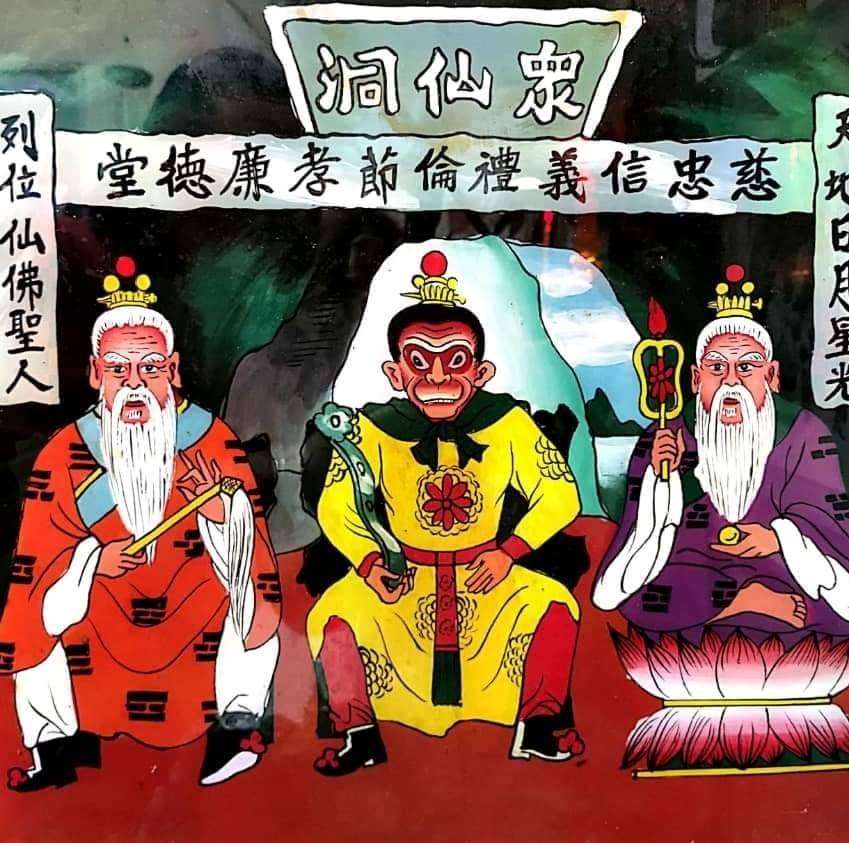
All three are sometimes depicted in a cave-like alcove over which hangs a sign reading “Zhong xian dong” (眾/衆仙洞; lit: “Multitude of Immortals Cave”) or “Xianfo dong” (仙佛洞, “Immortals and Buddhas Cave”) (fig. 2 & 3).

Fig. 2 – The “Multitude of Immortals Cave” (larger version). This is likely a painting of the idols from figure one. Found on Facebook. Fig. 3 – The “Immortals and Buddhas Cave” (larger version). Found on Facebook.

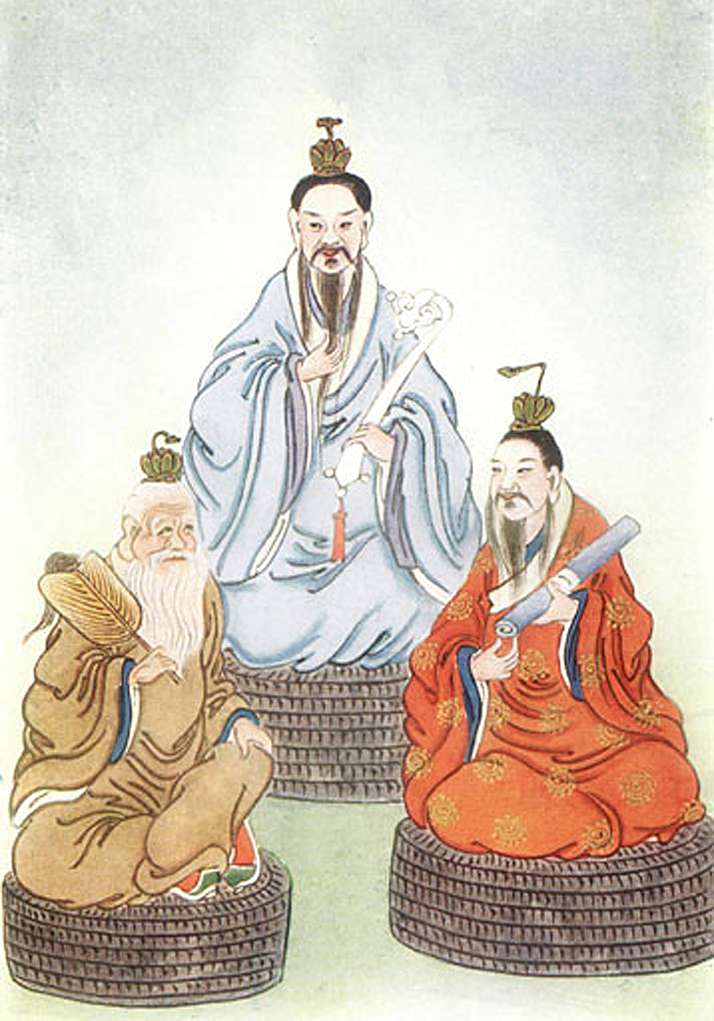
The trinity appears to have borrowed from depictions of the Sanqing. Take for example this painting (fig. 4). Two of the three figures include the As-you-will scepter and the palace fan.

Fig. 4 – A print of the Sanqing from Werner, 1922, p. 124 (larger version).

III. Huang Lao xianshi

This is not a common deity, so I’ve chosen to quote the BOXS article on the subject. I’ve changed the Wade Giles to pinyin. The information was gathered by Keith Stevens:

[…] His images have been seen on altars in Singapore in Balestier Road, also in Malacca and Kuala Lumpur, in Seremban and Muar, and in southern Thailand, where in each temple he is known as one of the Supreme Trinity .

In Kuala Lumpur where he is regarded as a deity who possesses the spirit mediums of his cult, the Huang jiao [黃教], he is known as an avatar of Laozi. He is said to have first appeared and became popular during the Han dynasty as the Governor of the World but without interfering with its day to day running. […] He was identified as Huang Shigong [黃石公], a patron of Zhang Liang [張良] who in about 200 BC was a trusted counsellor of Liu Bang [劉邦] and is said to have written a work on military tactics, the Sanlue [三略, “Three Strategies”].

Zhang Liang was one of the Three Heroes of China, said to have been a governor of a province during the Han, and according to Taoist legend was one day crossing a bridge of a river when a poor old man on a mule passed by. One of the old man’s sandals fell off into the river and in one version Zhang picked up the sandal of his own volition whilst in another, told by devotees, the old man asked him to pick it up. Zhang feeling a great sense of indignity but moved by pity for the old man picked it up. Then, after several tests Zhang Liang was told by the old man that with the book he had just given to Zhang he would become an adviser to the king. In years to come it came about exactly as foretold, and the old man on the mule turned out to be Huang Lao xianshi.

In these temples Huang Lao xianshi’s annual festival is celebrated on the double sixth [i.e. 6th day of the 6th lunar month]. His image has not been noted in Taiwan, Hong Kong or Macau.

In most temples he is revered for his healing powers, with one sip of water blessed by him curing sickness; it also provides stamina and nerve, and wrestlers and boxers visit his altars to drink his tonic before their matches.

Huang is also known as:

Huang Lao zushi [黃老祖師]

Huang Lao jun [黃老君] (RefNo. W3015).

The article goes on to suggest a possible connection to the Huang-Lao (黃老; “Yellow Emperor-Laozi) school of philosophy.

The Huang Lao school combines the teachings of Huang Di, Laozi, Zhuangzi and Buddhist[s], as well as Confucian[s], developed over the centuries into its own particular form (RefNo. W3015).

This philosophical connection is interesting as one scholar suggests that the Sanlue “was written around the end of the Former Han dynasty, probably by a reclusive adherent of the Huang-Lao school who had expert knowledge of military affairs” (Sawyer & Sawyer, 2007, p. 283). This would explain why Huang Lao’s story is associated with Huang Shigong (“Old Man Yellowstone”). Also, his name might imply that he’s considered an embodiment of this philosophy.

One thing not noted in the BOXS article is that some statues alternatively spell his name as 黃老先師 (Huang Lao xianshi), meaning the “First Teacher Yellow Elder” (see the third section on this page). The term 先師 is a reference to one of Confucius‘ titles (Chin, 2007, p. 13).


Update: 04-01-22

Ronni shared with me a source explaining the birth of Master Yellow Elder’s sect. One webpage claims it came about in 1937 at No. 38 Beer Village of Bahau, Negeri Sembilan, Peninsular Malaysia (马来西亚半岛森美兰州马口三十八啤农村). This might explain why the sect is more popular in Malaysia than Singapore:

At that time, Liao Jun [廖俊] was alone in the hall near the Daoist altar when he became curious about learning spirit-mediumship and spirit-writing. All of a sudden, a spirit entered his body, causing him to sit solemnly while stroking his whiskers and mumbling incomprehensively. He didn’t know what spirit had taken hold of his body or what was being said. Afterwards, Liao woke up but didn’t know anything. After that he requested the spirit to descend everyday but wasn’t able to speak. Later, Mr. Dai Zhao [Dai Zhao xiansheng, 戴招先生], the original owner of the Daoist temple, consecrated him as a new spirit-medium with a seal. He was then able to write messages and finally speak. Until that day when Liao Jun called the spirit, he opened his mouth and preached with strict principles and profound meaning. He said that the Immortal Master came to teach disciples in order to help the world. But he did not reveal his origin.

After a period of Liao calling down the spirit, the gathered crowd questioned the deity. He finally revealed that the Immortal Master Yellow Elder was actually Oldman Yellowstone [Huang shigong, 黃石公], known from legends passed down through the generations. According to the Jade Emperor’s decree, he was to open the dharma gate by preaching his teachings for the universal deliverance of the people.

Those who wish to enter the dharma gate first have to fast for 30 days and then complete the dharma hall ceremony to become a formal disciple. This dharma transforms according to one’s heart and can be used as one desires. Only when it is used in the right way will it be effective. One cannot harbor any evil desires.

All of Immortal Master Yellow Elder’s disciples can worship at home by arranging their own shrine. A memorial tablet must be set up in the center, and the following words must be written: mercy, loyalty, faith, righteousness, rituals, relationships, continence, filial piety, honesty, and right virtue. A sign on the left side must say, “Obey the Way of Heaven with Loyalty,” and on the right, “From the Earth Return to Ceremony.”

Apart from the aforementioned ten precepts, the disciples of the Immortal Master can also draw talismans to exorcise evil spirits from residences. At the same time, they can practice a boxing method to protect oneself in case of emergency.

At that time, more than 40 people were attracted to join. They worshiped the Immortal Master Yellow Elder and were diligent in practicing the dharma and martial arts. Later, the number of disciples increased. After the Immortal Master made his holy presence known, some disciples suggested that a temple be built. After the Immortal Master Yellow Elder made his holy presence known, some disciples suggested that a temple be built. And after they went before him and asked for instructions, he ordered that the first temple be built in Malacca. Because Malacca is a holy place of Buddhist temples, the sect spread throughout Malaysia and into Singapore.

黄老仙师缘起一九三七年间在马来西亚半岛森美兰州马口三十八啤农村,当时廖俊在道坛内,因在其好奇心驱使下,趁道堂内无人,就学乩童扶乩,忽然间且有神灵附身,双手交替频频作抚须状,同时肃然端坐,喃喃低语,就是听不明白说些什么,也不知是什么神明降神,之后廖俊就醒来了,但什么也不知道。过后几乎每天都请乩降童,就是不能开口说话,后来原本道堂主人戴招先生,在廖俊扶乩降童时,替他作新乩童开光封印法,廖俊才执笔写明某日可开言,直到该日廖俊降乩时,开口讲道,道理严明,心义深长,并说是黄老仙师下凡授徒济世,但不表明来历。

经过一段时日的请乩降童,又在众人不断的追问下,知悉黄老仙师就是历代相传的黄石公,奉玉皇大帝旨谕到来开黄老仙师法门宣扬教理,普渡善民,有志入黄老仙师法门行道者,必先斋戒三十天,再行过法堂仪式,方为正式弟子,所授之法乃随心变化法,可随心运用,惟必用於正道方有灵验,不可存有邪念,凡是黄老仙师弟子,可在家自设神位奉拜,正中设立牌位上书慈,忠,信,义,礼,伦,节,孝,廉,德堂,左边立牌上书顺天行道忠,右边上书从地復礼仪。

黄老仙师弟子,除了必修慈忠信义礼伦节孝廉德十训道理之外,也可画符驱邪镇宅,同时也修炼法拳,以备紧急时防身,当时就吸引了四十余人加入,亦诚崇信黄老仙师,勤於练法练武,后来弟子越增越多,加上黄老仙师威灵显圣,更有弟子提议黄老仙师庙,经过向黄老仙师请示,奉旨第一间庙应先建在马六甲,因为马六甲是佛庙圣地,之后从马六甲开始推广到星马各州。

This passage is interesting because it mixes Buddhist, Confucian, and Daoist terminology. Examples include “dharma gate” and “right way”; the list of the ten precepts, which are similar to the Four Cardinal Principles and Eight Virtues; and the evil-warding talismans.

It still amazes me, though, that the Great Sage is given such a prominent position in the center when he’s not even the main focus of the sect.


Update: 09-04-23

Irwen Wong of the Journey to the West Library blog reminded me that Huang Lao xianshi, under his guise as Huang Shigong (refer back to sec. III above), is mentioned in Journey to the West. In chapter 14, Tripitaka banishes Sun Wukong for killing six thieves who accost them shortly after the simian immortal is released from under Five Elements Mountain. Monkey retreats to the underwater kingdom of the Eastern Dragon King to vent, and after some tea, he notices a painting on the wall:

When they finished the tea, Pilgrim happened to turn around and saw hanging behind him on the wall a painting on the “Presentation of Shoes at Yi Bridge.” “What’s this all about?” asked Pilgrim. The Dragon King replied, “The incident depicted in the painting took place some time after you were born, and you may not recognize what it was-the threefold presentation of shoes at Yi Bridge.” “What do you mean by the threefold presentation of shoes?” asked Pilgrim.”

The immortal in the painting,” said the Dragon King, “was named Huang Shigong, and the young man kneeling in front of him was called Zhang Liang. Shigong was sitting on the Yi Bridge when suddenly one of his shoes fell off and dropped under the bridge. He asked Zhang Liang to fetch it, and the young man quickly did so, putting it back on for him as he knelt there. This happened three times. Since Zhang Liang did not display the slightest sign of pride or impatience, he won the affection of Shigong, who imparted to him that night a celestial manual and told him to support the house of Han. Afterwards, Zhang Liang ‘made his plans sitting in a military tent to achieve victories a thousand miles away. When the Han dynasty was established, he left his post and went into the mountains, where he followed the Daoist, Master Red Pine, and became enlightened in the way of immortality. Great Sage, if you do not accompany the Tang Monk, if you are unwilling to exercise diligence or to accept instruction, you will remain a bogus immortal after all. Don’t think that you’ll ever acquire the Fruits of Truth.”

Wukong listened to these words and fell silent for some time. The Dragon King said, “Great Sage, you must make the decision yourself It’s unwise to allow momentary comfort to jeopardize your future.” “Not another word!” said Wukong. “Old Monkey will go back to accompany him, that’s all!” Delighted, the Dragon King said, “If that’s your wish, I dare not detain you. Instead, I ask the Great Sage to show his mercy at once and not permit his master to wait any longer.” When Pilgrim heard this exhortation to leave, he bounded right out of the oceanic region; mounting the clouds, he left the Dragon King (Wu & Yu, 2012, vol. 1, p. 318).

茶畢,行者回頭一看,見後壁上掛著一幅「圯橋進履」的畫兒。行者道:「這是甚麼景致?」龍王道:「大聖在先,此事在後,故你不認得。這叫做『圯橋三進履』。」行者道:「怎的是『三進履』?」龍王道:「此仙乃是黃石公,此子乃是漢世張良,石公坐在圯橋上,忽然失履於橋下,遂喚張良取來。此子即忙取來,跪獻於前。如此三度,張良略無一毫倨傲怠慢之心,石公遂愛他勤謹,夜授天書,著他扶漢。後果然運籌帷幄之中,決勝千里之外。太平後,棄職歸山,從赤松子遊,悟成仙道。大聖,你若不保唐僧,不盡勤勞,不受教誨,到底是個妖仙,休想得成正果。」悟空聞言,沉吟半晌不語。龍王道:「大聖自當裁處,不可圖自在,誤了前程。」悟空道:「莫多話,老孫還去保他便了。」龍王忻喜道:「既如此,不敢久留,請大聖早發慈悲,莫要疏久了你師父。」

行者見他催促請行,急縱身,出離海藏,駕著雲,別了龍王。


Update: 11-07-24

I was looking for something unrelated on google images and found this picture from the Huang Lao Xianshi Temple (Huang Lao xianshi miao, 黃老仙師廟) of Terendak Military Camp (Delinda junying, 德林達軍營) in Malacca City, Malaysia (fig. 5).

Fig. 5 – The Terendak Military Camp Huan Lao xianshi sect trinity (larger version). Image found here.

Note:

1) The BOXS catalog explains that there’s actually some confusion between two similarity named deities in different versions of the trinity. One is the aforementioned Huang Lao xianshi (黃老仙師) and the other is Wang Lao xianshi (王老仙師). This is because Huang (黃) and Wang (王) “are almost homophones” (RefNo. W6675 & W3015).

Sources:

Chin, A. (2007). Confucius: A Life of Thought and Politics. United Kingdom: Yale University Press.

Sawyer, R. D., & Sawyer, M. (2007). The Seven Military Classics of Ancient China. New York, NY: Basic Books.

Werner, E. T. C. (1922). Myths & Legends of China. New York: George G. Harrap & Co. Ltd.


Story Idea: The Origin of Sun Wukong

Last updated: 02-22-2025

The following story sketch was originally posted on my external Historum blog on 01-20-2014. The site recently switched to a new server, but the blogs have yet to be migrated. I’m posting it here for posterity. Regular articles will resume after this entry.

Story Idea #1

As a lover of Chinese mythology and a former primatology major, I’ve always wanted to create my own primate-based character similar to Sun Wukong. I originally wanted him to be the son of Monkey or the son of one of his advisers or allies during his days as a demon. Either way, I thought he could train under Sun and gain similar powers. But then I decided that I wanted him to be a more civilized, yet more powerful version of the character; someone who is held in high regard by all beings of the six realms (demons, hungry ghosts, animals, humans, asuras, and devas) of Buddhist cosmology, as well as the Buddha himself. After reading about the ancient Chinese view of the gibbon, [A] a small, long-armed, arboreal ape native to Asia (fig. 1), I thought the character could be an ape immortal. It was only recently that I decided to pair him with a female since gibbons generally mate for life.

gibbon-jump-sachin-rai

Fig. 1 – A gibbon soaring through the treetops. Photo by Sachin Rai. A larger version can be found here.

1. Plot

This tale is meant to be a standalone story, but it includes details that explain the origin of Monkey and how his life parallels his spiritual parentage. I’ve drawn upon traditional Chinese religious and vernacular texts for inspiration. The notes below contain important information on the texts I used and why particular plot choices were made.

The Daodejing (道德經) reads:

The Dao (道, the way) gives birth to the One (yiqi, 一氣, the first breath);
The One gives birth to the Two (yin and yang, 陰陽);
The Two gives birth to the Three (San qing, 三清, the Three Pure Ones);
The Three gives birth to the Ten Thousand Things.
The Ten Thousand Things carry the Yin and enfold the Yang;
Kneading gently, they create harmony. [B]

In the beginning of the universe, the Three Pure Ones, the manifestations of the Dao, use the vital energies of the cosmos to create heaven, earth, and all living things. Among the first to be created are two gibbons, a male and a female (fig. 2). They become the progenitors of all apes and monkeys, just like the phoenix and his mate, the next to be created, are the progenitors of all birds. Being embodiments of yin and yang sexual forces, the pair propagates quickly. They frolic with their children and the following generations through the mountain tops soaking up qi (氣), prolonging their lives for thousands upon thousands of years. And Like modern apes, the pair shows a propensity for observation, watching the cyclical movement of the stars and planets and becoming aware of the ebb and flow of qi, studying the energy and cultivating its mysteries over endless eons.

Mated Gibbons

Fig. 2 – A pair of mated gibbons. A larger version can be found here.

Once their family grows to titanic proportions, the gibbons wield their arcane knowledge to create an island home, raising up Flower-Fruit Mountain (Huaguo shan, 花果山) from the ocean. There, they construct the Water Curtain Cave (Shuilian dong, 水簾洞) from which they continue to plumb the depths of the Dao. [C] Their exploration takes them to the heights of the mountain where heaven meets earth, using the corresponding yin (earth/female) and yang (heaven/male) energy to fuel their reenactment of the creation of the cosmos through sexual union. By chance, these powerful, creative sexual energies are absorbed by a boulder atop the mountain. [D]

As mated gibbons often do, the pair sings the most beautiful duets that echo throughout time and space. [E] The power of their song continues to increase as their immortal lives extend through the ages. It becomes so powerful that the duet is capable of crumbling mountains, churning the oceans, and shaking the very firmament of heaven. In fact, their song inadvertently topples one of the mountain pillars supporting the sky, and so the devi Nuwa (女媧) is forced to mend the heavens with five magic stones. [F] The primordial devas and spirits fear what might happen if the couple continues, so they plead with the gibbons to separate in order to avoid destroying the cosmos. They promise to allow the pair to see one another at some fixed period of time in the distant future.

The immortal lovers reluctantly agree and isolate themselves to two separate holy mountains; [G] the male becomes known as the “Eastern Ape Immortal” (東猿仙) and the “Ape Patriarch” (Yuan jiazhang, 猿家長), while the female becomes known as the “Western Ape Immortal” (Xi yuan xian, 西猿仙) and the “Ape Matriarch” (Yuan nu jiazhang, 猿女家長). The two are much sought after by animal, human, devil, and deva to teach them the essence of the Dao. Both become the religious teachers of countless beings, from the lowliest creature to the purest deva in the highest heaven. Former students include the Tathagata Buddha and the immortal Subodhi. [H]

The primordial devas are eventually superseded by deified humans after a great battle between the Shang and Zhou Dynasties. [I] The August Jade Emperor (Yuhuang dadi, 玉皇大帝) and the rest of the heavenly retinue go about setting the cosmos into order. The promise made by the primordial devas is lost to time.

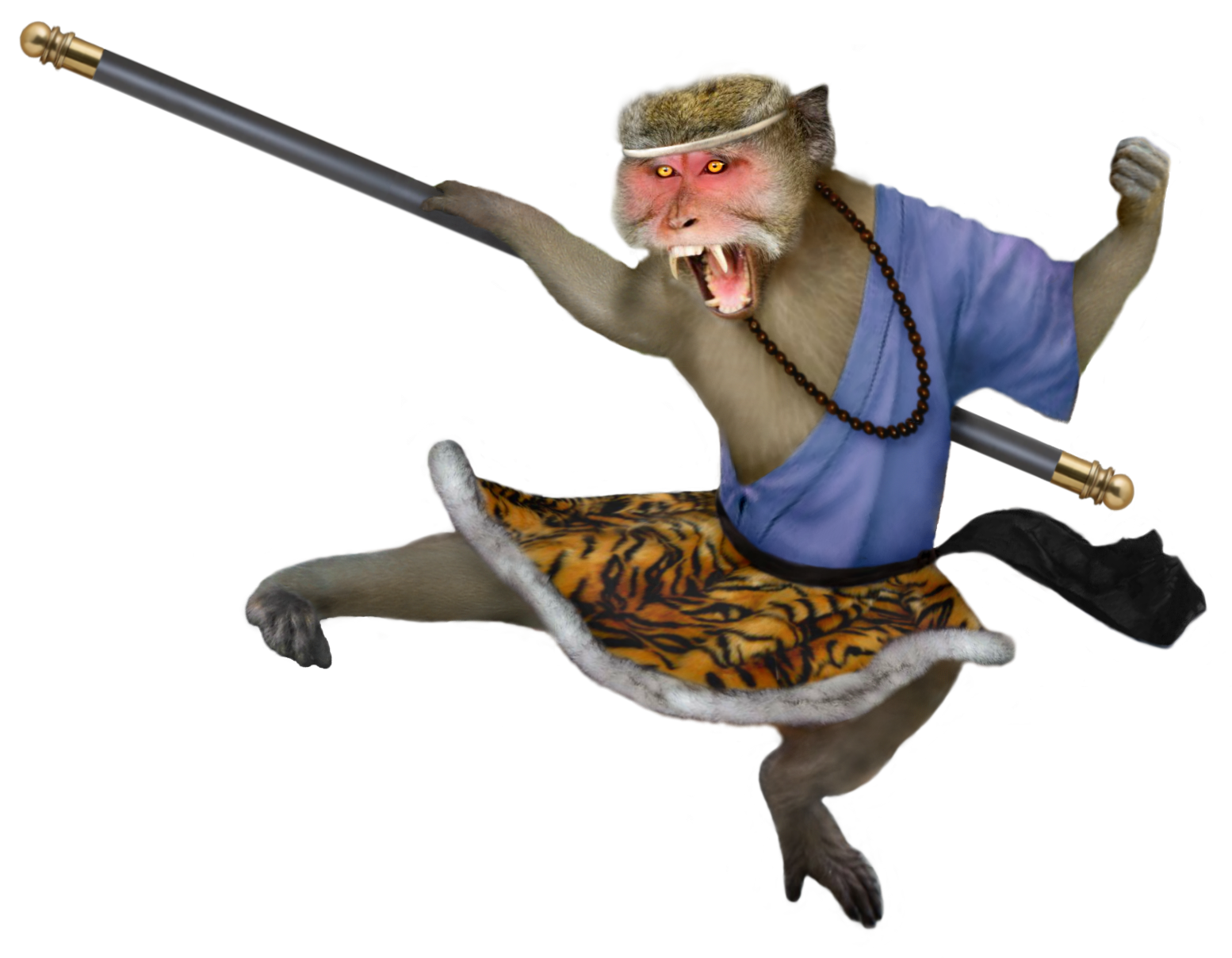
It is during the interim when the previously mentioned boulder, having been nourished by the light of the sun and moon for centuries, births a stone embryo that is eroded by the elements into a stone monkey. He becomes the king of the monkeys on Flower-Fruit Mountain by rediscovering the Water Curtain Cave that the previous generations of his kin had forgotten long after the Ape Immortals went into exile. The monkey eventually trains under Subodhi, receiving the religious name Sun Wukong (孫悟空, Monkey Awakened to Vacuity) (fig. 3), and achieving great magical powers with which he later uses to rebel against heaven for not recognizing him as a full-fledged god. After being imprisoned by the Buddha for 600 years, Sun redeems himself by escorting the monk Tripitaka (Sanzang, 三藏) to India, and for this he is rewarded with Buddhahood, becoming the “Victorious Fighting Buddha” (Dou zhansheng fo, 鬥戰勝佛).

n8mflz

Fig. 3 – A modern depiction of Sun Wukong (larger version). A photomanipulation by the author.

After the fixed period of time has elapsed, the primordial gibbons request to leave their individual exile. The August Jade Emperor, however, refuses due to the potential for danger. Angered because heaven went back on its word, the immortal lovers leave their exile anyway, and so all of the devas, spirits, and devils struggle to keep them apart. This is an impossible task given that the two are among the highest immortals. A great battle ensues in which the pair uses their knowledge of the Dao to put the celestial army into disarray. For instance, the Ape Patriarch is a master of transformations; he grows to titanic proportions, multiplies his long arms, and captures the most powerful Daoist and Buddhist deities in his vice-like hands. The Ape Matriarch is a mistress of illusions; she clouds the minds of the soldiers, making them think they are fighting her when they are really fighting each other. [J] In addition, their individual songs have grown in power, now capable of destroying anything by separating the yin and yang forces therein (fig. 4).

Gibbon yawning

Fig. 4 – A gibbon yawning. Imagine powerful sound waves emanating from its mouth. A larger version can be found here.

The August Jade Emperor begs the Buddha to intervene like he had done for the rebelling Sun Wukong in the past. But considering that heaven went back on its word and the ape immortals are both friends and former teachers of the Enlightened One, the Tathagata sends their spiritual son, the Victorious Fighting Buddha, to ask them to pacify their rage instead of using trickery to halt the onslaught. [K] After a brief reunion, the pair acquiesces, and all three travel by cloud to the Buddha’s abode on Vulture Peak (Lingjiu shan, 靈鷲山) to discuss the matter. The immortal lovers opine the great injustice done to them by the heavenly hierarchy. The Buddha knows their duet is part of their primordial animal nature and is the ultimate expression of their love, which reaches back to the very beginning of time. Unfortunately, he realizes that the power of their song could destroy the universe if allowed to take place.

After some thought, the Tathagata gives them a lesson on the cyclical dissolution of the cosmos: at the end of each Mahakalpa (Da jie, 大劫), the universe is destroyed by a different element. There are fifty-six destructions by fire, seven by water, and one by wind. The latter is the most powerful, destroying all earthly and heavenly realms below the pure realm inhabited by the Buddha and his retinue. The Tathagata then suggests a compromise in which the couple can remain as his permanent guests of the Buddha realm, where they can frolic with the Victorious Fighting Buddha. This way the gibbons will be free to sing their melodious song without fear of negative effects. And when the end of the sixty-fourth Mahakalpa comes to a close, their song will serve the function of the wind element to bring about the dissolution of the universe to make way for the new one. [L]

2. Background information

A) The Chinese viewed the gibbon (Yuan, 猿) as symbolic of Confucian gentlemen and Daoist immortals. Their long arms were thought to be evidence of their expertise in soaking up qi. This resulted in long lives and occult powers (Geissmann, 2008).

B) This is based on chapter 42 of the Daodejing (道德經), the premiere holy text of Daoism. The original passage has been interpreted differently by different scholars. I’m using the interpretation presented in Laozi and Wilson, 2012, p. 197. The cited text, however, makes no mention of the Three Pure Ones. This is based on later Daoist texts and folk views on the supreme immortals. See Stevens, 1997, pp. 68-70.

C) JTTW never explains where the magical cave came from. This is my attempt to give it an origin story.

D) JTTW states the following about the boulder: “Since the creation of the world, it had been nourished for a long period by the seeds of Heaven and Earth and by the essences of the sun and moon, until, quickened by divine inspiration it became pregnant with a divine embryo” (Wu & Yu, 2012, p. 101). I’ve never been satisfied with the explanation for Monkey’s birth. Why would the rock produce a simian character? This is why I wrote that the Ape Immortals make love atop of the mountain, thereby impregnating the boulder with powerful, creative energies. In Daoist sexual practices, earth and heaven are often euphemisms for the feminine and masculine sexual energies of yin and yang (Wile, 1992, pp. 11-12 and 28-29). Therefore, what I have proposed is simply a difference in semantics.

E) Gibbon duets have an ethereal quality. Those wishing to listen to some can do so here and here (make sure your volume is not too high). It’s interesting to note that gibbons can naturally perform what takes professional opera singers years of dedicated practice to achieve (Lougheed, 2014).

F) The original mythology has the pillar being fallen by a water demon. I guess an explanation could be included somewhere that the original reason for the disaster, the gibbon song, was forgotten to time and confused with a different incident.

G) I wanted there to be a parallel between Monkey’s imprisonment and the pair’s exile, both of which are connected to mountains.

H) The Buddha’s tutelage under the gibbons happens in the distant past when he is still a Bodhisattva in the Tushita heaven. I listed Subodhi because I wanted there to be a further link between Monkey and the Ape Immortals. Therefore, the skills of Sun Wukong’s spiritual parents are transmitted to him by their former student.

I) This is based on the events in the 16th-century Chinese classic Fengshen Yanyi (封神演義), or Investiture of the Gods. In the story, chaos in heaven causes many gods to be reborn on earth as various heroes of the competing Shang and Zhou Dynasties. The King of Zhou wins the conflict and his strategist, an apprentice of the supreme immortal Yuanshi Tianzun (元始天尊), one of the Three Pure Ones, uses a magic list to deify the souls of those who died in battle. Thus, heaven is repopulated once more (Stevens, 1997, p. 60).

J) The strengths of each correspond to the skills passed on to the Buddha and the immortal Subodhi. Again, I wanted there to be a parallel between Monkey and his spiritual parents. The pair rebels like he did, but they do so because of injustice, not pride. However, I must say that lofty immortals would have surely evolved passed such earthly “wants and needs” (e.g. lust and anger). Daoist literature and vernacular Chinese fiction often describes immortals as being celibate. But the immortal love of the couple may transcend what might be expected of human-based immortals. That’s why I present them as living embodiments of yin and yang. Wile (1992) states: “The early [Daoist] texts are marked by the existential loneliness of yin and yang for each other, and their union consummates a cosmic synergy” (p. 29).

K) An example of trickery would be the way that the Buddha uses illusion to make Monkey think that he has left his palm in the seventh chapter of JTTW.

L) Buddhism recognizes a measurement of time called a Kalpa (jie, 劫), which can be many millions or even billions of years long depending on the tradition. Said traditions recognize between four and eighty kalpas (Buswell & Lopez, 2014, p. 409). The total of these respective ranges make up a Mahakalpa (dajie, 大劫), which is divided into four periods of nothingness, creation, subsistence, and finally destruction, each period being between one and twenty kalpas long (Buswell & Lopez, 2013, p. 496). For more information on the cyclical destruction of the universe by fire, water, and wind, see my article here.


Update: 01-17-21

Story idea #2

Last year I wrote an article that explored other stone-born figures from world mythology. In the conclusion I cautiously suggested that Wukong’s birth and later rebellion was influenced by the Hurrian myth the “Song of Ullikummi” (c. 1200 BCE), which appears in an extant Hittite cuneiform text comprising three fragmented clay tablets. For example, one scholar noted similarities between Ullikummi and a later figure from Greek mythology: “(1) The initial situation: the big stone; (2) a god fertilizes the stone; (3) the stone gives birth to a child; (4) the child thus created is a rebel against the gods; (5) the gods gather and plan countermeasures; (6) the enemy of the gods is rendered harmless” (see the linked article). Anyone who has read Journey to the West will no doubt notice the striking similarities with Monkey’s tale. Therefore, I think Ullikummi’s story would be a solid basis for a more authentic origin story for the Monkey King.

While the ancient tale is named after the eponymous stone monster (fig. 5), the story follows the machinations of Kumarbi, a resentful former ruler of the gods, who wishes to usurp the throne from his son, the storm god Tesub. Kumarbi sets about doing this by bedding a massive stone in an effort to produce a being powerful enough to rout the gods. Upon its birth, the doting father gives the creature a name meaning “Destroy Kummiya”, foreshadowing its intended fate to destroy Tesub’s home.

Fig. 5 – Ullikummi as a playable character from the online video game Final Fantasy XI (larger version).

Fearing that it may be killed by the gods before coming into full power, Kumarbi has the monster hidden in the underworld, where it is placed on the right shoulder of the Atlas-like god Upelluri. The creature quickly multiples in size, growing nine thousand leagues tall, eventually reaching heaven. When the goddess Ishtar fails to seduce the blind and deaf monster, the warrior god Astabi leads seventy deities into battle against the lithic menace only to be defeated and cast into the sea below. Tesub abandons the throne and, along with his vizier and brother Tasmisu, seeks the aid of Ea, the god of wisdom and witchcraft, who travels to the underworld in search of the creature’s origins. Upon questioning Upelluri, who effortlessly carries the weight of the heavens, earth, and sea, Ea learns a great weight, which turns out to be the monster, pains the titan’s right shoulder. In the end (of the third and final extant tablet), Ea calls for a tool originally used by the old gods to cleave heaven and earth and chisels Ullikummi free of Upelluri’s shoulder, thus breaking the monster’s base of power and leaving it vulnerable to attack by the gods. One scholar suggests there’s a missing fourth tablet that describes the monster’s ultimate defeat (again, see the linked article).

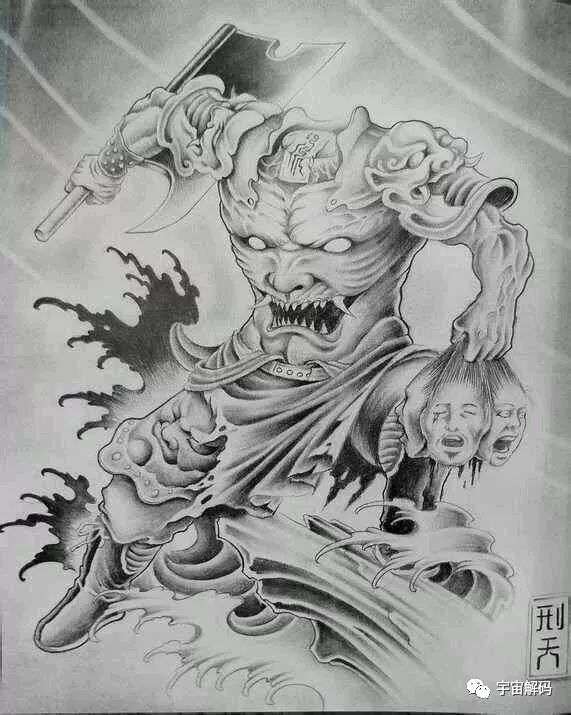
Xingtian

Fig. 6 – A modern depiction of Xingtian (larger version). Artist unknown.

Now, I’ve previously written a story sketch in which Master Subodhi’s school is actually a training ground for an immortal monastic army akin to the Shaolin Temple. I speculated that Wukong’s skill in martial arts and troop movement would come from his time serving as a soldier and eventual officer in this army. Additionally, I suggested that the baddie whom the army faces is the headless monster Xingtian (刑天) (fig. 6), who originally battled the supreme god Shangdi for control of the universe and was beheaded after his defeat. Perhaps he or a figure like him follows in Kumarbi’s footsteps and beds a stone, in this case the rock on the Mountain of Flowers and Fruits, in an effort to create a powerful son to finish what he started. Then, he works in the shadows, influencing the direction of Monkey’s life, leading to his famous rebellion against heaven. Wukong’s defeat of the seventy-two major gods in the heavenly army [1] would mirror Ullikummi routing the seventy gods led by Astabi. Likewise, the Jade Emperor’s call to the Buddha, leading to Monkey’s defeat, mirrors Tesub’s plea to Ea and the eventual downfall of the stone monster. Thoughts?


Update: 12-10-21

I’ve posted a piece about a folk Taoist white ape god. His story overlaps with Sun Wukong just like the spiritual parents I presented above.

The White Ape Perfected Man: Sun Wukong’s Divine Double


Update: 06-16-23

Story Idea #3

Another idea could predate Monkey’s stone birth and instead focus on a past life as a heavenly being. It would draw from three sources: First, the backstory of the Tang Monk, Tripitaka. Those who’ve read JTTW will know that his past life, an Arhat called Master Golden Cicada (Jinchan zi, 金蟬子), is exiled from paradise for ten lifetimes for falling asleep during the Buddha’s lecture.

Just like his master, Sun Wukong is formerly a celestial in paradise. A great name for this figure would be the “Arhat Steel Muscles and Iron Bones” (Gangjin tiegu luohan, 鋼筋鐵骨羅漢). This plays on a similar title given to Sun’s antecedent, the “Monkey Pilgrim” (Hou xingzhe, 猴行者), by Tang Emperor Taizong in the 13th-century oral version of JTTW. [3]

Second, the embellished life story of Song-era General Yue Fei (岳飛, 1103-1142). The Complete Vernacular Biography of Yue Fei (Shuo Yue quanzhuan, 說岳全傳, c. 17th-century; “The Biography of Yue Fei” hereafter) actually draws inspiration from the 1592 JTTW by portraying the general as a reincarnation of a bird monster-turned-Dharma protector from chapters 74 to 77. Originally called the “Peng Bird of Ten Thousand Cloudy Miles” (Yuncheng wanli peng, 雲程萬里鵬) in JTTW, the “Great Peng, the Golden-Winged King of Illumination” (Dapeng jinchi mingwang, 大鵬金翅明王) is exiled from paradise in chapter one of The Biography of Yue Fei for killing a stellar bat-spirit who farted during the Tathagata’s sermon on the Lotus Sutra. [4]

Just like the Great Peng bird, the Arhat Steel Muscles and Iron Bones kills a spirit for seemingly offending the Buddha. [5] I imagine the Enlightened One would admonish him by saying something like, “You are so sure of your strength, so proud of your physical gifts. And yet you don’t know how to defend the Dharma with it!” He then exiles the Arhat to live out ten lifetimes (à la Master Golden Cicada) where he’s a figure of great strength who is continually bested and humiliated and forced by circumstances to protect something weaker than him.

And third, the Buddha’s Jataka tales. The Tathagata has many birth stories where he is both humans and animals who embody an important lesson (Cowell, 1895). In fact, one tale depicts him as a Monkey King!

The Arhat is reborn in the lower three paths of reincarnation, and just like the Buddha, he has several past lives as animals. He works his way up the cosmic hierarchy by performing good deeds, such as a past life where he’s a man-eating tiger who comes to protect a small child. He attains the human-like form of a monkey in his final incarnation, leading to the events of JTTW.

I like this option a lot because this would make both Monkey and Tripitaka former Arhats who undergo prolonged trials that refine their spirits over many lifetimes. This would ultimately explain why both of them attain Buddhahood at the end of their respective character arcs, our hero becoming the “Buddha Victorious in Strife” (Dou zhansheng fo, 鬥戰勝佛) and the Tang Monk “Buddha of Candana Merit” (Zhantan gongde fo, 旃檀功德佛) (Wu & Yu, 2012, vol. 4, p. 381). I also like it because Sun Wukong’s past life references the Tibetan monkey bodhisattva Hilumandju, who is an avatar of the bodhisattva Avalokiteshvara (Guanyin) and a possible Buddhist syncretic version of the Hindu monkey god Hanumanji. What’s interesting about this legendary figure is that he mates with a rock ogress (see the 08-02-19 update here), which reminds one of Sun’s stone birth.


Update: 02-22-25

While I like elements from the first two story ideas, the third one is turning out to be more authentic and interesting.

I had previously referred to Monkey’s past life on this article as a Bodhisattva, but I changed this to an Arhat after finding evidence that Golden Cicada, Tripitaka’s past life, was a Buddhist saint. This includes the following:

  • Xuanzang was historically worshiped as one during the Song dynasty.
  • Two Yuan-Ming plays depict him as the reincarnation of Arhats.
  • The story of Golden Cicada is likely based on the Arhat Aniruddha, one of the ten principle disciples of the Buddha.
  • Two other principle disciples, the Arhats Ananda and Kasyapa, appear among the Tathagata’s retinue in JTTW (see here). 

In addition, my previous article on Sun Wukong’s first master, the Buddho-Daoist Sage Subodhi, suggests that he is the historical Arhat Subhuti, also one of the principle disciples. And if we insert the aforementioned Aniruddha as the original identity of Master Golden Cicada, that will make four of ten disciples appearing in the story. I stress this because maybe—within our fanfiction—Monkey’s previous life could be another principle disciple that has been conveniently inserted among the historical figures. That way, the Great Sage would have known both Golden Cicada (his master Tripitaka) and Subhuti (his master Subodhi) in the past!

This is neat because he (Arhat Steel Muscles and Iron Bones) and Golden Cicada could ideally be living out their respective transmigrational punishments around the same time. And this further stimulates my brain: what if each of Monkey’s incarnations have protected each of Tripitaka’s past lives?!?! 

Notes:

1) Koss (1981) writes: “Adding up the number of gods listed here [see Wu & Yu, 2012, p. 169] from the Twenty-Eight Constellations through the Deities of the Five Mountains and the Four Rivers, the number arrived at is seventy-three, if 東西星斗 [dongxi xingdou, the “Stars of East and West”] is counted as two, which Yu does in his translation, or seventy two, if the latter is taken as one, which is another possible interpretation” (p. 84).

2) This is how old the ledger of life and death lists Monkey as in chapter 3: “Heaven-born Stone Monkey. Age: three hundred and forty-two years. A good end” (Wu & Yu, 2012, vol. 1, p. 140).

3) In chapter 17, Tang Taizong names him the “Great Sage Steel Muscles and Iron Bones” (Gangjin tiegu dasheng, 鋼筋鐵骨大聖) (Wivell, 1994, p. 1207).

4) Chapter one of The Complete Vernacular Biography of Yue Fei reads:

Let’s talk about the Buddha Tathagata at the Great Thunderclap Monastery in the Western Paradise. One day, he sat on a nine-level lotus throne, and the Four Great Bodhisattvas, the Eight Great Vajra Warriors, the five hundred Arhats, the three thousand Heavenly Kings, nuns and monks, male and female attendants, all of the heavenly sages who protect the Dharma, gathered to listen to his lecture on the Lotus Sutra. His words were like flowers and precious jewels raining from the heavens. But, at that time, a star-spirit, the Maiden Earth Bat, who had been listening to the lecture from beneath the lotus throne, couldn’t bear it any longer and unexpectedly let out a stinky fart.

The Buddha was a great, merciful lord, so he didn’t mind even the slightest bit. But don’t sympathize with the Dharma protector above his head, the “Great Peng, the Golden-Winged King of Illumination,” whose eyes shone with golden light and whose back was a scene of auspiciousness. He became angry when he saw the nasty, filthy Maiden Earth Bat, and so he unfurled both his wings and dropped down to kill the spirit by pecking her on the head. The light-point of her soul shot out of the Great Thunderclap Monastery and went to the Lands of the East (China) in the world below to find a mother and reincarnate. She was reborn as a daughter of the Wang clan. She would later marry the Song Prime minister Qin Hui (1091-1155) and come to cruelly kill the righteous (i.e. Yue Fei) as a means to get revenge against today’s enemy. We will talk about this later.

Let’s return to the Buddha, who saw what happened with his all-seeing eyes and exclaimed, “Good! Good! It turns out that this is an episode of karma (cause and effect).” Then he called the Great Peng bird to come closer and shouted, “You evil creature! You already took refuge in my teachings. How can you not follow the five precepts by daring to commit such a horrible crime? I don’t need you here; you will descend to the mortal world to pay off your (karmic) debt and wait until you have fulfilled your work. Once that is completed, only then will I allow you to return to the mountain to achieve the right fruit (Buddhist merit).” The Great Peng complied with the decree, flying out of the Great Thunderclap Monastery directly to the Lands of the East to be reincarnated. We will stop here.

且說西方極樂世界大雷音寺我佛如來,一日端坐九品蓮臺,旁列著四大菩薩、八大金剛、五百羅漢、三千偈諦、比丘尼、比丘僧、優婆夷、優婆塞,共諸天護法聖眾,齊聽講說妙法真經。正說得天花亂墜、寶雨繽紛之際,不期有一位星官,乃是女土蝠,偶在蓮臺之下聽講,一時忍不住,撒出一個臭屁來。我佛原是個大慈大悲之主,毫不在意。不道惱了佛頂上頭一位護法神祗,名為大鵬金翅明王,眼射金光,背呈祥瑞,見那女土蝠污穢不潔,不覺大怒,展開雙翅落下來,望著女土蝠頭上,這一嘴就啄死了。那女土蝠一點靈光射出雷音寺,徑往東土認母投胎,在下界王門為女,後來嫁與秦檜為妻,殘害忠良,以報今日之讎。此是後話,按下不提。

且說佛爺將慧眼一觀,口稱:「善哉,善哉!原來有此一段因果。」即喚大鵬鳥近前,喝道:「你這孽畜!既歸我教,怎不皈依五戒,輒敢如此行兇?我這裡用你不著,今將你降落紅塵,償還冤債,直待功成行滿,方許你歸山,再成正果。」大鵬鳥遵了法旨,飛出雷音寺,徑來東土投胎不表。

5) A murderous Buddhist deity may seem weird, but Vajrapani (Jingang shou pusa, 金剛手菩薩; lit: “Bodhisattva Holding the Vajra Weapon”), a yaksha-turned-wrathful Dharma protector, is considered a bodhisattva (Buswell & Lopez, 2014, p. 955).

Sources:

Buswell, R. E. , & Lopez, D. S. (2014). The Princeton Dictionary of Buddhism. Princeton, NJ: Princeton University Press.

Cowell, E. B. (Ed.) (1895). The Jātaka, or Stories of the Buddha’s Former Births (Vols. 1-5). Cambridge: Cambridge University Press. Retrieved from https://archive.org/search?query=The+Ja%CC%84taka%2C+or%2C+Stories+of+the+Buddha%27s+former+births.

Geissmann, T. (2008). Gibbon paintings in China, Japan, and Korea: Historical distribution, production rate and context. Gibbon Journal, 4, 1-38. Received from http://www.gibbonconservation.org/07_publications/journal/gibbon_journal_4.pdf

Koss, N. (1981). The Xiyou ji in Its Formative Stages: The Late Ming Editions (Vols. 1-2). (Doctoral dissertation). Available from ProQuest Dissertations and Theses database. (UMI No. 8112445)

Laozi, & Wilson, W. S. (2012). Tao Te Ching: An All-New Translation. Boston & London: Shambhala

Lougheed, K. (2012, August 23). Helium reveals gibbon’s soprano skill. Retrieved January 20, 2014, from https://www.nature.com/news/helium-reveals-gibbon-s-soprano-skill-1.11257

Stevens, K. G. (1997). Chinese Gods: The Unseen World of Spirits and Demons. London: Collins & Brown.

Wile, D. (1992). Art of the Bedchamber: The Chinese Sexual Yoga Classics Including Women’s Solo Meditation Texts. Albany: State University of New York Press.

Wivell, C.S. (1994). The Story of How the Monk Tripitaka of the Great Country of T’ang Brought Back the Sūtras. In V. Mair (Ed.), The Columbia Anthology of Traditional Chinese Literature (pp. 1181-1207). New York: Columbia University Press.

Wu, C., & Yu, A. C. (2012). The Journey to the West (Vols. 1-4) (Rev. ed.). Chicago, Illinois: University of Chicago Press.

Yang, L., An, D., & Turner, J. A. (2011). Handbook of Chinese Mythology. Santa Barbara, Calif: ABC-CLIO.

The Later Journey to the West: Part 2 – The Journey to India Begins

Note: An AI translation of this novel is now available. Click the linked Chinese characters below that read “後西遊記.”

The main body of Later Journey to the West (Hou Xiyouji, 後西遊記, 17th century) follows a similar trajectory as the parent novel, Journey to the West (Xiyouji西遊記, 1592). The historical monk Dadian (大顛, 732–824) (fig. 1) is tasked with traveling from China to India to retrieve spiritual knowledge from the Buddha, and just like Tripitaka, he is protected by three demonic disciples, namely Sun Luzhen (孫履真), the descendant of Sun Wukong, Zhu Yijie (豬一戒), the son of Zhu Bajie, and Sha Zhihe (沙致和), the disciple of Sha Wujing. Along the way the group travels through many lands, battles numerous evils, and they eventually become enlightened Buddhas like their predecessors two hundred years prior. As noted in part one, Later Journey to the West may appear like a carbon copy of the original, but the similarities are only skin deep since the novel is comprised of extremely dense layers of allegorical meaning.

Below, I present the second of a three-part summary of the novel (part 3), which focuses on the journey proper. I rely very heavily on Xiaolian Liu (1994) as the novel has yet to be published in English.

Notes have been added to the sections below to explain the allegorical meaning of various story elements.

I. The Interpretation Pilgrim is Chosen

After quelling his descendant’s rebellion, Buddha Sun Wukong travels eastward by cloud with Buddha Tripitaka to see how China has benefited from the scriptures delivered by them some two centuries in the past. However, they find that the monks of the Famen temple (Famen si, 法門寺) are not only falsely claiming to have holy relics from Tripitaka’s deceased human body, [1] but also that their leader is his sixth generation disciple and a master of the sutras. This influences Tang Emperor Xianzong (唐憲宗, r. 806-820) to donate heavily to the temple because he believes that the dynasty will prosper once the pagoda containing the supposed relics is opened. The two Buddhas return to the Western Paradise and report their findings to Tathagata, who tells them that the Chinese will continue to misunderstand and misuse the teachings until they receive the “true interpretation” (zhenjie, 真解). The Enlightened One then charges Tripitaka with locating a pilgrim who will make the journey to India to retrieve this interpretation. [2]

In the meantime, the scholar-official Han Yu (韓愈, 768–824) openly criticizes the emperor for his worship of the relics and his spendthrift support of the temple. For this he is exiled from Shaanxi province in the north to Guangdong province in the south, where he meets the Chan Buddhist Master Dadian. [3] Upon hearing of the decadent, misguided state of Buddhism near the capital, Dadian goes north and memorializes the emperor to give up his extravagant patronage of the religion. This show of integrity cements Tripitaka’s decision to choose the monk as his pilgrim. The Buddha then magically seals away the scriptures, forcing the Emperor to send Dadian to India to retrieve the true interpretation.

124782997

Fig. 1 – A woodblock print of the monk Dadian.

II. The Journey to India Begins

The novel has a total of 40 chapters. Liu (1994) only covers certain chapters from this point on since they contain the most allegorical meaning.

Dadian acquires his demonic disciples during the early stage of his journey. First, he recites a magic spell taught to him by Tripitaka which calls Sun Luzhen to his side. Second, he recruits Zhu Yijie on the road after the pig is subdued by Monkey and made to follow the priest west. Third, Dadian accepts Sha Shihe as his last disciple after the water spirit saves him from a monster that had dragged him to the bottom of the Flowing Sands River.

Prior to Sha Shihe joining the group, Monkey, Dadian, and Yijie travel through the sister villages of Ge (葛, “Creepers”) and Teng (籐, “Clinging Vines”), which are both plagued by bottomless pits that appear and swallow untold numbers of people. [A] The elders of these respective villages tell the pilgrims that the source of this calamity is a demon known as King Defect (Quexian wang, 缺陷王), who lives on the Mountain of Imperfection (Buman, 不滿, lit: “Not full”). The monster feeds on the negativity of people whom he curses with poverty, divorce, disease, etc., and those who don’t worship him are swallowed by the ground to be imprisoned forever. Luzhen retrieves a magic golden treasure from heaven that stops the demon from burrowing underground; however, when he flees into a cave, the pilgrims’ path is blocked by seemingly indestructible vines that regrow as soon as they are cut. But Monkey discovers the vines fail to grow if he cuts them while not talking. [B] The group follows suit and they are able to capture and kill the demon, who is revealed to be a badger spirit.

A) These names refer to Geteng (葛籐, Creepers and Clinging Vines), a term used in Buddhist literature to refer to the net of desire that ensnares humans. Liu (1994) notes the Avadanas Scripture (Chuyao jing, 出曜經, late-5th to early-6th cent.) contains two mentions of the term, one of which reads: “Entrapped in the net of desires, common people are bound to undermine the right (orthodoxy) way … like the creepers and vines which twine round a tree and eventually cause its death” (p. 70).

B) The aforementioned creepers and clinging vines also refer to Geteng Chan (葛籐禪, Wordy Chan/Zen), a term often applied “to people who resort to long-winded words or writings, rather than to their intuitive perceptions to grasp the essence of Buddhist principles” (Liu, 1994, p. 71). This love for speaking/writing is believed to hinder the path to enlightenment. This explains why the vines stop growing when Monkey stops talking. The group, in essence, frees themselves from Wordy Chan and relies more on intuition. This puts them one step closer to enlightenment.

After passing the Flowing Sands River and bringing Sha Shihe into their fold, the group travels to the Mountain of Deliverance lorded over by King Deliverance (Jietuo dawang, 解脫大王). He and his demon generals maintain 72 chasms where humans fall prey to their desires (sex, money, alcohol, anger, etc.) and 36 pits where sinners are tortured. [C] During a battle with the demon army, Zhu Yijie resists promises of sex, food, and treasures offered by the generals, but lets his guard down due to flattery and is captured. [D] Dadian is captured by seven demons displaying a range of emotions from joy to hatred. [E] The monk clears his mind and falls into a deep meditative state undisturbed by the outside world. It is only when Monkey comes to his rescue that Tripitaka regains consciousness. [F] In the end, Luzhen manages to kill King Deliverance by crushing him under the weight of a huge boulder that he had transformed into an exact likeness of himself. This causes all of the generals and the chasms and pits to disappear. The author provides an explanatory couplet.
When the heart (mind) is active,
All kinds of demons come into existence;
When the heart (mind) is extinguished,
All kinds of demons disappear (Liu, 1994, p. 77).

心生種種魔生,心滅種種魔滅。

C) The demon king and generals are physical embodiments of desires that keep people from attaining enlightenment.

D) This represents the consequence of temptation, no matter how small.

E) These demons represent the seven emotions of joy, anger, sorrow, fear, love, hate, and desire.

F) Dadian’s capture represents those who erroneously think meditation is simply sitting quietly instead of inner reflection and the examination of truths. His inability to focus his mind is the real reason for his capture. Monkey represents the mind, so his arrival allows the monk to regain consciousness. Therefore, this episode teaches one to focus the mind and thereby not fall prey to desires. This is yet another step closer to enlightenment.
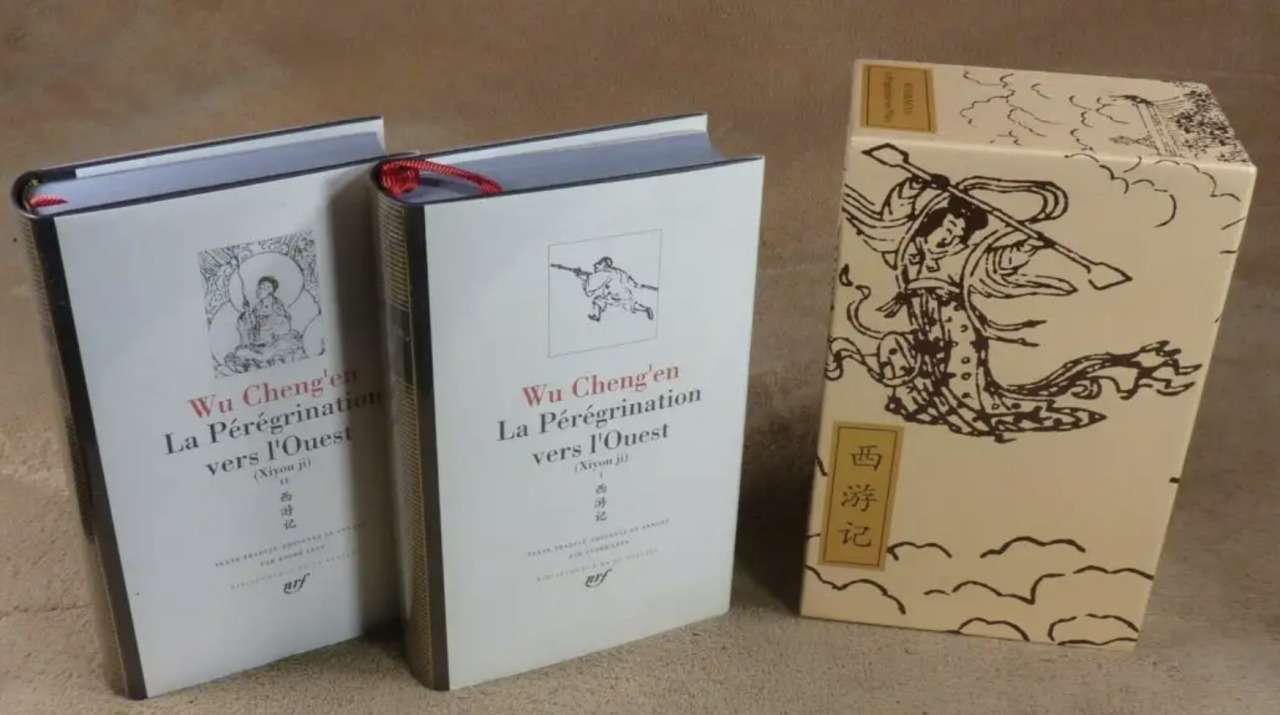
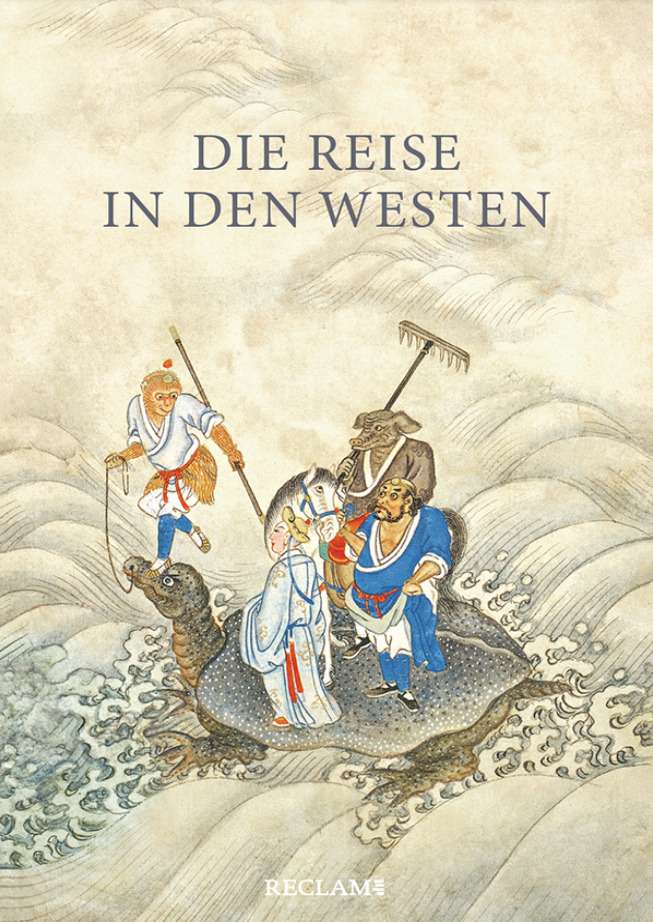
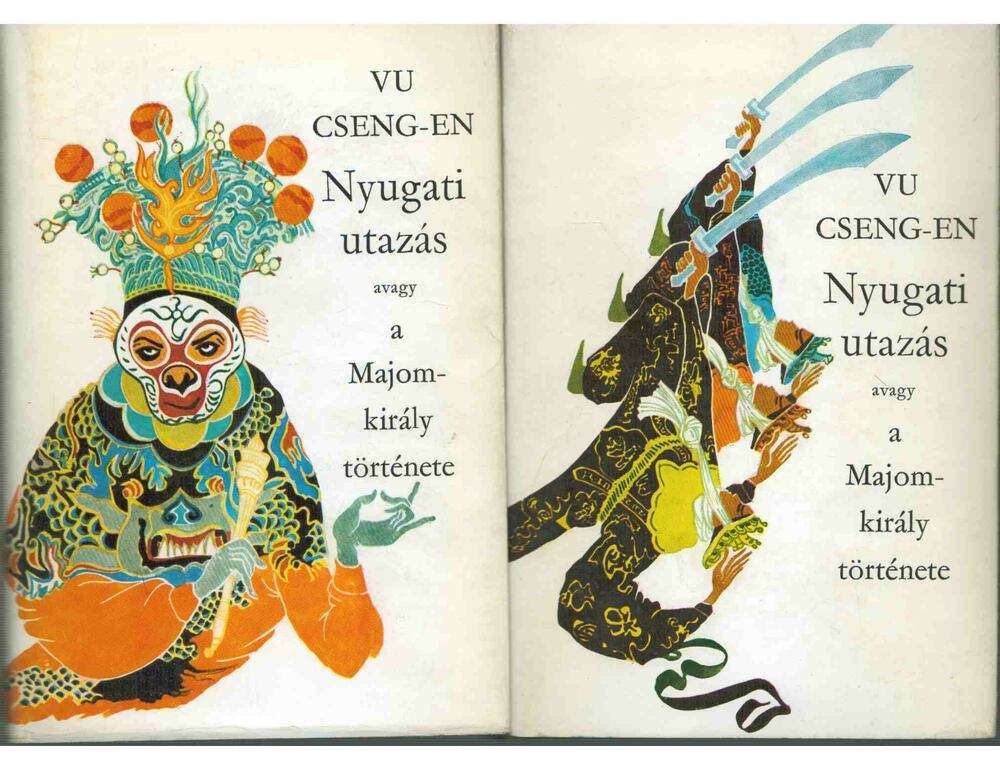
QQ截图20160221185741

Fig. 2 – The immortal Zhenyuanzi as depicted in the famous 1986 television series.

The pilgrims travel to the Temple of Five Villages (Wuzhuang guan, 五莊觀) in the Mountain of Longevity (Wanshou shan, 萬壽山), where they are met by the supreme immortal Zhenyuanzi (鎮元子) (fig. 2), the patriarch of all earthly immortals and a temporary adversary in chapters 24 to 26 of the original. Sensing that Monkey relies too heavily on his physical strength and not his spiritual strength, the immortal only allows Dadian to enter, leaving the others to sit outside for hours. To add further insult to injury, a young immortal page tells Luzhen that his master has decided to forsake the journey in order to study Daoism. This so enrages him that he bursts inside to confront Zhenyuanzi and is challenged to retrieve Dadian from the Mansion of Fiery Clouds (Huoyun lou, 火雲樓) in which the monk is drinking tea. But Monkey’s way is suddenly blocked by a supernatural flame, known as the “fire of the mind” (Xinhuo, 心火), which can’t even be extinguished by Dragon King rain. [G] He finally manages to douse the fire with the sweet dew from Guanyin‘s holy willow sprig and retrieve his master. [H]

G) This fire represents Sun Luzhen and Zhenyuanzi’s anger, which ignites when both enter into an argument. Anger is one of the emotions thought to inhibit enlightenment.

H) This liquid is referred to in Buddhist literature as being able to extinguish everything from desires to negative emotions. For example, Liu (1994) comments: “In a parable in Za baozang jing 雜寶藏經 (Sutra of Miscellaneous Treasures [5th cent.]), the Buddha was said to use the Water of Wisdom to extinguish the Three Fires of Desire, Anger and Delusion” (Liu, 1994, p. 81). Therefore, the dew/water represents wisdom, or the ability to use reason and not become angry. The use of the dew causes Monkey to switch from knee jerk reaction to reason, as exemplified by this statement:

It was my mistake in the first place. I should not have quarreled with him to stir up his fire. Once his fire is stirred up, my fire is stirred up too. I don’t know how long the fire will burn. This surely would cause delay in our master’s proper business (Liu, 1994, p. 80).

初時,原是我差了,不該與他角口,惹他動起火來。他既動了火,我又動起火來,不知燒到幾時?豈不誤了師父正事!

The group comes to an endless, ocean-like river and question how they will ever reach the “other side” (bi’an, 彼岸). [I] They eventually take a derelict boat, but infighting between Dadian and the disciples coincides with a monstrous black storm that erupts overhead, producing powerful winds that blow them thousands of miles off course to the Rakshasa Kingdom (Luocha guo, 羅剎國). This land of monsters is ruled over by the Bull Demon King and Lady Iron Fan (fig. 3), adversaries from chapters 59 to 61 of the original. After learning of the pilgrims’ arrival, Lady Iron Fan sends an army of demon soldiers to capture them so she can exact revenge for perceived misdeeds by their predecessors. [4] Dadian once again enters meditation to avoid evil influences and is quickly rescued by Monkey. Luzhen attempts to save Yijie, who once again falls prey to temptation and is captured, but is stopped by a black whirlwind created by Black Boy (Heihai’er, 黑孩兒), the second son of the demonic couple. [J] Monkey is forced to retrieve a sutra from the Bodhisattva Ksitigarbha in the underworld. Upon reading the sutra, a magic red cloud appears and shines light on the kingdom, destroying all of the demons and leading the monks to freedom. [K]

I) This ocean/river is a common metaphor in Buddhist literature referring to desire, and the “other side” refers to a life free from desire (Paramita), or achieving enlightenment. For example, Huineng (惠能, 638–713), the sixth Chan patriarch, says: “The perverted mind is the great sea and the passions are the waves … if the perverted mind is cast aside the ocean will dry up, and when the passions are gone the waves will subside” (Liu, 1994, p. 81).

J) The black whirlwind represents ignorance, or the Buddhist concept of Wuming (無明, darkness without illumination), and the demon kingdom represents the unenlightened mind that falls prey to its own demons (desire, ignorance, anger, etc.). The metaphors of the black whirlwind and demon kingdom are mentioned in the Collected Essentials of the Five Lamplight Histories (Wudeng huiyuan, 五燈會元, c. 1252), one of several accepted histories of Chan Buddhist orthodoxy in China (Liu, 1994, pp. 84-85).

K) The illuminated red cloud represents sudden enlightenment that sweeps away all ignorance and desire.

01300001248577133770100944901

Fig. 3 – An artist’s depiction of Lady Iron Fan and the Bull Demon King.

Notes:

1) This is false within the novel’s fictional universe because Tripitaka attained living Buddhahood in chapter 100 of the original.

2) Tripitaka serves as Guanyin’s successor in this respect, for it was the Bodhisattva who recruited the “scripture pilgrim” in chapter 12.

3) Liu (1994) notes that this is based on actual history. Han Yu, who was a Confucian scholar and the Vice Minister of the Justice Department, “presented a memorial to the throne, denouncing Buddhism as an alien doctrine and criticizing the emperor for receiving and showing reverence for the ‘decayed and rotten bone’ of the Buddha” (pp. 63-64). So in this case it was a relic belonging to the Buddha and not Tripitaka. Han was actually sentenced to death, but this was later commuted to exile thanks to parties arguing on his behalf.

4) She wishes to exact her revenge because their predecessors, Tripitaka, Sun Wukong, Zhu Bajie, and Sha Wujing, were instrumental in the subjugation and reformation of her first son Red Boy by Guanyin.

Source:

Liu, X. (1994). The Odyssey of the Buddhist Mind: The Allegory of the Later Journey to the West. Lanham, Md: University Press of America.