Archive #37 – The 13th-Century Version of Journey to the West

Note: My blog is not monetized, so I am not making any money from this post. My hope is that the PDF will make this legendary story more accessible to a wider audience. If you enjoyed the digital version, please, please, please support the official release.

Last updated: 04-06-2026

I’ve previously written an article describing The Story of How Tripitaka of the Great Tang Procures the Scriptures (Datang Sanzang qujing shihua, 大唐三藏取經詩話, c. late-13th-century), a seventeen chapter novelette that likely served as a prompt for oral storytellers. It is the oldest printed version of the Journey to the West (Xiyouji, 西遊記) story cycle. Here, I would like to present an English translation of this tale by Charles S. Wivell (1994).

Archive link:

The Story of How the Monk Tripitaka of the Great Country of T’ang Brought back the Sutras

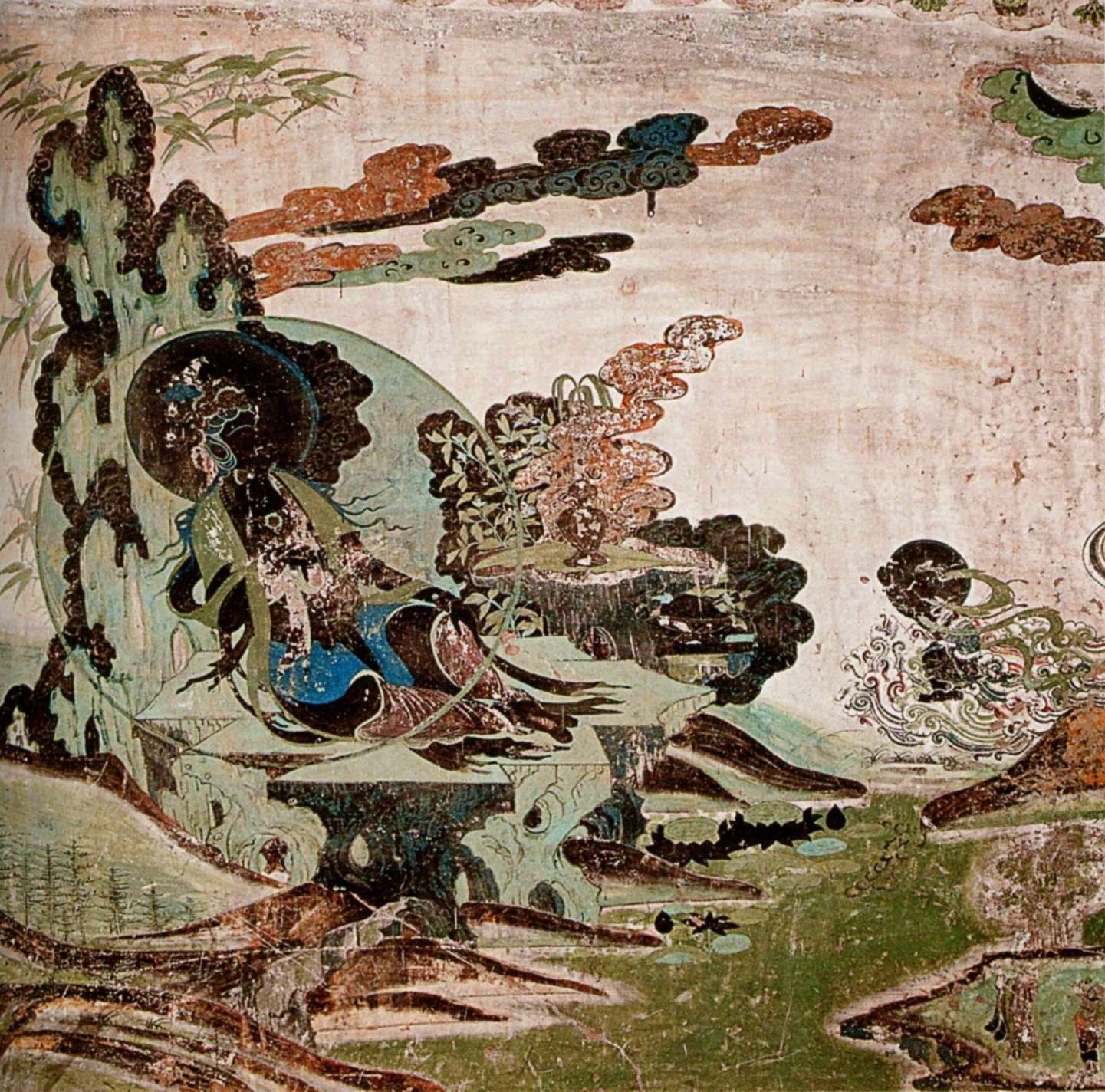
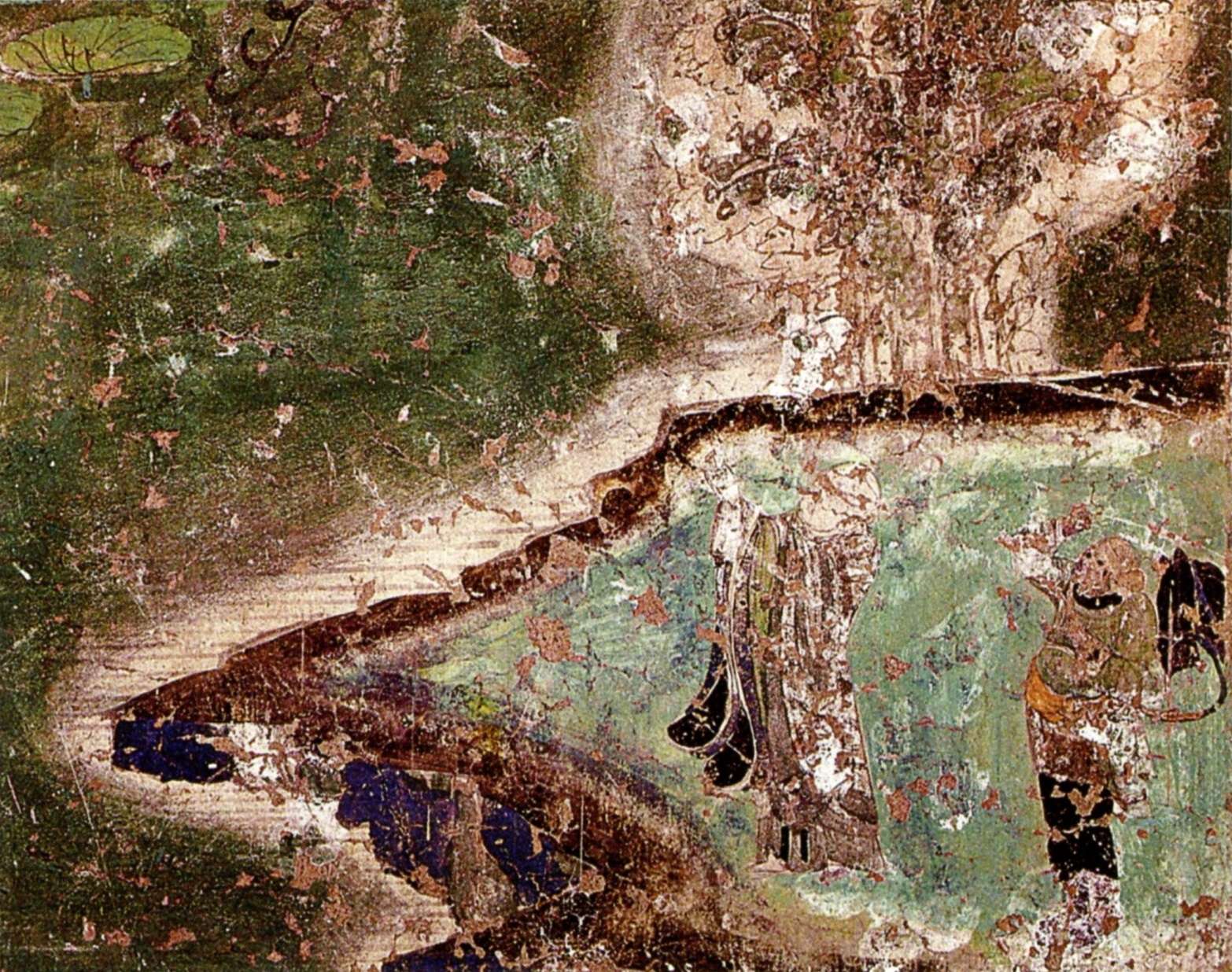
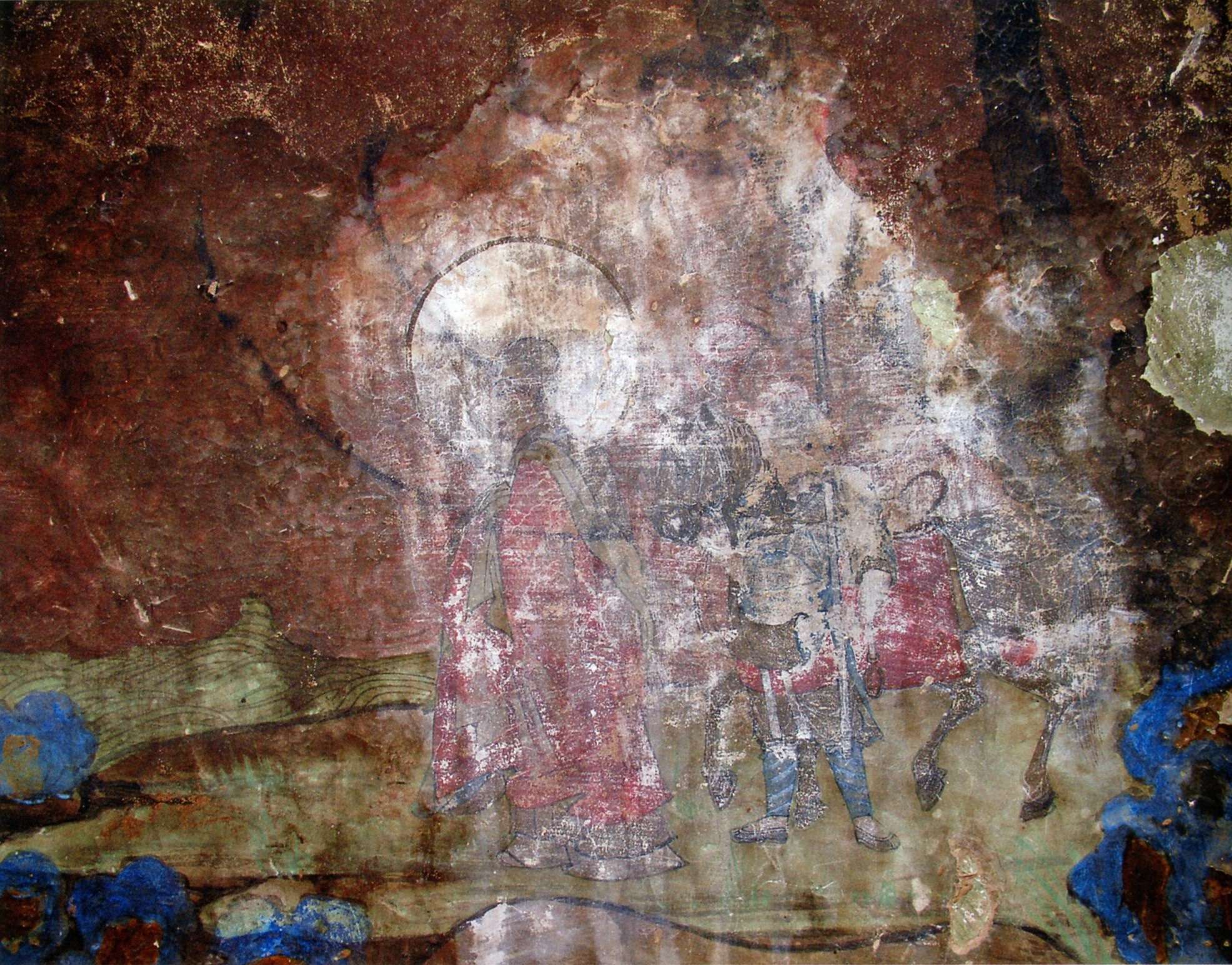
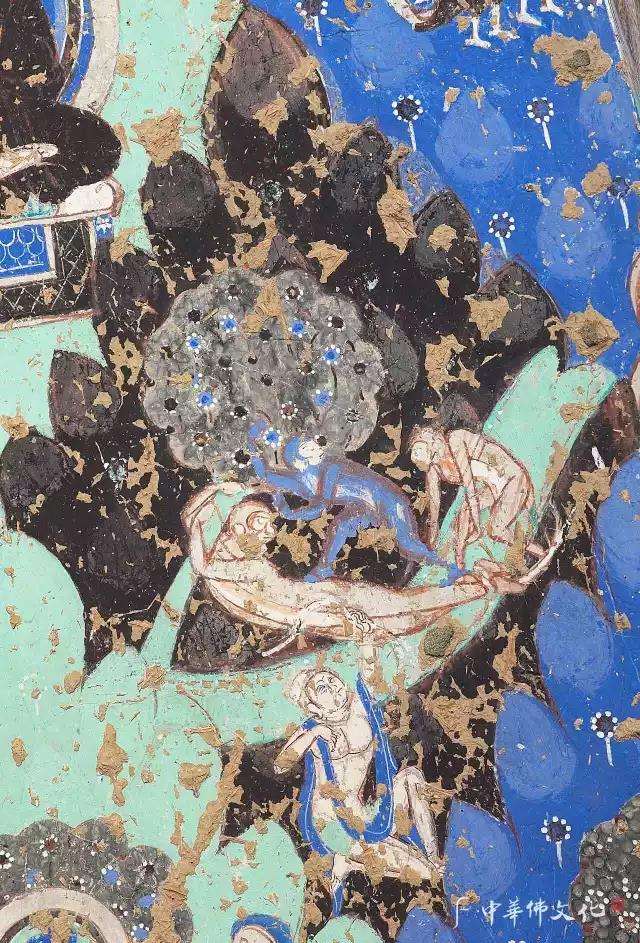
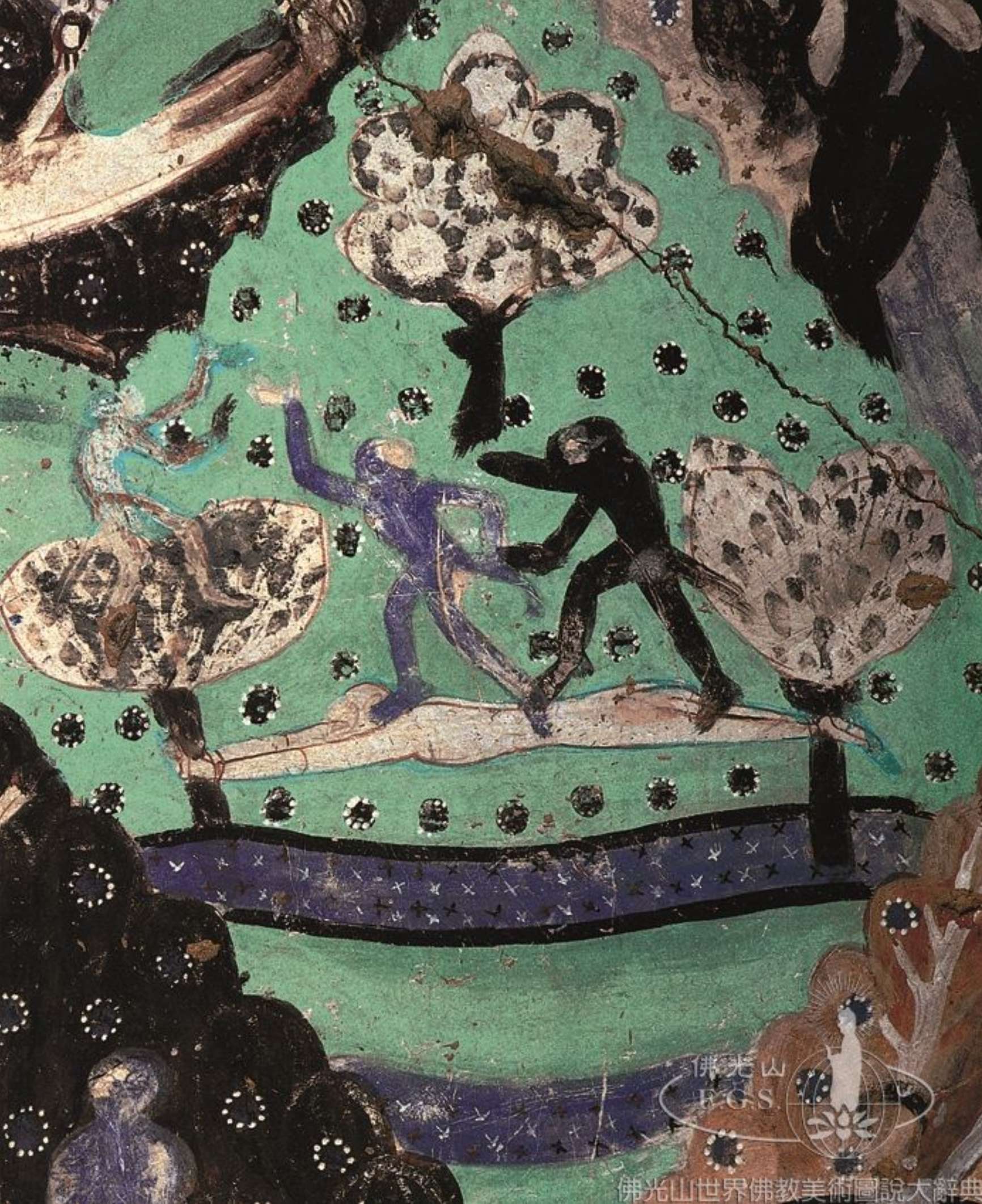
Detail of Tripitaka and the Monkey Pilgrim from a late-Xixia Yulin Cave no. 3 mural (larger version). See here for more ancient depictions of Sun Wukong and his master.


Update: 01-30-24

I was recently interested to learn that The Story was influenced by underworld journey narratives. This explains the often fantastical and seemingly unrelated events that happen throughout the disjointed narrative. Brose (2023) writes:

The Japanese scholar Chūbachi Masakazu (b. 1938) was the first to point out that the Kōzanji narratives mirror two closely related mythic archetypes. The first, derived from ancient Han Chinese traditions, is the journey of the dead to the netherworld. In many accounts of postmortem travels, spirit animals (including but not limited to monkeys) serve as the guides for the dead on their passage through the spirit realm, whether the final destination is the Yellow Springs beneath the earth or Mount Kunlun in the distant west. The other motif, emerging from early Indian Buddhist literature, is the transmigration of the spirit to the Pure Land, which, like Mount Kunlun, was conventionally located somewhere in the west. In Buddhist accounts, animals (again, often but not always monkeys) also serve as escorts for the dead. Chubachi proposed that these narrative traditions—culturally distinct but thematically and functionally similar— were fused together with the historical account of Xuanzang’s journey to India. The Kōzanji texts, according to this reading, represent a complex but organic blending of initially independent narratives. The broad contours of Xuanzang’s biography and travelogue were superimposed onto older mythic accounts to provide a new, quasi-historical frame for age-old stories about the transmigrations of the dead.

Viewed from this perspective, Xuanzang was not passing through Central Asia en route to India but, instead, was traversing a hellish purgatory to reach a heavenly pure land. Like a shaman, he departs the human world and enters a dangerous liminal zone. Beset by ghosts and demons, he is guided and protected by powerful spirit animals and Buddhist deities. After enduring extreme hardship, he eventually arrives in an immortal realm populated by spirit monks, immortals, bodhisattvas, and buddhas. From Śākyamuni Buddha, he receives a collection of apotropaic texts with the power to safeguard the living and liberate the dead. Xuanzang then transmits these sacred scriptures back to the human realm before he and his assistants ascend to heaven during the annual ritual for liberating the damned from purgatory. This narrative not only maps the landscape of a postmortem shadow world, it also identifies the scriptures that guard against demonic molestation and ensure a propitious rebirth: the Buddhist canon in general and the Heart Sūtra in particular. Those who read, recited, or heard the Kōzanji texts were thus informed of the perils of purgatory and offered the promise of protection and salvation. Xuanzang, they also learned, was the saintly monk responsible for delivering these divine texts and technologies into the hands of humans (pp. 62-63).

This strengthens my suggestion that the Monkey Pilgrim serves as a stand-in for Mulian (目連; Sk: Maudgalyayana). This Buddhist saint is famous for traversing the underworld to save his mother.

Regarding the date of The Story, I’ve previously mentioned that it is a product of the late-13th-century. But Zhang (1990) assigns an earlier date to its writing, stating this was likely no earlier than the reign of Emperor Renzong (r. 1022-1063) of the Northern Song Dynasty (960-1127) and no later than the reign of Emperor Gaozong (r. 1127-1129) of the Southern Song Dynasty (1127-1279). This places The Story in the late-Northern Song. Zhang ends by saying,

Even though the current version of “Zhongwazi Zhangjiayin” [1] was printed in the late-Southern Song Dynasty, the date of publication should not be confused with the year in which the book was written.

纵然今见“中瓦子张家印”本刊印于南宋晚期,亦不能把刊印时间与成书年代混为一谈。

Chen (2014) supports a Song publication with evidence comparing The Story‘s rhyming system with that of Buddhist “Transformation Texts” (Bianwen, 變文). I have attached a PDF below.

PDF File:

A revisit of the time of Monk Xuanzang of the Tang Dynasty on a Pilgrimage for Buddhist Scriptures – Focus on rhyme style (2014)


Update: 04-06-26

See my archives of other translations.

Note:

1) The original late-13th-century manuscript of The Story is stamped with the “Zhang Family Seal of Central Market District” (Zhongwazi Zhangjiayin, 中瓦子張家印). The Central Market District (Zhongwazi, 中瓦子) was a street known for play promotions and book publishers in Song-era Lin’an prefecture (Zhang, 1990). This appears to be another nickname for The Story apart from the “Kozanji version” (Dudbridge, 1970, p. 25, for example).

Citation:

Brose, B. (2023). Embodying Xuanzang: The Postmortem Travels of a Buddhist Pilgrim. United States: University of Hawaii Press.

Chen, Y. (2014). Datang Sanzang qujing shihua shidaixing zaiyi: Yi yunwen tizhi de kaocha wei zhongxin [Another Discussion on the Age of the Story of How Tripitaka of the Great Tang Procured the Scriptures: An Investigation into the Rhyming System], Pudan Journal (Social Sciences), 5, 69-80.

Dudbridge, G. (1970). The Hsi-yu chi: A Study of Antecedents to the Sixteenth-Century Chinese Novel. Cambridge: Cambridge University Press.

Wivell, C.S. (1994). The Story of How the Monk Tripitaka of the Great Country of T’ang Brought Back the Sūtras. In V. Mair (Ed.), The Columbia Anthology of Traditional Chinese Literature (pp. 1181-1207). New York: Columbia University Press.

Zhang, J. (1990). Datang Sanzang qujing shihua chengshu niandai kaolun [A Discussion of the Date of the Story of How Tripitaka of the Great Tang Procures the Scriptures]. Xueshu jiaoliu, 4, 108-114. Retrieved from https://www.toutiao.com/article/7065749209709806087/?wid=1706529284309

What is the Oldest Known Media of Sun Wukong, the Monkey King?

Last updated: 06-04-2023

Many people assume that Sun Wukong (孫悟空), the immortal monkey hero from Journey to the West (Xiyouji, 西遊記, 1592 CE, “JTTW” hereafter), is the inspired creation of Chinese author Wu Cheng’en (吴承恩, d. 1582). However, the character is known to predate the standard edition of the novel by several centuries. In this article, I’d like to highlight the oldest known media referencing or depicting Sun Wukong’s antecedent, the “Monkey Pilgrim” (Hou xingzhe, 猴行者). I will discuss a eulogy from an early-12th-century tale and a mid-13th-century set of poems, as well as Buddhist cave art in northern China and a stone pagoda carving from the south, which range from the late-11th to late-13th-centuries. I ultimately suggest that the character appeared around circa 1000 based on his connection to oral literature.

1. Northern China

1.1. Oldest known reference

The character is mentioned in a eulogy from a tale in Zhang Shinan’s (張世南, d. after 1230 CE) Memoirs of a Traveling Official (Youhuan jiwen遊宦紀聞, 13th-century CE). The story follows Zhang the Sage (Zhang sheng, 張聖), a farmer-turned-Buddhist monk who gains the ability to read and predict the future after eating a magic peach bestowed by an immortal. He is later asked to write a eulogy (zan, 讚) in honor of a temple’s newly built revolving sutra case. It reads:

Fresh are the pattra (palm) leaves on which are written
the unexcelled (anuttara), vigorous texts,
In several lives, Tripitaka went west to India to retrieve them;
Their every line, their every letter is a precious treasure,
Each sentence and each word is a field of blessing (puṇyakṣetra).
In the waves of the sea of misery (duḥkha-sāgara),
the Monkey-disciple [1] presses on,
Through the waters of the river that soak its hair,
the horse rushes forward;
No sooner have they passed the long sand than they must face the trial of the golden sands,
Only while gazing toward the other shore do they know
the reasons (pratyāya) for being on this shore.
The demons (yaksas) are delighted that they might
get their heart’s desire,
But the Bodhisattva, with hand clasped in respectful greeting, sends them on;
Now here are the five hundred and sixty-odd cases of scriptures,
Their merit is difficult to measure, their perfection
hard to encompass (Isobe, 1977, as cited in Mair, 1989, pp. 693-694).

無上雄文貝葉鮮,幾生三藏往西天。行行字字為珍寶,句句言言是福田。苦海波中猴行復;沈毛江上馬馳前。長沙過了金沙難;望岸還知到岸緣。夜叉歡喜隨心答;菩薩精虔合掌傳。半千六十餘函在,功德難量熟處圓。

The tribute references elements that would later appear in The Story of How Tripitaka of the Great Tang Procures the Scriptures (Da Tang Sanzang qujing shihua, 大唐三藏取經詩話, c. late-13th-century CE), the earliest printed edition of the JTTW story cycle comprising a seventeen-chapter storytelling prompt. These include Xuanzang’s quest to India over several lifetimes, the Monkey Pilgrim coming to his rescue, the tribulations at the river of sand (a nod to Sha Wujing’s precursor), the demons encountered, and heavenly assistance.

Japanese scholar Isobe Akira dates the tale of Zhang the Sage to the late-Northern or early-Southern Song (circa 1127 CE) based on the mention of certain historical figures therein (Mair, 1989, pp. 693-694).

1.2. Oldest known depictions

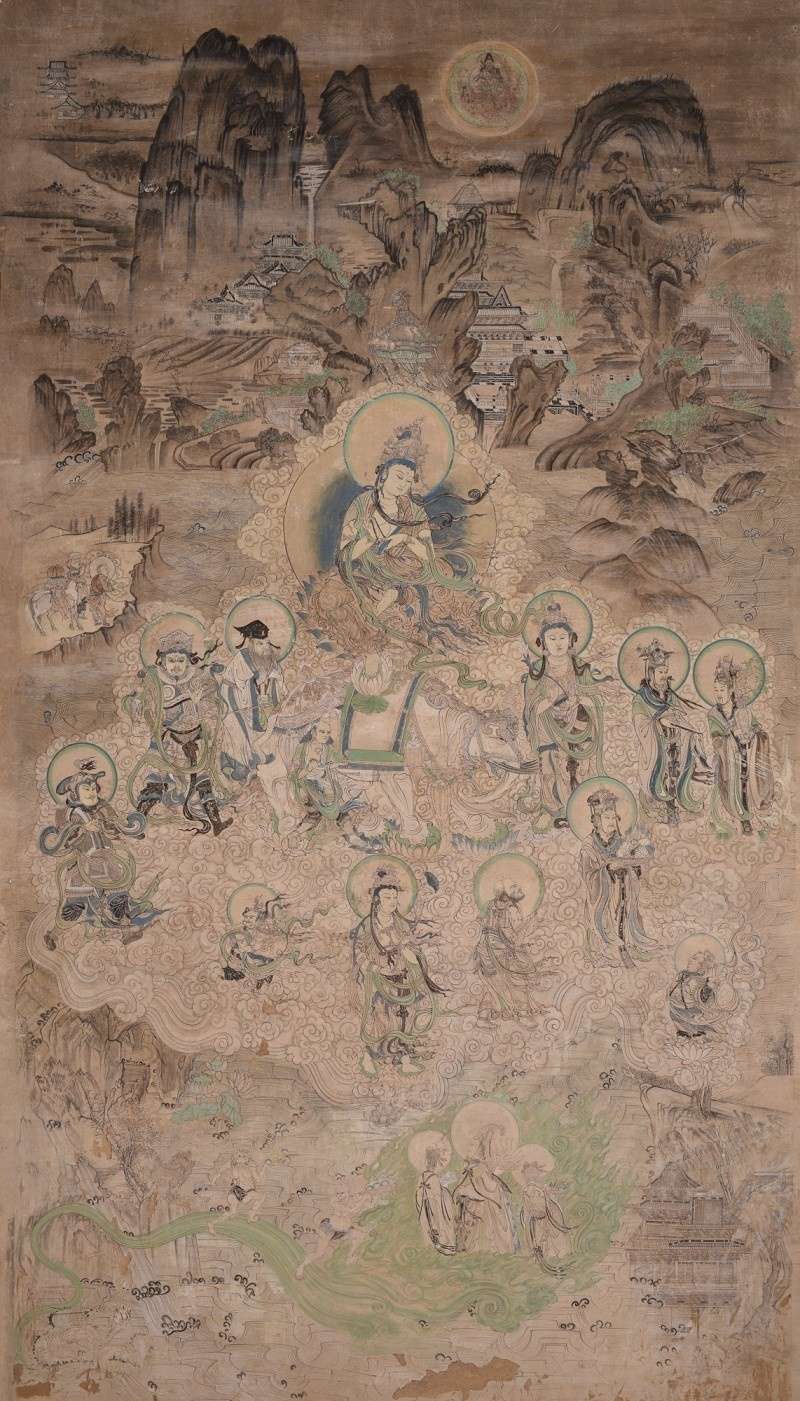
The oldest depictions of the Monkey Pilgrim and his master appear in a genre of Silk Road Buddhist cave art representing the adoration of the reclining “Moon in the Water Avalokiteśvara (Guanyin)” (Shuiyue Guanyin, 水月觀音). [2] Different grottoes depict them as small details to the left or right of the much larger Bodhisattva. The pilgrims are always depicted alongside a horse, which is sometimes ladened with sutras.

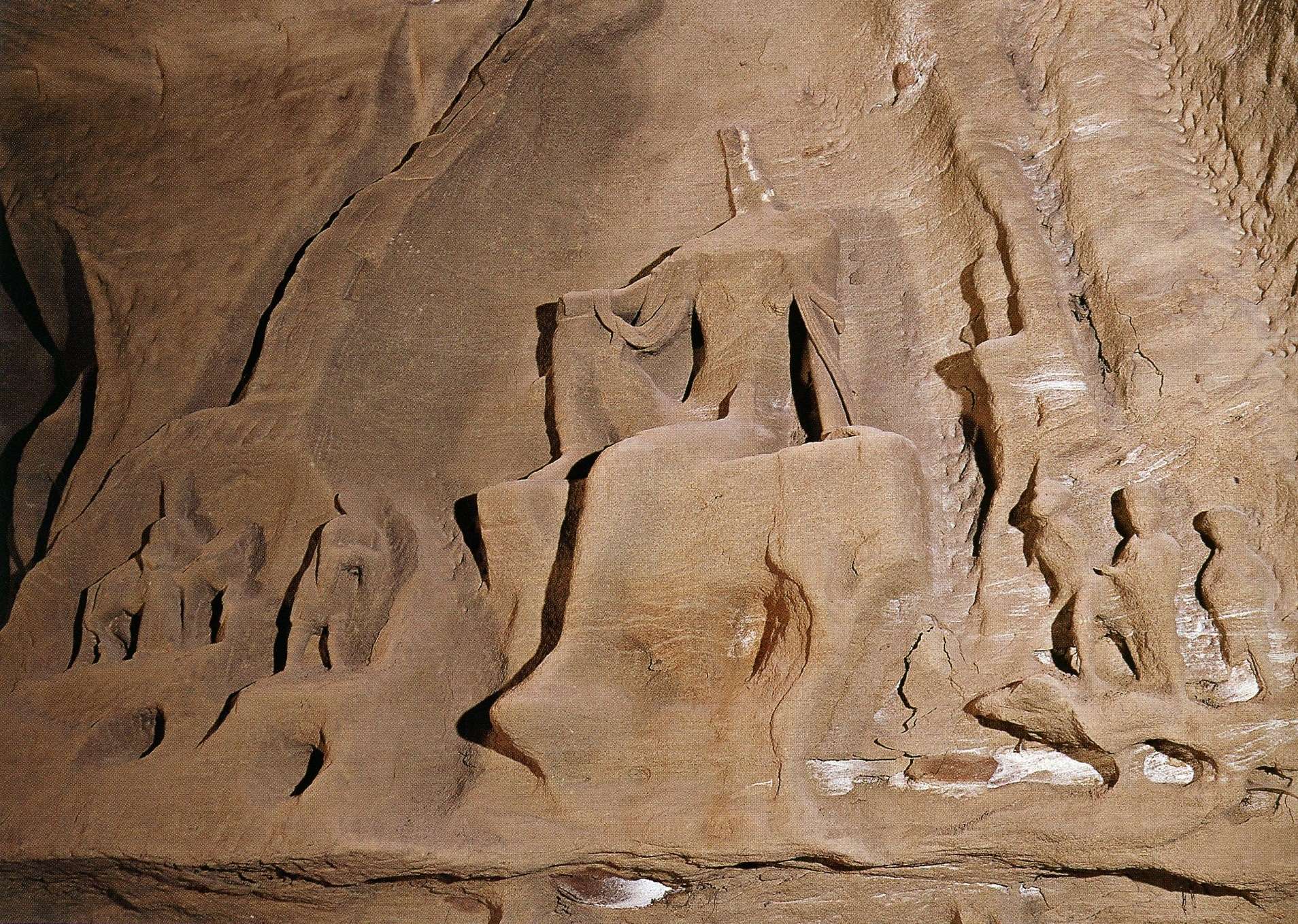
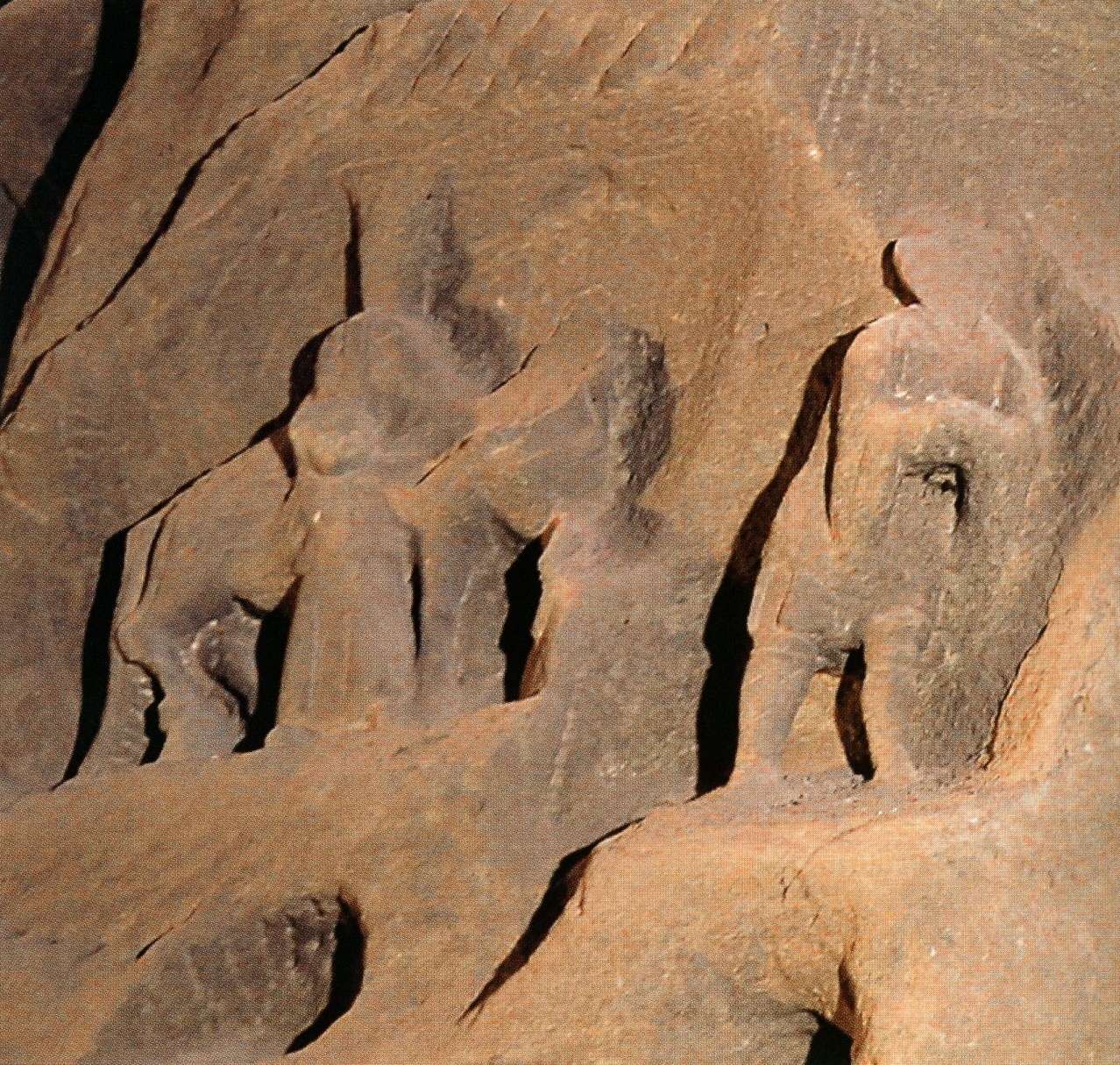
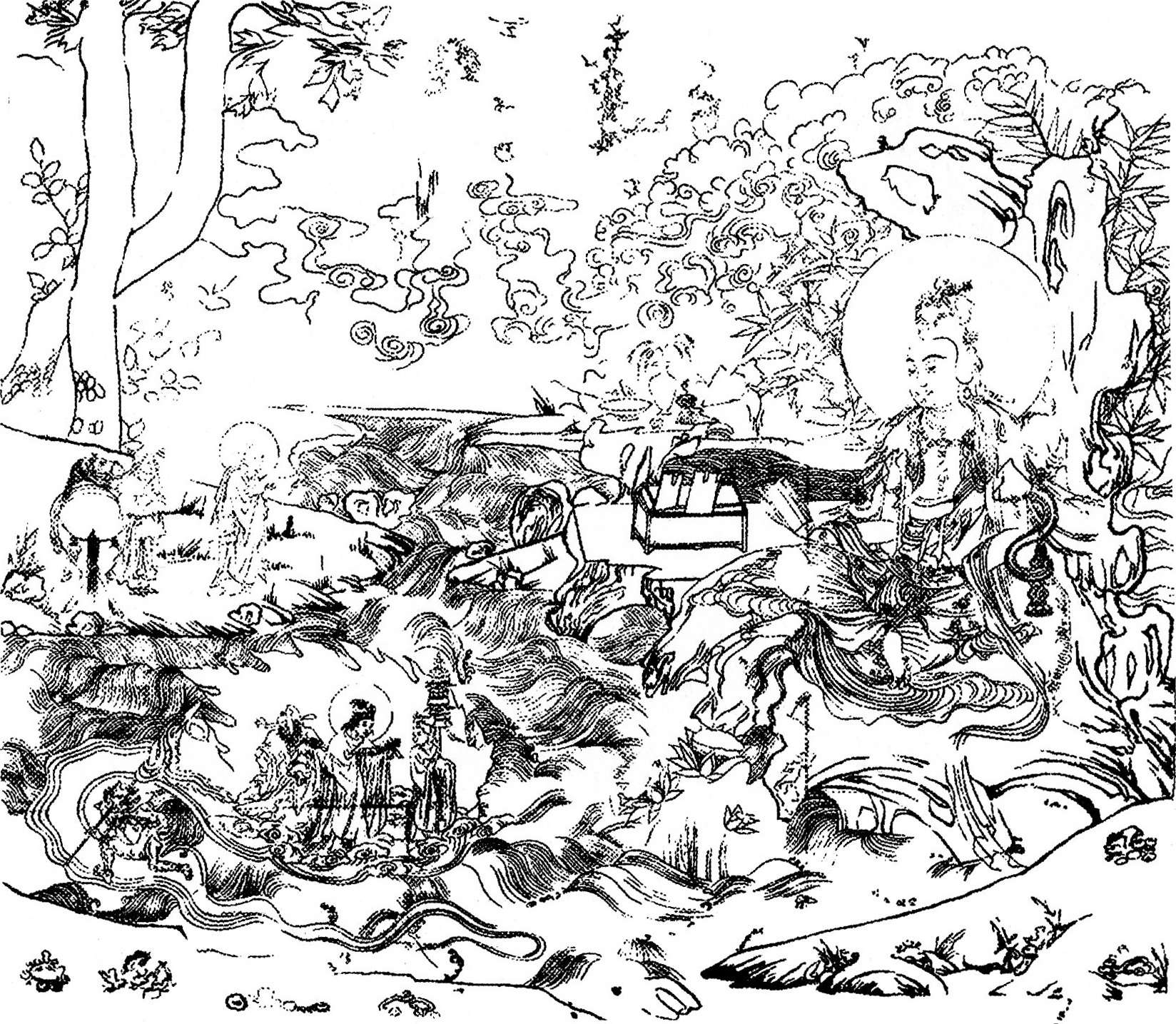
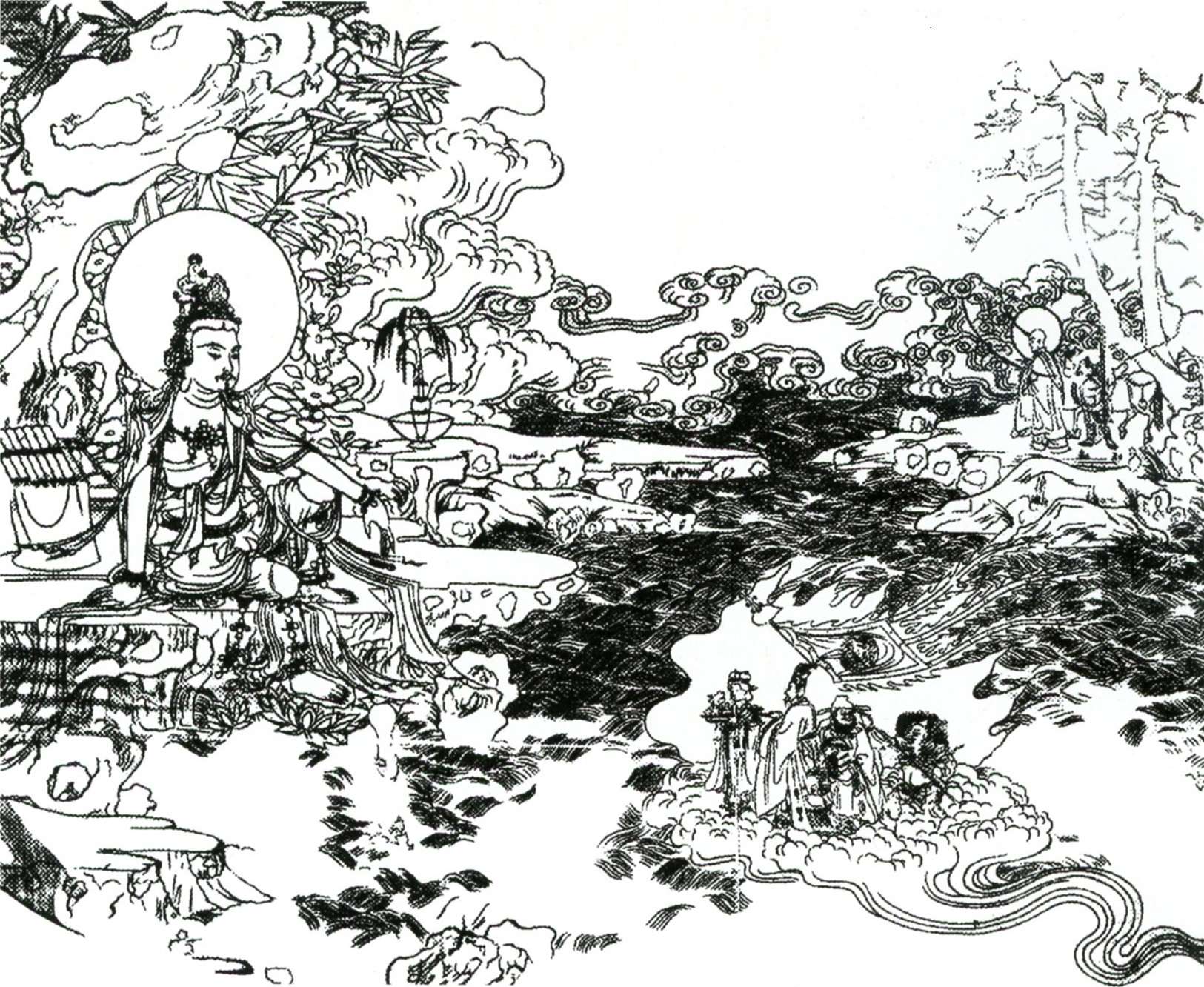
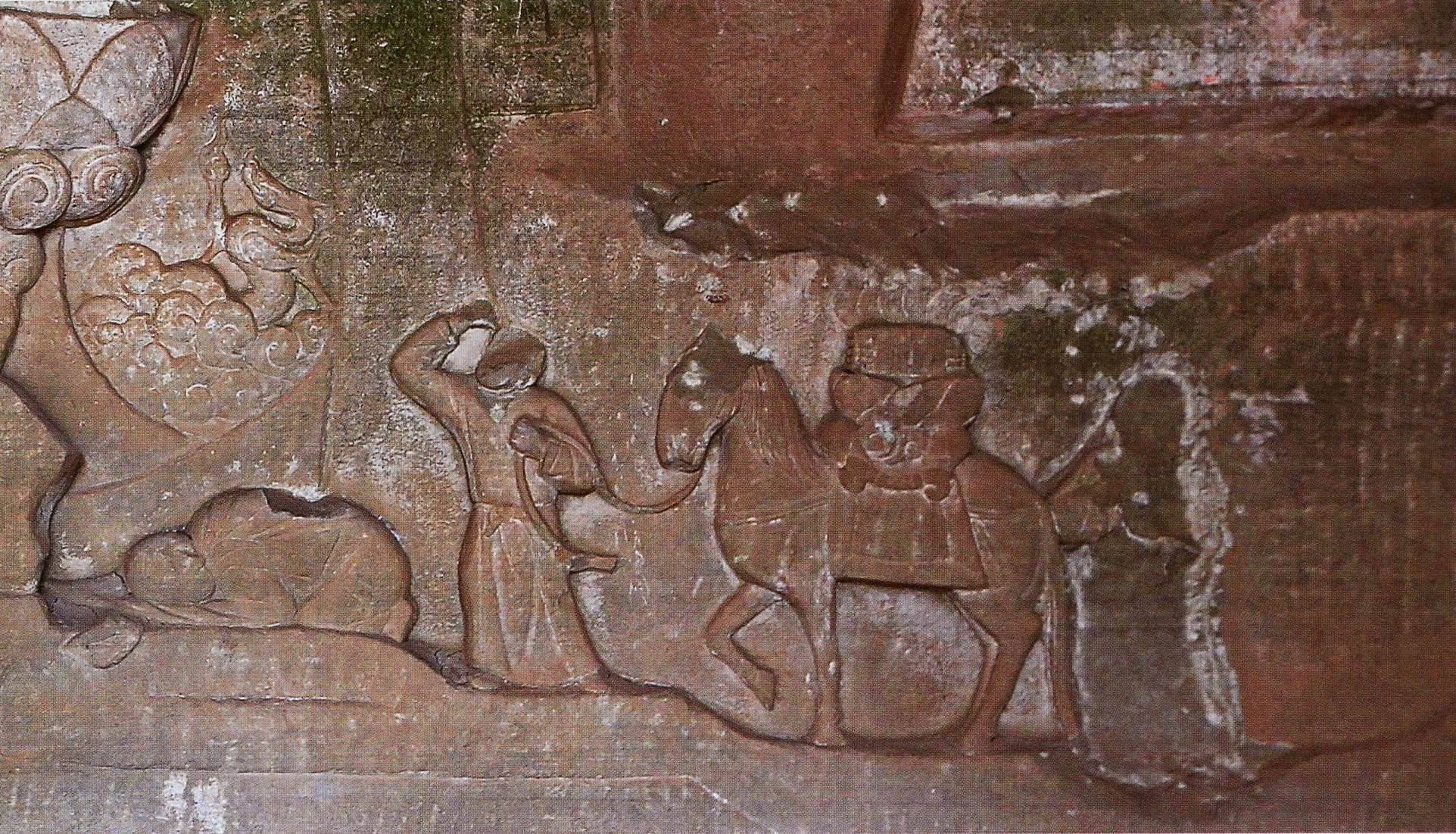
Wei and Zhang (2019) provide many examples of early art depicting Xuanzang on his quest. Some show him alone, while others portray him with a disciple. This latter figure ranges from human to the Monkey Pilgrim. The problem here is deciding when the first ends and the second begins. Some depictions are heavily degraded, making them ambiguous enough to be either. A prime example comes from Zhao’an Grotto cave no. 3 (c. 1094-1102 CE) at Ansai District, Yan’an Province, China (Yan’an Ansai Zhao’an di 3 ku, 延安安塞招安第3窟) (fig. 1). The rock carving features two sets of figures at the base, two to the left of the Bodhisattva and three to the right. I’d like to begin with the latter. The first of the three figures has what Wei and Zhang (2019) call a “monkey[-like] form” (houxing, 猴形) (fig. 2) (p. 13). But I have three problems with this being a depiction of the Monkey Pilgrim. One, while vaguely simian, the figure is too degraded to be sure. Two, it makes no sense for Monkey to be the first figure when other examples show Xuanzang in the lead. And three, there is no sutra horse. Conversely, the two figures to the left feature a monk standing in the front with elbows bent as if his (missing) hands are pressed in prayer. And behind him is a faceless disciple tending to the horse. Their right arm is bent at the elbow and angled to where their fist might have original been positioned at the chest. Everything else from the left side of the chest up is missing, however (fig. 3).

Fig. 1 (left) – The complete “Moon in the Water Avalokiteśvara” carving from Zhao’an Grotto no. 3 (c. 1094-1102 CE) (larger version). Fig. 2 (middle) – Detail of the three degraded figures to the right (larger version).  Fig. 3 (right) – Detail of the two figures to the left (larger version). Images from Wei & Zhang, 2019, pp. 12-13.

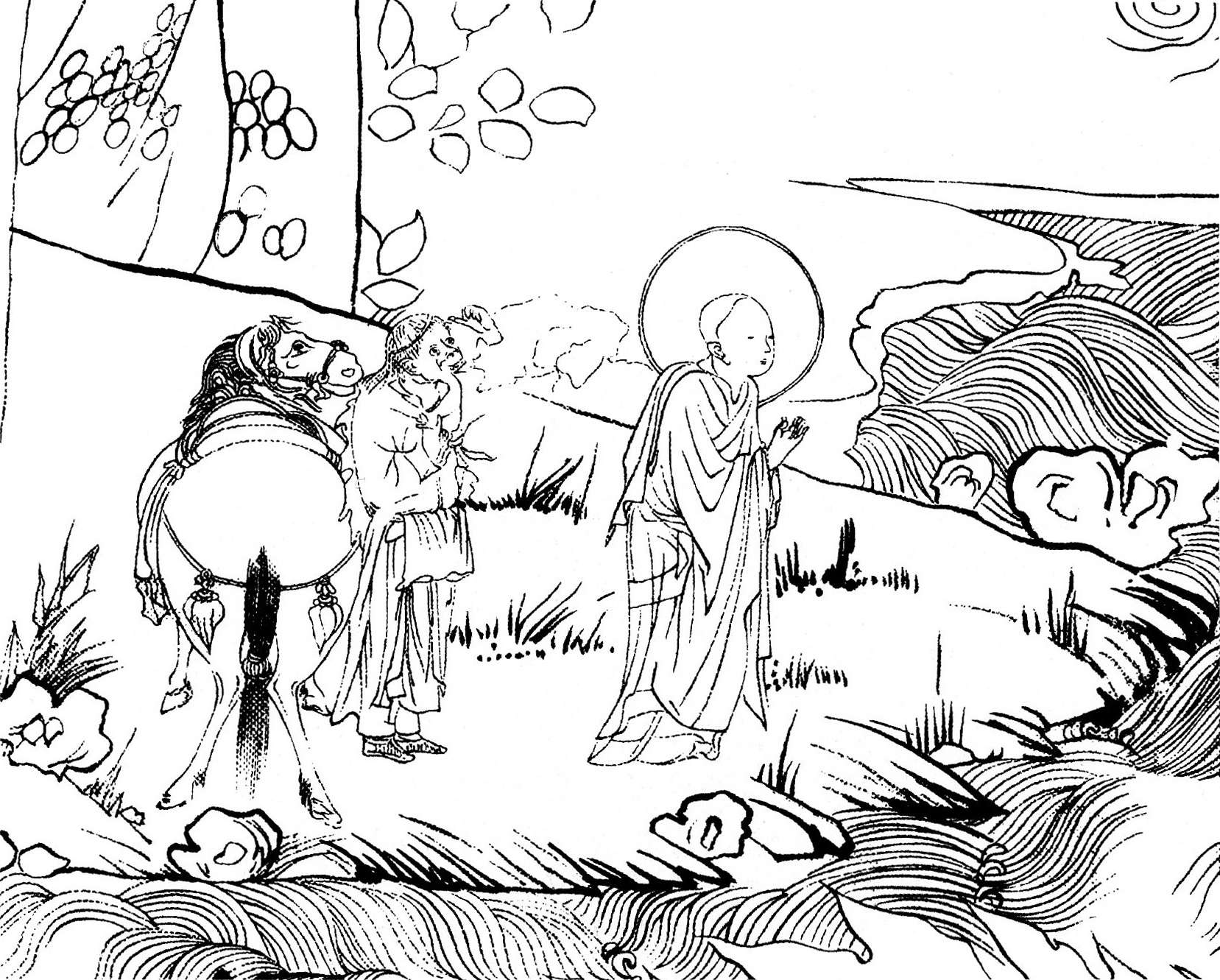
But this side of the carving shares similarities with three late-Xixia dynasty (late-12th or early-13th-century CE) murals. The first appears in Yulin Cave no. 2 (Yulin di 2 ku, 榆林第2窟) in Gansu Province. The Monkey Pilgrim is seemingly saluting with his right hand and holding the horse reins with his left fist at the chest. This might explain the disciple’s bent elbow in figure three. Xuanzang is shown with hands clasped in prayer similar to the monk from figure three. Both are depicted facing left and standing at the bank of a river separating them from Avalokiteśvara (fig. 4 & 5) (Wei & Zhang, 2019, p. 35).

Fig. 4 (top) – The complete late-Xixia Moon in the Water Avalokiteśvara mural from Yulin Cave no. 2 (larger version). Fig. 5 (bottom) – Detail of Xuanzang and the Monkey Pilgrim (larger version). Images from Wei & Zhang, 2019, p. 35.

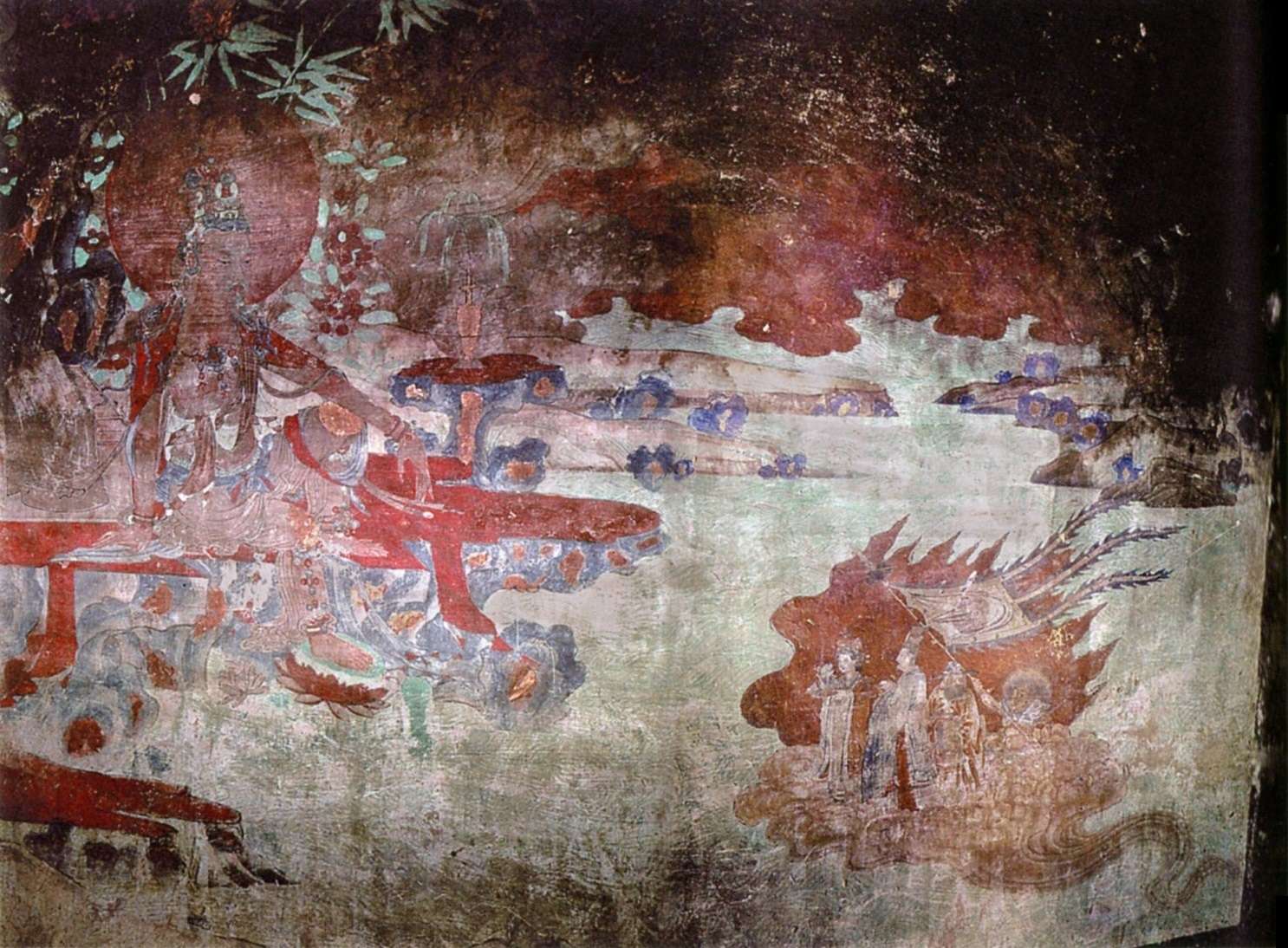
The second appears in Yulin Cave no. 3 (Yulin di 3 ku, 榆林第3窟). Xuanzang is again worshiping from a riverbank, but this time he is facing right and the subject of adoration is Samantabhadra (fig. 6). We see that the disciple is far more monkey-like in appearance, complete with furry arms. He stands next to the sutra horse with hands clasped in prayer (fig. 7) (Wei & Zhang, 2019, pp. 36).

Fig. 6 – An almost complete version of the late-Xixia Yulin Cave no. 3 mural (larger version). Fig. 7 – Detail of the pilgrims (larger version). Images found randomly on the internet.

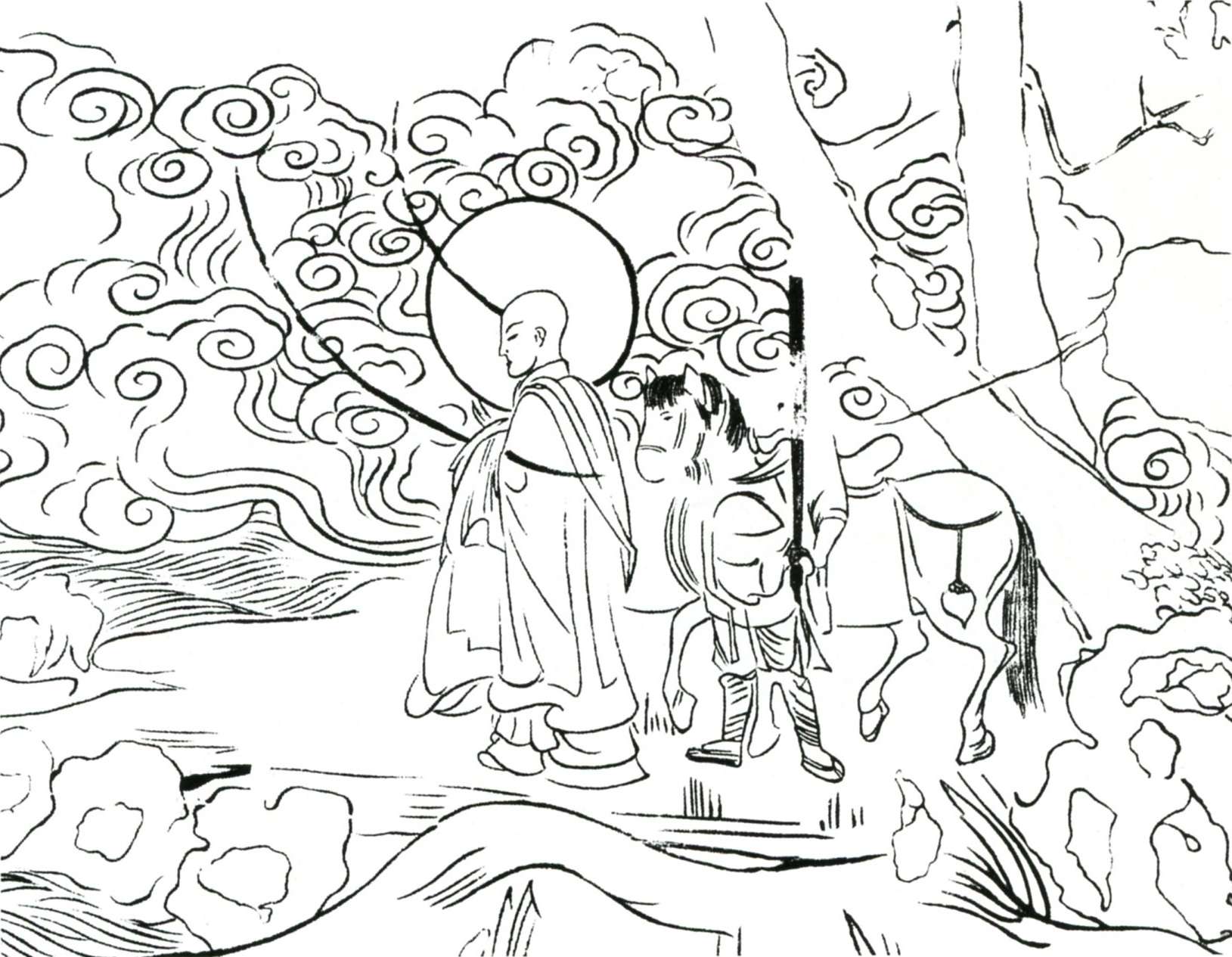
The third appears in Eastern Thousand Buddha Cave no. 2 (Dong qianfo dong di 2 ku, 東千佛洞第2窟) in Gansu. It contains iconography similar to Yulin Cave no. 2, complete with the Monkey Pilgrim standing next to a horse in a matching “salute and fist over chest” pose (fig. 8-11) (Wei & Zhang, 2019, pp. 38-40). It’s interesting to note that this is one of the oldest depictions of Monkey with his famous golden headband.

Fig. 8 (top left) – The complete Moon in the Water Avalokiteśvara mural from Eastern Thousand Buddha Cave no. 2 (late-Xixia) (larger version). Fig. 9 (top right) – An easier to see line drawing of the scene (larger version). Images from Wei & Zhang, 2019, pp. 38-39. Fig. 10 – Detail of Xuanzang and the Monkey Pilgrim (larger version). Image found randomly on the internet. Fig. 11 – A line drawing of master and disciple (larger version). Images from Wei & Zhang, 2019, pp. 39-40.

Additionally, there are two other examples with varying degrees of similarity. The first also comes from the late-Xixia Eastern Thousand Buddha Cave no. 2. Master and disciple are again worshiping the Moon in the Water Avalokiteśvara at a river bank (fig. 12 & 13), but the Monkey Pilgrim instead holds his staff at the ready like a soldier (fig. 14 & 15).

Fig. 12 (top left) – The second complete Moon in the Water Avalokiteśvara mural from Eastern Thousand Buddha Cave no. 2 (late-Xixia) (larger version). Fig. 13 (top right) – An easier to see line drawing of the scene (larger version). Fig. 14 – Detail of Xuanzang and the Monkey Pilgrim (larger version). Fig. 15 – A line drawing of master and disciple (larger version). Images from Wei & Zhang, 2019, pp. 40-42.

The second is the earlier Buddha Cave Grotto (c. 1103-1104 CE) at Hejiagou District, Yichuan County, Shaanxi (Yichuan Hejiaguo Foye dong shiku, 宜川賀家溝佛爺洞石窟), which is similar yet different from the above examples. It’s similar in that the master and disciple are again worshiping from the river bank (fig. 16). The Monkey Pilgrim is also depicted with the “salute and fist over chest” posture. And it’s different in that Xuanzang is shown in the lead kowtowing to the Bodhisattva, while a third degraded figure loiters behind the sutra horse (fig. 17) (Wei & Zhang, 2019, pp. 17-18).

Fig. 16 (top) – The complete Moon in the Water Avalokiteśvara carving from the Buddha Cave Grotto (c. 1103-1104 CE) (larger version). Fig. 17 (bottom) – A detail of Xuanzang and the Monkey Pilgrim (larger version). Images from Wei & Zhang, 2019, pp. 17-18.

There are enough similarities shared between the art of Zhao’an Grotto, Yulin Cave, Eastern Thousand Buddha Cave, and Buddha Cave Grotto to suggest that the disciple from figure three “could” be the Monkey Pilgrim. That’s as far as I’m willing to go without more information.

3. Southern China

3.1. Oldest known reference

Writing in the 1250s, the Song poet Liu Kezhuang (劉克莊, 1187-1269 CE) mentioned our hero twice in his work. The first reads:

From one stroke of the brush it was possible to learn the sense of the Śūraṅgama (sūtra),
Yet three letters accompanied the presentation of a robe to Dadian [大顛].
To fetch scriptures (it was necessary to) trouble [the Monkey Pilgrim].
In composing verse (the Buddhists?) do not rival
He A’shi [鶴阿師] (Dudbridge, 1970, pp. 45-46). [3]

The poem is openly critical of Buddhism, [4] showing that the Monkey Pilgrim was so common at this time that he was used in political satire.

And the second uses Monkey as a metaphor to describe the ageing 70-year-old’s failing appearance. It reads:

A back bent like a water-buffalo in the Zi stream [泗河], Hair as white as the silk thread issued by the “ice silkworms”,
A face even uglier than [the Monkey Pilgrim],
Verse more scanty than even He Heshi [鶴何師] (Dudbridge, 1970, p. 46).

This shows that even by the mid-13th-century CE, the character’s ugly features were already well-known. This is mirrored in his monstrous description from the 1592 edition.

3.2. Oldest known depiction

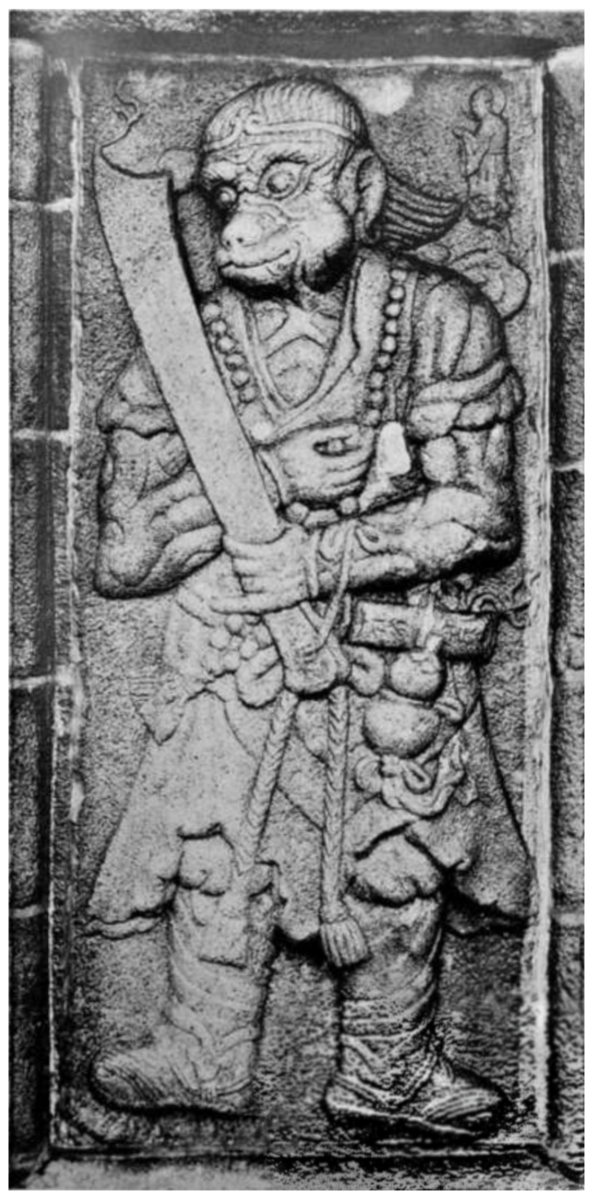
The Kaiyuan Temple (Kaiyuan si, 開元寺; est. 686 CE) in the southern Chinese seaport of Quanzhou in Fujian is home to two 13th-century CE stone pagodas covered in 80 life-size relief carvings of bodhisattvas, arhats, patriarchs, protector deities, and various mythological creatures. The Monkey Pilgrim (fig. 18) figures among them and is located on the northeastern side of the western pagoda’s fourth story. This structure was erected in 1237 CE (Ecke & Demiéville, 1935, p. 91), dating the carving to around the same time period as the late-Xixia cave murals along the Silk Road in northern China. This gives us incite into how people of different regions viewed the primate hero.

Fig. 18 – The Kaiyuan Temple stone pagoda carving of the Monkey Pilgrim (1237 CE) (larger version). Image found randomly on the internet.

Three things are immediately apparent. One, the pagoda carving gives precedence to the Monkey Pilgrim, with his entire body taking up most of the available space. Xuanzang, who is normally in the lead position, is instead given a tiny corner above his disciple’s left shoulder. He is shown ascending into the heavens on a divine cloud. Two, Monkey is wearing a double “curlicue-style” headband, the motif being associated with protector deities in religious art of this time. And three, he wields a broadsword with a lick of heavenly flame instead of a staff (refer back to fig. 14 & 15). I’ve theorized in this article that (among other indicators) the combination of the headband, the heavenly blade, and Xuanzang’s ascent to paradise designates the Monkey Pilgrim as a protector deity who removes obstacles to enlightenment. If true, his southern persona was elevated in importance from a mere body guard and horse groom (like in northern art) to a hand of the Buddha.

This elevation may have something to do with the fact that the Monkey King’s cult began in Fujian. While concrete references to his worship date to the 17th-century CE (see section III here), this carving may be an indicator that he was revered at an earlier time. The area is known to have worshiped monkeys as far back as the Tang period (see the material below fig. 3 here, as well as the 08-17-2019 update).

Before continuing, it’s interesting to note that the aforementioned poet Liu Kezhuang was a native of Putian (Ebrey, 2005, p. 95), which neighbors Quanzhou. This means that his unflattering mental image of the Monkey Pilgrim was likely influenced by the Kaiyuan pagoda carving.

4. First appearance? 

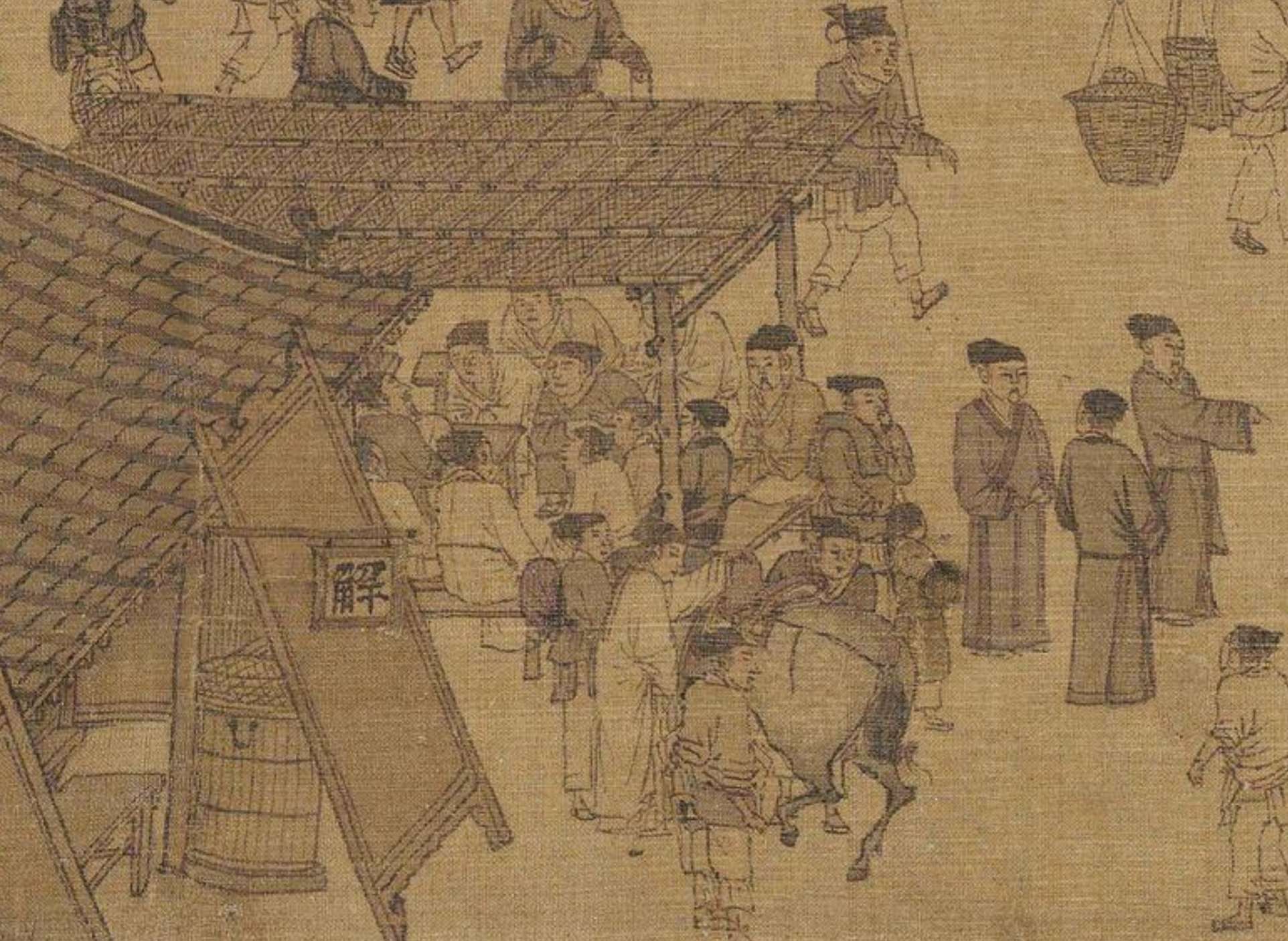
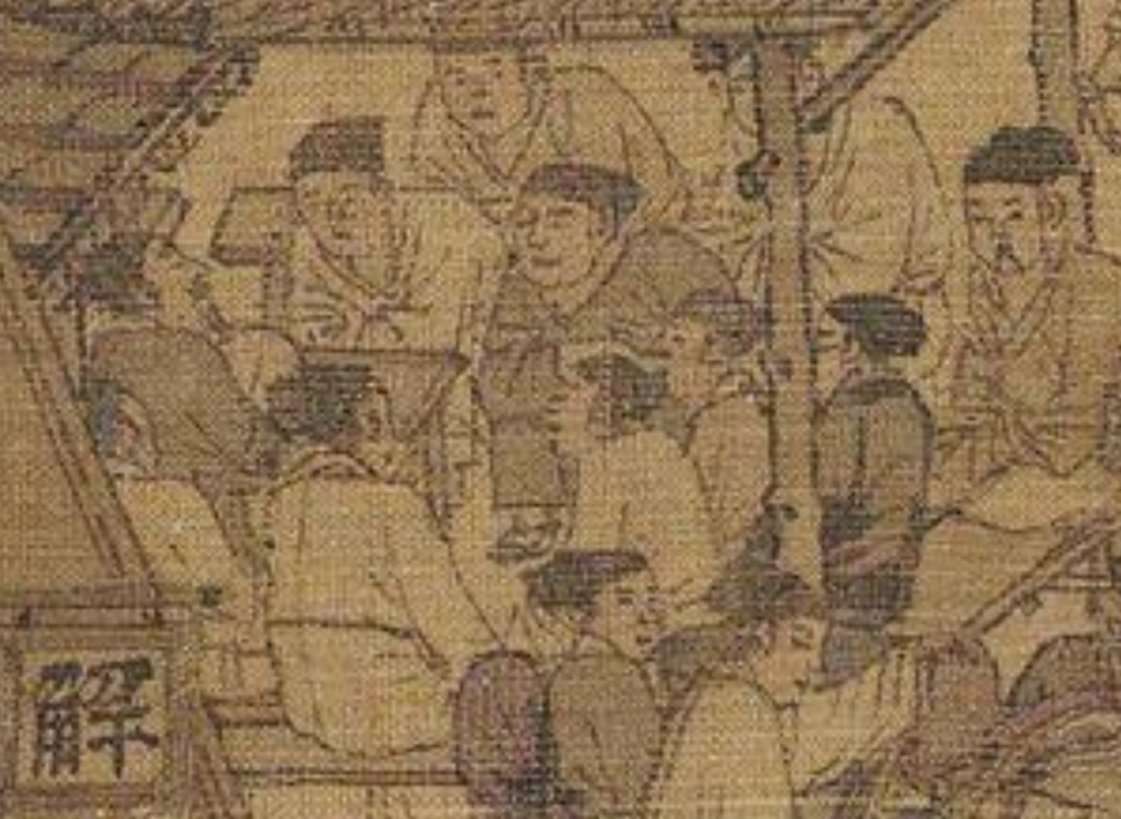
To my knowledge, these are the oldest known forms of media mentioning or depicting Sun Wukong’s antecedent, but they certainly aren’t the first. We will never conclusively find his “first” appearance. This is not only because a lot of physical media has been lost to the ravages of time, but also because the Monkey Pilgrim was a product of oral storytelling. He was likely given life in urban storytelling stalls (fig. 19 & 20) and nourished by amateur retellings of his adventures at home. Such tales would have predated any artistic depictions or written references. It’s important to remember that oral literature is intangible and ultimately leaves no trace (that is unless it was written down like the 13th-century version). [5]

The fact that Zhang the Sage’s eulogy (section 1.1) is just a vague list of events suggests that the original storyteller knew his audience was already intimately familiar with the tale and therefore didn’t need more exposition. This further suggests that the JTTW story cycle had already been circulating for some time prior to circa 1127 CE (as dated by Isobe Akira). The earliest examples of cave art push the Monkey Pilgrim’s existence back to the earliest years of the 12th-century CE and possibly even to the late-11th-century. Therefore, we can safely conclude that he dates to at least some time in the 11th-century CE. And since it can take generations for a story to become engrained in the public psyche, the Monkey Pilgrim might even date to the early Song Dynasty (960-1279). This is why I usually cite circa 1000 CE as a general time frame for the hero’s appearance.

Fig. 19 (top) – Detail of an urban storytelling (jie, ; lit: “explanation”) stall from the famed 12th-century CE painting Along the River During the Qingming Festival (larger version). Fig. 20 (bottom) – A closer detail showing people intently listening to the storyteller (larger version). The images are screenshots taken from this digital version of the painting on Wikimedia. A big thank you to Borrdahl (2002) for pointing out the storytelling stall.


Update: 06-04-23

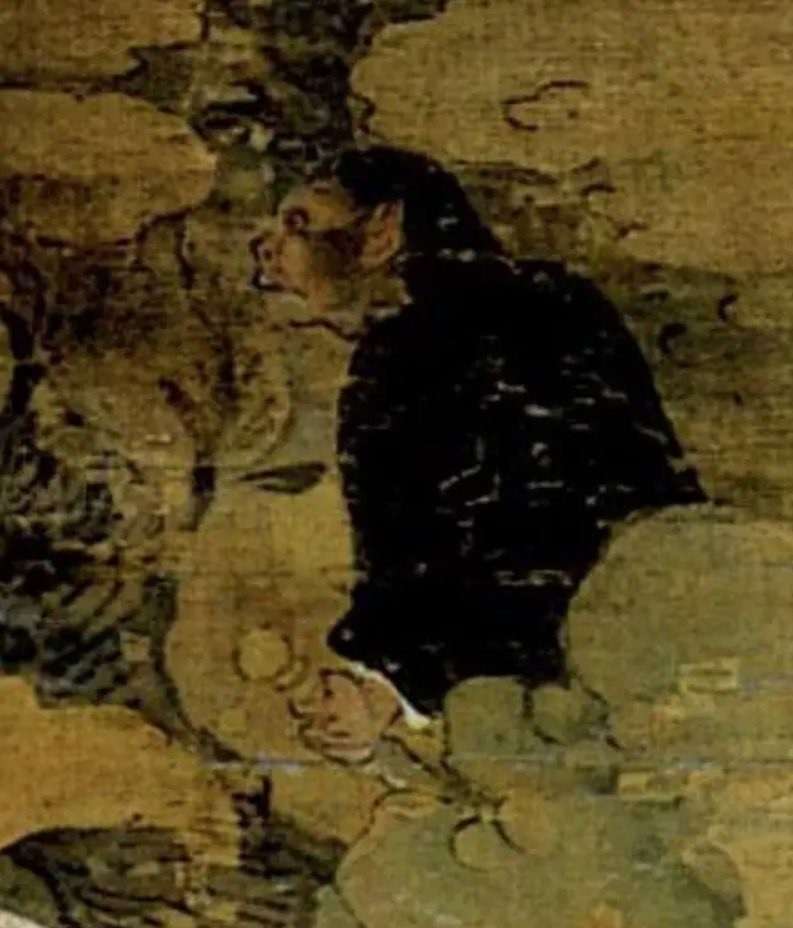
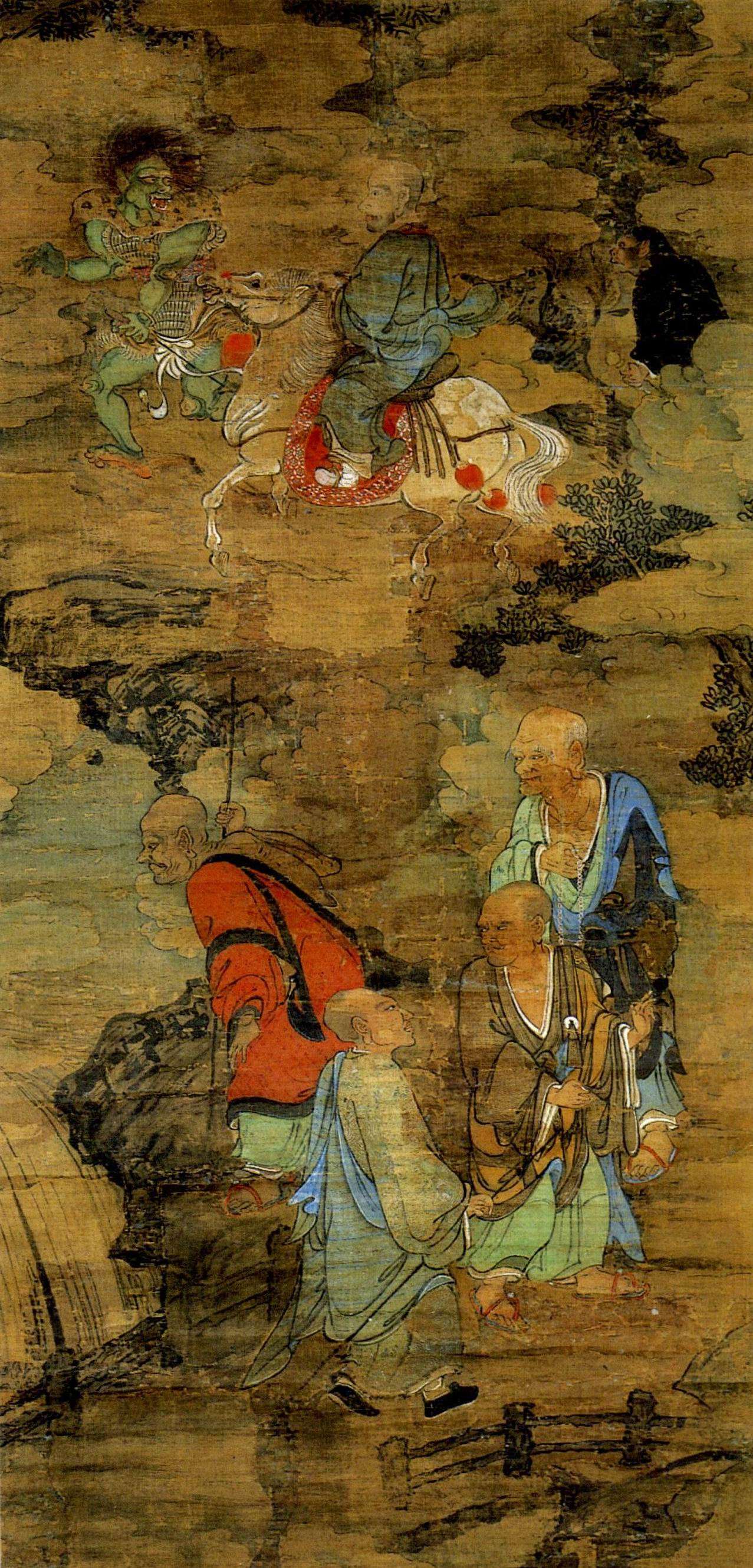
I was happy to learn that the Monkey Pilgrim appears among a large set of late-12th-century ritual scrolls portraying the famed 500 Arhats. [6] He is depicted as a monkey-headed, black robe-wearing figure with the lower half of his body obscured by clouds, making him hard to see unless you zoom in on the image. He holds what appears to be the head of a staff in his left hand (fig. 21). Our hero is located just behind Tripitaka, who is riding a white horse led by a spirit-soldier(?) or perhaps Sha Wujing’s antecedent (fig. 22). The full scroll shows this scene happening above the heads of four arhats (fig. 23), indicating that the Tang Monk is considered to be one of these Buddhist sages.

I actually found the simian immortal by accident while researching an article about Tripitaka’s Buddha title. Dr. Meir Shahar tells me that this depiction of Monkey doesn’t appear to have been mentioned in previous JTTW scholarship (personal communication, June 3, 2023). [7] Therefore, I’m so very happy that I can share this discovery with my readers!

This depiction predates the Monkey Pilgrim’s appearance in the 13th-century JTTW by a century. His counterpart in that version is described as a “scholar dressed in a white robe” (Baiyi xiucai白衣秀才) (Wivell, 1994, p. 1182). This completely differs from the primate head and black robe from the scroll. And while the 13th-century Monkey Pilgrim mainly wields a golden-ringed monk’s staff (jinhuan (xi)zhang, 金鐶錫杖/金鐶杖) (Wivell, 1994, p. 1189, for example), this simian cleric appears to have a traditional staff with an orb finial. 

Fig. 21 – (Left) A detail of the Monkey Pilgrim (larger version). From Lin Tinggui and Zhou Jichang, The Tang Monk Procures the Scriptures (Tangseng qujing, 唐僧取經), no. 77 of 100 scrolls from Images of the 500 Arhats (Wubai Luohan tu, 五百羅漢圖, 1178-1188 CE). Hanging scroll, ink and color on silk. Image from Nara kuniritsu hakubutsukan, Tōkyō bunkazai kenkyūjo, 2014, p. 86. Courtesy of Dr. Liu Shufen, a research fellow at the Institute of History and Philology, Academia Sinica. Fig. 22 – (Center) A detail of Xuanzang on his his horse (larger version). Fig. 23 – (Right) The full scroll (larger version).

Notes:

1) The eulogy writes “Monkey Pilgrim” as Hou xingfu (猴行復) instead of the more familiar Hou xingzhe (猴行者).

2) Buswell & Lopez (2014) explain:

The name of this bodhisattva derives from this image’s most characteristic feature: a luminous disk that encircles the bodhisattva and evokes both a nimbus and a full moon, effectively suggesting its power to dispel the darkness of the night. Another connotation is indicated in texts such as the [Mahāprajñāpāramitāśāstra], where the term “moon in the water” connotes that all phenomena are like reflections of the moon on the surface of the water, thereby signifying insubstantiality and impermanence (pp. 813-814).

3) Source altered slightly. I have changed the Wade-Giles to Pinyin.

4) It openly mocks Buddhist philosophy as shallow (“From one stroke of the brush it was possible to learn the sense of the Śūraṅgama (sūtra)). And it references historical tensions between Buddhism and Confucianism by mentioning the monk Dadian (大顛, 732-824) (“Yet three letters accompanied the presentation of a robe to Dadian”). The Buddhist master was an acquaintance of the Confucian official Han Yu (韓愈, 768-824), who had been exiled to southern China for writing a memorial reprimanding the Tang emperor for patronizing Buddhism. Dudgbridge (1970) believes that the reference to the Monkey Pilgrim “ridicules the degrading of [Xuanzang’s] great mission to the west into a story in which the traveller depends on the support of a fantastic monkey” (p. 46).

5) See, for example, the introduction in Dudbridge (1970).

6) To learn more about these paintings, see Zhou (2021).

7) Dr. Benjamin Brose tells me that the painting appears in a Japanese source, but the Monkey Pilgrim is only listed as a “monkey attendant” (personal communications, June 3 and 12, 2023). See Nara kuniritsu hakubutsukan, Tōkyō bunkazai kenkyūjo henshū, 2014, p. 86.

Sources:

Borrdahl, V. (2002). Chinese Storytellers: Life and Art in the Yangzhou Tradition. Boston: Cheng & Tsui Co.

Buswell, R. E., & Lopez, D. S. (2014). The Princeton Dictionary of Buddhism. N: Princeton University Press.

Dudbridge, G. (1970). The Hsi-yu chi: A Study of Antecedents to the Sixteenth-Century Chinese Novel. Cambridge: Cambridge University Press.

Ebrey, P. B. (2005). Women and the Family in Chinese History. London: Routledge.

Ecke, G., & Demiéville, P. (1935). The Twin Pagodas of Zayton: A Study of the Later Buddhist Sculpture in China. Cambridge, Mass: Harvard University Press.

Mair, V. (1989). Suen Wu-kung = Hanumat? The Progress of a Scholarly Debate, in Proceedings of the Second International Conference on Sinology (pp. 659-752). Taipei: Academia Sinica.

Nara kuniritsu hakubutsukan, Tōkyō bunkazai kenkyūjo henshū [Nara University Tōkyō Research Institute for Cultural Properties (Ed.)]. (2014). Daitokuji denrai gohyaku rakan zu [Daitoku Temple’s Tradition of the 500 Arhats Paintings]. Kyōto: Shitau bungaku.

Wei, W., & Zhang, L. (2019). Xiyouji bihua yu Xuanzang qujing tuxiang [Journey to the West Wall Murals: Images of Xuanzang Procuring the Scriptures]. Nanjing: Jiangsu Fine Arts Publishing House.

Wivell, C.S. (1994). The Story of How the Monk Tripitaka of the Great Country of T’ang Brought Back the Sūtras. In V. Mair (Ed.), The Columbia Anthology of Traditional Chinese Literature (pp. 1181-1207). New York: Columbia University Press.

Zhou, Y. (2021). The Daitokuji Five Hundred Arhats Paintings and Their Beholders [Master’s dissertation, University of Alberta]. Education and Research Archive. https://era.library.ualberta.ca/items/f0bf436c-f6e5-46a2-920a-91c8b9dd5ba9

The Monkey King’s Magic Staff: A Complete Guide

I’ve written many articles on the origins of the Monkey King’s staff over the years. Therefore, I’ve decided to combine all of the information in one location for the benefit of people wishing to learn more about the weapon and its history. This will no doubt be interesting to fans of Journey to the West (Xiyouji, 西遊記, 1592; JTTW hereafter), as well as those of modern franchises like Dragon Ball and Lego Monkie Kid (fig. 1). Citations can be found in the articles linked below.

Fig. 1 – The Lego Monkie Kid character “MK” wielding the Monkey King’s magic staff (larger version). Copyright Lego.

1. The Literary Weapon

1.1. Staff Background

The staff first appears in chapter three of the original novel when the Monkey King goes to the underwater kingdom of Ao Guang (敖廣), the Dragon King of the Eastern Sea, looking for a magic weapon to match his supernatural strength and martial skill. When all of the traditional weapons offered to him fail to meet his standards, the dragon queen suggests to her husband that they give Sun Wukong “that piece of rare magic iron” taking up space in their treasury. She claims the ancient shaft had started producing heavenly light days prior and proposes that the monkey is fated to own it. The weapon is said to be a “divine treasure iron” originally used to set the depths of the Heavenly River (Tianhe ding di de shenzhen tie, 天河定底的神珍鐵) by Yu the Great (Dayu, 大禹), a mythic Chinese emperor and demigod.

The staff is initially described as a pillar of black iron or bin steel more than 20 feet in height and as wide as a barrel. It is only when Monkey lifts it and suggests a smaller size would be more manageable that the staff complies with his wishes and shrinks. This is when Sun notices that the weapon is decorated with a golden ring on each end, as well as an inscription along the body reading: “The ‘As-You-Will’ Gold-Banded Cudgel. Weight: Thirteen Thousand Five Hundred Catties” (Ruyi jingu bang zhong yiwan sanqian wubai jin, 如意金箍棒重一萬三千五百斤). The inscription indicates that the staff is immensely heavy, weighing 17,560 lbs. (7,965 kg).

Apart from the above information, a poem in chapter 75 (see section 2.3 here) highlights another name, “Rod of Numinous Yang” (Lingyang bang, 靈陽棒). In addition, the poem describes the staff being covered in “tracks of planets and stars” (i.e. astronomical charts) and esoteric “dragon and phoenix scripts” (longwen yu fengzhuan, 龍紋與鳳篆).

The novel provides two contradictory origins for the staff. The chapter 75 poem notes that it “[w]as forged in the stove by Laozi himself.” Laozi is of course the high god of Daoism. Chapter 88 instead states that it was “forged at Creation’s dawn / By Yu the Great himself, the god-man of old.”

Contrary to popular images of the Monkey King holding a regular-sized staff, his literary counterpart wields a massive weapon in battle. It is said to be 20 feet long (likely an error for 12), [1] with the width of a bowl (erzhang changduan, wankou cuxi, 二丈長短,碗口粗細) (fig. 2). I did a cursory search of bowls during the Ming (when the standard edition of JTTW was published) and found that they have a radius of between 4 to 6 inches (10.16 to 15.25 cm).

Fig. 2 – An accurate depiction of the size of Monkey’s staff (larger version). Images found here. Artwork by @真·迪绝人.

1.2. Staff Powers

The staff is shown to have multiple powers.

  1. Size manipulation – This is the weapon’s most well-known ability, growing as big or as small as Monkey wishes.
  2. Controlling the oceans –  The aforementioned poem from chapter 88 writes: “The depths of all oceans, rivers, and lakes / Were fathomed and fixed by this very rod. / Having bored through mountains and conquered floods, / It stayed in East Ocean and ruled the seas…”
  3. Astral entanglement – Monkey’s soul is able to use the staff in Hell despite the physical weapon being with his body in the world of the living.
  4. Multiplication – He can multiply his staff in the hundreds of thousands.
  5. Lock-Picking – He can open any door just by pointing it at the lock.
  6. Transformation – He can change it into tools like a straight razor or a drill.
  7. Sentience – The weapon glows in anticipation of Monkey’s arrival (fig. 3), responds to his touch, and follows his commands, denoting a certain level of sentience.

Fig. 3 – Monkey pointing to the luminous iron pillar (larger version). From the Qing-Era Painted, Complete Edition Journey to the West (Qing caihui quanben Xiyouji, 清彩繪全本西遊記).

2. Origins

2.1. Literary Precursors

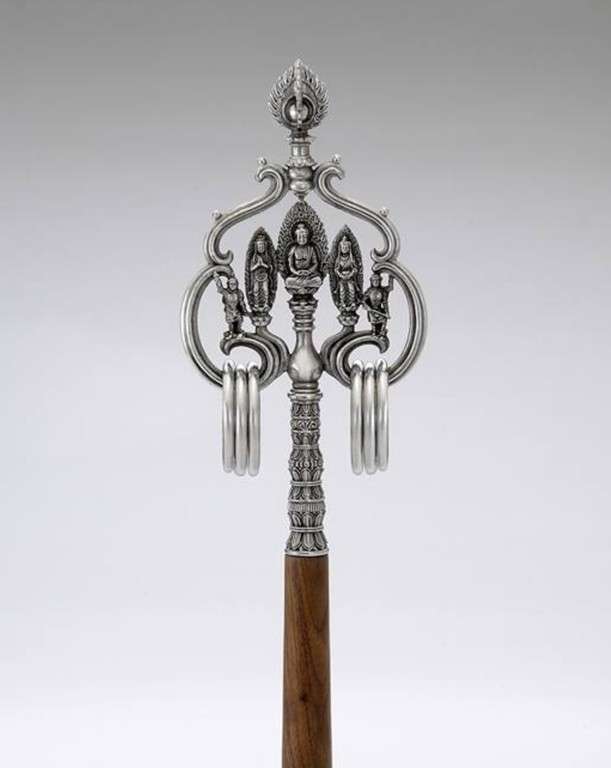
The staff found in the standard Ming edition of JTTW is actually based on two weapons from a 17-chapter storytelling prompt called The Story of How Tripitaka of the Great Tang Procured the Scriptures (Da Tang Sanzang qujing shihua, 大唐三藏取經詩話, c. late 13th-century). Sun Wukong’s precursor, an ageless immortal called the “Monkey Pilgrim” (Hou xingzhe, 猴行者), magically transports Tripitaka and his entourage to heaven. There, the supreme god, the Mahābrahmā Devarāja (Dafan tianwang, 大梵天王; i.e. Vaiśravana), gives the monk a cap of invisibility, a khakkhara (ringed monk’s staff) (fig. 4), and a begging bowl. Tripitaka and the Monkey Pilgrim take turns using these items throughout the journey. The staff is shown capable of shooting destructive beams of light, as well as transforming into magical creatures like an iron dragon or a giant, club-wielding Yaksha. Later, the Monkey Pilgrim also borrows an iron staff from heaven to fight a dragon.

The two staves from this tale were eventually combined by later storytellers. The rings from the first weapon were added to the ends of the second.

Fig. 4 – A beautiful, modern monk’s staff with six rings (larger version).

2.2. Influence from Religion

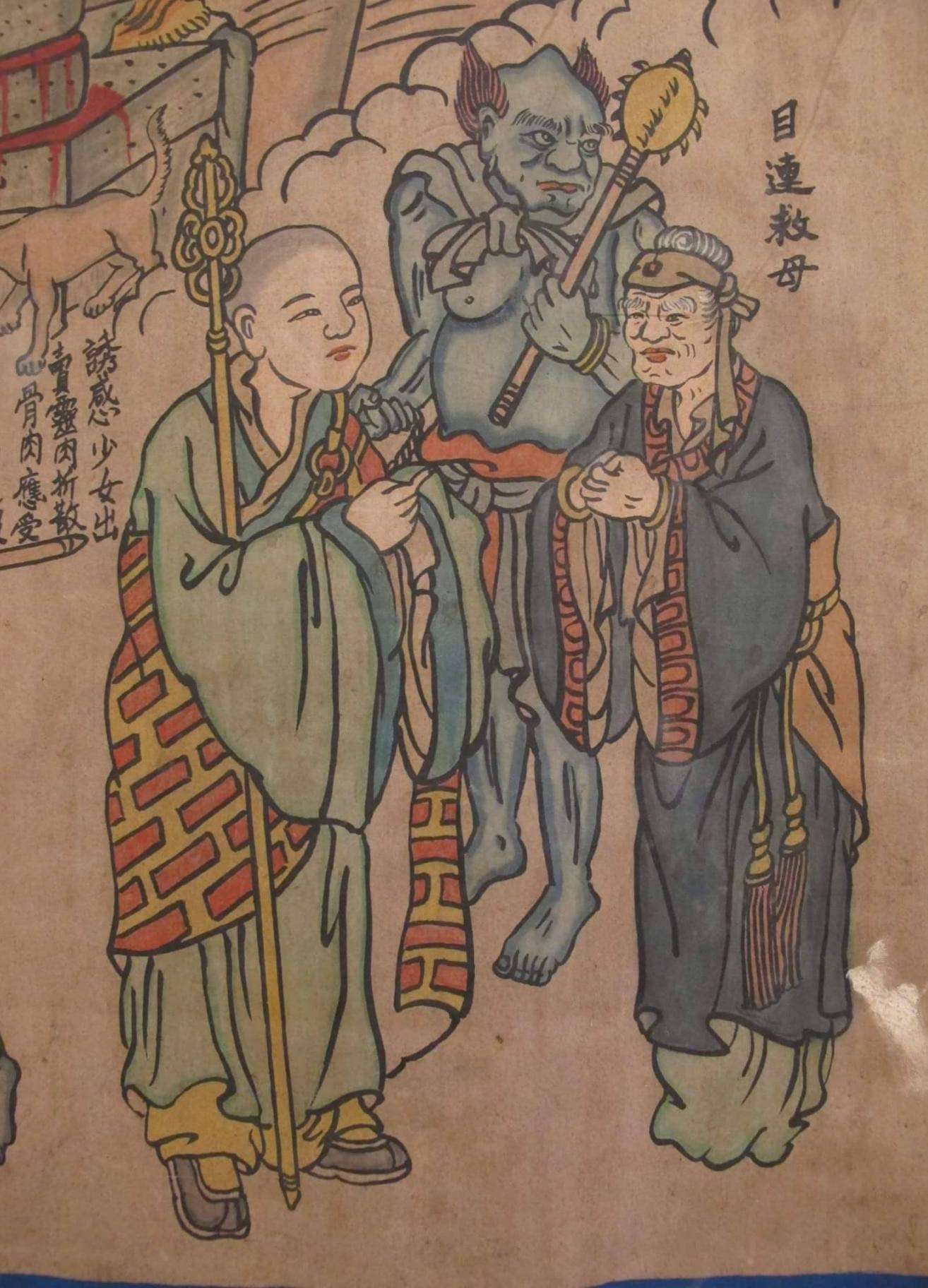
The Monkey Pilgrim’s magic ringed staff and begging bowl were directly influenced by the Buddhist Saint Mulian (目連; Sk: Maudgalyayana), a disciple of the historical Buddha. One particular 9th to 10th-century story notes that the Saint uses the staff to unlock the gates of hell in order to save his mother (fig. 5). This is where Sun Wukong’s weapon from JTTW gets the power to open locks.

Mulian saves his mother, scroll - small

Fig. 5 – A scroll or mural depicting Mulian rescuing his mother from the underworld (larger version). Originally found here.

The ringed and metal staves used by the Monkey Pilgrim are based on those historically carried by Buddhist monks in ancient China. The aforementioned ringed variety, called “tin staves” (xizhang, 錫杖) where used by religious monks and decorated with six to twelve metal rings (see fig. 4). These rings were designed to make a clanging noise to not only scare away animals on the road but also to alert possible donors to the monk’s presence.

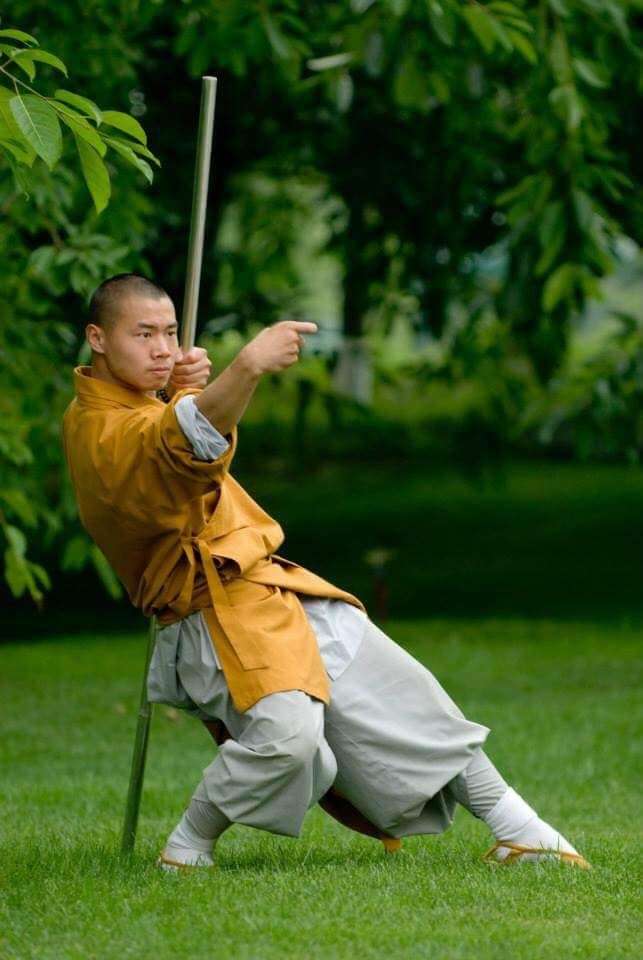
Martial monks charged with protecting monasteries or deployed by the Chinese government against pirates wielded wooden or iron staves (fig. 6). The former were chosen for their diminished capacity for fatal injuries, while the latter were explicitly used for killing during times of war. Sun Wukong wielding the iron variety makes sense as he’s a martial monk charged with protecting Tripitaka from monsters and spirits.

Fig. 6 – A martial monk practicing a drunken staff-fighting form (larger version).

The term “As-you-will” (ruyi, 如意) from Monkey’s staff (mentioned above) is connected with a scepter used in ancient China as a symbol of religious debate and authority and, to a lesser extent, as a weapon. While it can be traced to a Hindo-Buddhist tradition in India, the scepter came to be associated with the highest gods of Daoism thanks to being decorated with a “numinous mushroom” (lingzhi, 靈芝), a real world fungi believed to bestow immortality. This mushroom scepter was at some point associated with the Buddhist Cintamani (Ruyi zhu, 如意珠), or “As-you-will jewel.” This was believed to grant any wish that one might desire. This explains why Monkey’s As-you-will staff grows or shrinks according to his commands. It’s interesting to note that some religious images of the scepter depict it with a syncretic mix of the Daoist mushroom and the Buddhist jewel (fig. 7).

Fig. 7 – An enhanced detail of the Celestial Worthy’s mushroom scepter with a flaming as-you-will jewel (larger version). See here for a fuller version of the deity.

2.3. Influence from Popular literature

The weapon’s portrayal in JTTW as an iron pillar kept in the dragon kingdom comes from old stories about the immortal Xu Xun (許遜), a historical Daoist master and minor government official from Jiangsu province. Popular tales describe him as a Chinese St. Patrick who traveled southern China ridding the land of flood dragons. One 17th-century version titled “An Iron Tree at Jingyang Palace Drives Away Evil” (Jingyang gong tieshu zhenyao旌陽宮鐵樹鎮妖) describes how he chained the flood dragon patriarch to an iron tree (tieshu, 鐵樹) and submerged it in a well, thus preventing the serpent’s children from leaving their subterranean aquatic realm and causing trouble. Pre-JTTW versions of this tale depict the tree as an actual iron pillar (fig. 8). Chinese Five Elements Theory dictates that metal produces water, and as its creator, holds dominion over it. Therefore, an iron pillar would be the perfect item to ward off creatures entrenched in the aquatic environment.

Fig. 8 – A Ming Dynasty woodblock print depicting the immortal Xu overseeing the creation of the iron pillar in a furnace (right) and it’s placement the well (left). Dated 1444-1445 (larger version).

As previously noted, the staff weighs 17,560 lbs. (7,965 kg). This is likely based on an episode from chapter 27 of the Chinese novel Water Margin (Shuihu zhuan, 水滸傳, c. 1400). It involves the bandit Wu Song lifting a heavy stone block said to weigh 300 to 500 catties (san wu bai jin, 三五百斤; 390-650 lbs./177-295 kg) (fig. 9). This scene and the one from JTTW where Monkey lifts the iron pillar are quite similar. Both involve a hero (Wu Song vs. Sun Wukong) asking someone (Shi En vs. Ao Guang) to show them a heavy object that cannot be moved (stone block vs. iron pillar). Both heroes then adjust their clothing before easily lifting the object with both hands. Most importantly, the Chinese characters for the weight of each object (三五百斤 vs. 一萬三千五百斤) are similar. The only difference is the addition of “10,000” (yiwan, 一萬) and “1,000” (qian, 千), respectively. And given the close historical and cultural ties between the two heroes, I believe the author-compiler of JTTW embellished the Water Margin episode to portray Sun as a hero like no other, a divine immortal that can lift weights far beyond even Wu Song himself.

Fig. 9 – Wu Song lifts the stone block (larger version). Image found here.

Note:

1) Irwen Wong of the Journey to the West Library blog has suggested that the length is likely an error for 12 feet (zhanger, 丈二) since the staff was already near 20 feet when Monkey first acquired it, and he later asked it to shrink to a more manageable size.

Sun Wukong and the Buddha’s Past Life as a Monkey King

(Note: I originally wrote this in late 2020 but just now got around to cleaning it up and posting it.)

Last updated: 05-17-2022

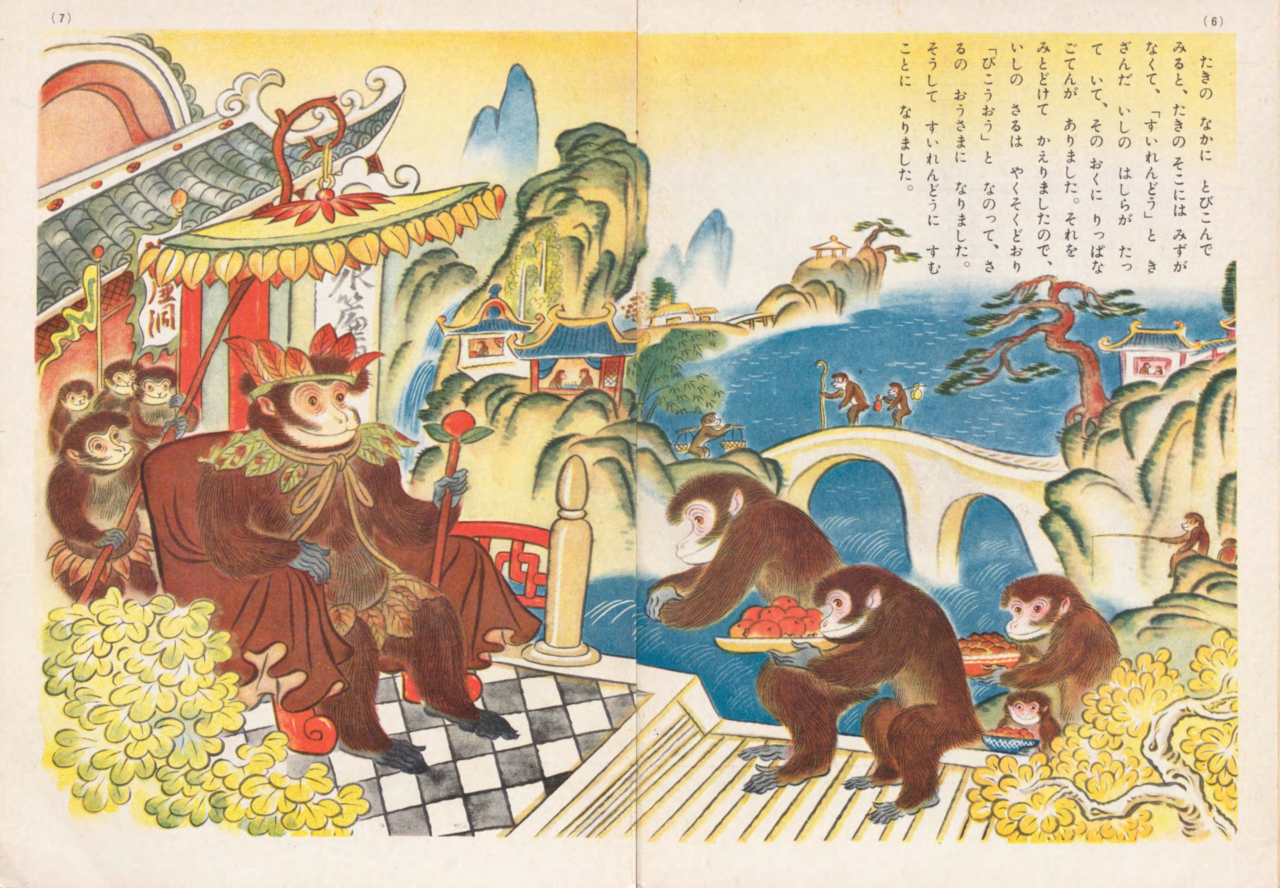
Following his birth, the Stone Monkey (Shi hou, 石猴) comes to live with a tribe of primates on the Mountain of Flowers and Fruit. One day, the monkeys and apes decide to follow a stream to its source in the mountain and find a beautiful waterfall. They state anyone who can discover what is behind the blanket of water will be proclaimed their king. The Stone Monkey takes up this challenge by leaping through and discovers a grotto paradise with a stone mansion and enough room for all the primates to live. After he emerges victorious:

Each one of them [the primates] then lined up according to rank and age, and, bowing reverently, they intoned, “Long live our great king!” From that moment, the stone monkey ascended the throne of kingship [fig. 5]. He did away with the word “stone” in his name and assumed the title, Handsome Monkey King [Mei hou wang, 美猴王] [fig. 1] (Wu & Yu, 2012, p. 105).

In this article, I suggest Sun Wukong’s position as a primate monarch is based on “The Story of the Great Monkey” (Sk: Mahakapi jataka; Ch: Houwang bensheng, 猴王本生, “Birth Story of the Monkey King”; “The Great Monkey” hereafter), an ancient story about the Buddha’s past life as a monkey king, which appears in various collections of moralistic birth tales (Sk: jakata; Ch: bensheng jing, 本生經) in Buddhist literature. After summarizing the tale, I will briefly discuss 2,000-year-old Indian Buddhist art depicting the story at important religious sites, thereby showing its intense popularity. Next, I will demonstrate that the tale traveled the Silk Road to China, where it was represented in Buddhist art and literature. Finally, I will highlight similarities between “The Great Monkey” and a 13th-century precursor of Journey to the West, as well as similarities with the standard 1592 edition of the novel.

Fig. 5 – The Stone Monkey sits on his throne (larger version). From the Japanese children’s book Son Goku (1939).

1. Story of the Great Monkey

Buddhist literature contains different versions of the tale. I will describe two of them here. The first is story no. 27 in the Garland of Birth Stories (Sk: Jatakamala, 4th-century) by the monk Arya Sura. [1] The tale opens with the following epigraph: “Those who make a practice of good behavior can win over the hearts even of their enemies” (Khoroche, 1989, p. 186). According to the story, the bodhisattva was born a virtuous monkey king in the verdant paradise of the Himalayas, which abounded in fruits and flowers, crystal clear streams, and choirs of singing birds. He and his tribe lived near an unnamed river and ate from a mountainous banyan tree that produced figs larger than palmyra nuts. The monkey king feared that the fruit would cause trouble for his people, so he gave instructions to regularly clear them from a branch overlooking the river. However, one season a fig escaped the monkeys’ attention and it grew to maturation, dropping into the water, drifting downstream, and lodging in the fence of a pool where an unnamed human king played with his consorts. The smell and color of the fruit entranced the women, and after the king tasted it, he became obsessed with its flavor and led an army in search of the tree. The ruler and his entourage cut a path upstream and followed a sweet scent directly to the massive banyan, which rose high above all the surrounding trees like the lord of the forest. When he saw the monkeys eating figs, the enraged ruler ordered his men to shoot them down with arrows, spears, and rocks. Seeing the dire situation of his tribe, the monkey king made a tremendous leap to the summit of a nearby mountain, a feat that would have required any other monkey a series of jumps. On the mountain, he found a strong-rooted cane of the appropriate length needed to span the gap and tied it to his feet. But his return jump to the tree was hampered by the binding, and so he came up short, forcing him to grab a branch and use his body as a bridge so that his tribe could escape. But the monkey king was mortally wounded as throngs of the panicked primates clawed their way across his body to safety. The human king took note of this selfless deed and ordered his men to relieve the suspended monkey by placing a canopy beneath him and simultaneously shooting the branch and cane. After his wounds were tended and he regained consciousness, the monkey king spent the last few moments of his life teaching the human king the virtue of putting his people’s needs before his own (Khoroche, 1989, pp. 186-192).

The second is story no. 407 [2] in Commentary on the Birth Stories (Pali: Jatakatthakatha, a.k.a. Jatakatthavannana, 5th-century), which is attributed to the monk Buddhagosa. The narrative opens with the Enlightened One talking to a large assembly of monks in Jetavana. He tells them of a previous life when he helped his relatives. Here, the story is quite similar to the first, with slight differences in certain details, such as the monkey king leading a specified number of 80,000 primates, the river is the Ganges, the fruit is water pot-sized mangoes, the specimen that floats downstream is caught in a fisherman’s net, and the human ruler is named King Brahmadatta of Benares. [3] Instead of leaping to a nearby mountain, the monkey king jumps one hundred bow lengths across the Ganges. The cane is tied to his waste instead of his feet, and the cause of falling short on the return jump is not hindrance but miscalculating the length needed to span the gap. And instead of being seriously injured by his people during their escape, a rival of the king—a previous incarnation of the Buddha’s evil cousin Devadatta—mortally wounds his heart by jumping onto his back from a high branch. Brahmadatta instructs his men to build a tower so that he can retrieve the primate and tend to his wounds in his last few moments of life. And just like before, the monkey king teaches the human monarch the value of his people’s needs prior to dying. But this time the discussion is much shorter, being presented as a poem of seven stanzas. Brahmadatta then honors the monkey with funeral rites befitting a king and worships the skull as a religious relic. In the end, the Buddha reveals that the ruler was the past incarnation of his disciple Ananda, the 80,000 monkeys were incarnations of the assembled monks, and the monkey king was himself (Cowell, 1895, vol. 3, pp. 225-227).

2. The tale in Indian and Chinese Buddhist art

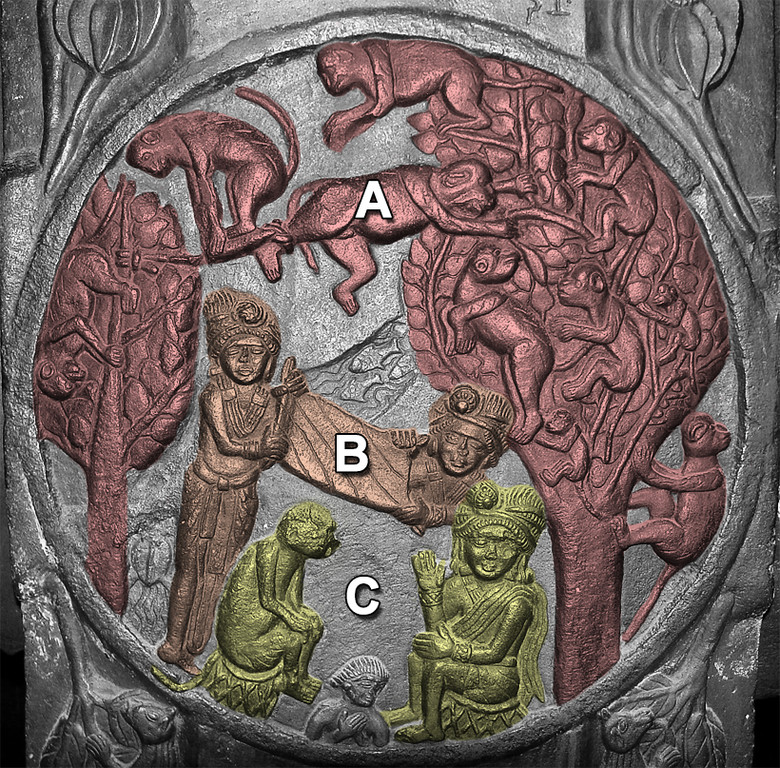
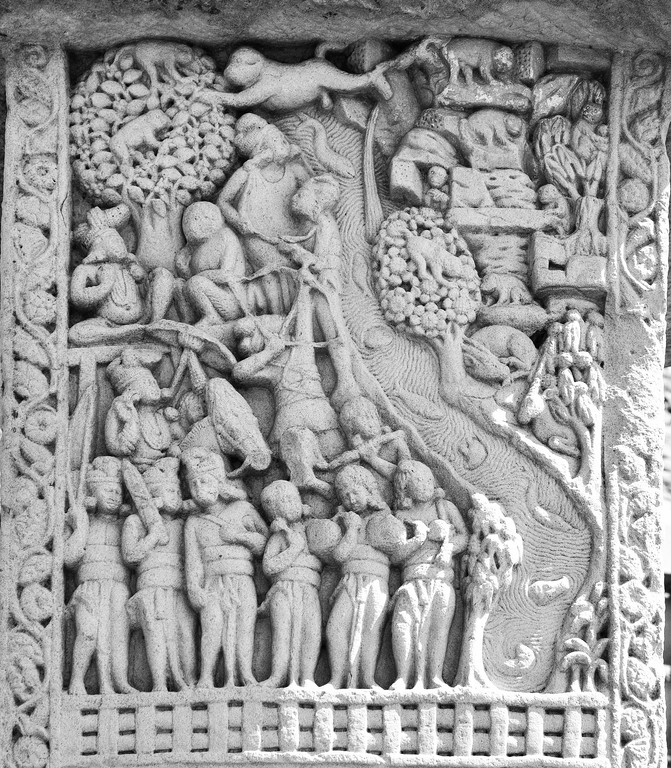
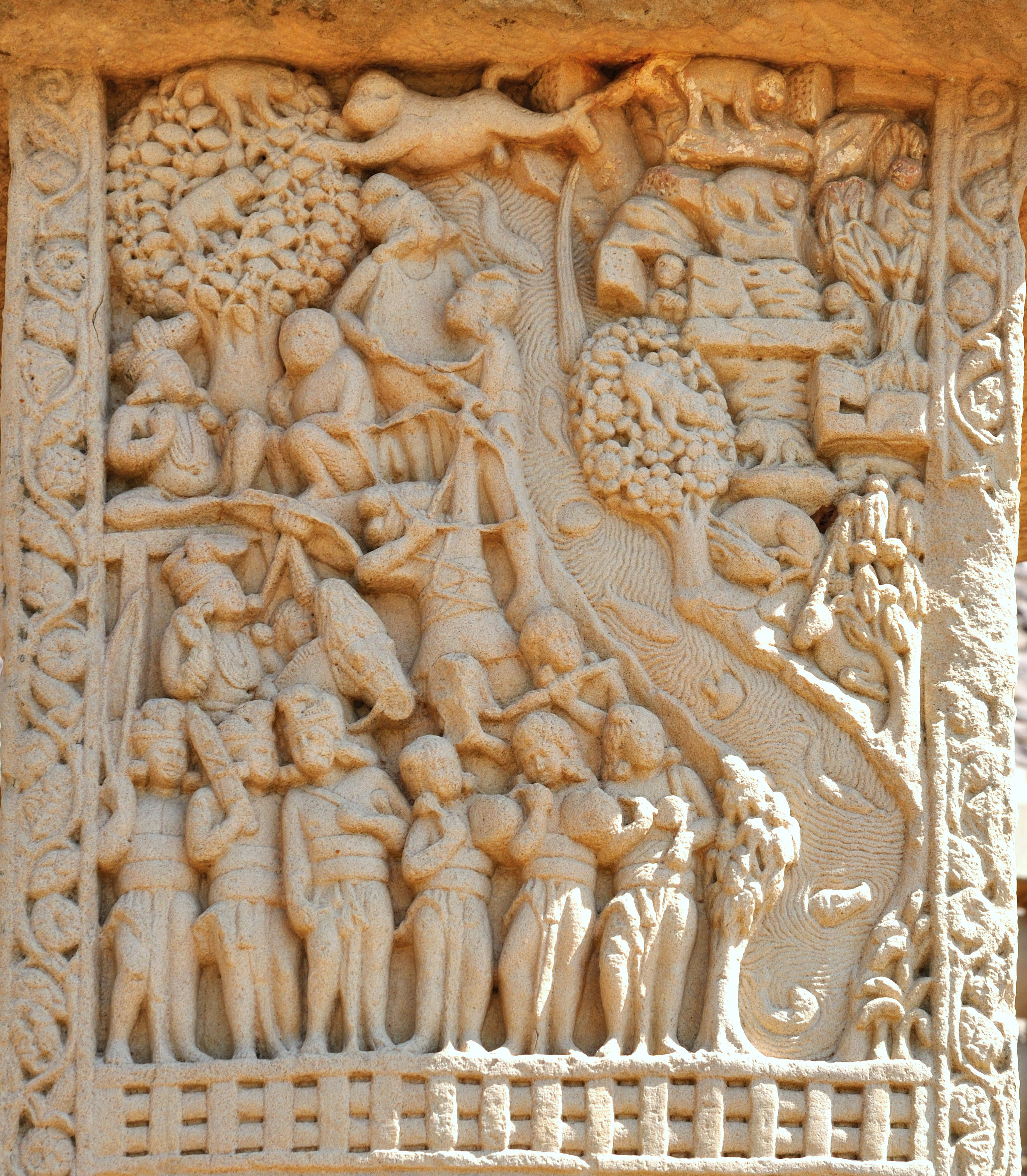
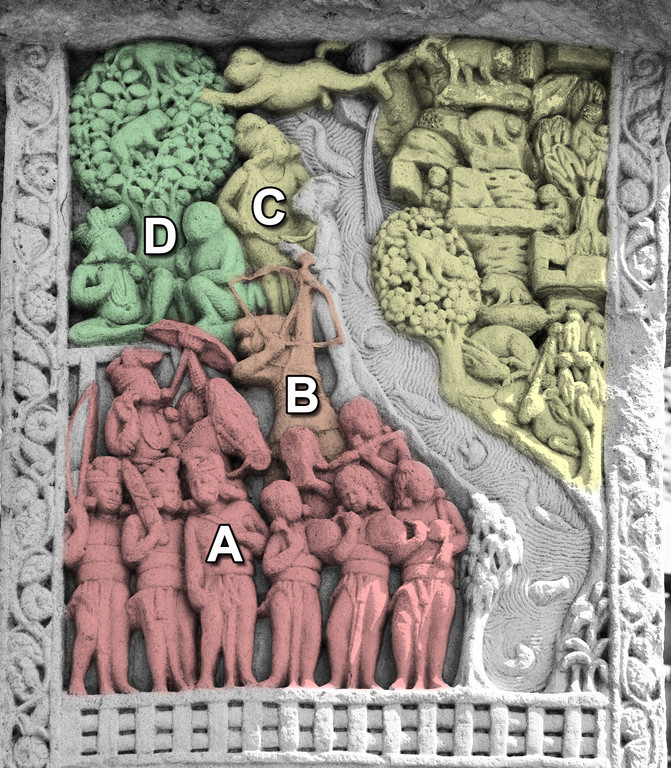
This birth story is over 2,000 years old as it appears among the stone carvings of the Bharhut Stupa (c. 2nd-century BCE) (fig. 2 and 3) and the western torana (c. 1st-century BCE/CE) of the Great Stupa at Sanchi (fig. 3 and 4) (Marshall, Foucher, Majumdar, 1902, vol. 1, pp. 224-225, vol. 2, plate 64). I should note that the story is one of 547 such tales appearing in the Pali canon (Buswell & Lopez, 2014, p. 381). So the fact that it was one of only a few past life narratives chosen to appear at these religious sites speaks volumes to its popularity. This explains why the story spread beyond India.

Fig. 2 – “The Great Monkey” medallion from Bharhut stupa (c. 2nd-century BCE) (larger version). Picture adapted from Wikipedia. Fig. 3 – Key: A) The monkey king leaps and grasps a banyan tree, making a bridge with his body; B) attendants hold a canopy to catch the injured monkey; and C) The human king sits with the monkey discussing the actions of a good ruler prior to the latter’s death (larger version). Fig. 4 – “The Great Monkey” carving from the western torana at Sanchi (c. 1st-century BCE/CE) (larger version). Picture adapted from Wikipedia. Fig. 5 – Key: A) Brahmadatta travels with a retinue to the tree; B) he orders his archer(s) to shoot the monkeys; C) He watches as the monkey king leaps across the Ganges and grasps a banyan tree to make a bridge with his body; and D) Brahmadatta’s discussion with the monkey king (larger version).

The tale is known to have traveled east to China along the northern silk road. This is demonstrated by murals appearing in the Kizil cave complex (5th to 7th-century), one of the earliest and most popular Buddhist centers in Kucha, in what is now Xinjiang, China. Zhu (2012) describes the murals, noting that they lack the detail of their Indian counterparts and are therefore more mnemonic than narrative:

[I]n Kizil Cave 38 [fig. 5], a very large monkey is depicted in the center, stretching his body and holding a tree on the other side of a river. Two other smaller monkeys are stepping on his body to cross the river. In the foreground, a kneeling archer is shooting at them. In Kizil Cave 17 [fig. 6] this story is represented even more simply, with the archer omitted. However the stretching monkey, the river, and the trees are enough for anyone who knows the story to recognize it […] Compared to the Indian representations that are more explicitly narrative, the Kizil paintings are more like a reminder of the story. They communicate with the viewers as if they already know the story well” (pp. 59-60).

Fig. 5 – The Kizil cave no. 38 mural (larger version). Found here. Fig. 6 – Kizil cave no. 17 mural (larger version). Found here. Both are circa 5th to 7th-century. Zhu, 2012, p. 61 includes black and white line drawings of the murals.

3. The tale in Chinese Buddhist literature

The Kizil murals are predated by a brief story appearing in The Collection of Sutras on the Six Paramitas (Liudu jijing, 六度集經, 3rd-century, The Collection hereafter), a compilation of karmic merit tales (Sk: avadana) translated into Chinese by the Sogdian Buddhist monk Kang Senghui (康僧會, d. 280). [4] The 56th story in this collection is an adaptation of the original Indian version with several noticeable differences: The Bodhisattva was formerly a monkey king (mihou wang, 獼猴王) who frolicked with 500 primates. At that time, a drought made the various kinds of fruit scarce. Only a river separated their mountain from a nearby kingdom, so the monkey king led his tribe to eat fruit in the royal garden. The human king ordered that they be secretly captured, but the monkey called for his tribe to gather cane to make a rope. One end was tied to a tree and the other to the king, who leaped from a branch across the river. Unfortunately, the rope wasn’t long enough, and so he came up short, forcing him to grab a branch on the other side and create a bridge with his body. After the 500 monkeys crossed to the other side, the king’s body split in two under the strain. When the human king came upon the scene, the dying primate begged that his tribe not be hurt and offered up his own flesh as payment for his bad judgment. However, the king admired the monkey’s superior, sage-like virtue and questioned his own willingness to sacrifice his body for his people. He then issued a proclamation that all monkeys were to be fed throughout the kingdom, and those who refused would be punished as thieves. Upon his return to the palace, the king recounted the events to his queen, touting the monkey’s kindness and comparing it to the height of Mt. Kunlun. She then suggested that the monkeys be fed and the king confirmed that he had already given the order. In the end, the Buddha revealed that the monkey king was himself, the human king was Ananda, and the 500 monkeys were the monks at the assembly (CBETA, 2016a). [5]

[Note: See the 05-17-22 update below for an explanation on why the number 500 was used.]

Instead of the original 80,000 monkeys, this version reduces the number to only 500. Instead of the king traveling to the banyan/mango tree in the monkey’s mountain territory, the monkeys travel from their home to the royal fruit garden in the king’s territory. Instead of being trampled by his people/a rival, the monkey king’s body breaks in two from the strain. And instead of giving the monkey royal funeral rights and worshiping his skull as a relic, the king enacts a law that all monkeys should be fed.

This version is different enough from the originals to suggest a separate Chinese tradition, one that had circulated for some time. This fits with Chavannes’ (1910) suggestion that The Collection of Sutras on the Six Paramitas is not an original Indian text but one compiled in China by Kang Senghui, who likely selected and edited the stories himself (vol. 1, p. 1 n. 1).

Story no. 56 finds parallels with another tale from Chinese Buddhist literature. [6] It appears in the Scripture on the Storehouse of Sundry Treasures (Za baozang jing, 雜寶藏經, mid-5th-century), which was translated into Chinese by the monk Tan Yao (曇曜). According to the 12th story in this collection: The Buddha was in Rajagrha when the monks commented on the woes faced by those who rely on Devadatta, while celebrating the happiness, positive rebirth, and eventual deliverance of those who rely on the Enlightened One. The Buddha confirmed this by telling a brief tale about two monkeys, each with 500 members in their tribe. A prince of Kashi (a.k.a. Benares) was on a hunting excursion when he surrounded the monkeys. The good monkey (shan mihou, 善獼猴) suggested that they cross the river to escape, but the evil monkey (e’mihou, 惡獼猴) wavered. The good monkey instructed his tribe to cross by using the long branches of a nearby tree. But the evil monkey and his tribe were captured due to inaction. In the end, the Buddha revealed that the good monkey was himself and Devadatta was the evil monkey. He used this story to advocate following the virtuous over the evil, for the former would lead others to safety and happiness, while the latter would lead others to suffering over numerous incarnations (CBETA, 2016b). [7]

This version does away with the fruit element altogether. The monkeys are in danger not because a king is protecting produce but because a prince is out hunting. The most noticeable difference here is the addition of a second monkey, one who is labeled as “evil” (e, 惡) (no connection to the Six-Eared Macaque). But like story no. 56, the monkey king is said to lead 500 primates.

It is clear that both Chinese tales were influenced by the later Indian version, story no. 407 from Commentary on the Birth Stories, as they specify a number for the troupe size (500 vs. 80,000), state the monkey king leaps over a river (as opposed to jumping to a nearby mountain top), and characters are revealed in the end to have been the past lives of Buddhist personages (the Buddha, Ananda, Devadatta, monks, etc.). Story no. 12 even opens in a city associated with the Enlightened One’s historical lectures (Rajagrha vs. Jetavana), where he discusses philosophical matters with monks; and an unnamed prince who poses a threat to the monkey king and his people is said to hail from Kashi, another name for Benares, the seat of King Brahmadatta.

4. The Chinese Monkey King

The oldest Chinese source mentioning Sun Wukong as a king of monkeys is The Story of How Tripitaka of the Great Tang Procures the Scriptures (Da Tang Sanzang qujing shihua, 大唐三藏取經詩話, late 13th-century, The Story hereafter), a 17 chapter storytelling prompt that predates the Ming Journey to the West by 300 years. In chapter two, our hero’s literary antecedent, a white-clad scholar called the “Monkey Pilgrim” (Hou xingzhe, 猴行者), meets the Tang monk Tripitaka on the road to the west and warns the monk that his two previous incarnations have died trying to procure the Buddhist scriptures. When asked how he knows events of the past, the scholar replies: “I am none other than the bronze-headed, iron-browed [8] king of the eighty-four thousand monkeys of the Purple Cloud Grotto on the Mountain of Flowers and Fruit. I have come to help the reverend monk procure the scriptures” (Wivell, 1994, p. 1182).

The Story‘s depiction of the Monkey Pilgrim was influenced by Saint Mulian (目連; Sk: Maudgalyayana) (fig. 7), a disciple of the Buddha, who appears in a late-9th to early-10th-century Bianwen (變文) text in which he travels to the underworld to release his mother from karmic torment. For example, both are depicted with occult powers enabling them to fly between heaven and earth (Wivell, 1994, pp. 1183; Mair, 1994, pp. 1097-1098); both visit a realm ruled by a deity named Brahma, the Mahabrahma devaraja Vaisravana in the case of Monkey and Brahma in the case of Mulian (Wivell, 1994, pp. 1183; Mair, 1994, p. 1098); both are bestowed magic weapons by heaven, a golden-ringed monk staff and alms bowl for Monkey and a matching staff for Mulian (he enchants his own alms bowl) (Wivell, 1994, p. 1184; Mair, 1994, p. 1111); the power of said weapons are tied to the recitation of a Buddhist deity’s name, Vaisravana and the Buddha, respectively (Wivell, 1994, p. 1184; Mair, 1994, p. 1111); and both use said weapons with the expressed purpose of saving someone important, Tripitaka and Mulian’s mother, respectively (Wivell, 1994, p. 1189, for example; Mair, 1994).

Mulian saves his mother, scroll - small

Fig. 7 – A painting depicting Mulian rescuing his mother from the underworld (larger version). Originally found here.

If The Story borrows from Mulian’s tale, it’s not a stretch to suggest that it also appropriated material from other Buddhist tales, including “The Great Monkey”. For example, the Mountain of Flowers and Fruit could be based on the Himalayas and the massive, fruit-bearing banyan/mango tree. Additionally, both The Story and the “The Great Monkey” describe the respective monkey kings leading a similar number of primates, 84,000 in the former and 80,000 in the latter. [9] While the Chinese variants drastically reduce the number to 500, it’s interesting that both tales would display such similar counts. This is because said numbers are significant to Buddhism. For example, 84,000 generally denotes a very large number, hence the belief that the body contains this many atoms. Other examples include the 84,000 stupas of Asoka, the 84,000 bodily relics of the Buddha, the Amitabha‘s 84,000 rays of illumination, the 84,000 bodily signs of a Buddha, the 84,000 teachings of the Buddha, etc. In addition, the Chinese term for 80,000 (bawan, 八萬) can be shorthand for 84,000. It can also refer to separate Buddhist concepts, such as the “bodhisattva’s 80,000 duties” (Soothill & Hodous, 1937/2006, p. 39). It’s certainly possible that both stories independently chose similar numbers due to their demonstrated connection to Buddhism. But maybe the storytellers who developed The Story had access to some non-Chinese version of the tale, perhaps by way of Buddhist monks, for Buddhism has a long history of proselytizing through oral literature. [10]

Furthermore, in chapter 11 of The Story, the pilgrims enter the earthly paradise of the Daoist goddess Queen Mother of the West, home to the famed peaches of immortality. Tripitaka asks Monkey to steal the group a few fruits, but the latter refuses, stating:

Because I stole ten peaches to eat when I was eight hundred years old, I was captured by the Queen Mother and given eight hundred blows on my left side and three thousand blows on the right with an iron cudgel. Then I was exiled to the Purple Cloud Grotto on the Mountain of Flowers and Fruits. Even today my sides hurt and now I definitely don’t dare to steal any more peaches!” (Wivell, 1994, p. 1195).

This event was surely influenced by the fabled meeting of Emperor Wu and the Queen mother, during which she reveals his jester Dongfang Shuo (東方朔), formerly the planet Jupiter (Sui, 歲), was exiled from heaven for stealing her peaches (Campany, 2009, p. 126). However, a monkey king running afoul of an earthbound monarch for raiding their imperial fruit garden mirrors story no. 56 in The Collection. As mentioned above, the tale recalls the Buddhist monkey king leading his tribe out of the mountains to eat fruit in a human sovereign’s garden during a time of drought. The ruler orders the primates captured, leading to the monkey king’s sacrifice. Therefore, this portion of The Story could be a combination of Buddhist and Daoist sources.

“The Great Monkey” could have also influenced the 1592 edition. In chapter one, the monkeys following the stream to find its source in the Mountain of Flowers and Fruit is reminiscent of the human king’s trek up the Ganges to find the source of the fruit in the Himalayas. Also, recall that the Indian and Chinese versions place great emphasis on the monkey king leaping over a river. For example, story no. 407 reads: “[H]e ascended a branch that rose up straight, went along another branch that stretched towards the Ganges, and springing from the end of it, he passed a hundred bow-lengths and lighted on a bush on the [other] bank” (Cowell, 1895, vol. 3, p. 226). This could have influenced the competition to leap through the waterfall. It’s interesting that Wukong alone is successful in the jump, leading to his kinghood:

The monkeys said to each other, “We don’t know where this water comes from. Since we have nothing to do today, let us follow the stream up to its source to have some fun.” With a shriek of joy, they dragged along males and females, calling out to brothers and sisters, and scrambled up the mountain alongside the stream. Reaching its source, they found a great waterfall.

[…]  

All the monkeys clapped their hands in acclaim: “Marvelous water! Marvelous water! So this waterfall is distantly connected with the stream at the base of the mountain, and flows directly out, even to the great ocean.” They said also, “If any of us had the ability to penetrate the curtain and find out where the water comes from without hurting himself, we would honor him as king.” They gave the call three times, when suddenly the stone monkey leaped out from the crowd. He answered the challenge with a loud voice, “I’ll go in! I’ll go in!” 

[…]

Look at him! He closed his eyes, crouched low, and with one leap he jumped straight through the waterfall (Wu & Yu, 2012, pp. 103-104).

This takes us back to where we started from in the introduction.

5. Conclusion

I suggest Sun Wukong’s position as the Monkey King is based on the “The Great Monkey”, a jataka tale about the Buddha’s past life as a primate monarch, which appears in various Indian Buddhist sources, such as the 4th-century Garland of Birth Stories (no. 27) and the 5th-century Commentary on the Birth Stories (no. 407). The tale describes the monkey king’s efforts to save his tribe from a human monarch who seeks to claim a massive banyan/mango tree in the Himalayas by killing all of the monkeys inhabiting it. After leaping to a mountain top or over the Ganges River to retrieve a length of cane needed to span the gap, his return jump is hindered, forcing him to make a bridge with his body. He is mortally wounded in the process, though, when throngs of clambering monkeys run across his back or a rival primate assaults him from a high branch. In the end, the human monarch takes note of this selfless act and learns from him the value of putting the needs of his people first moments prior to the monkey king’s death.

The popularity of the tale, as evidenced by 2,000-year-old Indian Buddhist art at the Bharhut and Sanchi stupas, explains why it spread beyond Bharata and traveled the Silk Road to the Middle Kingdom, where it was represented in Chinese Buddhist literature and art. Simplistic mnemonic depictions of the tale in Xinjiang’s Kizil Cave complex (no. 17 and 38) (5th to 7th-century) are predated by stories in the 3rd-century Collection of Sutras on the Six Paramitas (no. 56) and the mid-5th-century Scripture on the Storehouse of Sundry Treasures (no. 12). The first tells how the monkey king leads his people down from the mountain to raid an imperial fruit garden and ultimately sacrifices his life so the tribe can escape punishment. The second involves the decisions of two monkey kings, one good and one evil, whether or not to cross a river to escape capture at the hands of a prince on a hunting trip. It serves as a parable warning of the consequences of putting one’s faith in those of evil character.

The oldest Chinese source mentioning Sun Wukong as a king of monkeys is the late-13th-century tale The Story of How Tripitaka of the Great Tang Procures the Scriptures. This story borrows from the Mulian story cycle, so it’s possible that it selected from other Buddhist tales, including Indian and Chinese versions of the “The Great Monkey”. For example, the Mountain of Flowers and Fruit could be based on the Himalayas and the banyan/mango tree. The 84,000 primates led by the Chinese Monkey King could be based on the 80,000 from an Indian version. Likewise, Monkey stealing peaches from the Queen Mother of the West in chapter 11 could be based on the Chinese version in which the monkey king and his people raid an imperial fruit garden. In addition, the emphasis on leaping over a river in the various versions of “The Great Monkey” could have influenced the waterfall jumping contest in the standard 1592 edition of Journey to the West.


Update: 05-17-22

I’ve since learned that 500 is used in a similar manner to 84,000. Dhammika (2021) comments, “In Buddhist literature the conventional way of indicating a large number of things is to say that there were five hundred” (p. ix).

Notes:

1) Little is known about Arya Sura’s life. Based on various Indian and Chinese sources, the monk has been estimated to have lived somewhere between the 2nd to the 5th-century, with the 4th-century being the best guess (Khoroche, 1989, pp. xi-xiii).

2) This should not be confused with the similarly named Mahakapi jataka (no. 516). See Cowell, 1895, vol. 5, pp. 37-42.

3) This page (see #3) explains Brahmadatta is the name of several kings from jataka tales.

4) See Nattier, 2008, pp. 149-155 for more information about Kang Shenghui and his work, including the Liudu jijing.

5) See Chavannes, 1910, vol. 1, pp. 216-218 for a French translation of the story. Click here for an English translation by Edward P. Butler (@EPButler).

6) Thank you to Eric Greene of Yale University for bringing these stories to my attention.

7) See Tanyao, Kikkāya, & Liu, 1994, pp. 40-41 for a full English translation. As of 03-02-21, the book can be downloaded here for free. See Chavannes, 1910, vol. 3, p. 13 for a partial French translation.

8) According to Mair (1989), “‘Bronze-headed, iron-browed’ is a conventional Chinese epithet for boldness and bravery” (p. 701).

9) Interestingly, the number of primates led by Wukong in the final Ming edition of the novel is 47,000 (Wu & Yu, 2012, p. 133). I don’t know if this number holds any significance.

10) Mair (1988) explains Indian Buddhist prosimetric oral literature was very popular in China during the Tang but rapidly became secularized and Sinicized during Song (when The Story was published) due to past anti-Buddhist pogroms, Muslim incursions in Central Asia cutting off fresh Buddhist material, and the reemergence of Confucianism as a state power. But I suggest material that influenced The Story may predate this shift. For example, the Monkey Pilgrim appears with Xuanzang in an 11th-century (Western Xia) mural from Eastern Thousand Buddha Cave number two in the Hexi Corridor of Gansu Province (see this article). Xuanzang is shown worshiping Guanyin from a riverbank, while our hero stands behind him tending to a brown horse. The fact that Monkey appears in religious art at an important stop along the Silk Road shows his association with Xuanzang’s journey was well-known even during this early period. And since story cycles take time to form and become cemented in the public psyche, it’s not a stretch to suggest Monkey’s tale goes back to the previous century or even before the Song. Therefore, it’s possible that these earlier storytellers may have had access to some non-Chinese version of “The Great Monkey”.

Sources:

Campany, R. F. (2009). Making Transcendents: Ascetics and Social Memory in Early Medieval China. University of Hawaii Press.

Chavannes, E. (1910). Cinq Cents Contes et Apologues, Extraits du Tripitaka Chinois et Traduits en Français: Tome 1 [Five Hundred Tales and Apologues: Extracts from the Chinese Tripitaka Translated into French: Vol. 1]. Paris: E. Leroux.

Chinese Buddhist Electronic Text Association (Ed.). (2016a). T03n0152_006 六度集經 第6卷 [The Collection of Sutras on the Six Paramitās, scroll no. 6]. Retrieved from http://tripitaka.cbeta.org/T03n0152_006

Chinese Buddhist Electronic Text Association (Ed.). (2016b). T04n0203_002 雜寶藏經 第2卷 [Scripture on the Storehouse of Sundry Treasures, scroll no. 2]. Retrieved from http://tripitaka.cbeta.org/T04n0203_002

Cowell, E. B. (Ed.) (1895). The Jātaka, or Stories of the Buddha’s Former Births: Vol. 1-5. Cambridge: Cambridge University Press. Retrieved from https://archive.org/details/cu31924072231073/page/n249/mode/2up

Dhammika, S. (2021). Footprints in the Dust: The Life of the Buddha from the Most Ancient Sources. Singapore: Buddha Dhamma Mandala Society.

Khoroche, P. (Trans.). (1989). Once the Buddha Was a Monkey: Ārya śūra’s Jātakamālā. Chicago: University of Chicago Press.

Mair, V. H. (1988). The Buddhist Tradition of Prosimetric Oral Narrative in Chinese Literature. Oral Tradition, 3(1-2), 106-21. Retrieved from https://journal.oraltradition.org/wp-content/uploads/files/articles/3i-ii/6_mair.pdf

Mair, V. H. (1989). Suen Wu-kung = Hanumat? The Progress of a Scholarly Debate, in Proceedings of the Second International Conference on Sinology (pp. 659-752). Taipei: Academia Sinica.

Mair, V. H. (1994). Transformation text on Mahamaudgalyayana rescuing his mother from the underworld with pictures, one scroll, with preface In V. Mair (Ed.), The Columbia anthology of traditional Chinese literature (pp. 1094-1127). New York: Columbia University Press.

Marshall, J., Foucher, A., & Majumdar, N. G. (1902). The Monuments of Sāñchī: Vol. 1-3. Bhopal: Indra Publishing House.

Nattier, J. (2008). A Guide to the Earliest Chinese Buddhist Translations: Texts from the Eastern Han 東漢 and Three Kingdoms 三國 Periods. Tokyo: International Research Institute for Advanced Buddhology, Soka University.

Robert, E. B. J., & David, S. L. J. (2013). The Princeton Dictionary of Buddhism. Princeton University Press.

Soothill, W. E., & Hodous, L. (2006). A Dictionary of Chinese Buddhist Terms: With Sanskrit and English Equivalents and a Sanskrit-Pali Index. London: Routledge.  (Original work published 1937)

Tanyao, Kikkāya, & Liu, X. (1994). The Storehouse of Sundry Valuables (C. Willemen, Trans.). Berkeley, Calif: Numata Center for Buddhist Translation and Research.

Wivell, C.S. (1994). The Story of How the Monk Tripitaka of the Great Country of T’ang Brought Back the Sūtras. In V. Mair (Ed.), The Columbia Anthology of Traditional Chinese Literature (pp. 1181-1207). New York: Columbia University Press.

Wu, C., & Yu, A. C. (2012). The Journey to the West (Vol. 1) (Rev. ed.). Chicago, Illinois: University of Chicago Press.

Zhu, T. (2012). Reshaping the Jātaka Stories: from Jātakas to Avadānas and Praṇidhānas in Paintings at Kucha and Turfan. Buddhist Studies Review, 29(1), 57-83. Retrieved from https://journals.equinoxpub.com/index.php/BSR/article/view/14021/pdf

The Origin of the Monkey King’s Punishment in Laozi’s Furnace
The beginning of Journey to the West (Xiyouji西遊記, 1592; “JTTW” hereafter) chapter seven sees Sun Wukong transported to the realm above to be executed for his rebellion against the primacy of heaven. However, his immortal body proves impervious to blades, fire, and lightning, leading Laozi to theorize that Monkey’s extreme invulnerability is the result of having consumed large quantities of immortal peaches, wine, and elixir that were later refined in his stomach “to form a single solid mass” (Wu & Yu, 2012, vol. 1, p. 188). The Daoist high god goes on to suggest that the demon be subjected to his Brazier of Eight Trigrams (Bagua lu, 八卦爐) in order to separate out the elixir and make his subsequently weakened body susceptible to death:

Arriving at the Tushita Palace, Laozi loosened the ropes on the Great Sage, pulled out the weapon from his breastbone, and pushed him into the Brazier of Eight Trigrams. He then ordered the Daoist who watched over the brazier and the page boy in charge of the fire to blow up a strong flame for the smelting process. The brazier, you see, was of eight compartments corresponding to the eight trigrams of Qian [☰/乾], Kan [☵/坎], Gen [☶/艮], Zhen [☳/震], Xun [☴/巽], Li [☲/離], Kun [☷/坤], and Dui [☱/兌]. The Great Sage crawled into the space beneath the compartment that corresponded to the Xun trigram. Now Xun symbolizes wind; where there is wind, there is no fire. However, wind could churn up smoke, which at that moment reddened his eyes, giving them a permanently inflamed condition. Hence they were sometimes called Fiery Eyes and Diamond Pupils (Wu & Yu, 2012, vol. 1, p. 189).

那老君到兜率宮,將大聖解去繩索,放了穿琵琶骨之器,推入八卦爐中,命看爐的道人、架火的童子,將火搧起鍛煉。原來那爐是乾、坎、艮、震、巽、離、坤、兌八卦。他即將身鑽在巽宮位下。巽乃風也,有風則無火。只是風攪得煙來,把一雙眼火煼紅了,弄做個老害病眼,故喚作「火眼金睛」。

Laozi checks the furnace forty-nine days later expecting ashes, but he is surprised when Sun emerges and kicks over the mystical oven (fig. 1). This episode has two likely sources.

Fig. 1 – Monkey knocking over Laozi’s furnace (larger version).

1. Sources

1.1. The Story

The first source is The Story of How Tripitaka of the Great Tang Procures the Scriptures (Da Tang Sanzang qujing shihua大唐三藏取經詩話, c. late-13th-century; “The Story” hereafter), the earliest known published edition of JTTW. The 17th chapter describes the trials of Daffy (Chi’na, 癡那), a merchant’s son, at the hands of his evil stepmother, a woman of the Meng clan (孟氏). She resents the boy as he stands to inherit all of his father’s wealth, leaving her son with nothing. Therefore, she and her handmaiden try to kill the heir by respectively boiling him in a pot, ripping out his tongue, starving him, and finally pushing him into a river, but each time he is magically saved by heaven. For instance, after four days boiling in the pot, Daffy emerges unscathed and claims:

[T]he iron cauldron changed into a lily pad on which I sat, surrounded by the cool waters of a pond. I could sleep or just sit there. It was very comfortable (Wivell, 1994, p. 1203).

一釜變化蓮花坐,四伴是冷水池;此中坐臥,甚是安穩。

Mair (1987) notes that the story of a youth being tortured by his stepmother is based on a Dunhuang transformation text with two versions dated 946 and 949, respectively (p. 43). The text focuses on the trials of the future Emperor Shun. [1] However, the boiling episode does not appear in the story.

1.2. Laughing at the Dao

The second source is Laughing at the Dao (Xiaodao lun, 笑道論, 570), an anti-Daoist polemic written as part of a court debate between Buddhist and Daoist representatives vying for state sponsorship. One section recounts Laozi’s rebirth in the mortal world and his later attempt to convert a king in India:

He [Laozi] had (long) hairs on the temples and his head was hoary; his body was sixteen feet tall; he wore a heavenly cap and held a metal staff. He took Yin Xi with him to convert the barbarians. (Once arrived in India) he withdrew to the Shouyang 首陽 mountains, covered by a purple cloud. The barbarian king suspected him of sorcery (妖). He (attempted) to boil him in a cauldron, but (the water) did not grow hot … [2]

頭鬢皓首身長丈六。戴天冠捉金杖。將尹喜化胡。隱首陽山。紫雲覆之。胡王疑妖。鑊煮而不熱。

I find this source particularly amusing because the high god of Daoism is in essence subjected to the same punishment as the one that he later suggests for Sun Wukong!

2. The Furnace in Daoist Alchemy

The furnace has two meanings in Daoist alchemy. The first refers to the physical vessel and stove (dinglu, 鼎爐) combo used in external alchemy (waidan, 外丹) to smelt the elixir of immortality (fig. 2). Kim (2008) describes the various parts and models of this contraption:

The reaction vessel has fire around it (when it is placed inside the heating apparatus), under it (when it is placed over the heating apparatus), or above it (when it is entirely covered by ashes inside the heating apparatus). It may contain an inner reaction-case in which the ingredients are placed. In a more complex model, a “water-vessel” containing water and a “fire-vessel” containing the ingredients can be assembled, the former above and the latter below or vice versa. The vessel must be hermetically closed and should not bear any openings or cracks.

The heating apparatus has fire within it and is often placed over a platform or “altar” (tan 壇). The openings on the wall sides allow air to circulate, while those on the top serve to settle the reaction vessel or to emit flame and smoke. One of the main functions of the heating apparatus is to control the intensity and duration of the heat. (pp. 360-361)

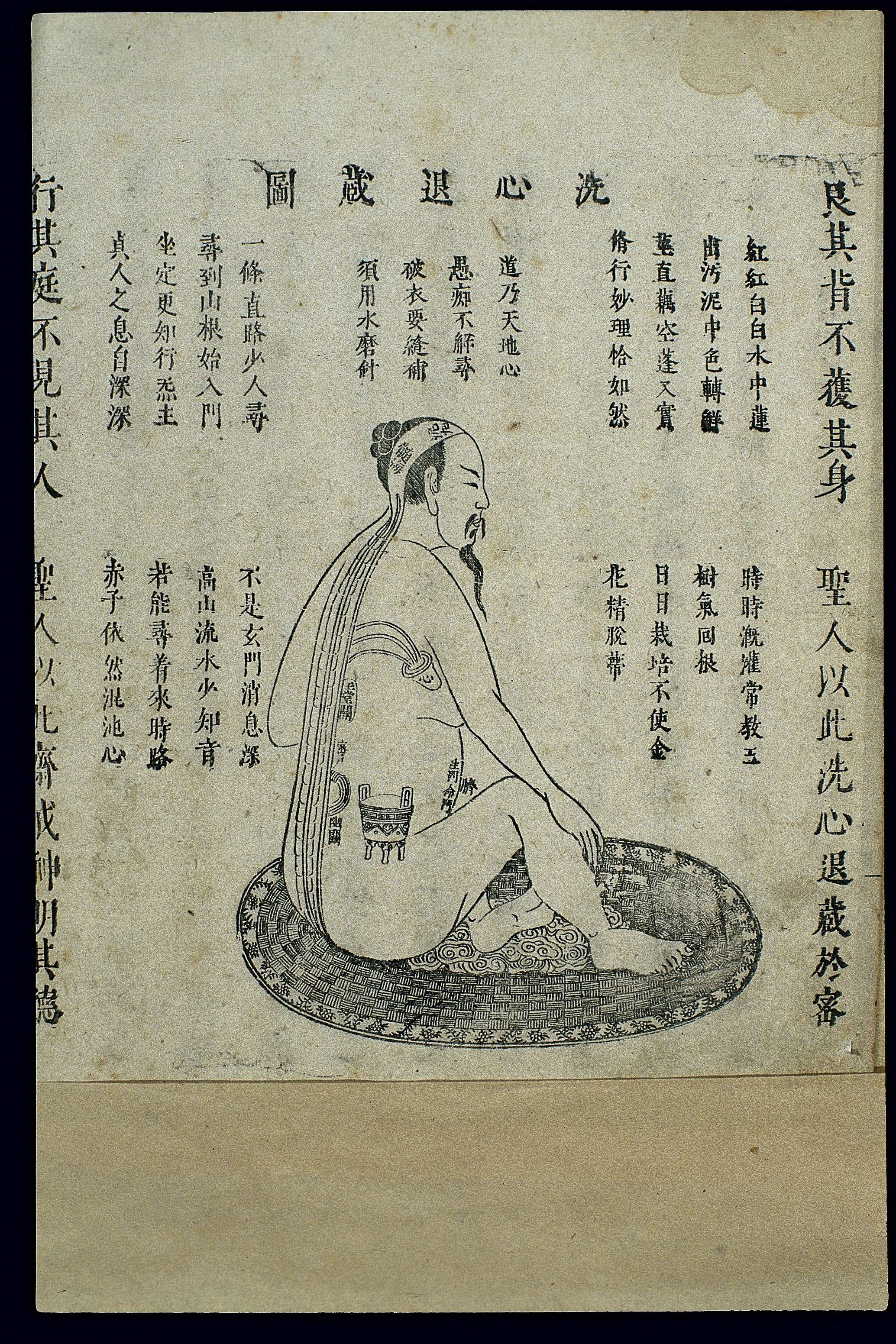
Fig. 2 – An ornate wooden replica dinglu reminiscent of the metal type used in external alchemy (larger version). Fig. 3 – An early 17th-century woodblock print depicting a Daoist practitioner’s dantian as a ding vessel (larger version).

The concept of consuming alchemically derived elixirs is first mentioned in Discourses on Salt and Iron (Yantie tun, 鹽鐵論, c. 60 BCE). Later, the Token for the Agreement of the Three According to the Book of Changes (Zhouyi cantong qi, 周易參同契, c. 2nd-century CE; “The Token” hereafter) standardized the use of toxic materials, such as lead and mercury, for making said elixir, and this idea remained entrenched until the Tang Dynasty (618–907 CE) (Pregadio, 2008, pp. 1002-1003). External alchemy was eventually superseded in popularity by internal alchemy (neidan, 内丹) from the Tang onward and was still popular during the Ming Dynasty (1368–1644 CE) when the standard 1592 version of JTTW was published.

The second meaning is the human body as a metaphor for the furnace—i.e. internal alchemy. The Token considers “the 5 organs, 12 vessels, 24 vertebrae, and 360 joints … all part of this body dinglu” (Wang, 2012, p. 192). The corporal furnace, the ingredients (yao, 藥), and the firing time (huohou, 火候) combine to make the “three essentials” (sanyao, 三要) of internal alchemy (Robinet, 2008). The ingredients are yin and yang energy, and the firing time is the measured absorption of said energies and the time at which this activity is partaken (Wang, 2012, pp. 192-193).

3. External vs Internal in JTTW

Laozi’s use of the Eight Trigrams Furnace stands as a perfect example of external alchemy, and Sun’s use of breathing exercises and qi circulation serves as a prime example of internal alchemy. So how are these competing processes depicted in JTTW? Well, recall that the external type had long been supplanted by the internal type by the time the novel was published. Hence, one could say Laozi’s methods were dated compared to those used by Monkey. This might then explain a surprising story element from JTTW chapter seven.

When Sun first escapes from the furnace, “Laozi rushes up to clutch at him, only to be greeted by such a violent shove that he falls head over heels while the Great Sage escapes” (based on Wu & Yu, 2012, vol. 1, p. 189). Think about that for a moment. Monkey, a proponent of internal alchemy, physically assaults the Daoist high god, a proponent of external alchemy. Add to this the fact that Sun seemingly only respects/fears immortals that promote internal alchemy—a good example being his first master, Patriarch Subodhi (Xuputi zushi, 須菩提祖師)—and a picture begins to form: perhaps this is the JTTW author-compiler’s way of touting the superiority of the internal over the external. What do you think?

4. Conclusion

Monkey’s time in Laozi’s furnace likely borrows from (one or both of) two sources, the story of a child magically surviving boiling in The Story, the 13th-century CE precursor of JTTW, and the story of Laozi magically surviving boiling from Laughing at the Dao, an anti-Daoist polemic of the 6th-century CE. The latter is humorous as it shows Monkey’s punishment is a recapitulation of the high god’s punishment.

JTTW presents two forms of alchemy: the concept of Laozi’s furnace refers to “external” alchemy and harkens back to Han Dynasty China when alchemists used such furnaces to fire toxic mercury and lead in an attempt to produce an elixir of immortality; Sun Wukong’s use of breathing exercises and qi circulation is a prime example of “internal” alchemy in which the body is used as the furnace to fire the immortal elixir. External alchemy fell out of favor during the Tang and was superseded by Internal alchemy from then on into the Ming, when JTTW was published. Therefore, the novel portrays the high god of Daoism as a proponent of the dated external school, while immortals like Monkey are portrayed as proponents of the then current internal school.

Notes:

1) For a complete translation, see Bodman (1994).
2) See Zürcher & Teiser (2007), pp. 299-300 and 431 n. 53.

Sources:

Bodman, R. W. (1994). The Transformation Text on the Boy Shun’s Extreme Filial Piety. In V. H. Mair (Ed.), The Columbia Anthology of Traditional Chinese Literature (pp. 1128-1134). New York: Columbia University Press.

Kim, D. (2008). Dinglu: I. Waidan In F. Pregadio (Ed.), The Encyclopedia of Taoism (2 Vols.) (pp. 360-361). London [u.a.: Routledge].

Mair, V. H. (1987). Parallels Between Some Tun-Huang Manuscripts and the 17th Chapter of the Kozanji Journey to the West. Cahiers d’Extrême-Asie, 3, 41-53.

Pregadio, F. (2008). Waidan In F. Pregadio (Ed.), The Encyclopedia of Taoism (2 Vols.) (pp. 1002-1005). London [u.a.: Routledge].

Robinet, I. (2008). Dinglu: II. Neidan In F. Pregadio (Ed.), The Encyclopedia of Taoism (2 Vols.) (pp. 361-362). London [u.a.: Routledge].

Wang, R. (2012). Yinyang: The Way of Heaven and Earth in Chinese Thought and Culture. Cambridge: Cambridge University Press.

Wivell, C. S. (1994). The Story of How the Monk Tripitaka of the Great Country of T’ang Brought Back the Sūtras. In Mair, Victor H. The Columbia anthology of traditional Chinese literature (pp. 1181-1207). New York: Columbia University Press.

Wu, C., & Yu, A. C. (2012). The Journey to the West (Vols. 1-4) (Rev. ed.). Chicago, Illinois: University of Chicago Press.

Zürcher, E., & Teiser, S. F. (2007). The Buddhist Conquest of China: The Spread and Adaptation of Buddhism in Early Medieval China. Leiden: Brill.