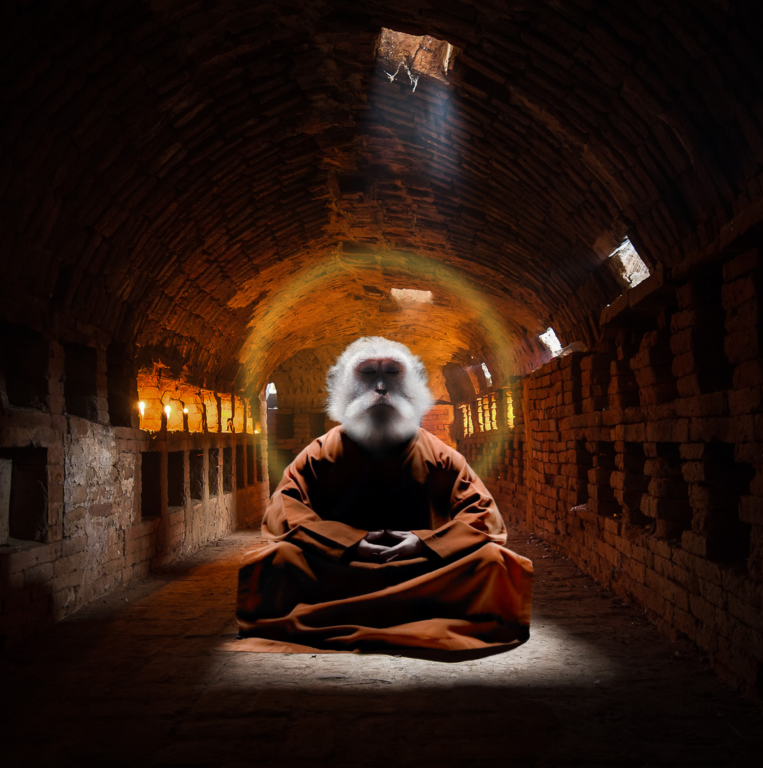
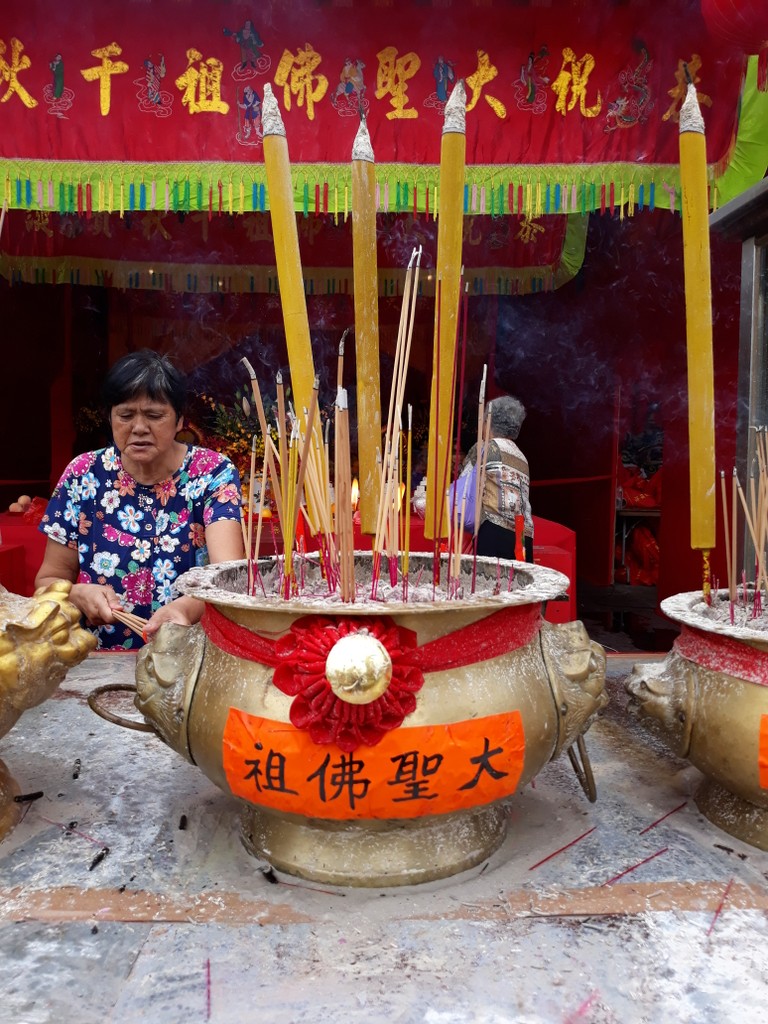
The 2018 film Monkey King 3 (Xiyouji: Nu er guo, 西遊記·女兒國; lit: “Journey to the West: Woman Kingdom”) sees the pilgrims enter a magic portal to discover a hidden land peopled by only women. At one point, Tripitaka jumps into a river to retrieve the scattered words of a sentient piece of paper with information revealing how they can escape; and in Sha Wujing’s attempt to save him, both inadvertently swallow water. The resulting splashes also enter the mouth of Zhu Bajie, who is sleeping nearby. Sometime later, all three pilgrims discover that they are pregnant due to drinking from the river (fig. 1-3). The queen of the Woman Kingdom sends Sun Wukong to retrieve magic water to abort the births from a cross-dressing immortal. However, upon his return, Monkey learns that they’ve decided to keep their babies. Despite this, he uses fixing magic to freeze them in place and gives them the water so that nothing will keep the pilgrims from their quest.
The movie is a very loose adaptation of Journey to the West (Xiyouji, 西遊記, 1592; “JTTW” hereafter) chapter 53. In this article, I describe the chapter and suggest that it is based on a story from Hindu religious literature in which an ancient king becomes pregnant from drinking ritual water. I will show that the version appearing in the Mahabharata (Sk: महाभारतम्; 4th-c. BCE to 4th-c. CE) likely influenced JTTW as other events from the Hindu epic also appear in the Chinese novel. I will also show that an early Gupta period list of Mahabharata parvas (books) discovered in Xinjiang, China names the parva containing the king’s story, suggesting that the tale may have been present in the Middle Kingdom centuries prior to JTTW.
Fig. 1 – The Monkey King 3 movie poster showing a pregnant Tripitaka and the Woman Kingdom queen (larger version). Fig. 2 – The Zhu Bajie variant (larger version). Fig. 3 – The (beardless) Sha Wujing variant (larger version).
1. Episode from the novel
After the defeat of the Single-Horned Buffalo Demon, the pilgrims continue their journey by taking a river ferry. Upon reaching the other side, Tripitaka takes note of the clear water and asks Zhu Bajie to fetch him a bowl full. Both drink from the river, but a short time later they experience horrible abdominal pain, and their stomachs swell as if something was growing inside. They seek help from an old woman at a nearby inn, but she simply laughs and calls her friends to come see the spectacle. Her jovial attitude changes, however, once an enraged Wukong grabs hold and offers to spare her life in exchange for some hot water to calm their stomachs. But she explains it won’t help, for they have drunk from the “Child-and-Mother River” (Zimu he, 子母河) in the Woman Kingdom of Western Liang (Xiliang nuguo, 西梁女國), where the sole female inhabitants, according to custom, only drink the water to become pregnant upon reaching their 20th year. After hearing the news, both Tripitaka and Bajie panic, prompting Monkey and Sha to tease their religious brother, frightening him with the possibility of a painful, unnatural birth or some natal sickness that would threaten the baby. [1] When asked for a cure, the old woman reveals that the only way to end the pregnancy is to bribe the “True Immortal Compliant” (Ruyi zhenxian, 如意真仙) (fig. 4), who lords over the “Abortion Spring” (Luotai quan, 落胎泉) in the “Abbey of Immortal Assembly” (Juxian an, 聚仙庵), formerly known as the “Child Destruction Cave” (Po’er dong, 破兒洞), on the “Male-Undoing Mountain” (Jieyang shan, 解陽山). Wukong travels to the mountain but is forced to fight when the immortal, the Bull Demon King’s brother, attacks him to avenge Red Boy’s subjugation by Guanyin. Though weaker than Monkey, the immortal’s weapon, an “Compliant (or As-you-wish) golden hook” (Ruyi jin gouzi, 如意金鉤子), proves hard to ward off while trying to retrieve the needed water. Wukong ultimately resorts to trickery by luring his foe into battle while Wujing obtains the water. In the end, the immortal is defeated but shown mercy, and the unwanted pregnancies are aborted, being dissolved and passed as fleshy lumps in bowel movements (Wu & Yu, 2012, pp. 31-46). [2]
Fig. 4 – A drawing of the True Immortal Compliant holding his golden hook as he sits next to a well marked “Abortion Spring” (larger version). Artist unknown. The weapon is here depicted as a hooked sword. Bribes of silk, livestock, and alcohol can be seen at the immortal’s feet.
2. Origin
2.1. Hindu religious literature
This episode shares similarities with a story about the ancient Indian King Yuvanasva (Sk: युवनाश्व; a.k.a. Yuvanashva or Yuvanaswa) (fig. 5) who becomes pregnant from drinking ritual water. The tale is well known, appearing in Hindu religious texts like the Mahabharata (4th-c. BCE to 4th-c. CE), the Vishnu Purana (400 BCE to 900 CE) and the Bhagavata Purana (8th to 10th-c. CE). [3] The version appearing in the Vana Parva (3rd book) of the Mahabharata reads:
Lomasa said, ‘Hear with attention, O king! how the name of Mandhata belonging to that monarch of mighty soul hath come to be celebrated throughout all the worlds. Yuvanaswa, the ruler of the earth, was sprung from Ikshvaku‘s race. That protector of the earth performed many sacrificial rites noted for magnificent gifts. And the most excellent of all virtuous men performed a thousand times the ceremony of sacrificing a horse. And he also performed other sacrifices of the highest order, wherein he made abundant gifts. But that saintly king had no son. And he of mighty soul and rigid vows made over to his ministers the duties of the state, and became a constant resident of the woods. And he of cultured soul devoted himself to the pursuits enjoined in the sacred writ. And once upon a time, that protector of men, O king! had observed a fast. And he was suffering from the pangs of hunger and his inner soul seemed parched with thirst. And (in this state) he entered the hermitage of Bhrigu. On that very night, O king of kings! the great saint who was the delight of Bhrigu’s race, had officiated in a religious ceremony, with the object that a son might be born to Saudyumni [“Son of Sudyumna”, i.e. Yuvanasva]. O king of kings! at the spot stood a large jar filled with water, consecrated with the recitation of sacred hymns, and which had been previously deposited there. And the water was endued with the virtue that the wife of Saudyumni would by drinking the same, bring forth a god-like son. Those mighty saints had deposited the jar on the altar and had gone to sleep, having been fatigued by keeping up the night. And as Saudyumni passed them by, his palate was dry, and he was suffering greatly from thirst. And the king was very much in need of water to drink. And he entered that hermitage and asked for drink. And becoming fatigued, he cried in feeble voice, proceeding from a parched throat, which resembled the weak inarticulate utterance of a bird. And his voice reached nobody’s ears. Then the king beheld the jar filled with water. And he quickly ran towards it, and having drunk the water, put the jar down. And as the water was cool, and as the king had been suffering greatly from thirst, the draught of water relieved the sagacious monarch and appeased his thirst. Then those saints together with him of ascetic wealth, awoke from sleep; and all of them observed that the water of the jar had gone. Thereupon they met together and began to enquire as to who might have done it. Then Yuvanaswa truthfully admitted that it was his act. Then the revered son of Bhrigu spoke unto him, saying. ‘It was not proper. This water had an occult virtue infused into it, and had been placed there with the object that a son might be born to thee. Having performed severe austerities, I infused the virtue of my religious acts in this water, that a son might be born to thee. O saintly king of mighty valour and physical strength! A son would have been born to thee of exceeding strength and valour, and strengthened by austerities, and who would have sent by his bravery even Indra to the abode of the god of death. It was in this manner, O king! that this water had been prepared by me. By drinking this water, O king, thou hast done what was not at all right. But it is impossible now for us to turn back the accident which hath happened. Surely what thou hast done must have been the fiat of Fate. Since thou, O great king, being a thirst hast drunk water prepared with sacred hymns, and filled with the virtue of my religious labours, thou must bring forth out of thy own body a son of the character described above. To that end we shall perform a sacrifice for thee, of wonderful effect so that, valorous as thou art, thou wilt bring forth a son equal to Indra. Nor with thou experience any trouble on account of the labour pains.’ Then when one hundred years had passed away, a son shining as the sun pierced the left side of the king endowed with a mighty soul, and came forth. And the son was possessed of mighty strength. Nor did Yuvanaswa die—which itself was strange. Then Indra of mighty strength came to pay him a visit. And the deities enquired of the great Indra, ‘What is to be sucked by this boy?’ Then Indra introduced his own forefinger into his mouth. And when the wielder of the thunderbolt said, ‘He will suck me,’ the dwellers of heaven together with Indra christened the boy Mandhata, (literally, Me he shall suck). Then the boy having tasted the forefinger extended by Indra, became possessed of mighty strength, and he grew thirteen cubits, O king. And O great king! the whole of sacred learning together with the holy science of arms, was acquired by that masterful boy, who gained all that knowledge by the simple and unassisted power of his thought. And all at once, the bow celebrated under the name of Ajagava and a number of shafts made of horn, together with an impenetrable coat of mail, came to his possession on the very same day, O scion of Bharata‘s race! And he was placed on the throne by Indra himself and he conquered the three worlds in a righteous way; as Vishnu did by his three strides (Roy, 1884, pp. 382-384).
Both events involve men who quench their thirst with water, not realizing that it has the magic power to bestow pregnancy. Tripitaka and Bajie drink from a river which is specifically used by the inhabitants of the Woman Kingdom to reproduce, while King Yuvanasva drinks ritual water meant to give his wife a son. Additionally, both books state drinking the water is inappropriate, followed by a description of its child-bestowing properties. JTTW reads:
That water your master drank is not the best, for the river is called Child-and-Mother River … Only after reaching her twentieth year would someone from this region dare go and drink that river’s water, for she would feel the pain of conception soon after she took a drink (Wu, & Yu, 2012, p. 39).
The Mahabharata reads: “Then the revered son of Bhrigu spoke unto him, saying. ‘It was not proper. This water had an occult virtue infused into it, and had been placed there with the object that a son might be born to thee’” (Roy, 1884, pp. 382-384).
Fig. 5 – King Yuvanasva (center) holding the vessel of ritual water. From the cover of The Pregnant King (2008) by Devdutt Pattanaik (larger version). The book is a reimagining of the king’s story.
2.2. Mahabharata elements in Journey to the West
The possibility of King Yuvanasva’s story influencing JTTW is quite high as other events from the Mahabharata are known to appear in the novel. For example, Subbaraman (2002) reveals striking similarities between an event from the Adi Parva (1st book) and chapters 47 to 48 of the Chinese classic. In the Mahabharata, the Pandava brothers and their mother Kunti escape assassination and disguise themselves as Brahmins (Hindu priests) traveling the road. They eventually seek shelter in a village plagued by the rakshasa Baka, who offers safety from foreign invaders in exchange for rice, livestock, and a human sacrifice. Those who try to defy this fate risk seeing their entire family eaten along with themselves. The Brahmin home in which the Pandavas stay has been chosen for that year’s sacrifice. Kunti instead sends her son Bhima, the most powerful of the brothers, in place of the householder’s son and daughter. In the end, the warrior kills Baka with his mighty strength. In JTTW, the pilgrims (Buddhist monks) stop for lodging in a village afflicted by the demon Great King of Miraculous Power (Ling gan dawang, 靈感大王), who sends clouds and rain in exchange for offerings of livestock and sacrifices of virgin boys and girls. It is impossible to defy this fate as he has memorized the personal details for every inhabitant. The Buddhist home in which the group stays has been chosen for the sacrifice. Wukong and Bajie instead take the place of the respective son and daughter (fig. 6). In the end, the Great King is defeated with the help of Guanyin (Subbaraman, 2002, pp. 11-18).
Furthermore, my own research shows that the tale of Garuda from the Mahabharata influenced the “Peng of Ten Thousand Cloudy Miles” (Yuncheng wanli peng, 雲程萬里鵬), an ancient demon king and spiritual uncle of the Buddha appearing in JTTW chapters 74 to 77.
Interestingly, the earliest known list of Mahabharata parvas and sub-parvas was discovered in Kizil in what is now Xinjiang, China. This list appears in the Spitzer Manuscript (c. 200-300 CE), a Hindo-Buddhist philosophical palm-leaf manuscript written in Sanskrit. Schlingloff (1969) compares the list with the known books of the completed epic (fig. 7 and 8), noting the absence of some parvas, which indicates that the Mahabharata was still in a state of development at the time the list was compiled. But it’s important to note that the Vana Parva (a.k.a. Aranya Parva or Aranyaka Parva), the book containing the story of King Yuvanasva, is named in the manuscript (Schlingloff, 1969, p. 336). This suggests that the story of the monarch’s water-induced pregnancy may have been present in China centuries prior to JTTW.
Fig. 7 – Part 1 of a diagram comparing the 100 sub-parvas and 18 parvas of the completed Mahabharata and the Spitzer Manuscript list (larger version). Take note of the highlighted words showing the inclusion of Vana Parva, here called “Aranyakam”. Fig. 8 – Part 2 of the diagram (larger version). From Schlingloff, 1969, pp. 336-337.
3. Conclusion
JTTW chapter 53 tells how Tripitaka and Zhu Bajie become pregnant after drinking magic river water used by the inhabitants of the Woman Kingdom to reproduce. This is similar to a story from Hindu religious literature in which King Yuvanasva becomes pregnant after drinking ritual water meant for his wife. JTTW is known to include story elements from the Mahabharata, which means the version of the monarch’s tale from the Varna Parva (3rd book) likely influenced the Chinese novel. The Varna Parva is named in an early Gupta period list of Mahabharata parvas discovered in what is now Xinjiang, China. This suggests that the story may have been present in the Middle Kingdom centuries prior to JTTW.
Notes:
1) For example, Wukong tells Bajie: “When the time comes, you may have a gaping hole at your armpit and the baby will crawl out” (Wu, & Yu, 2012, p. 35). This likely references ancient Chinese stories of sage-kings splitting the chest, back, or sides of their mothers upon birth, just like Yu the Great and the historical Buddha.
2) I have slightly modified the translation of names in Wu and Yu (2012).
3) See here for the version appearing in the Vishnu Purana. See here for the Bhagavata Purana.
Sources:
Roy, P. C. (1884). The Mahabharata of Krishna-Dwaipayana Vyasa, Translated Into English Prose: Vana Parva. Calcutta: Bharata Press.
Schlingloff, D. (1969). The Oldest Extant Parvan-List of the Mahābhārata. Journal of the American Oriental Society,89(2), 334-338. doi:10.2307/596517
The Six-Eared Macaque (Liu’er mihou, 六耳獼猴) (fig. 1) is one of the most interesting villains that Sun Wukong faces in Journey to the West (Xiyouji, 西遊記, 1592; “JTTW” hereafter). He is an example of the evil twin archetype from world mythology. But unlike modern media which sometimes differentiates evil twins with goatees—think of Evil Spock from the Star Trek episode “Mirror, Mirror“—this malicious spirit is an exact duplicate of Monkey, with the same features, voice, clothing, and fighting abilities. He’s so similar, in fact, that no one in the cosmos, save the Buddha, can differentiate him from Wukong. But who is he really, and where did he come from?
In this article, I suggest that the Six-Eared Macaque is a negative manifestation of Sun Wukong’s mind, a concept which is based on Buddhist theories of mind and nonduality (Sk: advaya; Ch: bu’er, 不二). In addition, I describe his character arc and appearance, discuss his possible origin within the book as a former sworn brother of the Monkey King, explain the significance of the six ears to Buddhism, and detail references to him in an unofficial 17th century sequel to JTTW. Finally, I describe the character’s influence on the upcoming Chinese video game Black Myth: Wukong (August 20th, 2024).
In chapter 56, Monkey magically disguises himself as a 16-year-old monk and comes to the rescue of Tripitaka, who had been captured by mountain bandits demanding money for safe passage. The bandits let the priest go under the pretense that his young disciple has money. However, Wukong murders the two bandit chiefs with his magic staff, causing the remaining thirty or so men to flee in terror. That night, the pilgrims find lodging with an old couple, but they soon discover that the couple’s son is one of the bandits routed by Monkey earlier in the evening. The son returns home with his gang late at night and upon learning of the monks, hatches a plan to attack them in their sleep. But the old man alerts the pilgrims to the danger and allows them to escape out a back gate. The bandits take chase, catching up to them at sunrise, only to meet their death at Wukong’s hands. Monkey finds the old couple’s son and beheads him as punishment for disrespecting his parents. All of this killing horrifies Tripitaka, who recites the tight-fillet spell (jin gu zhou, 緊箍咒) and banishes Wukong from the group.
In chapter 57, Wukong travels to Guanyin’s island paradise to complain about Tripitaka casting him out from the pilgrimage. He asks the goddess if he can be released from monkhood and return to his old life, but she instead uses her eyes of wisdom to foresee a future event in which Monkey will need to rescue his master. Meanwhile, Tripitaka asks his remaining disciples to find him food and drink. However, in their absence, Wukong attacks the priest, knocking him unconscious with the staff and stealing the group’s belongings containing the travel rescript (tongguan wendie, 通關文牒). [1]Sha Wujing is sent to the Mountain of Flowers and Fruit to retrieve their things, but Monkey refuses to return the rescript as he wishes to win all of the merit and fame by finishing the quest on his own. Wujing points out that the Buddha will only give the holy texts to the chosen scripture seeker. Wukong, however, shows that he’s prepared for this outcome by parading doppelgangers of Tripitaka, Zhu Bajie, Sha, and the white dragon horse. Wujing kills his double—which is revealed to be a transformed monkey spirit—and attempts to attack Monkey but is forced to retreat. He flees to Guanyin only to attack Wukong once more when he finds him sitting next to the goddess. Guanyin stays his hand and explains that Monkey has been with her the entire time. She then sends them both back to the Mountain of Flowers and Fruit to investigate the double.
In chapter 58, upon seeing the impostor, Wukong rushes forward to attack the double, who defends himself with his his own magic staff. The two battle their way through the sky to Guanyin’s island paradise in order to determine who is the real Monkey. But when she attempts to weed out the impostor by reciting the tight-fillet spell, both Wukongs drop to the floor in pain. In the face of failure, Guanyin sends them up to the celestial realm in the hopes that the deities who fought Monkey centuries ago will be able to tell one from the other. Both of them fight their way into heaven and gain an audience with the Jade Emperor, but not even the imp-reflecting mirror (zhao yao jing, 照妖鏡) [2] can tell them apart. The two then battle their way back to earth, and when Tripitaka’s use of the tight-fillet spell fails, they fight down to the underworld. There, the judges are unable to find the impostor in their ledgers, but “Investigative Hearing” (Diting, 諦聽), the omniscient celestial mount of the bodhisattva Ksitigarbha, finally solves the riddle. However, the creature is reluctant to reveal the false Wukong for fear that the fiend will use his powers to disrupt the underworld. The bodhisattva, therefore, sends them to the Western Paradise in India to stand before the Buddha, who instantly recognizes the impostor. The Enlightened One gives Guanyin a short lecture on four spiritual primates that fall outside of the ten categories of mortal and immortal life in the cosmos: 1) The Stone Monkey of Numinous Wisdom (Lingming shihou, 靈明石猴, i.e. Sun Wukong); 2) The Red-Buttocked Horse-Monkey (Chikao mahou, 赤尻馬猴); 3) The Connected-Arms Gibbon (Tongbi yuanhou, 通臂猿猴); and 4) The Six-Eared Macaque (Liu’er mihou, 六耳獼猴). When the Buddha identifies the doppelganger as the fourth kind, the fake Monkey attempts to flee in the form of a bee but is trapped under the Enlightened One’s alms bowl. In the end, Wukong kills the macaque with his staff.
2. Physical Appearance
Chapter 58 describes Six Ears as Sun’s exact twin:
His looks were exactly the same as those of the Great Sage: he, too, had a golden headband clamped to his blondish-brown hair, a pair of fiery eyes with golden irises, a monk’s robe on his body, a tiger kilt tied around his waist, a gold-banded iron staff in one of his hands, and a pair of deerskin boots on his feet. He, too, had
A hairy face with the Thunder Lord’s beak, [3] Empty cheeks unlike those of Saturn; [4] Two forked ears on a big, broad head, And fangs that have grown outward (based on Wu & Yu, 2012, vol. 3, p. 104).
His magic staff, the “Acquiescent Iron Pole Arm” (Suixin tie ganbing, 隨心鐵桿兵), [5] also mirrors Monkey’s weapon. “Acquiescent” or “to fulfill one’s desires” (suixin, 隨心) is a play on the “as-you-will” (ruyi, 如意) of Sun’s “As-You-Will Gold-Banded Staff” (Ruyi jingu bang, 如意金箍棒).
3. Origin
3.1. Possible Identity
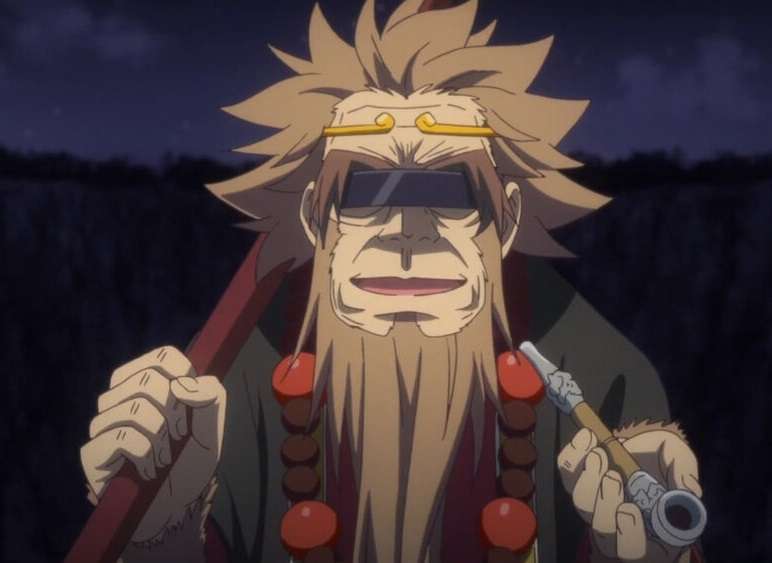
Lam (2005) suggests that the Six-Eared Macaque is actually Monkey’s sworn brother, the Macaque King (Mihou wang, 獼猴王) (fig. 2), from his younger days as a demon (p. 168). [6] He explains:
The latter’s other agnomen, “the Great Sage Informing Wind” (Tongfeng dasheng, 通風大聖 …) [7] suggests further that its ears are as good as the six-eared macaque’s in information gathering. Despite all these archaic or anachronistic traces, however, Monkey never comes to recognize the six-eared macaque as his old sworn brother as is the case with the Bull Demon King” (Lam, 2005, p. 168).
[Note (08-05-23): For the sake of discourse, I have altered the wording in the above section from “Lam (2005) reveals” to “… suggests” to show that I’m open to opposing views.
It has recently come to my attention that some people disagree with Lam’s (2005) statement from above. One anonymous person on Tumblr even questioned my credibility because they believed that I—not realizing that this is not my idea—was confusing two different characters. But I replied by saying:
It’s okay to disagree with someone. I don’t always agree with scholars who write about Journey to the West and its characters. But that doesn’t make them untrustworthy. The most important thing to do in such situations is to present your own views and support them with evidence.
Admittedly, this person subsequently contacted me in private to ask questions about the subject. So my respect goes out to them.
Another person (who shall remain nameless) has repeatedly said on social media that Lam’s (2005) statement is “just a theory” and that the Macaque King is never explicitly stated in the book to be Six Ears. In addition, they claim the idea that Macaque and Sun Wukong were sworn brothers is not widely accepted in China. Instead, the Chinese supposedly view them as biological brothers. But I have three problems with this critique. One, saying that something is just a theory does not address the point raised by Lam (2005). As noted above, anyone who disagrees needs to provide a counterargument with cited evidence. Two, just because something isn’t openly stated doesn’t mean there isn’t a connection between two or more concepts. See, for instance, the unspoken relationship between the supply cart in chapter 46 and Daoist internal alchemy. And three, the views of modern readers carry no weight when we are talking about an allegory-laden novel that was published over 430 years ago. This is especially true since framing Six Ears and the Monkey King as brothers is incorrect (see section 3.4. below for how these two are connected). Therefore, the only thing that matters in this case is evidence gleaned from the book.
But to the person’s credit, they (along with others on social media) provide a reason for why they don’t accept Lam (2005): Six Ears can’t be the Macaque King because the latter is a woman. This idea is always mentioned in passing but never actually supported with evidence. However, I show in this article that the concept is based on a discrepancy in the Anthony C. Yu (Wu & Yu, 2012) translation. My conclusion reads:
Journey to the West uses the term Mihou wang (獼猴王) three times to refer to the same character. Yu (Wu & Yu, 2012) translates this twice as “Macaque King” (ch. 3 & 4) but later changes it to “Female Monkey King” (ch. 41). Despite the original Chinese referring to the character as the “fifth brother” (wuge, 五哥), Yu (Wu & Yu, 2012) appears to represent them as a woman based solely on the association of mihou (獼猴) with female monkeys. However, not even Journey to the West follows this association, for out of 13 mentions of the term, over 61% refer directly to Liu’er mihou (六耳獼猴), Sun Wukong’s six-eared doppelganger. In addition, mihou (獼猴) and mi (獼) are even used in the novel to refer to monkeys as a whole.
The term mihou (獼猴) is just one of several transcriptions for a non-Chinese word used in China for millennia to mean “macaque” or “monkey.” Dynastic sources show that the association with female monkeys is a misunderstanding based on changes in dialect, along with differences in transcription. Said changes include muhou (沐猴, “bathing monkey”), muhou (母猴, “mother monkey”), and of course mihou (獼猴). Therefore, the word can be applied to either male or female monkeys.
The last point is exemplified in Buddhist literature. A 3rd century CE Chinese version of the Dasaratha Jataka, which very briefly describes the Hindu epic Ramayana (5th-century BCE), references the great battle between the monkey king brothers Sugriva and Vali and calls the former Mihou (獼猴). A 3rd century Chinese version of the Mahakapi Jataka, which tells of the Buddha’s past life as a monkey king, also refers to him as Mihou wang (獼猴王). And a 5th century variant of the same story refers to the Enlightened One as the Shan mihou (善獼猴), or “Good Macaque.”
[Note (09-27-23): Even Sun Wukong’s precursor, Hou xingzhe (猴行者, the “Monkey Pilgrim”) from the 13th century JTTW, is called Mihou wang (獼猴王). Chapter two refers to him as Huaguo shan ziyun dong bawan siqian tongtou tie’e Mihou wang (花果山紫雲洞八萬四千銅頭鐵額獼猴王, the “Bronze-Headed, Iron-Browed King of the Eighty-Four Thousand Monkeys of the Purple Cloud Grotto on the Mountain of Flowers and Fruits”) (Wivell, 1994, p. 1182).]
Therefore, this is not a valid counterargument.
I know of one other objection appearing on social media: Sun Wukong wouldn’t have killed Six Ears if he had recognized him as his sworn brother. But people who claim this forget that Macaque is capable of transformations due to his connection to the Monkey King (again see section 3.4. below). This fact is revealed at the end of his character arc in chapter 58: “The macaque’s hair stood on end, for he supposed that he would not be able to escape. Shaking his body quickly, he changed at once into a bee, flying straight up” (Wu & Yu, vol. 3, p. 116). Thus, he could have taken on a different form in the past. Someone might counter that Sun would have seen through this magic disguise with his “Fiery Eyes and Golden Irises” (Huoyan jinjing, 火眼金睛). [8] But the fraternal brotherhood with the Macaque King and the other Demon Kings is formed in JTTW chapter three, while Monkey isn’t punished to the eight trigrams furnace, which gives him this power, until chapter seven (Wu & Yu, 2012, vol. 1, pp. 138-139 and 189). Remember also that even with his holy vision, Sun can’t see through Six Ears’ disguise during their struggle across the cosmos. Therefore, I don’t consider this to be a valid counterargument either.
It appears that most of this hubbub can be traced to “Shadowpeach,” a nickname for a popular slash romance between the Lego Monkie Kid versions of Six Ears (Shadow) and Sun Wukong (Peach). Somehow this is validated if the Macaque King and Six Ears are two different people. I’m not exactly sure why. But trying to discredit me or a source just to support a popular headcanon seems extremely immature to me.
[Note 10-01-23: I wanted to highlight that I’ve seen a more compelling argument than those listed above. Simply put, it doesn’t make any narrative sense for Six Ears to be the Macaque King. The latter is introduced in chapter three, while the former is introduced in chapter 56. And beyond Lam’s (2005) suggestion, there is nothing else concretely connecting the two. On the other hand, the Bull Demon King (Niumo wang, 牛魔王) is the only sworn brother who openly reappears under the same name to play a part later in the novel (ch. 60-61).
Therefore, I will leave it up to the reader to accept whether or not Six Ears and the Macaque King are the same character.]]
3.3. Significance of the Six Ears
Yu (Wu & Yu, 2012) suggests that the macaque’s six ears come from the Buddhist saying “The dharma is not to be transmitted to the sixth ear [i.e., the third pair or person]” (fa bu zhuan liu er, 法不傳六耳) (p. 387 n. 7). He continues: “This idiom is already used in chapter 2 when Monkey assured Patriarch Subodhi that he could receive the oral transmission of the secret formula for realized immortality because ‘there is no third party [sixth ear] present'” (Wu & Yu, 2012, vol. 3, p. 387 n. 7). This phrase refers to a closely guarded secret that must be kept at all cost, something that can only be passed from a qualified teacher to an initiated disciple.
In this case, the Six-Eared Macaque is the third set of ears, for the Buddha states:
[E]ven if this monkey stands in one place, he can possess the knowledge of events a thousand li [(310.7 mi/500 km] away and whatever a man may say in that distance (based on Wu & Yu, 2012, vol. 3, p. 115).
Who knows how long this creature listens in on Monkey’s life before he makes an appearance. Perhaps he hears Subodhi’s secret teachings. This might explain why the impostor has similar abilities to our hero.
(See the 08-18-23 and 12-20-23 updates below for more information.)
As the embodiment of the “sixth ear,” the Six-Eared Macaque also represents heterodoxy (waidao, 外道; pangmen, 旁們, lit: “side door”), for someone eavesdropping on esoteric secrets without full initiation into a tradition would have an incomplete understanding. And any supernatural gifts derived from subsequent practice, though powerful as they may be, would just be pale imitations of that achieved by true disciples. This concept is featured in JTTW chapter 46 when three animal spirits-turned-Daoist priests challenge Wukong to contests of torture, but each of them dies because their magic is not as strong as Monkey’s. The novel stresses this is because their training was only partially completed under a teacher. [9] Wukong is more powerful because he completed his training under Subodhi.
3.4. The Ramayana vs. Buddhist Philosophy
Hoong (2004) claims that the concept of two identical apes fighting each other “evolved from the well-known episode of the Ramayana where Rama was unable to distinguish between [Vali] and the monkey king Sugriva … when the twin brothers were fighting hand to hand” (p. 36 n. 32). This is an enticing suggestion, and indeed the episode is very briefly described in a collection of Buddhist jataka tales translated into Chinese in the third century, [10] showing that the story existed in China for centuries prior to the publication of the standard 1592 edition of JTTW. However, I should point out that the tale doesn’t mention the pugilistic primates being identical. In fact, they’re not even brothers. It simply reads,
The following day the monkey fought with his uncle. The [human] king bent the bow and took out arrows … Though far off, the uncle shuddered with horror. He was mighty afraid. He wandered about [a while] and ran away (Mair, 1989, p. 677).
That’s not to say the JTTW author-compiler wasn’t influenced by the tale. It’s just that I think there are other avenues open to research.
Fig. 3 – The Great Sage and his impostor battle in the Western Paradise (larger version). Artist unknown.
In Chapter 58, the Buddha gives his congregation a sermon on nonduality (Sk: advaya; Ch: bu’er, 不二), discussing existence and nonexistence, form and formlessness, and emptiness and nonemptiness. Just as the battle between Monkey and his double erupts on Spirit Vulture Mountain (fig. 3), the Enlightened One tells his congregation: “You are all of one mind, but take a look at two Minds in competition and strife arriving here” (Wu & Yu, 2012, vol. 3, p. 113). “One mind” (Sk: ekacitta; Ch: yixin, 一心) is a high-level philosophy and core tenet of many Buddhist schools that refers to a tranquil, immovable mind that encompasses nonduality (Buswell & Lopez, 2014, pp. 1031-1032; Huang, 2005, p. 68). “Two minds” (erxin, 二心) refers to the dichotomy of the “true mind” (zhenxin, 眞/真心), “the original, simple, pure, natural mind of all creatures, [or] the Buddha-mind” and the “illusionary mind” (wangxin, 妄心), “which results in complexity and confusion” (Soothill and Hodous, 1937/2006, pp. 24-25). A poem in chapter 58 specifically associates two minds with confusion. The first two lines read: “If one has two minds, disasters he’ll breed; / He’ll guess and conjecture both far and near” (Wu & Yu, 2012, vol. 3, p. 113).
It’s important to remember that Wukong is an embodiment of the “Mind Monkey” (xinyuan, 心猿), a Buddho-Daoist concept denoting the disquieted thoughts that keep man trapped in Samsara. [11] As his double, the Six-Eared Macaque is also a Mind Monkey. Therefore, I suggest that the battle between these twin primates is an allegory for the struggle between the true and illusionary minds within our hero. After all, Wukong is the true Monkey, while his double, the fake Monkey, lives under the fantasy that he can take the Great Sage’s place and finish the quest on his own. Furthermore, given chapter 58’s emphasis on nonduality, I argue Monkey killing the Six-Eared Macaque in the end represents the blossoming of one mind/true mind by extinguishing the illusionary mind. This fits with Sun’s (2018) suggestion that the killing “is an action of eliminating the monster in him [Wukong], indicating that he is getting closer to achieving Buddhahood at this point in the journey” (p. 25). [12]
4. Other Literature
The Six-Eared Macaque is mentioned by name twice and referenced once in A Supplement to the Journey to the West(Xiyoubu, 西遊補, c. 1640), an unofficial 16-chapter novellette and addendum to the original novel taking place between the end of chapter 61 and the beginning of chapter 62. In the story, Monkey is trapped in a dream world where he wanders from one disjointed adventure to the next searching for a magic weapon needed to clear the pilgrims’ path to India. In chapter ten, he attempts to leave a magic tower of mirrors and becomes hopelessly entangled in a net of sentient red threads that adapt to any transformation he uses to escape. An elderly man claiming to be Sun Wukong, the Great Sage Equaling Heaven, comes to his rescue by snapping the threads for him. But upon hearing the man’s name, Monkey lashes out at him with his weapon, exclaiming: “You rascally six-eared ape! Have you come to trick me again? Take a look at my cudgel!” (Dong, Lin, & Schulz, 2000, p. 87). But after the old man vanishes in a flash, Wukong realizes that he was saved by his very own spirit.
In chapter 12, a blind court singer plays a tune recounting events from the original novel for the enjoyment of Tripitaka and a foreign king. A section of the song goes: “A pair of Sage Monkeys deceived Guanyin” (Dong, Lin, & Schulz, 2000, p. 104). [13]
In chapter 15, after giving up the quest and becoming a commander for the foreign king, Tripitaka starts amassing an army. Sun Wukong is listed among the generals, but because Monkey is investigating his master’s change of heart, he instead presents himself as his brother, the Six-Eared Macaque:
The name “Great General Sun Wukong” was called. The Tang Priest blanched and gazed below his platform. It happened that Monkey had mixed amongst the army for the past three days in the form of a six-eared monkey soldier. When he heard the three words “Sun Wukong” he leaped out of formation and knelt on the ground, saying, “Little General Sun Wukong is transporting supplies and couldn’t be present. I’m his brother Sun Wuhuan [孫悟幻, “Monkey Awakened to Fantasy”], and I wish to take his place in battle. In this I dare disobey the Commander’s order.”
The Tang Priest said, “Sun Wuhuan, what is your origin? Tell me quickly, and I’ll spare your life.”
Hopping and dancing, Monkey said:
In the old days I was a monster, Who took the name of Monkey. After the Great Sage left the Tang Priest, I became his close relation by way of marriage. There’s no need to ask my name, I’m the Six-eared Monkey, Great General Sun Wuhuan.
The Tang Priest said, “The six-eared ape used to be Monkey’s enemy. Now he’s forgotten the old grudge and become generous. He must be a good man.” He ordered [the minor general] White Banner to give Sun Wuhuan a suit of the iron armor of the vanguard and appointed him “Vanguard General to Destroy Entrenchment” (Dong, Lin, & Schulz, 2000, p. 122).
Black Myth: Wukong (Hei shenhua: Wukong, 黑神話:悟空, August 20th, 2024) is an upcoming action RPG by the independent Chinese developer Game Science (Youxi Kexue, 遊戲科學). A trailer with 13 minutes of gameplay was released August 20th of 2020 and (as of 11-4-20) has garnered over 6.7 million views on YouTube alone (video 1). It opens on an aged, furry and squint-faced, long-nailed monk (likely Wukong) sitting in a rundown temple and recalling assorted legends about Monkey. One says the hero became a Buddha and stayed on Spirit Mountain; another that he died on the journey and a different figure was given buddhahood in his place; and another still that Wukong is just a fictional character from a story. The monk then tells the viewer, “But you must not have heard the story I’m going to tell,” thus alluding to the unofficial or “black myth” (hei shenhua, 黑神話).
The trailer features a gorgeous, immersive world in which Wukong travels by foot, wing, and cloud battling underlings and demonic bosses. Monkey is shown capable of freezing enemies in place, making soldiers with his hair, and hardening his body to avoid damage, as well as transforming into a cicada (for covert travel and reconnaissance) and a large golden ape (for boss battles). See here for a great explanation of the cultural and literary references in the game.
Video 1 – The 13 minute game play trailer for Black Myth: Wukong.
Interestingly, some characters in the game hint at a second Wukong. For example, a low-level demon boss says, “Hmm … another monkey?” upon meeting Wukong. Later, an earth god sees him and proclaims, “Similar!”, thus alluding to the other Monkey. This mystery comes to a head at the end of the trailer when Wukong goes to strike another character, and his weapon is blocked by a staff with little effort. The camera pans upwards along the shaft, passed glowing Chinese characters for the “‘As-you-will’ Gold-Banded Staff” (Ruyi jingu bang, 如意金箍棒), revealing the Great Sage Equaling Heaven in his golden armor. This implies the “real” Sun Wukong has arrived and the gamer has been playing as a “fake” Monkey the entire time. But who is this figure?
I suggest that this fake Monkey is the Six-Eared Macaque. As noted above, this impostor wishes to win all the glory by completing the quest on his own. His exact words read:
I struck the Tang Monk [with my staff] and I took the luggage not because I didn’t want to go to the West, nor because I loved to live in this place [Flower-Fruit Mountain]. I’m studying the rescript at the moment precisely because I want to go to the West all by myself to ask Buddha for the scriptures. When I deliver them to the Land of the East, it will be my success and no one else’s. Those people of the South Jambudvipa Continent will honor me then as their patriarch and my fame will last for all posterity (Wu & Yu, 2012, vol. 3, p. 100).
This would explain why the fake Monkey is traveling alone and why the real Wukong stops him at the end of the trailer.
6. Conclusion
The Six-Eared Macaque is a supernatural primate who wishes to take Wukong’s place in order to win all the glory by finishing the quest on his own. He is possibly Monkey’s former sworn brother, the Macaque King, who took the title “Great Sage Informing Wind.” His six ears are likely based on the Buddhist phrase “The dharma is not to be transmitted to the sixth ear,” denoting a great secret that must only be passed to an initiated disciple. His ability to eavesdrop on such secrets from a thousand miles away identifies him as a practitioner of heterodoxy. Being a copy of Monkey, the macaque also symbolizes the “Mind Monkey,” thereby marking their battle as an allegory for the internal struggle between the true and illusionary minds. The spirit’s death at the end represents the blossoming of One Mind.
The Six-Eared Macaque is referenced several times in an unofficial JTTW sequel, A Supplement to the Journey to the West (1640). In chapter ten, Monkey is freed from a magical trap by his very own spirit, who presents himself as Sun Wukong, causing our hero to mistakenly assume his doppelganger has returned. In chapter 12, a court singer alludes to Guanyin’s failure to distinguish the true Great Sage from the fake one. Finally, in chapter 15, Wukong presents himself as the macaque in order to infiltrate Tripitaka’s army.
The spirit is likely the main character of the upcoming action RPG Black Myth: Wukong (2024). The trailer shows this Monkey fighting all manner of underlings and bosses along his solo quest. But the “real” Wukong appears at the end to cross staves, thus showing the gamer is playing as the impostor.
7. Updates
Update: 12-22-22
A friend recently asked me an interesting question: Do you think that the Six-Eared Macaque has Sun Wukong’s fire eyes and golden pupils [huoyan jinjing, 火眼金睛]? My initial thought was “no” since he was never subjected to Laozi’s furnace, but then I remembered that chapter 58 reads:
His looks were exactly the same as those of the Great Sage: he, too, had a golden headband clamped to his blondish-brown hair, a pair of fiery eyes with golden irises (emphasis added), a monk’s robe on his body, a tiger kilt tied around his waist, a gold-banded iron staff in one of his hands, and a pair of deerskin boots on his feet (based on Wu & Yu, 2012, vol. 3, p. 104).
The original article above already establishes that Six Ears is a manifestation of Monkey’s mind. It’s only natural then that he too would have the same appearance and carry the same scars. But this raises the question: When did the two split? As pointed out above, one scholar suggests that Six Ears was once Sun’s sworn brother, the Macaque King (Mihou wang, 獼猴王). If true, this would suggest that they split prior to Monkey’s turn in the furnace. This makes sense as an early split would allow Six Ears to gain the same magic powers at a similar pace.
But an early split carries with it a certain implication: Six Ears would have experienced the tortuous heat and smoke of Laozi’s furnace while physically separated from Sun Wukong. It would be like the two were connected by an invisible thread, similar to entangled particles in Quantum physics (fig. 4).
Can you imagine it? The sheer terror of your super ears hearing that your counterpart is about to be shoved into a celestial furnace, and then the feeling of torturous heat and smoke assaulting your body and eyes (fig. 5). Perhaps Six Ears would try rushing to heaven to stop this but is overcome by the pain affecting him … for 49 days (or 49 years depending on his location). [14]
Fig. 11 (top) – An artist’s interpretation of Quantum entanglement (larger version). Image found here. Fig. 12 (bottom) – A stunt performer running around on fire. I imagine something similar would happen to Six Ears once Monkey is pushed into Laozi’s furnace (larger version). Image found here.
And it just occurred to me while writing that Six Ears would have also been subject to imprisonment under Five Elements Mountain (Wuxing shan, 五行山). I’ll let you decide if he is weighed down by an invisible, metaphysical mountain or a physical object (see the paragraph above figure 2 here for one possibility).
The Quantum physics-like entanglement shared by the twin monkeys also explains why Six Ears has a golden headband (refer back to the quote above). They are after all two sides to the same person. Most importantly, the novel establishes that the tight-fillet spell also causes the doppelganger pain (Wu & Yu, 2012, vol. 3, p. 106, for example).
Update: 01-06-23
Both Six Ears and (at least some of) the monkeys on the Mountain of Flowers and Fruit are depicted as cannibals. This happens in JTTW chapter 57:
When that Pilgrim [a magically disguised Six Ears] saw that the Sha Monk had been forced to flee, he did not give chase. He went back to his cave instead and told his little ones to have the dead monkey skinned. Then his meat was taken to be fried and served as food along with coconut and grape wines (Wu & Yu, 2012, vol. 3, p. 101).
It just occurred to me that since Six Ears is an aspect of Sun Wukong’s mind, the other two celestial primates could be as well. All three being aspects of Sun’s mind would thus explain why they “are not classified in the ten categories [of life], nor are they contained in the names between Heaven and Earth” (Wu & Yu, 2012, vol. 3, p. 115). They aren’t classified because they were never born. They are simply personifications of Sun’s base and noble qualities. How and when they would have splintered from his psyche is the big question.
I doubt I’m the first person to think of this. I’m interested to hear what my readers think.
Update: 06-29-23
Above, I showed how the mentions of “one mind” and “two minds” (and the corresponding “true and illusionary minds”) prove that Six Ears is an aspect of Sun Wukong’s mind, a personification of our hero’s baser qualities if you will. But I want to remind the reader that other features of chapter 58 support this fact:
The Bodhisattva Guanyin and her “eyes of wisdom” (huiyan, 慧眼) can’t tell them apart:
The various deities and the Bodhisattva stared at the two for a long time, but none could tell them apart (Wu & Yu, 2012, vol. 3, p. 106).
Pressing his palms together, our Buddha said, “Guanyin, the Honored One, can you tell which is the true Pilgrim and which is the false one?” “They came to your disciple’s humble region the other day,” replied the Bodhisattva, “but I truly could not distinguish between them …” (Wu & Yu, 2012, vol. 3, p. 114).
Asking Moksa and Goodly Wealth [a.k.a. Red Boy] to approach her, the Bodhisattva whispered to them this instruction: “Each of you take hold of one of them firmly, and let me start reciting in secret the Tight-Fillet Spell. The one whose head hurts is the real monkey; the one who has no pain is specious.” Indeed, the two disciples took hold of the two Pilgrims as the Bodhisattva recited in silence the magic words. At once the two of them gripped their heads and rolled on the ground, both screaming, “Don’t recite! Don’t recite!” The Bodhisattva stopped her recital … (Wu & Yu, 2012, vol. 3, p. 106).
Both the Jade Emperor and the imp-reflecting mirror can’t tell them apart:
Issuing a decree at once to summon Devariija Li, the Pagoda-Bearer, the Jade Emperor commanded: “Let us look at those two fellows through the imp-reflecting mirror, so that the false may perish and the true endure.” The devariija took out the mirror immediately and asked the Jade Emperor to watch with the various celestial deities. What appeared in the mirror were two reflections of Sun Wukong: there was not the slightest difference between their golden fillets, their clothing, and even their hair. Since the Jade Emperor found it impossible to distinguish them, he ordered them chased out of the hall (Wu & Yu, 2012, vol. 3, pp. 107-108).
Only omniscient beings like Investigative Hearing and the Buddha can tell the two apart:
[T]he Bodhisattva Ksitigarbha said, “Wait a moment! Wait a moment! Let me ask Investigative Hearing to listen for you.” That Investigative Hearing, you see, happens to be a beast that usually lies beneath the desk of Ksitigarbha. When he crouches on the ground, he can in an instant perceive the true and the false, the virtuous and the wicked among all short-haired creatures, scaly creatures, hairy creatures, winged creatures, and crawling creatures, and among all the celestial immortals, the earthly immortals, the divine immortals, the human immortals, and the spirit immortals resident in all the cave Heavens and blessed lands in the various shrines, rivers, and mountains of the Four Great Continents. In obedience, therefore, to the command of Ksitigarbha, the beast prostrated himself in the courtyard of the Hall of Darkness, and in a little while, he raised his head to say to his master, “I have the name of the fiend …” (Wu & Yu, 2012, vol. 3, p. 112).
Smiling, Tathagata said, “Though all of you [Guanyin] possess vast dharma power and are able to observe the events of the whole universe, you cannot know all the things therein, nor do you have the knowledge of all the species” (Wu & Yu, 2012, vol. 3, p. 114).
In short, the twin monkeys are so hard to tell apart simply because they are representations of the true and illusionary minds within the same person.
Update: 08-18-23
Six Ears displays one of several powers possessed by Buddhist sages. Volume five, part 51 of the Saṃyutta Nikāya (Sk: संयुक्त निकाया; Ch: Xiang ying bu, 相應部, c. 250 BCE) explains:
When the four bases for spiritual power have been developed and cultivated in this way, a bhikkhu, with the divine ear element, which is purified and surpasses the human, hears both kinds of sounds, the divine and human, those that are far as well as near (Bodhi, 2000, p. 1727).
The end of JTTW chapter 58 sees the Buddha trap Six Ears under his alms bowl:
The [Six-Eared] macaque’s hair stood on end, for he supposed that he would not be able to escape. Shaking his body quickly, he changed at once into a bee, flying straight up. Tathagata threw up into the air a golden almsbowl [jin boyu, 金缽盂], which caught the bee and brought it down [figs. 13 & 14]. Not perceiving that, the congregation thought the macaque had escaped. With a smile, Tathagata said, “Be silent, all of you. The monster-spirit hasn’t escaped. He’s underneath this alms bowl of mine” (Wu & Yu, 2012, vol. 3, p. 116).
This is similar to how the Buddha captures Red Boy (Honghai’er, 紅孩兒; a.k.a. Ainu’er, 愛奴兒) in the early-Ming Journey to the West zaju play (Xiyou ji zaju, 西遊記雜劇), which predates the standard 1592 edition of the novel. It’s important to note that the play casts him as the son of the yakshini Hariti instead of Princess Iron Fan. [15]
This is based on a common story cycle from Buddhist canon in which the Enlightened one hides the demoness’ youngest son in his alms bowl in an attempt to stop her from eating human children. For instance, the Samyuktavastu (Ch: Genbenshuo yiqie youbu binaye zashi, 根本說一切有部毘奈耶雜事; T24, no. 1451) states that he hides the boy under the bowl like Six Ears:
The next day at first light, the Buddha having taken his robe and his bowl, entered into the city in order to seek his food. Having begged following the order of the houses, he came back to the place where he lived and took his meal; after which he went to the residence of the yaksini Hariti [Helidi, 訶利底]. At that moment, the yaksini had gone out and was not at her home but the smallest of her sons, Priyankara [Ai’er, 愛兒] remained at the house. The Bhagavat concealed him under his almsbowl [bo, 鉢] and because of his power (as a) Tathagatha the older brothers could not see their youngest brother and the youngest brother could not see the older ones (Rowan, 2002, p. 142). [16]
(Yes, the name Ai’er likely influenced Red Boy’s name Ainu’er from the early-Ming zaju play)
The Scripture on the Storehouse of Sundry Treasures (Za baozang jing, 雜寶藏經; T4, no. 203, mid-5th-century CE) says that he hides the boy at the bottom. This version is not long, so I will transcribe it in full:
Hariti [Ch: Guizimu, 鬼子母; lit: “Mother of Ghosts”] was the wife of the demon king Pancika. She had ten thousand sons who all had the strength of fine athletes. The youngest one was called Pingala [Binjialuo, 嬪伽羅]. This demon mother was inhuman and cruel. She killed people’s sons to eat them. People suffered because of her. They appealed to the World-honored One. The World-honored One then took her son Pingala and put him at the bottom of his bowl [bo, 鉢]. Hariti looked everywhere in the world for him for seven days, but she did not find him. She was sorrowful and sad. When she heard others say, “It is said that the Buddha, the World-honored One, is omniscient,” she went to the Buddha and asked him where her son was.
The Buddha then answered, “You have ten thousand sons. You have lost only one son. Why do you search for him, suffering and sad? People in the world may have one son, or they may have several sons, but you kill them.’’ Hariti said to the Buddha, “If I can find Pingala now, I shall never kill anyone’s son any more.” So the Buddha let Hariti see Pingala in his bowl. She exerted her supernatural strength, but she could not pull him out. She implored the Buddha, and the Buddha said, “If you can accept the three refuges and the five precepts now, and never in your life kill any more, I shall return your son.” Hariti did as the Buddha told her to, and she accepted the three refuges and the five precepts. After she had accepted them, he returned her son.
The Buddha said, “Keep the precepts well! In the time of Buddha Kasyapa you were the seventh, the youngest daughter of King Jieni. You performed acts of great merit, but because you did not keep the precepts you have received the body of a demon” (based on Tanyao, Kikkaya, & Liu, 1994, pp. 220-221).
Hariti’s inability to free the child was later exaggerated in a detail from a mid-Qing dynasty hell scroll. It depicts a host of demons using a makeshift wooden lever/pulley to no avail (figs. 15 & 16).
The immovable quality of the Buddha’s alms bowl (or anything inside like Six Ears and Red Boy) is likely related to a story told by the pilgrim Faxian (法顯, 337–c. 422 CE):
Buddha’s alms-bowl [bo, 缽] is in this country [of Peshawar]. Formerly, a king of Yuezhi raised a large force and invaded this country, wishing to carry the [Buddha’s] bowl away. Having subdued the kingdom, as he and his captains were sincere believers in the Law of Buddha, and wished to carry off the bowl, they proceeded to present their offerings on a great scale. When they had done so to the Three Treasures, he made a large elephant be grandly caparisoned, and placed the bowl upon it. But the elephant knelt down on the ground, and was unable to go forward. Again he caused a four-wheeled wagon to be prepared in which the bowl was put to be conveyed away. Eight elephants were then yoked to it, and dragged it with their united strength; but neither were they able to go forward. The king knew that the time for an association between himself and the bowl had not yet arrived, and was sad and deeply ashamed of himself. Forthwith he built a tope at the place and a monastery, and left a guard to watch (the bowl), making all sorts of contributions (based on Faxian & Legge, 1886/1965, pp. 34-35).
The Buddha using his alms bowl to trap spirits like Six Ears finds a parallel in Babylonian Demon Bowls (fig. 17). Bohak (1996) explains:
Those bowls which are found in situ often are positioned face-down, and in some cases two bowls are found glued together with pitch, the space enclosed between them containing such items as inscribed egg-shells or human skull fragments. From their positioning, and from the images of bound demons which adorn numerous bowls, it would seem that these were demon traps, meant to lure, trap, and disable any malevolent demons, preventing them from hurting humans or causing damage to property. It seems that such traps often were placed in room corners, since the meeting of walls and floor created cracks through which the demons could sneak in — a fact which is also verified in contemporary literary sources.
Fig. 17 – A circa 400 to 800 CE demon bowl written with Babylonian Aramaic (larger version). Image found here. See this page for several examples.
Update: 12-20-23
This awesome tweet by Xing Wu Chinese Folklore (@x1ngwu) reminded me that the Classic of Mountains and Seas (Shanhai jing, 山海經, c. 4th century to 1st century BCE) has a monkey figure with four ears:
19. CHANGYOU 長右 [fig. 18] Four hundred fifty li to the southeast stands Mount Changyou, which lacks plants and trees, though it contains many rivers. There is a beast here whose form resembles a Yu-Ape with four ears. It is called the Changyou. It makes a sound like a person singing. If seen by people, it is an omen of a great flood in the districts of the commandery (Strassberg, 2002, p. 91).
Beyond the “sixth ear” (liu’er, 六耳) concept from section 3.3, the Changyou (or something similar) could have definitely influenced Six Ear’s image as a supernatural primate with many ears.
Fig. 18 – The Changyou print posted by Xing Wu Chinese Folklore (larger version). From an unknown version of the Classic of Mountains and Seas.
Update: 08-22-2024
Now that Black Myth: Wukong has been released, I see that my prediction about the player being Six Ears was wrong. According to the Wikipedia article, the player is the most recent of several random monkey-warriors from the Mountain of Flower and Fruit that have been sent out to retrieve the six essences (or something like that) of the original Sun Wukong, who forewent Buddhahood at the end of the journey and was later killed in battle against Erlang.
I can’t say that I’m a fan of this storyline.
Notes:
1) The travel rescript is like an imperial passport that needs to be stamped by each kingdom to guarantee legal passage along the quest to India. It contains an introductory letter from the Tang emperor and the stamps of all the kingdoms already visited.
2) The imp-reflecting mirror is used in chapter six to see through Monkey’s various magical disguises during his battle with Erlang (Wu, & Yu, 2012, vol. 1, pp. 179 and 184).
3) This is comparing a monkey’s prognathic face with the beak of the Chinese thunder god, who is commonly portrayed as a bird man.
4) Saturn (Tuxing, 土星; lit: “Earth Star”) is mentioned here because the stellar deity is known for having a thickly-bearded face (see figure one here). The reference is saying that Sun Wukong’s sunken cheeks are hairless.
5) Yu (Wu, & Yu, 2012) translates the name as “acquiescent staff of iron” (vol. 3, p. 105). My thanks to Irwen Wong for suggesting the alternative translation.
6) Wukong takes his six sworn brothers in chapter three shortly after establishing his monkey tribe as a military power. The other brothers include the Bull Monster King, the Dragon Monster King, the Garuda Monster King, the Giant Lynx King, and the Orangutan King (Wu, & Yu, 2012, vol. 1, pp. 138-139).
7) Yu (Wu, & Yu, 2012) translates the name as “Telltale Great Sage” (vol. 1, p. 157).
8) For example, Monkey sees through the White Bone Spirit‘s disguises in chapter 27 (Wu & Yu, 2012, vol. 2, pp. 19-20).
9) For example, after he successfully meets a goat spirit’s challenge to boil in oil, Wukong discovers that the opponent’s liquid is somehow cool to the touch. Monkey then summons a dragon king who tells him:
[T]his cursed beast did go through quite an austere process of self-cultivation, to the point where he was able to cast off his original shell. He has acquired the true magic of the Five Thunders, while the rest of the magic powers he has are all those developed by heterodoxy, none fit to lead him to the true way of the immortals (Wu, & Yu, 2012, vol. 2, p. 313).
10) The Dasaratha Jataka is story no. 46 in The Collection of Sutras on the Six Paramitas (Liudu jijing, 六度集經, third century) (CBETA, 2016), a compilation of karmic merit tales (Sk: avadana) translated into Chinese by the Sogdian Buddhist monk Kang Senghui (康僧會, d. 280). See Mair, 1989, pp. 676-678 for a full English translation.
12) Alternatively, Sun (2018) suggests: “[H]e kills the six-eared macaque because the latter has copied him too closely, the best demon among the ones that Monkey has conquered” (p. 25).
13) I changed the Wade-Giles to Pinyin. All other quotes from this source will be thus changed.
14) The novel establishes that “one day in heaven is equal to one year on Earth” (Wu & Yu, 2012, vol. 1, pp. 150 and 167).
15) I plan to write an article on this at a later date. I don’t want to take up too much space here.
16) The full English version is based on the Chinese to French translation in Peri, 1917, pp. 3-14.
Sources:
Bodhi, B. (2000). The Connected Discourses of the Buddha: A Translation of the Saṃyutta Nikāya; Translated from the Pāli by Bhikkhu Bodhi (Vols. 1-2). Boston: Wisdom Publications.
Chinese Buddhist Electronic Text Association (Ed.). (2016). T03n0152_005 六度集經 第5卷 [The Collection of Sutras on the Six Paramitas, scroll no. 5]. Retrieved from http://tripitaka.cbeta.org/T03n0152_005.
Dong, Y., Lin, S. F., & Schulz, L. J. (2000). The Tower of Myriad Mirrors: A Supplement to Journey to the West. Ann Arbor: Center for Chinese Studies, The University of Michigan.
Faxian, & Legge, J. (1965). A Record of Buddhistic Kingdoms: Being an Account by the Chinese Monk Fâ-Hien of his Travels in India and Ceylon (A.D. 399-414) in Search of the Buddhist Books of Discipline. New York: Dover Publications. (Original work published 1886)
Huang, Y. (2005). Integrating Chinese Buddhism: A Study of Yongming Yanshou’s Guanxin Xuanshu. Taipei: Dharma Drum Publishing.
Lam, H. L. (2005). Cannibalizing the Heart: The Politics of Allegory and The Journey to the West. In E. Ziolkowski (Ed.). Literature, Religion, and East/West Comparison (pp. 162-178). Newark: University of Delaware Press.
Rowan, J. G. (2002). Danger and Devotion: Hariti, Mother of Demons in the Stories and Stones of Gandhara: A History and Catalogue of Images [Master’s thesis, University of Oregon] CORE. https://core.ac.uk/download/pdf/36687517.pdf
Soothill, W. E., & Hodous, L. (2006). A Dictionary of Chinese Buddhist Terms: With Sanskrit and English Equivalents and a Sanskrit-Pali Index. London: Routledge. (Original work published 1937)
Strassberg, R. (2002). A Chinese Bestiary: Strange Creatures from the Guideways Through Mountains and Seas. University of California Press.
I’ve previously written about the similarities between Sun Wukong and the Water Margin bandit Wu Song. In this article, I would like to explore the similarities shared by the Monkey King and the historical Buddha, Siddhartha Gautama (Ch: Xidaduo Qiaodamo, 悉達多 喬達摩). I know readers are now collectively scratching their heads in confusion and asking, “How in the world are a 6th- to 5th-century BCE Indian philosopher and an immortal monkey spirit from Ming-era Chinese literature similar?” It’s true that the particulars of their stories are different, but I will show that Wukong and the Buddha follow a similar trajectory in their early lives. Both experience a supernatural birth, produce a radiant splendor upon emerging from the womb, spend early years as royalty, feel a sense of shock upon realizing the impermanence of life, set out on a quest to find a means of escaping old age and death, and, finally, achieve this goal through spiritual practices. These similarities suggest that the author-compiler of Journey to the West (Xiyouji, 西遊記, 1592) may have borrowed from the Buddha’s story to make Sun Wukong’s early life more familiar to readers.
For details about the Awakened One’s life, I rely heavily on Acts of the Buddha (Sk: Buddhacarita; Ch: Fo suoxing za, 佛所行讚, 2nd-century), a full-length biographical poem that survives thanks to its translation into Chinese from the original Sanskrit (Buswell & Lopez, 2014, p. 150). Information about Monkey will of course come from the standard 1592 edition of the novel.
See the 06-18-2022 update for another parallel.
The Parallels
1. Supernatural birth
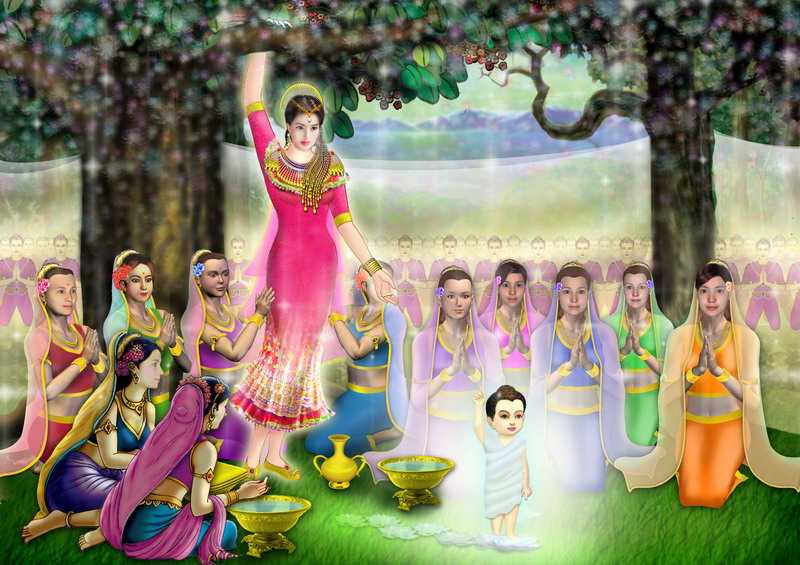
On the day of his birth, the bodhisattva’s mother, Queen Maya, feels the urge to go to the garden of Lumbini. There, following the tradition of sage-kings, the young prince Siddhartha is born from her right side (fig. 1):
Whilst she (thus) religiously observed the rules of a pure discipline, Bodhisattva was born from her right side, (come) to deliver the world, constrained by great pity, without causing his mother pain or anguish. / As king Yu-liu [Aurva] was born from the thigh, as king Pi-t’au [Pruthu] was born from the hand, as king Man-to [Mandhatri] was born from the top of the head, as king Kia-k’ha [Kakshivat] was born from the arm-pit, / So also was Bodhisattva on the day of his birth produced from the right side… (Beal, 1883, pp. 2-3).
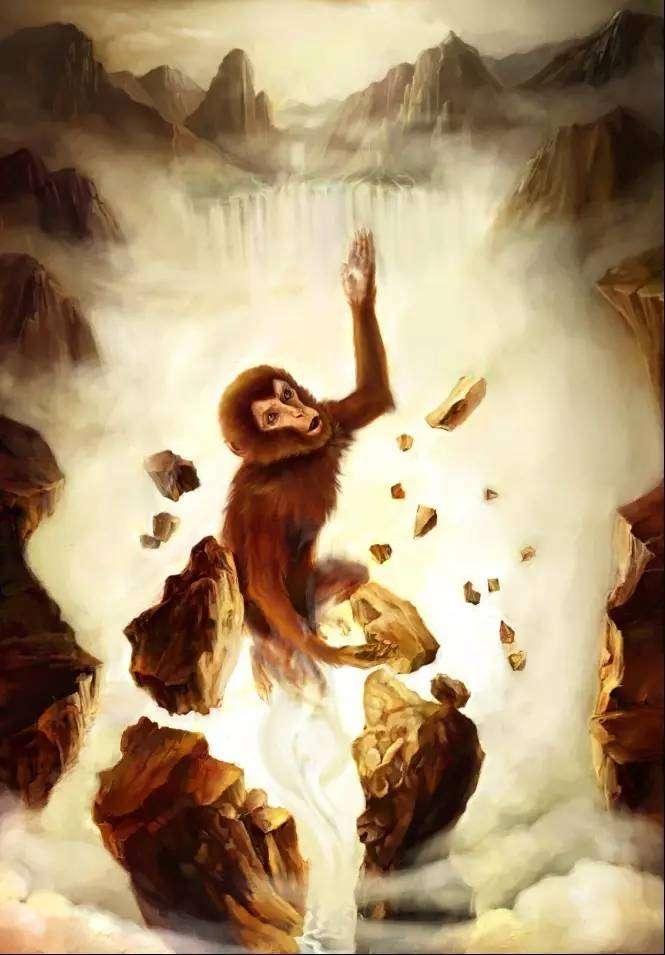
Chapter one of Journey to the West describes how an immortal stone atop the Mountain of Flowers and Fruit (Huaguo shan, 花果山) splits open and gives birth to a stone egg, which is transformed into a stone monkey (shi hou, 石猴) by the elements (fig. 2):
Since the creation of the world, it [the stone] had been nourished for a long period by the seeds of Heaven and Earth and by the essences of the sun and the moon, until, quickened by divine inspiration, it became pregnant with a divine embryo. One day, it split open [benglie, 迸裂], giving birth to a stone egg about the size of a playing ball. Exposed to the wind, it was transformed into a stone monkey endowed with fully developed features and limbs (Wu & Yu, 2012, p. 101) (emphasis mine).
As I’ve previously written, Wukong’s birth is likely based on the sage-king Yu the Great (大禹) and his son Qi (啟, “open”) of Xia, who are stated in various sources to have been born from stone. For example, one 4th-century tale states Yu’s pregnant wife transformed into stone out of shame for having seen her husband’s shamanic metamorphosis into a bear. Yu ordered the stone to release his son, and it split open to give birth to Qi (Birrell, 1999, p. 123). The emphasis on the stone splitting open is related to ancient Chinese stories of sage-kings splitting the chest, back, or sides of their mothers upon birth, [1] much like the Buddha is born from Queen Maya’s side. For instance, the Genealogical Annals of the Emperors and Kings (Diwang shiji, 帝王世紀, 3rd -century) writes:
“While traveling up in the mountains she [Yu’s mother] saw a falling star piercing the Mao region (of the sky). Then in a dream, she received and felt it, so upon swallowing a divine pearl and Job’s Tears, her chest split open and she gave birth to Yu at Stone Knob” (Cook & Luo, 2017, p. 101).
While Yu’s mother is not a stone in this case, his birth is effected by a pearl (a type of stone) and happens in a place named after stone. Such tales establish a link between split births and split stone births, thereby placing the Buddha and Monkey into the same broader birth myth category.
Fig. 1 – A stone carving depicting the birth of Siddhartha from Queen Maya’s side (Gandhara, 2nd- to 3rd-century) (larger version on Wikipedia). Fig. 2 – Monkey’s birth from stone by Zhang Moyi (larger version). Found on this article.
2. Radiant splendor
Upon his birth, the Buddha is said to have “shed in every direction the rays of his glory” (fig. 3) (Beal, 1883, p. 3). The source continues to describe this light, as well as the Bodhisattva’s first few moments outside the womb:
His body, nevertheless, was effulgent with light, and like the sun which eclipses the shining of the lamp, so the true gold-like beauty of the Bodhisattva shone forth and was diffused everywhere. / Upright and firm and unconfused in mind, he deliberately took seven steps, the soles of his feet resting evenly upon the ground as he went, his footmarks remained bright as seven stars. / Moving like the lion, king of beasts, and looking earnestly towards the four quarters, penetrating to the centre the principles of truth, he spake thus…” (Beal, 1883, pp. 4-5).
The historical Xuanzang (on whom Tripitaka is based) notes in his travelogue that the Buddha even walks towards the cardinal directions: “After he had been born the Bodhisattva walked seven steps unaided to each of the four quarters … [u]nder each step a large lotus flower sprang up from the earth” (Xuanzang, 1996/2016, p. 158).
Wukong too produces a great light in every direction: “Having learned at once to climb and run, this monkey also bowed to the four quarters, while two beams of golden light flashed from his eyes to reach even the Palace of the Polestar” (fig. 4) (Wu & Yu, 2012, p. 101).
Therefore, both shine their lights in the four cardinal directions.
Fig. 3 – Baby Buddha producing a radiant splendor upon his birth (larger version). Artist unknown. Found on this article. Fig. 4 – Bright beams of light shine from Wukong’s eyes as he bows to the four directions (larger version). From the Japanese children’s book Son Goku (1939).
3. Royal years
Prince Siddhartha (fig. 5) is born into the royal Shakya clan ruled by his father, King Suddhodana (Beal, 1883, p. 1). Shortly after his son’s birth, the king is told by two sages that the new heir is fated to be either a universal monarch or a cosmic sage (Beal, 1883, pp. 8-18). Suddhodana attempts to defy the latter fate by surrounding his son with royal luxury and even finding him a wife with which to have his own son:
‘My son, the prince, having a son born to him, / ‘The affairs of the empire will be handed down in succession, and there will be no end to its righteous government; the prince having begotten a son, will love his son as I love him, / ‘And no longer think about leaving his home as an ascetic, but devote himself to the practice of virtue […] Would that this might lead my son (he prayed) to love his child and not forsake his home; the kings of all countries, whose sons have not yet grown up, / Have prevented them exercising authority in the empire, in order to give their minds relaxation, and for this purpose have provided them with worldly indulgences, so that they may perpetuate the royal seed; / So now the king, having begotten a royal son, indulged him in every sort of pleasure; desiring that he might enjoy these worldly delights, and not wish to wander from his home in search of wisdom (Beal, 1883, pp. 28 and 29).
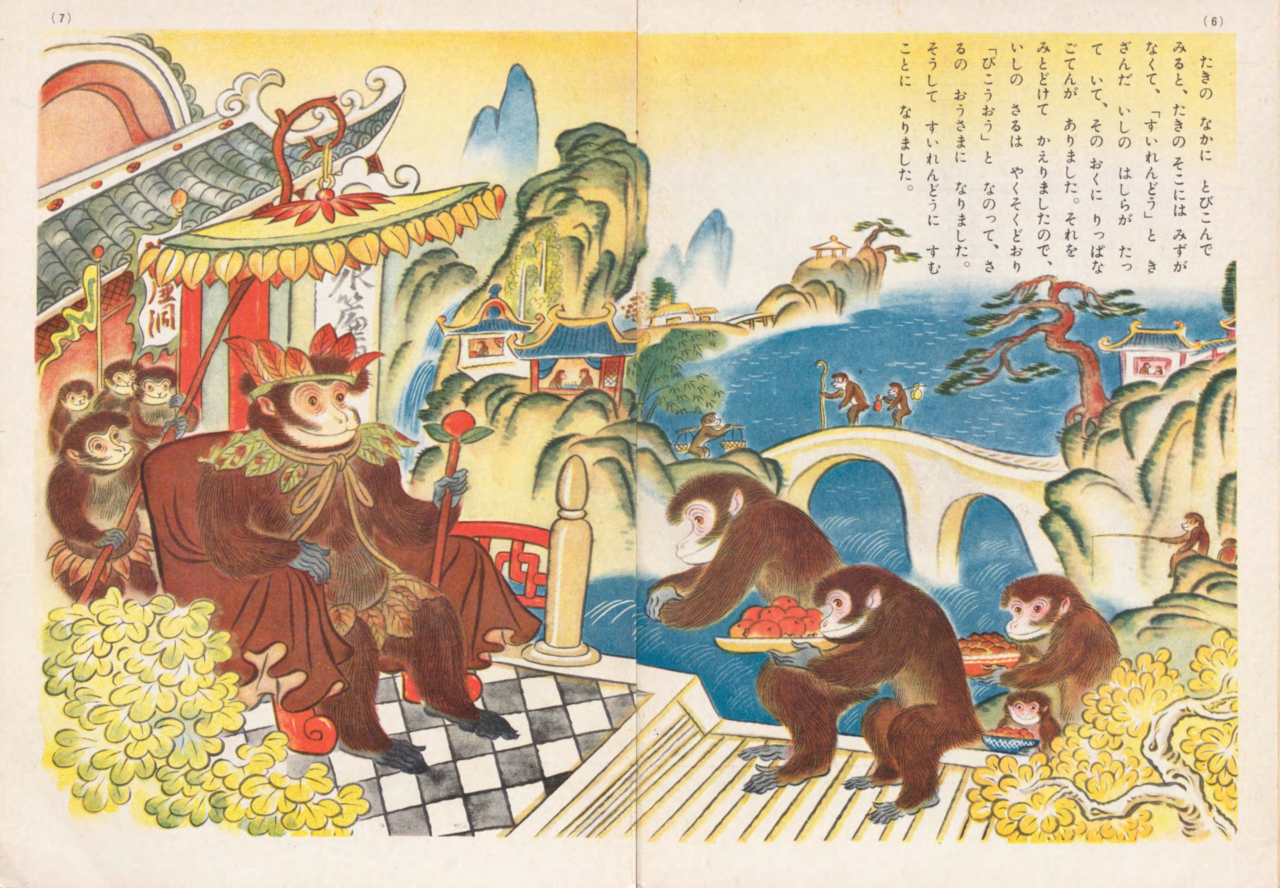
Following his birth, the stone monkey comes to live with a tribe of primates on the Mountain of Flowers and Fruit. One day, the monkeys and apes decide to follow a stream to its source in the mountain and find a beautiful waterfall. They state anyone who can discover what is behind the blanket of water will be proclaimed their king. The stone monkey takes up this challenge by leaping through and discovers the “Cave Heaven of Water-Curtain Cave” (Shuiliandong dongtian, 水簾洞洞天), a grotto paradise with a stone mansion and enough room for all the primates to live. After he emerges victorious,
Each one of them [the primates] then lined up according to rank and age, and, bowing reverently, they intoned, “Long live our great king!” From that moment, the stone monkey ascended the throne of kingship [fig. 6]. He did away with the word “stone” in his name and assumed the title, Handsome Monkey King [Mei hou wang, 美猴王] (Wu & Yu, 2012, p. 105).
The prince is born into a royal clan and yet never rules, while Wukong achieves kinghood through a test of bravery and leads his tribe for over three hundred years (Wu & Yu, 2012, p. 105). Siddhartha’s lack of authority is of course due to his father’s wish that he indulge in worldly pleasures and forget about leaving to become a sage. But birth tales (Sk: jataka) of the Buddha’s past lives do include several incarnations as rulers, even as a monkey king!
Fig. 5 – A stone carving of Prince Siddhartha as a young man (Gandhara, 3rd-century) (larger version via the Norton Simon Museum). Fig. 6 – The Stone Monkey sits on his throne (larger version). From Son Goku (1939).
4. Shock at impermanence
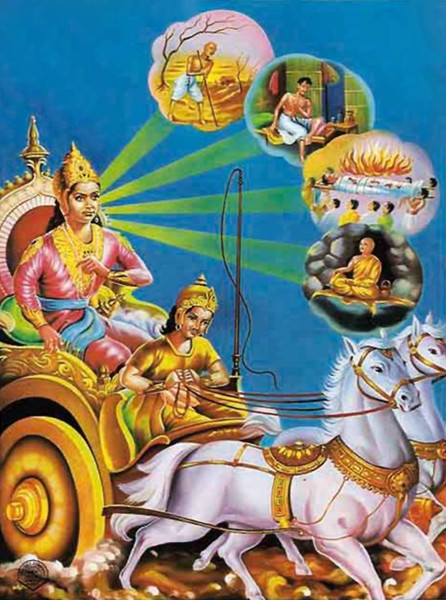
One day, Prince Siddhartha wishes to tour the land outside his personal palace for the first time in his sheltered life. Not wanting his son to see anything unpleasant, King Suddhodana has the path cleared of the old, sick, and poor and decorated with beautiful canopies, banners, and curtains (Beal, 1883, pp. 30-32). But a deva raja intervenes to initiate the first of the “four signs” (Sk: caturnimitta; Ch: sixiang, 四相; i.e. old age, sickness, death, and monasticism) to cause the future Buddha to pursue a spiritual path that will ultimately lead to his enlightenment (fig. 7) (Buswell & Lopez, 2014, pp. 171-172). The deva raja transforms into an extremely elderly man, and upon seeing the sight, Siddhartha is shaken when his chariot driver reveals that he too will suffer this fate:
The prince greatly agitated and moved, asked his charioteer another question and said, ‘Is yonder man the only one afflicted with age, or shall I, and others also, be such as he?’ / The charioteer again replied and said, ‘Your highness also inherits this lot, as time goes on, the form itself is changed, and this must doubtless come, beyond all hindrance: / ‘The youthful form must wear the garb of age, throughout the world, this is the common lot’. Bodhisattva, who had long prepared the foundation of pure and spotless wisdom, / Broadly setting the root of every high quality, with a view to gather large fruit in his present life, hearing these words respecting the sorrow of age, was afflicted in mind, and his hair stood up right. / Just as the roll of the thunder and the storm alarm and put to flight the cattle; so was Bodhisattva affected by the words; shaking with apprehension, he deeply sighed (Beal, 1883, p. 33).
After seeing the sign of sickness (Beal, 1883, pp. 34-35), the prince witnesses the sign of death:
(Once more) he asked, ‘What is this they carry? With streamers and flowers of every choice description, whilst the followers are overwhelmed with grief, tearing their hair and wailing piteously.’ / And now the gods instructing the coachman, he replied and said, ‘This is a “dead man,” all his powers of body destroyed, life departed; his heart without thought, his intellect dispersed; / ‘His spirit gone, his form withered and decayed; stretched out as a dead log; family ties broken—all his friends who once loved him, clad in white cerements, / ‘Now no longer delighting to behold him, remove him to lie in some hollow ditch (tomb).’ The prince hearing the name of death, his heart constrained by painful thoughts, / He asked, ‘Is this the only dead man, or does the world contain like instances?’ Replying thus he said, ‘All, everywhere, the same; he who begins his life must end it likewise; / ‘The strong and lusty and the middle-aged, having a body, cannot but decay (and die).’ The prince now harassed and perplexed in mind; his body bent upon the chariot leaning-board, / With bated breath and struggling accents, stammered thus, ‘Oh worldly men! How fatally deluded! Beholding everywhere the body brought to dust, yet everywhere the more carelessly living; / ‘The heart is neither lifeless wood nor stone, and yet it thinks not “all is vanishing!” (Beal, 1883, pp. 36-37).
After the Monkey King rules the Mountain of Flowers and Fruit for more than three centuries, he tells his children:
Though we are not subject to the laws of man today, nor need we be threatened by the rule of any bird or beast, old age and physical decay in the future will disclose the secret sovereignty of Yama, King of the Underworld. If we die, shall we not have lived in vain, not being able to rank forever among the Heavenly beings? (Wu & Yu, 2012, p. 106).
The “shock” felt by Prince Siddhartha and the Monkey King upon realizing the impermanence of life is known in Buddhism as Samvega (Ch: yanli, 厭離) (Thanissaro Bhikkhu, n.d.). It’s interesting that Siddhartha is led to the reality of impermanence, while Monkey comes to the conclusion by himself. This is no doubt due to the differences in their lives. King Suddhodana ensures that his son lives a protected life, one free from the woes of the outside world, by surrounding him with luxury and young, beautiful palace attendants. However, Monkey rules the Mountain of Flowers and Fruit for over three hundred years, no doubt witnessing the decline and death of many of his companions, as well as the waning of his own youth. After all, the thought of impermanence would weigh heavy on anyone nearing the end of their life. This conclusion is supported by the fact that, when his soul is taken to hell in chapter three, Monkey learns from the ledgers of life and death that he was fated to die at 342 years old (fig. 8) (Wu & Yu, 2012, vol. 1, p. 140).
Fig. 7 – Siddhartha experiences the “Four Signs” (larger version). Artist unknown. Fig. 8 – Monkey striking his name from the Book of Life and Death (larger version).From Son Goku (1939).
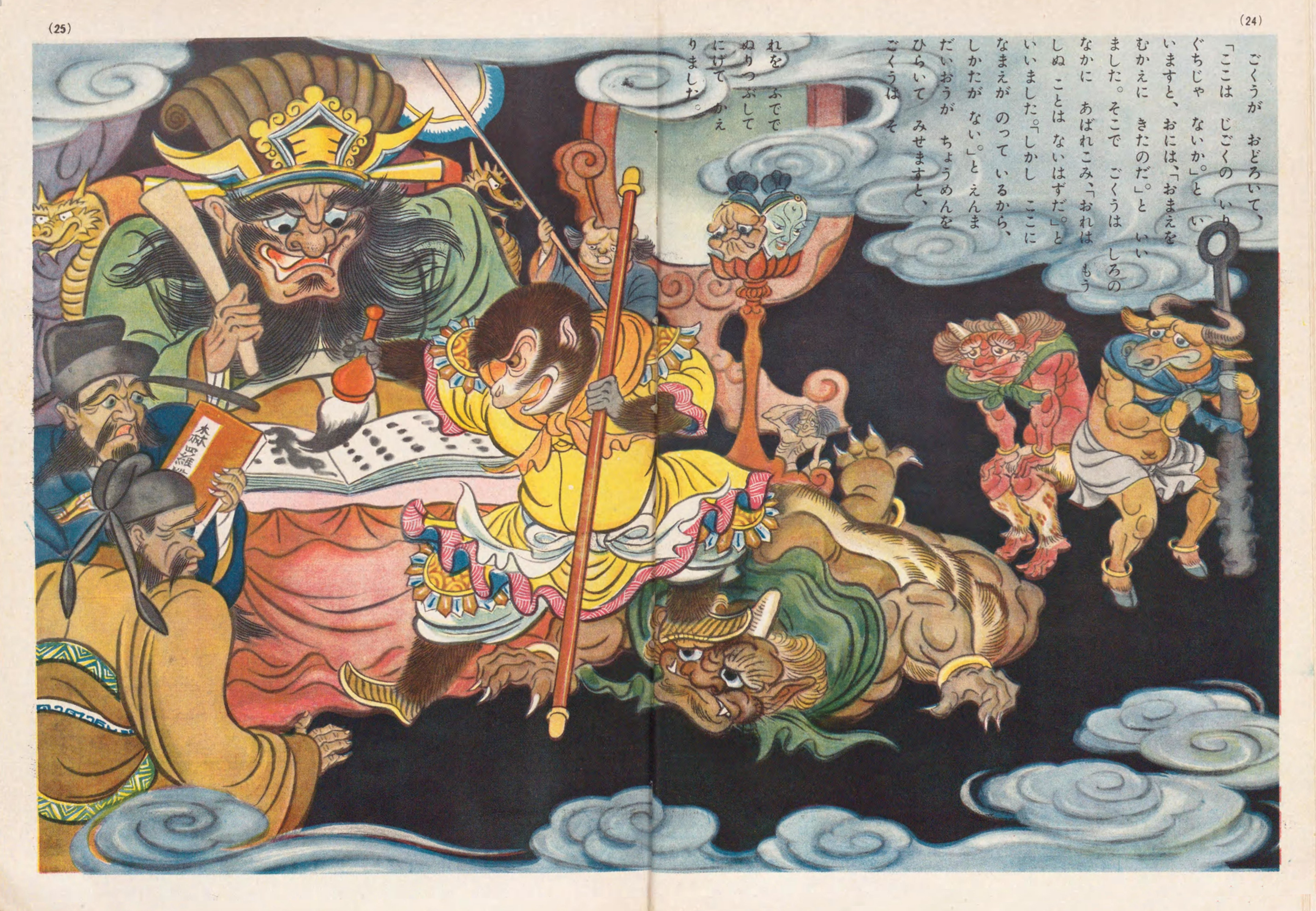
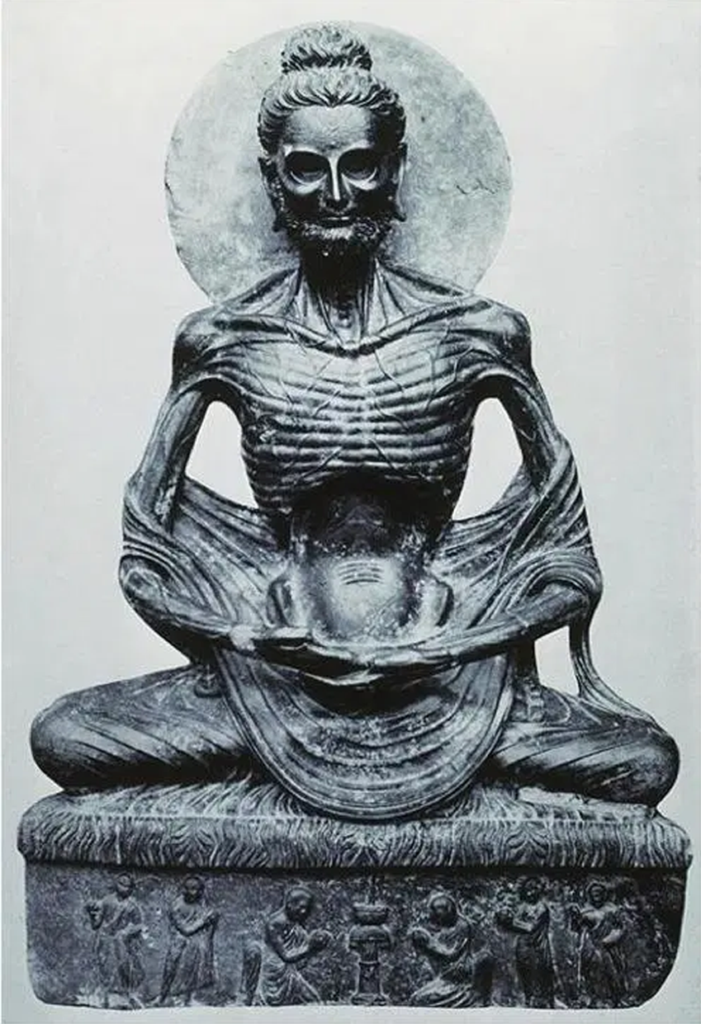
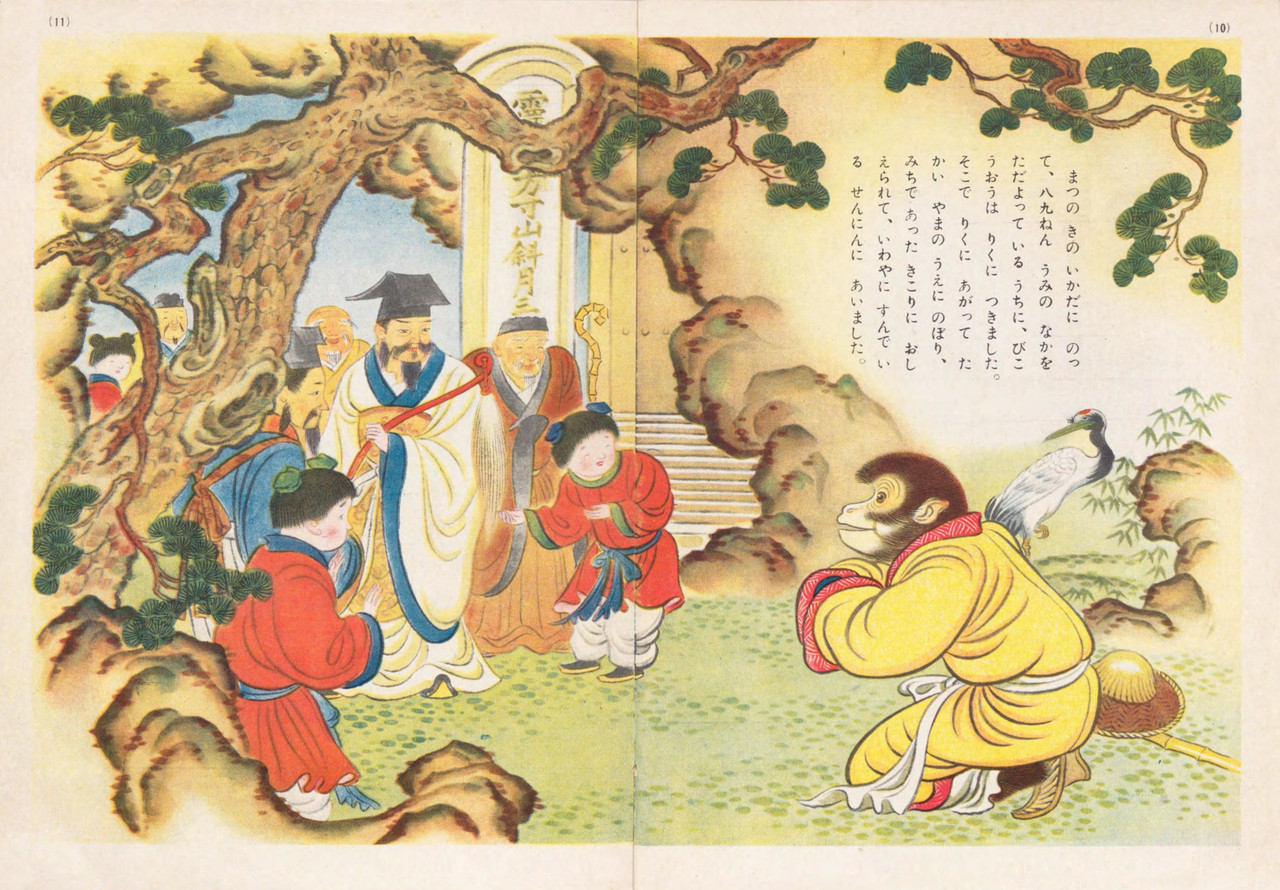
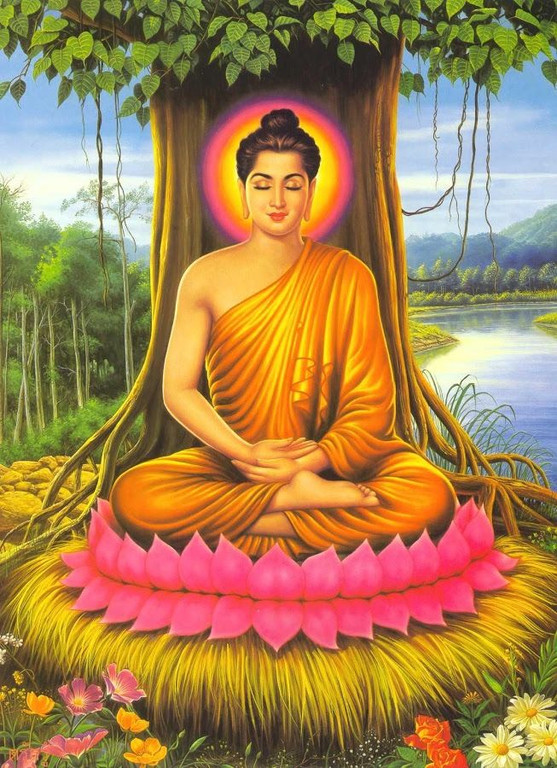
5. Quest to overcome impermanence
Siddhartha is wracked by constant, obsessive thoughts on the dangers of old age, sickness, and death. After venturing out once more and witnessing poor farmers toiling away in the fields, he proclaims on the spot that he will find some way to oppose life’s suffering. At that exact moment, a deva affects the fourth sign by transforming into a monk (sk: bhikshu), who tells the prince:
Depressed and sad at [the] thought of age, disease, and death, I have left my home to seek some way of rescue, but everywhere I find old age, disease, and death, all (things) hasten to decay and there is no permanency; / ‘Therefore I search for the happiness of some thing that decays not, that never perishes, that never knows beginning, that looks with equal mind on enemy and friend, that heeds not wealth nor beauty, / ‘The happiness of one who finds repose alone in solitude, in some unfrequented dell, free from molestation, all thoughts about the world destroyed, dwelling in some lonely hermitage…’ (Beal, 1883, pp. 49-50).
This influences Siddhartha to forsake his royal life to become an ascetic and search for a means of escape from the evils of old age, sickness, and death. Cutting off his topknot, thus severing his royal ties, the future Buddha sets out into the world (Beal, 1883, p. 68). Siddhartha travels the land studying meditation (Sk: dhyana; Ch: chan, 禪) under various sages, pondering concepts of the body, the mind, the soul, and selfhood for years, and even practicing severe austerities that result in the emaciation of his body (fig. 9). But he eventually forsakes these extreme practices, recovering his bodily strength and vowing to achieve perfect enlightenment via meditation beneath a banyan tree (Beal, 1883, pp. 131-147).
When the Monkey King opines the injustice of impermanence, one of his advisors tells him that only three beings live beyond the reach of Yama:
There are, among the five major divisions of all living creatures, only three species that are not subject to Yama, King of the Underworld.” The Monkey King said, “Do you know who they are?” The monkey said, “They are the Buddhas, the immortals, and the holy sages [shensheng, 神聖]; these three alone can avoid the Wheel of Transmigration as well as the process of birth and destruction, and live as long as Heaven and Earth, the mountains and the streams.” “Where do they live?” asked the Monkey King. The monkey said, “They do not live beyond the world of the Jambudvipa, for they dwell within ancient caves on immortal mountains” (Wu & Yu, 2012, p. 107).
Monkey then pledges to find these great men and women and learn their secret means of escape from Yama’s grasp:
“Tomorrow I shall take leave of you all and go down the mountain. Even if I have to wander with the clouds to the corners of the sea or journey to the distant edges of Heaven, I intend to find these three kinds of people. I will learn from them how to be young forever and escape the calamity inflicted by King Yama” (Wu & Yu, 2012, p. 107).
He sets sail in a makeshift raft and wonders the world for more than ten years, searching the towns and cities of the Jambudvipa continent before sailing to the Western Aparagodaniya continent. There, he is directed to the Cave of the Slanted Moon and Three Stars on the Mountain of Numinous Heart and Elixir Mind (Lingtai fangcun shan, xieyue sanxing dong, 靈台方寸山, 斜月三星洞), an immortal hermitage lorded over by the great Buddho-Daoist Sage Subodhi (Xuputi, 須菩提) (fig. 10). The sage accepts him as a student and gives him the religious name Sun Wukong (孫悟空), or “Monkey Awakened to the Void” (Wu & Yu, 2012, pp. 108-115).
Both tales show that Siddhartha and Monkey set out on their respective quests thanks to outside influences. The devas intervene numerous times to guide the future Buddha’s path to enlightenment, [2] proving that the heavenly realm has a vested interest in his fate. Wukong’s journey is instead influenced by the words of his mortal advisor. In this case, the gods have no interest in the fate of such “creatures from the world below” (Wu & Yu, 2012, p. 102). This of course changes once Monkey starts causing havoc throughout the cosmos.
Fig. 9 – A stone carving of the “Fasting Buddha” (Gandhara, 2nd- to 3rd-century BCE) (larger version). Fig. 10 – The Monkey King becomes Subhuti’s disciple (larger version). From Son Goku (1939).
6. Achieving a means of escape
The heavenly demon Mara (Mo, 魔) fears that Siddhartha will achieve enlightenment and help mankind break free from his domain, the illusionary world of Samsara, and so he leads a monstrous army against the great rishi. But the army is rendered powerless by Siddhartha’s supreme focus of mind and burgeoning grasp of reality (Beal, 1883, pp. 147-156). [3] Continuing his meditation further, the rishi perceives his myriad past lives, as well as the karmic punishment of those who covet or perform bad deeds, being tortured in hell or reborn into lower levels of existence, respectively. He then comprehends that suffering arises from clinging, clinging from desire, desire from sensation, sensation from contact, contact from the six senses, and the senses from consciousness. Finally, Siddhartha comes to the realization that breaking each link (e.g. cessation of clinging will end suffering) will stop old age, sickness, and death and ultimately destroy the endless chain of rebirths (Beal, 1883, pp. 156-163). Having achieved perfect enlightenment (fig. 11),
the Buddha then devised for the world’s benefit the eightfold path, right sight, and so on, the only true path for the world to tread. / Thus did he complete the end (destruction) of ‘self,’ as fire goes out for want of grass; thus he had done what he would have men do; he first had found the way of perfect knowledge; / He finished thus the first great lesson (paramartha); entering the great Rishi’s house, the darkness disappeared; light coming on, perfectly silent, all at rest, / He reached at last the exhaustless source of truth (dharma); lustrous with all wisdom the great Rishi sat, perfect in gifts, whilst one convulsive throe shook the wide earth (Beal, 1883, p. 163).
Journey to the West chapter two tells how Wukong serves as a junior monk for seven years before Subodhi takes him as a close disciple. One night, the sage recites him a poem full of flowery esoteric imagery revealing the secret to Daoist immortality and Buddhahood is the cultivation of chaste semen (jing, 精), breath (qi, 氣), and spiritual energy (shen, 神). The poem has a profound effect on Monkey, for the novel states: “At that moment, the very origin was disclosed to Wukong, whose mind became spiritualized as blessedness came to him” (Wu & Yu, 2012, p. 120). Following Subodhi’s instructions, Monkey performs breathing exercises after midnight (zi, 子) and before noon (wu, 午), resulting in immortality after three years of dedicated practice (fig. 12). [4] I should note that the book borrows from real Daoist practices but leaves much of the process up to the reader’s imagination. As I explain here, historical methods combined the aforementioned breathing exercises with the circulation of chaste semen and spiritual energy to create a spirit embryo (shengtai, 聖胎), or an immortal spirit that is eventually freed from the mortal shell. But in the case of the novel, Monkey’s practice results in an ageless, adamantine physical body, one capable of lifting even cosmic mountains.
Interestingly, the title of chapter two also refers to Monkey overcoming Mara. It reads: “Fully awoke to Bodhi’s wondrous truths / He cuts off Mara, returns to the root, and joins Primal Spirit” (Wu che puti zhen miao li / Duan Mo gui ben he yuanshen, 悟徹菩提真妙理 / 斷魔歸本合元神) (Wu & Yu, 2012, p. 116). The title freely associates Buddhist and Daoist concepts, such as Mara and the primal spirit. This synthesis is explained by Darga (2008):
Comparing the development of the embryo to the revelation of Buddhahood is typical of neidan texts of the Ming period. For instance, the Xingming guizhi (Principles of Balanced Cultivation of Inner Nature and Vital Force) uses Body of the Law (fashen 法身, dharmakāya) as a synonym for shengtai. The birth of the embryo represents the appearance of the original spirit (yuanshen 元神) or Buddhahood and is understood as enlightenment (p. 884).
The Buddha’s biography goes on for pages about deep philosophical concepts on the self, suffering, and reality, showing that the means of his liberation was of the utmost importance. By contrast, as noted above, Journey to the West leaves little space for Wukong’s method of immortality. In fact, the hard won moment that he breaks free of Yama’s grasp is not even mentioned in the novel! [5] So the author-compiler no doubt felt Monkey’s subsequent adventures were far more important. This is understandable considering that, in material as far back as the Song dynasty, Monkey is already an ancient immortal at the beginning of the story.
[Note: See the update below for a seventh parallel.]
Fig. 11 – Siddhartha achieves enlightenment and becomes the Buddha (larger version). Artist unknown. Fig. 12 – Wukong achieves immortality (larger version). Photomanipulation by the author.
A borrowed story?
So did the author-compiler (AC) of Journey to the West base Monkey’s early life on the Buddha’s story? The many similarities discussed above are very suggestive, but if only there was documented evidence of borrowing from other Buddhist personages. And that’s exactly what is found in chapter two. Shao (2006) explains that Wukong’s spiritual intelligence is based on the sixth Chan patriarch Huineng (惠能, 638-713):
[Monkey] sets the stage for a striking display of his unusually profound insight when he announces his intentions to become an immortal. This provokes Subhuti to issue him a challenge by refusing to teach him, for he is “some what different from other people.” Monkey may not realize that the master is trying to gauge his spiritual power, but he rises to the occasion with a genuine clarity of vision: “I have a round head pointing to Heaven, and square feet walking on Earth. Similarly, I have nine apertures and four limbs, entrails and cavities. In what way am I different from other people?”
[…]
[W]e may look to Huineng’s story from which Monkey garners meaning. No doubt, Monkey’s inspired cleverness is modeled on Huineng’s reply to Hongren, the fifth patriarch of Chinese Chan Buddhism, in Huineng’s Tanjing (The Platform Sutra). When Huineng announces his intentions to become a Buddha, Hongren pounces upon him with a poignant reminder that he is “from Lingnan,” a “barbarian,” and therefore cannot become a Buddha. Huineng refuses to be intimidated, however. He holds his own with an unparalleled depth of insight about Buddha-nature: There may be “northern and southern men,” but “the Buddha nature fundamentally has no north or south.” Surely Monkey’s phrasing, his unusual insightfulness, and the quickness and aplomb with which he rises to the challenge are reminiscent of Huineng… (pp. 719-720).
Therefore, if the AC borrowed from the life of Huineng, a Buddhist patriarch, then he certainly could have borrowed from the life of the Buddha. I suggest this was done to make Wukong’s early life more familiar to the reader.
Conclusion
Despite the particulars of their stories being different, the Monkey King and the historical Buddha share six similarities. First, they experience a supernatural birth, both splitting open their mother in the same fashion as ancient Chinese sage-kings. Siddhartha emerges from the side of Queen Maya and Wukong forms from a stone egg birthed by a split rock. Second, they produce a radiant splendor upon their birth. Siddhartha’s body shines as he looks or walks to the four quarters, while beams shoot from Sun’s eyes as he bows to the four quarters. Third, they spend early years as royalty. The prince is born into the royal Shakya clan and Monkey achieves kinghood through a test of bravery. Fourth, they feel a sense of shock upon realizing the impermanence of life. Siddhartha is exposed to the evils of old age, sickness, and death via the “four signs” initiated by heaven. Wukong instead comprehends the fearsome hand of Yama through his observation of time. Fifth, they set out on a quest to find a means of escaping old age and death. The prince travels the land studying meditation and pondering concepts of the body, the mind, the soul, and selfhood. Monkey searches the world for over a decade before he is taken in by the Buddho-Daoist sage Subodhi. Sixth, they achieve their goal through spiritual practices. Siddhartha defeats Mara and achieves perfect enlightenment via intense meditation. Wukong breaks free from Yama/Mara and achieves immortality via Daoist elixir arts. And since the AC borrowed from the life of the Sixth Chan patriarch Huineng, he likely modeled the Monkey King’s early life on the Buddha to make his story more familiar.
Update: 06-12-22
I’ve noticed another parallel while reading two modern biographies of the Buddha.
7. Student prodigies
The Prince is said to have had a great aptitude for learning in his youth: “And now he was brought to learn the useful arts, when lo! once instructed (at one hearing) he surpassed his teachers” (Beal, 1883, p. 24). [6] Wukong has the same talent. When Subodhi teaches him the method for the 72 Transformations, he masters them very quickly:
[T]his Monkey King was someone who, knowing one thing, could understand a hundred! He immediately learned the oral formulas and, after working at them and practicing them himself, he mastered all seventy-two transformations (Wu & Yu, vol. 1, p. 122).
Update: 06-18-22
I’ve written an article that lists a number of surprising parallels shared by Monkey and the Greco-Roman hero Heracles (see section 2).
1) See Cook and Luo (2017) chapter five for more examples of split-births.
2) Other than the “Four Signs”, another example of the devas intervening in Siddhartha’s life takes place shortly after he forsakes the extreme austerities that emaciate his body. He bathes in a holy river but can’t leave the water due to weakness from malnourishment. That’s when a deva pushes down a tree branch, allowing Siddhartha to pull himself to safety (Beal, 1883, p. 144).
3) For example, one passage reads: “Their flying spears, lances, and javelins, stuck fast in space, refusing to descend; the angry thunderdrops and mighty hail, with these, were changed into five-colour’d lotus flowers…” (Beal, 1883, p. 153).
4) The original source says “breathing exercises before the hour of Zi [子, midnight] and after the hour of Wu [午, noon]” (Wu & Yu, 2012, p. 121). However, this is likely a transcription error as Daoist sources cite the opposite, after midnight and before noon (Kohn, 2008, p. 84, for example). Therefore, I have corrected the information.
5) The moment that Monkey achieves immortality is only alluded to in passing:
Suddenly he [Subodhi] asked, “Where’s Wukong?” Wukong drew near and knelt down. “Your pupil’s here,” he said. “What sort of art have you been practicing lately?” the Patriarch asked. “Recently,” Wukong said, “your pupil has begun to apprehend the nature of all things and my foundational knowledge has become firmly established.” “If you have penetrated to the dharma nature to apprehend the origin,” said the Patriarch, “you have, in fact, entered into the divine substance” (Wu & Yu, 2012, p. 121).
6) Nakamura (2000) offers an extremely wordy translation of the above sentence: “When he had passed beyond childhood, he in due time received the initiation ceremony. He mastered in only a few days the various sciences suitable to his standing that [ordinary people] took many years to learn” (p. 90).
Birrell, A. (1999). Chinese Mythology: An introduction. Baltimore: The Johns Hopkins University Press.
Buswell, R. E., & Lopez, D. S. (2014). The Princeton Dictionary of Buddhism. Princeton, NJ: Princeton University Press.
Cook, C. A., & Luo, X. (2017). Birth in Ancient China: A Study of Metaphor and Cultural Identity in Pre-Imperial China. Albany: State University of New York Press.
Wu, C., & Yu, A. C. (2012). The Journey to the West (Vol. 1). Chicago, Illinois: University of Chicago Press.
Xuanzang (2016). The Great Tang Dynasty Record of the Western Regions (2nd ed., R. Li, trans.). California: BDK AMerica, Inc. (Original work published 1996)
The Monkey King is elevated in spiritual rank at the end of Journey to the West (Xiyouji, 西遊記, 1592; “JTTW” hereafter) for his service in protecting the monk Tripitaka throughout the quest to India. Gautama Buddha enfeoffs him as the “Buddha Victorious in Strife” or “Victorious Fighting Buddha” (Dou zhansheng fo, 鬥戰勝佛). Many readers may be surprised to learn that this is actually an established Buddhist deity and not just the creation of the JTTW author-compiler. In this article, I would like to briefly explore the Buddha’s religious background, iconography, purpose, and relationship to the worship of Sun Wukong.
“Sun Wukong, when you caused great disturbance at the Celestial Palace, I had to exercise enormous dharma power to have you pressed beneath the Mountain of Five Phases. Fortunately your Heaven-sent calamity came to an end, and you embraced the Buddhist religion. I am pleased even more by the fact that you were devoted to the scourging of evil and the exaltation of good. Throughout your journey you made great merit by smelting the demons and defeating the fiends. For being faithful in the end as you were in the beginning, I hereby give you the grand promotion and appoint you the Buddha Victorious in Strife (Wu & Yu, 2012, p. 381).
JTTW closes by “submitting” or “prostrating” (namo, 南無) to a long list of Buddhas, Bodhisattvas, and Arhats. The Buddha Victorious in Strife is placed at the end of 47 Buddhas and ahead of the Bodhisattva Guanyin. A section of the list reads:
[…] I submit to the Buddha of the Gift of Light. I submit to the Buddha of Candana Merit. I submit to the Buddha Victorious in Strife (emphasis added). I submit to the Bodhisattva Guanshiyin. I submit to the Bodhisattva, Great Power-Coming […] (Wu & Yu, 2012, p. 385).
Many of the Buddhas from the novel’s list appear in assorted real world canonical lists, including the 88 Buddhas (Bashiba fo, 八十八佛) from the Great Repentance Text of the Eighty-Eight Buddhas (Ch: Bashiba fo da chanhui wen, 八十八佛大懺悔文). [1] This group is comprised of the 53 Buddhas (Ch: Wushisan fo, 五十三佛) and the 35 Confession Buddhas (Ch: Sanshiwu fo chan, 三十五佛懺) (fig. 1).
The historical “Buddha Victorious in Strife,” Yuddhajaya (Sk: युद्धजय; see the 06-13-2025 update for more name info), is the 31st of the 35 Confession Buddhas, who are individually called upon during a confessional prayer to absolve oneself of sins. They appear in a number of sources, such as The Bodhisattva’s Confession of Ethical Downfalls (Ch: Pusa duochan / Pusa chanhui wen, 菩薩墮懺 / 菩薩懺悔文) from the Three Heaps Sutra (Sk: Trīskhandhadharmasūtra; Ch: Sanyun jing, 三蘊經) and the Names of the Thirty-Five Buddhas Spoken by the Buddha (Ch: Foshuo sanshiwu foming lichan wen, 佛說三十五佛名禮懺文, 8th century).
Fig. 1 – A religious painting of the 35 Confession Buddhas (larger version). The Buddha Victorious in Strife is third from the right on the bottom row. Image found here.
2.1. Iconography
The Buddha Victorious in Strife is depicted in Buddhist art with the traditional features of a Buddha (i.e. ūrṇā, uṣṇīṣa, long ear lobes, robes, etc.), but he is also shown holding a suit of armor and a sword (fig. 2):
Yuddhajaya Buddha — (Skt.: aka Yuddhajaya) (Chin.: Tou-chan-sheng fo; Mon.: Bayildugan-i masids darugci; Tib.: gYul-las-sin-tu-rnam-par-rgyal-ba, rGyal-ba-gYul-lasr-Gyal-ba) A Sanskrit variant for the Jina Yuddhajaya. One of the Buddha images found in the Pao Hsiang Lou [寶相樓] temple of the Forbidden City, Beijing, and one of the thirty-five “Buddhas of Confession.” Face: one, calm, urna, usnisa, long ear-lobes; arms/hands: holding a cuirass up to his chest; body: monastic robes; legs: two; asana: vajrasana; vahana: lotus throne.
— (2) — (Mon.: Bayildugan-i masids darugci; Tib.: gYul-las-sin-tu-rnam-par-rgyal-ba) One of the Buddhas of Confession pictured in the Mongolian Kanjur (Mon.: Monggol ganjur-un) (1717-1720) Face: one, calm, urna, usnisa, long ear-lobes; arms/hands: two, right hand holds sword (khadga, ral-gri), left hand holds coat of mail (khrab); body: monastic robes, right shoulder uncovered; legs: two; asana: vajrasana; attributes: 32 major and 80 minor signs; vahana: lotus throne (Bunce, 1994, Vol. 1, p. 629). [2]
Fig. 2 – The Buddha Victorious in Strife (Yuddhajaya) holding a sword and suit of armor (larger version). Image found here.
2.2. Purpose
Neither the name Buddha Victorious in Strife nor the sword and armor are a reference to the deity’s fighting prowess. According to Lai (2016), the Buddha “defeat[s] the inner enemies of afflictive emotions and negative actions of sentient beings. He is victorious over cyclic existence and thus able to lead all sentient beings to liberation. He purifies the negative karma of actions committed out of pride.”
His name and accoutrements, therefore, symbolize the means by which he subjugates the negative emotions or actions that would otherwise keep man trapped in the illusory world of Saṃsāra.
3. Relationship to Sun Wukong’s Worship
The Monkey King is worshiped in southern China, Taiwan, and Southeast Asian countries like Malaysia, Singapore, Thailand, and Vietnam as a great exorcist and protector of children. But it may come as a surprise to learn that he is rarely worshiped as the Buddha Victorious in Strife. Instead, Wukong is almost exclusively revered as the “Great Sage Equaling Heaven” (Qitian dasheng, 齊天大聖), and even when he is called a Buddha, the name usually includes some reference to the rebellious title. For example, when I attended the Monkey King’s birthday (sixteenth day of the eighth lunar month) in Hong Kong in 2018, I saw an incense pot labeled “Great Sage Buddha Patriarch” (Dasheng fozu, 大聖佛祖) (fig. 3).
So why isn’t Sun widely worshiped as the Buddha Victorious in Strife? I think the simplest answer is that the Buddha already had a long-established following and therefore couldn’t be subsumed under the late-blooming cult of a cultural hero, even one as popular as the Monkey King.
Fig. 3 – An incense pot reading “Great Sage Buddha Patriarch” (Dasheng fozu, 大聖佛祖) (larger version). Taken by the author in Kowloon, Hongkong (Sept. 24, 2018).
4. Precedent for Spiritual Promotion
The author-compiler likely connected Sun Wukong to the Buddha Victorious in Strife because of the Enlightened One’s war-like iconography (recall the sword and armor mentioned above). After all, Monkey is an armor-wearing martial deity wielding his magic staff to protect Tripitaka from untold numbers of demons and spirits.
But the choice to elevate Monkey in rank was likely influenced by previous media. For example, Wukong’s literary antecedent, the Monkey Pilgrim (Hou xingzhe, 猴行者), receives a promotion at the end of The Story of How Tripitaka of the Great Tang Procures the Scriptures (Da Tang Sanzang qujing shihua, 大唐三藏取經詩話), a late-13th century precursor of JTTW. The story ends thus: “Tang Taizong later enfeoffed Monkey Pilgrim as ‘Great Sage Steel Muscles and Iron Bones'” (Gangjin tiegu dasheng, 鋼筋鐵骨大聖) (Wivell, 1994, p. 1207). [3]
5. Conclusion
At the end of JTTW, the Buddha promotes Sun Wukong to the “Buddha Victorious in Strife” or “Victorious Fighting Buddha” (Dou zhansheng fo, 鬥戰勝佛). This is the Chinese name of Yuddhajaya (Sk: युद्धजय), the 31st of the 35 Confession Buddhas called upon during a confessional prayer to absolve oneself of sins. He is generally portrayed as a robe-wearing Buddha holding a sword and suit of armor. This is not a reference to the deity’s fighting prowess, however. Instead, his name and accoutrements symbolize the means by which he subjugates the negative emotions or actions that would otherwise keep man trapped in the illusory world of Saṃsāra.
Instead of being universally revered as the Buddha Victorious in Strife, the Monkey King is far more widely worshiped in East and Southeast Asia as the “Great Sage Equaling Heaven” (Qitian dasheng, 齊天大聖) or a variant like “Great Sage Buddha Patriarch” (Dasheng fozu, 大聖佛祖). This discrepancy is probably due to the original Yuddhajaya already having a long-established following. There’s no way that he could ever be subsumed under Sun Wukong’s late-blooming cult.
Wu Cheng’en (or whoever the true author-compiler was) likely connected Monkey to the Buddha Victorious in Strife because both have martial iconography. Sun is commonly depicted wearing armor and wielding an iron staff, while Yuddhajaya is shown holding a sword and armor. But the concept of Sun receiving an elevation in spiritual rank goes back centuries. The Monkey Pilgrim, his literary antecedent from The Story of How Tripitaka of the Great Tang Procures the Scriptures (late-13th century), is deified by the Tang emperor as “Great Sage Steel Muscles and Iron Bones” (Gangjin tiegu dasheng, 鋼筋鐵骨大聖).
6. Updates
Update: 09-06-20
If you type “Buddha Victorious in Strife,” “Victorious Fighting Buddha,” “鬥戰勝佛” or “斗战胜佛” into google images, you’ll notice that these terms are almost exclusively associated with Sun Wukong. Most results are fan-made drawings of Monkey wearing his armor. Very few depict him as a Buddha. The only appearance of the latter in popular media that I’m aware is the Victorious Fighting Buddha from the manga / anime High School DxD.
The character is depicted as a jovial old dwarf with long, shaggy brown hair, bushy eyebrows that fall over a cyberpunk-style black visor, no mustache, a long beard, a floor-length, dark gray coat over a red robe, and monkey feet. He wears his famous golden fillet and a set of chunky brown and red prayer beads. In his left hand he holds a smoking pipe, while the right holds his magic staff, which is depicted as red and gold (fig. 4).
Fig. 4 – The Victorious Fighting Buddha from High School DxD (larger version).
The Victorious Fighting Buddha inhabits a universe where various factions of Western and Eastern gods, devils, and heroes battle one another. According to the story, upon ascending to Buddhahood, he steps down as the Monkey King, handing the title to a young descendant, and serves as the vanguard of the Hindu god Indra, during which time he protects the cosmos from a faction of devils and fallen angels. He later takes on the role of sub-leader and mentor to a new faction of young heroes whom he trains to battle god-tier opponents.
High School DxD portrays the Victorious Fighting Buddha as very powerful. For example, season four, episode six (minute 13:35) of the anime shows him effortlessly blocking the “True Longinus” spear with the tip of his index finger. This is quite a feat as this weapon is the same one used to pierce the side of Christ, thereby giving it the power to kill other gods.
Update: 03-22-21
I visited “Sage Buddha Hall” (Shengfo Tang, 聖佛堂), a Great Sage temple in Beigang, Yunlin, Taiwan and saw a few items labeled the “Fighting Sage Buddha” (Dou zhan sheng fo, 鬥戰聖佛) in place of the Buddha Victorious in Strife/Victorious Fighting Buddha. One such item was a paper fan (fig. 5). As noted above, Buddha Victorious in Strife/Victorious Fighting Buddha is not a reference to the deity’s fighting prowess, but his ability to “defeat the inner enemies of afflictive emotions and negative actions of sentient beings.” So it appears that this temple takes his martial skill at face value.
Update: 08-09-22
As an enlightened Buddha, Monkey is eligible for his own “Buddha-Field” (Sk: Buddhakṣetra; Ch: Focha, 佛刹), essentially his own universe in which he will lead the inhabitants to enlightenment. Buswell and Lopez (2014) explain:
[W]hen a buddha achieves enlightenment, a “container” or “inanimate” world is produced in the form of a field where the buddha leads beings to enlightenment. The inhabitant of that world is the buddha endowed with all the [qualities of an Enlightened One]. Buddha-fields occur in various levels of purification, broadly divided between pure and impure. Impure buddha-fields are synonymous with a world system (cakravāḍa), the infinite number of “world discs” in Buddhist cosmology that constitutes the universe; here, ordinary sentient beings (including animals, ghosts, and hell beings) dwell, subject to the afflictions of greed, hatred, and delusion. Each Cakravāḍa is the domain of a specific buddha, who achieves enlightenment in that world system and works there toward the liberation of all sentient beings… (p. 153).
Update: 01-22-23
Chandra (1999) includes a lovely black and white line drawing of Yuddhajaya (fig. 6) (p. 94).
Fig. 6 – A traditional Tibetan drawing of Yuddhajaya (larger version). Image from Chandra, 1999, p. 94.
Update: 05-09-23
I commissioned NinjaHaku21 (Twitter, Instagram, and Tumblr) to draw Sun Wukong using Yuddhajaya’s traditional iconography (fig. 7), and the results are stunning! It is based on the design from figure two above.
Fig. 7 – A religiously accurate drawing of Monkey as the Yuddhajaya Buddha by NinjaHaku21 (larger version).
Update: 06-12-23
I have written a companion piece to this article about Tripitaka’s Buddha title.
[B]aby monkeys think Grandpa’s lotus throne is for playing.
[…]
I think Wukong got back to his mountain to take care of his monkeys. He does visit sometimes. He takes his favourite monkeys along for the ride. I don’t think it is much of a problem in Western Heaven in Buddha’s domain, because if you are enlightened the antics of little animals won’t really bother you. He’s told not to bring monkeys along next time as per formality. He does anyway. It’s not like anyone minds. He takes the monkeys along when he visits Jade Emperors domain. There monkeys are treated as nuisance and chased around, but no one actually dares to harm them, as they fear to incur his anger. He probably takes more troublesome monkeys too. On purpose.
I love the baby monkeys, as well as Wukong’s flower-like halo.
Fig. 8 – @darkfalcon-z’s Monkey Buddha (larger version). Used with permission.
Update: 11-07-2024
Above, I wrote:
Wu Cheng’en (or whoever the true author-compiler was) likely connected Monkey to the Buddha Victorious in Strife because both have martial iconography. Sun is commonly depicted wearing armor and wielding an iron staff, while Yuddhajaya is shown holding a sword and armor.
But it just dawned on me that Sun’s antecedent, the Monkey Pilgrim (Hou xingzhe, 猴行者), is also portrayed holding a divine sword in a 13th century stone relief carving (fig. 9). This weapon is referred to as his “Bodhisattva Sabre” (Pusa dao, 菩薩刀) in a 17th or 18th century tale appearing in a famous collection of Chinese folk stories. Therefore, it wouldn’t surprise me if this influenced the association with Yuddhajaya’s sword.
Fig. 9 – The Kaiyuan temple pagoda relief carving depicting Monkey holding a sword (larger version). Located on one of two 13th century stone pagodas of Kaiyuan Temple in Quanzhou City, Fujian Province, China.
I would also like to add some more drawings of Sun Wukong as a Buddha. The first two (fig. 10 & 11) are by a netizen who goes by @VirliebeAnatta (a.k.a. Bhante_Wukong) on Twitter and @his-shining-tears on Tumblr. Their work is very calming and welcoming.
Fig. 10 – The Monkey Buddha gazes upon the viewer with hands clasped (larger version). Image found here and here. Fig. 11 – A three-quarters view of the Monkey Buddha with head bowed and hands clasped (larger version). Image found here and here.
In late-2024, I commissioned friend of the blog NingadudeXx to draw Monkey as Yuddhajaya using their colorful style. The finished piece (fig. 15) was delivered in mid-January 2025.
Fig. 15 – NingadudeXx’s colorful Monkey Buddha (larger version).
On a related note, I learned that Yuddhajaya has a secondary name, Vijita-saṃgrāma (Ch: Yongjian jixiang fo, 勇健吉祥佛; Viet: Dũng Kiện Cát Tương Phật), or the “Brave and Auspicious Buddha” (source). The Chinese version of his title is listed in the 8th century Names of the Thirty-Five Buddhas Spoken by the Buddha (Ch: Foshuo sanshiwu foming lichan wen, 佛說三十五佛名禮懺文) (originally linked above).
Interestingly, the farthest back that I can trace the term Dou zhansheng fo (鬥戰勝佛, i.e. “Buddha Victorious in Strife”) on CBETA is the 12th or 13th century Ritual for the Tathāgata’s Extensive Filial Piety’s Ten Kinds of Recompensating (Parents’) Kindness (Rulai guangxiao shizhong bao’en daochang yi, 如來廣孝十種報恩道場儀) (see here). Therefore, Vijita-saṃgrāma appears to be a much older name.
Spread the gospel of the Brave and Auspicious Buddha!!!
2) I am grateful to Joris Baeyens of Ghent University Library for providing me with scans of Bunce (1994).
3) Source slightly altered.
Sources:
Bunce, F. W. (1994). An Encyclopaedia of Buddhist Deities, Demigods, Godlings, Saints and Demons: With Special Focus on Iconographic Attributes (Vols.1-2). New Delhi: D.K. Printworld.
Buswell, R. E., & Lopez, D. S. (2014). The Princeton Dictionary of Buddhism. N: Princeton University Press.
Chandra, L. (1999). Buddhist Iconography: Compact Edition. New Delhi: International Academy of Indian Culture & Aditya Prakashan.
Campany (1985) discusses methods by which demons of Journey to the West (Xiyouji, 西遊記, 1592) move up and down the Buddho-Daoist cosmic hierarchy. A PDF of the paper can be accessed in section II below.
I. Summary
He begins by laying out the formulaic pattern of the episodes in which they appear: 1) a description of the demon’s mountain or aquatic home in poetic verse; 2) the initial encounter during which Tripitaka is tricked by the demon’s magic disguise; 3) the initial battle(s) between the disciples and the demon involving contests of magic and weapons, often described in poetic verse; 4) the battles end in a stalemate or defeat, and in the case of the latter the disciples are held captive in the demon’s stronghold; 5) Sun Wukong searches heaven and earth for the master of the demon, for the evil is usually a renegade celestial animal or protégé; 6) the demon is subdued by their master; and 7) the demon is either reintegrated or added to the cosmic order. An example of the former is the moon goddess’ jade hare (ch. 95) being taken back to heaven (fig. 1). An example of the latter is Red Boy (ch. 40-43) becoming a disciple of Guanyin.
There are two types of powerful demons who are subjugated by their master or an appropriate agent (e.g. a rooster god defeating a centipede demon). The first acquires magic powers via Daoist cultivation and, lacking celestial rank, causes havoc (think of Monkey as a young immortal). It is only through their subjugation and addition to the cosmic order that they achieve higher spiritual status. Apart from Red Boy, another example is the Black Bear spirit (ch. 16-17), who is subdued by Guanyin and installed as the guardian of her magic island. The second, being the most common, is one who previously held heavenly rank and was banished to earth. This exile is the result of breaking a rule, the need to burn off negative Buddhist karma, or because of a deficiency in their Daoist cultivation, requiring that they work their way back up the spiritual hierarchy. All five of the pilgrims fit into this category in one way or another.
Two types of demons are not subjugated by a heavenly master. The first is a lessor animal spirit who acts as a servant or soldier for a demon king. They attach themselves to this “upwardly mobile” demon because their master may aid in their own ascension via secrets of cultivation or the gift of longevity-bestowing food. Prime examples are all the (simian and non-simian) animal spirits who attach themselves to Sun Wukong after he establishes himself as a monster king. Such animal spirits are usually slaughtered after their master is defeated. The second are demons who peacefully cultivate themselves without endangering others. A prime example is the White Turtle of the Heaven-Reaching River (ch. 49 and 99) who cultivates human speech but still requires the intervention of the Buddha to evolve to human form.
Campany (1985) moves onto the hierarchy itself, noting how the level of a being’s attainment in spiritual cultivation does not affect their actual rank. This is because Daoism, Buddhism, and Confucianism are viewed differently in the novel. Demons who cause no harm during their cultivation are left alone, while violent offenders are subjugated and added to the hierarchy. And even if an animal spirit has Daoist powers, they are still considered inferior to humans, for they are born into a lower level of the six Buddhist paths of reincarnation. These spirits, however, can move up the hierarchy based on the amount of Buddhist merit, or “right fruit” (zhengguo, 正果), that they acquire through good deeds. Additionally, the Buddha and Guanyin are generally portrayed as higher in rank than Daoist gods, even the Jade Emperor, due to their “Dharma Power” (fali, 法力). Despite this, Sun Wukong is always quick to point out when a high-ranking god, Buddhist or Daoist, has violated Confucian norms. Therefore, the hierarchy presented in the novel follows the Ming-era syncretic emphasis on mental cultivation (xiu xin, 修心).
The novel categorizes all beings as part of heaven, earth, or hell, each representing a realm within the hierarchy. Yet, it presents four ways to move between them: one, temporarily taking the form of a higher-ranking figure (human, immortal, deity, etc.) via magical transformation (hua, 化); two, reincarnating into a higher path (e.g. animal to human); three, attaining immortality via Daoist cultivation (or becoming human and then attaining immortality in the case of animal spirits); and four, being subjugated and added to the cosmic order.
The demons of Journey to the West are paradoxical on two counts: one, such beings are realistic, with detailed descriptions of their appearance, speech, and feelings, and yet they are often reduced to mere illusions brought forth by the unfocused or disquieted mind (Campany (1985) waits to explain this until the end); and two, they are evil from a Western perspective, but not wholly evil from an Eastern perspective. Their ambiguous nature is revealed by the Chinese hanzi used to describe them (e.g. yaojing 妖精; yaoguai, 妖怪), suggesting these beings are “undeveloped” or “bogus” and have yet to complete their cultivation. Additionally, the novel connects the demons and pilgrims with five elemental and yin-yang theory, each with its own creative/destructive or magnetic/repelling forces, suggesting a mutual relationship. This relationship is explained below.
Campany (1985) emphasizes that, while Tripitaka’s disciples are themselves former demons, what separates them from the others is “returning to the right path” (gui zheng, 歸正), or converting to Buddhism. As Daoists, they formerly cultivated the self, but as Buddhists they subsume the self to a larger whole by becoming Tripitaka’s disciples, thereby submitting to Buddhist law and cultivating Buddhist merit through their actions. This differs from demons who attempt to subsume the universe into themselves. They follow heretical practices (waidao, 外道) in pursuit of their continued self-cultivation, many seeking a “short cut” by attempting to eat Tripitaka. They don’t realize that accepting the Buddhist concept of “no self” would free them of their attachment to Daoist cultivation and that the accumulation of Buddhist merit would aid in their ascension through the cosmic hierarchy.
Powerful demons like Monkey who consider themselves greater than the universe would continue down the wrong path without the intervention of their master (or an appropriate agent) intervening to reintegrate or add them to the cosmic order. As Campany (1985) explains: “Submission of self is true cultivation of self” (emphasis in original) (p. 114). Therefore, demons rely on the pilgrims to redirect their cultivation to the right path of subsuming the self to a larger whole. An example is Lady Raksasi at the end of her story cycle.
Likewise, the pilgrims rely on the demons for several reasons: one, they help the pilgrims build Buddhist merit; two, via the concept of “non-duality“, the pilgrims learn there is no difference between themselves and the demons; and three, as mental obstacles, the demons help refine the pilgrim’s spiritual cultivation over the journey. This last point is particularly important as the illusionary nature of demons helps the pilgrims, especially Tripitaka, understand that all reality is empty (kong, 空). This is something that Wukong (悟空, “aware of emptiness”) reminds his master of throughout the quest.
Campany (1985) ends the paper by explaining the first paradox:
We now see that the juxtaposition of realistic descriptions of demons and reductions of them to miasma of the mind serves as a fascinating and entertaining contrapuntal expression of the central theme of the novel, the complementary relation and ultimate identity between illusion and enlightenment. Why do demons almost always appear according to the paradigm sketched in the first part of this paper? Why this repetition, this sameness, if not to underscore the miasmic quality of the demons even as narrative details convince us of their palpable sensory reality? Why do demons put up so stubborn a resistance, if not to impress upon us the arduousness of right cultivation? The consummate artistry with which the author bodies forth in his tale the relation between illusion and reality is itself a vehicle for the perception of this relation (Campany, 1985, p. 115).
This has been posted for educational purposes. No malicious copyright infringement is intended. Please support the official release.
Citation
Campany, R. (1985). Demons, Gods, and Pilgrims: The Demonology of the Hsi-yu Chi. Chinese Literature: Essays, Articles, Reviews (CLEAR),7(1/2), 95-115. doi:10.2307/495195
Wu, C., & Yu, A. C. (2012). Journey to the West (Vol. 1) (Rev. ed.). Chicago: University of Chicago Press.


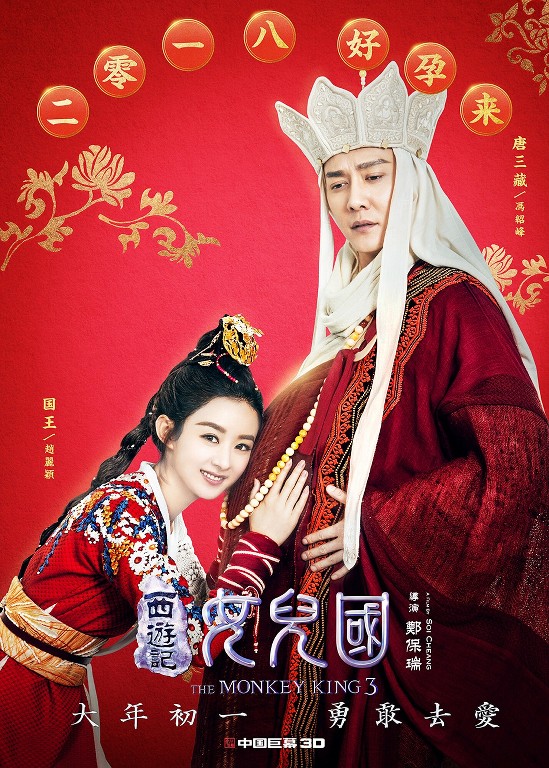
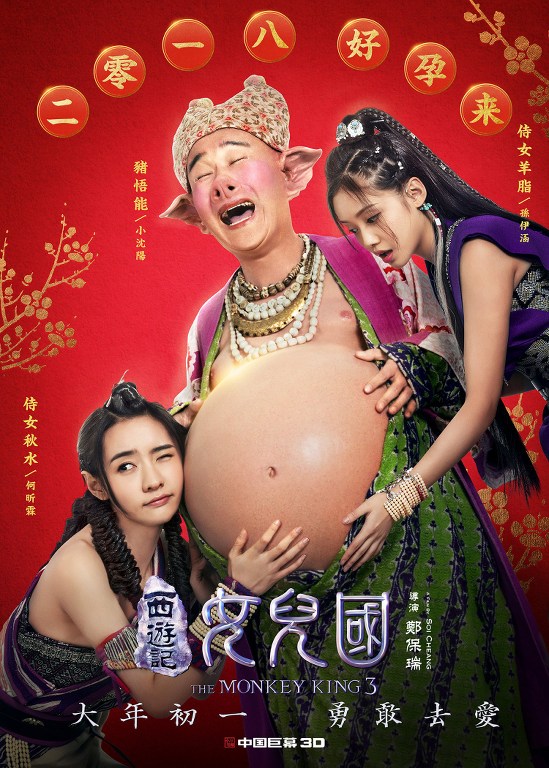
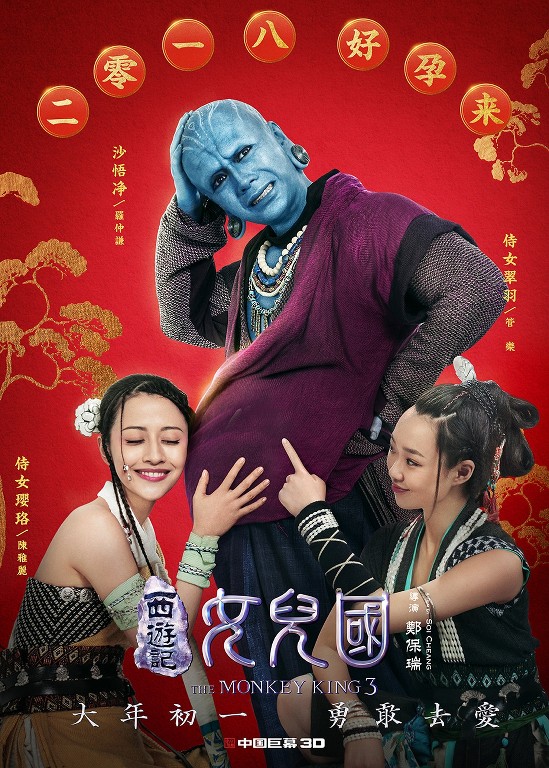
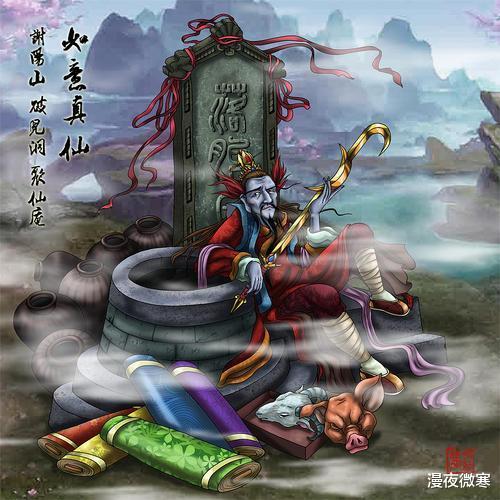
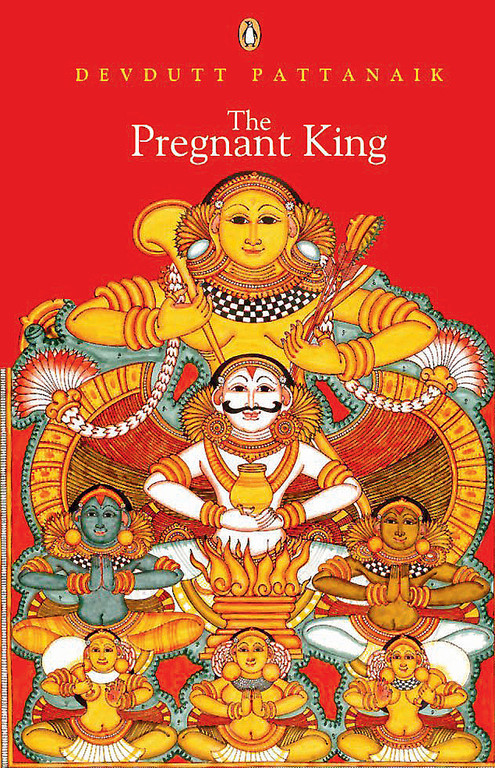

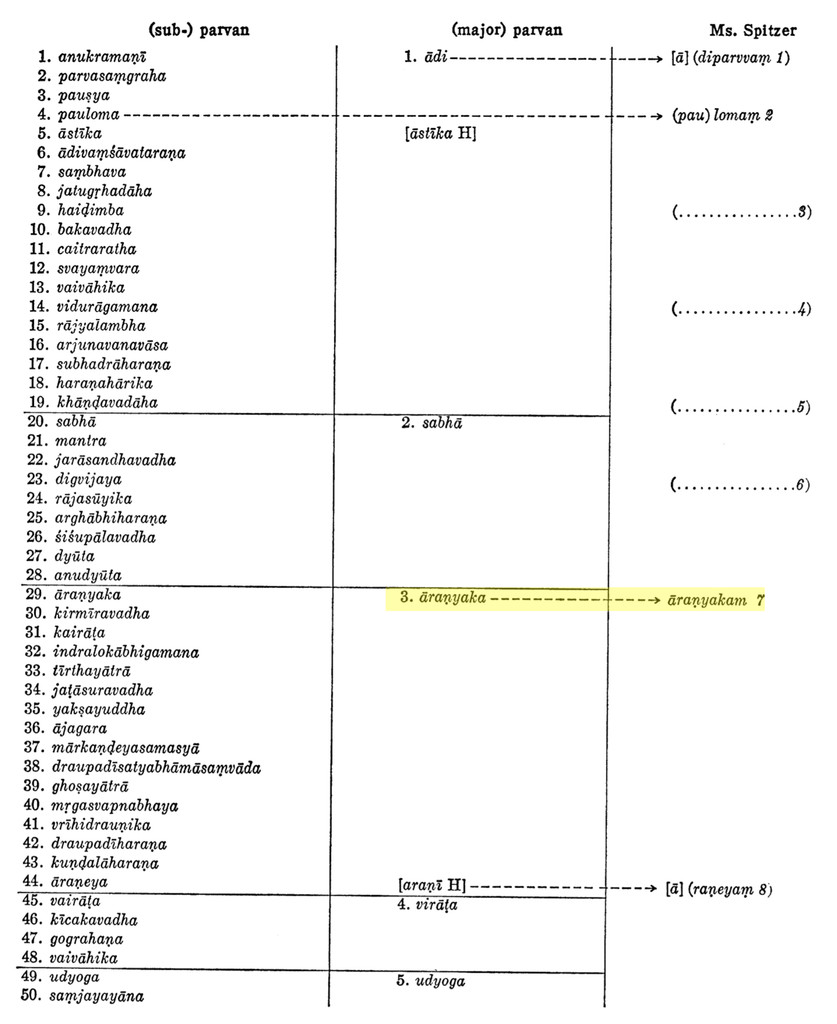
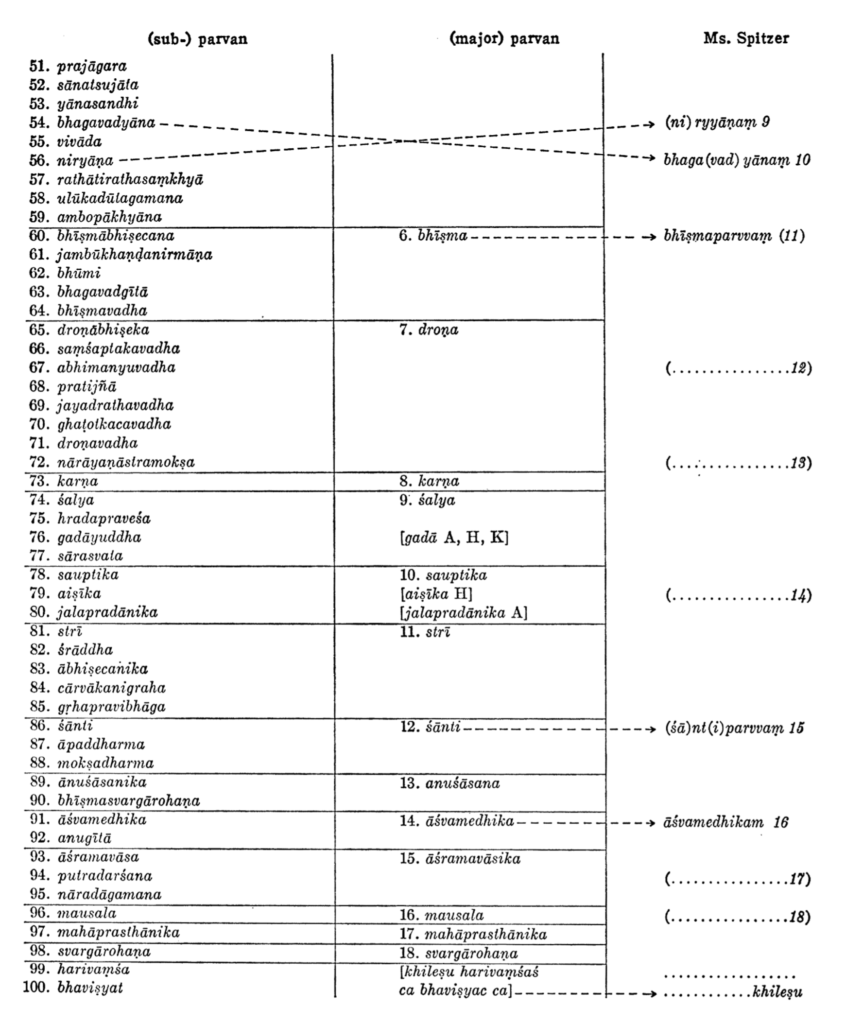


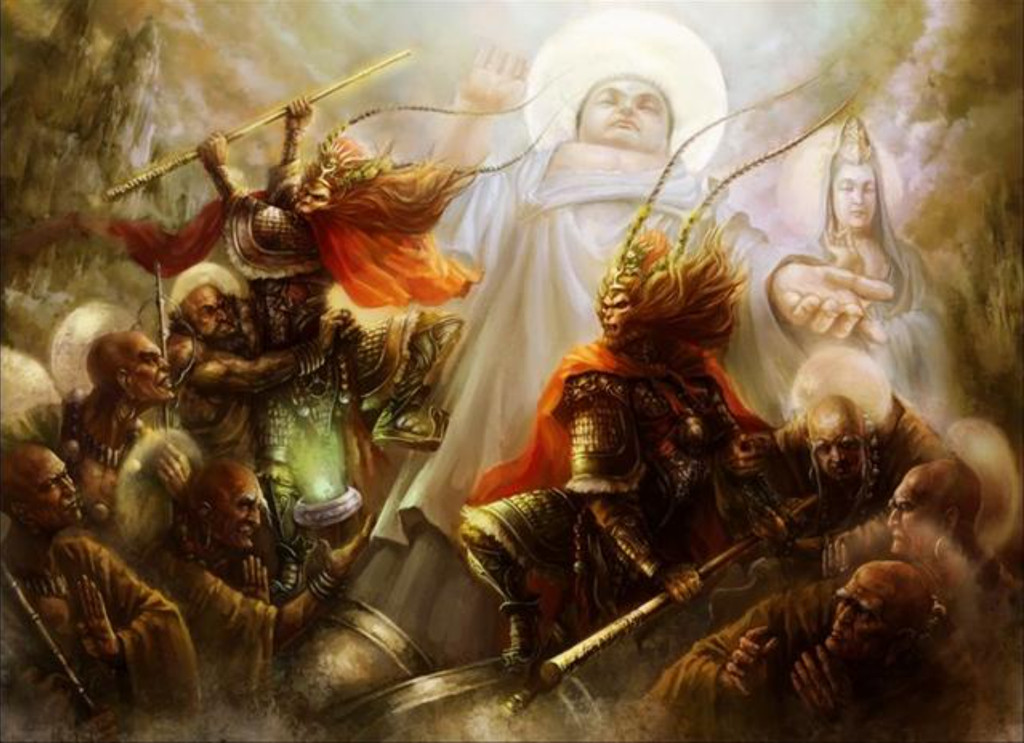


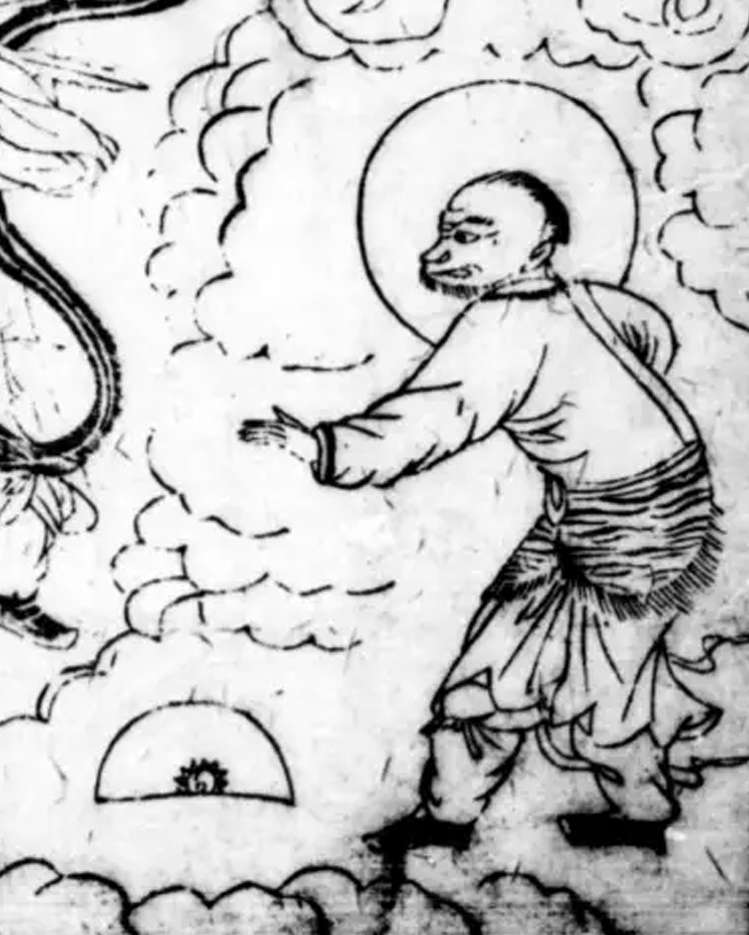
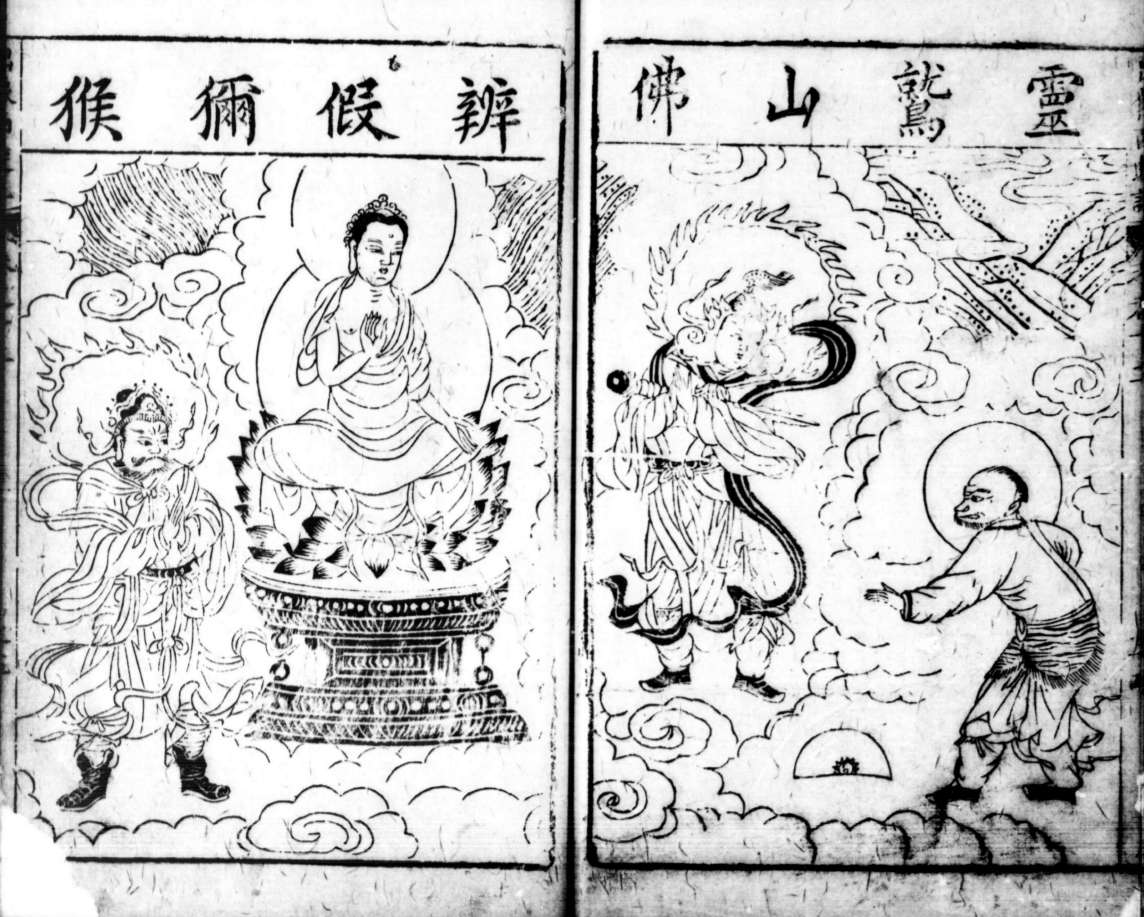
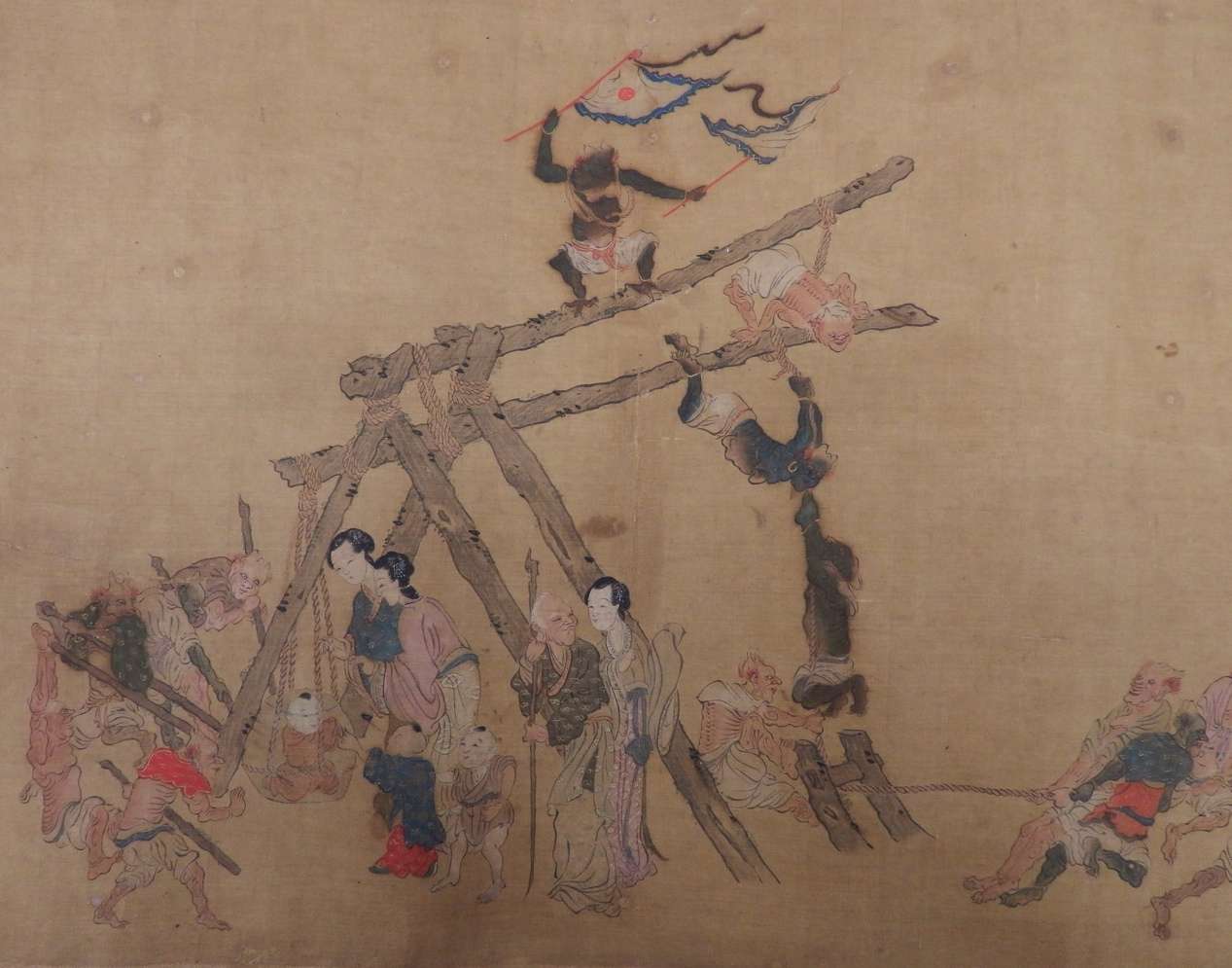
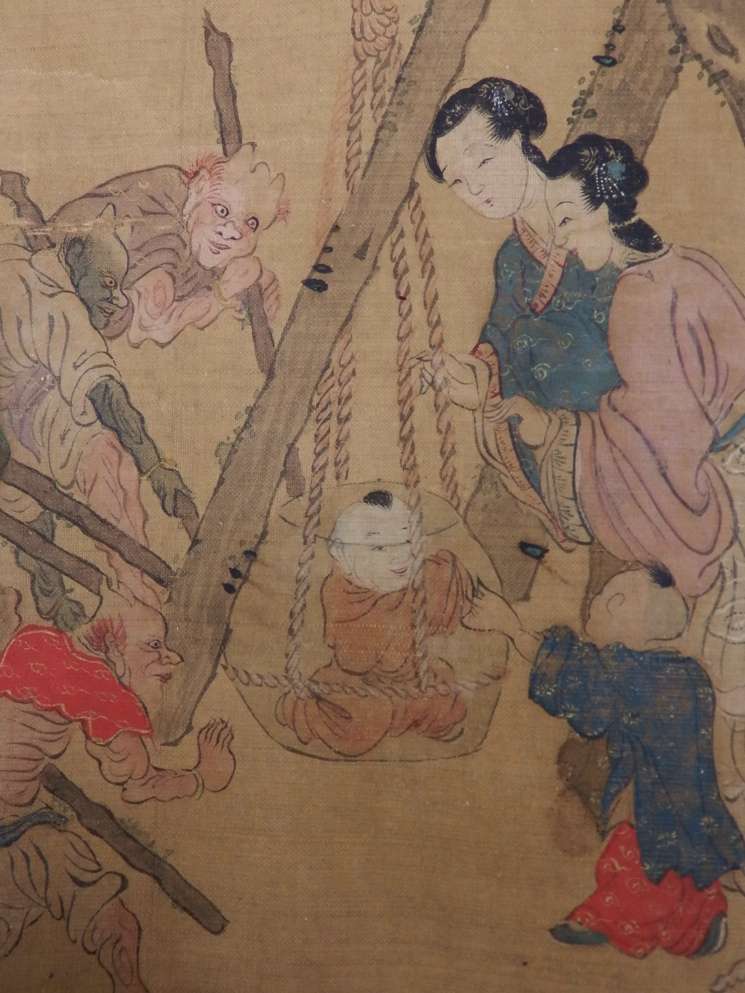
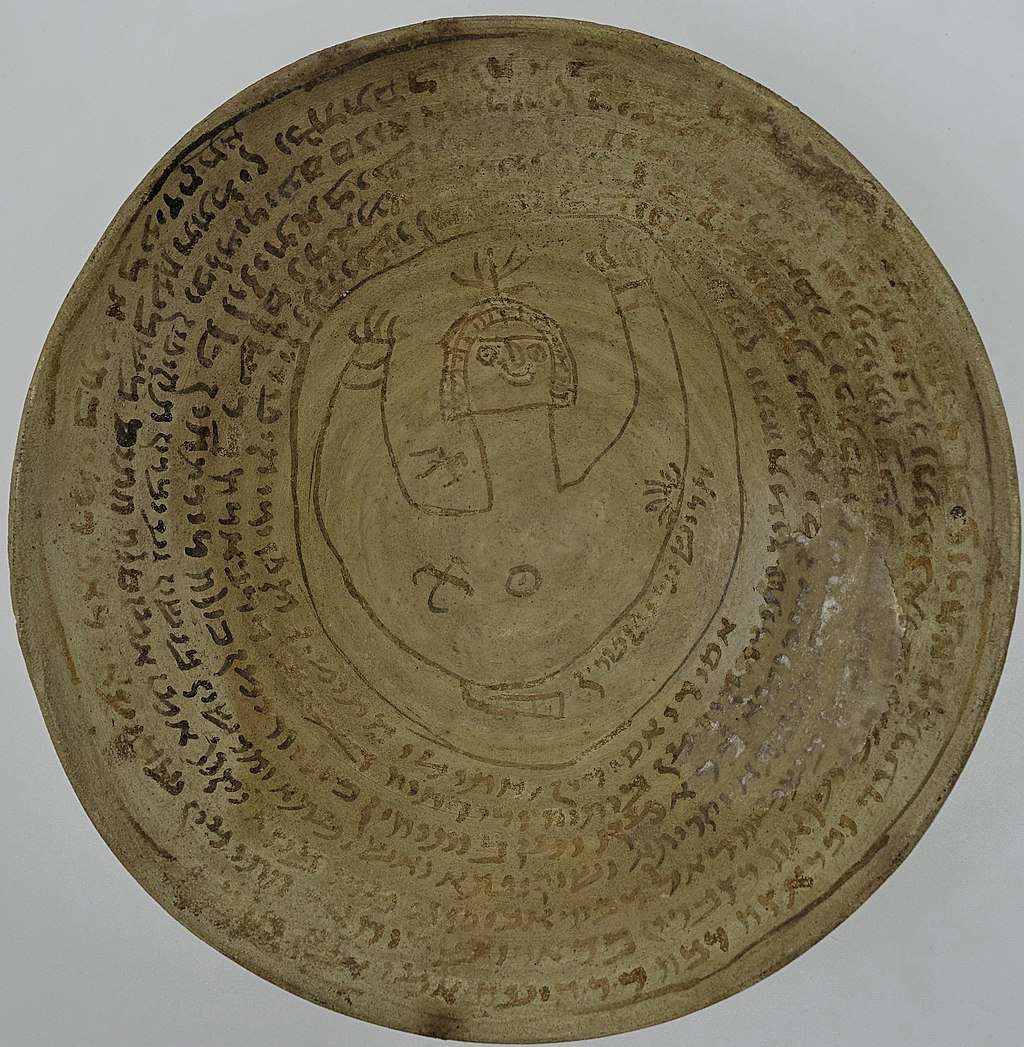

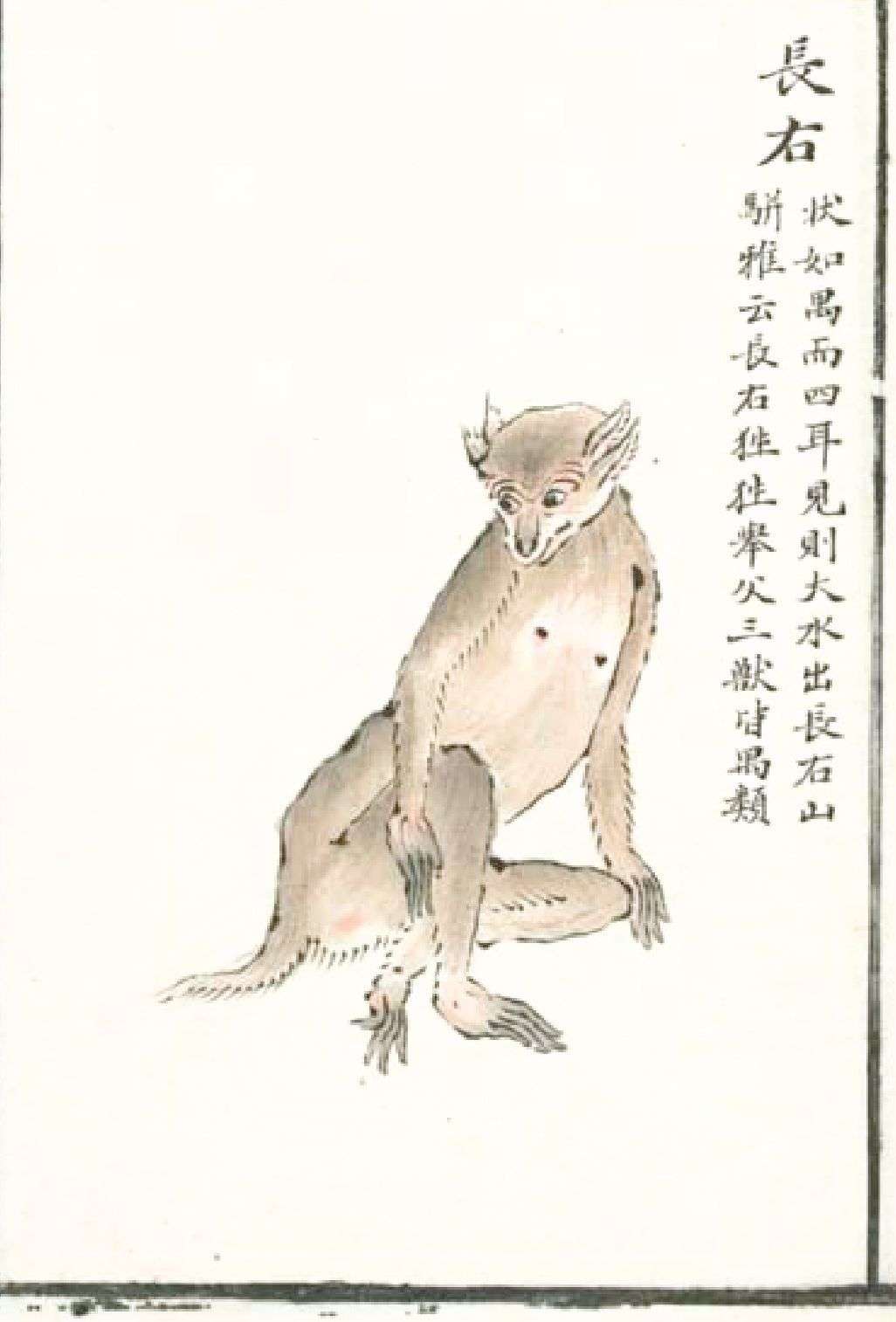
#/media/File:SiddhartaBirth.jpg)