Parallels between Sun Wukong and Wu Song

Last updated: 06-18-2022

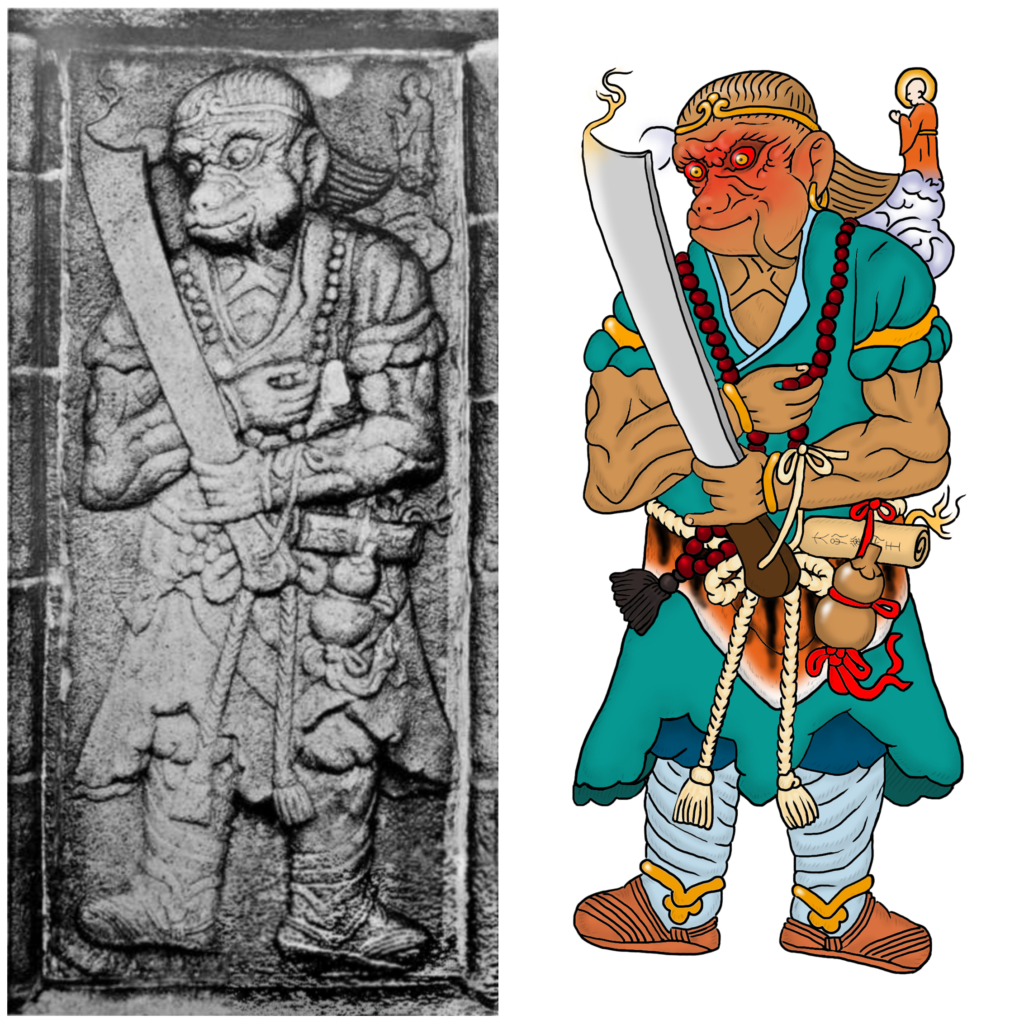
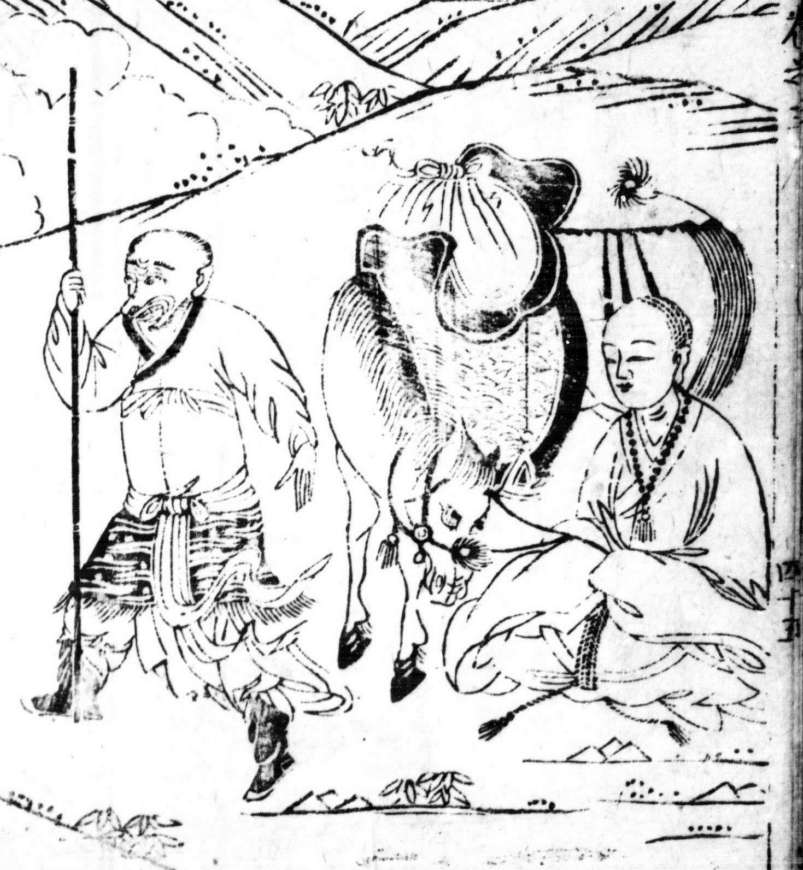
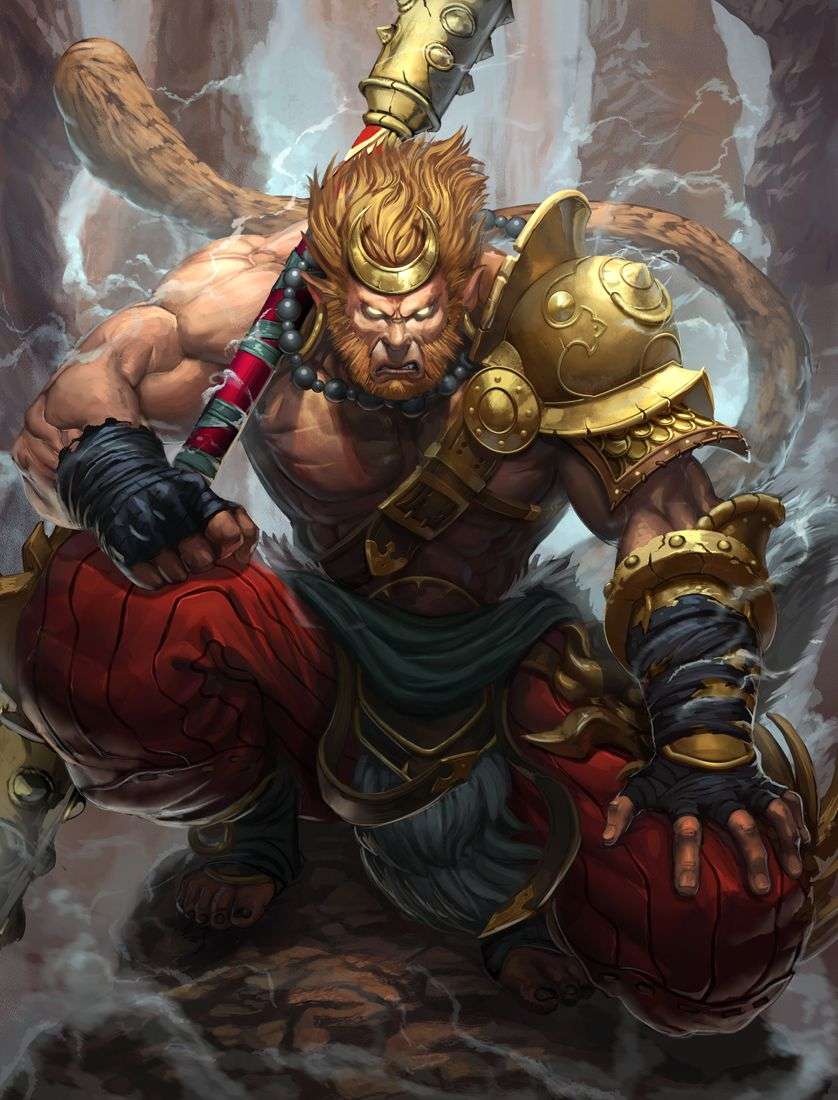
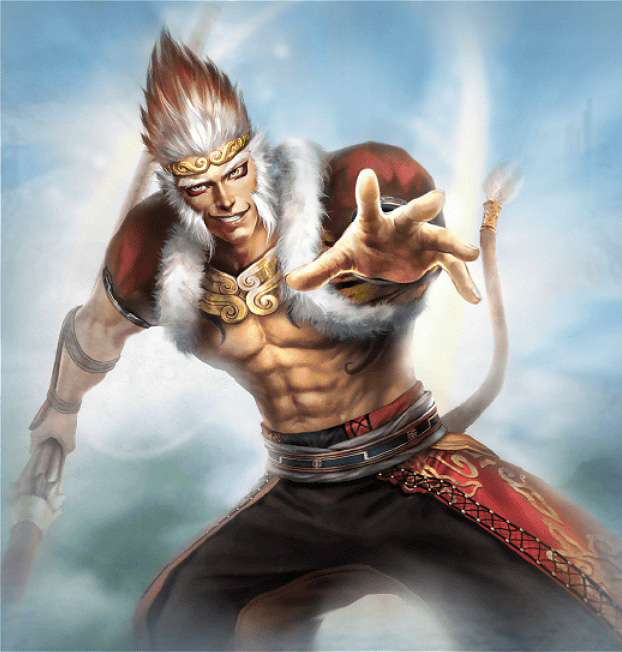
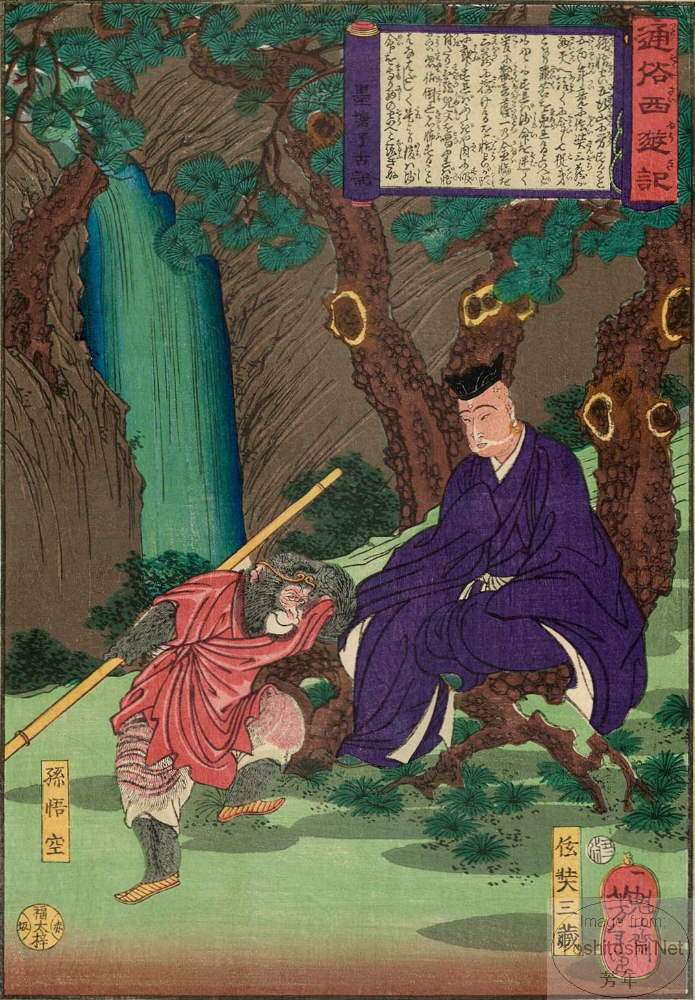
It recently occurred to me that Sun Wukong from Journey to the West (Xiyouji, 西遊記, 1592; “JTTW” hereafter) and Wu Song (武松) from the Water Margin (Shuihu zhuan, 水滸傳, c. 1400; “WM” hereafter) share a number of similarities. Each is a reformed supernatural spirit, a tiger slayer, a Buddhist monk nicknamed “Pilgrim,” and a monastic martial artist, and each wears a moralistic headband and wields a weapon made from the same fanciful metal. Since the WM predates the publication of JTTW by nearly two hundred years, one might be tempted to speculate that the latter influenced the former. However, both story cycles first appeared during the Song dynasty, with various iterations from the Yuan to the Ming (see Ge, 2001). In this article I show the parallels are due to the respective narratives drawing on similar religious, folkloric, and historical source material. I feel such a comparison is important as it presents a fuller picture of the cultural landscape in which the Monkey King developed.

Table of Contents

1. Reformed Supernatural Spirits

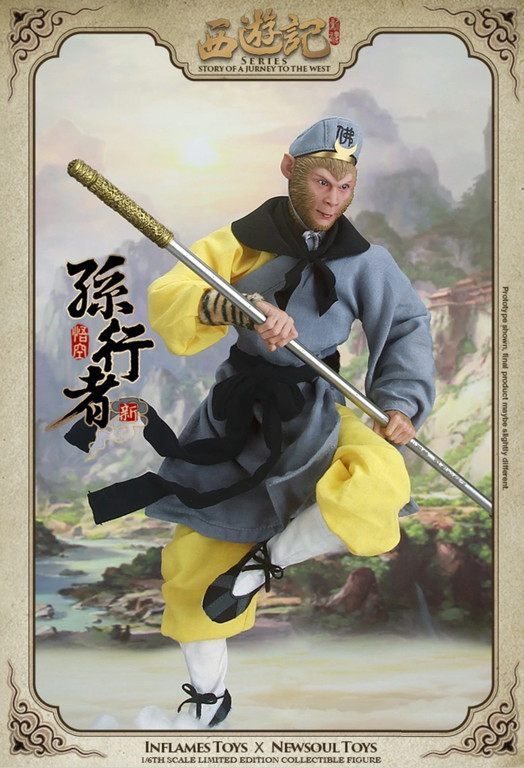
Chapters one through seven of JTTW present Sun Wukong as a celestial stone-born monkey who studies under a Buddho-Daoist master and achieves great magic powers, which he uses to rebel against heaven. After being defeated by the Buddha, Monkey is imprisoned under Five Elements Mountain for five hundred years. In chapter fourteen, the repentant immortal is later released to protect the monk Tripitaka on his journey to retrieve scriptures from India.

Fig. 1 – A modern action figure of Sun Wukong’s imprisonment under a section of Five Elements Mountain (larger version).

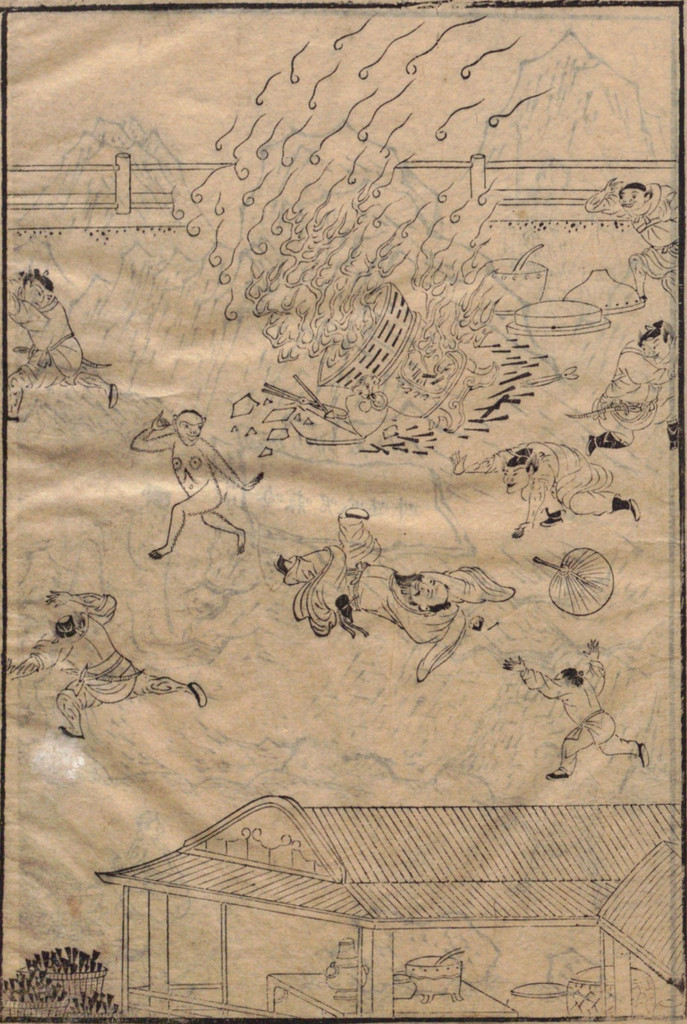
Chapter one of the WM tells how one hundred and eight spirits were quelled by a Daoist sage during the Tang dynasty and imprisoned in a bottomless pit under a great stone slab. Four or five hundred years later during the Song dynasty, a haughty government official orders the slab dug up and removed to sate his curiosity, allowing the spirits to escape in a plume of miasmic black fumes and later be reborn on earth. Wu Song, whose main story appears in chapters 23 to 32, is one of these extraordinary men and women who come to use their martial, intellectual, or magical skills to rebel against the corrupt Song government. A heaven-sent stone slab in chapter 71 is later discovered to list the names of each bandit with the corresponding name of their previous incarnation, which make up the “Thirty-Six Heavenly Stars” (Tiangang sanshiliu xing, 天罡三十六星) and the “Seventy-Two Earthly Fiend Stars” (Disha qishier xing, 地煞七十二星). Wu Song is listed as the “Heavenly Harm Star” (Tianshang xing, 天傷星), the fourteenth of the Thirty-Six Heavenly Stars.

So we see both are formerly evil spirits who were conquered by a religious figure and imprisoned under stone for centuries. After being released, each rebellious figure becomes a force for good.

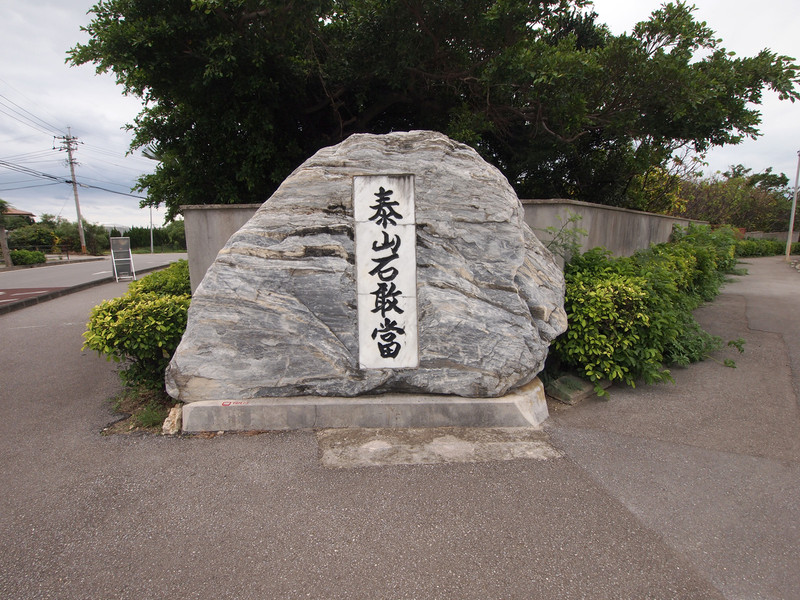
Monkey’s punishment can be traced to Tang and Song dynasty tales about the sage king Yu the Great imprisoning a simian water demon under a mountain. To my knowledge, the first recorded mention of this punishment appears in an early-Ming zaju play in which Guanyin traps Sun Wukong under Flower Fruit Mountain. Wang (1992) suggests that the stone slab from the WM was likely influenced by the Taishan stone (taishan shi, 泰山石) (fig. 2), a class of “evil-warding stones” (shigandang, 石敢當) often placed outside of homes and temples or at the intersection of roads as protection from malevolent forces (pp. 71-72 and 254). The Taishan stone represents Mount Tai and its deity. The landmass is considered the heaviest thing imaginable in Chinese culture. This means that the evil would be completely immobilized by the great weight.

Fig. 2 – A modern Japanese example of a Taishan stone (larger version). They often read “Taishan stone takes upon itself” (Taishan shi gandang, 泰山石敢當), denoting its duty of protection (Wang, 1992, p. 71). Original image from Wikipedia. 

Additionally, the pit containing the spirits can be traced to a Song-era Daoist ritual in which an exorcist draws the character for “well” (jing, 井/丼) on the ground, thereby dividing the ritual space into nine sections, representing the Nine Palaces (jiugong, 九宮), [1] and creating an earth prison. The Compilation of Rituals of the Way (Daofa huiyuan, 道法會元) reads:

[U]se the Sword mudrā to draw the character for “well” on the ground. Transform it into a black prison, ten-thousand zhang deep, and ten thousand li wide. [2] Black vapors burst out of it. Inside the prison, visualize how cangues and locks, as well as tools and machinery are laid out. Then recite the Spell for Fast Arrest [cu zhuo zhou, 促捉咒] (Meulenbeld, 2007, p. 142).

The black vapors should remind readers of that released upon the spirits’ escape from their centuries-long imprisonment.

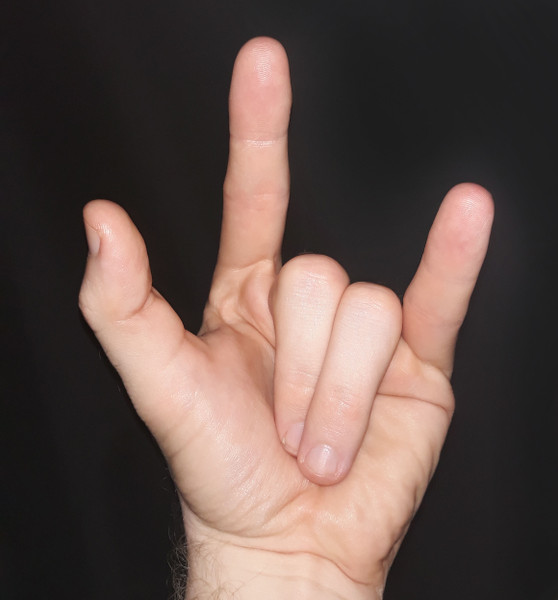
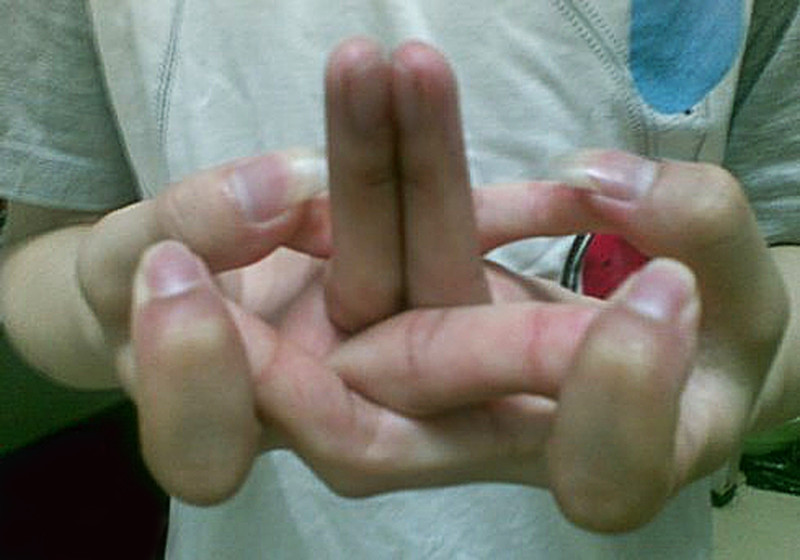
Fig. 3 – The Chinese character for mountain (shan, 山) (larger version). Fig. 4 – The Mountain mudra (shanzi jue, 山字訣) (larger version). Photo by the author. Fig. 5 – The double-handed Mount Tai mudra (Taishan jue, 泰山訣) (larger version). Original picture from here.

Another version of the ritual sees the spirits being coaxed or forced inside of a liquid-filled jar placed in the center of the well diagram. Afterwards, the opening is sealed with paper and the exorcist performs a mudra representing the immense pressing weight of a mountain (just like the aforementioned Taishan stone). [3] Meulenbeld (2007) writes:

The spirits captured within the grid of the Nine Palaces were kept inside their prison by symbolically pressing them down underneath a mountain. The symbolism here lies in the fact that the mountain was represented by a posture of the hand forming the character for mountain (“Mountain Mudrā” 山字訣 with the thumb, index-finger, and little finger all pointing upward [fig. 3 and 4]. Oftentimes the specific “mudrā of Mt. Tai” 泰山訣 [fig. 5], was used, representing the heaviest of all mountains. Moreover, many present-day exorcist talismans contain a character composed of a “demon” 鬼 underneath a “mountain” 山, namely the character wei 嵬 (p. 145, n. 92).

This means that the respective punishments of Sun Wukong and Wu Song (and his brethren) are for all intents and purposes the same: they are imprisoned under mountains. The Taishan stone and the Mountain mudra are no doubt based on the same belief that mountains can immobilize evil spirits. Most importantly, the mudra likely influenced the concept of the Buddha transforming his hand into Five Elements Mountain in chapter 7 of JTTW. The fictional mountain is then a cognate of Mount Tai.

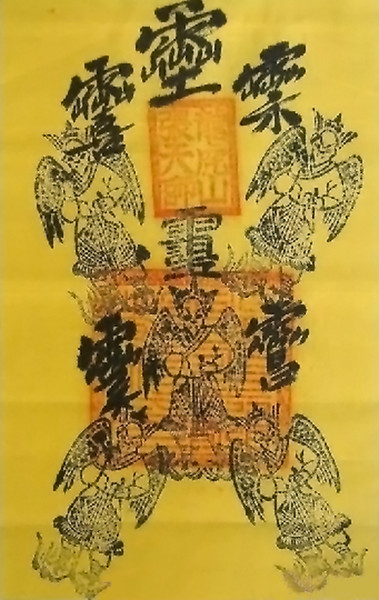
Fig. 6 – A paper fu talisman marked with an image of the Five Thunders (Wu Lei, 五雷) (larger version).

Lastly, the idea that evil spirits can be reformed and their powers put to good use—i.e. Sun Wukong protecting Tripitaka and Wu Song standing against a corrupt government—is tied to the Song-era “Thunder Ritual” (Leifa, 雷法). Meulenbeld (2007) explains that stories from the Tang to the Song present the characteristics of the thunder god, Sire Thunder (Lei Gong, 雷公), becoming increasingly demonic, changing from a muscular deity to a number of animals and finally a Garuda-like bird monster. Likewise, while he was a respected force of nature in the past, Sire Thunder became an impulsive agent of heaven, one capable of being challenged and even captured by a brave individual or ritual master. The subjugation of this demonic god allowed his captors to appropriate his heavenly power for their own purposes. The deity and his four brothers, comprising the “Five Thunders” (Wu Lei, 五雷) (fig. 6), can be summoned on command via talismans and charms and made to bring rain, heal sicknesses, or conquer demons. [4] Such ritual accouterments are just a small part of a much larger subsequent Thunder Ritual liturgy that is, according to one Song dynasty source, capable of “control[ing] the demons and spirits of the Sixfold Heavens, [expelling] evil and avert[ing] disaster” (Meulenbeld, 2007, p. 67).

2. Tiger Slayers

JTTW, ch. 14 – Sun Wukong’s first act of protecting Tripitaka upon his release is effortlessly killing a tiger with a single stroke of his staff. This happens the day after a huntsman had come to the monk’s defense by fighting a tiger for hours before dispatching it with a trident. The difference in power between the immortal and human heroes leads the monk to exclaim, “For the strong, there’s always someone stronger!” (Wu & Yu, 2012, vol. 1, p. 310).

WM, ch. 23 – Wu Song gets drunk on a trip home to see his elder brother, and after ignoring warnings not to take a mountain shortcut, the hero is set upon by a ferocious man-eating tiger. In the process of initially defending himself, Wu snaps his walking staff on a nearby tree, forcing him to resort to brute strength. He manages to wrestle the big cat’s face into the dirt and rains down sixty or seventy fist blows before it stops moving (fig. 7). He then finishes off the beast with the remains of his staff.

Fig. 7 – “Wu Song Beats the Tiger” (Wu Song dahu, 武松打虎) by Wang Kewei (王可偉) (larger version).

I can’t help but imagine that the episode from JTTW is a sly nod to that from the WM. Tripitaka’s statement could be a way of propping up the Monkey King as the most powerful hero, one who can dispatch tigers with no effort at all.

The ability to kill a tiger was considered the sign of a powerful warrior in Chinese folklore. For example, A New Account of the Tales of the World (Shishuo xinyu, 世說新語, 5th century), a collection of historical and fictional anecdotes, tells the story of how the Western Jin general Zhou Chu (周處, 236–297) was originally a wayward youth considered the worst of Yixing‘s “Three Scourges”—a tiger, a dragon, and himself. Wanting to prove his strength, Zhou is said to have easily killed the tiger but disappeared for three days and nights fighting the dragon. The youth later returned to find the people celebrating his apparent death. This caused Zhou to mend his ways and eventually become a great general (Knechtges & Chang, 2010, pp. 2274-2275).

3. Buddhist Monks With Matching Religious Nicknames

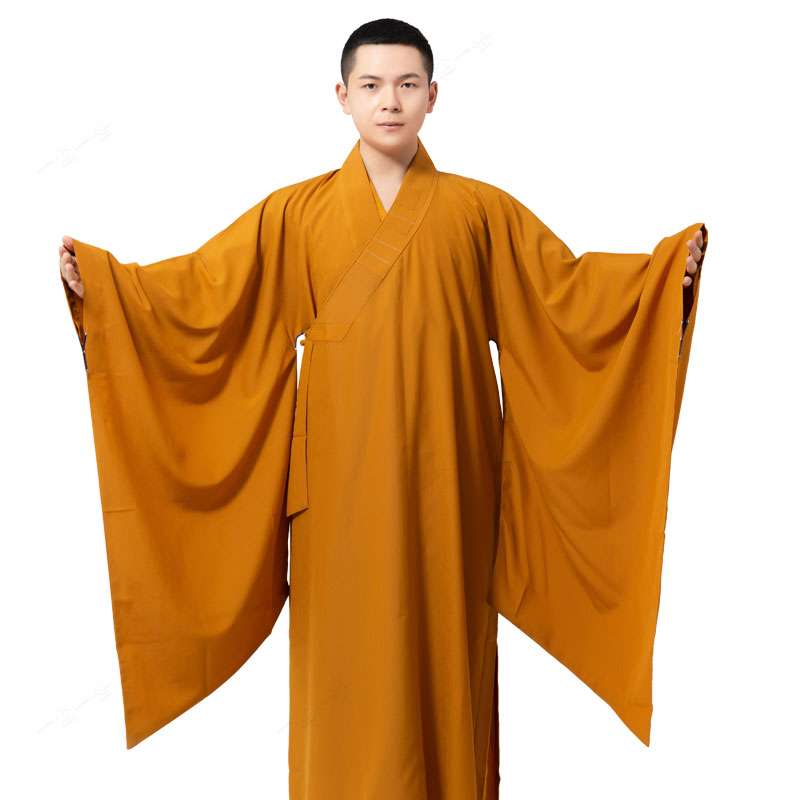
JTTW, ch. 14 – Sun Wukong takes the tonsure as a Buddhist monk upon his release. [5] His master Tripitaka then gives him the religious nickname “Pilgrim Sun” (Sun xingzhe, 孫行者), and the character is often simply referred to as “Pilgrim” (xingzhe, 行者; literally: “traveler”) throughout the narrative.

WM, ch. 31 – Wu Song kills a thug and his Song government official friend for framing the hero for theft and attempting to have him murdered en route to a prison camp. As a result, he is forced to dress as a Buddhist monk, taking a slain priest’s religious garb and ordination certificate (jiedie, 戒牒) and calling himself “Pilgrim Wu” (Wu xingzhe, 武行者).

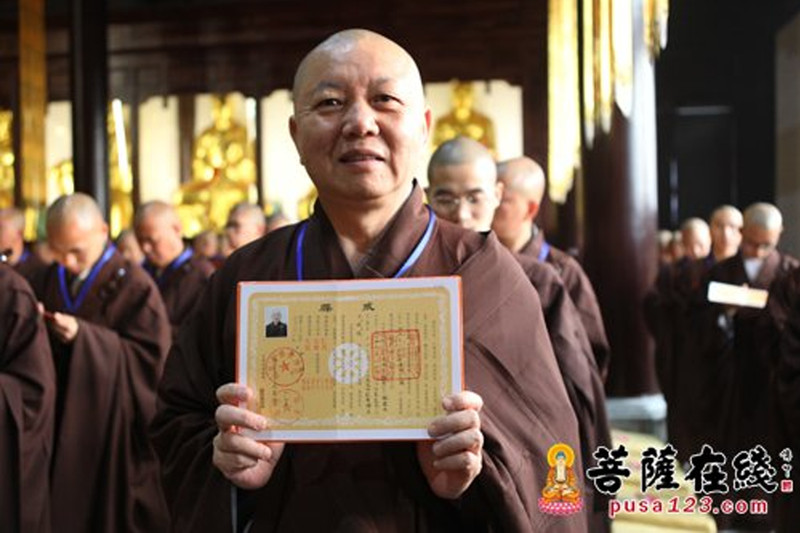
The term Pilgrim refers to a “postulant,” a lay Buddhist acolyte who has yet to be ordained but lives as an untonsured monk, one expected to follow the Five Precepts (Pali: Pañcasīla; Ch: Wujie, 五戒) against killing, lying, stealing, sexual misconduct, and drinking alcohol (Robert & David, 2013, pp. 1011-1012). Ch’en (1956) writes that such trainees were historically required to complete a long period of intense religious study and pass a rigorous examination before being awarded the aforementioned ordination certificate (fig. 8), thereby becoming a full-fledged monk. This certification system was originally initiated during the Tang to weed out those wanting to evade the draft and taxes, as well as bandits like Wu Song who sought refuge from the law. However, during the Song, the government sold these documents like war bonds in order to help pay for their ongoing struggle against the barbarians of northern China. Therefore, ordination certificates were often exuberantly expensive, [6] meaning those who had the training but could not afford the document were doomed to live as a postulant. This contrasts with the thousands upon thousands of people who bought their way into the Buddha’s fold simply for the draft and tax exemption. They forwent the training altogether and were monks only on paper. This continued practice naturally resulted in a major decline in the quality of monks during the Song.

Fig. 8 – A present day monk showing his ordination certificate (jiedie, 戒牒) (larger version). Original image found here.

Having read the above, we can say that Sun Wukong is called Pilgrim because he assists a Buddhist priest but lacks the religious education and ordination certificate. And while Wu Song has the document (taken from a dead priest), he lacks the required education. It should be remembered that Wu is a bandit-turned-monk. At the same time, both characters typify the “itinerant monk,” the second meaning of Pilgrim (xingzhe, 行者), as both are on a journey: Sun is traveling to India and Wu is traveling the road—albeit secretly to meet with fellow outlaws. But I would like to suggest that the titles may have also been meant as a jab at the violent, untrained riffraff passing for monks during the Song (more on this below). After all, the earliest references to our characters with these titles come from this period.

“Pilgrim Wu” appears in scholar-painter Gong Shengyu‘s (龔聖予, 1222–1307) In Praise of the Thirty-Six [Men] of Song Jiang (Song Jiang sanshiliu zan, 宋江三十六贊), a collection of poems eulogizing each of the thirty-six bandits then associated with the early WM story cycle.

Pilgrim Wu Song: You resisted women, obeyed the Five Precepts, among Wine, Women, Wealth and Force, you were inclined to kill people (Børdahl, 2013, p. 29).

Gong claims that the poems were based on “stories of the streets and tales of the lanes” (jietan xiangyu, 街談巷語), popular narratives performed by storytellers at local venues.  Given that such early tales no longer exist, its impossible to say whether or not Wu Song was always a monk or a bandit-turned-impostor monk like his counterpart from the published edition of the WM (Børdahl, 2013, pp. 28-29). Either way, this suggests that Wu’s predilection for killing was a prominent aspect of his story cycle by at least the 13th century.

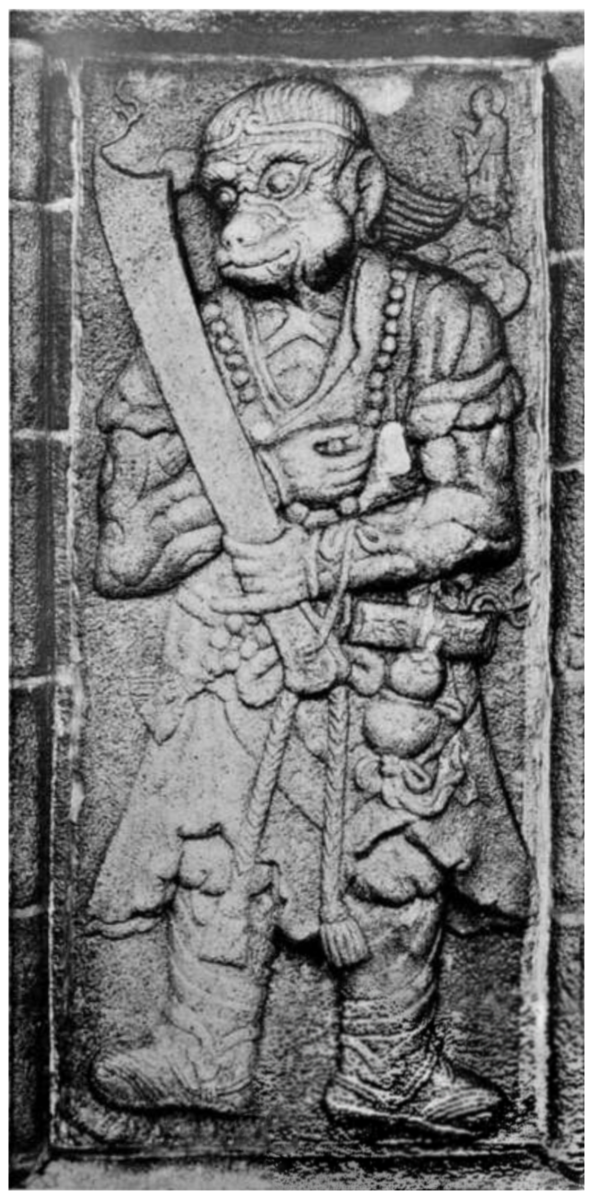
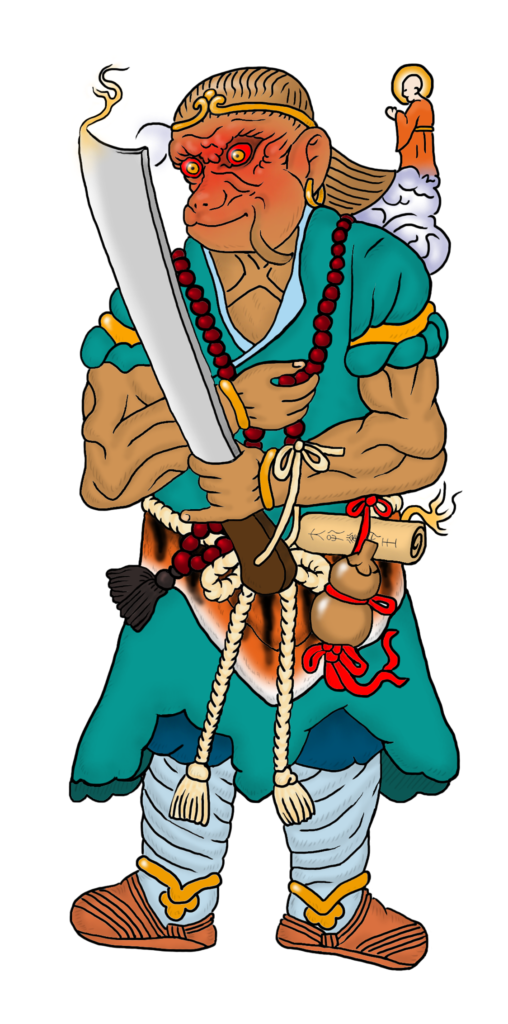
Sun Wukong first appears as the “Monkey Pilgrim” (Hou xingzhe, 猴行者) in The Story of How Tripitaka of the Great Tang Procures the Scriptures (Da Tang Sanzang qujing shihua, 大唐三藏取經詩話; “The Story” hereafter), a seventeen chapter storytelling prompt dated to the late-13th century. Like Wu Song, Monkey is also depicted as comfortable with killing. For example, in chapter five, he turns an evil sorcerer’s wife into grass so that she will be eaten by a young monk who had been transformed by her husband into a donkey. After both parties are changed back to normal, Monkey threatens to “mow down all the grass of [his] house” (i.e. kill his wife and anyone else he loves) if the man ever misuses his magic again. [7] Later in chapter six, Monkey brutally tortures and then kills a white tiger demon who tries to eat his master (Wivell, 1994, pp. 1181-1207)

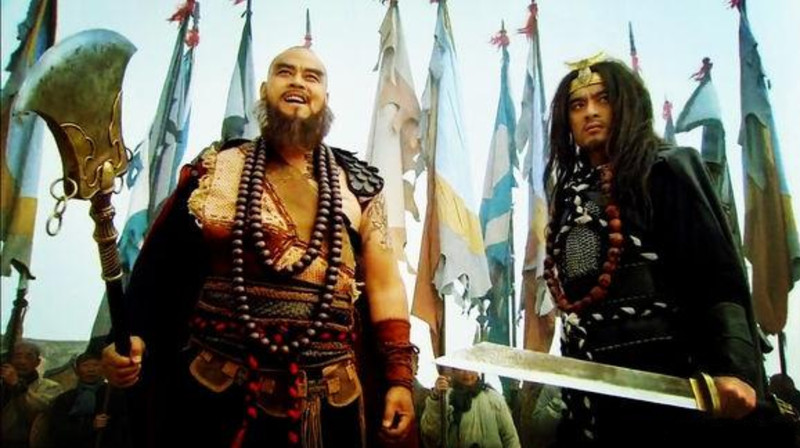
Fig. 9 – The “Pilgrim” Wu Song (right) and the “Flower Monk” Lu Zhishen (left) from a recent WM television series (larger version).

Additionally, two early WM-related tales titled “Pilgrim Wu” (Wu xingzhe, 武行者) and the “Flower [Tattooed] Monk” (Hua heshang, 花和尚) are listed under the “staff” (ganbang, 桿棒) category of popular stories in The Drunken Man’s Talk (Zuiweng tanlu, 醉翁談錄), a circa 13th century collection of short stories, anecdotes, and poetry. [8] So-called staff tales were character-driven narratives about heroes, in this case Wu Song and his fellow outlaw-turned-monk Lu Zhishen (fig. 9), righting injustices using staves. [9] I should note that The Story describes the Monkey Pilgrim wielding two such weapons in his adventures.

Sun and Wu’s association with killing and staff fighting were likely influenced by historical warrior monks and bandit monks. Shahar (2008) explains that warrior monks were seasoned fighters who lived in subsidiary shrines away from the devout community and protected monasteries in times of trouble. These “monks” regularly drank wine and ate meat, associating the latter with physical strength and fighting ability, and even worshiped wrathful deities like Vajrapani, who is described in scripture as killing in the name of Buddha. Their weapon of choice was a wooden staff, which was originally chosen for being non-lethal. However, a metal staff like the one wielded by Sun Wukong in JTTW was sometimes used by warrior monks for its killing capacity in times of war. The most famous monastic staff method belongs to the Shaolin Monastery (Shaolin si, 少林寺) (video 1). After the Shaolin warrior monks helped the Ming dynasty government repel Japanese pirate incursions from the Chinese coast during the 1550s, their staff method was touted in military encyclopedias and civilian weapons manuals. [10]

Video 1 – A demonstration of Shaolin Wind Devil Staff (Fengmo gun, 風魔棍).

Bandit monks are outlaws like Wu Song who dressed as clerics to avoid problems with the law. [11] Lorge (2012) comments that the characteristics of bandit monks were nearly indistinguishable from that of warrior monks.

[I]t is easy to see how bandit-monks are virtually the same as warrior-monks. These men drank wine, at meat, and had sex with women—practices alien to true Buddhist monks. A number of Buddhist authorities were deeply troubled by the presence of monks who directly violated Buddhist precepts. We do not know whether there was a sharp break between ordained and trained monks who carefully followed monastic rules in their search for enlightenment and men who simply claimed to be monks, wore monastic robes, shaved their heads, but otherwise did not follow monastic rules (p. 174).

He goes on to explain that the Shaolin monastery, for example, became heavily militarized after a nasty defeat in 1356 during the Red Turban Rebellion and so may have replenished its ranks using formerly deactivated soldiers at the turn of the Ming dynasty. Such violence-prone men would naturally turn towards a life of crime. Therefore, these bandits “would have been easy enough to recruit and send out as warrior-monks to fight against [other] bandits” (Lorge, 2012, p. 175).

So we see that there existed a class of staff-bearing pseudo-monks who regularly took life and drank alcohol. Serving as mainly monastic bodyguards, these fighters lacked the devotion to the precepts and, especially, the religious education to be considered real monks. Therefore, Sun and Wu’s characterization as such warriors may further explain why they are called Pilgrim.

4. Monastic Martial Artists

I want to preface this section by stating upfront that it overlaps to some degree with the previous one. But while the former explored Sun and Wu’s connection to staff-wielding warrior monks by way of their characterization in late Song oral literature, this one will discuss the connection between their images as monastic martial artists and the historical practice of boxing by warrior monks.

While the Great Sage is primarily known for his skill with the staff, he displays a mastery of unarmed combat twice in JTTW. Chapter 51, for example, describes Sun and a demonic opponent fighting with a long list of punches, kicks, grapples, and throws.

Hitching up his clothes and walking forward, the fiend assumed a boxing posture; his two fists upraised looked truly like two iron sledge hammers. Our Great Sage also loosened his legs at once and moved his body to attack; right before the cave entrance, he began to box with the demon king. This was quite a fight! Aha!

Opening wide the “Four Levels Posture”;
The double-kicking feet fly up.
They pound the ribs and chests;
They stab at galls and hearts.
“The Immortal pointing the Way”;
“Lao Zi Riding the Crane”;
“A Hungry Tiger Pouncing on the Prey” is most hurtful;
“A Dragon Playing with Water” is quite vicious.
The demon king uses a “Serpent Turning Around”;
The Great Sage employs a “Deer Letting Loose its Horns.”
The dragon plunges to Earth with heels upturned;
The wrist twists around to seize Heaven’s bag.
A green lion’s open-mouthed lunge;
A carp’s snapped-back flip.
Sprinkling flowers over the head;
Tying a rope around the waist;
A fan moving with the wind;
The rain driving down the flowers.
The monster-spirit then uses the “Guanyin Palm,”
And pilgrim counters with the “Arhat Feet.”
The “Long-Range Fist,” stretching, is more slack, of course.
How could it compare with the “Close-Range Fist’s” sharp jabs?
The two of them fought for many rounds—
None was the stronger, for they are evenly matched (Wu & Yu, 2012, vol. 3, pp. 12-13)

I show in this article that many of the named techniques are real and are still practiced to this day. Furthermore, the poem’s bias for close-range fighting over long-range “is typical of late Ming and early Qing military literature,” as noted by Shahar (2008, p. 117). He continues,

Sixteenth- and seventeenth-century military experts allude to various short-range styles including ‘Cotton Zhang’s Close-Range Fist’ (Mian Zhang duanda [綿張短打]), ‘Ren Family Close-Range Fist’ (Renjia duanda [任家短打]), and ‘Liu [Family] Close-Range Fist’ (Liu duanda [劉短打])” (Shahar, 2008, p. 117).

This shows that the author-compiler of JTTW consulted real martial arts material to make this fight more authentic.

Having donned the monk persona, Pilgrim Wu stops by an inn while on a journey to meet with fellow outlaws in chapter 32. The monk’s great tolerance for wine (fig. 13) and request for meat surprises the inn keeper, whom Wu slaps to the ground upon seeing the man serve better wine and even chicken to a different patron. The patron and his friends attack the monk but are soundly beaten by his superior strength and fighting ability. [12]

Wu’s characterization as a meat-eating, alcohol-drinking monk with a thirst for combat is obviously tied to the warrior and bandit monks discussed earlier.

Fig. 15 – A modern depiction of Pilgrim Wu holding a jar of wine and brandishing a saber (larger version). By Leewiart user Du_YH. Original image found here.

While it precedes Wu becoming a monk, the best example of his martial prowess appears in chapter 29:

But Jiang was scornful of his foe [Wu Song], thinking that he was drunk, and he closed in rapidly. Quicker than it takes to tell, Wu Song flourished his two fists at Jiang’s face, then turned and started away. Enraged, Jiang raced after him. Wu Song lashed out backwards with his left foot and kicked him in the groin. As Jiang clasped his injured section and doubled over in pain, Wu Song whirled around and swung his right foot in a flying kick to the forehead that slammed the big man over on his back. Wu Song planted one foot on his chest and, with keg-like fists, began pommeling Jiang’s head.

This maneuver we just described—the flourish of fists and turning away, the backward left kick, the whirling around and the forward right kick—is called “the Jade-Circle Steps with Duck and Drake Feet” [Yuhuan bu, yuanyang jiao, 玉環步, 鴛鴦腳]. It was one of Wu Song’s most skillful moves. A remarkable trick! (Shi & Luo, 1993/2001, vol. 2, pp. 604 and 607.

Wu’s style is possibly another name for “Piercing Foot” (Chuojiao, 戳腳), a northern Chinese martial art known for its dynamic kicking skills. Modern folklore traces the style to the Song dynasty due to its association with WM heroes. [13]

While JTTW never openly describes Sun Wukong training in martial arts, it does imply that he learns armed and unarmed combat as a young monk studying under the Buddho-Daoist Sage Subodhi. Monkey learning boxing in a religious institution is actually a faithful depiction of one aspect of monastic life during the Ming. Shahar (2008) shows that Shaolin warrior monks took up unarmed combat during the late-Ming period, when boxing saw an explosion in popularity in Chinese culture (as demonstrated by the named techniques recorded in JTTW and the WM). Textual evidence suggests that the first styles practiced by Shaolin were Drunken Eight Immortals Boxing (Zui baxian quan, 醉八仙拳), popularized by Jackie Chan in The Drunken Master (1978), and Lost Track Boxing (Mizong quan, 迷蹤拳), the fighting style of the national hero Huo Yuanjia popularized by Bruce Lee in Fist of Fury (1972). The monks may have adopted boxing as a form of calisthenic exercise. To this they later added Daoyin (導引), a regimen of yoga-like Daoist breathing and stretching exercises designed to absorb qi (氣) energy and circulate it throughout the body. Therefore, the monks elevated their boxing practice from mere fighting to a form of spiritual cultivation. This synthesis of martial and spiritual practices simultaneously took place in wider Ming culture, leading to the creation of so-called “internal” (Neijia, 内家) martial arts like Taiji and Xingyi boxing. [14]

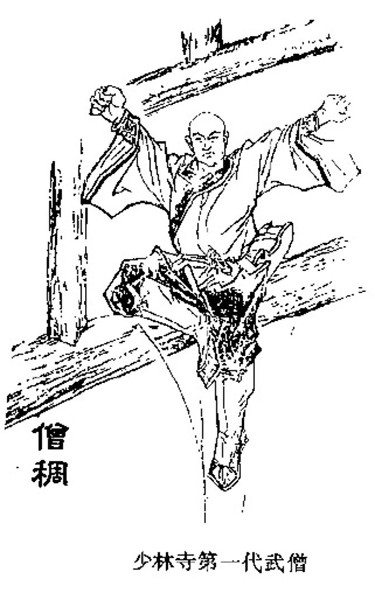
Fig. 10 – A modern drawing of the monk Sengchou showing off his newfound powers by jumping above the rafters of the Shaolin monastery (larger version). Original image found here.

That’s not to say Shaolin monks did not practice unarmed martial arts prior to the 17th century. It’s just boxing was only a form of entertainment practiced by a few and not part of the official training regimen. For example, the Tang-era anthology Complete Records from Court and Commonality (Chaoye qian zai, 朝野僉載, c. 8th century), contains the story of the famed dhyana master and Shaolin monk Sengchou (僧稠, 480–560) beseeching a religious statue of Vajrapani to bless him with martial strength so that the other monks, who enjoy sparring in their free time, will stop bullying him. After six straight days of prayer, the deity appears before him and offers the young novice a bowl of sinews to eat. Sengchou initially refuses due to the prohibition against eating meat, but he ultimately finishes the meal for fear Vajrapani will smite him with his vajra club. Like the radioactive spider bite that changes Peter Parker into Spider-Man, the sinews transform the monk, blessing him with a god-like physique and miraculous powers, such as the ability to walk on walls, leap great heights (fig. 10), and lift thousands of pounds. Most importantly, it drastically improves his fighting skills, so much so, in fact, that his former tormentors come to grovel in his presence (Shahar, 2008, pp. 35-37).

Where did Sengchou’s religious brothers learn their unarmed martial arts centuries prior to it becoming an official part of Shaolin’s training regimen? The simplest answer is someone like Wu Song, who learned boxing as a bandit or soldier and later joined the sangha. Readers may recall such violence-prone men may have been tapped as warrior monks to protect the monastery in times of trouble. They could have easily passed their fighting skills to the next generation of warrior monks.

A good example of a soldier-turned-monk is the brutish former general Huiming (惠明) from the Platform Sutra (Liuzu tanjing, 六祖壇經, written from the 8th to 13th c.). The text tells how the disciples of Hongren (弘忍, 601–674), the fifth Chan patriarch, were enraged when their master passed the mantle onto the illiterate postulant laborer Huineng (惠能, 638–713). Hundreds of monks are said to have pursued the fleeing Pilgrim south intent on forcefully taking the patriarchal symbols of the begging bowl and robe for themselves. Huiming persevered and managed to corner Huineng on a mountain. He attempted to wrestle the treasures away, but by a miracle, he could not lift them. Realizing that Huineng was the rightful heir, the monk became his disciple (Huineng & Cleary, 1998, pp. 11-12). Jealousy and anger are obviously qualities unbecoming of a real monk. In fact, the only thing that separates Huiming’s actions of hounding and attempted strong arm robbery from a bandit is his monkhood.

So, we see that Sun Wukong typifies a next generation warrior monk who learns boxing inside a religious institution. Wu Song, on the other hand, typifies the soldier or bandit who learns boxing outside the monastery and later becomes a monastic fighter, one who passes on their skills to younger monks.

5. Moralistic Headbands

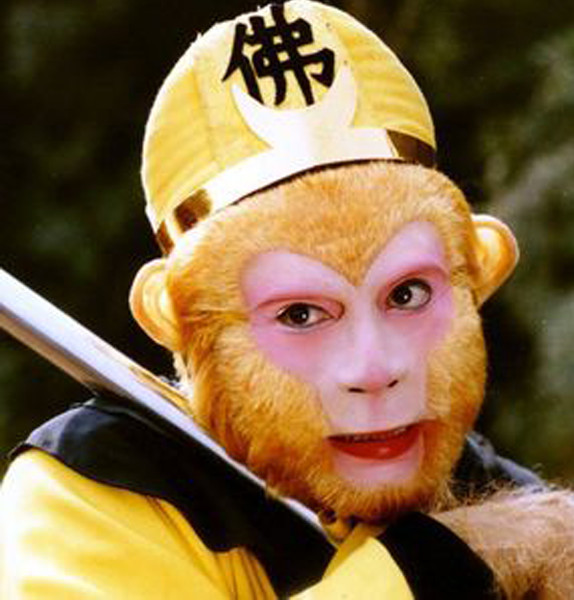
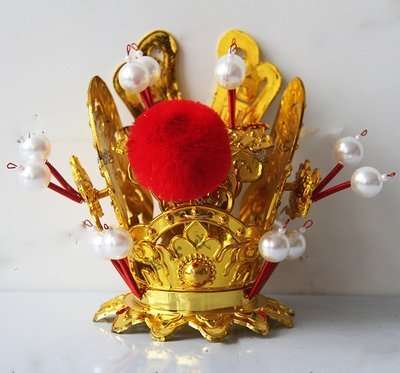
JTTW, ch. 14 – The Monkey King is tricked into wearing a brocade hat under the pretense of gaining the ability to recite scripture without rote memorization. However, the hat houses a golden fillet (jingu, 金箍) that soon takes root and painfully tightens around the immortal’s head when the correct spell is chanted (fig. 11). This allows the feeble monk Tripitaka to control the celestial monkey’s unruly nature.

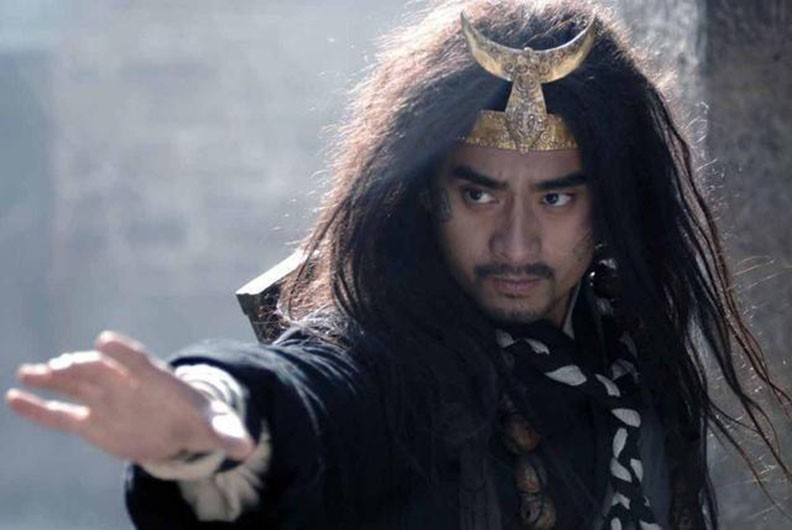
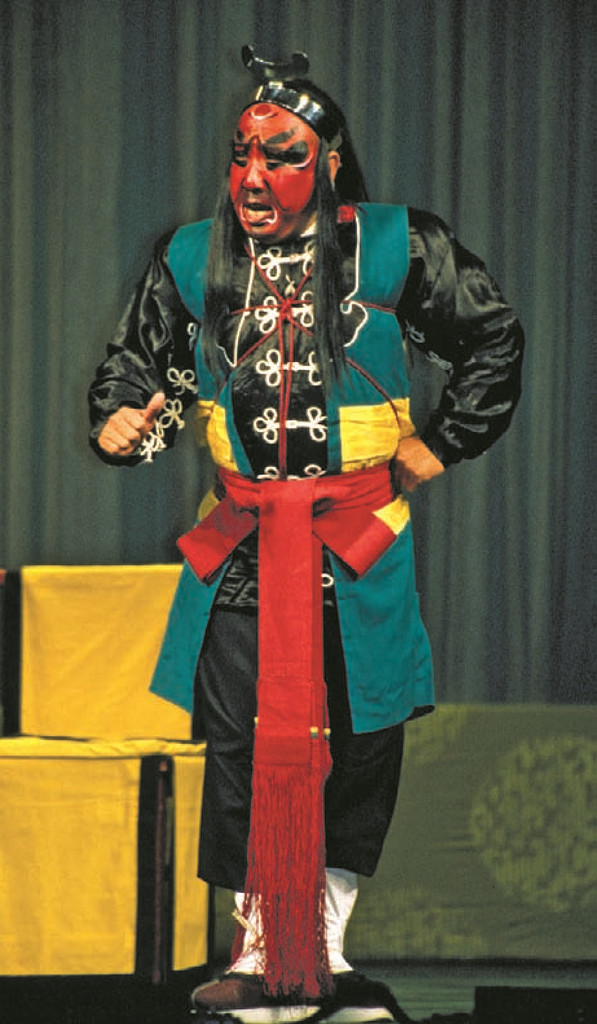
WM, ch. 31 – When Wu Song disguises himself as a monk, he wears the garments of a priest whom had previously been killed by bandits. The habit includes a metal “Precepts fillet” (jiegu, 戒箍) that he wears over his long hair (fig. 12).

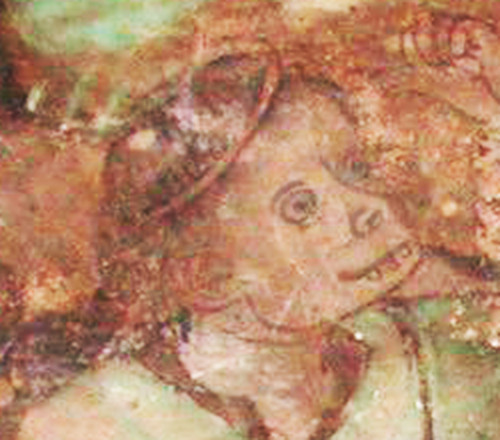
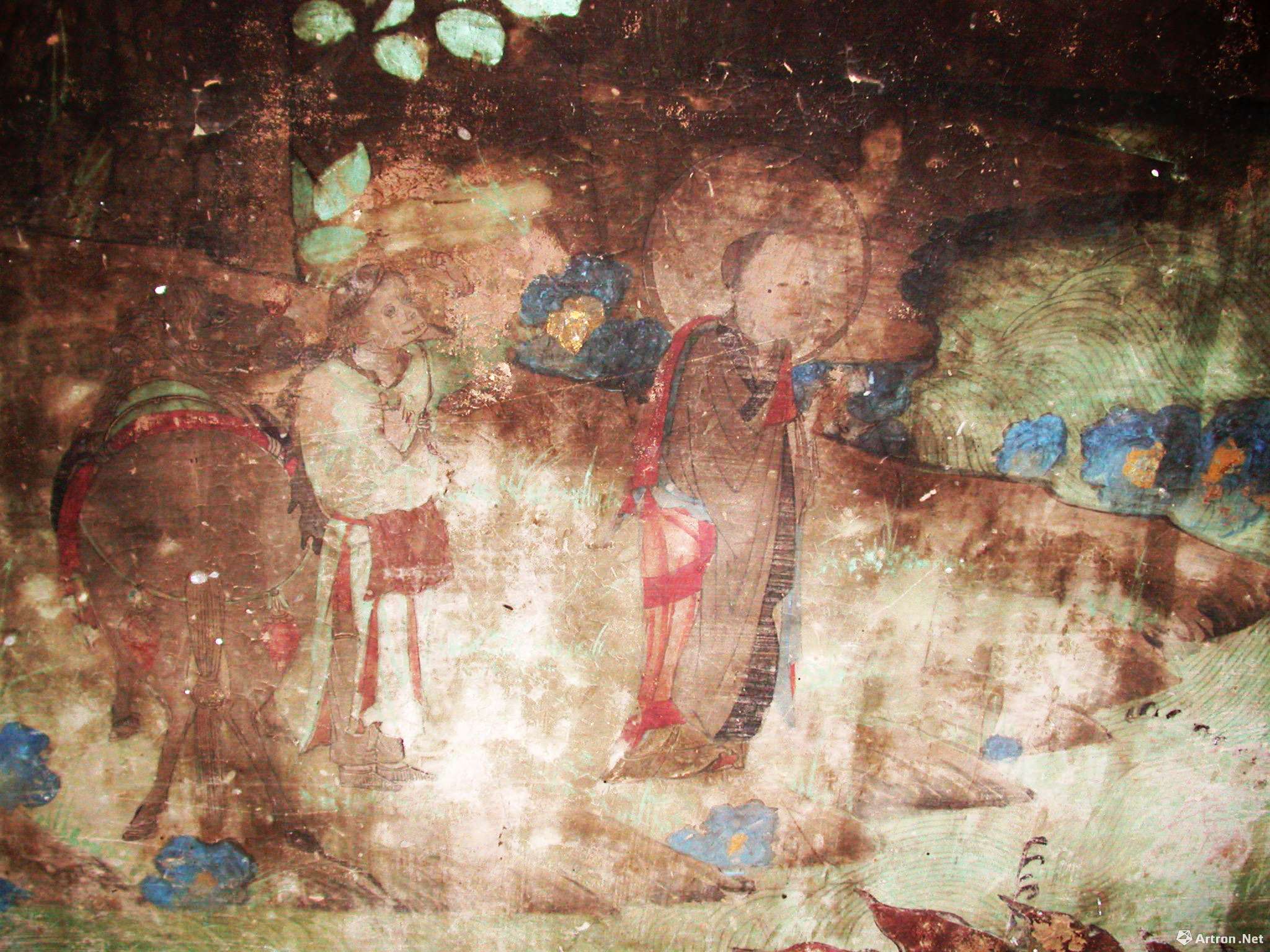
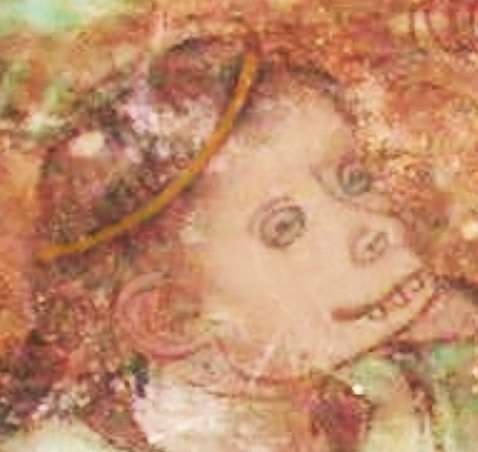
Fig. 11 – (Top left) Sun Wukong’s golden fillet from the 1986 JTTW television series (larger version). Fig. 12 – (Top right) Wu Song’s Precepts fillet from a recent WM television series (larger version). Fig. 13 – (Bottom left) A late 11th to early 12th-century copper alloy statue of the wrathful deity Hevajra (larger version). He is portrayed with the same Esoteric Buddhist ritual attire as his followers, including the headband, arm cuffs, a bone (skull) rosary, bracelets, a girdle, anklets, and a tiger skin sarong. Courtesy of the Los Angeles County Museum of Art. Fig. 14 – (Bottom center) A detail of the Monkey Pilgrim’s fillet featured in a 12th-century mural from Eastern Thousand Buddha Cave number two in Gansu Province, China (larger version). It has been slightly enhanced for clarity. A fuller version of the image can be seen here. Fig. 15 – (Bottom right) A military monk from a modern Beijing Opera production (larger version). From Bonds, 2008, p. 178.

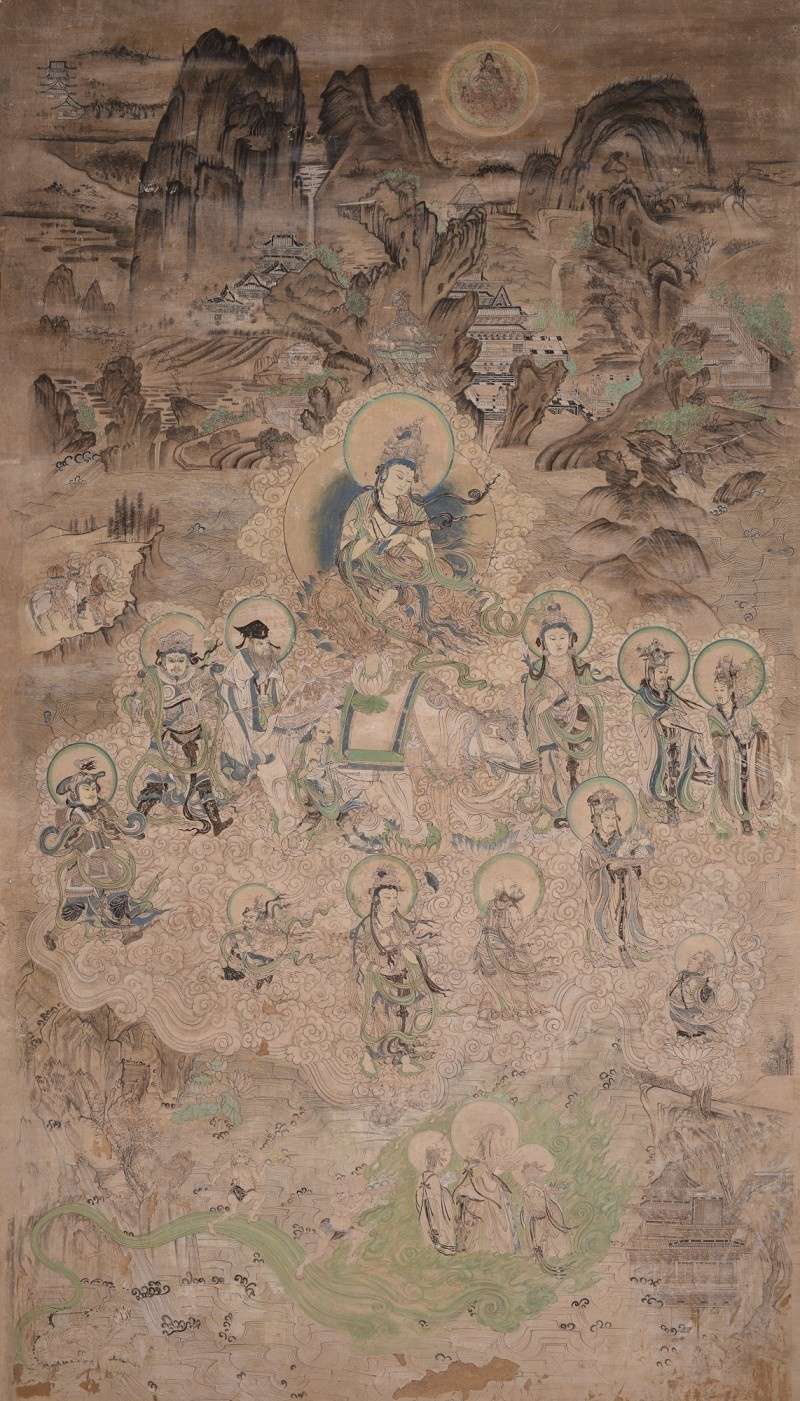
I explain in this article that the heroes’ fillets share a common origin in an ancient Indo-Tibetan Esoteric Buddhist ritual headband, one representing the Buddha Akshobhya and thereby moral self-restraint. It was one of several ritual items worn while worshiping wrathful protector deities like Heruka. Such deities were often depicted wearing the same attire as their followers, leading to the band becoming a symbol of powerful Buddhist spirits (fig. 13). The Hevajra Tantra (Ch: Dabei kongzhi jingang dajiao wang yigui jing, 大悲空智金剛大教王儀軌經), the original 8th-century Indian Buddhist text mentioning the ritual items, was translated into Tibetan and Chinese during the 11th century. Interestingly, the earliest example of Monkey wearing the circlet (likely symbolizing the taming of the monkey of the mind) hails from this time (fig. 14). But Wu’s association with the headband was likely influenced by the Precepts fillet worn by the warrior monks of Chinese Opera (fig. 15). These heroes wear the band to show that they have taken a vow of abstinence (Bonds, 2008, pp. 177-178 and 328).

6. Bin Steel Weapons

JTTW, ch. 3 – Sun Wukong comes into possession of a magic staff (fig. 16) taken from the Dragon King’s underwater treasury. A poem in chapter 75 describes the weapon being hand-forged from Bin steel (bintie, 鑌鐵) by the high Daoist god Laozi.

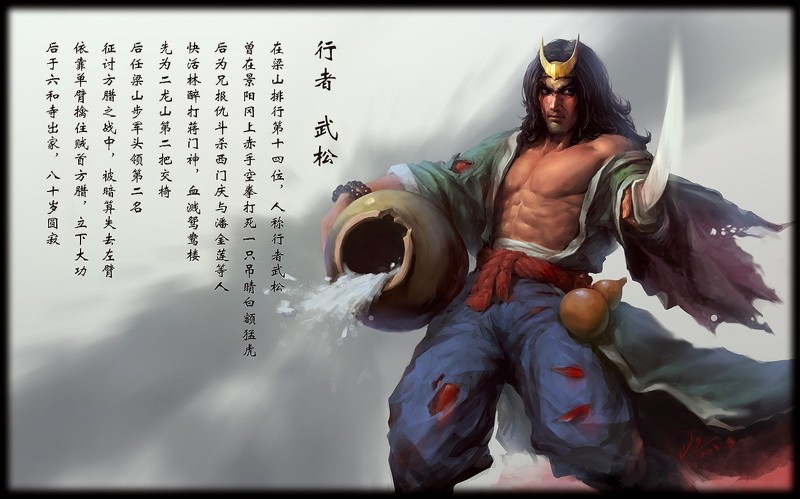
WM, ch. 31 – Apart from wearing the fallen monk’s religious clothing, Wu Song also takes possession of his Buddhist sabers made from “snowflake pattern” Bin steel (huaxue bintie jiedao, 雪花鑌鐵戒刀) (fig. 17). [15]

Fig. 16 – A modern action figure of Sun Wukong holding his magic Bin steel staff (larger version). Fig. 17 – A modern painting of Wu Song wielding his Bin steel sabers (larger version). Artist unknown. 

Sun’s staff and Wu’s sabers are not the first bin steel weapons to appear in Chinese literature. A bladed pole arm example is the Bin steel great sword (bintie da podao, 鑌鐵大潑刀) wielded by a bandit from the Old incidents in Xuanhe period of the Great Song Dynasty (Da Song Xuanhe Yishi, 大宋宣和遺事, mid-13th century), a storytelling prompt containing WM material predating the published novel. [16] Another pole arm is the Bin steel spear (bintie qiang, 鑌鐵槍) wielded by a general from The Three Sui Quash the Demons’ Revolt (San sui pingyao zhuan, 三遂平妖傳, c. late-16th century), which also takes place in the Song-era.

I explain in this article that Bin steel is a real world metal akin to Damascus that was imported to China from Persia starting from the 6th century, and the secret of its manufacture eventually reached the Middle Kingdom by the 12th century. The metal was considered an exceptionally fine steel and was often used to make strong, durable, and sharp knives and swords, some worth more than silver. One general is described as boasting that rebels would “have to nick (chi, 齒) his sword of bin iron” if they wished to rise up (Wagner, 2008, p. 269). This is a simultaneous declaration of his unbreakable resolve and a statement praising the seemingly indestructible metal. Therefore, JTTW and the WM portray the finest of heroes wielding the finest of steel weapons.

7. Conclusion

As shown, the parallels between Sun Wukong and Wu Song are the result of JTTW and the WM borrowing from the same cultural source material. Monkey’s imprisonment under Five Elements mountain and Wu’s time as an evil spirit trapped in a well beneath stone was influenced by the Daoist belief that mountains—be they sympathetically represented by stone or hand mudras—could immobilize malevolent forces. Likewise, our heroes’ portrayal as reformed demons can be tied to the Daoist “Thunder Ritual,” which aims to conquer evil and repurpose its power for good. Sun and Wu’s image as tiger slayers was influenced by stories of tiger-killing strongmen from Chinese folklore. Their religious nickname “Pilgrim” and characterization as monastic martial artists can be tied to uneducated pseudo-monks and holy warriors skilled in both staff fighting and boxing from Chinese history. Their religious fillets were inspired by an Esoteric Buddhist ritual headband worn as a reminder of moral self-restraint. And the metal comprising Sun and Wu’s weapons can be traced to a real world steel prized in ancient China for its durability.

This was a fun piece to write because it shows that the Great Sage obviously didn’t develop in a vacuum. It’s interesting to me that much of Sun and Wu’s influences hail from the Song dynasty. These include the Daoist rituals for trapping and reforming spirits, the Pilgrim nickname and characterization as staff-wielding warrior monks, and the translation of the tantric text mentioning the moralistic headband and Monkey’s earliest known depiction wearing it.


8. Updates

Update: 10-04-20

I have written a follow up article explaining the parallels between Monkey and the historical Buddha.

Parallels Between the Monkey King and the Buddha


Update: 07-08-21

I’ve written an article that shows the weight of Sun Wukong’s magic staff (一萬三千五百斤) is an embellishment on the weight of a stone block (三五百斤) lifted by Wu Song in ch. 27 of the WM.

The Weight of the Monkey King’s Staff: A Literary Origin


Update: 10-02-21

My friend over at Journey to the West Library has written a sequel to this article detailing further similarities between Sun Wukong and Wu Song.

https://journeytothewestlibrary.weebly.com/parallels-between-wukong-and-wu-song


Update: 02-26-22

I’m thinking about writing a piece on characters from world myth trapped under mountains. Here’s the list I have so far:

  1. Sun Wukong (various Journey to the West iterations) – Mt. Huaguo by Guanyin or Five Elements Mountain by the Buddha
  2. 108 stars (Water Margin) – Imprisoned in an earth prison under a stone slab by a Daoist master. As mentioned above, Jing Wang (1992) suggests that the stone slab was likely influenced by the Taishan stone (泰山石).
  3. Goddess Yaoji (Precious Scroll of Erlang) – Mt. Tai by the Jade Emperor
  4. Goddess Sanshengmu (Precious Lotus Lamp) – Mt. Hua by Erlang
  5. Wuzhiqi (Extensive Records of the Taiping Reign) – Turtle Mountain by Yu the Great
  6. Ravana (Ramayana) – Mt. Kailash by Shiva
  7. Typhon (Dionysiaca/various) – Sicily/ Mt. Etna by Zeus
  8. Enceladus (Apollodorus/various) – Sicily by Athena or Mt. Etna by Zeus
  9. Polybotes (Apollodorus/various) – Kos/Nisyros by Poseidon

The parameters may later be expanded to include “earth prisons” in general, which would open the door to Lucifer!


Update: 03-11-22

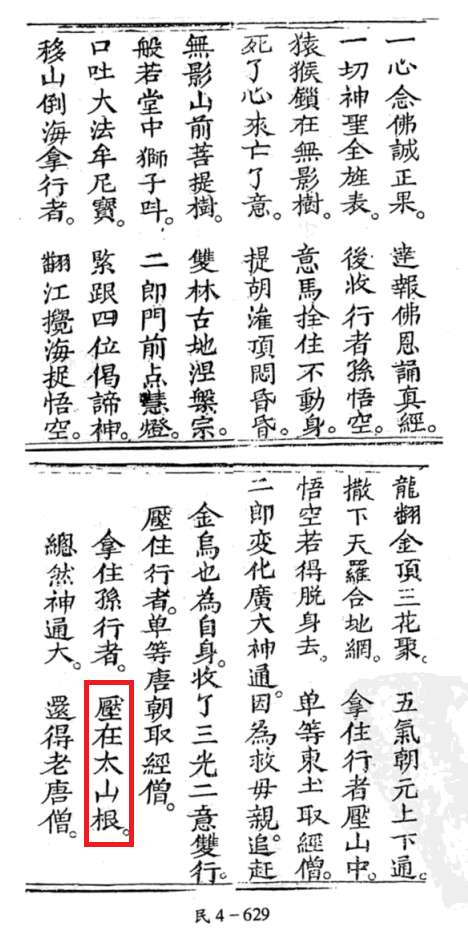
I recently archived the Precious Scroll of Erlang (Erlang baojuan, 二郎寳卷, 1562), a religious text that venerates and records the various deeds of the immortal demi-god. This work states that the Monkey King was “pressed under the base of Mt. Tai” (yazai, taishan gen, 壓在太山根) (PDF page 46) (fig. 18). This supports my suggestion above that Five Elements Mountain is a cognate for Mt. Tai.

Fig. 18 – The Mt. Tai sentence is indicated in red (larger version).


Update: 06-18-22

I’ve written an article that lists a number of surprising parallels shared by Monkey and the Greco-Roman hero Heracles.

Parallels Between Sun Wukong and Hercules

Notes

1) The nine palaces are a cosmic geographical concept in which stars are mapped according to the five Chinese cardinal directions (N, S, E, W, and center) and the four intermediate directions. Thus, they represent the universe as a whole.

2) A zhang (丈) is ten Chinese feet, so 10,000 zhang would be 100,000 feet. A li (里) is one-third of a Western mile. More importantly, in Chinese culture, the number 10,000 represents an infinitely large concept. Therefore, by squaring the number, the well prison is described as an unfathomably large and inescapable place. I would like to thank the Dragon Ball scholar Derek Padula (his website) for suggesting this note as it helps better visualize the prison. He was kind enough to read an earlier draft of this article.

3) See Meulenbeld, 2007, pp. 143-145 for more information about the jar ritual. It likely influenced media that influenced Akira Toriyama of Dragon Ball fame to create the Mafuba (魔封波; Ch: mofengbo), or “Demon Containment Wave” ritual. Padula (2016) describes the etymology and background of the Mafuba (pp. 122 to 126). He graciously provided me with a digital copy of his book.

4) See Meulenbeld (2007) chapter two.

5) This is not openly stated in chapter 14 but is implied in chapter 27. See this article for more information.

6) Ch’en (1956) gives examples. During the Song, the official selling prices for the certificates ranged from one hundred thirty to eight hundred strings of cash. To put these prices in perspective, he notes that the lowest cost would pay for the equivalent of seventy-five bolts of silk or one hundred twenty-five bushels of rice (pp. 316-317).

7) Wivell, 1994, p. 1187. The full episode appears on pages 1186-1187.

8) Ge, 2001, p. 38. The eight types of stories appearing in The Drunken Man’s Talk are: “lingguai [靈怪] (spirits and demons), yanfen [煙粉] (rouge and powder), chuanqi [傳奇] (marvels), gong’an [公案] (court cases), podao [朴刀] (broadsword), ganbang [桿棒] (staff), shenxian [神仙] (immortals), and yaoshu [妖術] (sorcery)” (Ge, 2001, p. 209, n. 6).

9) Huang, 2018, p. 61 and n. 8. It’s interesting to note that the monk Lu Zhishen is said to wield an impossibly heavy metal staff like Sun Wukong. See this article for more details.

10) See Shahar (2008) chapters three and four.

11) Lorge (2012) cites a Tang-era story about an 8th-century prince who discovers an abandoned wardrobe while hunting in the forest. It is found to contain a young woman who had been kidnapped the previous night by bandits but was subsequently whisked away by two monks among the group. The prince replaces her with a wild bear that later mauls the bandit monks to death when the wardrobe is reopened (Lorge, 2012, pp. 106-107). The monks were likely impostors like Wu Song.

12) Wu Song is famed in Chinese folklore for his martial arts ability. This led to the creation of a wushu form known as “Wu Song Breaks Manacles” (Wu Song tuokao, 武松脫拷), which mimics a person fighting with their hands clasped as if shackled, forcing them to rely on doubled fist and elbow strikes and lots of kicking. The form is based on an episode from chapter 30 of the WM when the hero is attacked by assassins while being led in shackles to a prison camp. Wu Song is forced to defend himself in such a manner before breaking his restraints.

13) See, for example, Chlumsky, 2005, p. 72. The author also repeats folklore further tying the style to the Song dynasty heroes Yue Fei and his teacher Zhou Tong.

14) See Shahar (2008) chapters five and six.

15) I think it’s interesting that each weapon is presented as having some level of sentience. Called the “As-you-wish” Gold-Banded Staff (Ruyi jingu bang, 如意金箍棒), Sun’s staff grows or shrinks according to his whim. Wu’s peerless blades are said to “often groan in the night” (Shi & Luo, 1993/2001, p. 640), suggesting a magic longing for combat. The sentience of each weapon is based on different sources, however. I note in this article that the compliance of Monkey’s weapon is based on the Ruyi (如意) scepter, a symbol of religious and secular authority that was at some point associated with the similarly named wish-fulfilling cintamani jewel (ruyi zhu, 如意珠) from Buddhist mythology. The vocal ability of Wu Song’s blades may be based on the Chinese belief that swords have a soul. Two prime examples are the famed treasure swords Longyuan (龍淵, a.k.a. Longquan, 龍泉) and Tai’e (泰阿/太阿) made by the legendary swordsmith Ou Yezi (歐冶子) during the Spring and Autumn period. Yuan poet Jia Penglai (賈蓬萊, c. mid-14th century) described them as mated lovers who pine for each other when separated and even leap from the scabbard to seek out their beloved (Lee & Wiles, 2015, pp. 161-163).

16) The original source says “po bintie dadao” (潑鑌鐵大刀). This is likely a transcription error. I have corrected it above.

Sources:

Bonds, A. B. (2008). Beijing Opera Costumes: The Visual Communication of Character and Culture. Honolulu: University of Hawai’i Press.

Børdahl, V. (2013). Wu Song Fights the Tiger: The Interaction of Oral and Written Traditions in the Chinese Novel, Drama and Storytelling. Copenhagen, Denmark: NIAS Press.

Buswell, R. E. , & Lopez, D. S. (2014). The Princeton Dictionary of Buddhism. Princeton, NJ: Princeton University Press.

Ch’en, K. (1956). The Sale of Monk Certificates During the Sung Dynasty: A Factor in the Decline of Buddhism in China. The Harvard Theological Review 49(4), pp. 307-327.

Chen, P., & Petersen, V. (2016). The development of Chinese martial arts fiction. Cambridge, U.K.: Cambridge University Press.

Chlumsky, N. (2015). Inside Kungfu: Chinese Martial Arts Encyclopedia. [n.p.]: Lulu.com.

Huang, Y. (2018). Narrative of Chinese and Western Popular Fiction: Comparison and Interpretation. Berlin, Germany: Springer.

Huineng, & Cleary, T. F. (1998). The Sutra of Hui-neng, Grand Master of Zen: With Hui-neng’s Commentary on the Diamond Sutra. Boston: Shambhala.

Ge, L. (2001). Out of the Margins: The Rise of Chinese Vernacular Fiction. Honolulu: University of Hawaii Press.

Knechtges, D. R., & Chang, T. (2010). Ancient and Early Medieval Chinese Literature: A Reference Guide. Leiden: Brill.

Lee, L. X. H., & Wiles, S. (2015). Biographical Dictionary of Chinese Women: Tang through Ming: 618-1644. Abingdon: Routledge.

Lorge, P. A. (2012). Chinese Martial Arts: From Antiquity to the Twenty-First Century. New York, NY: Cambridge University Press.

Meulenbeld, M. R. E. (2007). Civilized Demons: Ming Thunder Gods from Ritual to Literature (Doctoral dissertation). Available from ProQuest Dissertations and Theses database (UMI No: 3247802).

Padula, D. (2016). Dragon Ball Culture (Vol. 5). (n.p.): Derek Padula.

Shahar, M. (2008). The Shaolin Monastery: History, Religion, and the Chinese Martial Arts. Honolulu: University of Hawai’i Press.

Shi, N., & Luo, G. (2001). Outlaws of the Marsh (Vols. 1-4) (S. Shapiro, Trans.). Beijing: Foreign Languages Press. (Original work published 1993)

Wagner, D. (2008). Science and Civilisation in China: Volume 5, Chemistry and Chemical Technology, Part 11, Ferrous Metallurgy. Cambridge: Cambridge Univ. Press.

Wang, J. (1992). The Story of Stone: Intertextuality, Ancient Chinese Stone Lore, and the Stone Symbolism in Dream of the Red Chamber, Water Margin, and the Journey to the West. Durham, N.C: Duke University Press.

Wivell, C.S. (1994). The Story of How the Monk Tripitaka of the Great Country of T’ang Brought Back the Sūtras. In V. Mair (Ed.), The Columbia Anthology of Traditional Chinese Literature (pp. 1181-1207). New York: Columbia University Press.

Wu, C., & Yu, A. C. (2012). The Journey to the West (Vols. 1-4) (Rev. ed.). Chicago, Illinois: University of Chicago Press.

Sun Wukong’s Strength-Bestowing Ritual

Last updated: 05-15-2025

In chapter 88 of Journey to the West (Xiyouji, 西遊記, 1592), the pilgrims arrive in the lower Indian prefecture of Jade Flower District (Yuhua xian, 玉華縣), which strikes Tripitaka as a spitting image of the Tang Chinese capital of Chang’an. There, the disciples’ monstrous appearance rouses the local ruler’s three sons to action against what they think are demons come to harm their father. However, they soon learn Monkey, Pigsy, and Sandy are celestial warriors possessing magical versions of their mere earthly arms—two staves and a battle rake. The three princes are later accepted as disciples, the oldest wanting to learn Monkey’s techniques and the second and third oldest wanting to learn from Pigsy and Sandy in turn. But when they fail to lift the monks’ celestial weapons, Monkey performs an arcane ritual in which he bestows each prince with superhuman strength:

In a secluded room behind the Gauze-Drying Pavilion, Pilgrim traced out on the ground a diagram of the Big Dipper. Then he asked the three princes to prostrate themselves inside the diagram and, with eyes closed, exercise the utmost concentration. Behind them he himself recited in silence the true sayings of realized immortality and intoned the words of Dharani as he blew divine breaths into their visceral cavities. Their primordial spirits were thus restored to their original abodes. Then he transmitted secret oral formulas to them so that each of the princes received the strength of tens of thousands of men. [1] He next helped them to circulate and build up the fire phases, as if they themselves were carrying out the technique for shedding the mortal embryo and changing the bones. Only when the circulation of the vital force had gone through all the circuits of their bodies (modeled on planetary movements) did the young princes regain consciousness. When they jumped to their feet and gave their own faces a wipe, they felt more energetic than ever. Each of them, in fact, had become so sturdy in his bones and so strong in his ligaments that the eldest prince could handle the golden-hooped rod, the second prince could wield the nine-pronged muckrake, and the third prince could lift the fiend-routing staff (Wu & Yu, 2012, vol. 4, pp. 202-203).

行者才教三個王子都在暴紗亭後,靜室之間,畫了罡斗。教三人都俯伏在內,一個個瞑目寧神。這裡卻暗暗念動真言,誦動咒語,將仙氣吹入他三人心腹之中,把元神收歸本舍。傳與口訣,各授得萬千之膂力,運添了火候,卻像個脫胎換骨之法。運遍了子午周天,那三個小王子方才甦醒,一齊爬將起來,抹抹臉,精神抖擻,一個個骨壯筋強:大王子就拿得金箍棒,二王子就掄得九齒鈀,三王子就舉得降妖杖。

Table of Contents

I. Explanation

1. “Pilgrim traced out on the ground a diagram of the Big Dipper.”

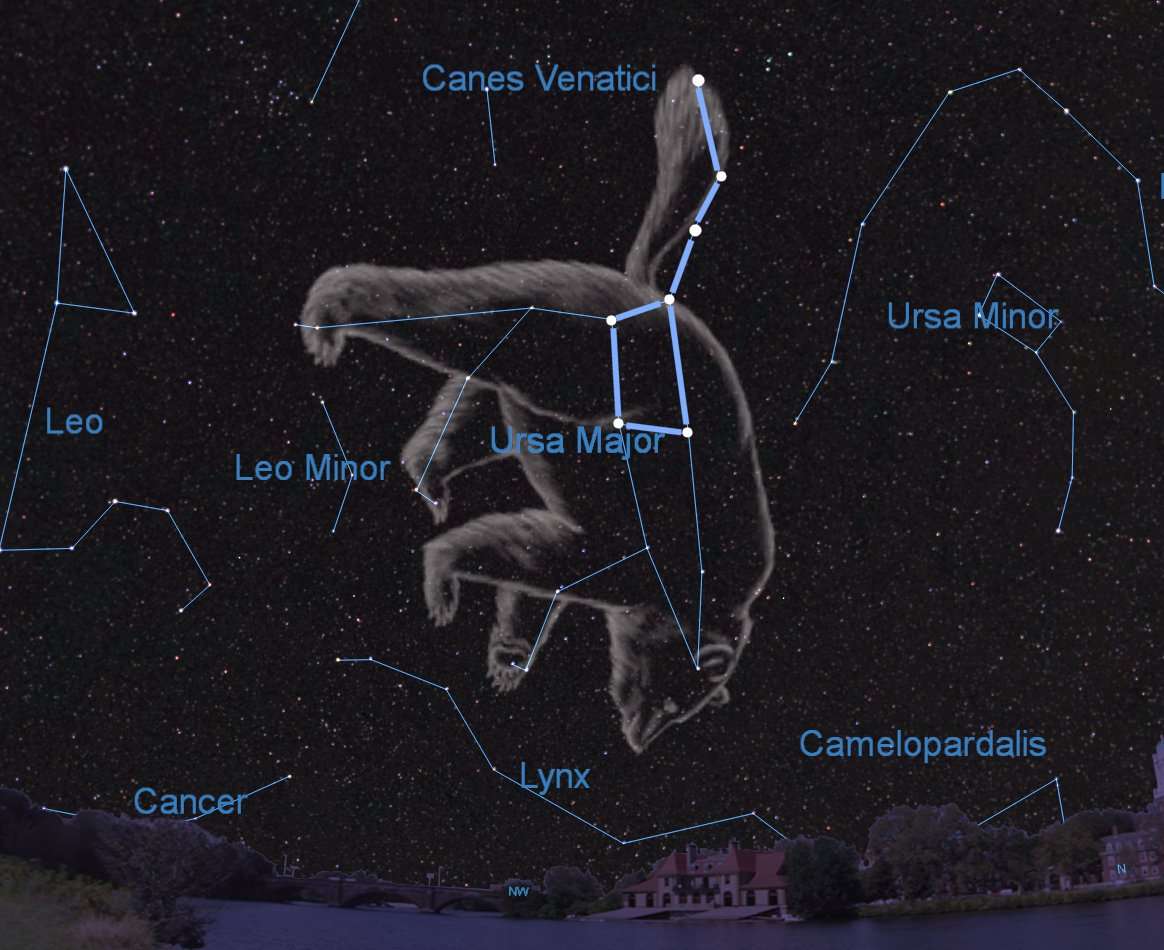
The Big Dipper (gangdou, 罡斗), also known as the Northern Dipper (beidou, 北斗), is a pattern of seven stars associated with the constellation Ursa Major (fig. 1). Daoism considers the pole star of this pattern to be the center of the cosmos through which emanates “primordial breath” (generative qi), which has long been deified as the great god Taiyi. The constellation is associated with a Daoist ritual known as Bugang (步綱/罡, “Walking the Guideline”) in which a practitioner paces the Big Dipper pattern with their feet on the ground. This ritual dance is synonymous with the much older shamanistic Yubu (禹步, “Paces of Yu”) used by ancient Sage Kings to conquer primordial chaos by pacing the stars and planets into motion, thereby directing the seasons and passage of time. The ritual involved pacing an inwardly spiraling circular pattern while dragging one foot behind the other in imitation of the limp adopted by Yu the Great after over-exerting himself quelling the fabled World Flood (fig. 2). Later Daoists viewed Yubu as a means of gaining immortality because the limping, three pace-style walking pattern symbolized the practitioner spanning the three realms of Earth, Man, and finally Heaven (this has an interesting Vedic correlation). [2] But most importantly, by the Tang and Song dynasties, Bugang served the purpose of purifying the area before an altar, ensuring the liturgy to follow takes place in a consecrated space. In fact, some sources interchange the characters for Bugang with the homonyms 布剛, meaning “distributing strength,” which denotes the demonifugic properties of the dance (Andersen, 1989). Therefore, Monkey draws the Big Dipper talisman on the ground in order to create a sacred space free of any negative influences.

Fig. 1 (left) – The location of the Big Dipper in relation to the Ursa Major constellation (larger version). Originally from this Futurism article. Fig. 2 (right) – A diagram showing the inwardly spiraling pattern of Yubu (top) and the dipper pattern of Bugang (bottom) (larger version). Take note of the spiral’s limping, three pace-style walking pattern. Originally found on this WordPress article.  

2. “Then he himself recited in silence the true sayings of realized immortality and intoned the words of Dharani…”

The “true sayings” (zhenyan, 真言) is the Chinese term for mantra, meaning “spell” or “magical formula.” A mantra is “a syllable or series of syllables that may or may not have semantic meaning, most often in a form of Sanskrit, the contemplation or recitation of which is thought to be efficacious” (Buswell & Lopez, 2014, p. 529). The most famous mantra is of course Om Mani Padme Hum, the very same six-syllable prayer that was used to weigh down the mountain holding Monkey prisoner for rebelling against heaven.

The “true sayings” is often used as an abbreviation for Dharani (tuoluoni/zongchi, 陀羅尼/總持), a Sanskrit term meaning “mnemonic device” (fig. 3). Like mantras, dharani are comprised of syllables, but these instead serve to remind practitioners of broader concepts, for example a single syllable representing the first letter of a much longer phrase. There exists four types of dharani said to be used by Bodhisattvas to achieve enlightenment: 1) those used for teaching interpretations of Buddhist law; 2) those used for understanding the exact meaning of important words; 3) those used for casting spells; and 4) those used for spiritual endurance in the face of suffering (Buswell & Lopez, 2014, pp. 241-242). The third type, which concerns us, falls under a category of sutra recitation called Paritta (minghu/jing, 明護/經), which is Pali for “protection.” The historical Buddha is known to have delivered paritta verses, including those for “protection from evil spirits, the assurance of good fortune, exorcism, curing serious illness, and even safe childbirth” (Buswell & Lopez, 2014, p. 630).

In both cases zhenyan/mantra and dharani refer to magical formulas of sorts and were no doubt chosen because they gave the ritual an heir of arcane authenticity. Additionally, I suggest that the use of dharani may have also been chosen to denote a spell of protection, as in Sun wanted to protect the princes during the transformation of their bodies.

(Note 06-15-19: Feng Dajian of Nankai University notified me via Twitter that he disagrees with Anthony C. Yu’s 2012 revised translation (cited above) associating the “True Sayings” with the Buddhist Dharani. This is because he feels that the ritual is overtly Daoist, noting that the religion also has its own True Sayings.)

Fig. 3 – A Dharani print from the late Tang Dynasty. Original from Wikicommons.

3. “…as he blew divine breaths into their visceral cavities. Their primordial spirits were thus restored to their original abodes.”

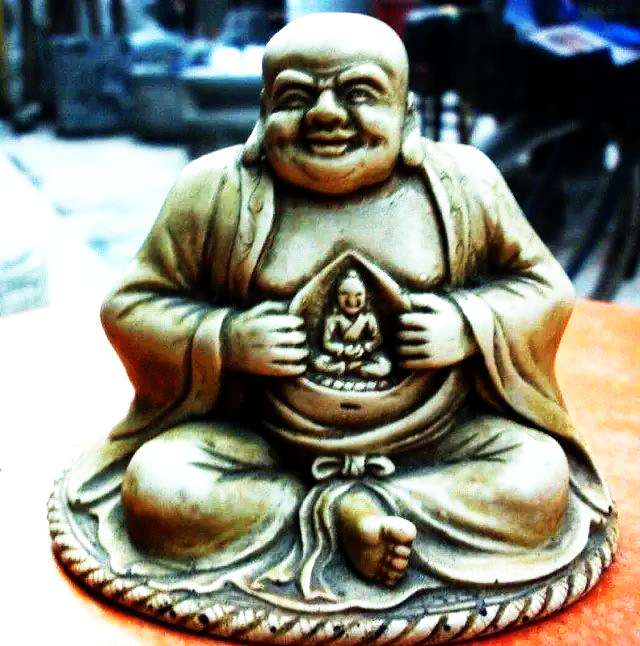
Journey to the West translator Anthony C. Yu (Wu & Yu, 2012) notes that this section “is an abbreviated or paraphrastic account, in fact, of the neidan (internal or physiological alchemy process)” (vol. 4, p. 396, n. 8). Monkey already went through this process in chapter two when he practiced a series of breathing and energy circulation exercises that resulted in his immortality. Therefore, he uses his own hard-won “divine breath” or “immortal energy” (xianqi, 仙氣) to fortify the princes’ bodies by drastically speeding up the years-long process of internal cultivation to only a matter of hours or minutes. Monkey’s breath bolsters their own energy, helping them to achieve “primordial spirits” (yuanshen, 元神), a term commonly associated with Buddhahood or enlightenment. In Daoism, the term is synonymous with the attainment of immortality via the formation of a “Sacred Embryo” (Shengtai, 聖胎) (fig. 4), which is forged from spiritual energies over long years of self-cultivation (Darga, 2008). This suggests that beyond super strength, the ritual also gives them some form of immortality.

Fig. 4 – The Sacred Embryo is sometimes depicted as a baby (or in this case a Buddha) on a practitioner’s stomach (larger version). Found on this blog.

4. “He next helped them to circulate and build up the fire phases…”

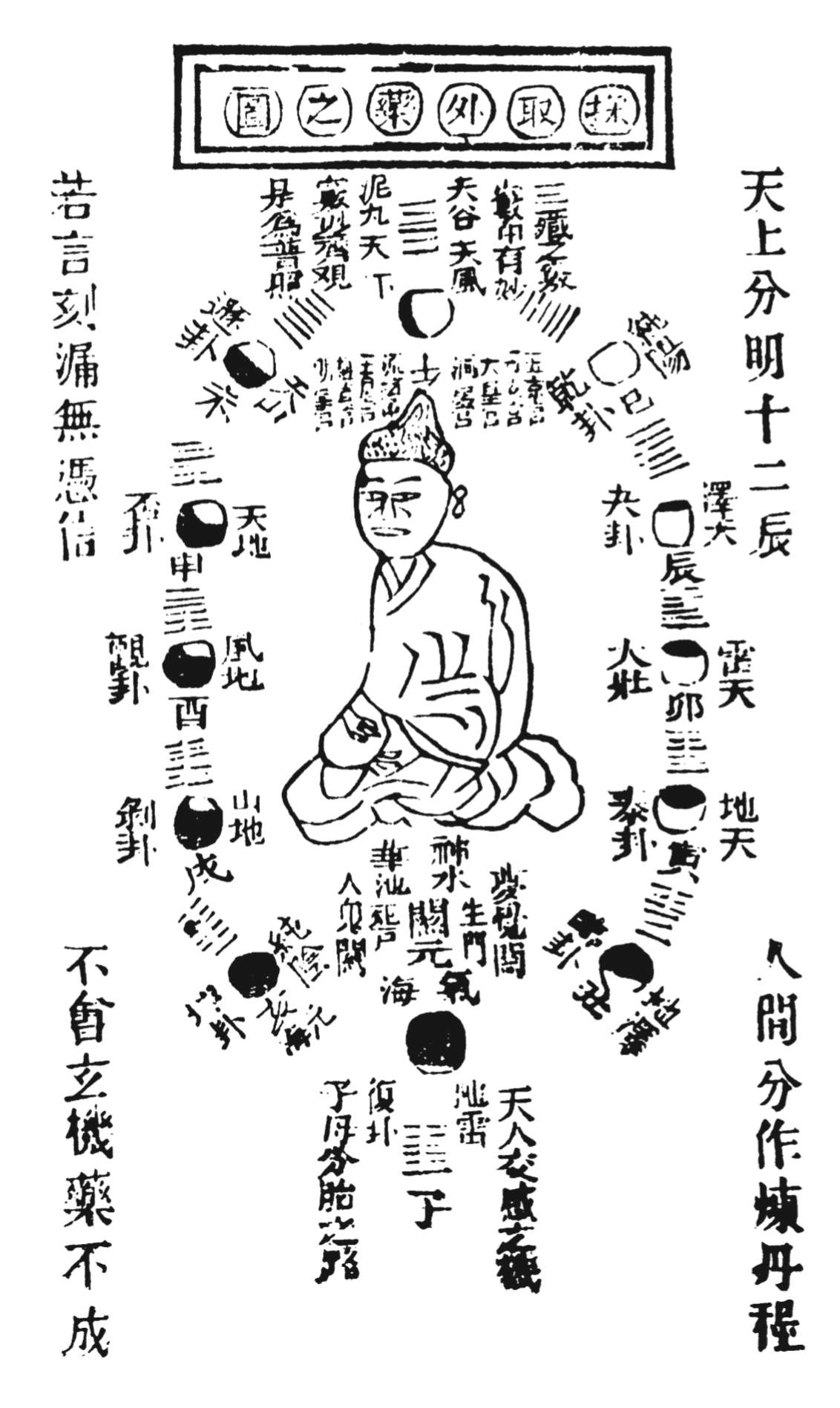
The fire phases (huohou, 火候) comprise the process of circulating spiritual energy throughout the body at prescribed times (fig. 5). Monica Esposito (2008) writes that there are three phases in total, making up two distinct periods of activity and rest:

The first is a phase of “yangization” in which Yang augments and Yin decreases. This is described as a warlike or martial period, corresponding to the advancement of a light called Martial Fire (wuhuo 武火) or Yang Fire (yanghuo 陽火) that purifies by burning and eliminates defiled elements to release the Original Yang and increase it. At the cosmic level, the beginning of this phase is symbolized by the winter solstice (zi 子) and by the hexagram fu 復 ䷗ (Return, no. 24), which indicates the return of Yang. This is followed by a phase of balance, a time of rest called muyu ([沐浴] ablutions). At the cosmic level, this phase is symbolized by the spring and autumn equinoxes and by the hexagrams dazhuang 大壯 ䷡ (Great Strength, no. 34) and guan 觀 ䷓ (Contemplation, no. 20). The third stage is a phase of “yinization” in which Yin augments and Yang decreases. This period, called Civil Fire (wenhuo 文火) or Yin Fire (yinfu 陰符), corresponds to a decrease of the light. The adept achieves the alchemical work spontaneously and without any effort or voluntary intervention; water descends to moisten, fertilize, and temper fire. At the cosmic level, this phase is symbolized by the summer solstice (wu 午) and by the hexagram gou 姤 ䷫ (Encounter, no. 44) (p. 531).

Mastering the complicated chronological rhythm of this process is considered the best kept secret of internal alchemy (Esposito, 2008). Therefore, Monkey navigates this temporal maze for the princes, ensuring the spiritual energy that he has helped them cultivate ebbs and flows when prescribed. Once again we see that Sun has sped up a lengthy process to only a few days, hours, or minutes.

Fig. 5 – A chart showing the fire phases, the 12 phases of the moon, and the corresponding hexagrams (larger version). From Kim, 2008, p. 528.

II. Similarities to Comic Book Heroes

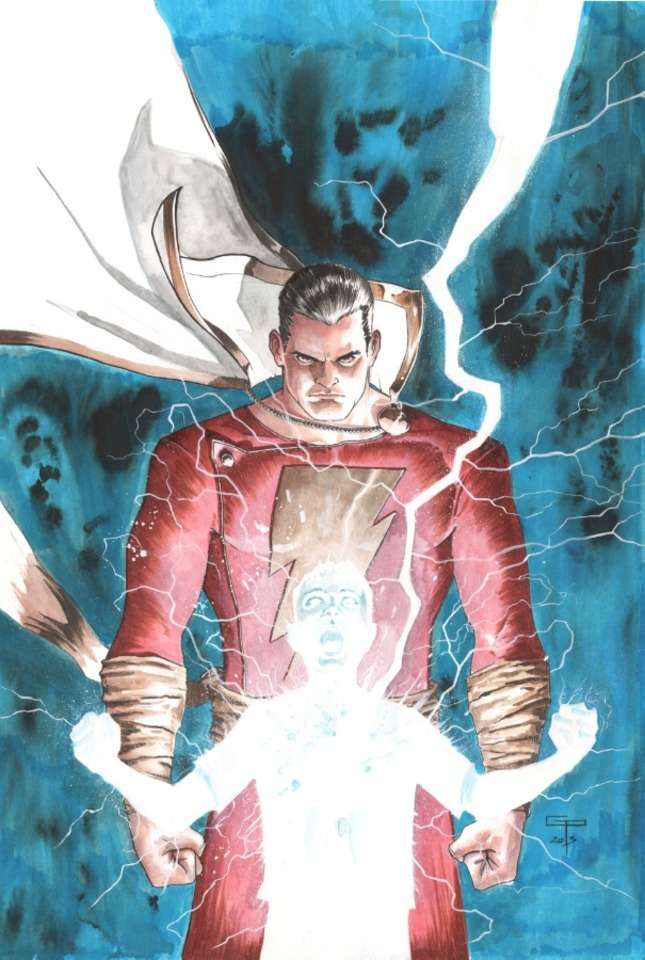
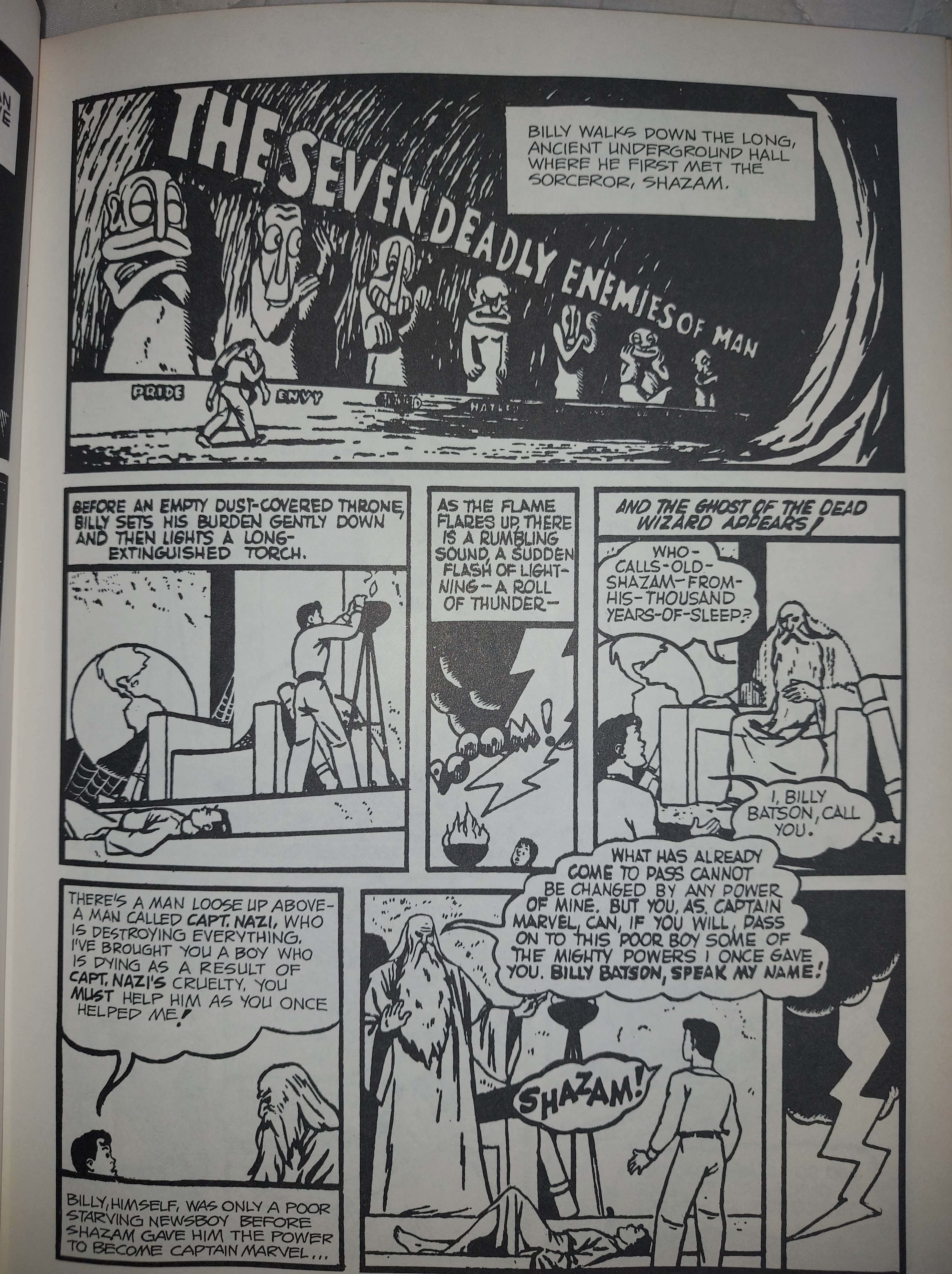
The princes in essence become the fantasy equivalent of today’s comic book superheroes. Gaining power from a divine being is similar to the concept of “Divine Empowerment” from DC Comics. A good example is Billy Batson, a.k.a. Captain Marvel (Ch: Jingqi duizhang, 驚奇隊長) (fig. 6), a child-turned-adult who receives super strength and other powers from a battery of Western gods and sages through the medium of a divine wizard.

4139607-160

Fig. 6 – The child Billy Batson transforming into the superhero Captain Marvel, also known as Shazam (larger version). Image found here.

III. Conclusion

This fascinating strength-bestowing ritual draws on multiple aspects of Buddho-Daoist ceremony and internal alchemy. First, Sun chooses a secluded room where he traces a diagram of the Big Dipper on the floor in order to consecrate the space. Second, he recites magical spells likely intended to protect the princes during their bodily transformation. Third, Monkey uses his own divine breath to ignite their spiritual energy, manually fanning the flames to higher levels of spiritual attainment. Finally, he controls the ebb and flow of the resulting energy throughout their bodies according to a prescribed chronological rhythm. In all, Sun shortens a years-long process to only a few days, hours, or minutes. The princes come away from the ritual with superhuman strength and likely some form of divine longevity.

This whole process reminds me of the DC Comics character Billy Batson receiving divine powers through the medium of the Wizard Shazam to become Captain Marvel.


IV. Updates

Update: 12-14-19

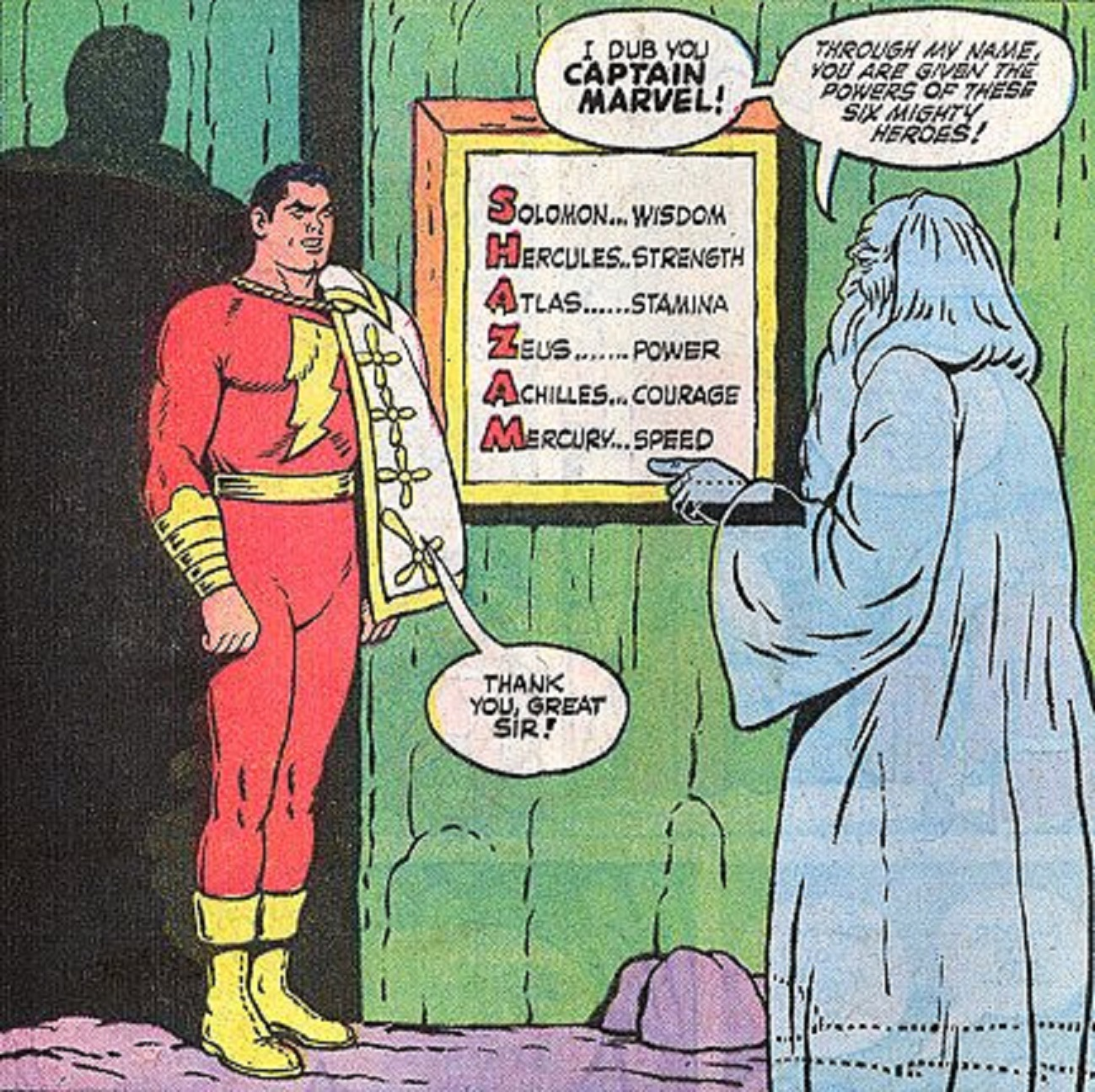
This is a past photomanipulation that depicts Monkey as the Wizard Shazam and the three Indian Princes as Captain Marvel. I used a golden age comic book image as the base (fig. 7).

Fig. 7 – The photomanipulation mixing Journey to the West and Captain Marvel (larger version). The original comic book image can be seen here.


Update: 07-17-22

I’ve posted an article that explores the abilities of Monkey’s immortal breath (used in the ritual above).

A Survey of Sun Wukong’s Magic “Immortal Breath” and Its Abilities


Update: 03-18-23

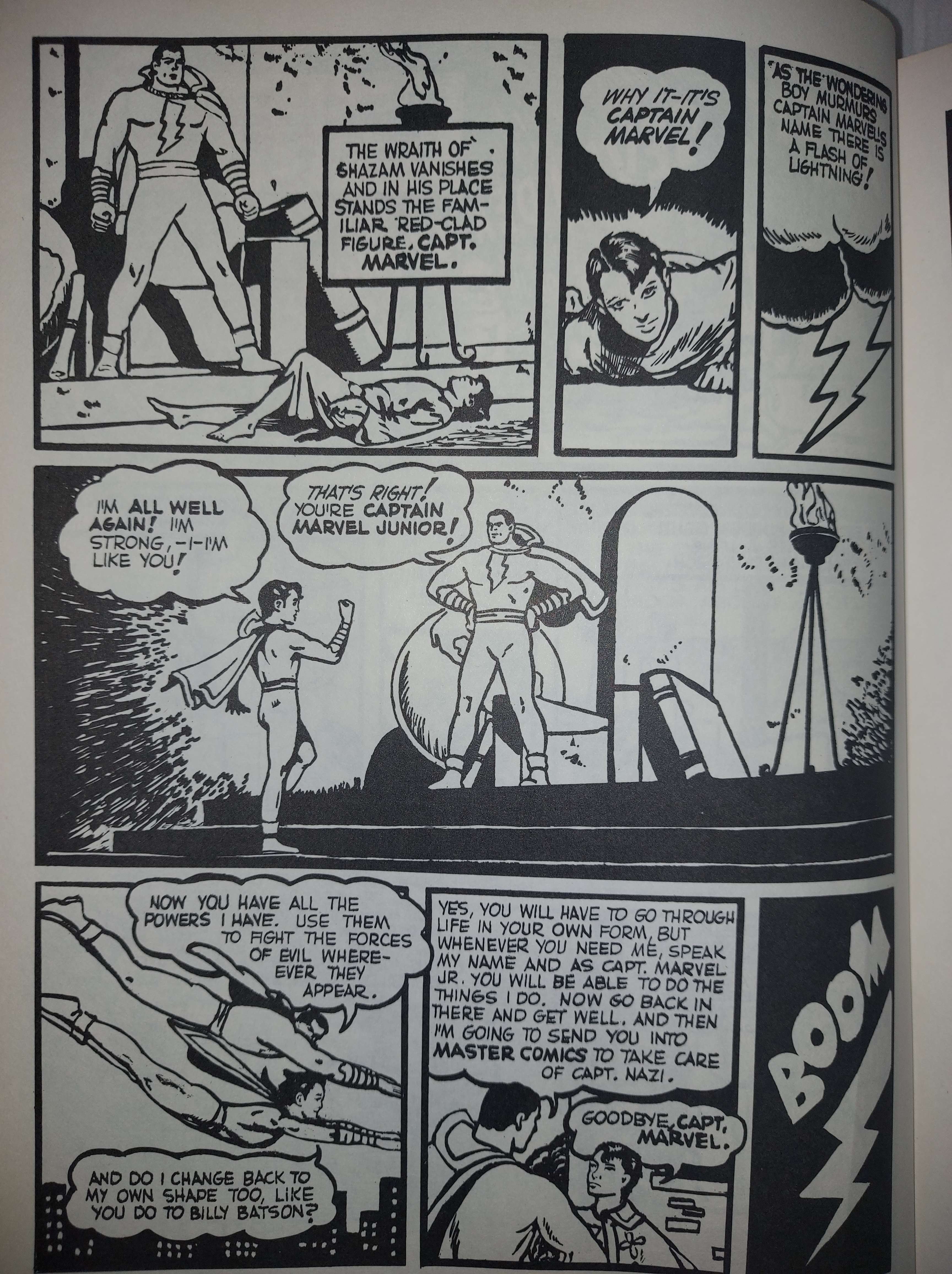
Above, I referenced Captain Marvel because he receives divine powers similar to the Indian Princes from Journey to the West. Well, the hero is also capable of sharing his abilities just like Sun Wukong! One issue sees him save the life of a fatally injured boy by giving him some of his magic energy, thereby transforming him into a superhero. The boy is henceforth known as “Captain Marvel Jr.” (Ch: Xiao shengqi duizhang, 小神奇隊長) in his hero form (fig. 8-10) (Binder et. al., 1977, pp. 57-59).

Fig. 8 (left) – Billy Batson (a.k.a. Captain Marvel) seeks help from Shazam to save the boy (larger version). Fig. 9 (center) – Captain Marvel shares some of his power, thus saving the boy (larger version). Fig. 10 (right) – The boy-turned-superhero vows to fight evil (larger version).


Update: 12-02-23

Someone recently asked me why the monstrous pilgrims would take human disciples in the first place. Well, this is the result of a sequence of events:

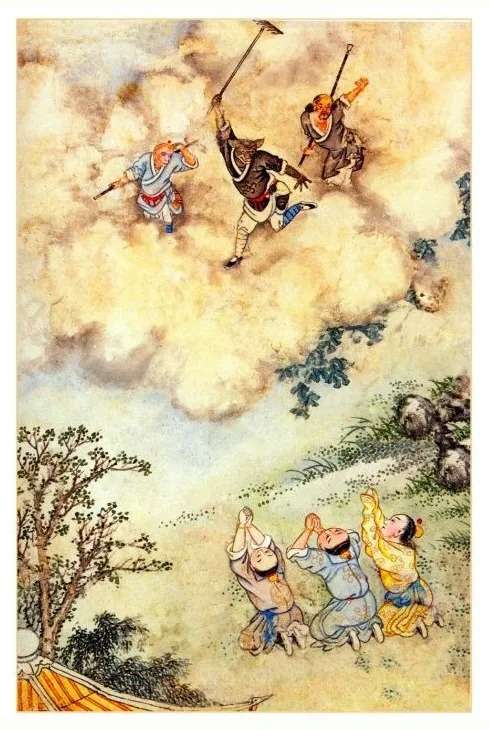
  • The young princes are amazed to see Sun, Zhu, and Sha display their martial arts skills while flying on divine clouds (fig. 11).
  • They tell their father, the sovereign prince, that they want to become their students, claiming it would allow them to protect their nation.
  • The monarch asks Tripitaka for permission, and he agrees.
  • The sovereign prince then personally requests that Sun, Zhu, and Sha tutor his sons in martial arts (Wu & Yu, 2012, pp. 197-199).

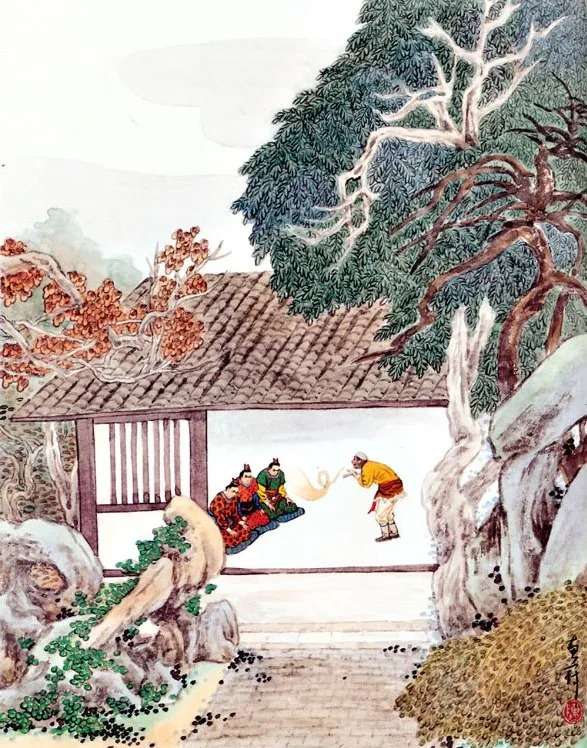
This seems straightforward enough, but there is an underlying answer that just dawned on me: everyone agrees, and Monkey goes a step further by empowering the princes (fig. 12), as a way of kissing the ruler’s butt since he stamped the group’s travel rescript, a kind of passport needed to legally travel through various countries (Wu & Yu, 2012, p. 193). Without the stamp, the pilgrims wouldn’t have been able to continue their journey to the Buddha’s mountain.

The humorous implication here is that even celestials have to bow to earthly bureaucracy. 

Fig. 11 (left) – The princes drop to their knees as they watch the three monstrous pilgrims display their supernatural martial skills (larger version). Image from the Qing-Period Color-Illustrated Complete Edition of Journey to the West (清彩繪全本西遊記, 2008). Fig. 12 (right) – Monkey empowers the princes with his divine breath (larger version). Image from Chen Huiguan’s Newly Illustrated and Complete Journey to the West (陈惠冠新绘全本西游记, 2001). Both images found here.

For future reference, this episode takes place towards the middle of ep. 23 of the 1986 JTTW TV show and the end of ep. 55 and the beginning of ep. 56 of the 2011 JTTW TV show. Both programs skip over the strength-bestowing ritual.


Update: 08-11-24

I have written a catalog of all of Sun Wukong’s abilities from all 100 chapters of JTTW. The strength-bestowing ritual appears on pages 194-195 (ch. 88, no. 3) of this PDF.

Archive #46 – A Catalog of the Monkey King’s Magic Powers and Skills


Update: 05-15-25

I forgot to mention above that although the princes can wield their teachers’ divine, multi-ton weapons after the ritual—an amazing feat for mortals to be sure—the weight is still too much for them to handle comfortably. This is why they request to make their own lighter replicas. Chapter 88 reads: 

When the old prince saw this [the princes wielding the divine weapons], he could not have been more pleased, and another vegetarian banquet was laid out to thank the master and his three disciples. Right before the banquet tables, however, they [the princes] began their instruction. The one studying the rod performed with the rod; the one studying the rake performed with the rake; and the one studying the staff performed with the staff. The princes thus succeeded in making a few turns and several movements, but they were, after all, mortals, and they found the goings rather strenuous. After exercising for a while, they began to pant heavily. Indeed, they could not last long, though their weapons might have the ability to undergo transformation. In their advances and retreats, their attacks and offenses, the princes simply could not attain the wonder of natural transformation. Later that day the banquet came to an end.

The next day the three princes came again to thank their masters and to say: “We thank the divine master for endowing us with strength in our arms. Though we are now able to hold the weapons of our masters, however, we find it difficult to wield and turn them. We propose, therefore, that artisans be asked to duplicate the three weapons. They will use your weapons as models but take some of the weight off. Would the masters grant us permission?” (Wu & Yu, 2012, vol. 4, p. 203)

老王見了,歡喜不勝。又排素宴,啟謝他師徒四眾。就在筵前各傳各授:學棍的演棍,學鈀的演鈀,學杖的演杖。雖然打幾個轉身,丟幾般解數,此等終是凡夫,有些著力:走一路,便喘氣噓噓,不能耐久。蓋他那兵器都有變化,其進退攻揚,隨消隨長,皆有自然之妙,此等終是凡夫,豈能以遽及也?當日收了筵宴。 

次日,三個王子又來稱謝道:「感蒙神師授賜了膂力,縱然掄得師的兵器,只是轉換艱難。意欲命匠依神師兵器式樣,減削斤兩,打造一般,未知師父肯容否?」…

Pigsy takes the lead by granting their wish, but the three original weapons are unfortunately stolen by a fiend while in the custody of craftsmen (Wu & Yu, 2012, vol. 4, pp. 203-204). This eventually leads to a war with earthly and heavenly lion-spirits (see chapters 88 to 90).

After the day is saved, the replica weapons are completed. The end of chapter 90 reads:

In the meantime, the ironsmiths had finished forging the three weapons. As they kowtowed to Pilgrim [Monkey], they said, “Holy Father, our work is done.”

“What’s the weight of each of the weapons?” asked Pilgrim.

“The golden-hooped rod weighs a thousand catties,” replied one of the ironsmiths. “The nine-pronged rake and the fiend-routing staff both weigh eight hundred catties.” “All right,” said Pilgrim, and he asked the three princes to come out and pick up their weapons (based on Wu & Yu, 2012, vol. 4, pp. 229-230).

又見那鐵匠人等造成了三般兵器,對行者磕頭道:「爺爺,小的們工都完了。」問道:「各重多少斤兩?」鐵匠道:「金箍棒有千斤,九齒鈀與降妖杖各有八百斤。」行者道:「也罷。」叫請三位王子出來,各人執兵器。

One thousand catties (千斤) is 1,300.72 lbs or 590 kg, and 800 catties (八百斤) is 1,040.58 lbs or 472 kg.

This episode would be a great setup for a Game of Thrones-style Asian fantasy. The three princes could be plotting and scheming against each other in the hopes of one day gaining the throne from their aging father, the sovereign prince. Then a monkey wizard comes along and makes things worse by bestowing them with super strength and divine longevity. This would definitely lead to lots of drama between the brothers and their offspring. It would be a centuries-long battle royale between competing dynasties of superpowered beings!

Notes:

1) Although the original English translation reads “the strength of a thousand arms” (Wu & Yu, 2012, p. 202), the Chinese reads wanqian zhi luli (萬千之膂力), which means “the strength of tens of thousands (of men).” I have, therefore, adjusted the translation for more accuracy.

2) Andersen (2008) notes that the three paces are similar to those used by Vedic priests:

It would appear, in other words, that even in this early period the Paces of Yu constituted a close parallel to the three Strides Viṣṇu in early Vedic mythology, which are thought to have taken the god through the three levels of the cosmos (thereby establishing the universe), and which indeed, just like the Paces of Yu in Taoist ritual, are known to have been imitated by Vedic priests as they approached the altar—and in the same form as the Paces of Yu, that is, dragging one foot after the other (pp. 238-239).

Sources:

Andersen, P. (1989). The Practice of Bugang. Cahiers d’Extrême-Asie, 5. Numéro spécial Etudes taoïstes II / Special Issue on Taoist Studies II en l’honneur de Maxime Kaltenmark. pp. 15-53.

Andersen, P. (2008). Bugang. In F. Pregadio (Ed.), The Encyclopedia of Taoism (Vols. 1-2) (pp. 237-240). London [u.a.: Routledge].

Binder, O., Woolfolk, W., O’Neil, D., Parker, B., Maggin, E. S., & Bridwell, E. N. (1977). Shazam! From the Forties to the Seventies. New York: Harmony Books.

Buswell, R., & Lopez, D. (2014). The Princeton Dictionary of Buddhism. Princeton University Press.

Darga, M. (2008). Shengtai. In F. Pregadio (Ed.), The Encyclopedia of Taoism (Vols. 1-2) (pp. 883-884). London [u.a.: Routledge].

Esposito, M. (2008). Huohou: 2. Neidan. In F. Pregadio (Ed.), The Encyclopedia of Taoism (Vols. 1-2) (pp. 530-532). London [u.a.: Routledge].

Kim, D. (2008). Houhou: 1. Waidan. In F. Pregadio (Ed.), The Encyclopedia of Taoism (Vols. 1-2) (pp. 526-530). London [u.a.: Routledge].

Wu, C., & Yu, A. C. (2012). The Journey to the West (Vols. 1-4) (Rev. ed.). Chicago, Illinois: University of Chicago Press.

Master Subodhi’s Curriculum

Note: See also my more recent 100-chapter catalog of all the Monkey King’s powers and skills.

Last updated: 11-27-2018

This entry will explore the curriculum that Sun Wukong follows while studying under the Buddho-Daoist sage, Patriarch Subodhi, in Journey to the West (Xiyouji, 西遊記, 1592; “JTTW” hereafter). Monkey stays in the immortal’s monastery for a total of ten years, the first seven living as a junior monk and the last three as a close disciple of Subodhi. Apart from menial tasks like fetching firewood and water, tending the garden, and cleaning the monastery grounds, Monkey first receives lessons on human language and etiquette, calligraphy, scripture reading, and minor ritual procedures like incense burning. These are taught to him by his senior religious brothers, thereby freeing up the Sage to teach higher level lessons on philosophy, internal alchemy, magic, and other skills to his more advanced students.

I should point out that Sun’s greatest asset during his training appears to be a supernatural mental acuity. Upon becoming Subodhi’s close disciple, Monkey rapidly masters skills that even his more senior religious brothers cannot grasp. The novel, therefore, refers to our hero as “someone who, knowing one thing, could understand a hundred” (Wu & Yu, 2012, vol. 1, p. 122). Monkey’s intellect allows him to outsmart many opponents and bypass many obstacles during his later adventures.

Table of Contents

1. Overtly Stated (Ch. 2)

Chinese Philosophy

One poem best describes the philosophical lessons taught by Subodhi:

With words so florid and eloquent
That gold lotus sprang from the ground.
The doctrine of three vehicles he subtly rehearsed,
Including even the laws’ minutest tittle.
The yak-tail waved slowly and spouted elegance:
His thunderous voice moved e’en the Ninth Heaven.
For a while he lectured on Dao;
For a while he spoke on Chan–
To harmonize the Three Parties is a natural thing.
One word’s elucidation filled with truth
Points to the birthless showing nature’s mystery
(Wu & Yu, 2012, vol. 1, p. 122).

天花亂墜,地湧金蓮。妙演三乘教,精微萬法全。慢搖麈尾噴珠玉,響振雷霆動九天。說一會道,講一會禪,三家配合本如然。開明一字皈誠理,指引無生了性玄。

This poem is a prime example of the Ming syncretic philosophy of the Three Teachings (Sanjiao, 三教): Confucianism, Daoism, and Buddhism. “The doctrine of the three vehicles” could refer to the three main branches of Buddhism, namely Theravada, Mahayana, and Vajrayana, but could also be referring to the Three Teachings (the same as the “Three Parties” mentioned further down the poem). “The yak-tail waved slowly and spouted elegance” refers to the bingfu (秉拂), or “to take hold of the whisk,” a phrase denoting a sermon by a learned Chan (Zen) master conducted from a high chair. The phrase derives from the fly whisk (Sk: vālavyajana; Ch: fuzi, 拂子; Jp: hossu, 払子), a symbol of religious authority held in hand during a lesson (Buswell & Lopez, 2014, p. 120). “His thunderous voice moved e’en the Ninth Heaven” refers to the Nine Heavens (jiutian, 九天) of Daoism (Pregadio, 2008, pp. 593-594). And, of course, the poem goes onto mention Subodhi lecturing on both Chan and the Dao, thereby identifying him as a teacher of unparalleled knowledge.

An immortal lecturing on Buddhism may come as a surprise to some readers. However, it should be remembered that Subodhi is based on one of the Buddha’s historical disciples.

Sun Wukong and Subhuti

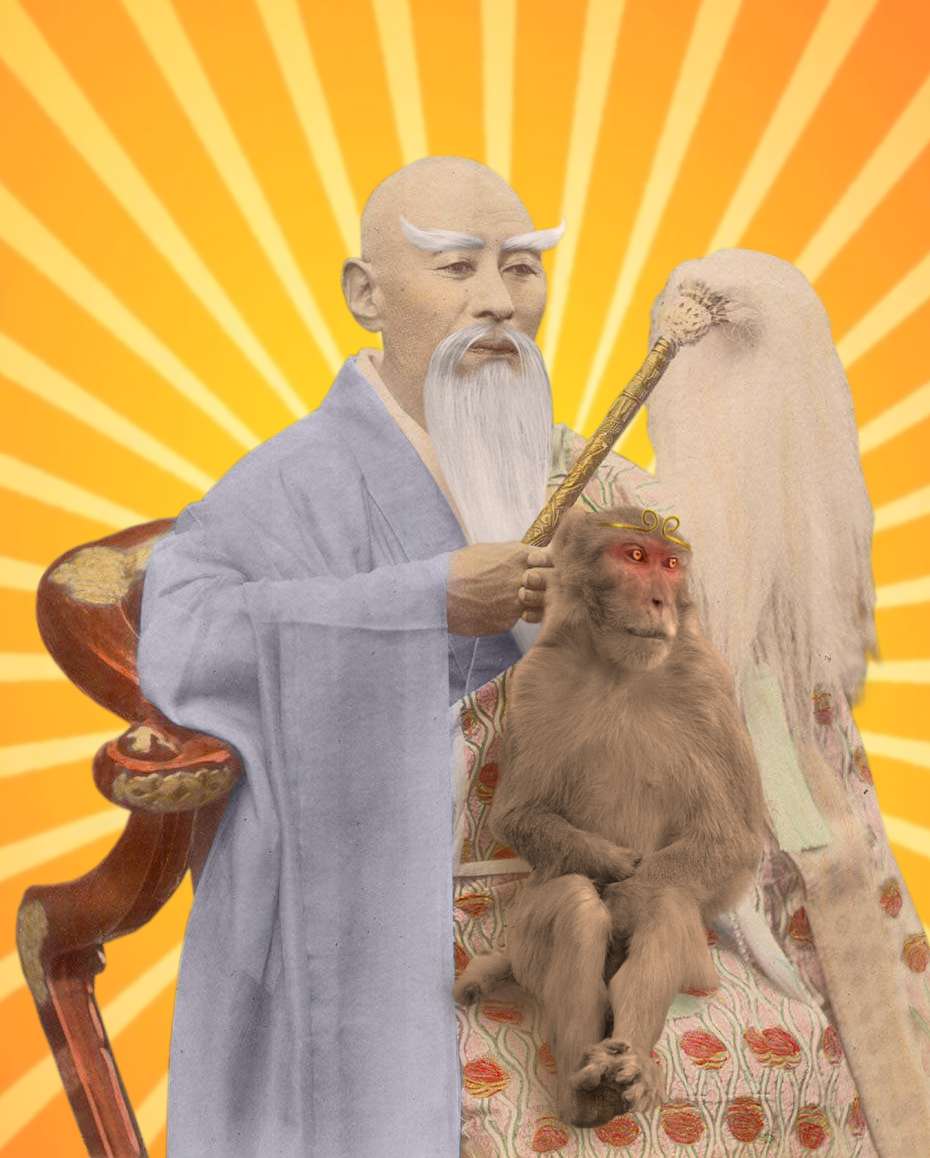
Sun Wukong and Master Subodhi. Take note of the fly whisk in the sage’s hands. Photomanipulation by the author (larger version). The original photo of the monk can be found on this blog about the fly whisk.

The Secret of Immortality

As I’ve explained in this article, Sun achieves immortality via breathing exercises designed to absorb yang energy during prescribed times (after midnight and before noon), the retention of chaste semen and transformation into qi energy, and the purification and circulation of the resulting spiritual energy throughout his body. While these practices are traditionally associated in Daoist internal alchemy with the formation of an immortal spirit that is eventually freed from the mortal shell, Monkey’s practice results in an ageless, adamantine physical body, one capable of lifting even cosmic mountains.

Immortal Awakened

Monkey achieves immortality. Photomanipulation by the author (larger version).

The 72 Transformations

This series of oral formulas allows Wukong to change his physical appearance into anything from other humanoid figures (gods, monsters, and humans), animals, insects, miscellaneous objects, incorporeal beams of light, and even buildings. Subodhi teaches this skill to Monkey with the expressed purpose of escaping three heaven-sent calamities meant to destroy immortals for defying their fate. Despite the intended use, this skill becomes one of his greatest strengths.

Because of Monkey’s mental acuity he is able to instantly remember all of the oral formulas imparted to him, and after some practice, he quickly masters the transformations.

Sun’s heated battle of transformations with the god Erlang. From the 1965 animated classic Havoc in Heaven.

The Cloud-Somersault

The combination of a hand mudra and an oral formula allows Monkey to rise above the ground and travel at immense speed by somersaulting from cloud to cloud, each leap being 108,000 li, or 33,554 miles (54,000 km) long. (However, it is not wise to attach a real world distance to the ability. See this update for more info.)

This power is mastered in a single night.

37e2fc9cebe000bb1c76c73e7ad2963a-d5oas0h

Monkey flying on clouds. Drawing by Funzee on deviantart (larger version).

2. Mentioned in Passing

Martial Arts (ch. 67)

Monkey only makes a passing reference to his martial training in a later poem, part of which reads: “I bowed to the Patriarch of the Heart and Mind Spirit Platform and perfected with him the martial arts” (身拜靈臺方寸祖,學成武藝甚全周) (based on Wu & Yu, 2012, vol 3, p. 243).

The following skills are inferred based on this reference and internal story details.

Boxing

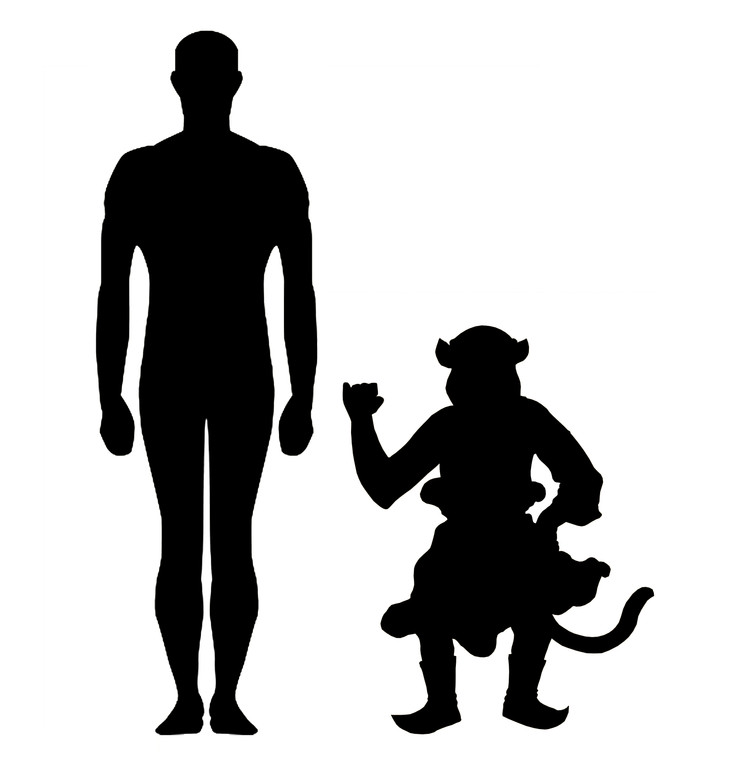
Sun displays a mastery of unarmed boxing in chapters two and 51, the former against a demon who takes over his mountain home in his absence and the latter against a Buffalo demon who steals his staff. Both chapters describe Monkey using techniques akin to short fist, a style known for quick, compact punches. Learning this close range style may be out of necessity, though, considering that Sun is so short—he’s less than 4-Chinese feet (122 cm) tall.

In his wonderful book The Shaolin Monastery (2008), Prof. Meir Shahar of Tel Aviv University reveals that Shaolin kungfu developed during the Ming-Qing transition from a synthesis of Daoist gymnastics (stretching and breathing exercises), religious rituals, and fist techniques. This new form of spiritual cultivation ushered in the era of so-called “internal martial arts,” Taiji boxing being the most famous among them.

Interestingly, some of the real world techniques used by Monkey and his opponent in chapter 51 appear in Taiji boxing.

JTTW was published during the late-Ming when this synthesis was in full swing. Therefore, Sun’s study of martial arts in a religious institution is an accurate snapshot of one facet of 16th-century monastic life.

boxing

Sun teaching a young human apprentice martial arts. Drawing by Celsohenrique on deviantart (larger version).

Weapons

After returning home in chapter 3, the young immortal teaches his children how to wield a plethora of weapons, including swords, spears, axes, bows and arrows, etc. He shortly thereafter acquires his magic staff, the weapon most commonly associated with him. Monkey’s skill with the staff is so great, in fact, that his supernatural technique is likened in chapter 33 to two of the Seven Military Classics of China.

Monkey’s broad knowledge of weapons implies that he learns the famous “Eighteen Martial Arts” (Shiba ban wuyi, 十八般武藝). A vague list of these war implements first appeared during the Song Dynasty, but a later definitive list became “a standard shorthand for complete martial arts knowledge” in Yuan-period stage plays (Lorge, 2012, p. 146). One version of the list appearing in the great Chinese classic The Water Margin (Shuihu zhuan, 水滸傳, c. 1400) includes everything from chains, clubs, and whips to axes, halberds, and even early firearms (Lorge, 2012, p. 147). Variations on the eighteen weapons remained a staple of Chinese stage plays, oral literature, and written fiction. Therefore, it’s no wonder a great warrior like Sun Wukong would come to be associated with the mastery of so many weapons.

the_monkey_king_by_jeremyblz_d21hdow-pre

Monkey assaults heavenly forces with his magic staff. Drawing by JeremyBLZ on deviantart (larger version).

Military Maneuvers

Monkey goes onto train his children in how to march, go on patrol, follow orders directed by flags and battle drums, and advance and retreat, turning the tangled mass of monkeys into an elite army.

Sun’s children engaging in mock battles during their training. From Havoc in Heaven. 

3. Implied

Sun Wukong’s tutelage in these subjects are never stated but are understood to have taken place.

General Daoist Magic

This ability allows him to call forth gods and spirits, grow or shrink to any size, part fire and water, create an impassable barrier, conger a wind storm, cast illusions, freeze someone in place, unlock any lock, give human disciples superhuman strength, etc.

What’s interesting is that during his training, Monkey expressly passes on learning the bureaucratic-style magic rites normally used by earthly priests simply because they won’t result in his immortality. Instead, after achieving eternal life, Sun is just so powerful he can command the very gods themselves to do his bidding. His lack of ritual knowledge is highlighted in chapter 45 when he agrees to engage in a rain-making competition with an animal spirit disguised as a Daoist priest. The spirit relies on an established liturgy involving a ritual sword and tablet, as well as the burning of a written note. This elaborate ritual initiates a bureaucratic chain in which the request is sent to heaven, the Jade Emperor agrees to the appeal, and then heavenly officials, namely the gods of wind, clouds, lightning, and rain, are dispatched to fulfill the application. But Monkey rises into the clouds above to bully the respective deities into helping him instead, noting: “I don’t know how to burn charms, issue summons, or strike any tablet. So all of you must play along with me” (Wu & Yu, 2012, vol. 2, p. 293).

Likewise, Monkey is so powerful that he can bring the dead back to life by simply fetching a person’s soul from the underworld (like he does for an elderly benefactor in chapter 97).

123 magic

Sun casting a magic spell. Drawing by Poppindollars on deviantart (larger version).

Chinese Medicine (chs. 68 & 69)

Monkey works to diagnose the long-standing malady of a foreign emperor. But due to the immortal’s monstrous appearance, he is forced to analyze the ruler from afar, using three magic hairs-turned-golden strings to measure the vibrations of the pulse from three locations of each forearm. Sun deduces that the illness is caused by fear and anxiety over the loss of the monarch’s queen, who had been kidnapped by a demon. Monkey then concocts three pills from a recipe of herbs, kettle soot, and dragon horse urine and administers the elixir with dragon king saliva. The medicine causes the emperor to pass an obstruction in his bowls, thus restoring the natural qi flow in his body and curing him of his sickness.

Baring the strings, Monkey’s method of reading the pulse aligns with real Chinese medicinal practice. The area of the forearm analyzed by traditional Chinese doctors is known as Cunkou (寸口, the “inch opening”), and this is broken up into the three spots Cun (寸, “inch”), Guan (關, “pass”), and Chi (尺, “foot”). The mirrored spots on each arm are believed to correspond to specific internal organs. For example, the Cun spot (nearest the wrist) on the right hand corresponds to the lungs, while that of the left hand corresponds to the heart (Liao, 2011, pp. 55-56). Therefore, analyzing the pulse at these spots is believed to reveal the health of the corresponding organs.

TCM hand chart

The spots analyzed during pulse diagnosis. Picture originally found here.

4. Monkey as a Scholar Warrior

The abilities and skills learned by Sun are varied, straddling the religious, the literary, and the martial. Therefore, Monkey is a perfect example of what Deng Mingdao (1990) calls the “Scholar Warrior”:

Skill is the essence of the Scholar Warrior. Such a person strives to develop a wide variety of talents to a degree greater than even a specialist in a particular field. Poet and boxer. Doctor and swordsman. Musician and knight. The Scholar Warrior uses each part of his or her overall ability to keep the whole in balance, and to attain the equilibrium for following the Tao. Uncertainty of the future inspires no fear: whatever happens, the Scholar Warrior has the confidence to face it (p. 10).

5. Conclusion

Monkey stays in Subodhi’s monastery for a total of ten years, the first seven living as a junior Daoist monk and the last three as a close disciple of Subodhi. During his time as a junior monk, he learns human language and etiquette, calligraphy, scripture reading, and incense burning. These foundational skills are taught to him by his senior religious brothers. During his time with Subodhi, Sun learns Chan and Daoist philosophy; the secret of immortality; the 72 heavenly transformations; cloud-somersaulting; military arts like troop maneuvering, weapons, and boxing; general Daoist magic; and medicine.


6. Updates

Update: 11-27-2018

I’ve written a continuation of this article where I use the above info to speculate that Sun Wukong is a warrior monk in Master Subodhi’s immortal monastic army. It’s good fodder for fanfiction. I even suggest a mythological baddie for the warrior monks to fight, the headless deity Xingtian.

Story Idea: Master Subodhi’s Curriculum II – Immortal Warriors and Shaolin Monks – Some Fun Monkey King Fanfiction Speculation


Sources

Buswell, R. E. , & Lopez, D. S. (2014). The Princeton Dictionary of Buddhism. Princeton, NJ: Princeton University Press.

Deng, M. D. (1990). Scholar Warrior: An Introduction to the Tao in Everyday Life. San Francisco: HarperSanFrancisco.

Liao, Y. (2011). Traditional Chinese Medicine. Cambridge: Cambridge University Press.

Lorge, P. A. (2012). Chinese Martial Arts: From Antiquity to the Twenty-First Century. New York, NY: Cambridge University Press.

Pregadio, F. (2008). Jiutian 九天 Nine Heavens In F. Pregadio (Ed.), The Encyclopedia of Taoism: Volume 1 (pp. 593-594). London [u.a.: Routledge].

Shahar, M. (2008). The Shaolin Monastery: History, Religion, and the Chinese Martial Arts. Honolulu: University of Hawai’i Press.

Wu, C., & Yu, A. C. (2012). The Journey to the West (Vols. 1-4) (Rev. ed.). Chicago: University of Chicago Press.

The Sun Wukong Stone Relief of Kaiyuan Temple

Last updated: 01-27-2024

The southern Chinese seaport of Quanzhou in Fujian province is home to Kaiyuan Temple (Kaiyuan si, 開元寺), also known as the Purple Cloud Temple (Ziyun si, 紫雲寺), an ancient Buddhist complex originally built in 686. The temple is famous for its two stone pagodas, each of which is covered in 80 life-size relief carvings of bodhisattvas, arhats, patriarchs, protector deities, and various mythological creatures rendered in a rustic style influenced by the Northern Song Dynasty school of art (Ecke & Demiéville, 1935, pp. 11-18). One figure of interest is a muscular, sword-wielding, monkey-headed warrior (fig. 1) located on the northeastern side of the western pagoda’s fourth story. Many scholars consider this to be an early depiction of Sun Wukong from Journey to the West (Xiyouji, 西遊記, 1592). The pagoda was erected in 1237 (Ecke & Demiéville, 1935, p. 91), so this depiction predates the Ming novel by 355 years, making it an important source for analyzing the early influences on the much beloved literary character. In this paper, I present past research on the relief, as well my own in which I suggest that the iconography is based on ritual adornments mentioned in the Hevajra Tantra, an Esoteric Buddhist text of the 8th century.

Fig. 1 – The  Kaiyuan temple pagoda relief (larger version), Quanzhou, Fujian.

Table of Contents

1. Previous Research

The first detailed description of the relief appears in Ecke and Demiéville (1935):

A guardian with a monkey-head, holding with one hand a rosary which is hanging around his neck, and with the other a sword emitting a cloud from its tip. He wears a short tunic, travel-sandals, and a rope-belt from which are hanging a calabash and a scroll with the Chinese title of the Mahamayarividyārajñi [Fomu da kongque mingwang jing, 佛母大孔雀明王經] (T982-985, a text which was used as a charm against all calamities, dangers, wounds, and diseases). [According to local tradition, it is] Sun Wu-k’ung the name of the monkey assistant (alias the Monkey attendant 猴行者, or the fair Monkey-king 美猴王, or the Great Saint Equal to Heaven 齊天大聖) of Hsüan-tsang [Xuanzang] in the JW-novel. In the upper right corner of the carving there is a small monk-figure with a halo, evidently Hsüan-tsang himself, appearing on a cloud, seemingly the same cloud as that which emanates from the monkey’s sword. In the version of the JW now extant, the monkey assistant’s weapon is not a sword, but an iron rod with two golden rings, which he can reduce, whenever he finds it convenient, into a needle and so keep inside his ear. Also, he wears a tiger-skin over the lower part of his body, a detail which does not agree with our carving (p. 35)

Glen Dudbridge (1970) compares Ecke and Demiéville’s analysis with the description of the Monkey Pilgrim (Hou xinzhe, 猴行者) from the The Story of How Tripitaka of the Great Tang Procures the Scriptures, the late-13th century precursor of Journey to the West. Based on the differences, he suggests that Northern and Southern China may have had separate Monkey story cycles:

[T]here is no sign there of the traveller’s garb in which the Zayton [1] figure is so meticulously clothed; the sword is also not mentioned, although the ‘iron rod with gold rings’ … has not yet assumed its full distinctive role; similarly, the tiger-skin robe, while not described in so many words, seems faintly anticipated in the episode [chapter six] in which Hou Hsing-che slays a tiger-demon, and certainly this standard attribute of demonic figures in Tantric iconography accords well with the description of the yakṣa in that same episode. [2] All this tends to suggest that the Zayton monkey-figure remains strangely distinct from that known to us in the literary sources … Certainly at this stage of their development, there seems to have been no obligation to uniformity in the enactment or representation of popular story cycles: the monkey seen, heard or read about by the northern public could well have differed from his southern counterpart (Dudbridge, 1970, p. 49).

Journey to the West translator and scholar Anthony C. Yu (1977) highlighted a difference in opinion regarding the pious figure on the upper right of the piece:

Ōta Tatsuo 太田辰夫 and Torii Hisayasu 鳥居久靖, in “Kaisetsu 解説,” in Saiyuki, Chūgoku koten bungaku taikei, 31-32 (Tokyo 1971), 432, have challenged Ecke and Demiéville’s interpretation of the carving by pointing out that the figure at the upper righthand corner should be thought of simply as a figure of Buddha (not Hsüan-tsang), which Monkey will become by virtue of bringing back the scriptures. It may be added that Sun Wu-k’ung of the hundred chapter narrative did use a sword or scimitar 刀 (JW, chaps. 2 and 3) before he acquired his famous rod. [3] None of the scholars consulted here sees fit to discuss the significance of what seems to be a headband worn by the carved figure (p. 497 n. 23). 

Victor Mair (1989) focuses on the relief’s iconography and suggests that the various elements might have ties to depictions of both the Buddhist protector deity Aṇḍīra and the Hindu monkey god Hanuman from the Ramayana (c. 4th cent BCE):

The band on the Zayton monkey’s head is indeed very important. Surely it must represent what becomes the Tight-Fillet 緊箍 of the Ming JW, ch. 14. Regardless of the author’s (or his predecessors’) elaborate creative inventions surrounding this fillet in the tradition of the novel, we may ask whether it has any identifiable iconographical origins in art.

The Tight-Fillet recalls the band around the head of representations of Aṇḍīra, the simian guardian of Avalokiteśvara and Bhaișajyaguruvaidūryaprabhāṣa … As a typical specimen, we may take a statue [fig. 2] from the Kōfukuji in Nara. The Kōfukuji Aṇḍīra has curious wing-like projections extending from the sides of the band around his head that remind us of Mercury in Western classical art. On the Zayton SWK [Sun Wukong], these symbols of swiftness have been displaced to the sides of the eyes. In either case, the wings remind us of H’s [Hanuman’s] descent from the god of the wind. Other similarities between the Kōfukuji Aṇḍīra and the Zayton SWK include: identical earrings (these are key iconographical features of H in many Southeast Asian Rs [Ramayanas]), comparable tilt of the head (exaggerated with the Kōfukuji Aṇḍīra) which seems to indicate enforced submission, long locks of hair flaring out behind the head, elongated monkey’s mouth, similar decorations on forearms and upper arm, etc. It is crucial to note that all of these features can be found in South Asian and Southeast Asian representations of H. For its photographic clarity, we may choose a scene from the Rāma reliefs in Panataran, Indonesia [fig. 3]. H’s forearms are bare in this particular representation, but in some Thai reliefs (at Wat Phra Jetubon in Bangkok), they resemble those of the Zayton SWK and the Kōfukuji Aṇḍīra. The discrepancies in the dress and ornamentation of the lower parts of the body may be attributed to culture and climate (pp. 699-700).

Fig. 2 – The Kōfukuji Aṇḍīra wooden relief carving (c. 11th to 12th cent.) (larger version), Nara, Japan. Fig. 3 – Hanuman (left) besting a demonic foe (right), from the Ramayana reliefs of the Panataran temple complex (c. 12th cent.) (larger version), East Java, Indonesia. 

2. My Findings

My opinion on the origins of the Kaiyuan relief’s iconography parts ways with Mair in some respects. For instance, upon close inspection of the Japanese Aṇḍīra carving, the band that he refers to appears to be the brim of a helmet. I do agree that the Kaiyuan relief shares affinities with the cited image of Hanuman (e.g., the earrings and armbands). But again, here I part ways with Mair because I suggest that the relief’s accoutrements were instead influenced by Esoteric Buddhism and not Hinduism. The similar imagery is no doubt due to a common cultural source.

Nearly every aspect of Sun Wukong’s attire can be found in a passage from the 8th-century esoteric text the Hevajra Tantra (Dabei kongzhi jingang dajiao wang yigui jing, 大悲空智金剛大教王儀軌經). It instructs yogins on how to adorn and dress themselves for worshipping Heruka (Xilujia, 呬嚕迦), a wrathful protector deity of Buddhism.

Sanskrit: bhavakena vidhartavyam karnayor divyakupdalam/ sirasi cakri dhartavya hastayo rucakadvayam/ katyarp va mekhalam caiva padayor nupuran tatha/ bahumule ca keyuram gnvayam asthimalika/ paridhanam vyaghracarma bhaksanam dasardhamrtam

Translation: The practitioner should wear divine ear-rings, a circlet around the head, upon each wrist a bracelet, a girdle around his waist, anklets around the ankles, arm ornaments around the upper arms and a garland of bones around the neck. His dress must be of tiger skin … (Farrow & Menon, 2001, pp. 61-62).

彼修觀者當如是行:謂頂想寶輪、耳帶、寶鐶,手串寶釧,腰垂寶帶,足繫寶鐸及妙臂釧,頸嚴寶鬘衣、虎皮衣 …

Earrings? Check! Circlet? Check! Bracelets, girdle, anklets, and arm ornaments? Check, check, check, and check! The only two aspects that are questionable are the bone necklace and the tigerskin. Rosaries are sometimes made from bone, which satisfies that requirement. And while Ecke and Demiéville were quick to note the omission of the pelt in their study, I think that the appearance of so many elements from the passage suggests that the tigerskin is present but the features may have just been eroded by time. The chevron shape visible below the girdle could be a skin apron. I’ve created a color version of the relief based on this information (fig. 4).

Fig. 4 – My interpretation of the relief (larger version). A comparison of the original and new versions can be seen here.

(Note: 05-22-23 – Upon reviewing figure four, I don’t like the way the proposed tiger skin cuts off at the belt. It would make more sense for the skin to act as a girdle, making it visible above the belt. I’ll probably update this in the future.)

As I explained in a previous article, the Hevajra Tantra was officially translated into Chinese in 1055 (no doubt arriving earlier than this), so the text was present in the middle kingdom for nearly 200 years prior to the creation of the relief.

What can these ritual elements tell us about Monkey’s depiction? Firstly, it should be noted that the esoteric deity Heruka and other such wrathful guardians, known by the neologism “Wrathful Destroyers of Obstacles” (Sk: krodha-vighnantaka), are commonly portrayed wearing such items, leading to the scholar Van Kooij (as cited in Linrothe, 1999) to comment, “Heruka is more or less a deified hypostasis of the … yogin himself” (p. 251). Second, these deities are often portrayed wielding weapons. For example, one source describes Vajrapani‘s wrathful form Trailokyavijaya “hold[ing] the vajra, ankusa-hook, sharp sword, pâsa-noose and other âyudha [weapons]” (Linrothe, 1999, p. 188). Sun Wukong, too, is depicted with a weapon, a sword with a lick of heavenly flame. Third, the flaming sutra tied to Monkey’s girdle was, as explained above, historically “used as a charm against all calamities, dangers, wounds, and diseases” (Ecke & Demiéville, 1935, p. 35). Wrathful Destroyers of Obstacles are charged “with the destruction of barriers which prevent the experience of enlightenment” (Linrothe, 1999, p. 25). These include external threats like manifested demons and internal threats like demon-caused mental and bodily illness, the “three poisons,” and karmic debt (Linrothe, 1999, pp. 24-25). Therefore, the iconography presents Sun Wukong as a wrathful protector deity.

This then may lend support to Ecke and Demiéville’s original assertion that the pious figure floating in the clouds to the right of Monkey’s head is in fact Xuanzang. The Great Sage clears the path of manifested demons that obstruct the monk’s path to enlightenment, leading to his ascension into paradise (this happens in both the 13th-century version of the story and the standard Ming novel).

3. Ritual Adornments and Other Literary Figures

While Monkey’s association with the fillet and the tiger skin carried over into the novel, other characters came to be associated with ritual adornments from the Hevajra Tantra. A prime example is Red Boy (Hong hai’er, 紅孩兒), son of the Bull Demon King and Princess Iron Fan. The Bodhisattva Guanyin forces the demon child to submit in chapter 42, after which she uses a magic treasure given to her by the Buddha to ensnare his extremities.

Dear Bodhisattva! She took the fillet and waved it at the wind once, crying, “Change!” It changed into five fillets, which she threw at the body of the boy, crying, “Hit!” One fillet enveloped the boy’s head, while the rest caught his two hands and two feet (Wu & Yu, 1977, vol. 2, p. 280).

Red Boy is the literary counterpart of the religious figure Sudhana (Sancai, 善財), whose spiritual journey is told in the Gandavyuha Sutra (Dafang guang fohuayan jing, 大方廣佛華嚴經, c. 3rd cent.). The youth sets out on a quest towards enlightenment and trains under 52 different teachers, including Maitreya, Avalokiteśvara (the South Asian variant of Guanyin), Mañjuśrī, and Samantabhadra (Buswell & Lopez, 2014, p. 864). It’s no wonder then that the ascetic came to be associated with such ritual adornments. South and East Asian depictions of Sudhana/Sancai often portray him wearing bangles and anklets (fig. 5).

Fig. 5 – A modern day altar statue of Sudhana/Sancai (larger version). Notice the bracelets and anklets.

4. Conclusion

The 13th-century Sun Wukong pagoda relief of the Kaiyuan Temple shares many similarities to ritual adornments mentioned in the esoteric Hevajra Tantra (8th cent.), including earrings, the circlet, arm cuffs, a necklace, a girdle, wrist bangles, anklets, and possibly even a tiger skin. Esoteric protector deities are often portrayed with similar attire since they represent the very yogin ascetics who worship them. Monkey’s depiction with said attire suggests the artist who created the piece intended to present him as a powerful Buddhist guardian on par with Wrathful Destroyers of Obstacles like Heruka. The depicted sword and sutra, each shown with a lick of heavenly flame, no doubt represent the means by which the Great Sage protects his master Xuanzang (possibly the pious figure on the upper right corner of the relief).

The onetime enemy Redboy comes to wear the ritual circlet, bracelets, and anklets in Journey to the West after being subjugated by Guanyin. While he is depicted as a defeated foe who submits to Buddhism, these adornments recall his historical and religious origins as Sudhana, a great ascetic from Buddhist literature.


5. Updates

5.1. Fan Art

Update: 05-22-23

Twitter user Lava (@Lavaflowe) has allowed me to post their lovely drawing of the stone pagoda carving.

Fig. 6 – Lavaflowe’s version of the stone pagoda carving (larger version). Image from twitter.


5.2. No Tiger Skin?

Update: 01-26-24

There is also a possibility that the tiger skin isn’t present at all (as suggested by others). Despite the Hevajra Tantra prescribing this dress, the skin isn’t listed among the most basic accoutrements of a yogi elsewhere in the work. These are known as the “Five Symbolic Ornaments” or “Five Seals” (Sk: Pancamudrā, पञ्चमुद्रा; Ch: Wuyin, 五印; a.k.a. “Five Buddha Seals,” Wufo yin, 五佛印). Each is associated with a particular Buddha:

Aksobhya is symbolised by the circlet, Amitabha by the ear-rings, Ratnesa by the necklace, Vairocana by the hand ornaments, [and] Amogha by the girdle (Farrow, 1992, p. 65).

輪者,表阿閦如來;鐶者,無量壽如來;頸上鬘者,寶生如來;手寶釧者,大毘盧遮那如來;腰寶帶者,不空成就如來。


5.3. The Six Ornaments

Update: 01-27-24

The aforementioned five ornaments are sometimes combined with another item to form the “Six Ornaments” or “Six Seals” (Sk: Shanmudrā, षण्मुद्रा), each of which is associated with a Buddhist wisdom:

The yogic ornaments … are commonly classified as being six in number: (1) the skull-tiara, (2) the armlets, (3) the bracelets, (4) the anklets … (5) the bone-bead apron and waist-band combined … and (6) the double line of bone-beads extending over the shoulders to the breast, where they hold in place the breast-plate Mirror of Karma, wherein … are reflected every good and bad action. These six ornaments (usually of human bone) denote the Six Pāramitā (‘Boundless Virtues’), which are: (1) Dāna-Pāramitā (‘Boundless Charity’), (2) Shīla-Pāramitā (‘Boundless Morality’), (3) Kshānti-Pāramitā (‘Boundless Patience’), (4) Vīrya-Pāramitā (‘Boundless Industry’), (5) Dhyāna-Pāramitā (‘Boundless Meditation’), and (6) Prajñā-Pāramitā (‘Boundless Wisdom’). To attain to Buddhahood, and as a Bodhisattva to assist in the salvation of all living creatures, the Six Pramita must be assiduously practised (Evans-Wentz, 2000, p. xxv).

The most detailed source I’ve found reads:

a. The Bone Wheel

Vajradharma wears a bone wheel on his head. It is formed from a small bone circle that sits around the crown of the head, surrounded by a second, larger circle. The two circles are attached to one another by eight bone spokes. On each of the five spokes at the front, above the forehead, stands a dried skull that supports the jewel, which is the crest ornament. From the lower part of their jaws, looped chains and hanging decorative chains extend downward to the space between Vajradharma’s eyebrows and to the tips of his ears. One the back of each skull is a multicolored vajra with a crescent moon placed to the left. The deity’s long hair passes up through the hole in the middle of the inner bone circle and is tired in a topknot. 

b. The Earrings 

There are five parts to the earrings. There is a main circle of bone, which is like a bangle. From the bottom of the circle hang two smaller rings, each one attached to the larger ring above them by a semi-circle of bone.

c. The Necklace 

The necklace is made of two strings of bones bound together with hair taken from both a corpse and a living person. At the front is a square central hub. The hub forms the base for a T-shaped triple vajra. There are to more triple vajras placed at the two points where the strings of the necklace reach the shoulders.

d. The Bracelets

The deity wears a bracelet on each ankle, wrist, and upper arm, making six in total. Each bracelet is made from two strings of bones that have been bound together. There are three vajras on each pair of bracelets, one at the knot in the upper string, one at the knot in the lower string, and one opposite the knot in the upper string.

e. The Brahmin’s Bone Thread

Next is the Brahmin’s bone thread, or investiture thread (yajnopavita). On the front of the body, above the novel, is a bone wheel with either right or four spokes. There are holes in four of the spokes and two parallels strings of bone pass through each of them. Two of these strings go over the shoulders, and two pass under the armpit. On each of these strings are two vajras on the shoulder and another two under the armpit, making eight in total. Sometimes there is a second bone wheel on the back, to which all the strings are tied; if not, all the ends of the strings are knotted together. 

Together, or with the thread of hair from a slain thief, these bone ornaments are called the ornaments of the five mudras.

f. The Bone Belt 

The bone belt, or apron, hangs from the waist. It is made, as before, of two parallel strings of bone. The strings have five vajras attached to them–one at the front in the center, one on each hip, and one on each side of the center, halfway to the whips. Hanging chains and looped chains decorated with small silver bells and small bone spearheads hang from the tips of the vajras. The chains end at the point where the calf muscle begins to taper.

According to oral tradition, the necklace we just mentioned is ornamented with five vajras at the heart. Although I have consulted many descriptions of the bone ornaments, I have never seen this stated anywhere else. There are many traditions concerning the bone ornaments, but here I have presented that of the oral tradition taught by my master (Lingpa, Rinpoche, & Chemchok, 2017, pp. 52-54). 

As can be seen, the tiger skin is not mentioned among these ornaments either.

Also, as is mentioned, the items making up the six ornaments vary from tradition to tradition. For instance, Huntington and Bangdel (2003) list bone ash in place of the bone thread (p. 161). But it’s important to note for our purposes that the circlet, bangles, bracelets, anklets, and belt make up the five basic accoutrements.

Notes:

1) The city of Quanzhou was known to both Marco Polo and Ibn Battuta by the Arabic name Zayton or Zaiton (زيتون , the “City of Olives”).

2) Monkey transforms a ringed monk’s staff into a titanic yakṣa that crushes the aforementioned tiger demon with a club.

3) Yu (Wu & Yu, 1977) is referring to the fight between Sun Wukong and a demon, during which time the monkey disarms him and uses the latter’s own sword against him.

Sources:

Buswell, R. E., & Lopez, D. S. (2014). The Princeton Dictionary of Buddhism. Princeton, NJ: Princeton University Press.

Dudbridge, G. (1970). The Hsi-yu chi: A Study of Antecedents to the Sixteenth-Century Chinese Novel. Cambridge: Cambridge Univ. Press.

Ecke, G., & Demiéville, P. (1935). The Twin Pagodas of Zayton: A Study of the Later Buddhist Sculpture in China. Cambridge, Mass: Harvard University Press.

Evans-Wentz, W. Y. (Ed.). (2000). Tibet’s Great Yogi Milarepa: A Biography from the Tibetan Being the Jetsun-Kabbum Or Biographical History of Jetsun-Milarepa, According to the Late Lama Kazi Dawa-Samdup’s English Rendering. United Kingdom: Oxford University Press, USA.

Farrow, G. W., & Menon, I. (2001). The Concealed Essence of the Hevajra Tantra: With the Commentary Yogaratnamālā. Delhi: Motilal Banarsidass Publ.

Huntington, J. C., & Bangdel, D. (2003). The Circle of Bliss: Buddhist Meditational Art. United Kingdom: Serindia Publications.

Lingpa, J., Rinpoche, P., Chemchok, K. (2017). The Gathering of Vidyadharas: Text and Commentaries on the Rigdzin Düpa. United States: Shambhala.

Linrothe, R. N. (1999). Ruthless Compassion: Wrathful Deities in Early Indo-Tibetan Esoteric Buddhist Art. Boston, Mass: Shambhala.

Mair, V. (1989). Suen Wu-kung = Hanumat? The Progress of a Scholarly Debate, in Proceedings of the Second International Conference on Sinology (pp. 659-752). Taipei: Academia Sinica.

Wu, C., & Yu, A. C. (1977). The Journey to the West (Vol. 1). Chicago, Illinois: University of Chicago Press.

What Does Sun Wukong Look Like? A Resource for Artists and Cosplayers

Last updated: 05-03-2026

Type “Sun Wukong” into google images and you will be presented with an endless array of pictures that range from the familiar to the alien. A fanciful 1960s cartoon depiction of our hero sits to the left of a SMITE video game character with hulking muscles and a weapon more akin to a club than a staff. A toy version of Liu Xiao Ling Tong‘s much beloved 1986 TV portrayal sits above an anime character with blond hair and a shaved chest. It seems there are as many depictions of Wukong as he has transformations. But how do these myriad personas compare to his depiction in the novel, and who has produced the most authentic look? In this article I present the Monkey King’s literary description, along with ancient depictions that predate the novel. My hope is that the information will be both interesting and useful, especially for artists and cosplayers looking to make a more authentic design.

Table of Contents

1. Ancient Depictions

Some readers may be surprised to learn that stories about a “Monkey Pilgrim” (Hou xingzhe, 猴行者) go all the way back to the Song Dynasty (960–1279 CE). This predates the actual name Sun Wukong by centuries. The literary episodes we all know and love began life as oral tales that evolved over time and grew into an accepted storytelling cycle which started to solidify by the 15th century CE. [1] But the further we go back in time, the less familiar the recorded material becomes, and due to the memory-based nature of oral storytelling, [2] records for the earliest repertoires do not exist. Luckily, visual media from the Song survives, allowing us to see how artists of that time depicted the Monkey King.

One example, Eastern Thousand Buddha Cave (Dong qianfo dong, 東千佛洞) number two in the Hexi Corridor of Gansu Province, contains a late-Xixia dynasty (late-12th or early-13th century CE) mural of Xuanzang worshiping Guanyin from a riverbank, while Monkey stands behind him tending to a brown horse. The latter is portrayed with a plain circlet on his head, a homely face with an overbite, waist length hair (or possibly wearing a fur on his back), and light blue-green robes with a red apron and brown pants and sandals (fig. 1 and 2). The depiction is less simian in appearance, yet not wholly human.

Fig. 1 – An almost complete version of the Eastern Thousand Buddha Cave no. 2 painting (larger version). Photo by National Geographic. Fig. 2 – A detail of Monkey and Xuanzang (larger version). See figure 14 for an enhanced detail of Monkey’s head.

A second example, Yulin Cave (Yulin ku, 榆林窟) number three in Gansu, contains a late-Xixia wall painting with similar imagery. Xuanzang is again worshiping from a riverbank, but this time the subject of adoration is Samantabhadra. We see Monkey lacks the fillet but wears a monk’s robe with wrapped socks and sandals. This time he is far more monkey-like in appearance, complete with furry arms (fig. 3 and 4).

Fig. 3 – An almost complete version of the late-Xixia Yulin Cave no. 3 painting (larger version). Monkey and Xuanzang can be seen standing on the river bank on the upper left side. Fig. 4 – A detail of the two figures (larger version).

A third example is the 1237 CE stone relief carving from the western pagoda of the Kaiyuan Temple (開元寺) in Quanzhou, Fujian province. This muscular warrior wears a headband, earrings, bracelets, a rosary necklace, and arm bangles (all prescribed Esoteric Buddhist ritual accouterments), as well as a monk’s robe and sandals. He wields a broadsword in one hand, while the other thumbs the rosary at his chest. At his waist hangs a calabash gourd and a scroll of the Mahamayurividyarajni Sutra (Fomu da kongque mingwang jing, 佛母大孔雀明王經) (fig. 5) (Ecke & Demiéville, 1935). He has the large ears and protruding mouth of a monkey.

Fig. 5 – The monkey-headed warrior from Kaiyuan temple in Quanzhou, Fujian (larger version).

Writing in the 1250s, the Song poet Liu Kezhuang (劉克莊, 1187–1269) references our hero twice in his work. The second of two such references uses Monkey as a metaphor to describe the ageing 70-year-old’s appearance. A portion of the poem reads:

A back bent like a water-buffalo in the Zi stream,
Hair as white as the silk thread issued by the “ice silkworms”,
A face even uglier than Hou xingzhe [“Monkey Pilgrim”],
Verse more scanty than even He Heshi (Dudbridge, 1970, p. 46).

背傴水牛泅磵髪白氷蠶吐絲貌醜似猴行者詩痩於鶴何師

Ugliness is a subject I will return to several more times.

I mentioned earlier that the farther we go back in time the less familiar the recorded material becomes. Case in point is the The Story of How Tripitaka of the Great Tang Procures the Scriptures (c. late-13th century CE), the earliest published edition of Journey to the West. Despite referring to himself as the Monkey King, the Monkey Pilgrim is depicted as a white-clad scholar. Another difference is the fact that he fights with two different staves, one a ringed monk’s staff and the other an iron rod (these two would later be combined to create his signature weapon).

The majority of Song sources depict the Monkey Pilgrim as the size of an adult man but with the head of an ugly monkey. I think that these were likely influenced by early stage plays, which would obviously entail a human actor taking on the role.

2. What the Novel Says

2.1. Physical Appearance

The earliest descriptions of what Monkey looks like appear in chapter one. When he is first taken in by his teacher Subodhi, the sage tells him, “Though your features are not the most attractive, you do resemble a pignolia-eating macaque (husun [猢猻])” (Wu & Yu, 2012, vol. 1, p. 115). After he returns to the Mountain of Flowers and Fruit in chapter two, a demon king refers to Monkey’s height: “You’re not four feet tall” (Wu & Yu, 2012, vol. 1, p. 128).

In chapter 7, Monkey is subjected to Laozi’s eight trigrams furnace as punishment for his crimes against heaven. He survives the celestial fire but the smoke inside “…reddened his eyes, giving them a permanently inflamed condition. Hence they were sometimes called Fiery Eyes and Golden Irises [Huoyan jinjing, 火眼金睛]” (based on Wu & Yu, 2012, vol. 1, p. 189). The anthropologist Frances D. Burton (2005) explains that his fiery eyes are “a characteristic he shares with the actual red-rimmed eyes of M. mulatta [the Rhesus macaque]” (p. 148). I further suggest that the hue of his eyes are based on the golden irises of macaques (fig. 6).

Fig. 6 – A comparison of Rhesus macaque males with red-rimmed eyes during mating season (left) and other times (right) (larger version). Original image from Dubue, Allen, Maestripieri, & Higham (2014, p. 5).

In chapter 20, the reader learns that Monkey’s head is bald (fig. 7). An old man asks him, “[W]hy did you shave your hair to become a monk?” (Wu & Yu, 2012, vol. 1, p. 395).

In chapter 21, a demon king steps out of his cave to fight Sun but is surprised by his small stature:

The old monster took a careful look and saw the diminutive figure of Pilgrim [Monkey]—less than four feet, in fact—and his sallow cheeks. He said with a laugh: “Too bad! Too bad! I thought you were some kind of invincible hero. But you are only a sickly ghost, with nothing more than your skeleton left!” (Wu & Yu, 2012, vol. 1, p. 408).

那怪仔細觀看,見行者身軀鄙猥,面容羸瘦,不滿四尺。笑道:「可憐,可憐。我只道是怎麼樣扳翻不倒的好漢,原來是這般一個骷髏的病鬼。」

(Thank you to Jose Loayza for bringing this passage to my attention.)

His bald head is referred to again in chapter 27:

“But ever since Nirvana delivered me from my sins, when with my hair shorn I took the vow of complete poverty and followed you as your disciple, I had this gold fillet clamped on my head…” (Wu & Yu, 2012, vol. 2, p. 24).

自從涅槃罪度,削髮秉正沙門,跟你做了徒弟,把這個金箍兒勒在我頭上…

(Thank you to Stanley Setiawan for bringing this passage to my attention.)

Fig. 7 – Reggie the baboon from Paignton Zoo (circa 2005). His slick head was the result of his mom’s “over-zealous” grooming. Look at those ears! He’s the wrong genus and species, but you get the general idea what Sun Wukong would look like wearing the golden fillet (larger version).

Wukong’s bald pate is once again referenced in chapter 34:

The fiend then gave the rope a tug and pulled Pilgrim down before he gave that bald head seven or eight blows with the sword. The skin on Pilgrim’s head did not even redden at all (Wu & Yu, 2012, vol. 2, p. 128).

那怪將繩一扯,扯將下來,照光頭上砍了七八寶劍。行者頭皮兒也不曾紅了一紅。

In chapter 44, the Monkey King’s appearance is revealed in a dream to a group of monks by the personification of the planet Venus:

A bumpy brow, and golden eyes flashing;
A round head and a hairy face with sunken cheeks;
Gaping teeth, pointed mouth, a character most sly;
He looks more strange than the thunder god
[…] (based on Wu & Yu, 2012, vol. 2, p. 276).

磕額金睛晃亮,圓頭毛臉無腮。咨牙尖嘴性情乖。貌比雷公古怪。…

In chapter 49, a monster who barely survived a battle with Sun Wukong describes his appearance to a friend: [H]e has a hairy face and a thunder god beak … forked ears and broken nose. A monk with fiery eyes and golden irises (based on Wu & Yu, 2012, vol. 2, p. 353).

In chapter 58, Sun Wukong’s doppelganger is described as having matching features:

A hairy face, a thunder god beak,
Empty cheeks unlike Saturn’s; [3]
Two forked ears on a big, broad head,
And fangs that have outward grown (based on Wu & Yu, 2012, vol. 3, p. 105).

…也是這等毛臉雷公嘴,朔腮別土星,查耳額顱闊,獠牙向外生。

In chapter 67, an old man chastises Monkey for offending him:

You! Look at your skeleton face, flattened brow, collapsed nose, sunken cheeks, and hairy eyes. A consumptive ghost, no doubt, and yet without any manners at all, you dare use your pointed mouth to offend an elderly person like me!” (based on Wu & Yu, 2012, vol. 3, p. 242).

你這廝骨撾臉,磕額頭,塌鼻子,凹頡腮,毛眼毛睛,癆病鬼,不知高低,尖著個嘴,敢來衝撞我老人家?

In chapter 75, he once again tests the hardness of his bald head:

“You come over here,” said the old demon, “and act as my chopping block first. If your bald head can withstand three blows of my scimitar, I’ll let you and your Tang Monk go past. But if you can’t, you’d better tum him over quickly to me as a meal.”

When he heard this, Pilgrim smiled and said, “Fiend! If you have brush and paper in your cave, take them out and I’ll sign a contract with you. You can start delivering your blows from today until next year, and I won’t regard you seriously!” Arousing his spirit, the old demon stood firmly with one foot placed in front of the other. He lifted up his scimitar with both hands and brought it down hard on the head of the Great Sage. Our Great Sage, however, jerked his head upward to meet the blow. All they heard was a loud crack, but the skin on the head did not even redden (Wu & Yu, 2012, vol. 3, p. 373).

老魔道:「你過來,先與我做個樁兒,讓我盡力氣著光頭砍上三刀,就讓你唐僧過去;假若禁不得,快送你唐僧來,與我做一頓下飯。」行者聞言笑道:「妖怪,你洞裡若有紙筆,取出來,與你立個合同。自今日起,就砍到明年,我也不與你當真。」

那老魔抖擻威風,丁字步站定,雙手舉刀,望大聖劈頂就砍。這大聖把頭往上一迎,只聞扢扠一聲響,頭皮兒紅也不紅。

We can see from these quotes several features that appear again and again. These include a furry face with sunken cheeks, fiery eyes, a broken or flat nose, a beak-like mouth with protruding fangs, and forked ears (with long earlobes, per the 06-02-25 update). The author-compiler of the novel uses these features over and over again to remind the reader just how ugly the Great Sage is. These same features are also shared by the Rhesus monkey and other macaque species (fig. 8). The multiple mentions of the Thunder God‘s beak refers to the monkey’s prognathic (protruding) mouth, which houses large canine teeth. The quotes also let us know that Sun Wukong is less than four feet tall and very skinny (e.g. having “sallow cheeks” and being like “a consumptive ghost”) just like a monkey (fig. 9). It’s important to note that Sun is described as being bald numerous times throughout the novel. This should come as no surprise since he was required to take the tonsure as a Buddhist monk. Modern depictions often deviate from the features mentioned here (more on this below).

Fig. 8 – A Bonnet macaque bearing its teeth. Photo by Hank Christensen. The furry face with sunken cheeks, a broken (flat) nose, beak-like mouth with protruding fangs, and forked ears are easily discernible. Fig. 9 – The short, skinny body of a Rhesus monkey. Photo by mario_ruckh via flickr.

2.2 Clothing and Accessories

The novel mentions Sun Wukong wearing different attire throughout his roughly 1,100 years of life. Here I will focus on that which is closely associated with his traditional iconography.

The clothing most often associated with Monkey is his suit of armor. He receives it from the dragon kings of the world’s oceans in chapter three:

“I have here a pair of cloud-treading shoes the color of lotus root[, said Aoshun, the Dragon King of the Northern Ocean]. Aorun, the Dragon King of the Western Ocean said, “I brought along a cuirass of chainmail made of yellow gold.” “And I have a cap with erect phoenix plumes, made of purple gold,” said Aoqin, the Dragon King of the Southern Ocean (based on Wu & Yu, 2012, vol. 1, p. 137).

北海龍王敖順道:「… 我這裡有一雙藕絲步雲履哩。」西海龍王敖閏道:「我帶了一副鎖子黃金甲哩。」南海龍王敖欽道:「我有一頂鳳翅紫金冠哩。」

Those wanting to make a novel accurate suit should consult Ming-era chainmail (fig. 10). However, the oldest drawing of Wukong wearing armor that I’m aware of depicts him with “mountain pattern” armor (fig. 11). Combinations of mountain pattern armor and feather caps can be seen in the 16th century CE scroll The Emperor’s Return to the Capital (Rubitu, 入蹕圖) (fig. 12), showing it was part of historical military regalia and not just the purview of Chinese opera (fig. 13). Modern depictions of Monkey tend to portray him wearing mountain pattern armor with ornate beast elements on the shoulders and waist. Those wishing to replicate this kind of armor should consult Ming-era statues of Buddhist protector deities, such as Skanda or the Four Heavenly Kings (this blog is especially good) (fig. 14, for example). Modern “Purple Gold Caps” (zijin guan, 紫金冠) with lingzi (翎子) feathers should be used for Sun’s phoenix feather cap (fig. 15).

Fig. 10 – Ming chainmail from the Wubei zhi (1621 CE) (larger version). Fig. 11 – A woodblock print of Sun wearing mountain pattern armor while fighting the heavenly army (larger version). From Mr. Li Zhuowu’s Literary Criticism of Journey to the West (late-16th century CE, “Mr. Li’s Criticism” hereafter). Fig. 12 – A detail of halberd-bearing soldiers wearing mountain pattern armor and feather caps from The Emperor’s Return to the Capital (16th century CE) (larger version). Image enhanced slightly for clarity. Fig. 13 – Monkey as portrayed in Beijing Opera (larger version). Photo by TAO Images Limited via Alamy. Fig. 14 – A 16th century CE brass statue of Skanda (larger version). This blog has photos from all sides. Fig. 15 – A modern example of a Purple Gold Cap (larger version). 

Contrary to popular belief, Sun does not wear the armor throughout the entire story. Though not openly stated, the novel suggests it is stripped from the monkey when he is captured by heavenly soldiers in chapter six: “They bound him with ropes and punctured his breast bone with a knife, so that he could transform no further” (Wu & Yu, 2012, vol. 1, p. 186). Obviously the knife wouldn’t have punctured the magic armor. And after heaven fails to execute him in chapter seven, several celestial report:

“Your Majesty, we don’t know where this Great Sage has acquired such power to protect his body. Your subjects slashed him with a scimitar and hewed him with an ax; we also struck him with thunder and burned him with fire. Not a single one of his hairs was destroyed (emphasis added). What shall we do?” (Wu & Yu, 2012, vol. 1, p. 188).

萬歲,這大聖不知是何處學得這護身之法,臣等用刀砍斧剁,雷打火燒,一毫不能傷損,卻如之何?

Prior to his turn in Laozi’s eight trigrams furnace in chapter seven, the story again references the knife in Monkey’s breastbone, suggesting he is still naked: “Arriving at the Tushita Palace, Laozi loosened the ropes on the Great Sage, pulled out the weapon from his breastbone, and pushed him into [furnace]” (Wu & Yu, 2012, vol. 1, p. 189). One late-Ming woodblock print actually portrays him naked upon his escape from the furnace (fig. 16). Most importantly, after being released from his 600 plus-year-long imprisonment under Five Elements Mountain, Monkey is twice described in chapter 14 as being “completely or stark naked” (chi lin lin, 赤淋淋; chi tiao tiao, 赤條條) (Wu & Yu, 2012, vol. 1, p. 309). (See the 06-22-23, 09-12-23, and 05-03-26 updates below for more evidence.)

Fig. 16 – Wukong in his birthday suit escaping from Laozi’s eight trigrams furnace (larger version). From Mr. Li’s Criticism (late-16th to early-17th century CE).

The lack of clothing leads to his second most identifiable and longest-worn piece of attire, a tiger skin kilt (hu pi qun, 虎皮裙). After killing the beast in chapter 14:

He pulled off one strand of hair and blew a mouthful of magic breath onto it, crying, “Change!” It changed into a sharp, curved knife, with which he ripped open the tiger’s chest. Slitting the skin straight down, he then ripped it off in one piece. He chopped away the paws and the head, cutting the skin into one square piece. He picked it up and tried it for size, and then said, “It’s a bit too large; one piece can be made into two.” He took the knife and cut it again into two pieces; he put one of these away and wrapped the other around his waist. Ripping off a strand of rattan from the side of the road, he firmly tied on this covering for the lower part of his body (Wu & Yu, 2012, vol. 1, p. 310).

好猴王,把毫毛拔下一根,吹口仙氣,叫:「變!」變作一把牛耳尖刀,從那虎腹上挑開皮,往下一剝,剝下個囫圇皮來。剁去了爪甲,割下頭來,割個四四方方一塊虎皮。提起來,量了一量道:「闊了些兒,一幅可作兩幅。」拿過刀來,又裁為兩幅。收起一幅,把一幅圍在腰間。路傍揪了一條葛籐,緊緊束定,遮了下體

Monkey’s most recognizable accessory is the self-control-inducing golden fillet (jingu, 金箍; a.k.a. jingu, 緊箍, lit: “tight fillet”), which he is tricked into wearing as a punishment shortly after murdering six bandits in chapter 14. As noted above, the band predates the novel, appearing in the 12th to 13th century CE Eastern Thousand Buddha Cave number two painting. This piece depicts the headgear as a simple circlet devoid of any decoration (fig. 17). This matches the novel’s description of “a thin metal band” (jinxian, 金線) (Wu & Yu, 2012, vol. 1, p. 310). But as can be seen from the Kaiyuan temple pagoda relief, there also exists a version with a double curlicue pattern in the center of the forehead (fig. 18). This has come to be the most popular version used in modern media.

Fig. 17 – Detail of the Monkey Pilgrim’s fillet from Eastern Thousand Buddha Cave no. 2 (c. 12th to 13th century CE) (larger version). Image enhanced slightly for clarity. Fig. 18 – Detail from the Kaiyuan Temple pagoda relief (1237 CE) (larger version).

As for other attire, there exists one passage in chapter 58 that describes how Monkey’s doppelganger copied even his clothing:

His looks were exactly the same as those of the Great Sage: he, too, had a gold fillet clamped to his blondish-brown hair, a pair of fiery eyes with golden irises, a monk’s robe on his body, a tiger kilt tied around his waist, a gold-banded iron staff in one of his hands, and a pair of deerskin boots on his feet (based on Wu & Yu, 2012, vol. 3, p. 105).

模樣與大聖無異:也是黃髮金箍,金睛火眼;身穿也是綿布直裰,腰繫虎皮裙;手中也拿一條兒金箍鐵棒;足下也踏一雙麂皮靴

Two things about this passage require explanation. First, Yu (Wu & Yu, 2012) originally translated huangfa (黃髮) as “brownish hair” (vol. 3, p. 105). But huang (黃) traditionally means “yellow.” If you refer back to figures six, eight, and nine, you will see that macaque monkeys have a light brown to blond coloring, so I changed the translation to reflect this.

Second, he translates mianbu zhiduo (綿布直裰) as “silk shirt” (Wu & Yu, 2012, vol. 3, p. 105). However, a better translation is “silk cloth zhiduo robe.” The zhiduo robe is known colloquially in English as “Buddhist monk” or “Taoist monk” robes. Also called haiqing (海青), such garments reach almost to the ground and have long, broad sleeves. The robe is closed by a tie on the right side of the torso (fig. 19).

Woodblock prints of Monkey from the original 1592 CE Journey to the West vary from page to page, but one is pretty accurate. He wears the robe (with tied cuffs), the tiger skin kilt, and boots (fig. 20).

Fig. 19 – A zhiduo/haiqing robe (larger version). Image found here. These robes can be any number of colors. Fig. 20 – A woodblock print of Sun Wukong with his master, Tripitaka (larger version).

There is a distinct order in which Sun Wukong wears the aforementioned clothing and accessories: the armor, then the tiger skin, and then the golden fillet. However, many modern depictions portray Monkey wearing both the armor and headband. This is obviously anachronistic within the novel’s fictional story line. (Admittedly, though, this is not unique to the modern era. See figure 11 for a 16th century CE example.) Furthermore, many depictions dismiss the tiger skin kilt altogether.

2.3. The Staff

Monkey’s staff is first introduced in chapter three when he travels to the undersea palace of the dragon king to procure a divine weapon. There, he is directed towards a massive iron pillar:

Wukong girded up his clothes and went forward to touch it: it was an iron rod more than twenty feet long and as thick as a barrel. Using all his might, he lifted it with both hands, saying, “It’s a little too long and too thick. It would be more serviceable if it were somewhat shorter and thinner.” Hardly had he finished speaking when the treasure shrunk a few feet in length and became a layer thinner. “Smaller still would be even better,” said Wukong, giving it another bounce in his hands. Again the treasure became smaller. Highly pleased, Wukong took it out of the ocean treasury to examine it. He found a golden ring at each end, with solid black iron in between. Immediately adjacent to one of the rings was the inscription, “The As-You-Will Gold-Banded Staff. Weight: 17,560 pounds” (based on Wu & Yu, 2012, p. 135). [4]

悟空撩衣上前,摸了一把,乃是一根鐵柱子,約有斗來粗,二丈有餘長。他儘力兩手撾過道:「忒粗忒長些,再短細些方可用。」說畢,那寶貝就短了幾尺,細了一圍。悟空又顛一顛道:「再細些更好。」那寶貝真個又細了幾分。悟空十分歡喜,拿出海藏看時,原來兩頭是兩個金箍,中間乃一段烏鐵。緊挨箍有鐫成的一行字,喚做:「如意金箍棒,重一萬三千五百斤。」

A poem in chapter 75 describes how the staff is decorated with magic symbols. Part of it reads:

The rod of bin steel nine cyclic times refined
Was forged in the stove by Laozi himself.
King Yu took it, named it “Treasure Divine,”
To fix the Eight Rivers and Four Seas’ depth.
In it were spread out tracks of planets and stars,
Its two ends were clamped in pieces of gold.
Its dense patterns would frighten gods and ghosts;
On it dragon and phoenix scripts were drawn.
Its name was one Rod of Numinous Yang,
Stored deep in the sea, hardly seen by men
[…] (based on Wu & Yu, 2012, vol. 3, p. 375)

棒是九轉鑌鐵煉,老君親手爐中煅。
禹王求得號神珍,四海八河為定驗。
中間星斗暗鋪陳,兩頭箝裹黃金片。
花紋密佈鬼神驚,上造龍紋與鳳篆。
名號靈陽棒一條,深藏海藏人難見。

So we see the staff is depicted as a rod of black iron or steel adorned on both ends with a single golden ring and decorated along the body with astronomical charts and an inscription towards one tip listing the weapon’s name and weight. The literary description greatly differs from modern media which often portrays it as entirely gold or red in color.

Those wishing to replicate the inscription on the staff can use figure 21 as a template. The characters are presented in “Small Seal Script” (Xiao Zhuan, 小篆), which hails from the Qin Dynasty (221–206 BCE) when written Chinese was standardized by Emperor Qin Shihuang. Using this will give the staff a more ancient look. I used the template years ago to create a replica staff for an archaeology course in college.

Fig. 21 – The small script template for Monkey’s staff (larger version).

As for “the tracks of stars and planets,” I recommend using the Dunhuang or Suchow star charts.

3. Popular Depictions

The following two sections include a small sampling of what I consider to be the least and most accurate portrayals in past and modern media. These are presented in no particular order.

3.1. The Least Accurate

1) SMITE video game – He’s basically a bodybuilder with mutton chops (fig. 22). The design includes the aforementioned headband plus armor anachronism. Why is he wearing a gladiator-style pauldron? The original illustration is by Brolo on deviantart.

Fig. 22 – “Do you even lift?” Wukong (larger version).

2) Warriors Orochi video game – Mutton chops, frosted tips, and an outfit borrowed from Prince’s wardrobe (fig. 23). Words fail me.

Fig. 23 – “Backup Dancer” Wukong (larger version).

3) The Forbidden Kingdom (2008) – Jet Li has a blond ponytail, mutton chops, and a soul patch (fig. 24). Need I say more?

Fig. 24 – “L’Oréal Paris” Wukong (larger version).

3.2. The Most Accurate

1) Yoshitoshi (1839-1892) – This Japanese artist produced many woodblock prints of our hero. Take for example his Modern Journey to the West series completed between 1864 and 1865. He portrays Sun Wukong as a red-faced snow macaque, which aligns more with the literary description (fig. 25).

Fig. 25 – Wukong salutes Xuanzang (larger version).

2) Journey to the West: Conquering the Demons (2013) – This dark comedy depicts the Great Sage as a short, ugly primate wearing golden armor (fig. 26).

Fig. 26 – Wukong prior to becoming Xuanzang’s disciple (larger version).

3) Journey to the West (2011) – This television series is a faithful adaptation of the novel. Although the actor who plays Sun Wukong is normal height, he wears a full silicone mask and clawed gloves to give the character a more primate look. His golden chainmail armor and staff are more accurate too. The latter even includes decorations on the shaft (fig. 27).

Fig. 27 – Wukong during his rebellion against heaven (larger version).

4. Conclusion

The novel portrays Sun Wukong as an ugly, bald Rhesus monkey less than four feet tall. (Per the 06-02-25 update, he also has long earlobes.) His traditional literary attire includes a phoenix feather cap, golden chainmail armor, and lotus root-colored boots. Later, he wears a golden fillet, a silk monk’s robe, a tiger skin kilt, and leather boots. He wields a rod of black iron/steel adorned on both ends with a single golden ring and decorated along the body with astronomical charts and an inscription towards one tip listing the weapon’s name and weight.


5. Updates

Update: 02-02-21

As mentioned above, the novel describes Wukong being “less than four feet, in fact” (Wu & Yu, 2012, vol. 1, p. 408). I have made a chart comparing his height with that of a 6 ft (1.82 m) human man (fig. 28). This should serve as a good illustration for just how short our hero is.

Fig. 28 – Size chart (larger version).


Update: 01-23-22

I’ve written an article suggesting a mantra for the secret spell that causes Sun Wukong’s golden headband to tighten. Similar to the above article, I had artists and fanfiction authors in mind when I wrote it.

The Tightening Spell of Sun Wukong’s Golden Headband


Update: 03-07-22

I’ve written a response to a comment on one of my Youtube videos. It discusses Sun Wukong’s height.

How Tall is the Monkey King? – A Debate


Update: 06-22-23

I previously noted a 16th century CE woodblock print that shows Sun Wukong naked upon escaping Laozi’s furnace (refer back to fig. 16). A woodblock print from the original 1592 CE Journey to the West also depicts him in his birthday suit (fig. 29). This adds to the evidence that Monkey doesn’t wear his armor during the entirety of the journey.

Fig. 29 – A naked Sun Wukong flees the furnace (larger version). 


Update: 09-12-23

In addition, in chapter 22, Sha Wujing mentions having his armor stripped from his body just before his planned execution:

Jade Emperor grew mightily enraged;
Hands clasped, he faced his counsel on the left.
Stripped of my hat, my armor, and my rank,
I had my whole body pushed to the block (Wu & Yu, 2012, vol. 1, p. 425).

玉皇即便怒生嗔,卻令掌朝左輔相:卸冠脫甲摘官銜,將身推在殺場上。

This supports the suggestion that Monkey’s armor was removed before heaven tried to execute him.


Update: 04-27-24

Here is another colorful description of Sun Wukong’s face:

A bumpy, scabrous face, a pair of yellow eyeballs, a sunken forehead, and long, protruding fangs—he seemed virtually an overcooked crab with meat inside and bones outside! (based on Wu & Yu, 2012, vol. 2, p. 155)

七高八低孤拐臉,兩隻黃眼睛,一個磕額頭,獠牙往外生。就像屬螃蟹的,肉在裡面,骨在外面。

In addition, chapter 37 gives a more precise measurement for Monkey’s height. He first transforms into a “tiny monk about two cun tall” (二寸長的小和尚兒) (based on Wu & Yu, 2012, vol. 2, p. 172). He shortly thereafter grows even bigger when a prince makes fun of him:

Tripitaka pulled open the box’s cover; Pilgrim [Sun Wukong] leaped out and began to hobble all over the place. The prince said, “This little midget! What can he know?” When Pilgrim heard this remark about his size, he at once resorted to magic. Straightening up his torso, he grew about three chi and four or five cun instantly (emphasis added). “If he can grow that rapidly,” said the soldiers, highly startled, “it will only be a few days before he pierces the sky.” When Pilgrim reached his normal height, however, he stopped growing (emphasis added) (based on Wu & Yu, 2012, vol. 2, pp. 174-175).

三藏扯開匣蓋兒,那行者跳將出來,呀的兩邊亂走。太子道:「這星星小人兒,能知甚事?」行者聞言嫌小,卻就使個神通,把腰伸一伸,就長了有三尺四五寸。眾軍士吃驚道:「若是這般快長,不消幾日,就撐破天也。」行者長到原身,就不長了。

One chi (尺) is roughly 12.3 in or 31.8 cm, and one chi equals 10 cun (寸; a.k.a. “Chinese inches”) (Jiang, 2005, p. xxxi). One cun would be about 1.25 in or 3.18 cm. Two cun would therefore be 2.5 in or 6.36 cm. Growing the stated additional height would then put our hero at 3 chi and 6 or 7 cun, which is roughly 3.86 ft or 1.176 m. This agrees with the aforementioned estimate of “not (or less than) four chi tall” (buman sichi, 不滿四尺) (Wu & Yu, 2012, vol. 1, pp. 128 and 408).


Update: 06-02-25

A reader reminded me that I forgot to list one of Monkey’s features: long earlobes. A poem in chapter four reads:

The gold cuirass worn on his body was brilliant and bright;
The gold cap on his head also glistened in the light.
In his hands was a staff, the golden-hooped rod,
That well became the cloud-treading shoes on his feet.
His eyes glowered strangely like burning stars.
Hanging past his shoulders were two ears, forked and hard (emphasis added).
His remarkable body knew many ways of change,
And his voice resounded like bells and chimes.
This BanHorsePlague with beaked mouth and gaping teeth
Aimed high to be the Equal to Heaven Sage.

身穿金甲亮堂堂,頭戴金冠光映映。
手舉金箍棒一根,足踏雲鞋皆相稱。
一雙怪眼似明星,兩耳過肩查又硬。
挺挺身才變化多,聲音響喨如鐘磬。
尖嘴咨牙弼馬溫,心高要做齊天聖。(Source)

Long earlobes are a symbol of wisdom and longevity (fig. 30), so the description here might be symbolic of his immortality.

Fig. 30 – An image of the Daoist high god Laozi and his long earlobes (larger version). Image found here.


Update: 05-03-26

Regarding the evidence for Monkey’s lack of armor throughout the story, here is another ancient woodblock print showing him without clothes upon escaping the furnace (fig. 31). It is included among a brief cache of illustrations from The Book to Enlightenment of the Journey to the West (Xiyou Zhengdao Shu, 西遊證道書, 1663), a Daoist commentary on the novel.

Fig. 31 – Monkey escapes from the furnace (larger version). 

I should also note that a reader disagrees with the idea that Sun Wukong is bald. See their comments below.

Notes:

1) The 15th century CE zaju play Journey to the West contains many familiar episodes that would come to appear in the final novel.

2) See the introduction of Dudbridge (1970), for example.

3) Saturn (Tuxing, 土星; lit: “Earth Star”) is mentioned here because the stellar deity is known for having a thickly-bearded face (see figure one on this article). The reference is saying that Monkey’s sunken cheeks are hairless.

4) Yu’s (Wu & Yu, 2012) original translation says “thirteen thousand five hundred pounds” (vol. 1, p. 135). However, the Chinese version uses jin (斤), known in English as “catty.” The catty and pound are two different measures of weight, the former being heavier than the latter. Therefore, the English text has been altered to show this. The catty during the Ming Dynasty when the novel was compiled equaled 590 grams (Jiang, 2005, p. xxxi), so 13,500 catties would equal 17,560 lbs.

Sources:

Burton, F. D. (2005). Monkey King in China: Basis for a Conservation Policy? In A. Fuentes & L. D. Wolfe (Eds.), Primates Face to Face: Conservation Implications of Human-Nonhuman Primate Interconnections (pp. 137-162). Cambridge: Cambridge University Press.
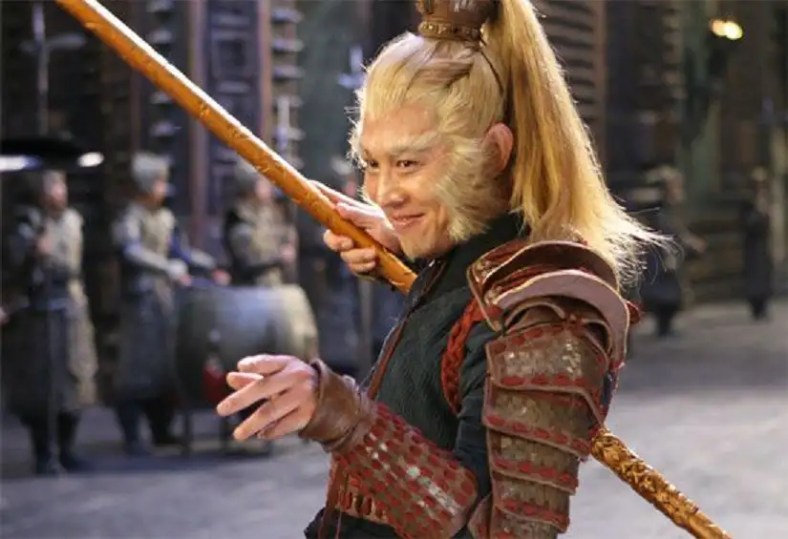
Dudbridge, G. (1970). The Hsi-Yu Chi: A Study of Antecedents to the Sixteenth-Century Chinese Novel. Cambridge: Cambridge Univ. Press.

Dubue, C., Allen, W. L., Maestripieri, D., & Higham, J. P. (2014). Is Male Rhesus Macaque Red Color Ornamentation Attractive to Females? Behavioral Ecology and Sociobiology 68(7), 1-10. Retrieved from https://www.researchgate.net/publication/262066733_Is_male_rhesus_macaque_red_color_ornamentation_attractive_to_females

Ecke, G., & Demiéville, P. (1935). The Twin Pagodas of Zayton: A Study of the Later Buddhist Sculpture in China. Cambridge, Mass: Harvard University Press.

Jiang, Y. (2005). The Great Ming Code / Da Ming Lu. University of Washington Press.

Wivell, C.S. (1994). The Story of how the Monk Tripitaka of the Great Country of T’ang Brought Back the Sūtras. In V. H. Mair (Ed.), The Columbia Anthology of Traditional Chinese Literature (pp. 1181-1207). New York: Columbia University Press.

Wu, C., & Yu, A. C. (2012). The Journey to the West (Vols. 1-4) (Rev. ed.). Chicago, Illinois: University of Chicago Press.