Sun Wukong’s Curlicue-Style Headband

Last updated: 07-25-2022

My previous article on the origin of Sun Wukong’s golden fillet describes how various forms of media portray him wearing three different styles: 1) a band with blunt ends that meet in the middle of the forehead and curl upwards like scowling eyebrows; 2) a band adorned with an upturned crescent moon shape in the center; and 3) a simple band devoid of decoration (fig. 1). Here, I want to speculate on the origin of the first style, what I call the “curlicue-style headband.”

Fig. 1 – (Left) Style 1 – From the comedy A Chinese Odyssey Part Two: Cinderella (1995). (Center) Style 2 – From the famous 1986 TV show. (Right) Style 3 – From the 2011 TV show (larger version).

Table of Contents

1. The Kaiyuan Temple Carving

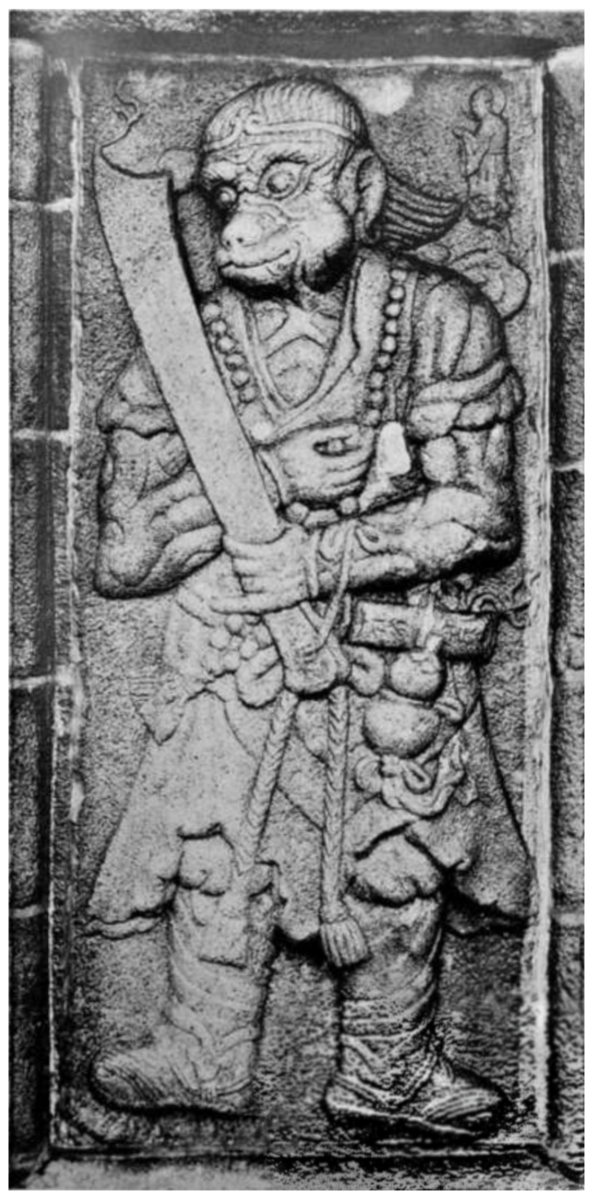
The oldest example of Sun Wukong wearing the curlicue style headband that I am aware of is a nearly life size stone carving from the Western pagoda of Kaiyuan Temple erected in 1237 CE. He is depicted as a muscular, monkey-headed warrior wearing a circlet, earrings, bracelets, a rosary, arm bangles, and anklets (all prescribed ritual items), as well as a monk’s robe and sandals. He wields a broadsword in one hand, while the other thumbs the rosary at his chest. At his waist hangs a calabash gourd and a sutra scroll (fig. 2). Behind his left shoulder can be seen Xuanzang (a.k.a. Tripitaka) ascending to heaven on a cloud, having won a place in paradise thanks to the protection of our hero. In short, Wukong is portrayed as a guardian deity. The significance of this will become clear below.

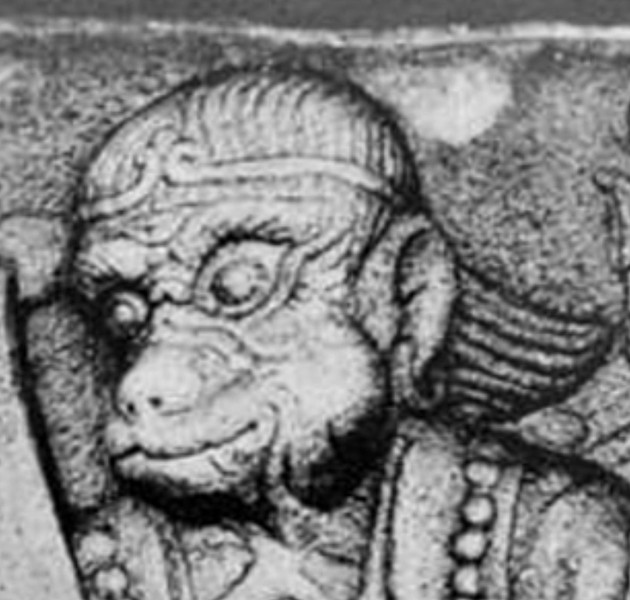
The carving’s headband has a gentle double curlicue topped with a wedge shape (fig. 3). This design appears in Daoist art from the same period.

Fig. 2 – The Kaiyuan Temple pagoda carving (1237) (larger version). Fig. 3 – Detail of the headband (larger version).

2. The Ink Treasure of Wu Daozi

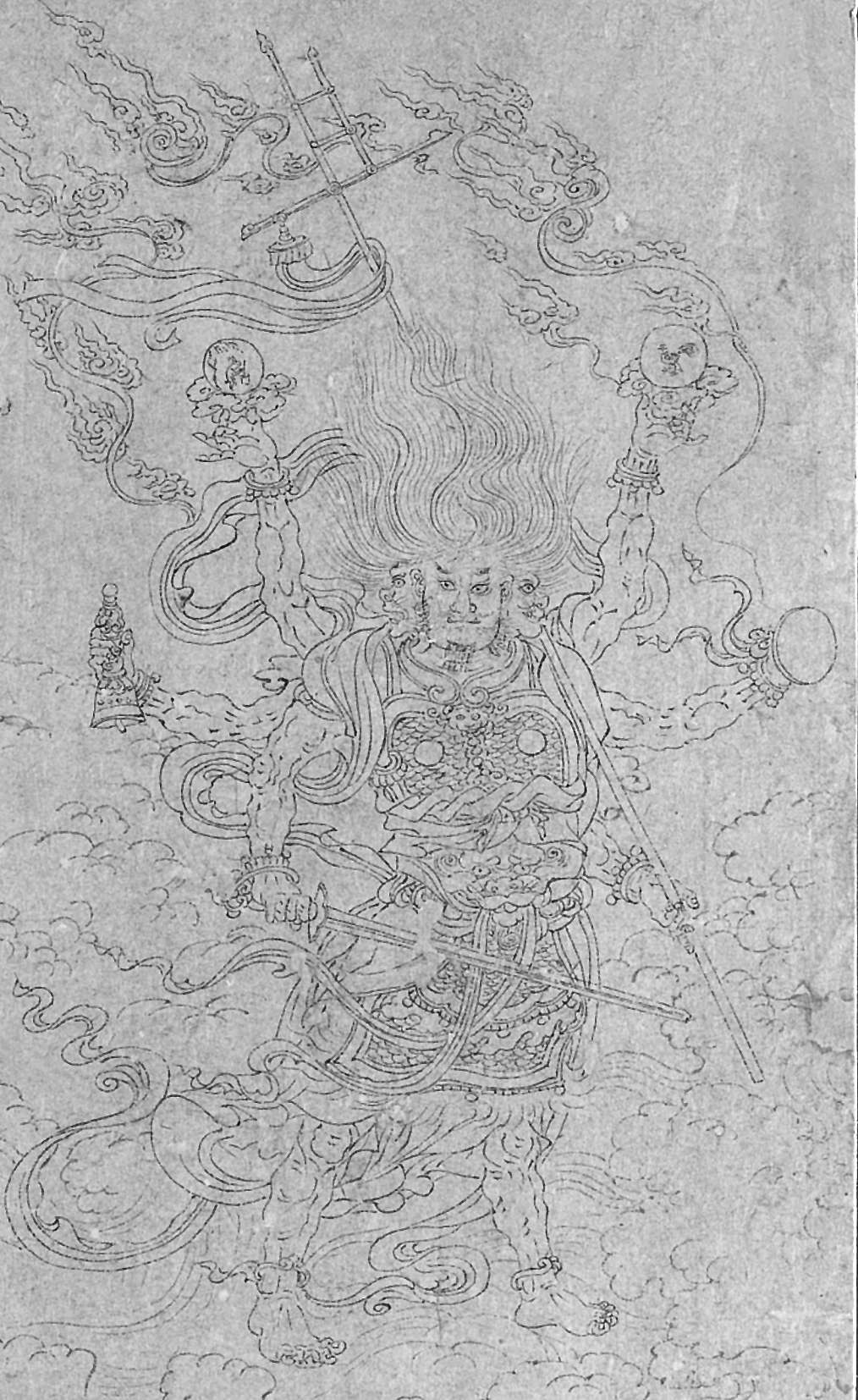
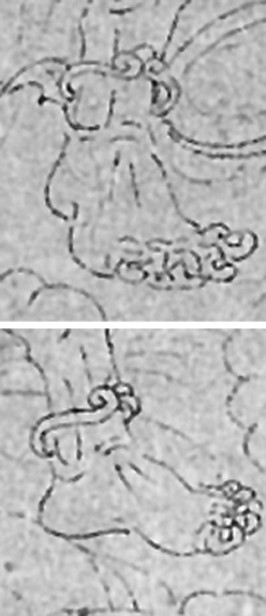
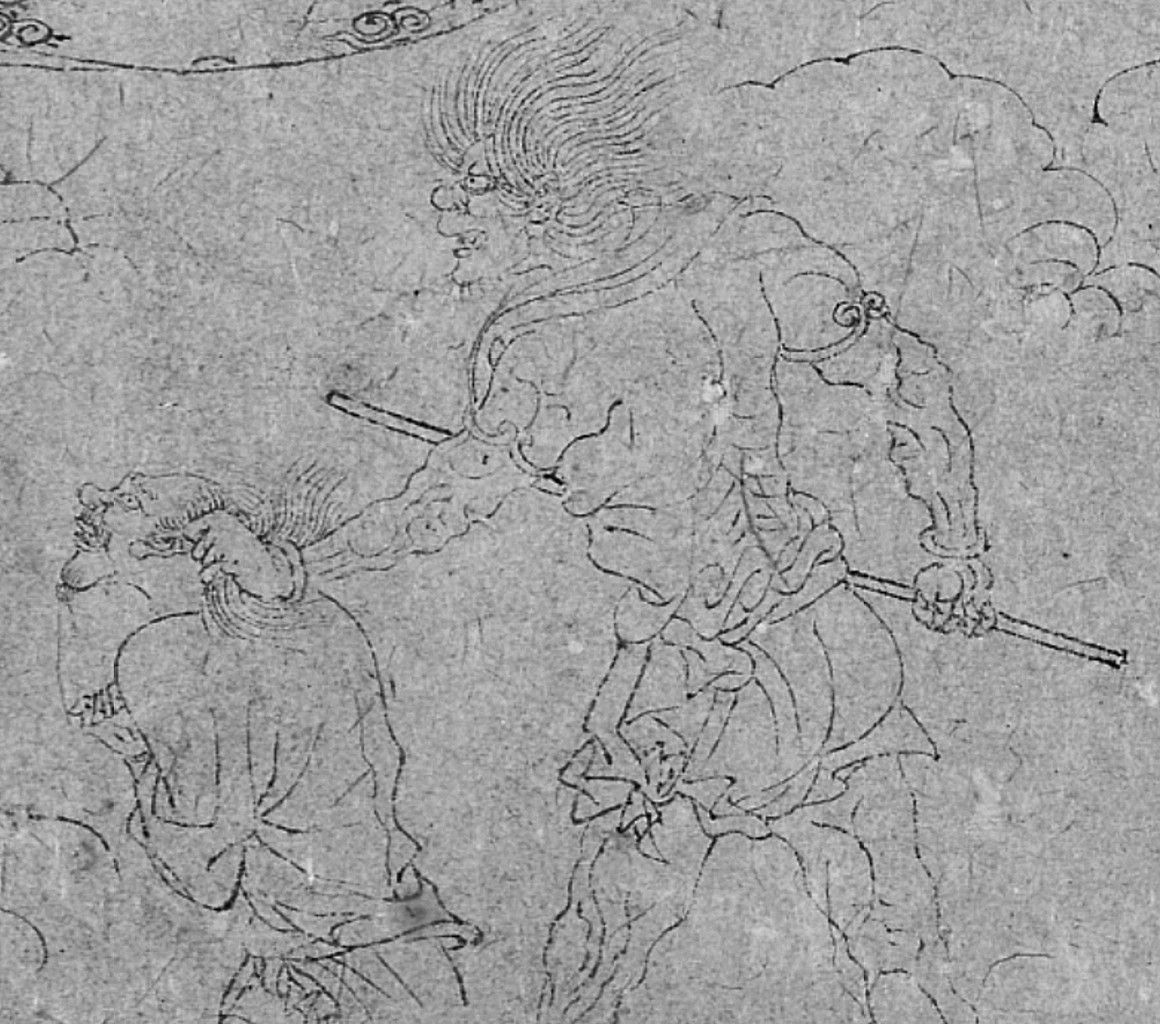
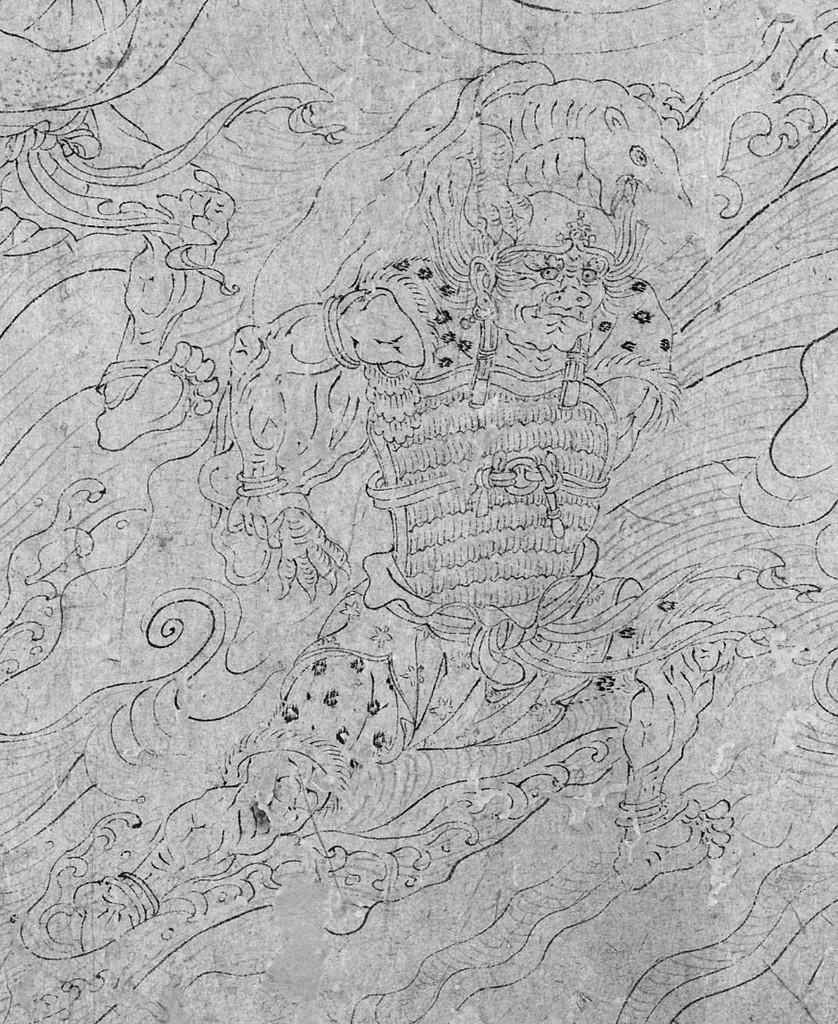
The Ink Treasure of Wu Daozi (Daozi mobao, 道子墨寶) is a collection of 50 ink drawings of the Daoist pantheon attributed to the noted 8th-century artist Wu Daozi but likely produced during the 13th century. It features many protector/wrathful deities wearing body adornments with this curlicue pattern (with or without the added wedge). There are too many examples to post, so I will choose just three (Fig. 4⁠–⁠9). Please note that, with the exception of the headband and rosary, these figures are wearing the same esoteric ritual items as Monkey (i.e. earrings, bracelets, arm bangles, and anklets).

This shows a clear connection between body adornments with the curlicue pattern and guardian deities.

Fig. 4 – The esoteric protector deity Marshal of Heavenly Reeds, a.k.a. Zhu Bajie’s previous incarnation (larger version). Fig. 5 – Detail of the anklets on his feet (larger version). Note that Heavenly Reed’s necklace also features the curlicue pattern. Fig. 6 – A demonic guardian detaining a soul undergoing judgement in hell (larger version). Fig. 7 – Detail of the bangles on his arms (larger version). Fig. 8 – One of Lord Erlang‘s demonic soldiers helping to clear animal spirits (in this case a turtle) from a mountain river (larger version). Fig. 9 – Detail of his ornate headband with spherical elements, giving it a floral quality (larger version). The images have been enhanced slightly for clarity.

3. The Possible Origin of the Pattern

The Ink Treasure of Wu Daozi shows several generals, officials, and guardians wearing headgear with lingzhi mushrooms (靈芝) (fig. 10⁠–⁠13), a real world fungi shaped like a rounded heart with a lacquered reddish-brown appearance (fig. 14). Also known as ruyi (如意, “as-you-wish”)—yes, the same as Wukong’s staff—the mushroom is associated with immortality and magic wish fulfillment in Buddho-Daoist culture. The ruyi pattern (ruyi wen, 如意紋) is a common motif in Chinese art, lining vases, topping S-shaped scepters, appearing as flourishes on traditional style rooftops, repeating endlessly on extravagant silken textiles, etc. (fig. 15⁠–⁠17). It has a familiar double curlicue swirl that reminds one of Monkey’s headband (fig. 18).

Given the fungi’s high standing in religious culture, I could see the lingzhi/ruyi‘s curlicue pattern being associated with the ritual garb of guardian deities since they are the front line of defense against evil influences.

Fig. 10 – A sword bearer (larger version). Fig. 11 – Lord Erlang overseeing his demonic soldiers clearing the mountain and river of animal spirits (larger version). Fig. 12 – Detail of his helmet (larger version). Fig. 13 – One of Erlang’s soldiers driving out animal spirits with fire (larger version). Fig. 14 – A lingzhi mushroom (larger version). Fig. 15 – The Bodhisattva Guanyin holding a ruyi scepter (larger version). Fig. 16 – A marvelous Qianlong-era celadon glaze vase with a ruyi shape (larger version). Note the pattern repeating on the lid and base. Image found here. Fig. 17 – The Ruyi Gate in the Forbidden City. Note the Ruyi elements on the roof (larger version here). Fig. 18 – A comparison of a ruyi pattern and Sun Wukong’s golden headband (larger version).


4. Updates

Update: 01-23-22

I’ve written an article suggesting a mantra for the secret spell that causes the golden fillet to tighten.

The Tightening Spell of Sun Wukong’s Golden Headband


Update: 07-25-22

I’ve written an article that explains the origins of the “crescent-style” headband.

The Monkey King’s Crescent-Style Headband

Archive # 12 – The Origin of Sun Wukong’s 72 Transformations

Last updated: 06-12-22

Upon Sun Wukong achieving immortality, his Buddho-Daoist master, Patriarch Subodhi, warns him of three calamities sent by heaven to kill those who defy their fate and attain eternal life. The Sage then offers to teach Monkey one of two forms of transformation in order to avoid this outcome by living in hiding. [1] The first form, called the “Multitude of the Heavenly Ladle” (Tiangang shu, 天罡數), contains thirty-six changes, while the second, the “Multitude of Earthly Fiends” (Disha shu, 地煞數), contains seventy-two. Our hero chooses the latter and quickly masters a set of secret oral formulas (koujue, 口訣). This becomes one of his signature abilities used throughout the narrative. Sun’s most famous use of the skill appears in chapter six when he battles Lord Erlang, a divine demon queller and fellow master of transformations (video 1).

Video 1 – Sun’s battle with Lord Erlang. From the great animated Classic Havoc in Heaven (1965).

Table of Contents

1. Connection to Chinese Astrology and Literature

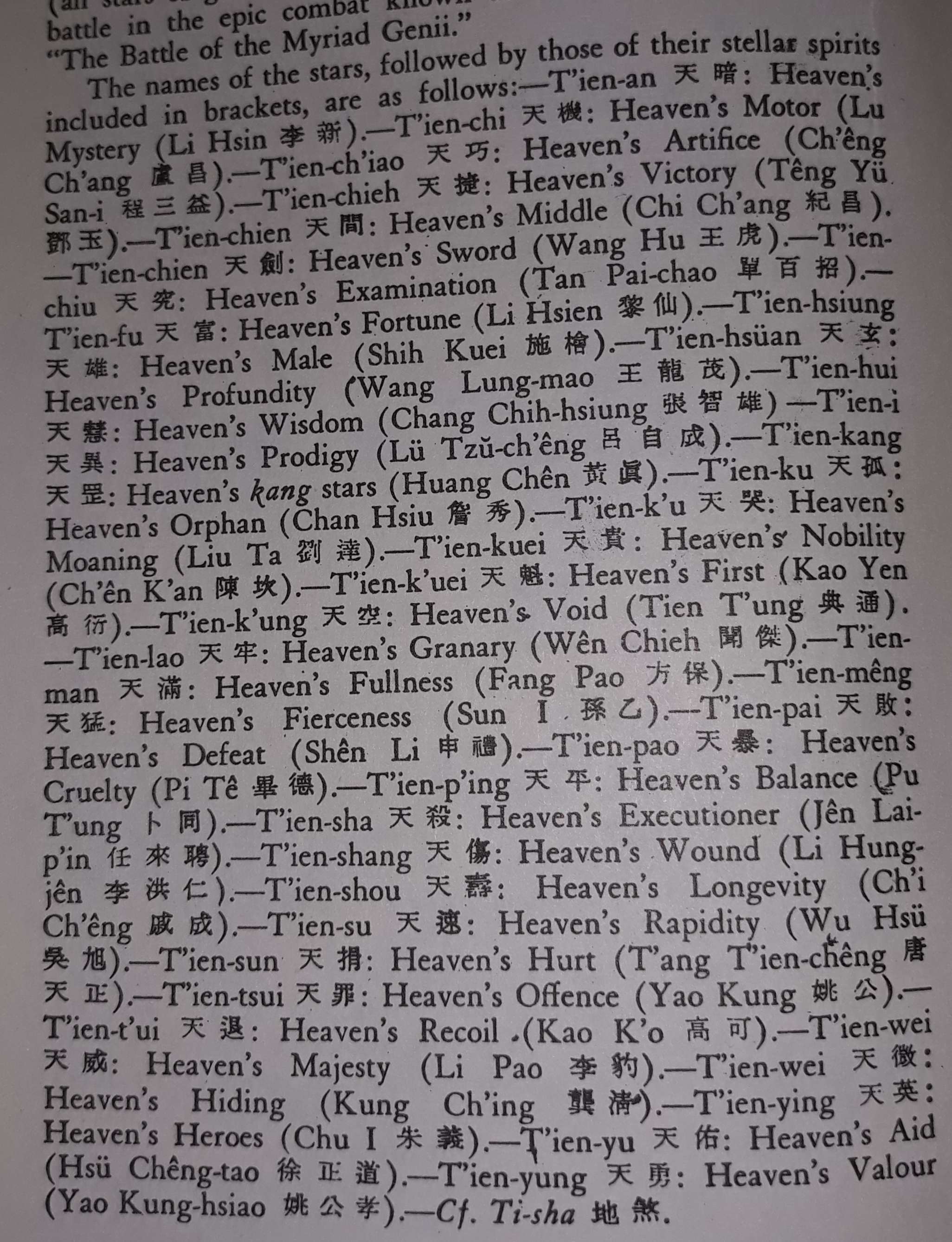
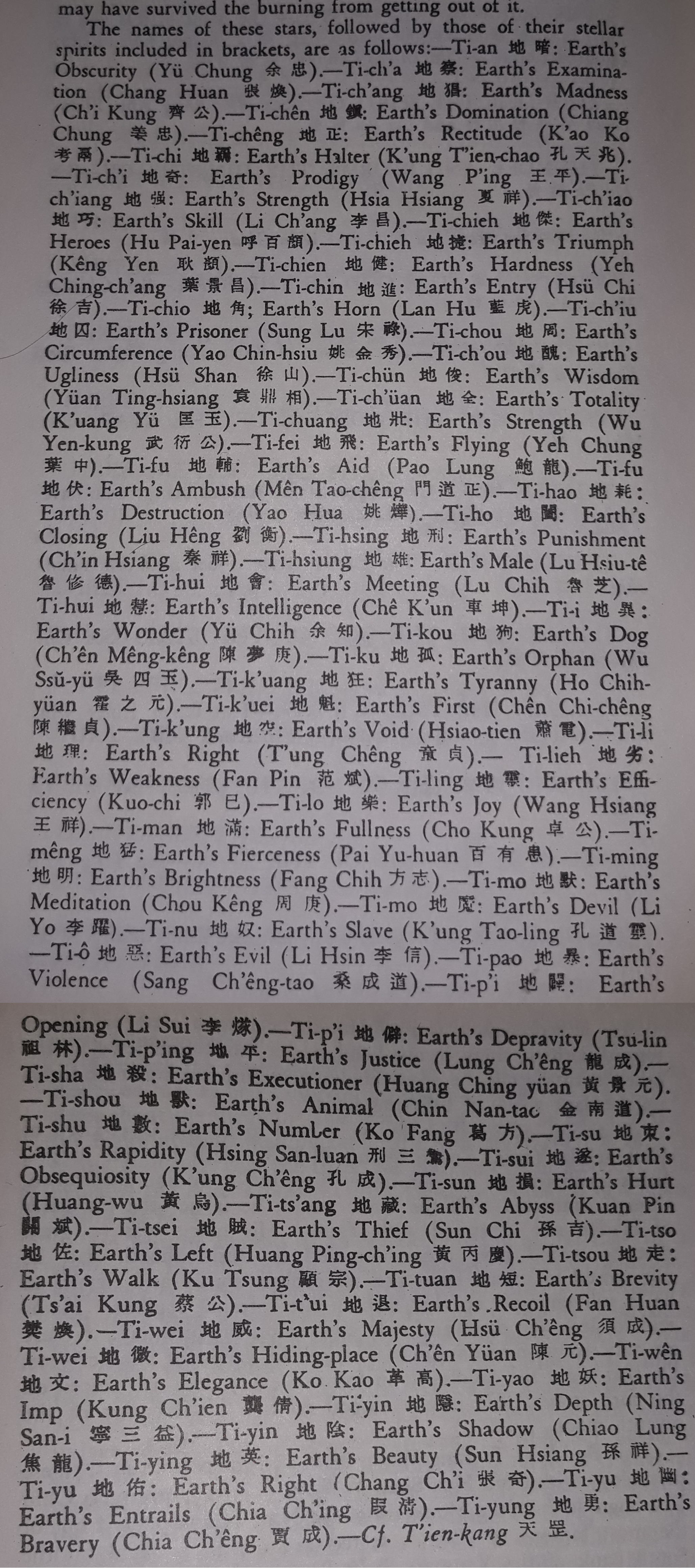
The names of the two forms of transformation that Subodhi offers to teach Monkey can be traced to Chinese astrology. The “Heavenly Ladle” (Tiangang, 天罡; i.e. the Big Dipper) is associated in some traditions with thirty-six stars (fig. 1). Regarding the origin of these stellar bodies, Werner (1932/1969) explains: “The gods of these stars (all stars of good omen) are all heroes who fell on the field of battle in the epic combat known as Wan Xian Zhen 萬仙陣, “The Battle of the Myriad Genii [or Immortals]” (p. 506). This is, of course, a reference to a famous military trap appearing in the Chinese classic Investiture of the Gods (Fengshen yanyi, 封神演義, c. 1620).

Sun Wukong Transformation - 36 Heavenly Ladle Stars - small

Fig. 1 – A list of the thirty-six Heavenly Ladle stars (larger version). Photograph of Werner, 1932/1969, p. 506. Apologies for not having access to a scanner at this time. 

Furthermore, he writes that the “Earthly Fiends” (Disha, 地煞) are:

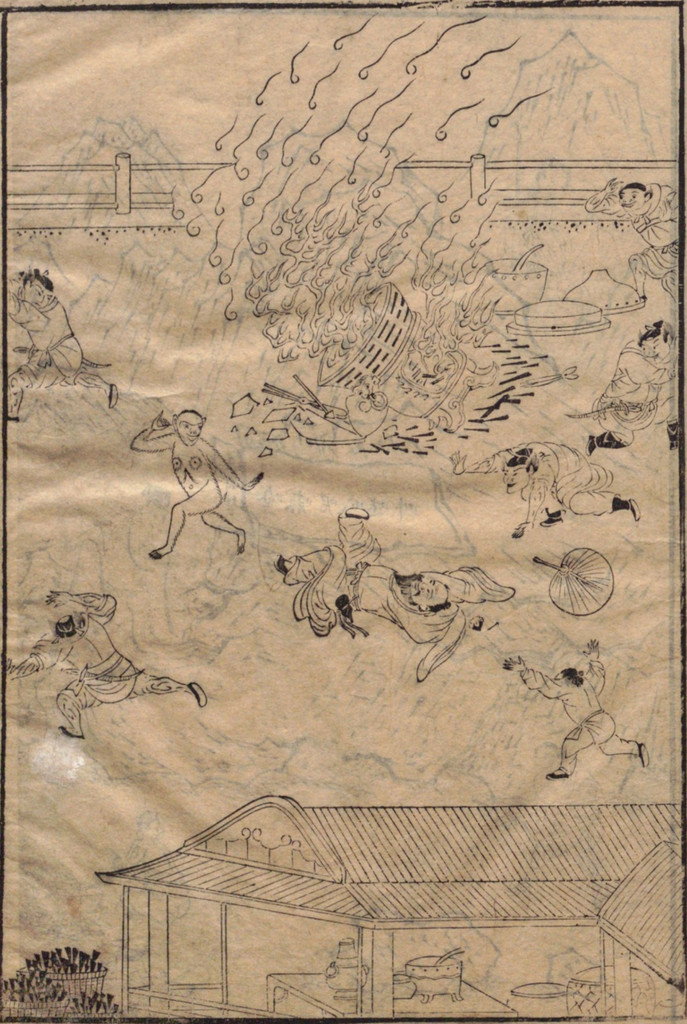
[S]eventy-two stars [fig. 2] of evil influence, opposed to the Tiangang. The wicked genii of these stars are cast out and slain by tongzi 童子 magicians [i.e. spirit mediums], who impale them on forks and shut them up in earthen jars, then take them to waste lands, throw them into fires, and surround the spot with a circle of lime, which is supposed to prevent any spirit which may have survived the burning from getting out of it (Werner, 1932/1969, p. 496). [2]

Sun Wukong Transformation - 72 Earthly Fiend Stars - small

Fig. 2 – A list of the seventy-two Earthly Fiend stars (larger version). Photographs of Werner, 1932/1969, pp. 496-497.

Additionally, the Earthly Fiends are considered the “enemies of man, and causes of all diseases and ailments” (Doré & Kennelly, 1916, p. xviii). Several Buddho-Daoist folk talismans exist to ward afflictions caused by the Fiends. One such Buddhist talisman said to cure the “one hundred ailments” even invokes the thirty-six Heavenly Ladle stars to aid in the conquering of the seventy-two demons:

An order is hereby made by the “Ministry of the Thunderbolt”, commanding in the name of the “three religions” that the auspicious stellar gods, Tiangang 天罡, reduce to order the maleficent demons, Disha 地煞, who have caused this disease. The charm must also repress these malignant beings and expel them forthwith (fig.3) (Doré & Kennelly, 1916, p. 312).

Di-sha talisman spell #2- small

Fig. 3 – A reproduction of the illness-curing Buddhist Talisman (larger version).

It’s interesting that Sun Wukong chooses the transformation method centered around stars of evil influence and later becomes a demon who challenges heaven. [3] Good fodder for fan fiction, no?

When these dichotomous stellar bodies were first acknowledged isn’t exactly clear, [4] but the Heavenly Ladle stars go back to at least the mid-13th century as they are mentioned in the Old Incidents in the Xuanhe Period of the Great Song Dynasty (Da Song Xuanhe Yishi大宋宣和遺事), a storytelling prompt of the late-Song to early-Yuan. It contains the earliest stories associated with the Water Margin (Shuihu zhuan, 水滸傳, c. 1400), a Chinese classic that predates Journey to the West. The one hundred and eight heroes of this novel are famous for being reincarnations of the Heavenly Ladle and Earthly Fiend stars, a fact revealed in chapter seventy-one when a heaven-sent stone slab is found to list their human names along with the corresponding stellar titles. The long association of the stars with the hugely popular Water Margin novel, therefore, may have inspired the names for the techniques taught by Subodhi in Journey to the West.

2. Ties to Daoist Practices

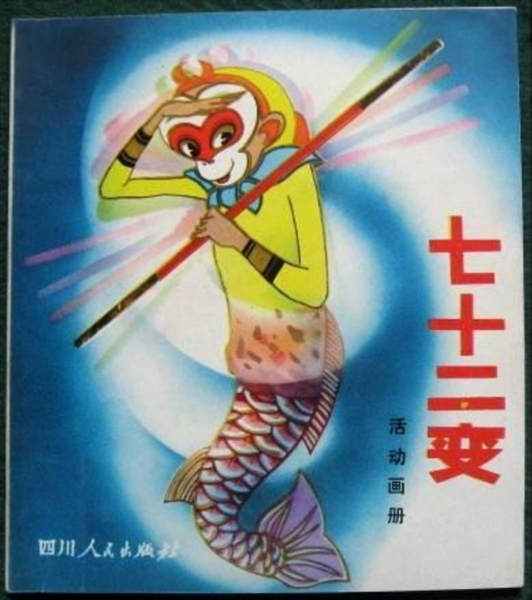
Robinet (1979) expertly explains that transformation (bianhua, 變化), or “metamorphosis” as she calls it, is central to Daoism. Gods and Saints are portrayed in Daoist literature as being in constant flux, changing with the seasons, taking on different guises and titles, disappearing and reappearing, never remaining the same, thereby living eternally. Daoists and magicians achieve metamorphosis through external and internal alchemical processes, the former involving the ingestion of drugs and talismans and the latter via mental exercises. Those who succeed in their practice can divide themselves endlessly; create rivers, mountains, and forests from meager samples of water, earth, and seeds; and most importantly, change their form into anything (fig. 4), including the five elements, dragons, clouds, rays of light, or even celestial bodies like the sun and moon.

72 Transformations Childrens Book - small

Fig. 4 – The cover of a vintage children’s flip book about Monkey’s transformations (larger version). Here he is seen changing into a fish.

Interestingly, transformations could be used to live in hiding, much like originally intended by Subodhi in Journey to the West. Adepts still questing for immortality could magically transform a sword, staff, or slipper into their deceased body, thereby faking death and escaping elsewhere to find a method leading to eternal life. (Often times, those who took this route assumed a new identity to avoid heaven’s gaze (Campany, 2005)). Additionally, sages are said to use their powers to hide in the earth or in the light of the sun, moon, and stars. One source mentions adepts hiding by scattering their shadow and transforming it into seventy-two types of light. In a related book chapter, Robinet (1993) notes that this number “alludes to [Laozi’s] seventy-two supernatural marks” (clearly borrowing from the Buddhist Mahapurusa laksana) (p. 166). This is fascinating as it shows that there is precedent for seventy-two transformations in Daoism.

I have archived the wonderful paper on metamorphosis cited above. It can be read here:

Click to access robinet-metamorphosis.pdf

Disclaimer

This has been posted for educational purposes. No malicious copyright infringement is intended. Please support the official release.


3. Update

Update: 06-12-22

I recently posted an in-depth article about the Patriarch Subodhi in which I reveal information about the additional benefits of the 72 Transformations. Anyone involved in any upcoming “What if” battles involving the Monkey King (COUGH, COUGH!) would do well to take note of this information.

Subodhi teaches this skill to Monkey with the expressed purpose of helping him hide from three calamities of cosmic lightning, fire, and wind sent by heaven to destroy immortals for defying fate and achieving eternal life. But beyond the power of metamorphosis, the novel implies that the ability also grants the user multiple lives (similar to a video game), which might serve as a buffer against the calamities. For example, in chapter 41, after Sun passes out from Red Boy‘s fiery attack, Zhu Bajie reassures everyone by saying: “If he is capable of seventy-two transformations, he has seventy-two lives” (Wu & Yu, 2012, vol. 2, p. 232). Also, in chapter 46, Monkey magically regrows his head after being non-fatally beheaded in a contest of magical skillSha Wujing remarks: “If he knows seventy-two ways of transformation, … he may have altogether seventy-two heads!” (Wu & Yu, 2012, vol. 2, p. 308). [5] In addition, while not directly related to the primate hero, the Bull Demon King is said in chapter 61 to also know the 72 changes (Wu & Yu, 2012, vol. 3, p. 148). He uses the extra lives to survive being beheaded by Prince Nezha a number of times:

[Nezha] leaped onto the bull’s back and brought his monster-cleaving sword down on the bull’s neck: the bull was beheaded at once. Putting away his scimitar, the devaraja was about to greet [Sun Wukong] when another head emerged from the torso of the bull, his mouth belching black air and his eyes beaming golden rays. [Nezha] lifted his sword once more and cut off the bull’s head; as soon as it dropped to the ground, another head came out. It went on like this more than ten times. At last, [Nezha] took out his fiery wheel and hung it on the Bull’s horn. The wheel at once started a great blaze of true immortal fire, which burned so fiercely that the bull began to growl and roar madly, shaking his head and wagging his tail (Wu & Yu, vol. 3, p. 160).

Notes:

1) It should be noted that the calamities are sent every five hundred years. Sun never has to live in hiding, though, as he is trapped under Five Elements Mountain upon the five hundredth anniversary of his immortality. (He was almost 350 years old prior to taking up spiritual cultivation.) And he achieves Buddhahood prior to reaching the one thousandth year of his immortality, so he never has to guard against subsequent calamities.

2) I’ve previously mentioned a similar ritual in the first section of this article.

3) Conversely, Zhu Bajie is shown capable of thirty-six transformations (Wu & Yu, 2012, vol 2, p. 328, for example), meaning that he studied the method associated with the stars of good omens. And, of course, we know his sordid story …

4) Though, in my opinion, the thirty-six stars are likely based on the thirty-six generals led by the stellar exorcist, Marshal Tianpeng (天蓬, i.e. Zhu Bajie’s former incarnation), who is himself one of the nine stars of the Big Dipper. The Marshal and his generals appear in the liturgy of the Song-era “Correct Method of the Celestial Heart” (Tianxin zhengfa, 天心正法) exorcist tradition (Anderson, 2008).

5) Thank you to Irwen Wong of the Journey to the West Library blog for bringing these examples to my attention.

Sources:

Anderson, P. (2008) Tianxin zhengfa In F. Pregadio (ed.), The encyclopedia of Taoism: Vol 1-2 (pp. 989-993). Longdon: Routledge.

Campany, R. (2005). Living off the Books: Fifty Ways to Dodge Ming 命 [Preallotted Lifespan] in Early Medieval China In C. Lupke (Ed.), The Magnitude of Ming: Command, Allotment, and Fate in Chinese Culture (pp. 129-150). University of Hawaii Press.

Doré, H., & Kennelly, M. (1916). Researches into Chinese superstitions: Vol. 3 – Superstitious practices. Shanghai: T’usewei Printing Press. Retrieved from https://ia800709.us.archive.org/2/items/researchesintoch03dor/researchesintoch03dor.pdf

Robinet, I. (1979). Metamorphosis and deliverance from the corpse in Taoism. History of Religions, 19(1), 37-70.

Robinet, I. (1993). Taoist meditation: The Mao-shan tradition of Great Purity. Albany: State University of New York Press.

E. T. C. Werner (1969). A dictionary of Chinese mythology. New York: The Julian Press. (Original work published 1932)

Wu, C., & Yu, A. C. (2012). The journey to the West: Vol. 1-4. Chicago, Illinois: University of Chicago Press.

The Monkey King’s Cosmic Body

Last updated: 04-04-2024

Sun Wukong is known for his limitless shape-changing powers, capable of taking the form of anything from gods, monsters, and humans to animals, insects, and even inanimate objects like buildings. But his most powerful transformation, that of a cosmic giant, is displayed only three times in the novel. It is used mostly in defense against other powerful characters, namely the god Erlang and the Bull Demon King. In this article, I will introduce the ancient astral-geographical term used to describe this phenomenon, associate the transformation with a divine giant from Chinese mythology, and explore possible ties to Hindu mythology.

Table of Contents

1. Episodes from the Novel

1.1. Chapter 3

The first instance takes place in chapter three after Monkey returns from the Dragon King’s undersea palace with his new weapon. The form is used to show off his magical abilities for his children (fig. 1):

Grasping the treasure [iron staff] in his hands, he began to perform the magic of cosmic imitation (emphasis added). Bending over, he cried, “Grow!” and at once grew to be ten thousand-zhang [104,300 ft or 31,800 m]-tall, [1] with a head like the Tai Mountain and a chest like a rugged peak, eyes like lightning and a mouth like a blood bowl, and teeth like swords and halberds. The rod in his hands was of such a size that its top reached the thirty-third Heaven and its bottom the eighteenth layer of Hell (based on Wu & Yu, 2012, vol. 1, p. 138). 

將寶貝揝在手中,使一個法天像地的神通,把腰一躬,叫聲:「長!」他就長的高萬丈,頭如泰山,腰如峻嶺,眼如閃電,口似血盆,牙如劍戟;手中那棒,上抵三十三天,下至十八層地獄。

Fig. 1 – Monkey performs the cosmic transformation for his children (larger version). A page from Chen Huiguan’s Newly Illustrated and Complete Journey to the West (Chen Huiguan xinhui quanben xiyouji, 陈惠冠新绘全本西游记, 2001). Image found here.

1.2. Chapter 6

The second takes place in chapter six during his battle with Erlang Shen. The form is used this time in response to the god’s own cosmic transformation.

The Immortal Master [Erlang] fought the Great Sage for more than three hundred rounds, but the result could still not be determined. The Immortal Master, therefore, summoned all of his magic powers; with a shake he made his body a ten thousand zhang tall. Holding with both hands the divine lance of three points and two blades like the peaks that cap the Hua Mountain, this green-faced, sabre-toothed figure with scarlet hair aimed a violent blow at the head of the Great Sage. But the Great Sage also exerted his magical power and changed himself into a figure having the features and height of Erlang. He wielded a compliant golden-hooped rod that resembled the Heaven-supporting pillar on top of Mount Kunlun to oppose the god Erlang (based on Wu & Yu, 2012, vol. 1, p. 181).

真君與大聖鬥經三百餘合,不知勝負。那真君抖擻神威,搖身一變,變得身高萬丈,兩隻手舉著三尖兩刃神鋒,好便似華山頂上之峰,青臉獠牙,朱紅頭髮,惡狠狠,望大聖著頭就砍。這大聖也使神通,變得與二郎身軀一樣,嘴臉一般,舉一條如意金箍棒,卻就是崑崙頂上擎天之柱,抵住二郎神。

[…]

Now we were telling you about the Immortal Master and the Great Sage, who had changed themselves into forms which imitated Heaven and Earth (emphasis added) (based on Wu & Yu, 2012, vol. 1, p. 182).

卻說真君與大聖變做法天象地的規模

1.3. Chapter 61

The third takes place in chapter sixty-one during Sun’s battle with the Bull Demon King (fig. 2). Again, the form is used in response to another powerful character’s transformation.

With a loud guffaw, the Bull King then revealed his original form of a gigantic white bull, with a head like a rugged mountain and eyes like bolts of lightning. The two horns were like two iron pagodas, and his teeth were like rows of sharp daggers. From head to toe, he measured more than ten thousand-plus zhang [10,430 ft or 3,179.06 m], while his height from hoof to neck was about eight hundred zhang [8,344 ft or 2,543.25 m]. [2]

“Wretched ape!” he roared at Pilgrim [Monkey]. “What will you do with me now?” Pilgrim also changed back to his true form; yanking out his golden-hooped rod, he bent his back and then straightened out, crying, “Grow!” At once he grew to a height of ten thousand zhang, with a head like Mount Tai, eyes like the sun and moon, a mouth like a bloody pound, and teeth like doors (based on Wu & Yu, 2012, vol. 3, p. 157).

牛王嘻嘻的笑了一笑,現出原身:一隻大白牛,頭如峻嶺,眼若閃光,兩隻角似兩座鐵塔,牙排利刃,連頭至尾有千餘丈長短,自蹄至背有八百丈高下。對行者高叫道:「潑猢猻!你如今將奈我何?」行者也就現了原身,抽出金箍棒來,把腰一躬,喝聲叫:「長!」長得身高萬丈,頭如泰山,眼如日月,口似血池,牙似門扇

[…]

[After Zhu Bajie returns from exterminating all of the demons in the Bull King’s cave] “You have achieved great merit, Worthy Brother,” said Pilgrim. “Congratulations! Old Monkey has waged in vain a contest of transformation with him [the Bull King], for I have not yet achieved victory. He finally changed into the biggest possible white bull, and therefore assumed the appearance that imitated Heaven and Earth” (emphasis added) (based on Wu & Yu, 2012, vol. 3, p. 158). 

行者道:「賢弟有功,可喜,可喜。老孫空與那老牛賭變化,未曾得勝。他變做無大不大的白牛,我變了法天象地的身量。

Fig. 2 – Monkey vs the Bull King, both in their cosmic transformations (larger version). An 1833 woodblock print by Yashima Gakutei. Photo by Prof. Vincent Durand-Dastès of the ‏National Institute for Oriental Languages and Civilizations. With permission. 

2. Ties to Ancient Chinese Astral-Geography and Mythology

The exact word used each time to describe Sun’s modus for attaining his cosmic form is Fatian Xiangdi (法天像(象)地), or the “method of modeling Heaven on Earth.” This is actually related to ancient Pre-Qin and Han concepts of astral-geography later used in the construction of imperial Chinese cities. The ancient Chinese viewed the heavens as a complex system of seven star units set in four cardinal sections, making up the Twenty-Eight Lunar Mansions, all of which enclosed and revolved around a central star ruled by one of two supreme gods, Shangdi or Taiyi. Known as the “Purple Palace Enclosure” (Ziweiyuan, 紫微垣), this bound star system was the heavenly abode from which the supreme god oversaw reality, while the surrounding stars represented his civil and military officials and even outlying areas, such as dwellings and a marketplace. The Chinese emperor, commonly called the Son of Heaven, was considered the earthly counterpart of the great god, serving as the mediator between the will of heaven and the needs of man. Therefore, architects often modeled imperial cities on these celestial patterns, placing the emperor at the center surrounded by outer layers of courts, residential quarters, markets, and streets (Chan, 2008, pp. 8-19).

The arcane-sounding Fatian Xiangdi term was no doubt chosen simply because Monkey’s magic body mirrors the vastness of the cosmos (both heaven and earth), not that it borrowed particular celestial patterns like earthly architects. Interestingly, though, legend states the ancient Yuan capital of Dadu was modeled on the magic body of the child god Prince Nezha, who also appears in Journey to the West. [3]

The novel likens aspects of Sun’s cosmic form to earthly features and celestial bodies. This resembles stories of the ancient god Pangu (盤古) (fig. 3), the first being born into primordial chaos who slaved to separate heaven from earth, cleaving one from the other and forcing them apart. Stevens (1997) writes this monumental task took its toll on the titan:

He died as the task was reaching a climax and his body became features of the Earth. His head became the mountains, his breath the wind and clouds; his voice became thunder, his left eye the sun and his right eye the moon, and his four limbs became the four quarters of the Earth. His blood ran as rivers, his veins and muscles were the strata of the rocks, and his flesh the soil. His skin sprouted and became vegetable patches, forests and paddy fields, while his bones and teeth became the minerals. His sweat became the rain and to complete creation humanity sprang from the parasites on his body (p. 54).

Monkey in a way becomes a living embodiment of the divine giant because he too is described as having a head like a mountain, eyes like the sun and moon, and a mouth like a large body of liquid, which also happens to be blood.

Fig. 3 – A modern (metal?) relief simultaneously symbolizing Pangu’s separation of heaven and earth and the decay of his body into earthly features and celestial bodies (larger version). Take note of the eye-like sun. Found on this news article about the god.

Giant characters were obviously not a new concept to Chinese literature by the Ming. An earlier example comes to us from The Story of How Tripitaka of the Great Tang Procures the Scriptures, the thirteenth-century precursor of Journey to the West. Chapter six sees Monkey transform his golden-ringed monk’s staff “into a gigantic Yakşa whose head touched the sky and whose feet straddled the earth. In his hands he grasped a demon-subduing cudgel. His body was blue as indigo, his hair red as cinnabar” (Wivell, 1994, p. 1189) (fig. 4). This line simultaneously predicts Sun’s goliath form and blunt weapon (that touches heaven and earth like the head and feet of the yaksha) and Erlang’s monstrous appearance (i.e. his green skin and red hair).

Fig. 4 – A guardian yaksha statue, Bangkok, Thailand (larger version). Take note of the large stature, blue skin, and club. Found on this article.

3. Possible Ties to Hindu Mythology

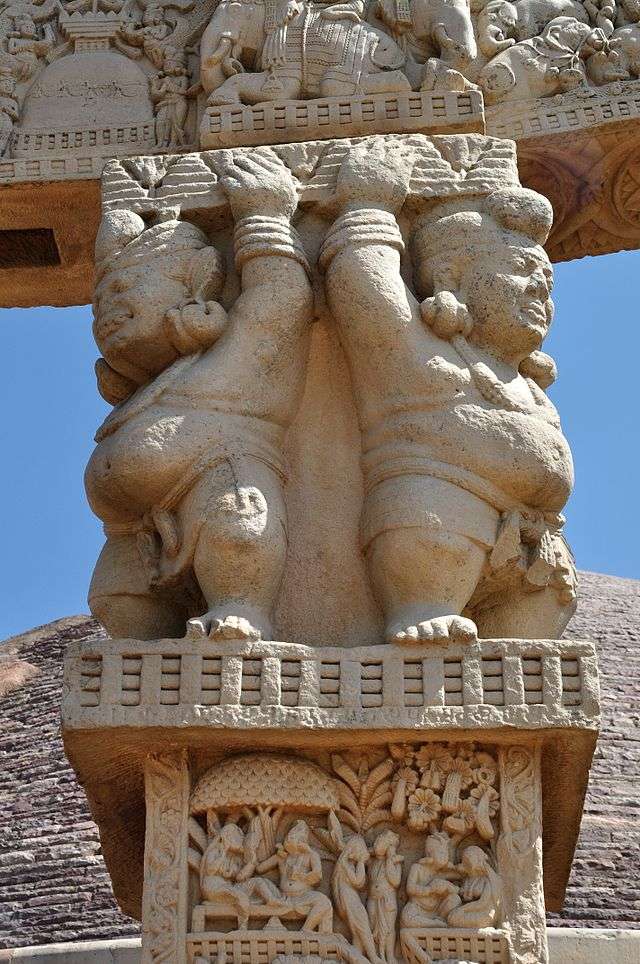
Yakşas or Yakshas (Ch: Yecha, 夜叉) appear in Hindu, Jain, and Buddhist scriptures as the assistants or protectors of divine beings. They are possessed of great magical powers and can do anything from flying to shape-changing (Dalal, 2014, p. 470; Buswell & Lopez, 2014, p. 1018). These nature spirits are often depicted in early religious art as portly dwarves (fig. 5), an element of iconography that they share with Vamana, the fifth avatar of the supreme deva Vishnu. This connection is important because the avatar is celebrated for his ability to eclipse the universe. According to Hindu mythology, Vishnu takes the form of the dwarf Brahmin when a benevolent asura named Mahabali wrestles control of the cosmos from the gods. Vamana visits the king during a great sacrifice, during which the asura grants gifts, and humbly requests only as much land as he can cover in three strides. But when his wish is granted, the deceptively small priest grows to cosmic proportions, “mightily waxing, swelling in every limb, with his first stride stepp[ing] beyond the sun and moon, with his second reach[ing] the limits of the universe, and with his third return[ing] to set his foot on the head of the conquered foe” (Zimmer & Campbell, 1992/1946, p. 132). With his feat (pun intended), Vishnu regains control of heaven (step one) and earth (step two), while simultaneously banishing the asura to the underworld (step three) (Dalal, 2014, p. 442).

Fig. 5 – A detail of chubby Yakshas from the western gateway of Stupa 1 at Sanchi (1st-cent.) (larger version). Image from here.

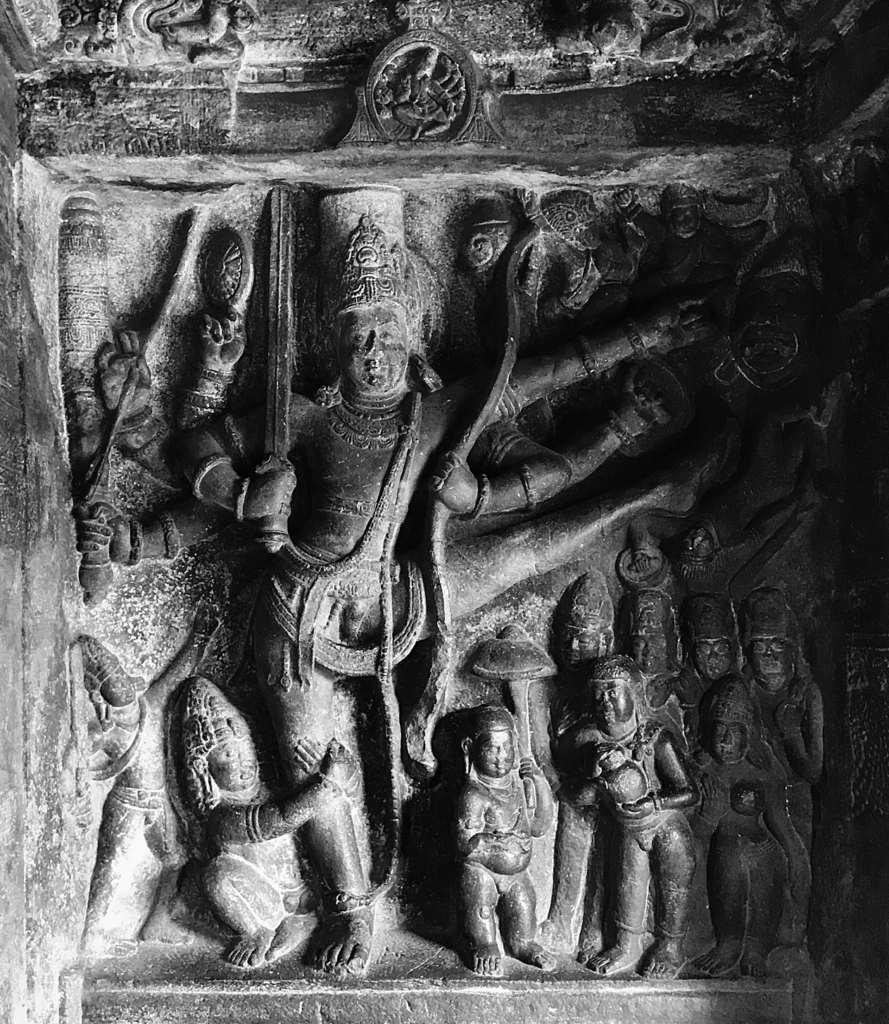
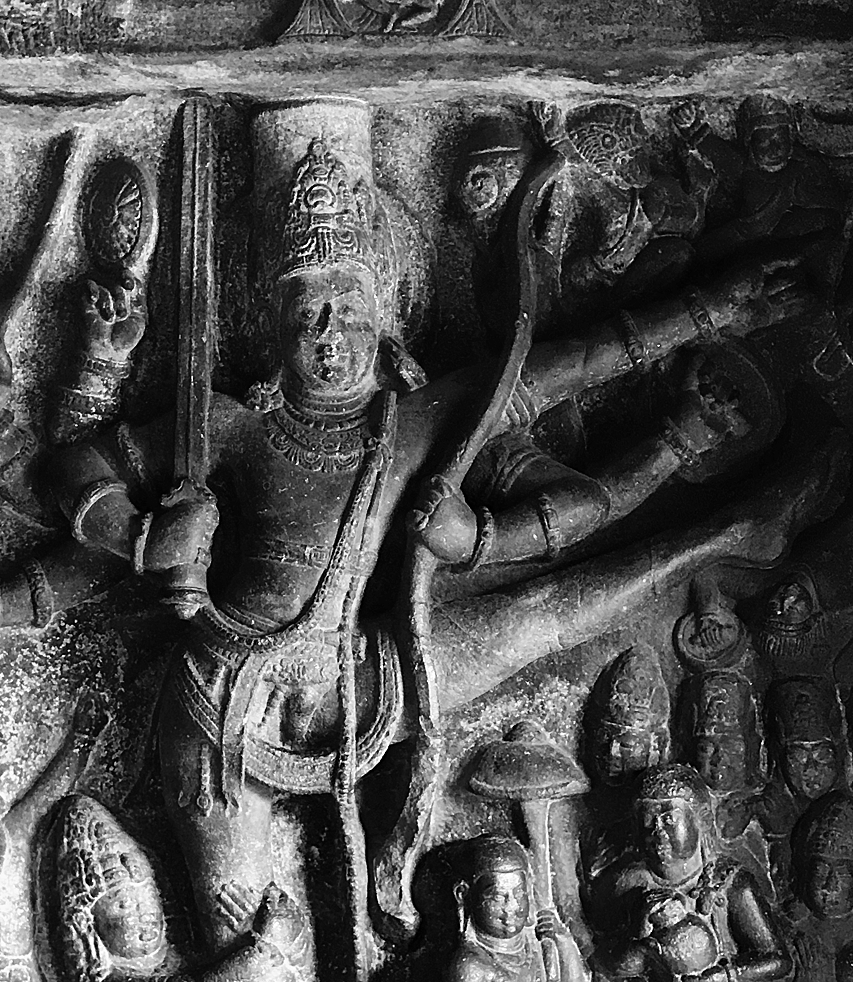
The noted art historian Heinrich Zimmer comments sculptures based on this story fall under a category of representationally kinetic art that he calls the “Phenomenon of Expanding Form” (Zimmer & Campbell, 1992/1946, p. 130). One cited example is the Trivikrama Vishnu (lit: “three steps” Vishnu), a sixth-century Badami cave number two relief (fig. 6) which presents a continuous narrative of the dwarf (fig. 7) growing to become the cosmic giant, the latter’s leg kicking high above his waist (fig. 8), symbolizing his mighty, universe-spanning strides. Though the piece is carved in stone, the dynamic nature of the composition gives it a feeling of swelling energy (Zimmer & Campbell, 1992/1946, p. 132).

The carving portrays the cosmic giant holding all manner of weapons, including a club, a sword, a bow, and a chakram, all of which are attributes of Vishnu (Dalal, 2014, p. 460).

badami vamana carving (total for blog)

Fig. 6 – The Trivikrama Vishnu relief carving of Vamana’s story, Badami cave number two (sixth-cent.) (larger version). Fig. 7 – A detail of the dwarf Brahmin holding a parasol (larger version). Fig. 8 – A detail of the cosmic giant holding celestial weapons and taking a supernaturally large stride (larger version). Adapted from this image.

The close association of the Yaksha and Vamana with a short, chubby body and shape-changing powers no doubt influenced the former to take on the latter’s ability to grow to huge proportions. In addition, after being absorbed into Buddhism, Yakshas are portrayed in scripture as divine warriors wielding clubs in defense of the dharma. Two prominent examples are Kubera (a.k.a. Vaisravana) and Vajrapani, both of whom are touted as the yaksha commander (Lutgendorf, 2007, p. 42; Buswell & Lopez, 2014, pp. 449 and 955). This surely influenced the later Chinese image of yakshas as club-wielding titans, such as the cited example from The Story. In turn, this and related material could have easily influenced the cosmic transformations of Monkey and other characters and their weapons from Journey to the West.

4. Conclusion

The novel describes Monkey taking on a giant cosmic form in chapters three, six, and sixty-one, the first time showing off his magic powers to his children and the second and third in response to the respective titanic transformations of Erlang and the Bull King. The magical spell used to achieve this form, titled Fatian Xiangdi (the “Method of modeling Heaven on Earth”), is based on ancient Pre-Qin and Han concepts of astral-geography later used in the construction of imperial Chinese cities. The idea of Sun’s body parts mirroring aspects of heaven and earth recalls the myth of the primordial god Pangu, whose body parts became the very building blocks of the cosmos after his death.

The cited episodes demonstrate that the characters involved transform both their bodies and weapons. Apart from being described as a 104,300-foot (31,800 m)-tall juggernaut with a head like Mt. Tai, Monkey’s staff is said to inhabit the upper and lowermost reaches of the universe (“its top reached the thirty-third Heaven and its bottom the eighteenth layer of Hell”) or that it resembles “the Heaven-supporting pillar on top of Mount Kunlun.” Likewise, Erlang’s three-pointed polearm is said to resemble “the peaks that cap the Hua Mountain.” Such transformations are predicted, for example, by an episode in the thirteenth-century precursor of Journey to the West in which Sun changes a monk’s staff into a gigantic Yaksha wielding a club.

While Yakshas are portrayed in early South Asian religious art as chubby dwarves, they most likely gained the ability to grow to enormous sizes thanks to iconographic similarities to Vamana, the fifth avatar of Vishnu famed for traversing the cosmos in three mighty steps. One sixth-century stone carving of the story portrays the dwarf-turned-cosmic giant wielding all sorts of celestial weapons. Additionally, Buddhist scriptures would come to portray yakshas as club-wielding warriors. Therefore, we can see how Monkey’s cosmic transformation could have ultimately been influenced by Hindu and Buddhist religious material.


5. Updates

Update: 10-17-21

Monkey also takes on his cosmic form in chapter 97. The episode calls it his “huge magic body” (da fa shen, 大法身). Read here for more information.

Watch Your Step: The Influence of Journey to the West on the “Ashiarai Yashiki” Yokai Story of Edo-Period Japan


Update: 08-06-22

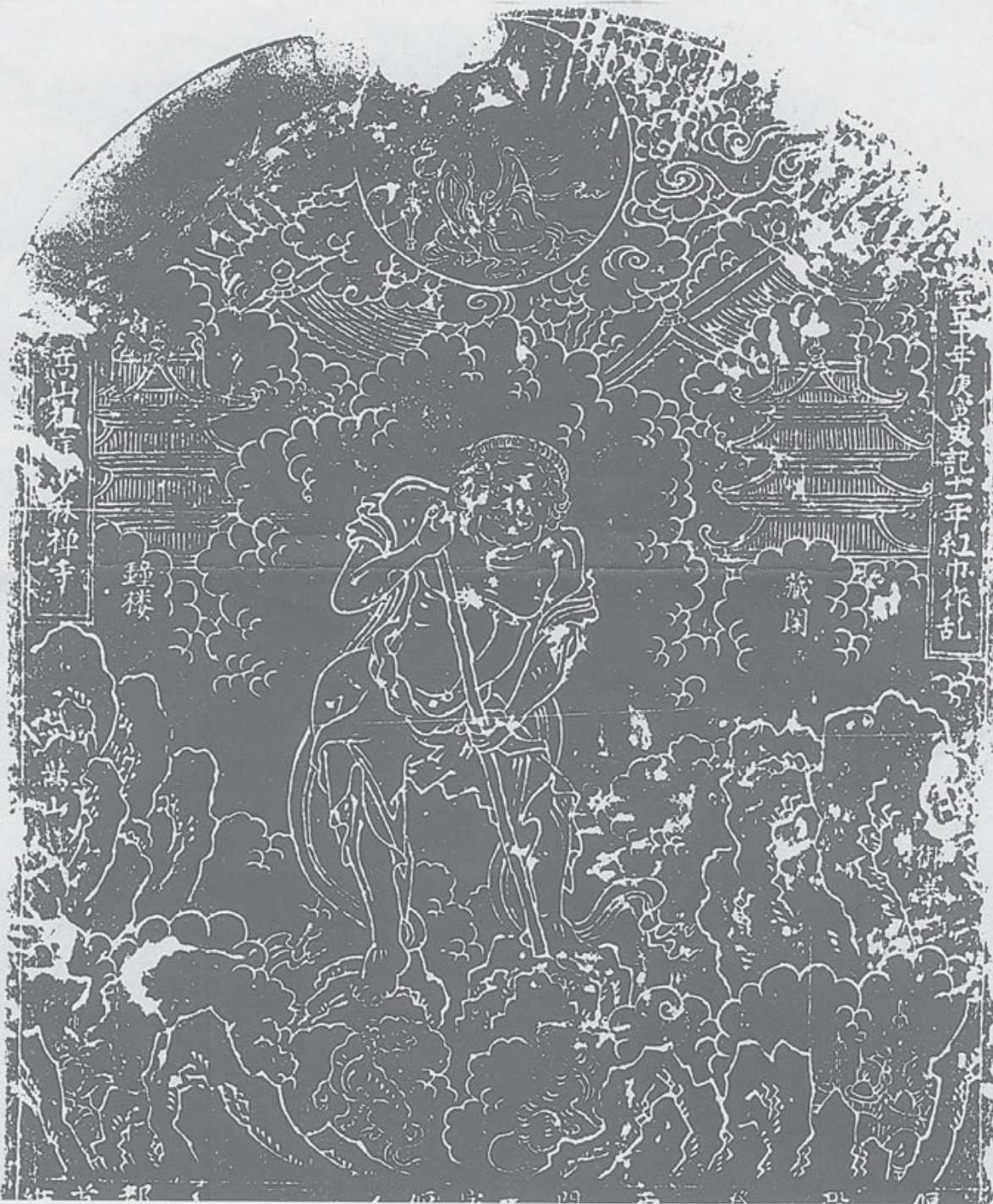
Sun Wukong’s cosmic body likely influenced Shaolin Monastery myth. The yaksha-bodhisattva Vajrapāni was historically worshiped as the progenitor of their famous staff method. A stele erected by Shaolin abbot Wenzai in 1517 shows that the deity’s vajra-club had been changed to a Chinese staff (fig. 9) (Shahar, 2008, p. 84). Vajrapāni’s Yaksha-like Nārāyana (Naluoyan(tian), 那羅延(天)) form was eventually equated with one of the four staff-wielding “Kimnara Kings” from the Lotus Sutra in 1575. His name was thus changed from Nārāyana to “Kimnara King” (Jinnaluo, 緊那羅) (Shahar, 2008, p. 87). One version of the story about his creation of the staff method takes place during the Yuan Dynasty‘s Red Turban Rebellion. Bandits lay siege to the monastery, but it is saved by a lowly kitchen worker wielding a long fire poker as a makeshift staff. He leaps into the oven and emerges as a monstrous giant tall enough to straddle both Mount Song and the imperial fort atop Mount Shaoshi, which are five miles (8.046 km) apart. The bandits flee when they behold this staff-wielding titan. The Shaolin monks later realize that the kitchen worker was none other than the Kimnara King in disguise (Shahar, 2008, pp. 87-88). Shahar (2008) suggests that mythical elements of the story were borrowed from the Monkey King’s adventures. He compares the worker’s transformation in the stove with Sun’s time in Laozi’s Eight Trigrams furnace (Bagua lu八卦爐), their use of the staff, and the fact that Monkey and his weapon can both grow to gigantic proportions (Shahar, 2008, p. 109). [4]

The aforementioned stele was erected in 1517, showing that Monkey’s cosmic body predates the standard 1592 edition of the novel.

Fig. 4 – The 1517 Shaolin stele showing a titanic Vajrapāni defending the monastery from rebels (larger version). From Shahar, 2008, p. 84.


Update: 04-04-24

In chapter 14, Sun Wukong lists a number of his powers, including the ability to grow as big as the cosmos:

“I, old Monkey, possess the ability to subdue dragons and tame tigers, and the power to overturn rivers and stir up oceans. I can look at a person’s countenance and discern his character; I can listen merely to sounds and discover the truth. If I want to be big, I can fill the universe; if I want to be small, I can be smaller than a piece of hair (emphasis added). In sum, I have boundless ways of transformation and incalculable means of becoming visible or invisible (Wu & Yu, 2012, vol. 1, p. 311).

我老孫頗有降龍伏虎的手段,翻江攪海的神通;見貌辨色,聆音察理;大之則量於宇宙,小之則攝於毫毛;變化無端,隱顯莫測

This might imply that the aforementioned “ten thousand zhang” (wanzhang, 萬丈; 104,300 ft or 31,800 m) number is instead meant to be a metaphor for a much larger height, one that would fill the universe.

Notes:

1) Here, Anthony C. Yu’s English translation says Monkey grows to be “ten thousand feet tall.” However, the original Chinese source reads “萬丈” (wanzhang), wan meaning 10,000 and zhang being a measure designating ten Chinese feet (10,000 x 10 = 100,000). Therefore, I have changed the source to read “ten thousand zhang.

2) Yu’s translation reads “eight hundred.” But, again, the original source is different. It reads “八百丈” (babai zhang), or 800 x 10 Chinese feet = 8,000. This makes more sense as he is said to be 10,000-plus feet long.

3) While the city is square, it has eleven gates, which legend states correspond to the three heads, six arms, and two legs of the god. For more information, see Chan (2008).

4) Yes, this information comes from Wikipedia, but I’m the one who originally added it under the screenname “Ghostexorcist.” See this edit history, for example.

Sources:

Chan, H. (2008). Legends of the Building of Old Peking. Seattle: University of Washington Press.

Dalal, R. (2014). Hinduism: An Alphabetical Guide. New Delhi, India: Penguin Books.

Lutgendorf, P. (2007). Hanuman’s Tale: The Messages of a Divine Monkey. Oxford: Oxford University Press.

Buswell, R., & Lopez, D. (2014). The Princeton Dictionary of Buddhism. Princeton University Press.

Shahar, M. (2008). The Shaolin Monastery: History, Religion, and the Chinese Martial Arts. Honolulu: University of Hawai’i Press.

Stevens, K. G. (1997). Chinese Gods: The Unseen World of Spirits and Demons. London: Collins & Brown.

Wivell, C.S. (1994). The Story of how the Monk Tripitaka of the Great Country of T’ang brought back the Sūtras. In Mair, Victor H. The Columbia Anthology of Traditional Chinese Literature (pp. 1181-1207). New York: Columbia University Press.

Wu, C., & Yu, A. C. (2012). The Journey to the West (Vols. 1-4) (Rev. ed.). Chicago, Illinois: University of Chicago Press.

Zimmer, H. R., & Campbell, J. (1992). Myths and Symbols in Indian Art and Civilization. Princeton, New Jersey: Princeton University Press. (Original work published 1946)

Sun Wukong’s Greatest Feat of Strength: An Allegory for Cultural or Religious Conflict?

Last updated: 07-03-2022

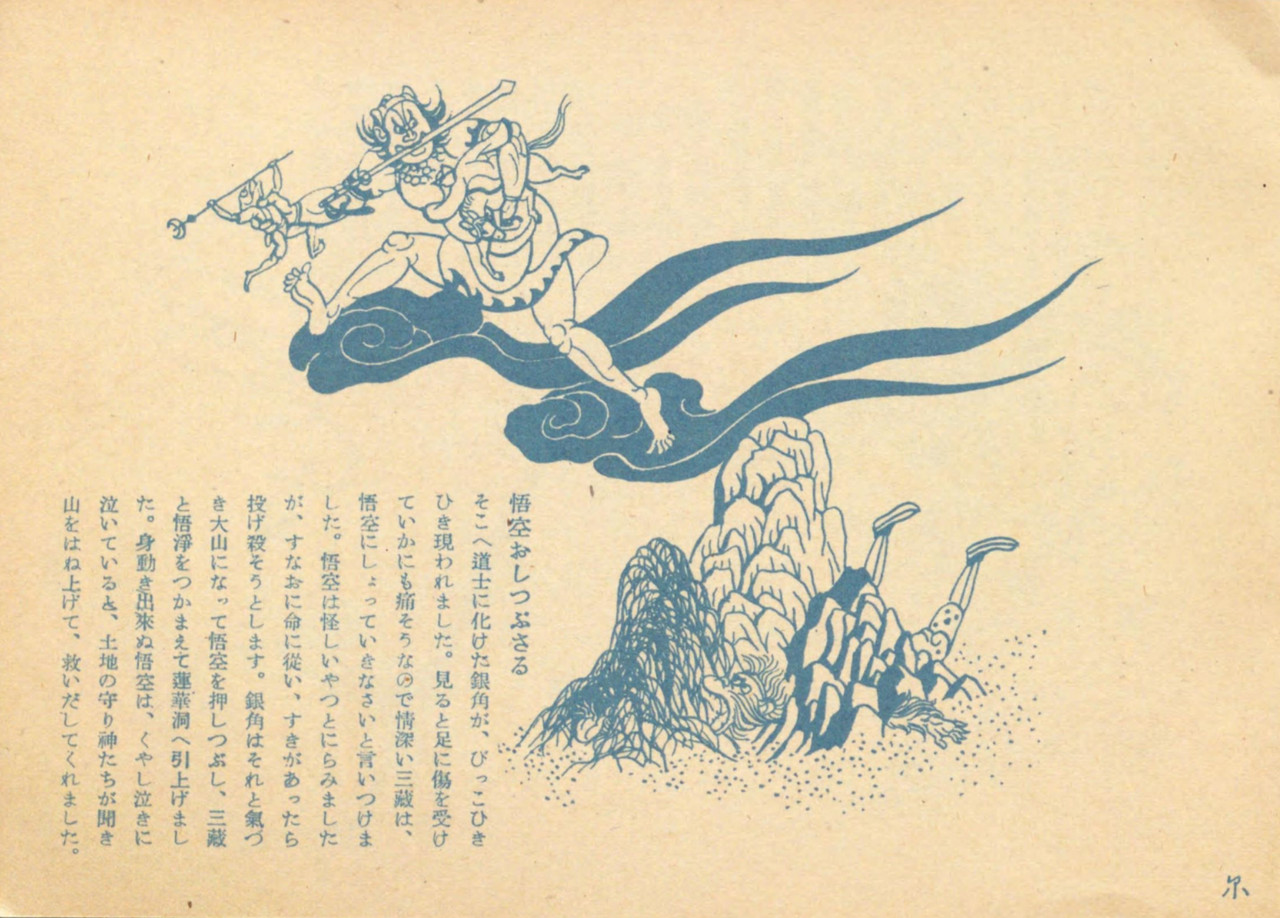
Now that I’ve written an entry debunking the idea that the Monkey King’s staff anchored the Milky Way, I want to write a piece about his greatest feat of strength in Journey to the West (Xiyouji西遊記, 1592). This takes place in chapter 33 after Zhu Bajie has been captured by two demon brothers, Great Kings Goldhorn (Jinjiao Dawang, 金角大王) and Silverhorn (Yinjiao Dawang, 銀角大王). Great King Silverhorn, the younger of the two, then sets out to capture Tripitaka but is forced to resort to trickery when he learns that the monk is protected by Sun Wukong. He transforms himself into an elderly Daoist laying by the roadside with a broken leg. The monk subsequently forces Monkey to carry him on his back, but our hero sees through the disguise and plans to throw his charge off a cliff. However…

As the Great Sage was about to do this, the monster knew instantly of his plan. Knowing how to summon mountains, he resorted to the magic of Moving Mountains and Pouring Out Oceans [“Yishan daohaide fashu, “移山倒海” 的法術]. On Pilgrim’s [Monkey’s] back he made the magic sign with his fingers and recited a spell, sending the Sumeru Mountain into midair and causing it to descend directly on Pilgrim’s head. A little startled, the Great Sage bent his head to one side and the mountain landed on his left shoulder. Laughing, he said, “My child, what sort of press-body magic are you using to pin down old Monkey? This is all right, but a lopsided pole is rather difficult to carry.”

The demon said to himself, “One mountain can’t hold him down.” He recited a spell once more and summoned the Emei Mountain into the air. Pilgrim again turned his head and the mountain landed on his right shoulder. Look at him! Carrying two mountains, he began to give chase to his master with the speed of a meteor! The sight of him caused the old demon to perspire all over, muttering to himself, “He truly knows how to pole mountains!” Exerting his spirit even more, he recited another spell and sent up the Tai Mountain to press down on Pilgrim’s head. With this magic of the Tai Mountain Pressing the Head, the Great Sage was overpowered as his strength ebbed and his tendons turned numb; the weight was so great that the spirits of the Three Worms inside his body exploded and blood spurted from his seven apertures (Wu & Yu, 2012, vol. 2, pp. 108-109).

這大聖正算計要摜,原來那怪就知道了,且會遣山。就使一個「移山倒海」的法術,就在行者背上捻訣,念動真言,把一座須彌山遣在空中,劈頭來壓行者。這大聖慌得把頭偏一偏,壓在左肩臂上,笑道:「我的兒,你使甚麼重身法來壓老孫哩?這個倒也不怕,只是正擔好挑,偏擔兒難挨。」那魔道:「一座山壓他不住。」卻又念咒語,把一座峨嵋山遣在空中來壓。行者又把頭偏一偏,壓在右肩臂上。看他挑著兩座大山,飛星來趕師父。那魔頭看見,就嚇得渾身是汗,遍體生津道:「他卻會擔山。」又整性情,把真言念動,將一座泰山遣在空中,劈頭壓住行者。那大聖力軟觔麻,遭逢他這泰山下頂之法,只壓得三尸神咋,七竅噴紅。

We see here that Monkey is able to successfully carry the weight of both the Sumeru and Emei mountains, while running after his master “with the speed of a meteor.” That’s quite impressive, even if he is eventually crushed under the weight of a third mountain (fig. 1). Attention should be given to the particular mountains used in this episode, as well as their possible allegorical meanings.

Table of Contents

Fig. 1 – Wukong trapped under the three mountains as Great King Silverhorn abducts Tripitaka, the dragon horse, and Sha Wujing (larger version). From The Illustrated Journey to the West (1950), a Japanese children’s book.

1. Explanation

1.1. Mount Sumeru

Buswell and Lopez (2014) describe Mount Sumeru (Ximi shan, 須彌山; Miaogao shan, 妙高山) as:

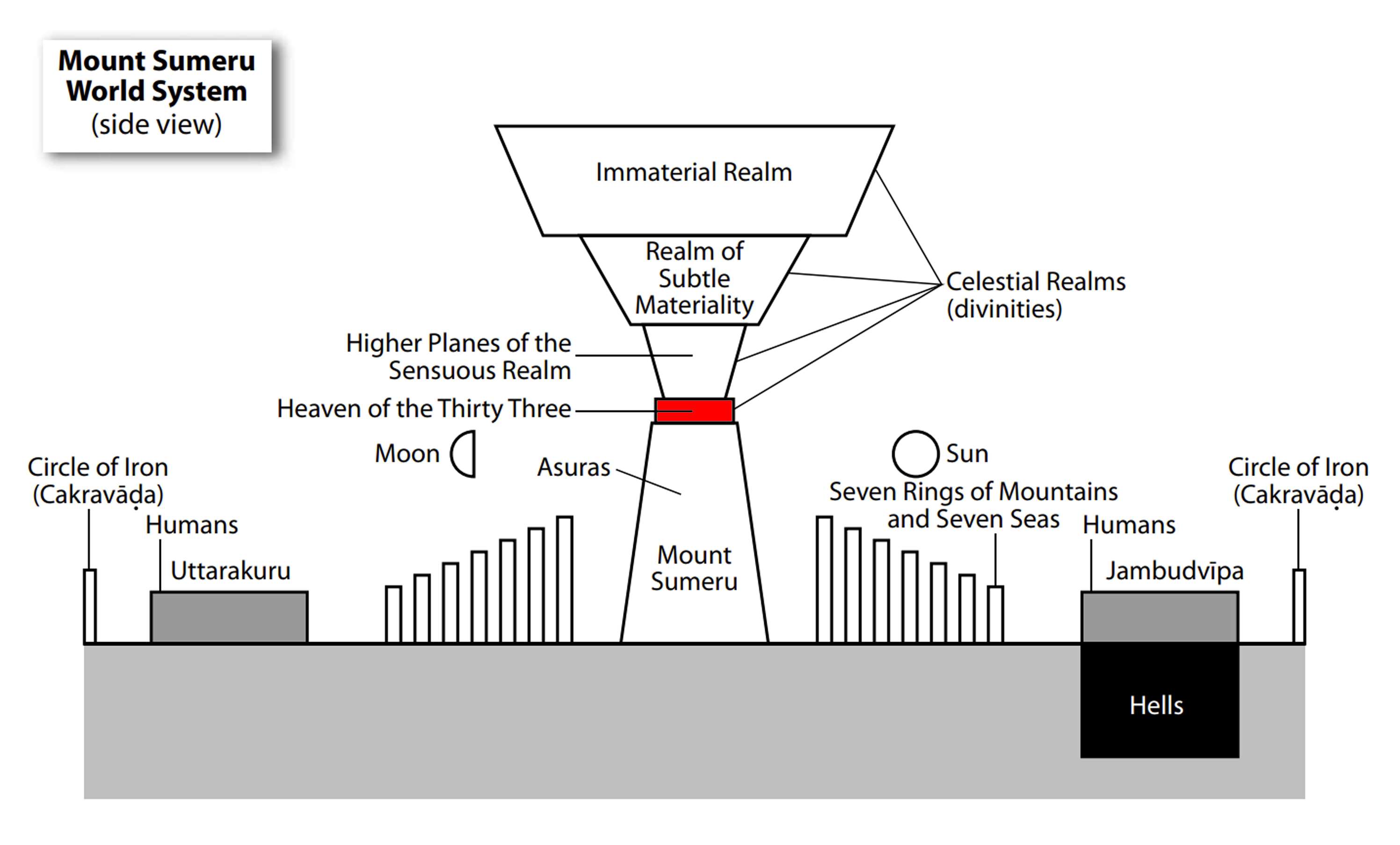
The central axis of the universe in Buddhist cosmology; also known as Mount Meru. Mount Sumeru stands in the middle of the world as its axis and is eight leagues high …  The slopes of Sumeru are the abode of demigods, and its upper reaches are the heavens of the four heavenly kings. At the summit of the mountain is the heaven of the thirty-three, ruled by the king of the gods, Sakra. Above Mount Sumeru are located the remaining heavens of the sensuous realm [fig. 2] (p. 896).

[Note: The portion that has been struck through is a typo. Please see section 4.5 below.]

A poem in chapter four of Journey to the West describes what Monkey sees when he first comes to live in heaven as the Keeper of the Heavenly Horses. A portion reads:

Thirty-three mansions were found up here, / With names like the Scattered Cloud, the Vaisravana, the Pancavidya, the Suyama, the Nirmanarati…” (Wu & Yu, 2012, vol. 1, p. 146).

這天上有三十三座天宮,乃遣雲宮、毘沙宮、五明宮、太陽宮、花樂宮 …

Yu (Wu & Yu, 2012) comments, “The verse here is alluding to the Indra heaven with it’s thirty-three summits (trāyastriṃśa) [fig. 2] and the six heavens of desire (devalokas)” (vol. 1, p. 510, n. 1), which are located atop Mount Sumeru. Therefore, the heaven described in the novel is located on the same cosmic mountain as that from Hindo-Buddhist cosmology, meaning that Wukong successfully supports the axis of the universe on one shoulder.

Fig. 2 – A sideview of Hindo-Buddhist cosmic geography (larger version). The Heaven of the Thirty-Three is indicated in red. Adapted from Buswell & Lopez, 2014, p. xxxii.

1.2. Mount Emei

Mount Emei (Emei shan, 峨嵋/眉山) is one of the four sacred Buddhist mountains of China. It is considered extremely important as Chinese tradition believes, upon entering the Middle Kingdom from India, Buddhism spread from this place during the eastern Han Dynasty and proliferated throughout China. The mountain is 10,167 ft (3098.90 m) high, making it over 3,000 ft (914.4 m) taller than the other sacred Buddhist mountains. The mountain is believed to be the heavenly abode of the Bodhisattva Samantabhadra, making him the patron saint of Emei (Buswell & Lopez, 2014, pp. 282-283).

1.3. Mount Tai

I turn now to Mount Tai (Taishan, 泰山), the mountain that ultimately overwhelms Sun Wukong’s supernatural strength. It is one of the five sacred mountains of China, which differ from the four Buddhist counterparts mentioned above. Mount Tai was the epicenter of a state cult in Ancient China, one in which Sage-Kings and emperors of past millennia traveled there to perform sacrifices to heaven, thereby gaining the right to rule or attaining eternal life. An entry in the Classic of History (Shujing, 書經, 4th c. BCE) suggests that the practice goes all the way back to the Sage-King Shun (3rd millennia BCE) (Poo, 2011, pp. 20-21).

Due to its great cultural and historical significance, the mountain came to be recognized as an adamantine monolith, the very name of which was used as a metaphor for something unfathomably heavy, whether it be a physical measure of weight or philosophical importance. For example, Warring States philosopher Mozi took part in a debate over the plausibility of his school of thought taking center stage in Chinese society. His opponent claimed, “As we see it, one can no more put it into practice than one can pick up Mount Tai and leap over a river with it!” Mozi highlighted the irrelevant nature of the metaphor by replying, “As for picking up Mount Tai and leaping over rivers with it, no one from ancient times to the present, from the beginning of humankind to now, has ever succeeded in doing that!” (Watson, 1999a, p. 71). Another example comes from the Han historian Sima Qian who wrote, “A man has only one death. That death may be as weighty as Mount Tai, or it may be as light as a goose feather. It all depends upon the way he uses it” (Watson, 1999a, pp. 371-372). Therefore, the mountain represented the heaviest thing imaginable in Chinese culture. It’s no wonder then that not even Monkey could withstand its weight.

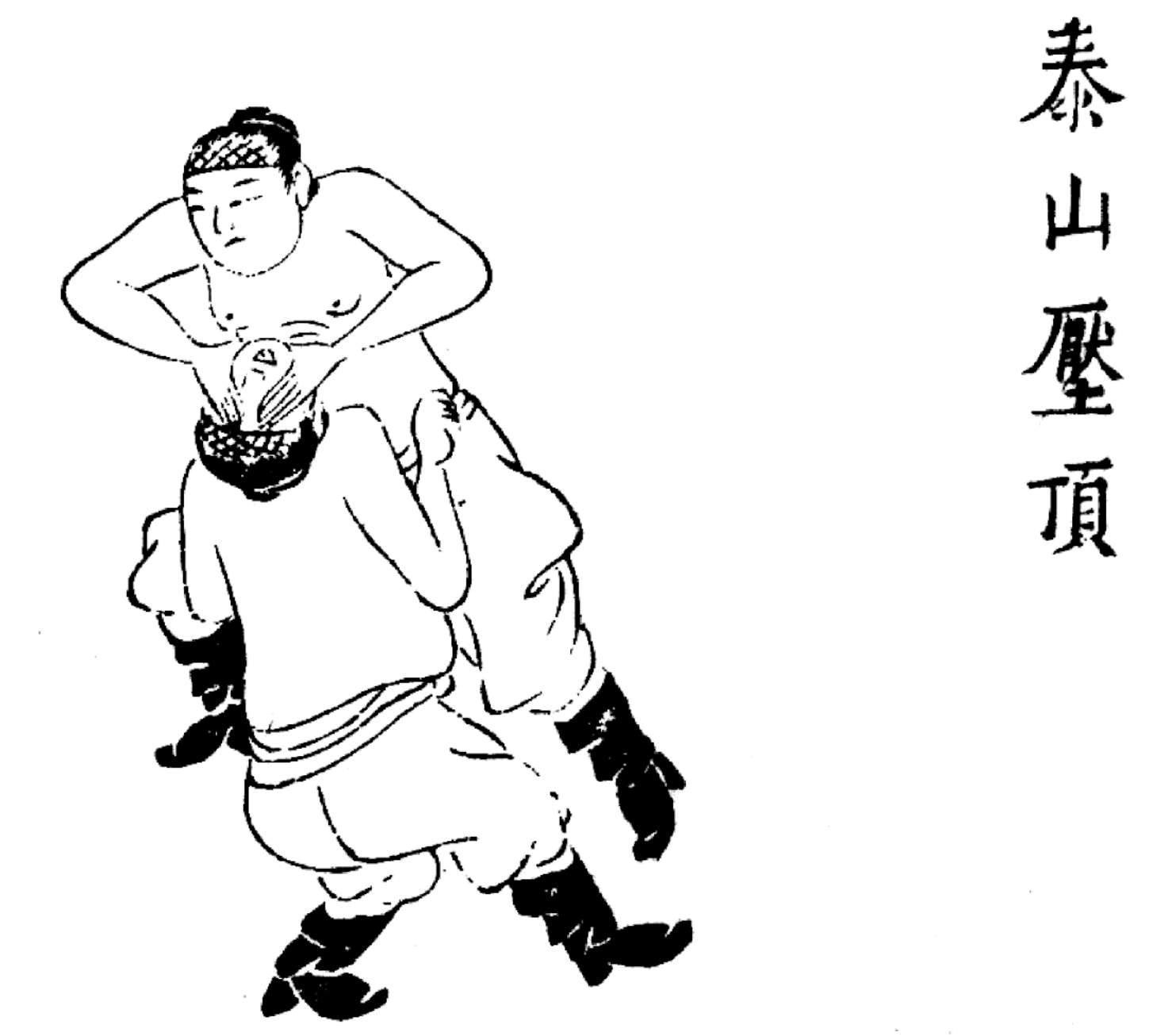
The idea of Mount Tai symbolizing a heavy object influenced the name of a 17th century technique related to the development of Taiji boxing called “Crush with the Weight of Mount Tai” (Taishan yading, 泰山壓頂) (fig. 3), which involved climbing onto an opponent (Henning, 2009, pp. 78 and 82). Incidentally, the name of this technique is also a common Chinese saying referring to someone being under a lot of stress (Gao, Wang, & Weightman, 2012, p. 191).

Fig. 3 – “Crush with the Weight of Mount Tai”. From Henning, 2009, p. 78 (larger version).

2. An Allegory for Cultural or Religious Conflict?

I want to reiterate the fact that both Sumeru and Emei are important to Buddhism, a religion originally foreign to China. Not only does Monkey support the very axis of the Buddhist universe on one shoulder, he supports on the other the very mountain from which the religion is believed to have spread into China. Therefore, considering that Wukong carries these landmasses while protecting Tripitaka on the quest to India, the feat could be read as an allegory for “supporting” Buddhism. After all, the historical Xuanzang (玄奘, 602–664), on whom Tripitaka was based, is considered to be one of, if not the most, prolific translators of religious texts in the history of Chinese Buddhism (Buswell & Lopez, 2014, pp. 1015-1016).

This is why it’s fascinating that Mount Tai ultimately overpowers the Monkey King. It represents native Chinese history and culture, while Sumeru and Emei represent foreign Buddhism. Therefore, this episode could be read as a struggle between the domestic and foreign aspects of Chinese culture. Considering that the monsters are later revealed to be Daoist attendants of Laozi sent by heaven to test the resolve of the pilgrims (Wu & Yu, 2012, vol. 2, p. 145), it’s possible that the conflict is between Daoism, a native Chinese religion, and Buddhism.

This is obviously not a perfect theory, though. For instance, Laozi reveals that it was actually the Bodhisattva Guanyin who requested the lads be sent (Wu & Yu, 2012, vol. 2, p. 145). Does this explain why a Daoist spirit would summon two Buddhist mountains to crush Monkey? I’m interested in what others think.

3. Possible Ties to Hanuman

Lastly, I would like to note that Wukong’s feat of lifting mountains recalls an episode in the Ramayana (4th c. BCE) in which the monkey god Hanuman carries back a mountain laden with magical herbs to heal the wounds of his master‘s brother Lakshmana (fig. 4). Hanuman is the living embodiment of strength (shakti) in India (Alter, 1992). Monkey is believed to be loosely based on Hanuman (Walker, 1998), so there could be a connection between both instances of mountain lifting.

Fig. 4 – A modern painting of Hanuman lifting the mountain (larger version). All credit goes to the original artist, S. Keerthi. 


4. Updates

4.1. The Feat’s Origin in Chinese Folklore

Update: 08-10-18

Monkey’s feat appears to be based on a native Chinese story and not the Ramayana. This is first hinted at in chapter 33 when the demon exclaims that the Great Sage “truly knows how to pole mountains [ta quehui danshan, 他卻會擔山]!” (Wu & Yu, 2012, vol. 2, p. 109). A poem spoken by Wukong in chapter 67 confirms the connection:

Purvavideha was my ancestral home,
I did cultivation on Mount Flower-Fruit.
I bowed to the Patriarch of Heart and Mind
and perfected with him the martial arts.
I can tame dragons, stirring up the seas;
I can tote mountains to chase down the sun (emphasis added).
In binding fiends and demon’s I’m the best;
Moving stars and planets, I scare ghosts and gods.
Stealing from heav’n and Earth gives me great fame,
Of boundless change, Handsome Stone Monkey’s my name (Wu & Yu, 2012, vol. 3, p. 243).

祖居東勝大神洲,花果山前自幼修。
身拜靈臺方寸祖,學成武藝甚全周:
也能攪海降龍母,善會擔山趕日頭
縛怪擒魔稱第一,移星換斗鬼神愁。
偷天轉地英名大,我是變化無窮美石猴。

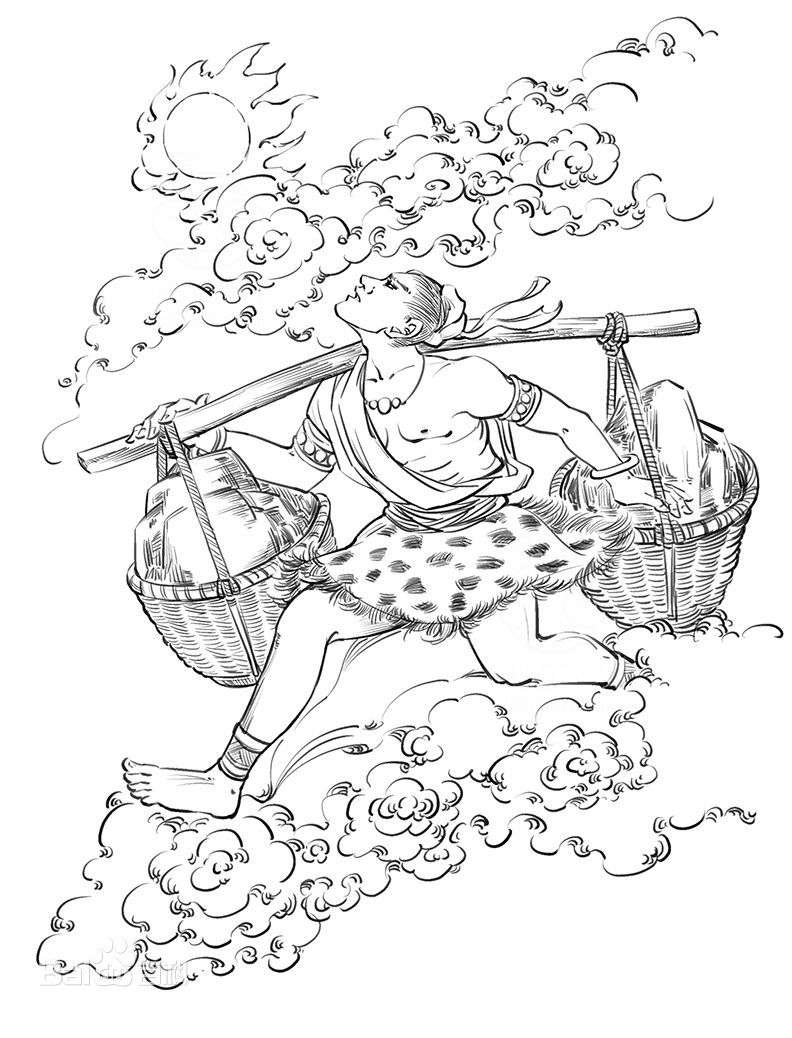
Fig. 5 – Erlang poling the mountains (larger version). Artist unknown.

“I can tote mountains to chase down the sun” (shanhui danshan gan ritou, 善會擔山趕日頭) is a clear allusion to the ancient tale “Erlang carries mountains to chase the suns” (Erlang danshan gan taiyang, 二郎擔​​山趕太陽). The story describes how the ancient earth was plagued by many suns that scorched the land, making it impossible for people to grow anything. Vowing to end this plight, the hero Erlang shoulders two mountains hanging from a tree and with the aid of magical shoes, chases down each sun (fig. 5), using the weight from both landmasses to overwhelm and crush the superfluous celestial bodies (担山赶太阳, n.d). Apart from the feat of lifting two mountains, Erlang’s fleet pursuit of each sun (gan taiyang, 趕太陽) foreshadows Monkey “giv[ing] chase to his master with the speed of a meteor” (feixing laigan shifu, 飛星來趕師父).

It’s interesting to note that “Erlang Carrying Mountains” (Erlang danshan, 二郎擔山) is a common Shaolin stance, and a staff variant even appears in the Collection of Military Works (Wubei zhi, 武備志, c. 1621), a Ming treatise on military armaments and fighting techniques (fig. 6). The staff obviously recalls the pole (or in this case tree) that Erlang uses to bear the weight of the mountains.

Fig. 6 – The “Erlang Carrying Mountains” staff stance (larger version).


4.2. Carrying Mountains AND Running

Update: 06-23-21

One thing I forgot to stress is the fact that Sun Wukong RUNS while transporting the Buddhist landmasses. The novel reads: “Carrying two mountains, he began to give chase to his master with the speed of a meteor!” (Kanta tiaozhe liang zuo dashan, feixing laigan shifu, 看他挑著兩座大山,飛星來趕師父) (Wu & Yu, 2012, vol. 2, p. 109). The meteoric imagery is no doubt hyperbole given that Tripitaka isn’t that far ahead of him, but this additional feat is still impressive.


4.3. Monkey and Mount Tai in Religious Literature

Update: 03-11-22

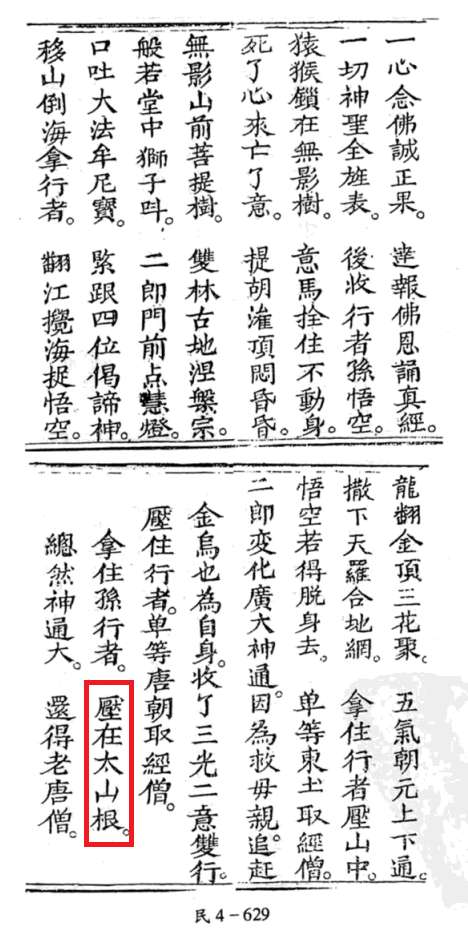
I recently archived the Precious Scroll of Erlang (Erlang baojuan, 二郎寳卷, 1562), a religious text that venerates and records the various deeds of the immortal demi-god. The work states that the Monkey King was “pressed under the base of Mt. Tai” (yazai, taishan gen, 壓在太山根) (PDF page 46) (fig. 7). This might also explain why Mount Tai overwhelms Monkey in chapter 33.

Fig. 7– The Mt. Tai sentence is indicated in red (larger version).


Update: 03-25-22

My friend Irwen Wong of the Journey to the West Library blog was kind enough to provide me with time-stamped links to the aforementioned episode in the various JTTW TV shows. I will list them in order of year.

Journey to the West (1986) – Live action

Even though this is my favorite show, it did a poor job of representing the mountain. It’s little more than a boulder.

Journey to the West: Legends of the Monkey King (2000) – Animated

This cartoon just has monkey trapped by a single mountain.

New Journey to the West (2010) – Live action

This version uses all three mountains and really steps up the special effects. This is no surprise given the differences in time and budget between it and the 1986 edition.

Journey to the West (2011) – Live action

This is my favorite depiction of the episode. The special effects are top notch. I will say the elongated arms on the Taoist are a bit odd, but Irwen suggests that it’s likely a visual representation of “poling” mountains (as discussed above).

Each of these iterations have their own charm, but all of them depart from the novel by showing Wukong struggling to carry the first two mountains. I remind the reader that the literary character runs “with the speed of a meteor!” while carrying the load (Wu & Yu, 2012, vol. 2, p. 108). I guess that would have been hard to depict, even with modern computer graphics.


4.5. The Correct Size of Mount Sumeru

Update: 06-19-22

The Monkey King’s feats are on the minds of many people as the Death Battle TV show is set to feature a fight between Hercules and our hero. I’ve seen a few blogs where people try to calculate the size of Mount Sumeru. I cited a source above stating that the landmass is “eight leagues high” (Buswell & Lopez, 2014, p. 896), but this appears to be a typo, for other sources multiply this estimate by thousands of times. For example, Sadakata (1997) explains that according to the Abhidharmakośa (Ch: Api damo jushe lun, 阿毗達磨俱舍論, 4th to 5th century): “Sumeru has a height of 160,000 yojanas, of which half is under water. The half above water is therefore 80,000 yojanas high” (pp. 26-27). The yojana (youxun, 由旬) is approximately eight miles (12.87 km), or the distance that one can travel in one day on a cart driven by a team of oxen. But estimates also range between four and ten miles (6.43 and 16.09 km) (Buswell & Lopez, 2014, p. 1036). If eight miles is used, then Mt. Sumeru would an astounding 1,280,000 miles (2,059,960.32 km) tall.


4.6. Wukong’s Inconsistent Strength in JTTW

Update: 07-03-22

I should note that Journey to the West does not depict Monkey’s strength consistently throughout the novel. As mentioned, he can carry two mountains (one of them the cosmic axis) on his shoulders while running with meteoric speeds. But apart from Mount Tai, the novel describes another object that he can’t lift. Chapter 42 reads:

[T]he Bodhisattva grew terribly angry, crying, “How dare that brazen fiend [Red Boy] change into my image!” As she cried, she flung into the ocean the immaculate porcelain vase set with precious pearls which she held in her hand …

菩薩聽說,心中大怒道:「那潑妖敢變我的模樣?」恨了一聲,將手中寶珠、淨瓶往海心裡撲的一摜。

[…]

[After her turtle emerges from the sea with the vase on its back, she orders Monkey to retrieve it for her.] Pilgrim went forward at once to pick up the vase. Alas! He could not do so at all! It was as if a dragonfly attempted to rock a stone pillar-how could he even budge it? Pilgrim approached the Bodhisattva and knelt down, saying, “Your disciple cannot pick it up.” “Monkey head,” said the Bodhisattva, “all you know is how to brag! If you can’t even pick up a small vase, how can you subdue fiends and capture monsters?” “To tell you the truth, Bodhisattva,” said Pilgrim, “I might be able to do it ordinarily, but today I just can’t pick it up. I must have been hurt by the monster-spirit, and my strength has weakened.” The Bodhisattva said, “Normally it’s an empty vase, but once it has been thrown into the ocean, it has traveled through the three rivers, the five lakes, the eight seas, and the four big rivers. It has, in fact, gathered together from all the aquatic bodies in the world an oceanful of water, which is now stored inside it. You may be strong, but you don’t possess the strength of upholding the ocean. That’s why you cannot pick up the vase…” (Wu & Yu, 2012, vol. 2, pp. 243 and 244).

這行者即去拿瓶。唉!莫想拿得他動。好便似蜻蜓撼石柱,怎生搖得半分毫?行者上前跪下道:「菩薩,弟子拿不動。」菩薩道:「你這猴頭,只會說嘴。瓶兒你也拿不動,怎麼去降妖縛怪?」行者道:「不瞞菩薩說。平日拿得動,今日拿不動。想是吃了妖精虧,觔力弱了。」菩薩道:「常時是個空瓶;如今是淨瓶拋下海去,這一時間,轉過了三江五湖、八海四瀆、溪源潭洞之間,共借了一海水在裡面。你那裡有架海的斤量?此所以拿不動也。」

However, there may be an underlying religious reason for this. For instance, while Sun can’t lift it, the goddess does so easily, as does her holy sea turtle (Wu & Yu, 2012, vol. 2, p. 243). Most importantly, the story suggests that Guanyin will send her holy disciple, the “Dragon Girl Skilled in Wealth” (Shancai longnu, 善財龍女), to carry it for him (Wu & Yu, 2012, vol. 2, p. 244). So, this could mean that Monkey, at this point in the story, lacks the Buddhist spiritual attainments necessary to lift the vase. After all, “Dharma Power” (Fali, 法力) is considered the penultimate power in the novel’s universal hierarchy, even outclassing that wielded by high Daoist deities.

Sources:

Alter, J. S., & OUP. (1992). The Wrestler’s Body: Identity and Ideology in North India. Berkeley, Calif: University of California Press.

Buswell, R. E., & Lopez, D. S. (2014). The Princeton Dictionary of Buddhism. N: Princeton University Press.

Gao, W., Wang, A., & Weightman, F. (2012). A Handbook of Chinese Cultural Terms. Bloomington, Indiana: Trafford On Demand Pub.

Henning, S. (2009). Taijiquan: Symbol of Traditional Chinese Martial Arts Culture. Journal of Chinese Martial Arts, 1, pp. 76-83.

Poo, M. (2011). Preparation for the Afterlife in Ancient China. In Olberding, A., & Ivanhoe, P. J. (Ed.), Mortality in Traditional Chinese Thought (pp. 13-36). Albany: State University of New York Press.

Sadakata, A. (1997). Buddhist Cosmology: Philosophy and Origins. Japan: Kosei Publishing Company.

Walker, H.S. (1998). Indigenous or Foreign? A Look at the Origins of Monkey Hero Sun Wukong. Sino-Platonic Papers, 81, 1-117.

Watson, B. (1999a). Mozi: Utility, Uniformity, and Universal Love. In De Bary, W. T. & Bloom, I. (Eds.), Sources of Chinese Tradition: Volume 1: From Earliest Times to 1600 (pp. 64-76). New York: Columbia University Press.

Watson, B. (1999b). The Great Han Historians. In De Bary, W. T. & Bloom, I. (Eds.), Sources of Chinese Tradition: Volume 1: From Earliest Times to 1600 (pp. 367-374). New York: Columbia University Press.

Wu, C., & Yu, A. C. (2012). The Journey to the West (Vols. 1-4) (Rev. ed.). Chicago, Illinois: University of Chicago Press.

担山赶太阳. (n.d.). Retrieved August 10, 2018, from https://baike.baidu.com/item/担山赶太阳

What Does Sun Wukong Look Like? A Resource for Artists and Cosplayers

Last updated: 05-03-2026

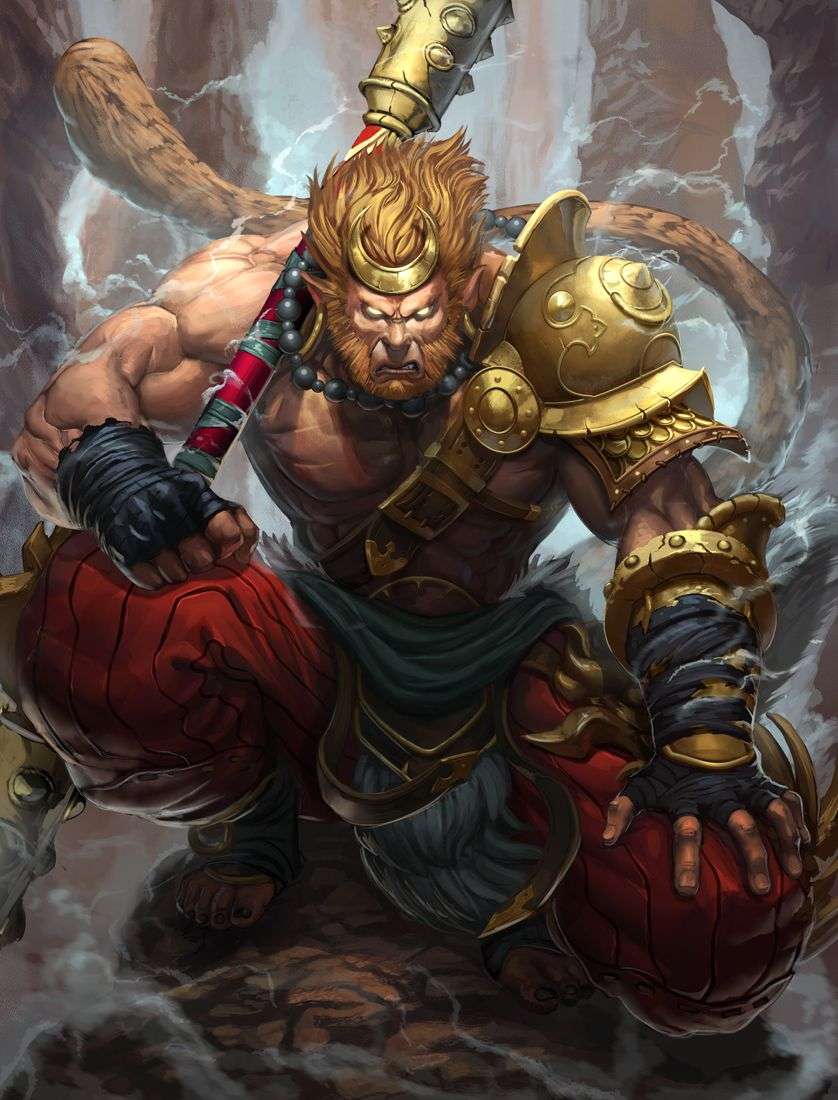
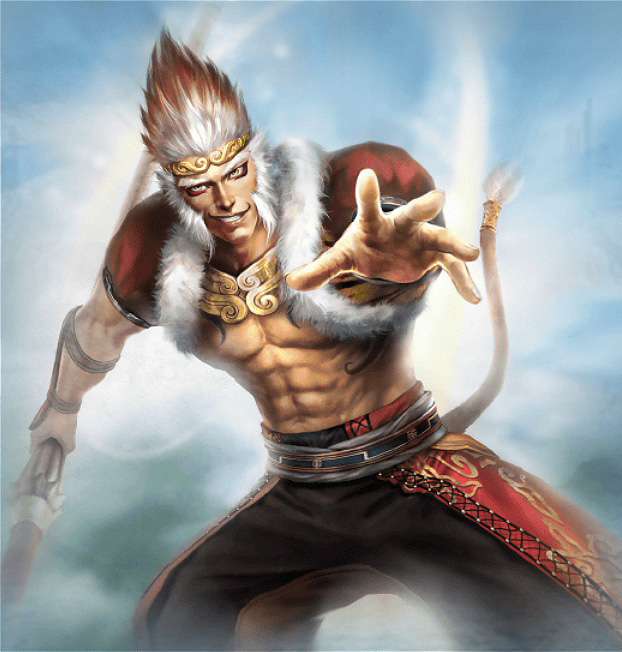
Type “Sun Wukong” into google images and you will be presented with an endless array of pictures that range from the familiar to the alien. A fanciful 1960s cartoon depiction of our hero sits to the left of a SMITE video game character with hulking muscles and a weapon more akin to a club than a staff. A toy version of Liu Xiao Ling Tong‘s much beloved 1986 TV portrayal sits above an anime character with blond hair and a shaved chest. It seems there are as many depictions of Wukong as he has transformations. But how do these myriad personas compare to his depiction in the novel, and who has produced the most authentic look? In this article I present the Monkey King’s literary description, along with ancient depictions that predate the novel. My hope is that the information will be both interesting and useful, especially for artists and cosplayers looking to make a more authentic design.

Table of Contents

1. Ancient Depictions

Some readers may be surprised to learn that stories about a “Monkey Pilgrim” (Hou xingzhe, 猴行者) go all the way back to the Song Dynasty (960–1279 CE). This predates the actual name Sun Wukong by centuries. The literary episodes we all know and love began life as oral tales that evolved over time and grew into an accepted storytelling cycle which started to solidify by the 15th century CE. [1] But the further we go back in time, the less familiar the recorded material becomes, and due to the memory-based nature of oral storytelling, [2] records for the earliest repertoires do not exist. Luckily, visual media from the Song survives, allowing us to see how artists of that time depicted the Monkey King.

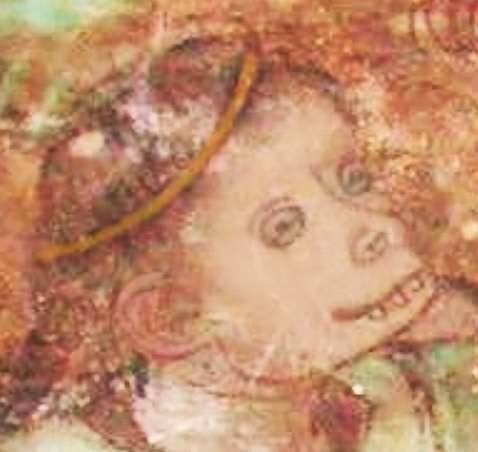
One example, Eastern Thousand Buddha Cave (Dong qianfo dong, 東千佛洞) number two in the Hexi Corridor of Gansu Province, contains a late-Xixia dynasty (late-12th or early-13th century CE) mural of Xuanzang worshiping Guanyin from a riverbank, while Monkey stands behind him tending to a brown horse. The latter is portrayed with a plain circlet on his head, a homely face with an overbite, waist length hair (or possibly wearing a fur on his back), and light blue-green robes with a red apron and brown pants and sandals (fig. 1 and 2). The depiction is less simian in appearance, yet not wholly human.

Fig. 1 – An almost complete version of the Eastern Thousand Buddha Cave no. 2 painting (larger version). Photo by National Geographic. Fig. 2 – A detail of Monkey and Xuanzang (larger version). See figure 14 for an enhanced detail of Monkey’s head.

A second example, Yulin Cave (Yulin ku, 榆林窟) number three in Gansu, contains a late-Xixia wall painting with similar imagery. Xuanzang is again worshiping from a riverbank, but this time the subject of adoration is Samantabhadra. We see Monkey lacks the fillet but wears a monk’s robe with wrapped socks and sandals. This time he is far more monkey-like in appearance, complete with furry arms (fig. 3 and 4).

Fig. 3 – An almost complete version of the late-Xixia Yulin Cave no. 3 painting (larger version). Monkey and Xuanzang can be seen standing on the river bank on the upper left side. Fig. 4 – A detail of the two figures (larger version).

A third example is the 1237 CE stone relief carving from the western pagoda of the Kaiyuan Temple (開元寺) in Quanzhou, Fujian province. This muscular warrior wears a headband, earrings, bracelets, a rosary necklace, and arm bangles (all prescribed Esoteric Buddhist ritual accouterments), as well as a monk’s robe and sandals. He wields a broadsword in one hand, while the other thumbs the rosary at his chest. At his waist hangs a calabash gourd and a scroll of the Mahamayurividyarajni Sutra (Fomu da kongque mingwang jing, 佛母大孔雀明王經) (fig. 5) (Ecke & Demiéville, 1935). He has the large ears and protruding mouth of a monkey.

Fig. 5 – The monkey-headed warrior from Kaiyuan temple in Quanzhou, Fujian (larger version).

Writing in the 1250s, the Song poet Liu Kezhuang (劉克莊, 1187–1269) references our hero twice in his work. The second of two such references uses Monkey as a metaphor to describe the ageing 70-year-old’s appearance. A portion of the poem reads:

A back bent like a water-buffalo in the Zi stream,
Hair as white as the silk thread issued by the “ice silkworms”,
A face even uglier than Hou xingzhe [“Monkey Pilgrim”],
Verse more scanty than even He Heshi (Dudbridge, 1970, p. 46).

背傴水牛泅磵髪白氷蠶吐絲貌醜似猴行者詩痩於鶴何師

Ugliness is a subject I will return to several more times.

I mentioned earlier that the farther we go back in time the less familiar the recorded material becomes. Case in point is the The Story of How Tripitaka of the Great Tang Procures the Scriptures (c. late-13th century CE), the earliest published edition of Journey to the West. Despite referring to himself as the Monkey King, the Monkey Pilgrim is depicted as a white-clad scholar. Another difference is the fact that he fights with two different staves, one a ringed monk’s staff and the other an iron rod (these two would later be combined to create his signature weapon).

The majority of Song sources depict the Monkey Pilgrim as the size of an adult man but with the head of an ugly monkey. I think that these were likely influenced by early stage plays, which would obviously entail a human actor taking on the role.

2. What the Novel Says

2.1. Physical Appearance

The earliest descriptions of what Monkey looks like appear in chapter one. When he is first taken in by his teacher Subodhi, the sage tells him, “Though your features are not the most attractive, you do resemble a pignolia-eating macaque (husun [猢猻])” (Wu & Yu, 2012, vol. 1, p. 115). After he returns to the Mountain of Flowers and Fruit in chapter two, a demon king refers to Monkey’s height: “You’re not four feet tall” (Wu & Yu, 2012, vol. 1, p. 128).

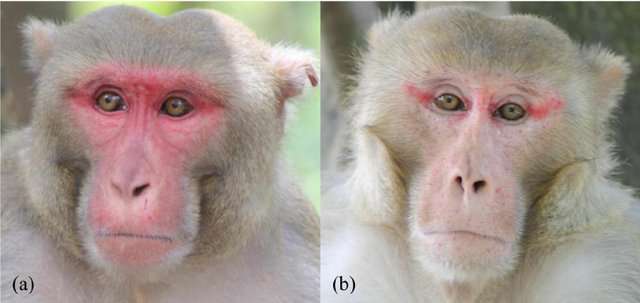
In chapter 7, Monkey is subjected to Laozi’s eight trigrams furnace as punishment for his crimes against heaven. He survives the celestial fire but the smoke inside “…reddened his eyes, giving them a permanently inflamed condition. Hence they were sometimes called Fiery Eyes and Golden Irises [Huoyan jinjing, 火眼金睛]” (based on Wu & Yu, 2012, vol. 1, p. 189). The anthropologist Frances D. Burton (2005) explains that his fiery eyes are “a characteristic he shares with the actual red-rimmed eyes of M. mulatta [the Rhesus macaque]” (p. 148). I further suggest that the hue of his eyes are based on the golden irises of macaques (fig. 6).

Fig. 6 – A comparison of Rhesus macaque males with red-rimmed eyes during mating season (left) and other times (right) (larger version). Original image from Dubue, Allen, Maestripieri, & Higham (2014, p. 5).

In chapter 20, the reader learns that Monkey’s head is bald (fig. 7). An old man asks him, “[W]hy did you shave your hair to become a monk?” (Wu & Yu, 2012, vol. 1, p. 395).

In chapter 21, a demon king steps out of his cave to fight Sun but is surprised by his small stature:

The old monster took a careful look and saw the diminutive figure of Pilgrim [Monkey]—less than four feet, in fact—and his sallow cheeks. He said with a laugh: “Too bad! Too bad! I thought you were some kind of invincible hero. But you are only a sickly ghost, with nothing more than your skeleton left!” (Wu & Yu, 2012, vol. 1, p. 408).

那怪仔細觀看,見行者身軀鄙猥,面容羸瘦,不滿四尺。笑道:「可憐,可憐。我只道是怎麼樣扳翻不倒的好漢,原來是這般一個骷髏的病鬼。」

(Thank you to Jose Loayza for bringing this passage to my attention.)

His bald head is referred to again in chapter 27:

“But ever since Nirvana delivered me from my sins, when with my hair shorn I took the vow of complete poverty and followed you as your disciple, I had this gold fillet clamped on my head…” (Wu & Yu, 2012, vol. 2, p. 24).

自從涅槃罪度,削髮秉正沙門,跟你做了徒弟,把這個金箍兒勒在我頭上…

(Thank you to Stanley Setiawan for bringing this passage to my attention.)

Fig. 7 – Reggie the baboon from Paignton Zoo (circa 2005). His slick head was the result of his mom’s “over-zealous” grooming. Look at those ears! He’s the wrong genus and species, but you get the general idea what Sun Wukong would look like wearing the golden fillet (larger version).

Wukong’s bald pate is once again referenced in chapter 34:

The fiend then gave the rope a tug and pulled Pilgrim down before he gave that bald head seven or eight blows with the sword. The skin on Pilgrim’s head did not even redden at all (Wu & Yu, 2012, vol. 2, p. 128).

那怪將繩一扯,扯將下來,照光頭上砍了七八寶劍。行者頭皮兒也不曾紅了一紅。

In chapter 44, the Monkey King’s appearance is revealed in a dream to a group of monks by the personification of the planet Venus:

A bumpy brow, and golden eyes flashing;
A round head and a hairy face with sunken cheeks;
Gaping teeth, pointed mouth, a character most sly;
He looks more strange than the thunder god
[…] (based on Wu & Yu, 2012, vol. 2, p. 276).

磕額金睛晃亮,圓頭毛臉無腮。咨牙尖嘴性情乖。貌比雷公古怪。

In chapter 49, a monster who barely survived a battle with Sun Wukong describes his appearance to a friend: [H]e has a hairy face and a thunder god beak … forked ears and broken nose. A monk with fiery eyes and golden irises (based on Wu & Yu, 2012, vol. 2, p. 353).

In chapter 58, Sun Wukong’s doppelganger is described as having matching features:

A hairy face, a thunder god beak,
Empty cheeks unlike Saturn’s; [3]
Two forked ears on a big, broad head,
And fangs that have outward grown (based on Wu & Yu, 2012, vol. 3, p. 105).

…也是這等毛臉雷公嘴,朔腮別土星,查耳額顱闊,獠牙向外生。

In chapter 67, an old man chastises Monkey for offending him:

You! Look at your skeleton face, flattened brow, collapsed nose, sunken cheeks, and hairy eyes. A consumptive ghost, no doubt, and yet without any manners at all, you dare use your pointed mouth to offend an elderly person like me!” (based on Wu & Yu, 2012, vol. 3, p. 242).

你這廝骨撾臉,磕額頭,塌鼻子,凹頡腮,毛眼毛睛,癆病鬼,不知高低,尖著個嘴,敢來衝撞我老人家?

In chapter 75, he once again tests the hardness of his bald head:

“You come over here,” said the old demon, “and act as my chopping block first. If your bald head can withstand three blows of my scimitar, I’ll let you and your Tang Monk go past. But if you can’t, you’d better tum him over quickly to me as a meal.”

When he heard this, Pilgrim smiled and said, “Fiend! If you have brush and paper in your cave, take them out and I’ll sign a contract with you. You can start delivering your blows from today until next year, and I won’t regard you seriously!” Arousing his spirit, the old demon stood firmly with one foot placed in front of the other. He lifted up his scimitar with both hands and brought it down hard on the head of the Great Sage. Our Great Sage, however, jerked his head upward to meet the blow. All they heard was a loud crack, but the skin on the head did not even redden (Wu & Yu, 2012, vol. 3, p. 373).

老魔道:「你過來,先與我做個樁兒,讓我盡力氣著光頭砍上三刀,就讓你唐僧過去;假若禁不得,快送你唐僧來,與我做一頓下飯。」行者聞言笑道:「妖怪,你洞裡若有紙筆,取出來,與你立個合同。自今日起,就砍到明年,我也不與你當真。」

那老魔抖擻威風,丁字步站定,雙手舉刀,望大聖劈頂就砍。這大聖把頭往上一迎,只聞扢扠一聲響,頭皮兒紅也不紅。

We can see from these quotes several features that appear again and again. These include a furry face with sunken cheeks, fiery eyes, a broken or flat nose, a beak-like mouth with protruding fangs, and forked ears (with long earlobes, per the 06-02-25 update). The author-compiler of the novel uses these features over and over again to remind the reader just how ugly the Great Sage is. These same features are also shared by the Rhesus monkey and other macaque species (fig. 8). The multiple mentions of the Thunder God‘s beak refers to the monkey’s prognathic (protruding) mouth, which houses large canine teeth. The quotes also let us know that Sun Wukong is less than four feet tall and very skinny (e.g. having “sallow cheeks” and being like “a consumptive ghost”) just like a monkey (fig. 9). It’s important to note that Sun is described as being bald numerous times throughout the novel. This should come as no surprise since he was required to take the tonsure as a Buddhist monk. Modern depictions often deviate from the features mentioned here (more on this below).

Fig. 8 – A Bonnet macaque bearing its teeth. Photo by Hank Christensen. The furry face with sunken cheeks, a broken (flat) nose, beak-like mouth with protruding fangs, and forked ears are easily discernible. Fig. 9 – The short, skinny body of a Rhesus monkey. Photo by mario_ruckh via flickr.

2.2 Clothing and Accessories

The novel mentions Sun Wukong wearing different attire throughout his roughly 1,100 years of life. Here I will focus on that which is closely associated with his traditional iconography.

The clothing most often associated with Monkey is his suit of armor. He receives it from the dragon kings of the world’s oceans in chapter three:

“I have here a pair of cloud-treading shoes the color of lotus root[, said Aoshun, the Dragon King of the Northern Ocean]. Aorun, the Dragon King of the Western Ocean said, “I brought along a cuirass of chainmail made of yellow gold.” “And I have a cap with erect phoenix plumes, made of purple gold,” said Aoqin, the Dragon King of the Southern Ocean (based on Wu & Yu, 2012, vol. 1, p. 137).

北海龍王敖順道:「… 我這裡有一雙藕絲步雲履哩。」西海龍王敖閏道:「我帶了一副鎖子黃金甲哩。」南海龍王敖欽道:「我有一頂鳳翅紫金冠哩。」

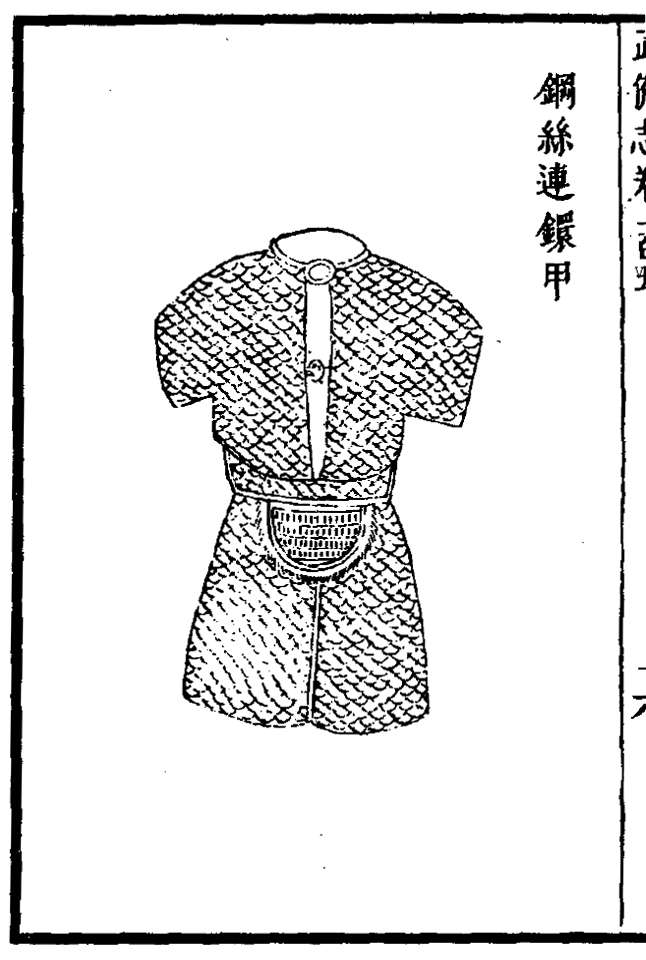
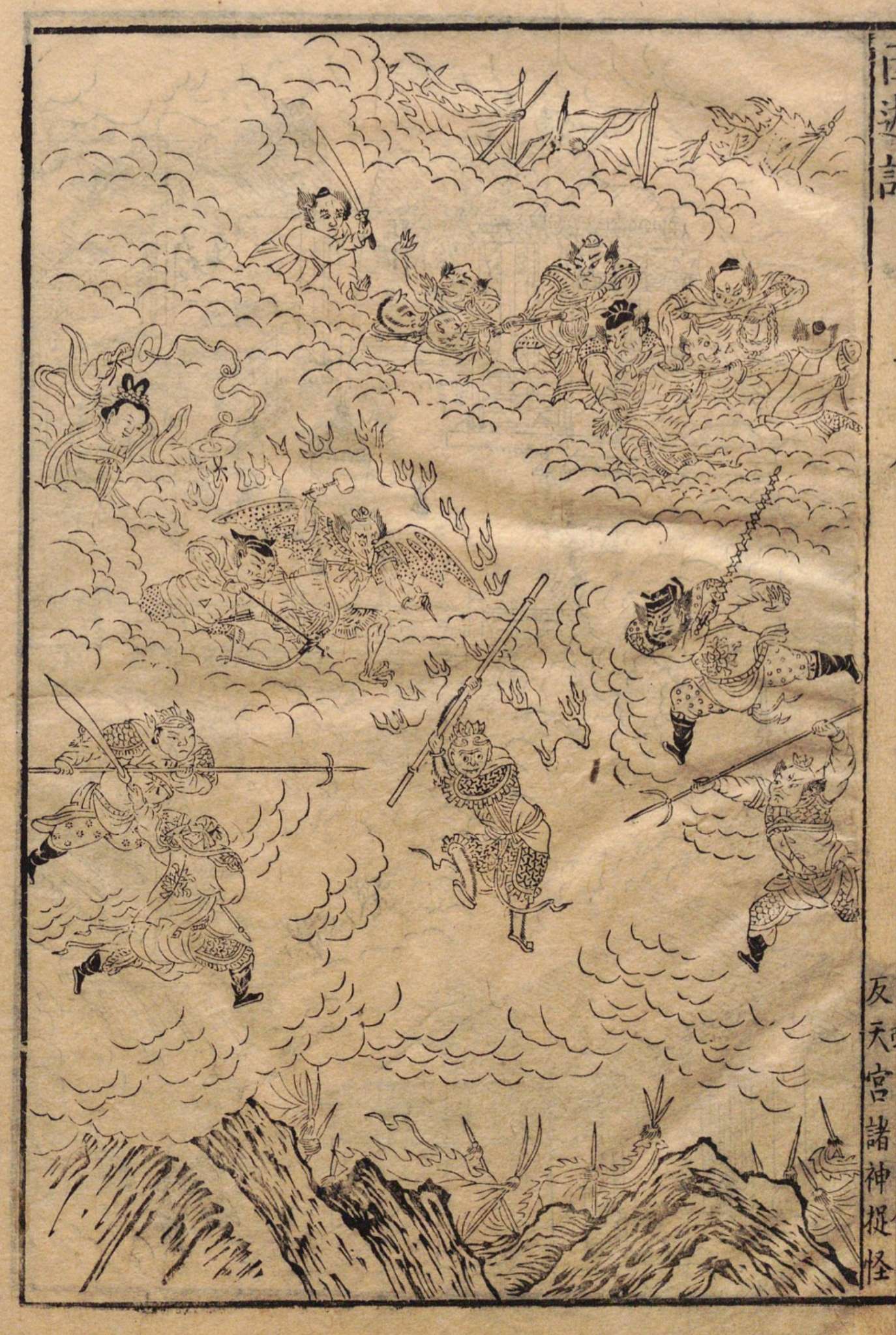
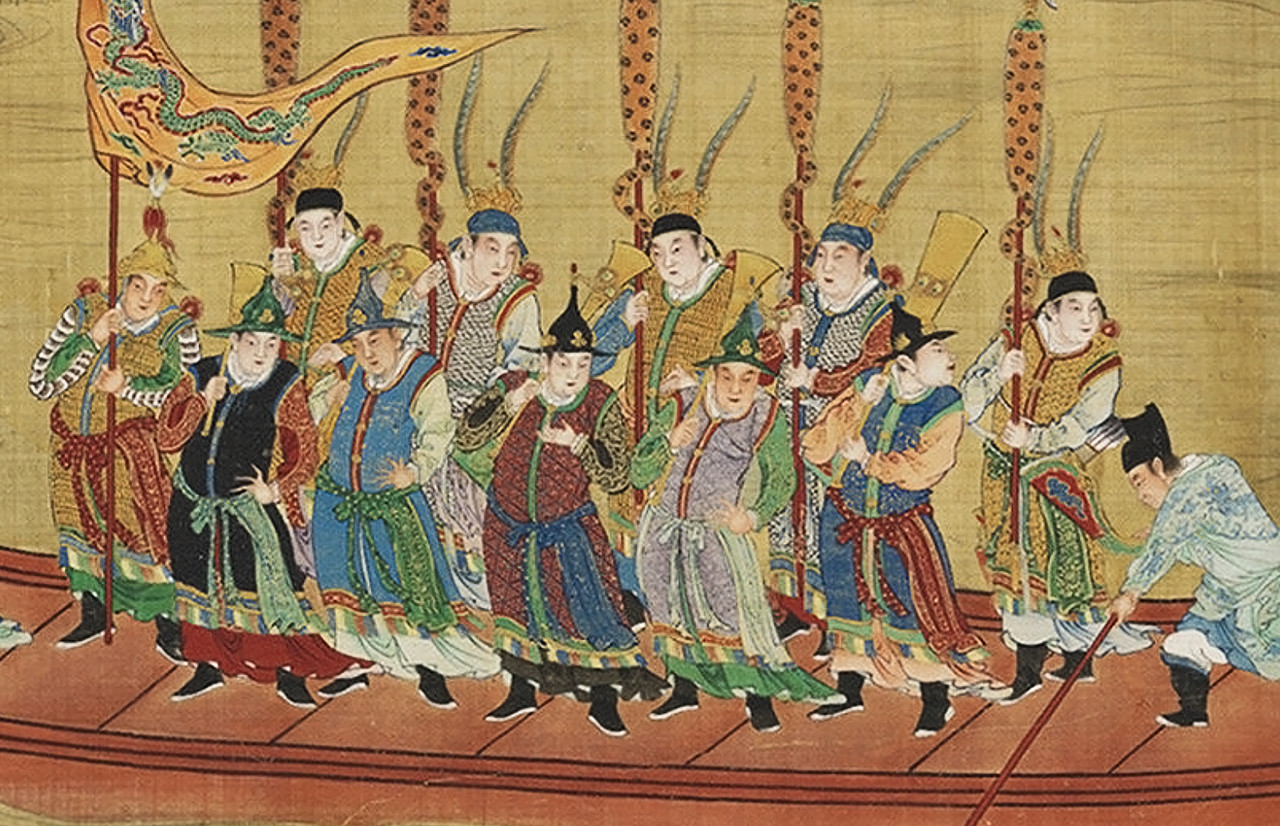
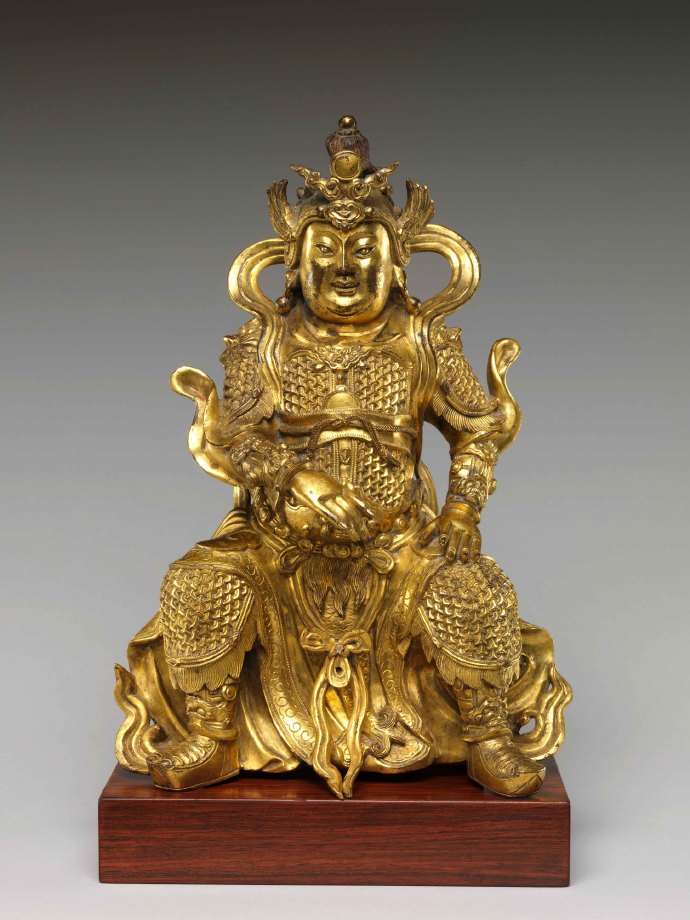
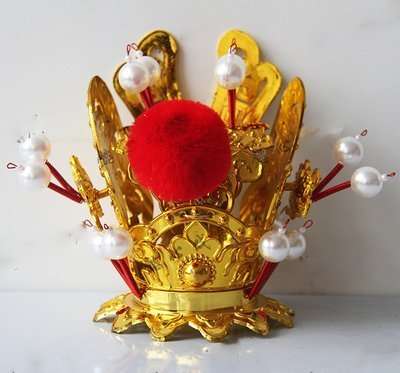
Those wanting to make a novel accurate suit should consult Ming-era chainmail (fig. 10). However, the oldest drawing of Wukong wearing armor that I’m aware of depicts him with “mountain pattern” armor (fig. 11). Combinations of mountain pattern armor and feather caps can be seen in the 16th century CE scroll The Emperor’s Return to the Capital (Rubitu, 入蹕圖) (fig. 12), showing it was part of historical military regalia and not just the purview of Chinese opera (fig. 13). Modern depictions of Monkey tend to portray him wearing mountain pattern armor with ornate beast elements on the shoulders and waist. Those wishing to replicate this kind of armor should consult Ming-era statues of Buddhist protector deities, such as Skanda or the Four Heavenly Kings (this blog is especially good) (fig. 14, for example). Modern “Purple Gold Caps” (zijin guan, 紫金冠) with lingzi (翎子) feathers should be used for Sun’s phoenix feather cap (fig. 15).

Fig. 10 – Ming chainmail from the Wubei zhi (1621 CE) (larger version). Fig. 11 – A woodblock print of Sun wearing mountain pattern armor while fighting the heavenly army (larger version). From Mr. Li Zhuowu’s Literary Criticism of Journey to the West (late-16th century CE, “Mr. Li’s Criticism” hereafter). Fig. 12 – A detail of halberd-bearing soldiers wearing mountain pattern armor and feather caps from The Emperor’s Return to the Capital (16th century CE) (larger version). Image enhanced slightly for clarity. Fig. 13 – Monkey as portrayed in Beijing Opera (larger version). Photo by TAO Images Limited via Alamy. Fig. 14 – A 16th century CE brass statue of Skanda (larger version). This blog has photos from all sides. Fig. 15 – A modern example of a Purple Gold Cap (larger version). 

Contrary to popular belief, Sun does not wear the armor throughout the entire story. Though not openly stated, the novel suggests it is stripped from the monkey when he is captured by heavenly soldiers in chapter six: “They bound him with ropes and punctured his breast bone with a knife, so that he could transform no further” (Wu & Yu, 2012, vol. 1, p. 186). Obviously the knife wouldn’t have punctured the magic armor. And after heaven fails to execute him in chapter seven, several celestial report:

“Your Majesty, we don’t know where this Great Sage has acquired such power to protect his body. Your subjects slashed him with a scimitar and hewed him with an ax; we also struck him with thunder and burned him with fire. Not a single one of his hairs was destroyed (emphasis added). What shall we do?” (Wu & Yu, 2012, vol. 1, p. 188).

萬歲,這大聖不知是何處學得這護身之法,臣等用刀砍斧剁,雷打火燒,一毫不能傷損,卻如之何?

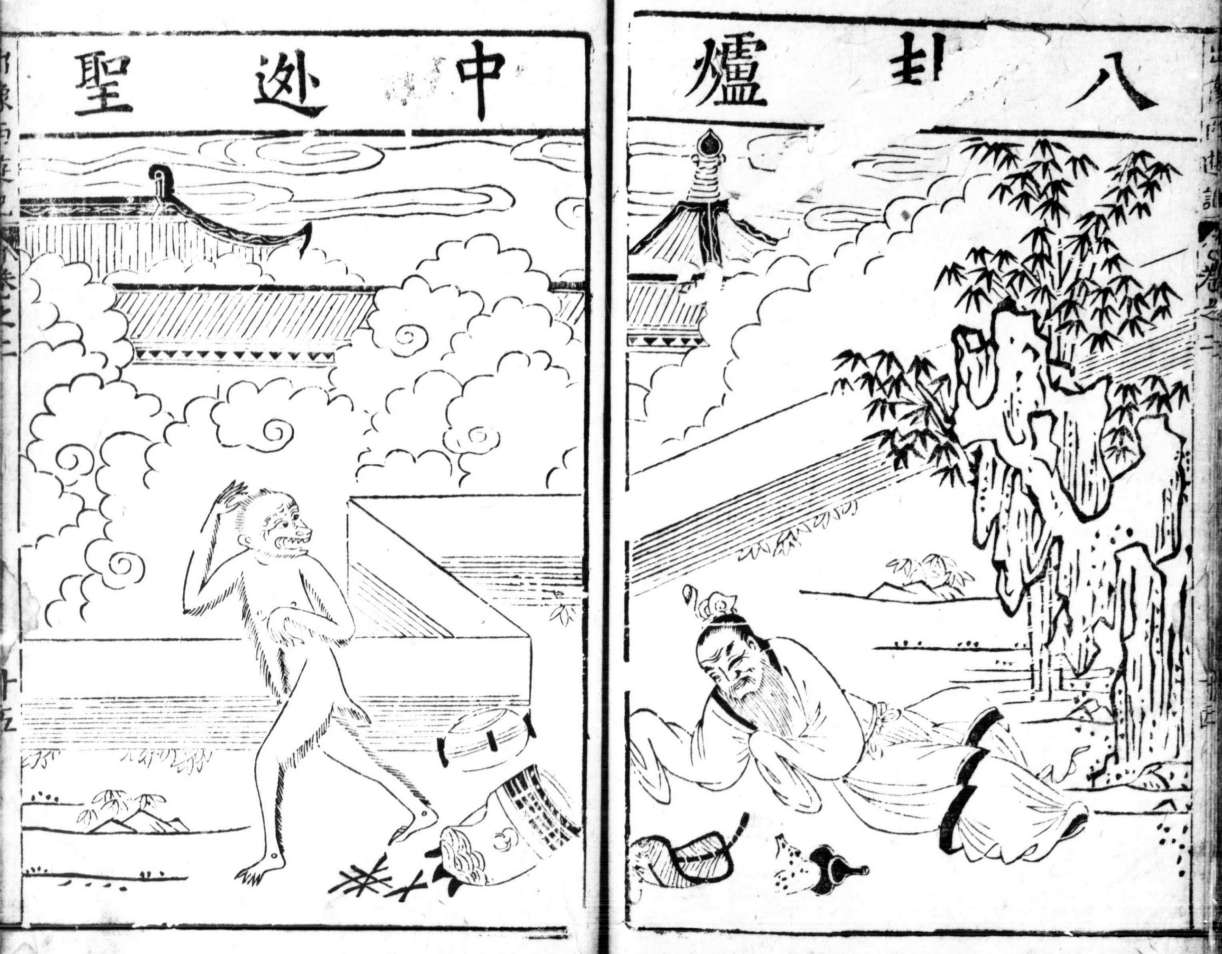
Prior to his turn in Laozi’s eight trigrams furnace in chapter seven, the story again references the knife in Monkey’s breastbone, suggesting he is still naked: “Arriving at the Tushita Palace, Laozi loosened the ropes on the Great Sage, pulled out the weapon from his breastbone, and pushed him into [furnace]” (Wu & Yu, 2012, vol. 1, p. 189). One late-Ming woodblock print actually portrays him naked upon his escape from the furnace (fig. 16). Most importantly, after being released from his 600 plus-year-long imprisonment under Five Elements Mountain, Monkey is twice described in chapter 14 as being “completely or stark naked” (chi lin lin, 赤淋淋; chi tiao tiao, 赤條條) (Wu & Yu, 2012, vol. 1, p. 309). (See the 06-22-23, 09-12-23, and 05-03-26 updates below for more evidence.)

Fig. 16 – Wukong in his birthday suit escaping from Laozi’s eight trigrams furnace (larger version). From Mr. Li’s Criticism (late-16th to early-17th century CE).

The lack of clothing leads to his second most identifiable and longest-worn piece of attire, a tiger skin kilt (hu pi qun, 虎皮裙). After killing the beast in chapter 14:

He pulled off one strand of hair and blew a mouthful of magic breath onto it, crying, “Change!” It changed into a sharp, curved knife, with which he ripped open the tiger’s chest. Slitting the skin straight down, he then ripped it off in one piece. He chopped away the paws and the head, cutting the skin into one square piece. He picked it up and tried it for size, and then said, “It’s a bit too large; one piece can be made into two.” He took the knife and cut it again into two pieces; he put one of these away and wrapped the other around his waist. Ripping off a strand of rattan from the side of the road, he firmly tied on this covering for the lower part of his body (Wu & Yu, 2012, vol. 1, p. 310).

好猴王,把毫毛拔下一根,吹口仙氣,叫:「變!」變作一把牛耳尖刀,從那虎腹上挑開皮,往下一剝,剝下個囫圇皮來。剁去了爪甲,割下頭來,割個四四方方一塊虎皮。提起來,量了一量道:「闊了些兒,一幅可作兩幅。」拿過刀來,又裁為兩幅。收起一幅,把一幅圍在腰間。路傍揪了一條葛籐,緊緊束定,遮了下體

Monkey’s most recognizable accessory is the self-control-inducing golden fillet (jingu, 金箍; a.k.a. jingu, 緊箍, lit: “tight fillet”), which he is tricked into wearing as a punishment shortly after murdering six bandits in chapter 14. As noted above, the band predates the novel, appearing in the 12th to 13th century CE Eastern Thousand Buddha Cave number two painting. This piece depicts the headgear as a simple circlet devoid of any decoration (fig. 17). This matches the novel’s description of “a thin metal band” (jinxian, 金線) (Wu & Yu, 2012, vol. 1, p. 310). But as can be seen from the Kaiyuan temple pagoda relief, there also exists a version with a double curlicue pattern in the center of the forehead (fig. 18). This has come to be the most popular version used in modern media.

Fig. 17 – Detail of the Monkey Pilgrim’s fillet from Eastern Thousand Buddha Cave no. 2 (c. 12th to 13th century CE) (larger version). Image enhanced slightly for clarity. Fig. 18 – Detail from the Kaiyuan Temple pagoda relief (1237 CE) (larger version).

As for other attire, there exists one passage in chapter 58 that describes how Monkey’s doppelganger copied even his clothing:

His looks were exactly the same as those of the Great Sage: he, too, had a gold fillet clamped to his blondish-brown hair, a pair of fiery eyes with golden irises, a monk’s robe on his body, a tiger kilt tied around his waist, a gold-banded iron staff in one of his hands, and a pair of deerskin boots on his feet (based on Wu & Yu, 2012, vol. 3, p. 105).

模樣與大聖無異:也是黃髮金箍,金睛火眼;身穿也是綿布直裰,腰繫虎皮裙;手中也拿一條兒金箍鐵棒;足下也踏一雙麂皮靴

Two things about this passage require explanation. First, Yu (Wu & Yu, 2012) originally translated huangfa (黃髮) as “brownish hair” (vol. 3, p. 105). But huang (黃) traditionally means “yellow.” If you refer back to figures six, eight, and nine, you will see that macaque monkeys have a light brown to blond coloring, so I changed the translation to reflect this.

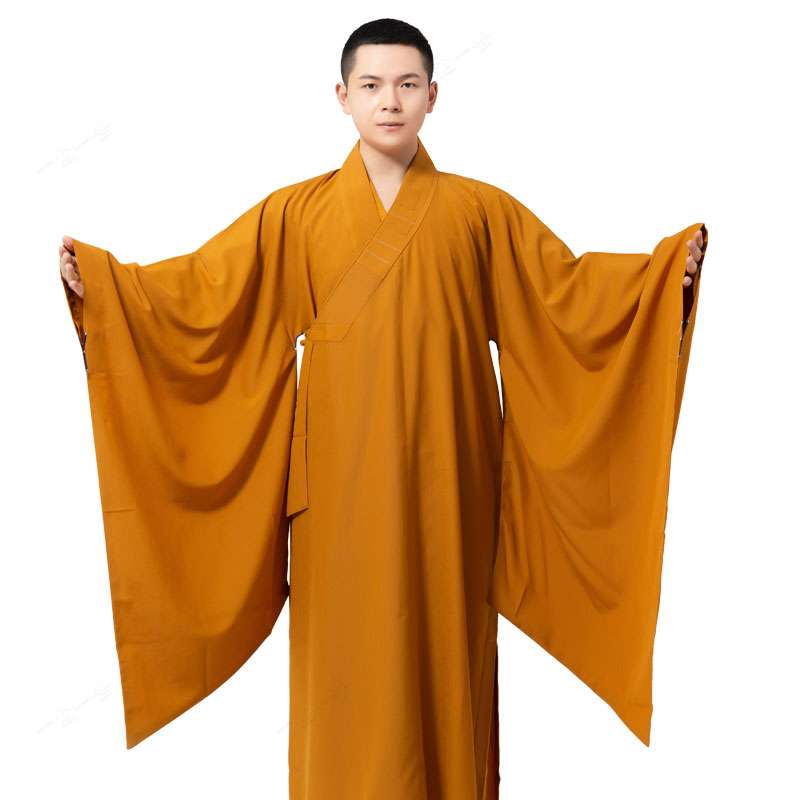
Second, he translates mianbu zhiduo (綿布直裰) as “silk shirt” (Wu & Yu, 2012, vol. 3, p. 105). However, a better translation is “silk cloth zhiduo robe.” The zhiduo robe is known colloquially in English as “Buddhist monk” or “Taoist monk” robes. Also called haiqing (海青), such garments reach almost to the ground and have long, broad sleeves. The robe is closed by a tie on the right side of the torso (fig. 19).

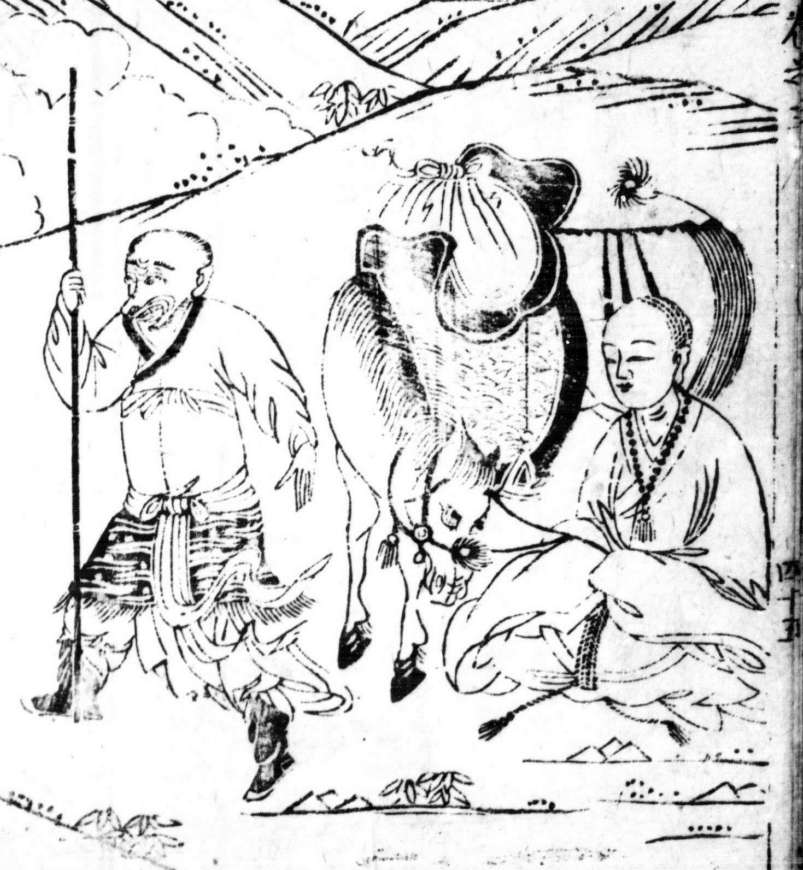
Woodblock prints of Monkey from the original 1592 CE Journey to the West vary from page to page, but one is pretty accurate. He wears the robe (with tied cuffs), the tiger skin kilt, and boots (fig. 20).

Fig. 19 – A zhiduo/haiqing robe (larger version). Image found here. These robes can be any number of colors. Fig. 20 – A woodblock print of Sun Wukong with his master, Tripitaka (larger version).

There is a distinct order in which Sun Wukong wears the aforementioned clothing and accessories: the armor, then the tiger skin, and then the golden fillet. However, many modern depictions portray Monkey wearing both the armor and headband. This is obviously anachronistic within the novel’s fictional story line. (Admittedly, though, this is not unique to the modern era. See figure 11 for a 16th century CE example.) Furthermore, many depictions dismiss the tiger skin kilt altogether.

2.3. The Staff

Monkey’s staff is first introduced in chapter three when he travels to the undersea palace of the dragon king to procure a divine weapon. There, he is directed towards a massive iron pillar:

Wukong girded up his clothes and went forward to touch it: it was an iron rod more than twenty feet long and as thick as a barrel. Using all his might, he lifted it with both hands, saying, “It’s a little too long and too thick. It would be more serviceable if it were somewhat shorter and thinner.” Hardly had he finished speaking when the treasure shrunk a few feet in length and became a layer thinner. “Smaller still would be even better,” said Wukong, giving it another bounce in his hands. Again the treasure became smaller. Highly pleased, Wukong took it out of the ocean treasury to examine it. He found a golden ring at each end, with solid black iron in between. Immediately adjacent to one of the rings was the inscription, “The As-You-Will Gold-Banded Staff. Weight: 17,560 pounds” (based on Wu & Yu, 2012, p. 135). [4]

悟空撩衣上前,摸了一把,乃是一根鐵柱子,約有斗來粗,二丈有餘長。他儘力兩手撾過道:「忒粗忒長些,再短細些方可用。」說畢,那寶貝就短了幾尺,細了一圍。悟空又顛一顛道:「再細些更好。」那寶貝真個又細了幾分。悟空十分歡喜,拿出海藏看時,原來兩頭是兩個金箍,中間乃一段烏鐵。緊挨箍有鐫成的一行字,喚做:「如意金箍棒,重一萬三千五百斤。」

A poem in chapter 75 describes how the staff is decorated with magic symbols. Part of it reads:

The rod of bin steel nine cyclic times refined
Was forged in the stove by Laozi himself.
King Yu took it, named it “Treasure Divine,”
To fix the Eight Rivers and Four Seas’ depth.
In it were spread out tracks of planets and stars,
Its two ends were clamped in pieces of gold.
Its dense patterns would frighten gods and ghosts;
On it dragon and phoenix scripts were drawn.
Its name was one Rod of Numinous Yang,
Stored deep in the sea, hardly seen by men
[…] (based on Wu & Yu, 2012, vol. 3, p. 375)

棒是九轉鑌鐵煉,老君親手爐中煅。
禹王求得號神珍,四海八河為定驗。
中間星斗暗鋪陳,兩頭箝裹黃金片。
花紋密佈鬼神驚,上造龍紋與鳳篆。
名號靈陽棒一條,深藏海藏人難見。

So we see the staff is depicted as a rod of black iron or steel adorned on both ends with a single golden ring and decorated along the body with astronomical charts and an inscription towards one tip listing the weapon’s name and weight. The literary description greatly differs from modern media which often portrays it as entirely gold or red in color.

Those wishing to replicate the inscription on the staff can use figure 21 as a template. The characters are presented in “Small Seal Script” (Xiao Zhuan, 小篆), which hails from the Qin Dynasty (221–206 BCE) when written Chinese was standardized by Emperor Qin Shihuang. Using this will give the staff a more ancient look. I used the template years ago to create a replica staff for an archaeology course in college.

Fig. 21 – The small script template for Monkey’s staff (larger version).

As for “the tracks of stars and planets,” I recommend using the Dunhuang or Suchow star charts.

3. Popular Depictions

The following two sections include a small sampling of what I consider to be the least and most accurate portrayals in past and modern media. These are presented in no particular order.

3.1. The Least Accurate

1) SMITE video game – He’s basically a bodybuilder with mutton chops (fig. 22). The design includes the aforementioned headband plus armor anachronism. Why is he wearing a gladiator-style pauldron? The original illustration is by Brolo on deviantart.

Fig. 22 – “Do you even lift?” Wukong (larger version).

2) Warriors Orochi video game – Mutton chops, frosted tips, and an outfit borrowed from Prince’s wardrobe (fig. 23). Words fail me.

Fig. 23 – “Backup Dancer” Wukong (larger version).

3) The Forbidden Kingdom (2008) – Jet Li has a blond ponytail, mutton chops, and a soul patch (fig. 24). Need I say more?
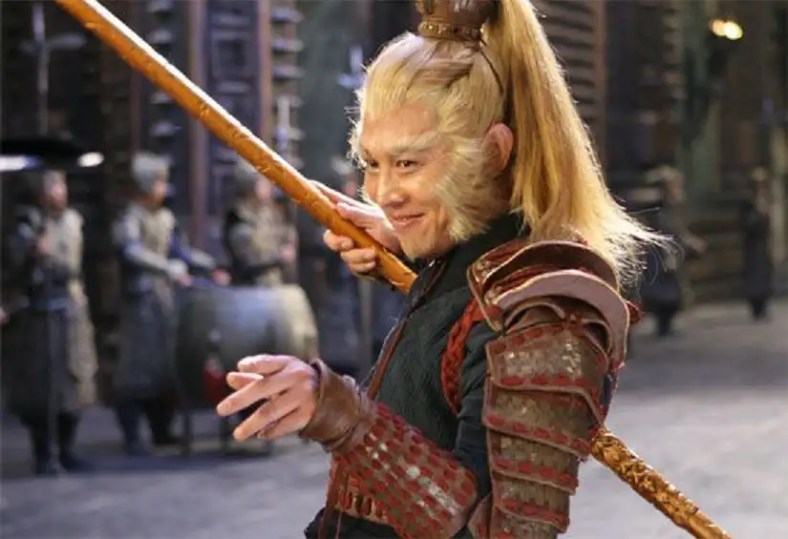
Fig. 24 – “L’Oréal Paris” Wukong (larger version).

3.2. The Most Accurate

1) Yoshitoshi (1839-1892) – This Japanese artist produced many woodblock prints of our hero. Take for example his Modern Journey to the West series completed between 1864 and 1865. He portrays Sun Wukong as a red-faced snow macaque, which aligns more with the literary description (fig. 25).

Fig. 25 – Wukong salutes Xuanzang (larger version).

2) Journey to the West: Conquering the Demons (2013) – This dark comedy depicts the Great Sage as a short, ugly primate wearing golden armor (fig. 26).

Fig. 26 – Wukong prior to becoming Xuanzang’s disciple (larger version).

3) Journey to the West (2011) – This television series is a faithful adaptation of the novel. Although the actor who plays Sun Wukong is normal height, he wears a full silicone mask and clawed gloves to give the character a more primate look. His golden chainmail armor and staff are more accurate too. The latter even includes decorations on the shaft (fig. 27).

Fig. 27 – Wukong during his rebellion against heaven (larger version).

4. Conclusion

The novel portrays Sun Wukong as an ugly, bald Rhesus monkey less than four feet tall. (Per the 06-02-25 update, he also has long earlobes.) His traditional literary attire includes a phoenix feather cap, golden chainmail armor, and lotus root-colored boots. Later, he wears a golden fillet, a silk monk’s robe, a tiger skin kilt, and leather boots. He wields a rod of black iron/steel adorned on both ends with a single golden ring and decorated along the body with astronomical charts and an inscription towards one tip listing the weapon’s name and weight.


5. Updates

Update: 02-02-21

As mentioned above, the novel describes Wukong being “less than four feet, in fact” (Wu & Yu, 2012, vol. 1, p. 408). I have made a chart comparing his height with that of a 6 ft (1.82 m) human man (fig. 28). This should serve as a good illustration for just how short our hero is.

Fig. 28 – Size chart (larger version).


Update: 01-23-22

I’ve written an article suggesting a mantra for the secret spell that causes Sun Wukong’s golden headband to tighten. Similar to the above article, I had artists and fanfiction authors in mind when I wrote it.

The Tightening Spell of Sun Wukong’s Golden Headband


Update: 03-07-22

I’ve written a response to a comment on one of my Youtube videos. It discusses Sun Wukong’s height.

How Tall is the Monkey King? – A Debate


Update: 06-22-23

I previously noted a 16th century CE woodblock print that shows Sun Wukong naked upon escaping Laozi’s furnace (refer back to fig. 16). A woodblock print from the original 1592 CE Journey to the West also depicts him in his birthday suit (fig. 29). This adds to the evidence that Monkey doesn’t wear his armor during the entirety of the journey.

Fig. 29 – A naked Sun Wukong flees the furnace (larger version). 


Update: 09-12-23

In addition, in chapter 22, Sha Wujing mentions having his armor stripped from his body just before his planned execution:

Jade Emperor grew mightily enraged;
Hands clasped, he faced his counsel on the left.
Stripped of my hat, my armor, and my rank,
I had my whole body pushed to the block (Wu & Yu, 2012, vol. 1, p. 425).

玉皇即便怒生嗔,卻令掌朝左輔相:卸冠脫甲摘官銜,將身推在殺場上。

This supports the suggestion that Monkey’s armor was removed before heaven tried to execute him.


Update: 04-27-24

Here is another colorful description of Sun Wukong’s face:

A bumpy, scabrous face, a pair of yellow eyeballs, a sunken forehead, and long, protruding fangs—he seemed virtually an overcooked crab with meat inside and bones outside! (based on Wu & Yu, 2012, vol. 2, p. 155)

七高八低孤拐臉,兩隻黃眼睛,一個磕額頭,獠牙往外生。就像屬螃蟹的,肉在裡面,骨在外面。

In addition, chapter 37 gives a more precise measurement for Monkey’s height. He first transforms into a “tiny monk about two cun tall” (二寸長的小和尚兒) (based on Wu & Yu, 2012, vol. 2, p. 172). He shortly thereafter grows even bigger when a prince makes fun of him:

Tripitaka pulled open the box’s cover; Pilgrim [Sun Wukong] leaped out and began to hobble all over the place. The prince said, “This little midget! What can he know?” When Pilgrim heard this remark about his size, he at once resorted to magic. Straightening up his torso, he grew about three chi and four or five cun instantly (emphasis added). “If he can grow that rapidly,” said the soldiers, highly startled, “it will only be a few days before he pierces the sky.” When Pilgrim reached his normal height, however, he stopped growing (emphasis added) (based on Wu & Yu, 2012, vol. 2, pp. 174-175).

三藏扯開匣蓋兒,那行者跳將出來,呀的兩邊亂走。太子道:「這星星小人兒,能知甚事?」行者聞言嫌小,卻就使個神通,把腰伸一伸,就長了有三尺四五寸。眾軍士吃驚道:「若是這般快長,不消幾日,就撐破天也。」行者長到原身,就不長了。

One chi (尺) is roughly 12.3 in or 31.8 cm, and one chi equals 10 cun (寸; a.k.a. “Chinese inches”) (Jiang, 2005, p. xxxi). One cun would be about 1.25 in or 3.18 cm. Two cun would therefore be 2.5 in or 6.36 cm. Growing the stated additional height would then put our hero at chi and 6 or 7 cun, which is roughly 3.86 ft or 1.176 m. This agrees with the aforementioned estimate of “not (or less than) four chi tall” (buman sichi不滿四尺) (Wu & Yu, 2012, vol. 1, pp. 128 and 408).


Update: 06-02-25

A reader reminded me that I forgot to list one of Monkey’s features: long earlobes. A poem in chapter four reads:

The gold cuirass worn on his body was brilliant and bright;
The gold cap on his head also glistened in the light.
In his hands was a staff, the golden-hooped rod,
That well became the cloud-treading shoes on his feet.
His eyes glowered strangely like burning stars.
Hanging past his shoulders were two ears, forked and hard (emphasis added).
His remarkable body knew many ways of change,
And his voice resounded like bells and chimes.
This BanHorsePlague with beaked mouth and gaping teeth
Aimed high to be the Equal to Heaven Sage.

身穿金甲亮堂堂,頭戴金冠光映映。
手舉金箍棒一根,足踏雲鞋皆相稱。
一雙怪眼似明星,兩耳過肩查又硬
挺挺身才變化多,聲音響喨如鐘磬。
尖嘴咨牙弼馬溫,心高要做齊天聖。(Source)

Long earlobes are a symbol of wisdom and longevity (fig. 30), so the description here might be symbolic of his immortality.

Fig. 30 – An image of the Daoist high god Laozi and his long earlobes (larger version). Image found here.


Update: 05-03-26

Regarding the evidence for Monkey’s lack of armor throughout the story, here is another ancient woodblock print showing him without clothes upon escaping the furnace (fig. 31). It is included among a brief cache of illustrations from The Book to Enlightenment of the Journey to the West (Xiyou Zhengdao Shu, 西遊證道書, 1663), a Daoist commentary on the novel.

Fig. 31 – Monkey escapes from the furnace (larger version). 

I should also note that a reader disagrees with the idea that Sun Wukong is bald. See their comments below.

Notes:

1) The 15th century CE zaju play Journey to the West contains many familiar episodes that would come to appear in the final novel.

2) See the introduction of Dudbridge (1970), for example.

3) Saturn (Tuxing, 土星; lit: “Earth Star”) is mentioned here because the stellar deity is known for having a thickly-bearded face (see figure one on this article). The reference is saying that Monkey’s sunken cheeks are hairless.

4) Yu’s (Wu & Yu, 2012) original translation says “thirteen thousand five hundred pounds” (vol. 1, p. 135). However, the Chinese version uses jin (斤), known in English as “catty.” The catty and pound are two different measures of weight, the former being heavier than the latter. Therefore, the English text has been altered to show this. The catty during the Ming Dynasty when the novel was compiled equaled 590 grams (Jiang, 2005, p. xxxi), so 13,500 catties would equal 17,560 lbs.

Sources:

Burton, F. D. (2005). Monkey King in China: Basis for a Conservation Policy? In A. Fuentes & L. D. Wolfe (Eds.), Primates Face to Face: Conservation Implications of Human-Nonhuman Primate Interconnections (pp. 137-162). Cambridge: Cambridge University Press.
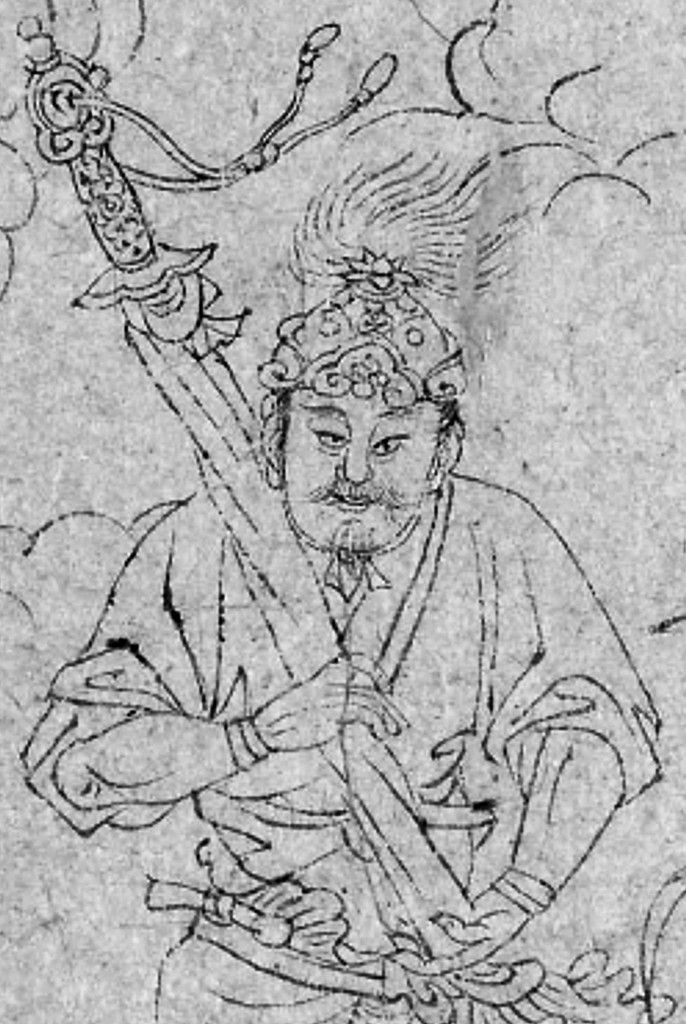
Dudbridge, G. (1970). The Hsi-Yu Chi: A Study of Antecedents to the Sixteenth-Century Chinese Novel. Cambridge: Cambridge Univ. Press.
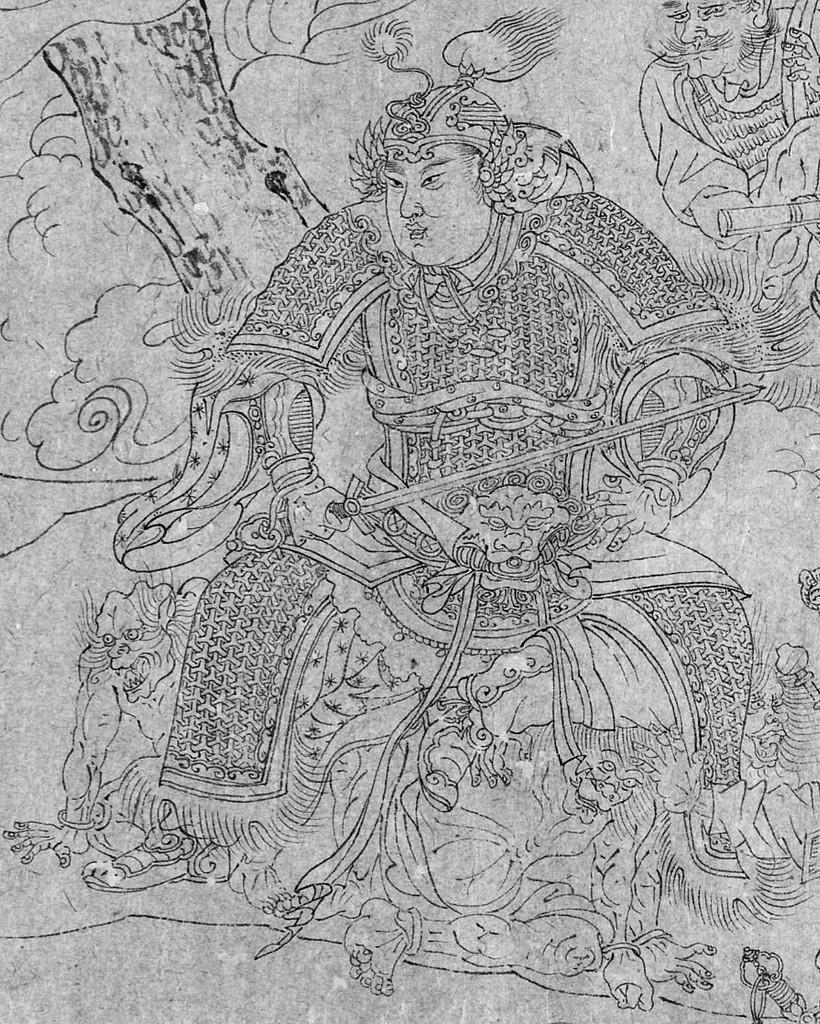
Dubue, C., Allen, W. L., Maestripieri, D., & Higham, J. P. (2014). Is Male Rhesus Macaque Red Color Ornamentation Attractive to Females? Behavioral Ecology and Sociobiology 68(7), 1-10. Retrieved from https://www.researchgate.net/publication/262066733_Is_male_rhesus_macaque_red_color_ornamentation_attractive_to_females

Ecke, G., & Demiéville, P. (1935). The Twin Pagodas of Zayton: A Study of the Later Buddhist Sculpture in China. Cambridge, Mass: Harvard University Press.
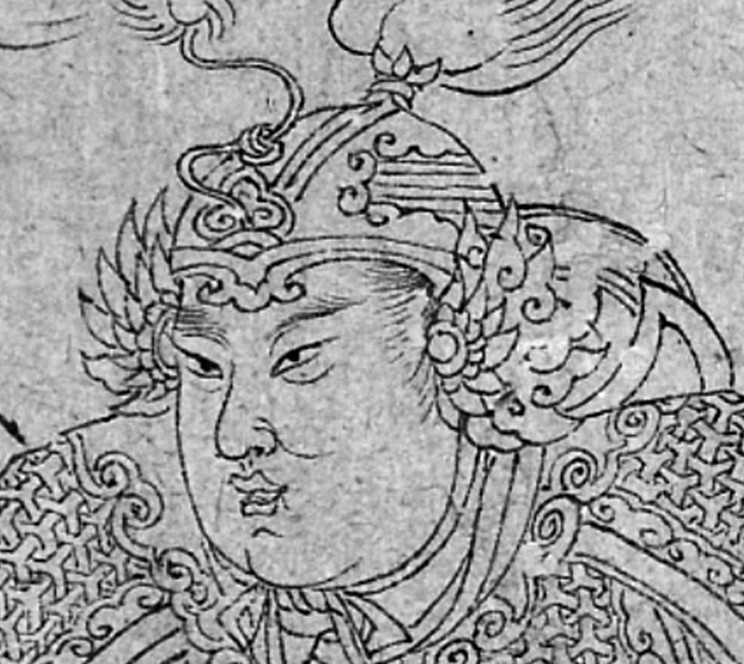
Jiang, Y. (2005). The Great Ming Code / Da Ming Lu. University of Washington Press.
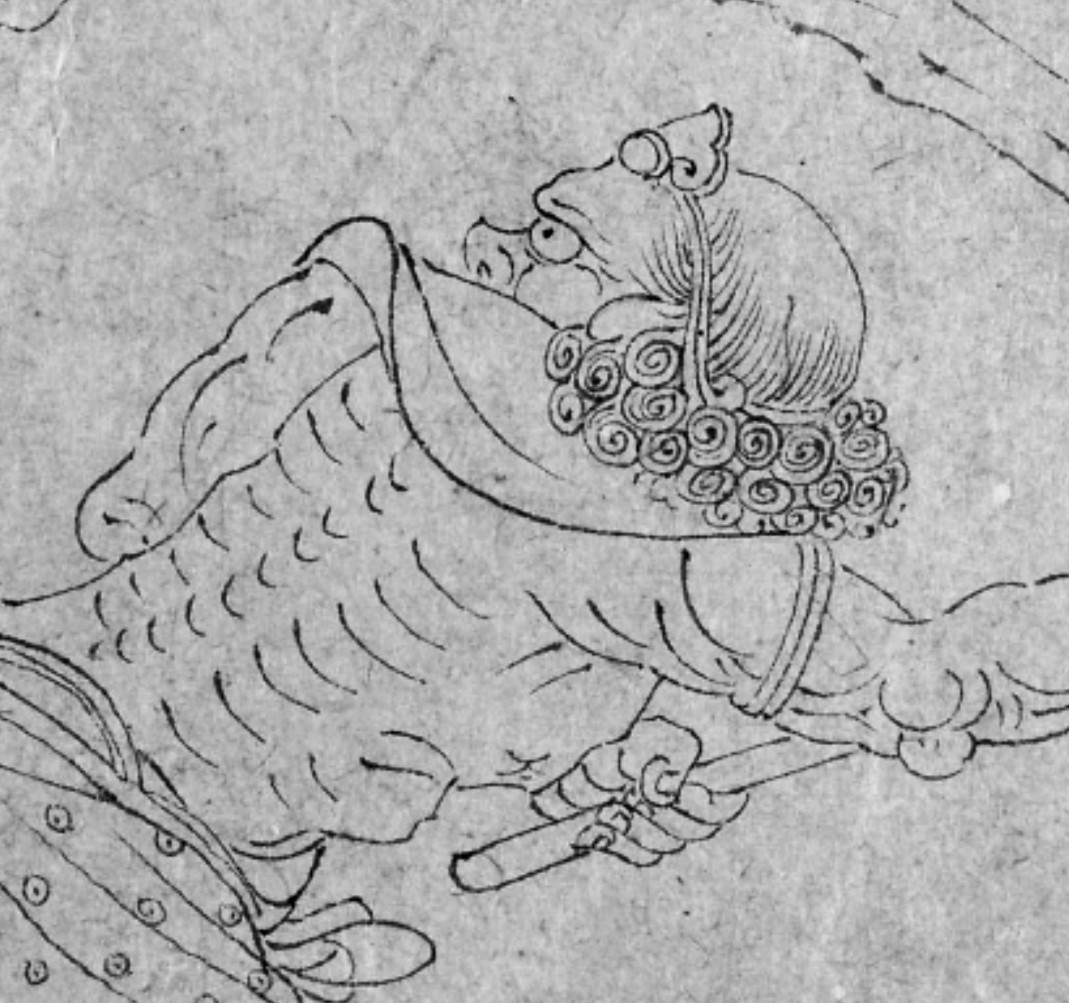
Wivell, C.S. (1994). The Story of how the Monk Tripitaka of the Great Country of T’ang Brought Back the Sūtras. In V. H. Mair (Ed.), The Columbia Anthology of Traditional Chinese Literature (pp. 1181-1207). New York: Columbia University Press.
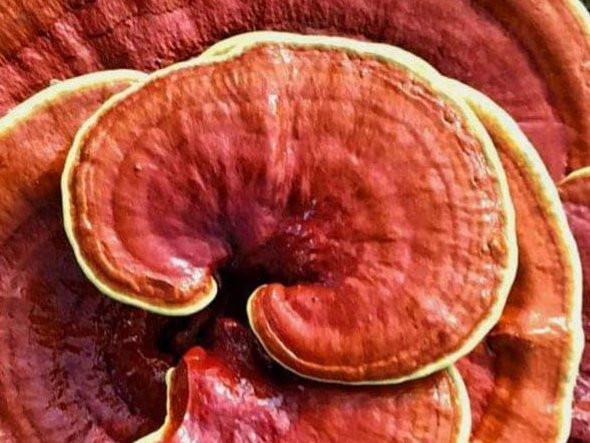
Wu, C., & Yu, A. C. (2012). The Journey to the West (Vols. 1-4) (Rev. ed.). Chicago, Illinois: University of Chicago Press.