The Tightening Spell of Sun Wukong’s Golden Headband

Last updated: 04-09-2024

Sun Wukong‘s golden headband (jingu, 金箍; a.k.a. jingu, 緊箍, lit: “tight fillet”) (fig. 1) is an instantly recognizable part of his popular iconography. Anyone who’s read Journey to the West (Xiyouji西遊記, 1592 CE) will know that it painfully tightens around our hero’s skull to correct any unsavory behavior. “What kind of behavior?” someone might ask. Well, mass murder, of course! In chapter 56, for example, Monkey’s Buddhist master Tripitaka recites the spell to punish him for beating a group of bandits to death with his magic staff and beheading one of them with a blade (Wu & Yu, 2012, vol. 3, p. 89).

This spell is first revealed to the monk by Guanyin in chapter 14:

I have a spell which is called the True Words for Controlling the Mind [dingxin zhenyan, 定心真言], or the Tight-Fillet Spell [jingu er zhou, 緊箍兒咒]. You must memorize it secretly; commit it firmly to your memory, and don’t let anyone learn of it. I’ll try to catch up with him [Monkey] and persuade him to come back and follow you. When he returns, give him the shirt and the cap [containing the headband] to wear; and if he again refuses to obey you, recite the spell silently. He will not dare do violence or leave you again.” (Wu & Yu, 2012, p. 317).

我那裡還有一篇咒兒,喚做『定心真言』,又名做『緊箍兒咒』。你可暗暗的念熟,牢記心頭,再莫洩漏一人知道。我去趕上他,叫他還來跟你,你卻將此衣帽與他穿戴。他若不服你使喚,你就默念此咒,他再不敢行兇,也再不敢去了。」

You can see the exact words are never revealed. This is not surprising, though, as the spell is one of the few things in the entire Buddho-Daoist cosmos that can control Sun Wukong. Tripitaka’s life would be in danger and the journey would be doomed if any villains got ahold of this secret. But … what if … we could guess the spell, just for fun? I’d like to suggest a mantra based on historical religious beliefs and iconography. This thought experiment was written for the benefit of artists and fanfiction writers looking to create more accurate portrayals of the novel and its characters.

Fig. 1 – Monkey’s golden headband (larger version). Image found here.

Table of Contents

1. Religious Background

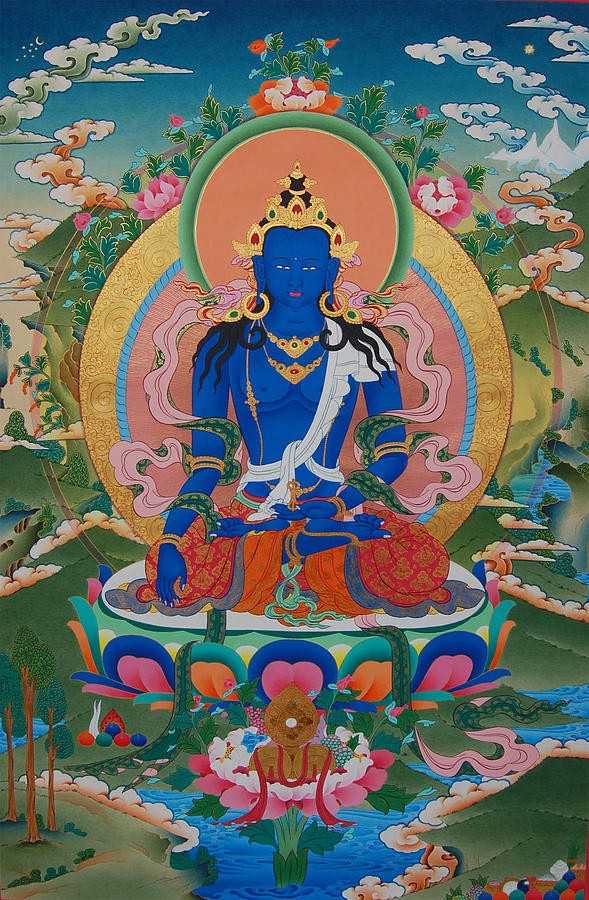
As I note in this article, the golden fillet is likely based on a ritual headband worn by Buddhist ascetics in ancient India. The Hevajra Tantra (Dabei kongzhi jingang dajiao wang yigui jing, 大悲空智金剛大教王儀軌經, 8th-c.) states yogins must wear the band and a list of other prescribed ritual items in their worship of the wrathful protector deity Heruka (Linrothe, 1999, p. 250). Most importantly, the tantra states the band symbolizes the Buddha Akshobhya (Ch: Achu, 阿閦; Budong, 不動; lit: “Immovable”) (fig. 2), who gained enlightenment through moralistic practices of right speech and action (Linrothe, 1999, p. 251; Buswell & Lopez, 2013, p. 27).

Fig. 2 – A depiction of Akshobhya (larger version). [1] Artist unknown.

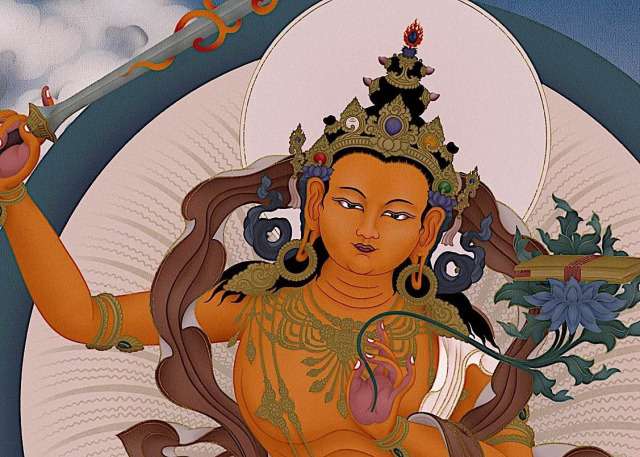
Akshobhya and the other esoteric Wisdom Buddhas are sometimes depicted as small figures or colored jewels in the headdress of the Manjusri Bodhisattva (and other Buddhist personages) (Getty, 1914/1988, p. 37; Vessantara, 1993, p. 155). Akshobhya is symbolized by the color blue (Getty, 1914/1988, p. 36). A cursory Google image search shows the blue jewel is often set in the top most position over Manjusri’s forehead (fig. 3).

This might suggest a more religiously accurate version of Sun Wukong’s golden headband would include a figure or jewel representing Akshobhya.

Fig. 3 – A modern painting of Manjusri by Ben Christian (larger version). The jewel above his forehead is a purple/blue color. Image found here

2. The Mantra

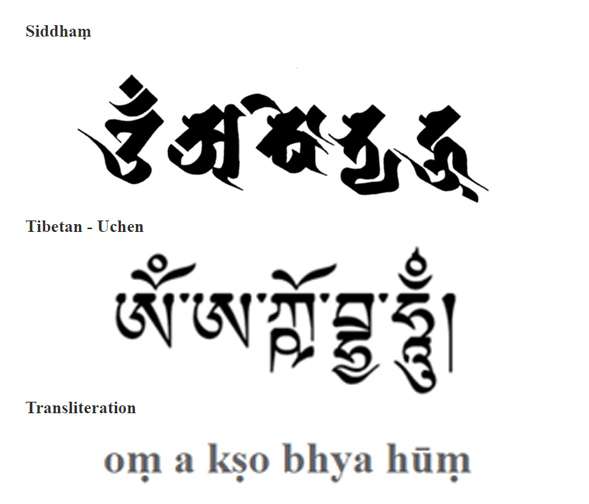
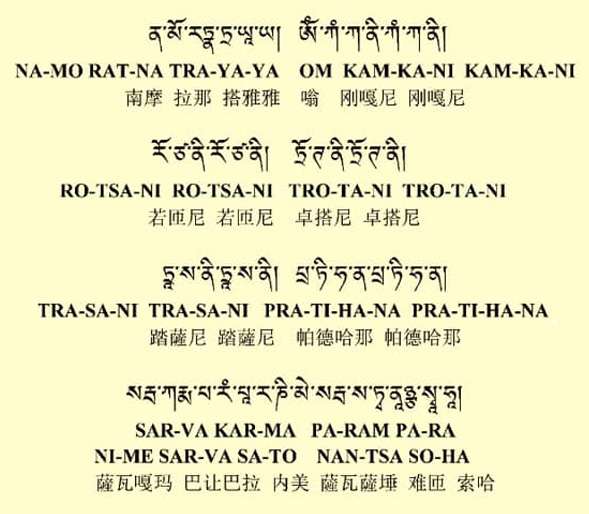
Given the above information, I’d like to suggest the tightening spell for Monkey’s headband—within the context of our thought experiment—is the Akshobhya Mantra! There are two kinds. I’ll leave it up to you which one you like best. The first is a short recitation of the buddha’s name: O a kṣo bhya hūṃ (fig. 4). This can be very roughly translated as “Praise to the Immovable One!” Om and Hum are both holy syllables invoking spiritual power and enlightenment, respectively. They also appear in the more well-known Oṃ maṇi padme hūṃ (Ch: An mo ni ba mi hong, 唵嘛呢叭咪吽). One Chinese version of the name mantra appears to be “An a bie zha zhi ga hong hong” (唵 阿別炸枝嘎 吽吽).

Fig. 4 – The Siddham and Uchen script versions of the short mantra (larger version). Based on information found here. Fig. 5 – A version of the longer chant with Uchen script, as well as English and Chinese transliterations (larger version). Based on an image found here.

The second is a longer chant, again called the “Mantra of Akshobhya” (Achu fo xinzhou, 阿閦佛心咒) (fig. 5 and video 1). It’s interesting to note that the historical Xuanzang (on whom Tripitaka is based) is known to have translated a version of this mantra. [2]

Reciting this to rein in Sun Wukong not only references the band’s historical and religious connection to Akshobhya but also serves as a physical reminder of right speech and action (how the deity gained buddhahood). It’s Tripitaka’s way of screaming, “Stop murdering everyone within arm’s reach!”

Video 1 – A chant of the long mantra.


3. Updates

Update: 01-24-22

The DC Comics’ story “The Monkey Prince Hates Superheroes” presents the spell as the Nianfo (fig. 6).

Fig. 6 – Shifu Pigsy (a.k.a. Zhu Bajie) reciting “Amituofo” to activate the golden headband on the Monkey Prince, son of the original Monkey King (larger version). From Yang, 2021, p. 80. Copyright DC Comics.


3.1. Additional Religious Background

Update: 01-25-22

The case for Akshobhya’s mantra being the tight-fillet spell is strengthened—again, within the context of our thought experiment—by the fact that he has power over strong negative emotions. According to Bangdel and Huntington (2003): “The transcendental insight represented by Akshobhya is mirrorlike wisdom (adarsha jnana), which…is the antidote to the poison of anger, or hatred” (p. 91). The monk Tripitaka assuages these emotions by activating the golden headband, once again reminding Wukong of right speech and action.

In addition, Akshobhya and Gautama have matching iconography: both are shown seated with the left hand palm up on the lap and the right reaching down to touch the earth. Hinayana Buddhists of Sri Lanka and Southeast Asia worship Gautama in this form, but Mahayana worships Akshobhya as such (see note #1). This is important as Gautama gives the three golden headbands to Guanyin in order to pacify any demons that she might encounter during her search for the scripture pilgrim (Wu & Yu, 2012, vol. 1, pp. 206-207). This shows there is a connection between the two Buddhas, and it also explains why Gautama would gift a headband associated with Akshobhya.


4. Updates (continued)

Update: 01-27-22

Various online sources and adaptations sometimes refer to the spell as the “Headache Sutra” (for example). But to my knowledge it’s never explicitly called this in the novel. The pain associated with the spell is generally used as a threat. For example, in chapter 16, Tripitaka exclaims: “Monkey! Aren’t you afraid of your headache [ni toutong, 你頭痛]? Do you still want to behave badly? (Wu & Yu, 2012, vol. 1, p. 347) (emphasis mine).

Chapter 25 provides two more names for the spell:

There is, moreover, the Tight-Fillet Spell or the Tight-Fillet Sutra [jingu er jing, 緊箍兒經]. It’s also [Tripitaka’s] “Old Saying Sutra” [jiuhua er jing, 舊話兒經]. [3] The moment he recites that, I’ll have a terrible headache, for it’s the magic trick designed to give me a hard time (Wu & Yu, 2012, vol. 1, p. 468).

叫做緊箍兒咒,又叫做緊箍兒經。他『舊話兒經』,即此是也。但若念動,我就頭疼,故有這個法兒難我。


Update: 07-25-22

I’ve written an article that explains the origins of the “crescent-style” headband.

The Monkey King’s Crescent-Style Headband


Update: 04-09-24

Another name for the spell is hua’er zhou (話兒咒), which Yu (Wu & Yu, 2012) translates as the “little something spell” (vol. 2, p. 16, for example).

Notes:

1) Akshobhya’s iconography is as follows:

[He] is represented seated, like all the Dhyani-Buddhas, with the legs locked and both feet apparent. There are often wheels marked on the soles of his feet, or a protuberance like a button, resembling the urna on the forehead. His left hand lies on his lap in ‘meditation’ mudra. His right touches the earth with the tips of the outstretched fingers, the palm turned inward. This is called the bhumisparsa or ‘witness’ mudra.

The Hinayana Buddhists in Ceylon, Java, Burma, and Siam worship Gautama Buddha under this form, while those of the Mahayana school look upon it as Akshobhya; for, with but rare exceptions, the historic Buddha is only appealed to by the Northern Buddhists in his ethereal form of Amitabha.

Akshobhya may also take in Tibet another form of Gautama Buddha called ‘Vajrasana’ (diamond throne). The attitude is the same as the above, but before him on the lotus throne lies a vajra, or it may be balanced in the palm of the left hand lying in ‘meditation’ mudra on his lap (Getty, 1914/1988, p. 36).

2) The Chinese source refers to Akshobhya as the “Immovable Buddha” (Budong rulai, 不動如來).

3) I’ve added an extra sentence from the Chinese original glossed over in the translation. Yu (Wu & Yu, 2012) translates the spell as the “Old-Time Sutra” in a previous sentence (vol. 1, p. 468).

Sources:

Bangdel, D., & Huntington, J. C. (2003). The Circle of Bliss: Buddhist Meditational Art. United Kingdom: Serindia Publications.

Buswell, R. E., & Lopez, D. S. (2013). The Princeton Dictionary of Buddhism. Princeton, NJ: Princeton University Press.

Getty, A. (1988). The Gods of Northern Buddhism: Their History, Iconography and Progressive Evolution through the Northern Buddhist Countries. New York: Dover Publications, Inc. (Original work published 1914)

Linrothe, R. N. (1999). Ruthless Compassion: Wrathful Deities in Early Indo-Tibetan Esoteric Buddhist Art. Boston, Mass: Shambhala.

Vessantara. (1993). Meeting the Buddhas: A Guide to Buddhas, Bodhisattvas, and Tantric Deities. United Kingdom: Windhorse Publications.

Wu, C., & Yu, A. C. (2012). The Journey to the West (Vols. 1-4) (Rev. ed.). Chicago, Illinois: University of Chicago Press.

Yang, G. L. (2021). The Monkey Prince Hates Superheroes. In Jessica Chen (Ed.). DC Festival of Heroes: The Asian Superhero Celebration (pp. 70-82) [Google Play]. New York, NY: DC Comics. Retrieved from https://play.google.com/store/books/details/Minh_Le_DC_Festival_of_Heroes_The_Asian_Superhero?id=qXUrEAAAQBAJ

Archive #28 – Tripitaka’s Reincarnation and its Connection to Ancient Greek and Egyptian Philosophy

Last update: 02-16-2024

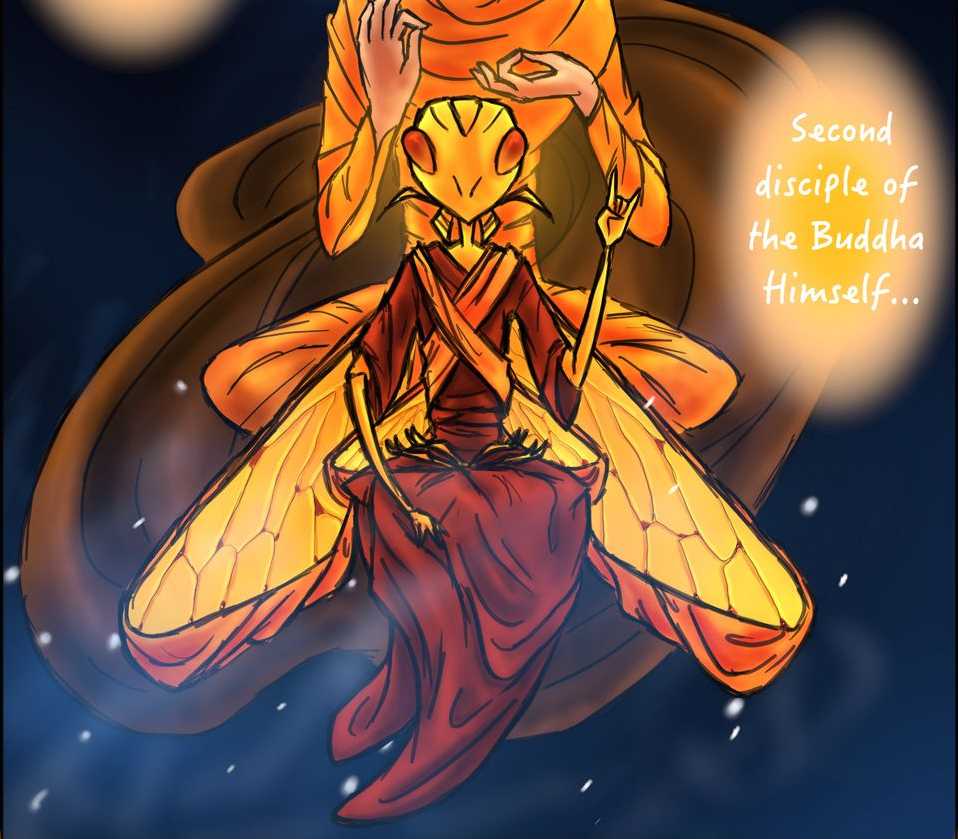
The Tang monk Tripitaka (Tang Sanzang, 唐三藏; a.k.a. Xuanzang) is depicted in Journey to the West (Xiyouji, 西遊記, 1592) as the earthly reincarnation of Master Golden Cicada (Jinchan zi, 金蟬子) (fig. 1), the Buddha’s fictional second disciple. This deity is banished to live out ten pious lives in China until the time comes for him to build merit as the scripture pilgrim, thereby gaining reentry into paradise. His crime of not paying attention to the Buddha’s lectures and subsequent exile to the mortal realm is encapsulated in part of a poem from chapter twelve:

Gold Cicada was his former divine name.
As heedless he was of the Buddha’s talk,
He had to suffer in this world of dust,
To fall in the net by being born a man
[…] (Wu & Yu, 2012, vol. 1, p. 275).

靈通本諱號金蟬,只為無心聽佛講。 轉托塵凡苦受磨,降生世俗遭羅網。 […]

Fig. 1 – A modern interpretation of Master Golden Cicada as a literal insect by Taylor-Denna (larger version). See here for the full version and the artist’s statement. Used with permission.

Table of Contents

1. Similarities to Western Philosophy

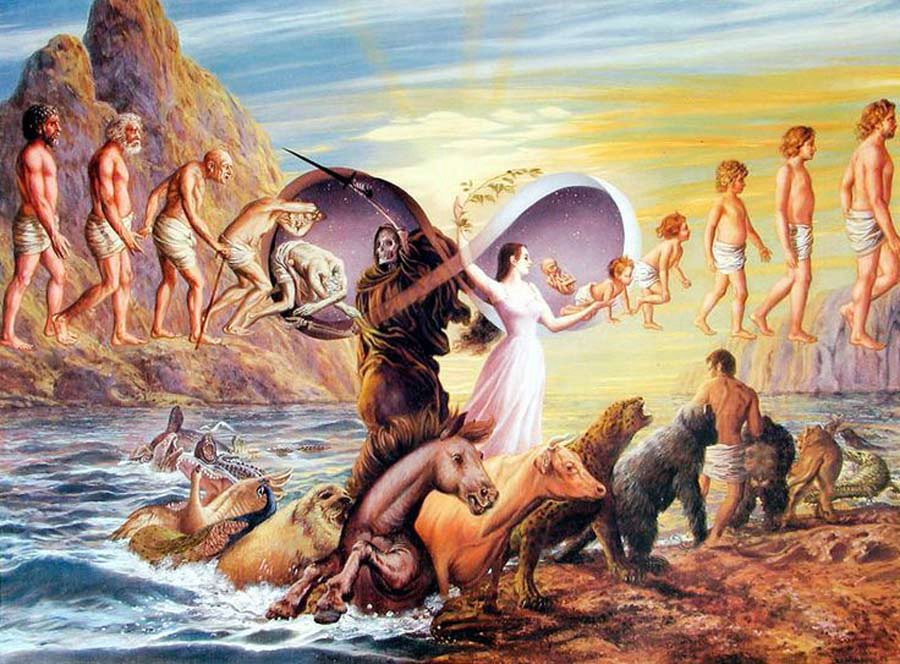
McEvilley‘s (2002) The Shape of Ancient Thought shows that Greek Orphic and Egyptian philosophy also believed in exiling gods from the heavens as a form of punishment. For example, Empedocles (5th c. BCE) wrote of gods being exiled for ten thousand years for the crime of murder or lying under oath. The fallen deity is believed to reincarnate into every creature of land, air, and sea (fig.3), and when their long punishment is up, they are reborn in their last life as a person of high culture, such as royalty, religious leaders, and scholars. They then return to their former heavenly station upon death (McEvilley, 2002, p. 106). Plato (5th to 4th c. BCE) specifically mentions the god undergoing ten reincarnations interspersed with thousand-year-long periods of afterlife reward or punishment (McEvilley, 2002, p. 108). The multiples of ten mentioned here fascinate me as they relate to the number of Tripitaka’s incarnations.

Fig. 3 – A symbolic painting showing the course of life, death, and reincarnation (larger version). Artist unknown.

McEvilley (2002) continues by tracing these and related Greek and Indian beliefs to the Egyptian Book of the Dead:

The deceased must somehow be regarded as a king or prince before he is eligible to “get thee back to the heights of heaven.” Thus Ani declares, “I am crowned like unto the king of the gods, and I shall not die a second time in the underworld.” Again, the prayer is made, “May Osiris, the scribe Ani, be a prince … and may the meat offerings and the drink offerings of Osiris Ani, triumphant, be apportioned unto him.” “I am crowned,” Ani claims, “I am become a shining one, I am mighty, I am become holy among the gods.” “I am the prince of eternity.” “May it be granted that I pass on among the holy princes,” Ani prays, and he is reassured: “The god Tmu hath decreed that [Ani’s] course shall be among the holy princes.” “Horus,” the Book of the Dead says, “was like unto a prince of the sacred bark, and the throne of his father was given unto him.”

Something very like the doctrine of Empedocles is suggested, and possibly related to it as forerunner. The ba, which was once a god among the other gods, descends to earth, that is, into a body, in order to right some wrong it has done in the past; either it descended as a pharaoh or it has somehow been processed through nature for long ages until it has purified itself sufficiently to be reborn as a pharaoh; after its purification it is ready to return to the company of the gods in heaven, and this is signified by the status as pharaoh. Empedocles said the final incarnation was as a prince, a poet, or a healer. Plato said the last reincarnation was as a philosopher—but he meant philosophers to be kings. They both may be echoing an Egyptian idea either that gods are incarnated only as pharaohs or that the last incarnation is as a pharaoh. A parallel is found in the Hindu caste system, in the idea that only brahmans can attain moksa—that is, “become Osiris”; the soul must reincarnate upward through the castes before it is in position to get off the wheel.

The nature of the primal crime or ancient wrong which the soul “descended on to the earth” to set right is not clearly stated, as it is not in the Greek versions of the myth, where it is either left undefined or ambiguously declared to be either perjury or bloodshed. The Egyptian texts dwell repeatedly on this subject, but with an ambiguity not unlike that of the Greek texts. Various clues in the Greek tradition indicate that the crime which the Orphic was attempting to expiate was either the ancient war of the Titans against the gods, for which they were exiled from heaven and imprisoned in Tartarus, or their rending and devouring of Dionysus Zagreus, or both. (In the Greek tradition, as West says, “The Titans are by definition the banished gods, the gods who have gone out of this world.”) The Egyptian texts may foreshadow the Greek myth of the Titans when they refer to a primal rebellion of one group of gods against another. “O ye gods of the underworld,” Osiris Ani says, “who set yourselves up against me, and who resist the mighty ones …” Again, he says:

Hail, Thoth! What is it that hath happened unto the holy children of Nut? They have done battle, they have upheld strife, they have done evil, they have created the fiends, they have made slaughter, they have caused trouble; in truth, in all their doings the mighty have worked against the weak …I am not one of those who work iniquity in their secret places; let not evil happen unto me.

The children of Nut include Osiris, Horus, Set, Isis, and Nephthys. When Ani claimed “before Isis I was,” he was dissociating himself from this contentious generation of deities in which the primal murder of Osiris by Set occurred, and claiming to have been one among the earlier generation, the “gods of the first time.” But there are also suggestions that the crime might be Set’s dismemberment of Osiris, whom Ani, in his role as Horus, avenger of his father, has to reconstitute to make reparation. Ani, in other words, might be expiating either or both of the Egyptian versions of the crimes of the Titans, and part of his strategy in doing so is to claim that he belongs to the earlier generation of gods (pp.131-133).

So the crime of murderous rebellion or bearing a false oath became inattentiveness to the Buddha’s teachings in Journey to the West. And the gods of ancient Greece and Egypt became a son of Buddha punished to ten reincarnations as a mortal, his last one as a holy monk. This final point mirrors the concept of the last incarnation being a grand one as a king or holy person.

How these beliefs or related proto-beliefs came to China is unknown to me. If pressed, I would venture it involved some Buddhist text containing an ancient Indian arm of this philosophy.

2. Connection to the Other Pilgrims

I can’t pass up the opportunity to mention how this also relates to the other pilgrims, who are portrayed as former gods exiled from heaven for some offense. In place of several rounds of reincarnation, they are (among other punishments) forced to serve as Tripitaka’s guardians, protecting him from leagues of demons wanting to jump ahead in the cosmic hierarchy by eating the monk’s flesh and gaining immortality. Marshal Tianpeng (Zhu Bajie) is banished for drunkenly forcing himself on the Moon goddess and reborn as a grotesque pig spirit (Wu & Yu, 2012, vol. 1, p. 212) (fig. 2). The Curtain-Raising General (Sha Wujing) is banished for breaking a treasure cup at a heavenly banquet and reborn as a monstrous water spirit plagued by a magic sword that stabs at him weekly (Wu & Yu, 2012, vol. 1, p. 209-210). [1] The dragon prince, son of the Western Sea Dragon King Aorun, is banished for burning a heavenly pearl (Wu & Yu, 2012, vol. 1, p. 213-214), but in place of execution, he agrees to transform into a dragon horse (a kind of rebirth) and serve as Tripitaka’s mount (Wu & Yu, 2012, vol. 1, p. 328). And even Sun Wukong is banished for his rebellion (the divine crime mentioned above) and punished to imprisonment under Five Elements Mountain. It’s interesting to note that one scholar suggests this punishment represents a symbolic death, leading to his eventual reincarnation (see Shao, 1997). (I’d like to add Sun’s additional punishment of eating a hellish diet of molten copper and hot iron balls speaks to a transitional period of afterlife punishment.) And once the pilgrims complete their penance (i.e. the journey), all are welcomed back into heaven, in this case the Buddha’s paradise.

Zhu Bajie-Chang'e stamp

Fig. 2 – A Taiwanese stamp featuring Zhu Bajie and the moon goddess.

Here is a PDF for McEvilley (2002).

Click to access Thomas-McEvilley-The-Shape-of-Ancient-Thought_-Comparative-Studies-in-Greek-and-Indian-Philosophies-Motilal-Banarsidass-2008.pdf


4. Updates

Update: 04-05-22

I’ve archived a paper suggesting that Sun Wukong and Erlang’s magic battle of transformations was influenced by ancient Greek (and by extension Near Eastern) stories.

Archive #36 – Sun Wukong and Battles of Magical Transformations


Update: 02-16-24

I’ve written an article recording other examples of Buddhist deities from Chinese fiction being exiled from heaven much like those in Greek philosophy.

Buddhist Deities Exiled From the Western Heaven in Chinese Vernacular Literature

Notes:

1) It could be argued that Zhu and Sha do not reincarnate but simply take on monstrous forms upon being banished to earth because they still retain their memories, weapons, and magical skills. But maybe, as immortals, they are able to affect their own rebirth by directing the final destination of their primal spirit, thereby bypassing the normal mode of reincarnation that results in the loss of memory. An example of this is the rogue immortal Huaguang (華光) from Journey to the South (Nanyouji, 南遊記, pre-1590), who is reborn several times and still has memories of his past and access to his holy weapons.

Sources:

McEvilley, T. (2002). The Shape of Ancient Thought: Comparative Studies in Greek and Indian Philosophies. New York: Allworth.

Shao, P. (1997). Monkey and Chinese Scriptural Tradition: A Rereading of the Novel Xiyouji (UMI No. 9818173) [Doctoral dissertation, Washington University]. Available from ProQuest Dissertations and Theses database.

Wu, C., & Yu, A. C. (2012). The Journey to the West (Vols. 1-4) (Rev. ed.). Chicago: University of Chicago Press.

Archive #27 – The Journey to the West Japsang Effigies of Korean Royal Palaces

Note: My blog is not monetized, so I am not making any money from this post. My hope is that the PDF will make this legendary story more accessible to a wider audience. If you enjoyed the digital version, please, please, please support the official release.

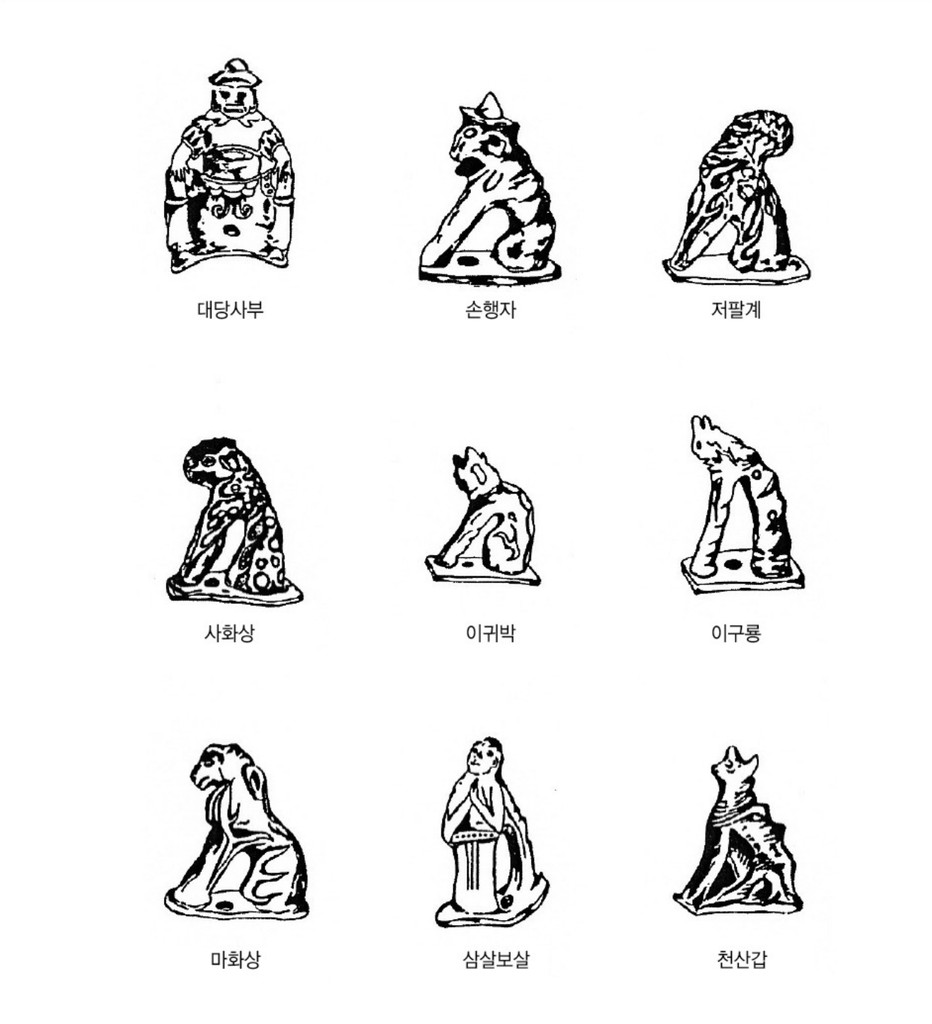
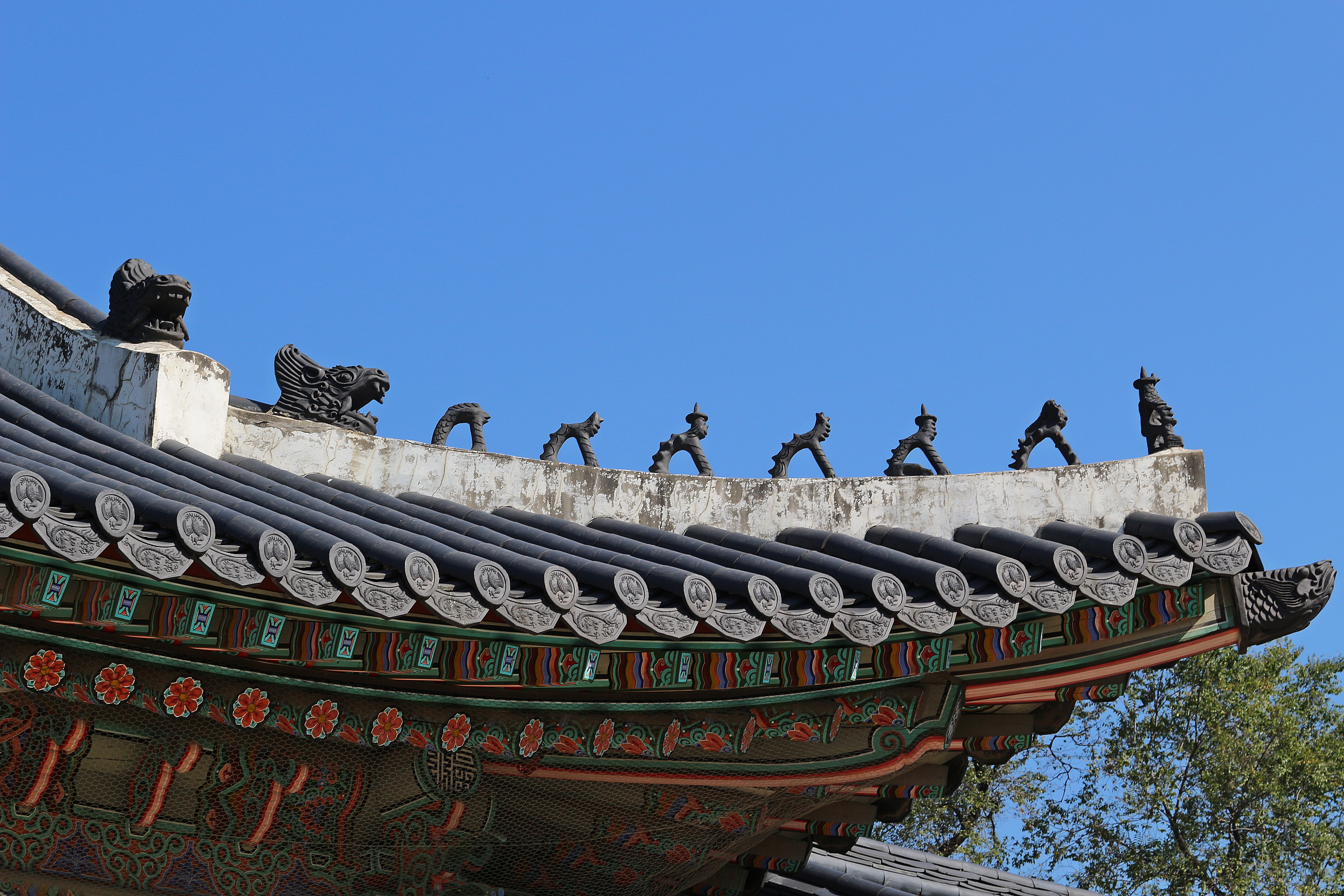
Japsang or Chapsang (Kor: 잡상; Ch: zaxiang, 雜像, “miscellaneous figurines”) are effigies of dark gray fired clay adorning the roof-hips of royal palaces in Korea. The first four (of up to eleven) figures are traditionally associated with the main characters of Journey to the West (Xiyouji, 西遊記, 1592) (fig. 1 & 2). Tripitaka is connected to the first figure, which wears a suit of armor and sits in a kingly fashion with hands on splayed knees (fig. 3). Sun Wukong is connected to the second, an ape-like figure with a pointed hat, long arms, and small legs. Zhu Bajie and Sha Wujing are respectively connected to the third and fourth figures, which are portrayed as scaled beasts with their heads turned in different directions.

Table of Contents

1. History

Wall (2019) reveals that the earliest reference to our our heroes’ association with the japsang appears in Eou yadam (어우야담, “Eou’s Unofficial Histories”), a collection of stories by the scholar-official Yu Mongin (유몽인, 1559-1623). Yu frames knowing the names of the figures as a test for a new official:

When newly appointed officials meet their predecessors for the first time, they have to be able to tell the names of the ten divine figures on top of the palace gates for ten times. . . . The names are Master of Great Tang (Taedang sabu, 大唐師傅 [Tripitaka]), Pilgrim Sun (Son haengja, 孫行者 [Sun Wukong]), Zhu Bajie (猪八戒), [and] Monk Sha (Sa Hwasang, 沙和尙 [Sha Wujing]) (Yu, 2004, as cited by Wall, 2019, p. 2137).

Interestingly, Sun Wukong was eventually associated with the very nails that fastened the figures to the royal rooftops (Chang, 2004, as cited by Wall, 2019, p. 2137). They were called “Pilgrim Sun-Nails” (Sonhaengja taech’ ol; Ch: (孫)行者帶鐵), [1] which implies our hero “was at some point considered representative of all roof ornaments” (Wall, 2019, p. 2137). This connection no doubt references Monkey’s adamantine body and position as the demon-conquering exorcist par excellence. After all, the japsang figurines were believed to “protect the palaces from calamities” (Ro & Park, 2015, p. 78), making them cognates for Chinese roof figurines, which serve as “guardians against fire and evil spirits” (Li, 1990, as cited by Wall, 2019, p. 2138). This is fascinating from a historical perspective as late-dynastic Korea was staunchly Neo-Confucian, showing that Journey to the West was so wildly popular in the “Land of the Morning Calm” that the pilgrims were able to transcend their original Buddhist associations (Wall, 2019, pp. 2137-2138).

I also find this subject interesting because while not officially worshiped by people of non-Chinese descent, it shows that Sun served a religious function in Korea. Thus, we can add this thread to the complex tapestry of his worship in East and Southeast Asia.

Fig. 1 (top left) – A chart of nine japsang (larger version). Notice that most feature the same basic arched back design similar to the Hebrew letter mēm (מ). Fig. 2 (top right) – Photo of a roof-hip featuring seven figures (larger version). From Wikipedia. Fig. 3 (bottom) – A picture of the lead figure believed to be Tripitaka (larger version). From Yogin, 2001 as cited in Macouin, 2003, p. 29. But as noted, Sun Wukong came to be associated with all japsang figures. 

2. Academic Paper

I originally intended to write my own in-depth article on japsang figures but came across Macouin (2003). This masterful paper explains the evolution of such roof adornments and their later association with the Chinese novel. It is written in French, so I am presenting both the original and a rough English translation. I did not include the Korean and Chinese characters in the translation.

2.1. French Abstract

Dans l’architecture ancienne de la Corée, à l’époque de la dynastie des Yi (1392-1910), les toits de certains bâtiments étaient ornés de statuettes protectrices, disposées en file sur leurs arêtes. À la fin du XIXe siècle, seuls les édifices peu ou prou en relation avec la fonction royale en étaient pourvus. La présence de ces figurines, à l’aspect d’animaux accroupis, est attestée au XVe siècle. Elles peuvent avoir succédé à d’autres ornements et, plus lointainement, à des tuiles spéciales à embout relevé.

Une tradition associe quatre de ces grotesques à des personnages bien connus par le roman chinois du XVIe siècle, le Xiyou ji. Plus précisément, la statuette placée en rive est identifiée au célèbre moine Xuanzang, héros de ce livre. Il est suggéré finalement que la personnification de ces statuettes pourrait être en relation avec des pratiques de bizutage.

Click to access Chapsang-paper.pdf

2.2. English Abstract

In the ancient architecture of Korea, during the Yi Dynasty (1392-1910), the roofs of some buildings were adorned with protective statuettes, arranged in a line on their ridges. At the end of the 19th century, only buildings more or less related to the royal function were provided with it. The presence of these figurines, with the appearance of crouching animals, is attested in the 15th century. They may have succeeded other ornaments and, more distantly, special raised-toe tiles.

One tradition associates four of these grotesques with figures well known from the 16th century Chinese novel, Xiyou ji. More precisely, the statuette placed on the bank is identified with the famous monk Xuanzang, hero of this book. It is finally suggested that the personification of these statuettes could be related to hazing practices.

Click to access Chapsang-paper-English-Translation-PDF.pdf

Notes:

1) For a discussion of Monkey’s “pilgrim” nickname, see here.

Source:

Macouin, F. (2003). Des Figurines De Toiture Coréennes, Les Chapsang. Journal Asiatique, 291(1-2), 17-34.

Ro, M. & Park, S. (Eds.). (2015). The King at the Palace: Joseon Royal Court Culture at the National Palace Museum of Korea (C. Kwon, Trans.). Seoul: National Palace Museum of Korea.

Wall, B. (2019). Dynamic Texts as Hotbeds for Transmedia Storytelling: A Case Study of the Story Universe of the Journey to the WestInternational Journal of Communication 13, 2116-2142. Retrieved from https://ijoc.org/index.php/ijoc/article/view/10006/2648

Dragon Ball and Journey to the West

Last updated: 12-29-2022

It recently occurred to me that I’ve referenced the Dragon Ball franchise in several blog articles. So, I’ve taken the opportunity to gather everything into one spot, including information that I haven’t previously mentioned. This is meant to be a very basic introduction and not an exhaustive analysis. My current interest here is in modern adaptations of Journey to the West (Xiyouji, 西遊記, 1592; “JTTW” hereafter).

Those interested in a broader discussion on the influences of Dragon Ball should consult the work of Derek Padula.

Table of Contents

1. Son Goku

The name of the series protagonist, Son Goku (孫悟空) (fig. 1), is a Japanese transliteration of Sun Wukong, meaning “Monkey Aware of Emptiness,” an allusion to Buddhist enlightenment. While referencing Rhesus macaques and “grandsons,” the surname Sun (孫), is also a veiled symbol for the development of an immortal spirit in Taoist elixir arts. Therefore, the name Son Goku straddles both Buddhism and Taoism.

Goku’s monkey tailflying nimbus cloud, and extending power pole (fig. 2) are all based on the respective trait, skill, and weapon of the Monkey King. The latter’s skill is called the “Cloud Somersault (jindou yun, 筋斗雲), which can travel 108,000 li (33,554 mi / 54,000 km), or one and one-third the circumference of Earth, in a single leap. Sun’s staff, the “‘As-You-Will‘ Gold-Banded staff,” weighs a whopping 17,560 lbs (7,965 kg) and (among other abilities) can magically grow as big or shrink as small as the immortal desires.

Goku’s proficiency in boxing (fig. 3) has a fun connection to Sun Wukong. Series creator Akira Toriyama partly based the Saiyan’s fighting style on the Wing Chun techniques used by Bruce Lee and Jackie Chan in their respective films. This style falls under the umbrella term “Short Fist” (Duan quan, 短拳), a school of martial arts with a low stance and quick, compact punches. JTTW states that this very style is the Monkey King’s preferred fighting technique! He uses Short Fist a few times in the novel.

The spherical spaceship that baby Goku crash lands on Earth in from DBZ (fig. 4) is a clever nod to the magic stone that Sun Wukong is born from in the beginning of the novel.

Goku’s Ozaro (大猿) form, or his ability to change into a titanic “great ape” during a full moon (fig. 5), is largely based on the Monkey King’s cosmic transformation. The novel calls this magical skill the “Method of Modeling Heaven on Earth” (Fatian xiangdi, 法天像地), and Sun uses it to grow 100,000 feet (30,480 m) tall during battles with powerful opponents. This is related to ancient Pre-Qin and Han dynasty concepts of astral-geography later used in the construction of imperial Chinese cities.

While I don’t have confirmation from Toriyama, Goku’s “Instant Transmission” skill (fig. 6) might be based on the aforementioned cloud somersault. This is because Chinese Buddhist literature mentions the world of man is separated from the Buddha’s paradise by 108,000 li (the distance covered by the cloud), and the only way to instantly bypass all of the hardships in-between is achieving enlightenment. Hence the cloud somersault is symbolic of instant travel.

2. Other Characters

Goku’s early quest to find the dragon balls along with Bulma (Tripitaka), the shape-shifting pig Oolong (Zhu Bajie), and the desert bandit Yamcha (Sha Wujing) is based on the quest for sutras in JTTW. Not surprisingly, other DB/DBZ characters come from the Chinese novel. The Ox-King and Chi-Chi are respectively based on the Bull Demon King and his wife, Princess Iron Fan (fig. 7). Tien Shinhan is based on Erlang, the only god to truly defeat Sun Wukong, which is why Tien is such a threat to young Goku.

Goku’s martial arts teacher, Master Roshi, is based on the Buddho-Taoist Sage Subodhi who teaches Sun Wukong magic and the secret of immortality. Subodhi is based on Subhuti, a historical disciple of the Buddha. This is hilarious when you think about how much of a pervert Roshi is (fig. 8).

The antagonist Broly (fig. 9) wears a shock collar and mind-controlling headband in various DB media. These are based on the Monkey King’s “Golden Fillet” (jing gu quan, 金箍圈), which represses his unruly nature by painfully constricting around his head when a magic spell is chanted. It’s interesting to note that this fillet is based on a historical ritual headband worn by ancient Indian Buddhist yogins as a physical reminder of self-restraint.

3. Senzu Beans

The senzu (仙豆, “immortal bean”) (fig. 10) used by Goku and other Z fighters to replenish their strength from prolonged training or battle are based on immortality-bestowing elixir pills that Sun Wukong eats while drunkenly stumbling through the laboratory of the Taoist high god Laozi. Once eaten, the pills immediately counteract the effects of the heavenly wine.


4. Updates

4.1. Origin of Spikey Hair

Update: 03-20-22

I recently remembered that I’ve also referenced the origin of the spikey hair in esoteric Buddhist art. On 02-14-2019 I posted on twitter saying: “Goku’s spiked hair is based on esoteric guardian deities. For ex., here is Tianpeng, the former incarnation of Oolong’s precursor Zhu Bajie [fig. 11].”


4.2. What If?: Dragon Balls Existed in the JTTW Universe

Update: 12-20-22

I first became interested in JTTW thanks to Dragon Ball Z. The series is obviously named after the seven glass-like orbs (fig. 12) created by the Namekian-turned-protector deity Kami for the benefit of mankind. When all seven are collected, they summon the dragon god Shenron, who grants a single wish. One common wish is to resurrect a beloved fighter who had previously been killed in battle.

But what would the Dragon Balls be like if they appeared in the JTTW universe? There are two possibilities. The first is the most obvious, the Cintāmaṇi (Sk: “wish-fulfilling jewel”; Ch: ruyi baozhu, 如意寶珠, lit: “as-you-will treasure jewel”). Also known as “dragon jewels” (longzhu, 龍珠), these luminous orbs are commonly held by Bodhisattvas in Buddhist art (fig. 13), thereby signifying their ability to grant any wish that a believer desires. They are also mentioned in Buddhist scripture. For instance, the Treatise of the Great Perfection of Wisdom (Sk: Mahāprajñāpāramitāśāstra; Ch: Da zhidu lun, 大智度論, c. 2nd-century) reveals that the Cintāmaṇi is a bodily relic found in the brains of dragon kings (longzhu chu longnao zhong, 龍珠出龍腦中) (Buswell & Lopez, 2014, p. 193). Therefore, we would be able to maintain the connection to dragons in JTTW.

(If we view Dragon Ball Z under the light of this new information, a creepy implication is that Kami killed seven dragon kings in order to create his set of dragon balls.)

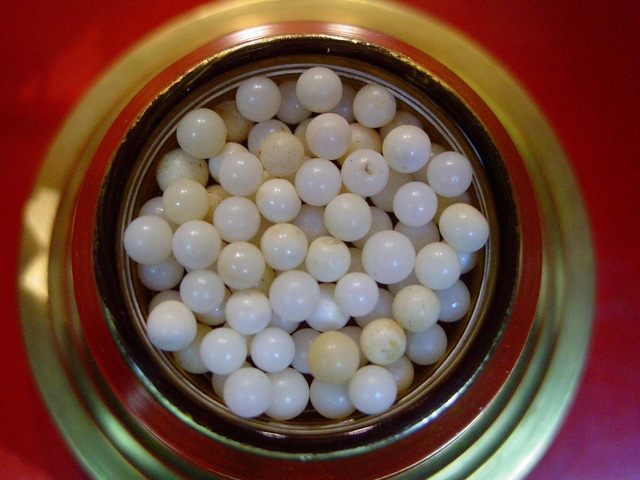
In East Asia, the Cintāmaṇi is closely associated with our second possibility, the Śarīra (Sk: “body”; Ch: Sushe/zi, 舍利/子) (fig. 14). These pearl-like beads figure among the bodily relics left over from the historical Buddha’s cremation. [1] Strong (2004) explains: “[They are the result] of a process of metamorphosis brought on not only by the fire of cremation but also by the perfections of the saint (in this case the Buddha) whose body they re-present” (p. 12).

They are said to come in different colors and sizes depending on the country and religious tradition (Strong, 2004, p. 11).

JTTW could have one or even both of these items. For example, the Cintāmaṇi would allow demon kings or lesser spirits to wish for powerful heavenly weapons, thereby helping them fight stronger opponents; or, the Śarīra could grant the devils more spiritual power, thereby allowing them to bypass centuries of spiritual cultivation.

But neither of these things could help evil beings achieve immortality. I’ve previously noted that JTTW was heavily influenced by the Buddho-Daoist philosophy of the Southern Quanzhen School Patriarch Zhang Boduan (張伯端, mid to late-980s-1082). He believed that in order to become a true transcendent (xian, 仙), one had to achieve both the Daoist elixir of immortality and Buddha-nature (Shao, 1997; 2006). The first extends your life, while the second frees you from the endless rounds of rebirth. While the aforementioned spiritual objects may grant them divine longevity, it won’t make them unkillable. And if they are killed, they would still be subject to the wheel of reincarnation. It would be up to them to achieve the last step in this two-step process. But that would require these spirits to mend their evil ways and “return to the right path” (gui zheng, 歸正)⁠—i.e. convert to Buddhism.


4.3. What If?: Supplement

Update: 12-29-22

It turns out that JTTW has śarīra beads. In fact, they are mentioned at least 18 times throughout the novel. One example is a treasure belonging to the Yellow-Robed Demon (Huangpao guai, 黃袍怪). Chapter 31 reads:

Leading Pilgrim [Sun Wukong], the fiend [Yellow Robe] took his companion into the murky depth of the cave before spitting out from his mouth a treasure having the size of a chicken egg. It was a śarīra [shelizi, 舍利子] of exquisite internal elixir. Secretly delighted, Pilgrim said to himself, “Marvelous thing! It’s unknown how many sedentary exercises had been performed, how many years of trials and sufferings had elapsed, how many times the union of male and female forces had taken place before this śarīra of internal elixir was formed. What great affinity it has today that it should encounter old Monkey!” (Wu & Yu, 2012, vol. 2, pp. 80-81). [2]

那怪攜著行者,一直行到洞裡深遠密閉之處。卻從口中吐出一件寶貝,有雞子大小,是一顆舍利子玲瓏內丹。行者心中暗喜道:「好東西耶。這件物不知打了多少坐工,煉了幾年磨難,配了幾轉雌雄,煉成這顆內丹舍利。今日大有緣法,遇著老孫。」

As can be seen, Yellow Robe’s śarīra is portrayed as the hard-won product of spiritual cultivation. This agrees with Strong’s (2004) statement above that Buddhists believed such beads were “brought on not only by the fire of cremation but also by the perfections of the saint (emphasis added) … whose body they re-present” (p. 12).

Note:

1) There are three main types of Buddha relics: 1) those of the body left over from his cremation (hair, teeth, nails, bones, and Śarīra beads); 2) those that he used (walking staff, alms bowl, robes, etc.); and 3) those that he taught (i.e. lessons from scripture) (Strong, 2004, p. 8).

2) Source altered slightly. I’ve made it more accurate.

Sources:

Buswell, R. E., & Lopez, D. S. (2014). The Princeton Dictionary of Buddhism. Princeton, NJ: Princeton University Press.

Shao, P. (1997). Monkey and Chinese Scriptural Tradition: A Rereading of the Novel Xiyouji (UMI No. 9818173) [Doctoral dissertation, Washington University]. Available from ProQuest Dissertations and Theses database.

Shao, P. (2006). Huineng, Subhūti, and Monkey’s Religion in “Xiyou ji”. The Journal of Asian Studies, 65(4), 713-740. Retrieved from http://www.jstor.org/stable/25076127.

Strong, J. S. (2004). Relics of the Buddha. Princeton, NJ: Princeton University Press.

Wu, C., & Yu, A. C. (2012). The Journey to the West (Vols. 1-4) (Rev. ed.). Chicago, Illinois: University of Chicago Press.

The Monkey King’s Children

Last updated: 04-04-2022

Modern media occasionally depicts Sun Wukong with children. Examples include the book series The Monkey King’s Daughter (2009-2011) and the DC Comics character the Monkey Prince (first appearing in 2021). The anime High School DxD (2012) even features a descendent some generations removed called Bikou. But the idea of the Great Sage having children goes back centuries. Two late-Ming novels influenced by the original Journey to the West (Xiyouji, 西遊記, 1592) reference multiple offspring. In this article, I will highlight these children and discuss their connection to Buddhism and Asian astrology.

Those interested in this subject may fancy learning about Sun’s brothers and sisters.

Table of Contents

1. King Pāramitā

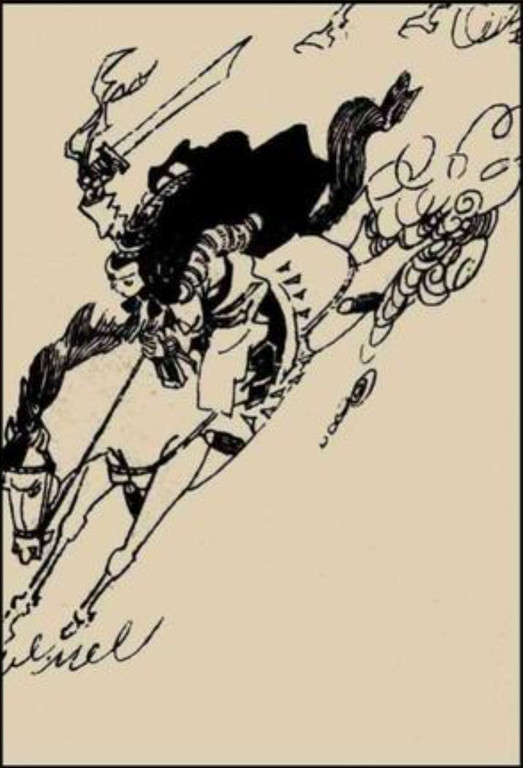
The novel is set between the end of chapter 61 and the beginning of chapter 62 of the original. It follows the Monkey King as he travels through time seeking a magic weapon, while also striving to unmask the identity of a mysterious foreign king who has persuaded Tripitaka to give up the quest to India. The first reference to Sun’s children appears in chapter 13, when actors in a royal play describe an alternate timeline where our hero settled down: “His wife is so beautiful, his five sons so dashing. He started out as a monk, but came to such a good end! Such a very good end!” (Dong, Lin, & Schulz, 2000, p. 114). Later, in chapter 15, Monkey meets one of these sons on the battlefield. “King Pāramitā” (Boluomi wang, 波羅蜜王) (fig. 1) is portrayed as a sword-wielding general capable of fighting Sun for several rounds. Pāramitā goes on to recount his family history, revealing that although he’s never met his father, he’s the son of the Great Sage and Princess Iron Fan (Tieshan gongzhu, 鐵扇公主) (Dong, Lin, & Schulz, 2000, pp. 123-124). In addition, he suggests that he was conceived during an event from chapter 59 of the original:

[Sun Wukong] changed into a tiny insect and entered my mother’s belly. He stayed there a while and caused her no end of agony. When my mother could no longer bear the pain, she had no choice but to give the Banana-leaf Fan to my father, Monkey [1] … In the fifth month of the next year, my mother suddenly gave birth to me, King Pāramitā. Day by day I grew older and more intelligent. If you think about it, since my uncle [the Bull Demon King] and mother had never been together, [2] and I was born after my father, Monkey, had been inside my mother’s belly, the fact that I am his direct descendant is beyond dispute (Dong, Lin, & Schulz, 2000, p. 124).

Fig. 1 – King Pāramitā leaps into battle (larger version). Detail from a modern manhua. Image found here.

The translators of A Supplement to the Journey to the West explain that King Pāramitā’s name serves as a pun:

In the Chinese transliteration for Pāramitā, the character used to render the syllable “mi” [蜜] has the intrinsic meaning of “honey,” while the character t’ang [唐] in T’ang dynasty is homophonous with the character meaning “sugar” [糖]. King Pāramitā is punning on these associations (Dong, Lin, & Schulz, 2000, p. 123 n. 2). [3]

However, the name also has deep connections with Buddhism. The Princeton Dictionary of Buddhism defines the Sanskrit term Pāramitā (“perfection”) as “a virtue or quality developed and practiced by a Bodhisattva on the path to becoming a buddha” (Buswell & Lopez, 2014, p. 624). Various traditions recognize six to ten perfections, with the latter including the former six plus an additional four. The Mahayana perfections, for example, include giving, morality, patience, effort, concentration, wisdom, method, vow, power, and knowledge. Bodhisattvas are believed to master these virtues in the listed order, compounding spiritual wisdom and merit over the course of their journey towards Buddhahood (Buswell & Lopez, 2014, p. 624).

2. Jidu, Luohou, and Yuebei Xing

The novel follows the exile of Miao Jixiang (妙吉祥), a divine flame-turned Buddhist deity, from the Western Paradise through several mischievous reincarnations. As the rogue immortal Huaguang (華光), he works to end his mother’s demonic lust for flesh by procuring an immortal peach in chapter 17. He does this by transforming into Sun Wukong and stealing the magic fruit from heaven. The real Monkey King is subsequently accused of his double’s misdeeds, much like the Six-Eared Macaque episode of the original novel. The Jade Emperor threatens to remand him to the Buddha for punishment but is convinced to give Sun a month-long reprieve to find the true culprit.

Monkey returns to the Mountain of Flowers and Fruit, and it is here among his people, that the story mentions three children, including sons Jidu (奇都, “Ketu”) and Luohou (羅猴, “Rahu”) and daughter Yuebei Xing (月孛星, “Moon Comet Star”). [4] Sun eventually seeks out Guanyin, who reveals that the troublemaker is none other than Huaguang. Returning home once more, Monkey’s news prompts his daughter to volunteer to battle the impostor. But her tribe simply pokes fun at her monstrous appearance. Yuebei Xing is said to have a crooked head with huge eyes and a broad mouth, coarse hands, a wide waist, and long legs with thunderous steps.

Sun travels with his daughter to Huaguang’s home of Mt. Lilou (Lilou shan, 離婁山) to provoke battle by chastising him for stealing the immortal peaches. Monkey strikes at him with his magic staff, causing Huaguang to deploy his heavenly treasure, a golden, triangular brick (sanjiao jinzhuan, 三角金磚). But Sun responds by creating untold numbers of clone monkeys that not only confiscate the weapon but also overwhelm the immortal. Huaguang is seemingly defeated at this point; however, he manages to deploy one last treasure, the Fire Elixir (Huodan, 火丹). This weapon engulfs the Great Sage in heavenly flame (akin to the Red Boy episode), causing him to flee to the Eastern Sea. Yuebei Xing then calls Huaguang’s name while holding her own magic treasure, a skull (kulou tou, 骷髏頭). The immortal is immediately stricken with a headache and stumbles back to his cave in a daze. Her weapon is said to be quite dangerous; anyone whose name is called will die within three days.

Huanguang’s religious teacher, the Flame King Buddha of Light (Huoyan wang guangfo, 火炎王光佛), then intervenes in order to sooth the situation between his disciple and the Great Sage. He promises to bring the rogue immortal to justice on the condition that Yuebei Xing withdraws her deadly magic. In the end, all parties are pardoned by the Jade Emperor, and Huaguang and Monkey become bond brothers (Yu, n.d.).

All three of Sun’s children are named after planetary bodies associated with the moon in Asian astrology. [5] His sons Jidu and Luohou are respectively named after Ketu (Jidu, 奇都) and Rahu (Luohou, 羅睺), two of the “Nine Planets” (Sk: Navagraha; Ch: Jiuyao, 九曜, “Nine Luminaries”) from Hindu astrology. [6] These two shadowy planetary deities represent the respective southern (descending) and northern (ascending) lunar nodes, or points where the moon crosses the earth’s orbit around the sun. As such, the pair are associated with eclipses, and sources sometimes depict them as the head (Rahu) and tail (Ketu) of a great eclipse serpent. Other interpretations include Rahu as a disembodied head and Ketu as the torso, or Ketu as a comet or emerging from a cloud of smoke (Gansten, 2009, p. 652-653; Kotyk, 2017, pp. 59-60).

Before continuing, there are two interesting things to note: 1) Sun Wukong singlehandedly battles and defeats the Nine Planets in chapter five of the original novel (Wu & Yu, 2012, vol. 1, pp. 170-172). But the Ketu and Rahu in this group should be considered distinct from his sons; and 2) one of the original Chinese characters for Rahu (Luohou, 羅睺) was changed in Journey to the South to play on Luohou’s (羅猴) primate origins by using the homophonous word for “monkey” (hou, 猴).

All information about Yuebei xing has been moved to a new article.

Yuebei xing, Daughter of the Monkey King

3. Honorable Mention: Sun Luzhen

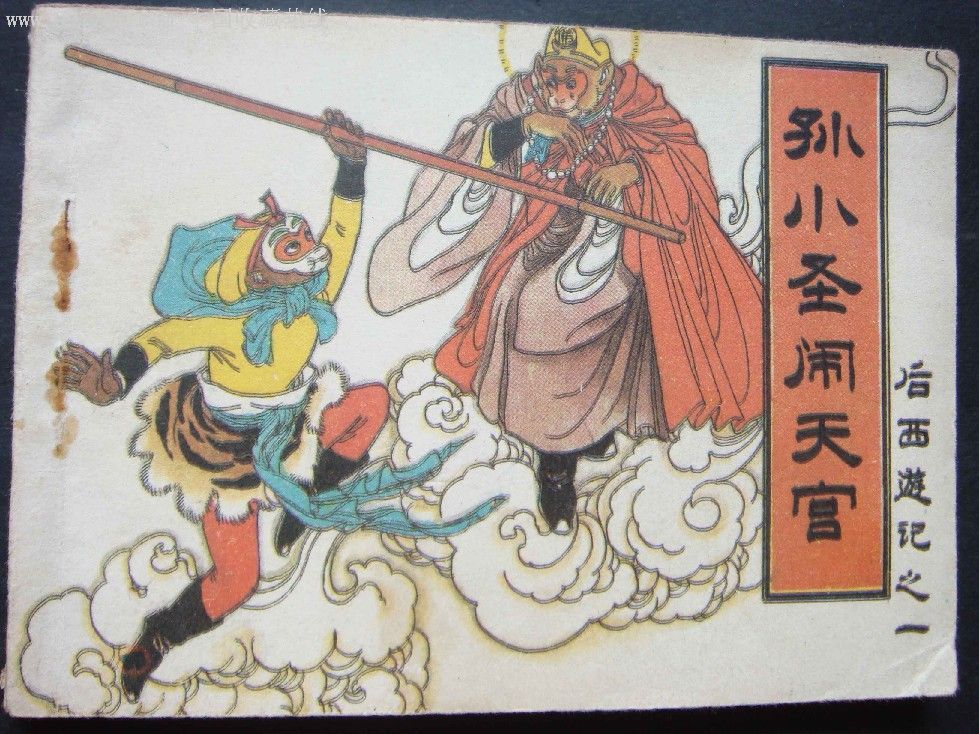
The novel is set two hundred years after the original and follows the adventures of Sun Wukong’s spiritual descendant Sun Luzhen (孫履真, “Monkey who Walks Reality”) (fig. 2). He too learns the secrets of immortality and causes havoc in heaven, before being tasked to protect the historical monk Dadian (大顛, 732–824) on a similar journey to India. The two are accompanied by the son of Zhu Bajie, Zhu Yijie (豬一戒), and the disciple of Sha Wujing, Sha Zhihe (沙致和). I did not include Luzhen in the main list as he is born from a stone in the same fashion as the original Monkey King (see Liu, 1994).

Fig. 2 – “Small Sage Sun’s Havoc in the Heavenly Palace” (larger version). The cover to a modern manhua. Image found here.

4. Conclusion

The Monkey King has a total of eight children shared between two late-Ming novels, but only four are mentioned by name, and only two of these actually have parts in the respective stories. King Pāramitā is one of the Great Sage’s five sons born to Princess Iron Fan in A Supplement to the Journey to the West (1640). He is portrayed as a handsome, sword-wielding general whom Sun faces on the battlefield. His name references the Pāramitās (“perfections”), or the wisdom and merit-building virtues that Bodhisattvas master in their quest for Buddhahood. Monkey has three children in Journey to the South (c. 1570s to 1580s), including sons Jidu and Luohou and daughter Yuebei Xing. The latter is depicted as a grotesque monster with a magic skull weapon cable of harming even celestials. She uses it to defeat the rogue immortal Huaguang. Jidu and Luohou are respectively named after the lunar nodes Ketu and Rahu, two of the Nine Planets from Hindu astrology. Yuebei is named after a shadowy planet representing the lunar apogee, which counts among the Eleven Luminaries of East Asian astrology. Ancient Xixia art sometimes depicts them as a woman or man bearing a sword and a severed head. The feminine iconography appears holding a skull in a novel from the 16th century.

An honorable mention is Sun Luzhen from Later Journey to the West (17th century). He is a stone-bone monkey who follows in his spiritual ancestors footsteps by attaining immortality, causing havoc in heaven, and later protecting a holy monk on the journey to India.


5. Updates

Update: 04-04-22

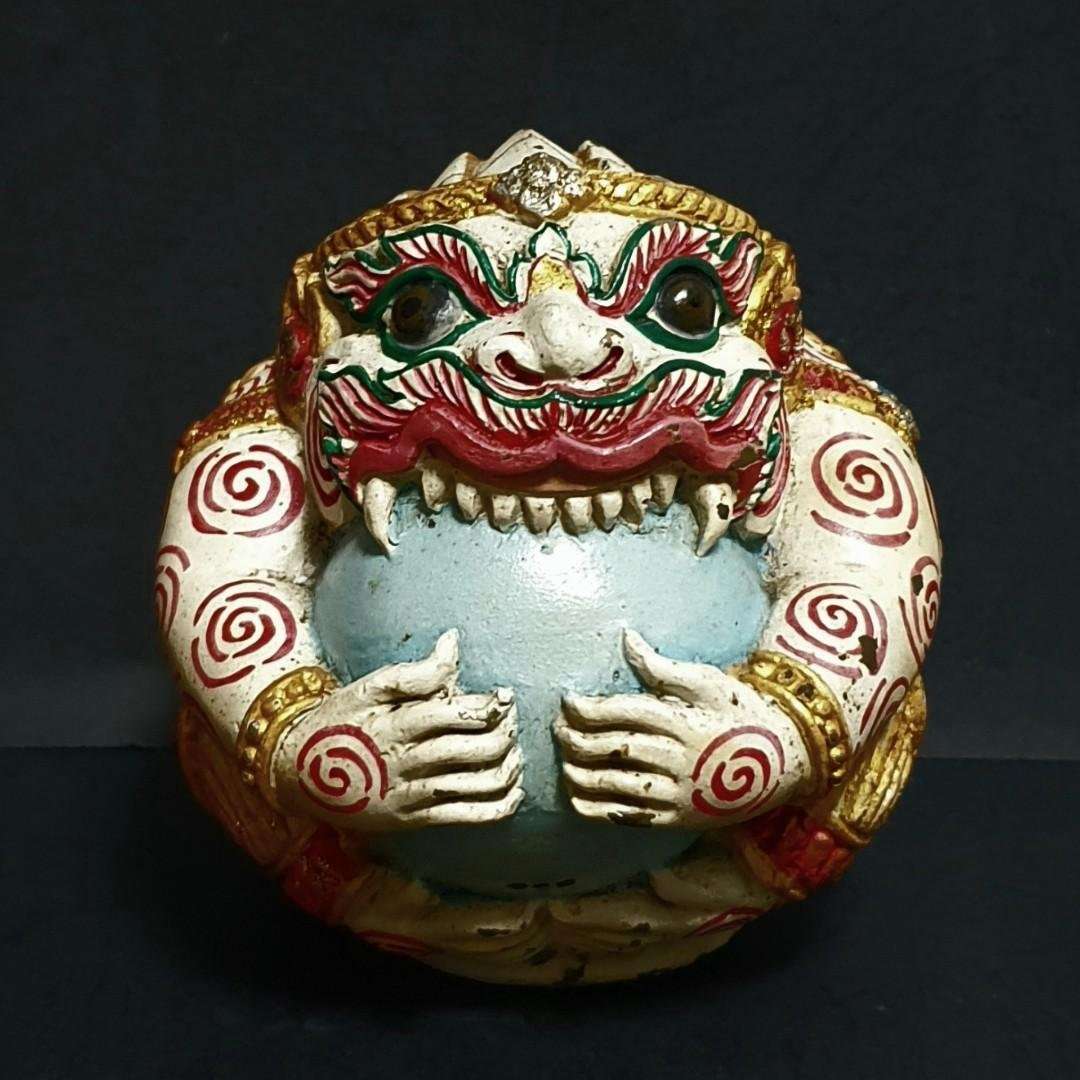
Back in November 2021, I made a post on twitter about a Rahu amulet that a collector friend of my was selling (and later sold). The deity is generally portrayed as a sharp-toothed, giant-mouthed monster devouring the moon. This piece is carved in a similar manner but Rahu is instead patterned after Thai depictions of Hanuman (fig. 3). I imagine his association with the monkey god is based on the latter’s attempt to eat the sun in his youth. 

Fig. 3 – The front of the Hanuman-like Rahu amulet (larger version).

Notes:

1) See Wu & Yu, 2012, vol. 3, p. 129.

2) This statement, of course, overlooks the conception and birth of the couple’s son Red Boy (Hong haier, 紅孩兒). But King Paramita might be referring to the Bull Demon King’s long absence while living with his mistress, Jade Countenance.

3) This pun plays out in chapter 14 of Journey to the West, when an old patron remarks on Monkey’s monstrous appearance:

“Though you [Tripitaka] may be a Tang man,” the old man said, “that nasty character is certainly no Tang man!” “Old fellow!” cried Wukong in a loud voice, “you really can’t see, can you? The Tang man is my master, and I am his disciple. Of course, I’m no sugar man or honey man! I am the Great Sage, Equal to Heaven!” (Wu & Yu, 2012, vol. 1, p. 312).

Thank you to Irwen Wong for reminding me of this passage.

4) I’m indebted to Jose Loayza for bringing these characters to my attention.

5) Thank you to Dr. Jeffrey Kotyk for confirming the astrological connection.

6) Sun, Moon, Mars, Mercury, Jupiter, Venus, Saturn, Rahu, and Ketu (Gansten, 2009).

Sources:

Dong, Y., Lin, S. F., & Schulz, L. J. (2000). The Tower of Myriad Mirrors: A Supplement to Journey to the West. Ann Arbor: Center for Chinese Studies, The University of Michigan.

Gansten, M. (2009). Navagrahas. In K. A. Jacobsen (Ed.), Brill’s Encyclopedia of Hinduism (Vol. 1) (pp. 647-653). Leiden: Brill.

Hart, R. (2010). The Chinese Roots of Linear Algebra. United States: Johns Hopkins University Press.

Kotyk, J. (2017). Astrological Iconography of Planetary Deities in Tang China. Journal of Chinese Buddhist Studies, 30, 33-88), Retrieved from https://chinesebuddhiststudies.org/previous_issues/jcbs3002_Kotyk(33-88)_e.pdf

Liu, X. (1994). The Odyssey of the Buddhist Mind: The Allegory of the Later Journey to the West. Lanham, Md: University Press of America.

Buswell, R., & Lopez, D. (2014). The Princeton Dictionary of Buddhism. Princeton University Press.

Wu, C., & Yu, A. C. (2012). The Journey to the West (Vol. 1-4). Chicago, Illinois: University of Chicago Press.

Yu, X. (n.d.). Nanyouji: Huaguang sanxia Fengdu [Journey to the South: Huaguang goes to the Underworld Three Times]. Retrieved from https://ctext.org/wiki.pl?if=gb&chapter=506975&remap=gb#%E5%8D%8E%E5%85%89%E4%B8%89%E4%B8%8B%E9%85%86%E9%83%BD