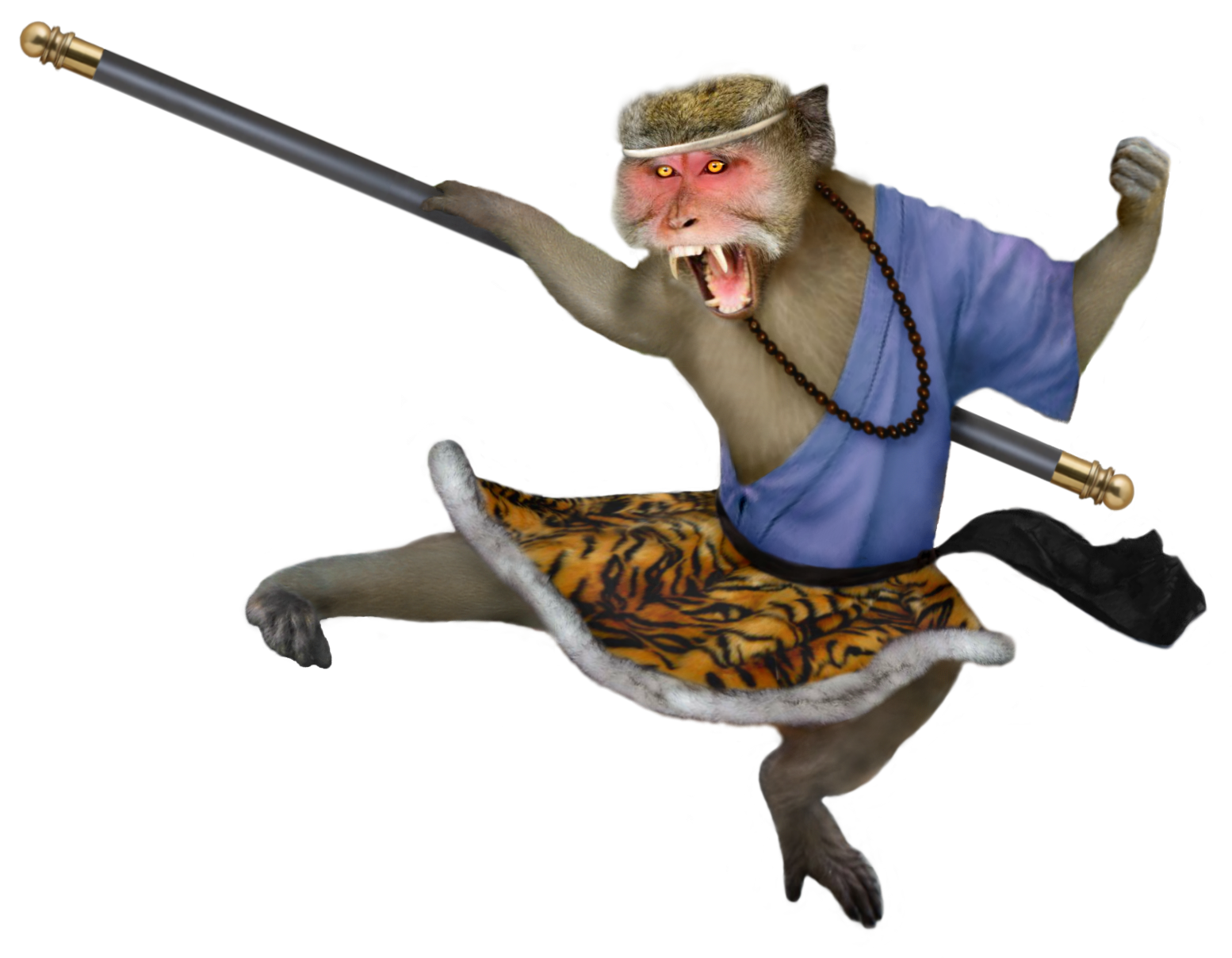
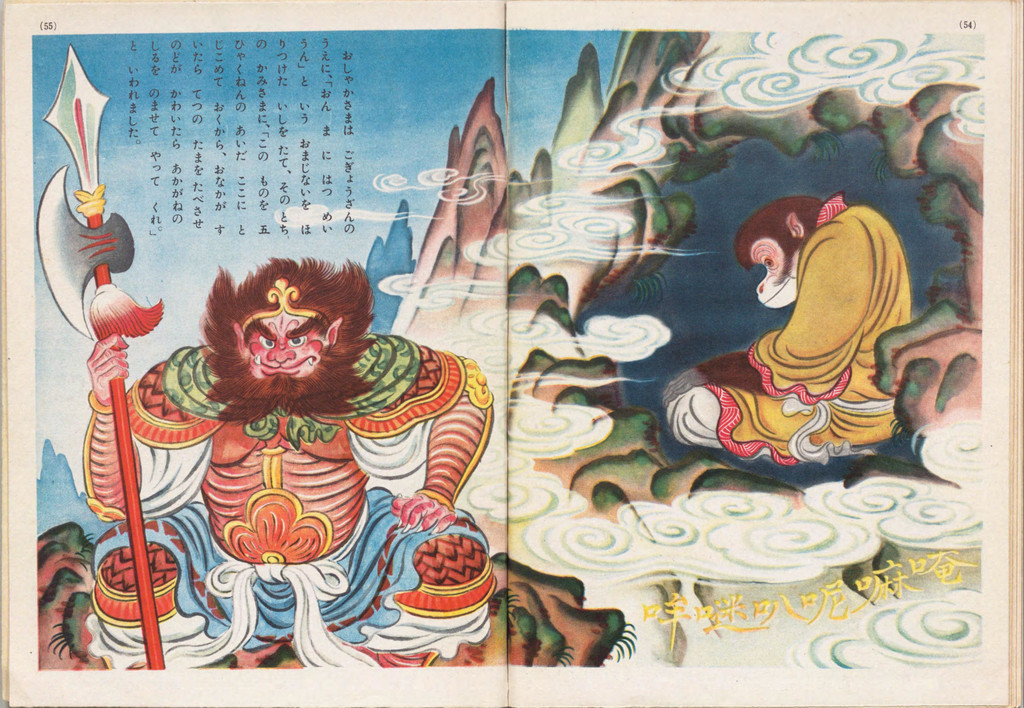
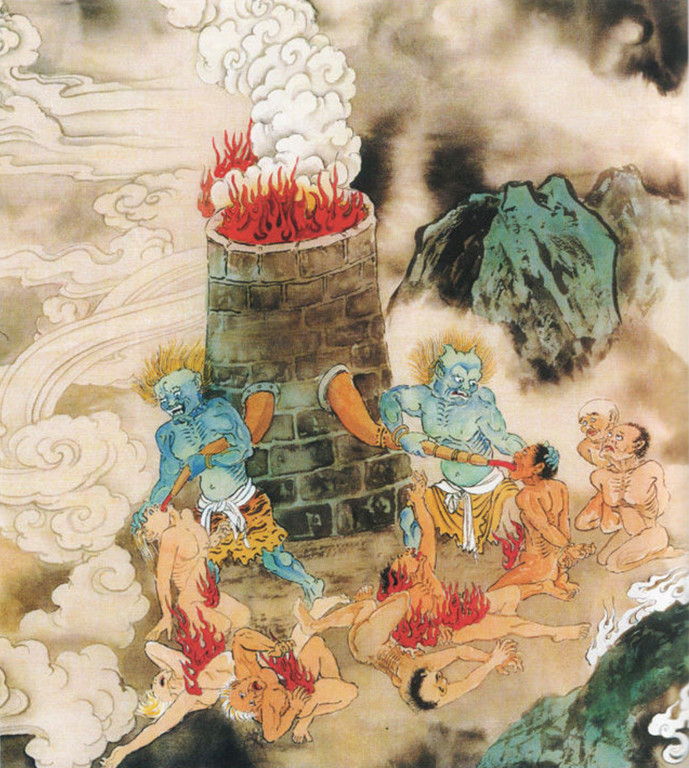
Story Idea: The REAL Reason Sun Wukong is Expelled from Subodhi’s School

From time to time I like to post a fun blog not directly related to (though informed by) my research. A past example can be seen here. Regular articles will resume after this entry.

Last Updated: 08-27-2022

Sun Wukong is kicked out of Patriarch Subodhi‘s (Xuputi zushi, 須菩提祖師) school in chapter two of Journey to the West (Xiyouji, 西遊記, 1592) for showing off his transformation skills to his less-accomplished religious brothers. Upon their request, he changes into a perfect pine tree that’s completely indistinguishable from a real one. The subsequent applause greatly disturbs the Master, who reprimands and expels the Monkey King under the pretense of saving his life from those who would harm him to learn his heavenly secrets (Wu & Yu, 2012, vol. 1, pp. 123-125). [1]

This event is a turning point in Sun’s life, for he transitions from an inward pursuit of spiritual cultivation to an external quest for power, ending with an attempt to unseat the Jade Emperor (Yuhuang shangdi, 玉皇上帝). This ultimately leads to the Buddha imprisoning the seditious primate beneath Five Elements Mountain and punishing him to a hellish diet for 600 plus years.

Here, I would like to prepose a different reason, one that makes more sense and better aligns with some of my previous story ideas.

Table of Contents

1. The Story so Far

Last year I posted a story prompt to reddit to inspire writers looking for a Xianxia (仙俠, “immortal hero”) plot. It serves as a good summation of my past ideas:

The novel briefly mentions that Sun Wukong lives for ten years in the mountain home of the Buddho-Daoist sage Master Subodhi. The first seven are spent as a junior Daoist monk doing menial tasks and learning basic religious or life skills. However, the last three years are spent as a close disciple of Subodhi, learning elixir arts, magic, and combat skills. The novel glosses over his early cultivation in order to jump directly into the action. But imagine a Xianxia story focusing on those three years.

Drama with fellow disciples could arise from Monkey’s supernatural aptitude for quickly learning and mastering a skill. After all, it only takes him three years to go from a mere stone monkey to a powerful immortal capable of going toe-to-toe with gods and demons with millennia of cultivation and combat experience. Think of the resulting battles between our hero and his jealous senior religious brothers and sisters frustrated with his great progress.

In addition, given Sun’s demonstrated knowledge in boxing, weapons, and troop movement, I came up with the story idea that Subodhi’s school is the training ground for an immortal monastic army akin to the famous Shaolin temple. Shaolin was mobilized by the Chinese government during the 16th-century to battle pirates attacking the coast. Records indicate that one historical Shaolin monk was made the leader, and he was later forced to singlehandedly defend himself against eight individuals vying for his position. Likewise, I imagine heaven calls up Subodhi’s army to battle some demonic evil, and Monkey might quickly rise through the ranks. This would naturally lead to more tension with his fellow disciples, causing him to defend his position. All of these challenges, plus any action seen by the monastic army in heavenly battles, would explain how Sun Wukong became such a seasoned fighter in such a short time.

Plus, there is the added bonus of Subodhi’s army being called upon to fight Sun during his rebellion against heaven. He might have far surpassed his religious brothers and sisters in skill at this point.

2. Additions

In chapter one, Subodhi is shown to have 12 generation names (zibei, 字輩) used to name the students of his religious lineage, three of which were historically used by Daoism. [2]

  1. Guang (廣)
  2. Da (大)
  3. Zhi (智)
  4. Hui (慧)
  5. Zhen (真)
  6. Ru (如)
  7. Xing (性)
  8. Hai (海)
  9. Ying (穎)
  10. Wu (悟)
  11. Yuan (圓)
  12. Jue (覺) (Wu & Yu, 2012, p. 115).

Monkey is part of the tenth generation (Wu & Yu, 2012, p. 115). This means that all of Subodhi’s students taken in around the same time would all have Wu (悟) in their name. Perhaps Sun trains with his fellow Wu cohort but quickly moves on to older generations as his skill rapidly progresses.

This leads me to my next point. Above, I mentioned that Subodhi’s army might be called to bear against Monkey during his rebellion. But wouldn’t they recognize him? This feeds into a common question asked around the internet: Why doesn’t Wukong run into any fellow disciples on the journey?

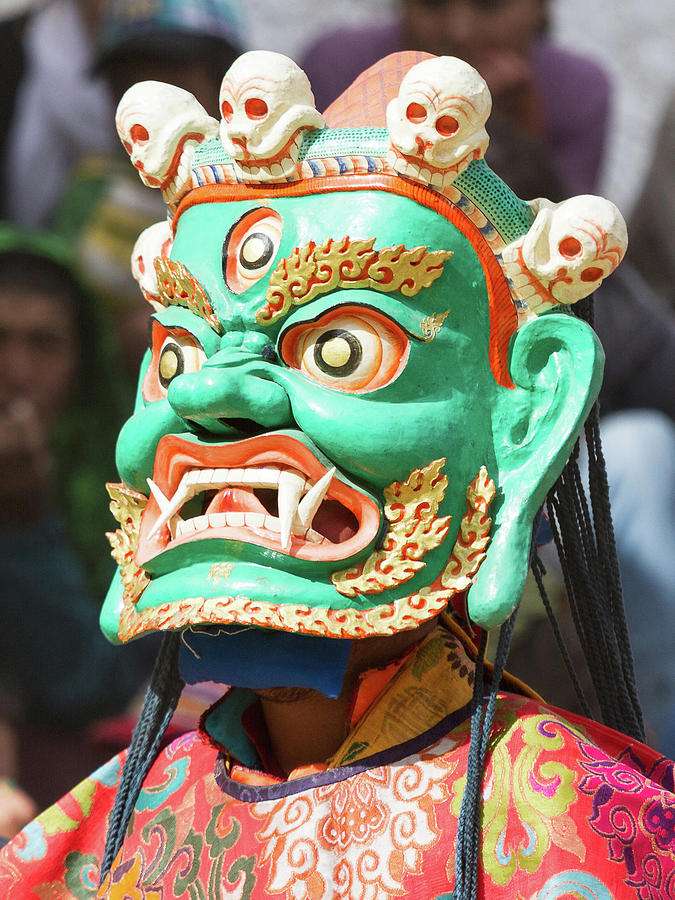
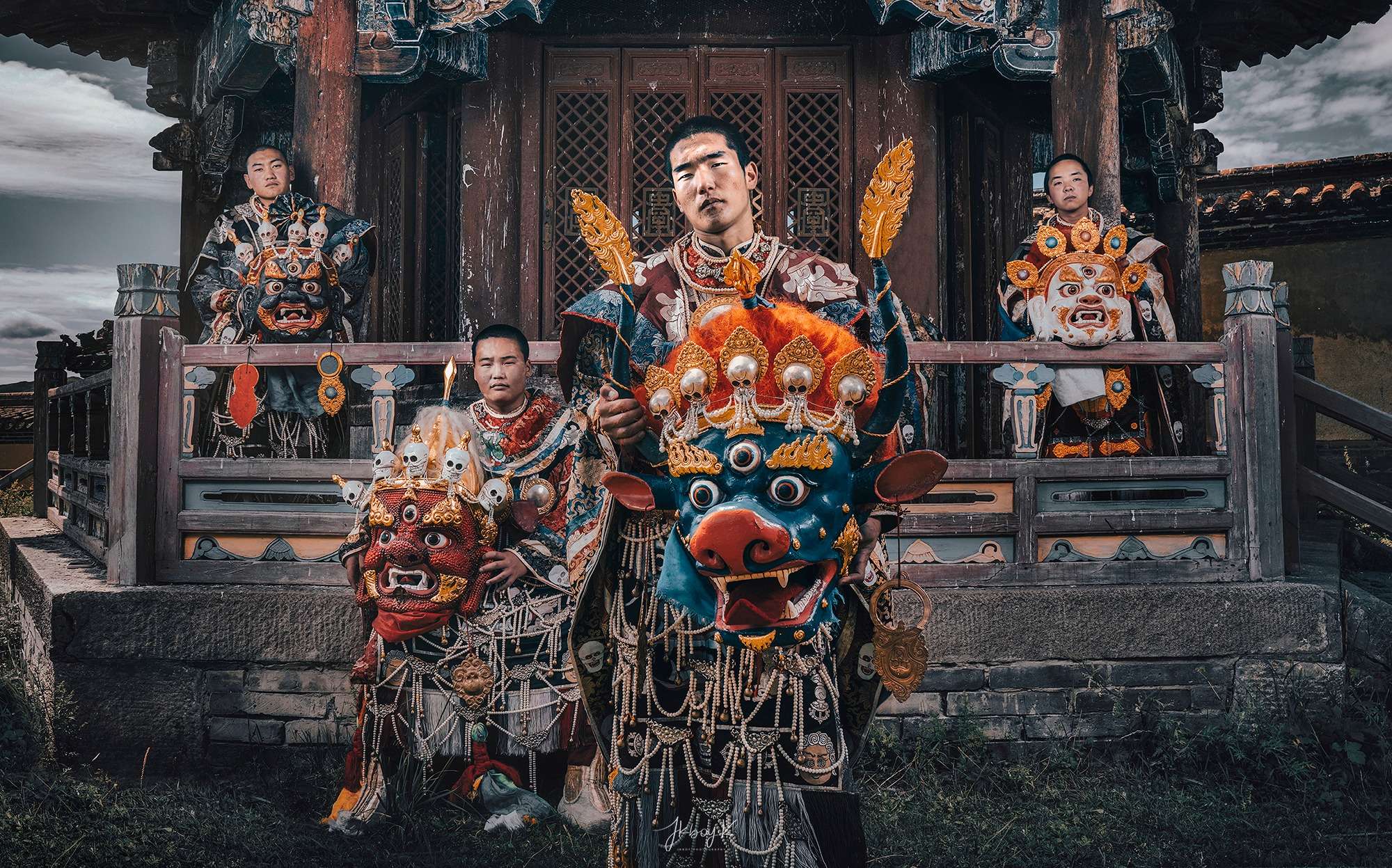
Well, the simple answer is that this isn’t important to the plot. But I’ve considered two ideas to work around this: One, his younger religious brothers are likely still studying under the Master. And two, the older generations⁠—the ones serving in the monastic army⁠—probably don’t know what Monkey looks like because advanced disciples, within the present story, are made to wear a host of fierce, multi-colored masks (fig. 1) as a way to forsake their identity and subsume the self into deep spiritual and martial cultivation. They would represent the negative thoughts and emotions that keep humans trapped in the illusionary world of Saṃsāra and chained to the wheel of rebirth. Perhaps the face becomes more human and peaceful-looking as the students progress through their training. 

Monk in dharmapala mask performs a mystery dance of Tantric Tibetan Buddhism  on Cham Dance Festival Photograph by Oleg Ivanov

Fig. 1  – “Monk in dharmapala mask performs a mystery dance of Tantric Tibetan Buddhism on Cham Dance Festival” (larger version). Photo by Oleg Ivanov. Image found here.

Also, in my version of the story universe, all immortals and deities attain a halo upon achieving divine status. Here, for example, is a photomanipulation of a haloed Sun Wukong by Elijah McTaggart and myself. Take note of the fiery aureola engulfing the halo. This will come into play shortly (fig. 2). I imagine that these halos/aureolas respectively spin and shine brighter when a divinity’s spiritual power is used.

Fig. 2 – The Monkey King with a halo (larger version). As seen on deviantart. Based on my original photomanipulation.

3. Why He’s Really Kicked Out

The reason I’ve devised is connected to one of the aforementioned fights between Monkey and his older religious brothers or sisters. Perhaps Sun is attacked by multiple powerful assailants at once (just like the historical Shaolin monk), and when they start to overwhelm him, his anger ignites his halo, which begins to furiously spin and produce a radiant splendor. Instantly, he takes on a titanic cosmic form, growing 100,000 feet (30,480 m) tall and stomping on his assailants. At the same time, his docile-looking mask cracks and reverts to it’s original, fierce form. This, combined with a fiery aureola, gives him the appearance of a giant Dharmapala (Ch: Fahu, 法護), a wrathful “Protector of the Dharma” (Buddhist Law) (fig. 3) (Buswell & Lopez, 2014, pp. 249-250). This display of raw, untamed spiritual power frightens his older religious brethren. Subodhi himself is also taken aback as Monkey exhibits a great, fiery anger, while also manifesting advanced cultivation techniques that haven’t even been taught to him yet⁠—a testament to his great spiritual intelligence. The Master fears that this rage, combined with Monkey’s demonstrated talent for exponential spiritual growth and perhaps a problem with controlling this power (given Sun’s short years of study), will lead him down the path to villainy. 

This brings us back to the pine tree incident. Perhaps the fight causes Subodhi to uncharacteristically allow Monkey a chance to visit his generational cohort. And when Sun acquiesces to their requests to see his transformation powers, the Master uses this as an opportunity to expel his student.  

Fig. 3 – A modern thangka of the Six-Armed Mahakala dharmapala (larger version). Image found here.

4. My Thoughts

I like this idea because it foreshadows Sun’s cosmic transformations throughout the novel (ch. 3, 6, 61, and 97). It also foreshadows his later mischief throughout the cosmos and eventual rebellion. 


5. Updates

Update: 05-16-22

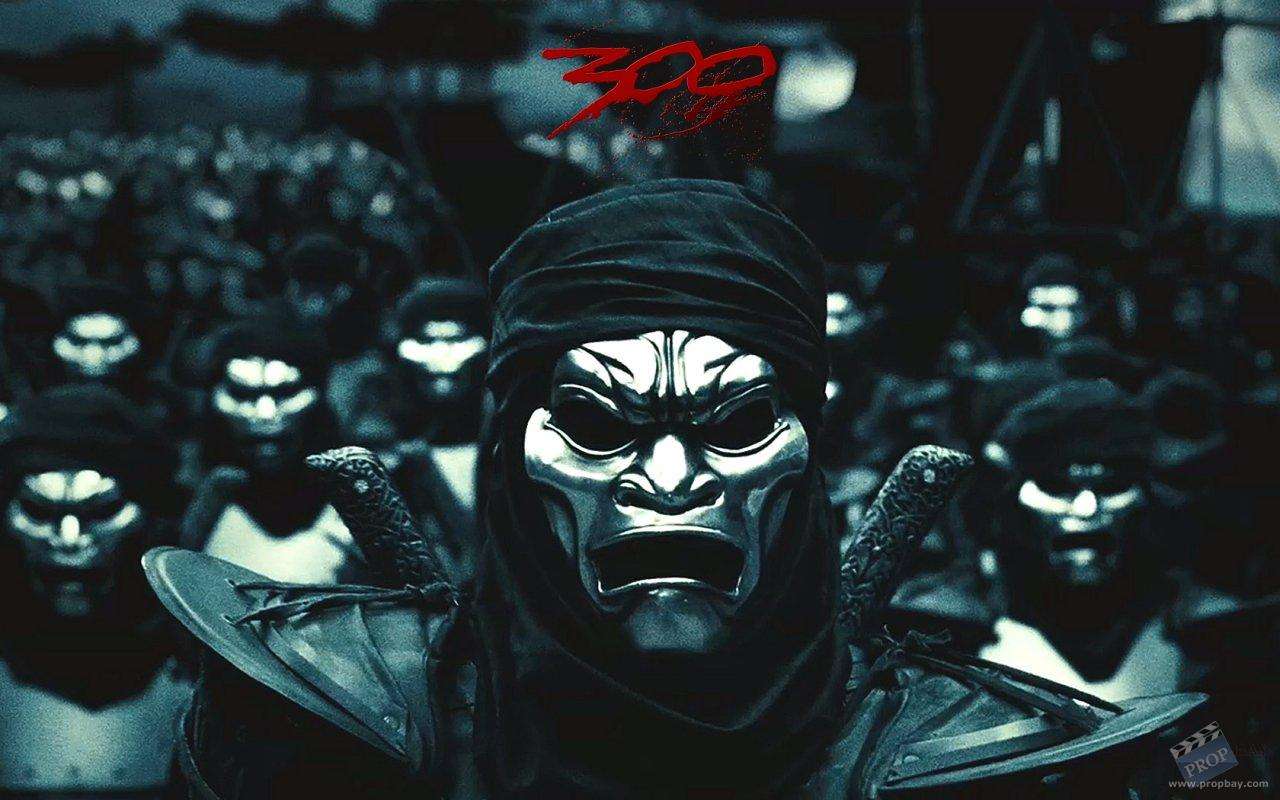
I imagine Master Subodhi’s mask-wearing monastic army would have an ominous feel to them just like the stylized Persian “immortals” from the film 300 (2006) (fig. 4). 

Fig. 4 – The Persian Immortals from 300 (2006) (larger version).


Update: 05-20-22

On second thought, a better mask would emulate the six paths of reincarnation in Buddhist cosmology:

As before, each would indicate the level of a disciple’s spiritual attainment. Perhaps Master Subodhi’s army would have different units of each category, each one being more powerful than the last.


Update: 05-24-22

Some readers might question why I’ve included so many Buddhist elements if Master Subodhi is a Daoist immortal. While this is true, I choose instead to refer to him as a “Buddho-Daoist Sage” as he preaches aspects of both religions in his lectures: 

With words so florid and eloquent
That gold lotus sprang from the ground.
The doctrine of three vehicles he subtly rehearsed,
Including even the laws’ minutest tittle.
The yak-tail waved slowly and spouted elegance:
His thunderous voice moved e’en the Ninth Heaven.
For a while he lectured on Dao;
For a while he spoke on
Chan
To harmonize the Three Parties is a natural thing.
One word’s elucidation filled with truth
Points to the birthless showing nature’s mystery (Wu & Yu, 2012, p. 122) (emphasis mine).

He even advocates for his students to become Buddhas. For example, the poem that Subodhi uses to reveal the secret of immortality to Monkey ends with: “When that’s done, be a Buddha or immortal at will!” (Wu & Yu, 2012, p. 120).

It’s also important to remember that Master Subodhi is based on Subhuti, a historical disciple of the Buddha.


Update: 08-27-23

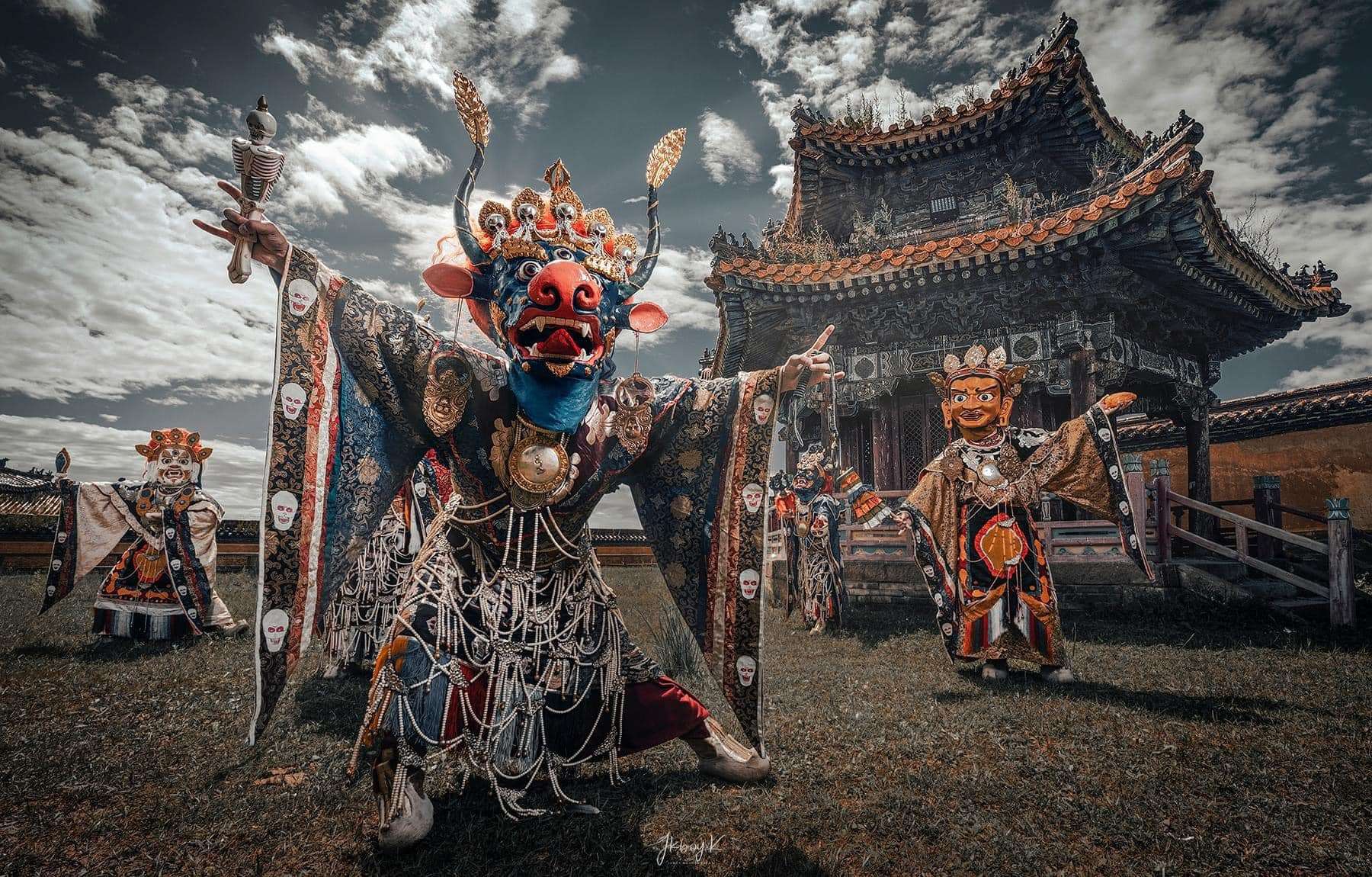
Above, I suggested that Subodhi’s advanced students could wear masks similar to the Tibetan Cham dancers. Well, someone on Facebook posted lovely images of said dancers by the photographer “JKBoy” Jatenipat Ketpradit (fig. 5-7). I just wanted to share some of them so that readers will have a better understanding of what the students might look like.

Fig 5 (top) – The monks performing the Cham dance (larger version). Fig. 6 (middle) – The dancers with their masks off (larger version). Fig. 7 (bottom) – A portrait of a Cham dancer (larger version). Images found here. Copyright Jatenipat Ketpradit.

Notes:

1) I quote the scene of his expulsion below:

“You, Wukong, come over here! I ask you what sort of exhibition were you putting on, changing into a pine tree? This ability you now possess, is it just for showing off to people? Suppose you saw someone with this ability. Wouldn’t you ask him at once how he acquired it? So when others see that you are in possession of it, they’ll come begging. If you’re afraid to refuse them, you will give away the secret; if you don’t, they may hurt you. You are actually placing your life in grave jeopardy.” “I beseech the master to forgive me,” Wukong said, kowtowing. “I won’t condemn you,” said the Patriarch, “but you must leave this place.” When Wukong heard this, tears fell from his eyes. “Where am I to go, Teacher?” he asked. “From wherever you came,” the Patriarch said, “you should go back there.” “I came from the East Purvavideha Continent,” Wukong said, his memory jolted by the Patriarch, “from the Water-Curtain Cave of the Flower-Fruit Mountain in the Aolai Country.” “Go back there quickly and save your life,” the Patriarch said. “You cannot possibly remain here!” “Allow me to inform my esteemed teacher,” said Wukong, properly penitent, “I have been away from home for twenty years, and I certainly long to see my subjects and followers of bygone days again. But I keep thinking that my master’s profound kindness to me has not yet been repaid. I, therefore, dare not leave.” “There’s nothing to be repaid,” said the Patriarch. “See that you don’t get into trouble and involve me: that’s all I ask.” Seeing that there was no other alternative, Wukong had to bow to the Patriarch and take leave of the congregation. “Once you leave,” the Patriarch said, “you’re bound to end up evildoing. I don’t care what kind of villainy and violence you engage in, but I forbid you ever to mention that you are my disciple. For if you but utter half the word, I’ll know about it; you can be assured, wretched monkey, that you’ll be skinned alive. I will break all your bones and banish your soul to the Place of Ninefold Darkness [Jiuyou zhi chu, 九幽之處], from which you will not be released even after ten thousand afflictions!” “I will never dare mention my master,” said Wukong. “I’ll say that I’ve learned this all by myself.” Having thanked the Patriarch, Wukong turned away, made the magic sign, pulled himself up, and performed the cloud-somersault (Wu & Yu, 2012, pp. 124-125).

2) Ter Haar (2021) provides a list of such generational names:

Table 1. The use affiliation characters by People of the Way

Dao 道 (Huzhou, Jiaxing, Taizhou, Suzhou) (13 cases) – The Way
Zhi 智 (Huzhou, Jiaxing) (6 cases) – Wisdom
Yuan 圓 (Huzhou, Jiaxing, Taizhou) (5 cases) – Complete
Pu 普 (Taicang, Taizhou, Huating) (4 cases) – Universal
Miao 妙 (Deqing, Jiaxing) (3 cases) – Wondrous
Jue 覺 (Huating) (1 case) – Awareness (p. 39)

Sources:

Buswell, R. E., & Lopez, D. S. (2014). The Princeton Dictionary of Buddhism. Princeton University Press.

Ter Haar, B. (2021). The White Lotus Teachings in Chinese Religious History. Netherlands: Brill.

Wu, C. & Yu, A. C. (2012). The Journey to the West (Vol. 1) (Rev. ed.). Chicago, Illinois: University of Chicago Press.

Archive #26 – Bimawen, Heavenly Horses, and Dragon Horses in Chinese Literature and History

Note: My blog is not monetized, so I am not making any money from this post. My hope is that these texts will make background info on Journey to the West more accessible to a wider audience. If you enjoyed the digital versions, please, please, please support the official releases.

Last updated: 01-04-2025

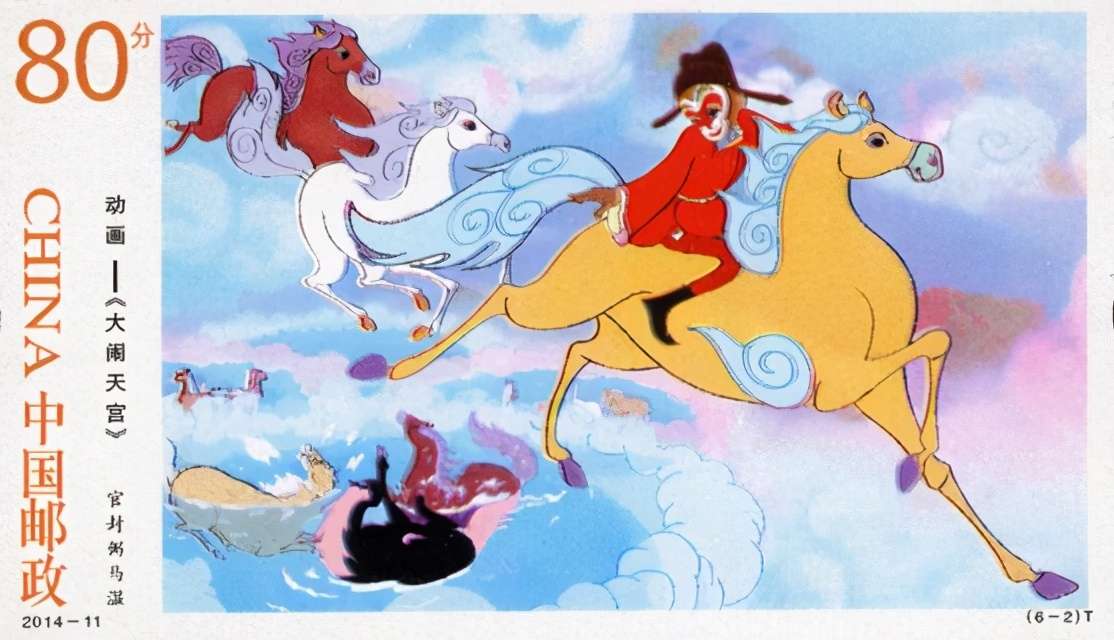
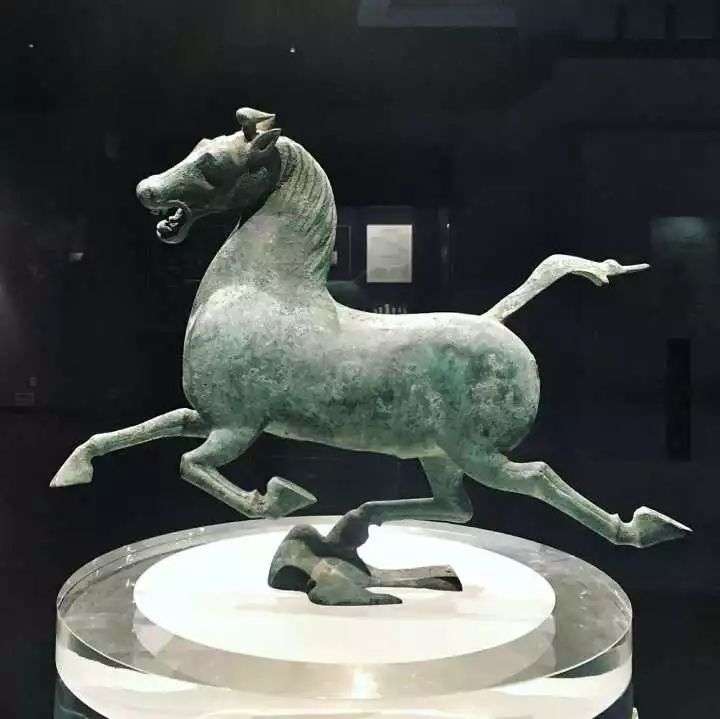
In chapter four of Journey to the West (Xiyouji, 西遊記, 1592), Sun Wukong is invited to heaven to serve as the Bimawen (弼馬溫, “To assist horse temperament”), a minor post overseeing the celestial horse stables (Wu & Yu, 2012, p. 148). He takes the position seriously, caring for nearly 1,000 horses day and night, making sure that they are all well-fed, exercised, and rested (Wu & Yu, 2012, p. 149) (fig. 1). But these are no ordinary horses. A poem associates them with the most famous steeds in Chinese history (Wu & Yu, 2012, pp. 148-149), and most importantly, the last line states: “They tread the mist and mount the clouds with unflagging strength” (Wu & Yu, 2012, p. 149). This suggests that they have the supernatural ability to gallop through the skies (fig. 2). Additionally, the novel refers to them as “dragon horses” (longma, 龍馬) (Wu & Yu, 2012, p. 309), which brings to mind the White Dragon Horse (Bai longma, 白龍馬) that serves as Tripitaka‘s mount throughout the journey (Wu & Yu, 2012, p. 328).

Monkey’s position gives him power over all horses, especially those of mortal stock. Chapter 14 reads:

When the horse saw [Pilgrim], its torso slackened and its legs stiffened. In fear and trembling, it could hardly stand up. For you see, that monkey had been a [Bimawen], who used to look after dragon horses in the celestial stables. His authority was such that horses of this world inevitably would fear him when they saw him (Wu & Yu, 2012, p. 309). [1]

那馬見了他,腰軟蹄矬,戰兢兢的立站不住。蓋因那猴原是弼馬溫,在天上看養龍馬的,有些法則,故此凡馬見他害怕。

Table of Contents

1. Historical Stable Monkeys

The heavenly post is a homophonous pun on Bimawen (避馬瘟, lit: “avoid the horse plague”), an ancient superstition where people would place monkeys in stables to ward off equine sickness. For example, Essential Techniques for the Common People (Qimin yaoshu, 齊民要術, c. 544) states:

[Horses] are often associated with macaques [mihou, 猕猴] in the horse stable. This is in order to calm the horses, repel evil, and eliminate all diseases.

常系猕猴于马坊,令马不畏、辟恶、消百病也

The later Compendium of Materia Medica (Bencao gangmu, 本草綱目, 1596) mentions this concept twice. The first reads:

The Shuowen says: The characters (for macaque) look like “mother monkey” (muhou), but it’s “bathing monkey” (muhou, i.e. macaque), not a female. Since a macaque resembles a hu-barbarian, he is also called hu-sun “grandson of a barbarian.” The Zhuangzi calls him ju. People who raise horses keep a macaque in the stables, which will ward off horse-diseases. The Hu barbarians call a macaque ma-liu, in Sanskrit books he is called Mo-si-zha (makaṭa). [2]

《说文》云︰为字象母猴之形。即沐猴也,非牝也。猴形似胡人,故曰胡孙。《庄子》谓之狙。养马者厩中畜之,能辟马病,胡俗称马留云。《梵书》谓之摩斯[咤]

The second explains how monkeys are believed to help the horses:

The Classic of Horses states: Domesticated macaques used in horse stables help avoid horse diseases [lit: bimawen]. Their monthly menstruation runs onto the grass, and once the horses eat it, they will never be sick.

《马经》言︰马厩畜母猴,辟马瘟疫。逐月有天癸流草上,马食之,永无疾病矣

This is insanely comical as it directly links Sun Wukong, a powerful cosmic warrior, to menstruation! This then might explain why Monkey is so enraged when enemies call him a Bimawen. As noted by my friend Irwen Wong of the Journey to the West Library blog, it challenges the Great Sage’s masculinity.

2. Essays on Heavenly Horses

The following essay by Arthur Waley (1955), famed translator of the Journey to the West abridgement Monkey (1942), links heavenly horses to a historical breed from Central Asia, the Ferghana horse. He describes China invading the region to procure these horses by force, suggesting Emperor Wu of Han directed this action because the ruler believed the equines were dragon horses capable of transporting him to heaven. This is linked to stories of ancient Chinese rulers attaining immortality by riding horses or dragons to the celestial realm. Waley (1955) notes that both the Chinese and Indians believed supernatural steeds hailed from the water, showing a link between horses and dragons.

However, Creel (1982) refutes the claim that the heavenly horses were procured for purely religious reasons. He shows that they were indeed used in military battles.

Fig. 1 – A 2014 stamp featuring a scene from the classic 1960s animation Havoc in Heaven in which Sun Wukong serves as the keeper of the heavenly horses (larger version). Image found here. Fig. 2 – A photo of the famous circa 2nd century BCE Flying Horse of Gansu (larger version). Image found here.

2.1. The Heavenly Horses of Ferghana

Individuals are not happy in proportion to the amount of space their persons occupy. Yet certain nations, at certain periods of their history, seem to take it for granted that the wider they spread themselves the happier they will be. China is a case in point. Why did this enormous country in the second century BC, in the first century AD and again at various later periods ruin itself by gratuitous westward expansion? Were her aims commercial or strategic? Was she defending her silk trade, or guarding against possible wars on two fronts? What part was played by the individual ambition of Emperors or generals, or by mere restlessness and love of adventure?

To answer these questions we should have to take the campaigns one by one. In doing so we should not be reduced to mere guesses. In Imperial edicts and addresses about military campaigns certain traditional pretences are, of course, kept up: ‘everything under Heaven’ belongs by right to the Chinese Emperor, and any peoples who do not think so must be chastised. Concrete and material motives for war are not always mentioned in these regal utterances, any more than an Address from the Throne (or its equivalent) in modern countries usually mentions petrol or rubber. But statesmen and officials were often quite frank about material motives for conquest: more so, I think, than is the case with us today. Thus, as justifying a proposal to secure from the Huns a strip of territory that projected into the Kansu corridor in north-western China the following reasons are given by a statesman in 8 BC: first, that it was a good source of supply for the sort of wood and feathers used in making arrows; secondly, that it would mean a large increase of Chinese territory, and lastly that it would give the general in command of the campaign a chance to win a big reputation. It is interesting to find that extension of territory is here regarded as an end in itself. Possibly supporters of the proposal might, if pressed, have pointed out as an afterthought that Chinese farmers could be settled in the new territory and that the taxes they paid would be a help to the exchequer.

The tendency of modern historians, and not only in Marxist countries, is to stress material and particularly economic motives for war, and to regard the profession of other motives as mere propaganda. In dealing with early Chinese history I do not think this view would generally lead us far astray, so long as we bear in mind the additional factor of personal ambition and the almost axiomatic belief that extension of territory was an end in itself. But I am going to deal with a case that seems to me to be exceptional. Oddly enough the early Chinese military adventure that modern scholars have most unanimously explained solely on materialist lines, seems, on closer examination, to have been to a large extent a religious quest

In 102. BC the Chinese Emperor Wu sent a huge military expedition (there had been a small and abortive one two years before) to Ta Yüan, corresponding roughly to the modern Ferghana in Russian Turkestan, to capture Heavenly Horses. Modern scholars, both Far Eastern and European, have usually assumed that the real object of the expedition was a purely practical one; namely, to secure a better type of cavalry horse. It is certain that by the middle of the second century AD the Chinese did possess two kinds of horse: a steppe-pony, with a large clumsy head, and a western type of horse, similar to that shown on Greek coins of the fourth to the second century BC, with small graceful head. It may well be that one of the results of the Ferghana expedition was the introduction of a western type of horse into China; and in the eyes of the generals and the horse-experts who accompanied them this may have been the main object as well as the result of the expeditions. But modern historians, intent on the very interesting material aspects of the episode, have tended to overlook its place (amply attested by contemporary texts) in the history of Chinese religion. Incidentally, by examining these texts more closely, I think one gets fresh light on what concretely and zoologically (as opposed to mythologically) the Heavenly Horses really were. I should mention that as a result of the expedition thirty or so ‘superior horses’ and 3,000 horses and mares of ‘middling or lower quality’ were handed over to the Chinese. How many of these survived the journey of 2,500 miles back to the Chinese capital we do not know. A few years later the king of Ferghana agreed to send two Heavenly Horses to China every year. I shall here be concerned only with the thirty ‘superior’ Or ‘Heavenly’ horses. There is no reason to suppose that the 3,000 inferior horses were of a type different from the usual Chinese horse. They may merely have been needed as remounts.

In studying what was said about the horses in contemporary Chinese literature the best point of departure is the hymn made in 101 B.C. when the horses were about to arrive at the Chinese capital :

The Heavenly Horses are coming,
Coming from the Far West.
They crossed the Flowing sands,
For the barbarians are conquered.
The Heavenly Horses are coming
That issued from the waters of a pool.
Two of them have tiger backs.
They can transform themselves like spirits.
The Heavenly Horses are coming
Across the pastureless wilds
A thousand leagues at a stretch,
Following the eastern road.
The Heavenly horses are coming.
Jupiter is in the Dragon.
Should they choose to soar aloft,
Who could keep pace with them?
The Heavenly Horses are coming;
Open the gates while there is time.
They will draw me up and carry me
To the Holy Mountain of K’un-lun.
The Heavenly Horses have come
And the Dragon will follow in their wake
I shall reach the Gates of Heaven,
I shall see the Palace of God.

This song has often been spoken of by western historians as though it were a purely secular literary poem. It is in reality one of a series of hymns written (possibly by the Emperor Wu himself, but the authorship is very uncertain) for use at the sacrifices to Heaven and Earth-sacred rituals performed by the Emperor in person. One or two of the phrases in it obviously need further explanation. Whether the people of Ferghana believed that their sacred horses ‘issued from a pool’ we do not know. But there are, apart from other instances of this belief elsewhere in Central Asia, many Chinese stories of horses coming up out of the water, the implication being that they are dragon-horses, that is to say, water-dragons who have changed themselves into horses, often retaining their dragon wings. As we shall see, the Emperor had been on the look-out for a water-born horse for some time. What is meant by ‘the Dragon will follow in their wake,’ more literally ‘they will be introducers of the Dragon’ ? The idea underlying these words is best illustrated by the following story, dating perhaps from some forty years earlier than the hymn: Recently a man who lived on the frontier lost his horse which ran away into the land of the barbarians. He was very much upset, and everyone condoled with him, except his father who remarked cheerfully, ‘This may be a blessing in disguise.’ And sure enough the lost horse came back bringing with it a ‘fine horse,’ that is to say, a horse of superior value and breed. The Emperor in this hymn hopes that the Ferghana horses would one day bring along a Dragon, a being even more magical than a Heavenly Horse.

The general implication of the hymn therefore is that the Heavenly Horses will carry the Emperor to the abode of the Immortals on the magical mountain K’un-lun. He imagines himself, I think, driving in a chariot drawn by horses rather than riding on horseback. Riding did not become common in China till the fourth century BC and was in the second century still felt ‘to be a utilitarian, unlegendary form of transport. More than this, the Ferghana horses being, as another hymn in the series says, ‘friends of the Dragon ‘ who is master of the clouds, will eventually carry him to Heaven, to the Abode of God-on-High-(Shang Ti).

The preceding hymn (No. 9 in the series), which is about the fleeting and uncertain nature of man’s life, ends with the words, ‘Why does not Tzu-huang come down to me?’ Tzu-huang was the horse with dragonwings that carried up the mythical Yellow Emperor to Heaven. There are many Chinese stories of legendary monarchs being carried up to Heaven by magic steeds; but it would be difficult to prove that any of them is older than the fourth century BC. It is interesting to compare these Chinese myths with Indian ideas about the relation of monarchs to magic steeds. In Indian legends the magic horse Valaha (‘Cloud’), is one of the ‘seven treasures’ of a great monarch. Valaha came up out of the sea, just as the Ferghana horse and others in which the Chinese were interested came up out of the water, and carried Simhala, the legendary founder of the Kingdom of Ceylon, back to India when he was on the verge of being eaten by female cannibals.

The Emperor Wu had, as I have mentioned, for some time past been on the look-out for a magic horse, ‘born from’ a stream. In 121 BC someone thought it worthwhile to report to the Court that a horse had come up out of a river to the north of the Ordos, the great square-shaped northern bend of the Yellow River. We have no details about this horse ; but in 113 BC another strange horse was not only seen but captured and sent to Court. A Chinese who in consequence of some misdemeanour had been sent to do service at the military colony near Tun-huang, on the northwest frontier, frequently saw a horse of strange appearance drinking in the river along with a number of wild horses. He tamed the strange horse by putting at the water-side a dummy figure of a man whose hands were bridle and halter. When the horse was used to this sight he substituted himself for the dummy, captured the horse and sent it to Court. In order to prove that the horse was ‘divine’ he pretended that it had come up from under the water. His story was evidently believed at the time, for this horse, too (like the Ferghana horses twelve years later), was made the subject of a hymn to be used in the Imperial sacrifices :

The Heavenly Horse comes down
A present from the Grand Unity,
Bedewed with red sweat
That foams in an ochre stream
Impatient of all restraint
And of abounding energy.
He treads the fleeting clouds,
Dim in his upward flight;
With smooth and easy gait
Covers a thousand leagues.

Historians of religion, particularly those of the Vienna school, regard as ‘the beginning of religion’ the belief in a supreme celestial deity who later becomes merely a vague memory and ultimately fades away or becomes merged in other, more concrete cults. The ‘Grand Unity‘ (or ‘Great Unique,” as one might also translate it) of this hymn has therefore particular interest as a religious phenomenon, being a supreme celestial deity whose origin (at any rate as a national cult), whose heydey and disappearance all take place before our eyes within a limited historical period. So far from belonging to a remote, ‘archaic’ past he begins, officially at any rate, in 133 B.C. Up till then the Grand Unity was a philosophic conception denoting the primal unity out of which grew the plurality of the universe as we know it. Sometimes the phrase is a synonym of Tao, the underlying principle of the Universe in Taoist philosophy. But in the second century BC a cult sprang up in which the Grand Unity figures not as a philosophic conception but as a personal divinity, the highest of all gods, worshipped with an elaborate ritual. About 133 BC a member of the Grand Unity sect prevailed on the Emperor Wu to make the whole Imperial cult centre round this deity. The Grand Unity maintained this position during several reigns and the cult was only brought to an end (along with many other religious innovations of Wu’s reign) in 32 BC.

I will leave aside for the moment the other points of interest in the Heavenly Horse hymn of 113 BC and note here that the Emperor’s search for immortality did not begin with his interest in divine horses. He had, as is well known, for long past been pursuing this quest on other lines. He had sent numerous and costly expeditions to the East in the hope of discovering islands inhabited by Immortals who might be persuaded to yield their secrets to him. He had dabbled in alchemy, in the belief that if he ate out of vessels made of alchemic gold he would live forever, or at any rate for a prodigiously long time. The expedition to fetch magic horses from the West was, it seems to me, merely a continuation of his earlier quests in the East. ‘The Emperor Wu,’ says Wen Ying in about AD 200, ‘had set his heart on immortality. He was always hoping that a Heavenly Horse would come and carry him to K’un-lun,’ the western Abode of the Immortals. At last when all his guests in the East had failed and when the Horse did not come of its own accord (as it had come to legendary Emperors in the past, both in India and in China) he determined, having known for long that the king of Ferghana had such horses, to wrest some from him by diplomacy or, if need be, by force.

We have seen, then, how the horses were regarded by the Chinese Emperor. Other people, less obsessed by magico-religious ideas, may have viewed them differently; but there is nothing in the Chinese sources to suggest that they were needed or used for military purposes. Naturally, the normal political excuses were made for the expedition. In a public proclamation the Emperor accused Ferghana of having killed two Chinese envoys on their way to the west and an Indian envoy who was on his way to China. The excuse has a familiar ring. One is reminded, for example, of the German seizure of Tsingtao in 1897, alleged to be a reprisal for the murder of the German missionaries Nies and Henle.

Another question clearly arises. How were the Heavenly Horses regarded by the king of Ferghana and what role did they play at his Court? It is generally assumed that they were battle-chargers. But I wonder whether their function was not perhaps something like that of the ten Nesaean horses ‘most gorgeously caparisoned,’ who in the procession of the Persian king Xerxes, as described in the seventh book of Herodotus, walked immediately in front of the sacred chariot of ‘Zeus’ ? ‘And it occurs to one that to this same category of ceremonial horse may very well belong the ten yellow mares of the Pazaryk grave mound, in the eastern Altai, preserved in a solid ice block. They form part of the burial gear of a semi-nomad chieftain who lived perhaps somewhere about the 5th century B.C. ‘They are,’ says the Swedish archaeologist Karl Jettmar, ‘certainly of the noblest breed. They resemble the best strains of Turkmenistan or Ferghana.’ Two of them have masks. One mask represents a deer or reindeer; the other, a composite mythological creature. They may well have been special horses used by a ruler for ritual purposes, and perhaps (as Jettmar suggests) they took part in the funeral procession, which like the Scythian funeral processions described’ by Herodotus may have travelled an immense way. Their mythological function may well have been to carry the dead Khan to Immortality, just as the horse Tzu-huang carried the legendary Chinese Yellow Emperor and as in historic times the Emperor Wu hoped to be carried by the Ferghana horses. One is reminded, again, of the ‘treasure-horses,’ blue-grey in colouring and with black heads (that is to say, descendants of the magic horse Valaha) and gorgeously caparisoned, who took part in the procession that brought the infant Buddha back from Lumbini to his father’s palace. If the function of the Heavenly Horses at the Ferghana Court was a ritual rather than a practical one it would well explain why the king was so anxious not to part with them and at one point even threatened to kill them all rather than let them fall into the hands of the Chinese.

Though the main subject of this essay is the relation between the Ferghana expeditions and the religious pre-occupations of the Chinesr Emperor, the texts we have studied do also tell us something about the physical characteristics of the Ferghana horses, and it may be worth while to close with a few remarks on this subject. The first of the two hymns mentions that two Heavenly Horses had stripy backs. Lydekker in The Horse and Its Relatives says : ‘It has been noticed that dun-coloured domesticated horses frequently show a tendency to develop … one or two transverse dark stripes across the shoulder, and another along the middle line.’ Such presumably were the two Ferghana horses, and the Chinese regarded them as ‘marked’ by heaven and consequently particularly sacred. The other physical characteristic commonly attributed to Ferghana horses is that they ‘sweated blood.’ This, as we have seen, was also said of the horse sent from near Tun-huang in 113 BC. Professor Dubs, in his valuable translation of the Han History, has suggested that the flow of blood was caused by lesions inflicted on the horses by a parasite with the intimidating name Parafilaria multipapillosa. There is in any case no question of this characteristic being merely legendary. In AD 78 the Emperor Chang gave one of his uncles ‘a Ferghana horse which bled from a small hole above its front upper leg.’ In the letter that accompanied this gift he said, ‘I had often heard the line in Emperor Wu’s song about the Heavenly Horse in which it is said that it is ‘ bedewed with red sweat,’ and I have now seen with my own eyes that this is actually the case.’ Presumably the ‘hole’ looked more like a pore in the skin than a wound, and therefore what came out of it was regarded as sweat rather than blood.

Nowhere, I think, is it said that they were larger than Chinese horses, though this has constantly been assumed by Western writers. The only horses that the Chinese at this period call big (ta) were to be found not in Ferghana but in Parthia. ‘They have the big horse and the big bird (ostrich),’ says the Han History. But there is no record of those huge Parthian steeds (no doubt the Parthikoi of Strabo, which he says were of the same build as the huge Nesaean horses) being brought to China.

To sum up: the accepted idea about the Ferghana expeditions is that the Emperor Wu sent them in order to obtain ‘horses larger and fleeter than the small steppe breed.” It is assumed that in this he was successful and that the ‘western’ type of horse seen in some of the second century A.D. grave-reliefs corresponds to the type of horse brought back from Ferghana in 101 BC. I would re-formulate this view as follows: The Emperor sent the expeditions in order to secure Heavenly Horses which would carry him to Heaven. There is no evidence that Heavenly Horses were used in battle either in Ferghana or China: If they had been they would hardly have remained long, as it were, ‘on the secret list.’ I’m inclined, to think that their function was a ritual one, both in Central Asia and in China. About the breed of the horses that the Emperor secured we know nothing. But it is reasonable to suppose that the existence of the ‘Western’ horse in China, in the second century AD was due to Chinese intercourse with the West from the second century BC onwards and that the Ferghana expedition, as an episode in this intercourse, may well have played its part in what was perhaps a gradual process. There is no justification for saying as Tam does that ‘the origin of the Ferghana horses must have been one of the great Parthian war-horses’ or that the Ferghana horses were ‘of the great Nesaean-Parthian breed.’.

Thus though my main object was to show that this episode cannot be properly understood without taking into account more than has hitherto been done its magico-religious aspects, my conclusions about its secular, concrete aspects are also somewhat different from those of my predecessors (Waley, 1955).

2.2. The Role of the Horse in Chinese History

Creel (1982) successfully refutes the former’s claim that the horses were procured for only religious reasons:

Waley, “Heavenly Horses of Ferghana,” 102, takes the position that the horses of Fergana were sought by the Han Emperor Wu “in order to secure Heavenly Horses which would carry him to Heaven.” He says that “there is no evidence that Heavenly Horses were used in battle either in Ferghana or in China.” (Ibid., 102.) But in fact, as we have seen, the use of Fergana horses in fighting is mentioned in Hou-Han-shu, 110A.4b. By speaking here of “Heavenly Horses” Waley is evading the real question: were horses obtained from Fergana used in battle in Han times? The answer is that they were. Waley also says: “Nowhere, I think, is it said that they [i.e., “Heavenly Horses”] were larger than Chinese horses, though this has constantly been assumed by Western writers.” (Ibid.) The evidence cited above certainly indicates that the Fergana horses were extremely large and that there is every reason to feel assured that they were much larger than most of the horses in China both in Han times and later. Further evidence against Waley’s view is the nature of the titles of the two men sent by the Emperor to Fergana “to select good horses.” (Shih-chi, 123.37.) These would appear to be ordinary official titles and refer to “managing horses” and “driving horses.” If the purpose had been primarily to select horses having special religious virtues, why did the Emperor not send men with religious qualifications? Certainly there was some religious aspect to this curious affair, and Waley has performed a service by emphasizing it. But in doing so he has given undue attention to a part of the evidence and neglected other parts of it entirely (p. 176 n. 66).

Please see the PDF below for the entire chapter.

Click to access Herrlee-G.-Creel-What-Is-Taoism_-and-Other-Studies-in-Chinese-Cultural-History-1970-Ch.-8-on-Horses.pdf


3. Updates

Update: 03-12-23

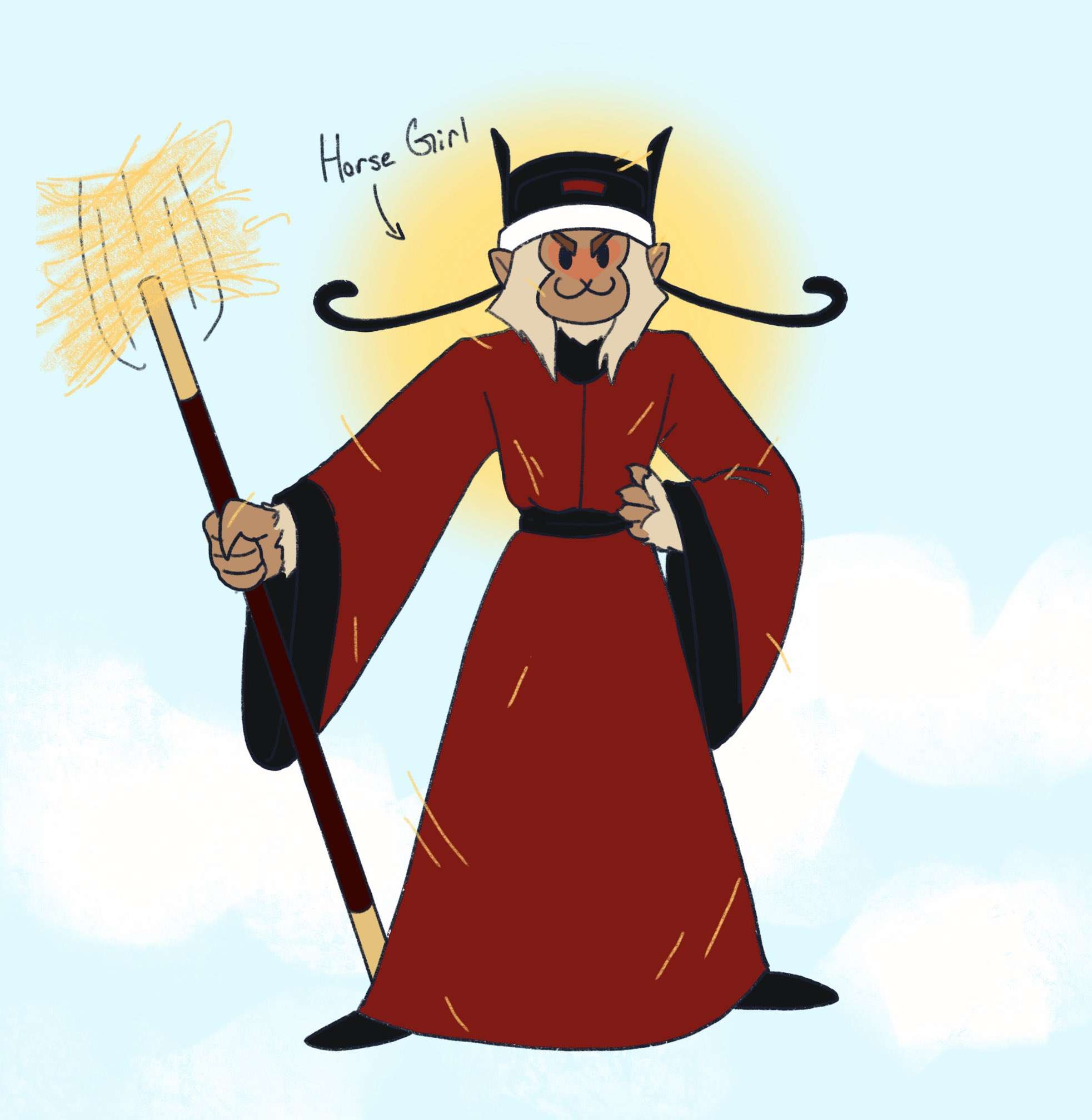
Twitter user Lava (@Lavaflowe) has allowed me to post their lovely drawing of Sun Wukong as the Bimanwen. The image is comically labeled “horse girl.” I especially love how he has transformed his magic staff into a pitchfork. Also, check out the hay covering his heavenly robes (fig. 4). That’s such a great detail.

Fig. 4 – Monkey as the Bimawen (larger version). The original tweet can be seen here.


Update: 01-04-25

I just posted an article about the White Dragon Horse.

Why Did the White Dragon Horse Burn His Father’s Pearls in Journey to the West?

Notes:

1) This power was given to Monkey by the Jade Emperor, who gives him the Bimawen post. This was pointed out to me by Irwen Wong of the Journey to the West Library blog.

2) The translation is partly based on Gulik, 1967, p. 35. I changed the Wade-Giles to pinyin.

Sources:

Creel, H. G. (1982). What is Taoism?: And other Studies in Chinese Cultural History. Chicago, Ill: University of Chicago Press.

Waley, A. (1955, February). The Heavenly Horses of Ferghana. History Today, 5, 95-103.

Wu, C., & Yu, A. C. (2012). The Journey to the West (Vol. 1) (Rev. ed.). Chicago, Illinois: University of Chicago Press.

Dragon Ball and Journey to the West

Last updated: 12-29-2022

It recently occurred to me that I’ve referenced the Dragon Ball franchise in several blog articles. So, I’ve taken the opportunity to gather everything into one spot, including information that I haven’t previously mentioned. This is meant to be a very basic introduction and not an exhaustive analysis. My current interest here is in modern adaptations of Journey to the West (Xiyouji, 西遊記, 1592; “JTTW” hereafter).

Those interested in a broader discussion on the influences of Dragon Ball should consult the work of Derek Padula.

Table of Contents

1. Son Goku

The name of the series protagonist, Son Goku (孫悟空) (fig. 1), is a Japanese transliteration of Sun Wukong, meaning “Monkey Aware of Emptiness,” an allusion to Buddhist enlightenment. While referencing Rhesus macaques and “grandsons,” the surname Sun (孫), is also a veiled symbol for the development of an immortal spirit in Taoist elixir arts. Therefore, the name Son Goku straddles both Buddhism and Taoism.

Goku’s monkey tailflying nimbus cloud, and extending power pole (fig. 2) are all based on the respective trait, skill, and weapon of the Monkey King. The latter’s skill is called the “Cloud Somersault (jindou yun, 筋斗雲), which can travel 108,000 li (33,554 mi / 54,000 km), or one and one-third the circumference of Earth, in a single leap. Sun’s staff, the “‘As-You-Will‘ Gold-Banded staff,” weighs a whopping 17,560 lbs (7,965 kg) and (among other abilities) can magically grow as big or shrink as small as the immortal desires.

Goku’s proficiency in boxing (fig. 3) has a fun connection to Sun Wukong. Series creator Akira Toriyama partly based the Saiyan’s fighting style on the Wing Chun techniques used by Bruce Lee and Jackie Chan in their respective films. This style falls under the umbrella term “Short Fist” (Duan quan, 短拳), a school of martial arts with a low stance and quick, compact punches. JTTW states that this very style is the Monkey King’s preferred fighting technique! He uses Short Fist a few times in the novel.

The spherical spaceship that baby Goku crash lands on Earth in from DBZ (fig. 4) is a clever nod to the magic stone that Sun Wukong is born from in the beginning of the novel.

Goku’s Ozaro (大猿) form, or his ability to change into a titanic “great ape” during a full moon (fig. 5), is largely based on the Monkey King’s cosmic transformation. The novel calls this magical skill the “Method of Modeling Heaven on Earth” (Fatian xiangdi, 法天像地), and Sun uses it to grow 100,000 feet (30,480 m) tall during battles with powerful opponents. This is related to ancient Pre-Qin and Han dynasty concepts of astral-geography later used in the construction of imperial Chinese cities.

While I don’t have confirmation from Toriyama, Goku’s “Instant Transmission” skill (fig. 6) might be based on the aforementioned cloud somersault. This is because Chinese Buddhist literature mentions the world of man is separated from the Buddha’s paradise by 108,000 li (the distance covered by the cloud), and the only way to instantly bypass all of the hardships in-between is achieving enlightenment. Hence the cloud somersault is symbolic of instant travel.

2. Other Characters

Goku’s early quest to find the dragon balls along with Bulma (Tripitaka), the shape-shifting pig Oolong (Zhu Bajie), and the desert bandit Yamcha (Sha Wujing) is based on the quest for sutras in JTTW. Not surprisingly, other DB/DBZ characters come from the Chinese novel. The Ox-King and Chi-Chi are respectively based on the Bull Demon King and his wife, Princess Iron Fan (fig. 7). Tien Shinhan is based on Erlang, the only god to truly defeat Sun Wukong, which is why Tien is such a threat to young Goku.

Goku’s martial arts teacher, Master Roshi, is based on the Buddho-Taoist Sage Subodhi who teaches Sun Wukong magic and the secret of immortality. Subodhi is based on Subhuti, a historical disciple of the Buddha. This is hilarious when you think about how much of a pervert Roshi is (fig. 8).

The antagonist Broly (fig. 9) wears a shock collar and mind-controlling headband in various DB media. These are based on the Monkey King’s “Golden Fillet” (jing gu quan, 金箍圈), which represses his unruly nature by painfully constricting around his head when a magic spell is chanted. It’s interesting to note that this fillet is based on a historical ritual headband worn by ancient Indian Buddhist yogins as a physical reminder of self-restraint.

3. Senzu Beans

The senzu (仙豆, “immortal bean”) (fig. 10) used by Goku and other Z fighters to replenish their strength from prolonged training or battle are based on immortality-bestowing elixir pills that Sun Wukong eats while drunkenly stumbling through the laboratory of the Taoist high god Laozi. Once eaten, the pills immediately counteract the effects of the heavenly wine.


4. Updates

4.1. Origin of Spikey Hair

Update: 03-20-22

I recently remembered that I’ve also referenced the origin of the spikey hair in esoteric Buddhist art. On 02-14-2019 I posted on twitter saying: “Goku’s spiked hair is based on esoteric guardian deities. For ex., here is Tianpeng, the former incarnation of Oolong’s precursor Zhu Bajie [fig. 11].”


4.2. What If?: Dragon Balls Existed in the JTTW Universe

Update: 12-20-22

I first became interested in JTTW thanks to Dragon Ball Z. The series is obviously named after the seven glass-like orbs (fig. 12) created by the Namekian-turned-protector deity Kami for the benefit of mankind. When all seven are collected, they summon the dragon god Shenron, who grants a single wish. One common wish is to resurrect a beloved fighter who had previously been killed in battle.

But what would the Dragon Balls be like if they appeared in the JTTW universe? There are two possibilities. The first is the most obvious, the Cintāmaṇi (Sk: “wish-fulfilling jewel”; Ch: ruyi baozhu, 如意寶珠, lit: “as-you-will treasure jewel”). Also known as “dragon jewels” (longzhu, 龍珠), these luminous orbs are commonly held by Bodhisattvas in Buddhist art (fig. 13), thereby signifying their ability to grant any wish that a believer desires. They are also mentioned in Buddhist scripture. For instance, the Treatise of the Great Perfection of Wisdom (Sk: Mahāprajñāpāramitāśāstra; Ch: Da zhidu lun, 大智度論, c. 2nd-century) reveals that the Cintāmaṇi is a bodily relic found in the brains of dragon kings (longzhu chu longnao zhong, 龍珠出龍腦中) (Buswell & Lopez, 2014, p. 193). Therefore, we would be able to maintain the connection to dragons in JTTW.

(If we view Dragon Ball Z under the light of this new information, a creepy implication is that Kami killed seven dragon kings in order to create his set of dragon balls.)

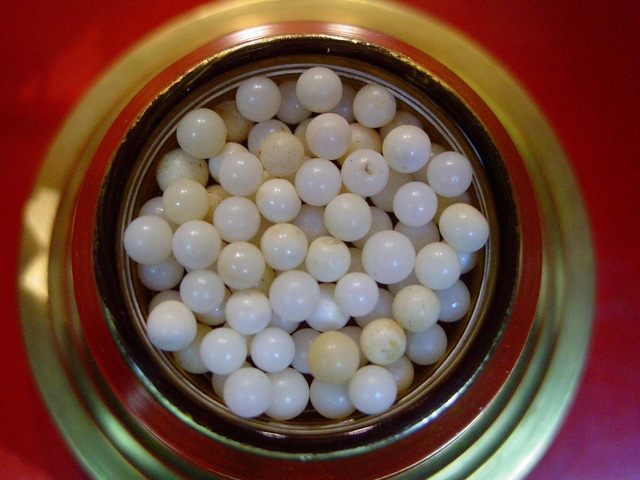
In East Asia, the Cintāmaṇi is closely associated with our second possibility, the Śarīra (Sk: “body”; Ch: Sushe/zi, 舍利/子) (fig. 14). These pearl-like beads figure among the bodily relics left over from the historical Buddha’s cremation. [1] Strong (2004) explains: “[They are the result] of a process of metamorphosis brought on not only by the fire of cremation but also by the perfections of the saint (in this case the Buddha) whose body they re-present” (p. 12).

They are said to come in different colors and sizes depending on the country and religious tradition (Strong, 2004, p. 11).

JTTW could have one or even both of these items. For example, the Cintāmaṇi would allow demon kings or lesser spirits to wish for powerful heavenly weapons, thereby helping them fight stronger opponents; or, the Śarīra could grant the devils more spiritual power, thereby allowing them to bypass centuries of spiritual cultivation.

But neither of these things could help evil beings achieve immortality. I’ve previously noted that JTTW was heavily influenced by the Buddho-Daoist philosophy of the Southern Quanzhen School Patriarch Zhang Boduan (張伯端, mid to late-980s-1082). He believed that in order to become a true transcendent (xian, 仙), one had to achieve both the Daoist elixir of immortality and Buddha-nature (Shao, 1997; 2006). The first extends your life, while the second frees you from the endless rounds of rebirth. While the aforementioned spiritual objects may grant them divine longevity, it won’t make them unkillable. And if they are killed, they would still be subject to the wheel of reincarnation. It would be up to them to achieve the last step in this two-step process. But that would require these spirits to mend their evil ways and “return to the right path” (gui zheng, 歸正)⁠—i.e. convert to Buddhism.


4.3. What If?: Supplement

Update: 12-29-22

It turns out that JTTW has śarīra beads. In fact, they are mentioned at least 18 times throughout the novel. One example is a treasure belonging to the Yellow-Robed Demon (Huangpao guai, 黃袍怪). Chapter 31 reads:

Leading Pilgrim [Sun Wukong], the fiend [Yellow Robe] took his companion into the murky depth of the cave before spitting out from his mouth a treasure having the size of a chicken egg. It was a śarīra [shelizi, 舍利子] of exquisite internal elixir. Secretly delighted, Pilgrim said to himself, “Marvelous thing! It’s unknown how many sedentary exercises had been performed, how many years of trials and sufferings had elapsed, how many times the union of male and female forces had taken place before this śarīra of internal elixir was formed. What great affinity it has today that it should encounter old Monkey!” (Wu & Yu, 2012, vol. 2, pp. 80-81). [2]

那怪攜著行者,一直行到洞裡深遠密閉之處。卻從口中吐出一件寶貝,有雞子大小,是一顆舍利子玲瓏內丹。行者心中暗喜道:「好東西耶。這件物不知打了多少坐工,煉了幾年磨難,配了幾轉雌雄,煉成這顆內丹舍利。今日大有緣法,遇著老孫。」

As can be seen, Yellow Robe’s śarīra is portrayed as the hard-won product of spiritual cultivation. This agrees with Strong’s (2004) statement above that Buddhists believed such beads were “brought on not only by the fire of cremation but also by the perfections of the saint (emphasis added) … whose body they re-present” (p. 12).

Note:

1) There are three main types of Buddha relics: 1) those of the body left over from his cremation (hair, teeth, nails, bones, and Śarīra beads); 2) those that he used (walking staff, alms bowl, robes, etc.); and 3) those that he taught (i.e. lessons from scripture) (Strong, 2004, p. 8).

2) Source altered slightly. I’ve made it more accurate.

Sources:

Buswell, R. E., & Lopez, D. S. (2014). The Princeton Dictionary of Buddhism. Princeton, NJ: Princeton University Press.

Shao, P. (1997). Monkey and Chinese Scriptural Tradition: A Rereading of the Novel Xiyouji (UMI No. 9818173) [Doctoral dissertation, Washington University]. Available from ProQuest Dissertations and Theses database.

Shao, P. (2006). Huineng, Subhūti, and Monkey’s Religion in “Xiyou ji”. The Journal of Asian Studies, 65(4), 713-740. Retrieved from http://www.jstor.org/stable/25076127.

Strong, J. S. (2004). Relics of the Buddha. Princeton, NJ: Princeton University Press.

Wu, C., & Yu, A. C. (2012). The Journey to the West (Vols. 1-4) (Rev. ed.). Chicago, Illinois: University of Chicago Press.

Story Idea: The Origin of Sun Wukong

Last updated: 02-22-2025

The following story sketch was originally posted on my external Historum blog on 01-20-2014. The site recently switched to a new server, but the blogs have yet to be migrated. I’m posting it here for posterity. Regular articles will resume after this entry.

This article describes three story ideas for the origins of Sun Wukong (孫悟空) from Journey to the West (Xiyou ji西遊記, 1592 CE, “JTTW” hereafter) that I’ve come up with over the years. Number one was the original focus of this piece, but I’ve since then come up with two other origins. Readers are free to choose which one they like most. Please let me know if you are interested in fleshing these out.

Table of Contents

Story Idea #1: Spiritual Son of Primordial Primates

I have included notes to explain why certain narrative choices were made, as well as to highlight what religious texts I drew ideas from.

As a lover of JTTW and a former primatology major, I’ve always wanted to create my own primate-based character similar to Sun Wukong. I originally wanted him to be the son of Monkey or the son of one of his advisers or allies during his days as a demon. Either way, I thought that he could train under Sun and gain similar powers. But then I decided that I wanted him to be a more civilized, yet more powerful version of the character; someone who is held in high regard by all beings of the six realms (demons, hungry ghosts, animals, humans, asuras, and devas) of Buddhist cosmology, as well as the Buddha himself. After reading about the ancient Chinese view of the gibbon, [A] a small, long-armed, arboreal ape native to Asia (fig. 1), I thought that the character could be an ape immortal. It was only recently that I decided to pair him with a female since gibbons generally mate for life.

A) The Chinese viewed the gibbon (Yuan, ) as symbolic of Confucian gentlemen and Daoist immortals. Their long arms were thought to be evidence of their expertise in soaking up qi. This resulted in long lives and occult powers (Geissmann, 2008).

Fig. 1 – A gibbon soaring through the treetops. Photo by Sachin Rai. A larger version can be found here.

Plot

The Daodejing (道德經) reads:

The Dao (道, the way) gives birth to the One (yiqi, 一氣, the first breath);
The One gives birth to the Two (yin and yang, 陰陽);
The Two gives birth to the Three (San qing, 三清, the Three Pure Ones);
The Three gives birth to the Ten Thousand Things.
The Ten Thousand Things carry the Yin and enfold the Yang;
Kneading gently, they create harmony. [B]

B) This is based on chapter 42 of the Daodejing (道德經), the premiere holy text of Daoism. The original passage has been interpreted differently by different scholars. I’m using the interpretation presented in Laozi and Wilson, 2012, p. 197. The cited text, however, makes no mention of the Three Pure Ones. This is based on later Daoist texts and folk views on the supreme immortals. See Stevens, 1997, pp. 68-70.

In the beginning of the universe, the Three Pure Ones, the manifestations of the Dao, use the vital energies of the cosmos to create heaven, earth, and all living things. Among the first to be created are two gibbons, a male and a female (fig. 2). They become the progenitors of all apes and monkeys, just like the phoenix and his mate, the next to be created, are the progenitors of all birds. Being embodiments of yin and yang sexual forces, the pair propagates quickly. They frolic with their children and the following generations through the mountain tops soaking up qi (氣), prolonging their lives for thousands upon thousands of years. And Like modern apes, the pair shows a propensity for observation, watching the cyclical movement of the stars and planets and becoming aware of the ebb and flow of qi, studying the energy and cultivating its mysteries over endless eons.

Fig. 2 – A pair of mated gibbons. A larger version can be found here.

Once their family grows to titanic proportions, the gibbons wield their arcane knowledge to create an island home, raising up Flower-Fruit Mountain (Huaguo shan, 花果山) from the ocean floor. There, they construct the Water Curtain Cave (Shuilian dong, 水簾洞) from which they continue to plumb the depths of the Dao. [C] Their exploration takes them to the heights of the mountain where heaven meets earth, using the corresponding yin (earth/female) and yang (heaven/male) energy to fuel their reenactment of the creation of the cosmos through sexual union. By chance, these powerful, creative sexual energies are absorbed by a boulder atop the mountain. [D]

C) JTTW never explains where the magical cave came from. This is my attempt to give it an origin story.

D) JTTW states the following about the boulder: “Since the creation of the world, it had been nourished for a long period by the seeds of Heaven and Earth and by the essences of the sun and moon, until, quickened by divine inspiration it became pregnant with a divine embryo” (Wu & Yu, 2012, p. 101). I’ve never been satisfied with the explanation for Monkey’s birth. Why would the rock produce a simian character? This is why I wrote that the Ape Immortals make love atop of the mountain, thereby impregnating the boulder with powerful, creative energies. In Daoist sexual practices, earth and heaven are often euphemisms for the feminine and masculine sexual energies of yin and yang (Wile, 1992, pp. 11-12 and 28-29). Therefore, what I have proposed is simply a difference in semantics.

As mated gibbons often do, the pair sings the most beautiful duets that echo throughout time and space. [E] The power of their song continues to increase as their immortal lives extend through the ages. It becomes so powerful that the duet is capable of crumbling mountains, churning the oceans, and shaking the very firmament of heaven. In fact, their song inadvertently topples one of the mountain pillars supporting the sky, and so the devi Nuwa (女媧) is forced to mend the heavens with five magic stones. [F] The primordial devas and spirits fear what might happen if the couple continues, so they plead with the gibbons to separate in order to avoid destroying the cosmos. They promise to allow the pair to see one another at some fixed period of time in the distant future.

E) Gibbon duets have an ethereal quality. Those wishing to listen to some can do so here and here (make sure your volume is not too high). It’s interesting to note that gibbons can naturally perform what takes professional opera singers years of dedicated practice to achieve (Lougheed, 2014).

F) The original mythology has the pillar being fallen by a water demon. I guess an explanation could be included somewhere that the original reason for the disaster, the gibbon song, was forgotten to time and confused with a different incident.

The immortal lovers reluctantly agree and isolate themselves to two separate holy mountains; [G] the male becomes known as the “Eastern Ape Immortal” (東猿仙) and the “Ape Patriarch” (Yuan jiazhang, 猿家長), while the female becomes known as the “Western Ape Immortal” (Xi yuan xian, 西猿仙) and the “Ape Matriarch” (Yuan nu jiazhang, 猿女家長). The two are much sought after by animal, human, devil, and deva to teach them the essence of the Dao. Both become the religious teachers of countless beings, from the lowliest creature to the purest deva in the highest heaven. Former students include the Tathagata Buddha and the immortal Subodhi. [H]

G) I wanted there to be a parallel between Monkey’s imprisonment and the pair’s exile, both of which are connected to mountains.

H) The Buddha’s tutelage under the gibbons happens in the distant past when he is still a Bodhisattva in the Tushita heaven. I listed Subodhi because I wanted there to be a further link between Monkey and the Ape Immortals. Therefore, the skills of Sun Wukong’s spiritual parents are transmitted to him by their former student.

The primordial devas are eventually superseded by deified humans after a great battle between the Shang and Zhou Dynasties. [I] The August Jade Emperor (Yuhuang dadi, 玉皇大帝) and the rest of the heavenly retinue go about setting the cosmos into order. The promise made by the primordial devas is lost to time.

I) This is based on the events in the Chinese classic Fengshen yanyi (封神演義, c. 1620), or Investiture of the Gods. In the story, chaos in heaven causes many gods to be reborn on earth as various heroes of the competing Shang and Zhou Dynasties. The King of Zhou wins the conflict and his strategist, an apprentice of the supreme immortal Yuanshi tianzun (元始天尊), one of the Three Pure Ones, uses a magic list to deify the souls of those who died in battle. Thus, heaven is repopulated once more (Stevens, 1997, p. 60).

It is during the interim when the previously mentioned boulder, having been nourished by the light of the sun and moon for centuries, births a stone embryo that is eroded by the elements into a stone monkey. He becomes the king of the monkeys on Flower-Fruit Mountain by rediscovering the Water Curtain Cave that the previous generations of his kin had forgotten long after the Ape Immortals went into exile. The monkey eventually trains under Subodhi, receiving the religious name Sun Wukong (孫悟空, Monkey Awakened to Vacuity) (fig. 3), and achieving great magical powers with which he later uses to rebel against heaven for not recognizing him as a full-fledged god. After being imprisoned by the Buddha for 600 years, Sun redeems himself by escorting the monk Tripitaka (Sanzang, 三藏) to India, and for this he is rewarded with Buddhahood, becoming the “Victorious Fighting Buddha” (Dou zhansheng fo, 鬥戰勝佛).

Fig. 3 – A modern depiction of Sun Wukong (larger version). A photomanipulation by the author.

After the fixed period of time has elapsed, the primordial gibbons request to leave their individual exile. The Jade Emperor, however, refuses due to the potential for danger. Angered because heaven went back on its word, the immortal lovers leave their exile anyway, and so all of the devas, spirits, and devils struggle to keep them apart. This is an impossible task given that the two are among the highest immortals. A great battle ensues in which the pair uses their knowledge of the Dao to put the celestial army into disarray. For instance, the Ape Patriarch is a master of transformations; he grows to titanic proportions, multiplies his long arms, and captures the most powerful Daoist and Buddhist deities in his vice-like hands. The Ape Matriarch is a mistress of illusions; she clouds the minds of the soldiers, making them think that they are fighting her when they are really fighting each other. [J] In addition, their individual songs have grown in power, now capable of destroying anything by separating the yin and yang forces therein (fig. 4).

J) The strengths of each correspond to the skills passed on to the Buddha and the immortal Subodhi. Again, I wanted there to be a parallel between Monkey and his spiritual parents. The pair rebels like he did, but they do so because of injustice, not pride. However, I must say that lofty immortals would have surely evolved passed such earthly “wants and needs” (e.g. lust and anger). Daoist literature and vernacular Chinese fiction often describes immortals as being celibate. But the immortal love of the couple may transcend what might be expected of human-based immortals. That’s why I present them as living embodiments of yin and yang. Wile (1992) states: “The early [Daoist] texts are marked by the existential loneliness of yin and yang for each other, and their union consummates a cosmic synergy” (p. 29).

Fig. 4 – A gibbon yawning. Imagine powerful sound waves emanating from its mouth. A larger version can be found here.

The Jade Emperor begs the Buddha to intervene like he had done for the rebelling Sun Wukong in the past. But considering that heaven went back on its word and the ape immortals are both friends and former teachers of the Enlightened One, the Tathagata sends their spiritual son, the Victorious Fighting Buddha, to ask them to pacify their rage instead of using trickery to halt the onslaught. [K] After a brief reunion, the pair acquiesces, and all three travel by cloud to the Buddha’s abode on Vulture Peak (Lingjiu shan, 靈鷲山) to discuss the matter. The immortal lovers opine the great injustice done to them by the heavenly hierarchy. The Buddha understands that their duet is part of their primordial animal nature and is the ultimate expression of their love, which reaches back to the very beginning of time. Unfortunately, he realizes that the power of their song could destroy the universe if allowed to take place.

K) An example of trickery would be the way that the Buddha uses illusion to make Monkey think that he has left his palm in the seventh chapter of JTTW.

After some thought, the Tathagata gives them a lesson on the cyclical dissolution of the cosmos: at the end of each Mahakalpa (Da jie, 大劫), the universe is destroyed by a different element. There are fifty-six destructions by fire, seven by water, and one by wind. The latter is the most powerful, destroying all earthly and heavenly realms below the pure realm inhabited by the Buddha and his retinue. The Tathagata then suggests a compromise in which the couple can remain as his permanent guests of the Buddha realm, where they can frolic with the Victorious Fighting Buddha. This way the gibbons will be free to sing their melodious song without fear of negative effects. And when the end of the sixty-fourth Mahakalpa comes to a close, their song will serve the function of the wind element to bring about the dissolution of the universe to make way for the new one. [L]

L) Buddhism recognizes a measurement of time called a Kalpa (jie, ), which can be many millions or even billions of years long depending on the tradition. Said traditions recognize between four and eighty kalpas (Buswell & Lopez, 2014, p. 409). The total of these respective ranges make up a Mahakalpa (dajie, 大劫), which is divided into four periods of nothingness, creation, subsistence, and finally destruction, each period being between one and twenty kalpas long (Buswell & Lopez, 2013, p. 496). 


Updates

Story Idea #2: Son of Primordial Evil

Update: 01-17-21

Last year, I wrote an article that explored other stone-born figures from world mythology. In the conclusion I cautiously suggested that Wukong’s birth and later rebellion was influenced by a Hurrian myth, the “Song of Ullikummi” (c. 1200 BCE), which appears in an extant Hittite cuneiform text comprising three fragmented clay tablets. For example, one scholar noted similarities between Ullikummi and a later figure from Greek mythology: “(1) The initial situation: the big stone; (2) a god fertilizes the stone; (3) the stone gives birth to a child; (4) the child thus created is a rebel against the gods; (5) the gods gather and plan countermeasures; (6) the enemy of the gods is rendered harmless” (see the linked article). Anyone who has read JTTW will no doubt notice the striking similarities with Monkey’s tale. Therefore, I think Ullikummi’s story would be a solid basis for a more authentic origin story for the Monkey King.

While the ancient tale is named after the eponymous stone monster (fig. 5), the story follows the machinations of Kumarbi, a resentful former ruler of the gods, who wishes to usurp the throne from his son, the storm god Tesub. Kumarbi sets about doing this by bedding a massive stone in an effort to produce a being powerful enough to rout the gods. Upon its birth, the doting father gives the creature a name meaning “Destroy Kummiya,” foreshadowing its intended fate to destroy Tesub’s home.

Fig. 5 – Ullikummi as a playable character from the online video game Final Fantasy XI (larger version).

Fearing that it may be killed by the gods before coming into full power, Kumarbi has the monster hidden in the underworld, where it is placed on the right shoulder of the Atlas-like god Upelluri. The creature quickly multiples in size, growing nine thousand leagues tall, eventually reaching heaven. When the goddess Ishtar fails to seduce the blind and deaf monster, the warrior god Astabi leads seventy deities into battle against the lithic menace only to be defeated and cast into the sea below. Tesub abandons the throne and along with his vizier and brother Tasmisu, seeks the aid of Ea, the god of wisdom and witchcraft, who travels to the underworld in search of the creature’s origins. Upon questioning Upelluri, who effortlessly carries the weight of the heavens, earth, and sea, Ea learns that a great weight, which turns out to be the monster, pains the titan’s right shoulder. In the end (of the third and final extant tablet), Ea calls for a tool originally used by the old gods to cleave heaven and earth and chisels Ullikummi free of Upelluri’s shoulder, thus breaking the monster’s base of power and leaving it vulnerable to attack by the gods. One scholar suggests that there’s a missing fourth tablet that describes the monster’s ultimate defeat (again, see the linked article).

Fig. 6 – A modern depiction of Xingtian (larger version). Artist unknown.

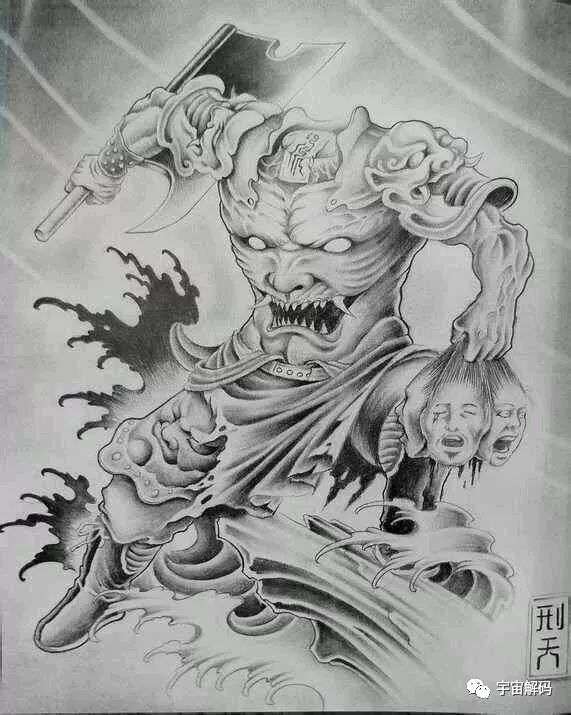
Now, I’ve previously written a story sketch in which Master Subodhi’s school is actually a training ground for an immortal monastic army akin to the Shaolin Temple. I speculated that Wukong’s skill in martial arts and troop movement would come from his time serving as a soldier and eventual officer in this army. Additionally, I suggested that the baddie whom the army faces is the headless monster Xingtian (刑天) (fig. 6), who originally battled the supreme god Shangdi for control of the universe and was beheaded after his defeat. Perhaps he or a figure like him follows in Kumarbi’s footsteps and beds a stone, in this case the rock on the Mountain of Flowers and Fruits, in an effort to create a powerful son to finish what he started. Then, he works in the shadows, influencing the direction of Monkey’s life, leading to his famous rebellion against heaven. Wukong’s defeat of the seventy-two major gods in the heavenly army [1] would mirror Ullikummi routing the seventy gods led by Astabi. Likewise, the Jade Emperor’s call to the Buddha, leading to Monkey’s defeat, mirrors Tesub’s plea to Ea and the eventual downfall of the stone monster.

Thoughts?


Story Idea #3: Arhat Punished to Reincarnation

Update: 06-16-23

Another idea could predate Monkey’s stone birth and instead focus on a past life as a heavenly being. It would draw from three sources: First, the backstory of the Tang Monk, Tripitaka. Those who’ve read JTTW will know that his past life, an Arhat called Master Golden Cicada (Jinchan zi, 金蟬子), is exiled from paradise for ten lifetimes for falling asleep during the Buddha’s lecture.

Just like his master, Sun Wukong is formerly a celestial in paradise. A great name for this figure would be the “Arhat Steel Muscles and Iron Bones” (Gangjin tiegu luohan, 鋼筋鐵骨羅漢). This plays on a similar title given to Sun’s antecedent, the “Monkey Pilgrim” (Hou xingzhe, 猴行者), by Tang Emperor Taizong in the 13th-century oral version of JTTW. [2]

Second, the embellished life story of Song-era General Yue Fei (岳飛, 1103–1142). The Complete Vernacular Biography of Yue Fei (Shuo Yue quanzhuan, 說岳全傳, c. 17th century; “The Biography of Yue Fei” hereafter) actually draws inspiration from the 1592 JTTW by portraying the general as a reincarnation of a bird monster-turned-Dharma protector from chapters 74 to 77. Originally called the “Peng Bird of Ten Thousand Cloudy Miles” (Yuncheng wanli peng, 雲程萬里鵬) in JTTW, the “Great Peng, the Golden-Winged King of Illumination” (Dapeng jinchi mingwang, 大鵬金翅明王) is exiled from paradise in chapter one of The Biography of Yue Fei for killing a stellar bat-spirit who farted during the Tathagata’s sermon on the Lotus Sutra. [3]

Just like the Great Peng bird, the Arhat Steel Muscles and Iron Bones kills a spirit for seemingly offending the Buddha. [4] I imagine that the Enlightened One would admonish him by saying something like, “You are so sure of your strength, so proud of your physical gifts. And yet you don’t know how to defend the Dharma with it!” He then exiles the Arhat to live out ten lifetimes (à la Master Golden Cicada) where he’s a figure of great strength who is continually bested and humiliated and forced by circumstances to protect something weaker than him.

And third, the Buddha’s Jataka tales. The Tathagata has many birth stories where he is both humans and animals who embody an important lesson (Cowell, 1895). In fact, one tale depicts him as a Monkey King!

The Arhat is reborn in the lower three paths of reincarnation, and just like the Buddha, he has several past lives as animals. He works his way up the cosmic hierarchy by performing good deeds, such as a past life where he’s a man-eating tiger who comes to protect a small child. He attains the human-like form of a monkey in his final incarnation, leading to the events of JTTW.

I like this option a lot because this would make both Monkey and Tripitaka former Arhats who undergo prolonged trials that refine their spirits over many lifetimes. This would ultimately explain why both of them attain Buddhahood at the end of their respective character arcs, our hero becoming the “Buddha Victorious in Strife” (Dou zhansheng fo, 鬥戰勝佛) and the Tang Monk “Buddha of Candana Merit” (Zhantan gongde fo, 旃檀功德佛) (Wu & Yu, 2012, vol. 4, p. 381). I also like it because Sun Wukong’s past life references the Tibetan monkey bodhisattva Hilumandju, who is an avatar of the bodhisattva Avalokiteshvara (Guanyin) and a possible Buddhist syncretic version of the Hindu monkey god Hanumanji. What’s interesting about this legendary figure is that he mates with a rock ogress (see the 08-02-19 update here), which reminds one of Sun’s stone birth.


Authenticity

Update: 02-22-25

While I like elements from the first two story ideas, the third one is turning out to be more authentic and interesting.

I had previously referred to Monkey’s past life on this article as a Bodhisattva, but I changed this to an Arhat after finding evidence that Golden Cicada, Tripitaka’s past life, was a Buddhist saint. This includes the following:

  • Xuanzang was historically worshiped as one during the Song dynasty.
  • Two Yuan-Ming plays depict him as the reincarnation of Arhats.
  • The story of Golden Cicada is likely based on the Arhat Aniruddha, one of the ten principle disciples of the Buddha.
  • Two other principle disciples, the Arhats Ananda and Kasyapa, appear among the Tathagata’s retinue in JTTW (see here).

In addition, my previous article on Sun Wukong’s first master, the Buddho-Daoist Sage Subodhi, suggests that he is the historical Arhat Subhuti, also one of the principle disciples. And if we insert the aforementioned Aniruddha as the original identity of Master Golden Cicada, that will make four of ten disciples appearing in the story. I stress this because maybe—within our fanfiction—Monkey’s previous life could be another principle disciple that has been conveniently inserted among the historical figures. That way, the Great Sage would have known both Golden Cicada (his master Tripitaka) and Subhuti (his master Subodhi) in the past!

This is neat because he (Arhat Steel Muscles and Iron Bones) and Golden Cicada could ideally be living out their respective transmigrational punishments around the same time. And this further stimulates my brain: what if each of Monkey’s incarnations have protected each of Tripitaka’s past lives?!?!

Notes:

1) Koss (1981) writes: “Adding up the number of gods listed here [see Wu & Yu, 2012, p. 169] from the Twenty-Eight Constellations through the Deities of the Five Mountains and the Four Rivers, the number arrived at is seventy-three, if 東西星斗 [dongxi xingdou, the “Stars of East and West”] is counted as two, which Yu does in his translation, or seventy two, if the latter is taken as one, which is another possible interpretation” (p. 84).

2) In chapter 17, Tang Taizong names him the “Great Sage Steel Muscles and Iron Bones” (Gangjin tiegu dasheng, 鋼筋鐵骨大聖) (Wivell, 1994, p. 1207).

3) Chapter one of The Complete Vernacular Biography of Yue Fei reads:

Let’s talk about the Buddha Tathagata at the Great Thunderclap Monastery in the Western Paradise. One day, he sat on a nine-level lotus throne, and the Four Great Bodhisattvas, the Eight Great Vajra Warriors, the five hundred Arhats, the three thousand Heavenly Kings, nuns and monks, male and female attendants, all of the heavenly sages who protect the Dharma, gathered to listen to his lecture on the Lotus Sutra. His words were like flowers and precious jewels raining from the heavens. But, at that time, a star-spirit, the Maiden Earth Bat, who had been listening to the lecture from beneath the lotus throne, couldn’t bear it any longer and unexpectedly let out a stinky fart.

The Buddha was a great, merciful lord, so he didn’t mind even the slightest bit. But don’t sympathize with the Dharma protector above his head, the “Great Peng, the Golden-Winged King of Illumination,” whose eyes shone with golden light and whose back was a scene of auspiciousness. He became angry when he saw the nasty, filthy Maiden Earth Bat, and so he unfurled both his wings and dropped down to kill the spirit by pecking her on the head. The light-point of her soul shot out of the Great Thunderclap Monastery and went to the Lands of the East (China) in the world below to find a mother and reincarnate. She was reborn as a daughter of the Wang clan. She would later marry the Song Prime minister Qin Hui (1091-1155) and come to cruelly kill the righteous (i.e. Yue Fei) as a means to get revenge against today’s enemy. We will talk about this later.

Let’s return to the Buddha, who saw what happened with his all-seeing eyes and exclaimed, “Good! Good! It turns out that this is an episode of karma (cause and effect).” Then he called the Great Peng bird to come closer and shouted, “You evil creature! You already took refuge in my teachings. How can you not follow the five precepts by daring to commit such a horrible crime? I don’t need you here; you will descend to the mortal world to pay off your (karmic) debt and wait until you have fulfilled your work. Once that is completed, only then will I allow you to return to the mountain to achieve the right fruit (Buddhist merit).” The Great Peng complied with the decree, flying out of the Great Thunderclap Monastery directly to the Lands of the East to be reincarnated. We will stop here.

且說西方極樂世界大雷音寺我佛如來,一日端坐九品蓮臺,旁列著四大菩薩、八大金剛、五百羅漢、三千偈諦、比丘尼、比丘僧、優婆夷、優婆塞,共諸天護法聖眾,齊聽講說妙法真經。正說得天花亂墜、寶雨繽紛之際,不期有一位星官,乃是女土蝠,偶在蓮臺之下聽講,一時忍不住,撒出一個臭屁來。我佛原是個大慈大悲之主,毫不在意。不道惱了佛頂上頭一位護法神祗,名為大鵬金翅明王,眼射金光,背呈祥瑞,見那女土蝠污穢不潔,不覺大怒,展開雙翅落下來,望著女土蝠頭上,這一嘴就啄死了。那女土蝠一點靈光射出雷音寺,徑往東土認母投胎,在下界王門為女,後來嫁與秦檜為妻,殘害忠良,以報今日之讎。此是後話,按下不提。

且說佛爺將慧眼一觀,口稱:「善哉,善哉!原來有此一段因果。」即喚大鵬鳥近前,喝道:「你這孽畜!既歸我教,怎不皈依五戒,輒敢如此行兇?我這裡用你不著,今將你降落紅塵,償還冤債,直待功成行滿,方許你歸山,再成正果。」大鵬鳥遵了法旨,飛出雷音寺,徑來東土投胎不表。

4) A murderous Buddhist deity may seem weird, but Vajrapani (Jingang shou pusa, 金剛手菩薩; lit: “Bodhisattva Holding the Vajra Weapon”), a yaksha-turned-wrathful Dharma protector, is considered a bodhisattva (Buswell & Lopez, 2014, p. 955).

Sources:

Buswell, R. E. , & Lopez, D. S. (2014). The Princeton Dictionary of Buddhism. Princeton, NJ: Princeton University Press.

Cowell, E. B. (Ed.) (1895). The Jātaka, or Stories of the Buddha’s Former Births (Vols. 1-5). Cambridge: Cambridge University Press. Retrieved from https://archive.org/search?query=The+Ja%CC%84taka%2C+or%2C+Stories+of+the+Buddha%27s+former+births.

Geissmann, T. (2008). Gibbon paintings in China, Japan, and Korea: Historical distribution, production rate and context. Gibbon Journal, 4, 1-38. Received from http://www.gibbonconservation.org/07_publications/journal/gibbon_journal_4.pdf

Koss, N. (1981). The Xiyou ji in Its Formative Stages: The Late Ming Editions (Vols. 1-2). (Doctoral dissertation). Available from ProQuest Dissertations and Theses database. (UMI No. 8112445)

Laozi, & Wilson, W. S. (2012). Tao Te Ching: An All-New Translation. Boston & London: Shambhala

Lougheed, K. (2012, August 23). Helium reveals gibbon’s soprano skill. Retrieved January 20, 2014, from https://www.nature.com/news/helium-reveals-gibbon-s-soprano-skill-1.11257

Stevens, K. G. (1997). Chinese Gods: The Unseen World of Spirits and Demons. London: Collins & Brown.

Wile, D. (1992). Art of the Bedchamber: The Chinese Sexual Yoga Classics Including Women’s Solo Meditation Texts. Albany: State University of New York Press.

Wivell, C.S. (1994). The Story of How the Monk Tripitaka of the Great Country of T’ang Brought Back the Sūtras. In V. Mair (Ed.), The Columbia Anthology of Traditional Chinese Literature (pp. 1181-1207). New York: Columbia University Press.

Wu, C., & Yu, A. C. (2012). The Journey to the West (Vols. 1-4) (Rev. ed.). Chicago, Illinois: University of Chicago Press.

Yang, L., An, D., & Turner, J. A. (2011). Handbook of Chinese Mythology. Santa Barbara, Calif: ABC-CLIO.

Sun Wukong’s Hellish Punishment

Last updated: 01-09-2023

At the end of Journey to the West (Xiyouji西遊記, 1592) chapter seven, Sun Wukong is crushed under Five Elements Mountain for 600-plus-years as punishment for attempting to usurp the throne of heaven. I’ve previously described how this sentence is based on Tang and Song-era tales of the Sage-King Yu the Great imprisoning an aquatic simian demon beneath a mountain. Monkey’s time pinned by the landmass has been portrayed numerous times in movies and television, but modern media often forgets that this was only part of his punishment. The other half was a hellish diet:
Moved by compassion, he [the Buddha] recited a divine spell and called together a local spirit and the Fearless Guards of Five Quarters to stand watch over the Five-Phases Mountain [fig. 1]. They were told to feed the prisoner with iron pellets [tie wanzi, 鐵丸子] when he was hungry and to give him melted copper [ronghua de tong zhi, 溶化的銅汁] to drink when he was thirsty. When the time of his chastisement was fulfilled, they were told, someone would be coming to deliver him (Wu & Yu, 2012, vol. 1, p. 199).

又發一個慈悲心,念動真言咒語,將五行山召一尊土地神祇,會同五方揭諦,居住此山監押。但他饑時,與他鐵丸子吃;渴時,與他溶化的銅汁飲。待他災愆滿日,自有人救他。

Fig. 1 – One of the guards charged with watching over Monkey (larger version). From the children’s book Son Goku (1939).

Table of Contents

1. The Origin

This punishment comes directly from Buddhist doctrine describing the torture of sinners in hell (Sk: Naraka; Ch: Diyu, 地獄). For example, the Dīrghāgama (Sk: दीर्घागम; Ch: Chang Ahun Jing, 長阿含經, or “The Collection of Long Scriptures”) [1] describes two realms in hell in which the damned are fed such a horrific diet:

[…] Terrified they [a damned soul] run out, seeking safety and refuge, but they arrive at the Hell of Hunger [Ji’e diyu, 飢餓地獄].

The wardens come to ask them: “Since you came here, what do you want?” They answer: “We are hungry”. The wardens then seize them and throw them on burning iron. They are caused to stretch and spread out their bodies; with iron hooks the wardens hook the sinners’ mouths and force them open; they put [hot] iron pellets into them [fig. 2]. The pellets burn their lips and tongues, from the throats down to their stomachs. The pellets penetrate through the sinners; there is nothing but burning. The horrible, fatal, and bitter suffering makes the sinners shriek and moan. Since their punishment is not yet completed, the sinners do not perish. After having suffered for a long time, they leave the Hell of Hunger. Frightened they run away, looking for relief and safety, until they arrive to the Hell of Thirst [Ke diyu, 渴地獄].

The wardens come to them and ask: “Since you came here, what do you want?” They answer: “We are thirsty.” The wardens thereupon seize the sinners and throw them on burning iron. They are caused to stretch and spread out their bodies; with hot iron hooks, the wardens hook the sinners’ mouths and force them open. They pour down molten copper [fig. 3]. It burns their mouth, lips and tongue; from their throats it reaches their stomachs. It penetrates down and goes through them; there is nothing but burning. The terrible, fatal, and bitter suffering makes the sinners shriek and moan. Since the remaining transgressions have not yet been atoned, they do not perish. After having been subjected to this punishment for a long time, they leave the Hell of Thirst (Howard, 1986, p. 131).

「… 慞惶馳走,求自救護,到飢餓地獄。獄卒來問:『汝等來此,欲何所求?』報言:『我餓。』獄卒即捉撲熱鐵上,舒展其身,以鐵鈎鈎口使開,以熱鐵丸著其口中,燋其脣舌,從咽至腹,通徹下過,無不燋爛,苦毒辛酸,悲號啼哭。餘罪未盡,猶復不死。

「久受苦已,出飢地獄,慞惶馳走,求自救護,到渴地獄。獄卒問言:『汝等來此,欲何所求?』報言:『我渴。』獄卒即捉撲熱鐵上,舒展其身,以熱鐵鈎鈎口使開,消銅灌口,燒其脣舌,從咽至腹,通徹下過,無不燋爛,苦毒辛酸,悲號啼哭。餘罪未盡,猶復不死。

「久受苦已,出渴地獄 …

Soul being forced to eat iron pellets

Fig. 2 – A damned soul being force-fed red hot iron pellets (larger version). Fig. 3 – Souls being forced to drink molten copper (larger version).

1.1. Additional Info

The same source explains that the hells of hunger and thirst are the respective fourth and fifth of sixteen minor hells (shiliu xiaoyu, 十六小獄) making up one of the eight greater purgatories (ba da diyu, 八大地獄) called the hell of consciousness (xiang, 想). Sinners reborn into this labyrinth of pain are full of anger and lash out at each other with scythe-like claws, as well as swords and daggers. They remain conscious through endless rounds of dismemberment and resurrection via a cold, magical wind (lengfeng, 冷風). They then wander into each successive minor hell, enduring everything from grinding by hot millstones to their flesh and bones being shattered by blistering cold. Again, each sinner remains conscious and resurrects between each purgatory (Howard, 1986, pp. 129-134).

Another name for the greater hell of consciousness is the Sanskrit term Samjiva (Ch: Denghuo, 等活), meaning “revival” or “repetition.” These might refer to the cyclical resurrection of the sinner, or to their karmic punishment mirroring what they did to others in life (Buswell & Lopez, 2014, p. 754).

It should be noted that unlike the Judeo-Christian tradition, rebirth in the Buddhist hell is not forever. For some it may last eons, but the torture serves to cleanse the spirit of past sins gained in life. Once the karmic debt has been repaid, the soul will be reborn into one of the other six realms of existence: hell, hungry ghost, animal, human, asura, or deva. Sometimes souls have to work their way back up to human status if they have particularly heavy karmic baggage.

Monkey’s punishment is essentially hell on earth. The Five Elements Mountain pins him down so that the chosen guards can torture him with hot iron pellets and molten copper just like those in the subterranean hells of hunger and thirst. He is not capable of dying, so his immortality serves a similar function to the magic wind that continually resurrects the damned. The finite length of his sentence (600-plus-years) is similar to the way a soul will only stay in the hell realm until they have repaid their karmic debt. And Tripitaka delivering him from his torments is like a soul being reborn into a new life. After all, Monkey’s life drastically changes after his release; he goes from being a rebellious, power-hungry demon, to a Buddhist monk devoted to the protection of his master.

2. Other Damned Celestials

Sun Wukong is not the only celestial to be damned to drink molten copper. Readers may be surprised to learn that King Yama (Yanluo Wang, 閻羅王), fifth of the Ten Judges of Hell, also suffers from this affliction. The aforementioned Dīrghāgama reads:

Buddha said to the bhiksus: “South of Jambudvipa, in the interior of the great Diamond Mountain, lies the palace of King Yama. The realm he governs extends for six thousand yojanas in both directions. His city has seven rows of ramparts, with seven nets and seven rows of trees … Day and night, three times a day, a huge copper cauldron automatically places itself in front of him. If the huge cauldron emerges in the interior of the palace, the king, upon seeing it, rushes out of the palace stricken by horror and fright. But then, if the cauldron emerges outside the palace, the king, upon seeing it, reenters the palace stricken by horror and fright. Giant hell wardens grab King Yama and have him lie down on hot irons. With iron hooks, they split his mouth open and force molten copper down. It burns his lips and tongue; from the throat, it reaches his stomach. It spreads down below and passes through [his body] so that no place is left unburnt. The punishment continues [in this fashion] until its completion. Afterwards, King Yama returns to seek amusement with all his ladies. Many great state[s]men, who possessed riches, are also punished in this way” (Howard, 1986, p. 141).

佛告比丘:「閻浮提南大金剛山內,有閻羅王宮,王所治處縱廣六千由旬,其城七重,七重欄楯、七重羅網、七重行樹 … 然彼閻羅王晝夜三時,有大銅鑊自然在前。若鑊出宮內,王見畏怖,捨出宮外。若鑊出宮外,王見畏怖,捨入宮內。有大獄卒,捉閻羅王臥熱鐵上,以鐵鈎擗口使開,洋銅灌之,燒其脣舌,從咽至腹,通徹下過,無不燋爛。受罪訖已,復與諸婇女共相娛樂。彼諸大臣同受福者,亦復如是。」

So Yama inhabits an odd position where he is both a member of the heavenly hierarchy working to judge the fate of the dead and a damned soul repaying a karmic debt through torture.


3. Updates

Update: 01-09-23

Chapter four of Shao (1997) explains that the term “Five Elements/Phases” (Wuxing, 五行) is used in JTTW and Buddho-Daoist doctrine to represent mortality. For example, Monkey complains to the judges of hell in chapter three that he’s no longer subject to death since he has achieved the Daoist elixir, thereby breaking free of the five elements. His imprisonment beneath Five Elements Mountain and hellish diet are, therefore, clues that the Buddha is punishing Sun to a symbolic death and afterlife. His subsequent release in chapter 14 can then be viewed as a symbolic reincarnation, which completes the cycle of death, karmic punishment, and rebirth.

Recall how the novel states time and time again that Monkey was under the mountain for 500 years. Although internal story details suggest it was actually over 600 years, it’s important to remember that 500 is used in Buddhist doctrine to denote a large number (Zhao, 2021, p. 126). So, maybe the novel was just implying that Monkey was punished for a really long time.

Note:

1) The Dīrghāgama has only survived thanks to a Chinese translation from the original Sanskrit in 413 CE (Buswell & Lopez, 2014, p. 246).

Sources:

Buswell, R. E., & Lopez, D. S. (2014). The Princeton Dictionary of Buddhism. Princeton University Press.

Howard, A. F. (1986). The Imagery of the Cosmological Buddha. Leiden: E.J. Brill.

Wu, C., & Yu, A. C. (2012). The Journey to the West (Vols. 1-4) (Rev. ed.). Chicago, Illinois: University of Chicago Press.

Zhao, P. (2021). The Essentials of Buddhism: Questions and Answers (H. Fang, trans.). Beijing: American Academic Press.