Archive #19 – Transforming Monkey: Adaptation and Representation of a Chinese Epic (2018)

Synopsis

An analysis of historical, transcultural, and transmedia adaptation, Transforming Monkey: Adaptation and Representation of a Chinese Epic examines the ever-changing image of Sun Wukong (aka Monkey, or the Monkey King), in literature and popular culture both in China and the United States. A protean protagonist of the sixteenth century novel Journey to the West (Xiyou ji), the Monkey King’s image has been adapted in distinctive ways for the representation of various social entities, including China as a newly founded nation state, the younger generation of Chinese during the postsocialist period, and the representation of the Chinese and Chinese American as a social “other” in American popular culture. The juxtaposition of various manifestations of the same character in the book present the adaptation history of Monkey as a masquerade, enabling readers to observe not only the masks, but also the mask-wearers, as well as underlying factors such as literary and political history, state ideologies, market economies, issues of race and ethnicity, and politics of representation and cross-cultural translation Transforming Monkey demonstrates the social and political impact of adaptations through the hands of its users while charting the changes to the image of Sun Wukong in modern history and his participation in the construction and representation of Chinese identity. The first manuscript focusing on the transformations of the Monkey King image and the meanings this image carries, Transforming Monkey argues for the importance of adaptations as an indivisible part of the classical work, and as a revealing window to examine history, culture, and the world.

Archive link:

Click to access transforming-monkey-adaptation-and-representation-of-a-chinese-epic-by-hongmei-sun.pdf

Disclaimer:

This has been posted for educational purposes. No malicious copyright infringement is intended. Please support the official release.

Citation:

Sun, H. (2018). Transforming Monkey: Adaptation and Representation of a Chinese Epic. Seattle: University of Washington Press.

Sun Wukong and the Buddhist Saint Mulian

Last updated: 01-31-24

Sun Wukong first appears as the “Monkey Pilgrim” (Hou xingzhe, 猴行者) in The Story of How Tripitaka of the Great Tang Procures the Scriptures (Datang Sanzang qujing shihua, 大唐三藏取經詩話, late-13th-century; “The Story,” hereafter), the earliest known published version of the Journey to the West (Xiyouji西遊記, 1592; “JTTW” hereafter) story cycle. He is described as an immortal banished from heaven for stealing divine peaches from the Queen Mother of the West, and he later became the ruler of the 84,000 monkeys of Flower-Fruit Mountain. But he first enters the story as a white-clad scholar and willing participant in the journey who actively seeks out the monk Tripitaka and his retinue of fellow clerics on the quest to India. The Monkey Pilgrim then uses his magical abilities and heavenly treasures to protect the monks from all manner of spirits, warlocks, and dragons. In the end, he is bestowed the title “Great Sage Steel Muscles and Iron Bones” (Gangjin tiegu dasheng, 鋼筋鐵骨大聖) (Wivell, 1994). [1]

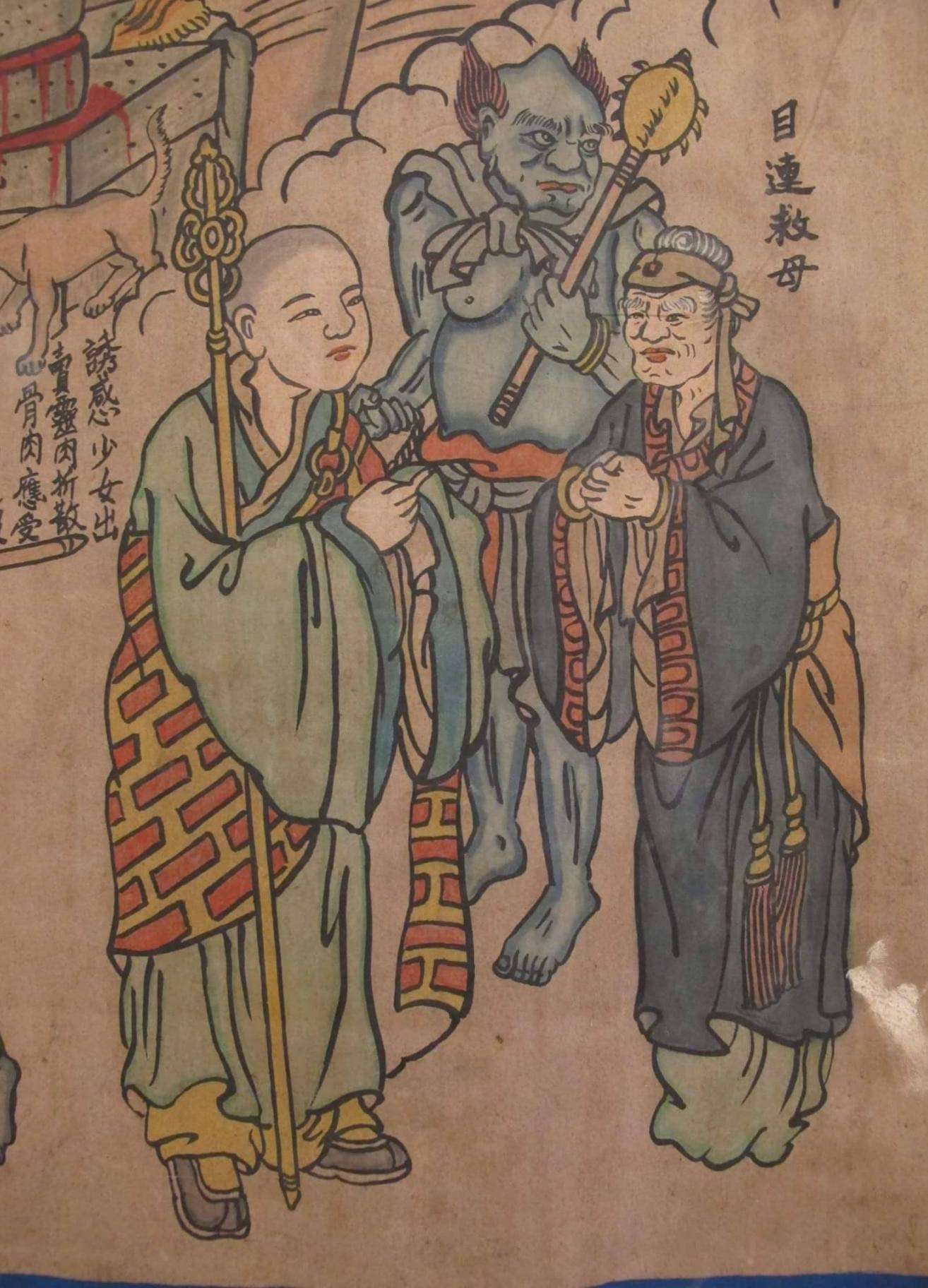
The heavenly treasures wielded by the Monkey Pilgrim are based on those used by the famed Buddhist saint and cultural hero Mulian (目連; Sk: Maudgalyayana), a disciple of the Buddha. He appears in the Transformation Text on Mahamaudgalyayana Rescuing his Mother From the Underworld with Pictures, One Scroll, with Preface (Damuganlian mingjian jiumu bianwen bingtu yijuan bingxu, 大目乾連冥間救母變文并圖一卷並序), a late-9th to early-10th-century Bianwen (變文) text in which he travels to the underworld to release his mater from karmic torment (fig. 1). Originally discovered in the oasis of Dunhuang, the text serves as the foundational myth for the Ghost Festival (Gui jie, 鬼節; a.k.a. “Zhongyuan Festival,” Zhongyuan jie, 中元節; a.k.a. “Yulanpen Festival,” Yulanpen jie, 盂蘭盆節), which is held on the 15th day of the seventh month. 

In this article, I will discuss three similarities that the Monkey Pilgrim shares with Mulian, including using similar holy treasures, visiting the same heavenly realm, and having a connection to the Ghost Festival. While Tripitaka, as a monk working towards the salvation of others, is a more obvious cognate for Mulian, it’s correct to say that Monkey is an amalgam of the Buddhist saint and Chinese stories of animals that guide the recently deceased through the underworld.

Fig. 1 – A scroll or mural depicting Mulian rescuing his mother from the underworld (larger version). Originally found here.

1. The Monkey Pilgrim

1.1. The Staff

The Monkey Pilgrim and Tripitaka first receive the golden-ringed monk’s staff, along with two other treasures, from the supreme deity, the Mahabrahma devaraja (Dafan tianwang, 大梵天王; lit: “Great Brahma Heavenly King,” a.k.a. Vaisravana), in chapter two.

The Dharma Master [Tripitaka] and Monkey Pilgrim approached the Devaraja and begged for his help. The Devaraja granted them a cap of invisibility, a golden-ringed staff, and a begging bowl. After accepting these three boons, the Dharma Master said farewell, then turned to the Monkey Pilgrim and asked: “How can we get back to the mortal world?” Pilgrim replied: “Before the Dharma Master speaks of returning to the world below, he had better ask the Devaraja how we can save ourselves from the monsters and disasters which lie ahead of us.” The Dharma Master returned to Mahabrahma and asked as Monkey had suggested. The Devaraja responded: “When you meet calamity, point toward the Heavenly Palace from afar and shout ‘Devaraja’ once, and you will be saved.” The Dharma Master accepted his instructions and bowed farewell (Wivell, 1994, p. 1184).

法師與猴行者,近前咨告請法。天王賜得隱形帽一事,金鐶錫杖一條,缽盂一只。三件齊全,領訖。法師告謝已了,回頭問猴行者曰:「如何得下人間?」行者曰:「未言下地。法師且更咨問天王,前程有魔難處,如何救用?」法師再近前告問。天王曰:「有難之處,遙指天宮大叫『天王』一聲,當有救用。」法師領指,遂乃拜辭。

Now compare that with Mulian’s tale in which he receives the staff from the Buddha:

“How will I [Mulian] be able to see my dear mother again?”
The World-Honored called out to him, saying, “Mahamaudgalyayana!
Do not be so mournful that you cry yourself heartbroken;
The sins of the world are tied to those who commit them like a string,
They are not stuck on clay-fashion by anyone else.
Quickly I take my metal-ringed staff and give it to you.
It can repel the eight difficulties and the three disasters.
If only you remember diligently to recite my name,
The hells will certainly open up their doors for you” (Mair, 1994, p. 1111).

世尊喚言大目連 且莫悲哀泣
世間之罪由如繩 不是他家尼碾來
火急將吾錫丈與 能除八難及三災
但知懃念吾名字 地獄應為如開

Both receive a magic monk’s staff with abilities tied to the recitation of a Buddhist deity’s name.

Here is one example of the power of The Story‘s staff:

The pilgrims arrived at the valley of the fire-spitting White Tiger Spirit. Coming closer they encountered a great ditch. The four steep entrances were pitch-black and they heard a roar of thunder. They could not advance. The Dharma Master held up his golden-ringed staff and, flourishing it toward the distant heavenly palace, yelled: “Devaraja! Help us in our afflictions!” Suddenly a shaft of light shot out from the staff five tricents long. It slashed through the long ditch and soon they were able to get across (Wivell, 1994, 1187-1188).

行次至火類坳白虎精。前去遇一大坑,四門陡黑,雷聲喊喊,進步不得。法師當把金鐶杖遙指天宮,大叫:「天王救難!」忽然杖上起五里毫光,射破長坑,須臾便過。

Now compare that to Mulian’s staff:

He [Mulian] wiped his tears in mid-air, and shook the metal-ringed staff,
Ghosts and spirits were mowed down on the spot like stalks of hemp.
Streams of cold sweat crisscrossed their bodies, dampening them like rain,
Dazed and unconscious, they groaned in self-pity;
They let go of the three-cornered clubs which were in their hands,
They threw far away the six-tined pitchforks which were on their shoulders (Mair, 1994, p. 1112).

拭淚空中遙錫杖 鬼神當即倒如麻
白汗交流如雨濕 昏迷不覺自噓嗟
手中放却三慢棒 臂上遙拋六舌叉

Both are capable of creating powerful blasts. 

But The Story‘s treasure builds upon the Mulian tale by adding an exciting new ability: creating giant, monstrous life. For instance, while confronting the white tiger spirit in chapter six,

Monkey Pilgrim transformed his golden-ringed staff into a gigantic yaksa whose head touched the sky and whose feet straddled the earth. In his hands he grasped a demon-subduing cudgel. His body was blue as indigo, his hair red as cinnabar; from his mouth a fiery gleam shot forth a hundred yards long (Wivell, 1994, p. 1189).

被猴行者將金鐶杖變作一個夜叉,頭點天,腳踏地,手把降魔杵,身如藍靛青,發似硃沙,口吐百丈火光。

How cool is that? And in chapter seven, “he transformed the magic staff into an iron dragon” to battle a group of nine-headed serpents (被猴行者 … 金鐶錫杖化作一條鐵龍) (Wivell, 1994, p. 1190).

Fig. 2 – The head of a 12-ringed monk’s staff (larger version). From the author’s personal collection.

1.2. The Alms Bowl

The treasure bowl is first used in chapter six:

Next they suddenly came to a wild fire [2] which reached to the heavens. It sent off such a huge amount of smoke and sparks that the pilgrims could not proceed. The Dharma Master shone the light of his begging-bowl toward the fire and yelled: “Devaraja!” The fire died out immediately and the seven pilgrims crossed this pit (Wivell, 1994, p. 1189).

又忽遇一道野火連天,大生煙焰,行去不得。遂將缽盂一照,叫「天王」一聲,當下火滅,七人便過此坳。

It is next used by the Monkey Pilgrim in chapter seven while fighting the nine-headed serpents. He “sucked all the thousand tricents of water into the begging-bowl” (被猴行者  … 缽盂盛卻萬里之水) (Wivell, 1994, p. 1190).

There are no similar feats in Mulian’s story, but his alms bowl is also imbued with magic, allowing him to fly freely between the realms of heaven, earth, and the underworld. For instance,

Maudgalyayana awoke from abstract meditation,
Then swiftly exercised his supernatural power;
His coming was quick as a thunderclap,
His going seemed like a gust of wind.
[…]
With his supernatural power, he gained freedom,
So he hurled up his begging bowl and leaped into space;
Thereupon, instantaneously,
He ascended to the heavenly palace of Brahma (Mair, 1994, pp. 1097-1098).

[…]
神通得自在 擲鉢便騰空
于時一向子 上至天宮

Both he and the primate hero travel to the Brahma realm. Readers will recall that Monkey magically transports Tripitaka and his group to the crystal palace of the Mahabrahma Devaraja in chapter two (Wivell, 1994, p. 1184).

1.3. Connection to the Ghost Festival

Not only does the Monkey Pilgrim use Mulian-esque treasures, he also ascends to heaven on the Ghost Festival. After the group receives the last of the scriptures in chapter 16, the Dipamkara Buddha tells them:

“On the fifteenth day of the seventh month [i.e. the date of the Ghost Festival], it will be time for you, Dharma Master, and your band of seven to return to the celestial halls. Remember what I have said, and on the fifteenth rise early and bathe yourself. Say farewell to the T’ang emperor, for at noon the ‘Lotus-Plucking Barge’ will arrive. There will also be golden lotus-flower seats and auspicious rainbow-colored clouds. Twelve mellifluously voiced youths will escort you with incense, flowers, and decorated banners. They will adorn you with the seven precious gems, welcoming you seven to return to Heaven. But the invitation from Heaven has a time limit and you must not dally! Listen well to what I have told you and keep it firmly implanted in your mind!” (Wivell, 1994, 1202).

佛再告言:「… 七月十五日,法師等七人,時至當返天堂。汝記此言,至十五日,早起浴身,告辭唐帝;午時採蓮舡至,亦有金蓮花坐(德富氏本作「座」),五色祥雲,十二人玉音童子,香花幡幢,七寶瓔珞,來(德富氏本作「未」)時迎汝等七人歸天。天符有限,不得遲遲。汝且諦聽,深記心懷!」

And on the appointed day in chapter 17:

The seven boarded the barge and, looking due west, they ascended into the heavens and became immortals. Nine dragons rose up into the mist and ten phoenixes came out to welcome them. A thousand cranes offered them felicitations and there were flashing lights of transcendence (Wivell, 1994, p. 1206).

七人上舡,望正西乘空上仙去也。九龍興霧,十鳳來迎,千鶴萬祥,光明閃爍。

Recall that Mulian’s quest to free his mother’s soul from underworld torments is the foundational myth of the Ghost Festival. It actually opens with an explanation of the chthonic celebration:

Now, on the fifteenth day of the seventh month, the heavens open their doors and the gates of hells are flung wide. The three mires dissipate, the ten virtues increase. Because this is the day when the company of monks end their summer retreat, the deity who confers blessings and and the eight classes of supernatural beings all come to convey blessings. Those who undertake to make offerings to them in the present world will have a supply of blessings and those who are dead will be reborn in a superlative place. Therefore, a purgatorian feast is spread before the Three Honored Ones who, through the grace of their welcoming the great assembly, put a priority upon saving those who are distressed by hanging in limbo (Wivell, 1994, pp. 1093-1094).

夫為七月十五日者,天堂啟戶,地獄門開,三塗業消,〔十善增長〕。為眾僧咨下此日會福之神,八部龍天,盡來教福。〔承供養者〕,現世福資,為亡者轉生於勝處。於是盂蘭百味,〔飾貢於〕三尊。仰大眾之恩,先救倒懸之窘急。

1.4. Monkey = Mulian?

The Monkey Pilgrim’s use of Mulian-style holy accoutrements, travel to the Brahma realm, and ascension on the Ghost Festival raises the question: is our hero suppose to be a stand-in for the Buddhist saint? The simple answer is “not exactly.” It’s important to remember that he and Tripitaka share the duty of wielding the holy treasures. And while the immortal uses them more, the fact that Tripitaka is a Buddhist monk working towards the salvation of others makes him a more fitting cognate for Mulian.

However, The Story‘s connection to chthonic literature still provides Monkey a link to the Buddhist saint:

The Japanese scholar Chūbachi Masakazu (b. 1938) was the first to point out that the Kōzanji narratives mirror two closely related mythic archetypes. The first, derived from ancient Han Chinese traditions, is the journey of the dead to the netherworld. In many accounts of postmortem travels, spirit animals (including but not limited to monkeys) serve as the guides for the dead on their passage through the spirit realm, whether the final destination is the Yellow Springs beneath the earth or Mount Kunlun in the distant west. The other motif, emerging from early Indian Buddhist literature, is the transmigration of the spirit to the Pure Land, which, like Mount Kunlun, was conventionally located somewhere in the west. In Buddhist accounts, animals (again, often but not always monkeys) also serve as escorts for the dead. Chūbachi proposed that these narrative traditions—culturally distinct but thematically and functionally similar—were fused together with the historical account of Xuanzang’s journey to India. The Kōzanji texts, according to this reading, represent a complex but organic blending of initially independent narratives. The broad contours of Xuanzang’s biography and travelogue were superimposed onto older mythic accounts to provide a new, quasi-historical frame for age-old stories about the transmigrations of the dead.

Viewed from this perspective, Xuanzang was not passing through Central Asia en route to India but, instead, was traversing a hellish purgatory to reach a heavenly pure land. Like a shaman, he departs the human world and enters a dangerous liminal zone. Beset by ghosts and demons, he is guided and protected by powerful spirit animals and Buddhist deities. After enduring extreme hardship, he eventually arrives in an immortal realm populated by spirit monks, immortals, bodhisattvas, and buddhas. From Śākyamuni Buddha, he receives a collection of apotropaic texts with the power to safeguard the living and liberate the dead. Xuanzang then transmits these sacred scriptures back to the human realm before he and his assistants ascend to heaven during the annual ritual for liberating the damned from purgatory. This narrative not only maps the landscape of a postmortem shadow world, it also identifies the scriptures that guard against demonic molestation and ensure a propitious rebirth: the Buddhist canon in general and the Heart Sūtra in particular. Those who read, recited, or heard the Kōzanji texts were thus informed of the perils of purgatory and offered the promise of protection and salvation. Xuanzang, they also learned, was the saintly monk responsible for delivering these divine texts and technologies into the hands of humans (Brose, 2023, pp. 62-63).

Given the above information, it’s more correct to view the Monkey Pilgrim as a sort of amalgam of Mulian and the animal helpers who guide the recently deceased through the under world. This is important to remember, especially when discussing the origins of the Great Sage, for his history is far more nuanced than the “foreign only” (i.e. Hanuman=Sun Wukong) theory would suggest.

2. Sun Wukong

Another power of Mulian’s staff likely influenced the Monkey King’s “As You Wish Gold-Banded Cudgel.” During his quest to free his mother from the underworld, the Buddhist saint uses the treasure to unlock the gates of hell:

With one shake of his staff, the bars and locks fell from the black walls,
On the second shake, the double leaves of the main gate [of hell] flew open (Mair, 1994, p. 1113). [2]

Now compare that to an episode from JTTW chapter 25:

“Elder Brother,” said Eight Rules [Zhu Bajie], “stop this hocus-pocus. The doors are all locked. Where are we going to go?” “Watch my power!” said Pilgrim. He seized his golden-hooped rod and exercised the lock-opening magic; he pointed the rod at the door and all the locks fell down with a loud pop as the several doors immediately sprung open. “What talent!” said Eight Rules, laughing. “Even if a little smith were to use a lock pick, he wouldn’t be able to do this so nimbly.” Pilgrim said, “This door is nothing! Even the South Heaven Gate would immediately fly open if I pointed this at it!” (Wu & Yu, 2012, vol. 1, pp. 468-469)

八戒道:「哥啊,不要搗鬼, 門俱鎖閉,往那裡走?」行者道:「你看手段。」把金箍棒捻在手中,使一個「解鎖法」,往門上一指,只聽得突蹡的一聲響,幾層門雙鐄俱落,唿喇的開了門扇。八戒笑道:「好本事,就是叫小爐兒匠使掭子,便也不像這等爽利。」行者道:「這個門兒有甚稀罕,就是南天門,指一指也開了。」


Update: 12-28-19

While I believe Mulian’s bowl influenced the somersault cloud, Shao (2006) notes the 108,000 li (33,554 mi/54,000 km) covered by Monkey in a single leap is based on the symbolic distance said by Huineng to separate the Buddha’s paradise from the world of man. As the Chan patriarch explains in the Platform Sutra, “This number refers to the ten evils and eight wrongs in one’s person” (Huineng & Cleary, 1998, p. 26, for example). Only those who achieve enlightenment can overcome these hindrances and arrive instantly in paradise. This is symbolized in the novel by Monkey zipping their instantly on his cloud, whereas Tripitaka must travel thousands of miles over many years.


Update: 02-06-21

I have written an article that discusses the magic powers of the staff. These include the ability to shrink and grow, control the ocean, astral project and entangle with Monkey’s spirit, multiply endlessly, pick locks, and transform into various objects. It also has sentience to a certain degree.

The Magic Powers of the Monkey King’s Iron Staff


Update: 01-31-24

I’ve rewritten and added new some new information to the article.

Note:

1) Wivell (1994) translates the name as “Great Sage of Bronze Muscles and Iron Bones” (p. 1207). But the gang (鋼) of Gangjin tiegu dasheng (鋼筋鐵骨大聖) means “steel.” Therefore, I’ve changed the original source accordingly.

2) Wivell (1994) translates yehuo (野火) as “prairie fire” (p. 1189), but “wildfire” is a more literal rendering. Therefore, I’ve changed the original source accordingly.

Sources:

Brose, B. (2023). Embodying Xuanzang: The Postmortem Travels of a Buddhist Pilgrim. United States: University of Hawaii Press.

Buswell, R. E., & Lopez, D. S. (2014). The Princeton Dictionary of Buddhism. Princeton University Press.

Mair, V. H. (1989). Suen Wu-kung = Hanumat? The Progress of a Scholarly Debate In Proceedings of the Second International Conference on Sinology (pp. 659-752). Taipei:

Mair, V. H. (1994). Transformation Text on Mahamaudgalyayana Rescuing his Mother From the Underworld with Pictures, One Scroll, with Preface. In V. Mair (Ed.), The Columbia Anthology of Traditional Chinese Literature (pp. 1094-1127). New York: Columbia University Press.

Shao, P. (2006). Huineng, Subhūti, and Monkey’s Religion in “Xiyou ji”. The Journal of Asian Studies, 65(4), 713-740. Retrieved from www.jstor.org/stable/25076127

Wivell, C.S. (1994). The Story of How the Monk Tripitaka of the Great Country of T’ang Brought Back the Sūtras. In V. Mair (Ed.), The Columbia Anthology of Traditional Chinese Literature (pp. 1181-1207). New York: Columbia University Press.

Wu, C., & Yu, A. C. (2012). The Journey to the West (Vols. 1-4) (Rev. ed). Chicago: University of Chicago Press.

The Worship of Sun Wukong in 19th-century America

Last updated: 01-15-2022

I by chance happened upon an old magazine article that mentions the worship of Sun Wukong in San Francisco’s Chinatown in 1892. The piece is written by one Frederic J. Masters, D.D., a Methodist pastor who wrote extensively about the area’s Chinese community. Not surprisingly, the article is dripping with condescension towards Chinese religion, condemning the Great Sage’s worship as “the acme of absurdity and sinfulness” (Masters, 1892, p. 737). Below is the section discussing the Monkey King.

In the Spofford-alley temple are found the shrines of some twenty other gods and goddesses, the principal being the Grand Duke of Peace, the God of Medicine, and Pan Kung, a celebrated Prime Minister of the Sung Dynasty. The funniest discovery in this temple was that of Tsai Tin Tai Shing [Qitian dasheng, 齊天大聖]. He is a beatified monkey in the image of a man. Hatched from a bowlder [sic], this animal is said to have proclaimed himself king of the monkeys. At last he learned the language of men, and finding himself possessed of supernatural powers, he obtained a place among the gods. Such is the legend. Chinese idolatry thus reaches the acme of absurdity and sinfulness in the canonization of a monkey. Thoughts of Darwin’s descent of man at once flashed across our mind as we looked at this image. It was disappointing at one’s curiosity to find that the old temple keeper who cared more for a pipe of opium than for speculations in theology and anthropology could not tell us what part natural selection played in the evolution of Chinese deities, or whether monkey worship was the newest phase of Chinese ancestral worship. Finding him lamentably ignorant upon the great question of the descent of man, we astonished with him with a complete history of his monkey god.

There was an ape in the days that were earlier;
Centuries passed and his hair became curlier;
Centuries more and his tail disappeared,
Then he was man and a god to be feared (Masters, 1892, pp. 736-737).

So what can we learn from this brief entry? Given the time, place, and use of Cantonese, the worshipers were most likely immigrants from Guangdong province. Refo Mason (1994) explains, “When news of the discovery of gold in California reached South China in 1849, thousands of labourers in Guangdong and Fujian provinces left their villages to seek work in the gum shan ([金山] ‘Gold Mountain’) … Emigration from South China to California…peaked in 1852, when 20,000 Chinese arrived in San Francisco” (p. 200). Monkey‘s adherents may have counted among these men or their descendants (or possibly among those from later periods of immigration). Either way, belief in the Great Sage came with those who traveled from southern China to America.

Monkey King Bust - American Gods - Instagram 1 - small

Fig. 1 – A photomanipulation of Sun Wukong above the title logo from the ongoing American Gods television show (larger version). By the author. The program is based on the 2001 novel of the same name.

Somebody please get Neil Gaimon on the phone and tell him that he can now include Monkey in American Gods (fig. 1). What do you think the character would look like? Maybe a short old man with a cane?

Spofford Alley, home to 19th-century temple with Monkey King shrine - small

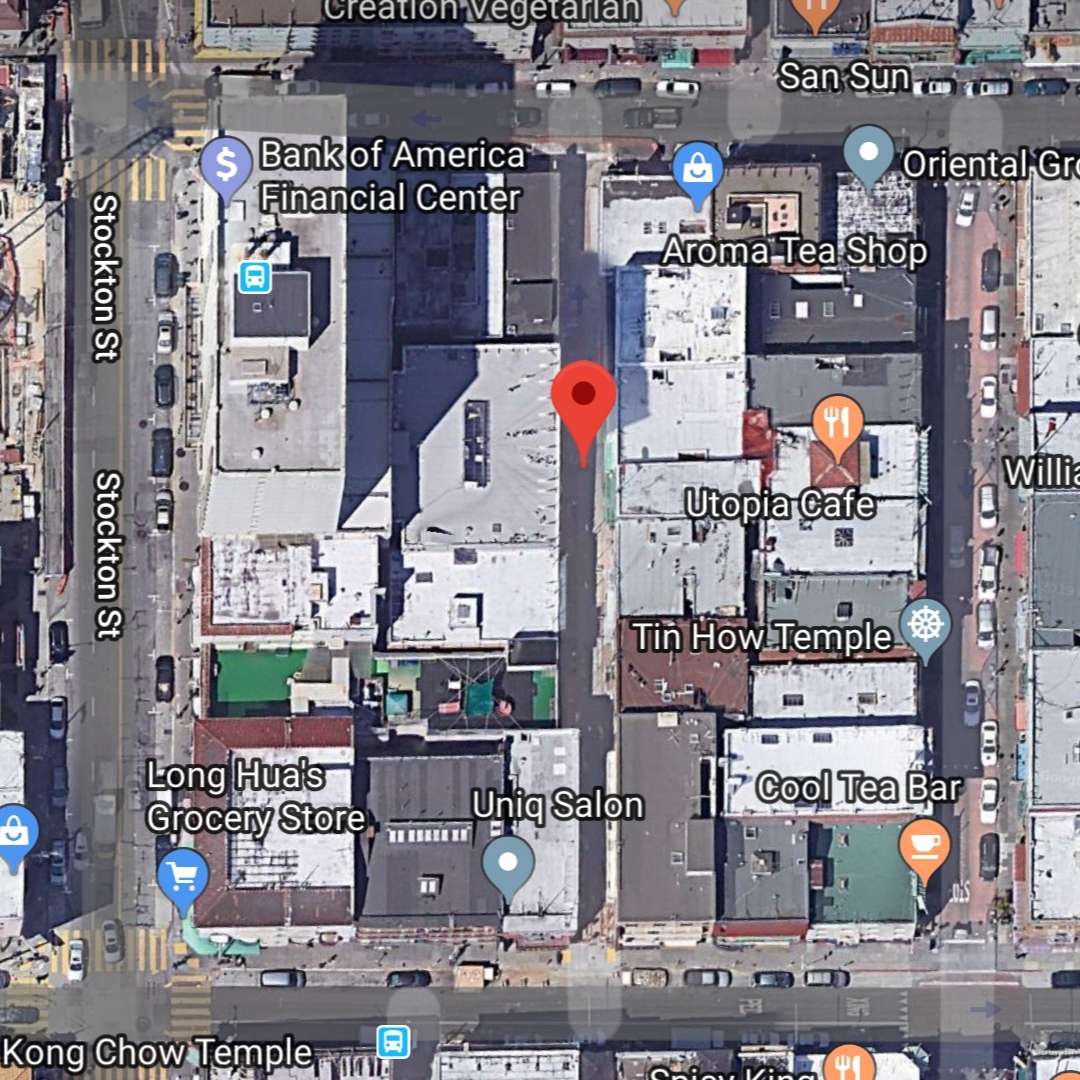
Fig 2 – A modern Google satellite image of Spofford Alley (larger version). It is only a few hundred feet long.

During the 19th-century, Spofford Alley (fig. 2), where the temple housing the Great Sage shrine was located, was home to the Chee Kong Tong (Zhigong tang, 致公堂, “Chamber of High Justice Society,” a.k.a. the “Chinese Freemasons”), the secret Chinese society-turned-criminal organization running Chinatown’s illicit opium, gambling, and prostitution trade (Risse, 2012, p. 37). The Chee Kong Tong were originally an offshoot of anti-Manchu rebels who wanted to overthrow the foreign-ruled Qing dynasty (Cassel, 2002, pp. 218-219). [1] Therefore, Sun Wukong’s worshipers may have included gangsters and rebels. As mentioned in this article, the Great Sage was venerated by fighters of the Boxer Rebellion (1899-1901). This makes sense as the divine primate is famous for his rebellion against heaven in Journey to the West.


Update: 01-15-2022

I was very happy to recently find an article called “Map of Temples in San Francisco’s Chinatown 1850s-1906” (Romaskiewicz, 2021). The author, a PhD student named Peter Romaskiewicz, has done a great service by scouring 19th and 20-century material and cross-referencing this with antique maps of Chinatown. The article has a list of over 20 temples/immigrant associations and their corresponding locations plotted on a map. This is great because it has allowed me to pinpoint the exact place where the Monkey King was worshiped in 1892 Chinatown!

Masters (1892) refers twice to temples on Spofford: 1) “[Guanyin’s] shrine is found up a dingy staircase on the southwest corner of Spofford alley and Washington streets” (p. 734); and 2) “In the Spofford-alley temple are found the shrines of some twenty other gods and goddesses…” (p. 736). Romaskiewicz (2021) shows the Guanyin temple (#10) was located at the end of Spofford, while a different joss house belonging to the Chee Kong Tong (#9) was located in the middle of the street. I therefore assumed Monkey was worshiped at the Chee Kong Tong joss house because Masters’ (1892) second temple reference didn’t mention Guanyin. However, after writing Romaskiewicz, I learned that there were actually three joss houses on Spofford during the 19th-century (one from an 1887 map is not listed). But most importantly, Masters (1982) was likely referring to the Guanyin Temple in both instances. That’s why he highlights “the shrines of some twenty other gods and goddesses…” (emphasis added) (Masters, 1892, p. 736), meaning these icons were also found in the same location.

The Guanyin Temple (Guanyin miao, 觀音廟) was located at No. 60 on the corner of Spofford and Washington (fig. 3) (Romaskiewicz, 2021). I’m unsure if it still exists in some form in that location. But I do know from Google Maps that the old No. 60 is not the same as the current No. 60.

Romaskiewicz was kind enough to direct me to an 1883 brochure asking for funds to restore the temple. This shows it was in use for some time.

Fig. 3 – The yellow star marks the location of the Guanyin Temple (larger version). Based on Romaskiewicz (2021). See this 1885 map

Notes:

1) Sun Yatsen, the “Father of modern China,” made contact with the Chee Kong Tong several times and even used their no. 36 Spofford Alley office as his own while raising money for his revolution in China (United States, 1993, pp. 45-46; Lum & Lum, 1999, p. 57).

Source:

Cassel, S. L. (2002). The Chinese in America: A history from Gold Mountain to the new millennium. Walnut Creek, CA: AltaMira Press.

Lum, Y. M., & Lum, R. M. K. (1999). Sun Yat-sen in Hawaii: Activities and supporters. Honolulu: Hawaii Chinese History Center.

Masters. F. J. (1892). Pagan Temples in San Francisco. In C.F. Holder (Ed.). The Californian illustrated magazine: June to November, 1892, vol. 2 (pp. 727-741). San Francisco, Calif.: Californian Pub. Co.

Refo Mason, S. (1994). Social Christianity, American feminism, and Chinese prostitutes: The history of the Presbyterian mission home, San Francisco, 1874-1935 In M. Jaschok and S. Miers (Ed.) Women and Chinese Patriarchy: Submission, Servitude, and Escape (pp. 198-220). Hong Kong: Hong Kong University Press.

Romaskiewicz, P. (2021, April 15). Map of Temples in San Francisco’s Chinatown 1850s-1906. Personal Site of Peter Romaskiewicz. Retrieved from https://peterromaskiewicz.com/2020/06/02/map-of-temples-in-san-franciscos-chinatown-1850s-1906/

Risse, G. B. (2012). Plague, fear, and politics in San Francisco’s Chinatown. Baltimore: The Johns Hopkins University Press.

United States. (1993). An introduction to organized crime in the United States. Washington, D.C.: Organized Crime/Drug Branch, Criminal Investigative Division.

Sun Wukong and the Qiang Ethnic Group of China

Last updated: 08-02-2019

The Qiang (Ch: 羌; Qiangic: Rrmea) ethnic group have been mentioned in Chinese records as far back as the oracle bones of the Shang Dynasty (17th to 11th-century BCE). Originally inhabiting the northern reaches of China, these sheepherders and warriors were driven southwest over many centuries of conflict with neighboring ethnic groups, as well as the Chinese. Many Chinese dynasties attempted to assimilate them, but the Qiang have resisted up to the present. Today, they live in western Sichuan near the Tibetan border and are listed among the 56 recognized ethnic groups of China (Yu, 2004, pp. 155-156; Wang, 2002, pp. 133-136).

What’s interesting about the Qiang for the purposes of this blog is that both magic monkeys and heavenly stones, and even Sun Wukong himself, play a part in the people’s religious mythology.

Map of China showing location of Sichuan Province, home to Qiang ethnic group, some of whom worship Sun Wukong

Fig. 1 – A map of China showing the location of Sichuan province in red. Larger version available on wikicommons.

I. Monkeys and Qiang shamanism

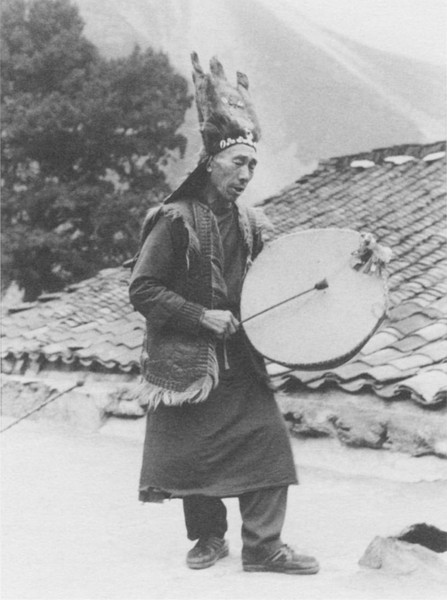
Shamans (Ch: Duan gong, 端公 or Wu, 巫j; Qiangic: Shüpi) are the heart of Qiang religious life. During special ceremonies, they wear three-peaked hats (fig. 2 and 3) made from the fur of golden monkeys (fig. 4), each peak respectively representing the deities of heaven, earth, and shamanism (more on the latter below). [1] These hats are especially worn during exorcisms because the monkeys are considered “the purest of animals, [which stand] in extreme contrast to the vilest of beings—the demons” (Oppitz, 2004, p. 13). There are several legends, with many variants, explaining the origins of the headdress. One version states:

[T]he Qiangs used to have a written language, and their patriarch recorded the scriptures he obtained from the gods and other important writings on human affairs on the bark of birch trees. One day when he took out the pieces of bark to be aired, a mountain sheep came and ate them all. With the help of a golden monkey the patriarch captured the guilty sheep and made its skin into a drum. When he beat on the drum he was able to recall the words written on the birch bark. To prevent future mishaps to these precious documents, he memorized them by heart (Yu, 2004, p. 160).

So in essence the hats are worn to commemorate the assistance of the golden monkey. Interestingly, another version replaces the patriarch and golden monkey with Tripitaka and Sun Wukong:

A long time ago, in the Tang period, there was a monk by the name of Tang Seng [唐僧, “Tang Monk”], who undertook a journey to the western skies in the company of a monkey named Sun Wukong, in order to collect sacred scriptures. On their way back, they encountered a sheep ghost who ate all the newly acquired scriptures. The monkey got very angry, killed the sheep ghost, and used its skin to fabricate a drum. Thereupon Tang Seng and the monkey met with the Eighteen Arhats … Listening to their teachings, Tang Seng picked up the sheep-skin drum and repeated all that he heard through their mouths. Since then all shamans use a drum when reciting their knowledge from memory (Oppitz, 2004, p. 23).

Qiang shaman hat and goldn monkey

Fig. 2 – The three-peaked golden monkey skin shaman hat. From the Sichuan University Museum. Larger version on wikipedia. Fig. 3 – A shaman wearing the headdress and playing the ritual sheep skin drum (larger version). Original photograph by Michael Oppitz. From Oppitz, 2004, p. 14. Fig. 4 – A golden monkey with child. Larger version on wikipedia.

The golden monkey is closely associated with the Qiang’s pantheistic worship of sacred white stones, each one representing the gods of heaven, sun, fire, mountains, rivers, and trees. [2] Yu (2004) provides another legend for the origins of the Shaman’s hat, describing how the monkey is the offspring of the sacred stone and noting parallels with the birth of Sun Wukong:

Another legend depicts the golden monkey as a Prometheus-like figure who stole fire from heaven. The first two attempts failed because the god of wind and the god of rain extinguished the fire, but the monkey succeeded the third time by concealing the fire in a white stone. It is worth noting that in this legend the golden monkey is closely related to the white stone. In the Qiang language, the first syllables in the names of the monkey’s mother and father mean respectively “stone” and “fire.” “This implies that fire is produced by stone and hidden inside the stone, and that the half-human, half-simian golden monkey was an offspring of the union between stone and fire”. The white stone and the golden monkey, as the source of fire and the messenger who brought it to the human world, became the totems of the Qiang people. To commemorate the recovery of the lost scriptures, wearing the monkey hat and playing the sheepskin drum also became an indispensable part of Sacrifice to the Mountain[, a Qiang ceremony]. However, the monkey legend is not particular to the Qiang people. The Yi minority people of northwestern Guizhou province have a nuo drama known as bianren xi (changing-into-people drama) based on a legend that people derived from monkeys. Actors wear monkey masks for this performance. There is also the famous monkey, Sun Wukong, who was born from a stone in the Han Chinese novel Xiyou ji (Journey to the West, 1592) by Wu Chengen (ca. 1506-1582). [3] The novel was first published in 1592, but the monkey lore included in it was of much earlier time (p. 160).

A celestial, stone-born monkey who steals from heaven certainly sounds like the Monkey King. As noted here, stories about Sun Wukong have been circulating in Asia for a millennia. So it seems only natural that the Qiang’s reverence for heavenly stones and monkeys would lead to some of them worshiping the beloved cultural figure.

Graham (1958) notes that Sun Wukong and Sha Wujing figure among the Chinese patron deities of the “red” shamans (p. 53). [4] What’s interesting is that the red shamans are said to speak a special demon language and use their skills to exorcise demons (p. 54). Therefore, their worship of the Monkey King should come as no surprise considering Sun Wukong is the exorcist par excellence.

As noted above, one of the peaks of the ritual headdress represents the patron deity of shamanism. Known among other names as the Abba mula (“father god”; Ch: Aba muna, 阿爸木纳), this is the title given to the shaman’s main focus of worship. For instance, Sun Wukong is the Abba mula of those who revere him. Most importantly, the chosen deity is further represented by a small bundle that the shaman carries with him and guards jealousy, as it is the source of his knowledge and power. Graham (1958) describes the sacred bundle’s importance, construction, and use:

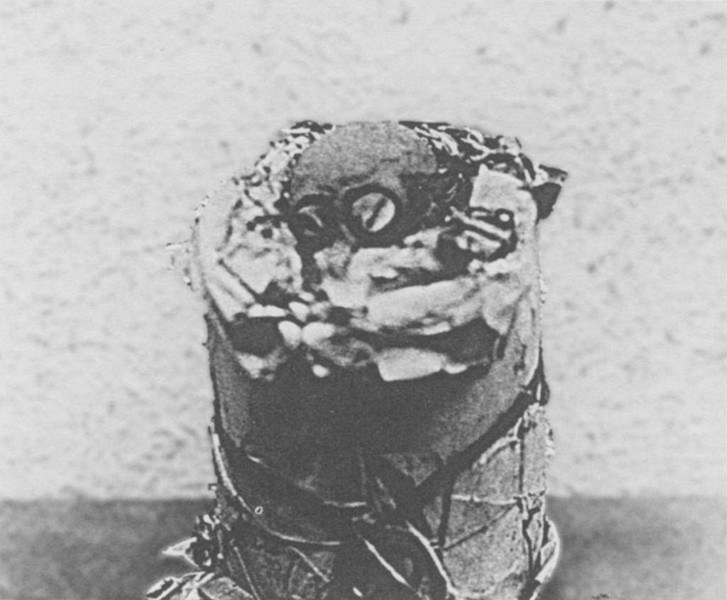
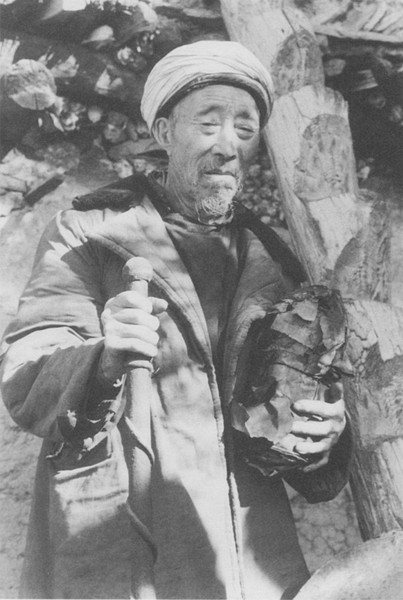
He is the patron or guardian deity and instructor of the Ch’iang priest, and without him the priest could do nothing. It consists of a skull of a golden-haired monkey wrapped in a round bundle of white paper. Its eyes are old cowry shells or large seeds. Inside are also dried pieces of a golden-haired monkey’s lungs, intestines, lips, and fingernails. It is so wrapped that the face of the skull is visible at one end, and the other end is closed [fig. 5 and 6]. After each ceremony in the sacred grove, [5] the priest wraps another sheet of white paper around it, so that it gradually increases in diameter. Some priests will not allow another person to touch his Abba Mula and only the priest worships this god (pp. 51-52).

I mention this because there are no doubt sacred bundles representing Sun Wukong, which are used under his supernatural guidance.

Qiang abba mula bundle and shaman holding one

Fig. 5 – The Abba mula bundle. Note the visible monkey skull with cowry shell eyes (larger version). Original photograph by Wolfgang Wenning. Fig. 6 – A Qiang shaman carry a bundle and sacred cane (larger version). Original photograph by Michael Oppitz. Both images are from Oppitz, 2004, p. 41.

Oppitz (2004) explains that stories alluding to Sun Wukong appear in Qiang pictorial divination books. Furthermore, he suggests that the ritual of wrapping the Abba mula bundle with additional paper represents the lost written knowledge saved by the Monkey King / golden monkey, which is now passed on orally.

In Qiang divination books the monkey features in various passages. In one book the picture of a monkey alludes to a story in which he destroys a heavenly palace; another book addresses a monkey’s trip to a western land, where he acquires written texts. In both cases the monkey Sun Wukong of popular literature and protagonist of the novel Xi yu ji, who escorts the Tang pilgrim Xuanzang, stands as the model. This character’s association with the acquisition of books and the role a golden-haired monkey plays in a Qiang myth as the inventor of the drum replacing the lost scriptures, suggests that the paper which is wrapped around the venerated monkey skull may also be interpreted as a hint to the conflict between scriptural versus oral tradition at the intersection of which the monkey stands as a mediator (p. 42).

II. Monkeys and the Qiang origin myth

Called “Mutsitsu and Tugantsu” (Ch: Mujiezhu yu Douanzhu, 木姐珠與斗安珠), the Qiang origin myth centers around the romance of Mutsitsu, the daughter of the supreme god Abamubi (or Mubita), and the earthbound monkey Tugantsu. The latter saves the goddess from a ferocious tiger when she visits the mortal world and both instantly fall in love. She brings him to the celestial realm, where Abamubi only agrees to their marriage if Tugantsu can successfully complete a series of impossible herculean tasks. These include falling the trees of ninety-nine mountains, burning the trees, and using the arable land to plant a crop of corn (other sources say grain); but each time Mutsitsu secretly enlists the aid of fellow gods to insure the tasks are completed on time. During the burning of the forest, Tugantsu’s fur is singed, revealing him to be a handsome man. In the end, the supreme god agrees to their marriage and Mutsitsu and Tugantsu become the progenitors of mankind. [6]

Academia Sinica (n.d.) comments that some Qiang communities who revere Chinese gods often equate Abamubi with the Jade Emperor of Daoism and Tugantsu with Sun Wukong. I find this especially fascinating as the Monkey King then becomes a sacred protoplast.

Tibetan origin myth painting - Monkey and Ogress - small

Fig. 7 – A modern painting showing the monkey and rock ogress of Tibetan myth (larger version). Original from Wikipedia.

In addition, Academia Sinica (n.d.) explains this “monkey transforming into human” motif (i.e. Tugantsu becoming a man) has similarities with Tibetan mythology, for the Qiang live in close proximity to the people of Tibet. This refers to the Tibetan origin myth in which the Bodhisattvas Avalokitesvara (the Indo-Tibetan variant of Guanyin) and Tara are respectively reborn on earth as a monkey and his wife, a rock ogress (fig. 7). (Again, the association between the monkey and rock reminds one of Sun Wukong.) The union produces six half-human half-monkey children, from which originate the six original tribes of Tibet. These children and their offspring eventually evolve human features (Stein, 1972, pp. 37 and 46).

III. Conclusion

The religious mythology of the Qiang ethnic group of China pays reverence to both heavenly monkeys and sacred stones. Examples include stories about a golden monkey born from a stone who both bestows fire on man and creates the sheepskin drum needed to recover lost scriptural knowledge. Qiang communities that revere Chinese deities often replace the golden monkey with Sun Wukong, no doubt due to his birth mirroring the former’s origins. The same holds true for the Qiang origin myth in which a goddess and monkey-turned-man become the progenitors of mankind. The Monkey King is sometimes equated with the father, transforming him from a literary character and cultural figure into a sacred protoplast. Interestingly, the monkey-rock and monkey-to-man motifs have connections to a wider myth cycle present in Tibet.

Some shamans (Qiangic: Shüpi) specializing in exorcism worship our hero as their patron deity, or Abba mula (“father god”). Such deities are given form as a bundled monkey skull successively wrapped in white paper. This sacred object is considered the source of the shaman’s power. It’s possible the wrapping paper references the lost scriptural knowledge that Sun Wukong/the golden monkey helped recover.

To my knowledge, most of what has been written about the Qiang, and by extension their connection with Sun Wukong, was collected by ethnographers during the 20th and 21st centuries. Considering the Qiang have no written language (hence the importance of oral knowledge), it’s impossible to say how far back this connection goes. But as noted in this article, the Monkey King has been worshiped by the Chinese since at least the 17th-century. So the Qiang reverence for Sun Wukong could also be centuries old.


Update: 04-19-2019

Sun Wukong also appears in the folklore of the neighboring (and related) Miao ethnic group. The Miao also believe man derives from monkeys.

Sun Wukong and Miao Folklore


Update: 08-02-2019

Rockhill (1891) provides a complete translation of the Tibetan monkey-ogress origin myth taken from the Mani Kambum (12th to 13th-century), a collection of Tibetan Buddhist texts centered around Avalokitesvara. [7] The translation is too long to transcribe here, so I have made a PDF of the relevant pages. It’s interesting to note that the Bodhisattva Hilumandju, the protagonist, is a monkey king with magic powers. 

Archive link

Click to access the-land-of-the-lamas-notes-of-a-journey-through-china-mongolia-and-tibet-1891-by-william-woodville-rockhill-rock-ogress-and-a-monkey-info-pages-extracted.pdf

Hilumandju and Hanumanji are quite similar, as noted by other writers (Chattopadhyaya & Chimpa, 2011, p. 152). The Tibetologist Per K. Sørensen notes “the idea of an ape-gestalt in this myth is directly associated with or inspired by the ape-king … and champion … Ha-lu ma-da = Hanümän, the resourceful figure and protagonist known from Välmlki’s Rämäyana, a tale of considerable popularity already in the dynastic period in Tibet” (Bsod-nams-rgyal-mtshan & Sørensen, 1994, p. 127, n. 329).

Additionally, the Chinese of Sichuan also have stories regarding primates fathering human children. A body of Han and Tang dynasty tales that heavily influenced the creation of Sun Wukong describes magic white apes (baiyuan, 白猿) kidnapping and impregnating young woman. One example appears in both Zhang Hua’s Encyclopedic Records of Things (Bowuzhi, 博物志, c. 290) and the Records of Spirits (Soushenji, 搜神記, c. 340):

In the high mountains of southwestern Shu [Sichuan and Tibet] there is an animal resembling the monkey. It is seven feet in height, it can imitate the ways of human beings and is able to run fast in pursuit of them. It is named Jia-guo 猳國 or Ma-hua 馬化; some call it Jue 貜. It watches out for young women travelling on the road and seizes and bears them away without anyone being aware of it. If travelers are due to pass in its vicinity they lead one another by a long robe, but even this fails to avert disaster. The beast is able to distinguish between the smell of men and women and can thus pick out the women and leave the men. Having abducted a man’s wife or daughter it makes her its own wife. Women that fail to bear its children can never return for the rest of their lives, and after ten years they come to resemble the beast in appearance, their minds become confused, and they no longer think of return. Those that bear sons return to their homes with the infants in their arms. The sons are all like men in appearance. If any refuse to rear them, the mothers die. So the women go in fear of the beast, and none dares refuse to bring up her son. Grown up, the sons are no different from men, and they all take the surname Yang 楊, which is why there are so many people by that name now in the south west of Shu: they are mostly descended from the Jia-guo or Ma-hua (Wu, 1987, pp. 91-92).

I find the last part fascinating because it states the inhabitants of the Sichuan-Tibet region were fathered by the ape. This recalls the Tibetan, Qiang, and Miao tales of humans descending from monkeys. It also suggests the aforementioned ethnic stories about a primate progenitor stretch back to the early part of the first millennium.

Notes:

1) Graham (1958) notes the headdress is one of eleven sacred implements of the Qiang shaman. He provides a detailed description of the hat’s significance.

This is made of a golden-haired monkey skin and is believed to be very efficacious, greatly adding to the dignity and potency of the priest and his ceremonies. The eyes and ears of the monkey are left on, and the tail is sewed on at the back. The eyes enable the hat to see and the ears to hear, and add to the efficiency of the hat. The tail also adds to its efficiency. The front of the hat is ornamented with old cowry shells arranged in ornamental designs, one or two polished white bones that are said to be the kneecaps of tigers, and sometimes with carved sea shells. These ornaments improve the looks of the hat and also add to its efficiency. Other ornaments believed to add efficiency when used are two cloth pennants, one or two small circular brass mirrors, and one or two small brass horse bells much like sleigh bells, on which the Chinese character wang 王 meaning king is carved. Near Wen-ch’uan the priests sometimes assist the magistrate in praying for rain and in turn are presented with a small, thin silver plaque to be worn on the hat, on which is stamped the Chinese word shang 賞, or “reward.” This plaque also adds dignity and efficiency (pp. 55-56).

2) The Qiang reverence for these stones is tied to the aforementioned conflict with neighboring tribes. For example, legend states the great heavenly ancestor of the Qiang sent them three white stones to aid in their battle with a neighboring tribe, transforming them into mountains from which weapons were made. Another legend claims these stones help the Qiang make fire (Yu, 2004, pp. 156-157). These white stones often appear on buildings (both temples and houses), walls, altars, and graves in Qiang society (Graham, 1958, p. 103).

3) The original paper reads, “…in the Han Chinese novel Xiyu ji (Journey to the West, 1982)…” I have corrected the typos.

4) The colors red, white, and black signify the class of magic (good vs. dark), though shamans often inhabit all three roles (Graham, 1958, p. 54).

5) Sacred groves are home to a village’s temple and white stone altar, where many rituals are performed at night and in the early morning (Graham, 1958, p. 64).

6) A Chinese version of the tale can be read here. This forum has scans of an illustrated bilingual book presenting a different version of the tale.

7) Another version of the tale appears in The Mirror Illuminating the Royal Genealogies (Rgyal rabs gsal ba’i me long, 14th-century). An annotated translation can be read in Bsod-nams-rgyal-mtshan & Sørensen, 1994, pp. 125-133.

Sources:

Academia Sinica. (n.d.). A Brief Introduction to the Qiang People – Religion. Retrieved from http://ethno.ihp.sinica.edu.tw/en/southwest/main_QI-04.html

Bsod-nams-rgyal-mtshan, & Sørensen, P. K. (1994). The mirror illuminating the royal genealogies: Tibetan buddhist historiography : an annotated translation of the XIVth century Tibetan chronicle: rGyal-rabs gsal-ba’i me-long. Wiesbaden: Harrassowitz.

Chattopadhyaya, A., & Chimpa. (2011). Atīśa and Tibet: Life and works of Dīpaṃkara Śrījñāna (alias Atīśa) in relation to the history and religion of Tibet, with Tibetan sources. Delhi: Motilal Banarsidass Publishers.

Graham, D. C. (1958). The customs and religion of the Ch’iang. Washington: Smithsonian Institution. Retrieved from https://repository.si.edu/bitstream/handle/10088/22946/SMC_135_Graham_1958_1_1-110.pdf?sequence=1&isAllowed=y

Oppitz, M. (2004). Ritual objects of the Qiang shamans. Res: Anthropology and aesthetics, 45, 10-46. Retrieved from https://www.journals.uchicago.edu/doi/pdfplus/10.1086/RESv45n1ms20167620

Rockhill, W. W. (1891). The land of the lamas: Notes of a journey through China, Mongolia and Tibet with maps and illustrations. New York: Century Co.

Stein, R. A. (1972). Tibetan civilization. Stanford, Calif: Stanford University Press.

Wang, M. (2002). Searching for Qiang culture in the first half of the twentieth century. Inner Asia, 4(1), 131-148. Retrieved from http://www.jstor.org/stable/23615428

Wu, H. (1987). The earliest pictorial representations of ape tales: An interdisciplinary study of early Chinese narrative art and literature. T’oung Pao LXXIII, pp. 86-112.

Yu, S. (2004). Sacrifice to the Mountain: A Ritual Performance of the Qiang Minority People in China. TDR 48(4), 155-166. Retrieved from http://www.jstor.org/stable/4488600

The Great Sage Purple Cloud Temple of Yilan, Taiwan: A Photo Essay

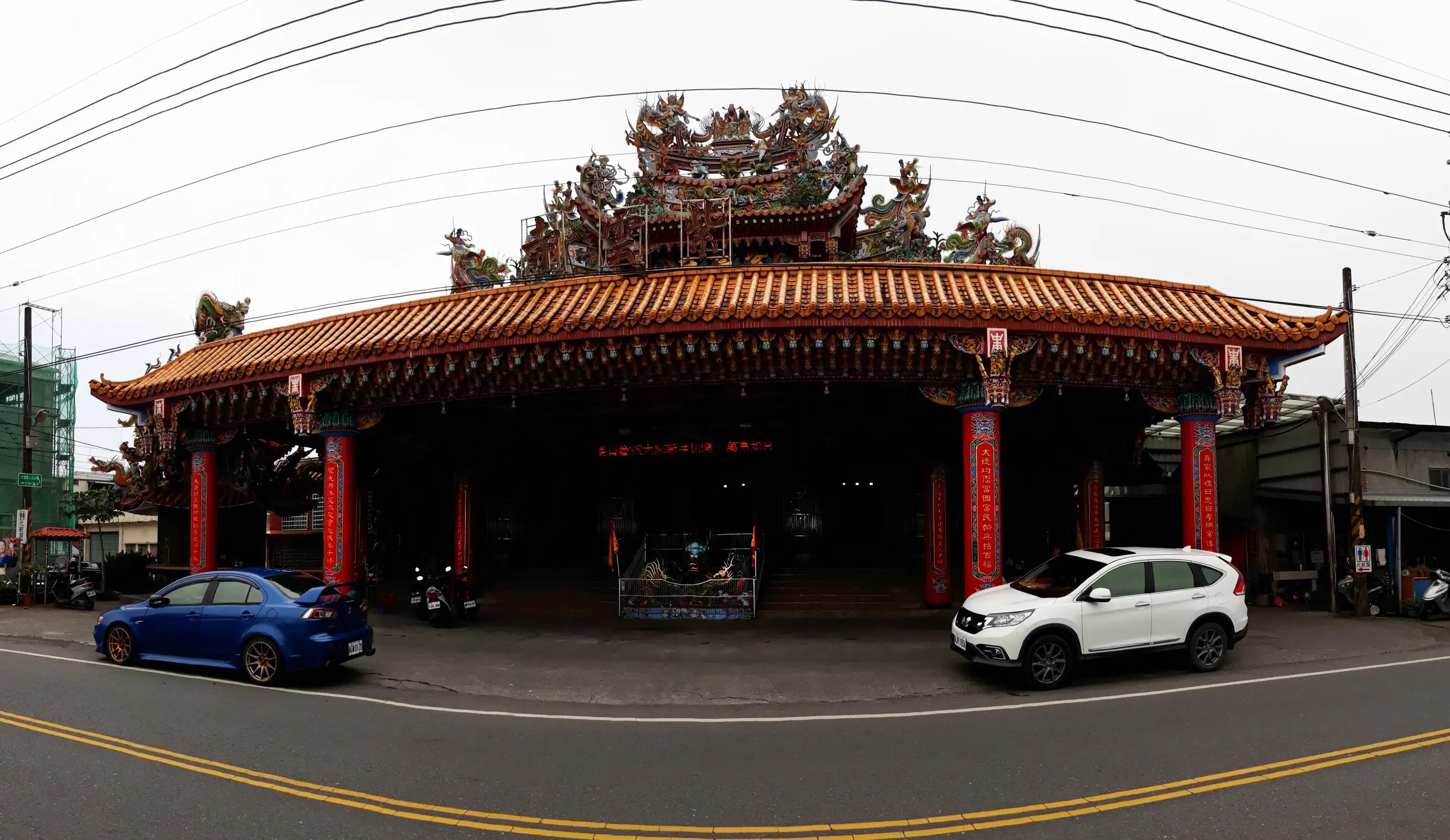
I recently visited another Great Sage temple, this time the Wujian Purple Cloud Temple (Wujian Ziyu si, 五間紫雲寺) of Yilan (宜蘭), Taiwan. The temple was bustling with people during the Chinese New Year celebrations, so I didn’t have time to ask many questions. This entry will serve more as a picture essay until I return to conduct proper research.

1. History

Legend has it that around 1899 a man found a monkey-shaped stone and enshrined it in a thatched shed. This was eventually converted to a temple a few years later. It was destroyed by a typhoon in 1960 but subsequently rebuilt. The temple appears to recognize a trinity, with countless monkey soldiers beneath them. The Great Sage has two aspects: the “Martial Great Sage” (Wu Dasheng, 武大聖) (standing statues), who exorcises evil, and the “Civil Great Sage” (Wen Dasheng, 文大聖) (seated statues), who insures the safety of people and animals.

2. How to get there

(Note: Always consult google if you are directionally challenged like myself)

Address: No. 449, Section 3, Dafu Road, Zhuangwei Township, Yilan County, Taiwan, 263

I took bus #1571 (google calls it #1571A) from gate 15 of the Taiwan City Hall Bus Station. This heads towards the Yilan Bus Station. (If you plan to take this route, please note that buses headed to different areas of Yilan will board from this gate. So pay very close attention to the calls of the bus station attendant. For example, they called “Jiaoxi” (礁溪) (bus #1572), a small township in Yilan, and those waiting for another destination had to stand off to the side while those from different sections of the line made their way to the front. If you aren’t careful, you might end up on the wrong bus.) My destination was the first stop, the Zhuangwei (壯圍) bus stop, a small shelter by an overpass. My short walk to the temple took me passed rows of flooded rice fields and small patches of buildings.

(Click images for larger versions)

1

Gate 15 at the Taiwan City Hall Bus Station.

2

The Zhuangwei bus stop shelter (as seen from the opposite outgoing bus stop).

1a - Map to Purple Cloud Temple

The route map from the Zhuangwei bus stop to the temple.

4
5

Random rice fields along Gonglao Road (see map).

6

A panorama of a rice field next to Lane 423, Sect. 3, Dafu Road (see map). 

3. The Outside

The temple is located on the side of a busy road. It appears almost out of nowhere since the face of the holy structure is in line with the buildings on either side. The first thing that caught my eye was the highly ornate roof of the furnace covered in mythical creatures, divine heroes, and gods, features typical of South Chinese and Taiwanese temple architecture. Each face of the hexagonal body was covered with beautiful carvings on black marble, two of which included the pilgrims from Journey to the West.

7

The furnace visible on the left side of the temple (as seen from the road).

8
9
10
11

A marble carving of Guanyin, the White Dragon Horse, Monkey, and Tripitaka.

12

A detail of Monkey.

13

Monkey, Sha Wujing, Tripitaka on the White Dragon Horse, and Zhu Bajie.

14

A detail of the group.

The front of the temple houses an ornate statue of three brightly colored dragons enclosed in a fence. Looking up, I noticed beautiful hand-painted dragons and Qilin on the ceiling, along with paintings of events from Chinese mythology and Journey to the West on the cross beams. Walking towards one of the five entrances, I noticed the facade was covered in highly detailed stone carvings, some depicting events from the novel.

15

The front of the Purple Cloud Temple.

17
18

The front of the temple. Three of the five entrances are visible behind the dragons.

19

A detail of the three dragon statues.

20

Five hand-painted dragons on the ceiling. The Eight Immortals grace the crossbeam below. 

21

A pair of Qilin on the ceiling. The cross beam below portrays an event from Prince Nezha‘s life.

22

Zhu Bajie protecting his master from the ogre that will become Sha Wujing.

23

Monkey escaping from Laozi’s furnace.

24 - BW

A stone carving on the facade showing Monkey (top right), Zhu bajie (top center right), and Sha Wujing (center left) battling a monster (top left). The image has been enhanced for clarity.

25 - BW

Monkey (center) battling the heavenly army. Enhanced for clarity. 

26 - BW

Monkey (center) leaping from Laozi’s furnace. Enhanced for clarity. Apologies for the blur. 

28 - BW

A detail of Monkey leaping.

29 - BW

The Great Sage (top center) and his monkey army battling heaven. Enhanced for clarity. These are just a few of the many carvings covering the temple facade. 

4. The Inside

The interior hall is wide yet shallow in depth and split between three altars, Folk religion to the right, the Great Sage in the Center, and Daoist to the left. I must admit in my zeal to photograph anything Monkey-related, I completely forgot to take pictures of the other two sections. This online image shows the folk section includes Mazu, Budai, and other deities. This image shows the Daoist section includes the Jade emperor, the Earth god, and others. Surprisingly, the incense burner in front of the main entrance was not marked with the name of the Great Sage (unlike what I’ve seen at other such temples) but that of the Jade Emperor, 玉皇上帝 (Yuhuang shangdi).

30

The main hall.

20190206_123034

The incense burner bearing the name of the Jade Emperor (visible from the hall looking out the main door).

Upon entering the right side of the main hall, the first thing that caught my eye was a large wooden sculpture of a tree-bound monkey holding onto a branch with one hand and a pair of peaches in the other. Immediately behind him was a stone carving of a vague monkey with two children. (I’m not sure of the ritual importance of either statue. I’ll report on this later. However, I will say the stone statue recalls Sun Wukong’s origins as a stone monkey.) Next to both statues is one of two cylindrical towers, one positioned on each end of the hall. Each is topped by a Great Sage statue and the towers themselves are comprised of hundreds of small compartments, each filled with a small Great Sage figure. These represent a donor who has given money to the temple.

31

The wooden monkey statue.

32

A detail of the monkey holding peaches.

33

The stone monkey with children.

34

The tower of donor Great Sages.

35

The Great Sage topping each tower. He holds a fly whisk in one hand and a peach of immortality in the other.

36

The many compartments.

37

A mini Great Sage donor figure. He sits on a throne with his staff held over head in one hand and a calabash gourd held to his front in the other. 

4.1. The Great Sage Altar

The central offering table to the Great Sage was covered in all sorts of fruits, candies, and flowers. Also included were an incense burner, offerings of wine, and a pair of crescent moon-shaped wooden blocks. These blocks are used in tandem with fortune sticks and oracles revealed on slips of paper, all of which are housed in a metal cylinder to the left of the table (see section three of this article on how these items are used).

39
38

The table laden with offerings. Take note of the young woman praying to the Great Sage. She told me that she was from Vietnam and that Monkey was not a common deity there.

40

The incense burner (back center), tea offerings (three cups visible in the center) and wooden blocks (front right).

41

The metal cylinder housing the fortune sticks (top), with the corresponding oracles located in each of the surrounding drawers.

Like in other parts of Taiwan and Singapore, this temple appears to recognize a plethora of Great Sages, from a holy trinity to an army of soldier monkeys. (I don’t yet know their individual names. I will report on this later.) All of the Great Sage figures are portrayed with golden armor, red-painted humanoid faces, golden fillets, and long, dark hair. The headband and long hair are no doubt influenced by depictions of Military Monks (Wuseng, 武僧) from Chinese opera (Bonds, 2008, pp. 177-178 and 328). Red face paint is also associated with such characters (Bonds, 2008, p. 211). While the red paint of the statues references the red faces of macaque monkeys, it definitely plays into the military monk personna. Portraying Monkey as such defines him as a divine warrior and a guardian deity.

Military Monk - Beijing Opera (Bonds, 2008)

A military monk from a modern Beijing Opera production (Bonds, 2008, p. 178).

I was pleasantly surprised to see statues of Zhu Bajie appear among the Great Sage’s army. It’s quite appropriate given this is the year of the pig according to the Chinese zodiac. Also included were statues of Ksitigarbha and Nezha.

42

The three main Great Sages visible in front of the ornate dragon statue. Note the long hair.

43

Statues of Zhu Bajie among Monkey’s soldiers.

44

More soldier monkeys. Take note of the Ksitigarbha (front right).

45

Nezha figures mixed in with the monkey soldiers (left).

46

This soldier monkey holds a calabash gourd at the ready.

47

More Nezha figures among the soldiers (right).

I have more pictures of the interior but I’ll leave those for a later article. Lastly, I want to share one of the temple flags stationed opposite the main building.

z

(Left) “Great Sage Equaling Heaven”. (Right) “(Yi)lan Wujian Purple Cloud Temple”.

Sources:

Bonds, A. B. (2008). Beijing Opera Costumes: The Visual Communication of Character and Culture. Honolulu: University of Hawai’i Press.