Note: My blog is not monetized, so I am not making any money from this post. My hope is that these texts will make background info on Journey to the West more accessible to a wider audience. If you enjoyed the digital versions, please, please, please support the official releases.
Last updated: 01-04-2025
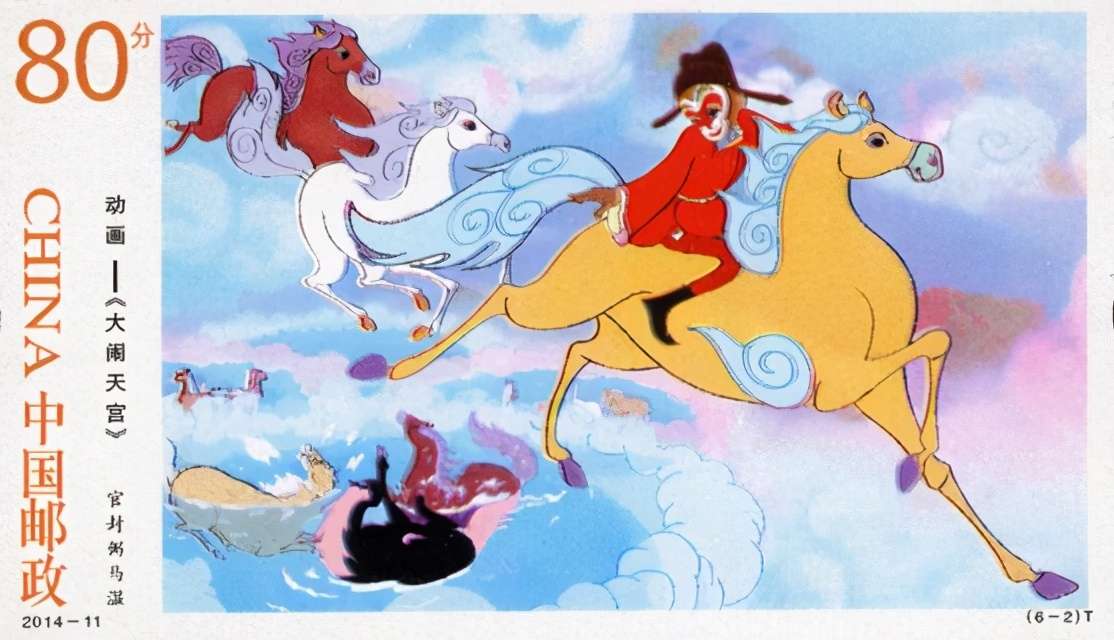
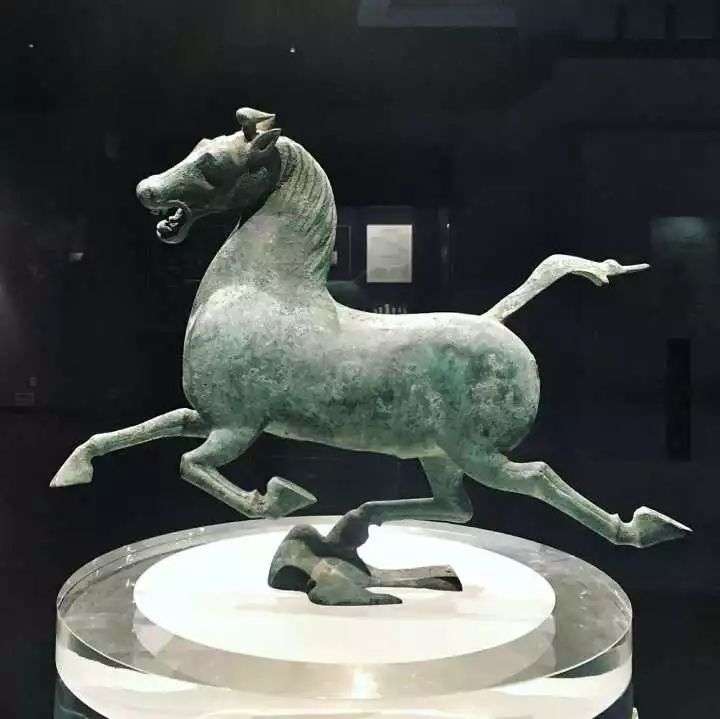
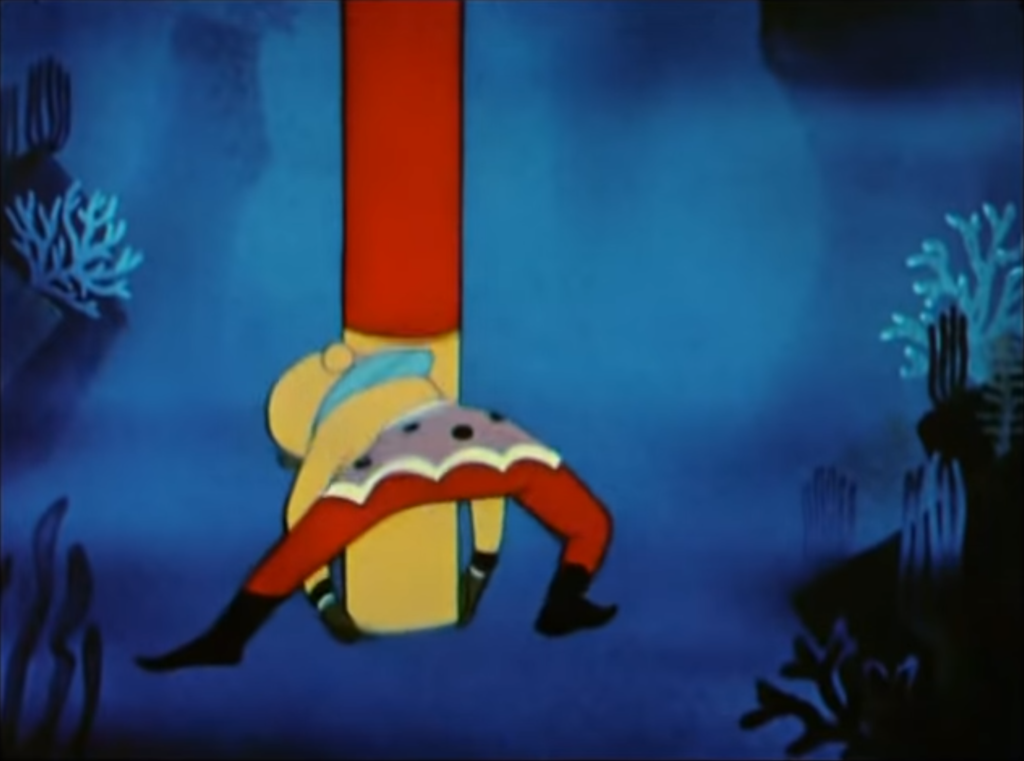
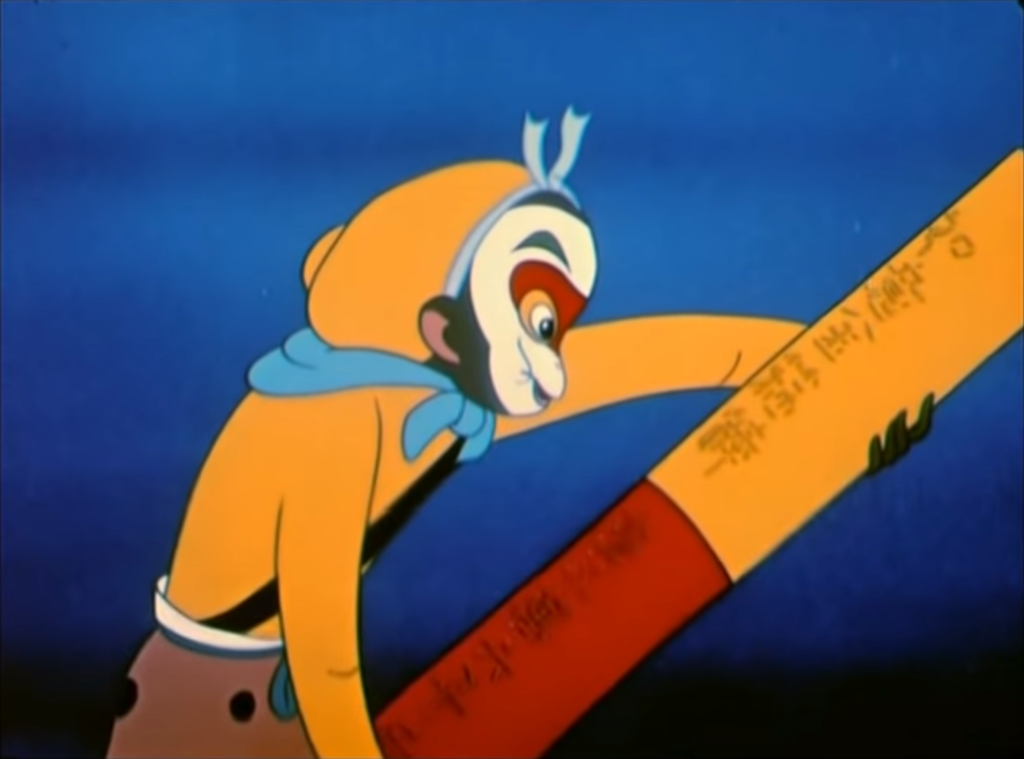
In chapter four of Journey to the West (Xiyouji, 西遊記, 1592), Sun Wukong is invited to heaven to serve as the Bimawen (弼馬溫, “To assist horse temperament”), a minor post overseeing the celestial horse stables (Wu & Yu, 2012, p. 148). He takes the position seriously, caring for nearly 1,000 horses day and night, making sure that they are all well-fed, exercised, and rested (Wu & Yu, 2012, p. 149) (fig. 1). But these are no ordinary horses. A poem associates them with the most famous steeds in Chinese history (Wu & Yu, 2012, pp. 148-149), and most importantly, the last line states: “They tread the mist and mount the clouds with unflagging strength” (Wu & Yu, 2012, p. 149). This suggests that they have the supernatural ability to gallop through the skies (fig. 2). Additionally, the novel refers to them as “dragon horses” (longma, 龍馬) (Wu & Yu, 2012, p. 309), which brings to mind the White Dragon Horse (Bai longma, 白龍馬) that serves as Tripitaka‘s mount throughout the journey (Wu & Yu, 2012, p. 328).
Monkey’s position gives him power over all horses, especially those of mortal stock. Chapter 14 reads:
When the horse saw [Pilgrim], its torso slackened and its legs stiffened. In fear and trembling, it could hardly stand up. For you see, that monkey had been a [Bimawen], who used to look after dragon horses in the celestial stables. His authority was such that horses of this world inevitably would fear him when they saw him (Wu & Yu, 2012, p. 309). [1]
那馬見了他,腰軟蹄矬,戰兢兢的立站不住。蓋因那猴原是弼馬溫,在天上看養龍馬的,有些法則,故此凡馬見他害怕。
Table of Contents
1. Historical Stable Monkeys
The heavenly post is a homophonous pun on Bimawen (避馬瘟, lit: “avoid the horse plague”), an ancient superstition where people would place monkeys in stables to ward off equine sickness. For example, Essential Techniques for the Common People (Qimin yaoshu, 齊民要術, c. 544) states:
[Horses] are often associated with macaques [mihou, 猕猴] in the horse stable. This is in order to calm the horses, repel evil, and eliminate all diseases.
常系猕猴于马坊,令马不畏、辟恶、消百病也。
The later Compendium of Materia Medica (Bencao gangmu, 本草綱目, 1596) mentions this concept twice. The first reads:
The Shuowen says: The characters (for macaque) look like “mother monkey” (muhou), but it’s “bathing monkey” (muhou, i.e. macaque), not a female. Since a macaque resembles a hu-barbarian, he is also called hu-sun “grandson of a barbarian.” The Zhuangzi calls him ju. People who raise horses keep a macaque in the stables, which will ward off horse-diseases. The Hu barbarians call a macaque ma-liu, in Sanskrit books he is called Mo-si-zha (makaṭa). [2]
《说文》云︰为字象母猴之形。即沐猴也,非牝也。猴形似胡人,故曰胡孙。《庄子》谓之狙。养马者厩中畜之,能辟马病,胡俗称马留云。《梵书》谓之摩斯[咤] 。
The second explains how monkeys are believed to help the horses:
The Classic of Horses states: Domesticated macaques used in horse stables help avoid horse diseases [lit: bimawen]. Their monthly menstruation runs onto the grass, and once the horses eat it, they will never be sick.
《马经》言︰马厩畜母猴,辟马瘟疫。逐月有天癸流草上,马食之,永无疾病矣。
This is insanely comical as it directly links Sun Wukong, a powerful cosmic warrior, to menstruation! This then might explain why Monkey is so enraged when enemies call him a Bimawen. As noted by my friend Irwen Wong of the Journey to the West Library blog, it challenges the Great Sage’s masculinity.
2. Essays on Heavenly Horses
The following essay by Arthur Waley (1955), famed translator of the Journey to the West abridgement Monkey (1942), links heavenly horses to a historical breed from Central Asia, the Ferghana horse. He describes China invading the region to procure these horses by force, suggesting Emperor Wu of Han directed this action because the ruler believed the equines were dragon horses capable of transporting him to heaven. This is linked to stories of ancient Chinese rulers attaining immortality by riding horses or dragons to the celestial realm. Waley (1955) notes that both the Chinese and Indians believed supernatural steeds hailed from the water, showing a link between horses and dragons.
However, Creel (1982) refutes the claim that the heavenly horses were procured for purely religious reasons. He shows that they were indeed used in military battles.

Fig. 1 – A 2014 stamp featuring a scene from the classic 1960s animation Havoc in Heaven in which Sun Wukong serves as the keeper of the heavenly horses (larger version). Image found here. Fig. 2 – A photo of the famous circa 2nd century BCE Flying Horse of Gansu (larger version). Image found here.
2.1. The Heavenly Horses of Ferghana
Individuals are not happy in proportion to the amount of space their persons occupy. Yet certain nations, at certain periods of their history, seem to take it for granted that the wider they spread themselves the happier they will be. China is a case in point. Why did this enormous country in the second century BC, in the first century AD and again at various later periods ruin itself by gratuitous westward expansion? Were her aims commercial or strategic? Was she defending her silk trade, or guarding against possible wars on two fronts? What part was played by the individual ambition of Emperors or generals, or by mere restlessness and love of adventure?
To answer these questions we should have to take the campaigns one by one. In doing so we should not be reduced to mere guesses. In Imperial edicts and addresses about military campaigns certain traditional pretences are, of course, kept up: ‘everything under Heaven’ belongs by right to the Chinese Emperor, and any peoples who do not think so must be chastised. Concrete and material motives for war are not always mentioned in these regal utterances, any more than an Address from the Throne (or its equivalent) in modern countries usually mentions petrol or rubber. But statesmen and officials were often quite frank about material motives for conquest: more so, I think, than is the case with us today. Thus, as justifying a proposal to secure from the Huns a strip of territory that projected into the Kansu corridor in north-western China the following reasons are given by a statesman in 8 BC: first, that it was a good source of supply for the sort of wood and feathers used in making arrows; secondly, that it would mean a large increase of Chinese territory, and lastly that it would give the general in command of the campaign a chance to win a big reputation. It is interesting to find that extension of territory is here regarded as an end in itself. Possibly supporters of the proposal might, if pressed, have pointed out as an afterthought that Chinese farmers could be settled in the new territory and that the taxes they paid would be a help to the exchequer.
The tendency of modern historians, and not only in Marxist countries, is to stress material and particularly economic motives for war, and to regard the profession of other motives as mere propaganda. In dealing with early Chinese history I do not think this view would generally lead us far astray, so long as we bear in mind the additional factor of personal ambition and the almost axiomatic belief that extension of territory was an end in itself. But I am going to deal with a case that seems to me to be exceptional. Oddly enough the early Chinese military adventure that modern scholars have most unanimously explained solely on materialist lines, seems, on closer examination, to have been to a large extent a religious quest
In 102. BC the Chinese Emperor Wu sent a huge military expedition (there had been a small and abortive one two years before) to Ta Yüan, corresponding roughly to the modern Ferghana in Russian Turkestan, to capture Heavenly Horses. Modern scholars, both Far Eastern and European, have usually assumed that the real object of the expedition was a purely practical one; namely, to secure a better type of cavalry horse. It is certain that by the middle of the second century AD the Chinese did possess two kinds of horse: a steppe-pony, with a large clumsy head, and a western type of horse, similar to that shown on Greek coins of the fourth to the second century BC, with small graceful head. It may well be that one of the results of the Ferghana expedition was the introduction of a western type of horse into China; and in the eyes of the generals and the horse-experts who accompanied them this may have been the main object as well as the result of the expeditions. But modern historians, intent on the very interesting material aspects of the episode, have tended to overlook its place (amply attested by contemporary texts) in the history of Chinese religion. Incidentally, by examining these texts more closely, I think one gets fresh light on what concretely and zoologically (as opposed to mythologically) the Heavenly Horses really were. I should mention that as a result of the expedition thirty or so ‘superior horses’ and 3,000 horses and mares of ‘middling or lower quality’ were handed over to the Chinese. How many of these survived the journey of 2,500 miles back to the Chinese capital we do not know. A few years later the king of Ferghana agreed to send two Heavenly Horses to China every year. I shall here be concerned only with the thirty ‘superior’ Or ‘Heavenly’ horses. There is no reason to suppose that the 3,000 inferior horses were of a type different from the usual Chinese horse. They may merely have been needed as remounts.
In studying what was said about the horses in contemporary Chinese literature the best point of departure is the hymn made in 101 B.C. when the horses were about to arrive at the Chinese capital :
The Heavenly Horses are coming,
Coming from the Far West.
They crossed the Flowing sands,
For the barbarians are conquered.
The Heavenly Horses are coming
That issued from the waters of a pool.
Two of them have tiger backs.
They can transform themselves like spirits.
The Heavenly Horses are coming
Across the pastureless wilds
A thousand leagues at a stretch,
Following the eastern road.
The Heavenly horses are coming.
Jupiter is in the Dragon.
Should they choose to soar aloft,
Who could keep pace with them?
The Heavenly Horses are coming;
Open the gates while there is time.
They will draw me up and carry me
To the Holy Mountain of K’un-lun.
The Heavenly Horses have come
And the Dragon will follow in their wake
I shall reach the Gates of Heaven,
I shall see the Palace of God.
This song has often been spoken of by western historians as though it were a purely secular literary poem. It is in reality one of a series of hymns written (possibly by the Emperor Wu himself, but the authorship is very uncertain) for use at the sacrifices to Heaven and Earth-sacred rituals performed by the Emperor in person. One or two of the phrases in it obviously need further explanation. Whether the people of Ferghana believed that their sacred horses ‘issued from a pool’ we do not know. But there are, apart from other instances of this belief elsewhere in Central Asia, many Chinese stories of horses coming up out of the water, the implication being that they are dragon-horses, that is to say, water-dragons who have changed themselves into horses, often retaining their dragon wings. As we shall see, the Emperor had been on the look-out for a water-born horse for some time. What is meant by ‘the Dragon will follow in their wake,’ more literally ‘they will be introducers of the Dragon’ ? The idea underlying these words is best illustrated by the following story, dating perhaps from some forty years earlier than the hymn: Recently a man who lived on the frontier lost his horse which ran away into the land of the barbarians. He was very much upset, and everyone condoled with him, except his father who remarked cheerfully, ‘This may be a blessing in disguise.’ And sure enough the lost horse came back bringing with it a ‘fine horse,’ that is to say, a horse of superior value and breed. The Emperor in this hymn hopes that the Ferghana horses would one day bring along a Dragon, a being even more magical than a Heavenly Horse.
The general implication of the hymn therefore is that the Heavenly Horses will carry the Emperor to the abode of the Immortals on the magical mountain K’un-lun. He imagines himself, I think, driving in a chariot drawn by horses rather than riding on horseback. Riding did not become common in China till the fourth century BC and was in the second century still felt ‘to be a utilitarian, unlegendary form of transport. More than this, the Ferghana horses being, as another hymn in the series says, ‘friends of the Dragon ‘ who is master of the clouds, will eventually carry him to Heaven, to the Abode of God-on-High-(Shang Ti).
The preceding hymn (No. 9 in the series), which is about the fleeting and uncertain nature of man’s life, ends with the words, ‘Why does not Tzu-huang come down to me?’ Tzu-huang was the horse with dragonwings that carried up the mythical Yellow Emperor to Heaven. There are many Chinese stories of legendary monarchs being carried up to Heaven by magic steeds; but it would be difficult to prove that any of them is older than the fourth century BC. It is interesting to compare these Chinese myths with Indian ideas about the relation of monarchs to magic steeds. In Indian legends the magic horse Valaha (‘Cloud’), is one of the ‘seven treasures’ of a great monarch. Valaha came up out of the sea, just as the Ferghana horse and others in which the Chinese were interested came up out of the water, and carried Simhala, the legendary founder of the Kingdom of Ceylon, back to India when he was on the verge of being eaten by female cannibals.
The Emperor Wu had, as I have mentioned, for some time past been on the look-out for a magic horse, ‘born from’ a stream. In 121 BC someone thought it worthwhile to report to the Court that a horse had come up out of a river to the north of the Ordos, the great square-shaped northern bend of the Yellow River. We have no details about this horse ; but in 113 BC another strange horse was not only seen but captured and sent to Court. A Chinese who in consequence of some misdemeanour had been sent to do service at the military colony near Tun-huang, on the northwest frontier, frequently saw a horse of strange appearance drinking in the river along with a number of wild horses. He tamed the strange horse by putting at the water-side a dummy figure of a man whose hands were bridle and halter. When the horse was used to this sight he substituted himself for the dummy, captured the horse and sent it to Court. In order to prove that the horse was ‘divine’ he pretended that it had come up from under the water. His story was evidently believed at the time, for this horse, too (like the Ferghana horses twelve years later), was made the subject of a hymn to be used in the Imperial sacrifices :
The Heavenly Horse comes down
A present from the Grand Unity,
Bedewed with red sweat
That foams in an ochre stream
Impatient of all restraint
And of abounding energy.
He treads the fleeting clouds,
Dim in his upward flight;
With smooth and easy gait
Covers a thousand leagues.
Historians of religion, particularly those of the Vienna school, regard as ‘the beginning of religion’ the belief in a supreme celestial deity who later becomes merely a vague memory and ultimately fades away or becomes merged in other, more concrete cults. The ‘Grand Unity‘ (or ‘Great Unique,” as one might also translate it) of this hymn has therefore particular interest as a religious phenomenon, being a supreme celestial deity whose origin (at any rate as a national cult), whose heydey and disappearance all take place before our eyes within a limited historical period. So far from belonging to a remote, ‘archaic’ past he begins, officially at any rate, in 133 B.C. Up till then the Grand Unity was a philosophic conception denoting the primal unity out of which grew the plurality of the universe as we know it. Sometimes the phrase is a synonym of Tao, the underlying principle of the Universe in Taoist philosophy. But in the second century BC a cult sprang up in which the Grand Unity figures not as a philosophic conception but as a personal divinity, the highest of all gods, worshipped with an elaborate ritual. About 133 BC a member of the Grand Unity sect prevailed on the Emperor Wu to make the whole Imperial cult centre round this deity. The Grand Unity maintained this position during several reigns and the cult was only brought to an end (along with many other religious innovations of Wu’s reign) in 32 BC.
I will leave aside for the moment the other points of interest in the Heavenly Horse hymn of 113 BC and note here that the Emperor’s search for immortality did not begin with his interest in divine horses. He had, as is well known, for long past been pursuing this quest on other lines. He had sent numerous and costly expeditions to the East in the hope of discovering islands inhabited by Immortals who might be persuaded to yield their secrets to him. He had dabbled in alchemy, in the belief that if he ate out of vessels made of alchemic gold he would live forever, or at any rate for a prodigiously long time. The expedition to fetch magic horses from the West was, it seems to me, merely a continuation of his earlier quests in the East. ‘The Emperor Wu,’ says Wen Ying in about AD 200, ‘had set his heart on immortality. He was always hoping that a Heavenly Horse would come and carry him to K’un-lun,’ the western Abode of the Immortals. At last when all his guests in the East had failed and when the Horse did not come of its own accord (as it had come to legendary Emperors in the past, both in India and in China) he determined, having known for long that the king of Ferghana had such horses, to wrest some from him by diplomacy or, if need be, by force.
We have seen, then, how the horses were regarded by the Chinese Emperor. Other people, less obsessed by magico-religious ideas, may have viewed them differently; but there is nothing in the Chinese sources to suggest that they were needed or used for military purposes. Naturally, the normal political excuses were made for the expedition. In a public proclamation the Emperor accused Ferghana of having killed two Chinese envoys on their way to the west and an Indian envoy who was on his way to China. The excuse has a familiar ring. One is reminded, for example, of the German seizure of Tsingtao in 1897, alleged to be a reprisal for the murder of the German missionaries Nies and Henle.
Another question clearly arises. How were the Heavenly Horses regarded by the king of Ferghana and what role did they play at his Court? It is generally assumed that they were battle-chargers. But I wonder whether their function was not perhaps something like that of the ten Nesaean horses ‘most gorgeously caparisoned,’ who in the procession of the Persian king Xerxes, as described in the seventh book of Herodotus, walked immediately in front of the sacred chariot of ‘Zeus’ ? ‘And it occurs to one that to this same category of ceremonial horse may very well belong the ten yellow mares of the Pazaryk grave mound, in the eastern Altai, preserved in a solid ice block. They form part of the burial gear of a semi-nomad chieftain who lived perhaps somewhere about the 5th century B.C. ‘They are,’ says the Swedish archaeologist Karl Jettmar, ‘certainly of the noblest breed. They resemble the best strains of Turkmenistan or Ferghana.’ Two of them have masks. One mask represents a deer or reindeer; the other, a composite mythological creature. They may well have been special horses used by a ruler for ritual purposes, and perhaps (as Jettmar suggests) they took part in the funeral procession, which like the Scythian funeral processions described’ by Herodotus may have travelled an immense way. Their mythological function may well have been to carry the dead Khan to Immortality, just as the horse Tzu-huang carried the legendary Chinese Yellow Emperor and as in historic times the Emperor Wu hoped to be carried by the Ferghana horses. One is reminded, again, of the ‘treasure-horses,’ blue-grey in colouring and with black heads (that is to say, descendants of the magic horse Valaha) and gorgeously caparisoned, who took part in the procession that brought the infant Buddha back from Lumbini to his father’s palace. If the function of the Heavenly Horses at the Ferghana Court was a ritual rather than a practical one it would well explain why the king was so anxious not to part with them and at one point even threatened to kill them all rather than let them fall into the hands of the Chinese.
Though the main subject of this essay is the relation between the Ferghana expeditions and the religious pre-occupations of the Chinesr Emperor, the texts we have studied do also tell us something about the physical characteristics of the Ferghana horses, and it may be worth while to close with a few remarks on this subject. The first of the two hymns mentions that two Heavenly Horses had stripy backs. Lydekker in The Horse and Its Relatives says : ‘It has been noticed that dun-coloured domesticated horses frequently show a tendency to develop … one or two transverse dark stripes across the shoulder, and another along the middle line.’ Such presumably were the two Ferghana horses, and the Chinese regarded them as ‘marked’ by heaven and consequently particularly sacred. The other physical characteristic commonly attributed to Ferghana horses is that they ‘sweated blood.’ This, as we have seen, was also said of the horse sent from near Tun-huang in 113 BC. Professor Dubs, in his valuable translation of the Han History, has suggested that the flow of blood was caused by lesions inflicted on the horses by a parasite with the intimidating name Parafilaria multipapillosa. There is in any case no question of this characteristic being merely legendary. In AD 78 the Emperor Chang gave one of his uncles ‘a Ferghana horse which bled from a small hole above its front upper leg.’ In the letter that accompanied this gift he said, ‘I had often heard the line in Emperor Wu’s song about the Heavenly Horse in which it is said that it is ‘ bedewed with red sweat,’ and I have now seen with my own eyes that this is actually the case.’ Presumably the ‘hole’ looked more like a pore in the skin than a wound, and therefore what came out of it was regarded as sweat rather than blood.
Nowhere, I think, is it said that they were larger than Chinese horses, though this has constantly been assumed by Western writers. The only horses that the Chinese at this period call big (ta) were to be found not in Ferghana but in Parthia. ‘They have the big horse and the big bird (ostrich),’ says the Han History. But there is no record of those huge Parthian steeds (no doubt the Parthikoi of Strabo, which he says were of the same build as the huge Nesaean horses) being brought to China.
To sum up: the accepted idea about the Ferghana expeditions is that the Emperor Wu sent them in order to obtain ‘horses larger and fleeter than the small steppe breed.” It is assumed that in this he was successful and that the ‘western’ type of horse seen in some of the second century A.D. grave-reliefs corresponds to the type of horse brought back from Ferghana in 101 BC. I would re-formulate this view as follows: The Emperor sent the expeditions in order to secure Heavenly Horses which would carry him to Heaven. There is no evidence that Heavenly Horses were used in battle either in Ferghana or China: If they had been they would hardly have remained long, as it were, ‘on the secret list.’ I’m inclined, to think that their function was a ritual one, both in Central Asia and in China. About the breed of the horses that the Emperor secured we know nothing. But it is reasonable to suppose that the existence of the ‘Western’ horse in China, in the second century AD was due to Chinese intercourse with the West from the second century BC onwards and that the Ferghana expedition, as an episode in this intercourse, may well have played its part in what was perhaps a gradual process. There is no justification for saying as Tam does that ‘the origin of the Ferghana horses must have been one of the great Parthian war-horses’ or that the Ferghana horses were ‘of the great Nesaean-Parthian breed.’.
Thus though my main object was to show that this episode cannot be properly understood without taking into account more than has hitherto been done its magico-religious aspects, my conclusions about its secular, concrete aspects are also somewhat different from those of my predecessors (Waley, 1955).
2.2. The Role of the Horse in Chinese History
Creel (1982) successfully refutes the former’s claim that the horses were procured for only religious reasons:
Waley, “Heavenly Horses of Ferghana,” 102, takes the position that the horses of Fergana were sought by the Han Emperor Wu “in order to secure Heavenly Horses which would carry him to Heaven.” He says that “there is no evidence that Heavenly Horses were used in battle either in Ferghana or in China.” (Ibid., 102.) But in fact, as we have seen, the use of Fergana horses in fighting is mentioned in Hou-Han-shu, 110A.4b. By speaking here of “Heavenly Horses” Waley is evading the real question: were horses obtained from Fergana used in battle in Han times? The answer is that they were. Waley also says: “Nowhere, I think, is it said that they [i.e., “Heavenly Horses”] were larger than Chinese horses, though this has constantly been assumed by Western writers.” (Ibid.) The evidence cited above certainly indicates that the Fergana horses were extremely large and that there is every reason to feel assured that they were much larger than most of the horses in China both in Han times and later. Further evidence against Waley’s view is the nature of the titles of the two men sent by the Emperor to Fergana “to select good horses.” (Shih-chi, 123.37.) These would appear to be ordinary official titles and refer to “managing horses” and “driving horses.” If the purpose had been primarily to select horses having special religious virtues, why did the Emperor not send men with religious qualifications? Certainly there was some religious aspect to this curious affair, and Waley has performed a service by emphasizing it. But in doing so he has given undue attention to a part of the evidence and neglected other parts of it entirely (p. 176 n. 66).
Please see the PDF below for the entire chapter.
2.2.A. Archive link
Click to access Herrlee-G.-Creel-What-Is-Taoism_-and-Other-Studies-in-Chinese-Cultural-History-1970-Ch.-8-on-Horses.pdf
3. Updates
Update: 03-12-23
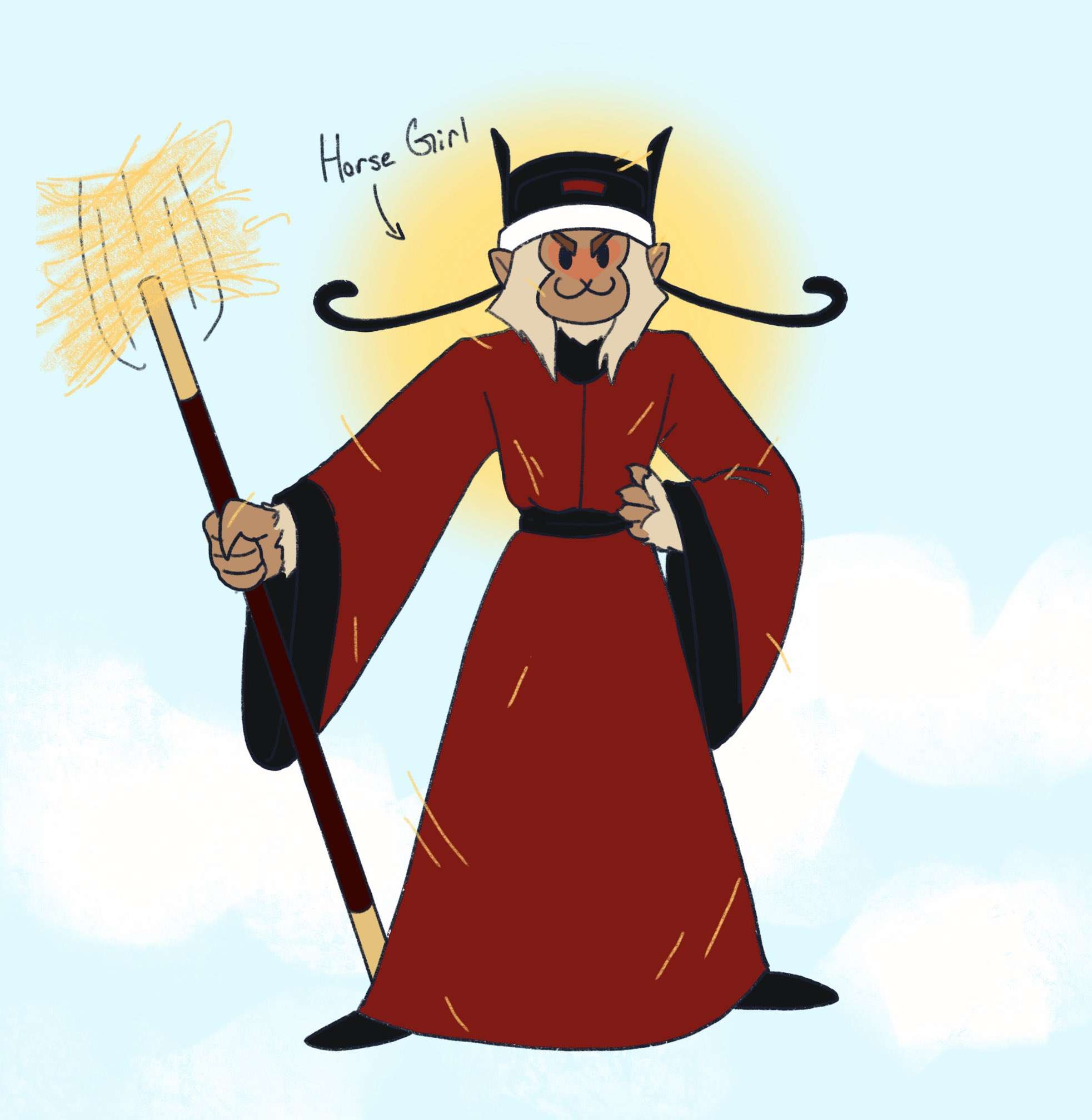
Twitter user Lava (@Lavaflowe) has allowed me to post their lovely drawing of Sun Wukong as the Bimanwen. The image is comically labeled “horse girl.” I especially love how he has transformed his magic staff into a pitchfork. Also, check out the hay covering his heavenly robes (fig. 4). That’s such a great detail.

Fig. 4 – Monkey as the Bimawen (larger version). The original tweet can be seen here.
Update: 01-04-25
I just posted an article about the White Dragon Horse.
Why Did the White Dragon Horse Burn His Father’s Pearls in Journey to the West?
Notes:
1) This power was given to Monkey by the Jade Emperor, who gives him the Bimawen post. This was pointed out to me by Irwen Wong of the Journey to the West Library blog.
2) The translation is partly based on Gulik, 1967, p. 35. I changed the Wade-Giles to pinyin.
Sources:
Creel, H. G. (1982). What is Taoism?: And other Studies in Chinese Cultural History. Chicago, Ill: University of Chicago Press.
Waley, A. (1955, February). The Heavenly Horses of Ferghana. History Today, 5, 95-103.
Wu, C., & Yu, A. C. (2012). The Journey to the West (Vol. 1) (Rev. ed.). Chicago, Illinois: University of Chicago Press.