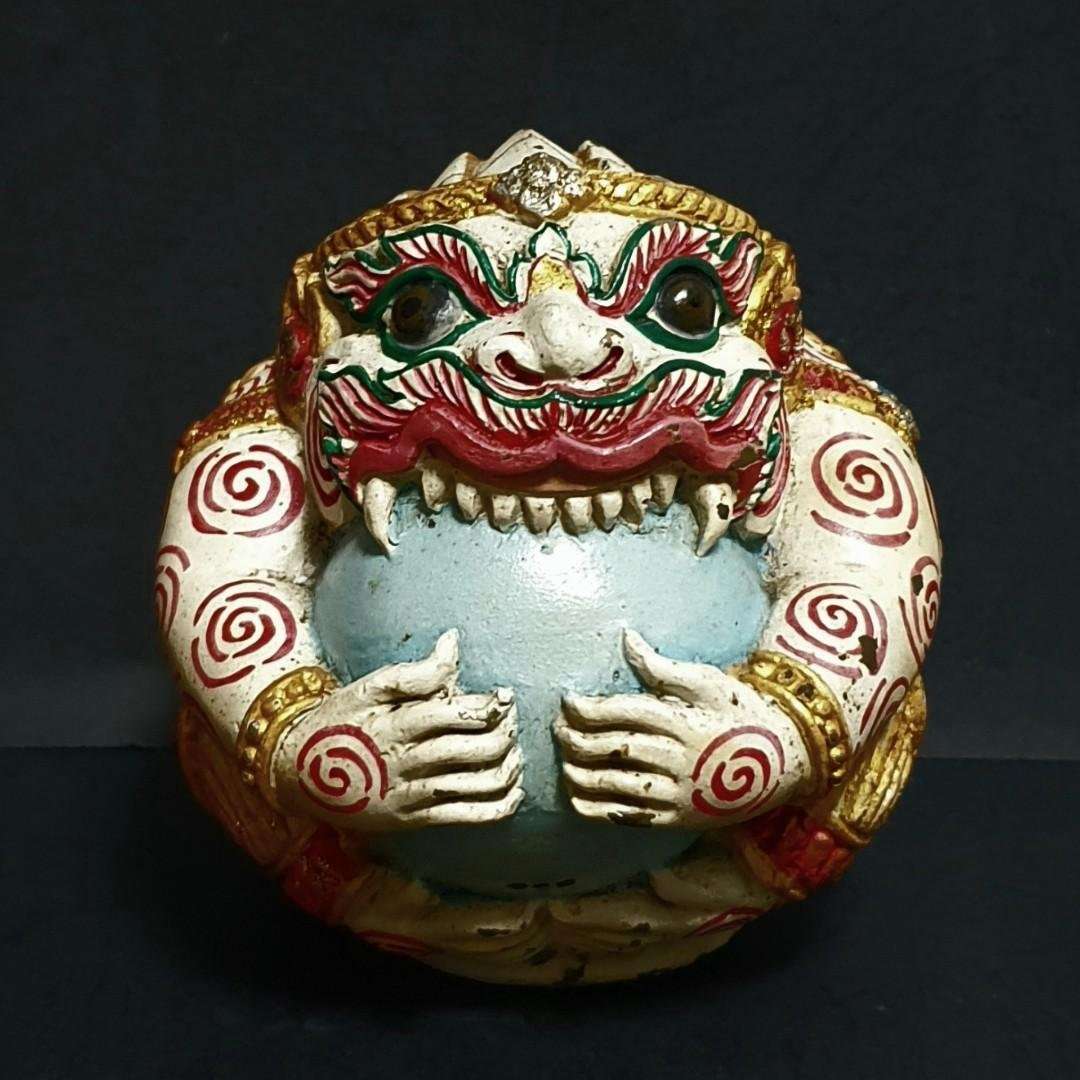
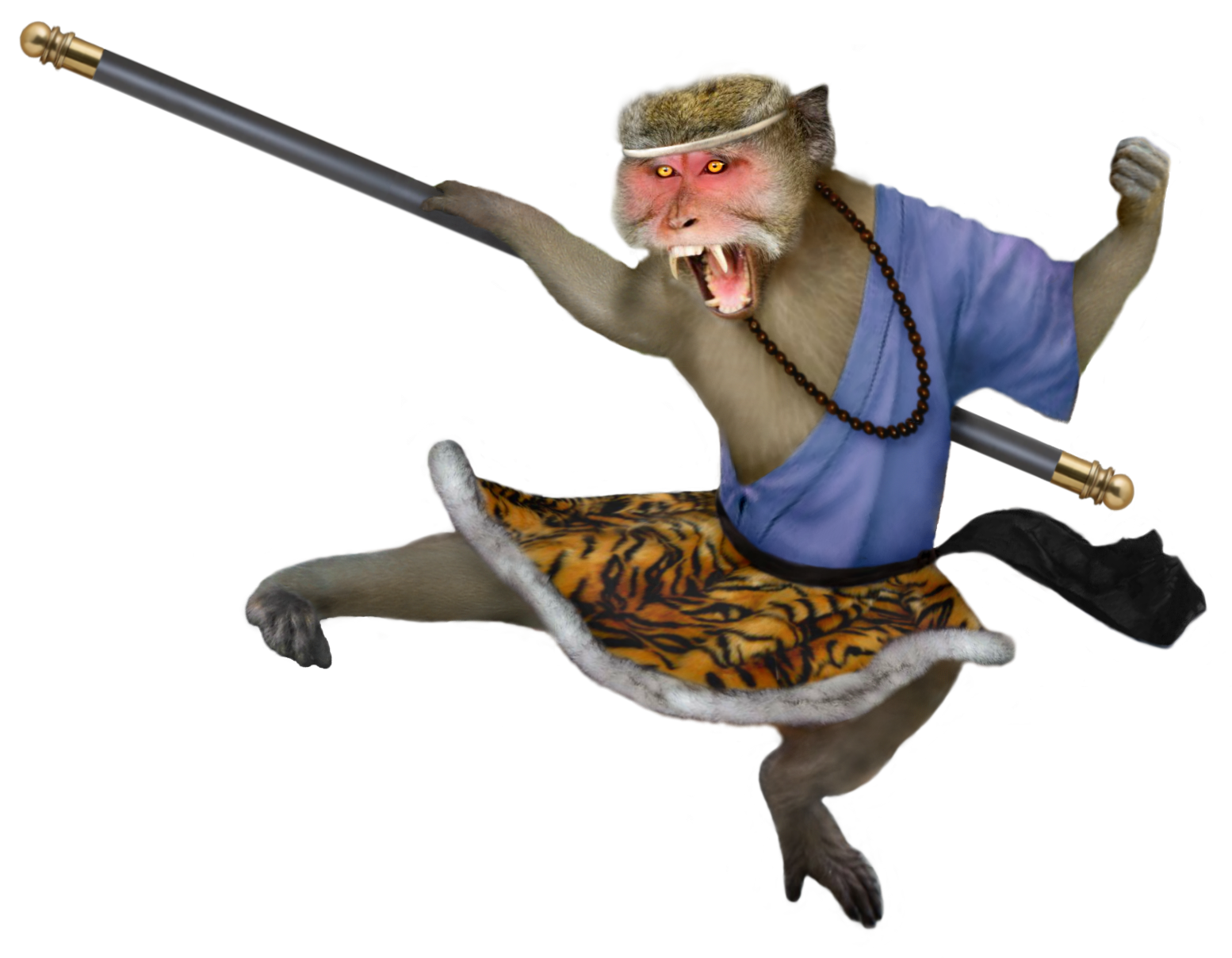
Archive #42 – PDFs of Journey to the West Translations

Note: My blog is not monetized, so I am not making any money from this post. My hope is that the PDFs will make this legendary story more accessible to a wider audience. If you enjoyed the digital versions, please, please, please support the official releases.

Last updated: 04-06-2026

I’m happy to host a number of foreign language translations of the noted Chinese classic Journey to the West (Xiyou ji西遊記, 1592 CE), as well as a precursor and some later unofficial sequels.

1. The Precursor

  • The Story of How Tripitaka of the Great Tang Procures the Scriptures (Datang Sanzang qujing shihua大唐三藏取經詩話, c. late-13th-century)

2. The Original

As of this writing, I don’t yet have a modern Japanese translation. But you can read an original copy of the 1835 translation here.

3. Unofficial Sequels

I will add more languages to this archive as they become available. Please let me know if you have access to other editions.

1. The Precursor

1.1. The Story of How Tripitaka of the Great Tang Procures the Scriptures (Datang Sanzang qujing shihua, 大唐三藏取經詩話, c. late-13th-century)

A. English

This 17-chapter novelette, which likely served as a prompt for oral storytellers, is the earliest known printed edition of the JTTW story cycle. It involves the adventures of Tripitaka and Sun Wukong’s antecedent, the “Monkey Pilgrim” (Hou xingzhe, 猴行者). The tale is translated by Charles S. Wivell.

Archive #37 – The 13th-Century Version of Journey to the West

See also my chapter-by-chapter description and analysis here:

The Story of How Tripitaka of the Great Tang Procures the Scriptures: The Literary Precursor of Journey to the West

2. The Original

2.1. Journey to the West (Xiyou ji)

A. English

A.1. Complete

1) This is a PDF for The Journey to the West (2012 Rev. ed.) translated by Anthony C. Yu.

Archive #11 – PDFs of the Journey to the West 2012 Revised Edition

2) This is a text PDF for Journey to the West (1993/2020) translated by W. J. F. Jenner.

PDF File

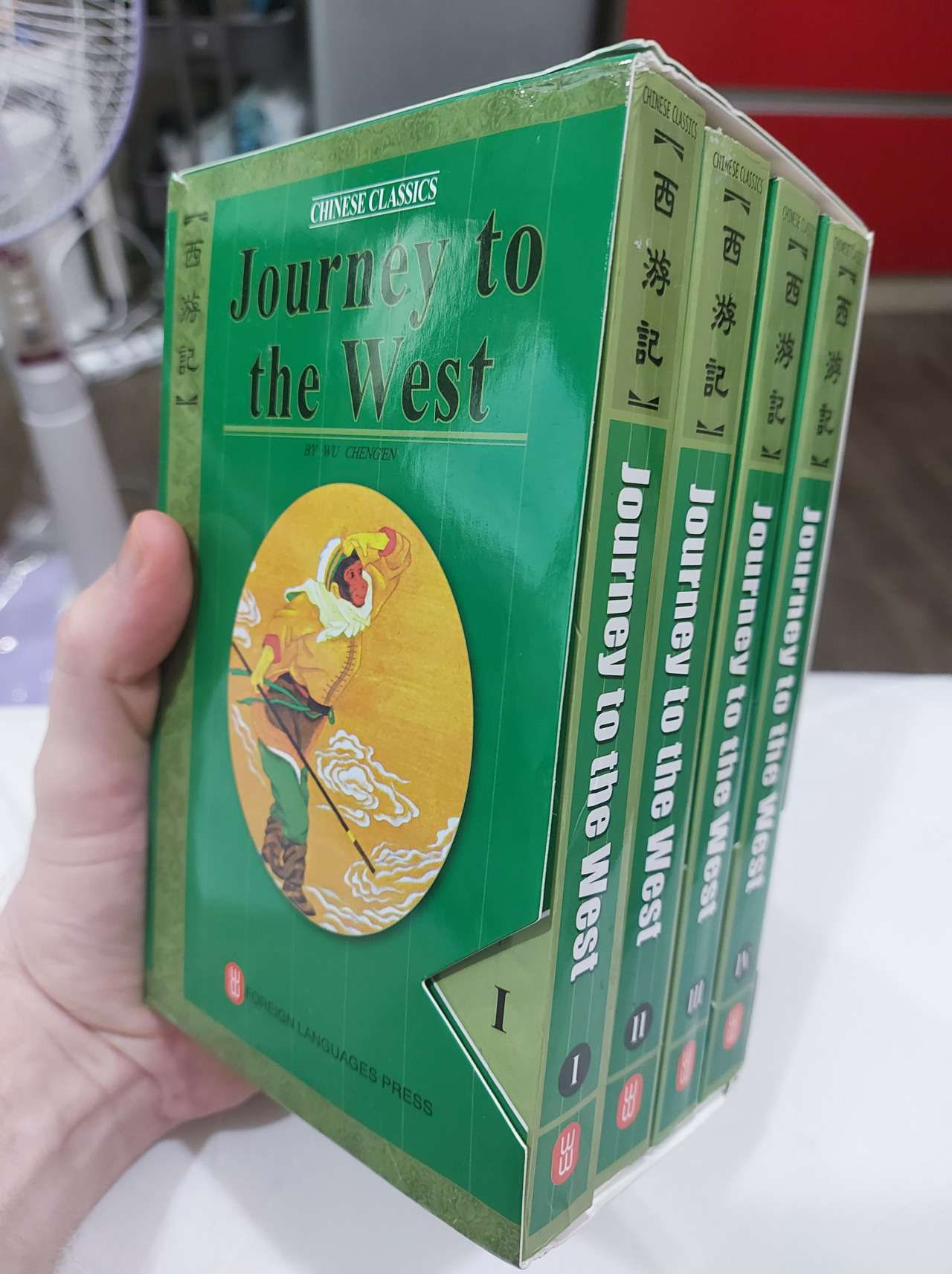
Click to access Wu-Chengen-Journey-to-the-West-4-Volume-Boxed-Set-2003.pdf

The four-volume box set in my collection (larger version).

A.2. Abridged

1) This is a PDF for Monkey (1942/1984) translated by Arthur Waley in 30 chapters (1 to 15, 18 and 19, 22, 37 to 39, 44 to 46, 47 to 49, and 98 to 100). See past book covers here.

PDF File

Click to access Wu-Chengen_-Arthur-Waley-Monkey-Grove-Press-1984.pdf

2) This is a PDF for The Monkey and the Monk (2006): An Abridgement of The Journey to the West translated by Anthony C. Yu in 31 chapters (1 to 15, 18 and 19, 22 and 23, 44 to 46, 53 to 55, 57 and 58, 84, and 98 to 100)

PDF File

Click to access Anthony-C.-Yu-The-Monkey-and-the-Monk_-An-Abridgment-of-The-Journey-to-the-West-2006.pdf

The official cover (larger version)

A.3. Audiobook

1) I just learned of “The Fifth Monkey” and their Journey to the West – An Audio Drama Series, which presents a new English translation alongside the original Chinese. They explain:

One reason that led our team to start this audio drama project is to correct some of the mistranslations found in the Yu/Jenner translations. Most of them are very minor and we certainly understand what could have led to those mistakes, but we think it is worth exploring how we can help bring a more accurate presentation of the original text in the English language (source).

The official logo (larger version).

2) YouTuber Sondley has recorded himself reading all 100 chapters of the Jenner edition.

B. French

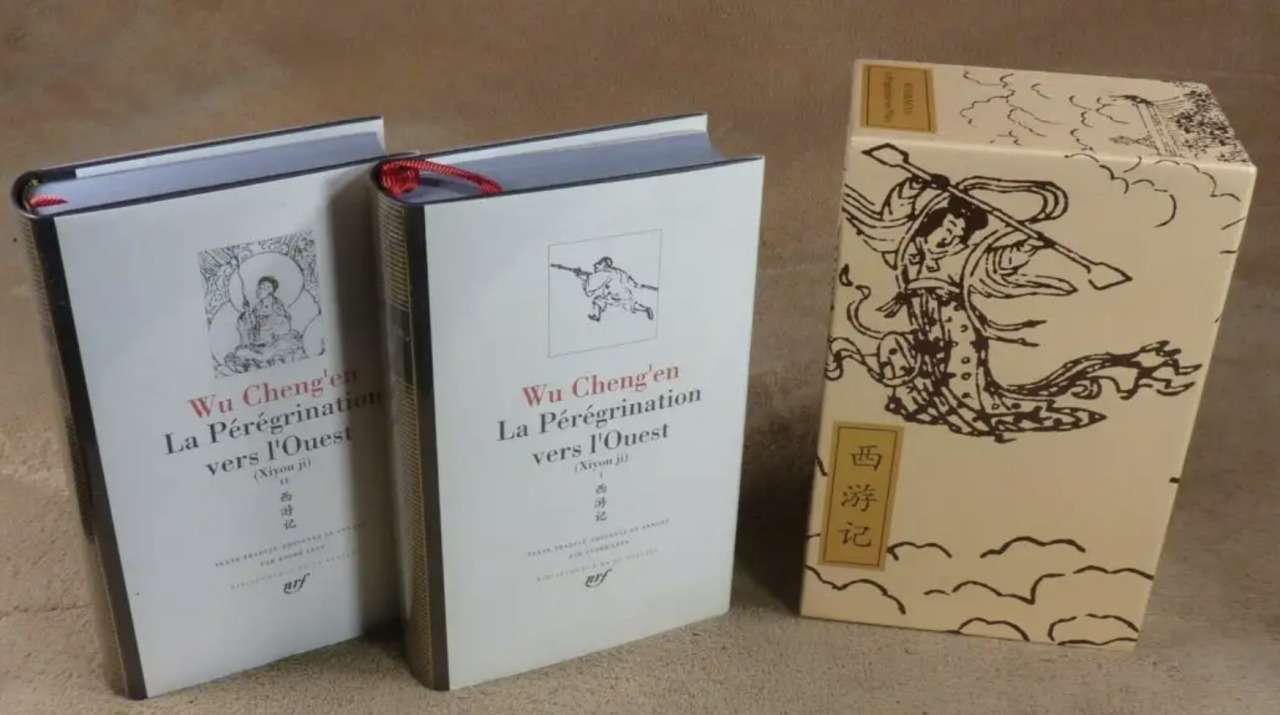
These are PDFs for La Pérégrination vers l’Ouest (Xiyou ji) (1991) translated by André Lévy in 100 chapters. I was told by one French academic that this edition “is one of the best available in Western languages.”

Thank you to arcanananas on Tumbler for volume one, and thank you to jyeet on the Journey to the West discord for volume two.

PDF Files

Vol. 1https://journeytothewestresearch.com/wp-content/uploads/2024/11/La-peregrination-vers-lOuest-v.1.pdf

Vol. 2https://journeytothewestresearch.com/wp-content/uploads/2023/08/French-JTTW-la-peregrination-vers-louest-Vol-2.pdf

The original two-volume boxed edition (larger version). Image found here.

C. German

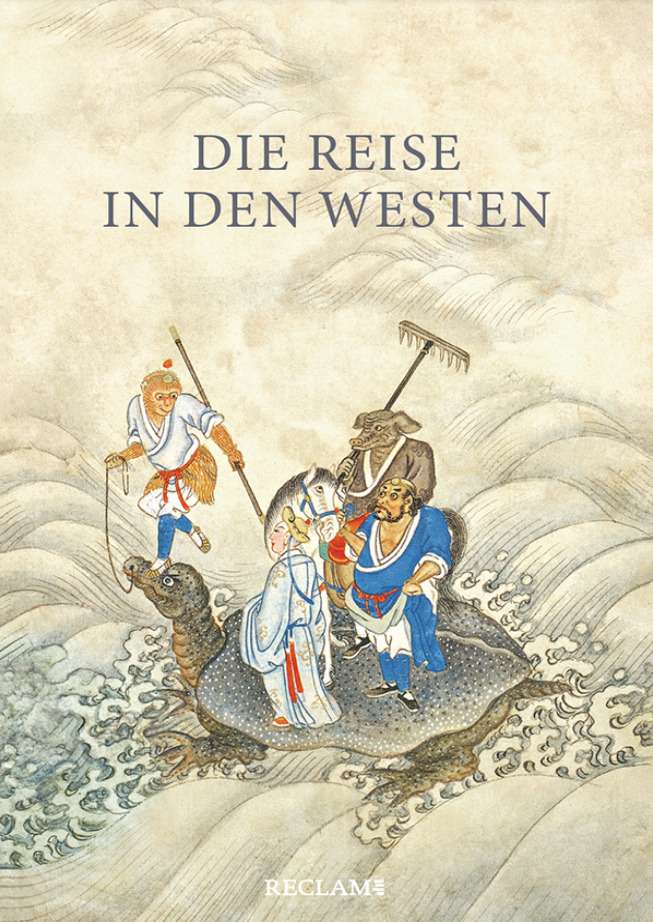
This is a PDF for Die Reise in den Westen. Ein klassischer chinesischer Roman (2016) translated by Eva Lüdi Kong in 100 chapters. It was awarded the Leipzig Book Fair prize in 2017. This version was converted from an ebook.

PDF File

Click to access German-JTTW-Die-Reise-in-den-Westen.pdf

The official cover (larger version)

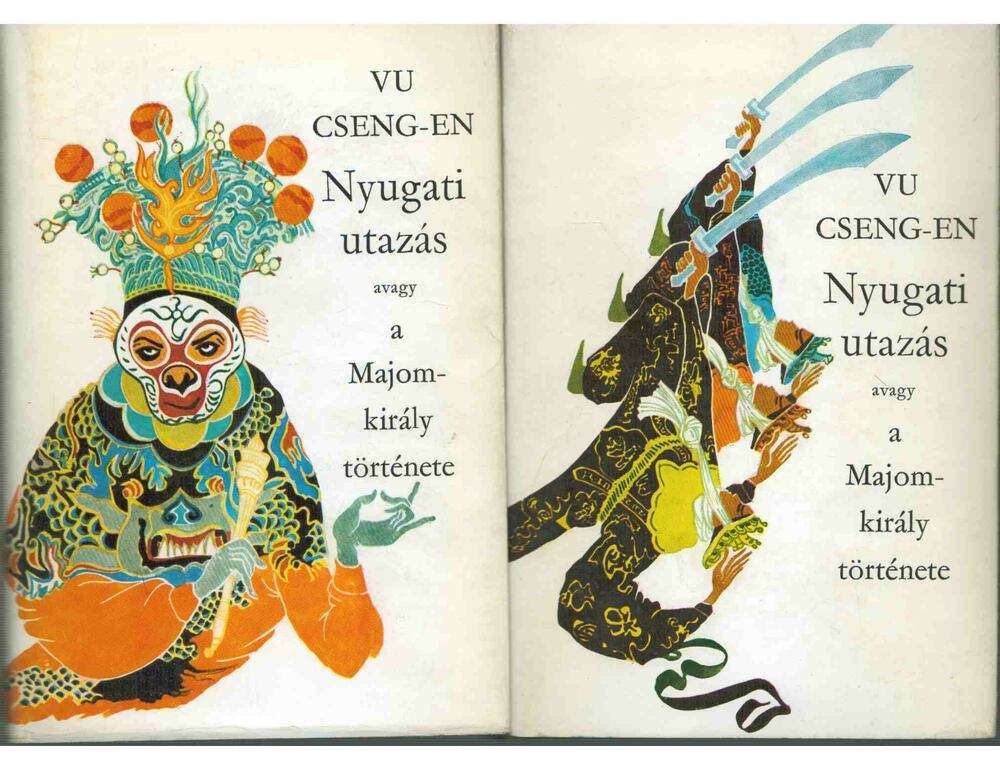
D. Hungarian

These are text PDFs for Nyugati utazás: avagy a majomkirály története (1969/1980) translated by Barnabás Csongor in two volumes. While the work covers the full 100 chapters, I’ve been told that it deletes the poems and occasionally paraphrases long-winded sections of text.

Thank you to Twitter user Jakabfi Károly for locating the files.

PDF Files

Vol 1https://journeytothewestresearch.com/wp-content/uploads/2023/08/Hungarian-JTTW-Nyugati-Utazas-Vol-1.pdf

Vol 2https://journeytothewestresearch.com/wp-content/uploads/2023/08/Hungarian-JTTW-Nyugati-Utazas-Vol-2.pdf

The official covers for volumes one and two (larger version). Image found here.

E. Italian

[Note 10-19-23: I was asked by the publisher to remove the PDF from the archive. I’m leaving the title here so others will know that an Italian translation exists.]

The Italian text is called Viaggio in occidente (1998/2008). It was translated by Serafino Balduzzi and published in two volumes. It is based on the French edition published in 1991. The work covers all 100 chapters.

F. Polish

This is a PDF for Małpi bunt (1976) translated by Tadeusz Żbikowski. It is a 14 chapter abridgement of the first 20 chapters of the original.

Thank you to Twitter user Friend_Pretend for locating the file.

PDF File

Click to access Polish-JTTW-Malpi-bunt-1976.pdf

The official cover (larger version).

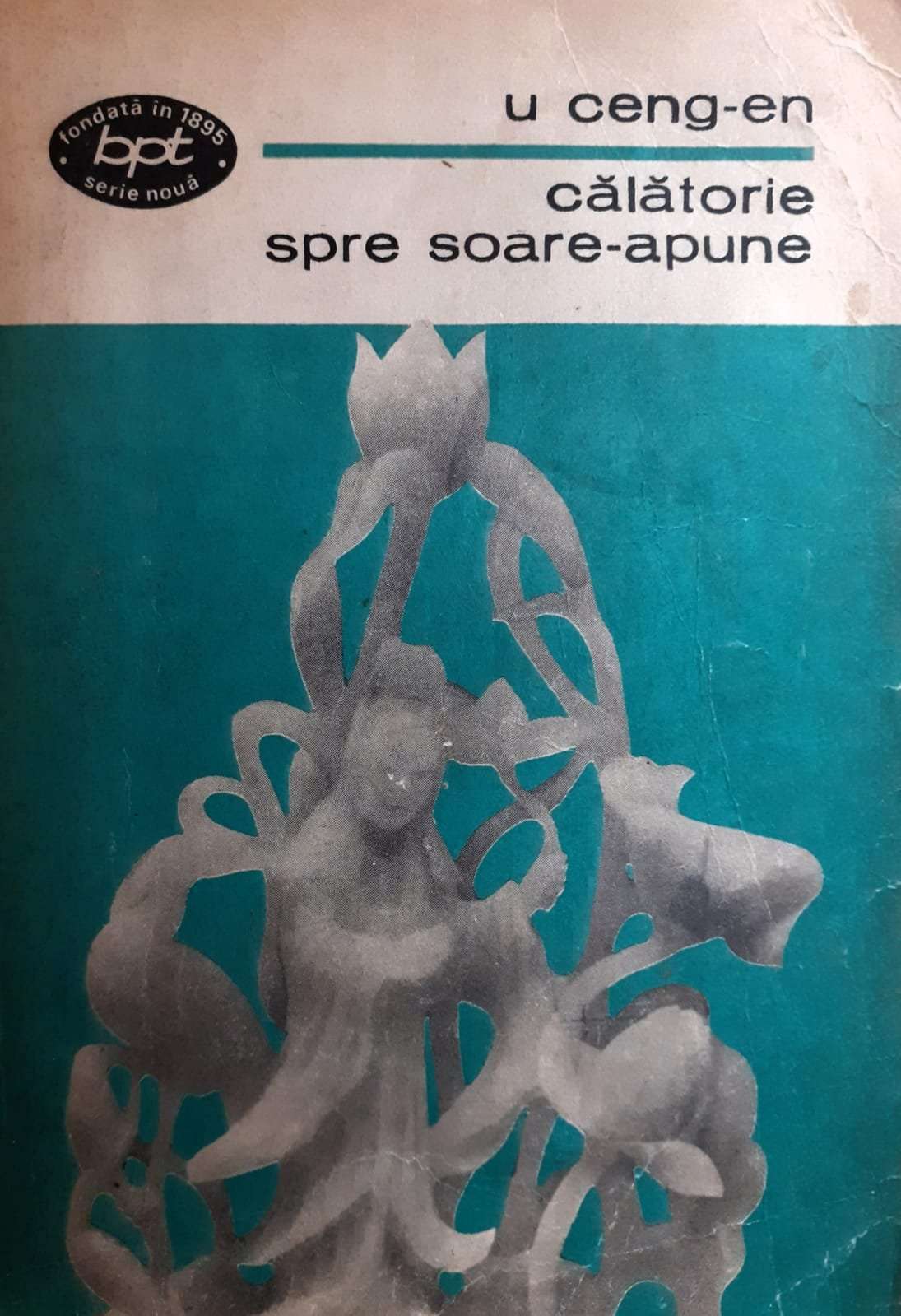
G. Romanian

This is a text PDF for Călătorie spre soareapune (1971) translated by Corneliu Rudescu and Fănică N. Gheorghe. It appears to be an abridgment.

Thank you to greencicadarchivist on the Journey to the West discord for locating the file.

PDF File

Click to access Romanian-JTTW-U_Ceng_En_Calatorie_Spre_Soare_Apune_pdf.pdf

The official cover (larger version).

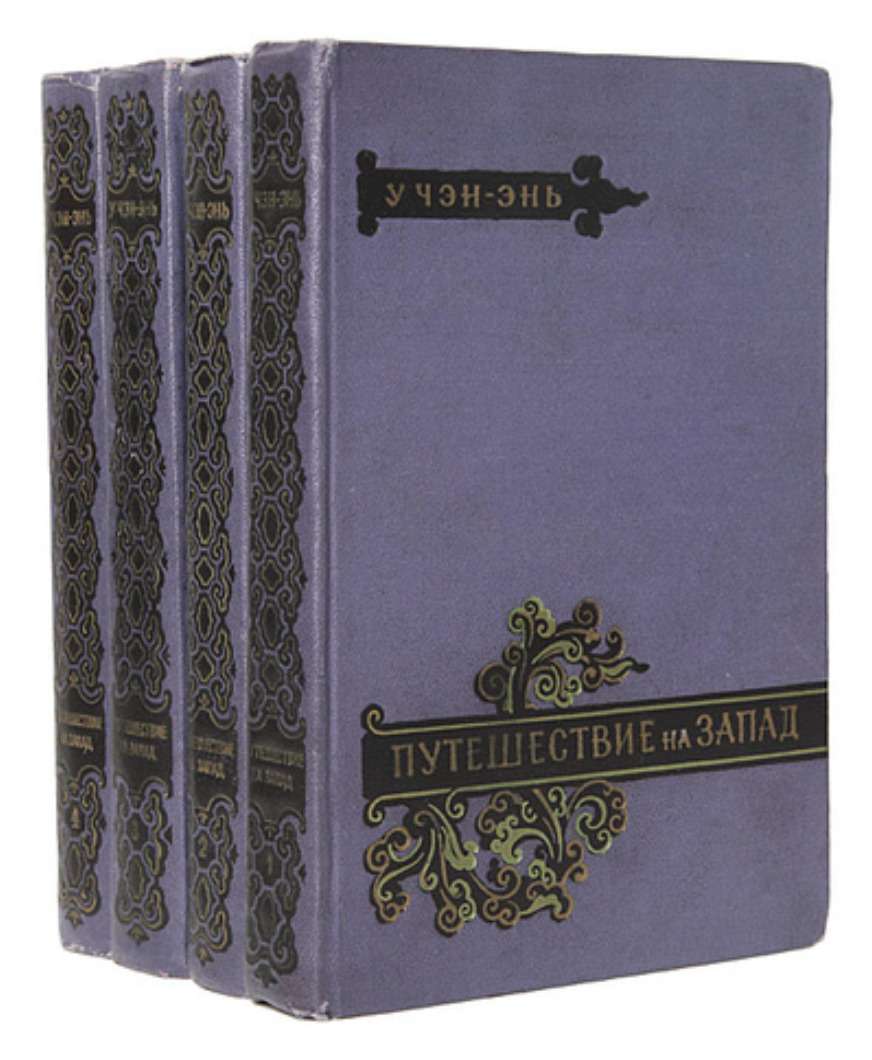
H. Russian

H.1. Complete

These are PDFs for Путеше́ствие на За́пад (1959) translated by A. Rogachev (vols. 1-2) and V. Kolokolov (vols. 3-4). It covers all 100 chapters.

PDF Files

Vol 1https://journeytothewestresearch.com/wp-content/uploads/2023/08/Russian-JTTW-Puteshestvie_Na_Zapad_T_1_-1959-Vol-1.pdf

Vol. 2https://journeytothewestresearch.com/wp-content/uploads/2023/08/Russian-JTTW-Puteshestvie_Na_Zapad_T_1_-1959-Vol-2.pdf

Vol. 3https://journeytothewestresearch.com/wp-content/uploads/2023/08/Russian-JTTW-Puteshestvie_Na_Zapad_T_1_-1959-Vol-3.pdf

Vol. 4https://journeytothewestresearch.com/wp-content/uploads/2023/08/Russian-JTTW-Puteshestvie_Na_Zapad_T_1_-1959-Vol-4.pdf

The four-volume hardcover edition (larger version).

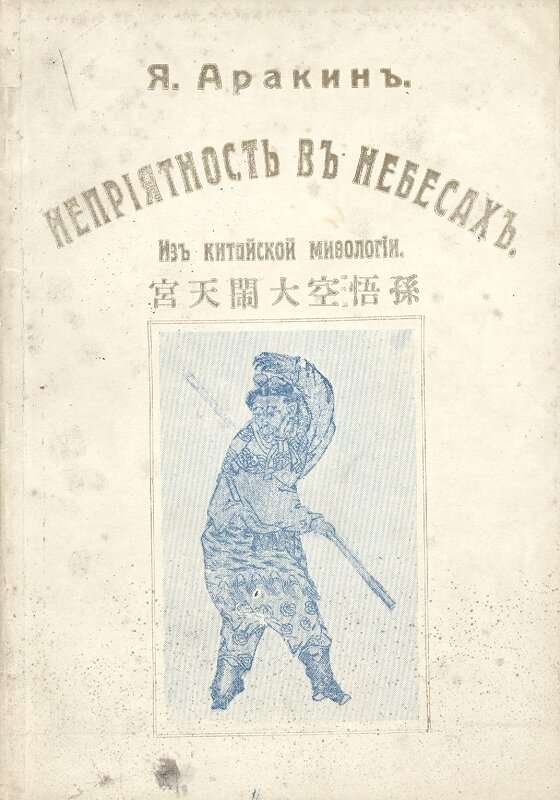
H.2. Abridged

This is a text PDF for Неприятность в небесах. Из китайской мифологии (1926) translated by Yakov Arakin. It is a poetic retelling of the first seven chapters of the novel.

Thank you to Adelar Eleramo for locating the file.

PDF File

Click to access Russian-JTTW-poem-Yakov-Arakin.pdf

The official cover (larger version).

I. Spanish

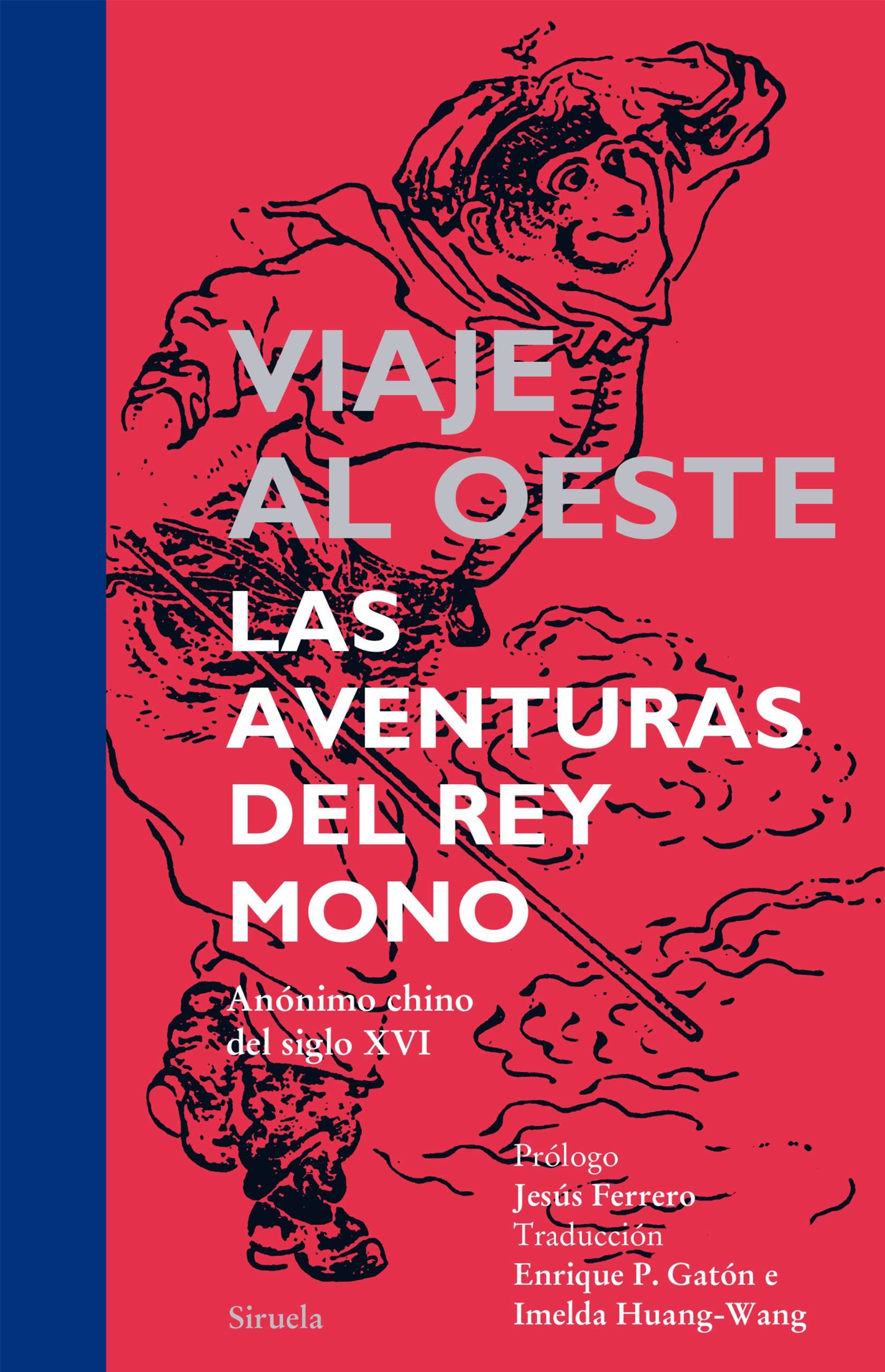
This is a text PDF for Viaje al Oeste: Las aventuras del Rey Mono (2022) translated by Enrique P. Gatón and Imelda Huang-Wang in 100 chapters.

PDF File

Click to access viaje-al-oeste-las-aventuras-del-rey-mono.pdf

The official cover (larger version)

J. Thai

This is a PDF for ไซอิ๋ว (2004/2010). It appears to be based on a four-volume edition translated by one Mr. Tin (นายติ่น) and published from 1906 to 1909. I believe it covers all 100 chapters.

Thank you again to greencicadarchivist for locating the file.

PDF File

Click to access Thai-JTTW-ไซอิ๋ว.pdf

The official cover (larger version)

K. Turkish

This is a PDF for Batı’ya Yolculuk (n.d.). I’m not sure who it was translated by. It appears to be all 100 chapters.

PDF File

Click to access Batiya-Yolculuk.pdf

The official cover (larger version)

L. Vietnamese

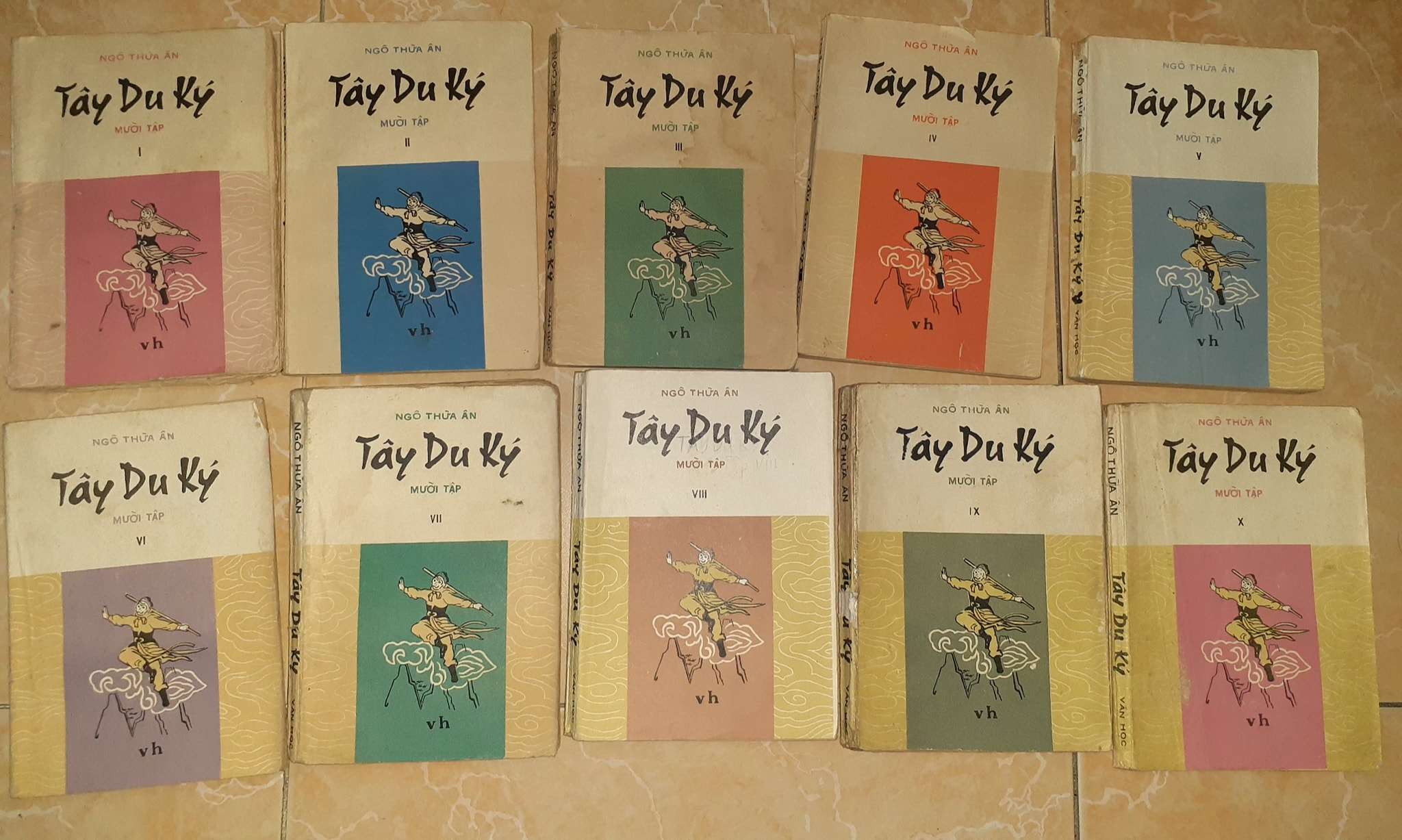
This is a text PDF for Tây Du Ký translated by Như Sơn, Mai Xuân Hải, and Phương Oanh. The 100 chapters were originally split between 10 volumes and published from 1982 to 1988. The volumes were later transcribed and combined to make a single eBook via an online community in 2013 (see here). I have converted it into a PDF.

PDF File

Click to access Vietnamese-JTTW-Tay-Du-Ky.pdf

The covers for the original ten volumes (larger version). Image found here.

3. Unofficial Sequels

3.1. A Supplement to the Journey to the West (Xiyoubu)

A. English

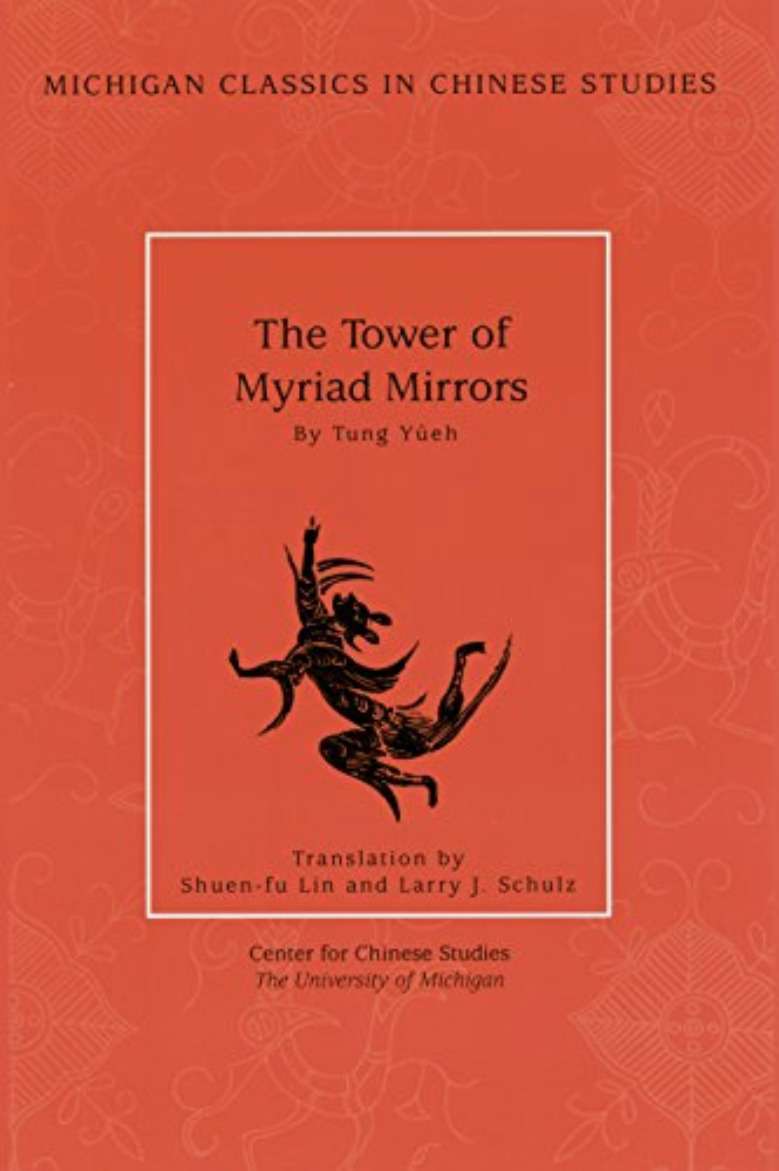
1) This is a PDF for Tower of Myriad Mirrors: A Supplement to Journey to the West (2000) translated by Shuen-fu Lin and Larry J. Schulz. This version was converted from Mobi.

See my previous article on the tale here.

PDF File

Click to access English-Xiyoubu-Lin-Shuen-fu_Dong-Yue-Schulz-Tung-Yueh-The-tower-of-myriad-mirrors_-a-supplement-to-Journey-to-the-West.pdf

The official cover (larger version)

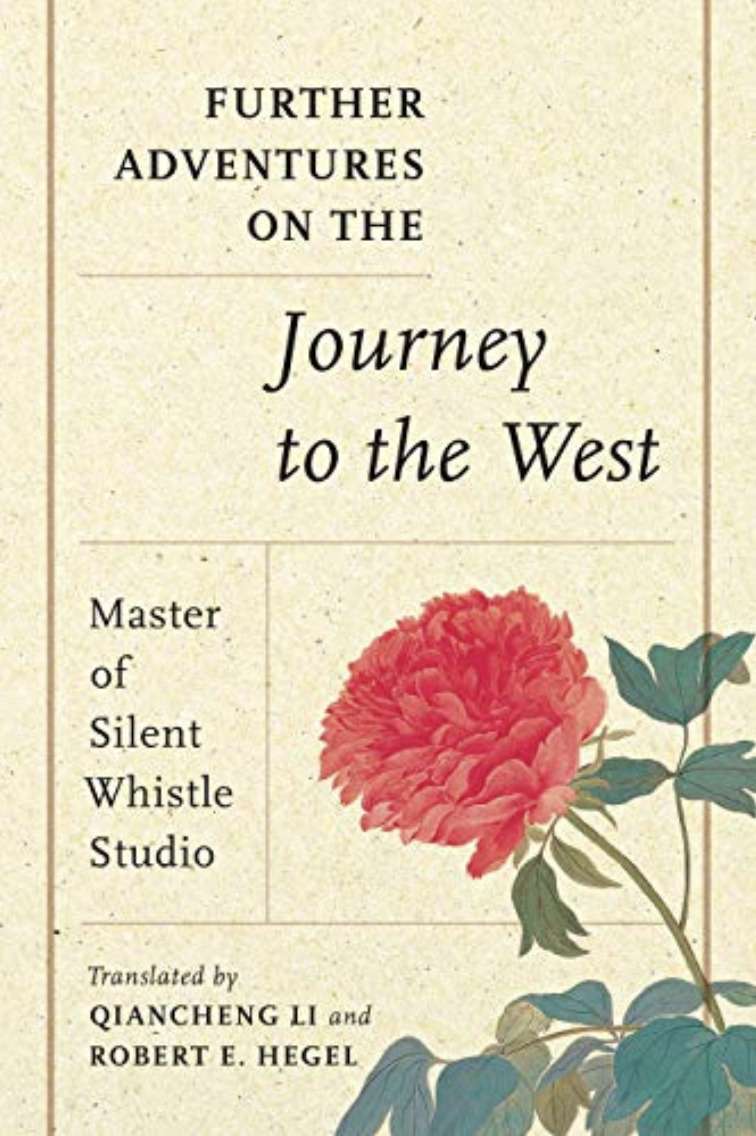
2) This is a PDF for Further Adventures on the Journey to the West – Master of Silent Whistle Studio (2020) translated by Qianchng Li and Robert E. Hegel.

PDF File

Click to access Further-Adventures-on-the-Journey-to-the-West-Master-of-Silent-Whistle-Studio-2020.pdf

The official cover (larger version)

B. Hungarian

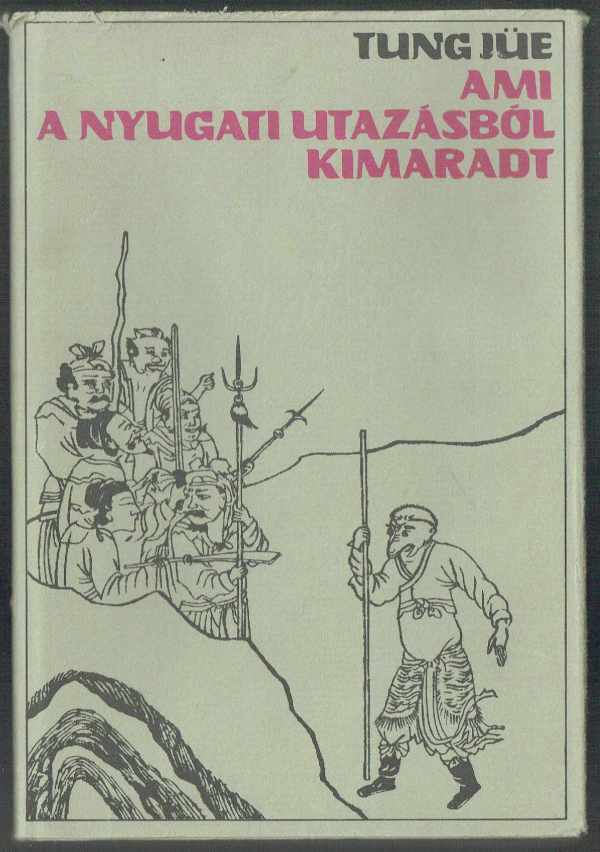
This is a text PDF for Ami a nyugati utazásból kimaradt (1957/1980) translated by Barnabás Csongor.

My thanks again to Twitter user Jakabfi Károly.

PDF File

Click to access Hungarian-Xiyoubu-tung_jue_ami_a_nyugati_utazasbol_kimaradt.pdf

The official cover (larger version).

3.2. Later Journey to the West (Hou Xiyouji, 後西遊記, 17th-century) 

A. Chinese-English

This 41-chapter book has been translated into English with AI by the Chinese Text Project (Ctext). You can READ IT HERE (turn off your VPN for access). The novel does not yet have an official translation.

See my previous articles on the subject here, here, and here.


Update: 08-17-23

I forgot to mention that I have previously archived two other Chinese classics. The first is Creation of the Gods (Fengshen yanyi, 封神演義, c. 1620; a.k.a. Investiture of the Gods), a sort of prequel to JTTW.

Archive #17 – PDFs of Creation of the Gods Library of Chinese Classics Chinese-English Bilingual Edition (Vols. 1-4)

The second is Journey to the South (Nanyouji南遊記, c. 1570s-1580s). This is NOT a direct sequel to JTTW. It instead follows the adventures of a martial god from Chinese folk religion. However, Sun Wukong makes a guest appearance in chapters one and seventeen.

Archive #40 – Journey to the South (Nanyouji) English Translation PDF


Update: 04-06-26

There is also Three Kingdoms (Sanguo yanyi三國演義; lit: “Romance of the Three Kingdoms,” 14th century.).

Archive #52 – PDFs of the Three Kingdoms Foreign Language Press English Translation (Vols. 1-4)

And Outlaws of the Marsh (a.k.a. Water MarginShuihu zhuan, 水滸傳, c. 1400).

Archive #53 – PDFs of Outlaws of the Marsh (a.k.a. Water Margin) Foreign Language Press English Translation (Vols. 1-4)

Is Sun Wukong FTM Trans?

Note #1: Unless cited here, all information is cited in the respective linked articles below.

Note #2: Please see the 05-19-23 update for an important message.

Last updated: 03-27-2025

Warning: This article contains adult language and content.

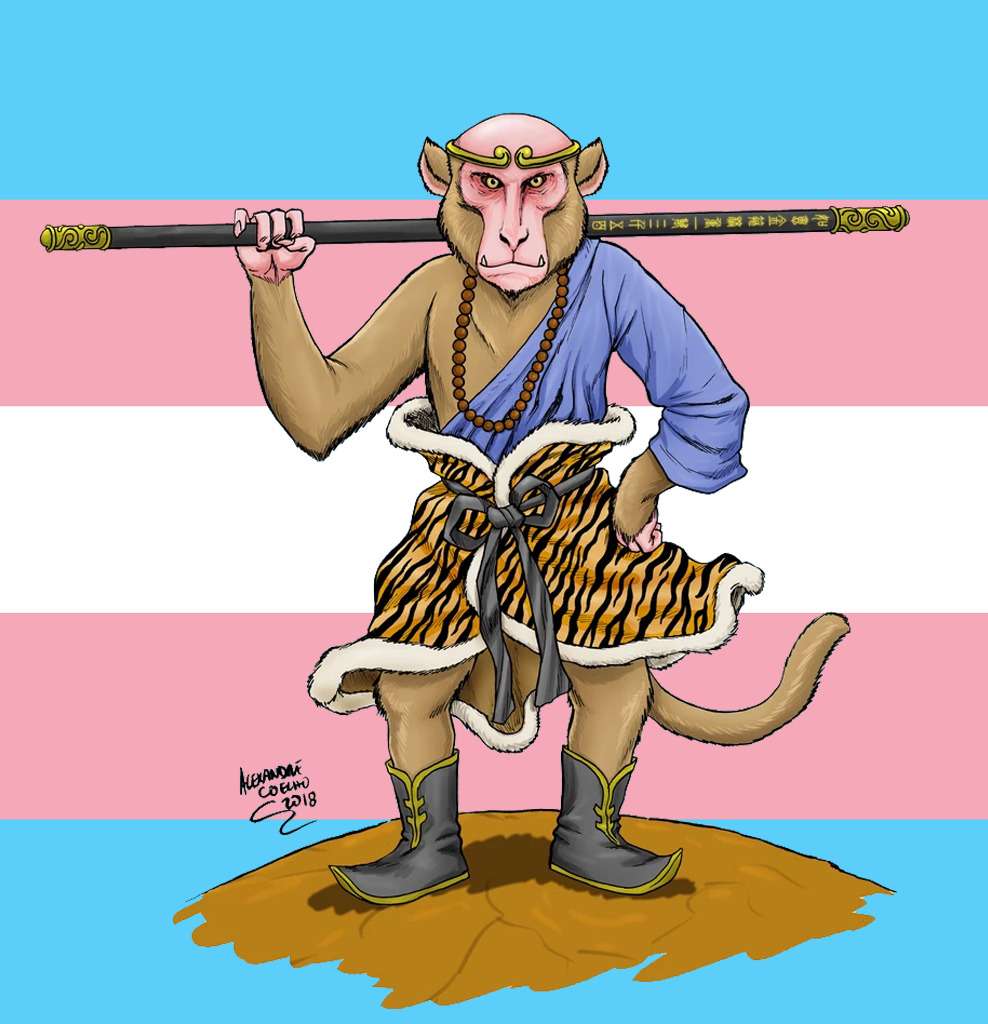
The notion that Sun Wukong (孫悟空) is transgender (fig. 1) became popular on English-speaking social media sometime around 2022. The central idea appears to be that the Monkey King, or I should say “Monkey Queen,” was originally born a woman but magically changes to a trans-man sometime after learning the art of transformation. Whether this is true or not has two possible answers:

1) If you or a loved one are trans, identify with Monkey’s ability to transform his body, and choose to personally interpret the character or portions of his story as an allegory for transness, then yes Sun Wukong is trans.

2) Historically and canonically speaking? No.

In this article, I will present common arguments (A) in favor of a trans Monkey King that I’ve seen on social media. I will also introduce counterarguments (CA) supported by historical oral, published, and pictorial evidence that calls any claims of canonical proof into question. If I don’t have a particular counterargument in mind, I will simply post a comment (C).

Before continuing, I want to expressly state that this piece was written for two kinds of people: 1) Those who might openly claim that Sun Wukong is canonically trans; and 2) Those who don’t know enough about the character’s history or Journey to the West (Xiyouji西遊記; “JTTW” hereafter) in general and might be swayed by seemingly knowledgeable online comments. It does not pertain to those who already personally interpret Monkey as trans and/or don’t care about canon because they were first exposed to him via movies, TV shows, video games, comic books, etc.

General readers will certainly find this article interesting as it features a lot of lesser-known historical information about the simian immortal.

Fig. 1 – An accurate Sun Wukong standing in front of the trans flag (larger version). The base drawing is by my friend Alexandre Palheta Coelho (instagram and deviantart). It was originally posted on this article.

Table of Contents

1. Opening Statement

If someone claims that the Monkey King appearing in the 1592 edition of JTTW is canonically female-to-male (FTM) trans, or they state the novel hints that he is without openly admitting that this is their own personal interpretation, that person, whether they realize it or not, is not telling you the whole truth. I don’t think they are doing this maliciously, though. It’s perfectly natural for people to want to see some of themselves in their favorite heroes. After all, who wouldn’t want to be an immortal rage wizard who can fly around the cosmos, transform into anything, lift mountains, and beat up gods and devils? I can see how it might be attractive to a trans youth to have the power to push back against authorities that wrongly vilify and strip them of their human rights. Therefore, in that sense, I think I understand why the idea of a trans Sun Wukong is so popular. But having said that, I should highlight that anyone who goes beyond an allegorical reading of the novel by touting the reality of Monkey’s transness is either unaware of the character’s historical development or is willfully ignoring it.

2. Arguments and Counterarguments

2.1. Gender Neutral Terms

A: Ta (他; commonly “him”) and wang (王, commonly “king”) [1] are historically “gender neutral terms” and, therefore, can be used to refer to Sun Wukong as a woman.

C: These are indeed gender neutral terms in dynastic material. Here are two examples from the 1592 JTTW: 1) Wang (王) appears in the royal title of the “Queen Mother” (Wangmu niangniang, 王母娘娘), the high-ranking Daoist goddess who owns the immortal peach groves; and 2) Ta (他) is used to refer to the female Bodhisattva Guanyin (觀音). Part of a descriptive poem in chapter eight reads: “She is the merciful lord of the Potalaka Mountain” (Ta shi Luojiashan shang Cibei zhu, 是落伽山上慈悲主) (Wu & Yu, 2012, vol. 1, p. 206).

However, the gender neutral status of these terms do not by themselves constitute evidence that the Monkey King is a woman.

2.2. Matriarchal Primate Society

A: Real world monkey troupes are matriarchal, so it would make more sense for Sun Wukong to be a woman.

CA: Real world biological concepts don’t mesh well with religious mythology. For example, Monkey is born from stone, and he later attains his authority through a test of bravery by jumping through a waterfall. So where does the primate matriarchy fit into this? Also, in chapter 11 of the 13th-century oral version of JTTW (see here and here), Sun’s antecedent, the “Monkey Pilgrim” (Hou xingzhe, 猴行者), explains that prior to becoming the primate monarch, he had been exiled to the Mountain of Flowers and Fruit in the distant past for stealing immortal peaches from the Queen Mother’s heavenly garden (Wivell, 1994, p. 1195). It’s important to note that the tale presents him as a supremely ancient immortal, one who has seen the Yellow River dry up nine times (Wivell, 1994, pp. 1182-1183). Therefore, it’s not a stretch to suggest that his position as the Monkey King is related to his divinity. So I ask again: Where does the primate matriarchy fit into this?

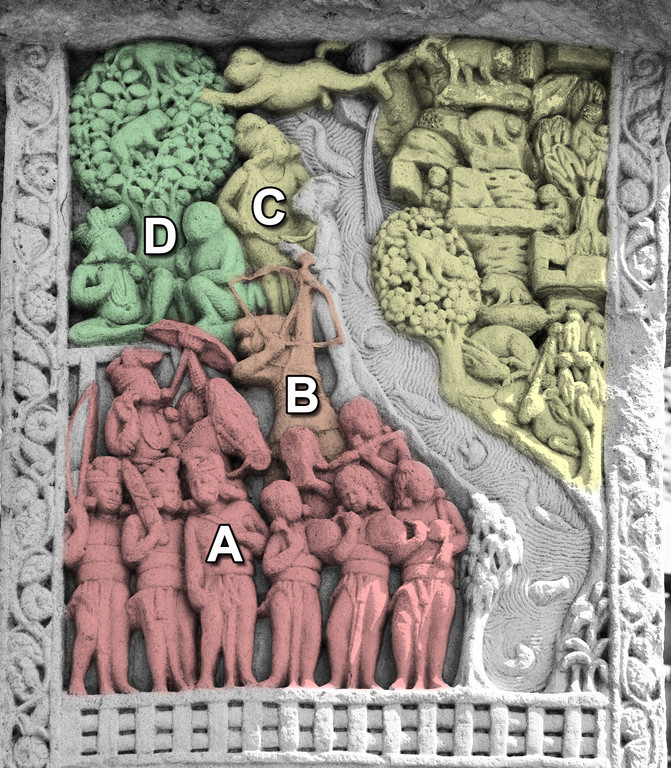
Most importantly, mythic stories about male monkey monarchs do exist. Two such characters are Vali/Bali (Sk: वाली) and Sugrīva (Sk: सुग्रीव) from the Hindu epic Rāmāyaṇa (Sk: रामायणम्, c. 5th century BCE). Another is the Mahākapi (Sk: महाकपि; lit: “Great Monkey,” c. 2nd century BCE), an Indian Buddhist jataka tale about the Buddha’s past life as a king of monkeys. One 2,000-year-old carving even depicts him with testicles (fig. 2). These few examples alone challenge the idea that monkey troupes have to be matriarchal in a mythic setting.

In fact, I suggest in this article that the Mahākapi tale influenced the 13th-century oral JTTW in several ways: 1) The Great Monkey is described as the chief of his tribe, and one 3rd-century Chinese version of the story even refers to him as the “Monkey King” (Mihou wang, 獼猴王). This is a likely source for the Monkey Pilgrim’s position as the primate monarch; 2) The Great Monkey leads 80,000 monkeys. The 3rd-century Chinese version changes this number to 500 (wubai, 五百), while the later Monkey Pilgrim leads 84,000 (bawan siqian, 八萬四千). But all three numbers are used in Buddhism to refer to large numbers of things. In the case of the respective Indian and Chinese versions, the 80,000/500 monkeys are said to be the past lives of Buddhist monks. But most importantly, the Chinese term for 80,000 (bawan, 八萬) is considered shorthand for 84,000 (bawan siqian, 八萬四千), showing a possible connection between the numbers of monkeys in the Indian original and the 13th-century oral JTTW; 3) The Great Monkey and his tribe live in or around a mountainous, fruit-bearing tree. This could be one of several sources for the Mountain of Flowers and Fruit (see note #4 below for another); and 4) The 3rd-century Chinese version sees the Great Monkey steal from the imperial fruit garden of a human monarch. This could be one of several sources for the Monkey Pilgrim stealing immortal peaches from the Queen Mother’s heavenly garden.

(On a related note, see this article for the many parallels shared between the 1592 Sun Wukong and the historical Buddha.)

Fig. 2 – The “Great Monkey” carving from the western torana at Sanchi (c. 1st century BCE/CE) (larger version). He is the uppermost yellow figure reaching for the green tree. Take note of his testicles. The colored and labeled elements are used in my article to describe this “continuous narrative” scene.

2.3. Feminine Title

A: Sun Wukong calls himself the “Handsome Monkey King” (Meihou wang, 美猴王), but the character for handsome, “mei (美),” traditionally means “beautiful.” Therefore, it would make more sense for Monkey to call themself beautiful if they were a woman.

CA: I think that there is a much better explanation. Recall that the 1592 JTTW depicts our hero as an ugly creature. For instance, part of a descriptive poem in chapter 44 reads:

A bumpy brow, and golden eyes flashing;
A round head and a hairy face jowl-less;
Gaping teeth, pointed mouth, a character most sly;
He looks more strange than thunder god
[…] (Wu & Yu, 2012, vol. 2, p. 276).

磕額金睛晃亮,圓頭毛臉無腮。咨牙尖嘴性情乖。貌比雷公古怪。…

In fact, Sun’s association with being ugly goes back centuries. For example, writing in the 1250s, the Song-era poet Liu Kezhuang (劉克莊, 1187–1269) used Monkey as a metaphor to describe his own failing appearance:

A back bent like a water-buffalo in the Zi stream,
Hair as white as the silk thread issued by the “ice silkworms”,
A face even uglier than Hou xingzhe [“Monkey Pilgrim”] (emphasis added),
Verse more scanty than even He Heshi (Dudbridge, 1970, p. 46).

背傴水牛泅磵髪白氷蠶吐絲貌醜似猴行者詩痩於鶴何師

Therefore, the primate monarch definitely is not “handsome” or “beautiful.”

I suggest instead that Sun refers to himself as mei (美) because of his egotistical personality. He is after all an allegory for the Monkey Mind. This same overinflated sense of self eventually leads him to challenge the primacy of the Jade Emperor (Yuhuang dadi, 玉皇大帝). Monkey’s self-conceit is best illustrated by the rebellious poem that he recites to the Buddha in chapter seven. The latter part reads:

[…]
In Divine Mists Hall none should long reside,
For king may follow king in the reign of man.
If might is honor, let them yield to me.
He only is hero who dares to fight and win!”(Wu & Yu, 2012, vol. 1, p. 193).

[…]
靈霄寶殿非他久,歷代人王有分傳。
強者為尊該讓我,英雄只此敢爭先。

(See the 08-09-2023 and 09-27-23 updates below for another reason why he might have been called Meihou wang (美猴王).)

2.4. Etymology of Surname

A: In chapter one, the Patriarch Subodhi (Puti zushi, 菩提祖師) relies on Monkey’s appearance to derive a surname for them. Some of the etymology mentions feminine concepts, adding support to the idea that Sun Wukong was originally a woman:

The Patriarch laughed and said, “Though your features are not the most attractive, you do resemble a pignolia-eating monkey (husun [猢猻]). This gives me the idea of taking a surname for you from your appearance. I intended to call you by the name Hu [猢]. If I drop the animal radical [犭] from this word, what’s left is a compound made up of the two characters, gu [古] and yue [月]. Gu means aged and yue [“moon”] denotes feminine yin energy [陰], but aged yin cannot reproduce (emphasis added). Therefore, it is better to give you the surname of Sun [猻]. If I drop the animal radical from this word, what we have left is the compound of zi [子] and xi [系]. Zi means a boy and xi means a baby, and that name exactly accords with the fundamental Doctrine of the Baby Boy. So your surname will be ‘Sun’” (Wu & Yu, 2012, vol. 1, p. 115).

祖師笑道:「你身軀雖是鄙陋,卻像個食松果的猢猻。我與你就身上取個姓氏,意思教你姓『猢』。猢字去了個獸傍,乃是個古月。古者,老也;月者,陰也。老陰不能化育,教你姓『猻』倒好。猻字去了獸傍,乃是個子系。子者,兒男也;系者,嬰細也,正合嬰兒之本論。教你姓『孫』罷。」

CA: Our hero’s association with the surname Sun predates the 1592 JTTW by centuries, appearing as early as an early-Ming JTTW zaju play. Therefore, Subodhi’s etymological breakdown is just an excuse to change husun (猢猻), one of the historical terms for the macaque, into Sun. It’s also an excuse to tie the surname to historical Daoist longevity practices.

Also, Sun (孫) has been used as a surname for monkeys associated with Buddhist monks since at least the Tang Dynasty (618–907). According to the Tang poet Li Shen (李紳, d. 846):

There are many monkeys in the [Lingyin and Tianzhu] monasteries. They are called the Sun group (or the group of Sun, “Sun tuan”). They have been reared there for a long time (Shahar, 1992, pp. 202-203).

2.5. Stable Monkeys

A: It was a common historical practice to place female monkeys in horse stables because their menstruation was believed to ward off equine sickness (see my past article for a source). Hence, Sun’s time as the heavenly stable master supports the idea that they were originally a woman.

CA: Just because something influenced a character in a story doesn’t mean that thing and all of its traits become the character. That’s like saying Son Goku is Superman just because Dragon Ball Z-era Akira Toriyama borrowed the “alien baby sent to earth” element from the Man of Steel’s mythos. But that isn’t the case since each character and their respective stories have definable differences. And it’s the same for the female stable monkeys and Sun Wukong.

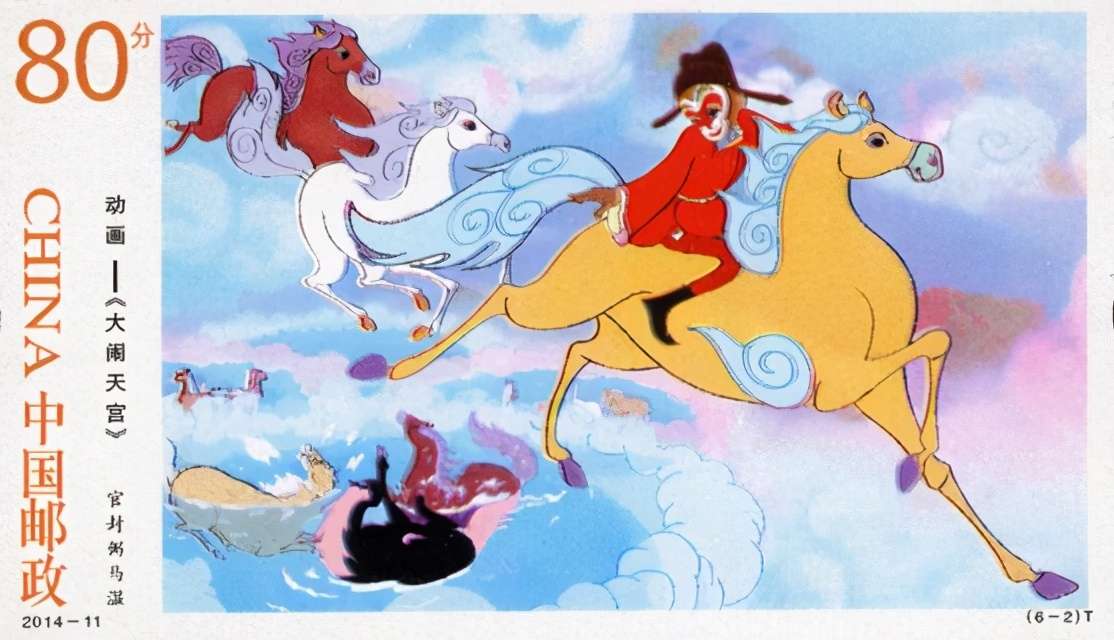
After becoming the Bimawen (弼馬溫) (fig. 3), Sun dotingly cares for nearly 1,000 horses day and night, making sure that they are all well-fed, exercised, and rested. At no point does the 1592 JTTW even hint that their health is in any way tied to menstruation. But having said that, I suggest the reason that Monkey gets so upset when people call him Bimawen, what Yu (Wu & Yu, 2012) translates as “BanHorsePlague” (vol. 1, p. 354), is because it references the homophonous term for the historical practice, Bimawen (避馬瘟, lit: “avoid the horse plague”). Surprisingly, the latter phrase does not appear in the novel.

Fig. 3 – A 2014 stamp featuring a scene from the classic 1960s animation Havoc in Heaven in which Sun Wukong serves as the Bimawen (larger version). Image found here.

3. Final Counterarguments

3.1. Historical Male Depictions

I don’t know of any historical oral, published, or pictorial sources that portray or describe Sun as a woman in their regular form. To my knowledge, he has always been depicted as a man.

I won’t pretend to know the full extent of our hero’s history, but I always strive to learn more about the subject. Just look at the following as a brief survey.

3.1.A. Art

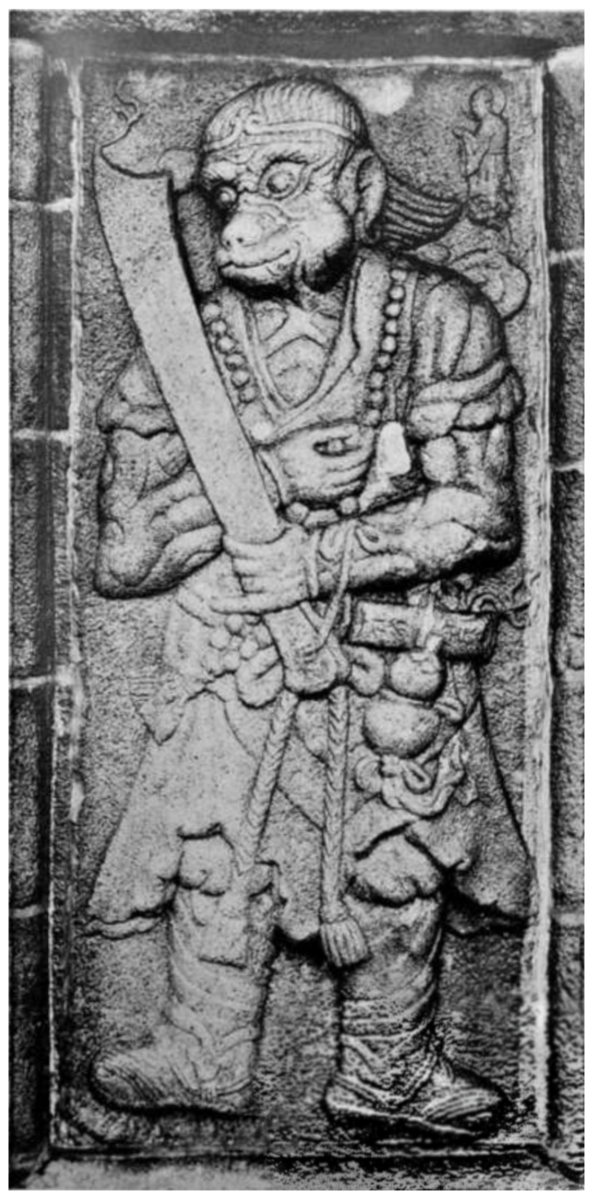
The earliest art depicting the aforementioned Monkey Pilgrim shows him as either a simian cleric or soldier accompanying the monk Tripitaka. But I think the best example to present for this discussion is the 13th-century Kaiyuan Temple stone pagoda carving (fig. 4), which portrays him as a muscular, sword-wielding protector deity.

Fig. 4 – The Kaiyuan Temple stone pagoda carving of the Monkey Pilgrim (1237) (larger version).

3.1.B. Oral Literature

The Story of How Tripitaka of the Great Tang Procures the Scriptures (Da Tang Sanzang qujing shihua, 大唐三藏取經詩話), the aforementioned 13th-century oral version of JTTW, first introduces the Monkey Pilgrim as a “scholar dressed in a white robe” (Baiyi xiucai, 白衣秀才) (Wivell, 1994, p. 1182). The word translated here as scholar, “xiucai” (秀才; lit: “cultivated talent”), was “[f]rom antiquity a categorical rubric under which talented men were nominated to be considered for official appointments” (Hucker, 1985, p. 284). During the Song dynasty (960–1279), when this tale was first recorded, the xiucai was an informal term for candidates of the metropolitan-level exams (Hucker, 1985, p. 284). That is to say they were educated commoners who had yet to receive an official office. Dudbridge (1970) suggests that disguising oneself as a traveling, white-robed scholar would have then “conferr[ed] anonymity on the wearer” (p. 32). [2] This means that Monkey is likely using the disguise to walk among mortals without them realizing his divine nature.

Dudbridge (1970) also notes that this disguise was used by male characters in later published media (p. 32 n. 1). These examples instead use “xiushi” (秀士; lit: “cultivated scholar”). For instance, in chapter 81 of the Water Margin (Shuihu zhuan, 水滸傳, c. 1400), a literary version of Song Emperor Huizong (宋徽宗) dresses this way in order to meet in secret with his favorite sex worker:

Accompanied by a young eunuch, the sovereign arrived through the secret tunnel at the rear door of the courtesan’s house. He was dressed in the white garb of a scholar (emphasis added) (Shi & Luo, 1993/2021b, p.1715).

只見道君皇帝引着一個小黃門,扮做白衣秀士,從地道中逕到李師師家後門來。(Shi & Luo, 1975/2021b, p. 1104)

This male disguise even carried over into the 1592 JTTW. For example, in chapter ten, the Dragon King of the Jing River (Jinghe Longwang, 涇河龍王) takes on such a form to investigate a fortune teller with dangerously accurate predictions that threaten the fish of his kingdom:

[H]e abandoned his sword and dismissed the clouds and the rains. Reaching the river bank, he shook his body and changed into a white-robed scholar (emphasis added) (Wu & Yu, 2012, vol. 1, p. 239).

龍王 … 遂棄寶劍,也不興雲雨,出岸上,搖身一變,變作一個白衣秀士

3.1.C. Zaju Play

The early-Ming Journey to the West zaju play (Xiyou ji zaju, 西遊記雜劇) contains many familiar episodes that would come to appear in the 1592 JTTW. [3] But despite these parallels, there are many interesting differences. For example, in act nine (of 24), Sun Wukong is said to be the brother of several divine siblings:

We are five brothers and sisters: my older sister is the Venerable Mother of Mount Li, my younger sister is the Holy Mother Wuzhiqi, my older brother is the Great Sage Equaling Heaven, I myself am the Great Sage Reaching Heaven (emphasis added), and my younger brother is the Third Son Shuashua (based on Dudbridge, 1970, p. 110).

小聖弟兄、姊妹五人,大姊驪山老母,二妹巫枝祗聖母,大兄齊天大聖,小聖通天大聖,三弟耍耍三郎。

(That’s right! The play refers to Monkey as the “Great Sage Reaching Heaven” instead of “… Equaling Heaven.”)

He also has a wife, a princess whom he had kidnapped from the “Country of the Golden Cauldron” (Jinding guo, 金鼎國) (Ning, 1986, pp. 63-66). This portion of the play draws directly from a genre of Han to Song-era tales in which magic apes kidnap young maidens in order to rape and impregnate them. [4]

The most apparent differences are the addition of bawdy elements like sex, cursing, and dirty jokes by the author, the 15th-century Mongol playwright Yang Jingxian (杨景賢). For instance, act 18 sees the pilgrims travel through the famous Woman Kingdom, where Sun, Zhu, and Sha all fall prey to temptations of the flesh. But whereas the latter two are successful in their sexual ventures, poor Monkey is struck by a bout of erectile dysfunction caused by the painful constricting of his headband:

Master, listen and I’ll tell you. There I was pinned down by a woman. My lustful nature was about to come forth, when suddenly the iron hoop on my head tightened, and the joints and bones up and down my whole body began to ache. The throbbing conjured up a bunch of vegetable names in my brain.

My head hurt so my hair stood up like radish-tops, my face turned as green as smartweed sprouts, my sweat beaded up like the moisture on an eggplant soaked in sauce, and my cock fell as limp as a salted cucumber (emphasis added). When she saw me looking for all the world like chives sizzling in hot oil, she came around, suppressed her itch and set me free (Ning, 1986, pp. 138-139).

聽行者告訴一遍:小行被一個婆娘按倒,凡心卻待起。不想頭上金箍兒緊將起來,渾身上下骨節疼痛,疼出幾般兒蔬菜名來:頭疼得髮蓬如韭菜,面色青似蓼牙,汗珠一似醬透的茄子,雞巴一似醃軟的黃瓜。他見我恰似燒蔥,恰甫能忍住了胡麻。他放了我

(Notice that ta (他) is used in the quote above to refer to the girl. Refer back to section 2.1 for a reminder of the significance.)

Later in act 19, Monkey attempts to seduce Princess Iron Fan (Tieshan gongzhu, 鐵扇公主) in order to gain access to her magic Banana leaf fan. Sun does this by reciting a poem in which he makes a veiled allusion to his penis being the right size for her vagina:

The disciple’s not too shallow,
the woman’s not too deep (emphasis added).
You and I, let’s each put forth an item,
and make a little demon
(Ning, 1986, p. 141).

弟子不淺,娘子不深。我與你大家各出一件,湊成一對妖精。

When this plan fails and the Princess threatens him with her sword, Sun angrily explains that the supernatural durability of his body and penis renders him impervious to physical harm:

Why this lowdown wench has no manners at all! I am the Lord of the Crimson Cloud Cavern, the Great Sage [Reaching Heaven]! I plundered Laozi’s gold Pill of Immortality, and have endured so many alchemical transformations that my muscles are brass, my bones iron, my eyes fire, my pupils gold, my asshole lead and my prick is pewter. Why should I fear a steel [sword] slicing off my pizzle? (emphasis added) (Ning, 1986, p. 142).

這賊賤人好無禮。我是紫雲羅洞主,通天大聖。我盜了老子金丹,煉得銅筋鐵骨,火眼金睛,金俞石屁眼,擺錫雞巴。我怕甚剛刀剁下我鳥來?

I want to highlight that this play did not influence the story cycle; it only reflects characters and episodes that were common to the cycle at that time. The bawdy elements were solely added to spice up the tale, making it more entertaining for zaju audiences. Therefore, this sex-crazed, dirty-mouthed version of the Monkey King should be considered a separate entity from his literary counterpart in the 1592 JTTW. However, I have included him here because the play clearly establishes that the character is a man.

3.1.D. Other Published Literature

A Supplement to the Journey to the West (Xiyoubu, 西遊補, 1640) is an unofficial sequel to the 1592 JTTW with a trippy, time-jumping story that mentions Sun Wukong fathering children with a woman. The first reference to his offspring appears in chapter 13 when actors in a royal play describe an alternate timeline where our hero had settled down:

His wife is so beautiful, his five sons so dashing. He started out as a monk, but came to such a good end! Such a very good end! (Dong, Lin, & Schulz, 2000, p. 114).

你看他的夫人這等標致,五個兒子這等風華。當初也是個和尚出身,後來好結局,好結局!

Later, in chapter 15, Monkey meets one of these sons, King Pāramitā (Boluomi wang, 波羅蜜王), on the battlefield. This general recounts his family history to the stranger, revealing that, although he’s never met his father (jiafu, 家父), he’s the son of the Great Sage and the Rakshasi (Luocha nu, 羅剎女), Princess Iron Fan (Dong, Lin, & Schulz, 2000, pp. 123-124). In addition, he suggests that he was conceived during an event from chapter 59 of the original novel:

[Sun Wukong] changed into a tiny insect and entered my mother’s belly. He stayed there a while and caused her no end of agony. When my mother could no longer bear the pain, she had no choice but to give the Banana-leaf Fan to my father, Monkey. [5] When my father, Monkey, got the Banana-leaf Fan, he cooled the inferno at Flaming Mountain and left. In the fifth month of the next year, my mother suddenly gave birth to me, King Pāramitā. Day by day I grew older and more intelligent. If you think about it, since my uncle [the Bull Demon King] and mother had never been together, and I was born after my father, Monkey, had been inside my mother’s belly, the fact that I am his direct descendant is beyond dispute (Dong, Lin, & Schulz, 2000, p. 124).

後來又變作小蟲兒鑽入家母腹中,住了半日,無限攪炒。當時家母認痛不過,只得將芭蕉扇遞與家父行者。家父行者得了芭蕉扇,扇涼了火焰山,竟自去了。到明年五月,家母忽然產下我蜜王。我一日長大一日,智慧越高。想將起來,家伯與家母從來不合,惟家父行者曾走到家母腹中一番,便生了我,其為家父行者之嫡系正派,不言而可知也。」

The novel doesn’t elaborate on how the other four sons are conceived. But in the case of Pāramitā, Sun’s presence in Iron Fan’s stomach acts as sperm fertilizing an egg.

Anyways, it should be evident from the examples presented above that the Monkey King was portrayed or described in his regular form as a man throughout the long course of his character development.

This by itself should put the idea of a canonically trans Sun Wukong to rest, but there is one more counterargument that I think is even stronger.

3.2. Spiritual Gender Transitions in Buddhism

Buddhist literature actually includes instances of girls or women transforming into men upon enlightenment or rebirth. [6] The former is best exemplified by the “Dragon Girl” (Longnu, 龍女) from chapter 12 of the Lotus Sutra (Miaofa lianhua jing, 妙法蓮華經; a.k.a. Fahua jing, 法華經, c. 3rd century) (fig. 5), a work mentioned in the 1592 JTTW six times. She is first introduced to an assembly of Buddhist deities as the eight-year-old daughter of the Dragon King Sāgara (Suojieluo longwang, 娑竭羅龍王) and one of an unfathomable number of dragonfolk enlightened by the Bodhisattva Mañjuśrī’s (Wenshu shili, 文殊師利) lessons on the Lotus Sutra. Her teacher describes her as a great student prodigy with a deep knowledge of Buddhist Law, as well as having many advanced spiritual achievements. But this upsets some among the assembly because the notion of a young girl approaching Buddhahood so quickly flies in the face of convention, which normally calls for untold aeons of severe austerities before one can achieve awakening. Her accomplishments are called into question at first, but everyone is appeased when she offers a priceless jewel to the Buddha, and he quickly accepts it as a symbolic gesture. Then:

The girl said [to the assembly], “Employ your supernatural powers and watch me attain Buddhahood. It will be even quicker than that!”

At that time the members of the assembly all saw the dragon girl in the space of an instant change into a man (emphasis added) and carry out all the practices of a bodhisattva, immediately proceeding to the spotless World of the south, taking a seat on a jeweled lotus, and attaining impartial and correct enlightenment. With the thirty-two features and the eighty characteristics [of a Buddha], he expounded the wonderful Law for all living beings everywhere in the ten directions (Watson, 1993, p. 188). [7]

女言:「以汝神力,觀我成佛,復速於此。」

當時眾會,皆見龍女忽然之間變成男子,具菩薩行,即往南方無垢世界,坐寶蓮華,成等正覺,三十二相、八十種好,普為十方一切眾生演說妙法。

This kind of spiritual gender transition was certainly known to the host of historical oral storytellers and author-compilers who contributed to the formation of the novel due to their vast shared knowledge of Buddhist and Daoist religion and lore. This is especially true given that the Lotus Sutra is even touted in the 13th-century oral version of JTTW. [8]

Therefore, if the Sun Wukong from the 1592 JTTW was originally intended to be trans, they would have been OPENLY portrayed as such, without the need for subtle hints, due to scriptural precedent. And the fact that he wasn’t makes this what I consider to be the most damning argument against a canonically trans Sun Wukong.

Fig. 5 – A frontispiece to a Song-era edition of the Lotus Sutra (larger version). Image found here.

4. Final Thoughts

I hope that anyone unfamiliar with the Monkey King’s history can now make an informed judgement about online comments making claims about his gender.

And for those who still might want to go beyond an allegorical reading of the novel, you need to answer two questions:

  1. Why did the 1592 JTTW hint that Sun Wukong is FTM trans despite him being depicted as a man for centuries?
  2. Why were said hints used in place of scriptural examples of spiritual gender transition?

Answering these questions will require evidence, not an interpretation. I’m honestly not sure what that evidence would be since the evidence against it is so overwhelming.

I would be willing to accept the “possibility” of a trans Sun Wukong, though, if anyone can find an analysis of the character by a pre-20th-century Chinese literary critic expounding the same view. Please do not misinterpret this as me saying that there were no trans people prior to the 20th century. I’m sure there have been many throughout history, and I’m sure the terms applied to or used by them in the past were wildly different from the ones used today. But without some kind of historical support, the reality of a canonically trans Monkey King, beyond a personal interpretation, is nothing more than a wish.


5. Updates

Update: 05-19-2023

It’s recently come to my attention that this article has upset some people, namely those who are aware of the Monkey King’s worship and those who disagree with the concept of transgender people. The first group needs to understand that, while a religious figure, Sun Wukong is far more widely known around the world as a literary figure. And since people primarily view him as a fictional character—one who is in the public domain, in fact—they are free to interpret the simian immortal however they see fit. This means that both the Monkey God and the literary Monkey King should be viewed as two separate entities.

For the second group, the trans identity is outside my area of research and personal experience. Therefore, I can’t really say anything about the subject that would affect your point of view. My advice would be to ignore political pundits and instead start a dialogue with someone in the trans community to understand their thoughts, feelings, and motivations.

I’ve also learned that my article has apparently been weaponized by some on discord in an attempt to invalidate the views of trans individuals who identify with Sun Wukong. I don’t like that my work is being used to harass people. I want to make it clear that this article was not written to attack the trans community. It was solely made to place Monkey in his correct historical context. My first concern as a student of JTTW is that the history of the novel and its characters are presented accurately. But I am fully aware that perceptions of popular characters can and do evolve over time. That’s why I mentioned in the opening that viewing Sun as trans is perfectly fine as long as it’s clear that this is a personal interpretation. Therefore, if you are a trans person and some troll presents my article as proof that your personal allegory is wrong, please have the confidence to tell them, “off you fuck.”


Update: 05-27-23

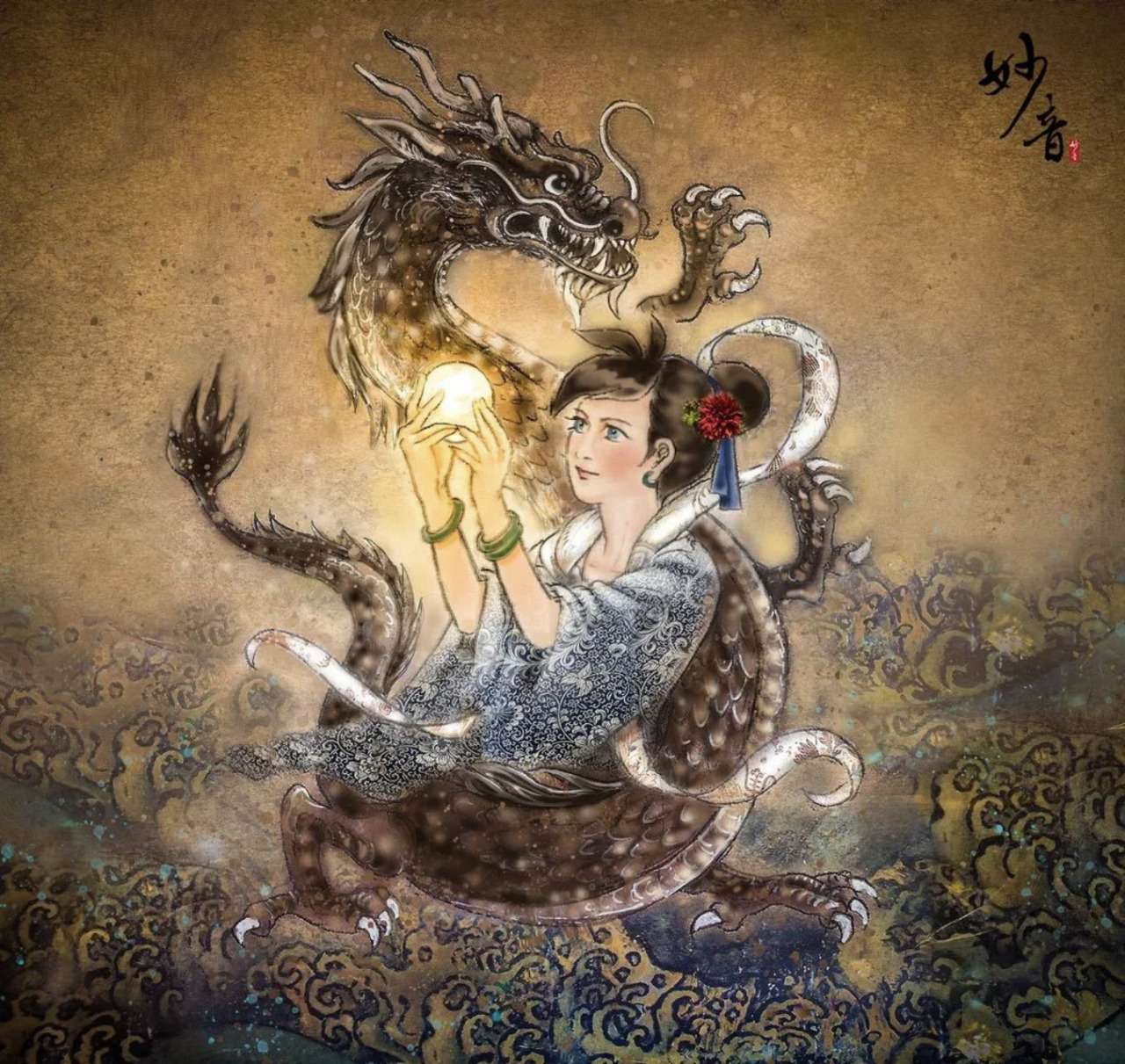
I found this lovely drawing of the Dragon Girl online (fig. 6). The image depicts her at the moment when she hands the Buddha the priceless jewel, just prior to transforming into a man.

Fig. 6 – A drawing of the Dragon Girl and the priceless jewel (larger version). Image found here.


Update: 08-09-23

It just occurred to me that another reason why Sun Wukong might be called Meihou wang (美猴王), or “Handsome or Beautiful Monkey King,” is because it’s a pun on mihou (獼猴), another word for macaque. The 1592 JTTW already includes a separate character named Mihou wang (獼猴王) in chapters three, four, and 41. And most importantly, even the Buddha’s past life as a king of monkeys is called Mihou wang (獼猴王). See the article below for more info.

A Brief Study of the Term Mihou (獼猴) in Journey to the West


Update: 09-27-23

It just dawned on me that Sun Wukong’s precursor, the Monkey Pilgrim” from the 13th-century JTTW, is also called Mihou wang (獼猴王). Chapter two refers to him as Huaguo shan ziyun dong bawan siqian tongtou tie’e Mihou wang (花果山紫雲洞八萬四千銅頭鐵額獼猴王, the “Bronze-Headed, Iron-Browed King of the Eighty-Four Thousand Monkeys of the Purple Cloud Grotto on the Mountain of Flowers and Fruits”) (Wivell, 1994, p. 1182).

This might lend support to the suggestion in my 08-09-23 update above.


Update: 01-03-2024

Apart from the Lotus Sutra, there is another way to make Sun Wukong a woman. The idea is a byproduct of my recent “How to Kill Sun Wukong” article. It details a ritual (from another famous vernacular novel) that secretly steals an immortal’s spirit, tethers it to a straw effigy, and then kills the target by shooting it with arrows. In that article, I introduced a story idea where Zhu Bajie and/or Sha Wujing could race to stop the ritual. But what if they failed and the Monkey King was killed?

The rite only terminates the immortal’s physical body. It doesn’t destroy the spirit. And since Wukong hasn’t yet achieved Buddha-Nature, meaning he is still subject to the wheel of rebirth, his spirit would report to the underworld for processing. He could definitely be transferred to a new reincarnation; however, considering the journey would still be ongoing, and the Tang Monk is always in trouble, heaven might rush to find our hero a new body. This actually happens to a minor character in the 1592 JTTW.

The ledgers of hell show that the deceased wife of a Tang official was fated to live a long life (i.e. she wasn’t supposed to be dead). Therefore, the underworld bureaucracy takes the timely passing of the Tang Emperor’s sister as an opportunity to force the soul of the official’s wife into the princess’ body. The best part is that she still retains her memories from her past life (Wu & Yu, 2012, vol. 1, pp. 268-269)!

Heaven might find the only suitable body that can contain Monkey’s soul is a recently deceased demoness (fox, yaksha, tree, etc.). [9] I imagine this would result in Sun Wukong being weaker, not because she’s now a woman, but because few beings can match Monkey’s original physical and magical might. This would naturally lead to her coming to terms with a loss of power. She could still be a very strong fighter, just not as strong as her past life. This might cause her to use more cunning when dealing with especially powerful evils encountered along the journey.

The choice is yours if you want to keep her a woman or have her become a male Buddha, like the Dragon Girl.


Update: 03-27-25

Another thing to point out is that Monkey’s physical body only changes when he turns into animals. When he mimics a humanoid figure, only his face changes, not his body. This is revealed when Sun is captured in chapter 75:

“Elder Brother,” said the third fiend,” didn’t you see him? He [Wukong disguised as a small demon] was giggling just now with his face half turned, and I saw for a moment a thunder god beak on him. When I grabbed him, he changed back immediately into his present looks.” He then called out: “Little ones, bring me some ropes.” The captains took out ropes immediately. Wrestling Pilgrim to the ground, the third fiend had him hog-tied before they hitched up his clothes to examine him. It became apparent at once that he was the BanHorsePlague all right! Pilgrim, you see, was capable of seventy-two kinds of transformation. If it was a matter of changing into a fowl, a beast, a plant, a utensil, or an insect, his entire body could be transformed. But when he had to change into another person, only his face but not his body could be transformed (emphasis added). When they lifted up his clothes, therefore, they saw a body full of brown fur, two red buttocks, and a tail (Wu & Yu, 2012, vol. 3, p. 367).

三怪道:「哥哥,你不曾看見他?他才子閃著身笑了一聲,我見他就露出個雷公嘴來。見我扯住時,他又變作個這等模樣。」叫:「小的們,拿繩來。」眾頭目即取繩索。

三怪把行者扳翻倒,四馬攢蹄綑住。揭起衣裳看時,足足是個弼馬溫。原來行者有七十二般變化,若是變飛禽、走獸、花木、器皿、昆蟲之類,卻就連身子滾去了;但變人物,卻只是頭臉變了,身子變不過來。果然一身黃毛,兩塊紅股,一條尾巴。

Since his body does not change, this would imply that his sex does not change either.

Again, I’m not trying to anger anyone; I’m just presenting information from the novel to make sure that it is depicted accurately.

On that note, I was told by a friend that some young trans folk were/had been upset with this article. Please write me (see “contact” above) if something about this piece bothers you. I’d like to get your perspective.

Notes:

1) One of the suggested earliest meanings for wang (王) is “big man,” and it was used as a title by the tribal chieftains that would evolve into Chinese emperors (Qi, 1991).

2) Yes, I am aware that Dudbridge (1970) also associates white robes with female demons (p. 32 n. 3). However, the Monkey Pilgrim is expressly associated with the white clothing of the historically male xiucai scholar candidates.

3) These similar episodes include the reincarnation of a heavenly being as Tripitaka, the murder of his father, Sun Wukong stealing immortal peaches from heaven and eventually being imprisoned under a mountain, his punishment with the restricting headband, the subjugation of Zhu Bajie (here and here) and Sha Wujing, the addition of a royal dragon-turned-white horse, the ordeal at Fire Mountain, the Country of Women, etc. This shows that the centuries-old story cycle was starting to become standardized by the 14th or 15th century.

4) One example is “A Supplement to Jiang Zong’s Biography of a White Ape” (Bu Jiang Zong Baiyuan Zhuan, 補江總白猿傳, c. late-7th century). In the story, a general’s young wife is kidnapped by a mysterious force, but he and his soldiers later find her living among a large harem of women in a mountain paradise. They tell the commander that their captor is a magic white ape who uses them night after night to fuel his Daoist sexual alchemy. The women also warn him and his men that they are no match for the beast’s great power, so the captives devise a plan that eventually leads to the primate’s death. In the end, the general learns that his wife is pregnant with the spirit’s child.

What’s interesting for the purposes of this blog is that the titular white ape shares many surprising parallels with the Sun Wukong from the 1592 JTTW. Both:

  • Are supernatural primates possessed of human speech.
  • Are one thousand-year-old practitioners of longevity arts.
  • Are masters of Daoist magic with the ability to fly and change their appearance.
  • Are warriors capable of single-handedly defeating an army.
  • Have a fondness for armed martial arts.
  • Have an iron-hard, nigh-invulnerable body immune to most efforts to harm them.
  • Have eyes that flash like lightning.
  • Live in verdant mountain paradises (like the Mountain of Flowers and Fruit).
  • Reside in caves with stone furniture (like the Water Curtain Cave).

5) See Wu & Yu, 2012, vol. 3, p. 129.

6) An example of the latter appears in Chapter 23 of the Lotus Sutra. Women are promised a male rebirth in paradise for having heard and practiced the scripture (Watson, 1993, pp. 287-288).

7) For the Dragon Girl’s story, see Watson, 1993, pp. 187-189.

8) The Lotus Sutra, which contains the story of the Dragon Girl, is given prominence in the 13th-century oral JTTW. It is painted as an important scripture, one even hailed in heaven. Chapter three sees the monk Tripitaka (referred to here by his historical name Xuanzang) give a detailed lecture on the sacred text:

The arhats said: “We thank the Master for coming to the [heavenly] palace today. Does the master excel in explaining sutras?” Xuanzang replied: “If it is a sutra, I can explain it. If it is not, I do not.” “Can you explain the Lotus Sutra?” the arhat asked. Xuanzang replied: “That’s easy.” (emphasis added)

Thereupon the five hundred arhats, the [king of heaven] Mahabrahma Devaraja, and in all a company of over a thousand gathered to listen to the sutra. Xuanzang recited flawlessly without pausing for breath. Like pouring water from a vase, he clarified the obscurities of the text (emphasis added). Everyone praised his marvelous delivery (Wivell, 1994, p. 1184).

羅漢問曰:「今日謝師入宮。師善講經否?」玄奘曰:「是經講得,無經不講。」羅漢曰:「會講《法華經》否?」玄奘:「此是小事。」當時五百尊者、大梵王,一千餘人,咸集聽經。玄奘一氣講說,如瓶注水,大開玄妙。眾皆稱贊不可思議。

9) I even considered Princess Iron Fan as the receptacle. However, she is said to having a positive fate in the novel: “In the end she, too, attained the right fruit [i.e. enlightenment] and a lasting reputation in the sutras” (Wu & Yu, 2012, vol. 3, p. 163). I think choosing her would muddy our Lady’s accomplishments.

Sources:

Dong, Y., Lin, S. F., & Schulz, L. J. (2000). The Tower of Myriad Mirrors: A Supplement to Journey to the West. Ann Arbor: Center for Chinese Studies, The University of Michigan.

Dudbridge, G. (1970). The Hsi-yu chi: A Study of Antecedents to the Sixteenth-Century Chinese Novel. Cambridge: Cambridge University Press.

Hucker, C. O. (1985). A Dictionary of Official Titles in Imperial China. Taipei: SMC Publishing Inc.

Ning, C. Y. (1986). Comic Elements in the Xiyouji Zaju (UMI No. 8612591) [Doctoral Dissertation, University of Michigan]. ProQuest Dissertations and Theses Global.

Qi, W. (1991). An Inquiry into the Original Meaning of the Chinese Character for King (wang). Chinese Studies in History, 25(2), 3-16, DOI: 10.2753/CSH0009-463325023

Shahar, M. (1992). The Lingyin Si Monkey Disciples and The Origins of Sun Wukong. Harvard Journal of Asiatic Studies, 52(1), 193-224. https://doi.org/10.2307/2719331

Shi, N., & Luo, G. (2021a). Shuihu zhuan (shang, zhong, xia) [Tale of the Water Margin (Vols. 1-3)]. Beijing: Renmin wenxue chubanshe. (Original work published 1975)

Shi, N., & Luo, G. (2021b). Outlaws of the Marsh (Vols. 1-4) (S. Shapiro, Trans.). Beijing: Foreign Languages Press. (Original work published 1993)

Watson, B. (Trans.) (1993). The Lotus Sutra. New York: Columbia University Press.

Wivell, C.S. (1994). The Story of How the Monk Tripitaka of the Great Country of T’ang Brought Back the Sūtras. In V. Mair (Ed.), The Columbia Anthology of Traditional Chinese Literature (pp. 1181-1207). New York: Columbia University Press.

Wu, C., & Yu, A. C. (2012). The Journey to the West (Vols. 1-4) (Rev. ed.). Chicago, Illinois: University of Chicago Press.

Yuebei xing, Daughter of the Monkey King

Last updated: 04-07-2026

Ever since I published my article “The Monkey King’s Children” (2021), I’ve noticed that people have fallen in love with Sun Wukong’s monstrous, magic skull-wielding daughter Yuebei xing (月孛星, “Moon Comet Star”) from Journey to the South (Nanyouji, 南遊記, c. 1570s-1580s, “JTTS” hereafter). For instance, search Tumblr and you will find plenty of art and short stories featuring her. The character does not appear in the original Journey to the West (Xiyouji, 西遊記, 1592) novel, so I’m honestly surprised that she has captured the imagination of so many.

Here, I would like to collect all that I’ve written about her, along with new information, into a single article. This piece discusses her brief character arc, her astrological origins, her appearance in other literature, and her religious iconography.

Table of Contents

1. Character Arc

In chapter 17 of JTTS, Sun Wukong is framed for once again stealing immortal peaches. The Jade Emperor threatens to remand him to the Buddha for punishment but is convinced to give him a month-long reprieve to find the true culprit. Monkey returns to the Mountain of Flowers and Fruit, and it is here, among his people, that the story briefly mentions three children, including sons Jidu (奇都, “Ketu”) and Luohou (羅猴, “Rahu”) and daughter Yuebei xing (月孛星, “Moon Comet Star”).

Sun eventually seeks out Guanyin, who reveals that the troublemaker is the rogue immortal Huaguang (華光). Returning home once more, Monkey’s news prompts his daughter to volunteer to battle the impostor. But her tribe simply pokes fun at her monstrous appearance. Yuebei Xing is said to have a crooked head with huge eyes and a broad mouth, coarse hands, a wide waist, and long legs with thunderous steps.

Sun travels with his daughter to Huaguang’s home of Mt. Lilou (Lilou shan, 離婁山) to provoke battle by chastising him for stealing the immortal peaches. Monkey strikes at him with his magic staff, causing Huaguang to deploy his heavenly treasure, a golden, triangular brick (sanjiao jinzhuan, 三角金磚). But Sun responds by creating untold monkey clones that not only confiscate the weapon but also overwhelm the immortal. Huaguang is seemingly defeated at this point; however, he manages to deploy one last treasure, the Fire Elixir (Huodan, 火丹). This weapon engulfs the Great Sage in heavenly flame (akin to the Red Boy episode), causing him to flee to the Eastern Sea. Yuebei xing then calls Huaguang’s name while holding her own magic treasure, a skull (kulou tou, 骷髏頭). The immortal is immediately stricken with a headache and stumbles back to his cave in a daze. Her weapon is said to be quite dangerous: anyone whose name is called will die within three days.

Huanguang’s religious teacher, the Flame King Buddha of Light (Huoyan wang guangfo, 火炎王光佛), then intervenes in order to sooth the situation between his disciple and the Great Sage. He promises to bring the rogue immortal to justice on the condition that Yuebei Xing withdraws her deadly magic. In the end, all parties are pardoned by the Jade Emperor, and Huaguang and Monkey become bond brothers (Yu, n.d.).

2. Astrological Origins

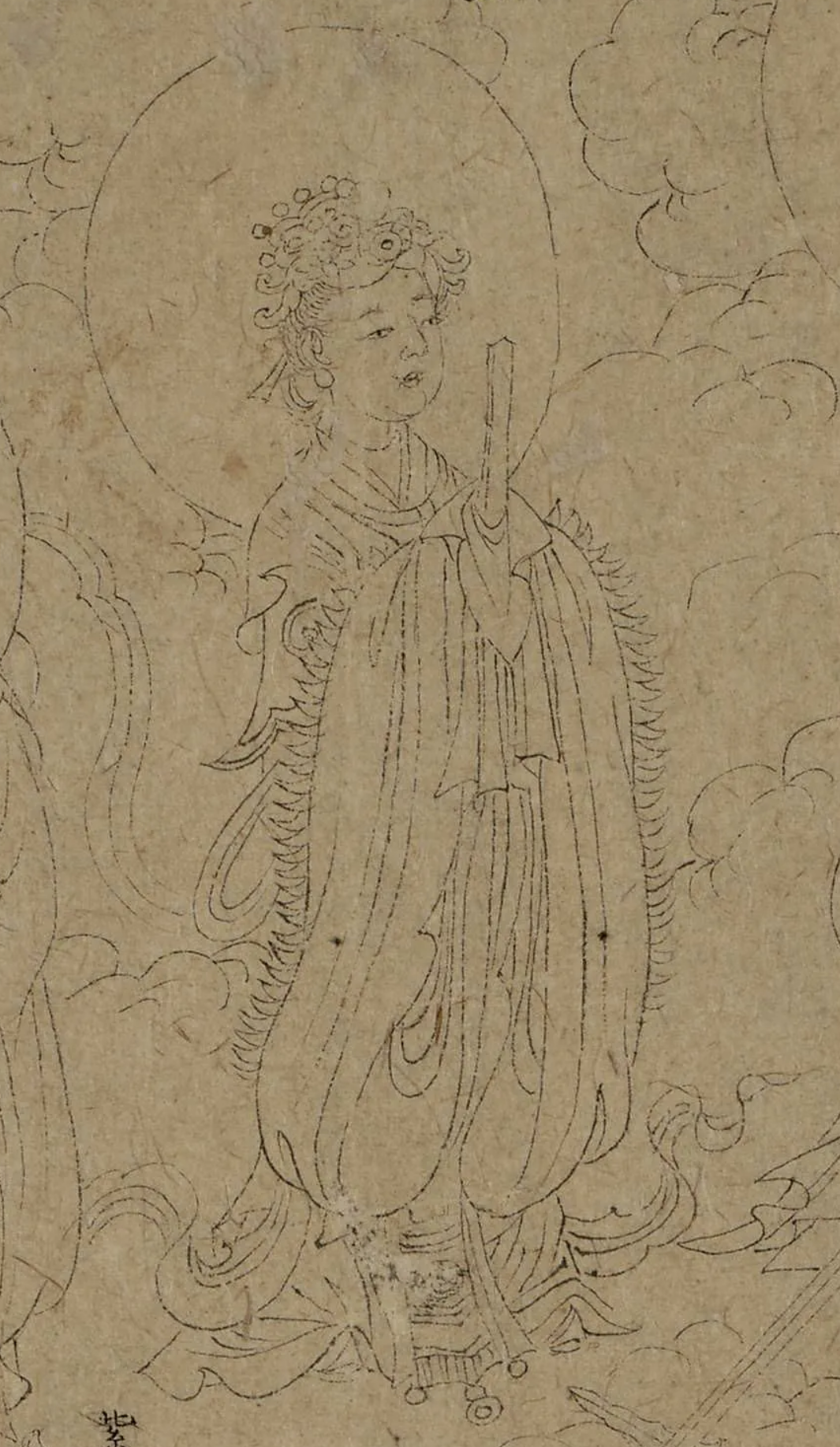
The Monkey King’s daughter is based on Yuebei xing, a shadowy planetary deity representing the lunar apogee, or the furthest point in the moon’s orbit. They are counted among the “Eleven Luminaries” (Shiyi yao, 十一曜) of East Asian astrology (fig. 1). These include the “Nine Planets” (Sk: Navagraha; Ch: Jiuyao, 九曜, “Nine Luminaries”) of Hindu astrology, namely the Sun, Moon, Mars, Mercury, Jupiter, Venus, Saturn, and Rahu and Ketu (Gansten, 2009), as well as Yuebei and another shadowy planet called Ziqi (紫氣/紫炁; “Purple Mist”) (Kotyk, 2017, p. 60). The latter two are mentioned in Daoist writings as early as the late-9th century (Kotyk, 2017, pp. 61-62).

Fig. 1 – A Chinese depiction of the Eleven Luminaries from the Ink Treasure of Wu Daozi (Daozi mobao, 道子墨寶, c. 13th century) (larger version). Yuebei xing is located first from the left on the top row. Image found here.

The late-Yuan to early-Ming scripture Secret Practice of the Primordial Lord Yuebei (Yuanhuang Yuebei mifa, 元皇月孛祕法; Secret Practice hereafter) describes them having two forms, one human and the other monstrous:

姓朱, 諱光, 天人相, 披髮裸體, 黑雲掩臍, 紅履鞋, 左手提旱魃頭, 右手杖劍, 騎玉龍, 變相青面獠牙, 緋衣, 杖劍, 駕熊。

Surnamed Zhu [Vermillion] with the honorific title of Guang [Luminous]. In the form of a celestial human, their hair is let down over their naked body. Their mass of black hair covers the navel. Red sandals. Their left hand holds the head of a drought demon. Their right hand holds a blade. They ride a jade dragon. In their modified form, [they display] a blue face with long fangs, a crimson garment and blade, while driving a bear (Kotyk, 2017, p. 62).

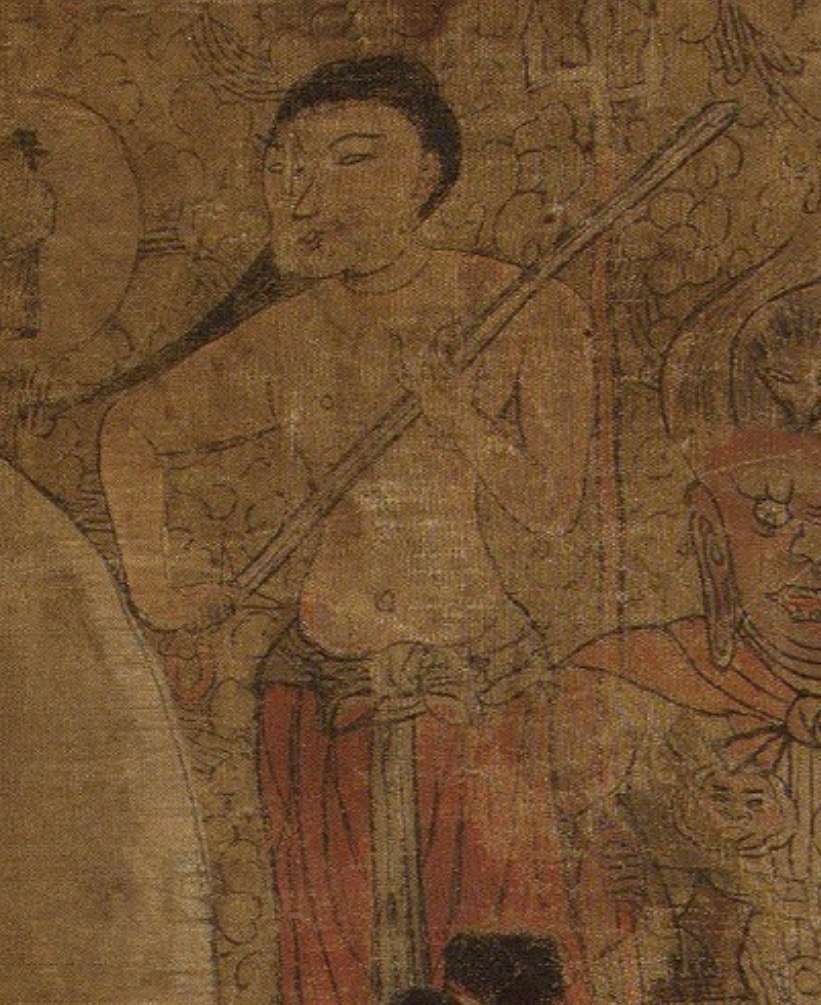
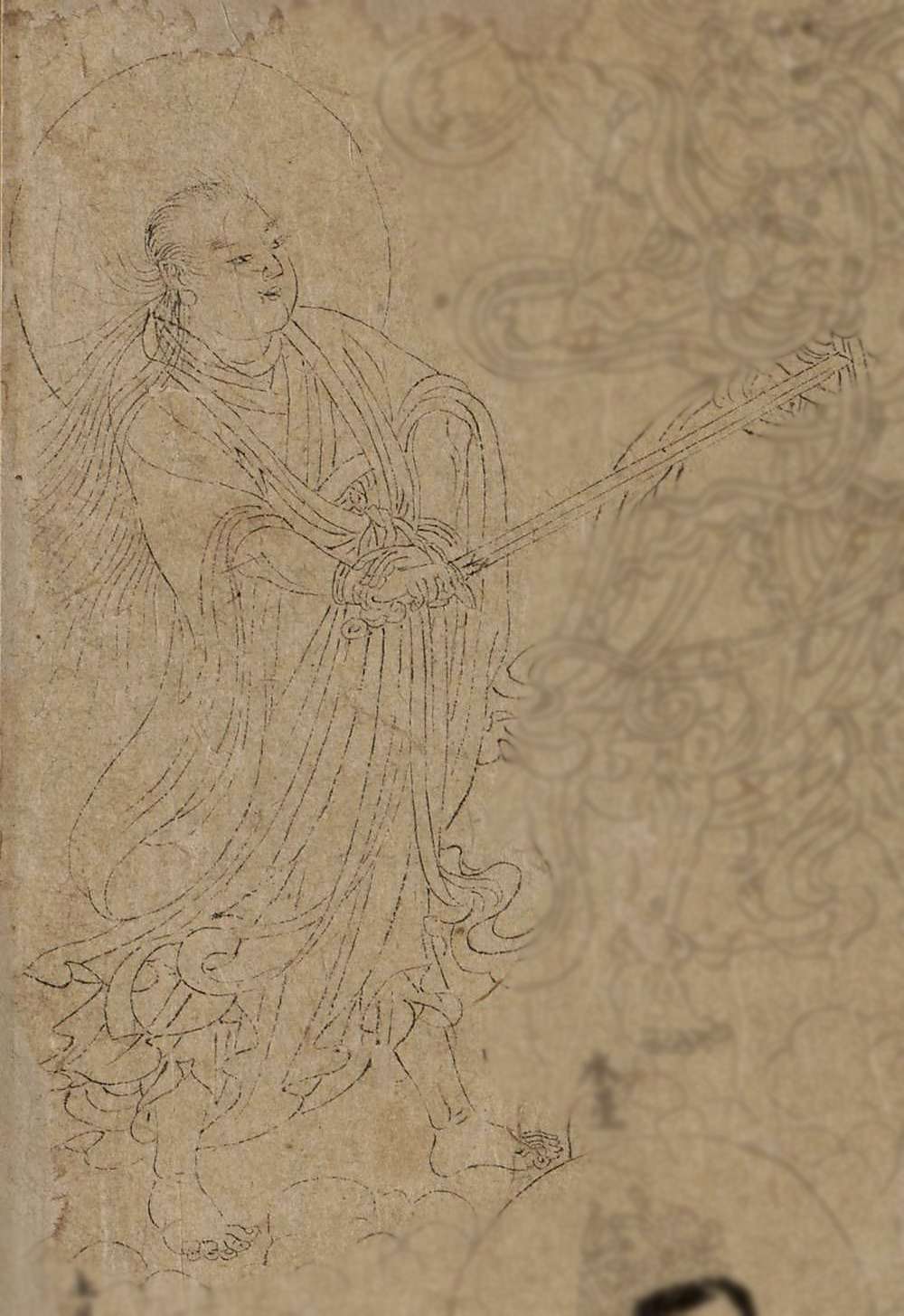
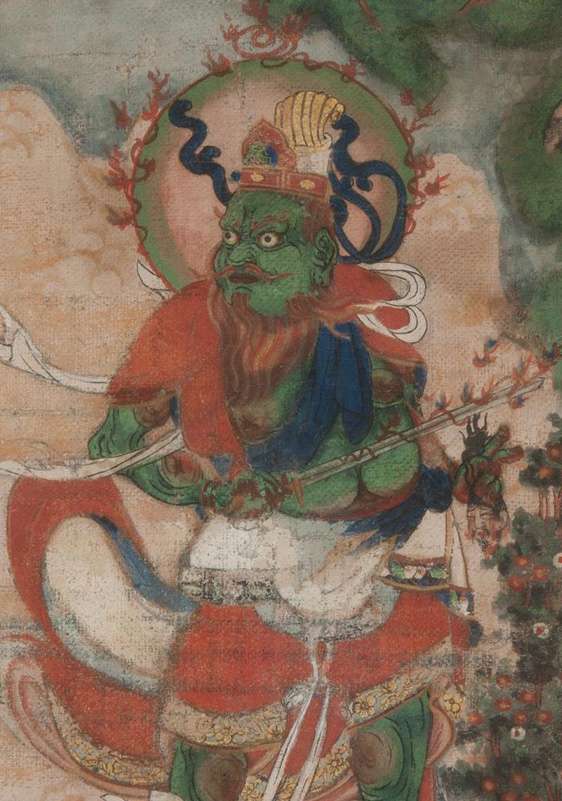
Both versions are known from late-Xixia dynasty (1038–1227) art. The first figure takes the form of a lightly clad or even topless woman with long, sometimes unkempt hair and red garments. One painting shows her with a bloody head in her right hand and a sword hanging from her hip (fig. 2). (Though, I should point out that she isn’t always depicted with the head in Xixia or Chinese art (fig. 3 & 4).) The second figure is much rarer and takes the form of a yaksha-like guardian with green skin, a fiery red beard and hair, and red garments. He wields a flaming sword in his right hand and a bloody head in the other (fig. 5). Thank you to Dr. Jeffrey Kotyk for bringing these to my attention.

Fig. 2 – Yuebei as a woman (larger version). Take note of the severed head in her right hand and the sword at her waist. Detail from a 13th to 14th-century Xixia painting in the Hermitage Museum. Fig. 3 – A topless Yuebei wielding only a sword (larger version). Detail from a 13th to 14th-century Xixia painting in the Hermitage Museum. Fig. 4 – Detail of Yuebei from the Chinese Ink Treasure of Wu Daozi (c. 13th century) (larger version). She too is holding only a sword. Take note of her lunar halo. Fig. 5 – Yuebei as a man (larger version). He clutches a small head in his left hand. Detail from a 13th-century Xixia painting in the Hermitage Museum.

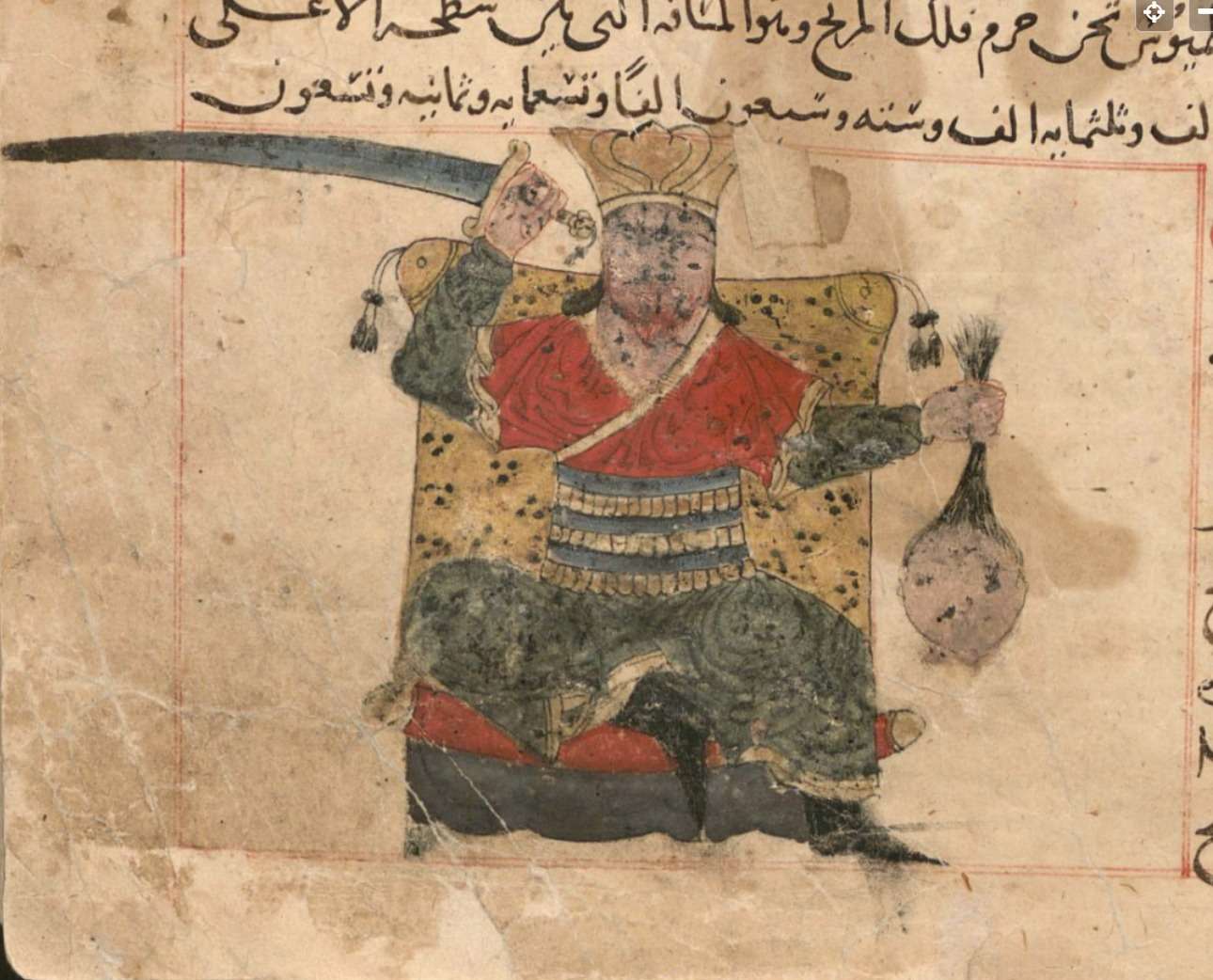
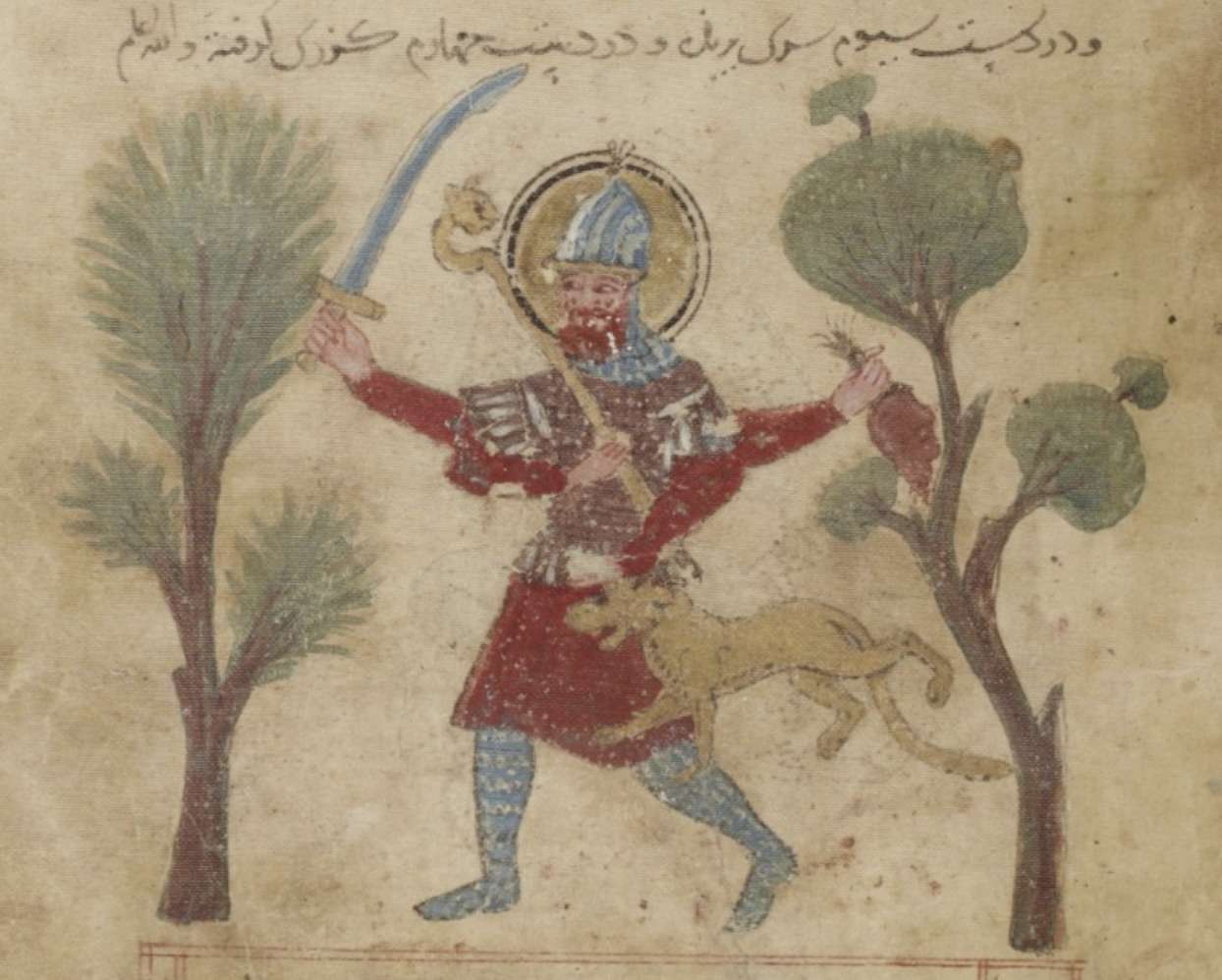
What’s interesting about the yaksha-male Yuebei is that his iconography is strikingly similar to Arabo-Persian depictions of al-Mirrīkh (Mars), who is also known for wielding a sword and head. Dr. Kotyk has directed me to several examples (fig. 6-8). Carboni (Carboni & MET, 1997) suggests that the war god’s imagery is connected to another deity:

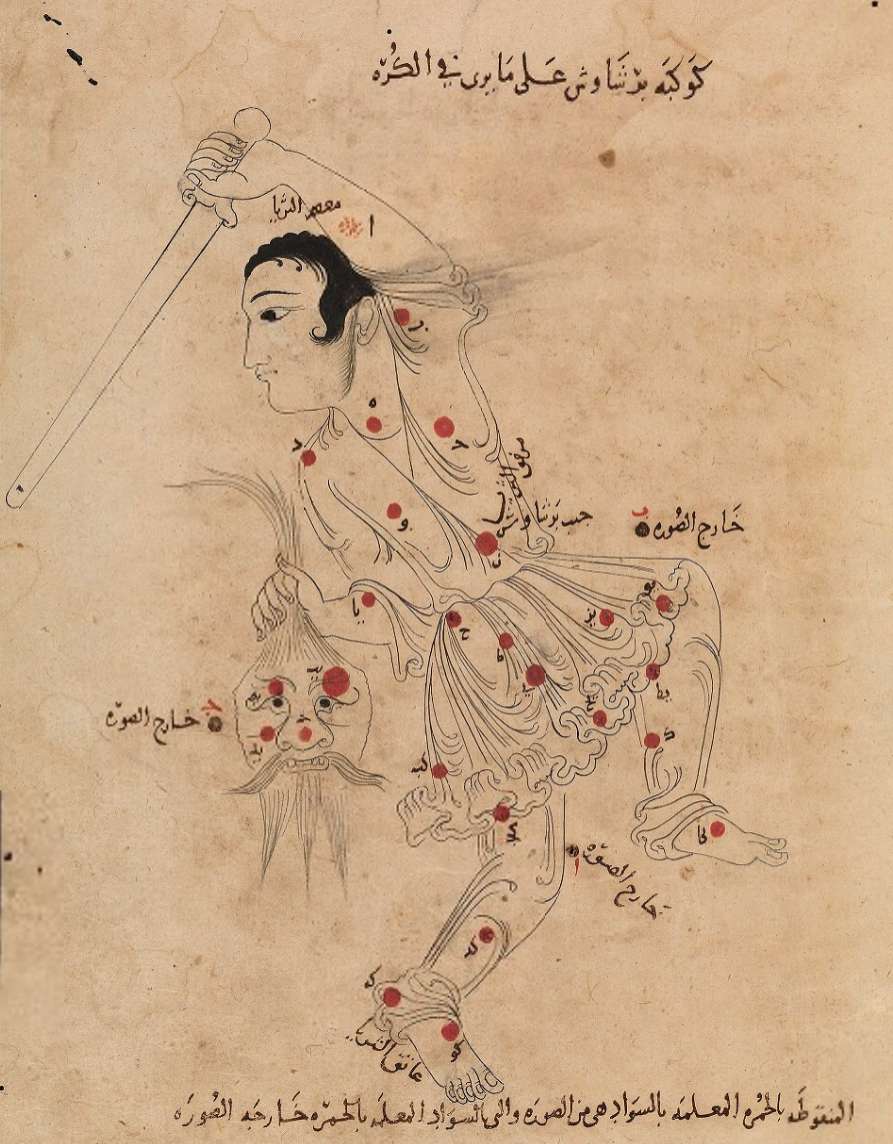
The bold iconography of the severed head underscores the warlike character of the planet but it probably is also related to the astronomical image of the constellation of Perseus, called in Arabic ḥāmil ra’s al-ghūl (“the Bearer of the Demon’s Head”), which represents a transformation of the Greek iconography of the severed head of Medusa [fig. 9] (p. 17).

The literary Yuebei’s use of a deadly skull is fitting considering its possible link to the beheaded Gorgon. [1] Remember that the Secret Practice describes Yuebei’s symbol as that of a “drought demon’s head” (batou, 魃頭), and Arabic sources call Perseus’ symbol the “demon’s head” (ra’s al-ghūl). This shows that both cultures considered the head some kind of supernatural monster.

(See the 01-16-23 update below for a headcanon mixing Yuebei’s skull with Medusa.)

Fig. 6 – Detail of al-Mirrīkh (Mars) on a late-12th to early-13th century bowl from Central or Northern Iran (larger version). From the Met Museum website. Fig. 7 – Detail from The Wonders of Creation (‘Aja’ib al-Makhluqat wa Ghara’ib al-Mawjudat, 13th century) (larger version). Found on the Library of Congress website. Fig. 8 – Detail from the Degrees of Truths (Daqa’iq al-haqa’iq, 1272) (larger version). Found on the Bibliothèque nationale de France website. Fig. 9 – The Perseus constellation from the early-11th-century Book of Pictures of the (fixed) Stars (Kitāb Ṣuwar al-kawākib (al-thābitah) (larger version). Found on the Bodleian Library website.

Dr. Kotyk tells me that East Asian depictions of Mars do not show him holding a head. But given the similar iconography of the Arabo-Persian deity and the yaksha-male Yuebei xing, there could be a South Asian intermediary. Bhattacharyya (1958) describes the Indian Buddhist iconography of Maṅgala (Mars) in similar terms: “[He] rides on a Goat. He is red in colour. In the right hand he holds the Kaṭṭāra (cutter) and in the left a severed human head in the act of devouring” (p. 368). But I don’t know how established this description is considering that a cursory search doesn’t turn up any ancient depictions of the Hindo-Buddhist deity holding a head (I’ll update the article if new evidence arises). Another possibility is that the similarities are evidence of cultural exchange between Muslim and Xixia (Tangut) astrologers. Either way, I should point out that the paintings of the yaksha-male Yuebei xing and al-Mirrīkh come from the same time period—the 13th century.

Recall that Xixia dynasty art (refer back to fig. 2) and the Secret Practice associate the human-female Yuebei xing with the head and sword, showing that it’s not the purview of the yaksha-male figure. It’s interesting to note that both the female figure and Mars are associated with the color red. Kotyk (2017) explains that there is a likely connection between Yuebei xing and the Irano-Semitic ĀlLīlīṯ (a.k.a. Lilith), who is also described as a demoness with a red, naked body and long, unkempt hair (pp. 63-64).

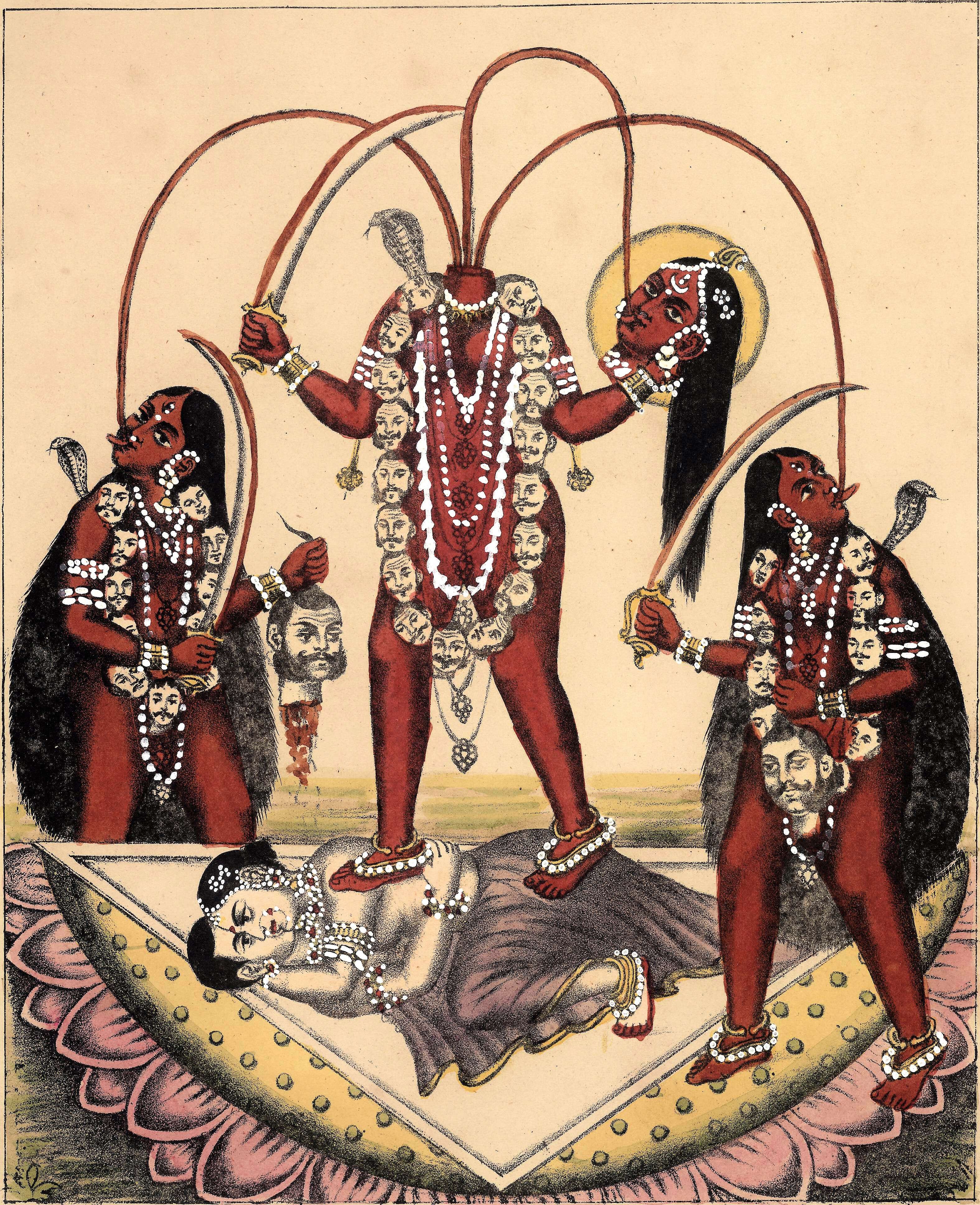
While I’m unsure if there is a connection, Yuebei’s imagery brings to mind the Hindo-Buddhist goddess ChinnamastāChinnamunda (Vajrayoginī). She is commonly shown as a naked, red-bodied figure holding a bloody head in one hand and a sword in the other (Kinsley, 1997, p. 144). In this case, the severed head is her own. Her sister attendants are also sometimes shown holding a head and sword (fig. 10).

Fig. 10 – A 19th-century lithograph of Chinnamastā (larger version). Image found on Wikipedia.

Beyond art, I learned that the respective astrological paths of Yuebei xing and Mars can cross in East Asian astrology. According to Wan Minying (萬民英), author of the Great Compendium of Astral Studies (Xingxue dacheng, 星學大成, 1563):

If Yuebei and Mars are conjunct in the same sign, [the native’s] heart will enjoy virtue, but they will be unable to actually act. They will also have many noxious sores, and pus and blood

孛火同宮心好善而實不能行亦多癰疽膿血. [2]

3. Appearance in Other Literature

Apart from JTTS, Yuebei briefly appears in an earlier Ming-era fiction titled Drama of Yang Jiajiang (Yang Jiajiang yanyi, 楊家將演義, 16th century). Kotyk (2017) explains that she is depicted as a red-skinned figure “holding in her hand a skeleton (手執骷髏骨)” (p. 63). I should note that the kulou (骷髏) in kulou gu (骷髏骨) can also mean “skull,” which aligns with her iconography.

Recall that the Irano-Semitic demoness Lilith and the Hindo-Buddhist goddess Chinnamastā-Chinnamunda are described or depicted as having red skin. This might explain Yuebei xing’s vermillion body in the novel.

4. Religious Iconography

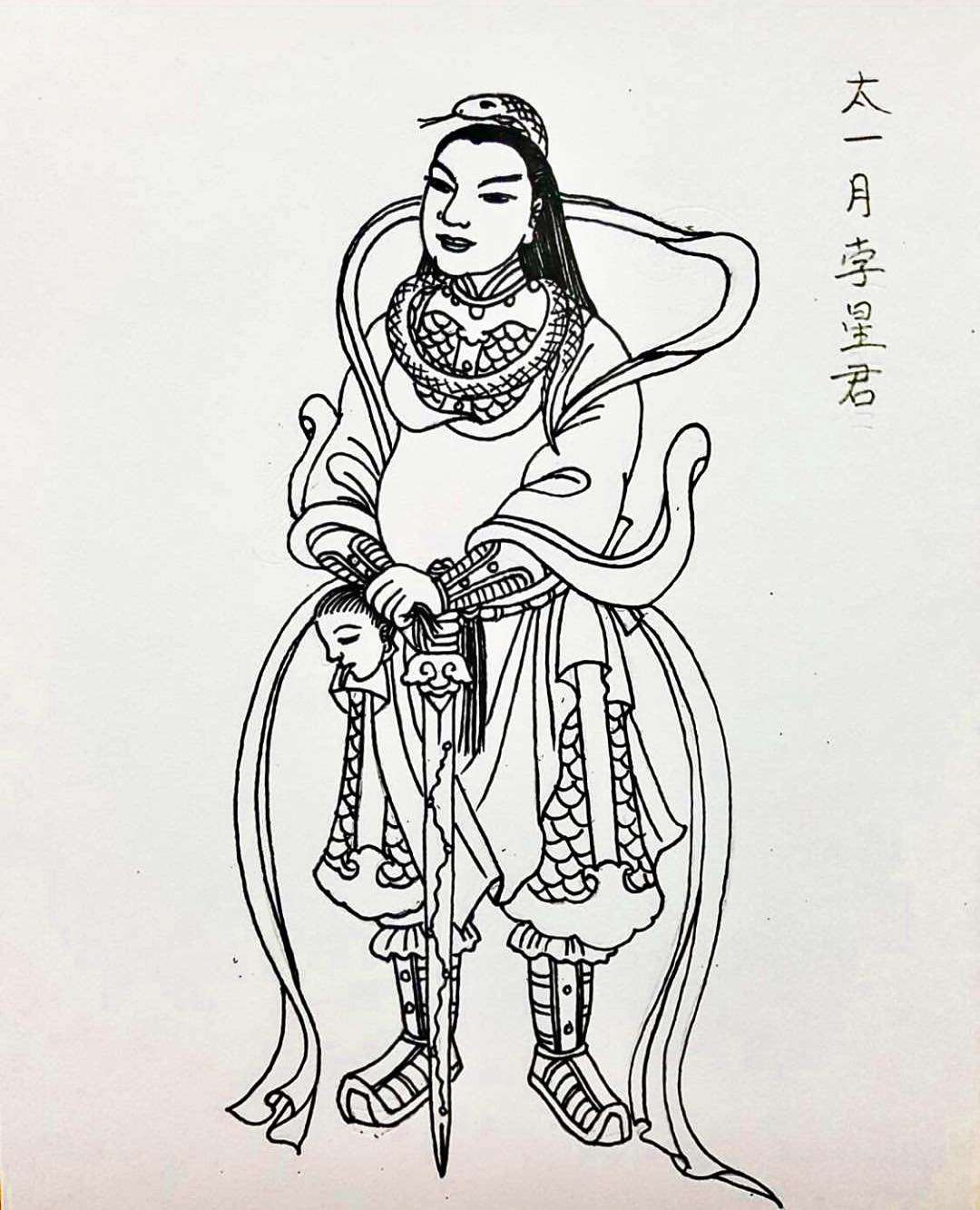
I know nothing of the actual worship of Yuebei xing, but Ronni Pinsler of the BOXS project was kind enough to show me a pattern sheet of her from an idol-maker’s shop in 1970s Singapore (fig. 11). She wears flowing robes just like her ancient Chinese depictions (refer back to fig. 4), but the signature sword and head are not included. They are instead replaced by a fly-whisk and a placard marked “moon” (yue, 月), which compliments the lunar halo behind her head. Additionally, she is labeled the “Vermillion (Comet) Inspiring Goddess, Heavenly Lord of the Moon Comet” (Zhuli[bei?] fu niang Yuebei tianjun, 朱李[孛?]孚娘 月孛天君). This is similar to the way it’s listed among the 36 celestial generals of the Journey to the North (Beiyou ji, 北遊記, 1602), the “Vermillion Comet Goddess, Heavenly Lord of the Moon Comet” (Zhubei wei Yuebei tianjun, 朱孛娘為月孛天君). I also found a more recent religious drawing that appears to mix the feminine and masculine iconography to depict her as an armored general named “Stellar Lord Moon Comet of the Great Monad” (Taiyi Yuebei xingjun (太一月孛星君) (fig. 12). Both the head and sword are present.

(See the 04-07-24 update below for a modern idol similar to figure 12.)

Fig. 11 – The vintage Yuebei pattern sheet from a Singaporean idol shop (larger version). Original photograph by Keith Stevens. Fig. 12 – The Yuebei general image (larger version). It was posted by an Indonesian Daoist priest of the Quanzhen school on Facebook.

5. Conclusion

Yuebei xing (月孛星, “Moon Comet Star”) briefly appears in chapter 17 of JTTS as the Monkey King’s monstrous daughter who uses a magic skull weapon to curse a rogue immortal. The demoness is based on a shadowy planetary deity from East Asian astrology that represents the lunar apogee. Xixia dynasty art and the Yuan-Ming Secret Practice scripture depict this deity having two forms, a lightly clad or even topless human-female with red clothing and long, disheveled hair, or a green-skinned, red-bearded yaksha-male. Both of these forms are sometimes depicted wielding a sword and a disembodied head.

The yaksha-male Yuebei xing surprisingly shares iconography with Arabo-Persian depictions of al-Mirrīkh (Mars), who is also represented as a bearded figure wielding a sword and head. Carboni (Carboni & MET, 1997) suggests that the Middle Eastern iconography is related to the constellation of Perseus (a.k.a. “Bearer of the Demon’s Head”) in which he holds the head of Medusa. This is interesting as the head held by the human-female figure is called a “drought demon” in the Secret Practice. This suggests a possible connection between the literary Yuebei xing’s skull and the deadly Gorgon.

Kotyk (2017) notes a possible connection between the human-female Yuebei xing and the Irano-Semitic Lilith. The latter too is described as having a red, naked body and unkempt hair. This same iconography is shared by the Hindo-Buddhist goddess Chinnamastā-Chinnamunda, who is also depicted bearing a sword and (her own) head. This may then explain why Yuebei xing is described as having red skin in the Drama of Yang Jiajiang (16th century), which predates JTTS.

Yuebei xing is worshiped in modern Chinese folk religion. Religious art depicts them as either a robed figure or an armored general. In both cases, the deity is a woman, but only the martial aspect is shown with the head and sword.


6. Updates

Update: 01-11-2023

Bunce (1994) describes Maṅgala (Mars) just like Bhattacharyya (1958) (refer back to the material below figure 9):

Face: one, angry; arms/hands: two, right hand holds ritual chopper (karttrika, grig-gug), left hand holds severed human head (emphasis added); legs: two; color: red; vahana: goat (p. 328).

But I still haven’t been able to find any ancient drawings of the planetary deity like this.

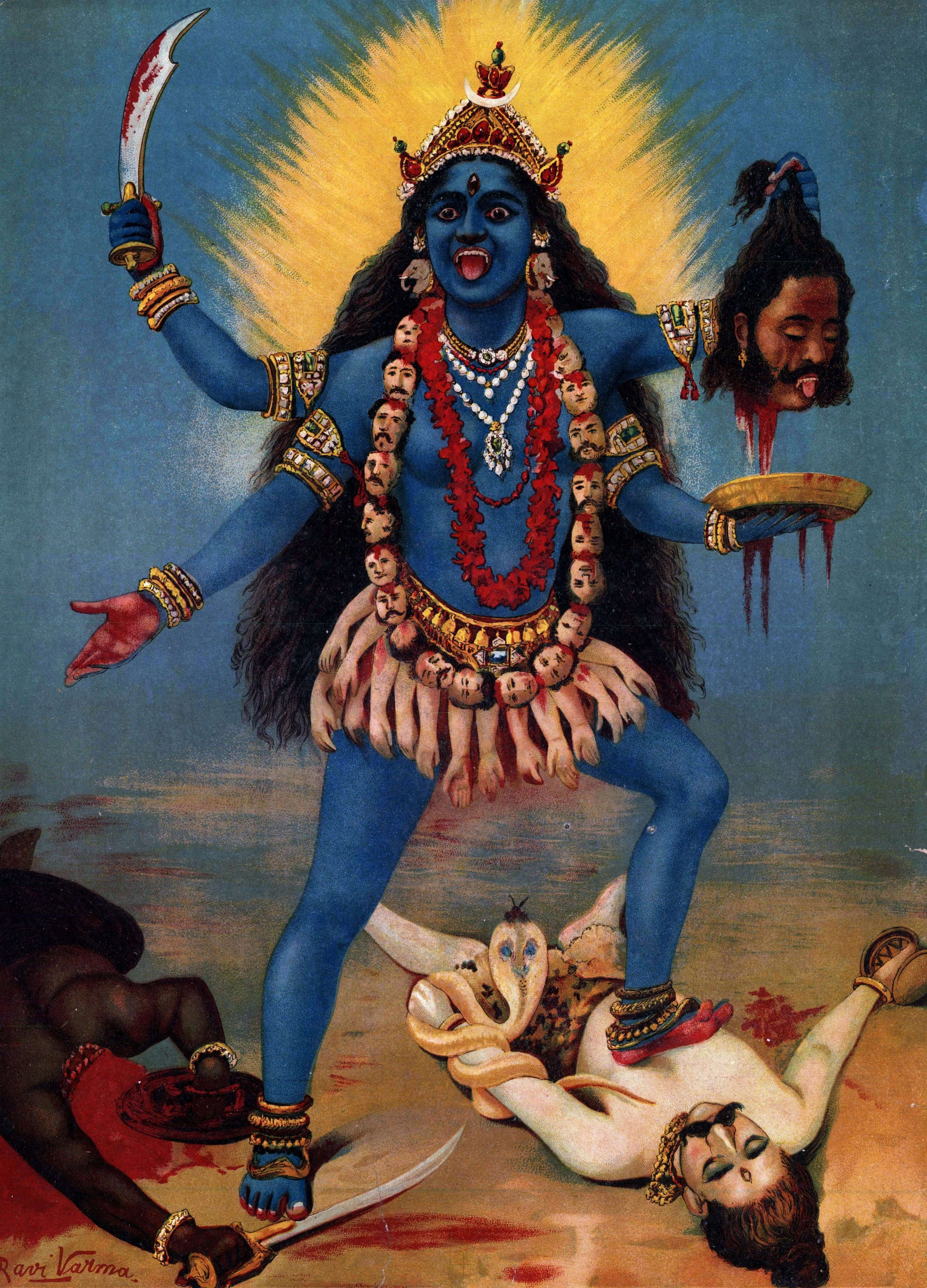
The iconography of the Hindu goddess Kālī also includes a sword and severed head (fig. 13). I didn’t mention her in the original article because she is traditionally depicted with dark skin, but she likely influenced the red-skinned Chinnamastā-Chinnamunda. It’s important to note that her mythos also associates the head with demons (asuras). For example, the Devī-Māhātmyam (c. 400-600 CE) reads:

Mounting her great lion, the Goddess ran at Caṇḍa, / And having seized him by the hair, she cut off his head with her sword. / On seeing Caṇḍa slain, Muṇḍa rushed at her. / She caused him to fall to the ground, wrathfully smitten with her sword. / On seeing Caṇḍa slain, and also the valorous Muṇḍa, / What was left of the assaulted army was overcome with fear and fled in all directions. / Picking up the heads of Caṇḍa and Muṇḍa, Kali / Approached C’aṇḍikā [Durgā] and spoke words mixed with loud and cruel laughter: / “Here, as a present from me to you, are Caṇḍa and Muṇḍa, two beasts / slain in the sacrifice of battle…” (Coburn, 1991, p. 62).

This adds to our list of sword-wielding, demon head-holding deities: 1) Perseus-Medusa; 2) Yuebei xing-Drought Demon; and 3) Kali-Asura.

Fig. 13 – An early-20th-century painting of Kali by Raja Ravi Varma (larger version). Image found here.


Update: 01-16-23

I thought of a way for artists and fan fiction writers to mix Yuebei xing’s skull with Medusa’s head. But first recall that section 1 reads:

Yuebei xing then calls Huaguang’s name while holding her own magic treasure, a skull. The immortal is immediately stricken with a headache and stumbles back to his cave in a daze. Her weapon is said to be quite dangerous; anyone whose name is called will die within three days.

Perhaps the skull’s gaze can turn any living thing into stone, but this lithic death happens over the aforementioned three days. After the target’s name is called, the skull’s glowing eyes open wider and wider upon the dawn of each successive day, causing compounding confusion and pain. The final dawn sees the eyes open wide (fig. 14), making the unfortunate soul (no matter their location) turn to stone.

Refer back to note #1 for a possible defense.

Fig. 14 – The skull would look like this on the third and final dawn (larger version). Adapted from an image found here.


Update: 01-17-23

“Who is the mother of Sun Wukong’s children in Journey to the South?” This is a question I’ve been asked a few times on Tumblr. The novel never answers this, but one can make an educated guess for the purposes of fan fiction.

Each child is based on one of three lunar deities appearing among the “Eleven Luminaries” (Shiyi yao, 十一曜) (mentioned above). The specific gods are:

  1. Jidu (奇都, “Ketu”) = Represents the southern (descending) lunar node, or the point where the moon crosses the earth’s orbit around the sun. Associated with eclipses.
  2. Luohou (羅睺, “Rahu”) = Represents the northern (ascending) lunar node. Also associated with eclipses.
  3. Yuebei Xing (月孛星, “Moon Comet Star”) = Represents the lunar apogee, or the furthest point in the moon’s orbit.

Given their close connection to the night time celestial body, it would make sense for the mother to be Taiyin xing (太陰星, “Star of Supreme Yin”), goddess of the moon from the Eleven Luminaries.

Taiyin xing is commonly equated with Chang’e, goddess of the moon in Chinese mythology. However, Journey to the West chapter 95 depicts her as a separate deity and the leader of an unknown number of Chang’e moon goddesses (cf. Wu & Yu, 2012, vol. 4, p. 302).

Fig. 15 – A detail of Taiyin xing from the Ink Treasure of Wu Daozi (Daozi mobao, 道子墨寶, c. 13th century) (larger version). See figure 1 for the complete image. She is the fourth person from the left on the top row.


Update: 01-18-23

I’ve decided to make this the only article on my blog where Yuebei xing information can be found. Therefore, I have removed all of it from “The Monkey King’s Children.” This means I have to also transfer some previous updates.

Posted: 02-13-22

I’ve recently started watching the Lego Monkie Kid series, which follows the adventures of Sun Wukong’s human disciple, MK, in a very toyetic, Lego-inspired world. This is why @TustiLoliPop‘s lovely drawing of Yuebei xing (fig. 16) really stood out to me. They were kind enough to give me permission to post it here. It’s based on the Xixia dynasty painting from figure 2.

Fig. 16 – The Lego Monkie Kid-style Yuebei xing by @TustiLoliPop (larger version). Used with permission.

Posted: 07-13-22

Tumblr user @sketching-shark has drawn some great pictures of Monkey and his children. Here is one of them (fig. 17). I love the alternating black and white color scheme of Rahu and Ketu, as well as Yuebei xing’s size.

Fig. 17 – Monkey’s family by @sketching-shark (larger version). Used with permission.


Update: 07-23-23

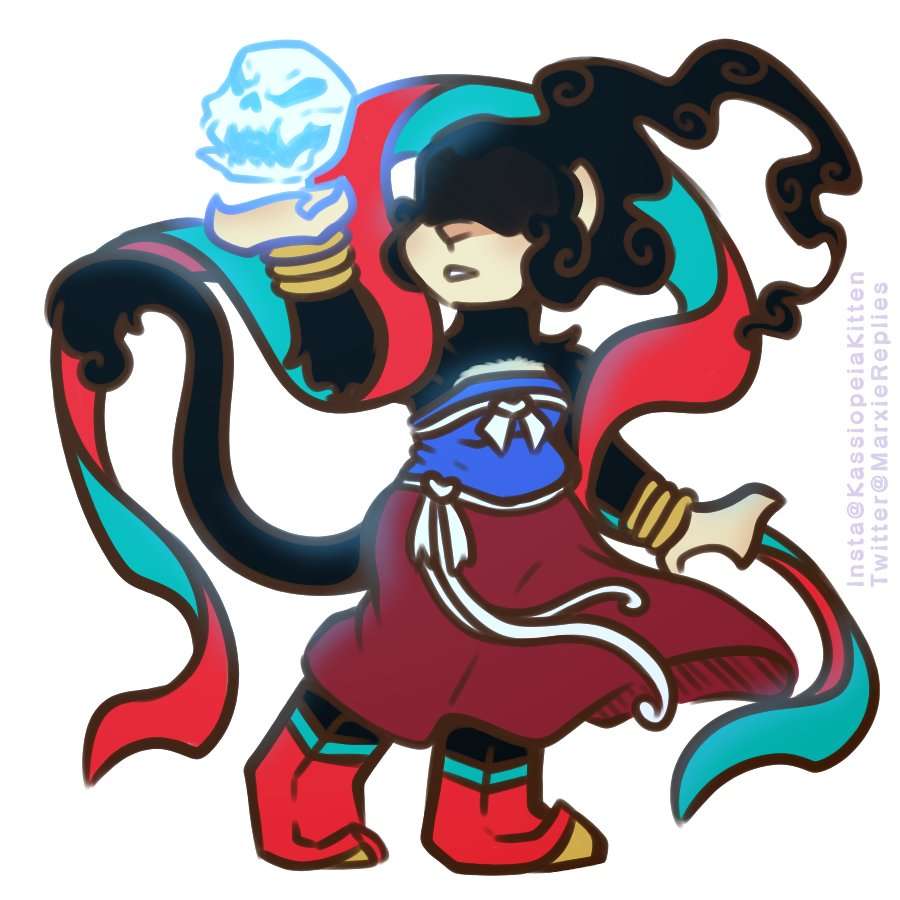
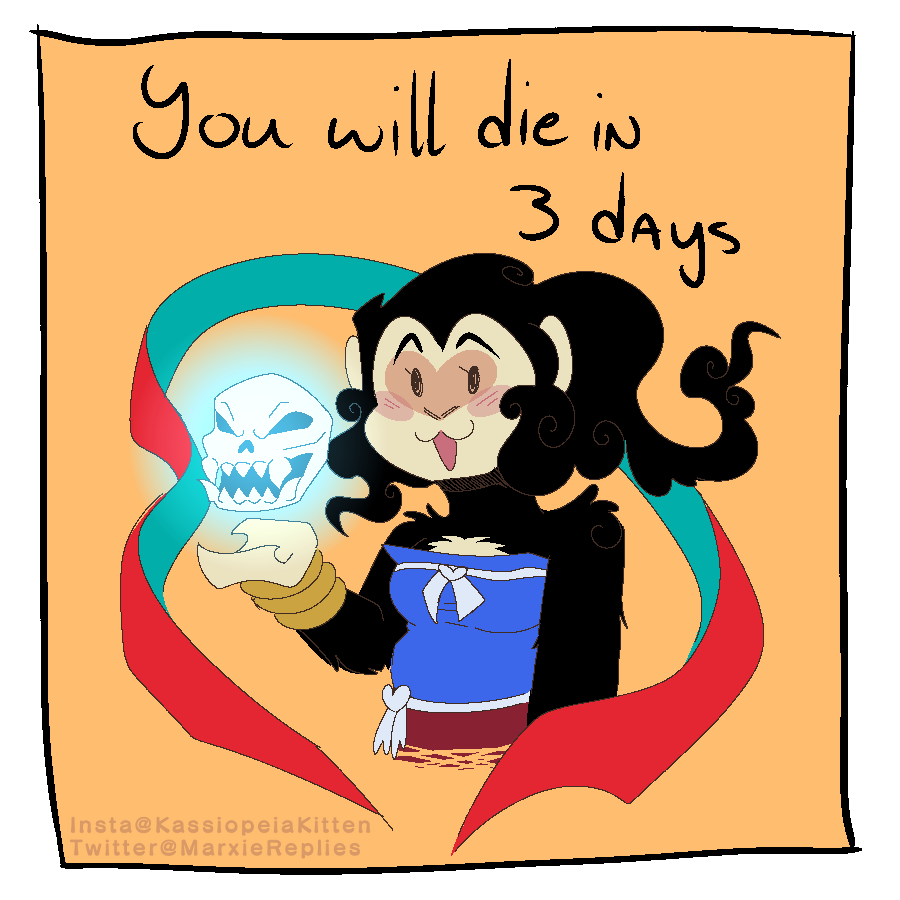
Tumblr user @MarxieReplies has drawn two Lego Monkie Kid-inspired pictures of Yuebei xing (fig. 18 & 19). Her clothing is based on the Xixia dynasty paintings of the lunar goddess (refer back to figure 2). I love the glowing skull and the flow of her ponytail and divine sashes.

Fig. 18 – A full body drawing of Yuebei (larger version). Fig. 19 – A head and torso drawing (larger version). Used with permission.


Update: 01-06-24

I just learned that a “Sun Yuebei” (孫月孛), daughter of the Monkey King, appears in the Japanese video game Touhou Monjusen ~ Bubbling Imaginary Treasures (東方門殊銭 ~ Bubbling Imaginary Treasures, 2021). She looks like a young, pink-haired human girl wearing red, feminine clothing with a bright green bow and light, red armor. And like her old man, she wears the golden headband and tiger skin and wields the iron staff along with her magic skull (video 1).

Video 1 – Sun Yuebei appears at min 3:34. I am 100% positive that the programmers hate people with epilepsy.

JTTS fans wanting to write fanfiction about our monkey demoness can call her Sun Yuebei, [3] but as mentioned above, the original astrological goddess is surnamed Zhu (朱, “vermillion,” i.e. a shade of red). If anyone wants to create a version of Monkey’s daughter that is more in line with her religious counterpart, then she should be called “Zhu Yuebei” (朱月孛). I’m sure someone can think of a reason for why she wouldn’t take her father’s surname.


Update: 04-27-24

Given the connection of Sun Wukong’s children to the moon, it’s interesting to note that he displays an intimate knowledge of the Earth’s satellite as both an astrological body and alchemical symbol. He explains in chapter 36:

When the moon reaches the thirtieth day, the metal [phase] in its yang spirit is completely dissolved, whereas the water [phase] of its yin soul is filled to the brim of the orb. This is the reason for the designation of that day with the term Obscure [Hui, 晦], for the moon is completely dark and without light. It is at this moment also that the moon copulates with the sun, and during the time of the thirtieth day and the first day of the month, it will become pregnant by the light of the sun. By the third day, one [stroke] of the yang will appear, and two [strokes] of the yang will be born by the eighth day. At this time, the moon will have half of its yang spirit in the middle of its yin soul, and its lower half is flat like a rope. That is the reason why the time of the month is called the Upper Bow [Shangxian, 上弦]. By the fifteenth day, all three [strokes] of the yang will be ready, and perfect union will be achieved. That is why this time of the month is called To Face [Wang, 望]. On the sixteenth day, one [stroke] of the yin will be born, and the second stroke will make its appearance on the twenty-second day. At that time half of the yin soul will be in the middle of the yang spirit, and its upper half is flat like a rope. That is the reason why this time of the month is called the Lower Bow [Xiaxian, 下弦]. By the thirtieth day; all three [strokes] of the yin will be ready, and the moon has then reached the state of obscurity once more. All this is the symbol of the process of cultivation practiced by nature (Wu & Yu, 2012, vol. 2, pp. 159-160).

月至三十日,陽魂之金散盡,陰魄之水盈輪,故純黑而無光,乃曰『晦』。此時與日相交,在晦朔兩日之間,感陽光而有孕。至初三日一陽現,初八日二陽生,魄中魂半,其平如繩,故曰『上弦』。至今十五日,三陽備足,是以團圓,故曰『望』。至十六日一陰生,二十二日二陰生,此時魂中魄半,其平如繩,故曰『下弦』。至三十日三陰備足,亦當『晦』。此乃先天採煉之意。


Update: 04-07-26

I was happy to learn that a temple in southern Taiwan features an idol of Yuebei. She is depicted as a dark-skinned, bare-breasted, double sword-wielding amazon wearing light, golden armor, golden jewelry, and a divine sash (fig. 20). This Facebook post (with additional images) refers to her as the “Thunder Lord Moon Comet from the Fire Department of the Great Monad” (Taiyi huofu Yuebei leijun, 太乙火府月孛雷君). Her title and appearance recall figure 12 (refer back to section 4). Though, the severed head hanging from her belt is missing.

Fig. 20 – The Taiwanese Yuebei idol (larger version). Image found here.

Note:

1) I’ve already suggested that an acquaintance draw Yuebei wielding Medusa’s head in place of her signature skull. The real question is: could Medusa’s glare actually kill an immortal? This insightful reddit post provides evidence from the Dionysiaca showing that even the god Dionysus considered it deadly enough to bring a magic diamond to protect himself from the Gorgon’s death stare:

The thyrsus was held up in his hand, and to defend his face he carried a diamond, the gem made stone in the showers of Zeus which protects against the stony glare of Medusa, that the baleful light of that destroying face may do him no harm (Rouse, 1940, vol. 3, p. 413).

2) Translation by Dr. Kotyk.

3) Xing (星) just indicates her position as a planetary body.

Sources:

Bhattacharyya, B. (1958). The Indian Buddhist Iconography: Mainly Based on the Sādhanamālā and Cognate Tāntric Texts of Rituals (2nd ed.). Calcutta: Firma K.L. Mukhopadhyay.

Bunce, F. W. (1994). An Encyclopaedia of Buddhist Deities, Demigods, Godlings, Saints and Demons: With Special Focus on Iconographic Attributes (Vols.1-2). New Delhi: D.K. Printworld.

Carboni S. & Metropolitan Museum of Art. (1997). Following the Stars: Images of the Zodiac in Islamic Art. New York: Metropolitan Museum of Art.

Coburn, T. B. (1991). Encountering the Goddess: A Translation of the Devī-Māhātmya and a Study of its Interpretation. Albany: State University of New York Press.

Gansten, M. (2009). Navagrahas. In K. A. Jacobsen (Ed.), Brill’s Encyclopedia of Hinduism (Vol. 1) (pp. 647-653). Leiden: Brill.

Kinsley, D. R. (1997). Tantric Visions of the Divine Feminine: The Ten Mahāvidyās. Berkeley, CA: University of California Press.

Kotyk, J. (2017). Astrological Iconography of Planetary Deities in Tang China. Journal of Chinese Buddhist Studies, 30, 33-88, Retrieved from http://enlight.lib.ntu.edu.tw/FULLTEXT/JR-BJ001/bj001575268.pdf

Rouse, W. H. D. (Ed.) (1940), Nonnos. Dionysiaca, with an English Translation by W. H. D. Rouse, Mythological Introduction and Notes by H. J. Rose and Notes on Text Criticism by L. R. Lind (Vols. 1-3). Cambridge, Ma: Harvard University Press. Retrieved from https://archive.org/details/dionysiaca03nonnuoft/page/412/mode/2up.

Wu, C., & Yu, A. C. (2012). The Journey to the West (Vols. 1-4) (Rev. ed.). Chicago, Illinois: University of Chicago Press.

Yu, X. (n.d.). Nanyouji: Huaguang sanxia Fengdu [Journey to the South: Huaguang goes to the Underworld Three Times]. Retrieved from https://ctext.org/wiki.pl?if=gb&chapter=506975&remap=gb#%E5%8D%8E%E5%85%89%E4%B8%89%E4%B8%8B%E9%85%86%E9%83%BD


The Monkey King’s Children

Last updated: 04-04-2022

Modern media occasionally depicts Sun Wukong with children. Examples include the book series The Monkey King’s Daughter (2009-2011) and the DC Comics character the Monkey Prince (first appearing in 2021). The anime High School DxD (2012) even features a descendent some generations removed called Bikou. But the idea of the Great Sage having children goes back centuries. Two late-Ming novels influenced by the original Journey to the West (Xiyouji, 西遊記, 1592) reference multiple offspring. In this article, I will highlight these children and discuss their connection to Buddhism and Asian astrology.

Those interested in this subject may fancy learning about Sun’s brothers and sisters.

Table of Contents

1. King Pāramitā

The novel is set between the end of chapter 61 and the beginning of chapter 62 of the original. It follows the Monkey King as he travels through time seeking a magic weapon, while also striving to unmask the identity of a mysterious foreign king who has persuaded Tripitaka to give up the quest to India. The first reference to Sun’s children appears in chapter 13, when actors in a royal play describe an alternate timeline where our hero settled down: “His wife is so beautiful, his five sons so dashing. He started out as a monk, but came to such a good end! Such a very good end!” (Dong, Lin, & Schulz, 2000, p. 114). Later, in chapter 15, Monkey meets one of these sons on the battlefield. “King Pāramitā” (Boluomi wang, 波羅蜜王) (fig. 1) is portrayed as a sword-wielding general capable of fighting Sun for several rounds. Pāramitā goes on to recount his family history, revealing that although he’s never met his father, he’s the son of the Great Sage and Princess Iron Fan (Tieshan gongzhu, 鐵扇公主) (Dong, Lin, & Schulz, 2000, pp. 123-124). In addition, he suggests that he was conceived during an event from chapter 59 of the original:

[Sun Wukong] changed into a tiny insect and entered my mother’s belly. He stayed there a while and caused her no end of agony. When my mother could no longer bear the pain, she had no choice but to give the Banana-leaf Fan to my father, Monkey [1] … In the fifth month of the next year, my mother suddenly gave birth to me, King Pāramitā. Day by day I grew older and more intelligent. If you think about it, since my uncle [the Bull Demon King] and mother had never been together, [2] and I was born after my father, Monkey, had been inside my mother’s belly, the fact that I am his direct descendant is beyond dispute (Dong, Lin, & Schulz, 2000, p. 124).

Fig. 1 – King Pāramitā leaps into battle (larger version). Detail from a modern manhua. Image found here.

The translators of A Supplement to the Journey to the West explain that King Pāramitā’s name serves as a pun:

In the Chinese transliteration for Pāramitā, the character used to render the syllable “mi” [蜜] has the intrinsic meaning of “honey,” while the character t’ang [唐] in T’ang dynasty is homophonous with the character meaning “sugar” [糖]. King Pāramitā is punning on these associations (Dong, Lin, & Schulz, 2000, p. 123 n. 2). [3]

However, the name also has deep connections with Buddhism. The Princeton Dictionary of Buddhism defines the Sanskrit term Pāramitā (“perfection”) as “a virtue or quality developed and practiced by a Bodhisattva on the path to becoming a buddha” (Buswell & Lopez, 2014, p. 624). Various traditions recognize six to ten perfections, with the latter including the former six plus an additional four. The Mahayana perfections, for example, include giving, morality, patience, effort, concentration, wisdom, method, vow, power, and knowledge. Bodhisattvas are believed to master these virtues in the listed order, compounding spiritual wisdom and merit over the course of their journey towards Buddhahood (Buswell & Lopez, 2014, p. 624).

2. Jidu, Luohou, and Yuebei Xing

The novel follows the exile of Miao Jixiang (妙吉祥), a divine flame-turned Buddhist deity, from the Western Paradise through several mischievous reincarnations. As the rogue immortal Huaguang (華光), he works to end his mother’s demonic lust for flesh by procuring an immortal peach in chapter 17. He does this by transforming into Sun Wukong and stealing the magic fruit from heaven. The real Monkey King is subsequently accused of his double’s misdeeds, much like the Six-Eared Macaque episode of the original novel. The Jade Emperor threatens to remand him to the Buddha for punishment but is convinced to give Sun a month-long reprieve to find the true culprit.

Monkey returns to the Mountain of Flowers and Fruit, and it is here among his people, that the story mentions three children, including sons Jidu (奇都, “Ketu”) and Luohou (羅猴, “Rahu”) and daughter Yuebei Xing (月孛星, “Moon Comet Star”). [4] Sun eventually seeks out Guanyin, who reveals that the troublemaker is none other than Huaguang. Returning home once more, Monkey’s news prompts his daughter to volunteer to battle the impostor. But her tribe simply pokes fun at her monstrous appearance. Yuebei Xing is said to have a crooked head with huge eyes and a broad mouth, coarse hands, a wide waist, and long legs with thunderous steps.

Sun travels with his daughter to Huaguang’s home of Mt. Lilou (Lilou shan, 離婁山) to provoke battle by chastising him for stealing the immortal peaches. Monkey strikes at him with his magic staff, causing Huaguang to deploy his heavenly treasure, a golden, triangular brick (sanjiao jinzhuan, 三角金磚). But Sun responds by creating untold numbers of clone monkeys that not only confiscate the weapon but also overwhelm the immortal. Huaguang is seemingly defeated at this point; however, he manages to deploy one last treasure, the Fire Elixir (Huodan, 火丹). This weapon engulfs the Great Sage in heavenly flame (akin to the Red Boy episode), causing him to flee to the Eastern Sea. Yuebei Xing then calls Huaguang’s name while holding her own magic treasure, a skull (kulou tou, 骷髏頭). The immortal is immediately stricken with a headache and stumbles back to his cave in a daze. Her weapon is said to be quite dangerous; anyone whose name is called will die within three days.

Huanguang’s religious teacher, the Flame King Buddha of Light (Huoyan wang guangfo, 火炎王光佛), then intervenes in order to sooth the situation between his disciple and the Great Sage. He promises to bring the rogue immortal to justice on the condition that Yuebei Xing withdraws her deadly magic. In the end, all parties are pardoned by the Jade Emperor, and Huaguang and Monkey become bond brothers (Yu, n.d.).

All three of Sun’s children are named after planetary bodies associated with the moon in Asian astrology. [5] His sons Jidu and Luohou are respectively named after Ketu (Jidu, 奇都) and Rahu (Luohou, 羅睺), two of the “Nine Planets” (Sk: Navagraha; Ch: Jiuyao, 九曜, “Nine Luminaries”) from Hindu astrology. [6] These two shadowy planetary deities represent the respective southern (descending) and northern (ascending) lunar nodes, or points where the moon crosses the earth’s orbit around the sun. As such, the pair are associated with eclipses, and sources sometimes depict them as the head (Rahu) and tail (Ketu) of a great eclipse serpent. Other interpretations include Rahu as a disembodied head and Ketu as the torso, or Ketu as a comet or emerging from a cloud of smoke (Gansten, 2009, p. 652-653; Kotyk, 2017, pp. 59-60).

Before continuing, there are two interesting things to note: 1) Sun Wukong singlehandedly battles and defeats the Nine Planets in chapter five of the original novel (Wu & Yu, 2012, vol. 1, pp. 170-172). But the Ketu and Rahu in this group should be considered distinct from his sons; and 2) one of the original Chinese characters for Rahu (Luohou, 羅睺) was changed in Journey to the South to play on Luohou’s (羅猴) primate origins by using the homophonous word for “monkey” (hou, 猴).

All information about Yuebei xing has been moved to a new article.

Yuebei xing, Daughter of the Monkey King

3. Honorable Mention: Sun Luzhen

The novel is set two hundred years after the original and follows the adventures of Sun Wukong’s spiritual descendant Sun Luzhen (孫履真, “Monkey who Walks Reality”) (fig. 2). He too learns the secrets of immortality and causes havoc in heaven, before being tasked to protect the historical monk Dadian (大顛, 732–824) on a similar journey to India. The two are accompanied by the son of Zhu Bajie, Zhu Yijie (豬一戒), and the disciple of Sha Wujing, Sha Zhihe (沙致和). I did not include Luzhen in the main list as he is born from a stone in the same fashion as the original Monkey King (see Liu, 1994).

Fig. 2 – “Small Sage Sun’s Havoc in the Heavenly Palace” (larger version). The cover to a modern manhua. Image found here.

4. Conclusion

The Monkey King has a total of eight children shared between two late-Ming novels, but only four are mentioned by name, and only two of these actually have parts in the respective stories. King Pāramitā is one of the Great Sage’s five sons born to Princess Iron Fan in A Supplement to the Journey to the West (1640). He is portrayed as a handsome, sword-wielding general whom Sun faces on the battlefield. His name references the Pāramitās (“perfections”), or the wisdom and merit-building virtues that Bodhisattvas master in their quest for Buddhahood. Monkey has three children in Journey to the South (c. 1570s to 1580s), including sons Jidu and Luohou and daughter Yuebei Xing. The latter is depicted as a grotesque monster with a magic skull weapon cable of harming even celestials. She uses it to defeat the rogue immortal Huaguang. Jidu and Luohou are respectively named after the lunar nodes Ketu and Rahu, two of the Nine Planets from Hindu astrology. Yuebei is named after a shadowy planet representing the lunar apogee, which counts among the Eleven Luminaries of East Asian astrology. Ancient Xixia art sometimes depicts them as a woman or man bearing a sword and a severed head. The feminine iconography appears holding a skull in a novel from the 16th century.

An honorable mention is Sun Luzhen from Later Journey to the West (17th century). He is a stone-bone monkey who follows in his spiritual ancestors footsteps by attaining immortality, causing havoc in heaven, and later protecting a holy monk on the journey to India.


5. Updates

Update: 04-04-22

Back in November 2021, I made a post on twitter about a Rahu amulet that a collector friend of my was selling (and later sold). The deity is generally portrayed as a sharp-toothed, giant-mouthed monster devouring the moon. This piece is carved in a similar manner but Rahu is instead patterned after Thai depictions of Hanuman (fig. 3). I imagine his association with the monkey god is based on the latter’s attempt to eat the sun in his youth. 

Fig. 3 – The front of the Hanuman-like Rahu amulet (larger version).

Notes:

1) See Wu & Yu, 2012, vol. 3, p. 129.

2) This statement, of course, overlooks the conception and birth of the couple’s son Red Boy (Hong haier, 紅孩兒). But King Paramita might be referring to the Bull Demon King’s long absence while living with his mistress, Jade Countenance.

3) This pun plays out in chapter 14 of Journey to the West, when an old patron remarks on Monkey’s monstrous appearance:

“Though you [Tripitaka] may be a Tang man,” the old man said, “that nasty character is certainly no Tang man!” “Old fellow!” cried Wukong in a loud voice, “you really can’t see, can you? The Tang man is my master, and I am his disciple. Of course, I’m no sugar man or honey man! I am the Great Sage, Equal to Heaven!” (Wu & Yu, 2012, vol. 1, p. 312).

Thank you to Irwen Wong for reminding me of this passage.

4) I’m indebted to Jose Loayza for bringing these characters to my attention.

5) Thank you to Dr. Jeffrey Kotyk for confirming the astrological connection.

6) Sun, Moon, Mars, Mercury, Jupiter, Venus, Saturn, Rahu, and Ketu (Gansten, 2009).

Sources:

Dong, Y., Lin, S. F., & Schulz, L. J. (2000). The Tower of Myriad Mirrors: A Supplement to Journey to the West. Ann Arbor: Center for Chinese Studies, The University of Michigan.

Gansten, M. (2009). Navagrahas. In K. A. Jacobsen (Ed.), Brill’s Encyclopedia of Hinduism (Vol. 1) (pp. 647-653). Leiden: Brill.

Hart, R. (2010). The Chinese Roots of Linear Algebra. United States: Johns Hopkins University Press.

Kotyk, J. (2017). Astrological Iconography of Planetary Deities in Tang China. Journal of Chinese Buddhist Studies, 30, 33-88), Retrieved from https://chinesebuddhiststudies.org/previous_issues/jcbs3002_Kotyk(33-88)_e.pdf

Liu, X. (1994). The Odyssey of the Buddhist Mind: The Allegory of the Later Journey to the West. Lanham, Md: University Press of America.

Buswell, R., & Lopez, D. (2014). The Princeton Dictionary of Buddhism. Princeton University Press.

Wu, C., & Yu, A. C. (2012). The Journey to the West (Vol. 1-4). Chicago, Illinois: University of Chicago Press.

Yu, X. (n.d.). Nanyouji: Huaguang sanxia Fengdu [Journey to the South: Huaguang goes to the Underworld Three Times]. Retrieved from https://ctext.org/wiki.pl?if=gb&chapter=506975&remap=gb#%E5%8D%8E%E5%85%89%E4%B8%89%E4%B8%8B%E9%85%86%E9%83%BD

A Supplement to the Journey to the West: An Overview

Last updated: 08-09-2023

A Supplement to the Journey to the West (Xiyoubu, 西遊補) is a sixteen chapter Chinese novelette written in 1640 CE by Dong Yue (董說). It acts as a sequel and addendum to the famous Journey to the West (Xiyouji西遊記, 1592 CE) and takes place between the end of chapter 61 and the beginning of chapter 62. [1] In the story, the Monkey King wanders from one adventure to the next, using a magic tower of mirrors and a Jade doorway to travel to different points in time. In the Qin Dynasty (221–206 BCE), he disguises himself as Consort Yu in order to locate a magic weapon needed for his quest to India. During the Song Dynasty (960–1279), he serves in place of King Yama as the judge of Hell. After returning to the Tang Dynasty (608-907), he finds that his master Tripitaka has taken a wife and become a general charged with wiping out the physical manifestation of desire (desire being a major theme running through the novelette). Monkey goes on to take part in a great war between all the kingdoms of the world, during which time he faces one of his own sons in battle. In the end, he discovers an unforeseen danger that threatens Tripitaka’s life. [2]

There is a debate between scholars over when the book was actually published. One school of thought favors a political interpretation which lends itself to a later publication after the founding of the Qing Dynasty (1644–1911). The second favors a religious interpretation which lends itself to an earlier publication during the late Ming Dynasty (1368–1644). Evidence in favor of the former includes references to the stench of nearby “Tartars,” a possible allusion to the Manchus who would eventually found the Qing and conquer China. Evidence in favor of the latter includes references to Buddhist sutras and the suppression of desire and the lack of political statements “lament[ing] the fate of the country.” [3] The novel can ultimately be linked to the Ming because a mid-17th century poem dates it to the year 1640.

Table of Contents

1. Summary

Shortly after getting into an argument with his master over the blazingly red color of flowers (a representation of desire), Monkey kills a group of women and children who accost Tripitaka for his robes. However, when Sun Wukong tries to talk his way out of punishment, he finds his traveling companions have all conveniently fallen asleep. Taking his leave to find food, he happens upon a large city flying the banner “Great Tang’s New Son-of-Heaven, the Restoration Emperor, thirty-eighth successor of Taizong.” This strikes Monkey as odd since it was Taizong who had originally sent them on their mission to retrieve the Buddhist scriptures in India. This either means the pilgrims’ journey had taken hundreds of years, or the city is a fake. He flies to heaven in order to learn more about the Great Tang, but finds the gates are locked because an imposter Monkey King has stolen the Palace of Magic Mists. The situation becomes even stranger when he returns to the city and learns that the king has sent someone to invite the Tang Priest to become a general of his military. But when Sun tries to intercept the messenger, the person is nowhere to be found, and he instead comes upon mortal men flying on magic clouds and picking at the very foundations of heaven with spears and axes. From them he learns that the Little Moon King (Xiaoyue wang, 小月王), the ruler of the neighboring Kingdom of Great Compassion, has put up a great bronze wall and a fine mesh netting so as to block Monkey’s path to India. But because the monarch feels sorry for the Tang Priest, the Little Moon King forced the men to dig a hole in the firmament of heaven so that Tripitaka could hop from the Daoist heaven to the Buddhist heaven to complete his mission. But in the process, the men accidentally caused the Palace of Magic Mists to fall through to earth, hence the reason why heaven blames Monkey.
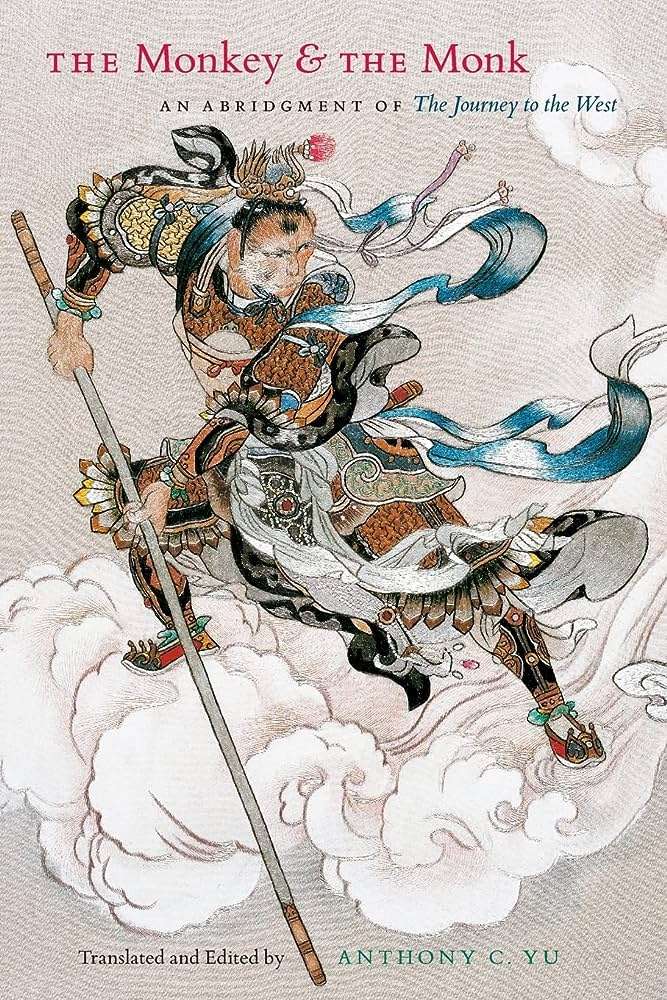
n8mflz

Fig. 1 – A modern depiction of Sun Wukong (by the author) (larger version).

Monkey goes to the Emerald Green World, Little Moon King’s imperial city, in order to fetch his master but is blocked from entering once inside the main gate. When he uses his great strength to bust open the wall, he falls inside of a magic tower of mirrors that act as gateways to different points in history and other universes. Monkey travels to the “World of the Ancients” (the Qin Dynasty) by drilling through a bronze mirror. He transforms himself into Beautiful Lady Yu, concubine of King Xiang Yu of Chu, in order to retrieve a magic “Mountain-removing Bell” from the first Qin Emperor so that he can use it to clear the group’s path to India of any obstacles blocking their way. But Sun later learns that the Jade Emperor had banished the emperor to the “World of Oblivion,” which lies beyond the “World of the Future.” Xiang Yu takes him to a village housing a set of Jade gates leading to the World of the Future. Monkey leaps through and travels hundreds of years forward in time to the Song Dynasty.

Upon his arrival, he is accosted by the ghosts of six thieves (representing the eyes, ears, nose, tongue, body, and mind—the sources of desire) because they think he is a beautiful woman. He resumes his true form and exorcises them with his cudgel. [4] Shortly thereafter some junior devils appear and tell him that King Yama has recently died of an illness and that Monkey must take his place as judge of the dead until a suitable replacement can be found. He ends up judging the fate of the recently deceased Prime Minister Qin Hui. Monkey puts Qin through a series of horrific tortures, after which a demon uses its magic breath to blow his broken body back into its proper form. He finally sends a demon to heaven to retrieve a powerful magic gourd that sucks anyone who speaks before it inside and melts them down into a bloody stew. He uses this for Qin’s final punishment. Meanwhile, Monkey invites the ghost of General Yue Fei to the underworld and takes him as his third master. [5] He entertains Yue until Qin has been reduced to liquid and offers the general a cup of the Prime Minister’s “blood wine.” Yue, however, refuses on the grounds that drinking it would sully his soul. Sun then conducts an experiment where he makes a junior devil drink of the wine. Sometime later, the devil, apparently under the evil influence of the libation, murders his personal religious teacher and escapes into the “gate of ghosts,” presumably being reborn into another existence. Yue Fei then takes his leave to return to his heavenly abode. Monkey sends him off with a huge display of respect by making all of the millions of denizens of the underworld kowtow before him.

After leaving the underworld, Sun is able to return to the tower of mirrors with the help of the “New Ancient,” a man who had been trapped in the World of the Future for centuries. However, when he tries to leave the tower through a window, Monkey becomes hopelessly entangled by red threads (another representation of desire). He becomes so worried that his very own spirit leaves his body and, under the guise of an old man, snaps the threads. He later discovers from a local Daoist immortal that the Qin Emperor has loaned the Mountain-removing Bell to the founder of the Han Dynasty, his former enemy. In addition, he learns that the Tang Priest has given up the journey to India, dismissed his other disciples Zhu Wuneng and Sha Wujing, taken a wife, and accepted the position as a general of the imposter Great Tang military.

Tripitaka begins to amass a huge army to fight the forces of the physical manifestation of desire. Monkey manages to infiltrate the ranks and presents himself as his own relative, a Six-Eared Macaque named Sun Wuhuan (孫悟幻, “Monkey Awakened to Fantasy”). Tripitaka names Wuhuan his “Vanguard General to Destroy [the] Entrenchment [of Desire]” and orders him to lead a contingent of yellow banner soldiers to face the “Western Barbarians”. General Sun’s forces come to bear against green banner soldiers led by King Paramita, one of the Monkey King’s five sons born to Lady Iron Fan. [6] Tripitaka soon arrives with purple banner soldiers to bolster Sun’s ranks, while black banner soldiers come to support King Paramita. The green banner soldiers eventually overpower the purple, killing the Little Moon King and beheading Tripitaka. A great wave of confusion then washes over the battlefield, causing soldiers of all colors to attack both friend and foe.

The shock of seeing his master die causes Monkey to take on his fierce three-headed and six-armed form. But his rage is halted by an aged deity sitting on a lotus platform in the sky. This “Master of the Void” reveals that Sun has been trapped in a magical dream world by the Qing Fish demon (Qingyu jing, 鯖魚精) who wishes to eat Tripitaka to gain immortality. It turns out Monkey had become sexually aroused while in the stomach of Lady Iron Fan (at the end of chapter 61). [7] The Qing Fish took advantage of this chink in Sun’s spiritual armor to trap him. Both Monkey and the demon share a bond because they were born at the same time from the same primordial energies at the beginning of time. The only difference is that Monkey’s positive Yang energy is offset by the demon’s far more powerful negative Yin energy. The monster is in effect the physical embodiment of Monkey’s desires.

When he finally awakens, having dreamed the entire adventure in only a few seconds, Sun discovers the demon has infiltrated the Tang Priest’s retinue by taking on the form of a young and beautiful Buddhist monk name Wuqing (悟情, “Awakened to Desire”). The fiend had cast an illusion that Guanyin’s disciple Moksha introduced him as Tripitaka’s newest attendant and claims the Bodhisattva has requested he be placed second only to Wukong. This is because the religious name of all four disciples (Wukong, Wuqing, Wuneng, and Wujing) will form the phrase “make empty of desire and be purified” (kong qing neng jing, 空情能淨). Monkey takes advantage of the demon’s lowered defenses and kills it with his cudgel, thereby freeing himself of desire. Tripitaka is initially shocked, but sees the monk’s corpse revert to its true form, a mackerel fish (鯖魚). Sun then explains everything that had transpired, to which the Tang Priest commends him for his great effort.

2. Questions and Answers

At the end of the novel, the author answers a list of twelve hypothetical questions that a reader might ask after reading the novelette. Some of the answers are very similar in nature and are sometimes contradictory.

The first question asks whether a supplement was even necessary since the original novel did not seem to be incomplete. He explains that it was written so Monkey would face an enemy—in this case desire—that he could not defeat with his great strength. By experiencing desire he learns to separate himself from it, thus helping to bring about true enlightenment. The second asks why he faces a single enemy who tricks him with magic, instead of many who want to eat the Tang Priest. The author answers this question with a quote by the philosopher Mencius: “There is no better way of learning than to seek your own strayed heart.” [8] The third asks why Dong waited to reveal the monster Monkey faces at the end of the novel, instead of doing so in the title of one of the chapters like in the original. He states that desire is formless and soundless, meaning people can be affected by it without knowing it. Therefore, the Qing fish monster is present throughout the entire book. The fourth asks how it’s possible for the spirit of Qin Hui, who lived during the Song, to be in the Tang Dynasty. Dong points out that anything is possible in a dream. The fifth asks why Monkey becomes the fearsome King Yama in the future. He explains a person who travels to the future must embolden their spirit when facing adversity. By killing the six thieves and torturing Qin, Monkey is able to break free of the Qing fish’s power. The sixth asks why the Tang Priest becomes a general. He becomes a general to wipe out the forces of desire. The seventh indirectly asks why the Tang Priest cries when a young girl plays the pipa. [9] Dong quotes the Buddhist tenet that sorrow is the source of desire. The eighth asks how it’s possible for Monkey to have a wife and children. He states that the book is simply a dream. The ninth asks why a chaotic battle erupts between the five armies after Monkey escapes from inside the Qing fish. It’s because the accumulation of desire reaches the breaking point. It can be likened to being forced awake during the worst part of a nightmare. The tenth asks why Monkey is able to escape the dream world just by participating in combat. Dong says combat is how he kills his desire. The eleventh asks if it’s possible to gouge holes in heaven like the flying men do. This is not directly answered. The author states Monkey could not have been trapped inside of the Qing fish without encountering these men. The twelfth asks why the Qing fish is portrayed as being young and beautiful. Dong explains that these are the qualities that desire has taken from the beginning of time. [10]

3. Proper Dating

There is a debate between scholars over when the book was actually published. One school of thought favors a political interpretation which lends itself to a later publication after the founding of the Qing Dynasty (1644–1911). The second favors a religious interpretation which lends itself to an earlier publication during the late Ming Dynasty (1368–1644). Proponents of the political interpretation take the qing (情, desire) of the Qing fish to be an allusion to the qing (清, pure) of the Qing Dynasty (清朝). [11] The English translators of the book, who appear neutral in the debate, point out three things that may support this view: First, the reason Dong included Qin Hui in the story may have been because the Prime Minister historically betrayed the Song to the Jurchen-ruled Jin Dynasty. Centuries later, the Manchu chieftain Nurhachi, an ancestor of the Jurchens, founded the Later Jin Dynasty in 1616. This dynasty was later renamed the Qing Dynasty in 1636. So even if the book was published prior to the fall of the Ming Dynasty in 1644, the Qing fish may indeed been meant as an analogy for the Qing. Second, Monkey is offended by an odor created by Tartars “right next door.” [12] Since the Manchus resided “next door” to northern China, the idea of an invasion may have been on Dong’s mind while he was writing the book. Third, Dong may have been ridiculing the Ming’s inaction towards an imminent Manchu invasion when the New Ancient tells Monkey that his body will take on the stink of the barbarians if he stays too long. [13] Proponents who favor the political interpretation include the scholars Xu Fuming and Liu Dajie. [14]

Fig. 2 – Sudhana (left) learning from one of the fifty-two teachers (right) along his journey toward enlightenment. Sanskrit manuscript, 11th to 12th century.

Proponents of the religious interpretation prefer to take the Qing fish for what it is, an embodiment of desire. The author Dong Yue is known to have been alienated by Buddhism’s denigration of desire, and so the Tang Priest’s position as the General of “Qing-killing” is simply a satire aimed at the religion. Madeline Chu believes the constant repetition of the color green (qing, 青)—green cities, green towers, green robes, etc.—is an analogy for human emotions. She also points out that the Chinese characters used to spell Little Moon King (小月王) are visually similar to the three that comprise desire (情). [15] The English translators note that the physical tower of mirrors recalls a tale from the Buddhist Avatamsaka Sutra in which the Bodhisattva Maitreya creates a self-contained universe inside of a tower in order to bring about the enlightenment of Guanyin’s disciple Sudhana (fig. 2). Therefore, Monkey is just like Sudhana because the events he experiences inside of the tower eventually leads to his enlightenment. [16]

There are also other reasons to accept a Ming publication. The scholar Lu Xun muses, “Actually the book contains more digs at Ming fashions than laments over the fate of the country, and I suspect that it was written before the end of the [Ming] dynasty.” [17] Most importantly, there is a woodblock edition of the novel that was printed during the 1628–1644 reign of the Chongzhen Emperor. The preface is dated to the year xinsi (辛巳), which Madeline Chu believes to be the year 1641. Additionally, a note appearing in the poem “Random Thoughts” (1650) comments that the author Dong Yue “supplemented the Xiyouji ten years ago,” which dates the writing of the novel to 1640. [18]

4. Influences

The Supplement‘s episode of the torture of Qin Hui in hell has many elements that appeared in earlier fictional literature. The idea of someone serving as an adjunct king of hell was first mentioned in a collection of oral traditions called Popular tales of the Record of the Three Kingdoms (Sanguo zhi pinghua, 三国誌評話), the literary ancestor of the Romance of the Three Kingdoms. [19] This was one of five such compilations printed in the Newly Published, Fully Illustrated Popular Stories (Xinkan quanxian pinghua, 新刊全相评話) series during the reign of Yuan Emperor Yingzhong (1321–1323). [20] It was later popularized in Feng Menglong’s Stories of Old and New (Gujin xiahua, 古今小說, 1620), a collection of original works and earlier oral traditions. [21] The tale entitled “Sima Mao Disrupts Order in the Underworld and Sits in Judgment” is about a poor Han Dynasty scholar named Sima Mao who is constantly passed over for promotion to various government posts in favor of wealthy men who underhandedly pay for their positions. Sima writes a poem criticizing the celestial hierarchy and claims he could do a better job at righting wrongs than the king of hell. The Jade Emperor of heaven initially wishes to punish Sima for his blasphemy, but the embodiment of the Planet Venus talks him into letting the scholar act as the King of Hell for twelve hours to test his worth. Sima is given Yama’s throne under the stipulation that he will enjoy success in his next life if he solves hell’s most difficult cold cases, but will be damned never to be reborn into the human realm if he fails. He tries four cases involving famous Han Dynasty personages—Han Xin, Peng Yue, Liu Bang, etc.—and passes sagely verdicts. For his great deed, Sima and his wife are born into wealth in their next lives. [22]

Portions of the story dealing with Yue Fei’s retribution originally appeared in several storytelling compilations, including the fifteenth-century work An Imitative Collection of Stories (Xiaopin ji, 小品集), and in an early folklore biography on the general named Restoration of the Great Song Dynasty: The Story of King Yue (Da Song zhongxing Yue Wang zhuan, 大宋中興岳王傳, c. 1552). [23] Feng Menlong later used such oral tales when he adapted the aforementioned story about Sima Mao to write “Humu Di Intones Poems and Visits the Netherworld,” which was included in his collection. [24] It is about a poor Yuan Dynasty scholar named Humu Di (胡母迪) who fails to gain a government post because he cannot pass the imperial exams. After a bout of drinking, Humu writes a series of poems criticizing heaven for not punishing the wicked and states he would torture Qin Hui for the murder of Yue Fei if he was the king of hell. [25] For his irreverent remarks, Humu’s soul is dragged to the Chinese underworld of Diyu. There, King Yama orders an underworld official to take Humu on a tour of the various tortures of hell in order to witness firsthand the result of karmic cause and effect. The two first come to Qin Hui’s personal hell where his punishments are similar to those mentioned in the Supplement. His destroyed body is blown back into its proper form by a “sinister whirling wind” after each punishment has been metered. The official explains after three years of continuous torture, Qin will be reborn on earth as all manner of animals, including pigs, to be slaughtered and eaten until the end of time. The two then view the tortures of other wicked people before returning to Yama’s palace. After having tea with the souls of righteous men waiting on their rebirths, Yama sends Humu back to the world of the living satisfied that the heavenly hierarchy is doing its job. Humu becomes an official in hell upon his death years later. [26]

Click the image to open in full size.

Fig. 3 – The headless ghost of Yue Fei (middle) confronting the recently deceased spirit of Qin Hui (right) in hell. The plaque held by the attendant on the left reads: “Qin Hui’s ten wicked crimes.” From a 19th-century Chinese Hell Scroll (larger version).

A modified version of the former tale appears in Yue Fei’s later folklore biography The Story of Yue Fei (Shuo Yue quan zhuan, 說岳全傳, 1684). This story is about a rich, drunken Song Dynasty scholar named Hu Di (胡迪) who writes a blasphemous poem and is himself dragged to hell for his remarks about King Yama. He is taken on a tour and attends the punishment of the recently deceased Qin Hui, which includes the same tortures and endless karmic rebirths as animals. Qin’s damaged body is, again, put back into its proper form by a magical wind. Hu returns to Yama’s palace convinced that he was too quick to judge the ways of heaven and hell. Yama allows Hu to write out formal charges against Qin and his family. Meanwhile, in a manner similar to the Supplement, the soul of Yue Fei is brought to hell. He learns the reason he suffered an untimely death is because he went against the ways of heaven in his former life. [27] Qin Hui is then brought before Yue to be summarily beaten with iron rods for the charges brought against him. After seeing the general off from Hell, King Yama orders a demon to quickly return Hu’s soul to the world of the living in order to avoid his earthly body from decomposing. He lives a life of charity and dies in his nineties. [28]

The story of Qin’s torture in hell is so well known that Beijing’s Daoist Eastern Peak Temple (Dongyue miao, 東嶽廟), which is famous for its statuary representations of the celestial hierarchy, has a small hall dedicated to Yue Fei in which a likeness of the former Prime Minister is being led off to the underworld by a demon. [29] It is also important to note that the ghost of Yue confronting the recently deceased spirit of Qin (fig. 3) is a prominent fixture in religious Chinese Hell Scrolls. [30]


5. Updates

Update: 08-09-23

I have archived two English translations of the Supplement. See here.

Archive #42 – PDFs of Journey to the West Translations

Notes:

[1] Madeline Chu, “Journey Into Desire: Monkey’s Secular Experience in the Xiyoubu,” Journal of the American Oriental Society 117, no. 4 (Oct. – Dec., 1997): 654-64, 654.
[2] Dong, Yue, Shuen-fu Lin, Larry James Schulz, and Cheng’en Wu. The Tower of Myriad Mirrors: A Supplement to Journey to the West. Ann Arbor: Center for Chinese Studies, The University of Michigan, 2000.
[3] Chu, 9.
[4] He kills the thieves in chapter 14 of the original novel. The appearance of their ghosts in the Supplement is most likely meant to represent lingering feelings of desire that Monkey has. The “Six Thieves” are a concept that comes from the Heart Sutra of the Buddhist Cannon. See C.T. Hsia, The Classic Chinese Novel; a Critical Introduction. (New York: Columbia University Press, 1968), 129.
[5] He claims this completes his lessons on the three religions since: 1) the immortal Subhodhi taught him Daoist magic; 2) the Tang Priest taught him Buddhist restraint; and 3) Yue Fei taught him Confucian ideals (Dong, 80).
[6] King Paramita explains his mother Lady Iron Fan became pregnant when Sun went inside her stomach (see note #7 below).
[7] Chapter 61 of the original novel describes how Monkey secretly enters Lady Iron Fan’s stomach in the form of an insect. He then causes her so much pain with his cudgel that she gives him the magic fan they need to quell the heavenly fire of the Flaming Mountain blocking their path to India.
[8] Dong, 134.
[9] This takes place just before the Tang Priest accepts the invitation to become a general for the Great Tang (Ibid, 96).
[10] Ibid, 133-135.
[11] The only difference between the two Qings is the type of Chinese radical located on the left of each character. The Qing of desire (情) has the radical for heart (xin, 心), while the character for the Imperial Qing (清) has the radical for water (shui, 水). Both characters contain the core character green (qing, 青).
[12] Dong, 11.
[13] Ibid.
[14] Chu, 654, n. 1.
[15] The three characters are heart (xin, 心), birth (sheng, 生), and moon (yue, 月) (Chu, 9).
[16] Dong, 9.
[17] Chu, 654, n. 1.
[18] Ibid.
[19] Patrick Hanan, The Chinese Vernacular Story (Cambridge, Mass: Harvard U.P., 1981), 8.
[20] Hsia, 35-36 and 332 n. 3.
[21] Menlong Feng, Shuhai Yang, and Yunqin Yang, Stories of Old and New: A Ming Dynasty Collection (Seattle: University of Washington Press, 2000), xx and xxi.
[22] Feng, 537-556.
[23] Shelley Hsueh-lun Chang, History and Legend: Ideas and Images in the Ming Historical Novels (Ann Arbor: University of Michigan Press, 1990), 10 and 176.
[24] Yenna Wu, The Chinese Virago: A Literary Theme (Cambridge (Mass.) u.a: Harvard Univ. Press, 1995), 242 n. 33.
[25] This particular tale claims Yue Fei to be a reincarnation of the famous Han General Zhang Fei (Feng, 565). Yue Fei’s popular folklore biography The Story of Yue Fei (1684), on the other hand, states Yue to be the celestial bird Garuda reborn on earth (Hsia, 154).
[26] Feng, 557-571.
[27] This differs from Yama’s opinion given in Feng’s work. He claims Yue Fei died unjustly for no certain reason (Ibid, 565).
[28] Cai Qian, General Yue Fei, Trans. Honorable Sir T.L. Yang (Hong Kong: Joint Publishing (H.K.) Co., Ltd., 1995), 859-869.
[29] L. C. Arlington, and William Lewisohn, In Search of Old Peking (New York: Paragon Book Reprint Corp, 1967), 257-258.
[30] K.E. Brashier, “Narratives informing Chinese notions of hell,” The gates to Taizong’s Hell, http://people.reed.edu/~brashiek/scrolls/ThemesTopics/narratives.html (accessed November 7, 2010).

Bibliography:

Arlington, L. C., and William Lewisohn. In Search of Old Peking. New York: Paragon Book Reprint Corp, 1967.

Brashier, K.E. “Narratives informing Chinese notions of hell.” The gates to Taizong’s Hell. http://people.reed.edu/~brashiek/scrolls/ThemesTopics/narratives.html (accessed November 7, 2010).

Chang, Shelley Hsueh-lun. History and Legend: Ideas and Images in the Ming Historical Novels. Ann Arbor: University of Michigan Press, 1990.

Chu, Madeline. “Journey Into Desire: Monkey’s Secular Experience in the Xiyoubu.” Journal of the American Oriental Society 117, no. 4 (Oct. – Dec., 1997): 654-64.

Dong, Yue, Shuen-fu Lin, Larry James Schulz, and Cheng’en Wu. The Tower of Myriad Mirrors: A Supplement to Journey to the West. Ann Arbor: Center for Chinese Studies, The University of Michigan, 2000.

Feng, Menlong, Shuhai Yang, and Yunqin Yang. Stories of Old and New: A Ming Dynasty Collection. Seattle: University of Washington Press, 2000.

Hanan, Patrick. The Chinese Vernacular Story. Cambridge, Mass: Harvard U.P., 1981.

Hsia, C.T. The Classic Chinese Novel: a Critical Introduction. New York: Columbia University Press, 1968.

Qian, Cai. General Yue Fei. Trans. Honorable Sir T.L. Yang. Hong Kong: Joint Publishing (H.K.) Co., Ltd., 1995.

Wu, Yenna. The Chinese Virago: A Literary Theme. Cambridge (Mass.) u.a: Harvard Univ. Press, 1995.