Archive #31 – The Original 1592 Edition of Journey to the West, Complete with Pictures

I’m proud to present a PDF of the original edition of Journey to the West anonymously published in 1592 by the Shidetang (世德堂, “Hall of Generational Virtue”) publishing house of Jinling (金陵, “Gold Hill,” a.ka. Nanjing). Titled Newly Printed, Illustrated, Deluxe and Large Character, Journey to the West (Xinke chuxiang guanban dazi Xiyou ji, 新刻出像官板大字西遊記), it features 20 scrolls and 100 chapters (minus the current chapter nine). It contains many charming woodblock prints depicting the events described in the story. For example, this print shows the battle between Monkey and Nezha in their three-headed and six-armed forms.

One doctoral thesis shows that this version is based on an earlier edition of the story titled Newly printed, Completely Illustrated, Chronicle of Deliverances in Sanzang of the Tang’s Journey to the West (Xinqie quanxiang Tang Sanzang Xiyou shi ni (e) zhuan, 新鍥全像唐三藏西遊释尼(厄)傳) in ten scrolls (with three to ten chapters each) by Zhu Dingchen (朱鼎臣) of Yangcheng (羊城, i.e. Guangzhou).

The PDF is quite large at 1.5 gigs, so it will take time to download.

Archive link:

Click to access 二十卷一百回.明.吴承恩撰.明万历二十年金陵世德堂刊本.灰度胶片.pdf

Thanks:

I originally downloaded the PDF from the shuge.org archive.

The Monkey King’s Magic Staff: A Complete Guide

I’ve written many articles on the origins of the Monkey King’s staff over the years. Therefore, I’ve decided to combine all of the information in one location for the benefit of people wishing to learn more about the weapon and its history. This will no doubt be interesting to fans of Journey to the West (Xiyouji, 西遊記, 1592; JTTW hereafter), as well as those of modern franchises like Dragon Ball and Lego Monkie Kid (fig. 1). Citations can be found in the articles linked below.

Fig. 1 – The Lego Monkie Kid character “MK” wielding the Monkey King’s magic staff (larger version). Copyright Lego.

1. The Literary Weapon

1.1. Staff Background

The staff first appears in chapter three of the original novel when the Monkey King goes to the underwater kingdom of Ao Guang (敖廣), the Dragon King of the Eastern Sea, looking for a magic weapon to match his supernatural strength and martial skill. When all of the traditional weapons offered to him fail to meet his standards, the dragon queen suggests to her husband that they give Sun Wukong “that piece of rare magic iron” taking up space in their treasury. She claims the ancient shaft had started producing heavenly light days prior and proposes that the monkey is fated to own it. The weapon is said to be a “divine treasure iron” originally used to set the depths of the Heavenly River (Tianhe ding di de shenzhen tie, 天河定底的神珍鐵) by Yu the Great (Dayu, 大禹), a mythic Chinese emperor and demigod.

The staff is initially described as a pillar of black iron or bin steel more than 20 feet in height and as wide as a barrel. It is only when Monkey lifts it and suggests a smaller size would be more manageable that the staff complies with his wishes and shrinks. This is when Sun notices that the weapon is decorated with a golden ring on each end, as well as an inscription along the body reading: “The ‘As-You-Will’ Gold-Banded Cudgel. Weight: Thirteen Thousand Five Hundred Catties” (Ruyi jingu bang zhong yiwan sanqian wubai jin, 如意金箍棒重一萬三千五百斤). The inscription indicates that the staff is immensely heavy, weighing 17,560 lbs. (7,965 kg).

Apart from the above information, a poem in chapter 75 (see section 2.3 here) highlights another name, “Rod of Numinous Yang” (Lingyang bang, 靈陽棒). In addition, the poem describes the staff being covered in “tracks of planets and stars” (i.e. astronomical charts) and esoteric “dragon and phoenix scripts” (longwen yu fengzhuan, 龍紋與鳳篆).

The novel provides two contradictory origins for the staff. The chapter 75 poem notes that it “[w]as forged in the stove by Laozi himself.” Laozi is of course the high god of Daoism. Chapter 88 instead states that it was “forged at Creation’s dawn / By Yu the Great himself, the god-man of old.”

Contrary to popular images of the Monkey King holding a regular-sized staff, his literary counterpart wields a massive weapon in battle. It is said to be 20 feet long (likely an error for 12), [1] with the width of a bowl (erzhang changduan, wankou cuxi, 二丈長短,碗口粗細) (fig. 2). I did a cursory search of bowls during the Ming (when the standard edition of JTTW was published) and found that they have a radius of between 4 to 6 inches (10.16 to 15.25 cm).

Fig. 2 – An accurate depiction of the size of Monkey’s staff (larger version). Images found here. Artwork by @真·迪绝人.

1.2. Staff Powers

The staff is shown to have multiple powers.

  1. Size manipulation – This is the weapon’s most well-known ability, growing as big or as small as Monkey wishes.
  2. Controlling the oceans –  The aforementioned poem from chapter 88 writes: “The depths of all oceans, rivers, and lakes / Were fathomed and fixed by this very rod. / Having bored through mountains and conquered floods, / It stayed in East Ocean and ruled the seas…”
  3. Astral entanglement – Monkey’s soul is able to use the staff in Hell despite the physical weapon being with his body in the world of the living.
  4. Multiplication – He can multiply his staff in the hundreds of thousands.
  5. Lock-Picking – He can open any door just by pointing it at the lock.
  6. Transformation – He can change it into tools like a straight razor or a drill.
  7. Sentience – The weapon glows in anticipation of Monkey’s arrival (fig. 3), responds to his touch, and follows his commands, denoting a certain level of sentience.

Fig. 3 – Monkey pointing to the luminous iron pillar (larger version). From the Qing-Era Painted, Complete Edition Journey to the West (Qing caihui quanben Xiyouji, 清彩繪全本西遊記).

2. Origins

2.1. Literary Precursors

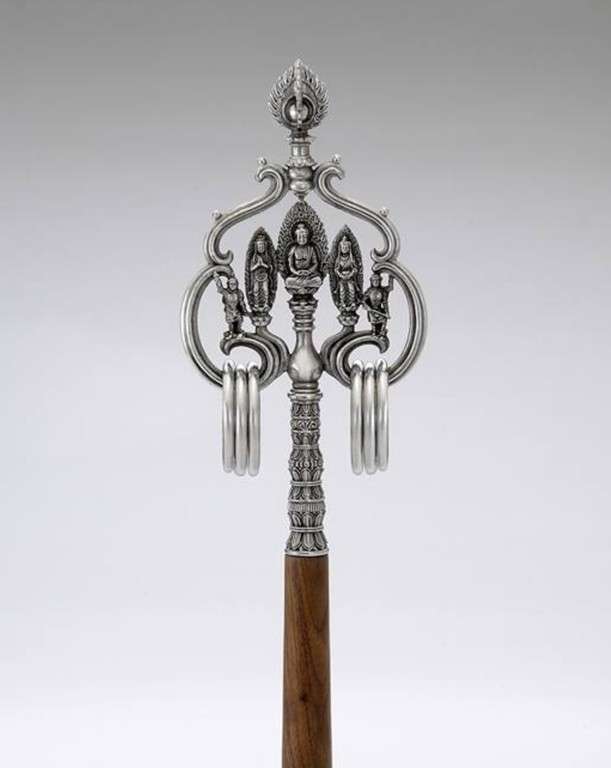
The staff found in the standard Ming edition of JTTW is actually based on two weapons from a 17-chapter storytelling prompt called The Story of How Tripitaka of the Great Tang Procured the Scriptures (Da Tang Sanzang qujing shihua, 大唐三藏取經詩話, c. late 13th-century). Sun Wukong’s precursor, an ageless immortal called the “Monkey Pilgrim” (Hou xingzhe, 猴行者), magically transports Tripitaka and his entourage to heaven. There, the supreme god, the Mahābrahmā Devarāja (Dafan tianwang, 大梵天王; i.e. Vaiśravana), gives the monk a cap of invisibility, a khakkhara (ringed monk’s staff) (fig. 4), and a begging bowl. Tripitaka and the Monkey Pilgrim take turns using these items throughout the journey. The staff is shown capable of shooting destructive beams of light, as well as transforming into magical creatures like an iron dragon or a giant, club-wielding Yaksha. Later, the Monkey Pilgrim also borrows an iron staff from heaven to fight a dragon.

The two staves from this tale were eventually combined by later storytellers. The rings from the first weapon were added to the ends of the second.

Fig. 4 – A beautiful, modern monk’s staff with six rings (larger version).

2.2. Influence from Religion

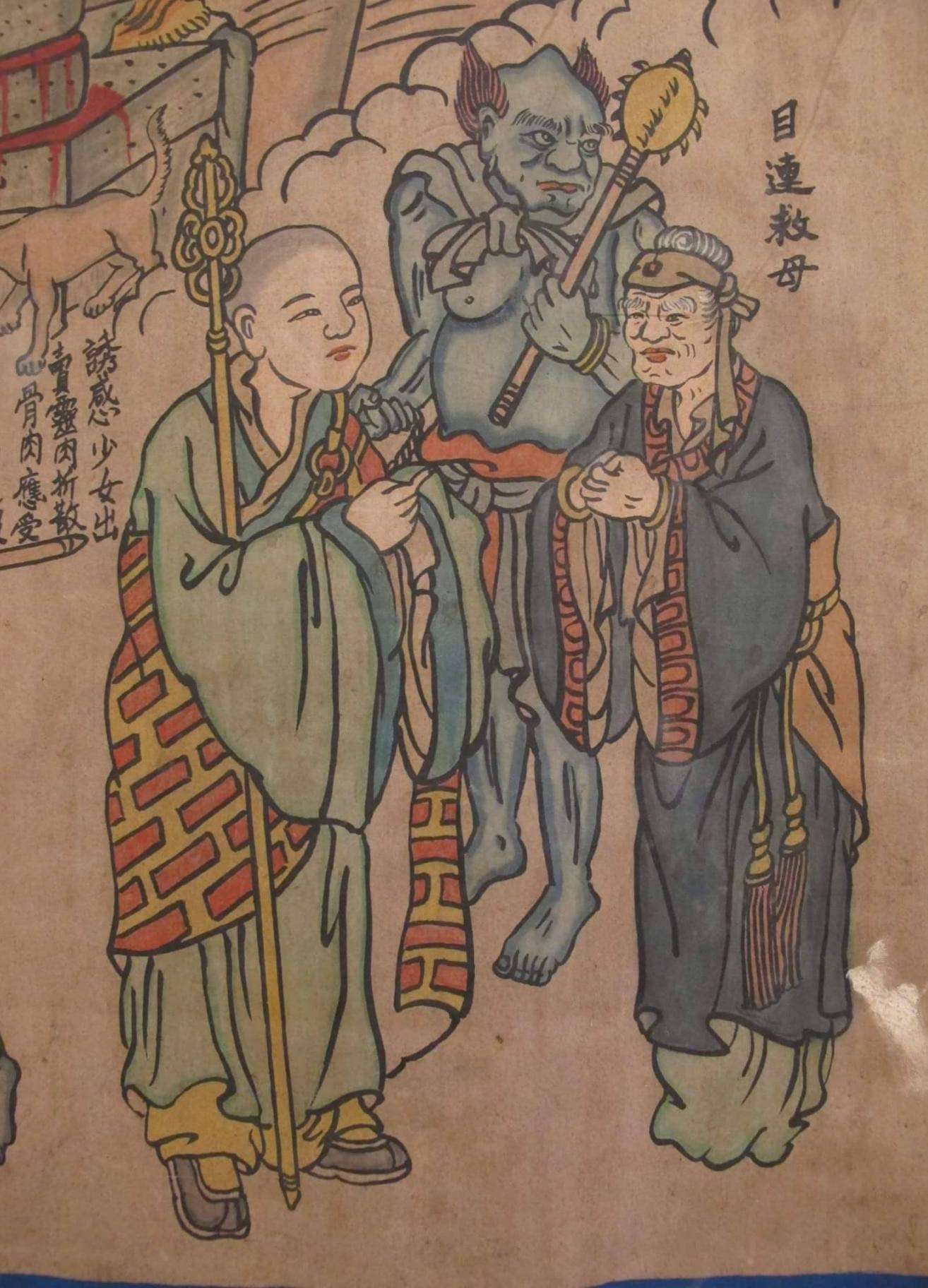
The Monkey Pilgrim’s magic ringed staff and begging bowl were directly influenced by the Buddhist Saint Mulian (目連; Sk: Maudgalyayana), a disciple of the historical Buddha. One particular 9th to 10th-century story notes that the Saint uses the staff to unlock the gates of hell in order to save his mother (fig. 5). This is where Sun Wukong’s weapon from JTTW gets the power to open locks.

Mulian saves his mother, scroll - small

Fig. 5 – A scroll or mural depicting Mulian rescuing his mother from the underworld (larger version). Originally found here.

The ringed and metal staves used by the Monkey Pilgrim are based on those historically carried by Buddhist monks in ancient China. The aforementioned ringed variety, called “tin staves” (xizhang, 錫杖) where used by religious monks and decorated with six to twelve metal rings (see fig. 4). These rings were designed to make a clanging noise to not only scare away animals on the road but also to alert possible donors to the monk’s presence.

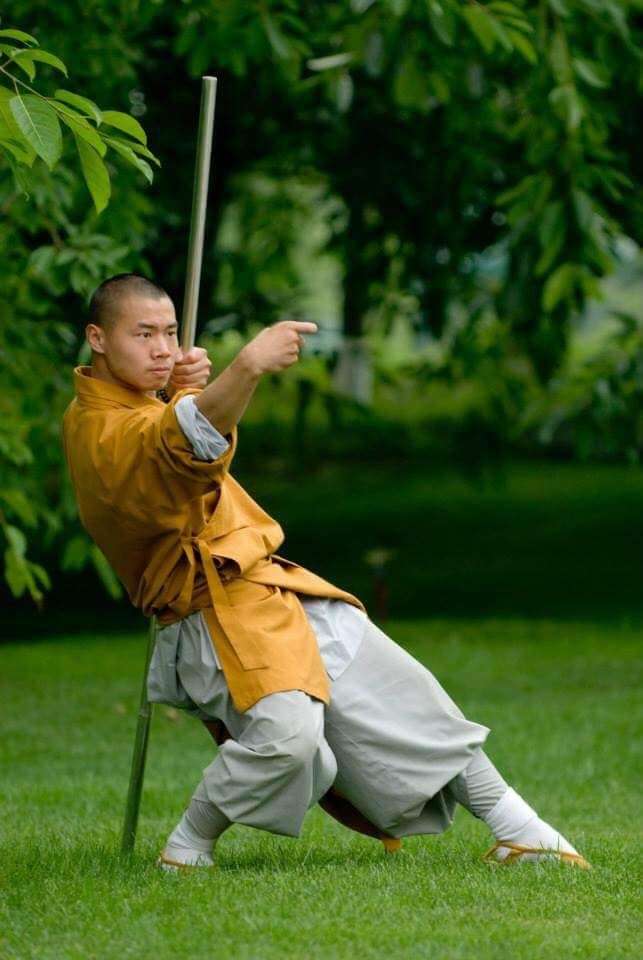
Martial monks charged with protecting monasteries or deployed by the Chinese government against pirates wielded wooden or iron staves (fig. 6). The former were chosen for their diminished capacity for fatal injuries, while the latter were explicitly used for killing during times of war. Sun Wukong wielding the iron variety makes sense as he’s a martial monk charged with protecting Tripitaka from monsters and spirits.

Fig. 6 – A martial monk practicing a drunken staff-fighting form (larger version).

The term “As-you-will” (ruyi, 如意) from Monkey’s staff (mentioned above) is connected with a scepter used in ancient China as a symbol of religious debate and authority and, to a lesser extent, as a weapon. While it can be traced to a Hindo-Buddhist tradition in India, the scepter came to be associated with the highest gods of Daoism thanks to being decorated with a “numinous mushroom” (lingzhi, 靈芝), a real world fungi believed to bestow immortality. This mushroom scepter was at some point associated with the Buddhist Cintamani (Ruyi zhu, 如意珠), or “As-you-will jewel.” This was believed to grant any wish that one might desire. This explains why Monkey’s As-you-will staff grows or shrinks according to his commands. It’s interesting to note that some religious images of the scepter depict it with a syncretic mix of the Daoist mushroom and the Buddhist jewel (fig. 7).

Fig. 7 – An enhanced detail of the Celestial Worthy’s mushroom scepter with a flaming as-you-will jewel (larger version). See here for a fuller version of the deity.

2.3. Influence from Popular literature

The weapon’s portrayal in JTTW as an iron pillar kept in the dragon kingdom comes from old stories about the immortal Xu Xun (許遜), a historical Daoist master and minor government official from Jiangsu province. Popular tales describe him as a Chinese St. Patrick who traveled southern China ridding the land of flood dragons. One 17th-century version titled “An Iron Tree at Jingyang Palace Drives Away Evil” (Jingyang gong tieshu zhenyao旌陽宮鐵樹鎮妖) describes how he chained the flood dragon patriarch to an iron tree (tieshu, 鐵樹) and submerged it in a well, thus preventing the serpent’s children from leaving their subterranean aquatic realm and causing trouble. Pre-JTTW versions of this tale depict the tree as an actual iron pillar (fig. 8). Chinese Five Elements Theory dictates that metal produces water, and as its creator, holds dominion over it. Therefore, an iron pillar would be the perfect item to ward off creatures entrenched in the aquatic environment.

Fig. 8 – A Ming Dynasty woodblock print depicting the immortal Xu overseeing the creation of the iron pillar in a furnace (right) and it’s placement the well (left). Dated 1444-1445 (larger version).

As previously noted, the staff weighs 17,560 lbs. (7,965 kg). This is likely based on an episode from chapter 27 of the Chinese novel Water Margin (Shuihu zhuan, 水滸傳, c. 1400). It involves the bandit Wu Song lifting a heavy stone block said to weigh 300 to 500 catties (san wu bai jin, 三五百斤; 390-650 lbs./177-295 kg) (fig. 9). This scene and the one from JTTW where Monkey lifts the iron pillar are quite similar. Both involve a hero (Wu Song vs. Sun Wukong) asking someone (Shi En vs. Ao Guang) to show them a heavy object that cannot be moved (stone block vs. iron pillar). Both heroes then adjust their clothing before easily lifting the object with both hands. Most importantly, the Chinese characters for the weight of each object (三五百斤 vs. 一萬三千五百斤) are similar. The only difference is the addition of “10,000” (yiwan, 一萬) and “1,000” (qian, 千), respectively. And given the close historical and cultural ties between the two heroes, I believe the author-compiler of JTTW embellished the Water Margin episode to portray Sun as a hero like no other, a divine immortal that can lift weights far beyond even Wu Song himself.

Fig. 9 – Wu Song lifts the stone block (larger version). Image found here.

Note:

1) Irwen Wong of the Journey to the West Library blog has suggested that the length is likely an error for 12 feet (zhanger, 丈二) since the staff was already near 20 feet when Monkey first acquired it, and he later asked it to shrink to a more manageable size.

Qitian Dasheng Monkey King Temples in Taiwan

Last updated: 03-14-2021

Temple Count: 14

Did you know that Sun Wukong (孫悟空), the immortal monkey hero from the great Chinese classic Journey to the West (Xiyouji, 西遊記, 1592), has his own religion? He is mainly worshiped as the “Great Sage Equaling Heaven” (Qitian dasheng, 齊天大聖) in southern China, Taiwan, and Southeast Asian countries like Malaysia, Singapore, and even Thailand and Vietnam.

I recently returned from a trip exploring Great Sage temples in northern and central Taiwan. I’ve decided to mirror a former article by creating a list of Monkey King temples that I’ve visited on the island. This should not be considered comprehensive. I intend to update the article as I visit new locations. I will divide the list according to the closest city/municipality and provide the address if possible. If I’ve already written an article about a particular location, I will add a link to the name.

(Note: Make sure to call each temple ahead of time to learn about the best travel route. Google is not always the most accurate in regards to traveling on foot in the countryside.)

I. Jilong (Keelung)

1) Shengji Gong (聖濟宮) – 1949

Address: 202基隆市中正區中船路112巷30弄95號

I didn’t get any information about the temple during my visit as the caretaker appeared to be mute (or just didn’t want to talk to me). Online information states that the temple was built in 1949. Legend has it that the Great Sage saved villagers from rampant fires plaguing Keelung at the time. Like Yilan’s Wujian Ziyu Temple (see below), Shengji’s Great Sage and his army of monkey soldiers are portrayed as martial monks (wuseng, 武僧) with a golden headband and long hair. The alcove housing his statue is called the Shuilian Grotto-Heaven (Shuilian dongtian, 水濓洞天) after Monkey’s home the “Water Curtain Cave” (Shuilian dong, 水簾洞) on the Mountain of Flowers and Fruit. He is flanked on his left and right by Shennong (神農) and Kai Zhang Shengwang (開漳聖王), respectively

Pictures:

https://drive.google.com/drive/folders/0Bwi3jyIV3-OhflAzUy1vSHp2aC0wTExPbjRMV2FzX1pzZWlyd3RHM0hJYWpJc3B2RlM3Ykk?resourcekey=0-twvNaHcJLHXWU4JH05PtUg&usp=drive_link

2) Qitian Dasheng Miao (齊天大聖廟) – Unknown

Address: 203基隆市中山區中山二路89巷31號

No caretakers were present at the time of my visit, so I was unable to ask questions about history or names. All statues were locked inside of a glass display case, along with a blue booklet that caught my eye. It was titled The Great Sage Equaling Heaven’s True Scripture of Awakening People and Enlightening the World (Qitian Dasheng xingren jueshi zhenjing, 齊天大聖醒人覺世眞經). Like in Shengji and Wujian Ziyu Temples, the Great Sage and his monkey army are depicted as martial monks. Also like Shengji, he is flanked, this time on his left, by Kai Zhang Shengwang. He is flanked on his right by Fude Zhengshen (福德正神).

Pictures:

https://drive.google.com/drive/folders/0Bwi3jyIV3-OhflJtdTZya3lrY01HZVFfTmpIYlRpaF8yNHlTTFdCeUtnRlY3WE9kQzVjODA?resourcekey=0-D67c2xakNujE-s67mqVckA&usp=sharing

II. Taipei

1) Shilin Zheng’an Gong (士林正安宮) – circa 1990

Address: 111台北市士林區士東路2巷5號

The Zheng’an Temple of Shilin [1] is definitely the smallest Great Sage house of worship that I’ve yet visited. It appears to be a small, open-front store/apartment unit that has been converted into a temple. It recognizes at least seven Great Sages, each with his own name and purpose. I’m still gathering information on the temple, so I will post their names at a later date. While most such temples have one or two spirit-mediums, Zheng’an has an astounding seven, each of whom reports to a respective Great Sage. During special occasions, the spirit-mediums perform self-mortification with swords, axes, swordfish noses, spiked clubs, and spiked balls.

I had the pleasure of joining the temple on a pilgrimage to the south of Taiwan back in November of 2020. I was even blessed with the opportunity to help carry the Third Prince’s palanquin, which led the way for a much larger vehicle containing Zheng’an’s numerous Great Sage statues. I’ll write more about this in the future.

Pictures:

https://drive.google.com/drive/folders/0Bwi3jyIV3-OhfkY1VDdRUkNfMFdzTlgzdWZvUW5IZTNfN2NJMmdhRzFocmdaMWJmYWQ5Tjg?resourcekey=0-vTwI3jOGf6nQgFCwiL5Wlg&usp=sharing

2) Shuilian Gong (水濂宮) – Unknown

Address: 108台北市萬華區環河南路一段344號

The temple attendants were unable to give me any history on the temple. But I did learn that they worship a trinity: “Great Sage Sun” (Sun Dasheng, 孫大聖), the large central figure (image 1 (27)); the “Black Great Sage” (Hei Dasheng, 黑大聖), the small figure holding the gourd and whip (image 1 (34)); and the “White Great Sage” (Bai Dasheng, 白大聖), the small figure shielding his eyes and holding a staff (image 1 (42)). These color-coded names remind me of the red, white, and black-faced Great Sages from Fujian, the original home of Monkey’s religion. The temple houses many monkey god statues apart from the trinity, likely soldiers. I’ll return to get more info and better pictures. The soot black figures and bright clothing make it hard to get detailed photos.

Pictures:

https://drive.google.com/drive/folders/0Bwi3jyIV3-OhfkNJNlVLaXhUdW5idGMzaElNbjZDNU0xSFM3TVhUdkpZeFBvbGJMZEpsLUE?resourcekey=0-uTyI6aTdwRlh72AJb1z59A&usp=drive_link

III. Xinbei (New Taipei)

1) Qitian Dasheng Dian (齊天大聖殿) – circa 2000

Address: 249新北市八里區渡船頭路9號

I was told by the temple’s ritual master that she received a religious vision from the Great Sage to move from Gaoxiong in the south and look for land with good fengshui for a temple. After her third move, she founded her temple in the mountainous region of Bali. While the temple has several monkey statues, each is considered a different aspect of the singular “Lord Great Sage” (Dasheng ye, 大聖爺) or “Great Sage Patriarch” (Dasheng zushi, 大聖祖師).

The area behind the temple features a garden with a colorful, life-sized statue of the Great Sage seated on a throne. He holds a peach of immortality in one hand and his staff in the other. His throne rests on an elevated rock outcropping painted with the characters for the “Mountain of Flowers and Fruit” (Huaguo shan, 花菓山). A series of concrete steps laid within the folds of the rocks takes you to a private heaven further into the mountain with flowers and guava, papaya, banana, and tangerine crops. It’s a great experience.

Be forewarned: The route that Google told me to walk from the bus stop was NOT reliable. My GPS took me through a neglected cemetery up the side of a mountain. I had to cut a path through the forest, jump streams, and climb rocks before I finally arrived all sweaty and dirty. The temple personnel were amazed that I made such a trip because the route was completely unnecessary. They told me of a road leading directly to the temple! Apparently my GPS showed me the most direct route instead of the slightly longer, yet far more practical one. I highly suggest walking from the foot of Duchuantou Rd. (渡船頭路) and following the signs to the temple.

On the bright side, the caretakers were so thrilled to learn of my great interest in their god that they treated me to tea, fruit, and snacks. They are very welcoming people.  

Pictures:

https://drive.google.com/drive/folders/0Bwi3jyIV3-OhfnN2amU5WmtzSEg1akt4UXRyaEYxSVB0ei00Nk84VHJDbk1TZ2o5WThleVU?resourcekey=0-E3rHR884MaSFmXdBuizoiQ&usp=sharing

2) Banqiao Yunsheng Gong (板橋雲聖宮) – Unknown

Address: 220新北市板橋區富山街84號

This temple was closed when I visited. I had to shoot pictures through two sliding glass doors. It is very small, possibly as small or even smaller than Zheng’an Temple in Taipei.

Pictures:

https://drive.google.com/drive/folders/0Bwi3jyIV3-Ohfk90MC1wUnRXQzhlWGVUNjdwTzB0T1NQc285MXF4cmFHVUc5VHlrWUFuOFE?resourcekey=0-7E48uhiHgEPXaihd35mbAg&usp=sharing

3) Qitian Dasheng Miao (齊天大聖廟) or Qitian Dasheng Ye Miao (齊天大聖爺廟) – Unknown, possibly new

Address: 238新北市樹林區佳園路一段41巷6號

The caretaker told me that the temple had not yet been consecrated and therefore wouldn’t let me take any pictures inside. However, a Chinese comment on Google says the temple “isn’t open to the outside world”, suggesting that it’s closed to the public. Based on what little I could see, the building unit appears to be someone’s home/business/personal altar. Rows and rows of god statues packaged for sale lined shelves against a back wall.

IV. Yilan

1) Wujian Ziyu Si (五間紫雲寺) – 1960

Address: 263宜蘭縣壯圍鄉大福路三段449號

Legend has it that around 1899 a man found a monkey-shaped stone and enshrined it in a thatched shed. This was eventually converted to a temple a few years later. It was destroyed by a typhoon in 1960 but subsequently rebuilt. The temple appears to recognize a trinity, with countless monkey soldiers beneath them, each portrayed as martial monks with a golden fillet and long hair. The Great Sage has two aspects: the “Martial Great Sage” (Wu Dasheng, 武大聖) (standing statues), who exorcises evil, and the “Civil Great Sage” (Wen Dasheng, 文大聖) (seated statues), who insures the safety of people and animals.

Pictures:

https://drive.google.com/drive/folders/0Bwi3jyIV3-OhfjlJSVc4QkVlSHRGYXR6OC13MDhuczdIVUsxTV9rcUxjMnZBQUFsMGFGbUk?resourcekey=0-X_tibNKz6SnI5YesVR_G1w&usp=sharing

V. Xinzhu (Hsinchu)

1) Shenglong Gong (聖龍宮) – 2016

Address: 310新竹縣竹東鎮中豐路三段187號

This temple is famous for its nine-meter-tall (29.52 ft.) statue of the Great Sage, which is apparently the tallest in Taiwan. I was told that it was shipped from Fuzhou, Fujian Province, China. The members appear to only revere a single monkey god, whom they call the “Buddha Great Sage Equaling Heaven” (Qitian Dasheng Foye, 齊天大聖佛爺). The smaller statue in front of the taller one was the original focus of worship at a devotee’s home prior to the building of the temple.

Pictures:

https://drive.google.com/drive/folders/0Bwi3jyIV3-OhfnNvdkJlTEdjZnFHVDRFZGxGNm1HRG1kNU10cWl6Vm1ubEdBTnVaSjJ1U1E?resourcekey=0-w6nIRnUrmb-cjOOSBuKiWQ&usp=drive_link

VI. Taizhong (Taichung)

1) Yusheng Si (玉聖寺) – 1959

Address: 436台中市清水區頂湳路73號 

Records for the original temple apparently go back to the Xianfeng (1850-1861) period. According to legend, Yusheng was built at the behest of a beggar who revealed himself to be the Great Sage. The current house of worship was built in 1959. The members appear to recognize at least five Great Sages (maybe more). I was told that they don’t have individual names; though, the members may have been apprehensive to share secrets with a random foreigner. They just refer to them as “Lord Great Sage Equaling Heaven” (Qitian Dasheng Ye, 齊天大聖爺). One figure has a painted face similar to pestilence gods (wenshen, 瘟神). Perhaps this version of the Great Sage serves a similar purpose. It’s interesting to note that several statues are shown holding spiked balls like those used by spirit-mediums.

Pictures:

https://drive.google.com/drive/folders/0Bwi3jyIV3-OhfkpzTnI3YkU0LTh3N3ZYVDAzZWJwa1IwRF9LTUxtT3FhUGZaNjN6ejAxWGM?resourcekey=0-GUurvR7ZOmGtYI47Fm6fvA&usp=sharing

2) Wuji Tianyi Jiancha Gong Tiantan (無極天壹監察宮天壇) – Unknown

Address: 406台中市北屯區太原路三段1398號 (see below)

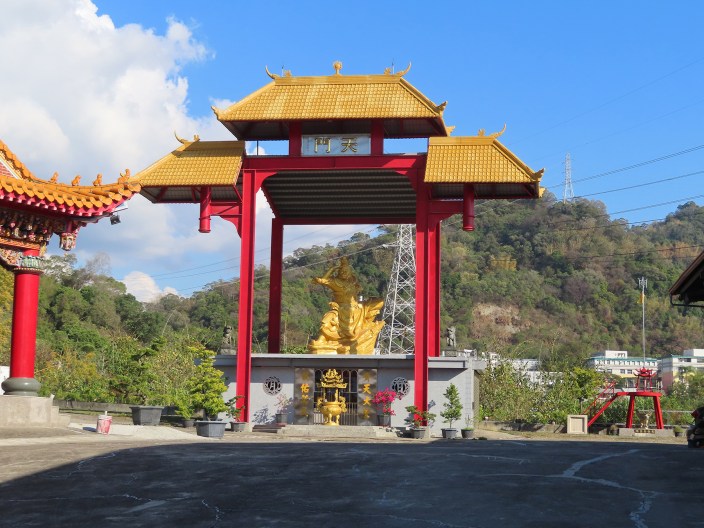
This temple was closed when I visited. I had to shoot pictures of their lovely statue over the gate. I’m guessing it’s four to five-meters-tall based on the ding censor in front. I plan to go back at a later time to get pictures of the temple interior.

I did see a black command flag (Hokkien: or leng ki; Ch: hei leng qi, 黑令旗) out front, which signifies that a spirit-medium is active in the temple.

Update: 04-24-21 – I was informed that this location is only used for particular festival days. The main temple is located at 404台中市北區富強街117巷17號.

Pictures:

https://drive.google.com/drive/folders/0Bwi3jyIV3-OhfjMtSE1oVU1Wd2pWZGpWWE94X09TZ3hjSXBPV0dlSGY5cEctYkI4TkJzbk0?resourcekey=0-uLDycsBAupb0qe1Lup7JgA&usp=sharing
VII. Beigang, Yunlin

1) Shengfo Tang (聖佛堂) – Unknown

Address: 651雲林縣北港鎮文化路198-1號

No attendants were present when I visited, so I couldn’t ask any questions about history or beliefs. The small temple appears to recognize three Great Sages, each represented with golden eyes. The larger central figure is depicted as a martial monk with long hair, while those to his left and right have animalistic, furry faces. Interestingly, the main statue is immediately flanked on both sides by a single wooden pole topped by a black or red Great Sage bag puppet, each depicted as a martial monk. A paper fan and two framed ink on paper paintings indicate the monkey god is referred to as the “Fighting Sage Buddha” (Douzhan sheng fo, 鬥戰聖佛). This is a variant of the deity’s lesser used title, the “Victorious Fighting Buddha” (Dou zhansheng fo, 鬥戰勝佛).

The main altar is flanked on the right by various Buddhist deities and on the left by Daoist gods.

The front of the building is adorned with two Great Sage spirit generals (shenjiang, 神將) [2], something I’ve never before seen but have heard of; as well as a large black command flag, indicating the presence of a tangki spirit-medium. A large, ornate spiked ball, like those used by mediums, was positioned on the offerings table between statues of San Taizi and bottles of rice wine.

The temple is located down the street from a small joss stick factory. It was interesting to see brightly-colored bundles and rolling trays of the sticks being aired out to dry.

Pictures:

https://drive.google.com/drive/folders/0Bwi3jyIV3-OhfjZfb2hpeDNMUnBqX3ZxemRtbDdSMl9tQnpfanlqY3Y1MGJrVi1OOVQ0bzg?resourcekey=0-AK1FYcermkK3wr44y8VntQ&usp=drive_linkhttps://drive.google.com/drive/folders/1qAIvC31izqKt49tTyQYSjxIOPx7T8P7D?usp=sharing

VIII. Chiayi (Jiayi)

1) Jisheng Gong (吉聖宮) – 1979

Address: 嘉義市林森東路691巷139弄65號

While an attendant with a thick Taiwanese accent told me the temple was “very, very old”, online information indicates that it was founded in 1979. Legend has it that Lord Guan sent the Great Sage to heal the head injury of a member of the Li (李) family, leading to their worship of the monkey god. (This suggests Lord Guan is considered a superior of the Great Sage in Jisheng’s celestial hierarchy). The current Great Sage statue is apparently based on an original one that presided over the incense pot at a Lord Guan temple and was later kept in the Li family home. It sits in a man-made cave, along with other monkey figures and Buddho-Daoist gods, behind metal bars. It holds a banana leaf fan like that wielded by Lady Ironfan.

A large metal rod, a replica of the monkey god’s magic staff, is locked to a side wall when not in use by the temple’s spirit-medium. It is plastered with a paper talisman.

A hall to the right of the temple houses several spirit general costumes of various protector deities.

Pictures

https://drive.google.com/drive/folders/0Bwi3jyIV3-Ohfm5xaUF6WFU5TTZiTF90TkJVazBjbVNQaTJ6WXhhZHFkRkVNMElCWXZTblk?resourcekey=0-cUuC4t9sK9S4kBaUBYLDlA&usp=sharing

IX. Tainan

1) Wanfu An (萬福庵) – 1660s

Address: 700台南市中西區民族路二段317巷5號

Wanfu is touted as the oldest Qitian Dasheng temple on the island, originally serving as the home of an anti-Qing general’s wife during the Southern Ming (c. 1660s), which was later converted to a house of worship following her death. It was known for taking in orphans during the early-19th-century. The temple recognizes a trinity of Great Sages, followed by a small handful in administrative positions, and finally a plethora of soldier monkeys. The highest-ranking member of the trinity is a 300-plus-year-old Fujianese stone statue called “Laying the Foundations Elder Great Sage” (Kaiji Da Dasheng, 開基大大聖). The temple has a single spirit-medium. But the last time I checked, he was training a disciple, his nephew.

Great Sage temples from all over Taiwan look upon Wanfu as a fount of pure energy, visiting every year to procure its incense ashes in order to replenish their spiritual armies. Spirit-mediums are thought to direct these soldiers in battle while possessed by the monkey god. I personally witnessed this ash ceremony during the Shilin Zheng’an Temple pilgrimage (as noted earlier). I saw at least three other temples waiting for their turn. I’m sure many more visited that day and the next.

Pictures:

https://drive.google.com/drive/folders/0Bwi3jyIV3-OhfldvbDFFdmlrWHNWNnFNeUhEY1hhTEhYaVdiUnRxS3VBZ2UtRDRwSkVTbms?resourcekey=0-NsUQkYFLqs_gC9-5onWgAw&usp=sharing

Notes:

1) Not to be confused with other Zheng’an Temples in Taiwan.

2) Large, bulky costumes that rest on a performer’s shoulders. They see out through holes in the chest. Such costumes are worn during religious processions, and the walking movement causes hinged arms to swing to and fro.

Story Idea: Master Subodhi’s Curriculum II – Immortal Warriors and Shaolin Monks – Some Fun Monkey King Fanfiction Speculation

From time to time I like to post a fun blog not directly related to (though informed by) my research. A past example can be seen here. Regular articles will resume after this entry.

Last Updated: 05-15-2022

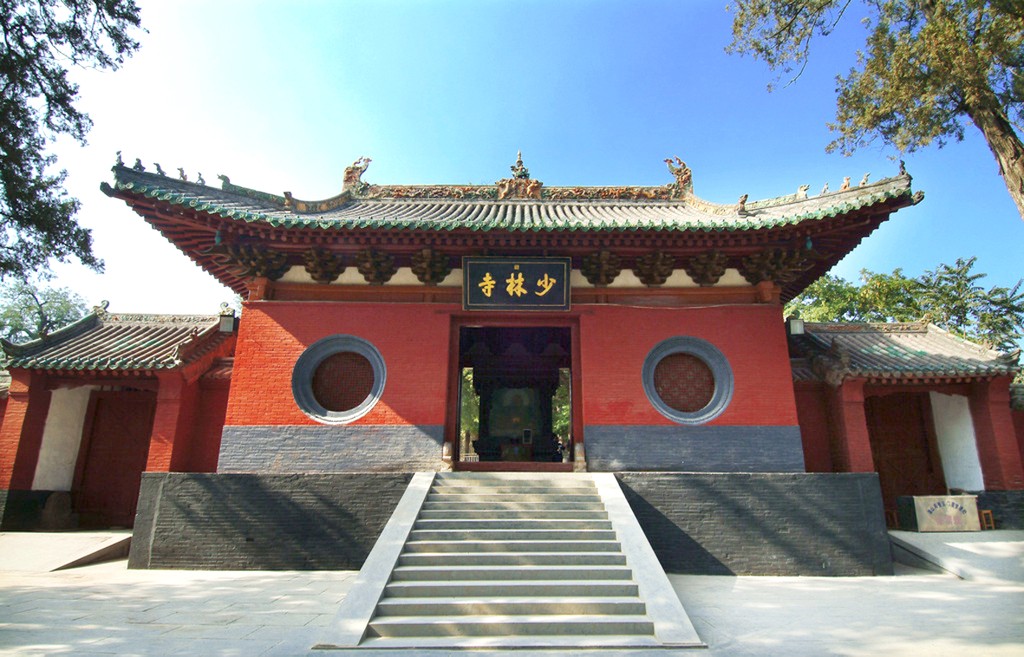
As noted in part one, the immortal sage Subodhi teaches Sun Wukong Chan (Zen) and Daoist philosophy; the secret of immortality; the 72 heavenly transformations; cloud-somersaulting; general Daoist magic; military arts like troop maneuvering, weapons, and boxing; and medicine. But why would a Daoist monk need to know how to wield weapons and fight in battle formations? In this piece I would like to speculate that the Sage’s school is a training ground for an immortal monastic army! I am by no means suggesting there is actual textual support for my conjecture. This is purely a fun exercise, fodder for fanfiction, if you will. I plan to supplement what we already know from the novel with historical information about monastic armies in China, particularly focusing on the warrior monks of the famed Shaolin monastery (Shaolinsi, 少林寺) (fig. 1).

Shaolin front gate

Fig. 1 – The front gate of Shaolin (larger version).

I. The Evolution of Shaolin’s Monastic Army: A Brief Survey

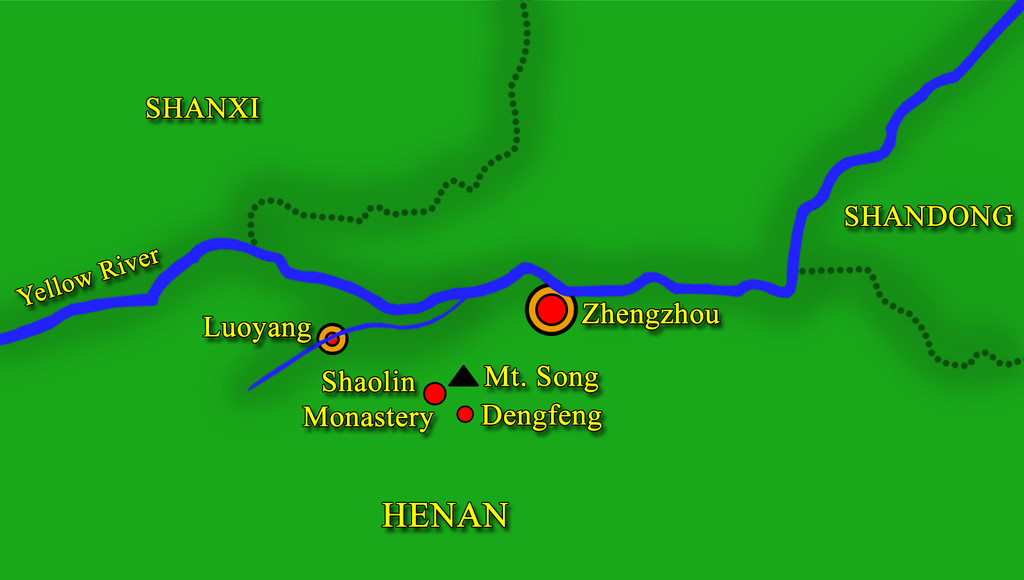
Founded in 496 during the Northern Wei Dynasty, the Shaolin monastery was built on Song Mountain, a mountain range located in Henan Province, China (fig. 2). It became the home of Chan Buddhism and a center for Buddhist learning, even attracting the likes of Xuanzang (on whom Tripitaka is based), whose request to move there in 645 was denied by the Tang Emperor Taizong (Shahar, 2008, p. 17). Despite being a school of higher religious learning, the monastery later came to be associated with elite warriors. The term “Warrior Monk” seems like an oxymoron considering Buddhism is generally considered a religion of peace. However, evidence suggests the monks may have first taken up arms to protect their property, for monasteries were often lavishly decorated and laden with treasures from rich donors, making them prime targets for bandits (Shahar, 2008, p. 18). For example, one of Shaolin’s worst bandit raids took place in 1356 when Red Turban rebels attacked, “peeling off the gold coating of the Buddha images and breaking the statues in search of hidden treasures”, eventually destroying part of the complex (Shahar, 2008, p. 85).

Fig. 2 – A map showing the location of Shaolin and the nearby town of Dengfeng in northern Henan (larger version). The ancient Sui and Tang capital of Luoyang is visible to the left, while the modern day capital of Zhengzhou is visible to the right. Henan shares a border with the provinces of Shanxi and Shandong to the north. Adapted from Shahar, 2008, p. 10. By the author.

The first documented case of Shaolin monks protecting their monastery took place in 610 when they repelled a bandit attack that saw many of their stupas burnt. Their combat experience would come in handy years later when, in 621, the monks aided Li Shimin, the future Emperor Taizong of the newly formed Tang Dynasty, by assaulting a stronghold and capturing the nephew of Wang Shichong, a former general of the defunct Sui Dynasty and the founder of a competing dynasty. Wang had captured valuable farmland belonging to Shaolin and established the stronghold there because it was located in a valley through which passed the strategically important route to the Sui capital of Luoyang. The monks’ intervention was not a display of loyalty to the fledgling Tang but solely a move to regain control of their property, a political gamble that paid off and benefited the monastery for centuries (Shahar, 2008, pp. 25-27). Three of the monks who took part in the battle were awarded titles by Li. One in particular was given the high military rank of Generalissimo (Da Jiangjun, 大將軍) (Shahar, 2008, p. 31). This wasn’t the last time Shaolin soldier monks came to the aid of the Chinese empire.

By the late Ming Dynasty Shaolin was famed far and wide for their mastery of the staff, their method appearing in various military encyclopedias. The interest in their martial prowess was likely spurred by news of their military victories during the 1550s against the Wokou (倭寇, “Dwarf/Japanese pirates”), a conglomeration of Japanese, Chinese, and Korean sea bandits who plagued China’s eastern and southeastern coasts (fig. 3). The Ming’s hereditary army was all but useless at this time, forcing local governments to rely more on prefectural level troops (xiang bing, 廂兵), including contingents of Buddhist warrior monks from different monasteries (Shahar, 2008, p. 68). Monks from Shaolin and sister temples were mobilized in the spring of 1553 and fought the pirates a total of four times through the autumn of 1555. Shahar (2008) explains:

The monks scored their biggest victory in the Wengjiagang battle. On July 21, 1553, 120 fighting monks defeated a group of pirates, chasing the survivors for ten days along the twenty-mile route southward to Wangjiazhuang (on the Jiaxing Prefecture coast). There, on July 31, the very last bandit was disposed of. All in all, more than a hundred pirates perished, whereas the monks suffered four casualties only. Indeed, the monks took pity on no one in this battle, one employing his iron staff to kill an escaping pirate’s wife (p. 69).

It’s interesting to note that the head priest who led the monastic army in their victory over the Wokou was himself from Shaolin and was documented to have single-handedly defeated eight armed monks from a neighboring temple who challenged his position (Shahar, 2008, pp. 69-70).

Wokou pirates vs ming

Fig. 3 – Detail from a Ming painting depicting soldiers fighting the Wokou (larger version). More information about the scroll can be seen here.

In a chapter titled “The Monastic Armies’ First Victory” (Seng bing shou jie ji, 僧兵首捷記, 1568), the geographer Zheng Ruoceng extolled Shaolin’s skill and called for their regular use, along with other holy warriors from sister temples, in combat:

In today’s martial arts, there is no one in the land who does not yield to Shaolin. Funiu [in Henan] should be ranked as second. The main reason [for Funiu’s excellence] is that its monks, seeking to protect themselves against the miners, studied at Shaolin. Third comes Wutai [in Shanxi]. The source of the Wutai tradition is the method of the “Yang Family Spear” (Yangjia qiang), which has been transmitted for generations in the Yang family. Together, these three [Buddhist centers] comprise hundreds of monasteries and countless monks. Our land is beset by bandits inside and barbarians outside. If the government issues an order for [these monks’] recruitment it will win every battle (Shahar, 2008, p. 70).

The warrior monks were just one type of disciple at Shaolin. For example, modern Shaolin has four types: 1) ordained monks; 2) ordained martial arts monks who often leave to open their own schools around the monastery or abroad; 3) non-ordained martial arts performers (a.k.a. “fake monks”); and 4) lay disciples. Only the first type strictly adheres to Buddhist dietary laws. The martial type are historically known for eating meat and drinking alcohol, associating the former with physical strength and fighting ability. During the Ming and Qing Dynasties, such monks lived in subsidiary shrines (fangtou, 房頭) away from the monastery proper or lived an itinerant lifestyle (Shahar, 2008, pp. 46-51). Therefore, the warrior monks who bloodied their hands during wartime and regularly ate meat lived away from the devout, vegetarian body within the main monastery. Their unruly nature was for the most part accepted because of the protection they provided.

II. Speculation

Now the fun begins! Here I would like to take what we know about the novel (part I) and the above information to speculate on the martial history of Subodhi’s school.

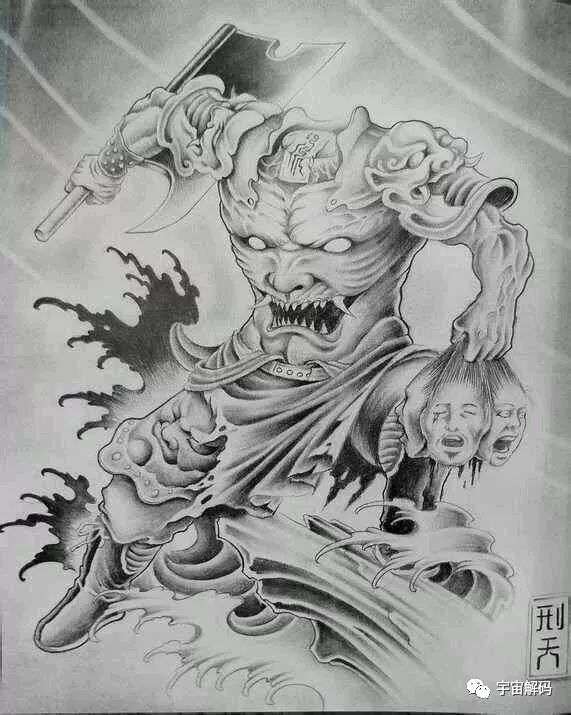
Like Shaolin, Subodhi’s school is located in the mountains and most likely houses great heavenly treasures, the likes of which might be sought after by demon kings. Conflict with these demons would naturally necessitate the immortal monks take up arms in defense of their school. Continued conflict would allow them to hone their skills until their services might be called upon by one of two celestial factions vying for control of heaven during times immemorial, much like Li Shimin’s struggle against Wang Shichong. Chinese mythology is full of numerous baddies threatening the primacy of heaven. One in particular is the headless deity Xingtian (刑天) (fig. 4) from the Classic of Mountains and Seas (c. 4th–1st century BCE):

Xingtian and the Supreme God Di came to this place and struggled against each other for ultimate power. The Supreme God cut off Xingtian’s head and buried him at Eternally Auspicious Mountain. Xiangtian’s nipples then transformed into eyes, and his navel became a mouth. He performs a dance with an ax and shield (Strassberg, 2002, p. 171).

Xingtian was originally a retainer of the Flame emperor, who lost his bid for power against the Yellow Emperor. Xingtian then continued his master’s war, even refusing to die after being beheaded (Strassberg, 2002, p. 171).

Xingtian

Fig. 4 – A modern depiction of Xingtian (larger version). Artist unknown.

The deity’s sustained, obsessive defiance, illustrated by his war dance, could serve as an ever present threat working in the shadows, waiting and plotting. Perhaps untold millennia after his first defeat Xingtian amasses a huge army that attacks the celestial realm via the Tianhe (天河, “Heavenly River), or the Milky Way, much like the Wokou attacked the Chinese coast by sea. The Yellow emperor then calls up Master Subodhi’s immortal warriors to help neutralize the threat, emerging victorious and winning the admiration of deities throughout the cosmos like their Shaolin counterparts.

So where does Sun Wukong fit in to this fanciful yarn? As an ordained-martial monk, Monkey would regularly train in weapons and fight in the monastic army, possibly rising through the ranks due to his supernatural talent and becoming a general who leads an assault against Xingtian’s forces. (Perhaps he would even have to defend his position against older, jealous immortals, much like the aforementioned Shaolin monk during the Ming.) Sun’s time in the monastic army would explain why, as noted in part I, the young immortal knows how to train his monkey children to march, go on patrol, follow orders directed by flags and battle drums, and advance and retreat. Only a person who studied military classics and had prior experience with leading troops would have such knowledge.

This in turn would explain why Subodhi expels Monkey and warns him to never reveal the sage had been his teacher. Sun Wukong is a powerful immortal and seasoned fighter with vast magical powers. Combine that with little impulse control and you’ve got the makings of a demon. Heaven discovering that Subodhi had trained the very demon who came to rebel against it would stain the sage’s name and the achievements of his school.

I would love to see someone use this information to write a prequel set during Sun Wukong’s time in Subodhi’s monastery.


Update: 09-18-21

Sun is originally expelled from Subodhi’s school for flaunting his newfound powers of transformation (Wu & Yu, 2012, vol. 1, pp. 123-124). But given Monkey’s ability to acquire amazing powers in just three short years, perhaps Subodhi fears his student’s potential for exponential spiritual growth. Whether this is because he sees a spark of malice in his disciple or he’s just plain jealous (the former seems more likely), Subodhi could just use the transformation as an excuse to halt his progression. But imagine Sun after another three years! I imagine high-level cosmic beings like the Buddha would be interested in keeping an eye on his progress.


Update: 05-15-22

I’ve posted an article that expands on the ideas from above.

Story Idea: The REAL Reason Sun Wukong is Expelled from Subodhi’s School

Sources

Shahar, M. (2008). The Shaolin Monastery: History, Religion, and the Chinese Martial Arts. Honolulu: University of Hawai’i Press.

Strassberg, Richard (2002). A Chinese Bestiary: Strange Creatures from the Guideways Through Mountains and Seas. University of California Press.

Wu, C., & Yu, A. C. (2012). The Journey to the West (Rev. ed.) (Vols. 1-4). Chicago: University of Chicago Press.

Monkey and the Summoners of Hell: The Story and Origins of the Heibai Wuchang

Last updated: 10-14-2022

One of the most famous episodes from Journey to the West happens in chapter three after Sun Wukong returns from the undersea palace with his magic staff and is chosen as lord of the 72 monster kings. Following a lavish banquet in his honor, the Monkey King falls asleep and his soul is dragged to the Chinese underworld by two spirits:

In his sleep the Handsome Monkey King saw two men approach with a summons with the three characters “Sun Wukong” written on it. They walked up to him and, without a word, tied him up with a rope and dragged him off. The soul of the Handsome Monkey King was reeling from side to side. They reached the edge of a city. The Monkey King was gradually coming to himself, when he lifted up his head and suddenly saw above the city an iron sign bearing in large letters the three words “Region of Darkness [You mingjie, 幽冥界].” The Handsome Monkey King at once became fully conscious. “The Region of Darkness is the abode of Yama, King of Death,” he said. “Why am I here?” “Your age in the World of Life has come to an end,” the two men said. “The two of us were given this summons to arrest you.” When the Monkey King heard this, he said, “I, old Monkey himself, have transcended the Three Regions and the Five Phases [1]; hence I am no longer under Yama’s jurisdiction. Why is he so confused that he wants to arrest me?” The two summoners paid scant attention. Yanking and pulling, they were determined to haul him inside. Growing angry, the Monkey King whipped out his treasure. One wave of it turned it into the thickness of a rice bowl; he raised his hand once, and the two summoners were reduced to hash (Wu & Yu, 2012, p. 139).

The two unnamed psychopomps are simply referred to in the story as “[those who] arrest the dead” (Gou siren, 勾死人). Modern media sometimes portrays these two wearing contrasting black and white uniforms with tall hats (fig. 1).

Heibai Wuchang summon Wukong - small

Fig. 1 – The summoners taking Sun Wukong’s soul in his sleep (larger version). From episode 7 of the Little Fox ESL Journey to the West series.

The Heibai Wuchang

The specific color-coded deities are known in China, Taiwan, and Southeast Asian countries like Malaysia and Singapore as the Heibai wuchang (黑白無常), or the “Black and White [spirits of] Impermanence.” Tan (2018) describes their mythic background and religious importance:

[A] good deal of importance attaches to the worship in Malaysia and Singapore of Heibai Wuchang … popularly known as Da Er Ye (大二爺, Eldest and Second Uncles). In charge of policing the netherworld and protecting humans from evil, they are believed to be two soldiers of the Tang dynasty, General Xie [謝] and General Fan [范]. The former was tall and was hanged by the enemy, while the latter was shorter and was drowned while fighting enemies. General Xie’s image is that of a tall person with a protruding long tongue; he’s wearing a white shirt, and his high hat has the characters yijian daji ([一見大吉] “big luck on seeing me”) or yijian shengcai ([一見生財] “getting wealth on seeing me”). General Fan’s image has a dark face, and his square hat bears the characters tianxia taiping [天下太平], or “peace in the world.” Also called Qiye (七爺) and Baye (八爺), the two generals are in charge of rewarding good people and punishing evil ones. General Xie is more popular among worshippers; frightening as he is, the Elder Uncle benefits from his association with blessing wealth (p. 58).

Chen (2014) provides a different background for the two, which is commonly told in the southern Chinese city of Fuzhou in Fujian province:

The Seventh Lord (七爺) and Eighth Lord (八爺) are frequently seen and are well-known in Taiwanese religious parades. These two deities were originally two brother-like friends in Fuzhou (福州). One was called Xie Bian (謝必安), and the other one was named Fan Wujiu (范無救; 范無咎). On a rainy day, they had an appointment to meet under the Nan Tai Bridge (南臺橋). Fan Wujiu was short with a dark complexion, but Xie Bian was tall with a light complexion. Fan Wujiu arrived at the meeting place earlier, waited there in spite of the heavy rain, and was drowned. Xie Bian tried to bring umbrellas for Fan Wujiu and was therefore late. When he arrived at the bridge, Fan Wujiu was already dead, so he decided to commit suicide because of his friendship and guilt. According to legends, the Heavenly Emperor (玉皇大帝) was touched by this pair of brother-like friends, and promoted their ghosts to supernatural officers from the underworld. The Seventh Lord is Bai Wuchang (白無常), and the Eighth Lord is Hei Wuchang (黑無常). Their mission is to bring dead people’s ghosts from the ordinary human world to the underworld at the moment of their deaths (p. 220).

Heibai wuchang statues - small

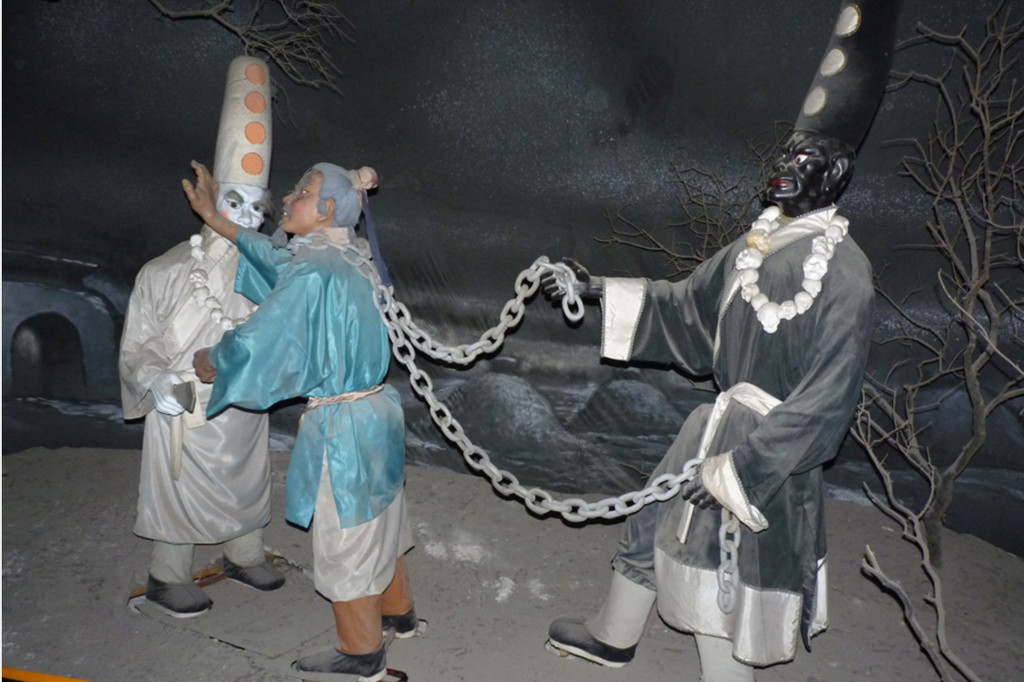
Fig. 2 – A depiction of the spirits taking a soul to the Chinese underworld (larger version). From the Haw Par Villa theme park in Singapore. Original picture from Baike.

Stevens (1997) goes into more detail about their function and veneration:

The pair are despatched on orders from the City God when the due date of a person’s death arrives, to seek out and identify the correct human through the local spiritual official, the Earth God [fig. 3]. They appear before the human and the Tall Demon [the white spirit] announces that the time has come. The Short Demon [the black spirit] binds the soul and drags it before the City God. The Short Demon carries the tablet of authority and the chains to arrest the soul whose due date of death has arrived [fig. 2].

The Tall Demon … receives considerable attention from devotees, often relatives of the very sick, and in a few temples he is provided with cigarettes which are to be seen continually burning having been forced in between his lips. More popularly, his mouth is smeared with a black substance to win his favour and bribe him to keep away. This used to be opium and is still said to be opium, though the substance appears to be more of a sweet sticky mess. In northern and central China, only the Tall Demon is found (p. 173).

tudi_gong_28129

Fig. 3 – A monumental statue of an Earth god in Taiwan (larger version).

Origins

The sources above provide two backgrounds for the spirits, historical generals or brother-like friends, all of whom died unnatural deaths. Both origins involve the tall, white figure being hanged, while the short, black figure was drowned. Both of these backgrounds have respective ties to religious beliefs of the Han (206 BCE – 220 CE) and Song (960-1279 CE) dynasties. It was common practice during the Han for generals, especially those slain by the enemy, to be deified as gods. This concept of deified mortals carried over into the Song Dynasty when tutelary gods were popular. Those deified were often pious or loyal people who died unnatural deaths. But most importantly, these individuals were deified by the very communities in which they lived, meaning they were worshiped as the protector of the specific locale and its people (Von Glahn, 2004, p. 164).

These tutelary cults find their origin in earth gods (tudishen, 土地神) worshiped as early as the Han. Just like people of the Song worshiped the worthy among their fallen community members, people of the Han worshiped the gods believed to inhabit the very earth on which their communities were established. Considering the dead were buried underground, these earth gods also served the function of “escort[ing] the deceased to the world of the afterlife” (Von Glahn, 2004, p. 165). Remember above that Stevens described the tall and short spirits relying on the local earth god to help locate the correct soul being summoned. Therefore, our spirits appear to be a combination of deified mortals (generals/worthy citizens) and earth gods who escorted the deceased to the afterlife. But there may be more to the story.

Wuchang (無常), or “impermanence”, is the Chinese term for the sanskrit Anitya. This is one of the “Three Marks” (Sk: Trilaksana) of existence in Buddhism, the other two being suffering (Duhkha) and non-self (Anatman) (Buswell & Lopez, 2014, pp. 47-48). The fact Wuchang is associated with these spirits suggests there is an added Buddhist influence. As I’ve written before, the Chinese underworld presented in Journey to the West is an amalgam of local Chinese and foreign Buddhist beliefs. In short, the Chinese Underworld consists of ten courts in which a soul is punished and sent on to the next until their karma is cleansed. The concept of purgatory and the Ten Kings or Judges of hell are products of 7th-century Chinese Buddhism. Prior to this, souls of the dead were kept en masse in a sort of Daoist city of the dead. So our two summoners were no doubt absorbed into this new Buddhist worldview. The spirits in effect could be viewed as personifications of Buddhist impermanence.

The contrasting black and white color scheme has at least two origins. One, it may have evolved from the belief that each performed duties at different times. Maspero (1981) writes, “The most famous of [the City God’s] subordinates are Master White (Bai laoye [白老爺]) and Master Black (Hei laoye [黑老爺]), who perceive everything that goes on within the constituency, the former during the day and the latter during the night” (p. 110). Two, it may draw from the dualistic nature of Chinese philosophy. Baptandier (2008) comments their color is a “personification of the yin and yang principles of life” (p. 146).

20180916_131548 - small

Fig. 4 – A wall mural depicting the Ba Jiajiang (Eight Generals), including General Xie (white) with the phrase “Big Luck” (daji, 大吉) on his hat (larger version) and to his left General Fan (black) with a square hat. Taken by the author in Taipei, Taiwan.

Influence

Both General Xie (the tall, white spirit) and General Fan (the short, black spirit) figure among the Ba Jiajiang (八家將), or “Eight Generals” (fig. 4). These spirit generals are considered protectors of the City God (as well as other popular folk deities) and destroyers of evil. They consist of our two spirits, two more underworld figures called Generals Gan (甘) and Liu (柳), as well as four other figures known as the Four Seasons (Siji, 四季). These generals are personified during festivals by temple parade dance troupes called Jiajiang (家將). Members paint their faces according to the prescribed wrathful iconography for each general (fig. 5) and perform all sorts of choreographed militaristic dances while wielding weapons (video 1). These performances serve to exorcize evil spirits.

National Akau Mazu’s Cup of Youth Ba-Jia-Jang and Guan-Jang-Shou Competition, Ci Feng Mazu Temple, Pingtung City, Taiwan

Fig. 5 – The facepaint of General Xie, the tall, white spirit. A larger version can be seen on this blog. Original picture by Rich J. Matheson.

The tradition originated in Fuzhou but later spread to Taiwan by the 1870s, making it a rather recent phenomenon (Sutton, 1996).

Video 1 – A Ba Jiajiang performance.


Update: 10-29-2018

Sutton (1996) explains the ceremonial procession of the Eight Generals is modeled after yamen officials making an arrest in dynastic China. In this case, the otherworldly generals would be sent to arrest evil spirits:

The performers seen on the march—excluding the Four Seasons—represent a process, though it is never ritually played out: arrest by yamen underlings. In principle the punishment bearer warns, the messengers search out, the stave bearers pursue, Erye and Daye [the Black and White Spirits] take into custody, and the justices at the rear interrogate and record (p. 215).

In video 1, the man dressed in civilian attire and carrying the strange, yoke-like device on his shoulders (visible at 00:26) is performing the part of the punishment bearer, which I take to mean a symbol of those previously arrested and used as warnings to the evil spirits being pursued.


Update: 10-14-22

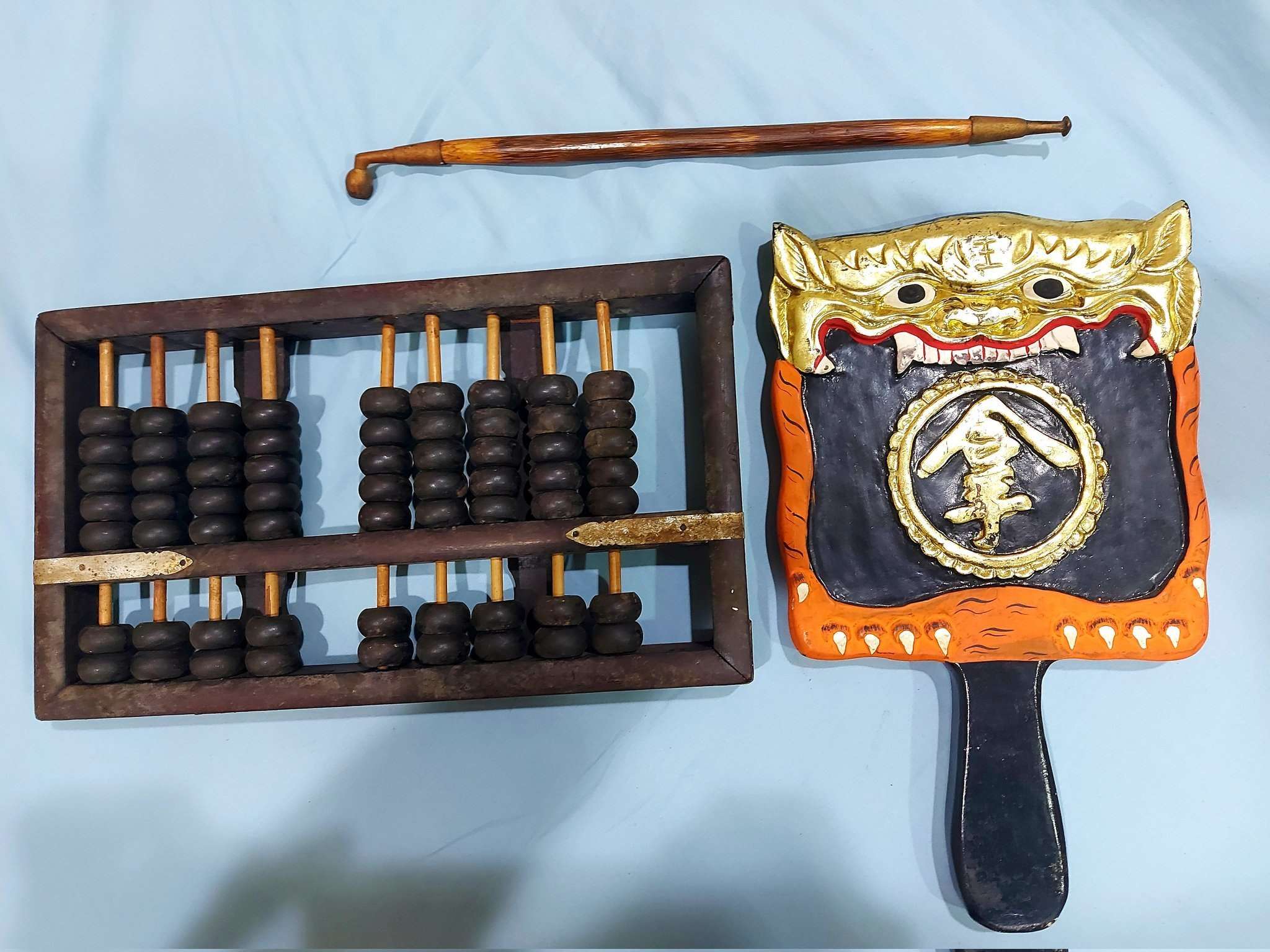
I purchased some ritual items from Singapore previously used by tangki spirit-mediums of the Heibai wuchang. These include an old-school abacus for making arcane calculations, a soul-summoning placard, and a smoking pipe (fig. 6). I feel much cooler now that I have them. My seller-collector friend, from whom I purchased this set, told me that some of the beads are missing from the abacus because they were most likely given to believers as talismans.

Fig. 6 – The ritual items used by Singaporean tangki spirit-mediums of the Heibai wuchang (larger version).

Notes

1) The Three Realms are Heaven, Earth, and Hell, and the Five Phases are the elements of fire, water, earth, metal, and wood. The point being that he is beyond the control of the three realms and the effects of the elements because he has achieved immortality.

Sources

Baptandier, B. (2008). The lady of Linshui: A Chinese female cult. Stanford, Calif: Stanford University Press.

Chen, Y. (2014). Cinematic visualization of spiritual lesbianism in Monkia Treut’s Ghosted: countering essentialist concerns about Li Ang’s literary works In Y. Chen (Ed). New modern Chinese women and gender politics: The centennial of the end of the Qing Dynasty (pp. 210-222).

Maspero, H. (1981). Taoism and Chinese religion. Amherst: University of Massachusetts Press.

Buswell, R., & Lopez, D. (2014). The Princeton Dictionary of Buddhism. Princeton University Press.

Stevens, K. G. (1997). Chinese gods: the unseen world of spirits and demons. London: Collins & Brown.

Sutton, D. S. (1996). Transmission in Popular Religion: The Jiajiang Festival Troupe of Southern Taiwan in Later Imperial China in Shahar, M., & Weller, R. P. (Ed.) Unruly gods: Divinity and society in China (pp. 212-249). Honolulu: University of Hawaiʻi Press.

Tan, C. B. (2018). Chinese religion in Malaysia: Temples and communities. Leiden; Boston: Brill.

Von Glahn, R. (2004). The sinister way: The divine and the demonic in Chinese religious culture. Berkeley: University of California Press.

Wu, C., & Yu, A. C. (2012). The journey to the West: Volumes 1. Chicago, Illinois : University of Chicago Press.