Sun Wukong Dough Figurines from Quanzhou, Fujian, China

Last updated: 10-12-2024

My blog currently hosts several articles related to Fujian Province, China, including Sun Wukong’s cult, some of his mainland temples, a 13th-century pagoda relief carving, and a rare Yuan-Ming Journey to the West (Xiyouji西遊記) puppet play entitled Tripitaka Seeks the Scriptures (Sanzang Qujing, 三藏取經). Here, I would like to add to the list by shining a spotlight on the traditional “decorated dough figurines” (zhuanggao ren, 粧糕人) of Maan Uiling (Wan Weilong, 萬偉龍; Insta: @maanuiling) from Quanzhou City.

This article will serve as a very basic introduction to dough figurines. The artform of food-based dolls has many names across Asia, including niemian ren or liat bin/bian jin/lin (捏面/麵人) and niesu or liat sok/so (捏塑) in Chinese and Hokkien-speaking countries, amezaiku (飴細工) in Japan, and to he in Vietnam.

I will update this piece when new information becomes available.

1. Uiling’s Work

I first learned about Uiling’s art from a Facebook post (video 1). It features Sun Wukong in whimsical, brightly-colored scenes of combat and worship.

Video 1 – A video of Great Sage dough figurines.

1.1. Brief Interview

Uiling was kind enough to answer some questions:

1. I would really like to learn more about the history and uses of decorated dough figurines. Are they related to religion?

The figurines are only available during the Yulanpen [i.e. Hungry Ghost] Festival in the seventh month of the lunar calendar. They are used to ward off evil spirits. In my seaside hometown of Quanzhou, Fujian, adults buy them for children to play with in order to drive away evil spirits.

[…]

The most popular figure purchased by everyone during the seventh lunar month is Sun Wukong, and there’s also Nezha, Three-Eyed Yang Jian [i.e. Erlang, 二郎], the Pagoda-Bearing Heavenly King [i.e. Li Jing, 李靖], Mother Guanyin, Lord Guan, Tripitaka riding the white horse, Mu Guiying, He Xiangu, and Iron Crutch Li bearing a hu-gourd.

你好,粧糕人是农历七月盂兰盆节才有的东西。用来镇邪。我的家乡在海边福建泉州,大人买来给小孩子拿在手上玩,驱逐鬼恶。

[…]

七月的时候大家买的比较多的是孙悟空,还有哪吒、三目杨戬、托塔天王、观音妈、关公、三藏骑白马、穆桂英、何仙姑、铁拐李有一粒葫芦。

(The demonifugic properties of the figurines no doubt explain why Sun Wukong is a popular subject of dough figurine makers. He is after all the demon queller par excellence.)

2. Can you tell me how you started making decorated dough figurines? Is this a family tradition? And can you walk me through the process? What materials do you use, and how long does it take to make the figurines?

The materials are wheat flour, glutinous rice flour, salt, honey, etc. It takes five hours to make one. I have enjoyed this since I was a child and have learned from people everywhere. I want to produce items that suit how I feel in my soul. I have written a book titled Quanzhou Clay Toys.

材料是面粉糯米粉盐蜂蜜等。制作目前是五个小时。我从小就喜欢这个,到处跟人学。我想做出适合我灵魂的感觉。我有写一本书《泉州土怂玩具》。

Those wishing to purchase his creations should download the REDnote (小红书) app. Then, search “泉郡粧糕宫.” If this doesn’t work, you can reach out to the artist on Facebook. Again, search “泉郡粧糕宫.”

1.2. Style Influences

Uiling’s version of Sun Wukong features long hair, something that may seem unique to the laymen (fig. 1).

Fig. 1 – Uiling’s version of the Monkey King (larger version). Screenshot from this Instagram video.

But this can be tied to his depiction in Fujian glove puppetry (fig. 1) and folk religion (fig. 2).

Fig. 1 (left) – A (porcelain or wood) Quanzhou glove puppet Monkey King head (larger version). Photo found here. Fig. 2 (right) – A Fujian Great Sage statue in my personal collection (larger version).

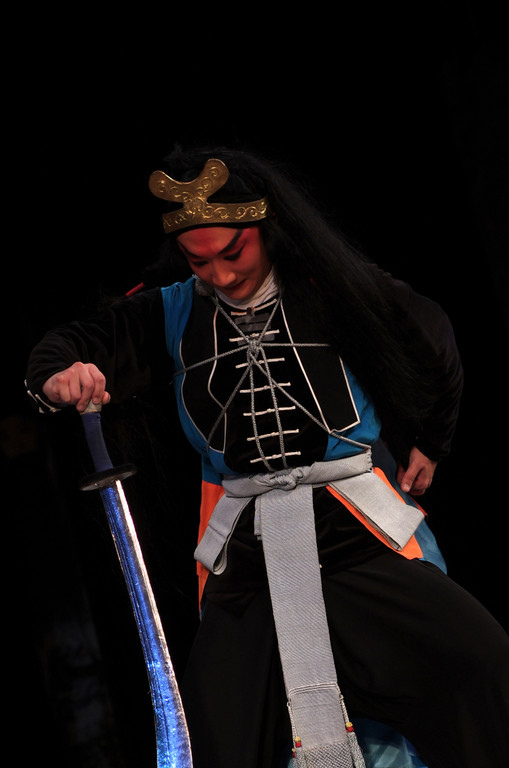
And these in turn are modeled on long-haired military monks (wuseng, 武僧) from Chinese opera (fig. 3).

Fig. 2 – A detail of the literary hero and military monk Wu Song from a Chinese opera about his adventures (larger version). Full version available on Wikimedia Commons.

2. Folk History

Several online articles link dough figurines to the origins of mantou pastries. Thankfully, I was able to find a dynastic source mentioning the legend. [1] The Song-era Records on the Origins of Things and Affairs (Shiwu jiyuan, 事物紀原, c. 11th-century) contains an entry reading:

Steamed Buns [Mantou, 饅頭]

The novel says: In the past, when Martial Marquis Zhuge [Zhuge wuhou, 諸葛武侯; i.e. Zhuge Liang, 諸葛亮] was leading an expedition to capture Meng [孟; i.e. Meng Hou, 孟获], people said that the land of the Man-barbarians [蠻] was permeated with sorcery. So, he had to pray to the gods in order to procure spirit-soldiers to help him. But the local custom involved killing sacrificial victims before the gods would send troops. However, the Martial Marquis refused, choosing instead to wrap mutton and pork in rice dough and shape them like human heads [rentou, 人頭]. After this “sacrifice,” the gods sent the soldiers.

From then on, later generations called these “steamed buns” [mantou, 饅頭; i.e. a homonym of “Man-barbarian heads”]. In Lu Di’s (Miscellaneous) Methods of Sacrifice [(Za) Ji fa, (雜)祭法] of the Jin Dynasty, steamed buns were used during the spring sacrifice as items offered to the gods. And Xu Shi’s “Rhapsody on Pasta” [Bing fu, 餅賦] also mentions this, so it’s suspected that steamed buns originated from the Martial Marquis.

饅頭

小說雲:昔諸葛武侯之徵孟獲也,人曰:蠻地多邪術,須禱於神,假陰兵一以助之。然蠻俗必殺人,以其首祭之,神則向之,為出兵也。武侯不從,因雜用羊豕之肉以包之,以面像人頭以祠,神亦向焉,而為出兵。後人由此為饅頭。至晉盧諦《祭法》春祠用饅頭,始列於祭祀之品,而束晢《餅賦》亦有其說,則饅頭疑自武侯始也。

It’s easy to see how this story was associated with our subject. Both the steamed buns and and figurines are humanoid representations that are shaped from rice dough. And both serve a religious function.

I hope to write more about this fascinating artform in the future.


Update: 10-12-24

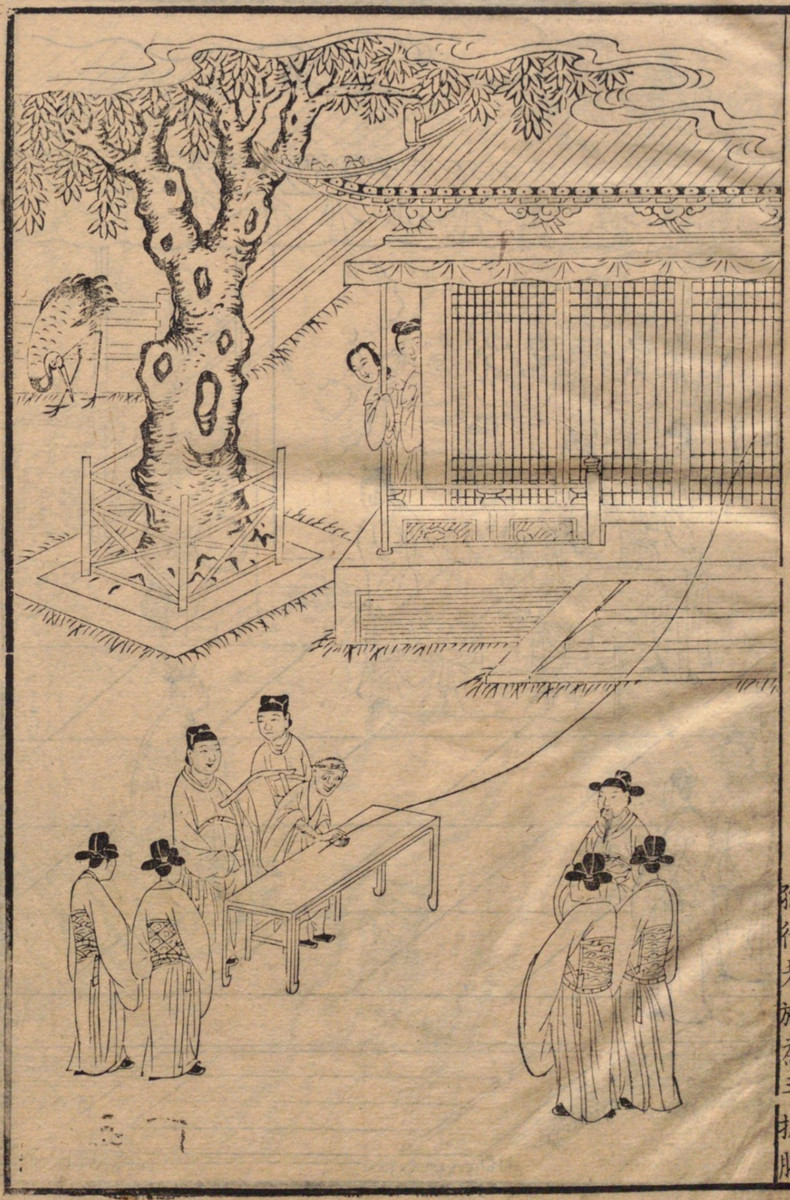
Dr. Robin Ruizendaal, a noted scholar of traditional Chinese puppetry, recently posted a colorized photo of a dough figurine maker from the mid-20th century (fig. 3). His original description reads:

1940年代四川成都龍泉驛區賣捏麵人演偶戲
Dough puppet maker and vendor brings his merchandise to life on a small stage in Chengdu, Sichuan province (1940s).

The maker appears to be using his figurines as puppets to entertain/entice the young lads to buy some of his wares.

Fig. 3 – The dough maker and crowd (larger version).

Notes:

1) I learned about said source from Ma (2019, p. 981). However, I am not following their translation of the passage because it is different from the version I have.

Source:

Ma, B. (2019). History Of Medicine In Chinese Culture (Vols. 1-2). Singapore: World Scientific Publishing.

Story Idea: Firearms and the Journey to the West Universe

From time to time I like to post a fun blog not directly related to (though sometimes informed by) my research. Regular articles will resume after this entry.

Last updated: 12-03-2024

I am currently reading Gunpowder Technology in the Fifteenth Century: A Study, Edition and Translation of the Firework Book (2024), and this got me thinking: what would the Journey to the West (Xiyouji西遊記, 1592) cosmos be like if there were guns? In this photo essay, I will briefly explore guns in Chinese folk religion, types of historical (mainly handheld) firearms used in ancient China, and, finally, ways that such weapons could be inserted into the narrative.

I. Folk Religion

I first set out to see if firearms play any part in Chinese folk religion. I found a few examples from Taiwan. The first is “Lord Red Flag” (Hongqi gong, 紅旗公; a.k.a. “Marshal of Sacred Righteousness,” Shengyi yuanshuai, 聖義元帥), a relatively recent martial god. He and his marshals are depicted holding rifles.

(Click on the pictures to enlarge them.)

Here’s a version without the cloak.

Even his tangki (spirit-medium) gets a chance to fire off some rounds.

Three more involve Prince Nezha. The first of two (from the same temple) is a traditional statue adorned with an M4 assault rifle and other modern weaponry.

Here’s a closeup of the rifle. Also, take note of the holstered revolver (i.e. the black pouch) on his waist.

The profile view shows clips on his belt (again, in black pouches), as well as a grenade on top of an ammo case at his feet.

The second is a three-headed and eight-armed Nezha with an anti-tank rocket launcher, a rocket round, and a grenade at his feet.

A third statue (my personal favorite) portrays the prince with an MP 40 submachine gun and modern military gear. The carving on the water is amazing. I first learned of it here.

I learned here and here that cannons are sometimes worshiped in East and Southeast Asia as fertility gods. (See the 09-29-24 update below for more info about cannons.)

I also learned that ritual guns sometimes appear in Chinese folk temples of Vietnam.

If present, the guns number among ritual weapons that are commonly found in martial god temples of Chinese folk religion. (But I’ve never personally seen a gun among said armaments in Taiwanese temples.) This Vietnamese article briefly mentions that the weapons are based on the eighteen arms of Chinese martial arts. And it’s interesting to note that a “hand canon” (chong, 銃) does appear among the eighteen arms listed in the Water Margin (Shuihu zhuan, 水滸傳, c. 1400):

Shi Jin daily sought Drill Instructor Wang’s tutelage in the eighteen (weapons of) martial arts. He taught him from the very beginning. Which eighteen martial arts?

Lance, hammer, bow, crossbow, hand cannon, whip, metal tablet, long sword, chain, truncheon, fu-axe, yue-axe, ge-halberd, ji-halberd, shield, staff and spear, and toothless rake. [1]

史進每日求王教頭點撥十八般武藝,一一從頭指教。 那十八般武藝?

矛錘弓弩銃,鞭簡(鐧)劍鏈撾,斧鉞並戈戟,牌棒與槍杈。

Perhaps this list influenced the ritual weapons in Vietnam.

II. Historical Firearms in Ancient China

Here is an example of a Yuan-era hand canon, minus the shaft.

Here is a “Three-Eyed Hand Canon” (Sanyan chong, 三眼銃), a three-barreled stick gun used during the Ming Dynasty.

You can see that they were attached to bladed polearms, which could be used offensively or defensively between reloading.

There were even five-barreled and shielded firearms called “Rapid-Thunder Hand Cannons” (Xunlei chong, 迅雷銃). So cool!

Here’s a Chinese video demonstrating the one and three-barreled versions:

III. Story Idea

This brings me back to Journey to the West. How could firearms be inserted into a religious allegory? Well, for starters, a 950 CE wall mural in Dunhuang shows one of Mara‘s demons attacking the awakening Buddha with a “fire lance” (huoqiang, 火槍; upper right), a precursor of hand cannons. This is a clear example of a centuries-old association between firearms and spiritual warfare.

Here’s the full mural.

Now imagine that these weapons are wielded by celestial gunner-soldiers under the command of the “Star of Fiery Virtue” (Huode xingjun, 火德星君), the god of fire. In JTTW chapter 51, his literary troops utilize fire scimitars, fire bows, fire arrows, fire crows, fire horses, red (fire) rats, fire dragons, fire carts, fire gourds, fire banners, and fire rods in battle (Wu & Yu, 2012, vol. 3, p. 9). These are just a short step from firearms.

Given that the novel projects Ming-era concepts backwards to the Tang Dynasty, having gods wield such weapons hundreds of years before they were even invented wouldn’t be out of place in the JTTW universe. A writer could just say that the weapons were created in the realm above and eventually trickled down to mankind. Admittedly, I like the real history better because it shows the ingenuity of our predecessors, but the story requires a little tinkering.

Writers wanting to expand on the idea of firearms in heaven could take Ming gunners, their uniforms, and their strategies as models to work from. This page features a lovely figurine of such soldiers, including lots of juicy historical info. And the fact that the historical troops were part of the “Divine Machine Battalion” (Shenji ying, 神機營), which specialized in firearms, really solidifies their connection to the heavenly realm.

Who would make such weapons? There’s a fun answer for that: Laozi! The novel twice describes him forging mystical weapons belonging to our main characters. For example, Zhu Bajie mentions in chapter 19 that the high god made his rake: “This is divine ice steel greatly refined, / Polished so highly that it glows and shines. / Laozi wielded the large hammer and tong …” (Wu & Yu, 2012, vol. 1, p. 382). And Monkey claims in chapter 75 that the Daoist Patriarch created his staff: “The rod of steel nine cyclic times refined / Was forged in the stove by Laozi himself” (Wu & Yu, 2012, vol. 3, p. 375). So, on top of making alchemical medicines, Laozi could be heaven’s celestial gunsmith.

How could demons get ahold of celestial guns? Well, referring back to chapter 51, a buffalo-spirit uses the “diamond cutter” (jingang zhuo, 金鋼琢), an uber powerful, bracelet-like treasure-weapon also created by Laozi, to twice suck away all of the aforementioned fire weapons (Wu & Yu, 2012, vol. 3, pp. 9 and 23). Devil craftsmen would then have time to analyze the heavenly technology, which would allow them to eventually make their own (inferior?) copies.

Recall that the Great Peng demon is said in chapter 74 to have taken over a human kingdom by eating all of the inhabitants some 500 years ago, and the former population was replaced by spirits (Wu & Yu, 2012, vol. 3, p. 360). Firearms would definitely make a human-to-monster kingdom transition for less powerful demon kings a lot easier.

Another possibility is that a fiend could simply sneak into heaven to steal some. This may seem like an impossible task, but JTTW chapter 63 mentions something similar happening. The dragon-spirit “Princess All Saints” (Wansheng gongzhu, 萬聖宮(公)主) is said to have “[snuck] into heaven and stole[n] from before the Hall of Divine Mists the nine-leaf divine agaric planted by the Lady Queen Mother of the West” (Wu & Yu, 2012, vol. 3, p. 192). So, if someone can secretly infiltrate the realm above and steal divine vegetation, they could certainly steal heavenly armaments.

Perhaps the simplest way that demons could attain celestial firearms is by ambushing heavenly troops and commandeering their equipment.

I could see Red Boy (Honghai’er, 紅孩兒) using his powerful Samadhi flame to forge his own hand cannons, at least with the help of devil craftsmen. His association with fire only makes it natural that his own troops would carry firearms.

The only thing I can’t think of is how heavenly hand cannons would differ from their real world counterparts. Would they just use gunpowder and metal shot, or would it be more magical in nature, like shooting meteors? I’m open to suggestions from readers.


Update: 09-29-2024

The film Enoken no Songoku: Zenpen (エノケンの孫悟空 前編; a.k.a. “Enoken’s Songoku,” 1940) features the Monkey King mowing down demons with his staff-turned-machine gun.

There are at least two toys depicting the Great Sage with a gun. The first I learned about via a Facebook group post. I love how his sniper rifle is modeled on his magic staff. You can see the original packaging here.

And here is a Black Myth: Wukong-inspired figure with a powerful-looking rifle/shot gun combo. I saw it here.

Regarding cannons, I learned that a giant Western cannon was worshiped by court officials during the Ming. The History of the Ming (Mingshi, 明史, 1739) explains:

At this time, a ship arriving from the Great Western Ocean [i.e. the West] brought an enormous cannon, which got the name of the “Red Barbarian” [Hongyi, 紅夷]. It measured over two-zhang [20.86 ft/6.358 m] long, and weighed as much as 3,000 catties [3,902.18 lbs/1,770 kg]. It could demolish any stone city-walls, and its earthquake-like roar could be heard for several dozen li around. During the Tianqi [天啟] reign, the name of “Great General” [Da jiangjun, 大將軍] was given to it, and officials were sent to offer libations [si, 祀] to it (based on Needham, 1986, p. 392).

其後,大西洋船至,復得巨砲,曰紅夷。長二丈馀,重者至三千斤,能洞裂石城,震數十里。天啟中,錫以大將軍號,遣官祀之。

Needham (1986) suggests the cannon’s worship is connected to folk beliefs: “In Taoist folk-religion any device or machine of almost miraculous potency was something which should receive veneration” (p. 392 n. b).


Update: 10-05-24

I forgot to mention the “Gatling Gun Bodhisattva” (Jia-te-lin pusa, 加特林菩薩) from Chinese social media and Japanese manga. The following clip expounds the Heart Sutra of the Honored Gatling Gun Bodhisattva (Namo Jia-te-lin pusa Xinjing, 南無加特林菩薩心經).


Update: 11-23-24

Reader Danna Zhang left a wonderful comment about how Investiture of the Gods (Fengshen yanyi封神演義, c. 1620 CE), a sort of prequel to Journey to the West, also includes gunpowder weaponry:

Late comment, but FSYY also puts Ming dynasty gunpowder weapons into the 11th BCE Shang dynasty setting. Apart from the numerous mentions of “cannons go boom”, In Chapter 56, they broke Deng Jiugong’s ambush-disguised-as-wedding by hiding a cannon in the gift casket and using it to make a surprise attack, and in Chapter 88, Jiang Ziya suggests to King Wu that they need the “Sky-blasting Cannon” (轰天大炮) to breach the walls of Mianchi City.

At this point, I think the bronze age gunpowder weapon isn’t a bug, it'[s] a feature.


Update: 12-03-24

The Japanese Scroll of Battle Between Generations (異代同戱図巻, 17th-century) includes a depiction of Guanyin aiming a flintlock rifle, with the Dragon Girl waiting in attendance behind her.

Note:

1) The narration is based on my translation, while the weapons list is based on that from Lorge (2012). See page 147.

Source:

Lorge, P. A. (2012). Chinese Martial Arts: From Antiquity to the Twenty-First Century. United Kingdom: Cambridge University Press.

Needham, J. (1986). Science and Civilization in China. Volume 5: Chemistry and Chemical Technology; part 7, Military Technology: The Gunpowder Epic. Assisted by Ho Ping-yü et al. New York: Cambridge University Press.

Wu, C., & Yu, A. C. (2012). The Journey to the West (Vols. 1-4) (Rev. ed.). Chicago, Illinois: University of Chicago Press.


Origin of the Immortal Peach-Stealing Episode from Journey to the West

I’ve previously mentioned that the Monkey King has multiple categories of immortality in Journey to the West (Xiyouji, 西遊記, 1592; “JTTW” hereafter). The third is achieved in chapter five when he eats untold numbers of 9,000-year-old immortal peaches (pantao, 蟠桃) while serving as the temporary custodian of the Queen Mother of the West‘s immortal peach garden (fig. 1). Each of these is said to “make a man’s age equal to that of Heaven and Earth, the sun and the moon” (人吃了與天地齊壽,日月同庚。) (Wu & Yu, 2012, vol. 1, p. 161). This naturally bestows our hero with supreme longevity (but not complete immortality). In this article, I would like to explore the origins of this episode. I suggest that it is based on the theft of divine fruit by a Han-era trickster, as well as by a magic white ape from Song-era religious literature.  

Fig. 1 – Sun Wukong eating immortal peaches (larger version). This is a screenshot from episode 9 of the Little Fox Journey to the West series on YouTube.

1. Literature and mythology

1.2. Literary episode (ch. 4 to 5)

After winning his battle with heaven, Monkey is granted the empty title “Great Sage Equaling Heaven” (Qitian dasheng, 齊天大聖) and given a position in the celestial realm with no official rank, salary, or duty. He spends this time freely traveling the universe and making friends with all sorts of primordial, stellar, and cardinal gods. But his idleness catches the eye of an immortal who reports to the throne the possible negative repercussions of Sun Wukong having too much free time. In response, the Jade Emperor tasks Monkey with temporarily watching over the immortal peach garden, warning him to take the position seriously. Sun immediately performs an inspection of the garden, learning from an underling that of the 3,600 total trees, three groups of immortal peaches respectively ripen every 3,000, 6,000, and 9,000 years.

This new position takes up his time, ending his visits with deities across the cosmos. But one day, he feigns tiredness just so his attendants will leave him alone long enough to strip out off his official clothing and climb trees to eat his fill of fruit. He uses this ruse several times to sate his hunger. However, his theft is soon discovered when the Queen Mother sends seven immortal maidens to procure fruit for her famous Grand Banquet of Immortal Peaches (Pantao shenghui, 蟠桃勝會). Upon their arrival, Monkey is nowhere to be found (having shrunken to miniature size and fallen asleep in the trees), so the underlings allow the maidens into the garden to fulfill their duty. It is there where they discover that most of the oldest peaches have been eaten, and in the process of picking leftovers, a maiden disturbs Sun’s slumber when she pulls down and lets go of the branch that he is sleeping on. Thus awakened, Monkey resumes his normal size and threatens the maidens with his iron staff. But his anger quickly subsides when he learns about the forthcoming banquet and the high-ranking Buddho-Daoist gods that have attended in the past. Being egotistical, Sun inquires as to whether or not he is the guest of honor this year, but when the maidens reveal that they don’t yet know the guest list, he freezes them in place with fixing magic and heads to the banquet hall to find out for himself (Wu & Yu, 2012, vol. 1, pp. 157-164).

1.2. Connection to world mythology

This episode is part of a set of closely-related motifs from world mythology. Thompson’s Motif-Index lists the following:

A153.1. Theft of ambrosia. Food of the gods stolen. — Hindu: Keith 139; Persian: Carnoy 283.

[…]

A153.2. Magic food gives immortality to gods. Irish: MacCulloch Celtic 54; India: Thompson-Balys.

D1346.3. Food of immortality.

A153.3. Banquets of the gods. Icel.: MacCulloch Eddic 23; India: Thompson-Balys; Chinese: Werner 137. — So. Am. Indian (Chiriguano): Métraux RMLP XXXIII 178 (source).

In our case, “ambrosia,” “food of the gods,” “magic food,” and “food of immortality” all refer to immortal peaches.

2. History

To my knowledge, one of the oldest sources associating Monkey with the theft of immortal peaches is The Story of How Tripitaka of the Great Tang Procures the Scriptures (Da Tang Sanzang qujing shihua, 大唐三藏取經詩話, c. late-13th-century), the earliest known printed edition of the JTTW story cycle. Chapter 11 sees the pilgrims enter the domain of the Queen Mother during their quest to India. The monk Tripitaka asks Sun’s antecedent, the “Monkey Pilgrim” (Hou xingzhe, 猴行者), to steal some immortal peaches to quench his thirst, but the latter refuses:

Because I stole ten peaches to eat when I was eight hundred years old, I was captured by the Queen Mother and given eight hundred blows on my left side and three thousand blows on the right with an iron cudgel. Then I was exiled to the Purple Cloud Grotto on the Mountain of Flowers and Fruits. Even today my sides hurt and now I definitely don’t dare to steal any more peaches!” (Wivell, 1994, p. 1195).

猴行者曰:「我因八百歲時,偷吃十顆,被王母捉下,左肋判八百,右肋判三千鐵棒,配在花果山紫雲洞。至今肋下尚痛。我今定是不敢偷吃也。」

3. Origins

There are at least two sources that I believe contributed to the peach-stealing episode from JTTW.

3.1. Dongfang Shuo

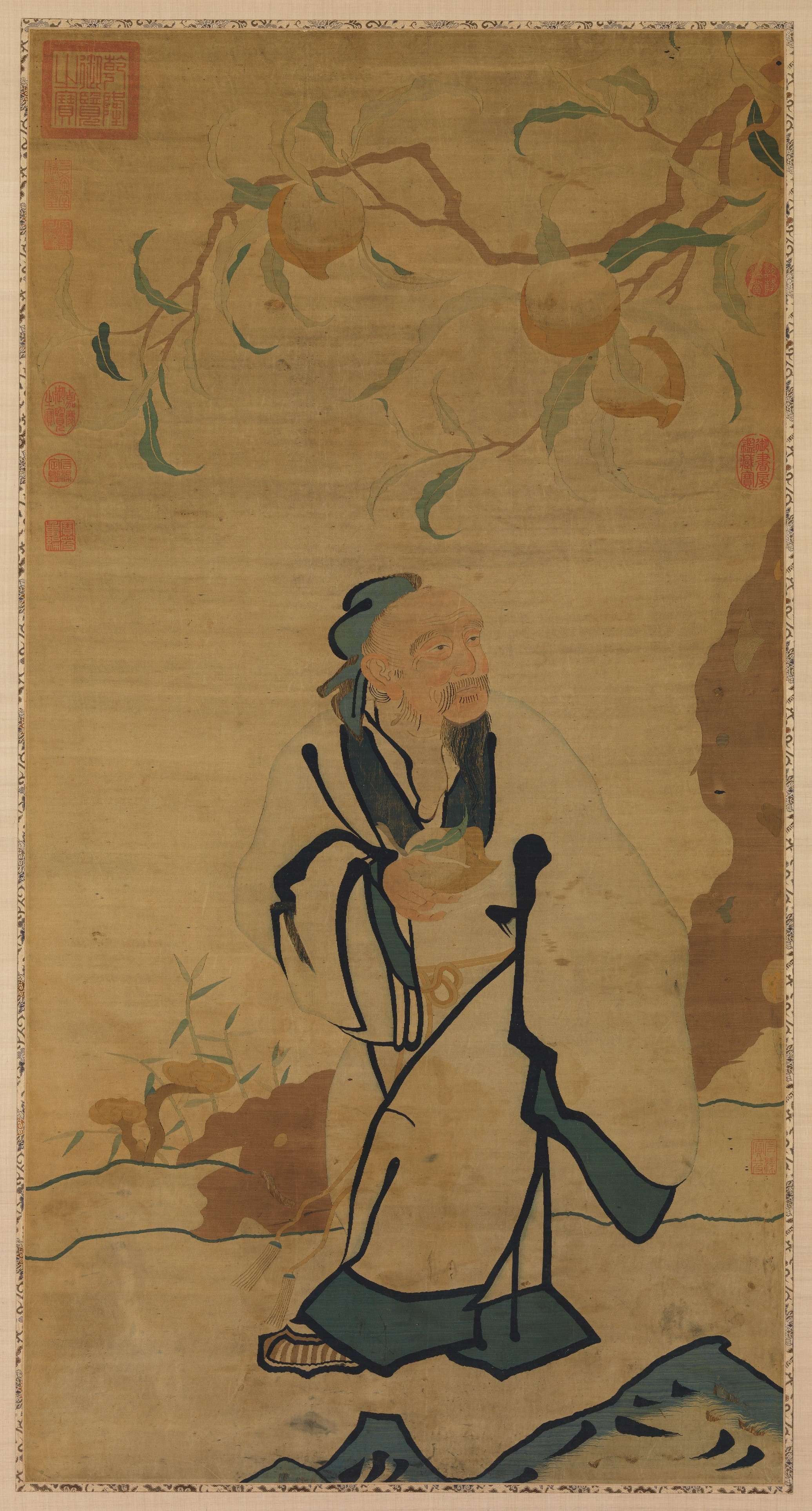
The first is a story cycle which involves the trickster Dongfang Shuo (東方朔, c. 160–93 BCE) (fig. 2) stealing peaches from the Queen Mother’s garden. The tale appears as early as the Precedents of Wu of Han (Hanwu gushi, 漢武故事), a circa 3rd-century collection of fictionalized stories about Emperor Wu of Han. It records that, after the Emperor was gifted a supernaturally small dwarf, Dongfang claimed it to be a nature spirit of sorts. However:

The dwarf did not reply but pointed at Dongfang Shuo and told the Emperor, “The Queen Mother grows peaches in her Eastern Garden which ripen once every three thousand years. This boy is no good—he’s already stolen the peaches three times! Consequently he fell out of the Queen Mother’s favor, and for this reason he was banished here.” 

The Emperor was quite startled, for he began to understand that Dongfang Shuo was not a man of this world (Smith, 1992, pp. 408-409).

短人不對,因指朔謂上曰:「王母種桃,三千年一作子,此兒不良,已三過偷之矣,遂失王母意,故被謫來此。」上大驚,始知朔非世中人。

[…] 

[During a planned meeting between the Emperor and the Queen Mother] Dongfang Shuo peeked at [her] through the Red Bird Window. Spotting him, she pointed and turned to the Emperor saying, “This boy is fond of mischief. He’s rude and undependable. Three times have the peaches of immortality ripened, and three times he has stolen them. Long ago I banished him and forbade him to return to heaven, thus he has lingered here. Nevertheless his original heart is not evil, and soon he will be able to return. Do treat him well” (Smith, 1992, pp. 416-417).

東方朔於朱鳥牖中窺母,母謂帝曰:「此兒好作罪過,疏妄無賴,久被斥退,不得還天;然原心無惡,尋當得還。帝善遇之。」

[On the day that a celestial envoy presented the emperor with three immortal peaches], Dongfang Shuo died. The Emperor, who had his doubts, asked the envoy about it.

“Dongfang Shuo is the vital essence of the Wood Emperor, who became the planet Jupiter,” she said. “He came down and roamed among men to observe what is below heaven. He is not Your Majesty’s subject.” 

The Emperor gave him a magnificent funeral (Smith, 1992, p. 418).

使至之日,東方朔死。上疑之,問使者。曰:「朔是木帝精為歲星,下游人中,以觀天下,非陛下臣也。」上厚葬之。

Here are some important elements to remember: 

  1. Jupiter-Dongfang Shuo steals peaches from the Queen Mother’s garden.
  2. The planet thrice steals peaches that ripen every 3,000 years.
  3. The thieving celestial is banished from heaven

Dongfang’s story is so famous that he even makes an appearance in JTTW. After being introduced as a disciple of the Grand Thearch (Dijun, 帝君) in chapter 26 (Wu & Yu, 2012, vol. 2, pp. 7-8), he and Monkey share a brief exchange in which they ridicule each other’s criminal past:

When Pilgrim saw him, he laughed and said, “So, this little crook is here! But there’s no peach at the Grand Thearch’s place for you to steal and eat.” Dongfang Shuo bowed to him and replied, “Old burglar! Why did you come? There’s no divine elixir at my master’s place for you to steal and eat” (Wu & Yu, 2012, vol. 2, p. 8). [1]

行者見了,笑道:「這個小賊在這裡哩。帝君處沒有桃子你偷吃!」東方朔朝上進禮,答道:「老賊,你來這裡怎的?我師父沒有仙丹你偷吃。」

Irwen Wong of the Journey to the West Library blog has suggested to me that within the novel’s universe, Jupiter-Dongfang Shuo was the previous caretaker of the immortal peach garden. His exile from heaven and rebirth on earth would have vacated the post, leaving it open for Monkey to later take over. This would mean that heaven doesn’t have a good track record with choosing peach garden caretakers.

Fig. 2 – A Ming-era painting of Dongfang Shuo stealing peaches (larger version). Image courtesy of the MET on Wikimedia Commons.

3.2. Sun Bin and White Ape

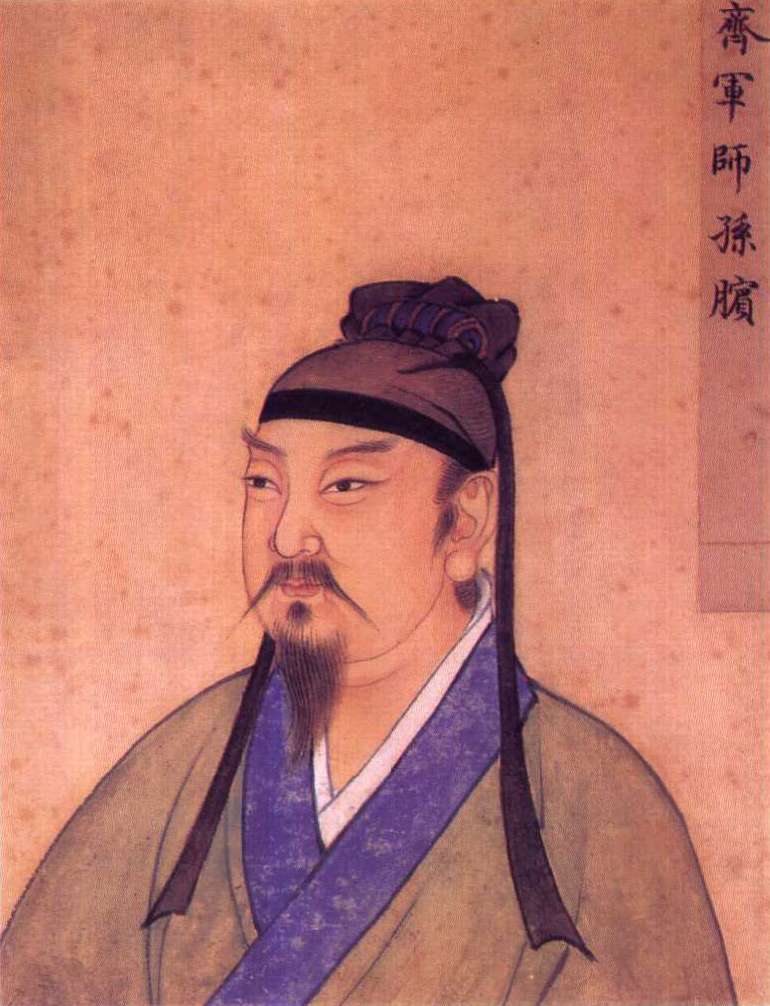
The second is a story cycle involving the Warring States military strategist Sun Bin (孫臏, d. 316 BCE) (fig. 3) protecting an earthly fruit garden from a magic white ape (baiyuan, 白猿; a.k.a. “gibbon“). The tale appears as early as the Scripture of the Most High Luminous Mirror of the Six Ren Tallying with Yin (Taishang liuren mingjian fuyin jing, 太上六壬明鑑符陰經) (a.k.a., Ape Book, Yuanshu, 猿書), a Northern Song-era work related to the Daoist doctrine of the Three Sovereigns (Steavu, 2019, p. 195). But instead of peaches, the scripture just says “fruit” (guo, 菓). However, I imagine the produce is something special like immortal peaches as Sun guards them with a weapon. A rough translation follows (I have skipped over some of the more esoteric parts that escape me):

[Master Ghost Valley] saw that the fruit had ripened, so he commanded Sun to watch over it. One night a person jumped the wall into the nine gardens and took some of the fruit. But Sun was hiding with a sword and caught the culprit, a white ape. The primate said: “Don’t hurt me! I share the same age as heaven and earth and have lived as long as the sun and moon! I have mysterious texts (xuanwen, 玄文)! Wait for me the next day and I will give them to you.” The white ape then transformed into white light and left. Sun waited the following day. Suddenly, he saw the white ape fly from the northwest. He was given one scroll of mysterious texts. The primate again transformed into white light and headed towards the southeast. Sun then returned to his room to inspect the text. He didn’t know the name but saw that it was divided into three volumes: initial, middle, and final. He named it after the white ape (Taishang liuren, n.d.).

師因園看菓成實,令臏看之。夜忽有一人,踰垣而九園中,盜菓子食之。臏乃潛身,持刀欲補之,乃是白猿也。拿住,忽言曰:汝勿傷吾身,我與天地同生,日月並長,瘍無道炁,結化成形。吾有玄文,汝來日於此處候吾,我傳與汝。臏乃長跪而退,其猿乃化白光而去。至次日,臏乃依期而伺之。忽見白猿自西北乘空而來,授臏玄文一卷。隨時化白光,東南而去。臏將其文而歸,本宿房中點檢,一曰六甲天厭一卷,一日六丁天厭一卷。遺其頭尾,不知是何名目,分上一中下三卷,因日指其白猿為名也。

Here are some important elements to remember:  

  1. Sun Bin looks after a special fruit-bearing garden.
  2. A magic primate steals the fruit.
  3. The primate has divine longevity and the ability to fly and change its shape.

It’s important to note that the aforementioned fruit was eventually called immortal peaches in later iterations of the story cycle. [2]

Fig. 3 – A Ming-era painting of Sun Bin (larger version). Image found on Wikimedia Commons.

4. Putting it all together

I believe that the two story cycles influenced JTTW in at least five ways: 1) Jupiter-Dongfang Shuo and the white ape stealing special fruit connects said produce with the Queen Mother’s immortal peaches; 2) the fruit being stolen by a white ape with divine longevity and the ability to fly and change its shape helps connect Sun Wukong, a fellow magical primate, to the theft of special produce/immortal peaches; 3) Jupiter-Dongfang Shuo thrice stealing peaches that ripen every 3,000 years may have influenced the three kinds of peaches in the Queen Mother’s garden that respectively ripen every 3,000, 6,000, and 9,000 years; 4) Sun Bin looking after a special fruit-bearing garden on earth may have influenced Monkey’s position as the caretaker of the immortal peach garden in heaven. After all, both of their surnames is Sun (孫) (Sun Bin vs Sun Wukong); and 5) Jupiter-Dongfang Shuo being exiled from heaven for stealing the peaches feeds into Monkey’s theft and subsequent actions that ultimately lead to the Buddha banishing him to earth and imprisoning him under Five Elements Mountain.

Notes:

1) Thank you to Irwen Wong for reminding me of this. 

2) For example, The Battle of Wits between Sun and Pang (Sun Pang douzhi yanyi, 孫龐鬥智演義, 1636; a.k.a. The Former and Latter Annals of the Seven Kingdoms, Qianhou qiguo zhi, 前後七國志) uses the term xiantao (仙桃; lit: “immortal peaches”) (Taishang liuren, n.d.).

Sources:

Smith, T. E. (1992). Ritual and the Shaping of Narrative: The Legend of the Han Emperor Wu (Vols. 1-2) (UMI No. 9303824) [Doctoral dissertation, The University of Michigan]. Available from ProQuest Dissertations and Theses database.

Steavu, D. (2019). The Writ of the Three Sovereigns: From Local Lore to Institutional Daoism. Hong Kong: The Chinese University of Hong Kong.

Taishang liuren mingjian fuyin jing juan yi (n.d.). [Book of the Most High Luminous Mirror of the Six Ren Tallying with Yin: First Scroll]. Retrieved from https://ctext.org/wiki.pl?if=gb&chapter=465883#p3

Wivell, C.S. (1994). The Story of How the Monk Tripitaka of the Great Country of T’ang Brought Back the Sūtras. In V. Mair (Ed.), The Columbia Anthology of Traditional Chinese Literature (pp. 1181-1207). New York: Columbia University Press.

Wu, C., & Yu, A. C. (2012). The Journey to the West (Vols. 1-4) (Rev. ed.). Chicago, Illinois: University of Chicago Press.


What Does Red Boy Look Like? A Resource for Artists and Cosplayers

Last updated: 04-30-2024

The demon Red Boy (Honghai’er, 紅孩兒) appears in chapters 40 to 42 of Journey to the West (Xiyouji西遊記, 1592; “JTTW” hereafter). He is described as the son of the Bull Demon King (Niu mowang, 牛魔王) and Princess Iron Fan (Tieshan gongzhu, 鐵扇公主), a rakshasi spirit (luocha nu, 羅剎女). Due to his bovine father, Red Boy is sometimes portrayed in modern media and fan art with horns, and because of his youthful appearance, he is often shown wearing a red stomacher. So how do these representations compare to his depiction in the novel, and who has produced the most authentic look? In this article, I will present the demon’s literary description, along with ancient depictions from dynastic China and Korea. My hope is that the information will be both interesting and useful, especially for artists and cosplayers looking to make a more authentic design.

This is part of a series of articles describing JTTW characters. See my previous entries on Sun Wukong and Zhu Bajie.

1. Ancient Depiction

The oldest art featuring Red Boy that I know of appears on the 14th-century Gyeongcheonsa pagoda (Kyŏngch’ŏnsa sipch’ŭng sŏkt’ap, 경천사십층석탑) from Korea. The second level of the pagoda’s multifaceted three-tiered base contains a total of 20 carved scenes from the JTTW story cycle. The 19th carving depicts the character’s defeat in a scene that would come to appear in the 1592 JTTW. [1] Reading it from left to right, Sha Wujing and Zhu Bajie stand by the dragon horse as they watch the cloud-borne Guanyin enact her divine plan of capturing Red Boy, who is shown impaled on a lotus throne full of celestial swords. And to the child-sage’s left, the Bodhisattva’s disciple, Hui’an/Mucha, hammers at the swords with his staff while sitting on Sun Wukong’s shoulders in a symbolic display of teamwork (fig. 1 & 2).

Fig. 3 (top) – The complete 19th JTTW carving on the second tier of Gyeongcheonsa pagoda (larger version). Image from Wall (2019). Fig. 4 (bottom) – A detail of Red Boy trapped on the lotus throne of swords (L) and an accompanying line drawing for clarity (R) (larger version). 

2. What the novel says

2.1. Physical appearance

The fullest description of Red Boy appears in chapter 41:

A face as if it had been powdered white,
And lips so ruddy, they seemed brushed with paint.
No dye could create such dark, coiled hair;
His eyebrows curved like new moons carved with knives.
Phoenix and dragon coiled on his battle kilt;
More husky than Nezha‘s frame he had.
With air imposing he lifted up his lance
And walked out the door, swathed in hallowed light.
He roared like thunder in the time of spring;
His striking eyes flashed like lightning bright.
If one would know his true identity,
Remember Red Boy, a name of lasting fame
(based on Wu & Yu, 2012, vol. 2, pp. 222-223).

面如傅粉三分白,唇若塗朱一表才。
鬢挽青雲欺靛染,眉分新月似刀裁。
戰裙巧繡盤龍鳳,形比哪吒更富胎。
雙手綽槍威凜冽,祥光護體出門來。
哏聲響若春雷吼,暴眼明如掣電乖。
要識此魔真姓氏,名揚千古喚紅孩。

This description speaks of porcelain doll-like beauty and a chubby body. The original Chinese states that his hair is “rolled or coiled at the temples” (binwan, 鬢挽). This could mean his hair is in buns or coils. I’ll leave it up to the reader as to which one you like more.

It’s important to highlight that the poem does not mention horns. An in-canon explanation for this could be because Red Boy’s mother, Princess Iron Fan, had already “attained the way of humanity” (i.e. a human form) via spiritual cultivation (Wu & Yu, 2012, vol. 3, p. 162). Perhaps this resulted in the demon-sage having a more human-like appearance. Or, given his own 300-plus years of austerities (Wu & Yu, 2012, vol. 2, p. 219), he too has attained human form.

Interestingly, Ming-era woodblock prints don’t portray him with horns either. See figures four and five below.

2.2. Clothing

Red Boy is described as being lightly clothed and barefooted:

With no other armor except a battle kilt of embroidered silk and with naked feet, the monster king took up the lance and walked outside (Wu & Yu, 2012, vol. 2, p. 222).

妖王掄槍拽步,也無甚麼盔甲,只是腰間束一條錦繡戰裙,赤著腳,走出門前。

So his attire consists of a single silken battle kilt, [2] which is, as mentioned in the poem above, embroidered with dragons and phoenixes. This would mean that Red Boy is bare-chested on top of having no footwear.

But what exactly does a “battle kilt” (zhanqun, 戰裙) look like? One example comes from a set of brigandine armor of the Qing dynasty (1636–1912). It covers the entire lower half of the body down to the ground (fig. 4). I imagine that Red Boy’s kilt would be red given his name and association with fire.

One late-Ming woodblock print portrays this clothing, adding a divine sash and an embroidered stomacher (fig. 3).

Fig. 3 (left) – An example of Qing-era brigandine armor with a battle kilt (larger version). Image found here. Fig. 4 (right) – A detail of Red Boy’s attire from Mr. Li Zhuowu’s Literary Criticism of Journey to the West (Li Zhuowu Xiansheng piping Xiyouji, 李卓吾先生批評西遊記, late-16th or early-17th-century) (larger version).

2.3. Weapon

Prior to walking outside to face the Monkey King, the demon calls for his giant, fiery spear:

“Bring me my lance,” he ordered. Those fiends who looked after weapons had two of them carry out a ten zhang eight chi fire-tipped lance [huojian qiang, 火尖槍] to hand over to the monster king (based on Wu & Yu, 2012, vol. 2, p. 222).

教取過槍來。有那一夥管兵器的小妖,著兩個擡出一桿丈八長的火尖槍,遞與妖王。

One zhang (丈) comprises ten chi (尺, a.k.a. “Chinese feet”), and one chi is roughly 12.3 in (31.8 cm). This makes one zhang 10.43 ft (3.18 m) (Jiang, 2005, p. xxxi). Therefore, Red Boy’s weapon is roughly 18.77 ft (5.724 m) long. That’s one long spear!

A woodblock print from the original 1592 JTTW shows an armored Red Boy wielding his weapon (fig. 5).

Fig. 5 – Red Boy wields his spear and holy flame against Monkey and Zhu Bajie (larger version). Image from the Newly Printed, Illustrated, Deluxe and Large Character, Journey to the West (Xinke chuxiang guanban dazi Xiyou ji, 新刻出像官板大字西遊記, 1592).

3. Popular depictions

As far as I know, there have not been any novel accurate portrayals of Red Boy in popular media. But I figured that I would post images from the most famous TV shows.

3.1. 1986 JTTW

He is portrayed with a hair tuft and coils, a red urna, a red cape, a red stomacher, and red slippers (fig. 6).
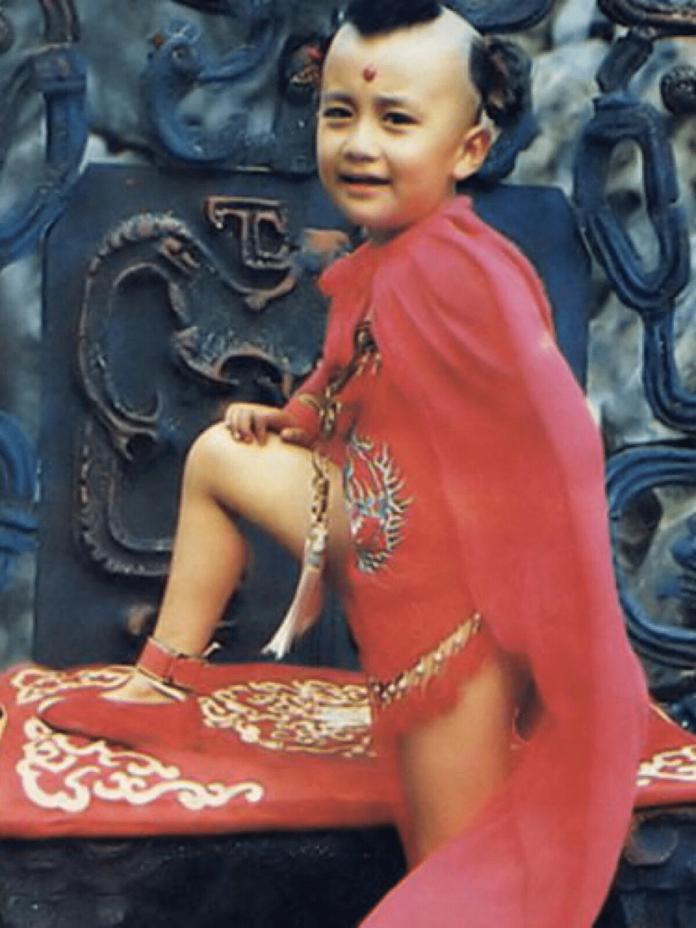
Fig. 6 – “Adorable Red Boy” (larger version). Image found here.

3.2. 1996 JTTW

He is portrayed by a young woman with two red ribbon-wrapped, white cloth-covered hair buns and a white undershirt and a red vest, red forearm cuffs, red shorts, and red slippers (fig. 7).

Fig. 7 – “Girl Red Boy” (larger version). Image found here.

3.3. 2011 JTTW

He is portrayed with a hair tuft, red horns, a dark red to brown suit of armor with a flame pattern, and a red cape (fig. 8).

Fig. 8 – “Armored Red Boy” (larger version). The original online source is no longer available.

4. Conclusion

JTTW chapter 41 describes Red Boy as having doll-like beauty with a powder white face, crescent moon-shaped eyebrows, and deep red lips. His dark hair is either wrapped in buns or hung in coils. He is shoeless, and the only clothing covering his husky body is a silken battle kilt embroidered with phoenixes and dragons. And his weapon is an 18.77 ft (5.724 m) long, fired-tipped spear.


Update: 03-25-24

It occurred to me that the following description …

With no other armor except a battle kilt of embroidered silk and with naked feet … (Wu & Yu, 2012, vol. 2, p. 222).

妖王掄槍拽步,也無甚麼盔甲,只是腰間束一條錦繡戰裙,赤著腳

… does not necessarily exclude other clothing. Red Boy could wear some kind of silk robe beneath the battle kilt. However, I think him being shirtless better fits with his ferocious nature.


Update: 04-30-24

Chapter 42 indicates that Red Boy has a full head of hair that is later shaved by Guanyin:

She took out from her sleeve a golden razor and approached the fiend. With a few strokes, she shaved his hair off and turned it into the style of the Tai Mountain Crowning the Head: the top was completely bald, but three tufts of hair were left around the edge so that they could be knotted together into three tiny braids (Wu & Yu, 2012, vol. 2, p. 250).

就袖中取出一把金剃頭刀兒,近前去,把那怪分頂剃了幾刀,剃作一個太山壓頂,與他留下三個頂搭,挽起三個窩角揪兒。

This contrasts with modern representations of Red Boy that already have this shaven hair style prior to being subjugated. Refer back to section 3.

Notes:

1) Chapter 42 reads:

After she received [treasure swords borrowed from heaven], the Bodhisattva [Guanyin] threw them into the air as she recited a spell: the swords were transformed into a thousand-leaf lotus platform. Leaping up, the Bodhisattva sat solemnly in the middle.

菩薩接在手中,拋將去,念個咒語,只見那刀化作一座千葉蓮臺。菩薩縱身上去,端坐在中間。

[…]

[Sun Wukong feigns defeat and tricks Red Boy into chasing him to Guayin’s domain] When the monster spirit suddenly discovered that Pilgrim was gone, he walked up to the Bodhisattva with bulging eyes and said to her, “Are you the reinforcement Pilgrim Sun brought here?” The Bodhisattva did not reply. Rolling the lance in his hands, the monster king bellowed, “Hey! Are you the reinforcement Pilgrim Sun brought here?” Still the Bodhisattva did not reply. The monster-spirit lifted his lance and jabbed at the heart of the Bodhisattva, who at once changed herself into a beam of golden light and rose into the air. Pilgrim followed her on her way up and said to her, “Bodhisattva, you are trying to take advantage of me! The monster-spirit asked you several times. How could you pretend to be deaf and dumb and not make any noise at all? One blow of his lance, in fact, chased you away, and you have even left behind your lotus platform.”

“Don’t talk,” said the Bodhisattva, “let’s see what he will do.” At this time, Pilgrim and [Mucha] both stood in the air shoulder to shoulder and stared down; they found the monster-spirit laughing scornfully and saying to himself, “Brazen ape, you’re mistaken about me! What sort of person do you think that I, Holy Child, happen to be? For several times you could not prevail against me, and then you had to go and fetch some namby-pamby Bodhisattva. One blow of my lance now has made her vanish completely. Moreover, she has even left the treasure lotus platform behind. Well, let me get up there and take a seat.” Dear monster-spirit. He imitated the Bodhisattva by sitting in the middle of the platform with hands and legs folded. When he saw this, Pilgrim said, “Fine! Fine! Fine! This lotus platform has been given to someone else!”

“Wukong,” said the Bodhisattva, “what are you mumbling again?”

“Mumbling what? Mumbling what?” replied Pilgrim. “I’m saying that the lotus platform has been given to someone else. Look! It’s underneath his thighs. You think he’s going to return it to you?”

“I wanted him to sit there,” said the Bodhisattva.

“Well, he’s smaller than you,” said Pilgrim, “and it seems that the seat fits him even better than it fits you.”

“Stop talking,” said the Bodhisattva, “and watch the dharma power.”

She pointed the willow twig downward and cried, “Withdraw!” All at once, flowers and leaves vanished from the lotus platform and the auspicious luminosity dispersed entirely. The monster king, you see, was sitting actually on the points of those swords. The Bodhisattva then gave this command to [Mucha]:

“Use your demon-routing cudgel and strike back and forth at the sword handles.”

Dropping from the clouds, [Mucha] wielded his cudgel as if he were demolishing a wall: he struck at the handles hundreds of times. As for that monster-spirit,

Both his legs were pierced till the points stuck out;
Blood spouted in pools as flesh and skin were torn.

Marvelous monster! Look at him! Gritting his teeth to bear the pain, he abandoned the lance so that he could use both hands to try to pull the swords out from his body … (Wu & Yu, 2012, vol. 2, pp. 246 and 249-250).

這妖精見沒了行者。走近前,睜圓眼,對菩薩道:「你是孫行者請來的救兵麼?」菩薩不答應。妖王撚轉長槍,喝道:「咄!你是孫行者請來的救兵麼?」菩薩也不答應。妖精望菩薩劈心刺一槍來。那菩薩化道金光,徑走上九霄空內。行者跟定道:「菩薩,你好欺伏我罷了,那妖精再三問你,你怎麼推聾裝啞,不敢做聲,被他一槍搠走了,卻把那個蓮臺都丟下耶?」菩薩只教:「莫言語,看他再要怎的。」

此時行者與木叉俱在空中,並肩同看。只見那妖呵呵冷笑道:「潑猴頭,錯認了我也。他不知把我聖嬰當作個甚人,幾番家戰我不過,又去請個甚麼膿包菩薩來卻被我一槍,搠得無形無影去了,又把個寶蓮臺兒丟了。且等我上去坐坐。」好妖精,他也學菩薩,盤手盤腳的坐在當中。行者看見道:「好好好,蓮花臺兒好送人了。」菩薩道:「悟空,你又說甚麼?」行者道:「說甚?說甚?蓮臺送了人了。那妖精坐放臀下,終不得你還要哩?」菩薩道:「正要他坐哩。」行者道:「他的身軀小巧,比你還坐得穩當。」菩薩叫:「莫言語,且看法力。」

他將楊柳枝往下指定,叫一聲:「退!」只見那蓮臺花彩俱無,祥光盡散,原來那妖王坐在刀尖之上。即命木叉:「使降妖杵,把刀柄兒打打去來。」那木叉按下雲頭,將降魔杵如築牆一般,築了有千百餘下。那妖精穿通兩腿刀尖出,血注成汪皮肉開。好怪物,你看他咬著牙,忍著痛,且丟了長槍,用手將刀亂拔 …

2) Padded silk armor was apparently used in ancient China as early as 600 CE (Dean, 1920, pp. 284-285).

Sources:

Dean, B. (1920). Helmets and Body Armor in Modern Warfare. United Kingdom: Yale University Press.

Jiang, Y. (2005). The Great Ming Code / Da Ming Lu. Vancouver, Wa: University of Washington Press.

Wall, B. (2019). Dynamic Texts as Hotbeds for Transmedia Storytelling: A Case Study of the Story Universe of the Journey to the WestInternational Journal of Communication 13, 2116-2142. Retrieved from https://ijoc.org/index.php/ijoc/article/view/10006/2648.

Wu, C., & Yu, A. C. (2012). The Journey to the West (Vols. 1-4) (Rev. ed.). Chicago, Illinois: University of Chicago Press.