
Last Updated: 10-04-2025
DEATH BATTLE! is a YouTube show that pits famous fictional and (now) mythological characters against one another to see who is the strongest. The outcome of each fight, usually ending in death, is supposedly based on research comparing the combatants’ respective canonical strengths and weaknesses. There are in total nine seasons with 161 episodes. The 162nd episode (episode 7 of season 9) will feature a battle between the hero Hercules from Greco-Roman myth and Sun Wukong from the Chinese Journey to the West (Xiyouji, 西遊記, 1592, JTTW hereafter) story cycle. I only learned about this upcoming fight a little over a week ago when I noticed via my website analytics that a DEATH BATTLE! staff member had linked to my research blog on their external site. Very little concrete information about the battle was released until a few days ago, so I’ve been scrambling to finish this article in preparation for the episode on June 20th, 2022. It can be watched here:
This may not seem very important to some of my followers and lurkers, but DEATH BATTLE! has 5.05 million subscribers, and their last video received 1.7 million views in just a week and the one before got 5 million in just 3 weeks! Therefore, the battle is likely to introduce many, many people to the Monkey King. For example, the primate hero’s fighter preview gained nearly 220,000 views in the first 24 hours, 260,000 as of June 18th, 2022. And as of the same date, Hercules’ fighter preview has 287,000 views.
Win or lose, the purpose of this article is to present accurate information about Sun Wukong. I will correct any mistakes that appear in the video. I will also present a list of surprising parallels shared between Hercules and Sun Wukong, suggesting that they might have been influenced by the same mythic tropes. See also my articles comparing Monkey with the Water Margin hero Wu Song and the historical Buddha.
Before continuing, I want to note that I know the original name is Heracles (or Herakles), but I will use Hercules throughout as this is the name chosen by the staff of DEATH BATTLE!
1. Analysis
1.1. The Death Battle
It’s official, Sun Wukong WON the fight. I will add my comments and corrections (in blue) to the official battle transcript:
An ancient scroll unfurls onscreen as a painted mountain manifests. An unseen narrator begins his story.
1. This was an interesting concept.
Muse: Our tale begins up top a great mountain, where the mighty Heracles sought a gift from the Gods.
As narrated, the legendary demigod finishes his trek up the mountain and calls out to the nearby Monkey King, Sun Wukong, who is sitting atop his Nimbus cloud and holding a divine fruit in his hand.
2. Just a tiny nitpick: The Nimbus cloud is not from JTTW but the Dragon Ball franchise. The novel refers to this skill as the Cloud-Somersault.
Hercules: Ho there! I’m in need of that apple. Relinquish it.
Wukong turns to face the hero and explains his own need for it.
Sun Wukong: Sorry, I’m supposed to find my master some vegetarian food.
3. I really like that the fight starts over fruit. As I note below (sec. 2, #12), both characters steal supernatural fruit (golden apples vs immortal peaches) from the gardens of queenly goddesses (Hera vs the Queen Mother of the West). So this was a nice nod to both myths.
But in hindsight, Monkey stealing the golden apples to feed his master doesn’t make much sense considering: 1) they are located in a land that’s much further west than the scripture monk’s final western destination, India; and 2) I don’t recall reading that the golden apples were anything other than treasures. To my knowledge, none of the associated myths treat them as foodstuff. Someone please correct me if I’m wrong.
However, the explanation is ignored. His short temper kicking in, Hercules draws his sword from its scabbard and threatens Wukong.
Hercules: You’ll find it… elsewhere.
With a shrug and groan of annoyance, Wukong passes the apple to Hercules, who catches it.
Muse: But Heracles was not so easily fooled.
4. Legitimate question: Is Hercules known for having supernatural perception? Are there examples of him seeing through illusions in his original mythos? If anyone knows, please leave a comment.
The hero’s satisfaction turns to indignation as he crushes the illusory fruit in his hand, revealing it to merely be strands of Wukong’s hair. With his scheme discovered, the trickster god pulls out a miniaturized Ruyi Jingu Bang from his ear and enlarges it to its standard size. Laughing with glee, he leaps from his cloud and clashes with Hercules’ sword,
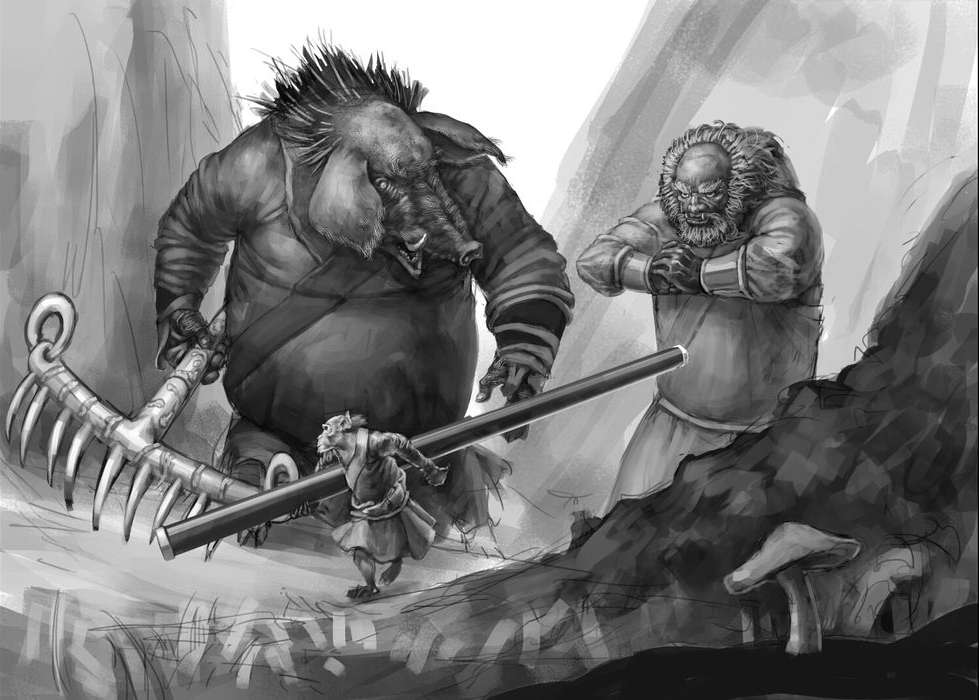
5. Another tiny nitpick: The “standard size” in the animation was not large enough. The novel states that Monkey fights with the staff when it’s around 12 feet (3.65 m) long [1] and the width of a bowl (Wu & Yu, 2012, vol. 1, p. 135, for example). [2] This illustration (fig. 1) shows how big the staff should be in relation to Sun’s body size.
Fig. 1 – Monkey and his religious brothers on patrol (larger version). Artwork by @真·迪绝人 (see here and here). Image found here.
Muse: The Monkey King’s strike rang true, but he’d not so easily overwhelm the God of Strength.
Locked in a clash of weapons, Hercules slashes at Wukong, who dissipates into smoke. The monkey flies behind Hercules on his Nimbus and jabs the hero in the gut with his staff, sending him flying into a cliff below. The mighty demigod is hardly phased though and springs back with a powerful dropkick against the advancing Wukong, sending them down another level.
6. I personally thought Monkey relied far too much on turning into a puff of smoke. I think he instead would have preferred to meet Hercules head-on.
As they both land, Hercules attempts to slash him with his sword once again, but Sun Wukong disappears in a smoke cloud and strikes Hercules with his Ruyi Jingu Bang. As Hercules lies on the ground, the Monkey King extends the staff and brings it down on the hero, who raises his sword to block the strike, only for the blade to shatter. Quickly recovering, Hercules grabs the Ruyi Jingu Bang and pulls on it, bringing Sun Wukong down to him.
Hercules: I am Heracles!
With a single mighty punch to the jaw, Heracles sent the Monkey King soaring through the sky, hitting the edge of the scroll and forcing it to go higher up before landing on a nearby cloud. Before the Monkey King has time to even breathe, Hercules shoots an arrow at him, only narrowly missing.
Sun Wukong: Yikes!
As the hero continues his assault, Wukong begins to jump through the clouds in order to avoid all of his shots, and after beginning to fly with one of them, summons several clones with his hairs to try and reach Hercules. However, the God of Strength manages to shoot down almost all of the clones. One of them climbs onto the cloud Wukong is riding and grabs his tail. Wukong spins him around and launches himself and the clone at Hercules. The Wukongs turn into birds to reach Hercules faster, before turning into snakes to restrict his arms. Tired of the monkey’s shenanigans, Hercules breaks free and grabs his rattles.
7. Legitimate question: Does Hercules have unlimited arrows? Please let me know.
Regarding the transformations, this seemed so out of place during the battle as Monkey never uses animal forms offensively. He instead uses them for stealth or, most famously, to hide from from an opponent.
Hercules: Die, demon!
The loud noise echoes through the skies, destroying every single Wukong clone. Reeling in pain from the noise, Wukong’s snake transformation comes undone as he tumbles down the mountain into the forest below.
Sun Wukong: Agony, agony!
8. Why would the rattles have any effect on Monkey? I don’t recall his ears being a weakness
Update: 06-24-22
A redditor explained the following: “It’s not so much that Wukong is weak to sound, more so that the krotalas [rattles] are so loud that the noise causes pain to whatever hears them…”
But the original sources don’t make this claim. For example, the Argonautica of Apollonius Rhodius reads:
“For not even could Heracles, when he came to Arcadia, drive away with bow and arrow the birds that swam on the Stymphalian lake. I saw it myself. But he shook in his hand a rattle of bronze and made a loud clatter as he stood upon a lofty peak, and the birds fled far off, screeching in bewildered fear” (2.1052).
The Bibliotheca Historica of Diodorus reads:
“Heracles then received a Command to drive the birds out of the Stymphalian Lake, and he easily accomplished the Labour by means of a device of art and by ingenuity. The lake abounded, it would appear, with a multitude of birds without telling, which destroyed the fruits of the country round-about. Now it was not possible to master the animals by force because of the exceptional multitude of them, and so the deed called for ingenuity in cleverly discovering some device. Consequently he fashioned a bronze rattle whereby he made a terrible noise and frightened the animals away, and furthermore, by maintaining a continual din, he easily forced them to abandon their siege of the place and cleansed the lake of them” (4.13.2).
And Pausanias writes:
“There is a story current about the water of the Stymphalus, that at one time man-eating birds bred on it, which Heracles is said to have shot down. Peisander of Camira, however, says that Heracles did not kill the birds, but drove them away with the noise of rattles” (8.22.4).
As can be seen, no mention is made of the implements being painfully loud to anything other than the birds (please provide an example if you know otherwise). While uncertain of the true reason why the rattles appear in the story, Aston (2021) posits that they could reference cultic practices or even just the “noisy rattle[s] or clapper[s] … used by farmers to scare birds from their crops” (p. 102).
I can understand the rattles working if Monkey was still in bird form, but the clone attacking Hercules had already transformed into a snake at the point. And the rattle subsequently affects all of the clones. This doesn’t make any sense.
The scroll unfurls further, revealing the spot where the Monkey King landed, as he begins to laugh.
Muse: The Monkey King fell into a strange forest, in awe of such a wondrous fight. But should he mistake his fear, he might lose his head.
Hercules comes crashing down, instantly crushing Wukong’s head with his club. But to his shock, the beheaded body of the Great Sage gets right back up.
9. Crushing Monkey’s head would not be possible with the olive club, for it would break over his adamantine crown like when Hercules broke the weapon over the Nemean Lion‘s head (sec. 2, #3). Sun’s crown is one of the hardest parts of his body, easily taking direct blows from even sharp weapons wielded by demons with no issue (sec. 1.2, #3).
It think it would have made more sense for both heroes to have, at some point, exchanged blows with their respective blunt weapons (sec. 2, #4). But, again, the club wouldn’t have lasted long. This brings me back to my previous question about the number of Hercules’ arrows. If he ran out, then he would be weaponless after both his sword and club are destroyed.
So, I think at this point Sun would have placed his staff in his ear and offered to have a boxing match with the Greek hero. Something similar happens twice in JTTW. In chapter two, Monkey confronts a demon that had been terrorizing his children during his quest for immortality. But when the monster sees that the primate is not only small but also unarmed, he offers to fight him barehanded in order to avoid criticism from other demon kings. Sun ends up beating him so badly that the monster rushes to defend himself with his sword (Wu & Yu, 2012, vol. 1, p. 128). And in chapter 51, another demon uses a powerful treasure stolen from heaven to take away Monkey’s staff, leading the latter to challenge the monster to unarmed combat to show that he isn’t useless without his weapon. A poem describing the subsequent battle states that the combatants use real-world punching and kicking techniques, many of which are known and still practiced today. And while said poem claims that they are equally matched, all of the heavenly commanders agree that Monkey’s technique is faster and more polished (Wu & Yu, 2012, vol. 3, pp. 12-14)
Seeing Hercules and Sun duke it out, causing the earth to shake and mountains crumble, would be much more entertaining than the latter’s game of hopscotch among the clouds from the video.
Sun Wukong: I haven’t had such fun since I fought all of Heaven! Change!
Wukong transforms into a taller, three-headed and six-armed version of himself, with three separate Ruyi Jingu Bangs included.
Sun Wukong: Behold me, the Immortal Monkey King!
Hercules stares at his opponent’s transformation and laments his misfortune.
Hercules: Huh… Multiple heads. Of course.
10. A nice nod to the Lernean Hydra.
Both warriors begin to trade blows, Hercules managing to avoid a few of Wukong’s strikes before being disarmed of his club and becoming a victim of a staff combo before being kicked away. He shoots out three more arrows at the Monkey King, which seemingly manage to damage him, before his three-headed form dissipates into smoke, and the real Wukong jumps right back up to the clouds, before sending out his staff to hit Hercules once more. The hero merely watches before the staff suddenly grows into an enormous size mere inches away from his face.
11. Monkey does indeed use deceptive magic doubles in battle. One example happens in chapter 4 during his fight with Prince Nezha:
“They clashed like raindrops and meteors in the air, but victory or defeat was not yet determined. Wukong, however, proved to be the one swifter of eye and hand. Right in the midst of the confusion, he plucked a piece of hair and shouted, ‘Change!’ It changed into a copy of him, also wielding a rod in its hands and deceiving [Nezha]. His real person leaped behind [Nezha] and struck his left shoulder with the rod. [Nezha] … heard the rod whizzing through the air and tried desperately to dodge it. Unable to move quickly enough, he took the blow and fled in pain” (Wu & Yu, 2012, vol. 1, p. 156).
Hercules: Huh?
He is suddenly crushed underneath the Ruyi Jingu Bang as Wukong sits on top of it and laughs. But the staff suddenly begins to shake, as Hercules begins to lift it from underneath.
Hercules: You’ve had your fun, beast, but I’ve had enough!
Hercules throws the staff away, forcing Wukong to get off it before changing its size once more, and preparing to strike a finishing blow. Hercules sees this and charges towards the Monkey King, clashing with the staff with only his fist. But as the blows make contact, two blue, divine versions of the two warriors can be seen holding the scroll, before preparing their weapons for a clash of their own. The club of Hercules’ celestial body leaves a trail of constellations, while the celestial Ruyi Jingu Bang leaves a trail of names of Four Symbols written in Chinese in its wake.
Muse: The gods watched their earthbound selves, and so joined in battle. The God of Strength mustered the heart of Olympus, while the Great Sage harnessed power equal to Heaven! Thus…
The two celestial bodies swing at each other, with the force of the blows turning the screen a blinding white. Slowly, the light fades away to reveal that Hercules’ celestial body has been impaled by the Ruyi Jingu Bang. The scroll floats back into view, covering the screen once more.
12. I think I understand what the Death Battle staff was going for when they portrayed each character in their celestial form. But this contradicts their promise to not use the heroes’ post-apotheosic versions. Therefore, this also seemed extremely out of place during the fight.
Muse: The Monkey King emerged victorious!
Returning back inside the scroll, Wukong’s attack manages to overpower Hercules, and its might destroys the God of Strength leaving nothing behind.
Sun Wukong: Wow, would you look at that! I struck him so hard he was reduced to nothingness!
13. I think this would have only killed Hercules’ mortal half, releasing the god within and prolonging the fight. While sources vary on what caused his apotheosis (virtus vs the 12 Labors vs Gigantomachy deeds), it’s clear that the son of Zeus become a god upon his fiery death (Romero-Gonzalez, 2021, p. 275).
Wukong laughs once more and grabs the apple, leaving the forest to rejoin his master.
Muse: With a formidable foe slain, stricken against the mountain’s breast, so ends our great tale of East and West.
14. I was honestly underwhelmed by the ending. It seemed like the staff ran out of time, money, or interest and decided to stop the episode prematurely. It should have gone on much longer since Hercules and Sun Wukong are the first two mythological characters to be featured. I also thought Hercules was splattered way too easily. I’m sure there could have been a different way to end the fight. It would have been more respectful to both pantheons if the heroes had simply come to a draw and, having developed a newfound respect for each other’s skills, parted as bond brothers.
But considering that the show is called “Death Battle!”, somebody needs to die (the fans would otherwise be upset). So, baring that in mind, I thought of an idea five days before the episode aired, but I must admit that it’s not very respectful to the Greek hero. In my scenario, Sun seemingly disappears, but he actually turns into an insect and flies into Hercules’ mouth and crawls into his stomach. There, Monkey beats him up from the inside using the iron staff or even his fists. Then he instantly takes on his 100,000 foot (30,480 m) tall cosmic form, causing Hercules’ mortal body to explode. This “attack from within” tactic appears in chapters 59, 75, and 82 of JTTW, [3] as well as chapter 11 of the late-13th-century version of the story cycle
Lasty, I didn’t think the sprite animation was appropriate for such a mythic showdown. I personally would have liked more dynamic, hand-drawn animation like that from the Omni-man vs Homelander episode.
Update: 06-24-22
The same redditor from above also explained that the show apparently has budgetary constraints on episode length and art style. This explains the seemingly abrupt ending and the sprite animation. Hand drawn animation is apparently only reserved for the very tip of the top-most requested matchups.
This still doesn’t change my opinion, though. This was their first battle between extremely famous mythological characters. The fight should have been more grand.
But this information still doesn’t change my opinion of the episode. Rooster Teeth should have allotted a larger budget and made the episode longer.

1.2. The Results
I will do the same for the official fight result transcript:
Boomstick: Talking about a herculean matchup.
Wiz: Heracles was among the greatest heroes in myth, but the Great Sage Equal to Heaven held many more advantages.
Boomstick: You’d think Sun might not measure up to the God of Strength… you know, strength, but he totally could. remember he carried Sumeru on his back, the mountain holding up the infinite celestial sky, like how Heracles held up the infinite celestial sphere.
1. The Death Battle researchers likely learned about this feat from my article. But nowhere do I write that the mountain upheld the sky. The Abhidharmakośa (Ch: Api damo jushe lun, 阿毗達磨俱舍論, 4th to 5th-century) contains an overview of the Hindo-Buddhist cosmos, and it states that the sun, moon, and stars orbit half way down the exposed portion of the mountain [4] in a whirlpool-like ring of wind (Vasubandhu, 2014, pp. 460; Sadakata, 1997, p. 38-40). But the source doesn’t associate this ring with any weight.
Conversely, native Chinese mythology views the sky as a solid object that must be propped up by mountains. And if one of these earthly pillars is damage, it will cause the sky to tilt and even tear, requiring divine repair. See, for example, the legend of Nuwa mending the sky (Birrell, 1999, pp. 69-72 and 96-97). But this has no baring on the discussion at hand as Journey to the West expressly describes the world according to Hindo-Buddhist cosmic geography.
Therefore, Sun’s feat should be scaled accordingly. But I’m not sure how this would be possible as the Buddhist and Greek concepts of the sky appear to be fundamentally different. I’ll have to read more on the latter concept to be sure.
Update: 06-25-22
I was contacted by a reader who said that the episode’s Sun Wukong researcher responded to me on the Death Battle discord, stating:
“To clarify, the basis for what Sumeru supports comes from the Buddhist cosmology lectures sourced in the character sheet. Though the article Jim wrote was what made me initially take note of the feat.
https://www.youtube.com/watch?v=6agAavZTEK0
https://www.youtube.com/watch?v=UMQeFiwacbQ” (per a screenshot emailed to me).
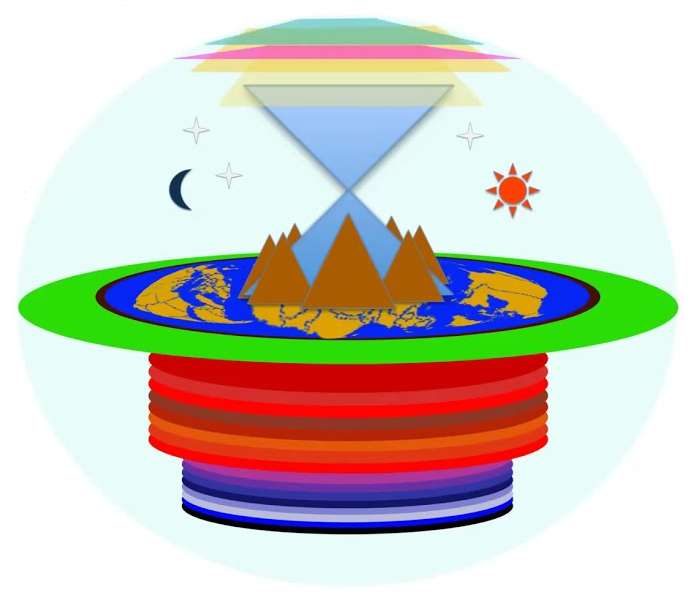
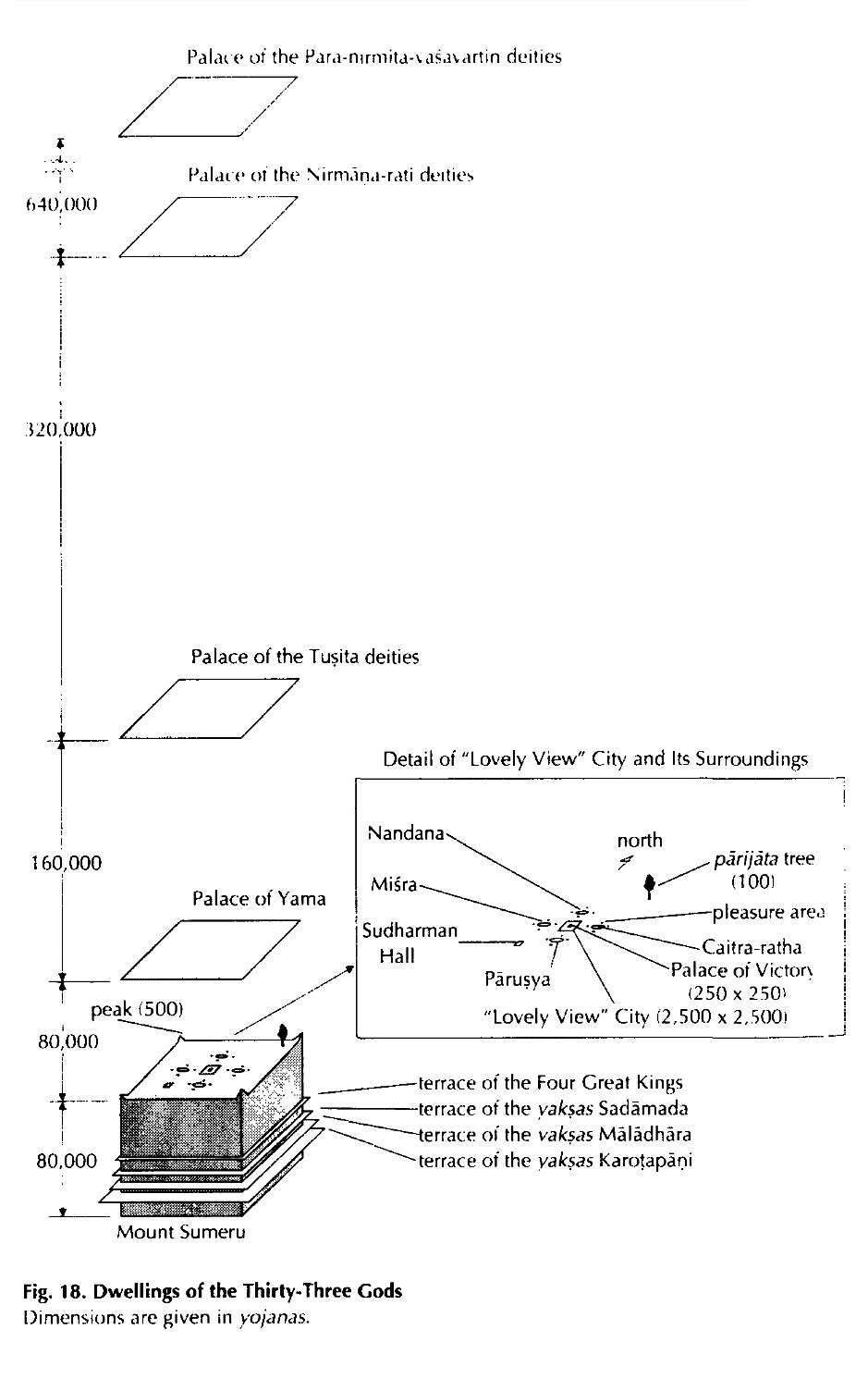
But I’ve watched the videos and they don’t contradict what I wrote. The problem is that the researcher didn’t make a distinction between the “sky” (as stated in the Death Battle video) and “heaven.” I’ve already described the wind ring in which the celestial bodies orbit the midpoint of Mt. Sumeru. So, now I will give a brief and very simplified overview of the Buddhist cosmos to help readers form a better picture of what I’m arguing. As the axis mundi, Mt. Sumeru is located at the center of our earthly realm, with a ring of seven smaller mountains circling it. This landmass is surrounded by four island-like continents, one for each face of Sumeru, that float in a great sea resting on a disc of golden earth (kāñcanamaṇḍala). This is then supported by a disc of water (jalamaṇḍala) and finally a disc of wind (vāyumaṇḍala), each layer generally becoming larger as one descends. This grand creation is thought to float in “space” (ākāśa) (Sadakata, 1997, pp. 25-30), sometimes translated as “sky” (Buswell & Lopez, 2014, p. 26). There are indeed various layers of heavens on and above Mt. Sumeru, but they appear to be separate from this space/sky (fig. 2). The first two heavens, that of the Four Great Kings and the 33 Gods, are respectively located at the midpoint and summit of Mt. Sumeru. But the following four heavens float above it at varying heights (fig. 3) (Sadakata, 1997, pp. 56-62). Therefore, by running with Mt. Sumeru on one shoulder (and Mt. Emei on the other), Monkey would have supported both the landmass and the two earthly heavens, a monumental task to be sure. But he doesn’t support the four floating heavens above or, most importantly, the space/sky that they are located in.
Having written the above, I want to note that I’m not claiming Hercules’ feat is stronger by default. I just want to present accurate information. I will at some point post an update with info about ancient Greek concepts of the sky.
Fig. 2 – A diagram of the Buddhist cosmos by MC Owens (larger version). Image from this talk. It’s the most simplistic, eye-catching version I’ve seen. The column of red, blue, and purple rings on the bottom represent the various layers of Hell. Fig. 3 – A diagram of the various heavens on and above Mt. Sumeru (larger version). From Sadakata, 1997, p. 60.
Wiz: As befitting heroes of myth they were on par in that they were both incomprehensibly strong, however, Wukong’s healing abilities meant he could bounce back from Heracles deadliest blows, whereas Heracles did not have a similar option.
Boomstick: But Heracles did have one way of putting the Monkey King down, his arrows dipped in hydra poison.
Wiz: The hydra poison threatened even the gods of Olympus, similar to the scorpion sting. Whether or not it would be fatal is questionable but it could have incapacitated Wukong, similar to how it affected Heracles himself.
2. The novel presents concepts with elemental states beyond heaven and earth. A prime example is Red Boy‘s Samādhi fire, which is considered more powerful than normal or even divine flames. [5] Likewise, the scorpion’s “horse-felling poison” (daoma du, 倒馬毒) likely falls into this separate category, for it was able to hurt even the Buddha! The bodhisattva Guanyin explains:
“Once upon a time she [the scorpion] happened to be listening to a lecture in the Thunderclap Monastery. When Tathagata saw her, he wanted to push her away with his hand, but she turned around and gave the left thumb of the Buddha a stab. Even Tathagata found the pain unbearable!” (Wu & Yu, 2012, vol. 3, p. 72).
The aforementioned monastery is located in the Western Paradise. This suggests that she might have been imbued with “dharma power” [6] over a certain period of time, making her a super powerful foe. Even the bodhisattva Guanyin fears her sting (Wu & Yu, 2012, vol. 3, p. 72).
I suggest that the scorpion’s sting may be stronger than the hydra’s heavenly poison. [7] Therefore, I question if the latter would have the same effect on the Monkey King.
Boomstick: But that is one very specific win condition and we’re looking at this with every possible option in mind.
Wiz: With his variety of clones, transformations and numerous other spells, Wukong’s arsenal was far more versatile.
Boomstick: Like, there was nothing stopping him from making thousands of clones of himself and just sitting back, while they beat up Herc for him. Unsporting been like? Sure. In character? Absolutely.
Wiz: Even then, those arrows would have to actually strike Wukong, which would be extremely difficult. Yes, in some depictions Heracles could potentially shoot the sun of Helios, his arrows flying 90 times the speed of light. However, in his contest with the Buddha, Wukong leap to the edge of the universe in a single second. To do so he had to be moving over 1.4 quintillion times faster than light.
3. But even if the hydra venom was equally potent, there is no guarantee that Hercules’ arrows could pierce Sun’s adamantine hide. The novel is clear that Monkey’s frame is nearly indestructible. For instance, upon his capture, heaven fails to execute him:
“They then slashed him with a scimitar, hewed him with an ax, stabbed him with a spear, and hacked him with a sword, but they could not hurt his body in any way. Next, the Star Spirit of the South Pole ordered the various deities of the Fire Department to burn him with fire, but that, too, had little effect. The gods of the Thunder Department were then ordered to strike him with thunderbolts [lei xie ding, 雷屑釘, lit: “nails of thunder”], but not a single one of his hairs was destroyed.” (Wu & Yu, 2012, vol. 1, p. 188).
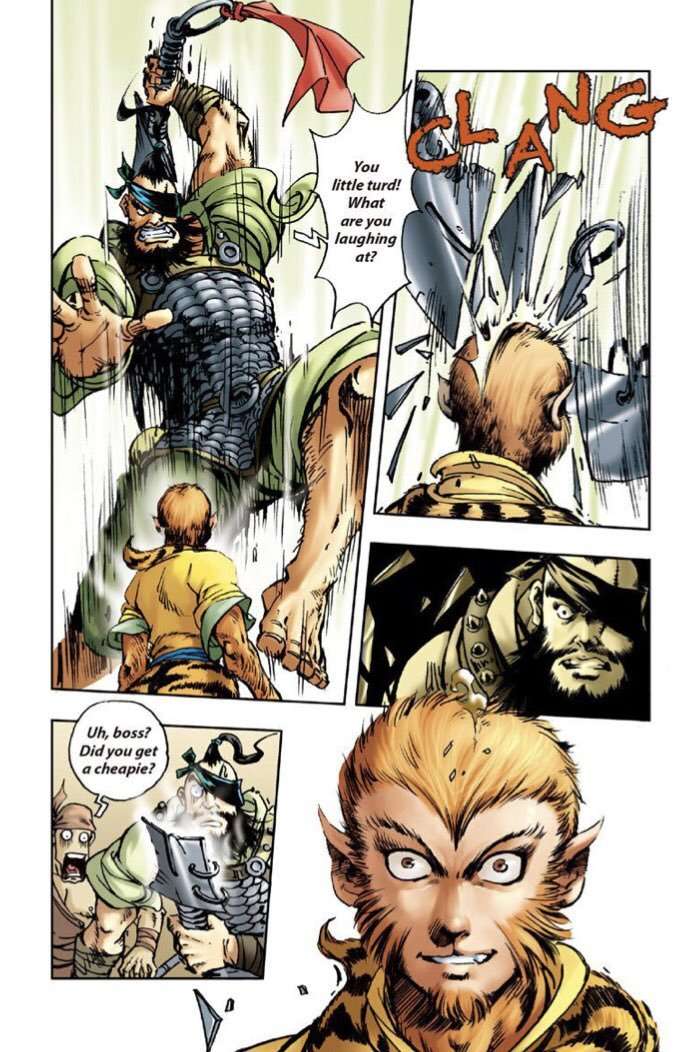
This invincibility follows him throughout the novel. For example, in chapter 75, Sun agrees to a demon lord’s offer to set the monk free if he can survive a blow to his head with a scimitar (fig. 4):
“‘When he heard this, Pilgrim smiled and said, ‘Fiend! If you have brush and paper in your cave, take them out and I’ll sign a contract with you. You can start delivering your blows from today until next year, and I won’t regard you seriously!’ Arousing his spirit, the old demon stood firmly with one foot placed in front of the other. He lifted up his scimitar with both hands and brought it down hard on the head of the Great Sage. Our Great Sage, however, jerked his head upward to meet the blow. All they heard was a loud crack, but the skin on the head did not even redden” (Wu & Yu, 2012, vol. 3, p. 373).
Fig. 4 – Page from a Journey to the West comic book showing Monkey’s hard head (larger version). Image found on Twitter.
Someone may argue that the scorpion’s sting pierced his face, but refer back to what I wrote about dharma power in comment #2, and see also note #6 below.
Also, the Death Battle crew lists astronomically large numbers without explaining how the figures were calculated (I make the same critic of the G1 Death Battle Fan Blog in my 06-19-22 update). These figures mean absolutely nothing without some sort of explanation.
But since the numbers are used in reference to Monkey’s feat of leaping out of the Buddha’s palm, I want to explain its significance for those who don’t understand (per this reddit post). Sadakata (1997) writes: “[Sun’s feat] reflects the world of the Flower Garland Sutra, where every phenomenon is located within the buddha-world” (p. 155). He goes on to discuss the Cosmic Buddha Vairochana, noting how Buddhist art from all over the world depicts the myriad Buddhas as his emanations. One Javanese example features images of the Five Dhyani Buddhas encircling a stupa dedicated to Vairochana, thereby “express[ing] the Mahayana idea that the buddhas emanate from Mahavairocana and penetrate the universe, that the ‘one’ is at the same time the ‘many'” (Sadakata, 1997, pp. 156-157). Therefore, in essence, the Buddha’s palm in the novel represents the universe.
Update: 06-25-22
Another redditor wrote:
“[T]he Hydra venom doesn’t need to ‘pierce’ your body to make effect, it just needs to have skin contact, referring to the time Hercules died because he was tricked into using a robe with some hydra venom on it.”
“I’m aware of how Hercules dies, but there’s still the question of whether or not the venom would be absorbed into Sun Wukong’s nearly indestructible skin. I don’t recall any similar episode where a substance is absorbed through his skin in JTTW. So assuming that it could is not the same as citing evidence that it would. I’m not trying to split hairs. I’m just a stickler for details.”
But I will concede that artistic license and the need to raise the stakes of the battle could warrant the venom effecting him even if the arrows can’t penetrate his skin.
Boomstick: Making him way faster than Herc could ever hope to be.
Wiz: Heracles held might of mythic proportions, but barring a lucky shot. Sun Wukong’s versatile magic, similar strength and absolutely absurd speed overcame this foe fitting for heaven’s equal.
Boomstick: When fighting Sun Wukong, Heracles mythed his chance.
Wiz: The winner is the Monkey King, Sun Wukong.


2. List of Parallels
This has been split off into its own article to make the present post a more manageable length.
Update: 06-19-22
I’ve been notified by several people that the G1 Death Battle Fan Blog has posted a prediction. This blog is independent from the actual content creators. In a 7 to 6 split, the blog predicts Hercules will win, explaining that he is stronger and faster. While seemingly thorough, portions of their analysis make no sense. For example, the section on speed reads:
As far as speed goes, the demigod also comes out on top. Taking into account Wukong growing his staff from Earth to the Underworld and the Heavens, then scaling that back to his speed, he could potentially move at 800 quadrillion times the speed of light. However, Heracles scaling to Zeus surpasses this by dozens of times, with him being able to send shockwaves across the entire firmament by simply nodding his head. Zeus nodding his head is an act that should have been done with extreme ease – at least more ease than Zeus actually wrestling Heracles – meaning that Heracles should reasonably scale. As the firmament and Olympus are on the outer sphere of the cosmos, which encircle each other, this would have had to cross the entire diameter, putting the feat at 29 quintillion times the speed of light, over 36 times faster than Wukong …
They scale Sun Wukong’s speed not by his Cloud-Somersault (a metaphor for instantaneous travel) or his ability to carry mountains with meteoric speed but by the magic growth of his staff into a pillar of heaven. Why? They also provide astronomically large numbers without explaining how the figures were calculated, a very common problem with such versus discussions.
In addition, they wrongly state that the 72 Transformations grant Monkey immortality. He actually first attains immortality via Daoist elixir arts. Furthermore, they claim that Sun’s immortality can be taken away from him, referencing his turn in Laozi’s Eight Trigrams furnace. While the extreme heat was meant to extract the elixir from his body, it doesn’t work as Monkey was able to hide in a cooler part of the furnace (Wu & Yu, 2012, vol. 1, p. 189). But we don’t know if this plan would have worked even if Sun had been stuck in direct heat. This is confusing an “intended result” with an “actual result.” But even if the heat could complete the job, how exactly is Hercules going to defeat Sun’s immortality. Does he also carry around a heavenly furnace? This is never explained in the analysis.
I don’t have time to analyze the entire article. I will reserve this space for the actual fight results.
Note: In light of new evidence, I’ve changed my opinion regarding the furnace. Please see the 06-28-22 update below.
Update: 06-23-22
I have finished adding my comments to the official fight and result transcripts of the battle (sec. 1.1 and 1.2). If any new evidence comes to light, I will make sure to further update the page.
I’m thrilled to announce that the episode has 1.1 million views after only two days! 925,000 plus of those were in the first 24 hours! I knew this fight would attract a lot of attention. I hope more and more people will finally read the novel and fall in love with Monkey’s adventures like I did oh so long ago.
Update: 06-26-22
When I originally watched the video, I skipped the character analysis straight to the fight. I only just now got around to reading the official transcript for the beginning, and I’m sorry to report that Monkey’s section is riddled with errors. Whomever wrote it has definitely never read the book. It would be like me writing a Death Battle transcript about Harry Potter based on a very lazy read of Wikipedia. I tried correcting the mistakes onsite, but my edits were reverted, and I was told that the transcript is off limits. Therefore, I’ve decided to add my corrections and comments here (in blue) like I did above.
But before continuing, I want to note that I’m upset because it appears that info from my research blog was likely used in the video and Death Battle wiki website without the specific articles being linked to. Sure, my general blog URL was added twice to an external site (here and here), but this is not the same as linking to the actual articles on the video/wiki so people can see where Death Battle got their information from. Make no mistake, this has little to do with publicity; my blog generates zero money for me. It’s just fair that my work be recognized if it’s being used, especially if it contributed to a video currently making money for its creators.
3. Sun Wukong’s character analysis
Wiz: There once was a mighty monkey warrior, born of a mystic stone from the energy of the sun and moon. Upon birth, he graciously bowed to the cardinal directions and-
1. The stone was “nourished for a long period by the seeds of Heaven and Earth and by the essences of the sun and the moon” (Wu & Yu, 2012, vol. 1, p. 101).
Boomstick: Shot lasers from his eyes! Strap in folks, this one’s a doozy.
2. This feat is likely based on the birth of the historical Buddha. See parallel #2 on this article.
Wiz: This monkey soon befriended a band of other primates and, rather narcissistically, named himself their handsome Monkey King.
3. Sun doesn’t just proclaim himself king, though the addition of “handsome” is pure ego on his part (he’s actually really ugly). He proves himself in a test of bravery by jumping through a waterfall to discover a long-forgotten immortal’s grotto-heaven (see the opening of this article).
Boomstick: But after a few centuries of monkeying about, he got a taste of the dreaded… midlife crisis!
Wiz: You see, the Monkey King was fierce and brave, yet he feared death, so he ventured to new lands in search of immortality.
4. Brave? Yes. Fierce? Not yet a warrior.
Boomstick: Turns out, he’d find a lot of it.
Wiz: Training under the Taoist master, Puti, he earned his first method of immortality and a new name. He would be the Monkey Awakened to the Void, spoken as: Sun Wukong.
5. Subodhi is a Buddho-Daoist sage with heavy Buddhist associations despite his normal portrayal as an immortal.
Boomstick: He also learned a bunch of magic. He can ride clouds, make thousands of clones, heal from fatal wounds like decapitation, and transform into basically anything: a bird, some vapor, a pitchfork, even an incredible fighting temple!
Popup: Though this technique is called “72 Earthly Transformations”, the scope of Sun Wukong’s shapeshifting is limited only by his imagination. The number actually references a collection of stars that the power is associated with.
6. Example #1 of info from my blog being used but not linked to. And the actual name for the technique is the “Multitude of the Terrestrial Killers” (Disha shu, 地煞數). [10]
Wiz: With his famous cloud somersault, he could traverse the world at incredibly high speed. At first, a single somersault could carry him 180,000 li [a typo for 108,000], li being a traditional Chinese unit equal to about 500 meters, making one somersault move 54,000 kilometers per second, fast enough to circle the entire Earth in one leap.
7. Example #2 of info from my blog being used but not linked to. I note this ability to encircle the earth in the opening paragraph here.
Boomstick: And he’d only get faster from there. Monkey would do whatever it took to prove he was the best of the best.
Wiz: When fighting the mighty deity Prince Nezha, his foe transformed into a more powerful visage with three heads and six arms.
8. This doesn’t happen until chapters later when Monkey first rebels. I’m not sure why they would introduce this fight so early.
Boomstick: But Sun was like, “Hey, I can do that too,” and then did just that.
Wiz: Sun Wukong eventually returned to his simian subjects and, with his newfound power, amassed a veritable army. However, he felt no weapon in their arsenal suited him.
Boomstick: So he barged into the Dragon King‘s palace and demanded he hand over a weapon worthy of a king who can match the power of Heaven. Yeah, Sun was pretty full of himself. But, he wound up taking a pillar, originally designed to measure the depths of the ocean.
Popup: Some translations claim this “golden-hooped rod” measured or held up the galaxy, but these are incorrect. It was originally used to gauge the depth of the Great Flood, a story regarding the rise of dynastic China.
9. Example #3 of info from my blog being used but not linked to. Here I discuss the error in translation that led to this common misconception.
Wiz: What seemed like a worthless rod to the Dragon King was actually the perfect weapon for Wukong. Weighing nearly eight tons, the Ruyi Jingu Bang can change size at his whim. It can shrink to the size of a needle or grow long enough to pierce the heavens.
10. The pillar was not “useless.” He considered it an item of great importance:
“‘That,’ said the Dragon King, ‘was the measure with which the Great Yu fixed the depths of rivers and oceans when he conquered the Flood. It’s a piece of magic iron, but of what use could it be to him [Monkey]?'” (Wu & Yu, 2012, p. 135).
And later, he even refers to it as a “divine treasure” (Wu & Yu, 2012, p. 142).
But the Dragon Queen suggests giving it to the rude and very powerful immortal anyway so that he will leave their kingdom (Wu & Yu, 2012, p. 135).
Also, the staff weighs nearly nine tons.
Boomstick: The same heavens that got pretty mad with Sun after he crossed his name out of the Ledger of Death, making himself double immortal! Wait, how does that work?
Wiz: And even more mad when he demanded to be formally acknowledged as “The Great Sage Equal to Heaven”.
11. This doesn’t happen until after serving as the Bimawen and subsequently rebelling. Again, they introduce something too early.
Boomstick: Okay, we got a headstrong goofball who quickly masters new powers and wants a fancy title. This is just Shonen anime!
Wiz: Now, the Monkey King may have lashed out, but it was because when he requested a place in Heaven, a place he truly believed he deserved, the Jade Emperor‘s court reduced him to a stable boy.
12. He didn’t request a place in heaven. The celestial bureaucracy just gave him a position to keep his unruly adventures in check (Wu & Yu, 2012, vol. 1, p. 143). Monkey only later “lashes out” upon learning of his low rank (Wu & Yu, 2012, vol. 1, p. 149).
Boomstick: Beneath all his antics, what Sun wanted most was to prove himself.
Wiz: Even with all the shenanigans, the Jade Emperor remained cautious and willing to placate Wukong.
Boomstick: By making him the watchdog of the Garden of Immortal Peaches. He totally ate that shit, didn’t he, Wiz?
13. It’s only at this point when Monkey battles Nezha, and when he proves too powerful, heaven placates him with the aforementioned sagely title and the above position (Wu & Yu, 2012, vol. 1, pp. 155-159).
Wiz: Oh yeah, Wukong got hammered, ate most of the peaches, ran around the Jade Palace in a fit, and found five gourds of immortality pills… which he promptly swallowed. All of them.
Boomstick: Ok, so that makes… how many layers of immortality now?
Wiz: I’d say a few… hundred? Thousand? If you count each individual peach and pill. When he sobered up, he knew he was in serious trouble, so naturally… he prepared for war.
14. This glosses over the reason for why Sun was drunk in the first place. He crashes the long-awaited immortal peach banquet and drinks all of the heavenly wine. Only then does he drunkenly stumble into Laozi’s laboratory and eat all of the alchemical pills (Wu & Yu, 2012, vol. 1, pp. 165-166).
Boomstick: Wow, that escalated quickly! What are they gonna do? Kill him? So, the Monkey King proved too strong for Heaven. He battled all their best fighters, and even matched Erlang Shen blow-for-blow in an epic battle of transformations! He’s that guy with the third eye.
Wiz: And Heaven’s greatest holy warrior. Yet, no matter Erlang’s form, Wukong always had a counter. Until Laozi threw in a convenient plot MacGuffin that captured the monkey. But even with Wukong in chains, Heaven had a problem.
15. Sun has no problem fighting Erlang, that is until his beloved monkey army is routed. He thereafter loses heart and flees, using a number of animal/structural transformations to escape (Wu & Yu, 2012, vol. 1, pp. 181-184). This is obviously different from the scenario described above. See this article by my friend Irwen Wong over at Journey to the West Library to learn how Erlang wins the majority of their encounters.
Also, Laozi’s Diamond snare doesn’t capture Monkey. It simply hits Sun on the head, dazing him long enough for heaven to capture him (Wu & Yu, 2012, vol. 1, p. 186).
We cut to Boomstick.
Boomstick: He just wouldn’t die! Lightning, fire, even Laozi’s de-immortalizing furnace just made the monkey stronger!
16. The purpose of the Eight Trigrams furnace is not to remove one’s immortality but to produce the intense heat needed to manufacture alchemical elixirs (see section III of this article). This is an important distinction.
Laozi suggests that the reason why Monkey has a nearly indestructible body is because all of the immortal peaches and alchemical pills were likely refined in his lower elixir field. He then offers a possible solution:
“It would be better, therefore, if [he is placed] in the Brazier of Eight Trigrams, where he will be smelted by high and low heat. When he is finally separated from my elixir, his body will certainly be reduced to ashes” (Wu & Yu, 2012, vol. 1, pp. 188-189).
But as I note in my 06-19-22 critique of the G1 Death Battle Fan Blog,
“…it doesn’t work as Monkey was able to hide in a cooler part of the furnace. But we don’t know if this plan would have worked even if Sun had been stuck in direct heat. This is confusing an ‘intended result’ with an ‘actual result’.”
Note: In light of new evidence, I’ve changed my opinion regarding the furnace. Please see the 06-28-22 update below.
Wiz: Now, Wukong is not invincible. He has been hurt by the Scorpion Demoness’ poison, which could even harm the Buddha, an awaken divine being liberated from the cycle of life and death entirely.
17. Please see what I wrote about the scorpion above (sec. 1.2, #2)
[Random skit removed for brevity]
Boomstick: Ugh… But even after all that, Sun had one more challenger to contend with; the Buddha himself!
Wiz: Buddha approached Wukong with a contest: leap out of his hand, and he could have the Jade Emperor’s throne for himself.
Boomstick: Having no impulse control, the monkey agreed, and in an instant, somersaulted to the very edge of Heaven.
Wiz: But he had already lost. Because Buddha achieved Nirvana, he transcended the world, literally holding all of existence. So even at the edge of the universe, Wukong technically never left his hand.
18. This matches what I wrote above about the Buddha and the universe (sec. 1.2, #3).
Boomstick: For his rebellion, Sun was put in time out, sealed under a mountain for 500 years.
19. This is an understandable mistake as the phrase “500 years” is thrown around a lot in the novel. But as I explain here, chapter 14 states that the mountain trapped Monkey during the rein of a historical usurper (Wu & Yu, 2012, vol. 1, p. 306), revealing that his imprisonment actually lasts somewhere between 617 to 649 years.
Wiz: But even Sun Wukong would find a chance at redemption. In his case, he was tasked with escorting and protecting a monk, Tang Sanzang, or Tripitaka, on a journey to the west.
Boomstick: With additional companions Pigsy and Sandy. The trip was a tough one, and Monkey abandoned it more than once. But through it all, he always returned to shine as the group’s powerhouse, saving Tripitaka’s life many, many times. Seriously, this guy could not stay out of trouble. It’s like Wiz on a blind date.
Wiz: Ahem. Wukong has cracked apart mountains, slayed hundreds of monsters, and survived the Yellow Wind Demon‘s storm that could destroy the universe. As in Heaven, Earth, the 18 layers of Hell, and more!
Popup: The storm is depicted differently across translations, but the original Chinese text uses “乾坤”, meaning “universe”, or more literally “every manifestation of nature”.
Boomstick: That’s cool and all, Wiz, but let’s answer the real question. Can he beat Goku?
Wiz: Um… maybe! During his journey, Wukong performed possibly his most legendary feat: holding up Mount Sumeru which, in traditional Mahayana Buddhism, is a mountain supporting the infinite cosmic sky.
Boomstick: And Sun just hauled it around on one shoulder. Just one! Because on his other shoulder… was a whole other mountain!
Popup: The other mountain was Mount Emei, one of the Sacred Mountain of China.
20. Example #4 of info from my blog being used but not linked to. This material of course comes from here.
Wiz: After 14 years of travel, the journey was complete, and Wukong had finally accomplished a truly great deed. For this, he was given his long-awaited place among the heavens.
Boomstick: As the Victorious Fighting Buddha! Now that’s got to be an anime.
Wiz: After so much time as a rebel, an outcast, and a truly unstoppable warrior, Sun Wukong had, at last, found his home.
Update: 06-28-22
I previously referenced Sun’s turn in Laozi’s Eight Trigrams furnace but stated that this should not be used as an anti-feat since the flames never actually hurt him (due to taking shelter in a cooler portion of the brazier) (06-19-22 update & sec. 4, #16). I also referenced Red Boy’s spiritually-cultivated Samādhi fire, noting that it is more powerful than earthly or even heavenly fire (sec. 1.2, #2). Regarding the latter, remember that Monkey easily survives an attempted execution by this celestial flame (sec. 1.2, #3). But it’s important to highlight that, in chapter 41, the combination of Samādhi fire and intense smoke is shown to override Monkey’s famous fire-protection spell:
His whole body covered by flame and smoke, the Great Sage found the intense heat unbearable and he dove straight into the mountain stream to try to put out the fire. Little did he anticipate that the shock of the cold water [11] was so great that the heat caused by the fire was forced inward into his body and he fainted immediately (Wu & Yu, vol. 2, p. 231).
And I was recently reminded of an additional episode where Sun has another brush with supernatural flames. In chapter 75, an ancient demon king places Monkey in a small, unassuming vase for execution, but the latter comments on the cool temperature inside. However, it turns out that this is an ultra powerful treasure “governed by the double primal forces of yin and yang” (Wu & Yu, 2012, vol. 3, p. 368), and the second that he speaks, the vessel assaults Sun first with fire, then biting snakes, and finally fire dragons. The first round of fire has no effect on him (nor do the snakes) but the fire dragons produce flames so hot that they also override the fire-protection spell:
He had hardly finished speaking when he felt some pain on his shanks. Rubbing them hurriedly with his hand, he found his shanks were turning flaccid because of the fire. More and more anxious, he thought to himself, “What’s to become of me? Even my shanks are weakened by the fire. I’ll be reduced to a cripple!” (Wu & Yu, 2012, vol. 3, p. 369)
What’s interesting is that the vase’s various torments are said to be “activated by the seven jewels, the eight trigrams, and the twenty-four solar terms” (Wu & Yu, 2012, vol. 3, p. 368) (emphasis mine). These are the same eight trigrams as Laozi’s furnace. So, this suggests that Sun’s time in the brazier would have actually hurt his body. While this might even destroy his form, the novel hints that, besides providing a surplus of extra heads, the 72 Transformations also grant Monkey extra lives just like a video game (see the 06-12-22 update here). But this “respawning” is never officially shown in the novel. So what would happen if Sun had been trapped inside the Eight Trigrams furnace in direct heat? Would he just keep regenerating over and over again until his extra lives were spent (or he escaped), or would the supernatural flames simply destroy his body once and for all? I’m not sure. Make of this what you will.
But my original point still stands: Hercules would not have been able to overcome Monkey’s immortality unless he was carrying around a heavenly furnace and managed to force and keep the primate hero inside for a given time.
Update: 07-01-22
I forgot to mention something regarding the various fire-related episodes in the last update: Sun Wukong’s abilities are presented inconsistently throughout the novel. This is best illustrated by two episodes. As mentioned above, in chapter 75, Monkey cries that he’ll be a cripple if the supernatural fire continues to burn his ankles. But he previously demonstrated the ability to heal using his immortal breath in Chapter 46:
With a swagger, Pilgrim walked down to the execution site. Leaning himself on a huge pillar, he untied his robe and revealed his stomach. The executioner used a rope and tied his neck to the pillar; down below, another rope strapped his two legs also to the pillar. Then he wielded a sharp dagger and ripped Pilgrim’s chest downward, all the way to his lower abdomen. Pilgrim used both his hands to push open his belly, and then he took out his intestines, which he examined one by one. After a long pause, he put them back inside, coil for coil exactly as before. Grasping the skins of his belly and bringing them together with his hands, he blew his magic breath on his abdomen, crying, “Grow!” At once his belly closed up completely (Wu & Yu, 2012, vol. 2, p. 309).
Prior to this, he quoted a fun poem about his abilities:
Cut off my head and I still can speak,
Sever my arms, I still can beat you up!
My legs amputated, I still can walk.
My belly, ripped open, will heal again,
Smooth and snug as a wonton people make:
A tiny pinch and it’s completely formed.
To bathe in boiling oil is easier still;
Like warm liquid cleanse me of dirt it will (Wu & Yu, 2012, vol. 2, p. 307).
This inconsistency is likely due to the standard 1592 edition of Journey to the West coalescing from independent oral stories developed and told over the centuries (see the late-13th-century version of the story, for example). Therefore, it’s important to remember that Monkey is only as fast, strong, or invulnerable as the story calls for him to be. This serves to heighten the drama, making the story more compelling.
Update: 05-20-23
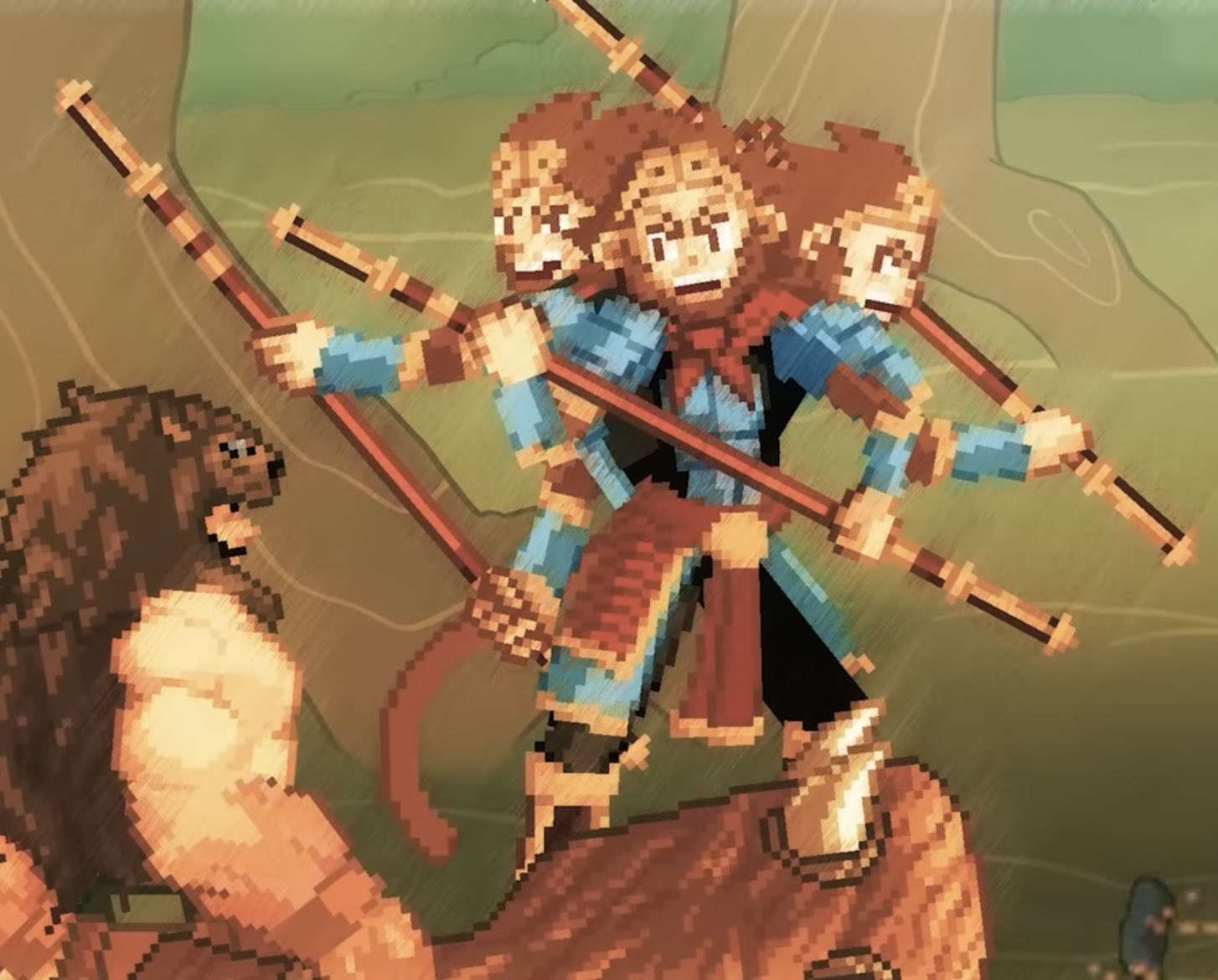
Above, I mentioned that the DEATHBATTLE! video animated the characters as sprites. I didn’t like Monkey’s design at the time because he was so tiny that you couldn’t see any of the details. However, someone on twitter recently posted hi def and up-close images of him from the battle (fig. 8), and I have to say that he looks pretty good.

Fig. 8 – The three-headed, six-armed sprite Sun Wukong from the video (larger version). Image found on this tweet.
Update: 08-03-23
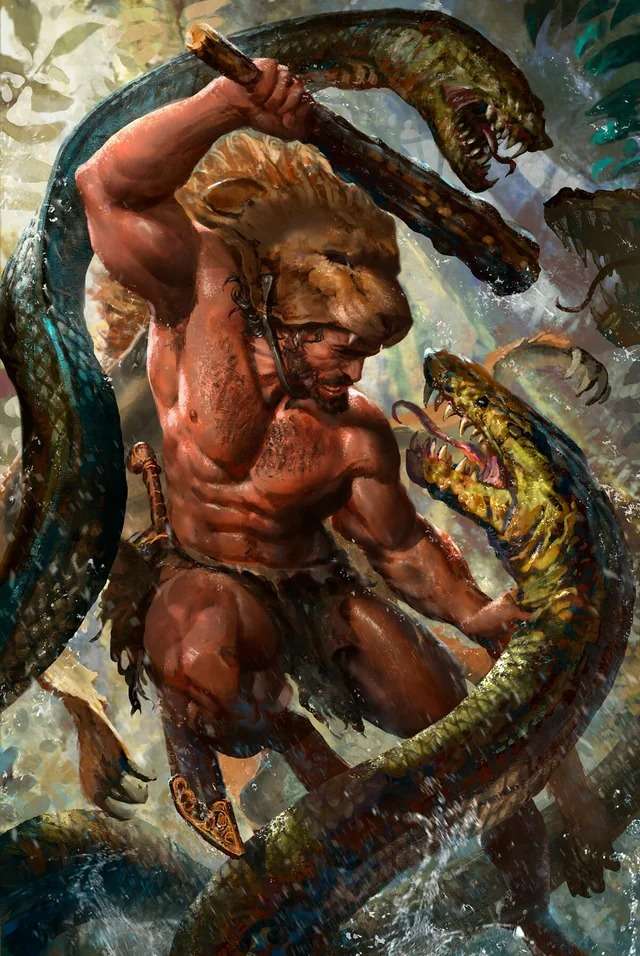
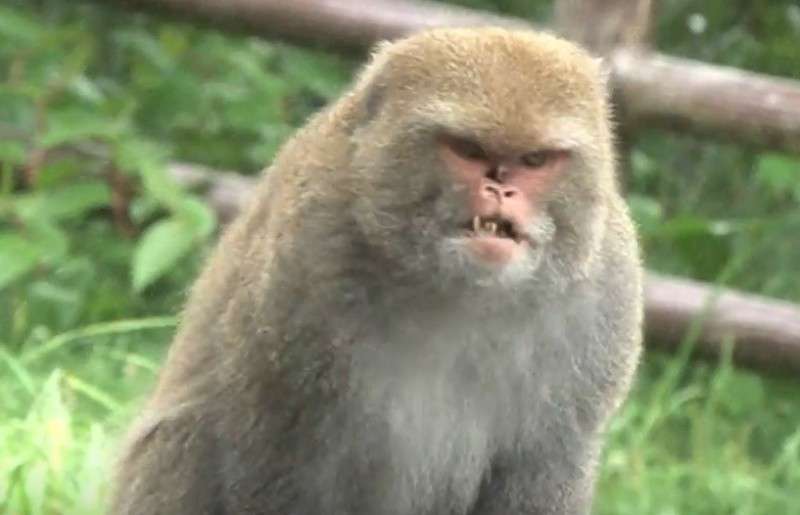
I want a Hercules-Sun Wukong (fig. 9 & 10) buddy cop movie:
One is a divine hero who is super strong, wears a big cat skin, and fights monsters with a blunt weapon. The other is a divine hero who is super strong, wears a big cat skin, and fights monsters with a blunt weapon. Both are extremely pissed and ready to clean up the streets.

Fig. 9 – Hercules kicking some hydra ass (larger version). Image found here. Fig. 10 – Monkey about to kick somebody’s ass (larger version). Image found here.
Update: 12-01-24
I have split the parallels off into their own article.
Update: 10-04-25
I have split off material from this page to create a new article discussing a more natural reason for Hercules and Sun Wukong to fight each other.
Notes:
1) JTTW uses two measurement units when referring to the staff, the chi (尺, i.e. “Chinese foot”; 12.52 in / 31.8 cm) and the zhang (丈; 1 = 10 chi) (Jiang, 2005, p. xxxi). Monkey is said to fight with the staff at two lengths, “two zhang” (erzhang, 二丈, i.e. 20 chi) in chapter three and “12 or 13 chi” (丈二三) in chapter 88 (Wu & Yu, 2012, vol. 1, p. 135; vol. 4, p. 196). But twenty is likely a typo for 12 (zhanger, 丈二, 3.82 m / 12.53 ft.) since the pillar was already close to the former size when Sun first saw it in the dragon treasury. Therefore, this correction agrees with the latter measurement.
2) Translation slightly altered. Yu (Wu & Yu, 2012) writes that it’s the size of a “rice bowl” (vol. 1, p. 135), but this doesn’t appear in the original Chinese.
3) In chatper 59, for example, he invades the stomach of his former bond brother‘s wife in an attempt to procure a magic weapon needed to clear his master’s path to the west:
“I’m now having a little fun in my esteemed Sister-in-law’s stomach! I am, as the saying goes, seeing right through you! I know how thirsty you must be, so let me send you a ‘sitting bowl’ to relieve your thirst” Suddenly he shoved his foot down hard and unbearable pain shot through Rākṣasī’s lower abdomen, sending her tumbling to the floor and moaning. “Please don’t refuse me, Sister-in-law,” said Pilgrim, “I’m presenting you with an added snack for your hunger.” He jerked his head upward, and unbearable pain coursed through Rākṣasī’s heart. She began to roll all over the ground, the pain turning her face yellow and her lips white. All she could do was to cry out, “Brother-in-law Sun, please spare my life!” (Wu & Yu, 2012, vol. 3, p. 129).
4) Mt. Sumeru is said to be 160,000 yojanas (1 yojana = roughly 8 miles/12.87 km) tall, with 80,000 below a great ocean and 80,000 exposed above (Vasubandhu, 2014, pp. 454).
5) Three lines from a poem in chapter 41 read: “It’s not fire from Heaven, / Nor is it a wildfire. / It’s the realized samādhi fire born of the demon’s self-cultivation” (Wu & Yu, 2012, vol. 2, p. 225).
6) “Dharma power” (fali, 法力) is the strongest form of magic in Journey to the West. See this paper for an explanation of the novel’s Buddho-Daoist cosmic hierarchy, which places Buddhist deities at the top.
7) The hydra is the nigh-immortal offspring of the Titanic monsters Typhon and Echidna (Hesiod & Powell, 2017, p. 52).
8) Yu (Wu & Yu, 2012) uses “pounds” instead of the original jin (斤, a.k.a. catty) (vol. 1, p. 135). During the Ming dynasty when the novel was compiled, one jin equaled approximately 590 grams (Jiang, 2005, p. xxxi). I will therefore alter Yu’s translation to reflect more accurate measures.
9) Yes, this information comes from Wikipedia, but I’m the one who originally added it under the screenname “Ghostexorcist.” See this edit history, for example.
10) I follow the translation used in Meulenbeld (2019). Yu (Wu & Yu, 2012) simply translates this as the “Art of the Earthly Multitude” (vol. 1, p. 122).
11) This sounds like a case of thermal shock.
Sources:
Aston, E. (2021). Labor VI: The Stymphalian Birds. In D. Ogden (Ed.), The Oxford Handbook of Heracles (pp. 95-106). United Kingdom: Oxford University Press.
Birrell, A. (1999). Chinese Mythology: An Introduction. Baltimore: The Johns Hopkins University Press.
Deacy, S. (2021). Heracles between Hera and Athena. In D. Ogden (Ed.), The Oxford Handbook of Heracles (pp. 387-394). United Kingdom: Oxford University Press.
Hanesworth, P. (2021). Labor XII: Cerberus. In D. Ogden (Ed.), The Oxford Handbook of Heracles (pp. 165-180). United Kingdom: Oxford University Press.
Hesiod, & Powell, B. B. (2017). The Poems of Hesiod: Theogony, Works and Days, and The Shield of Herakles. United States: University of California Press.
Hinsch, B. (2011). Women in Early Imperial China. Lanham, Md: Rowman & Littlefield Publishers.
Hsing, I.T., & Crowell, W. G. (2005). Heracles in the East: The Diffusion and Transformation of His Image in the Arts of Central Asia, India, and Medieval China. Asia Major, 18(2), 103–154. http://www.jstor.org/stable/41649907
Hsu, K. L. (2021). The Madness and the Labors. In D. Ogden (Ed.), The Oxford Handbook of Heracles (pp. 13-25). United Kingdom: Oxford University Press.
Huntington, J. C., Bangdel, D. (2003). The Circle of Bliss: Buddhist Meditational Art. United Kingdom: Serindia Publications.
Jiang, Y. (2005). The Great Ming Code: Da Ming Lü. United States: University of Washington Press.
March, J. (2021). Labor I: The Nemean Lion. In D. Ogden (Ed.), The Oxford Handbook of Heracles (pp. 29-44). United Kingdom: Oxford University Press.
Mayor, A. (2021). The Girdle of the Amazon Hippolyte. In D. Ogden (Ed.), The Oxford Handbook of Heracles (pp. 124-134). United Kingdom: Oxford University Press.
Meulenbeld. (2019). Vernacular “Fiction” and Celestial Script: A Daoist Manual for the Use of Water Margin. Religions, 10(9), 518. MDPI AG. Retrieved from http://dx.doi.org/10.3390/rel10090518
Ogden, D. (2021a). Introduction. In D. Ogden (Ed.), The Oxford Handbook of Heracles (pp. xxi-xxxi). United Kingdom: Oxford University Press.
Ogden, D. (2021b). Labor VIII: The Mares of Diomede (and Alcestis). In D. Ogden (Ed.), The Oxford Handbook of Heracles (pp. 113-123). United Kingdom: Oxford University Press.
Pache, C. (2021). Birth and Childhood. In D. Ogden (Ed.), The Oxford Handbook of Heracles (pp. 3-12). United Kingdom: Oxford University Press.
Romero-Gonzalez, D. (2021). Deianeira, Death, and Apotheosis. In D. Ogden (Ed.), The Oxford Handbook of Heracles (pp. 266-280). United Kingdom: Oxford University Press.
Sadakata, A. (1997). Buddhist Cosmology: Philosophy and Origins. Japan: Kosei Publishing Company.
Salowey, C. (2021). The Gigantomachy. In D. Ogden (Ed.), The Oxford Handbook of Heracles (pp. 235-250). United Kingdom: Oxford University Press.
Salapata, G. (2021). Labor XI: The Apples of Hesperides. In D. Ogden (Ed.), The Oxford Handbook of Heracles (pp. 149-164). United Kingdom: Oxford University Press.
Shahar, M. (2008). The Shaolin Monastery: History, Religion, and the Chinese Martial Arts. Honolulu: University of Hawai’i Press.
Theocritus, & Gow A. S. F. (1952). Theocritus (Vol. 1-2). Kiribati: Cambridge University Press.
Vasubandhu (2014). Abhidharmakosabhasyam of Vasubandhu (Vol. 2) (L. de La Vallee Poussin & L. M. Pruden, Trans.). United States: Jain Publishing Company.
Wivell, C.S. (1994). The Story of How the Monk Tripitaka of the Great Country of T’ang Brought Back the Sūtras. In V. Mair (Ed.), The Columbia Anthology of Traditional Chinese Literature (pp. 1181-1207). New York: Columbia University Press.
Wu, C., & Yu, A. C. (2012). The Journey to the West (Vols. 1-4) (Rev. ed.). Chicago, Illinois: University of Chicago Press.
{ A repost from Twitter in case you didn’t see the reply }
Hey, just so you know the analyses have previews that have been out for a while.https://youtube.com/watch?v=S-vaqOcdv-Uhttps://youtube.com/watch?v=3SgHCbrS0cU
There’s even a sneak peek of the fight itself (be warned, the fight scenes in Death Battle are there for flair only, acting as a fancy drumroll before the post-analysis). 31:35 if you’re on a mobile device.https://youtu.be/n5rNonRnH9Q?t=1895
One of the members of the research team also confirmed that but Sun and Herc will not be given their
Their godhoods gained at the end of their tales**
Hello again Mr. McClanahan! It is Otto from Capeworldcomics. May I interview you sometime regarding your work and on Monkey King in the context of Internet vs battles?
Golden Apples
Depending on the story, the golden Apples are either literally made of gold or just really rare cultivars. Possibly pears and not apples. I went diving because I thought a short story about Sun Wukong making immortal fruit cocktail would be cute. The Norse Iðunn’s golden Apples gave youth… but not Immortality. Many people tend to confuse the Grecian and Norse golden Apples due to the fact they are both apples. Given the ways of trees and climates, they would be a lesser to the Heavenly Peaches. I would have had Thor fight instead, but I digress. Truthfully, Loki would be the better contender, but it would be a battle of getting away with it.
Perception
Heracles is actually pretty smart. Most of the Labors were supposed to be impossible. Strength and cunning were needed. If we take Aesop into account, the god version can tell when people are actually trying or not. Although, since he did marry Hera’s daughter after godhood… then again he did fight at Troy with Odysseus and was with the Argonauts so he may have learned a few things.
Arrows
Wait? What? No. I think he only had twenty-four. They were dipped in Hydra’s poisonous blood and then used on harpies. Unless his arrow retriever/assistant was with him.
Clappers
Yeah….that one doesn’t make sense. Unless they were going for the drive away demons theory, but since Sun Wukong is not really a demon per se, I don’t think that works. However, if we posit that he is like the Sixth-Ear Macaque, we run into the problem of enhanced perceptions causing enhanced suffering. If you can hear a thousand miles away and someone nearby starts rattling clappers, that can do some damage.
The Finish
Heracles held up the sky for a week, but the Ruyi Staff pinned the Milky Way in place. He didn’t have a chance.
Honestly, if it were one of my Battle of the Titans, I would have chosen a version of each that was on equal level. Since I usually go by the rule of using videogame versions, the Monkey King version and his Cockneyed accent, sealed powers, and epic ability with a bench would be facing… I think I have to use myth Heracles since I seriously can’t remember playing a game with Heracles in it. Which would have to be the only way to have a fair fight.
I think maybe pre-Buddha on the Journey Sun Wukong might be weakened enough. I wasn’t very happy with that game until near the end. Stick to classics.
Of course, I cannot think of a reason they would fight. Honestly, Zhu-Bajie being attacked by Heracles is more likely than Sun Wukong. Giant Boars are terrifying no matter where you live. Which is not enough to get a rise from Ol Wukong since he isn’t fond of Zhu-Bajie either. Maybe, maybe, if he felt like it, Sun Wukong might help… but it wouldn’t take so long and he would have to by-proxy the fight because Heracles is human and Tripitaka would not let Wukong fight seriously.
Unless Hera style madness sends Heracles after Tripitaka. But given the Tripitaka stance on defending from humans… What a headache! I feel like a bureaucrat just thinking it over!
Do you have an ancient source for the 24 arrows? I’d like to add a note to the section where I asked the question.
The idea that Monkey’s staff anchored the Milky Way is based on a mistranslation. The novel only states that it set a fixed measurement for the depths of the Heavenly River (Milky Way). I discuss the misconception here:
https://journeytothewestresearch.com/2018/08/04/misconceptions-about-monkeys-staff-and-the-milky-way-galaxy/
Note (10-04-25): See my new article for a more natural reason for them to fight.
https://journeytothewestresearch.com/2025/10/04/story-idea-sun-wukong-vs-heracles/
It seems that you have just been researching the novels. Have you seen the adaptations? Animation and live action TV series? The one from 1986 shows Wukong standing within the fire for instance. Whereas other adaptations show him desperately trying to avoid getting burned. Nowhere does it show that Wukong stays at a “cooler” area. Also, I read up somewhere that it says “in some versions” which means there’s more than one depiction of the Crucible segment.
Hello. There are other Ming-era versions of the novel, but the standard edition published in 1592 is the version on which all modern media is based. It supersedes any retellings in importance. The 1592 edition does indeed mention that Monkey crawls into a cooler area of the furnace. The Anthony C. Yu 2012 revised translation reads:
“The brazier, you see, was of eight compartments corresponding to the eight trigrams of Qian, Kan, Gen, Zhen, Xun, Li, Kun, and Dui. The Great Sage crawled into the space beneath the compartment that corresponded to the Xun trigram. Now Xun symbolizes wind; where there is wind, there is no fire. However, wind could chum up smoke, which at that moment reddened his eyes, giving them a permanently inflamed condition” (vol. 1, p. 189).
Interesting. But that’s just the novels. One has to take the live action TV adaptations and also the Chinese animated series into consideration too. Death Battle is known to composite characters after all.
That said, either way, Wukong survived his time in the Crucible and came out stronger all the same regardless of adaptations. In the 2011 live action series, Wukong came out furless too which was not shown in other adaptations but eventually gained back all his fur after his time under that sealed mountain.
不知道说啥,开心快乐每一天吧!