Journey to the West Fanfiction Writer Spotlight #1: DarkscytheDrake

From time to time I like to post a fun blog not directly related to (though sometimes informed by) my research. Regular articles will resume after this entry.

Anyone who follows me on social media will know that I generally do not like modern adaptations of Journey to the West (Xiyouji西遊記, 1592; “JTTW” hereafter) (see here and here, for example). But thanks to enjoying this book, I’ve learned to temper my negativity. I’ve, therefore, decided to mirror the format of a series of past art-based articles [1] and shine a spotlight on the author of a JTTW-related fanfiction that I actually like. My hope is that such posts will expose their work to a wider audience interested in JTTW, while also documenting modern day perceptions and depictions of the novel and its characters.

Our first writer goes by the online handle DarkscytheDrake (AO3, Fanfiction.net, Spacebattles). They were kind enough to answer some interview questions, as well as allow permission to display some of their work.

I. Q & A

1) Can you tell me a little about yourself?

I’m 24 years old and live in the Middle East. I’m a huge fan of mythologies and old stories. I dabble in many aspects of the art world, and writing has been a hobby of mine since high school. Since I was a kid my dad used to bring me books from abroad to read. I’ve travelled the world thanks to my parents’ business trips and was exposed to many cultures and stories, which made me fall in love with them even more.

2) Are you self-taught or have you taken writing classes?

I’m self-taught, using the example of others. By the time I seriously thought about writing, there weren’t any writing workshops in my area, at least ones that didn’t focus on the genres I wanted to write in. English is my second native language and most books I read are in English.

3) What are your main sources of literary inspiration?

My main inspirations are the Inheritance Cycle, Shogun (book and TV show), The Hobbit (book and movies), and Bone. Manga like Fullmetal Alchemist have also taught me a lot about storytelling and character arcs.

4) How did you learn about Journey to the West?

I first became fully aware of Journey to the West proper, meaning not expys like Dragon Ball, when I visited China for the first time. I saw a lot of ads and costumes for the Monkey King, and I asked our guide who this character was. I did some research to get acquainted with the story and main players, and I left it alone until Black Myth: Wukong was announced, which revitalized my interest and prompted me to purchase an abridged version of the book, Monkey King. I read the Anthony C. Yu translation online. From there, I also watched some of his spin-off works like Lego Monkie Kid.

5) Who is your favorite character?

Sun Wukong is my favorite character, and while half of that does come from the sheer insanity of his powers and adventures, the other half comes from how much he learns in the journey, and the family he finds within his companions. His moments of innocence, like when he plays in the snow or his more vulnerable moments like in the White Bone Spirit arc. Princess Iron Fan has got to be my second favorite, though. She takes a lot of shit from her husband, suffered the imprisonment of her son and had to deal with Wukong’s antics, but ultimately remains a decent person and one of the few demons on the journey who isn’t wicked or wants to eat Tripitaka.

6) Do you have a favorite episode from the novel?

My favorite episode would have to be the fight against Demon Bull King, because of how personal it is to Wukong and the sheer scale of the fights that ensue there, like Wukong and DBK transforming into their giant forms and duking it out. Really, all of the Demon Bull family’s episodes (Iron Fan and Red Boy) are the best.

7) Does the novel have a special meaning to you?

I’m honestly surprised by the sheer depth the novel has for its age. There’s a lot of worldbuilding there which is on par with Tolkien‘s work, and those who grew up in Asian culture are aware of its deeper meanings, so it transcends ‘modern’ worldbuilders in that sense. And when I see just how influential the novel is and how it led to one of the greatest anime of all time…I’m humbled.

8) Can you tell me about your ongoing JTTW-related project?

My current JTTW project is a fanfiction story called “Great Sage, Equal to Heaven and Above Brockton” (AO3, Fanfiction.net, Spacebattles), and it’s a crossover with the webnovel Worm by Wildbow. The world of Worm is filled with superpowered humans called ‘capes’ (fig. 1), but unlike DC and Marvel, many capes use their powers for crime. There are heroes who battle these villains of course, but matters aren’t as clear-cut as they appear. On top of that, giant monsters attack cities every few months and cause untold damage. The main premise of my story is that an untold amount of time after the journey, Sun Wukong wakes up in Worm‘s main setting of Brockton Bay, a coastal city [north of Boston, MA, USA] with a lot of capes, nazis, Asian gangsters and heroes. From there he investigates the modern era, having fun and tries to find out what’s going on with these strange superpowered humans. It’s a classic premise of ‘OP character gets dropped into a lower-ranked world’, but it’s also a study of how a character who found a home suddenly gets dropped into a new one, and how power doesn’t always solve problems. And if it does, what are the potential consequences?

[Jim here: As of this writing, chapters one to 11 are available for free online, but chapters 12 to 13 (and a ch. 14 preview) are still only available on patreon.]

Fig. 1 – Cover for a fake Worm comic book featuring the original story’s main character, who makes an appearance in the Great Sage story (larger version). Illustration by @codetrillogy on Twitter. Used with permission.

II. Writing Sample

The following excerpt comes from an event in chapter six. After befriending a young boy, Sun Wukong jumps in to save his sister from gangsters attempting to take her in lieu of a missed “protection money” payment:

* The boy’s name.
** The boy’s sister.
*** The name of a local gang leader. Monkey comically believes he is a literal dragon.

Note:

1) As of this writing, I’ve made three such art posts here, here, and here.

Story Idea: Firearms and the Journey to the West Universe

From time to time I like to post a fun blog not directly related to (though sometimes informed by) my research. Regular articles will resume after this entry.

Last updated: 04-19-2026

I am currently reading Gunpowder Technology in the Fifteenth Century: A Study, Edition and Translation of the Firework Book (2024), and this got me thinking: what would the Journey to the West (Xiyouji西遊記, 1592) cosmos be like if there were guns? In this photo essay, I will briefly explore guns in Chinese folk religion, types of historical (mainly handheld) firearms used in ancient China, and, finally, ways that such weapons could be inserted into the narrative.

I. Folk Religion

I first set out to see if firearms play any part in Chinese folk religion. I found a few examples from Taiwan. The first is “Lord Red Flag” (Hongqi gong, 紅旗公; a.k.a. “Marshal of Sacred Righteousness,” Shengyi yuanshuai, 聖義元帥), a relatively recent martial god. He and his marshals are depicted holding rifles.

(Click on the pictures to enlarge them.)

Here’s a version without the cloak.

Even his tangki (spirit-medium) gets a chance to fire off some rounds.

Three more involve Prince Nezha. The first of two (from the same temple) is a traditional statue adorned with an M4 assault rifle and other modern weaponry.

Here’s a closeup of the rifle. Also, take note of the holstered revolver (i.e. the black pouch) on his waist.

The profile view shows clips on his belt (again, in black pouches), as well as a grenade on top of an ammo case at his feet.

The second is a three-headed and eight-armed Nezha with an anti-tank rocket launcher, a rocket round, and a grenade at his feet.

A third statue (my personal favorite) portrays the prince with an MP 40 submachine gun and modern military gear. The carving on the water is amazing. I first learned of it here.

I learned here and here that cannons are sometimes worshiped in East and Southeast Asia as fertility gods. (See the 09-29-24 update below for more info about cannons.)

I also learned that ritual guns sometimes appear in Chinese folk temples of Vietnam.

If present, the guns number among ritual weapons that are commonly found in martial god temples of Chinese folk religion. (But I’ve never personally seen a gun among said armaments in Taiwanese temples.) This Vietnamese article briefly mentions that the weapons are based on the eighteen arms of Chinese martial arts. And it’s interesting to note that a “hand canon” (chong, 銃) does appear among the eighteen arms listed in the Water Margin (Shuihu zhuan, 水滸傳, c. 1400):

Shi Jin daily sought Drill Instructor Wang’s tutelage in the eighteen (weapons of) martial arts. He taught him from the very beginning. Which eighteen martial arts?

Lance, hammer, bow, crossbow, hand cannon, whip, metal tablet, long sword, chain, truncheon, fu-axe, yue-axe, ge-halberd, ji-halberd, shield, staff and spear, and toothless rake. [1]

史進每日求王教頭點撥十八般武藝,一一從頭指教。 那十八般武藝?

矛錘弓弩銃,鞭簡(鐧)劍鏈撾,斧鉞並戈戟,牌棒與槍杈。

Perhaps this list influenced the ritual weapons in Vietnam.

II. Historical Firearms in Ancient China

Here is an example of a Yuan-era hand canon, minus the shaft.

Here is a “Three-Eyed Hand Canon” (Sanyan chong, 三眼銃), a three-barreled stick gun used during the Ming Dynasty.

You can see that they were attached to bladed polearms, which could be used offensively or defensively between reloading.

There were even five-barreled and shielded firearms called “Rapid-Thunder Hand Cannons” (Xunlei chong, 迅雷銃). So cool!

Here’s a Chinese video demonstrating the one and three-barreled versions:

III. Story Idea

This brings me back to Journey to the West. How could firearms be inserted into a religious allegory? Well, for starters, a 950 CE wall mural in Dunhuang shows one of Mara‘s demons attacking the awakening Buddha with a “fire lance” (huoqiang, 火槍; upper right), a precursor of hand cannons. (The fellow below him holds a grenade.) This is a clear example of a centuries-old association between firearms and spiritual warfare.

Here’s the full mural.

Now imagine that these weapons are wielded by celestial gunner-soldiers under the command of the “Star of Fiery Virtue” (Huode xingjun, 火德星君), the god of fire. In JTTW chapter 51, his literary troops utilize fire scimitars, fire bows, fire arrows, fire crows, fire horses, red (fire) rats, fire dragons, fire carts, fire gourds, fire banners, and fire rods in battle (Wu & Yu, 2012, vol. 3, p. 9). These are just a short step from firearms.

Given that the novel projects Ming-era concepts backwards to the Tang Dynasty, having gods wield such weapons hundreds of years before they were even invented wouldn’t be out of place in the JTTW universe. A writer could just say that the weapons were created in the realm above and eventually trickled down to mankind. Admittedly, I like the real history better because it shows the ingenuity of our predecessors, but the story requires a little tinkering.

Writers wanting to expand on the idea of firearms in heaven could take Ming gunners, their uniforms, and their strategies as models to work from. This page features a lovely figurine of such soldiers, including lots of juicy historical info. And the fact that the historical troops were part of the “Divine Machine Battalion” (Shenji ying, 神機營), which specialized in firearms, really solidifies their connection to the heavenly realm.

Who would make such weapons? There’s a fun answer for that: Laozi! The novel twice describes him forging mystical weapons belonging to our main characters. For example, Zhu Bajie mentions in chapter 19 that the high god made his rake: “This is divine ice steel greatly refined, / Polished so highly that it glows and shines. / Laozi wielded the large hammer and tong …” (Wu & Yu, 2012, vol. 1, p. 382). And Monkey claims in chapter 75 that the Daoist Patriarch created his staff: “The rod of steel nine cyclic times refined / Was forged in the stove by Laozi himself” (Wu & Yu, 2012, vol. 3, p. 375). So, on top of making alchemical medicines, Laozi could be heaven’s celestial gunsmith.

How could demons get ahold of celestial guns? Well, referring back to chapter 51, a buffalo-spirit uses the “diamond cutter” (jingang zhuo, 金鋼琢), an uber powerful, bracelet-like treasure-weapon also created by Laozi, to twice suck away all of the aforementioned fire weapons (Wu & Yu, 2012, vol. 3, pp. 9 and 23). Devil craftsmen would then have time to analyze the heavenly technology, which would allow them to eventually make their own (inferior?) copies.

Recall that the Great Peng demon is said in chapter 74 to have taken over a human kingdom by eating all of the inhabitants some 500 years ago, and the former population was replaced by spirits (Wu & Yu, 2012, vol. 3, p. 360). Firearms would definitely make a human-to-monster kingdom transition for less powerful demon kings a lot easier.

Another possibility is that a fiend could simply sneak into heaven to steal some. This may seem like an impossible task, but JTTW chapter 63 mentions something similar happening. The dragon-spirit “Princess All Saints” (Wansheng gongzhu, 萬聖宮(公)主) is said to have “[snuck] into heaven and stole[n] from before the Hall of Divine Mists the nine-leaf divine agaric planted by the Lady Queen Mother of the West” (Wu & Yu, 2012, vol. 3, p. 192). So, if someone can secretly infiltrate the realm above and steal divine vegetation, they could certainly steal heavenly armaments.

Perhaps the simplest way that demons could attain celestial firearms is by ambushing heavenly troops and commandeering their equipment.

I could see Red Boy (Honghai’er, 紅孩兒) using his powerful Samadhi flame to forge his own hand cannons, at least with the help of devil craftsmen. His association with fire only makes it natural that his own troops would carry firearms.

The only thing I can’t think of is how heavenly hand cannons would differ from their real world counterparts. Would they just use gunpowder and metal shot, or would it be more magical in nature, like shooting meteors? I’m open to suggestions from readers.


Update: 09-29-2024

The film Enoken no Songoku: Zenpen (エノケンの孫悟空 前編; a.k.a. “Enoken’s Songoku,” 1940) features the Monkey King mowing down demons with his staff-turned-machine gun.

There are at least two toys depicting the Great Sage with a gun. The first I learned about via a Facebook group post. I love how his sniper rifle is modeled on his magic staff. You can see the original packaging here.

And here is a Black Myth: Wukong-inspired figure with a powerful-looking rifle/shot gun combo. I saw it here.

Regarding cannons, I learned that a giant Western cannon was worshiped by court officials during the Ming. The History of the Ming (Mingshi, 明史, 1739) explains:

At this time, a ship arriving from the Great Western Ocean [i.e. the West] brought an enormous cannon, which got the name of the “Red Barbarian” [Hongyi, 紅夷]. It measured over two-zhang [20.86 ft/6.358 m] long, and weighed as much as 3,000 catties [3,902.18 lbs/1,770 kg]. It could demolish any stone city-walls, and its earthquake-like roar could be heard for several dozen li around. During the Tianqi [天啟] reign, the name of “Great General” [Da jiangjun, 大將軍] was given to it, and officials were sent to offer libations [si, 祀] to it (based on Needham, 1986, p. 392).

其後,大西洋船至,復得巨砲,曰紅夷。長二丈馀,重者至三千斤,能洞裂石城,震數十里。天啟中,錫以大將軍號,遣官祀之。

Needham (1986) suggests the cannon’s worship is connected to folk beliefs: “In Taoist folk-religion any device or machine of almost miraculous potency was something which should receive veneration” (p. 392 n. b).


Update: 10-05-24

I forgot to mention the “Gatling Gun Bodhisattva” (Jia-te-lin pusa, 加特林菩薩) from Chinese social media and Japanese manga. The following clip expounds the Heart Sutra of the Honored Gatling Gun Bodhisattva (Namo Jia-te-lin pusa Xinjing, 南無加特林菩薩心經).


Update: 11-23-24

Reader Danna Zhang left a wonderful comment about how Investiture of the Gods (Fengshen yanyi封神演義, c. 1620 CE), a sort of prequel to Journey to the West, also includes gunpowder weaponry:

Late comment, but FSYY also puts Ming dynasty gunpowder weapons into the 11th BCE Shang dynasty setting. Apart from the numerous mentions of “cannons go boom”, In Chapter 56, they broke Deng Jiugong’s ambush-disguised-as-wedding by hiding a cannon in the gift casket and using it to make a surprise attack, and in Chapter 88, Jiang Ziya suggests to King Wu that they need the “Sky-blasting Cannon” (轰天大炮) to breach the walls of Mianchi City.

At this point, I think the bronze age gunpowder weapon isn’t a bug, it'[s] a feature.


Update: 12-03-24

The Japanese Scroll of Battle Between Generations (異代同戱図巻, 17th-century) includes a depiction of Guanyin aiming a flintlock rifle, with the Dragon Girl waiting in attendance behind her.


Update: 04-19-26

The Great Ming Military blog, a friend of this blog, has posted an article titled “The Great General Cannon of the Ming Dynasty.” Again, imagine such weapons were born of heaven and used to fight monsters and spirits.

Note:

1) The narration is based on my translation, while the weapons list is based on that from Lorge (2012). See page 147.

Source:

Lorge, P. A. (2012). Chinese Martial Arts: From Antiquity to the Twenty-First Century. United Kingdom: Cambridge University Press.

Needham, J. (1986). Science and Civilization in China. Volume 5: Chemistry and Chemical Technology; part 7, Military Technology: The Gunpowder Epic. Assisted by Ho Ping-yü et al. New York: Cambridge University Press.

Wu, C., & Yu, A. C. (2012). The Journey to the West (Vols. 1-4) (Rev. ed.). Chicago, Illinois: University of Chicago Press.


What Does Red Boy Look Like? A Resource for Artists and Cosplayers

Last updated: 04-30-2024

The demon Red Boy (Honghai’er, 紅孩兒) appears in chapters 40 to 42 of Journey to the West (Xiyouji西遊記, 1592; “JTTW” hereafter). He is described as the son of the Bull Demon King (Niu mowang, 牛魔王) and Princess Iron Fan (Tieshan gongzhu, 鐵扇公主), a rakshasi spirit (luocha nu, 羅剎女). Due to his bovine father, Red Boy is sometimes portrayed in modern media and fan art with horns, and because of his youthful appearance, he is often shown wearing a red stomacher. So how do these representations compare to his depiction in the novel, and who has produced the most authentic look? In this article, I will present the demon’s literary description, along with ancient depictions from dynastic China and Korea. My hope is that the information will be both interesting and useful, especially for artists and cosplayers looking to make a more authentic design.

This is part of a series of articles describing JTTW characters. See my previous entries on Sun Wukong and Zhu Bajie.

1. Ancient Depiction

The oldest art featuring Red Boy that I know of appears on the 14th-century Gyeongcheonsa pagoda (Kyŏngch’ŏnsa sipch’ŭng sŏkt’ap, 경천사십층석탑) from Korea. The second level of the pagoda’s multifaceted three-tiered base contains a total of 20 carved scenes from the JTTW story cycle. The 19th carving depicts the character’s defeat in a scene that would come to appear in the 1592 JTTW. [1] Reading it from left to right, Sha Wujing and Zhu Bajie stand by the dragon horse as they watch the cloud-borne Guanyin enact her divine plan of capturing Red Boy, who is shown impaled on a lotus throne full of celestial swords. And to the child-sage’s left, the Bodhisattva’s disciple, Hui’an/Mucha, hammers at the swords with his staff while sitting on Sun Wukong’s shoulders in a symbolic display of teamwork (fig. 1 & 2).

Fig. 3 (top) – The complete 19th JTTW carving on the second tier of Gyeongcheonsa pagoda (larger version). Image from Wall (2019). Fig. 4 (bottom) – A detail of Red Boy trapped on the lotus throne of swords (L) and an accompanying line drawing for clarity (R) (larger version). 

2. What the novel says

2.1. Physical appearance

The fullest description of Red Boy appears in chapter 41:

A face as if it had been powdered white,
And lips so ruddy, they seemed brushed with paint.
No dye could create such dark, coiled hair;
His eyebrows curved like new moons carved with knives.
Phoenix and dragon coiled on his battle kilt;
More husky than Nezha‘s frame he had.
With air imposing he lifted up his lance
And walked out the door, swathed in hallowed light.
He roared like thunder in the time of spring;
His striking eyes flashed like lightning bright.
If one would know his true identity,
Remember Red Boy, a name of lasting fame
(based on Wu & Yu, 2012, vol. 2, pp. 222-223).

面如傅粉三分白,唇若塗朱一表才。
鬢挽青雲欺靛染,眉分新月似刀裁。
戰裙巧繡盤龍鳳,形比哪吒更富胎。
雙手綽槍威凜冽,祥光護體出門來。
哏聲響若春雷吼,暴眼明如掣電乖。
要識此魔真姓氏,名揚千古喚紅孩。

This description speaks of porcelain doll-like beauty and a chubby body. The original Chinese states that his hair is “rolled or coiled at the temples” (binwan, 鬢挽). This could mean his hair is in buns or coils. I’ll leave it up to the reader as to which one you like more.

It’s important to highlight that the poem does not mention horns. An in-canon explanation for this could be because Red Boy’s mother, Princess Iron Fan, had already “attained the way of humanity” (i.e. a human form) via spiritual cultivation (Wu & Yu, 2012, vol. 3, p. 162). Perhaps this resulted in the demon-sage having a more human-like appearance. Or, given his own 300-plus years of austerities (Wu & Yu, 2012, vol. 2, p. 219), he too has attained human form.

Interestingly, Ming-era woodblock prints don’t portray him with horns either. See figures four and five below.

2.2. Clothing

Red Boy is described as being lightly clothed and barefooted:

With no other armor except a battle kilt of embroidered silk and with naked feet, the monster king took up the lance and walked outside (Wu & Yu, 2012, vol. 2, p. 222).

妖王掄槍拽步,也無甚麼盔甲,只是腰間束一條錦繡戰裙,赤著腳,走出門前。

So his attire consists of a single silken battle kilt, [2] which is, as mentioned in the poem above, embroidered with dragons and phoenixes. This would mean that Red Boy is bare-chested on top of having no footwear.

But what exactly does a “battle kilt” (zhanqun, 戰裙) look like? One example comes from a set of brigandine armor of the Qing dynasty (1636–1912). It covers the entire lower half of the body down to the ground (fig. 4). I imagine that Red Boy’s kilt would be red given his name and association with fire.

One late-Ming woodblock print portrays this clothing, adding a divine sash and an embroidered stomacher (fig. 3).

Fig. 3 (left) – An example of Qing-era brigandine armor with a battle kilt (larger version). Image found here. Fig. 4 (right) – A detail of Red Boy’s attire from Mr. Li Zhuowu’s Literary Criticism of Journey to the West (Li Zhuowu Xiansheng piping Xiyouji, 李卓吾先生批評西遊記, late-16th or early-17th-century) (larger version).

2.3. Weapon

Prior to walking outside to face the Monkey King, the demon calls for his giant, fiery spear:

“Bring me my lance,” he ordered. Those fiends who looked after weapons had two of them carry out a ten zhang eight chi fire-tipped lance [huojian qiang, 火尖槍] to hand over to the monster king (based on Wu & Yu, 2012, vol. 2, p. 222).

教取過槍來。有那一夥管兵器的小妖,著兩個擡出一桿丈八長的火尖槍,遞與妖王。

One zhang (丈) comprises ten chi (尺, a.k.a. “Chinese feet”), and one chi is roughly 12.3 in (31.8 cm). This makes one zhang 10.43 ft (3.18 m) (Jiang, 2005, p. xxxi). Therefore, Red Boy’s weapon is roughly 18.77 ft (5.724 m) long. That’s one long spear!

A woodblock print from the original 1592 JTTW shows an armored Red Boy wielding his weapon (fig. 5).

Fig. 5 – Red Boy wields his spear and holy flame against Monkey and Zhu Bajie (larger version). Image from the Newly Printed, Illustrated, Deluxe and Large Character, Journey to the West (Xinke chuxiang guanban dazi Xiyou ji, 新刻出像官板大字西遊記, 1592).

3. Popular depictions

As far as I know, there have not been any novel accurate portrayals of Red Boy in popular media. But I figured that I would post images from the most famous TV shows.

3.1. 1986 JTTW

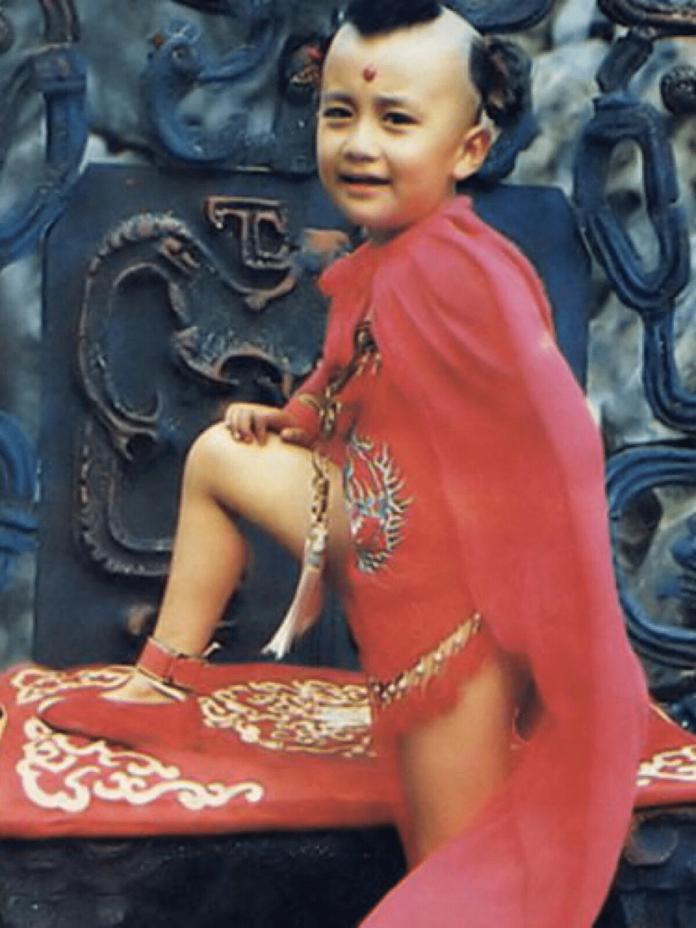
He is portrayed with a hair tuft and coils, a red urna, a red cape, a red stomacher, and red slippers (fig. 6).

Fig. 6 – “Adorable Red Boy” (larger version). Image found here.

3.2. 1996 JTTW

He is portrayed by a young woman with two red ribbon-wrapped, white cloth-covered hair buns and a white undershirt and a red vest, red forearm cuffs, red shorts, and red slippers (fig. 7).

Fig. 7 – “Girl Red Boy” (larger version). Image found here.

3.3. 2011 JTTW

He is portrayed with a hair tuft, red horns, a dark red to brown suit of armor with a flame pattern, and a red cape (fig. 8).

Fig. 8 – “Armored Red Boy” (larger version). The original online source is no longer available.

4. Conclusion

JTTW chapter 41 describes Red Boy as having doll-like beauty with a powder white face, crescent moon-shaped eyebrows, and deep red lips. His dark hair is either wrapped in buns or hung in coils. He is shoeless, and the only clothing covering his husky body is a silken battle kilt embroidered with phoenixes and dragons. And his weapon is an 18.77 ft (5.724 m) long, fired-tipped spear.


Update: 03-25-24

It occurred to me that the following description …

With no other armor except a battle kilt of embroidered silk and with naked feet … (Wu & Yu, 2012, vol. 2, p. 222).

妖王掄槍拽步,也無甚麼盔甲,只是腰間束一條錦繡戰裙,赤著腳

… does not necessarily exclude other clothing. Red Boy could wear some kind of silk robe beneath the battle kilt. However, I think him being shirtless better fits with his ferocious nature.


Update: 04-30-24

Chapter 42 indicates that Red Boy has a full head of hair that is later shaved by Guanyin:

She took out from her sleeve a golden razor and approached the fiend. With a few strokes, she shaved his hair off and turned it into the style of the Tai Mountain Crowning the Head: the top was completely bald, but three tufts of hair were left around the edge so that they could be knotted together into three tiny braids (Wu & Yu, 2012, vol. 2, p. 250).

就袖中取出一把金剃頭刀兒,近前去,把那怪分頂剃了幾刀,剃作一個太山壓頂,與他留下三個頂搭,挽起三個窩角揪兒。

This contrasts with modern representations of Red Boy that already have this shaven hair style prior to being subjugated. Refer back to section 3.

Notes:

1) Chapter 42 reads:

After she received [treasure swords borrowed from heaven], the Bodhisattva [Guanyin] threw them into the air as she recited a spell: the swords were transformed into a thousand-leaf lotus platform. Leaping up, the Bodhisattva sat solemnly in the middle.

菩薩接在手中,拋將去,念個咒語,只見那刀化作一座千葉蓮臺。菩薩縱身上去,端坐在中間。

[…]

[Sun Wukong feigns defeat and tricks Red Boy into chasing him to Guayin’s domain] When the monster spirit suddenly discovered that Pilgrim was gone, he walked up to the Bodhisattva with bulging eyes and said to her, “Are you the reinforcement Pilgrim Sun brought here?” The Bodhisattva did not reply. Rolling the lance in his hands, the monster king bellowed, “Hey! Are you the reinforcement Pilgrim Sun brought here?” Still the Bodhisattva did not reply. The monster-spirit lifted his lance and jabbed at the heart of the Bodhisattva, who at once changed herself into a beam of golden light and rose into the air. Pilgrim followed her on her way up and said to her, “Bodhisattva, you are trying to take advantage of me! The monster-spirit asked you several times. How could you pretend to be deaf and dumb and not make any noise at all? One blow of his lance, in fact, chased you away, and you have even left behind your lotus platform.”

“Don’t talk,” said the Bodhisattva, “let’s see what he will do.” At this time, Pilgrim and [Mucha] both stood in the air shoulder to shoulder and stared down; they found the monster-spirit laughing scornfully and saying to himself, “Brazen ape, you’re mistaken about me! What sort of person do you think that I, Holy Child, happen to be? For several times you could not prevail against me, and then you had to go and fetch some namby-pamby Bodhisattva. One blow of my lance now has made her vanish completely. Moreover, she has even left the treasure lotus platform behind. Well, let me get up there and take a seat.” Dear monster-spirit. He imitated the Bodhisattva by sitting in the middle of the platform with hands and legs folded. When he saw this, Pilgrim said, “Fine! Fine! Fine! This lotus platform has been given to someone else!”

“Wukong,” said the Bodhisattva, “what are you mumbling again?”

“Mumbling what? Mumbling what?” replied Pilgrim. “I’m saying that the lotus platform has been given to someone else. Look! It’s underneath his thighs. You think he’s going to return it to you?”

“I wanted him to sit there,” said the Bodhisattva.

“Well, he’s smaller than you,” said Pilgrim, “and it seems that the seat fits him even better than it fits you.”

“Stop talking,” said the Bodhisattva, “and watch the dharma power.”

She pointed the willow twig downward and cried, “Withdraw!” All at once, flowers and leaves vanished from the lotus platform and the auspicious luminosity dispersed entirely. The monster king, you see, was sitting actually on the points of those swords. The Bodhisattva then gave this command to [Mucha]:

“Use your demon-routing cudgel and strike back and forth at the sword handles.”

Dropping from the clouds, [Mucha] wielded his cudgel as if he were demolishing a wall: he struck at the handles hundreds of times. As for that monster-spirit,

Both his legs were pierced till the points stuck out;
Blood spouted in pools as flesh and skin were torn.

Marvelous monster! Look at him! Gritting his teeth to bear the pain, he abandoned the lance so that he could use both hands to try to pull the swords out from his body … (Wu & Yu, 2012, vol. 2, pp. 246 and 249-250).

這妖精見沒了行者。走近前,睜圓眼,對菩薩道:「你是孫行者請來的救兵麼?」菩薩不答應。妖王撚轉長槍,喝道:「咄!你是孫行者請來的救兵麼?」菩薩也不答應。妖精望菩薩劈心刺一槍來。那菩薩化道金光,徑走上九霄空內。行者跟定道:「菩薩,你好欺伏我罷了,那妖精再三問你,你怎麼推聾裝啞,不敢做聲,被他一槍搠走了,卻把那個蓮臺都丟下耶?」菩薩只教:「莫言語,看他再要怎的。」

此時行者與木叉俱在空中,並肩同看。只見那妖呵呵冷笑道:「潑猴頭,錯認了我也。他不知把我聖嬰當作個甚人,幾番家戰我不過,又去請個甚麼膿包菩薩來卻被我一槍,搠得無形無影去了,又把個寶蓮臺兒丟了。且等我上去坐坐。」好妖精,他也學菩薩,盤手盤腳的坐在當中。行者看見道:「好好好,蓮花臺兒好送人了。」菩薩道:「悟空,你又說甚麼?」行者道:「說甚?說甚?蓮臺送了人了。那妖精坐放臀下,終不得你還要哩?」菩薩道:「正要他坐哩。」行者道:「他的身軀小巧,比你還坐得穩當。」菩薩叫:「莫言語,且看法力。」

他將楊柳枝往下指定,叫一聲:「退!」只見那蓮臺花彩俱無,祥光盡散,原來那妖王坐在刀尖之上。即命木叉:「使降妖杵,把刀柄兒打打去來。」那木叉按下雲頭,將降魔杵如築牆一般,築了有千百餘下。那妖精穿通兩腿刀尖出,血注成汪皮肉開。好怪物,你看他咬著牙,忍著痛,且丟了長槍,用手將刀亂拔 …

2) Padded silk armor was apparently used in ancient China as early as 600 CE (Dean, 1920, pp. 284-285).

Sources:

Dean, B. (1920). Helmets and Body Armor in Modern Warfare. United Kingdom: Yale University Press.

Jiang, Y. (2005). The Great Ming Code / Da Ming Lu. Vancouver, Wa: University of Washington Press.

Wall, B. (2019). Dynamic Texts as Hotbeds for Transmedia Storytelling: A Case Study of the Story Universe of the Journey to the WestInternational Journal of Communication 13, 2116-2142. Retrieved from https://ijoc.org/index.php/ijoc/article/view/10006/2648.

Wu, C., & Yu, A. C. (2012). The Journey to the West (Vols. 1-4) (Rev. ed.). Chicago, Illinois: University of Chicago Press.

How to Kill Sun Wukong

Last updated: 01-07-2024

The Monkey King is famed for his multiple categories of immortality in Journey to the West (Xiyouji西遊記, 1592; “JTTW” hereafter). These are acquired through spiritual cultivation, redacting underworld ledgers, partaking in celestial foodstuffs, and (at the journey’s end) attaining Buddhahood. But “immortality” in Chinese vernacular literature doesn’t mean “invulnerable to harm.” Despite his great durability, during the journey, Wukong is a “bogus immortal” (yaoxian妖仙) who is still susceptible to injury and death because he hasn’t yet achieved Buddha-nature and broken free of the wheel of rebirth. [1] For instance, he briefly dies from thermal shock after being overwhelmed by Red Boy‘s (Honghai’er, 紅孩兒) true samadhi fire (sanmei zhenhuo三昧真火) in chapter 41:

His whole body covered by flame and smoke, the Great Sage found the intense heat unbearable and he dove straight into the mountain stream to try to put out the fire. Little did he anticipate that the shock of the cold water was so great that the heat caused by the fire was forced inward into his body and his three hun spirits left his vessel. Alas!

His breath caught in his chest, his tongue and throat grew cold;
His hun spirits fled, his po souls left, and his life was gone! (based on Wu & Yu, 2012, vol. 2, p. 231)

這大聖一身煙火,炮燥難禁,徑投於澗水內救火。怎知被冷水一逼,弄得火氣攻心,三魂出舍。可憐氣塞胸堂喉舌冷,魂飛魄散喪殘生。

Luckily, Zhu Bajie resuscitates him by performing a life-saving massage that forces qi from his cinnabar field and circulates it throughout his body (Wu & Yu, 2012, vol. 2, p. 232). [2]

This episode was an accident. But what if someone wanted to kill Monkey for good? How would they do it? Killing him in a one-on-one match would be nearly impossible, for few characters surpass Wukong in strength or fighting ability. I think it’s best that we draw on methods from another famous god and demon novel, Investiture of the Gods (Fengshen yanyi封神演義, c. 1620; “Investiture” hereafter), a sort of prequel to JTTW. It centers on a great battle between the falling Shang (c. 1600-1046 BCE) and the rising Zhou (c. 1046–256 BCE) dynasties, both of which are aided by factions of powerful immortals. The story is famous for a number of weapons, traps, and rituals designed to kill divine cultivators.

In this article, I would like to describe ten magical array traps (zhen, 陣) and one magic ritual that could possibly kill the Monkey King. The latter is, in my opinion, the best option for ending his life (fig. 1). And the best part is that it can be done from a distance! That way a villain doesn’t have to worry about getting smashed into hamburger or ripped to shreds by an angry monkey immortal. In addition, I will detail this method’s potential for great fanfiction.

Before continuing, I must point out that none of the information from Investiture can be considered JTTW canon. While it contains a host of similar characters (Laozi, Buddha, Nezha, Muzha, Li Jing, Ao Guang, Erlang and his hound, etc.), the novel is a separate work that was published nearly 30 years after JTTW. Look at this piece as a fun “What if?”

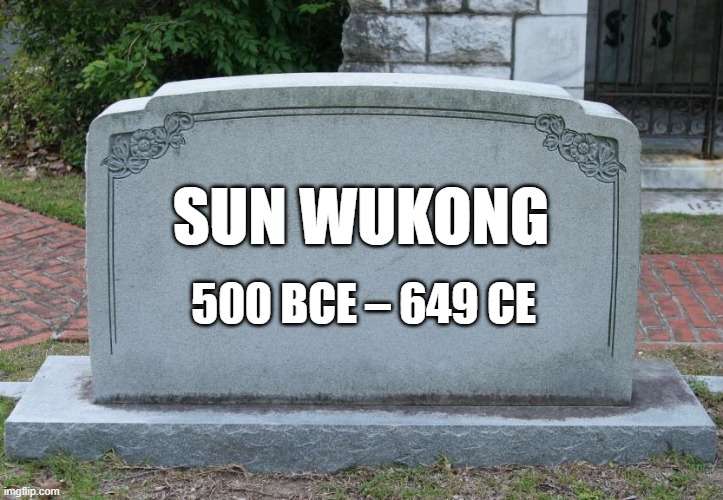
Fig. 1 – Monkey’s headstone (larger version).

I. Possible Ways

Ch. 44 of Investiture mentions ten magical array traps that rely on primordial energies, destructive elements like wind, thunder, fire, sand, ice, and water, and spiritual attacks to terminate immortals:

  1. Heavenly Destruction (Tianjue zhen, 天絕陣) – This trap contains primordial energies (xiantian zhi qi, 先天之氣) and the mechanisms of chaos (hundun zhi ji, 混沌之機). It uses three magic pennants (fan, 旛), representing the respective energies of Heaven, Earth, and Man, to turn humans into dust and shatter the limbs of immortals with rolls of thunder.
  2. Earthly Fury (Dilie zhen, 地烈陣) – This trap uses a magic red pennant that kills intruders with rolls of thunder from above and fire below. It is also said to cut them off from reincarnation.
  3. Roaring Typhoon (Fenghou zhen, 風吼陣) – This trap uses wind, true samadhi fire, and countless swirling blades formed from primordial energies to kill intruders and render their bodies into a fragrant powder (jifen, 虀粉).
  4. Frigid Ice (Hanbing zhen, 寒冰陣) – This trap uses jagged, wolf fang-like ice mountains above, sword-like ice blocks below, and wind and thunder in the middle to grind intruders into a fragrant powder.
  5. Golden Light (Jinguang zhen, 金光陣) – This trap contains the essences of the sun and moon (riyue zhi jing, 日月之精) and the energies of heaven and earth (tiandi zhi qi, 天地之氣). It uses 21 treasure mirrors (baojing, 寶鏡) affixed to wooden polls to kill intruders with golden light that renders (melts?) their bodies into pus and blood.
  6. Bleeding Blood (Huaxue zhen, 化血陣) – This trap uses thunder and wind powered by primordial energies to blast black sand that kills intruders by rendering their bodies into a bloody mess.
  7. Vehement Flame (Lieyan zhen, 烈焰陣) – This trap uses true samadhi fire, fire from the sky (meteorites?), and fire from stone (lava?) to kill intruders by turning them into ash.
  8. Soul-Snatching (Luohun zhen, 落魂陣) – This trap contains the fierce energies of heaven and earth (tiandi liqi, 天地厲氣). It uses a white paper pennant stamped with a talisman seal (fuyin, 符印) to kill intruders by dispersing and eliminating their po and hun spirits.
  9. Red Water (Hongshui zhen, 紅水陣) – This trap controls the essences of the ninth and tenth heavenly stems (rengui zhi jing, 壬癸之精) (representing water), as well as contains the wonder of the Grand Monad (Tianyi zhi miao, 天乙之妙). It uses three bottle gourds resting on an eight trigrams platform (bagua tai, 八卦臺) to kill intruders by gushing forth an ocean of dangerous, red water, a single drop of which can render their bodies into a bloody mess.
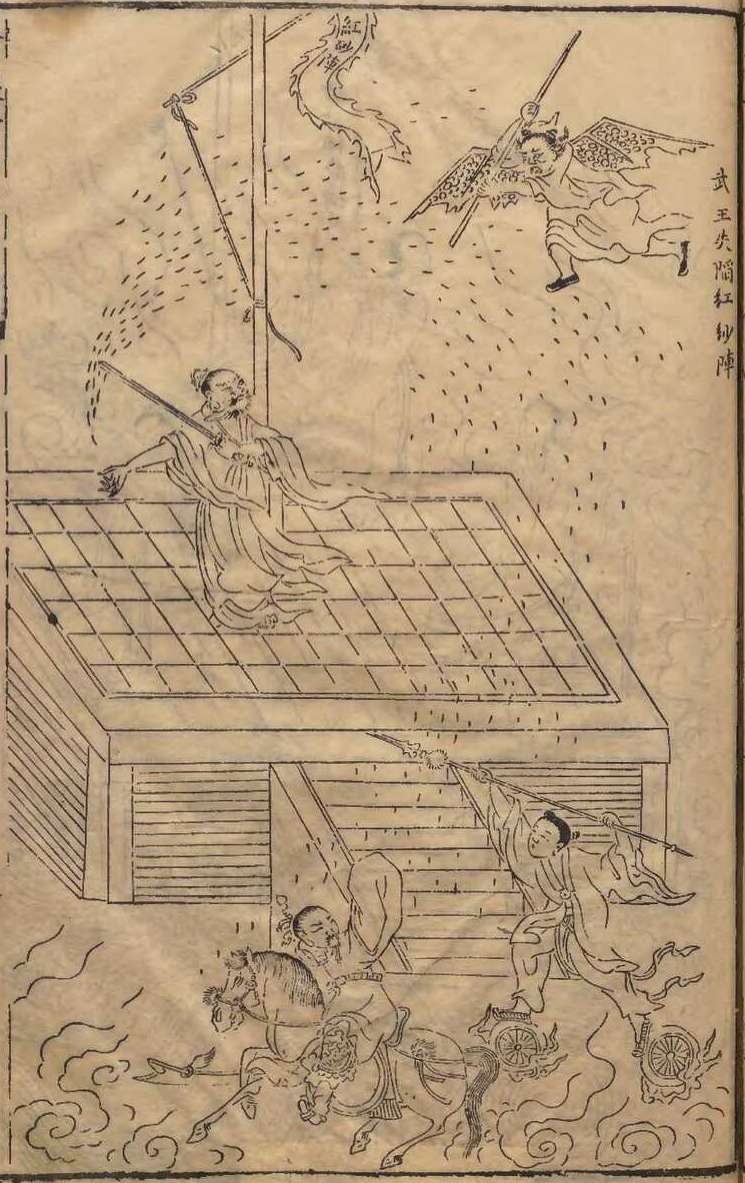
  10. Red Sand (Hongsha zhen, 紅砂陣/紅沙陣) – This trap controls the energies of Heaven, Earth, and Man. It uses thunder and wind to blast three buckets of red, sword-like sand to kill intruders by rendering their bones into a fragrant powder (fig. 2) (cf. Gu, 2000, vol. 2, pp. 869-873).

I think that Sun Wukong would easily survive many of these traps due to the adamantine nature of his body. [3] But numbers three, seven, and eight might give him some problems. As mentioned in the introduction, his encounter with Red Boy in chapter 41 shows that he is weak against true samadhi fire (Wu & Yu, 2012, vol. 2, p. 231). And of course, having his souls scattered and destroyed would certainly finish him off. Recall in JTTW chapter three how Monkey’s spirit (魂靈兒) is easily reaped by two underworld officers in his heavenly wine-induced slumber (Wu & Yu, 2012, vol. 1, p. 139). This might point to a weakness against spiritual attacks (at least while drunk, anyway).

However, I think it would be hard to trick Wukong into going inside of these array traps. His “fiery eyes and gold Irises” (huoyan jinjing, 火眼金睛) would certainly notice the dark auras hovering above each one (Gu, 2000, vol. 2, p. 925 and 989, for example).

No, there’s only one sure fire way to kill our hero.

Fig. 2 – A Shang camp immortal working the Red Sand array trap (larger version). The woodblock print omits the three buckets. Image from The Newly Printed, Zhong Bojing Annotated, Investiture of the Gods (Xinke Zhong Bojing xiansheng piping Fengshen yanyi, 新刻鍾伯敬先生批評封神演義, c. 1620). See page 42 of this PDF.

II. The Best Way

Overcoming Monkey’s great power, durability, and speed would require an indirect approach, something that he wouldn’t even be aware of. A secret, spiritual assault from afar is, therefore, the only method that would work, in my opinion. Something like this is described in chapters 48 and 49 of Investiture. But I first need to give some background information as to why the rite is used in the first place.

Grand Preceptor Wen (Wen Taishi, 聞太師) recruits his old friend, the ancient immortal Zhao Gongming (趙公明), in chapter 46 after many of their divine comrades die in battle against Zhou allies (Gu, 2000, vol. 2, p. 935). Zhao is powerful in his own right, claiming to be able to flip Mount Sumeru (Xumi, 須彌) and reverse the course of the sun and moon (cf. Gu, 2000, vol. 2, pp. 945-947). But it’s his command of three holy treasures, namely the “Dragon-Binding Rope” (Fulong suo縛龍索), the “Sea-Fixing Mala Beads” (Dinghai zhu定海珠), and the “Golden-Scaled Dragon Scissors” (Jinjiao jian金蛟剪), [4] that make him a supremely dangerous opponent. The latter two treasures prove in chapter 47 to be especially difficult weapons for Zhou allies to counter.

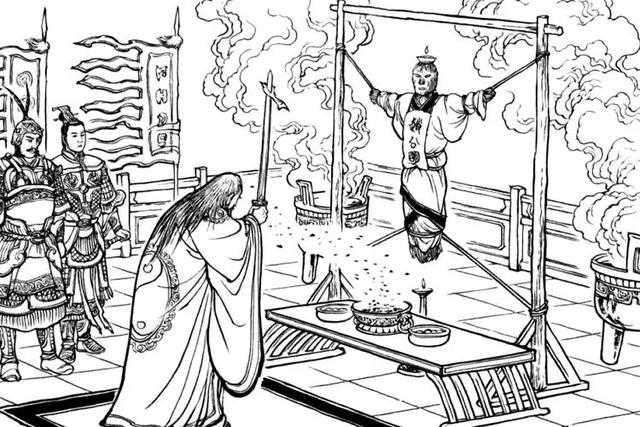
Therefore, in chapter 48, the immortal Lu Ya (陸壓) devises a plan to secretly attack Zhao’s spirit from a distance. He enlists the help of Jiang Ziya (姜子牙), a Taoist disciple and commander of the Zhou forces, and instructs him how to perform a sympathetic magic ritual from the Book of Fixing the Seventh Posthumous Day Arrow (Ding touqi jianshu, 釘頭七箭書):

Lu Ya opened his flower basket and took out a book stamped with talisman seals and oral formulas. “Using these, you can set up camp and erect a platform on Mount Qi. Make a straw effigy and post a document with the three characters “Zhao Gongming” on its body. Place one lamp above its head and another beneath its feet. Then pray to it three times a day, burning the talismans and pacing the dipper. At noon on the twenty-first day, this poor Taoist (Lu Ya) will come and help you cut his life short.”

Before going to Mount Qi, Ziya secretly sent 3,000 troops, along with Nangong Kuo [南宮适] and Wu Ji [武吉] to find a suitable place to set up camp. After Ziya arrived at camp, Nangong built a platform, arranging it properly and making a straw effigy. He did everything strictly as instructed. Finally Ziya loosened his hair, took a sword, and paced the dipper, reciting charms, burning spells, and praying over and over again before the straw effigy (based on Gu, 2000, vol. 2, p. 967).

陸壓揭開花籃,取出一幅書,書寫明白,上有符印口訣,「……依此而用,可往岐山立一營;營內築一臺。紮一草人;人身上書『趙公明』三字,頭上一盞燈,足下一盞燈。自步罡斗,書符結印焚化,一日三次拜禮,至二十一日之時,貧道自來午時助你,公明自然絕也。」

子牙領命,前往岐山,暗出三千人馬,又令南宮适、武吉前去安置。子牙後隨軍至岐山,南宮适築起將臺,安排停當,紮一草人,依方製度。子牙披髮仗劍,腳步罡斗,書符結印

[Three to five days later, Zhao Gongming feels frantic, with a strange burning in his heart.]

[…]

Now let’s speak of Ziya, who prayed until he had expelled the primal spirit [yuanshen, 元神] of Zhao Gongming. The primal spirit was of major importance to an immortal, enabling him to tour freely throughout the eight extremes (the universe). But now that Zhao Gongming had lost his primal spirit, he became drowsy and wanted to sleep all of the time (based on Gu, 2000, p. 973).

且說子牙拜掉了趙公明元神散而不歸,──但神仙以元神為主,遊八極,任逍遙,今一旦被子牙拜去,不覺昏沉,只是要睡。

[Sleeping is said to be uncharacteristic of immortals. This alerts Zhao Gongming’s comrades that he is being spiritually assaulted. After divining the effigy’s location, Wen sends Shang allies to steal it. They are initially successful, but the straw man is eventually recaptured by Zhou forces.]

[…]

[Lu Ya finally arrives as promised to finish the ritual.]

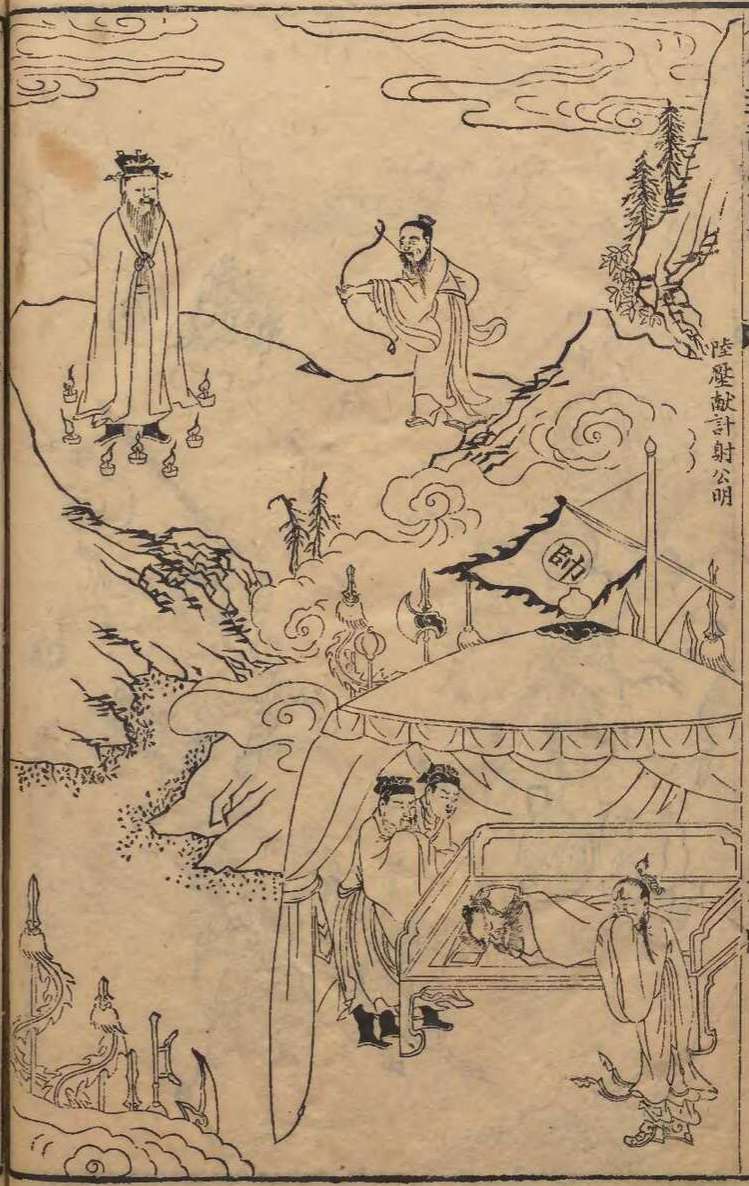
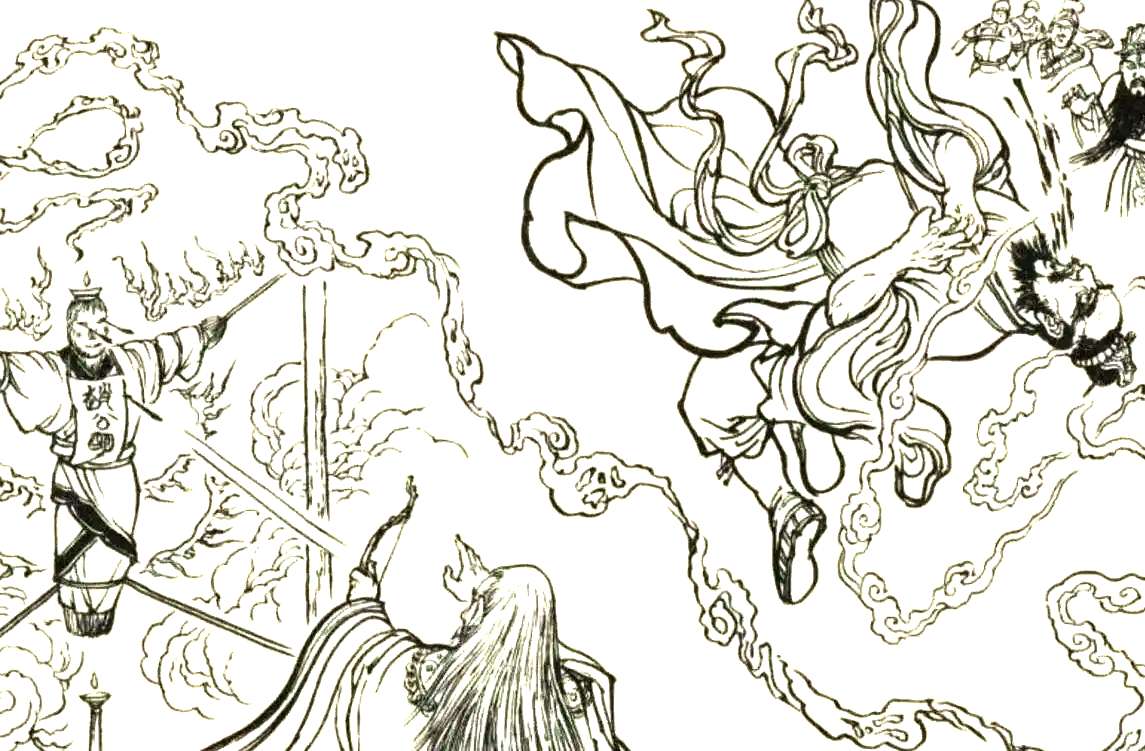
With a smile, Lu Ya opened his flower basket and took out a small mulberry bow and three short peach arrows, which he handed to Ziya. “At noon today, you must shoot the effigy with these arrows,” Lu Ya said. Ziya replied: “Order received!” The two waited in a tent until the astrological official came to report: “Noon time has arrived!” Ziya cleaned his hands, picked up the bow, and then nocked the first arrow. “Shoot his left eye first,” instructed Lu Ya. Ziya did as ordered. As the first arrow hit the left eye of the effigy, Zhao Gongming, lying in the Shang camp, roared in agony and closed his left eye. Grand Preceptor Wen held him in his arms, sobbing as the tears poured down his cheeks. Back at Mount Qi, the second arrow hit the right eye of the effigy, and the third penetrated its heart [fig. 3]. Zhao Gongming died in the Shang camp (based on Gu, 2000, vol. 2, pp. 985-987). [5]

陸壓笑吟吟揭開花籃,取出小小一張桑枝弓,三隻桃枝箭,遞與子牙,「今日午時初刻,用此箭射之。」子牙曰:「領命。」二人在帳中等至午時,不覺陰陽官來報:「午時牌!」子牙淨手,拈弓,搭箭。陸壓曰:「先中左目。」子牙依命,先中左目。──這西岐山發箭射草人,成湯營裏趙公明大叫一聲,把左眼閉了。聞太師心如刀割,一把抱住公明,淚流滿面,哭聲甚慘。──子牙在岐山,二箭射右目,三箭劈心一箭,三箭射了草人。──公明死于成湯營裏。

Like Ziya, a bad guy could perform the same ritual to secretly steal Monkey’s primal spirit, tether it to a straw effigy marked “Sun Wukong” (孫悟空), and finally kill our hero with three well-placed peach arrows to the eyes and chest.

Fig. 3 – Jiang Ziya aiming the ritual bow at the straw effigy (larger version). Zhao Gongming can be seen sleeping in the Shang camp below. Woodblock print from The Newly Printed, Zhong Bojing Annotated, Investiture of the Gods (Xinke Zhong Bojing xiansheng piping Fengshen yanyi, 新刻鍾伯敬先生批評封神演義, c. 1620). See page 42 of this PDF.

III. Story Potential

If anyone decided to write their own fanfiction using the method described above, I could see this being a great opportunity for Zhu Bajie (豬八戒) and/or Sha Wujing (沙悟淨) to shine. He/they could be the one(s) searching the cosmos for answers, and upon learning of the rite, desperately racing to find the straw effigy before the ritual is complete. All of this would of course take place while Monkey is sleeping.

I can definitely see Zhu and/or Sha seeking the aid of Guanyin (觀音), who could easily break the ritual. I imagine she would reveal that, “The Great Sage is destined to experience this tribulation…” (or something like that), but she would surely provide them with the location in the end.

Reasons for the villain performing the ritual could include:

  • Eliminating Wukong so that they can more easily catch and eat the Tang Monk, thus gaining immortality.
  • Absorbing Monkey’s primal spirit in order to gain his immortality and skills.

The latter is my favorite, but the former would work better for the story since the whole point of the ritual is to kill the target. And besides, Monkey’s disembodied spirit is powerful enough to kill the psychopomps sent to reap his soul, as well as bully the judges and officers of hell (Wu & Yu, 2012, vol. 1, pp. 139-141). Now, imagine what it could do to some random demon king and/or cultivator who tried to absorb it!

IV. Conclusion

Sun Wukong is famed for his multiple categories of immortality, but he is still susceptible to death and the wheel of rebirth since during the journey, he hasn’t yet achieved Buddha-nature. Killing him in one-on-one combat would be nearly impossible, though, given his great durability and power. However, using methods borrowed from Investiture of the Gods (c. 1620) might work. For instance, chapter 44 mentions ten magical array traps that rely on primordial energies, destructive elements like wind, thunder, fire, sand, ice, and water, and spiritual attacks to terminate immortals. Three of the traps, numbers three, seven, and eight, respectively use true samadhi fire or soul-scattering and destruction to kill divine cultivators. These might give Monkey problems as his soul is easily reaped in his heavenly wine-induced slumber in JTTW chapter three, suggesting that it may be weak against spiritual attacks (at least while drunk), and he is shown to be weak against Red Boy’s true samadhi fire in chapter 41. But I think it would be hard to trick him into entering the traps since his magic eyes would no doubt see the dark auras above them.

The best way to overcome his great power, durability, and speed requires an indirect approach, a secret, spiritual assault from afar. A ritual used in chapters 48 and 49 of Investiture does exactly that. In order to defeat the immortal Zhao Gongming and circumvent his powerful holy treasures, the immortal Lu Ya instructs Zhou army commander Jiang Ziya how to perform a rite from the Book of Fixing the Seventh Posthumous Day Arrow. This involves a bureaucratic ceremony (praying, talisman-burning, and dipper-walking) that slowly steals the immortal’s primal spirit over a 21 day period, tethers it to a straw effigy marked with Zhao’s name, and then kills him by shooting the icon with three peach arrows: two to the eyes and a third to the heart.

A villain wanting to kidnap and eat the Tang Monk for immortality could perform this ritual in order to get Monkey out of the way. This would make for a great story centered on Zhu Bajie and/or Sha Wujing. He/they could frantically search the universe for answers, before racing to find the straw effigy before the rite is complete.


Update: 12-28-23

I found two neat drawings portraying Jiang Ziya performing the rite (fig. 4 & 5).

Fig. 4 (top) – Jiang Ziya performing the procedural side of the ritual (larger version). Image found here. Fig. 5 (bottom) – Ziya fires the last arrow, killing Zhao Gongming (larger version). Image found here. They appear to be from the same anonymous lianhuanhua comic book.


Update: 12-29-23

A reader’s comment (below) has prompted me to add more context. Zhao Gongming’s disembodied spirit is not destroyed by the ritual. It is pulled towards the “Terrace of Creation” (Fengshen tai, 封神臺), a magic receptacle of souls, to await his apotheosis at the end of the novel. He is enfeoffed as the “Golden Dragon, Wish-Fulfilling and Righteously Unifying, Dragon-Tiger Mysterious Altar Perfected Lord” (Jinlong ruyi zhengyi longhu xuantan zhenjun, 金龍如意正一龍虎玄壇真君), a god of wealth (cf. Gu, 2000, vol. 4, pp. 2119-2121).

This then raises the question, “What would happen to Wukong’s soul if the ritual was successful? After the death of his body, it would naturally report to the underworld for processing. Remember, Monkey has yet to attain Buddha-Nature, so he is still subject to the wheel of rebirth. I can see him causing trouble down there like he had done in the past, but perhaps Kṣitigarbha (Ch: Dizang, 地藏) would calm his rage and convince him that reincarnation is the right choice. This would lead to a new adventure.

Or, considering that the journey to India would still be underway, and Tripitaka is constantly in danger, heaven might rush to find a new body for Wukong’s spirit to inhabit. This actually happens to a minor character in chapters 11 and 12 of JTTW. The soul of an official’s wife is forced into the body of a recently dead princess to live out the remainder of her allotted lifespan (Wu & Yu, 2012, vol. 1, pp. 268-269).

Another reader suggested a second method from Investiture to kill Monkey (see the comment below):

The Immortal-slaying Flying Knife, also a treasure of Lu Ya’s, might be a good second-contender here. It’s a strange weapon with head and eyes and wings, stored inside a gourd: when released, its eyes shoot out white light that “nails down” an enemy’s true form, and, upon recitation of “Turn around please, precious” (请宝贝转身), will spin and instantly decapitate the target.

Sure, there is the matter of getting it out and saying the magical words before you were reduced to a meat patty, but if the target is already immobilized——like Yuan Hong, FSYY’s own staff-wielding ape with 72 transformations——the Immortal-Slaying Flying Knife will be that final nail in the coffin.

I’ll look into this more and update the page at a later date.


Update: 01-07-24

Lu Ya’s ritual reminds me of a two-step process used in Chinese Folk Religion to activate a religious statue (shenxiang, 神像). Part one is the “entering-spirit” (rushen, 入神) ceremony, which invites a deity’s essence inside. Lin (2020) explains:

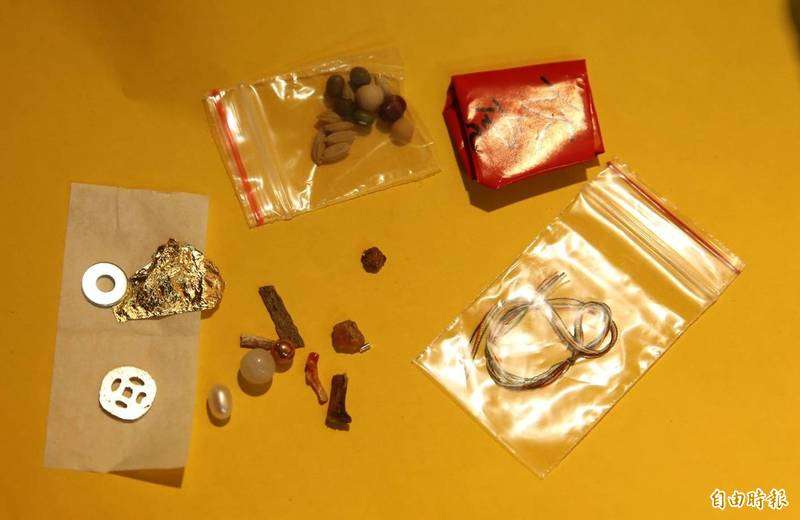
When the carving is complete, the carver chooses an auspicious day to hold the spirit-entering ritual. A cavity at the back of the image is carved out for this rite. The objects placed in this hole include incense ashes (xianghui) or talismans from the root temple, a live hornet, five precious materials (gold, silver, bronze, iron, and tin), five crops (rice, wheat, sesame, and different kinds of beans), and a bundle of five-color threads (red, yellow, blue, black, and white) [fig. 6 & 7] … The worshippers have to prepare fruit and flowers and burn incense to invite the deity to come.

When the auspicious moment arrives, the carver inserts the previously listed items into the cavity and plugs it with a piece of wood. The objects placed in the cavity are important clues regarding how people conceptualize deities. Local inhabitants explained to me that the ashes or talisman symbolizes the spirit of the deity, and the living hornet is to increase the deity’s power. Some people said the five forms of treasure represent the five organs of the deity, whereas others just said they are symbols of the deity’s grandeur. The five crops represent the harvest and the bunch of five-color threads is related to the five spirit-soldier camps (p. 38).

Lu Ya’s ritual essentially treats the straw effigy like an idol that will house a god’s essence. This might explain how the primal spirit of Zhao Gongming (and therefore Sun Wukong) is called to enter the icon.

Fig. 6 (top) – A collection of the talisman, grains, treasures, and colored-threads used in the entering-spirit ceremony (larger version). Fig. 7 (bottom) – A live wasp is retrieved to be added to the necessary ritual items (larger version). Images found here

Part two is the “eye-opening and dotting” (kaiguang dianyan, 開光點眼) ceremony, which brings the idol to life. Again, I refer to Lin (2020):

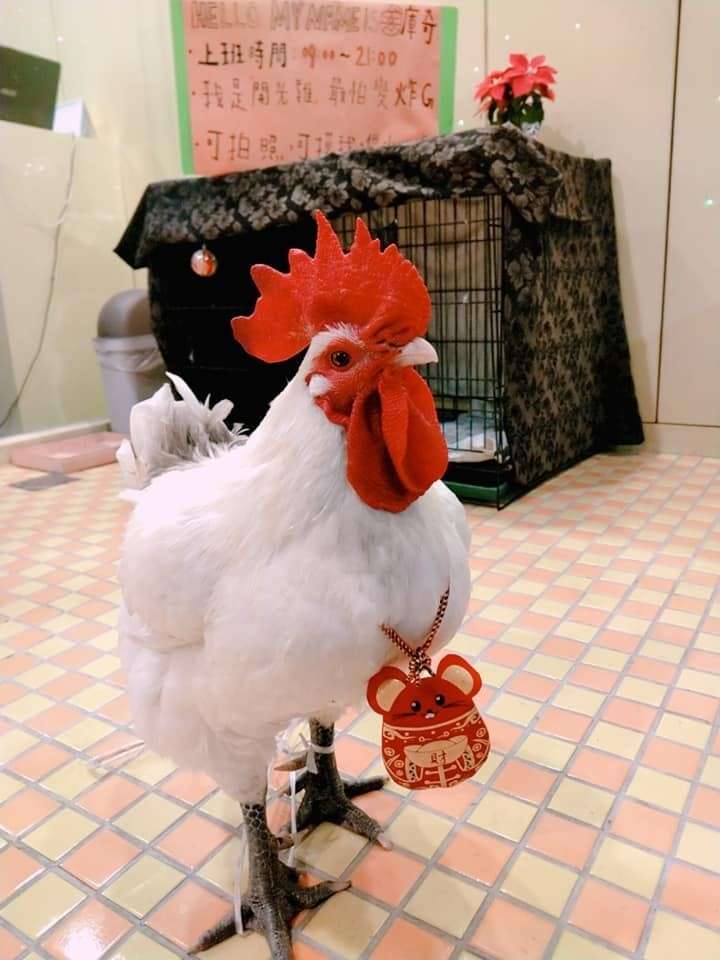
For this ceremony, the carver prepares flowers, fruit, a round mirror, a red brush pen, and a white cock. When the auspicious moment arrives, the mirror is taken outside where the light is sufficient to reflect it into the statue’s eyes. Next, the carver goes back to the altar and uses a knife to cut the cockscomb and smear the blood with the red brush pen. He then starts to chant and to dot the deity with the brush pen. There are many different kinds of chants … but their contents are not very different. The process of dotting usually begins at the center of the forehead and proceeds to the eyes, ears, nose, mouth, heart, navel, feet, toes, fingers, and back [fig. 8-10], as the following chant demonstrates:

First dot the sacred head, second dot the sacred hat,
Third dot the sacred body, then the true and righteous god will occupy the body.
Open the left eye to see heaven.
Open the right eye to see into the earth.
Open the left ear to listen to sounds from all directions.
Open the right ear to hear sounds from far away.
Open the divine nose, to smell fragrant scents.
Open the divine mouth, but not to eat house hold foods.
Open the left hand and the disciples will be prosperous year after year.
Open the right hand and the god will capture ghosts without being asked.
Open the sacred belly and great divine power will come forth.
Open the left foot to step upon the correct path.
Open the right foot to step into the divine carriage.
Open the back so that all people may be enlightened.

It can be inferred that in this ceremony, the carver at first draws the natural energy into the statue to enliven it. Then, he uses the blood of a white cock, symbolizing purity, to dot and connect the important parts of the body. This makes the statue like a living person with veins in which blood flows without obstruction (pp. 38-39).

Although Investiture doesn’t mention any of this, I think performing the eye-opening and dotting ceremony would be the final step in making the straw effigy a separate, living embodiment of the Monkey King. The ritual would open the eyes of Wukong’s spiritual double to the cosmos and fill his chest with divine energies in preparation for shooting said targets. This would explain why Zhao Gongming closes his eyes upon each arrow strike (refer back to section II).

Writers wanting to add a certain level of religious authenticity to the fictional Monkey King-killing ritual could have the villain place the talisman, grains, treasures, live wasp, and five colored-threads inside the straw effigy. And then he could chant while simultaneously reflecting sunlight on the face and dotting the eyes and body with a rooster blood-soaked brush. The only major difference between the fictional and religious ceremonies would be that the former’s first step, the entering-spirit ritual, lasts three weeks.

Fig. 8 (top L) – An entering-spirit and eye-opening and dotting kit commonly sold in Taiwan (larger version). Notice how the mirror is rectangular instead of circular. Image found here. Fig. 9 (top R) – A white temple rooster kept as a supply of pure blood (larger version). Don’t worry, nowadays they are only nicked on the comb with a knife. Image found here. Fig. 10 (bottom) – A ritual master uses a circular mirror to shine sunlight into an idol’s eyes while dotting the figure with a blood-soaked brush (larger version). Image found here.

Notes:

1) Monkey is called a “bogus immortal” by the Jade Emperor (ch. 4), the Buddha (ch. 7), and the Dragon King of the Eastern Sea in (ch. 14) (Wu & Yu, 2012, vol. 1, pp. 147-148, p. 193, and p. 318). This alludes to the fact that he is not yet a true transcendent.

The idea that Wukong is still susceptible to death is based on the Buddho-Taoist philosophy of Southern Quanzhen School Patriarch Zhang Boduan (張伯端, mid to late-980s-1082), which heavily influenced JTTW. Zhang believed that one had to attain both the Taoist elixir and Buddha-Nature in order to be truly immortal. Only then could one rise above death and the endless rounds of rebirth to live forever (Shao, 1997, pp. 80-84). This is why JTTW starts with Monkey achieving immortality in chapter two and ends with him attaining Buddhahood in chapter 100, thereby fulfilling Zhang’s two-step process to true transcendence.

Zhang’s philosophy is reflected in his Writings on Understanding Reality (Wuzhen pian, 悟真篇, 1075). One poem reads:

The elixir is the most precious treasure of the physical body; when cultivated to perfection, the transmutations are endless. One can go on to investigate the true source in the realm of essence, and ascertain the ineffable function of the birthless. Without awaiting another body in the next life, one attains the spiritual capacities of a Buddha in the present; after the Naga Girl achieved this, who since then has been able to follow in her footsteps? (Zhang, Liu, & Cleary, 1987, p. 1481; cf. Shao, 1997, p. 83)

丹是色身至寶,煉成變化無窮。更能性上究真宗,决了無生妙用。不待他身後世,見前獲佛神通。自從龍女著斯功,爾後誰能繼踵。

2) It’s interesting to note that Pigsy suggests that Wukong dying isn’t a problem because his 72 changes give him 72 lives (qishi’er tiao xingming, 七十二條性命) (Wu & Yu, 2012, vol. 2, p. 232).

3) For instance, heaven fails to execute Monkey in chapter seven because of his adamantine hide:

They then slashed him with a scimitar, hewed him with an ax, stabbed him with a spear, and hacked him with a sword, but they could not hurt his body in any way. Next, the Star Spirit of the South Pole ordered the various deities of the Fire Department to burn him with fire, but that, too, had little effect. The gods of the Thunder Department were then ordered to strike him with thunderbolts, but not a single one of his hairs was destroyed (Wu & Yu, 2012, vol. 1, p. 188).

刀砍斧剁,槍刺劍刳,莫想傷及其身。南斗星奮令火部眾神放火煨燒,亦不能燒著。又著雷部眾神以雷屑釘打,越發不能傷損一毫。

4) Apart from these treasures, Zhao Gongming fights with a hard whip (bian, 鞭), a sword-like metal club with stacked ridges and a pointed end. Gu (2000) incorrectly translates this as “staff” (vol. 2, p. 941).

5) Given the ritual’s association with the number seven (i.e. “Fixing the Seventh Posthumous Day Arrow”), and the fact that it takes 21 days to execute, it seems that one arrow is used for every week that the rite is performed. Remember that there are a total of three: two for the eyes and a third one for the heart.

6) These are the holes in the head: eyes, nose, ears, and mouth.

Sources:

Gu, Z. (2000). Creation of the Gods (Vols. 1-4). Beijing: New World Press.

Lin, W. (2020). Materializing Magic Power: Chinese Popular Religion in Villages and Cities. Netherlands: Brill.

Shao, P. (1997). Monkey and Chinese Scriptural Tradition: A Rereading of the Novel Xiyouji (UMI No. 9818173) [Doctoral dissertation, Washington University]. Available from ProQuest Dissertations and Theses database.

Wu, C., & Yu, A. C. (2012). The Journey to the West (Vols. 1-4) (Rev. ed.). Chicago, Illinois: University of Chicago Press.

Zhang, B., Liu, Y., & Cleary, T. (1987). Understanding Reality: A Taoist Alchemical Classic. Honululu Univ. of Hawaii Press.

Archive #18 – Demons, Gods, and Pilgrims: The Demonology of the Hsi-yu Chi (1985)

Campany (1985) discusses methods by which demons of Journey to the West (Xiyouji西遊記, 1592) move up and down the Buddho-Daoist cosmic hierarchy. A PDF of the paper can be accessed in section II below. 

I. Summary

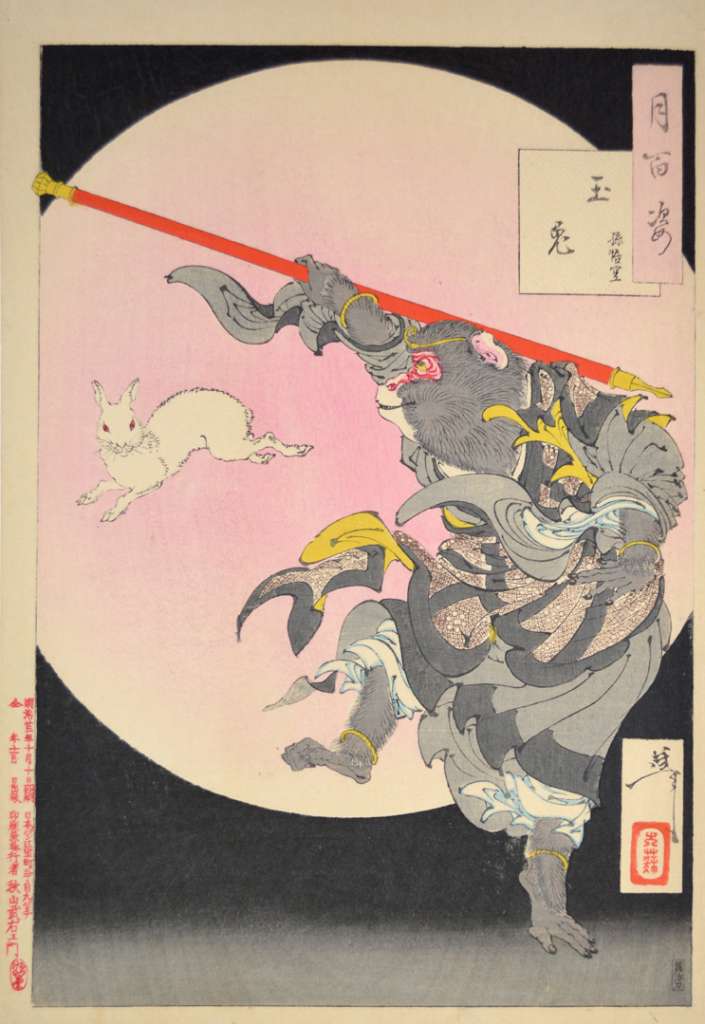
He begins by laying out the formulaic pattern of the episodes in which they appear: 1) a description of the demon’s mountain or aquatic home in poetic verse; 2) the initial encounter during which Tripitaka is tricked by the demon’s magic disguise; 3) the initial battle(s) between the disciples and the demon involving contests of magic and weapons, often described in poetic verse; 4) the battles end in a stalemate or defeat, and in the case of the latter the disciples are held captive in the demon’s stronghold; 5) Sun Wukong searches heaven and earth for the master of the demon, for the evil is usually a renegade celestial animal or protégé; 6) the demon is subdued by their master; and 7) the demon is either reintegrated or added to the cosmic order. An example of the former is the moon goddess’ jade hare (ch. 95) being taken back to heaven (fig. 1). An example of the latter is Red Boy (ch. 40-43) becoming a disciple of Guanyin.

There are two types of powerful demons who are subjugated by their master or an appropriate agent (e.g. a rooster god defeating a centipede demon). The first acquires magic powers via Daoist cultivation and, lacking celestial rank, causes havoc (think of Monkey as a young immortal). It is only through their subjugation and addition to the cosmic order that they achieve higher spiritual status. Apart from Red Boy, another example is the Black Bear spirit (ch. 16-17), who is subdued by Guanyin and installed as the guardian of her magic island. The second, being the most common, is one who previously held heavenly rank and was banished to earth. This exile is the result of breaking a rule, the need to burn off negative Buddhist karma, or because of a deficiency in their Daoist cultivation, requiring that they work their way back up the spiritual hierarchy. All five of the pilgrims fit into this category in one way or another.

Two types of demons are not subjugated by a heavenly master. The first is a lessor animal spirit who acts as a servant or soldier for a demon king. They attach themselves to this “upwardly mobile” demon because their master may aid in their own ascension via secrets of cultivation or the gift of longevity-bestowing food. Prime examples are all the (simian and non-simian) animal spirits who attach themselves to Sun Wukong after he establishes himself as a monster king. Such animal spirits are usually slaughtered after their master is defeated. The second are demons who peacefully cultivate themselves without endangering others. A prime example is the White Turtle of the Heaven-Reaching River (ch. 49 and 99) who cultivates human speech but still requires the intervention of the Buddha to evolve to human form.

Campany (1985) moves onto the hierarchy itself, noting how the level of a being’s attainment in spiritual cultivation does not affect their actual rank. This is because Daoism, Buddhism, and Confucianism are viewed differently in the novel. Demons who cause no harm during their cultivation are left alone, while violent offenders are subjugated and added to the hierarchy. And even if an animal spirit has Daoist powers, they are still considered inferior to humans, for they are born into a lower level of the six Buddhist paths of reincarnation. These spirits, however, can move up the hierarchy based on the amount of Buddhist merit, or “right fruit” (zhengguo, 正果), that they acquire through good deeds. Additionally, the Buddha and Guanyin are generally portrayed as higher in rank than Daoist gods, even the Jade Emperor, due to their “Dharma Power” (fali, 法力). Despite this, Sun Wukong is always quick to point out when a high-ranking god, Buddhist or Daoist, has violated Confucian norms. Therefore, the hierarchy presented in the novel follows the Ming-era syncretic emphasis on mental cultivation (xiu xin, 修心).

Fig. 1 – Yoshitoshi, Jade Rabbit: Sun Wukong, from the series One Hundred Views of the Moon, 1889 (larger version). From the Ronin Gallery.

The novel categorizes all beings as part of heaven, earth, or hell, each representing a realm within the hierarchy. Yet, it presents four ways to move between them: one, temporarily taking the form of a higher-ranking figure (human, immortal, deity, etc.) via magical transformation (hua, 化); two, reincarnating into a higher path (e.g. animal to human); three, attaining immortality via Daoist cultivation (or becoming human and then attaining immortality in the case of animal spirits); and four, being subjugated and added to the cosmic order.

The demons of Journey to the West are paradoxical on two counts: one, such beings are realistic, with detailed descriptions of their appearance, speech, and feelings, and yet they are often reduced to mere illusions brought forth by the unfocused or disquieted mind (Campany (1985) waits to explain this until the end); and two, they are evil from a Western perspective, but not wholly evil from an Eastern perspective. Their ambiguous nature is revealed by the Chinese hanzi used to describe them (e.g. yaojing 妖精; yaoguai, 妖怪), suggesting these beings are “undeveloped” or “bogus” and have yet to complete their cultivation. Additionally, the novel connects the demons and pilgrims with five elemental and yin-yang theory, each with its own creative/destructive or magnetic/repelling forces, suggesting a mutual relationship. This relationship is explained below.

Campany (1985) emphasizes that, while Tripitaka’s disciples are themselves former demons, what separates them from the others is “returning to the right path” (gui zheng, 歸正), or converting to Buddhism. As Daoists, they formerly cultivated the self, but as Buddhists they subsume the self to a larger whole by becoming Tripitaka’s disciples, thereby submitting to Buddhist law and cultivating Buddhist merit through their actions. This differs from demons who attempt to subsume the universe into themselves. They follow heretical practices (waidao, 外道) in pursuit of their continued self-cultivation, many seeking a “short cut” by attempting to eat Tripitaka. They don’t realize that accepting the Buddhist concept of “no self” would free them of their attachment to Daoist cultivation and that the accumulation of Buddhist merit would aid in their ascension through the cosmic hierarchy.

Powerful demons like Monkey who consider themselves greater than the universe would continue down the wrong path without the intervention of their master (or an appropriate agent) intervening to reintegrate or add them to the cosmic order. As Campany (1985) explains: “Submission of self is true cultivation of self” (emphasis in original) (p. 114). Therefore, demons rely on the pilgrims to redirect their cultivation to the right path of subsuming the self to a larger whole. An example is Lady Raksasi at the end of her story cycle.

Likewise, the pilgrims rely on the demons for several reasons: one, they help the pilgrims build Buddhist merit; two, via the concept of “non-duality“, the pilgrims learn there is no difference between themselves and the demons; and three, as mental obstacles, the demons help refine the pilgrim’s spiritual cultivation over the journey. This last point is particularly important as the illusionary nature of demons helps the pilgrims, especially Tripitaka, understand that all reality is empty (kong, 空). This is something that Wukong (悟空, “aware of emptiness”) reminds his master of throughout the quest.

Campany (1985) ends the paper by explaining the first paradox:

We now see that the juxtaposition of realistic descriptions of demons and reductions of them to miasma of the mind serves as a fascinating and entertaining contrapuntal expression of the central theme of the novel, the complementary relation and ultimate identity between illusion and enlightenment. Why do demons almost always appear according to the paradigm sketched in the first part of this paper? Why this repetition, this sameness, if not to underscore the miasmic quality of the demons even as narrative details convince us of their palpable sensory reality? Why do demons put up so stubborn a resistance, if not to impress upon us the arduousness of right cultivation? The consummate artistry with which the author bodies forth in his tale the relation between illusion and reality is itself a vehicle for the perception of this relation (Campany, 1985, p. 115).

II. PDF File


Disclaimer

This has been posted for educational purposes. No malicious copyright infringement is intended. Please support the official release.

Citation

Campany, R. (1985). Demons, Gods, and Pilgrims: The Demonology of the Hsi-yu Chi. Chinese Literature: Essays, Articles, Reviews (CLEAR), 7(1/2), 95-115. doi:10.2307/495195

Wu, C., & Yu, A. C. (2012). Journey to the West (Vol. 1) (Rev. ed.). Chicago: University of Chicago Press.