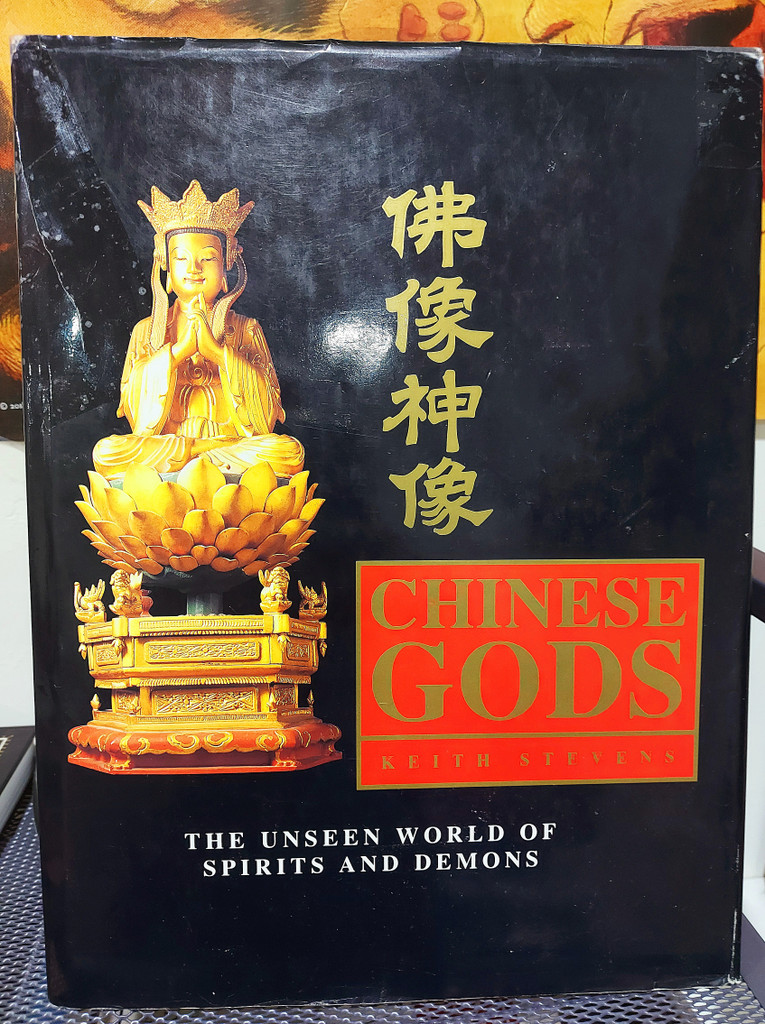
The novels Journey to the West (Xiyouji, 西遊記, 1592) and Investiture of the Gods (Fengshen yanyi, 封神演義, c. 1620) are dramatized examples of the syncretic Buddho-Daoist pantheon of Chinese Folk Religion. The number of Buddhas, sages, gods, immortals, spirits, guardians (etc.) revered by people of Chinese descent is enormous, and new figures are being added to the list even to this day. Needless to say, laymen and researchers who visit temples and wish to correctly identify a particular deity need a resource with images, names, and listed attributes. Luckily there is one such source. Keith Stevens (1926-2015), a veteran of the British Army and Foreign and Commonwealth Office, traveled East and Southeast Asia for 40 years collecting information on the folk pantheon. He produced an invaluable monograph titled Chinese Gods: The Unseen World of Spirits and Demons (1997). The book is unfortunately out of print, and available copies are expensive to buy. So, I am pleased to host a PDF of this wonderful work on my site.
The scan was produced with an overhead document camera. The glossy pages made scanning somewhat difficult. I had to use a soft, indirect light source. Therefore, not all pages are crisp due to the low light levels.
My well-worn personal copy of Chinese Gods (larger version).
1. Dust Jacket Description
China is a land full of gods and goddesses, ranging from the Creators of the World to Worthies local to only one or two villages.
This book introduces the reader to the most important figures of Chinese folk history, and those of Buddhism, Taoism and Confucianism.
Intensely pragmatic in their religion, Chinese people hold all gods in reverence, but it is only the ones who answer prayers with concrete results that are exceptionally praised. Many gods have particular specialities, for instance, there are different Wealth Gods for success in business and for gambling. There are also individual gods for each trade, from those for removal men in Hong Kong to students at Beijing University.
In addition, there are the City Gods and Kitchen Gods, the Earth Gods who protect a specific piece of land, and myriad spirits who protect wells, mountains or bridges, distribute rain or snow, control flooding or protect humanity from disease and epidemics.
Keith Stevens has spent a lifetime researching the subject, travelling extensively in China, Taiwan and throughout South-East Asia. He has gathered information from hundreds of temple keepers, god-carvers and religious specialists and collected details of images and their stories – providing glimpses into the sometimes little-known folk history of China. The author also provides pointers on how to identify images, together with invaluable background information including chronology of Chinese history, a map of the area covered, a glossary and detailed index with the names of deities in Chinese characters.
This has been posted for educational purposes. No malicious copyright infringement is intended. If you like the digital version, please support the official release.
Citation:
Stevens, K. G. (1997). Chinese Gods: The Unseen World of Spirits and Demons. London: Collins & Brown.
I’ve previously written an article on the worship of Sun Wukong in 19th-century America. My source was Frederic J. Masters’ (1892) “Pagan Temples in San Francisco”, which appears in a collected edition of The Californian. He discusses the legends of Guan Gong (“Kwan Kung”), Hau Wong (a.k.a. “How Wong”), Mazu (“Queen of Heaven”, a.k.a. “Tin Hau”), Guanyin (“Kwan Yum”), our monkey god Qitian Dasheng (“Tsai Tin Tai Shing”), and Kum Fah, as well as mentions various other deities, such as Tudi Gong (“Earth God”), Kum Fah’s attendants, Chenghuangshen (“City God”), Heidi (“god of the North Pole”), Zhurong (“God of Fire”), and the “Holy Abbot” (Ksitigarbha?). Much of the information covered in the article isn’t new for anyone familiar with Chinese religion. But it’s easy to forget that Masters is talking about the religious practices and beliefs of immigrant Chinese workers living in 19th-century San Francisco, and this is where the article’s true value lies. Many of the temples (“Joss Houses”) are said to be the property of immigrant businesses.
Masters was a Methodist pastor who wrote extensively about Chinatown. While he comments at length about the beauty of temples and the respectability of keeping the stories of noble heroes alive for centuries, he shows a marked Western Christian condescension for many Chinese beliefs. For example, he calls the worship of the monkey god “the acme of absurdity and sinfulness” (Masters, 1892, p. 737). In the beginning of the article, he makes the mistake of equating the ancient god Shangdi with the Judeo-Christian god, believing that Chinese worship of the Almighty was perverted over the millennia by outside influences. He closes the piece by saying the Chinese will return to this ancient worship with proper guidance: “The nation [China] will one day return to the worship of the Highest and the faith in the True. In the dawn of a clearer light shall vanish all that is extravagant, foolish and false” (Masters, 1892, p. 741).
Masters. F. J. (1892). Pagan Temples in San Francisco. In C.F. Holder (Ed.). The Californian Illustrated Magazine: June to November, 1892, vol. 2 (pp. 727-741). San Francisco, Calif.: Californian Pub. Co.
Note: This post is not endorsed. I received no compensation for the review.
I have an ongoing international survey gauging the readership of Journey to the West. With almost 1,000 responses, 53.4% of the respondents have never read the novel. Another 28.8% have only read a few chapters, including abridgements. Most have learned about the story via video games, comic books, or the internet. This shouldn’t come as a surprise, though, as the majority of respondents come from North America (52.5%) and Europe (18.8%). Such non-Chinese speaking/reading populations do, however, have access to assorted translations. For example, the most popular English renditions are Arthur Waley’s 30-chapter abridgement Monkey (1942) and full translations like W.J.F. Jenner’s Journey to the West (2001) (see here for PDFs) and Anthony C. Yu’s The Journey to the West (revised 2012 edition). Yu’s version is by far the most accurate, but it runs well over 2,000 pages (including a 100 page introduction, copious explanatory notes throughout the four volumes, and many scholarly sources), making it a daunting task to read. But what about those who wish to read the original Chinese? Well, the edition put out by the People’s Literature Publishing House (人民文學出版社, 1955/2017), for example, has 866,000 Chinese characters, and while the novel is written in the vernacular, a person would need to know 3,000 or more characters before they could comfortably read it. This means beginning students would normally have to wait years until they reached the appropriate reading level. But now they have a new option.
Jeff Pepper (writer and publisher) and Dr. Xiaohui Wang (translator) of Imagin8 Press have produced a series of bilingual retellings of the tale at the 600 and 1,200 HSK word levels, as well as a few with 1,500 based on new words introduced in past books. [1] So far there are 14 books in the series covering chapters one to 42 (Monkey’s stone birth to the defeat of Red Boy). All are available in Simplified Chinese, while (as of March 2021) only the first six books are available in Traditional Chinese. Each is divided into four parts: 1) a preface with a brief explanation of the series and a recap of the story from previous books; 2) the story proper presented in pinyin with the corresponding Chinese on the adjoining page; 3) the English translation; and 4) an alphabetized glossary of terms with four columns listing the Chinese character, pinyin, English meaning, and when new words (not part of HSK3) are “First Used” in a given book (i.e. 1, 2, 3, etc.). [2] If the First Used column is blank for a given character, this is because “the word is part of HSK3 or is in common usage” (Pepper & Wang, 2018a, p. 119). Furthermore, students have the added option of listening to audiobooks available for free on Imagin8’s YouTube channel. This means they can practice both their reading and listening skills. Needless to say, this series truly is an amazing resource.
The cover of book one. Design by Katelyn Pepper (larger version).
Now on to the story. Given the reduced word count, the tale in each book is a simplified version of the original. The first book opens on a parent telling Journey to the West as a bedtime story to their child, each subsequent volume representing a different night’s story. Certain aspects, such as the names of minor gods, immortals, and demons, as well as copious literary poems, are cut out as they don’t really affect the overall story. [3] The narrative flows smoothly and follows the general outline from Anthony C. Yu’s English translation. [4] The rhythm of pages is occasionally broken up by beautiful black and white drawings by Next Mars Media, each of which is accompanied by a bilingual caption.
Beyond a few very minor inaccuracies in the story, I only have two major complaints. One, the tendency to gloss over certain facets of the narrative resulted in the removal of one major aspect of Sun Wukong’s early training, which is the source of his most famous magic power. In the original, the Buddho-Daoist Sage Subodhi teaches Monkey the 72 transformations in order to hide from a trio of heaven-sent punishments scheduled to kill him for attaining immortality. After subsequently learning how to fly via the cloud somersault, he is expelled from the Sage’s school for showing off his newfound powers of metamorphosis to his less accomplished classmates. But in book one of the series, Wukong’s lesson on shapeshifting is mysteriously replaced with flight training. It is implied that he can simply fly away from said punishments (Pepper & Wang, 2018c, pp. 55 and 57 and 82-83). And instead of being kicked out for showing off his transformations, Subhuti simply tells him to leave because he’s “disturbing the other students” (Pepper & Wang, 2018c, pp. 57 and 83). This removal doesn’t make any sense, especially when our hero exhibits transformations in later books (Pepper & Wang, 2018b, pp. 39 and 78, for example).
Two, the Chinese sections of books one to five are very short, running between 25 to 30 pages with only 14 lines per page. The rest of the books are comprised of the aforementioned preface, the pinyin pages, the English translation, the images, and the glossary. However, book six and beyond tend to have more pages, especially those from book seven onwards as this is when the 1,200 word level is introduced. In addition, Imagin8 has produced a number of compilations, each collection containing three books (example).
For my overall rating, I would give the series 4.5 out of 5 stars. I highly recommend it for those in the early stages of learning Chinese. It will surely serve as a gateway to learning more about Chinese history, religion, and mythology.
Notes:
1) Mr. Pepper was kind enough to send me the first six volumes in Simplified Chinese back in 2019. He recently sent me the Traditional Chinese version of volume six.
2) Book one is missing this “First Used” column. It was introduced in book two under the listing “New?”. This was subsequently changed to “Used In” in book five and then “First Used” in book six.
3) The names of certain reoccurring characters, such as Heavenly King Li Jing and his son Prince Nezha, are cut in earlier books. I’d be interested to see if their full names grace later books as the characters do appear several more times in the original narrative.
4) Dr. Yu is thanked in the acknowledgements.
Sources:
Pepper, J., & Wang, X. (2018a). The Emperor in Hell (2nd ed.). Pittsburgh, PA: Imagin8 Press.
The Journey to the West Research blog is proud to host an entry by our friend Edward White (his blog). The following is a reformatted and lightly edited version of his brief but insightful analysis of The Great Sage Equaling Heaven’s True Scripture of Awakening People and Enlightening the World (Qitian Dasheng xingren jueshi zhenjing, 齊天大聖醒人覺世眞/真經) posted on Twitter (see here). He was gracious enough to give me permission to post it here. – Jim
Analysis
This book alone is extremely interesting, because it shows the sheer amount of syncretism that is found in Chinese popular religion: It freely combines Buddhist and Daoist elements. The first text in this book is not actually the Great Sage scripture itself, but rather The Thousand-Handed and Thousand-Eyed Bodhisattva Guanshiyin’s Great Compassion Heart Mantra (Qianshou qianyan Guanshiyin pusa dabbixin tuoluoni, 千手千眼觀世音菩薩大悲心陀羅尼), better known as the Great Compassion Mantra (Dabei Zhou, 大悲咒), followed by the celebrated Heart Sutra (Xinjing, 心經), here called by its full name the Prajnaparamita Heart Sutra (Bore boluomi duo xinjing, 般若波羅蜜多心經) (pp. 9-13). Both are quintessentially Buddhist texts. These are, however, followed by a set of mantras for cleansing the body and the surroundings, which are associated with Daoist rites (starting from p. 13).
This is followed again with a “Precious Admonition of the Great Sage Equalling Heaven” (Qitian Dasheng Baogao, 齊天大聖寶誥) (p. 25). This format—effectively a hymn—is a liturgical form that is associated exclusively with Daoist scriptures (Cf. the set phrase 志心皈命禮 on p. 26). [1] Then, you have a list of salutations of four Buddhas and bodhisattvas, and five Heavenly Worthies (Tianzun, 天尊) (Daoist deities), all of which are equally saluted by the Sanskrit “Namo” (南無) (pp. 28-30).
The scripture itself starts on page 30, and has five chapters in total. Chapter one is titled “Cultivating the Body and Rectifying Fate” (Xiushen liming di yi zhang, 修身立命第一章) (p. 30). Chapter two is titled “Entering Sagacity and Transcending Ordinariness” (Ru sheng chaofan di er zhang, 入聖超凡第二章) (p. 33). Chapter three is titled “Returning to the Origin of Brilliance and Kindness” (Mingshan fu chu di san zhang, 明善復初第三章) (p. 40). What is interesting in this text, however, is that between chapters two and three, there is a lengthy section titled “True Words of the Great Sage Equalling Heaven” (Qitian Dasheng zhenyan, 齊天大聖眞言) (p. 36). [2] This is absent in the online edition. Chapter 4 is titled “Cause, Effect, and Retribution” (Yinguo baoying di si zhang, 因果報應第四章) (p. 44). The fifth and final chapter is titled “Cultivating Both Internally and Externally” (Neiwai shuangxiu di wu zhang, 內外雙修第五章) (p. 52). In this particular edition of the Great Sage Scripture, between chapters four and five are found a long list of evils that reciting this scripture can resolve (this is also not found on the online edition) (pp. 48-52). Our Daoist readers may find this similar to a list found in the very, very Daoist “Big Dipper Scripture” (Beidou jing, 北斗經), which I translate here.
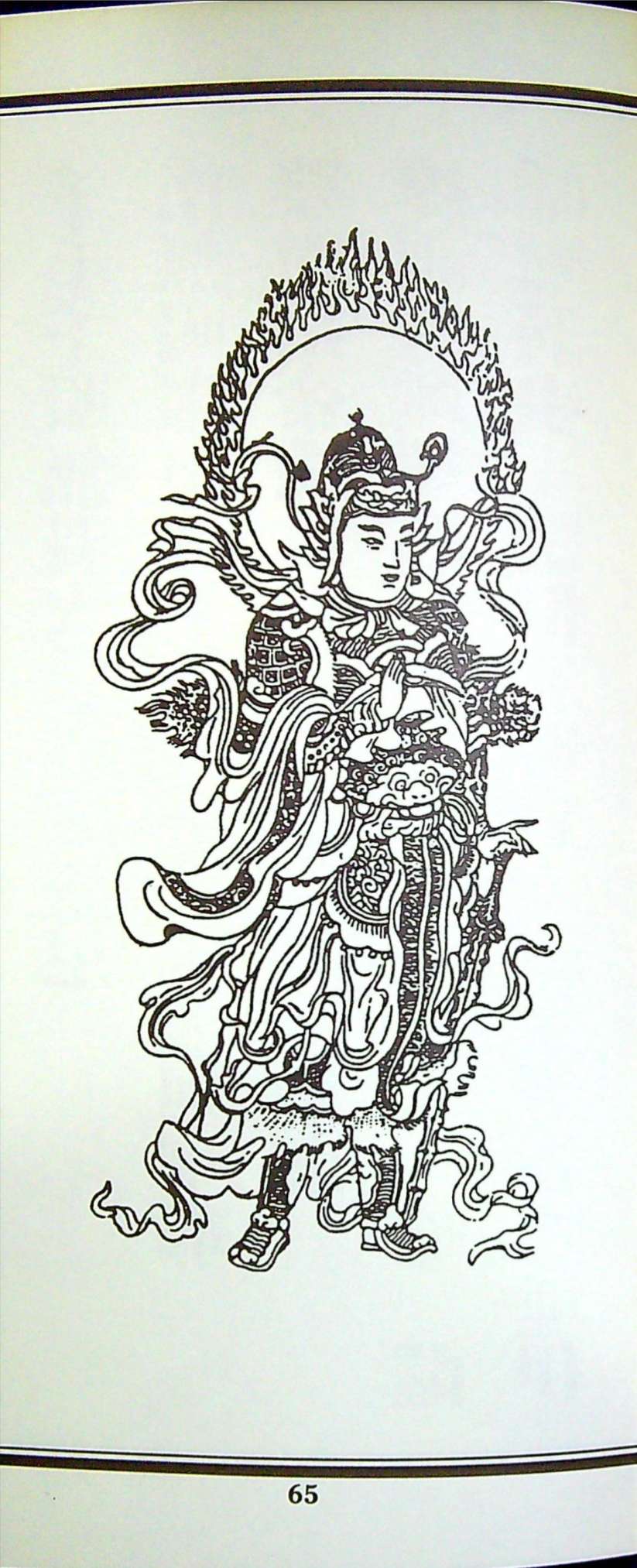
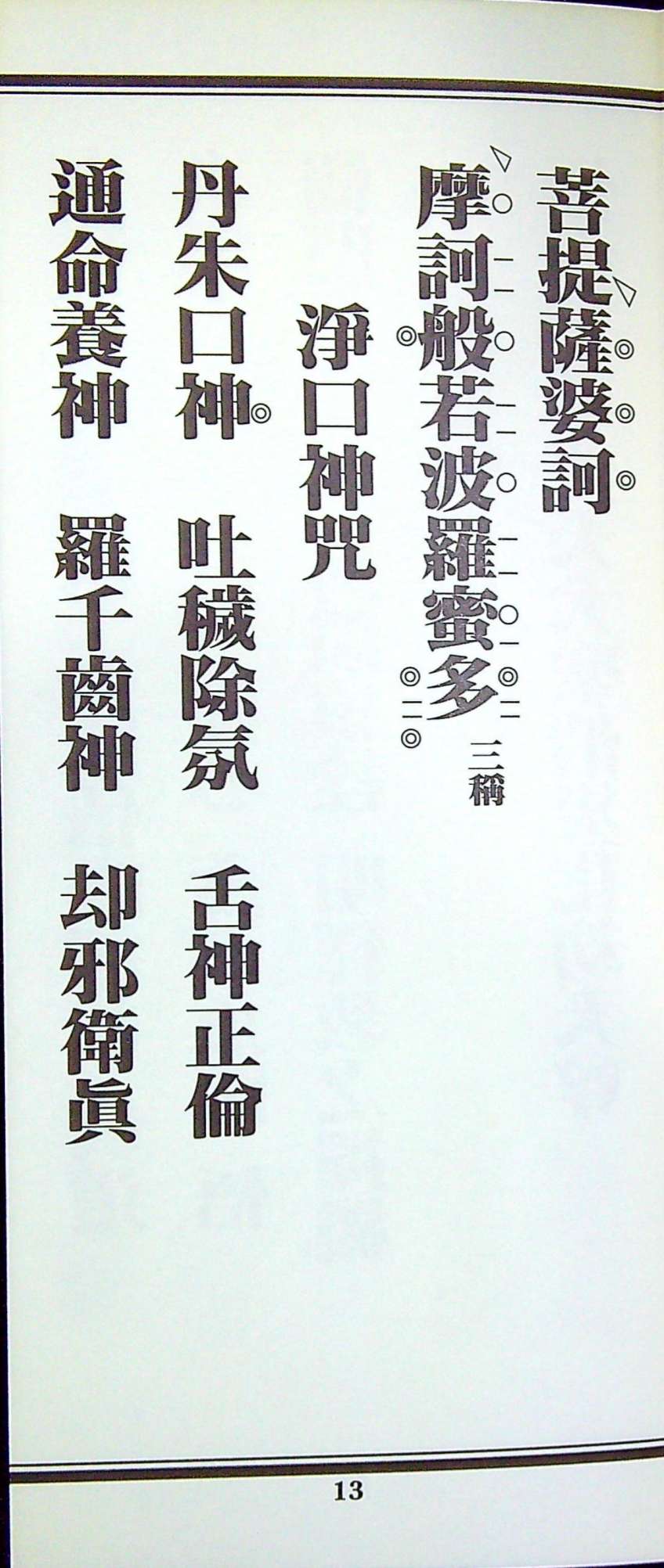
Fig. 1 – Weituo standing guard at the end of the scripture (larger version). Fig. 2 – Examples of percussion marks (larger version).
The text ends with a hymn called “In Praise of the Great Sage Equalling Heaven” (Qitian Dasheng zan, 齊天大聖讚) (p. 56), followed by a text called “The Essentials of Cultivating the Dao” (Xiudao shouyao pian, 修道首要篇) (p. 57). This is immediately followed by the “Mantra of the Seven Buddhas to Extinguish Offences” (Qi fo miezui zhenyan, 七佛滅罪眞言) (p. 59). Syncretism indeed. On the last page we have a picture of the Buddhist god Weituo (韋馱) (fig. 1), who stands guard on the last page of scriptures to protect them (p. 65). Thus we have an extremely Daoist text literally bookended by Buddhism.
We are hence immensely grateful to Jim for uploading scans of this scripture. As even from this preliminary reading shows, it preserves liturgical texts that are not found in online editions of the scripture. The online presence of non-Buddhist Chinese religious works is extremely poor and patchy; we have nothing like the Taisho Tripitaka to work on; every scripture uploaded advances our knowledge greatly. By observing not just the scripture itself, but also its front and back matter that is printed along with it, we can tell how the scripture was used by the religious communities that produced it—something again that gets lost in transmission.
Some words should be said about the format of the book. The book is clearly bound in what is called in the west the “Concertina format”. This format is unique to religious books, thereby increasing its authenticity as a holy work. But also more importantly, makes the book very easy to use in a liturgical context: it lays absolutely flat, and is easy to turn—valuable features if you are chanting off the scripture. In turn, on some pages, you see little dashes and dots besides the characters (fig. 2) (p. 13, for example). These are indications of the percussion—when the various gongs and bells are to be struck. These factors—along with the inclusion of several hymns inserted between chapters of the scripture—would lead me to conclude that this book represents not just a scripture to be contemplated, but a scripture prepared for public performance as a ritual (refer back to “True Words of the Great Sage Equalling Heaven” between ch. 2 and 3). The appended mantras, percussion, and inserted hymns, would only make sense in a context where people would chant the scripture in a grand ceremony: they would be irrelevant if the text was produced with quiet study and contemplation in mind. I could be wrong, though.
Notes:
1) For a Chinese example of another “Precious Admonition”, see here. My translation of another can be seen here.
2) “True Words” 真言 is one of the names by which mantras are known in Chinese. Thus, the term “True Words of the Great Sage” might just as well be read as “Mantra of the Great Sage”.
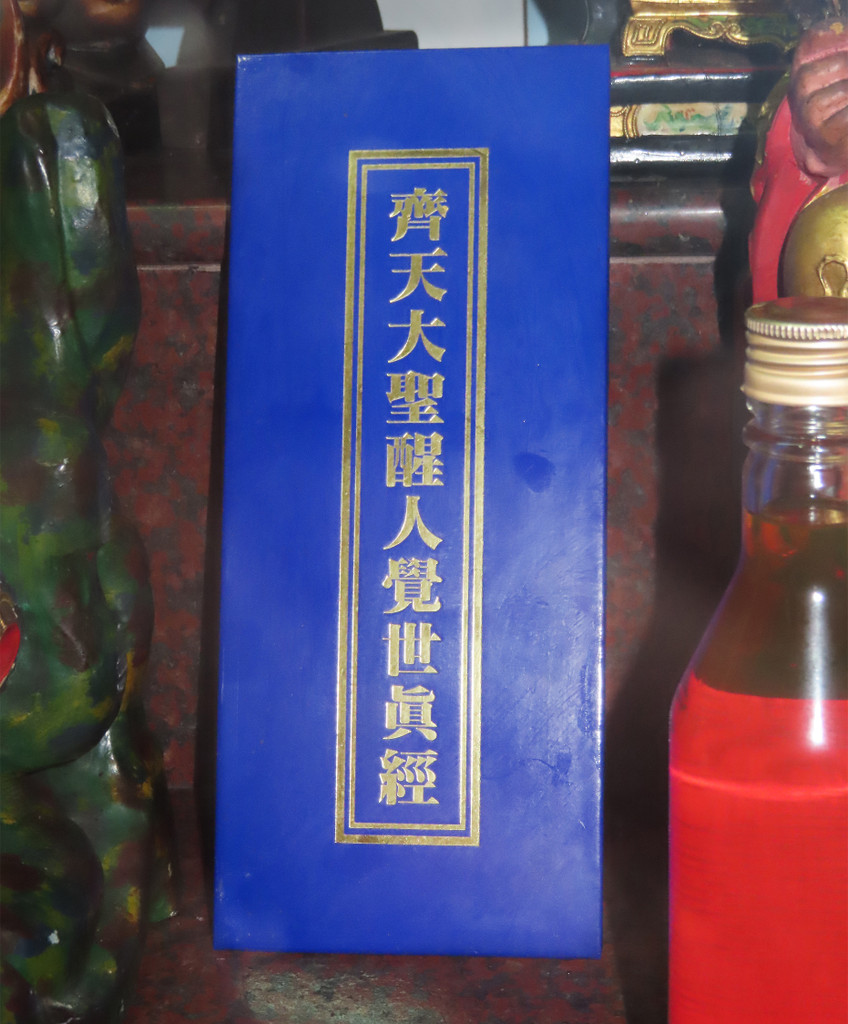
I am absolutely thrilled to share a PDF scan of The Great Sage Equaling Heaven’s True Scripture of Awakening People and Enlightening the World (Qitian Dasheng xingren jueshi zhenjing, 齊天大聖醒人覺世眞/真經). That’s right, the Monkey King has a holy book! I first learned of it when I visited the Great Sage Equaling Heaven Temple (Qitian Dasheng Miao, 齊天大聖廟) in the Zhongshan District of Keelung, Taiwan. I had spent a few minutes taking pictures, when I briefly looked back through the images to make sure they weren’t blurry (a common problem when photographing in dimly lit temples). This is when I saw a blue booklet tucked among the altar statues (fig. 1 and 2). I hadn’t notice it upon first inspecting the figures. But once I looked up and read the characters, I knew I had found something special.
Fig. 1 – The image where I first noticed the blue booklet (larger image). Fig. 2 – The Great Sage Scripture (larger version).
After posting about it online and inquiring with my monkey temple contacts, a gentleman from Taichung wrote me on Facebook and offered to send me a copy free of charge (a BIG thank you to Mr. Chen). A few days later, I received a package in the mail and was delighted to find he had sent me an exact copy as that seen in Keelung.
The resulting scans are the product of an overhead scanner set to document mode. I found the book mode cropped off the page numbers and slightly widened the characters when the program attempted to flatten the curved pages. Still, the final product is not perfect as the accordion-style pages can’t be laid perfectly flat.
The document states that this is the fourth batch printed in September of 2006. I’m not sure when it was first written; though, I’ve been told by a few informants that it is likely the product of the “flying phoenix” (feiluan, 飛鸞), otherwise known as “planchette writing” or “spirit writing” (fuji, 扶乩 / 扶箕). Jordan and Overmyer (1986) note the Chapel of Compassion and Goodness (Cishan Tang, 慈善堂) of the Society of Wisdom and Enlightenment (Huiming She, 慧明社) in Tainan published a book via the planchette in 1965 with 724 “revelations” from assorted Buddhist and Daoist deities, including the Great Sage (pp. 107-108). Perhaps this scripture is part of that tradition. A tangki from Taipei said that last year a sister temple had gifted 20 copies of the Great Sage scripture to various temples. One informant said they saw it at a temple on “Five Fingers Mountain” (Wuzhi shan, 五指山) in Hsinchu, while another said they saw an exact copy in Singapore. The internet has a few videos of the scripture being performed aloud, one in Hokkien and the other in Cantonese (video 1). The latter suggests the scripture is present in Hong Kong as well.
Video 1 – The Cantonese version of the Great Sage scripture.
I am not a translator, so I don’t plan to make my own. My hope is that a more qualified individual will use the PDF to give the scripture the proper translation and analysis that it deserves. I would love to one day host it on my site.