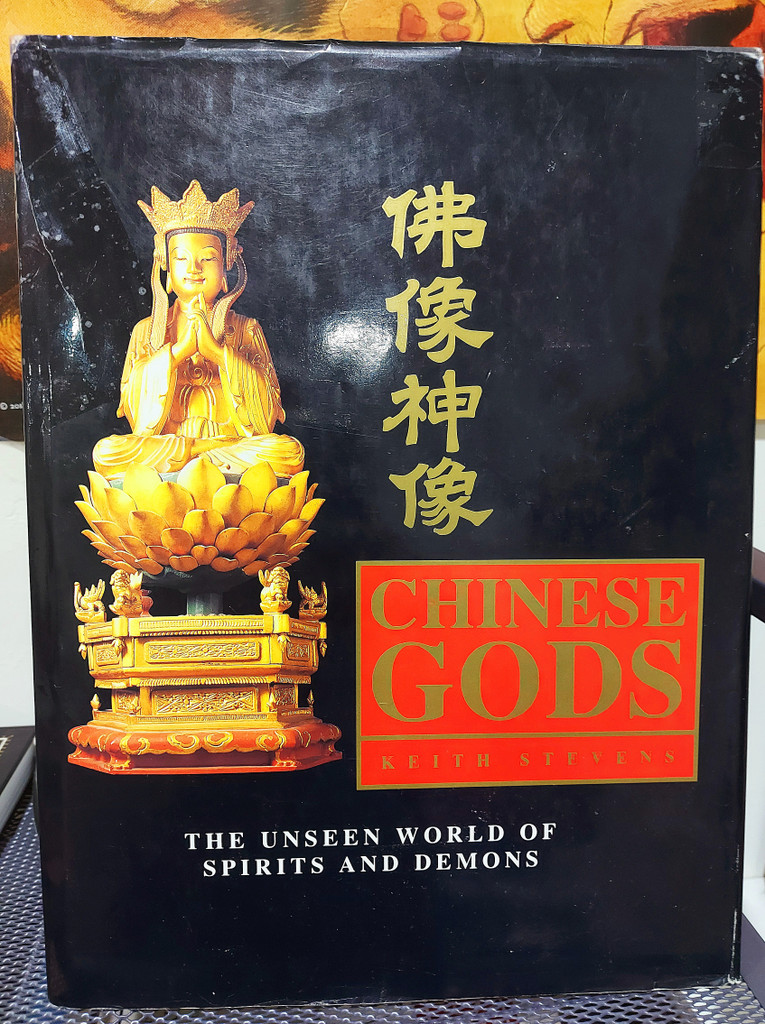
Archive #24 – Chinese Gods: The Unseen World of Spirits and Demons (1997) by Keith Stevens

The novels Journey to the West (Xiyouji西遊記, 1592) and Investiture of the Gods (Fengshen yanyi封神演義, c. 1620) are dramatized examples of the syncretic Buddho-Daoist pantheon of Chinese Folk Religion. The number of Buddhas, sages, gods, immortals, spirits, guardians (etc.) revered by people of Chinese descent is enormous, and new figures are being added to the list even to this day. Needless to say, laymen and researchers who visit temples and wish to correctly identify a particular deity need a resource with images, names, and listed attributes. Luckily there is one such source. Keith Stevens (1926-2015), a veteran of the British Army and Foreign and Commonwealth Office, traveled East and Southeast Asia for 40 years collecting information on the folk pantheon. He produced an invaluable monograph titled Chinese Gods: The Unseen World of Spirits and Demons (1997). The book is unfortunately out of print, and available copies are expensive to buy. So, I am pleased to host a PDF of this wonderful work on my site.

The scan was produced with an overhead document camera. The glossy pages made scanning somewhat difficult. I had to use a soft, indirect light source. Therefore, not all pages are crisp due to the low light levels.

My well-worn personal copy of Chinese Gods (larger version).

1. Dust Jacket Description

China is a land full of gods and goddesses, ranging from the Creators of the World to Worthies local to only one or two villages.

This book introduces the reader to the most important figures of Chinese folk history, and those of Buddhism, Taoism and Confucianism.

Intensely pragmatic in their religion, Chinese people hold all gods in reverence, but it is only the ones who answer prayers with concrete results that are exceptionally praised. Many gods have particular specialities, for instance, there are different Wealth Gods for success in business and for gambling. There are also individual gods for each trade, from those for removal men in Hong Kong to students at Beijing University.

In addition, there are the City Gods and Kitchen Gods, the Earth Gods who protect a specific piece of land, and myriad spirits who protect wells, mountains or bridges, distribute rain or snow, control flooding or protect humanity from disease and epidemics.

Keith Stevens has spent a lifetime researching the subject, travelling extensively in China, Taiwan and throughout South-East Asia. He has gathered information from hundreds of temple keepers, god-carvers and religious specialists and collected details of images and their stories – providing glimpses into the sometimes little-known folk history of China. The author also provides pointers on how to identify images, together with invaluable background information including chronology of Chinese history, a map of the area covered, a glossary and detailed index with the names of deities in Chinese characters.

2. Book Link

Click to access chinese-gods-the-unseen-world-of-spirits-and-demons-compressed.pdf

Disclaimer:

This has been posted for educational purposes. No malicious copyright infringement is intended. If you like the digital version, please support the official release.

Citation:

Stevens, K. G. (1997). Chinese Gods: The Unseen World of Spirits and Demons. London: Collins & Brown.

Archive #17 – PDFs of Creation of the Gods Library of Chinese Classics Chinese-English Bilingual Edition (Vols. 1-4)

Note: My blog is not monetized, so I am not making any money from this post. My hope is that the PDF will make this legendary story more accessible to a wider audience. If you enjoyed the digital version, please, please, please support the official release.

Last updated: 04-06-2026 

Here I present a PDF of the Library of Chinese Classics bilingual edition of Creation of the Gods (Fengshen yanyi, 封神演義, c. 1620 CE), sometimes translated as Investiture of the Gods or Enfeoffment of the Gods.

I. Description

This 100 chapter shenmo novel tells of the great struggle between the declining Shang (c. 1600–1046 BCE) and ascending Zhou (c. 1046–256 BCE) dynasties. In the beginning, King Zhou of Shang offends the primordial goddess Nuwa by leaving a lewd poem in her temple, and in response, the devi summons a trio of spirits (a fox, a pheasant, and a lute) to bring about the dynasty’s downfall. The fox spirit takes the place of the king’s concubine Daji and, over the course of nearly 30 years, leads him down a path of imperial neglect, decadence, and sadism. This causes many of the kingdom’s dukes, marquis, and generals to later rebel in favor of King Wu of Zhou, the monarch destined by heaven to rule China. 

The majority of the story follows the countless battles between the forces of Shang and Zhou. Along the way, the latter are aided by immortals of the Chan () sect (an analogy for Quanzhen Daoism), which favors spiritual cultivation, while the former are aided by the Jie () sect (an analogy for Zhengyi), which favors charms and incantations. [1] Each transcendent wields any number of swords, fans, hooks, staves, axes, halberds, scissors, hammers, rings, sashes, nails, dippers, pennants, pearls, gourds (etc.), each with not only the power to take the lives of thousands of humans but also immobilize other immortals and even kill them. These celestial battles escalate to the point that Laozi and the Buddha must fight side-by-side to defeat a trap designed to kill 10,000 immortals.

A story line present throughout the novel is the fate of Jiang Ziya, a Daoist adept and the military strategist and stalwart commander of the Zhou army. He is destined to deify the souls of the humans and immortals who die in battle using the “List of Creation” (Fengshen bang, 封神榜), an index of preordained names agreed upon at the beginning of time by the heads of the three religions. This list is housed in the “Terrace of Creation” (Fengshen tai, 封神臺), a reed pavilion in which the souls of the dead are gathered to await their apotheosis. In the end, after defeating the Shang forces, Jiang deifies a total of 365 major gods, along with thousands of lesser gods, ranging from holy mountains, weather, and plagues to constellations, the time cycle, and the five elements.

Considering that the story takes place a millennia prior to the arrival of Buddhism in China, the novel portrays the religion having no presence in the east. There are several times in the narrative when a Buddhist deity travels from the western paradise to halt the execution of a powerful immortal or demon as they are fated to submit to Buddhism. Furthermore, when the Buddha intervenes in the great battle towards the end, he does so to find talented disciples who will help him spread the religion in the east. In fact, Bodhisattvas like Guanyin and Manjusri are depicted as former Chan sect immortals who later become disciples of Buddhism.

See also this chapter-by-chapter summary.

II. Relationship to JTTW

For the purposes of this blog, several characters from Journey to the West (Xiyouji, 西遊記, 1592) appear in the novel, including Laozi, the Buddha, Nezha (fig. 1), Muzha, and Li Jing, Ao Guang, Erlang (called Yang Jian, 楊戩) and his hound, etc. Journey to the West also had a number of clear influences on the book, one being the ape spirit Yuan Hong (袁洪) from later chapters who wields a staff and 72 transformations in a fight with Yang Jian. Sound familiar?

Fig. 1 – A detail of Nezha striking at an enemy during battle. Image from The Newly Printed, Zhong Bojing Annotated, Investiture of the Gods (Xinke Zhong Bojing xiansheng piping Fengshen yanyi, 新刻鍾伯敬先生批評封神演義, c. 1620) (larger version).

III. The Translation

This edition of the novel was originally translated by Gu Zhizhong (顾执中, 1898–1995) in 1992. Dr. Barbara Witt notes that the translation has its pros and cons:

The positive: It is the only complete translation of Fengshen yanyi into a Western language that I am aware of. The edition I read (from 1992 I think), was also nicely done with interesting woodcut illustrations throughout the novel.

The negative: Firstly, it is not a very faithful translation. Poems are generally left untranslated and sentences often paraphrased. [2] I think, when ever the translator found something difficult, he just skipped it. Secondly, I think Gu Zhizhong was not an English native speaker and not very familiar with Western mythology and some of his translations are really off. For example Taiyi zhenren 太乙真人 (“True Man Primordial”), a powerful Daoist immortal, becomes “Fairy Primordial” in his translation, which conjures up a very different image.

While the translation may not be perfect, I think it is a must read as many of the gods mentioned therein are worshiped in modern temples throughout China, Taiwan, Malaysia, and Singapore. It is a lens into modern folk religion.

IV. PDF File

The following PDF is a combination of all four volumes making up Gu (2000):


Update: 11-28-21 

I’ve added Wan (1987), a doctoral thesis analyzing the historical sources and micro/macro structure of the story. It also provides a summary of the tale in the end.

PDF File

Click to access Investiture-of-the-gods-Fengshen-yanyi-Sources-narrative-structure-and-mythical-significance.pdf


Update: 03-14-23

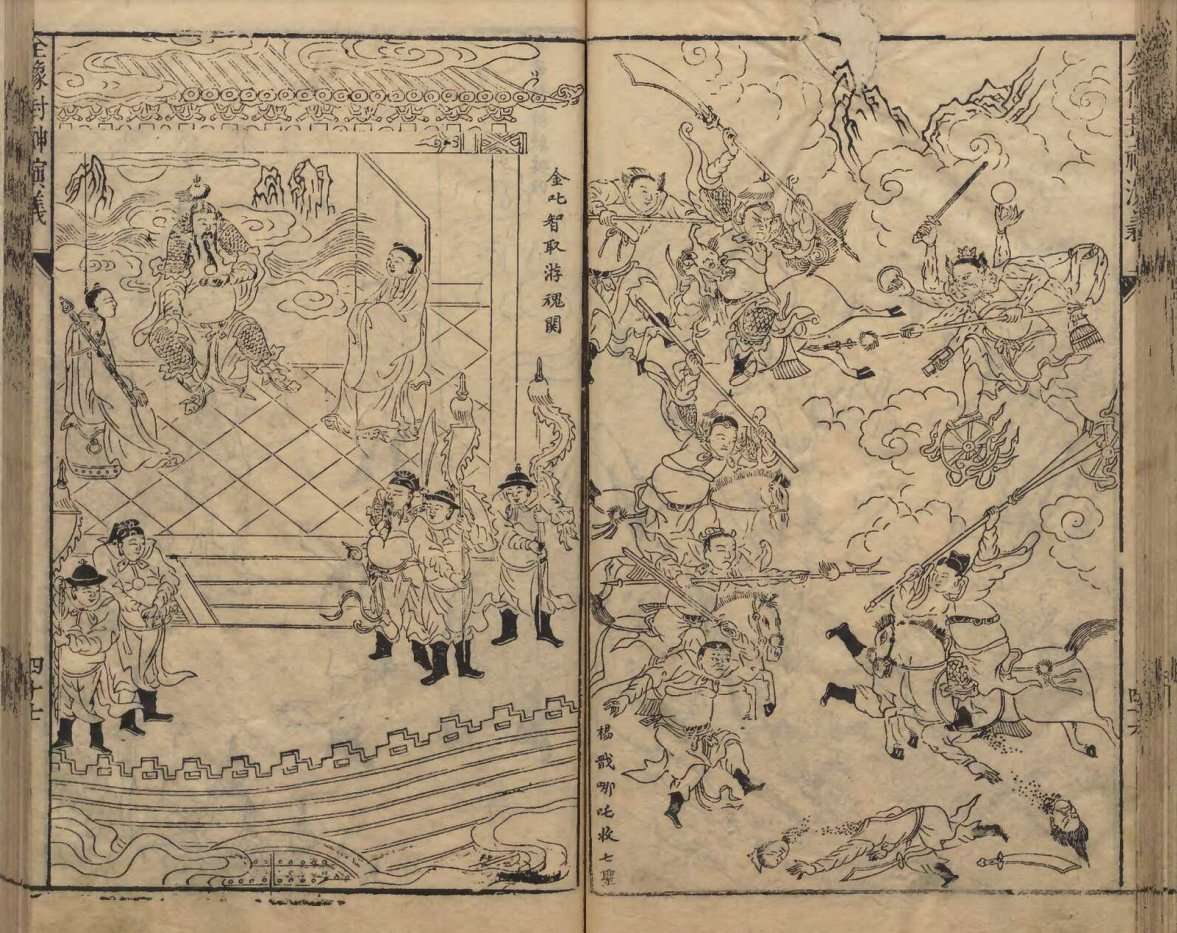
Here is a PDF for volume one of The Newly Printed, Zhong Bojing Annotated, Investiture of the Gods (Xinke Zhong Bojing xiansheng piping Fengshen yanyi, 新刻鍾伯敬先生批評封神演義, c. 1620), the oldest known edition of the novel. It is full of lovely woodblock prints (fig. 2).

PDF File

Click to access Investiture-of-the-Gods-1620-prints.pdf

Fig. 2 – A random page from vol. 1 of The Newly Printed, Zhong Bojing Annotated, Investiture of the Gods (larger version).

Thank you to the National Archives of Japan for offering the complete 1620 edition of FSYY. It can be downloaded here.


Update: 09-13-23

Tumblr user digitalagepulao has drawn an amazing Nezha (fig. 3). The theme is based on the feud between the prince and his father, which leads to the former’s suicide and divine resurrection. The artist describe a tense scene from the novel:

Li Jing in a fury grabbed his halberd, leapt on his horse and galloped out of the headquarters. He was astonished to see Nezha with his Wind-Fire Wheels and Fire-Tipped Spear. He swore loudly, “You damned beast! You caused us endless suffering before your death, and now that you’ve been reborn, you’re troubling us again!”

“Li Jing! I’ve returned my flesh and bones to you [via suicide], and there’s no longer any relation between us. Why did you smash my golden idol with your whip and burn down my temple? Today I must take my revenge!”

The drawing is part of digitalagepulao’s “Expedition to the West au” (JTTW alternate universe) storyline based on this article.

Fig. 3 – Digitalagepulao’s Nezha (larger version).


Update: 09-08-24

@ryin-silverfish of Tumblr (author of this guest post) has made a catalog of the fantastic pets from the novel.

https://docs.google.com/document/d/1NozJF8nbhy8t6Jta7AZ5WKbyCmEMYtgFM_akcSt9D-Y/edit?usp=drivesdk

They have also made a catalog of Nezha’s powers.

https://docs.google.com/document/d/1FjHQPXmEalChk7PNiw9ljAJ8Cq66-AjevgEfdEa6wgI/edit?usp=sharing

A very big thank you to them. I’ll add more later if or when new lists are available. 


Update: 11-03-24

My friend Dario Virga (Onibotokemaru on Instagram) (fig. 4) has completed an Italian translation of the novel titled L’investitura degli Dei: Romanzo cinese di epoca Ming (2024). This 1,120 page, two-volume edition can be purchased here for € 50,00:

https://www.libraccio.it/libro/9788879847049/xu-zhonglin/investitura-degli-dei-romanzo-cinese-di-epoca-ming.html?tr=C3137

Fig. 4 – Dario and his translation (larger version). 


Update: 04-06-26

See my archives of other translations.

Notes:

1) Prof. Shi Changyu notes in his preface to this translation that the friction between the fictional Chan and Jie sects serves as an analogy for that of Quanzhen and Zhengyi during the Ming, for the former was marginalized, while the latter was held in high esteem and fell prey to decadence, naturally hindering its ability to contribute anything of value to the development of Daoism at this time (Gu, 2000, pp. 50-53).

2) Those interested in reading some of the poetry from the novel should consult Koss (1979), which compares them with those from Journey to the West.

Sources:

Gu, Z. (2000). Creation of the Gods (Vols. 1-4). Beijing: New World Press.

Koss, N. (1979). The Relationship of Hsi-yu chi and Feng-shen yen-i: An Analysis of Poems Found in Both Novels. T’oung Pao,65(4/5), second series, 143-165. Retrieved May 5, 2020, from http://www.jstor.org/stable/4528175

Wan, P. (1987). Investiture of the Gods (“Fengshen yanyi”): Sources, Narrative Structure, and Mythical Significance (UMI No. 8810607) [Doctoral dissertation, University of Washington]. Available from ProQuest Dissertations and Theses database.

Wu, C., & Yu, A. C. (2012). The Journey to the West (Vols. 1-4) (Rev. ed.). Chicago, Illinois: University of Chicago Press.

Generals Thousand-Mile Eye and Fair-Wind Ear

Last updated: 04-26-20

After Monkey’s birth from stone in Journey to the West (Xiyouji西遊記, 1592) chapter one, two beams of light shoot forth from his eyes, [1] alarming the Jade Emperor in heaven (fig. 1). The cosmic ruler then orders the personification of his eyes and ears, generals Thousand-Mile Eye (Qianliyan, 千里眼) and Fair-Wind Ear (Shunfenger, 順風耳), respectively, to trace the source:

At this command the two captains went out to the gate, and, having looked intently and listened clearly, they returned presently to report, “Your subjects, obeying your command to locate the beams, discovered that they came from the Flower-Fruit Mountain at the border of the small Aolai Country, which lies to the east of the East Pūrvavideha Continent. On this mountain is an immortal stone that has given birth to an egg. Exposed to the wind, it has been transformed into a monkey, who, when bowing to the four quarters, has flashed from his eyes those golden beams that reached the Palace of the Polestar. Now that he is taking some food and drink, the light is about to grow dim.” With compassionate mercy the Jade Emperor declared, “These creatures from the world below are born of the essences of Heaven and Earth, and they need not surprise us” (vol. 1, p. 102).

Monkey Lazer Eyes - small

Fig. 1 – Monkey’s laser eyes. From the Japanese children’s book Son Goku (1939) (larger version). 

I. History

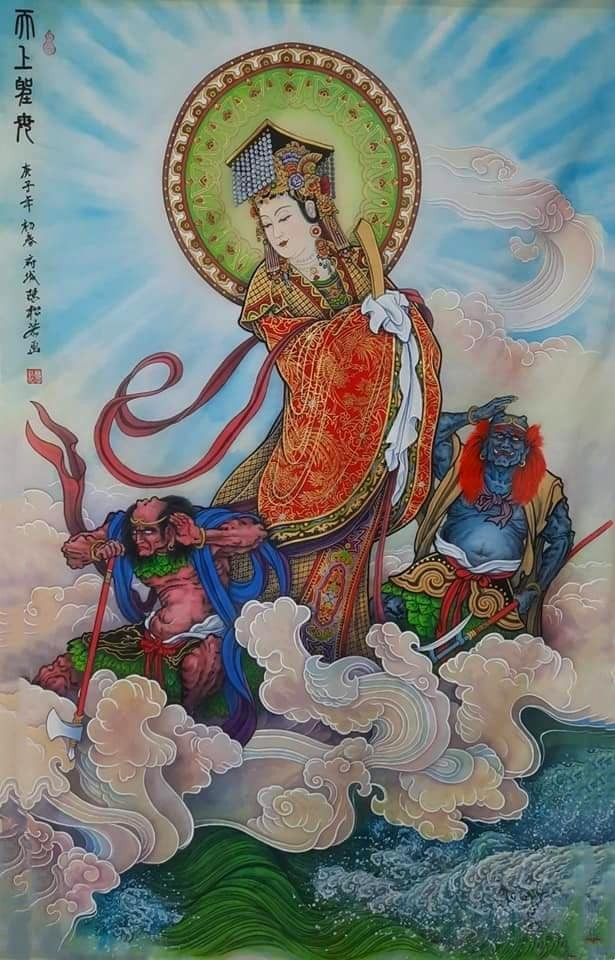
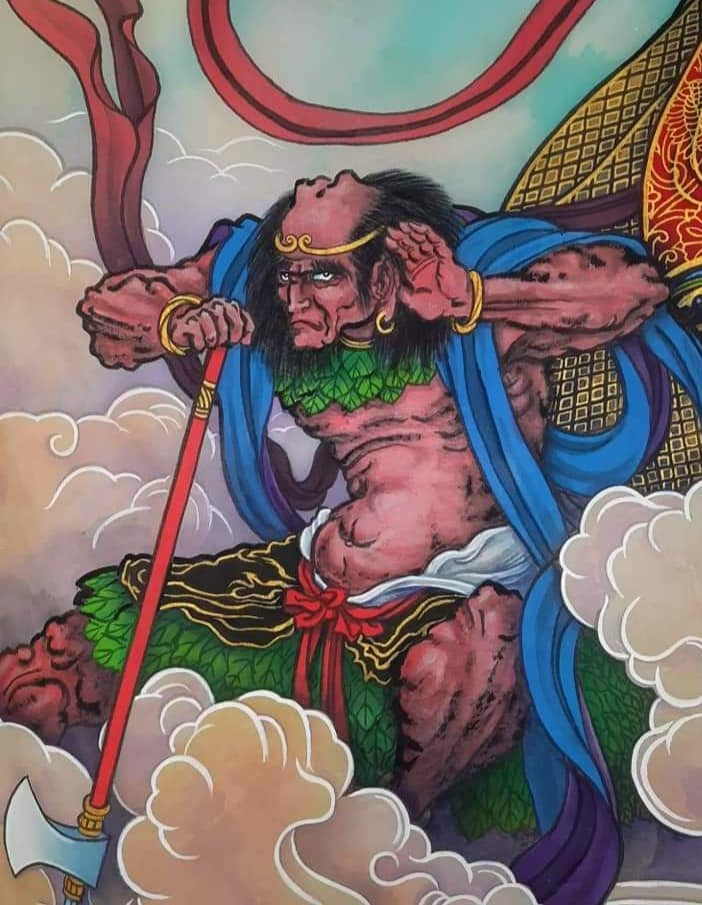
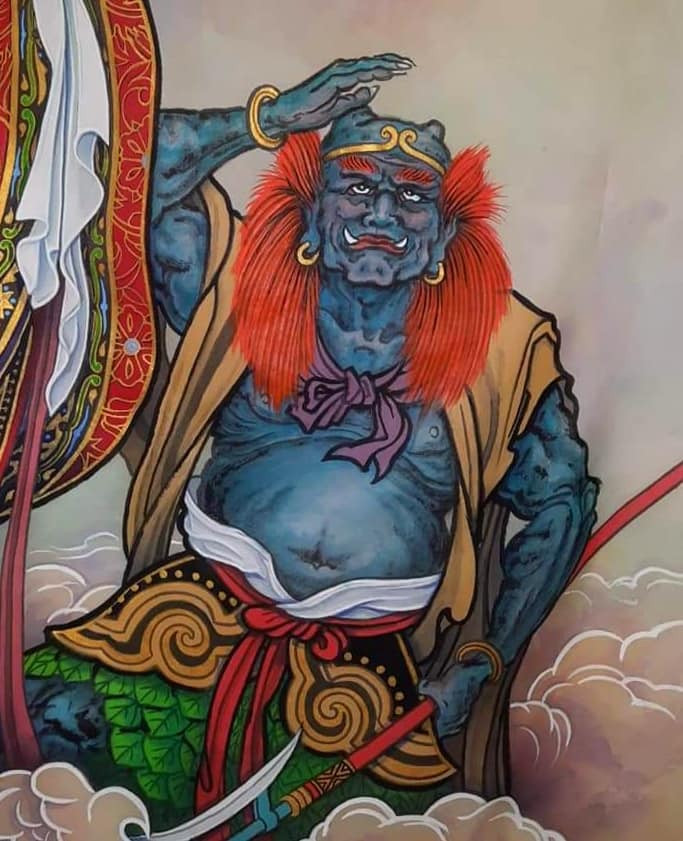
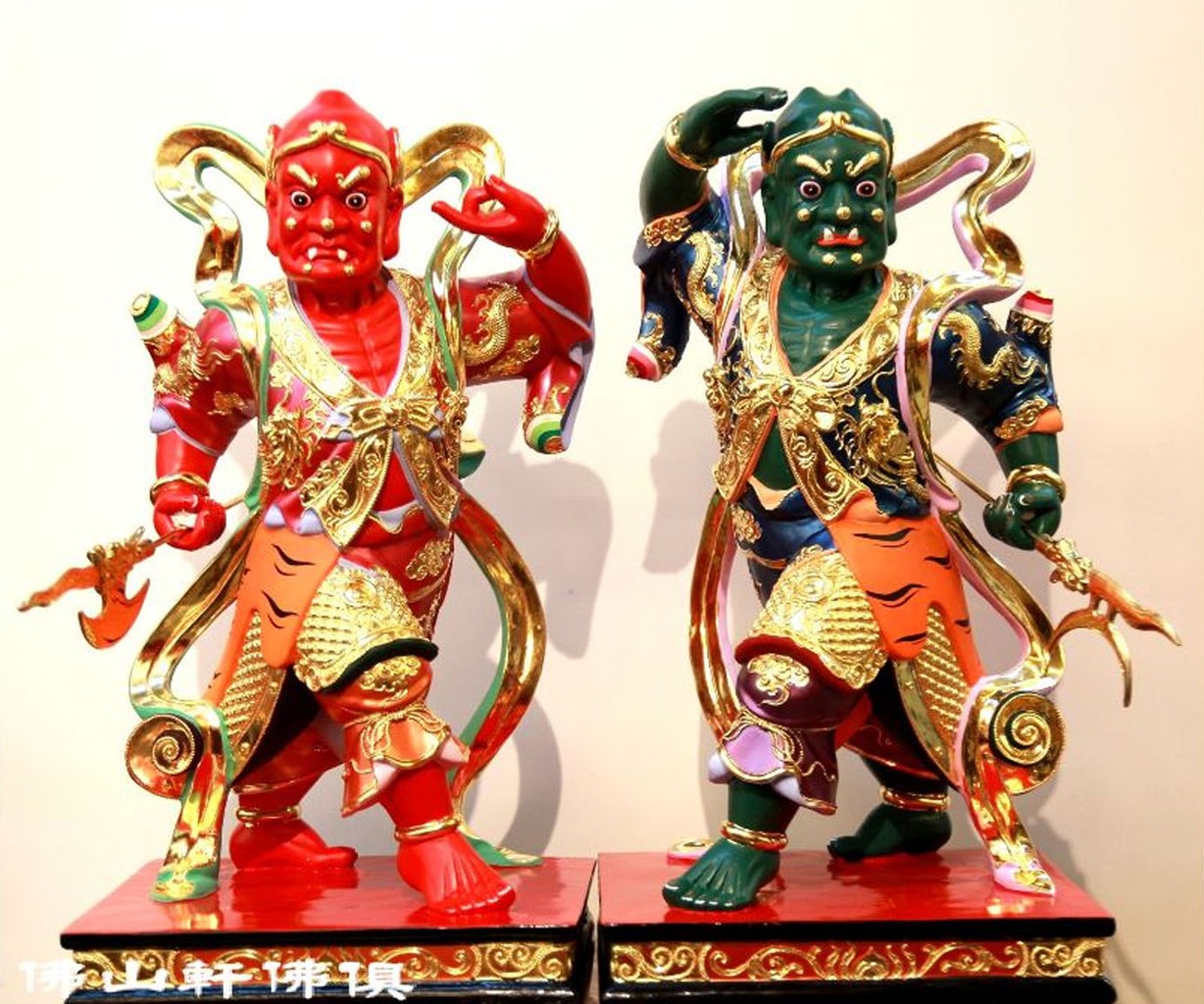
Today, these generals are celebrated as the guardians of Mazu (fig. 2), a popular sea goddess worshiped in Southern China, Macao, and Taiwan. Thousand-Mile Eye is commonly portrayed as a fierce, red warrior scanning the horizon with one hand shielding his eyes (fig. 3), while Fair-Wind Ear is green with one hand to his ear (fig. 4). According to Ruitenbeek (1999), the story of their subjugation is told in a series of circa 1880 mural paintings from the Temple of Divine Mercy (Lingcimiao, 靈慈廟) in Fengting village (楓停), Xianyou district (仙遊), Fujian.

Thousand-Miles Eye (in the murals called Jinxing yan [金星眼], “Venus-eye”), in the disguise of a lovely girl, lures men into a cave, and then dismembers and devours them. [2] When With-the-Wind Ear sees this, he starts a fight with Thousand-Miles Eye, but in the end the two monsters pledge to become sworn brothers. Guanyin, seated on Mount Potala, orders the Dragon’s Daughter to tell Mazu to subdue the monsters. In the first round of the battle, Mazu is forced to retreat. She then implores heavenly warriors to help her, and with their assistance is able to defeat the two monsters. Thereafter, Thousand-Miles Eye and With-the-Wind Ear become her loyal servants. First they help Mazu to fight a man-eating lion, thereafter they subdue the Evil Dragon Monster (p. 316).

Mazu with generals - small

Fig. 2 – Mazu with her generals (larger version). Fig. 3 – A detail of Fair-Wind Ear (larger version). Fig. 4 – A detail of Thousand-Mile Eye (larger version). Original artist unknown.

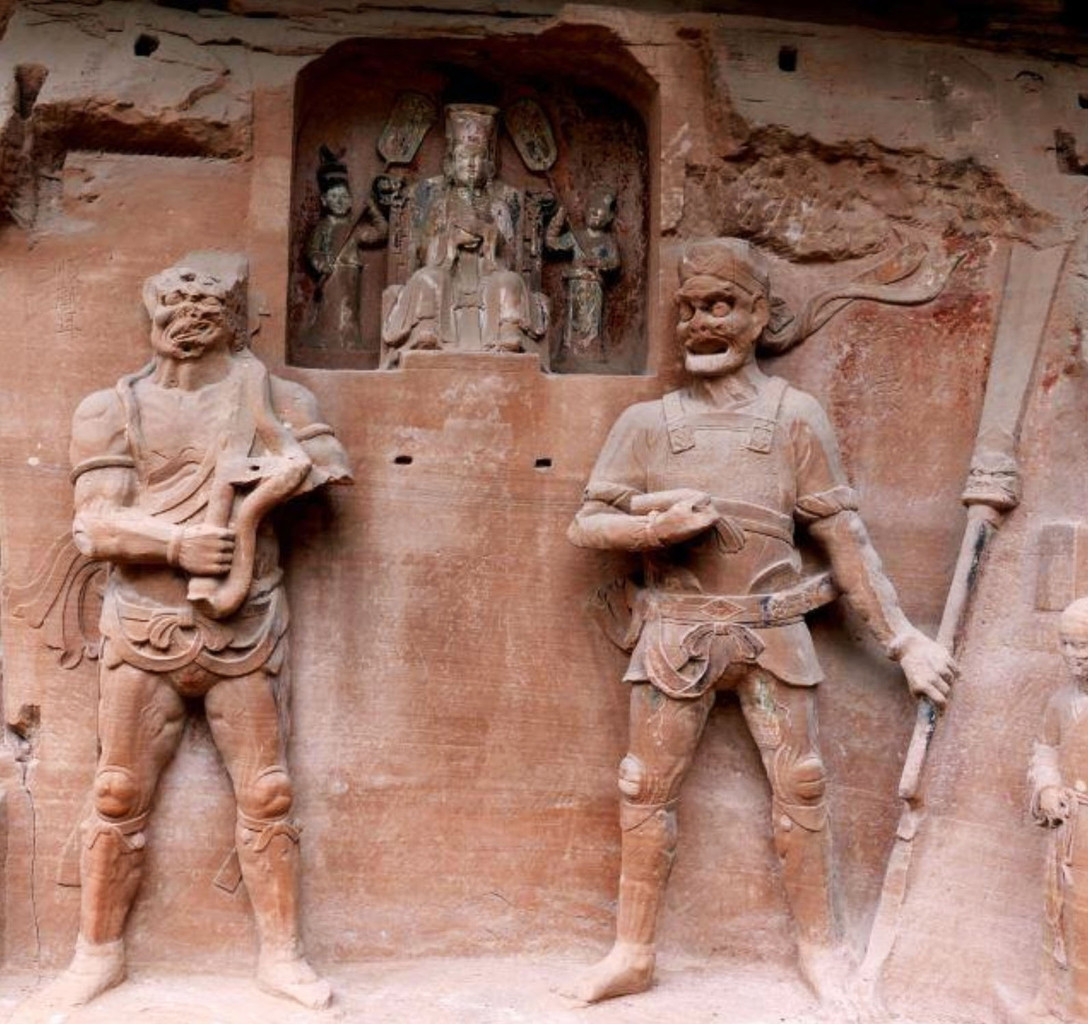
I am unsure when the generals where first associated with Mazu. They are only alluded to in passing as subjugated planetary spirits in the goddess’ early 17th-century pious novel Record of the Miracles Performed by the Heavenly Princess (Tianfei xiansheng lu, 天妃顯聖錄) (Ruitenbeek, 1999, p. 319). However, it is clear from their appearance in Journey to the West that they were associated with the Jade Emperor during the late-16th-century. [3] This association stretches back to at least the Shaoxing (紹興, 1131–1162) period of Song Emperor Gaozong, for they appear with the cosmic monarch among the rock carvings of the Shimen Mountain Grotto (Shimen shan shiku, 石門山石窟), one of many sites making up the world famous Dazu rock carvingsin Sichuan (fig. 5-7). [4]

Qianliyan and Shunfeng'er with Jade Emperor - Shimen Mountain Grotto - Danzu Rock Carvings - Song Dynasty - For article (small)

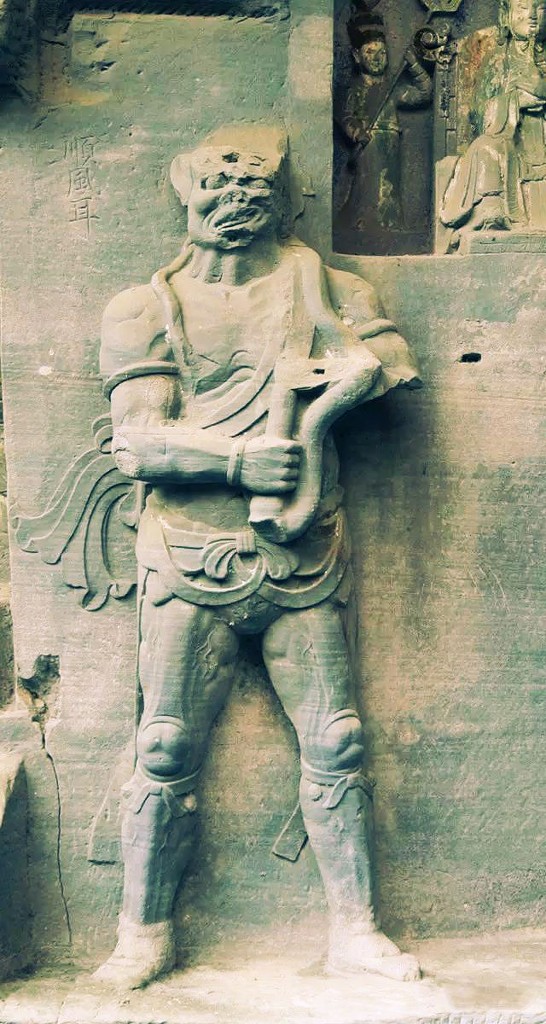
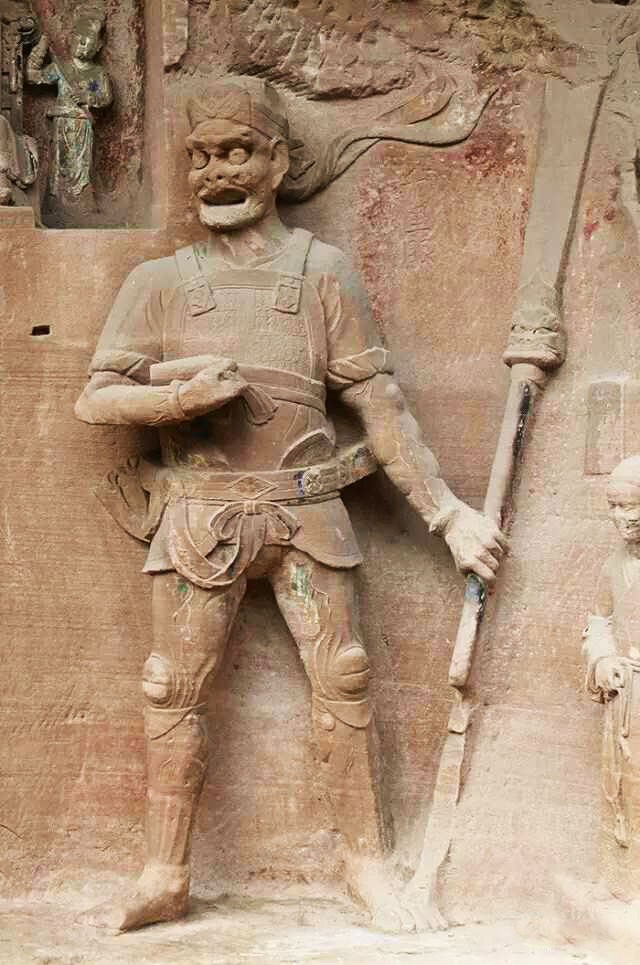
Fig. 5 – Song-era statues of generals Fair-Wind Ear (left) and Thousand-Mile Eye (right) guarding the Jade Emperor’s alcove (larger version). From the Shimen Mountain Grotto. Photo originally from this article. Fig. 6 – A detail of Fair-Wind Ear (larger version). Fig. 7 – A detail of Thousand-Mile Eye (larger version). Photos originally from this article

Readers will notice that, apart from being dressed differently, neither statue is striking their characteristic pose. These poses came later and may have been influenced by earlier deities. For example, Nikaido (2011) writes that a Song-era sea god named Zhaobao Qilang (招寶七郎) is sometimes depicted shielding his eyes just like Thousand-Mile Eye, and so he cautiously suggests that, once the deity’s cult waned in popularity and yielded to Mazu, this trait may have been passed on to her generals (pp. 89-90). Conversely, the poses could simply be based on postures used by the very sailors who worshiped such gods. After all, keen eyesight and hearing are skills needed to successfully navigate the open ocean.

II. Golden headbands

The generals are normally depicted wearing flowing clothing or open armor to show off their muscular physiques. Apart from their divine sashes, they are commonly shown wearing golden armbands, bracelets, and/or anklets, as well as a tiger skin at the waist. These traits appear to be consistent from all the examples that I’ve seen in Taiwan and Hong Kong. However, the statues in Taiwan stand out the most to me because they are often depicted wearing golden fillets on their heads just like Sun Wukong (fig. 8). This is because these headbands share a common origin.

Qianliyan and Shunfenger religious statues

Fig. 8 – Religious statues of Fair-Wind Ear (left) and Thousand-Mile Eye (right) (larger version). Take note of the headbands. Also refer back to figures 4 and 5. Photo originally found here

I explain in this article that the golden fillet can be traced to a list of prescribed ritual items worn by ancient Buddhist yogins in their worship of Hevajra-Heruka, a wrathful protector deity. These items appear in the 8th-century Hevajra Tantra (Dabei kongzhi jingang dajiao wang yigui jing, 大悲空智金剛大教王儀軌經):

The practitioner should wear divine ear-rings, a circlet around the head, upon each wrist a bracelet, a girdle around his waist, anklets around the ankles, arm ornaments around the upper arms and a garland of bones around the neck. His dress must be of tiger skin and his food the Five Nectars (Farrow & Menon, 2001, pp. 61-62; Cf. Linrothe, 1999, p. 250).

You will notice that all of the items associated with the generals, including the headband, the rings on the arms, wrists, and ankles, and the tiger skin are listed here. This is because wrathful protector deities were often depicted in the same attire as their followers, leading to the fillet becoming a symbol of powerful Buddhist spirits. For instance, the Hevajra Tanta describes Hevajra-Heruka as a wrathful youth wearing such clothing:

Dark blue and like the sun in colour with reddened and extended eyes, his yellow hair twisted upwards, and adorned with the five symbolic adornments,/ the circlet, the ear-rings and necklace, the bracelets and belt. These five symbols are well known for the purificatory power of the Five Buddhas./ He has the form of a sixteen-year-old youth and is clad in a tiger-skin. His gaze is wrathful. In his left hand he holds a vajra-skull, and a khatvahga [staff] likewise in his left, while in his right is a vajra of [a] dark hue… (Linrothe, 1999, p. 256; Cf. Farrow & Menon, 2001, p. 44).

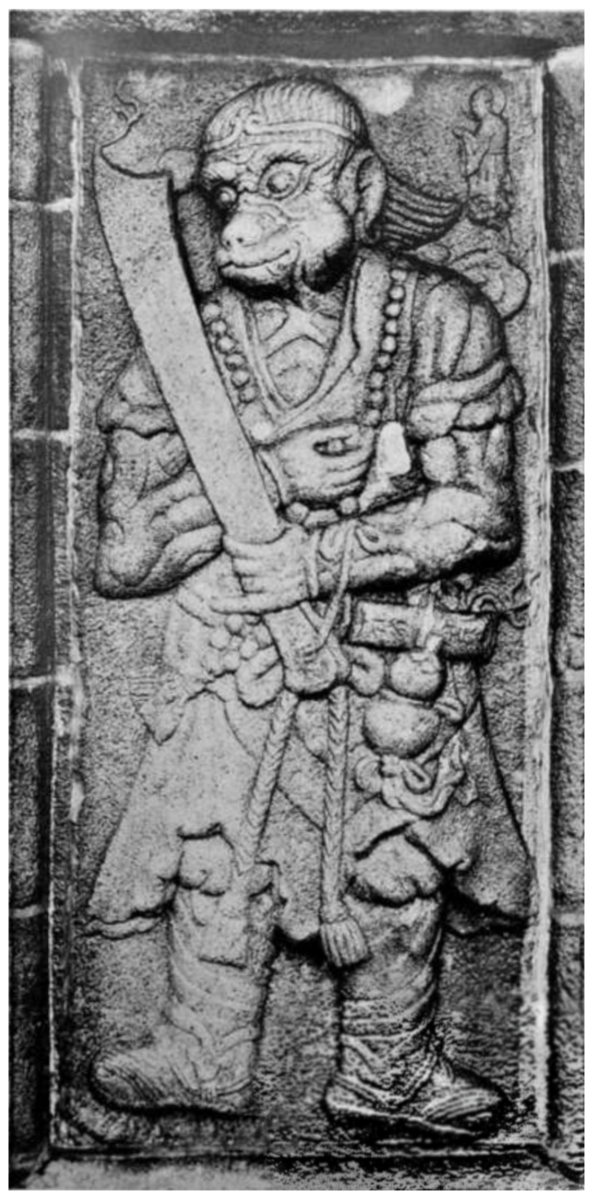
The Hevajra Tantra was translated into Tibetan and Chinese during the 11th-century (Bangdel & Huntington, 2003, p. 455), allowing this iconography to spread eastward. A prime example is the 13th-century Kaiyuan Temple Pagoda carving of Sun Wukong in Fujian. He is depicted with the headband, armbands, bracelets, anklets, and possibly even a tigerskin apron (fig. 9). 

Given the close cultural connection between Fujian and Taiwan, the generals’ depiction with fillets is likely based on previous examples from the southern Chinese province.

Better Kaiyuan Temple Monkey (Zayton-Quanzhou) - small

Fig. 9 – The  Kaiyuan temple pagoda relief (larger version), Quanzhou, Fujian.

It’s interesting to note that Fair-Wind Ear’s statue from Shimen Mountain Grotto in Sichuan has the aforementioned body rings (refer back to fig. 6). His head is unfortunately damaged, though. I would be interested in analyzing similarly dressed guardian figures in the area to see if they wear a fillet.


Update: 04-22-20

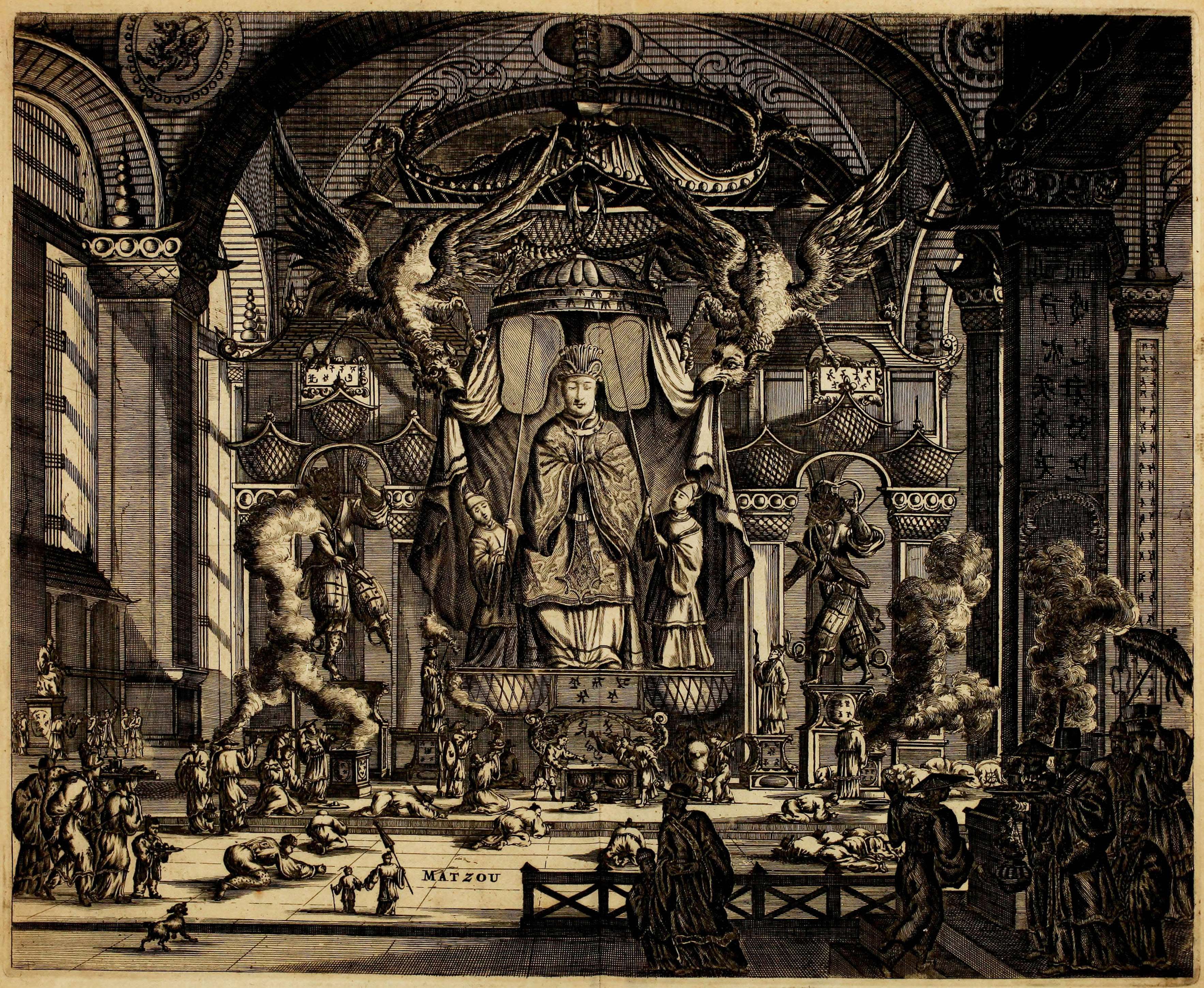
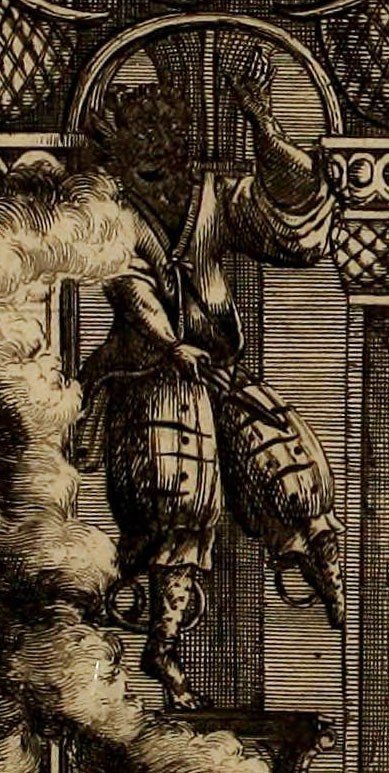
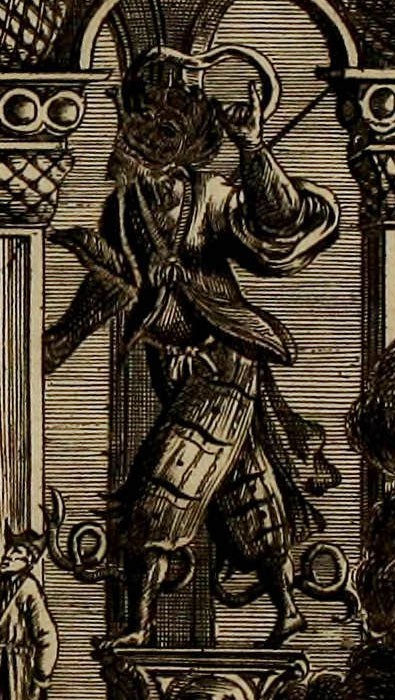
Here is a lovely Dutch engraving of a Mazu temple from a 17th-century book by Olfert Dapper (fig. 10). The generals can be seen standing in their characteristic poses to the left (fig. 11) and right (fig. 12) of the main altar stage. Their attire includes the aforementioned body rings (and possibly tiger skin pants) but no headband.

Mazu temple with detials of generals, from Gedenkwaerdig bedryf der Nederlandsche Oost-Indische Maetschappye (1670) - small

Fig. 10 – Engraving from Memorable Mission of the Dutch East India Company up the Coast to China and into the Empire of Taising of China (Gedenkwaerdig bedryf der Nederlandsche Ooste-Indische Maetschappye, op de kuste en in het keizerrijk van Taising of Sina, 1670) (larger version). Image from the Clark Collection. Fig. 11 – A detail of General Thousand-Mile Eye (larger version). Fig. 12 – A detail of General Fair-Wind Ear (larger version).


Update: 04-26-20

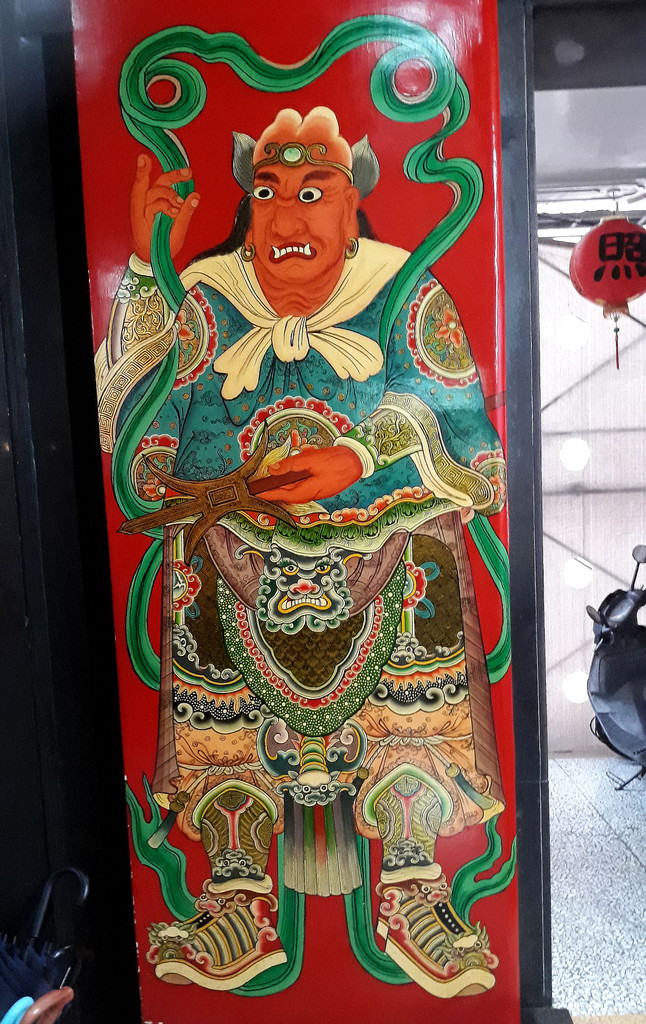
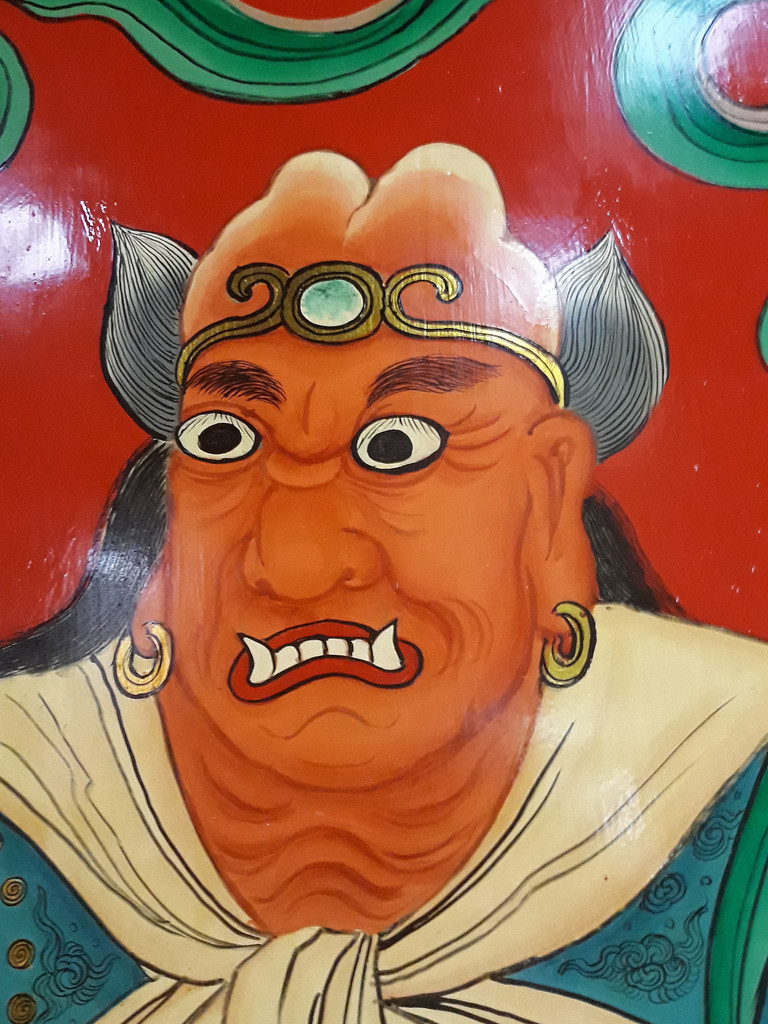
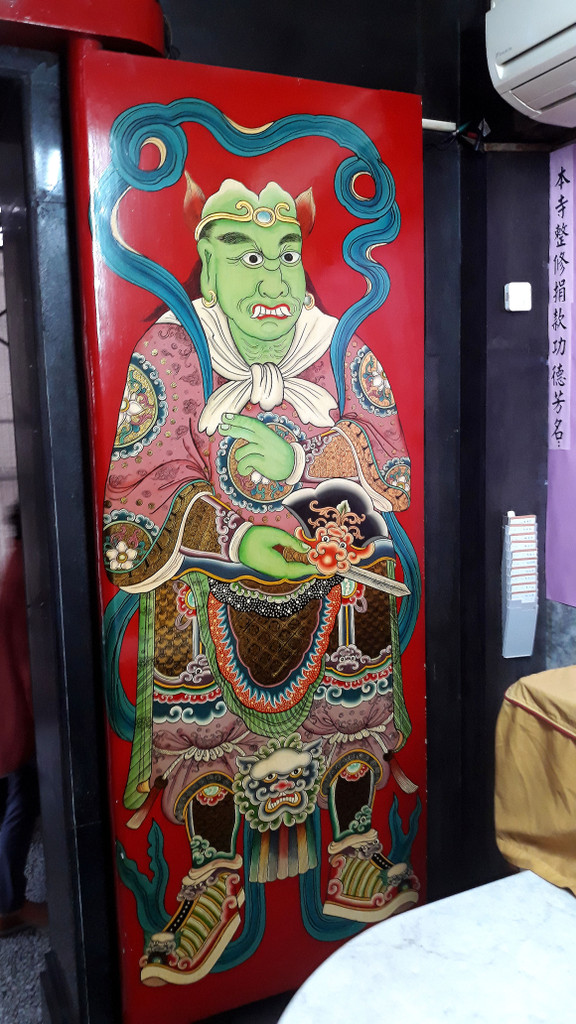
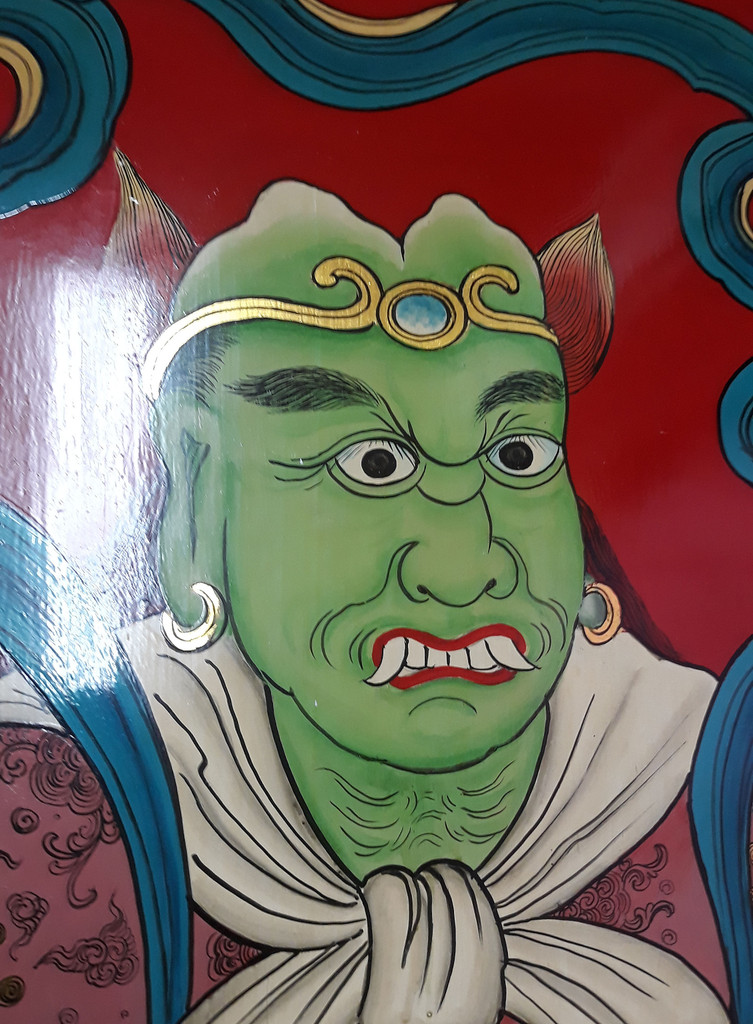
The Puji Temple (普濟寺) in Datong district (大同區), Taipei (near my home) includes door god paintings of the two generals (fig. 13-16). They are depicted with bejeweled headbands. These demonstrate the variability of fillet designs.

Thousand-Mile Eye and Fair-Wind Ear (Puji Temple, Taipei) - For Article - small

Fig. 13 – General Fair-Wind Ear (larger version). Fig. 14 – Detail of his head (larger version). Fig. 15. General Thousand-Mile Eye (larger version). Fig. 16 – Detail of his head (larger version).


Notes:

1) This feat may be based on Daoist mind-training exercises where adepts try to expand their vision to the ends of the earth/cosmos. According to Robinet (1979), one source reads: “Consider that your two eyes radiate a single light which is like liquid fire and as brilliant as the stars; glowing red, it extends for ten thousand miles. The mountains, marshes, rivers, thickets and forests of the four directions are all resplendent with its light” (p. 55).

2) Wukong states in chapter 27 that he used the same trick to eat humans:

When I was a monster back at the Water-Curtain Cave, I would act like this if I wanted to eat human flesh. I would change myself into gold or silver, a lonely building, a harmless drunk, or a beautiful woman. Anyone feeble-minded enough to be attracted by me I would lure back to the cave. There I would enjoy him as I pleased, by steaming or boiling. If I couldn’t finish him off in one meal, I would dry the leftovers in the sun to keep for rainy days (Wu & Yu, 2012, vol. 2, p. 20).

3) The generals are associated with Huaguang Dadi (華光大帝) in Journey to the South (Nanyouji, 南遊記, 1570s or 1580s). They are referred to as Li Lou (離婁) and Shi Kuang (師曠) (Nikaido, 2011, p. 90). They also make an appearance in Investiture of the Gods (Fengshen yanyi, 封神演義, c. 1620). Ruitenbeek (1999) writes:

[T]hey occur, without the context of Mazu, in the guise of the brothers Gao Ming and Gao Jue. In reality, these were a Peach-tree Spirit and a Willow-tree Ogre, who had availed themselves of the divine power of two clay statues of Qianli yan and Shunfeng er in the temple of Xuan Yuan in Qipanshan. Only after these statues were smashed to pieces did they lose their power. They were subsequently transformed into Shenshu and Yulei, better known as the Door Gods (p. 319).

4) See Zhao (n.d.). These carvings are described by Hu (1994). I unfortunately don’t have access to it at the time of this writing.

Sources:

Bangdel, D., & Huntington, J. C. (2003). The circle of bliss: Buddhist meditational art. Chicago, Ill: Serindia Publications.

Farrow, G. W., & Menon, I. (2001). The concealed essence of the Hevajra Tantra: With the commentary Yogaratnamālā. Delhi: Motilal Banarsidass Publ.

Hu, W. (1994). Sichuan jiaodao fojiao shiku yishu [Taoist and Buddhist Sichuan rock cave art]. Chengdu: Sichuan People’s Publishing.

Linrothe, R. N. (1999). Ruthless compassion: wrathful deities in early Indo-Tibetan esoteric Buddhist art. Boston, Mass: Shambhala.

Nikaido, Y. (2011). The transformation of gods in Chinese popular religion: The examples of Huaguang dadi and Zhaobao Qilang. A Selection of Essays on Oriental Studies of the Institute for Cultural Interaction Studies. Osaka: Kansai University, 85-92.

Robinet, I. (1979). Metamorphosis and deliverance from the corpse in Taoism. History of Religions, 19(1), 37-70.

Ruitenbeek, K. (1999). Mazu, the patroness of sailors, in Chinese pictorial art. Artibus Asia 58(3/4). 281-329. Retrieved from https://www.jstor.org/stable/3250021

Wu, C., & Yu, A. C. (2012). The journey to the West: Vol. 1-4. Chicago, Illinois: University of Chicago Press.

Zhao, W. (n.d.). Yuhuang dadi jianglin Shimenshan [The Jade Emperor Descends to Shimen Mountain].  Retrieved April 21, 2020, from https://chiculture.org.hk/tc/china-five-thousand-years/622