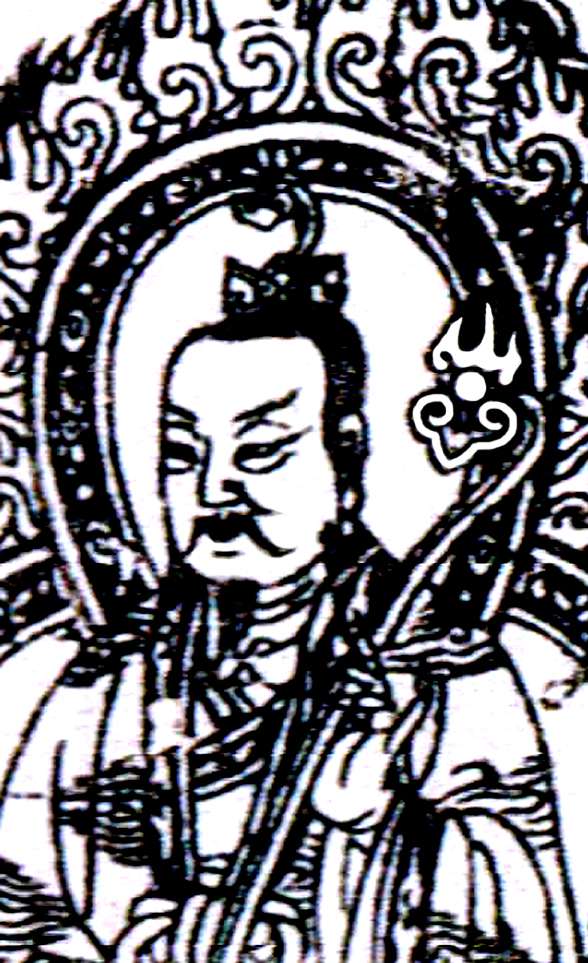
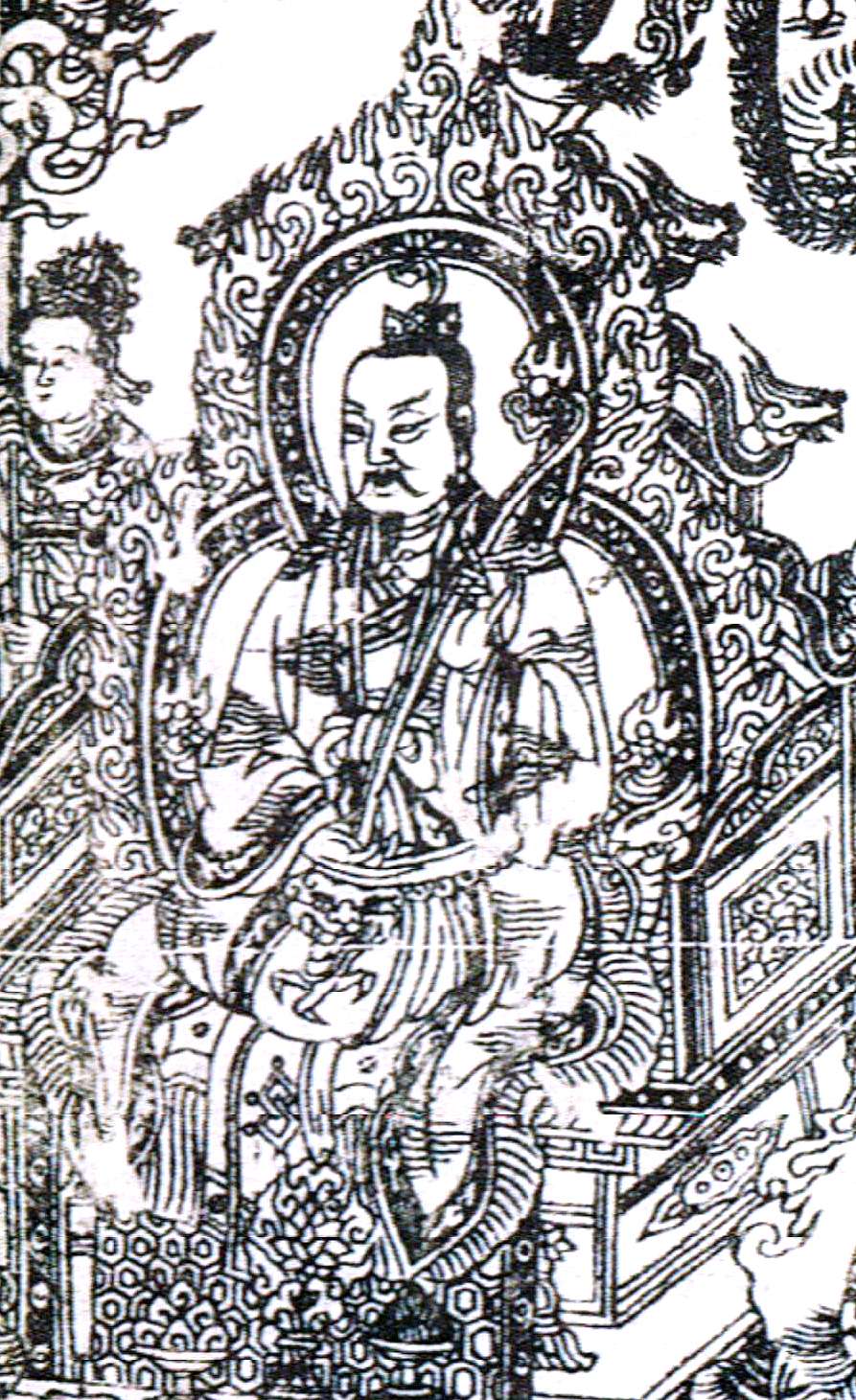
The Monkey King’s Magic Staff: A Complete Guide

Last updated: 04-23-2026

I’ve written many articles on the origins of the Monkey King’s staff over the years. Therefore, I’ve decided to combine all of the information in one location for the benefit of people wishing to learn more about the weapon and its history. This will no doubt be interesting to fans of Journey to the West (Xiyouji, 西遊記, 1592; JTTW hereafter), as well as those of modern franchises like Dragon Ball and Lego Monkie Kid (fig. 1). Citations can be found in the articles linked below.

Fig. 1 – A fan edit of the Lego Monkie Kid character “MK” wielding the Monkey King’s magic staff (larger version). Copyright Lego.

Table of Contents

1. The Literary Weapon

1.1. Staff Background

The staff first appears in chapter three of the original novel when the Monkey King goes to the underwater kingdom of Ao Guang (敖廣), the Dragon King of the Eastern Sea, looking for a magic weapon to match his supernatural strength and martial skill. When all of the traditional weapons offered to him fail to meet his standards, the dragon queen suggests to her husband that they give Sun Wukong “that piece of rare magic iron” taking up space in their treasury. She claims the ancient shaft had started producing heavenly light days prior and proposes that the monkey is fated to own it. The weapon is said to be a “divine treasure iron” originally used to set the depths of the Heavenly River (Tianhe ding di de shenzhen tie, 天河定底的神珍鐵) by Yu the Great (Dayu, 大禹), a mythic Chinese emperor and demigod.

The staff is initially described as a pillar of black iron or bin steel more than 20 feet in height and as wide as a barrel. It is only when Monkey lifts it and suggests a smaller size would be more manageable that the staff complies with his wishes and shrinks. This is when Sun notices that the weapon is decorated with a golden ring on each end, as well as an inscription along the body reading: “The ‘As-You-Will’ Gold-Banded Cudgel. Weight: Thirteen Thousand Five Hundred Catties” (Ruyi jingu bang zhong yiwan sanqian wubai jin, 如意金箍棒重一萬三千五百斤). The inscription indicates that the staff is immensely heavy, weighing 17,560 lbs. (7,965 kg).

Apart from the above information, a poem in chapter 75 (see section 2.3 here) highlights another name, “Rod of Numinous Yang” (Lingyang bang, 靈陽棒). In addition, the poem describes the staff being covered in “tracks of planets and stars” (i.e. astronomical charts) and esoteric “dragon and phoenix scripts” (longwen yu fengzhuan, 龍紋與鳳篆).

The novel provides two contradictory origins for the staff. The chapter 75 poem notes that it “[w]as forged in the stove by Laozi himself.” Laozi is of course the high god of Daoism. Chapter 88 instead states that it was “forged at Creation’s dawn / By Yu the Great himself, the god-man of old.”

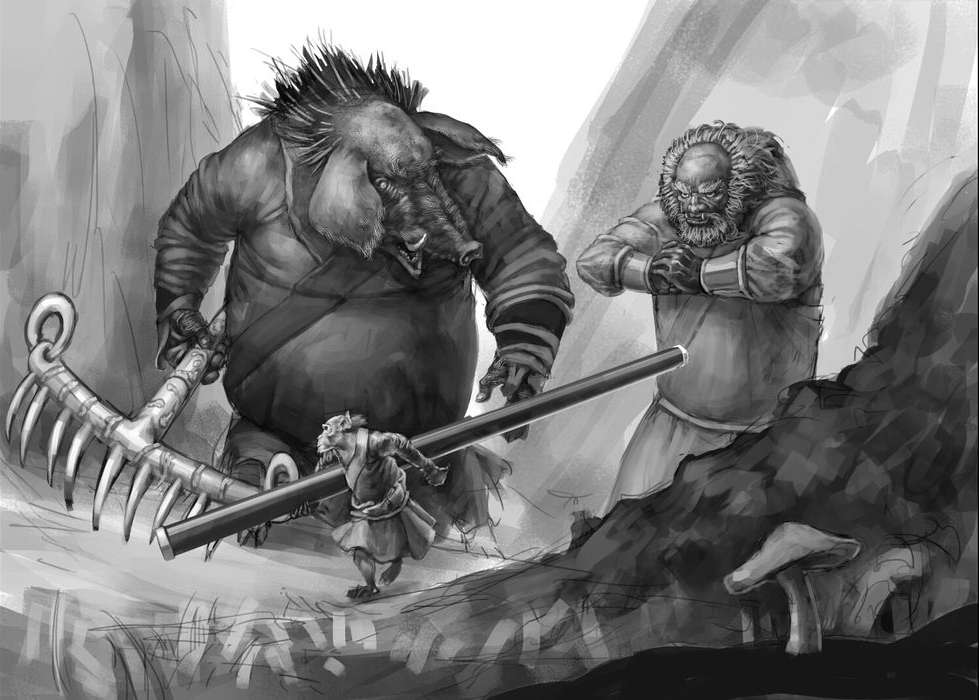
Contrary to popular images of the Monkey King holding a regular-sized staff, his literary counterpart wields a massive weapon in battle. It is said to be 20 feet long (likely an error for 12), [1] with the width of a bowl (erzhang changduan, wankou cuxi, 二丈長短,碗口粗細) (fig. 2). I did a cursory search of bowls during the Ming (when the standard edition of JTTW was published) and found that they have a radius of between 4 to 6 inches (10.16 to 15.25 cm).

Fig. 2 – An accurate depiction of the size of Monkey’s staff (larger version). Images found here. Artwork by @真·迪绝人.

1.2. Staff Powers

The staff is shown to have multiple powers.

  1. Size manipulation – This is the weapon’s most well-known ability, growing as big or as small as Monkey wishes.
  2. Controlling the oceans –  The aforementioned poem from chapter 88 writes: “The depths of all oceans, rivers, and lakes / Were fathomed and fixed by this very rod. / Having bored through mountains and conquered floods, / It stayed in East Ocean and ruled the seas…”
  3. Astral entanglement – Monkey’s soul is able to use the staff in Hell despite the physical weapon being with his sleeping body in the world of the living. (See the 04-23-26 update below for more info.)
  4. Multiplication – He can multiply his staff in the hundreds of thousands.
  5. Lock-Picking – He can open any door just by pointing it at the lock.
  6. Transformation – He can change it into tools like a straight razor or a drill.
  7. Sentience – The weapon glows in anticipation of Monkey’s arrival (fig. 3), responds to his touch, and follows his commands, denoting a certain level of sentience.

Fig. 3 – Monkey pointing to the luminous iron pillar (larger version). From the Qing-Era Painted, Complete Edition Journey to the West (Qing caihui quanben Xiyouji, 清彩繪全本西遊記).

2. Origins

2.1. Literary Precursors

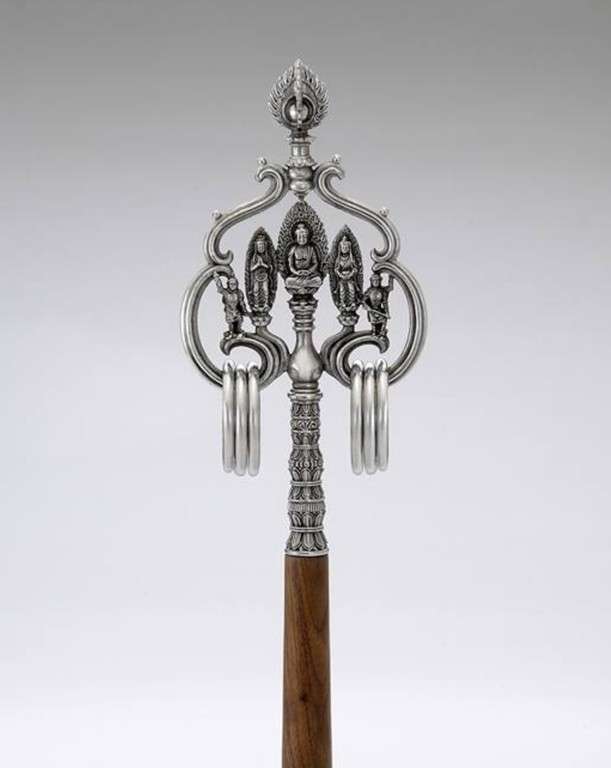
The staff found in the standard Ming edition of JTTW is actually based on two weapons from a 17-chapter storytelling prompt called The Story of How Tripitaka of the Great Tang Procured the Scriptures (Da Tang Sanzang qujing shihua, 大唐三藏取經詩話, c. late 13th-century). Sun Wukong’s precursor, an ageless immortal called the “Monkey Pilgrim” (Hou xingzhe, 猴行者), magically transports Tripitaka and his entourage to heaven. There, the supreme god, the Mahābrahmā Devarāja (Dafan tianwang, 大梵天王; i.e. Vaiśravana), gives the monk a cap of invisibility, a khakkhara (ringed monk’s staff) (fig. 4), and a begging bowl. Tripitaka and the Monkey Pilgrim take turns using these items throughout the journey. The staff is shown capable of shooting destructive beams of light, as well as transforming into magical creatures like an iron dragon or a giant, club-wielding Yaksha. Later, the Monkey Pilgrim also borrows an iron staff from heaven to fight a dragon.

The two staves from this tale were eventually combined by later storytellers. The rings from the first weapon were added to the ends of the second.

Fig. 4 – A beautiful, modern monk’s staff with six rings (larger version).

2.2. Influence from Religion

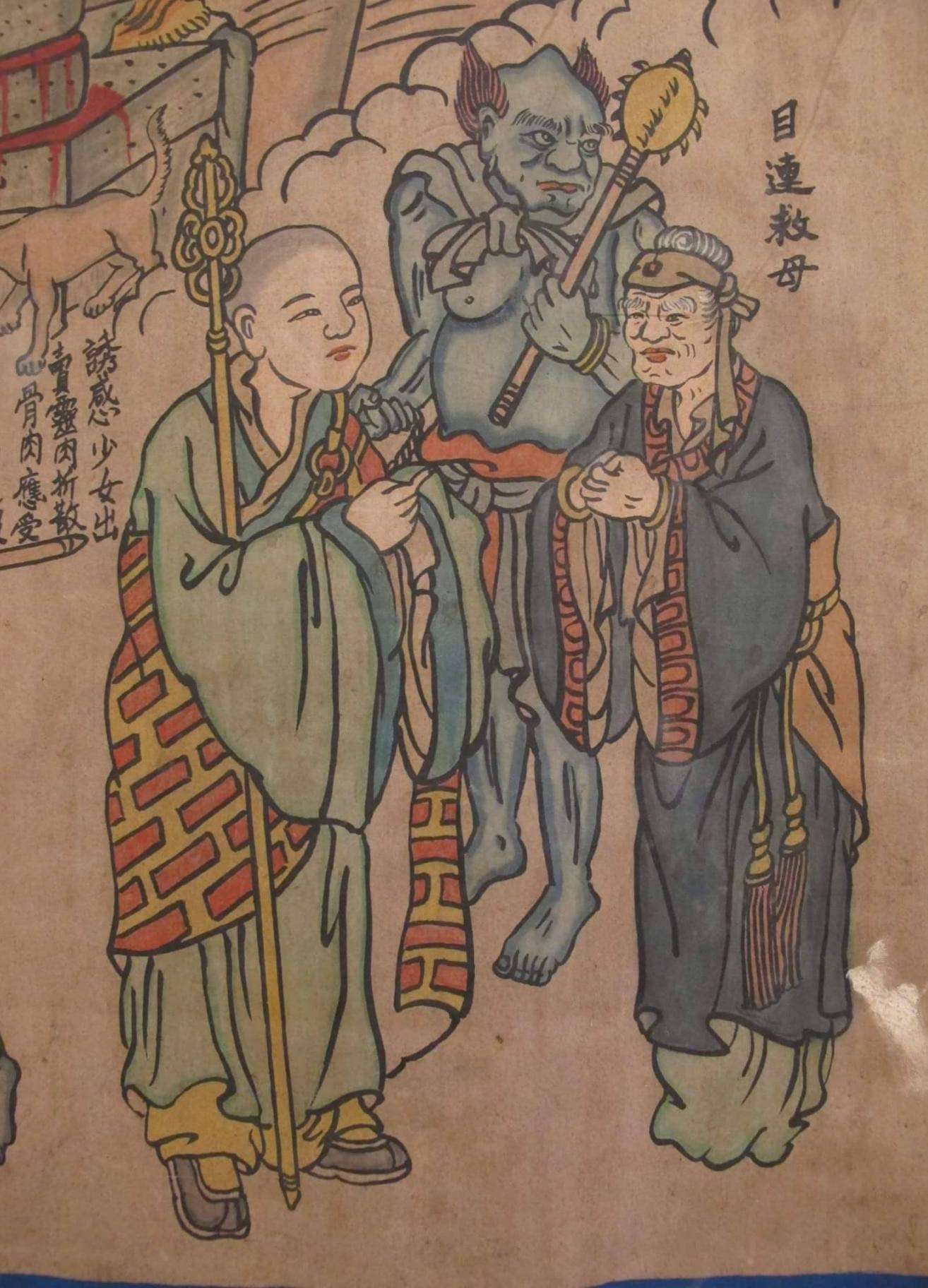
The Monkey Pilgrim’s magic ringed staff and begging bowl were directly influenced by the Buddhist Saint Mulian (目連; Sk: Maudgalyayana), a disciple of the historical Buddha. One particular 9th to 10th-century story notes that the Saint uses the staff to unlock the gates of hell in order to save his mother (fig. 5). This is where Sun Wukong’s weapon from JTTW gets the power to open locks.

Mulian saves his mother, scroll - small

Fig. 5 – A scroll or mural depicting Mulian rescuing his mother from the underworld (larger version). Originally found here.

The ringed and metal staves used by the Monkey Pilgrim are based on those historically carried by Buddhist monks in ancient China. The aforementioned ringed variety, called “tin staves” (xizhang, 錫杖) where used by religious monks and decorated with six to twelve metal rings (see fig. 4). These rings were designed to make a clanging noise to not only scare away animals on the road but also to alert possible donors to the monk’s presence.

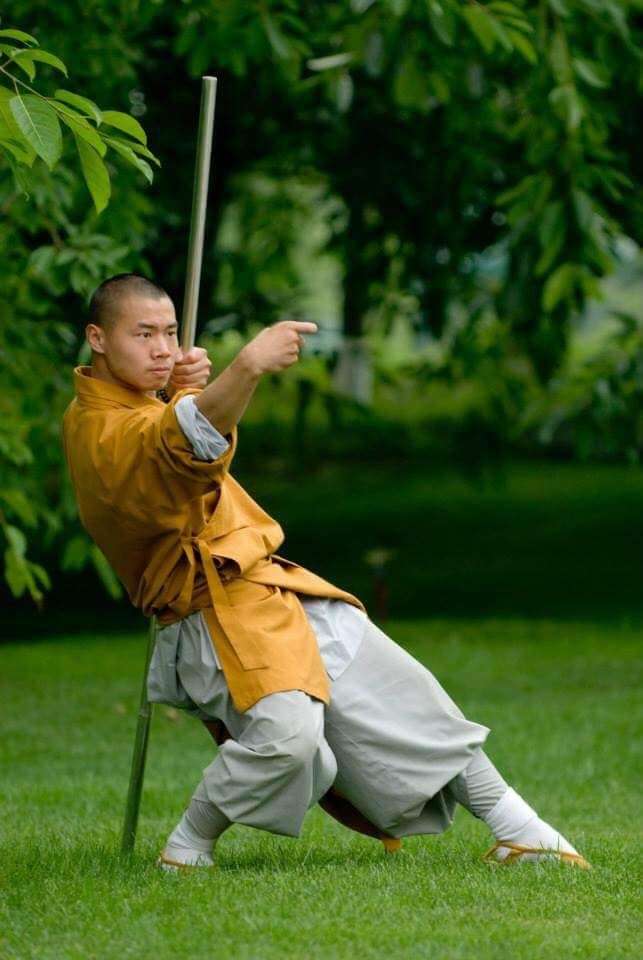
Martial monks charged with protecting monasteries or deployed by the Chinese government against pirates wielded wooden or iron staves (fig. 6). The former were chosen for their diminished capacity for fatal injuries, while the latter were explicitly used for killing during times of war. Sun Wukong wielding the iron variety makes sense as he’s a martial monk charged with protecting Tripitaka from monsters and spirits.

Fig. 6 – A martial monk practicing a drunken staff-fighting form (larger version).

The term “As-you-will” (ruyi, 如意) from Monkey’s staff (mentioned above) is connected with a scepter used in ancient China as a symbol of religious debate and authority and, to a lesser extent, as a weapon. While it can be traced to a Hindo-Buddhist tradition in India, the scepter came to be associated with the highest gods of Daoism thanks to being decorated with a “numinous mushroom” (lingzhi, 靈芝), a real world fungi believed to bestow immortality. This mushroom scepter was at some point associated with the Buddhist Cintamani (Ruyi zhu, 如意珠), or “As-you-will jewel.” This was believed to grant any wish that one might desire. This explains why Monkey’s As-you-will staff grows or shrinks according to his commands. It’s interesting to note that some religious images of the scepter depict it with a syncretic mix of the Daoist mushroom and the Buddhist jewel (fig. 7).

Fig. 7 – An enhanced detail of the Celestial Worthy’s mushroom scepter with a flaming as-you-will jewel (larger version). See here for a fuller version of the deity.

2.3. Influence from Popular Literature

The weapon’s portrayal in JTTW as an iron pillar kept in the dragon kingdom comes from old stories about the immortal Xu Xun (許遜), a historical Daoist master and minor government official from Jiangsu province. Popular tales describe him as a Chinese St. Patrick who traveled southern China ridding the land of flood dragons. One 17th-century version titled “An Iron Tree at Jingyang Palace Drives Away Evil” (Jingyang gong tieshu zhenyao旌陽宮鐵樹鎮妖) describes how he chained the flood dragon patriarch to an iron tree (tieshu, 鐵樹) and submerged it in a well, thus preventing the serpent’s children from leaving their subterranean aquatic realm and causing trouble. Pre-JTTW versions of this tale depict the tree as an actual iron pillar (fig. 8). Chinese Five Elements Theory dictates that metal produces water, and as its creator, holds dominion over it. Therefore, an iron pillar would be the perfect item to ward off creatures entrenched in the aquatic environment.

Fig. 8 – A Ming Dynasty woodblock print depicting the immortal Xu overseeing the creation of the iron pillar in a furnace (right) and it’s placement the well (left). Dated 1444-1445 (larger version).

As previously noted, the staff weighs 17,560 lbs. (7,965 kg). This is likely based on an episode from chapter 27 of the Chinese novel Water Margin (Shuihu zhuan, 水滸傳, c. 1400). It involves the bandit Wu Song lifting a heavy stone block said to weigh 300 to 500 catties (san wu bai jin, 三五百斤; 390-650 lbs./177-295 kg) (fig. 9). This scene and the one from JTTW where Monkey lifts the iron pillar are quite similar. Both involve a hero (Wu Song vs. Sun Wukong) asking someone (Shi En vs. Ao Guang) to show them a heavy object that cannot be moved (stone block vs. iron pillar). Both heroes then adjust their clothing before easily lifting the object with both hands. Most importantly, the Chinese characters for the weight of each object (三五百斤 vs. 一萬三千五百斤) are similar. The only difference is the addition of “10,000” (yiwan, 一萬) and “1,000” (qian, 千), respectively. And given the close historical and cultural ties between the two heroes, I believe the author-compiler of JTTW embellished the Water Margin episode to portray Sun as a hero like no other, a divine immortal that can lift weights far beyond even Wu Song himself.

Fig. 9 – Wu Song lifts the stone block (larger version). Image found here.


3. Updates

Update: 04-23-26

Above, I wrote: “Astral entanglement – Monkey’s soul is able to use the staff in Hell despite the physical weapon being with his sleeping body in the world of the living.”

Sun’s use of said weapon also caught the attention of late-Ming commentators. The authors of The Book to Enlightenment of the Journey to the West (Xiyou Zhengdao Shu西遊證道書, 1663), a Daoist commentary on the novel, asked:

“Did he take this treasure with him in his dream?”

此寶貝夢中亦帶去耶? (Converted from simplified Chinesesource).

Note:

1) Irwen Wong of the Journey to the West Library blog has suggested that the length is likely an error for 12 feet (zhanger, 丈二) since the staff was already near 20 feet when Monkey first acquired it, and he later asked it to shrink to a more manageable size.

The White Ape Perfected Man: Sun Wukong’s Divine Double

Last updated: 03-20-2022

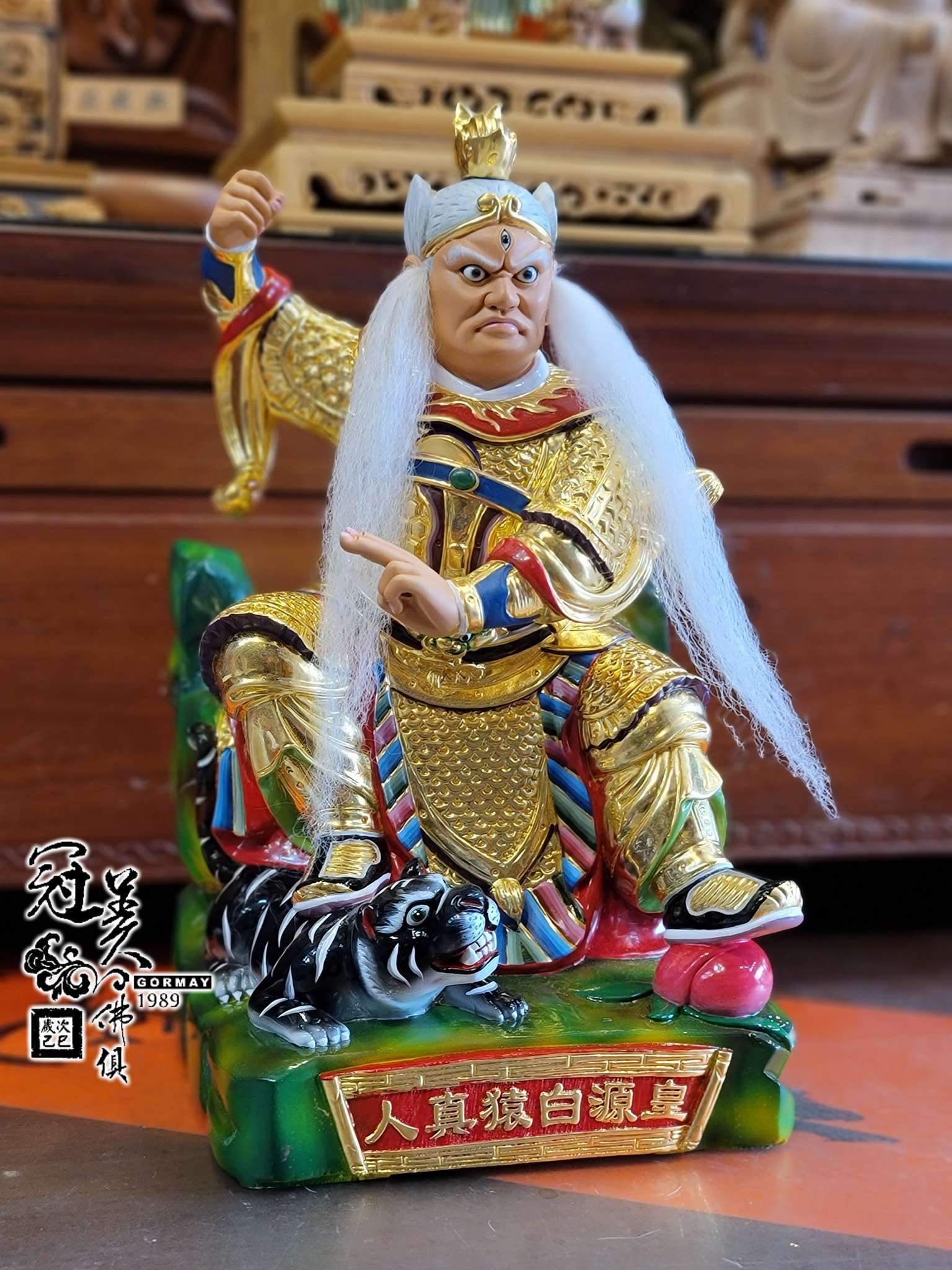
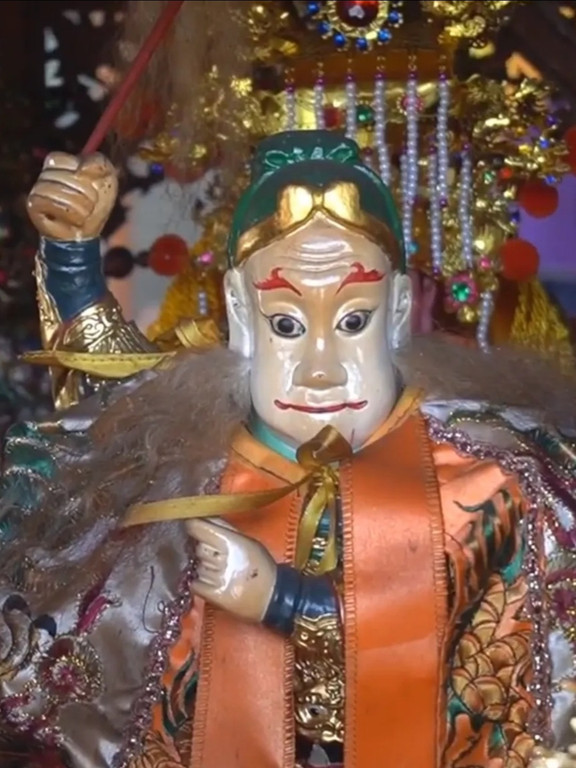
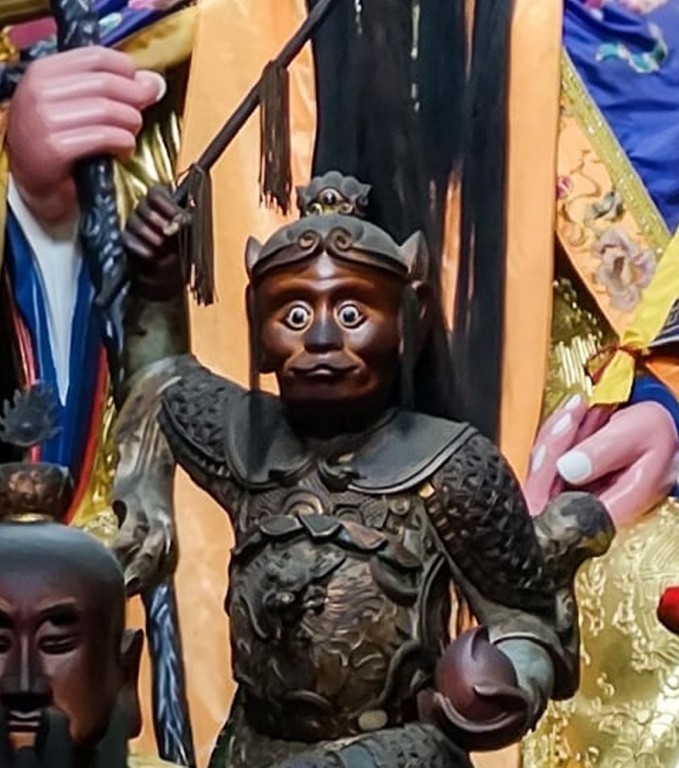
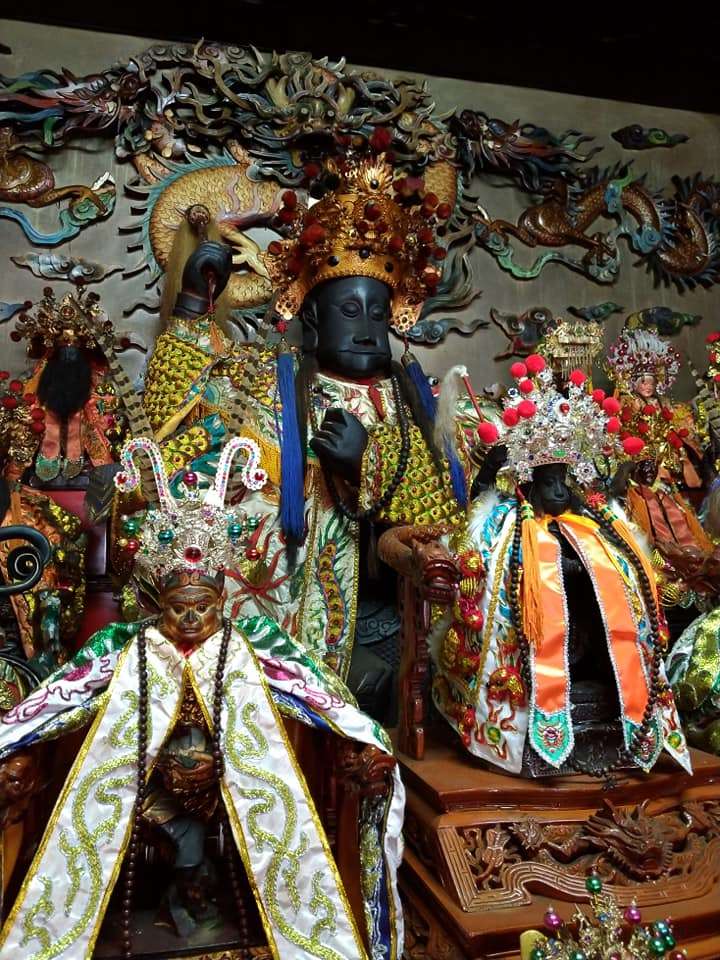
Readers may wonder where I get my inspiration to write articles. Most of the time I seek to answer a question that pops up while reading a book or researching a subject, leading to a subsequent paper on what I learned. Other times, I simply stumble across something online. A prime example of this is the “White Ape Perfected Man” (Baiyuan zhenren, 白猿真人), a rare folk Taoist deity that I recently learned about from Facebook. He is depicted with long hair (sometimes with ear-pressing tufts) and a golden fillet, linking him to Chinese opera depictions of military monks (wuseng, 武僧) (Bonds, 2008, pp. 177-178), thus signaling his position as a martial deity. A headdress with lingzi (翎子) feathers sometimes adorns his crown. His visage ranges from welcoming to fierce and from human to more primate-like. He wears a golden suit of armor and sits in a kingly fashion with the right knee resting on the seat, exposing the bottom of his foot to the viewer. This armor is sometimes draped in a colorful ritual cape. His left arm is usually bent at the elbow and the hand is clenched in a fist (or two-finger shooting mudra) or holds an immortal peach at the chest, while the other is held high and contains a fly whisk or staff. This iconography is shockingly similar to religious depictions of Sun Wukong as the “Great Sage Equaling Heaven” (Qitian dasheng, 齊天大聖). In fact, the two deities are nearly indistinguishable apart from the ape sometimes having white hair and a white face. But this isn’t always a good indicator, though, as one Fujian tradition features a brother of the Monkey King with a white face. And other times, statues of the white ape might be plain wood or even bronze, thereby erasing any signifying color. But the best clue to his identity appears to be the combination of the fist at the chest and a raised foot while in a seated position, what I call the “fist over foot motif” (fig. 1 to 4).

I’ve previously written about magical white apes (gibbons) in relation to Tang-era Chinese literature, primate-based martial arts, and the fictional origin of Sun Wukong. I’ve even archived an entire book on the subject which surveys historical references, poems, folktales, and art spanning over 3,000 years from the Zhou to Qing dynasties. I would like to supplement this material by writing an article about the White Ape Perfected Man and his appearance in vernacular fiction and Taoist scripture. I suggest his iconography was directly influenced by Sun Wukong based on a centuries-long association between the two magic primates in popular literature.

Fig. 1 – One of the first pictures I ever saw of the White Ape Perfected Man (larger version). Photo from Facebook. Fig. 2 – A statue from an unknown temple (larger version). Photo found here. Fig. 3 – One of several statues from the Zhenji Temple of Bade District, Taoyuan, Taiwan (Taoyuan Bade Zhenji gong, 桃園八德鎮濟宮) (larger version). Screenshot from this Facebook video. Fig. 4 – A statue belonging to Jishen Temple of Tainan, Taiwan (Tainan Jishen gong, 台南濟申宮) (larger version). Photo from Facebook.

Table of Contents

1. Religious Story

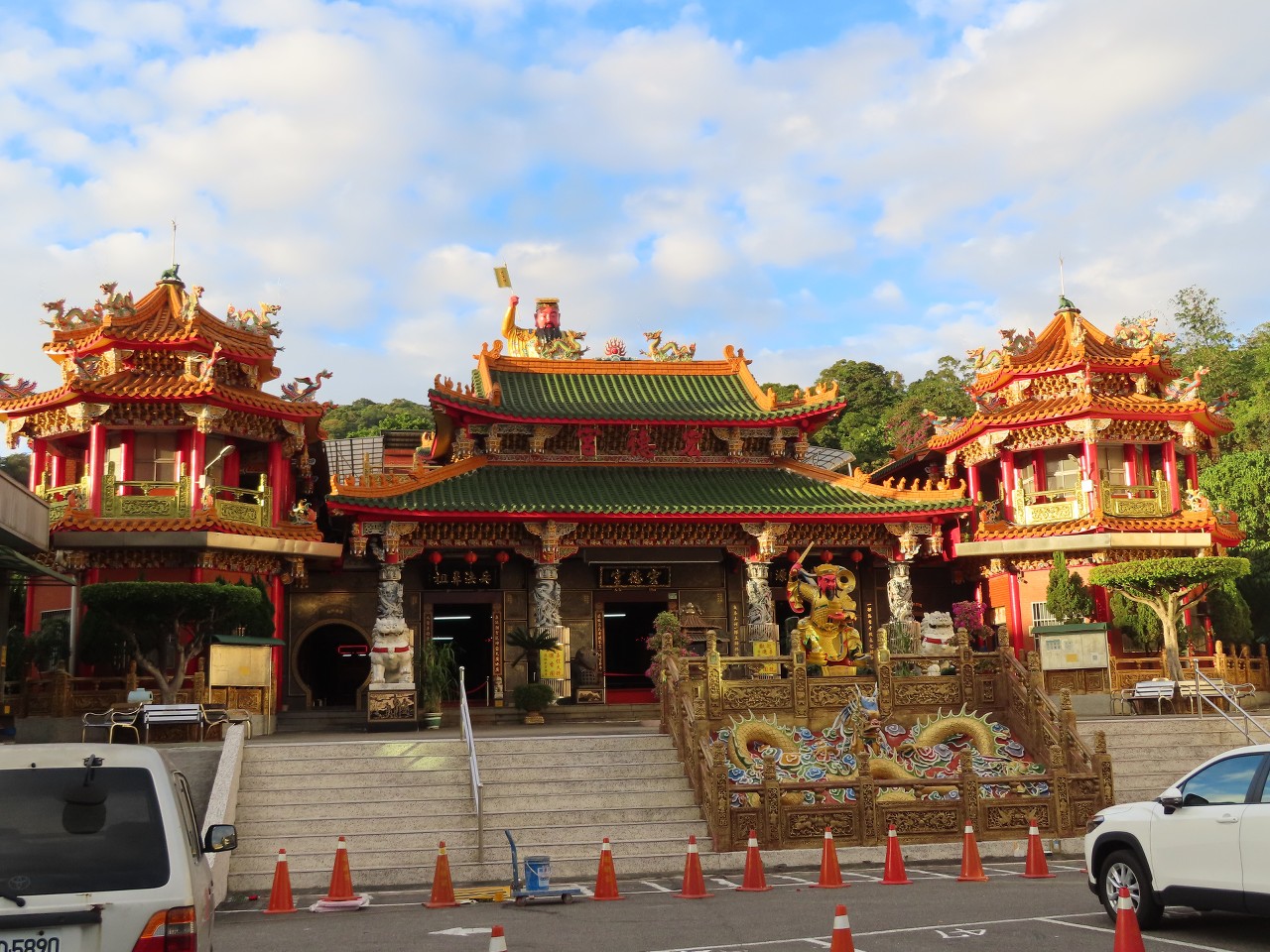
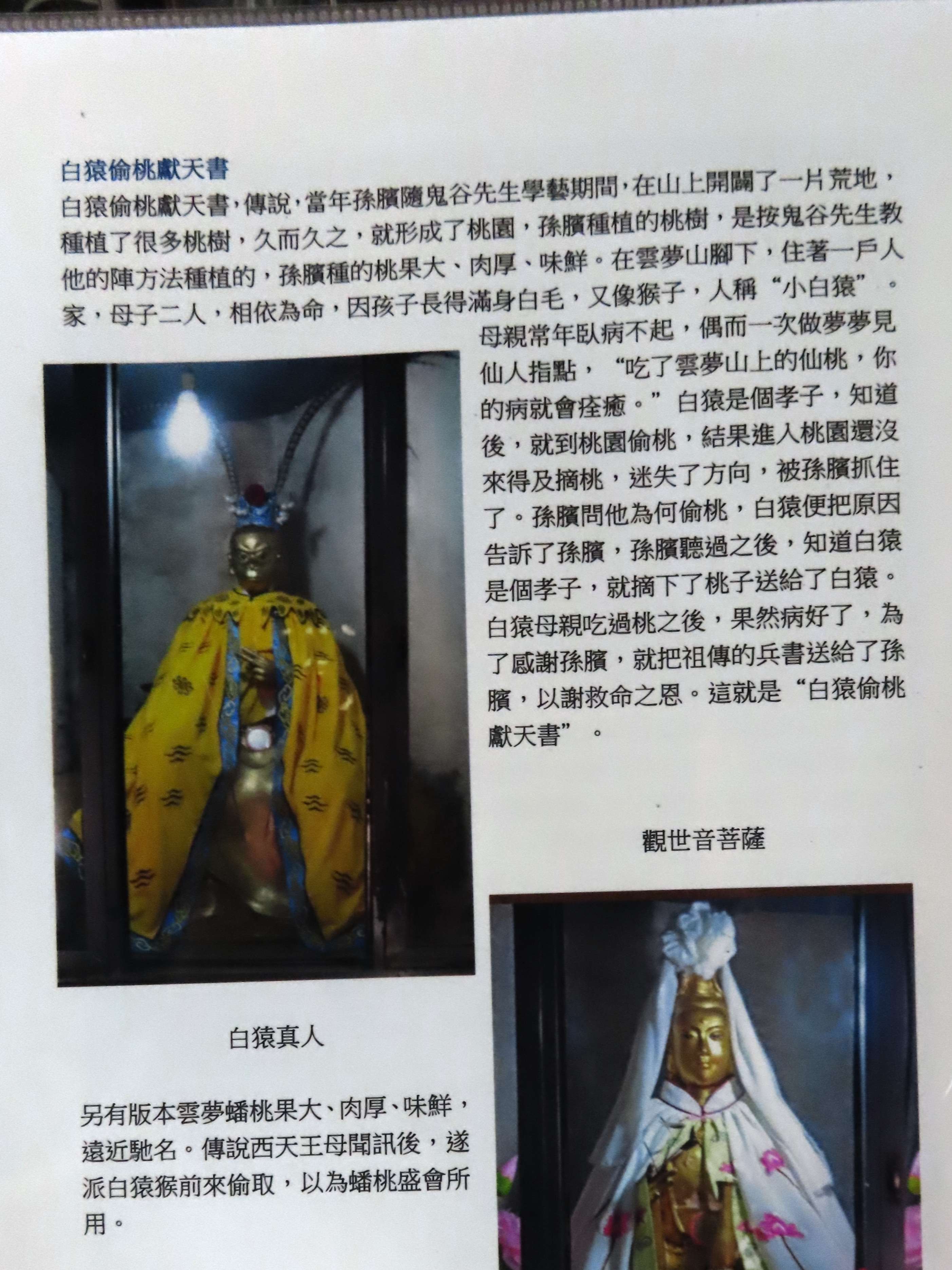
I traveled to the Sun Bin Shrine of Hongde Temple in Yingge District, New Taipei, Taiwan (Yingge Hongde Gong Sun Bin Miao, 鶯歌宏德宮孫臏廟) (fig. 5) to gather material for this article. Unfortunately, the temple’s statue of the White Ape Perfected Man (fig. 6) was out for repairs on the day of my visit. But I collected information about the deity from the temple’s history book (fig. 7). The ape god is associated with Sun Bin (孫臏, d. 316 BCE) (fig. 8), a deified military strategist of the Warring States period, and is revered as a transmitter of divine knowledge. [1] A rough translation of his religious story follows:

“The White Ape Steals a Peach and Offers a Heavenly Book” (Baiyuan toutao xian tianshu, 白猿偷桃獻天書)

According to legend, when Sun Bin was studying military arts under Master Ghost Valley (Guigu xiansheng, 鬼谷先生), he opened a plot of uncultivated land on the side of Yunmeng Mountain (Yunmeng shan, 雲夢山) and grew a peach orchard with big, fleshy, and delicious fruits using his teacher’s method. At the foot of the mountain lived a mother and son who depended on each other. The son looked like a monkey because his body was covered with white hair, and so he was known as the “Little White Ape” (Xiao baiyuan, 小白猿). His mother was constantly sick and occasionally dreamed of a transcendent pointing and saying, “Eat the immortal peaches on Yunmeng Mountain and your illness will be cured”.

The white ape was a filial son, and so he went to steal a peach for his mother but lost his way. Sun caught the boy and asked him why he would steal from the orchard. Once he heard of the ape’s sick mother, he gave him the peach. The mother ate the fruit and recovered. In return, the white ape gave Sun a heavenly book of military strategy (bingshu, 兵書) passed down from his ancestors, saying, “Thank you for your life-saving grace”.

Another version of the story states the Yunmeng peach was so famous for its large size, fleshy fruit, and delicious taste that, upon hearing of it, the Queen Mother of the West sent the white ape to steal it for her Peach Banquet.

This last part is a reversal of Sun Wukong stealing the Queen Mother’s peaches in Journey to the West (Xiyou ji, 西遊記, 1592). [2]

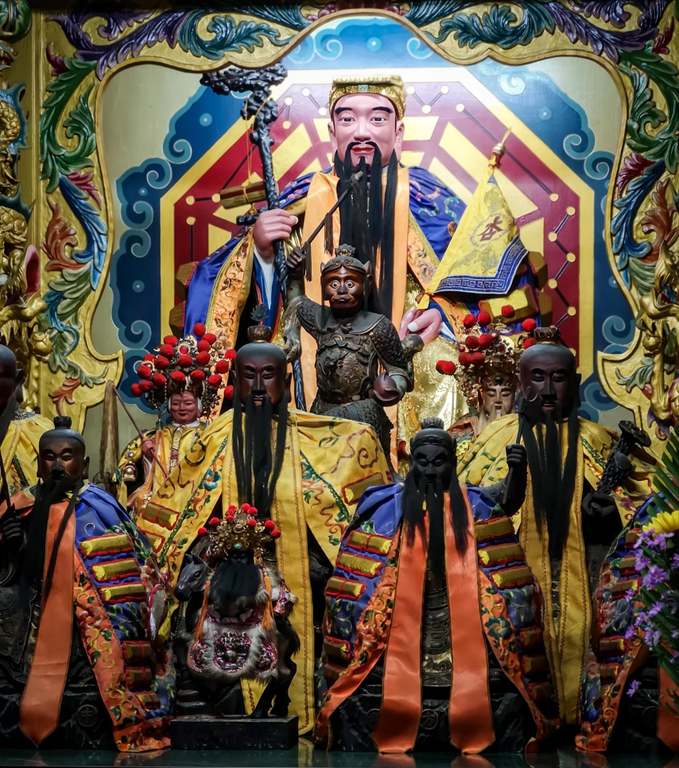
Fig. 5 – The Sun Bin Shrine of Hongde Temple (larger version). Photo by the author. Fig. 6 – A detail of the temple’s White Ape Perfected Man’s statue (larger version). See fig. 8 for a full version. Fig. 7 – A page from the temple’s history book (larger version). Note the bronze statue of the White Ape, including the lingzi headdress. Photo by the author. Fig. 8 – The central statue of Sun Bin (larger version). Note the position of the white ape in front of Sun. Photo from Facebook.

Astute readers will notice that the tale does not touch on the white ape’s religious title, the “Perfected Man” (Zhenren, 真人). Perfected individuals rank among the highest transcendents of the celestial hierarchy and even rule over lower immortals residing in various earthly paradises (Miura, 2008). This contrasts with the meager, filial son presented in the story. It also contrasts with the white ape’s iconography as an armor-clad martial deity. Perfected individuals are usually portrayed as lofty immortals wearing robes decorated with Daoist symbols (Stevens & Welch, 1998, for example).

I reached out to the Zhenji Temple of Bade District, Taoyuan, Taiwan (Taoyuan Bade Zhenji gong, 桃園八德鎮齊宮), where the White Ape Perfected Man is worshiped as the main deity (zhu shen, 主神) (fig. 9), to make sense of these disparate strands. However, they did not get back to me by the time this article was ready for publication. I’ll make an update when new information becomes available. But until then, I suggest his martial iconography was directly influenced by depictions of the Great Sage Equaling Heaven, whose cult is far more prevalent in Taiwan. This proposed connection to Sun Wukong becomes even more evident when the information below is taken into account.

Fig. 9 – Zhenji Temple’s main White Ape Perfected Man statue (center background) surrounded by various smaller figures (larger version). The statue in the left foreground looks very similar to the Great Sage apart from the fist over foot motif. Image from Facebook.  

2. Vernacular Fiction

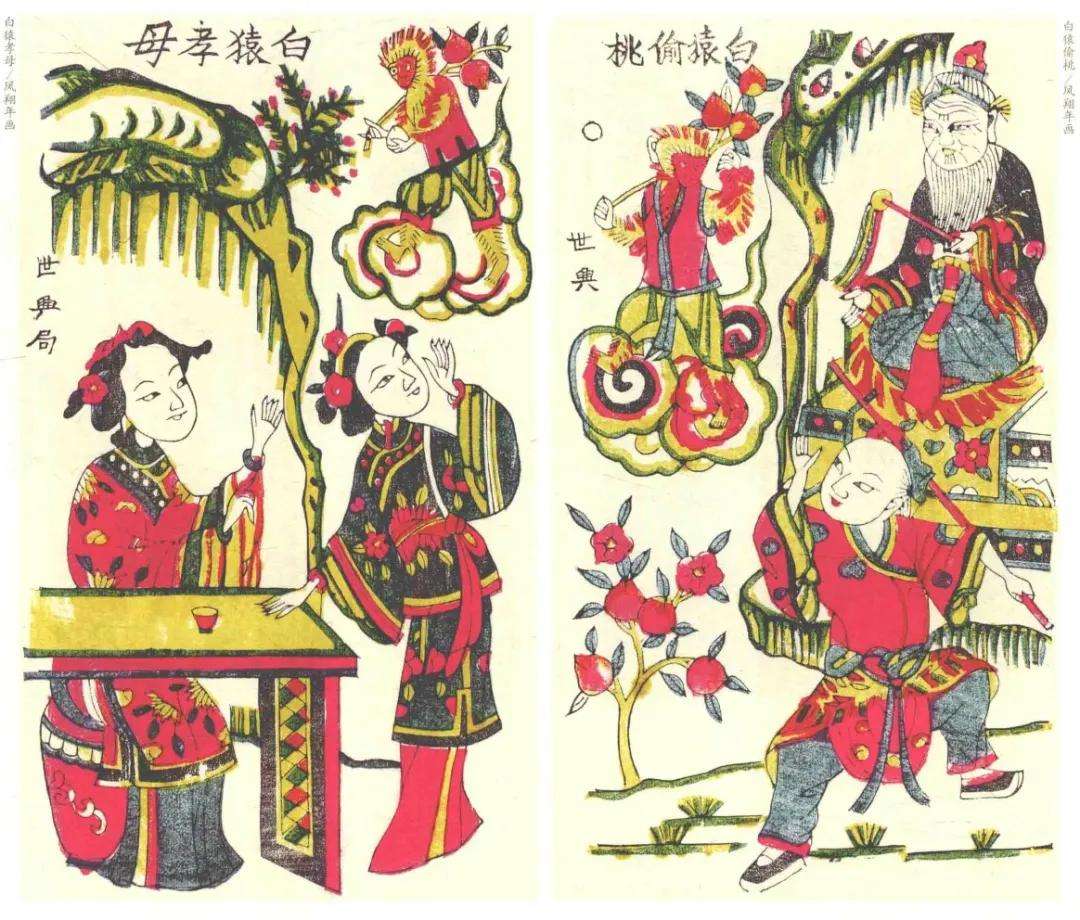
The White Ape Perfected Man’s religious story can be traced directly to The Battle of Wits between Sun and Pang (Sun Pang douzhi yanyi, 孫龐鬥智演義, 1636; a.k.a. The Former and Latter Annals of the Seven Kingdoms, Qianhou qiguo zhi, 前後七國志), which tells of the great struggle between Sun Bin and his former friend and classmate Pang Juan (龐涓). The two study supernatural military arts under the Immortal Master Ghost Valley (Guigu xianshi, 鬼谷仙師) in his “Water Curtain Cave” (Shuilian dong, 水簾洞) before their fates take separate paths and they become bitter enemies. Chapter four sees the teacher appoint Sun as guardian of an immortal peach tree on the backside of Yunmeng Mountain. But the young disciple is surprised to discover a talking white ape stealing peaches night after night. When asked how it can speak, the primate reveals his aristocratic family has been soaking up immortal qi energy for three generations northwest of the Master’s cave. His ancestor is the Marquis of Baxi (Baxi hou, 巴西侯), [3] his father the Duke Macaque (Ju gong, 狙公), [4] and his mother the Princess Mountain Blossom (Shanhua gongzhu, 山花公主). [5] When asked why he’s stealing peaches (fig. 10), the white ape reveals he’s trying to cure his mother of an illness and that she will die unless the treatment is completed. Taking pity on the filial primate, Sun picks the last peach needed and gives it to the white ape, telling him never to return to the orchard. The grateful son repays the favor by stealing three scrolls of heavenly books (tianshu, 天書) from Master Ghost Valley’s secret hiding place to give to his mother’s savior.

But Sun Bin mistakenly incurs the wrath of heaven not only because he acquires the books before he’s fated to but also because he fails to ritually cleanse himself before reading them. Master Ghost Valley is forced to intervene on his student’s behalf by teaching Sun how to hide from heavenly punishment (da zainan, 大災難, lit: “great tribulation”) by meditating in a cave for 49 days (Wumen xiaoke & Yanshui sanren, 1636).

This novel shares many elements with Journey to the West. Both include:

  1. Characters surnamed Sun (孫) (Sun Bin VS Sun Wukong) living in a “Water Curtain Cave”. [6]
  2. Sun characters studying under an immortal master (Master Ghost Valley VS Master Subodhi). [7]
  3. Sun characters being directed to guard trees laden with immortal peaches (one tree on earth VS an entire grove in heaven).
  4. Supernatural primates stealing the magic peaches for consumption (the white ape VS the Monkey King). [8]
  5. Sun characters defying their fate and incurring the wrath of heaven, thereby learning from their masters how to hide from punishment (Sun Bin Vs. Sun Wukong). [9]

Fig. 10 – A lovely New Years print depicting scenes from the story, including the “White Ape steals peaches” (right) and the “White Ape is filial to mother” (left) (larger version). The right print includes Master Ghost Valley and a young Sun Bin. Print found here.

It’s important to note that there is also some overlap between The Battle of Wits and Journey to the South (Nanyouji, 南遊記, 1570s-1580s). I quote from my previous article:

[The rogue immortal Huaguang (華光)] works to end his mother’s demonic lust for flesh by procuring an immortal peach in chapter 17. He does this by transforming into Sun Wukong and stealing the magic fruit from heaven. The real Monkey King is subsequently accused of his double’s misdeeds, much like the Six-Eared Macaque episode of the original novel. The Jade Emperor threatens to remand him to the Buddha for punishment but is convinced to give Sun a month-long reprieve to find the true culprit.

So we have two magical primate characters (the white ape VS Huaguang-as-Sun Wukong) that steal immortal peaches to help cure their mothers. This association with the rogue immortal might then explain why the statue of the White Ape Perfected Man from figure one has a third eye. Huaguang’s various incarnations are described as having three eyes in Journey to the South (for example) (Yu, n.d.).

Therefore, it seems that these later novels borrowed from Journey to the West, as well as each other. But I will show the theme of a primate stealing fruit actually predates the standard Ming edition of Journey to the West by hundreds of years, suggesting it too borrowed from an earlier source.

3. Taoist Literature

The story of Sun Bin and the white ape actually prefaces the first scroll of the Scripture of the Most High Luminous Mirror of the Six Ren Tallying with Yin (Taishang liuren mingjian fuyin jing, 太上六壬明鑑符陰經) (a.k.a., the Ape Book, Yuanshu, 猿書), [10] a Northern Song-era work related to the Taoist doctrine of the Three Sovereigns (Steavu, 2019, p. 195). Instead of peaches, the tale just says “fruit” (guo, 菓). But I imagine the produce is something special like immortal peaches as Sun guards them with a weapon. A rough translation follows (I have skipped over some of the more esoteric parts that escape me):

[Master Ghost Valley] saw the fruit had ripened, so he commanded Sun to watch over it. One night a person jumped the wall into the nine gardens and took some of the fruit. But Sun was hiding with a sword and caught the culprit, a white ape. The primate said: “Don’t hurt my body. I share the same age as heaven and earth and have lived as long as the sun and moon. I have mysterious texts (xuanwen, 玄文). Wait for me the next day and I will give them to you”. The white ape then transformed into white light and left. Sun waited the following day. Suddenly, he saw the white ape fly from the northwest. He was given one scroll of mysterious texts. The primate again transformed into white light and headed towards the southeast. Sun then returned to his room to inspect the text. He didn’t know the name but saw that it was divided into three volumes: initial (shang, 上), middle (zhong, 中) and final (xia, 下). He named it after the white ape (Taishang liuren, n.d.).

The story of a magic monkey stealing peaches was already present in the Journey to the West story cycle by the 13th century, for the “Monkey Pilgrim” (Hou xingzhe, 猴行者), Sun Wukong’s predecessor, admits to raiding the Queen Mother’s orchard when he was still a young immortal (Wivell, 1994, p. 1195). But the preceding Daoist scripture indicates the motif is even older. [11] In addition, the scripture shows the idea of a character surnamed Sun (Sun Bin) guarding special fruit predates the motif in the standard Ming edition of Journey to the West. It’s not a stretch then to suggest the Most High Luminous Mirror (or related media) influenced the 13th and later 16th-century versions of the story. Therefore, it’s possible the tales of Sun Bin, the white ape, and Sun Wukong have been borrowing from each other for hundreds of years.

This centuries-long association between the magical primates in literature then strengthens my suggestion that the White Ape Perfected Man’s iconography was directly influenced by that of Sun Wukong. Drawing upon a well of preexisting cultural beliefs and imagery likely helped the cult of this relatively recent deity establish itself faster, allowing him to take his place in a rapidly evolving religious landscape where ever newer gods are constantly added to the ranks of their older brethren.

4. Conclusion

The White Ape Perfected Man is a rare folk Taoist deity associated with revealing heavenly scriptures to the Warring States military strategist Sun Bin (4th cent.). His statues depict him as a seated, armor-clad primate with a “fist over foot” motif and the long hair and golden fillet of military monks from Chinese opera. This martial iconography conflicts with the deity’s title, “Perfected Man”, a high-ranking immortal usually depicted wearing robes. It also conflicts with his own religious story, which presents him as a meager, filial son who steals immortal peaches to cure his sick mother. I suggested above that his religious imagery was directly influenced by depictions of Sun Wukong as the Great Sage Equaling Heaven. Beyond shockingly similar iconography, both primate deities have a long association in Chinese popular literature. The white ape appears in The Battle of Wits Between Sun and Pang (1636), which shares many similarities with Journey to the West (1592). These include characters surnamed Sun (孫) (Sun Bin VS Sun Wukong) living in a Water Curtain Cave, studying under immortal masters (Ghost Valley VS Subodhi), guarding immortal peaches, and hiding from heavenly punishment. It also includes supernatural primates (the white ape VS the Monkey King) stealing the life-prolonging fruit for consumption. The number of similarities suggests The Battle of Wits borrowed from Journey to the West. The theft of immortal peaches is already present in a 13th-century version of Journey to the West, but this is preceded by a tale appearing in a work from Taoist canon, the Scripture of the Most High Luminous Mirror of the Six Ren Tallying with Yin. It describes the white ape stealing fruit from a garden protected by Sun Bin. It’s possible the Monkey King’s early story cycle was influenced by this scripture (or related media), suggesting the stories of Sun Wukong, Sun Bin, and the white ape have been borrowing from each other for hundreds of years. This centuries-long connection lends support to the martial iconography of Sun Wukong influencing the religious imagery of the White Ape Perfected Man.


5. Updates

Update: 12-11-21

Palmer and Siegler (2017) quote a certain Master Hu, a monk of Mt. Hua in Shaanxi province, China, who claims that the White Ape taught him a system of primate-based martial arts:

I learned [White Ape Through the Back Boxing] spontaneously; it was transmitted to me by the White [Ape] Immortal (Baiyuan zhenren). When I start, he comes down into me, and I do the forms spontaneously. In the future, perhaps I will arrange it into a method in stages that can be taught to others. The White [Ape] Immortal first transmitted the method to humans in the spring and autumn period (770–476 BC), but owing to the poor moral quality of the inheritors of the method, it was lost. Now, it has been transmitted directly to me by the Immortal (pp. 120-121).

Also, Master Ghost Valley’s association with the Water Curtain Cave goes back to at least the Northern Song as his Numinous Writ of the Essence of Heaven (Guigu zi tiansui lingwen, 鬼谷子天隨靈文) lists him as the “Master of the Waterfall Cave” (Shuilian dong zhu, 水濂洞主) (Andersen, 2019). In this case, the source uses a different lian (濂) in place of the lian (簾) associated with the caves of the Master (and Sun Bin) in The Battle of Wits between Sun and Pang (1636) and Sun Wukong in Journey to the West (1592). But they both mean the same thing: a waterfall hiding a cave mouth. This might suggest, apart from the guarding and theft of immortal peaches, other elements from Sun Bin’s story cycle were borrowed by that of the Monkey King.


Update: 12-12-21

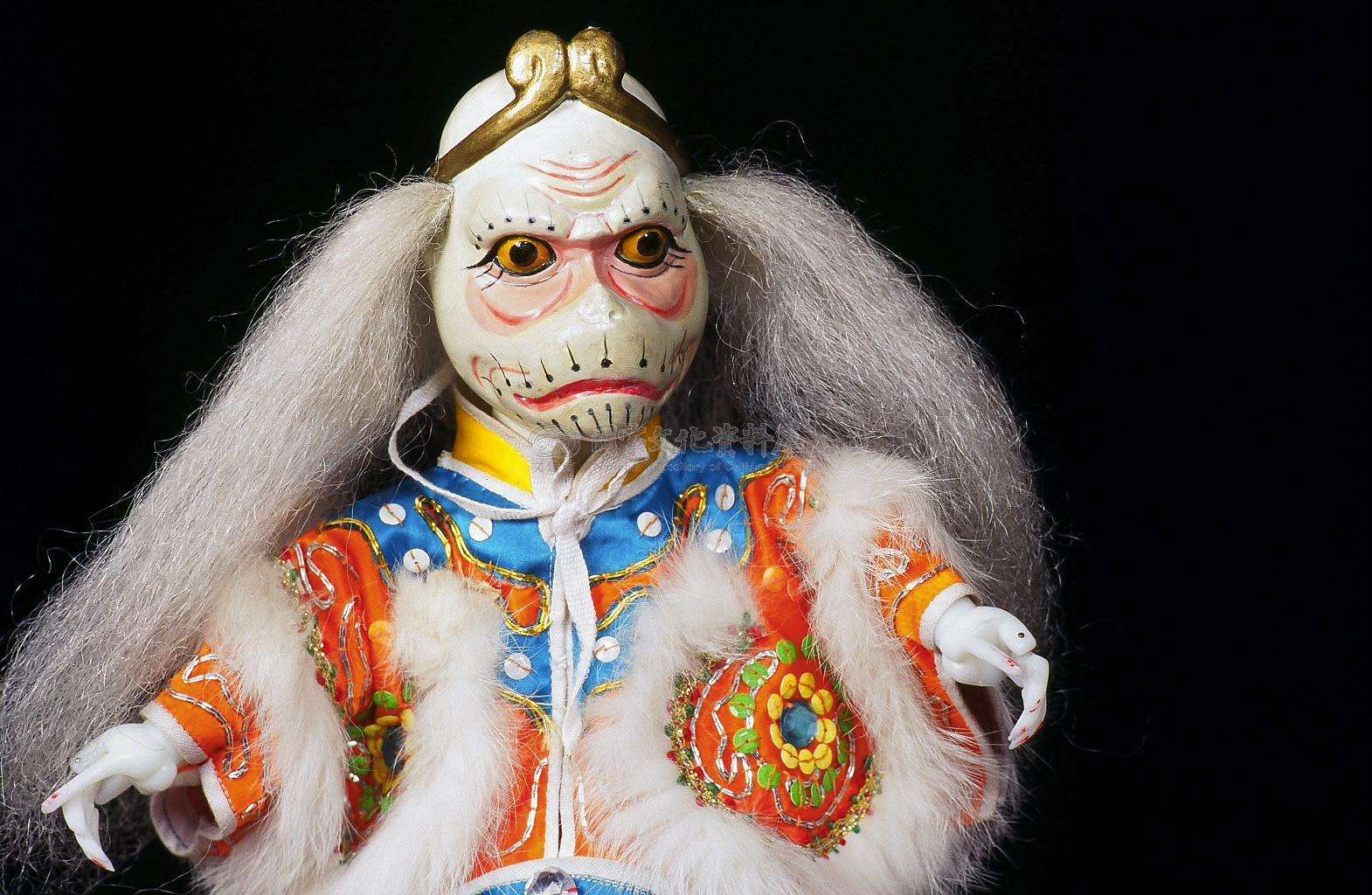
I mentioned in the introduction white face and hair are not always the best indicators that a figure is the White Ape Perfected Man. Take, for example, some depictions of Sun Wukong in glove puppetry (fig. 11).

Fig. 11 – A Taiwanese glove puppet of the Monkey King (larger version). Photo found here.


Update: 03-20-22

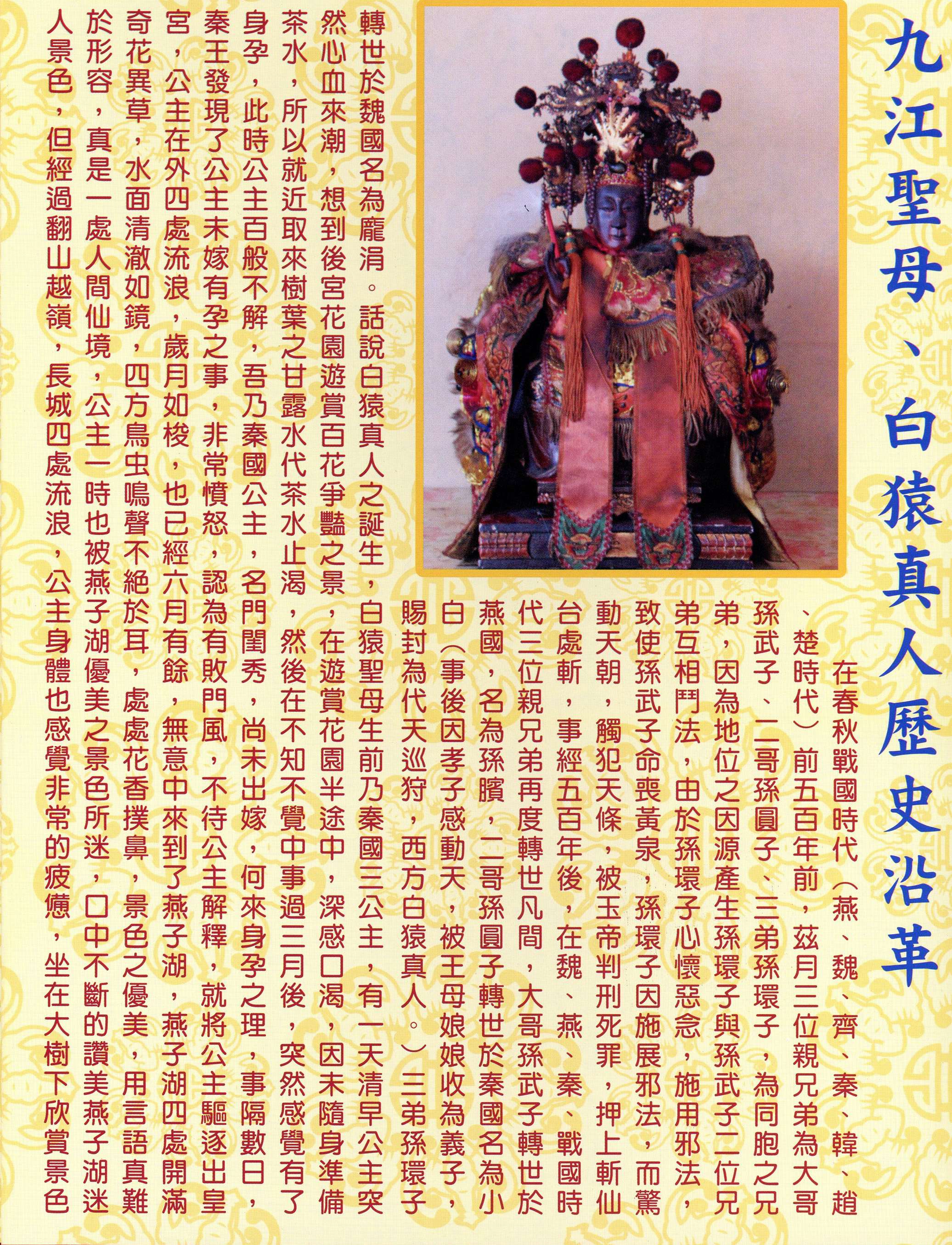
Yesterday I visited the aforementioned Zhenji Temple of Bade District, Taoyuan, Taiwan (Taoyuan Bade Zhenji gong, 桃園八德鎮齊宮), where the White Ape Perfected Man is venerated. I learned a few things. One, his religious birthday is celebrated on the 27th day of the 5th lunar month (June 25th, 2022), often written as 五月廿七日. Two, his mother, the “Holy Mother of Nine Rivers” (Jiujiang shengmu, 九江聖母), is also worshiped at the temple (her birthday is the 15th day of the 1st lunar month). A temple booklet provided to me tells her story (fig. 12 & 13). I paraphrase the tale below:

Five hundred years before the Spring and Autumn and Warring States Periods, there were three godly brothers named Sun Wuzi (孫武子), Sun Yuanzi (孫圓子), and Sun Huanzi (孫環子). The eldest brother Wuzi and the youngest Huanzi fought for status. But because the latter killed the former with evil magic, Sun Huanzi was sentenced by the Jade Emperor to die on the “Immortal-Beheading Platform” (Zhanxian tai, 斬仙台). The brothers were reborn in the mortal realm five hundred years later during the Warring States period. Sun Wuzi was reborn as Sun Bin in the Yan state, Sun Yuanzi was reborn as (the white ape) Xiaobai (小白) in the Qin state, and Sun Huanzi was reborn as Pang Juan in the Wei State.

The mother of the white ape was the third princess of the Qin state. One day, she became thirsty while touring the imperial garden. But in the absence of tea, she sated her thirst with sweet dew from tree leaves. Three months later, the princess discovered to her surprise that she, an unwed woman, was pregnant. When her father the king learned of this news, he expelled her from the palace. Sometime later, she came by accident to Swallow Lake (Yanzi hu, 燕子湖), a pure, mirror-like body of water surrounded by exotic, fragrant flowers and singing birds and insects. After wandering around this indescribable paradise for sometime, the princess became tired and went to sleep. She dreamed of a golden swallow that told her the child she was carrying was a god reincarnated on earth. It also asked the princess to practice spiritual cultivation beside the lake, promising her that she would one day became an immortal. She realized it was just a dream when she woke up, but she followed through with her training.

Ten days later she gave birth to her son, who was not quite human or demon. His entire body was covered with white hair just like a white ape. The local people claimed that he was a monster, but despite her anger, she raised him patiently. When he was three years old, heaven bestowed on him three divine treasures: an As-You-Will Vajra Staff (Ruyi jingang bang, 如意金剛棒), a golden headband spell (jinquan zhou, 金圈咒), and the steed Red Hare (Chitu ma, 赤兔馬). When the white ape was eight years old, a demon came to threaten the villagers around Swallow Lake. The white ape fought the monster and won, leading the people to believe he was a great celestial immortal (Dalou tianxian, 大羅天仙) come to save the world.

When the white ape was sixteen, his mother’s holy spirit left her body, and the evil Sage Sea Tide (Haichao shengren, 海潮聖人) cast his heavenly treasure around it, thus making her body sick. The Patriarch Reaching Heaven (Tongtian jiaozhu, 通天教主) then appeared to tell the white ape that the only way to cure his mother was to feed her one of the Queen Mother‘s (Wangmu niangniang, 王母娘娘) immortal peaches. After many hardships, he succeeded in his quest and cured her. Upon her recovery, she practiced diligently and eventually achieved immortality.

One day, the immortal princess did divination on her fingers and found that, despite their practice, four other woman around Swallow Lake had yet to achieve the elixir. So, she took them as her servants and continued to guide their practice. After this, she subdued seventeen phoenixes that were the same class of evil spirits as the phoenixes and serpents below the Queen Mother’s gate. Following this, she subdued thirty-six demon dragons as her subordinate generals.

At this time, the god of fire (huoshen, 火神) spread flames everywhere, plunging the world into chaos. The fires killed the surrounding vegetation and created a drought. The immortal princess felt sorry for the people, so she used her powers to defeat the fire god in a great battle. She then transformed nine dragons into nine rivers for the people to drink and to revive the plants and trees. The people were finally able to live in peace. From this point on, they worshiped her as the Holy Mother of Nine Rivers. A temple dedicated to her was built around Swallow Lake in Guangling County, Shanxi Province, China, which is now a first-class protected historic site by the CCP.

Fig. 12 – The first page of the Holy Mother of Nine River’s story (larger version). Fig. 13 – The second page (larger version).

It appears that portions of this story were taken from the Qing-era novel Spring and Autumn of Stabbing Swords (Fengjian chunqiu, 鋒劍春秋). The godly Sun brothers, the evil Sage Sea Tide, and even the white ape appear therein.

I’d also like to highlight that the white ape’s staff and headband are modeled on that of Sun Wukong, strengthening my suggestion that the former’s iconography was based on the latter.

Notes:

1) The idea of a white ape sharing heavenly knowledge goes back centuries. For example, one 4th-century source reveals Zhou Qun (周羣/群, 3rd-cent.) learned the art of divination from a book of bamboo slips given to him by a gibbon-turned-old man in the Min Mountains (Gulik, 1967, p. 50).

2) Sun is appointed the guardian of the immortal peach groves in chapter four. He starts eating the life-prolonging fruit early in his tenure, and his theft is eventually discovered by attendants of the Queen Mother of the West (Wu & Yu, 2012, pp. 160 and 162-163).

3) The Marquis of Baxi (Baxi hou, 巴西侯) is an ape spirit appearing in a story from the Song-era Extensive Records of the Taiping Era (Taiping guangji, 太平廣記, 978). A retired official from Sichuan is invited to an eerie, drunken party by the Marquis, only to wake up the next morning to find his host was a gibbon and all of the other guests were also animal spirits (Gulik, 1967, pp. 67 and 68-69).

4) The only Duke Macaque (Ju gong, 狙公) that I’m aware of is a human keeper of monkeys from a parable on freedom appearing in The Collected Works of Bowen (Chengyi Bowen ji, 诚意伯文集, 14th cent.). I’m not sure if the novel is claiming the ape has a human father, or if it’s just a vague reference to a character from Chinese literature with a connection to primates.

5) I can’t find any information on this character. But given the ancestor and father, I’m sure the mother is associated with apes or monkeys in some way.

6) Wukong becomes king of the monkeys in chapter one by discovering a cave, the Water Curtain Cave (Shuilian dong水簾洞), behind a waterfall. His people soon after take residence inside (Wu & Yu, 2012, pp. 104-106).

7) See my article on Master Subodhi’s curriculum.

8) See note #2.

9) Monkey learns the 72 transformations in order to escape heavenly punishments of lightning, fire, and wind sent to kill him for defying his fate by attaining immortality.

10) Steavu (2019) calls it the “Monkey book” (p. 195), but a gibbon is an ape, so I have adjusted the translation accordingly.

11) I suggest in this article that the supernatural ape stealing peaches motif could be a mixture of a Sinicized version of the Great Monkey jataka tale, in which the Buddha’s reincarnation as a monkey king leads his people to raid an imperial fruit garden, and the theft of immortal peaches by the planet Jupiter (Sui, 歲), who is subsequently exiled to reincarnate as the Han-era jester Dongfang Shuo (東方朔).

Sources:

Andersen, P. (2019). Guigu zi tiansui lingwen 鬼谷子天隨靈文. In K. Schipper and F. Verellen (Eds.), The Taoist Canon: A Historical Companion to the Daozang (p. 1239). Chicago: University of Chicago Press.

Bonds, A. B. (2008). Beijing Opera Costumes: The Visual Communication of Character and Culture. Honolulu: University of Hawai’i Press.

Gulik, R. H. (1967). The Gibbon in China: An Essay in Chinese Animal Lore. Leiden: E.J. Brill.

Miura, K. (2008). Zhenren. In F. Pregadio (Ed.), The Encyclopedia of Taoism: Vol. 1 & 2 (pp. 1265-1266). Longdon: Routledge.

Palmer, D. A., & Siegler, E. (2017). Dream Trippers: Global Daoism and the Predicament of Modern Spirituality. Chicago: The University of Chicago Press.

Steavu, D. (2019). The Writ of the Three Sovereigns: From Local Lore to Institutional Daoism. Hong Kong: The Chinese University of Hong Kong.

Stevens, K., & Welch, J. (1998). XU, The Daoist Perfected Lord Xu Zhenjun 許真君 The Protective Deity of Jiangxi Province. Journal of the Hong Kong Branch of the Royal Asiatic Society, 3, 137-146. http://www.jstor.org/stable/23889813

Taishang liuren mingjian fuyin jing juan yi (n.d.). [Book of the Most High Luminous Mirror of the Six Ren Tallying with Yin: First Scroll]. Retrieved from https://ctext.org/wiki.pl?if=gb&chapter=465883#p3

Wivell, C.S. (1994). The Story of How the Monk Tripitaka of the Great Country of T’ang Brought Back the Sūtras. In V. Mair (Ed.), The Columbia Anthology of Traditional Chinese Literature (pp. 1181-1207). New York: Columbia University Press.

Wumen xiaoke, & Yanshui sanren (1636). Qianhou qiguo zhi [Annals of the Seven Kingdoms]. Retrieved from https://ctext.org/wiki.pl?if=gb&chapter=736295#p89

Wu, C., & Yu, A. C. (2012). The Journey to the West (Vol. 1). Chicago, Illinois: University of Chicago Press.

Yu, X. (n.d.). Nanyouji: Huaguang sanxia Fengdu [Journey to the South: Huaguang goes to the Underworld Three Times]. Retrieved from https://ctext.org/wiki.pl?if=gb&chapter=506975&remap=gb#%E5%8D%8E%E5%85%89%E4%B8%89%E4%B8%8B%E9%85%86%E9%83%BD

The Possible Origin of Wanfu Temple’s Multiple Great Sages

Last updated: 03-22-2026

The Wanfu Temple (Wanfu an, 萬福庵) of Tainan, Taiwan worships Sun Wukong in his guise as the Great Sage Equaling Heaven (Qitian dasheng, 齊天大聖). Most surprisingly, they recognize more than one Great Sage, each with his own function. These include a trinity, three in administrative positions, and an army of dozens of other Monkeys. In this article, I would like to explore the possible origins of this multifaceted pantheon.

Table of Contents

1. Possible Origins

1.1. The JTTW Zaju

The idea of multiple Great Sages goes back centuries to a Yuan-Ming zaju play by Yang Jingxian (杨景賢) titled Journey to the West (Xiyouji, 西遊記, “JTTW zaju” hereafter), which predates the similarly named novel (“JTTW” hereafter) by two hundred years. Scene nine sees Monkey introduce himself, his past misdeeds, and his family. He claims to be one of several siblings:

This small sage has five brothers and sisters: My elder sister is the “Venerable Mother of Mount Li” (Lishan Laomu, 驪山老母), my second sister is the “Holy Mother Wuzhiqi” (Wuzhiqi Shengmu, 巫支祇聖母), my older brother is the “Great Sage Equaling Heaven” (Qitian Dasheng, 齊天大聖), I myself am the “Great Sage Reaching Heaven” (Tongtian Dasheng, 通天大聖), and my younger brother is the “Third Son Shuashua” (Shuashua Sanlang, 耍耍三郎) (based on Dudbridge, 1970, p. 110). [1]

小聖弟兄、姊妹五人,大姊驪山老母,二妹巫枝祗聖母,大兄齊天大聖,小聖通天大聖,三弟耍耍三郎。

Astute readers will notice a discrepancy with the novel. Sun Wukong is referred to here as the Great Sage Reaching Heaven, while an older brother is known as the Great Sage Equaling Heaven. Sun (2018) suggests that the older brother is the result of confusing similar titles given to Monkey during the long history of the story cycle (pp. 44-45). It’s interesting to note, however, that the female siblings have their own history. The Venerable Mother of Mount Li (驪/黎山) was historically worshiped as a deity from at least the Song Dynasty (960–1279), and myths often associate her with the creation/flood-conquering goddess Nuwa (女媧) (Theobald, 2010; Yang & An, 2005, pp. 222-223). Wuzhiqi (also written 無支祁) is a monkey-like flood demon appearing in stories as far back as the Tang Dynasty (618–907) (Andersen, 2001). So, both sisters are associated with flooding.

1.2 JTTW – The “Sun Family”

The novel provides a possible answer to the mystery of the multiple Great Sages. After returning home to the Mountain of Flowers and Fruit in chapter two, Wukong tells his children about his new name:

“My surname is Sun,” replied Wukong, “and my religious name is Wukong.” When the monkeys heard this, they all clapped their hands and shouted happily, “If the great king is Elder Sun, then we are all Junior Suns, Suns the Third, small Suns, tiny Suns—the Sun Family, the Sun Nation, and the Sun Cave!” (Wu & Yu, 2012, vol. 1, p. 130)

悟空道:「我今姓孫,法名悟空。」眾猴聞說,鼓掌忻然道:「大王是老孫,我們都是二孫、三孫、細孫、小孫一家孫、一國孫、一窩孫矣!」

This would explain the army of monkey soldiers who do the bidding of the aforementioned trinity.

1.3 The Linshui Novel

Another Great Sage appears in the pious novel Pacification of the Demons of Linshui (Linshui Pingyao zhuan, 臨水平妖傳, c. 17th or 18th century; “The Linshui novel” hereafter). The narrative recounts the miraculous deeds and deification of Chen Jinggu (陳靖姑) (fig. 1), more commonly known as the Lady of Linshui (臨水夫人), a highly popular Fujian and Taiwanese protector goddess of pregnancy and children. The novel depicts the Cinnabar Cloud Great Sage (Danxia Dasheng, 丹霞大聖) as a red-furred, mulberry staff-wielding monkey who, just like Sun Wukong, stole heavenly peaches and survived a turn in Laozi’s furnace. He teams up with another demon to attack the goddess and her heavenly companion, but both are beaten back. The Great Sage is so badly burnt by a magic flaming pearl used by the companion that it takes an entire year for him to heal his wounds. One year later, he resumes his misdeeds and takes on the appearance of a young man, causing so much havoc that the real human is chased from his village. The young man calls on the goddess, who promptly captures the Great Sage and castrates him “in order, she says, to open to him the way of true asceticism stripped of desire, of true wisdom allowing him to obtain the ‘just fruits’, zhengguo [正果]” (Baptandier, 2008, p. 111). After being deprived of his manhood, the novel reveals the Cinnabar Cloud Great Sage to be the “double” of Sun Wukong. He goes on to become an agent of justice charged with conquering demons. [2]

Fig. 1 – A modern altar statue of the Lady of Linshui (larger version).

The Cinnabar Cloud Sage being Sun Wukong’s double is most likely based on the Six-Eared Macaque (Liu‘er mihou, 六耳獼猴) from JTTW chapters 56 to 58 (fig. 2 and 3). [3] This demon takes on Monkey’s form, much like the Cinnabar Cloud Great Sage does the young man in the aforementioned novel, and causes all sorts of trouble. When the twins seek the Buddha’s wisdom to tell one from the other, the Enlightened One reveals the fraud to be one of four supernatural primates, the other three being the intelligent stone monkey, the red-buttocked horse-monkey, and the long-armed gibbon. The demon attempts to flee but is eventually killed by Sun Wukong (Wu & Yu, 2012, vol. 3, pp. 112-116).

Fig. 2 (left) – An artist’s depiction of the six-eared macaque. Fig. 3 (right) – A production still of Sun Wukong fighting his evil double (video).

1.4. The Religious Trinity

A religious tradition in Fujian appears to borrow from both the Yuan-Ming zaju play and The Linshui novel to derive a trinity of familiar Great Sages. These are the red-faced Cinnabar Cloud Great Sage (丹霞大聖), the black-faced Great Sage Reaching Heaven (通天大聖), and the white-faced Shuashua Sanlang (耍耍三郎/爽爽三郎) (fig. 4) (Chinese Monkey God(s)?, n.d.; Wu, n.d.). Therefore, this plethora of Great Sages could have influenced the many venerated in Wanfu temple.

Fig. 4 – An example of the Three Great Sages from a Lady of Linshui temple (larger version).

2. Updates

Update: 04-21-18

Elliott (1955/1990) describes a Chinese medium in Singapore who channels two of five Great Sages.

According to the current version of the legend, for which no supporting authority can be found elsewhere, there are five Monkey Brothers who may appear when the shen [神, god] is invoked. Each is likely to appear for a number of years before handing over to another brother, unless for any special reason the others have to be consulted. The first Monkey Brother is the wisest and most quiescent of them all. When possessing the dang-ki [童乩, the medium] he can be identified by the manner in which he shades his eyes with his right hand while gazing into the distance. The second Monkey Brother is of fiercer temperament, and can be identified by the manner in which he scratches at his ears as a monkey would. He has a predilection also for eating fire and fruit. The third, fourth and fifth Monkey Brothers are more and more irascible, but there is no detailed knowledge concerning their characteristics since they have never yet appeared. So far it is only the second Monkey Brother who possesses the dang-ki, although the eldest brother is sometimes deferred to in difficult cases and may make a temporary appearance (p. 82).

This shows the concept of multiple Great sages is not restricted to Fujian or Taiwan.


Update: 04-24-18

Another possible avenue opens to us thanks to Monkey’s resemblance to the Chinese god Sire Thunder (Leigong, 雷公). Sun Wukong is compared to the weather deity numerous times throughout the novel (Wu & Yu, 2012, vol 3, p. 352, for example). The connection between the two is an old one, for two tales from the early Song Dynasty (960–1279) portray the thunder god as having the form of an ape with flashing, mirror-like eyes (Meulenbeld, 2007, p. 72). These sound very much like Sun Wukong’s fiery eyes and diamond pupils. Most importantly, tales from the same time period refer to the thunder deity having numerous brothers. Their attributes are similar to the aforementioned five Great Sages:

We are five brothers. If you want to hear the sound of thunder, only call Thunder the old, and Thunder two; then you will have an immediate response. But Thunder five is tough and hot-tempered; if there is no urgent business, you must not call him (Meulenbeld, 2007, p. 69).

The concept of five thunder brothers was solidified by the second half of the Song Dynasty and remains a common belief to this day (Meulenbeld, 2007).


Update: 03-22-26

It dawned on me that a story element from chapters 34 and 35 of the original novel might reference the aforementioned triad of divine brothers from religion and theater. The specific arc sees Monkey escaping capture three times, and in each instance, he presents himself as a brother come to rescue him/them. The following paragraph sums up the event nicely:

The little fiend dashed inside to make the report, saying, “Great King, there is a so-called Sun Pilgrim showing up outside our door.” “Worthy Brother,” said the old demon, deeply shaken, “that’s bad! We have stirred up a whole nest of pestilence! Look! The yellow-gold rope has caught a Pilgrim Sun, while the gourd has stored up a Grimpil Sun. How can it be that there is another Sun Pilgrim? It must be that they have several brothers and they have all arrived” (Wu & Yu, 2012, vol. 2, p. 133).

那小妖急入裡報道:「大王,門外有個甚麼行者孫來了。」老魔大驚道:「賢弟,不好了,惹動他一窩風了。幌金繩現拴著孫行者,葫蘆裡現裝著者行孫,怎麼又有個甚麼行者孫?想是他幾個兄弟都來了。」

These names require some explanation since wordplay is involved. I have used color-coding to make the subject easier to understand. As I note hereGrimpil Sun (Zhexing Sun, ) and Sun Pilgrim (Xingzhe Sun, ) are variants of Monkey’s religious name, Pilgrim Sun (Sun xingzhe, ). 

Notes:

1) The name of the youngest brother could be translated as “Shuashua, the third son” considering the god Erlang (二郎) is literally the “Second Son.” Shuashua is after all the third of three sons.

2) See chapter four in Baptandier (2008) for a complete description of the life and deeds of the Cinnabar Cloud Great Sage.

3) Anthony Yu (Wu & Yu, 2012) suggests that the concept of six ears “may have been derived from the common Buddhist saying, ‘The dharma is not to be transmitted to the sixth ear [i.e., the third pair or person] 法不傳六耳'” (vol. 3, p. 387 n. 7).

Sources:

Andersen, P. (2001). The Demon Chained Under Turtle Mountain: The History and Mythology of Chinese River Spirit Wuzhiqi. Berlin: G-und-H-Verl.

Baptandier, B. (2008). The Lady of Linshui: A Chinese Female Cult. Stanford, Calif: Stanford University Press.

Chinese Monkey God(s)? – What You Don’t Know. (n.d.). Retrieved from http://taoist-sorcery.blogspot.tw/2015/08/chinese-monkey-gods-what-you-dont-know.html

Dudbridge, G. (1970). The Hsi-yu chi: A study of Antecedents to the Sixteenth-Century Chinese Novel. Cambridge: Cambridge Univ. Press.

Elliott, A. J. (1990). Chinese Spirit-Medium Cults in Singapore. London: The Athlone Press. (Original work published 1955)

Meulenbeld, M. R. E. (2007). Civilized Demons: Ming Thunder Gods from Ritual to Literature (Doctoral dissertation). Available from ProQuest Dissertations and Theses database (UMI No: 3247802).

Sun, H. (2018). Transforming Monkey: Adaptation and Representation of a Chinese Epic. Seattle: University of Washington Press.

Theobald, U. (2010). Lishan laomu 驪山老母, the Old Lady from Mt. Lishan. Retrieved from http://www.chinaknowledge.de/Literature/Religion/personslishanlaomu.html.

Wu, C., & Yu, A. C. (2012). The Journey to the West (Vols. 1-4) (Rev. ed.). Chicago, Illinois: University of Chicago Press.

Wu, J. (n.d.). The Three Monkey Sages of Lin Shui Palace. Retrieved from http://javewutaoismplace.blogspot.tw/2014/01/three-monkey-sages-of-lin-shui-palace.html

Yang, L., & An, D. (2005). Handbook of Chinese Mythology. Santa Barbara, Calif.: ABC-CLIO.

The Origin of Sun Wukong’s Battle with Lord Erlang and Its Ties to Han Dynasty Funerary Rites and Folklore

Did you know the battle between Monkey and Lord Erlang is tied to Han Dynasty funerary rights and folklore? Wu (1987) notes that, during the Eastern Han Dynasty (25-220 CE), the people of Sichuan often buried their dead in stone tombs decorated with brave heroes, such as archers and crossbowmen, and fierce animals, such as tigers and hounds. Regarding the latter, the canines are sometimes depicted attacking or intimidating apes, which were considered emblems of disease or bad luck (fig. 1). Therefore, by portraying the subjugation of such evil forces, the carvings are thought to have served the ritual function of protecting deceased loved ones from dark influences on their wayward journey to the afterlife (pp. 100-101).

The idea of dogs overcoming apes should bring to mind Sun Wukong’s capture at the mouth of Lord Erlang’s loyal hound at the end of chapter six.

Fig. 1 – A Han Dynasty tomb rubbing of oversized dogs intimidating apes (larger version).

One recurring motif depicts an archer drawing his bow to fall an ape in a tree (fig. 2). This is based on a third-century BCE tale about the legendary Chu archer Yang Youji (養由基) shooting an elusive white ape held in the palace of the King of Jing. This in turn is based on an even older tale about the archer Yi (羿) bringing order to the primordial earth by killing nine of ten suns that took the form of monstrous crows. Han era tombs are known to portray Yi drawing a bow to shoot said birds flying around a tree, so it most likely influenced the motif of Yang shooting the ape in a tree (Wu, 1987, pp. 102-106). Despite his later connection with the three-pointed polearm, Erlang was also portrayed as an archer in early media.

Fig. 2 – A Han tomb decoration depicting an archer shooting at an ape (larger version).

Lord Erlang was originally worshiped during the Han as a hunting god and queller of mountain ghosts by the Qiang (羌) ethnic group of the western Sichuan region. His cult grew and absorbed other deities and heroes under his mantle. For instance, Wu (1987) writes:

The Er-lang cult became even more popular in Sichuan under the patronage of the Later Shu emperor, Meng Chang 孟昶 (r. 934-65), and in 965, when the Song dynasty conquered the kingdom, it adopted the cult, erecting temples for the god in the capital and throughout the country.

When the Er-lang cult became increasingly popular in Sichuan, the previous divine archers such as Yang Youji and Yi, (like many other legendary demon-quellers), were mologized into this new cult, and their defeat of an ape demon became an important part of the Er-lang legend. Er-lang’s traits in later stories and art works clearly disclose this transformation (pp. 107-108).

It should also be noted that Erlang was at some point associated with the historical engineer Li Bing (李冰, c. 3rd-cent. BCE) and the official Zhao Yu (趙昱, c. 6th/7th-cent CE), both of whom were worshipped for defeating flood demons (Wu, 1987, p. 107). I suggest this may have led to his cult being connected to that of Yu the Great (大禹), the flood-queller par excellence in Chinese folklore. This is important because Tang Dynasty legends state Yu battled a simian water demon and eventually imprisoned it under a mountain (see Andersen, 2001). Sound familiar? This may have been another avenue in which Erlang was associated with quelling ape demons.

One anonymous 13th-century album leaf ink painting portrays Erlang seated in a kingly fashion and watching as his spirit soldiers round up and execute ape demons (fig. 3). An anonymous 15th-century scroll reproduces the scene in color (fig. 4 & 5).

Fig. 3 – (Top L) – The 13th-century painting depicting Erlang and his soldiers rounding up and executing ape demons. A captive ape can be seen on the bottom left between the two soldiers (larger version). Fig. 4 (Top R) – A detail from the 15th-century painting showing the ape, his humanoid wives, and their gibbon-like children being rounded up (larger version). This section is located in the last four-fifths of the scroll. Fig. 5 (Bottom) – A detail showing Erlang near the front of the same scroll (larger version).

The image of the deity as a queller of ape monsters culminated in an anonymous Yuan-Ming Dynasty play called The God Er-lang Locks up the Great Sage-Equal to Heaven (二郎神鎖齊天大聖, Er-lang Shen suo Qitian Dasheng). Much like JTTW, the god is sent to capture a magical primate, in this case an ape, who has stolen immortal food and wine from heaven (Wu, 1987, pp. 108-109). This no doubt influenced Monkeys mischief in heaven and subsequent battle with the deity.

Sources:

Andersen, P. (2001). The Demon Chained Under Turtle Mountain: The History and Mythology of the Chinese River Spirit Wuzhiqi. Berlin: G-und-H-Verl.

Wu, H. (1987). The Earliest Pictorial Representations of Ape Tales: An Interdisciplinary Study of Early Chinese Narrative Art and Literature. T’oung Pao LXXIII, pp. 86-112.

Modern Depictions of Sha Wujing’s Weapon and its Origins

Last updated: 07-02-2023

Sha Wujing (沙悟淨), or “Sandy” for short, is commonly portrayed in modern media wielding a Crescent Moon Spade (Yueya chan, 月牙鏟, a.k.a. “Monk’s Spade“), a wooden polearm capped with a sharpened spade on one end and a crescent-shaped blade on the other (fig. 1). But did you know that Sandy never wields this kind of weapon in the novel? Journey to the West (Xiyouji西遊記) chapter 22 contains a poem that describes the actual polearm and its pedigree. A section of it reads:

For years my treasure staff has enjoyed great fame,
Originally a tree of the sala variety in the moon, [1]
Wu Gang cut down from it one limb.
Lu Ban then made it, using all his skills.
Within the hub is “as-you-will” gold. [2]
Outside it’s wrapped by countless pearly threads.
It’s called the Treasure Staff Perfect for Subduing Monsters, [3]
[…] (based on Wu & Yu, 2012, vol. 1, p. 428)

寶杖原來名譽大,本是月裡梭羅派。
吳剛伐下一枝來,魯班製造工夫蓋。
裡邊一條金趁心,外邊萬道珠絲玠。
名稱寶杖善降妖 …

As you can see, it is described as a wooden staff devoid of any metal blades. So how did Sandy become associated with the Crescent Moon Spade?

Table of Contents

1. The Ming-Era Motif

The weapon can be traced to a common motif appearing in late-Ming Dynasty (1368–1644) woodblock prints. Sandy is just one of a number of famous literary staff-wielding monks to be portrayed brandishing a polearm topped with a small crescent shape (fig. 2). Others include Huiming (惠明) from the Story of the Western Wing (Xixiangji, 西廂記, c. 1300) (fig. 3) and Lu Zhishen (魯智深) from the Water Margin (Shuihu zhuan, 水滸傳, c. 1400) (fig. 4) (Shahar, 2008, p. 97).

#12 - Sha Wujing pics for blog entry

Fig. 1 – A modern depiction of Sandy wielding a Crescent Moon Spade (larger version). Fig. 2 – A late-Ming Dynasty print of Sandy with the crescent staff (larger version). Fig. 3 – A 1614 woodblock print of Monk Huiming with a crescent staff (larger version). Fig. 4 – A late-Ming woodblock of Lu Zhishen with a crescent staff (larger version). Fig. 5 – Sandy from Ehon Saiyuki (circa 1806) (larger version). Fig. 6 – Sandy from Xiyou yuanzhi (1819) (larger version). Fig. 7 – A detail from a Long Corridor painting (circa 1890) (larger version).

The exact origin or purpose of the blade is unknown, however. Martial historian Meir Shahar (2008) comments:

Future research may determine the origins of the crescent shape, which is visible in some Ming period illustrations of the staff. Here I will mention only that an identical design is common in a wide variety of twentieth-century martial arts weapons, whether or not they are wielded by Buddhist clerics. The crescent’s significance in contemporary weaponry can be gauged by its appearance in the names of such instruments as the “Crescent-Shaped (Yueya) [Monk’s] Spade,” “Crescent-Shaped Spear,” “Crescent-Shaped Battle-ax,” and “Crescent-Shaped Rake” (pp. 97-98).

A woodblock print appearing in the first section of The Illustrated Journey to the West (Ehon Saiyuki, 画本西遊記), published in 1806, depicts Sandy holding a staff with a large crescent blade (fig. 5), showing how the once small accent had been enlarged by this time to become a more prominent feature of the weapon. This same polearm is echoed in a print from The Original Intent of The Journey to the West (Xiyou yuanzhi, 西遊原旨, 1819) (fig. 6), as well as in multiple circa 1890 JTTW-related paintings from the Long Corridor of the Summer Palace in Beijing (fig. 7, for example). Therefore, Ming depictions of Sandy wielding a crescent-tipped staff were most likely associated with the Crescent Moon Spade due to their physical similarities, and this probably took place no earlier than the early-20thcentury.


2. Updates

2.1. A Crescent Moon Spade in JTTW

Update: 02-25-18

Unlike Sha Wujing, there is a monster in the novel who wields a Crescent Moon Spade. Chapter 63 describes the Nine-Headed Beast (Jiutou chong, 九頭蟲), [4] the son-in-law of a dragon king, using this bladed polearm in a battle against Monkey:

Enraged, Pilgrim shouted, “You brazen thievish fiend! What power do you have that you dare mouth such big words? Come up here and have a taste of your father’s rod!” Not in the least intimidated, the son-in-law parried the blow with his crescent-tooth spade; a marvelous battle thus broke out on top of that Scattered-Rock Mountain (Wu & Yu, 2012, vol. 3, p. 183).

行者大怒,罵道:「這潑賊怪,有甚強能,敢開大口?走上來,吃老爺一棒。」那駙馬更不心慌,把月牙鏟架住鐵棒,就在那亂石山頭 …

During the Ming Dynasty, there existed a military spade with a crescent blade on the top and a dagger-like blade on the bottom (武備志 (四十三) , n.d.) (fig. 8). This is likely the weapon used by the monster. Notice the similarities with figures five to seven. It’s easy to see how the crescent-tipped staff from the Ming woodblock prints could have later been associated with this military weapon. The difference is one of degree and not kind. This polearm was later modified into the modern Crescent Moon Spade, leading to depictions of Sandy wielding the weapon.

Fig. 8 – A Crescent Moon Spade from the Collection of Military Works (Wubei zhi, 武備志, c. 1621), a Ming treatise on military armaments and fighting techniques (larger version).


2.2. Sandy’s Weapon in the 1592 JTTW

Update: 05-15-18

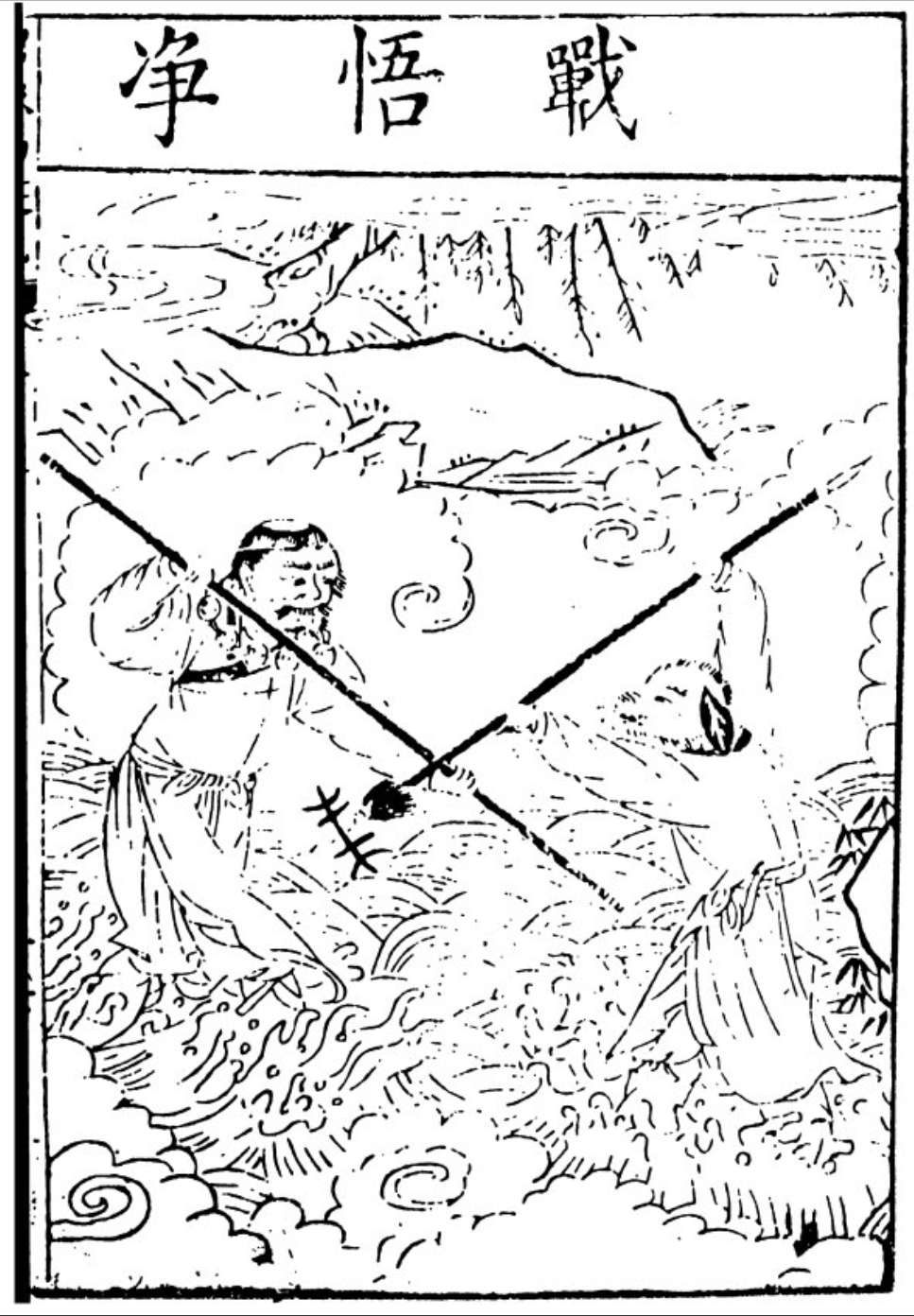
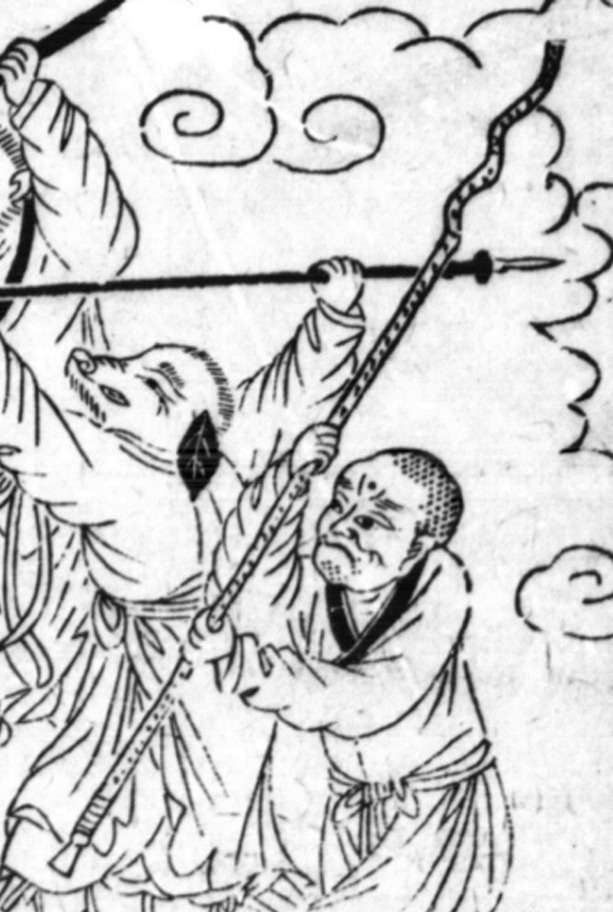
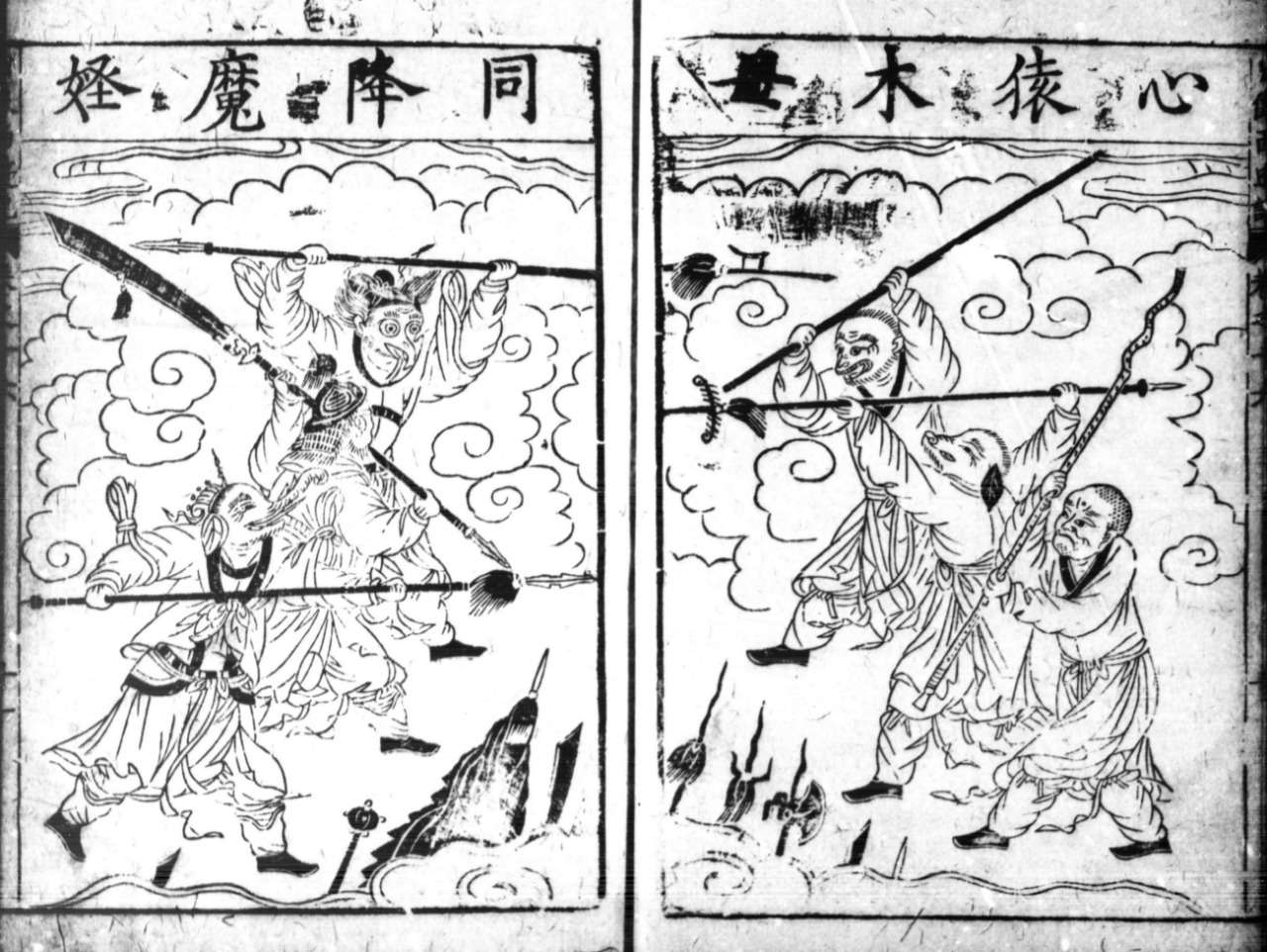
Feng Dajian of Nankai University was kind enough to direct me to this woodblock print (fig. 9) from the original 1592 publishing of Journey to the West. Sandy’s staff is more evident in this piece. It even lacks the aforementioned crescent shape.

Fig. 9 – The 1592 JTTW print of Sandy vs Pigsy (larger version).


2.3. Sandy’s Weapon in the 1592 JTTW – Part 2

Update: 07-02-23

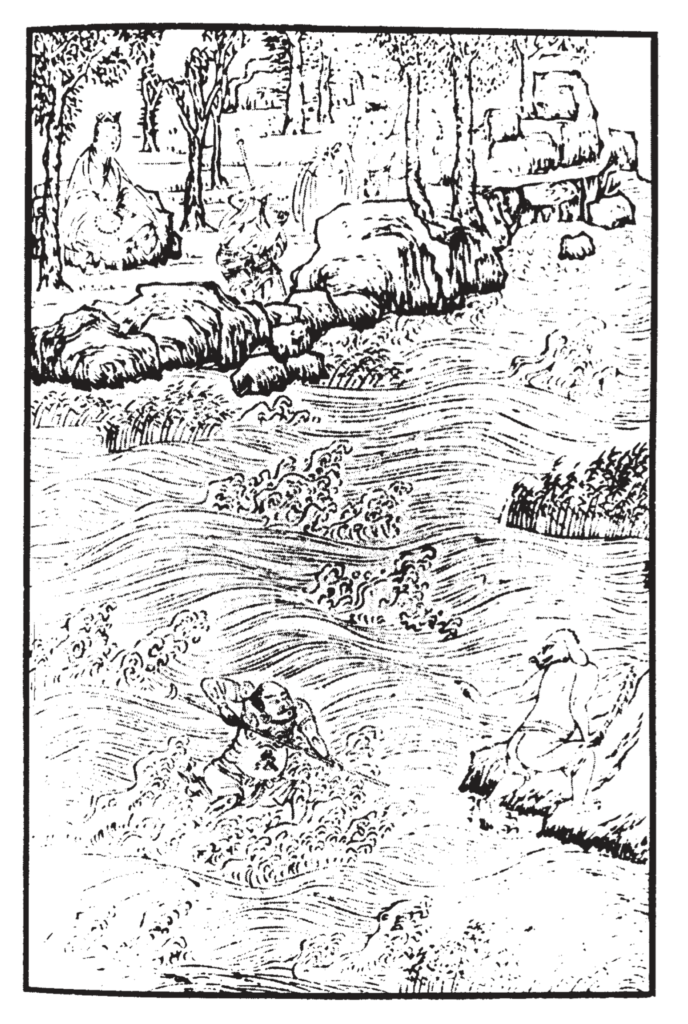
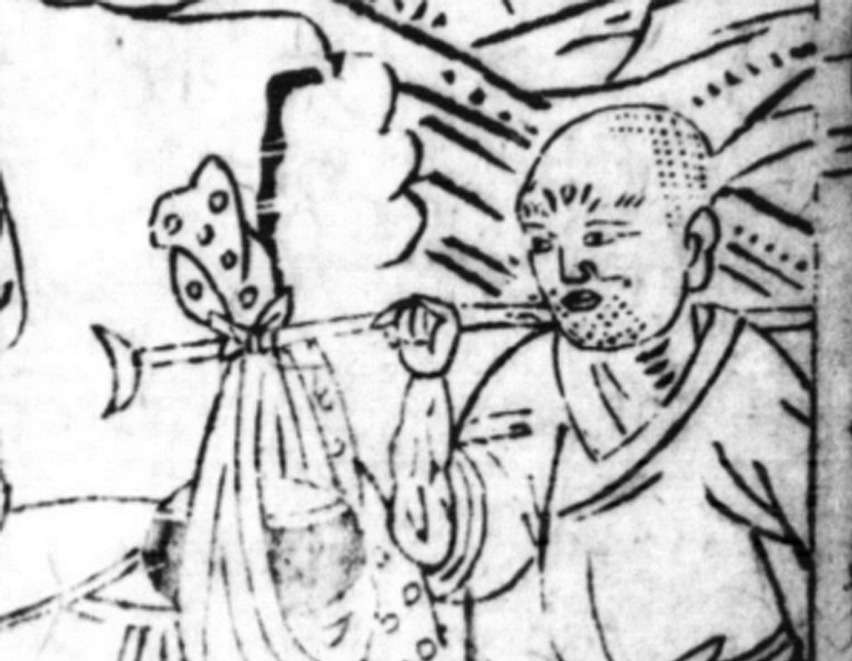
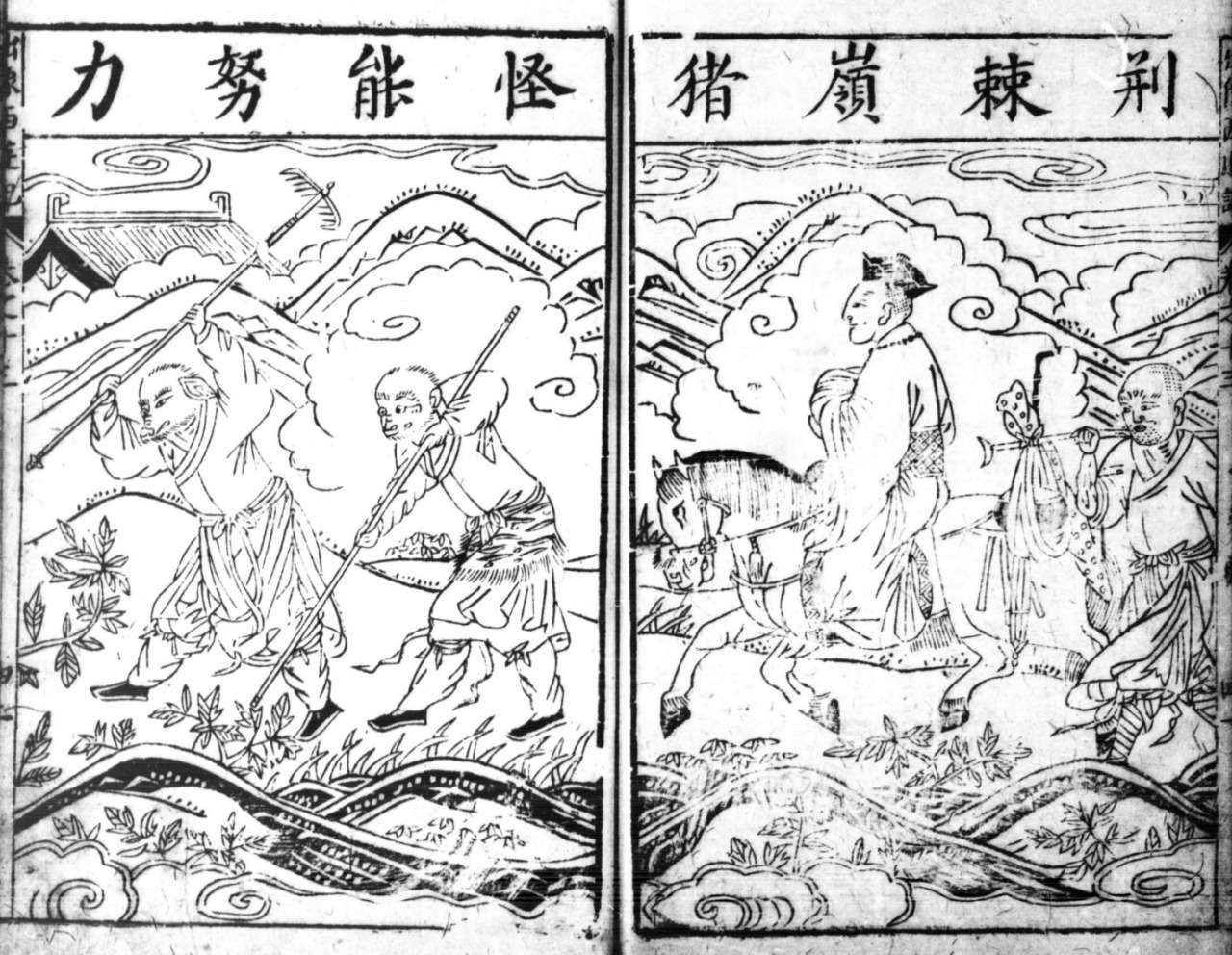
The woodblock prints from the original 1592 JTTW are extremely inconsistent. For example, figure nine shows Sha’s staff as a straight, black line. However, another print (fig. 10 & 11) depicts it with the crescent finial, and yet another (fig. 12 & 13) shows it as a twisting tree branch. The latter is my favorite because it aligns more with the weapon’s origin as presented above in the introduction.

Fig. 10 (top left) – A detail of the crescent staff (larger version). Fig. 11 (top right) – The full print (larger version). Fig. 12 (bottom left) – A detail of the tree branch staff (larger version). Fig. 13 (bottom right) – The full print (larger version).

Notes:

1) The original translation reads: “At first an evergreen tree in the moon” (Wu & Yu, 2012, vol. 1, p. 428), but the Chinese identifies the tree as suoluo pai (梭羅派), which literally means a “(family) branch of the sala tree.” I chose “a variety of” to avoid confusion with “tree branch.” And while the sala is technically a kind of evergreen in wet environments, it has deciduous-looking leaves. I chose to use the actual name of the tree to avoid confusion with pine evergreens. Yu (Wu & Yu, 2012) incorrectly identifies the suoluo tree as “Cunninghamia [l]anceolata,” a type of Chinese pine evergreen (vol. 4, p. 391 n. 7).

2) The original translation reads: “Within the hub one solid piece of gold” (Wu & Yu, 2012, vol. 1, p. 428). But the Chinese states that the inside is jin chenxin (金趁心), or “satisfactory metal/gold.” This is likely referring to the Chinese idiom chenxin ruyi (趁心如意), or “as one desires.” This important as the novel reveals that Sha’s weapon is capable of growing or shrinking on command just like Monkey’s cudgel, the “As-You-Will Gold-Banded Staff” (based on Wu & Yu, 2012, vol. 1, p. 429). Thank you to Irwen Wong of the Journey to the West Library blog for reminding me of this fact.

3) Yu (Wu & Yu, 2012) skipped over shan (), or “good at, apt, perfect,” in his translation (vol. 1, p. 428).

4) The creature’s name is originally translated as the “Nine-Headed Insect,” but its true form is that of a monstrous reptilian bird (Wu & Yu, vol. 3, p. 184). While chong (蟲) usually means “insect, worm, or pest,” it can also mean “beast.” For instance, Da chong (大蟲, “great beast”) is the name of the tiger killed by the hero Wu Song in the Water Margin (c. 1400) (Børdahl, 2007). Therefore, a better name for our villain would be “Nine-Headed Beast.”

Sources:

Børdahl, V. (2007). The Man-Hunting Tiger: From “Wu Song Fights the Tiger” in Chinese Traditions. Asian Folklore Studies, 66(1/2), 141-163. Retrieved January 7, 2021, from http://www.jstor.org/stable/30030454

Shahar, M. (2008). The Shaolin Monastery: History, Religion, and the Chinese Martial Arts. University of Hawaii Press.

Wu, C., & Yu, A. C. (2012). The Journey to the West (Vols. 1-4) (Rev. ed.). Chicago, Illinois: University of Chicago Press.

武備志 (四十三) . (n.d.). Retrieved February 25, 2018, from https://archive.org/details/02092301.cn