The Monkey King’s Magic Staff: A Complete Guide

Last updated: 04-23-2026

I’ve written many articles on the origins of the Monkey King’s staff over the years. Therefore, I’ve decided to combine all of the information in one location for the benefit of people wishing to learn more about the weapon and its history. This will no doubt be interesting to fans of Journey to the West (Xiyouji, 西遊記, 1592; JTTW hereafter), as well as those of modern franchises like Dragon Ball and Lego Monkie Kid (fig. 1). Citations can be found in the articles linked below.

Fig. 1 – A fan edit of the Lego Monkie Kid character “MK” wielding the Monkey King’s magic staff (larger version). Copyright Lego.

Table of Contents

1. The Literary Weapon

1.1. Staff Background

The staff first appears in chapter three of the original novel when the Monkey King goes to the underwater kingdom of Ao Guang (敖廣), the Dragon King of the Eastern Sea, looking for a magic weapon to match his supernatural strength and martial skill. When all of the traditional weapons offered to him fail to meet his standards, the dragon queen suggests to her husband that they give Sun Wukong “that piece of rare magic iron” taking up space in their treasury. She claims the ancient shaft had started producing heavenly light days prior and proposes that the monkey is fated to own it. The weapon is said to be a “divine treasure iron” originally used to set the depths of the Heavenly River (Tianhe ding di de shenzhen tie, 天河定底的神珍鐵) by Yu the Great (Dayu, 大禹), a mythic Chinese emperor and demigod.

The staff is initially described as a pillar of black iron or bin steel more than 20 feet in height and as wide as a barrel. It is only when Monkey lifts it and suggests a smaller size would be more manageable that the staff complies with his wishes and shrinks. This is when Sun notices that the weapon is decorated with a golden ring on each end, as well as an inscription along the body reading: “The ‘As-You-Will’ Gold-Banded Cudgel. Weight: Thirteen Thousand Five Hundred Catties” (Ruyi jingu bang zhong yiwan sanqian wubai jin, 如意金箍棒重一萬三千五百斤). The inscription indicates that the staff is immensely heavy, weighing 17,560 lbs. (7,965 kg).

Apart from the above information, a poem in chapter 75 (see section 2.3 here) highlights another name, “Rod of Numinous Yang” (Lingyang bang, 靈陽棒). In addition, the poem describes the staff being covered in “tracks of planets and stars” (i.e. astronomical charts) and esoteric “dragon and phoenix scripts” (longwen yu fengzhuan, 龍紋與鳳篆).

The novel provides two contradictory origins for the staff. The chapter 75 poem notes that it “[w]as forged in the stove by Laozi himself.” Laozi is of course the high god of Daoism. Chapter 88 instead states that it was “forged at Creation’s dawn / By Yu the Great himself, the god-man of old.”

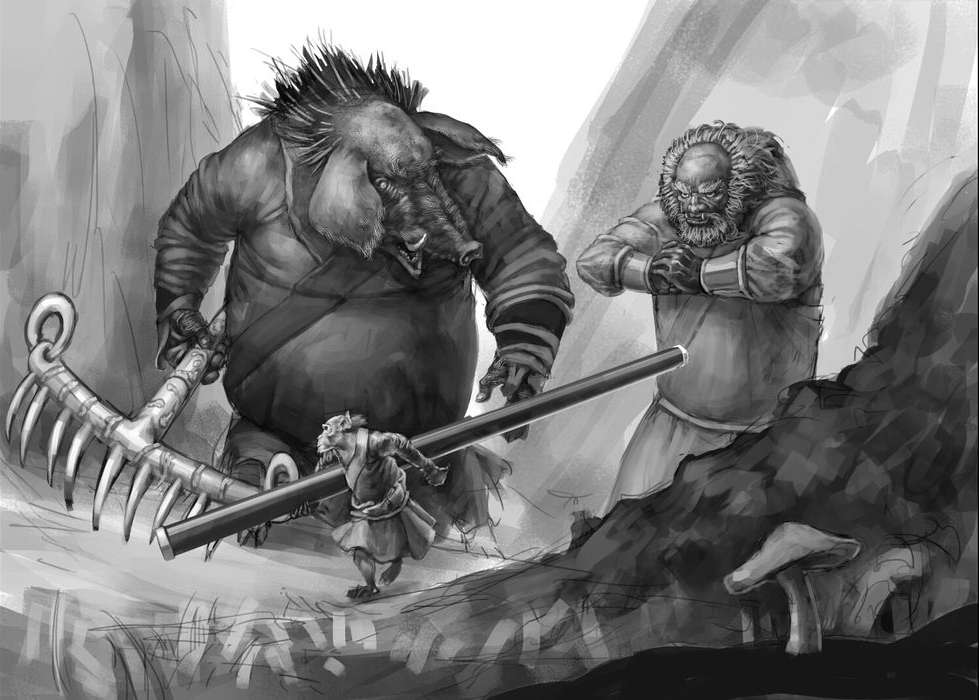
Contrary to popular images of the Monkey King holding a regular-sized staff, his literary counterpart wields a massive weapon in battle. It is said to be 20 feet long (likely an error for 12), [1] with the width of a bowl (erzhang changduan, wankou cuxi, 二丈長短,碗口粗細) (fig. 2). I did a cursory search of bowls during the Ming (when the standard edition of JTTW was published) and found that they have a radius of between 4 to 6 inches (10.16 to 15.25 cm).

Fig. 2 – An accurate depiction of the size of Monkey’s staff (larger version). Images found here. Artwork by @真·迪绝人.

1.2. Staff Powers

The staff is shown to have multiple powers.

  1. Size manipulation – This is the weapon’s most well-known ability, growing as big or as small as Monkey wishes.
  2. Controlling the oceans –  The aforementioned poem from chapter 88 writes: “The depths of all oceans, rivers, and lakes / Were fathomed and fixed by this very rod. / Having bored through mountains and conquered floods, / It stayed in East Ocean and ruled the seas…”
  3. Astral entanglement – Monkey’s soul is able to use the staff in Hell despite the physical weapon being with his sleeping body in the world of the living. (See the 04-23-26 update below for more info.)
  4. Multiplication – He can multiply his staff in the hundreds of thousands.
  5. Lock-Picking – He can open any door just by pointing it at the lock.
  6. Transformation – He can change it into tools like a straight razor or a drill.
  7. Sentience – The weapon glows in anticipation of Monkey’s arrival (fig. 3), responds to his touch, and follows his commands, denoting a certain level of sentience.

Fig. 3 – Monkey pointing to the luminous iron pillar (larger version). From the Qing-Era Painted, Complete Edition Journey to the West (Qing caihui quanben Xiyouji, 清彩繪全本西遊記).

2. Origins

2.1. Literary Precursors

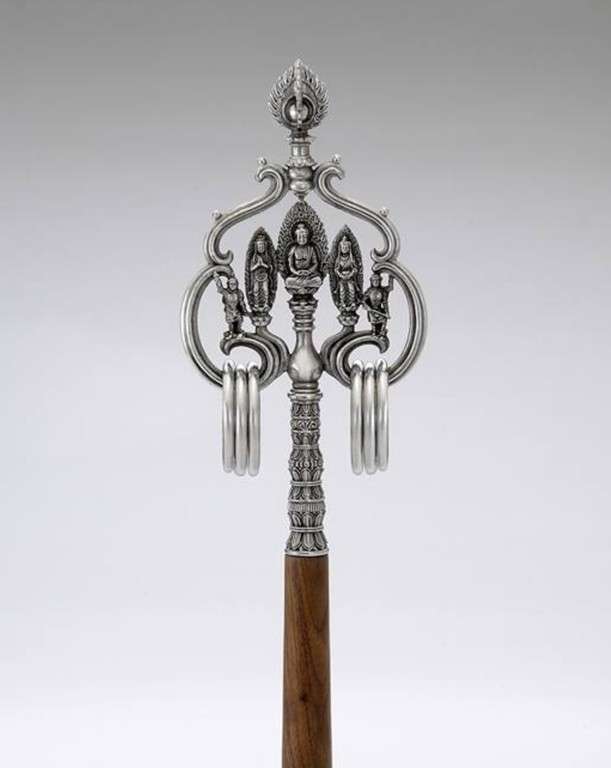
The staff found in the standard Ming edition of JTTW is actually based on two weapons from a 17-chapter storytelling prompt called The Story of How Tripitaka of the Great Tang Procured the Scriptures (Da Tang Sanzang qujing shihua, 大唐三藏取經詩話, c. late 13th-century). Sun Wukong’s precursor, an ageless immortal called the “Monkey Pilgrim” (Hou xingzhe, 猴行者), magically transports Tripitaka and his entourage to heaven. There, the supreme god, the Mahābrahmā Devarāja (Dafan tianwang, 大梵天王; i.e. Vaiśravana), gives the monk a cap of invisibility, a khakkhara (ringed monk’s staff) (fig. 4), and a begging bowl. Tripitaka and the Monkey Pilgrim take turns using these items throughout the journey. The staff is shown capable of shooting destructive beams of light, as well as transforming into magical creatures like an iron dragon or a giant, club-wielding Yaksha. Later, the Monkey Pilgrim also borrows an iron staff from heaven to fight a dragon.

The two staves from this tale were eventually combined by later storytellers. The rings from the first weapon were added to the ends of the second.

Fig. 4 – A beautiful, modern monk’s staff with six rings (larger version).

2.2. Influence from Religion

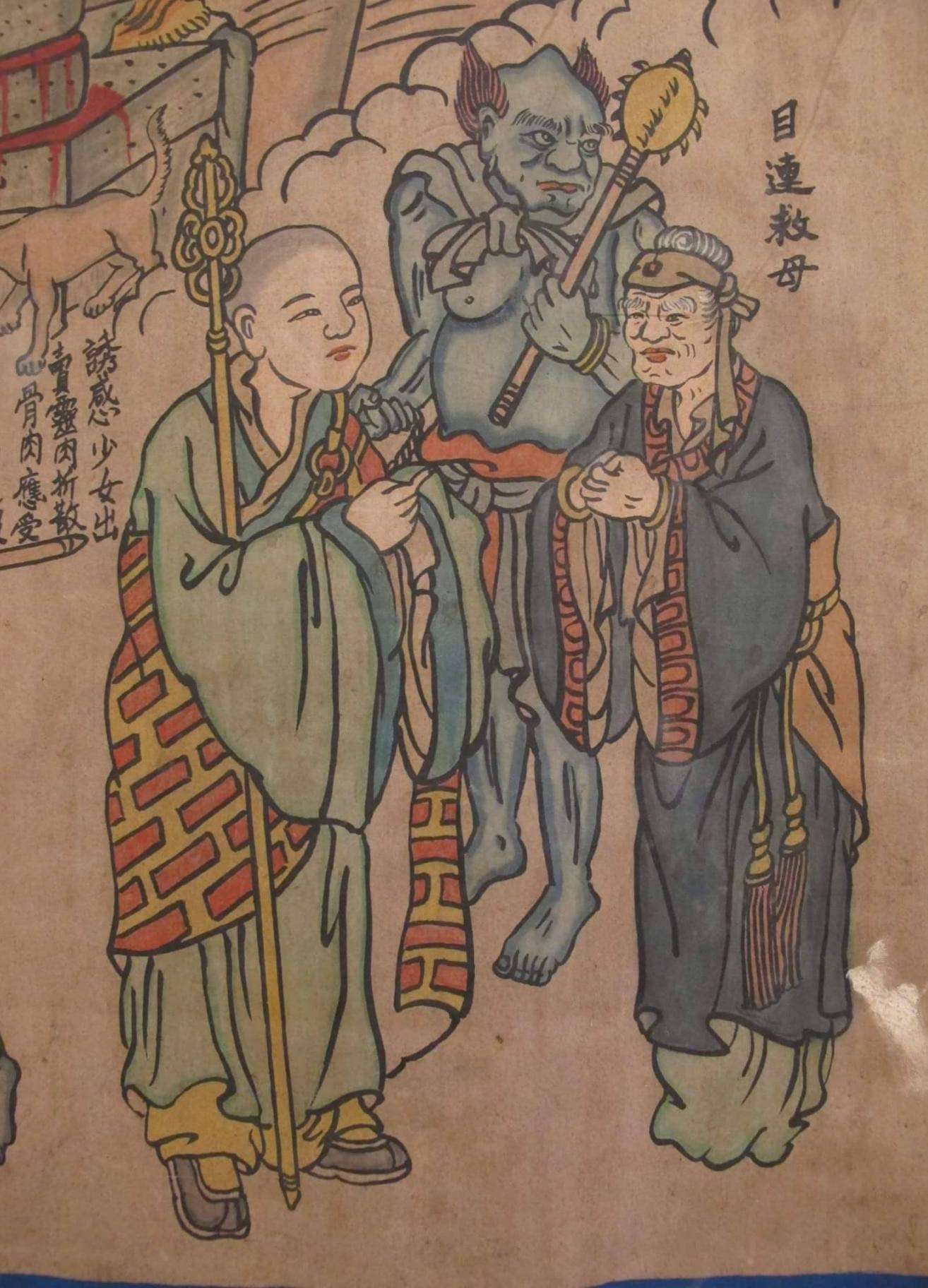
The Monkey Pilgrim’s magic ringed staff and begging bowl were directly influenced by the Buddhist Saint Mulian (目連; Sk: Maudgalyayana), a disciple of the historical Buddha. One particular 9th to 10th-century story notes that the Saint uses the staff to unlock the gates of hell in order to save his mother (fig. 5). This is where Sun Wukong’s weapon from JTTW gets the power to open locks.

Mulian saves his mother, scroll - small

Fig. 5 – A scroll or mural depicting Mulian rescuing his mother from the underworld (larger version). Originally found here.

The ringed and metal staves used by the Monkey Pilgrim are based on those historically carried by Buddhist monks in ancient China. The aforementioned ringed variety, called “tin staves” (xizhang, 錫杖) where used by religious monks and decorated with six to twelve metal rings (see fig. 4). These rings were designed to make a clanging noise to not only scare away animals on the road but also to alert possible donors to the monk’s presence.

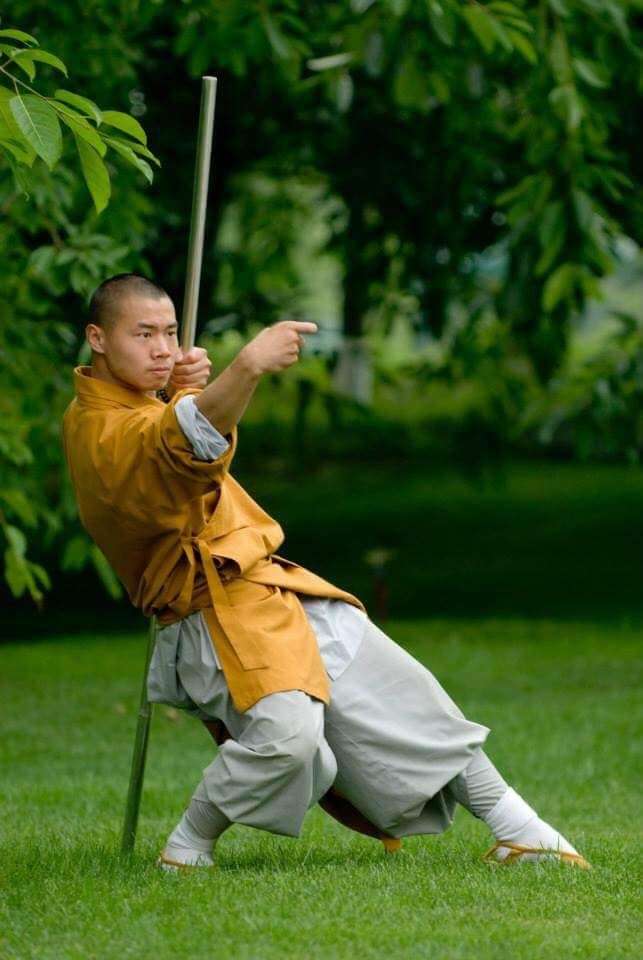
Martial monks charged with protecting monasteries or deployed by the Chinese government against pirates wielded wooden or iron staves (fig. 6). The former were chosen for their diminished capacity for fatal injuries, while the latter were explicitly used for killing during times of war. Sun Wukong wielding the iron variety makes sense as he’s a martial monk charged with protecting Tripitaka from monsters and spirits.

Fig. 6 – A martial monk practicing a drunken staff-fighting form (larger version).

The term “As-you-will” (ruyi, 如意) from Monkey’s staff (mentioned above) is connected with a scepter used in ancient China as a symbol of religious debate and authority and, to a lesser extent, as a weapon. While it can be traced to a Hindo-Buddhist tradition in India, the scepter came to be associated with the highest gods of Daoism thanks to being decorated with a “numinous mushroom” (lingzhi, 靈芝), a real world fungi believed to bestow immortality. This mushroom scepter was at some point associated with the Buddhist Cintamani (Ruyi zhu, 如意珠), or “As-you-will jewel.” This was believed to grant any wish that one might desire. This explains why Monkey’s As-you-will staff grows or shrinks according to his commands. It’s interesting to note that some religious images of the scepter depict it with a syncretic mix of the Daoist mushroom and the Buddhist jewel (fig. 7).

Fig. 7 – An enhanced detail of the Celestial Worthy’s mushroom scepter with a flaming as-you-will jewel (larger version). See here for a fuller version of the deity.

2.3. Influence from Popular Literature

The weapon’s portrayal in JTTW as an iron pillar kept in the dragon kingdom comes from old stories about the immortal Xu Xun (許遜), a historical Daoist master and minor government official from Jiangsu province. Popular tales describe him as a Chinese St. Patrick who traveled southern China ridding the land of flood dragons. One 17th-century version titled “An Iron Tree at Jingyang Palace Drives Away Evil” (Jingyang gong tieshu zhenyao旌陽宮鐵樹鎮妖) describes how he chained the flood dragon patriarch to an iron tree (tieshu, 鐵樹) and submerged it in a well, thus preventing the serpent’s children from leaving their subterranean aquatic realm and causing trouble. Pre-JTTW versions of this tale depict the tree as an actual iron pillar (fig. 8). Chinese Five Elements Theory dictates that metal produces water, and as its creator, holds dominion over it. Therefore, an iron pillar would be the perfect item to ward off creatures entrenched in the aquatic environment.

Fig. 8 – A Ming Dynasty woodblock print depicting the immortal Xu overseeing the creation of the iron pillar in a furnace (right) and it’s placement the well (left). Dated 1444-1445 (larger version).

As previously noted, the staff weighs 17,560 lbs. (7,965 kg). This is likely based on an episode from chapter 27 of the Chinese novel Water Margin (Shuihu zhuan, 水滸傳, c. 1400). It involves the bandit Wu Song lifting a heavy stone block said to weigh 300 to 500 catties (san wu bai jin, 三五百斤; 390-650 lbs./177-295 kg) (fig. 9). This scene and the one from JTTW where Monkey lifts the iron pillar are quite similar. Both involve a hero (Wu Song vs. Sun Wukong) asking someone (Shi En vs. Ao Guang) to show them a heavy object that cannot be moved (stone block vs. iron pillar). Both heroes then adjust their clothing before easily lifting the object with both hands. Most importantly, the Chinese characters for the weight of each object (三五百斤 vs. 一萬三千五百斤) are similar. The only difference is the addition of “10,000” (yiwan, 一萬) and “1,000” (qian, 千), respectively. And given the close historical and cultural ties between the two heroes, I believe the author-compiler of JTTW embellished the Water Margin episode to portray Sun as a hero like no other, a divine immortal that can lift weights far beyond even Wu Song himself.

Fig. 9 – Wu Song lifts the stone block (larger version). Image found here.


3. Updates

Update: 04-23-26

Above, I wrote: “Astral entanglement – Monkey’s soul is able to use the staff in Hell despite the physical weapon being with his sleeping body in the world of the living.”

Sun’s use of said weapon also caught the attention of late-Ming commentators. The authors of The Book to Enlightenment of the Journey to the West (Xiyou Zhengdao Shu西遊證道書, 1663), a Daoist commentary on the novel, asked:

“Did he take this treasure with him in his dream?”

此寶貝夢中亦帶去耶? (Converted from simplified Chinesesource).

Note:

1) Irwen Wong of the Journey to the West Library blog has suggested that the length is likely an error for 12 feet (zhanger, 丈二) since the staff was already near 20 feet when Monkey first acquired it, and he later asked it to shrink to a more manageable size.

Origin of the Pregnancy Episode in Journey to the West Chapter 53

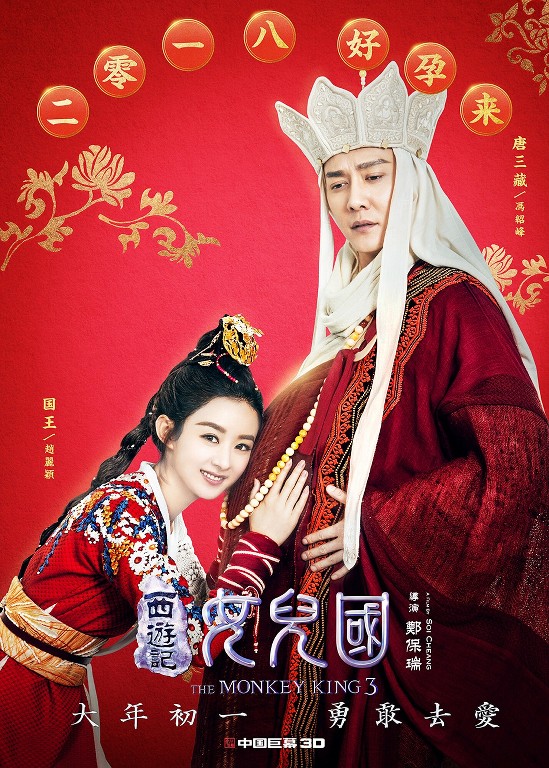
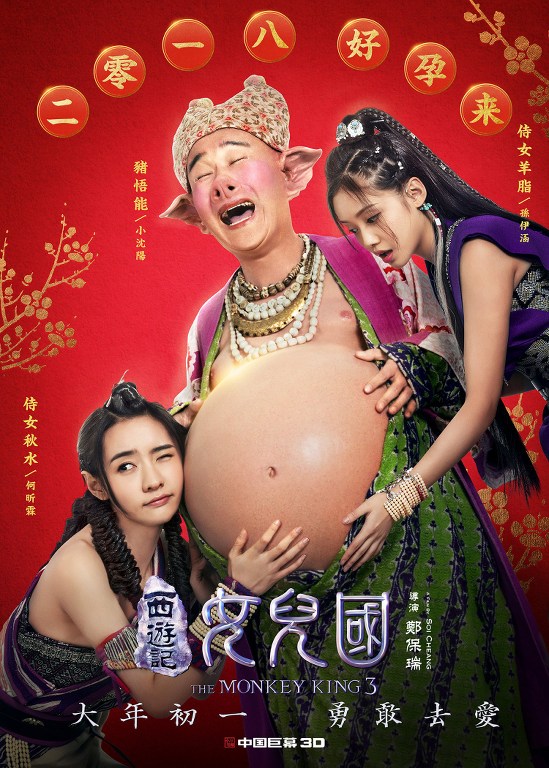
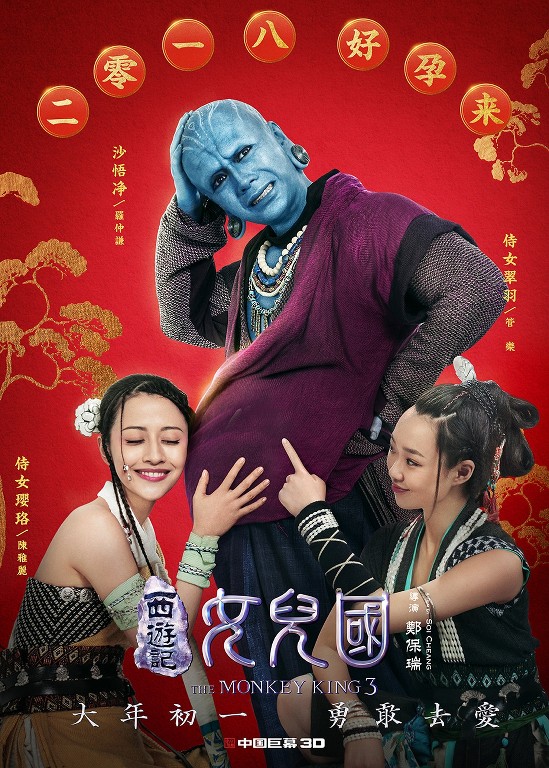
The 2018 film Monkey King 3 (Ch: Xiyouji: Nu’er guo, 西遊記·女兒國; lit: “Journey to the West: Woman Kingdom”) sees the pilgrims enter a magic portal to discover a hidden land peopled by only women. At one point, Tripitaka jumps into a river to retrieve the scattered words of a sentient piece of paper with information revealing how they can escape; and in Sha Wujing’s attempt to save him, both inadvertently swallow water. The resulting splashes also enter the mouth of Zhu Bajie, who is sleeping nearby. Sometime later, all three pilgrims discover that they are pregnant due to drinking from the river (fig. 1-3). The queen of the Woman Kingdom sends Sun Wukong to retrieve magic water to abort the births from a cross-dressing immortal. However, upon his return, Monkey learns that they’ve decided to keep their babies. Despite this, he uses fixing magic to freeze them in place and gives them the water so that nothing will keep the pilgrims from their quest.

The movie is a very loose adaptation of Journey to the West (Xiyouji, 西遊記, 1592; “JTTW” hereafter) chapter 53. In this article, I describe the chapter and suggest that it is based on a story from Hindu religious literature in which an ancient king becomes pregnant from drinking ritual water. I will show that the version appearing in the Mahabharata (Sk: महाभारतम्; 4th c. BCE to 4thvc. CE) likely influenced JTTW as other events from the Hindu epic also appear in the Chinese novel. I will also show that an early Gupta period list of Mahabharata parvas (books) discovered in Xinjiang, China names the parva containing the king’s story, suggesting that the tale may have been present in the Middle Kingdom centuries prior to JTTW.

Fig. 1 – The Monkey King 3 movie poster showing a pregnant Tripitaka and the Woman Kingdom queen (larger version). Fig. 2 – The Zhu Bajie variant (larger version). Fig. 3 – The (beardless) Sha Wujing variant (larger version).

Table of Contents

1. Episode from the Novel

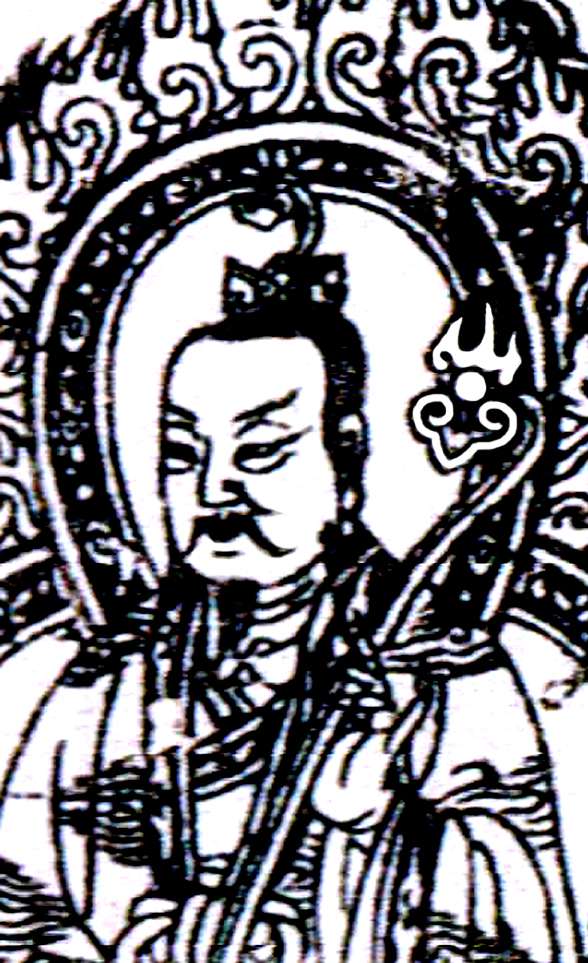
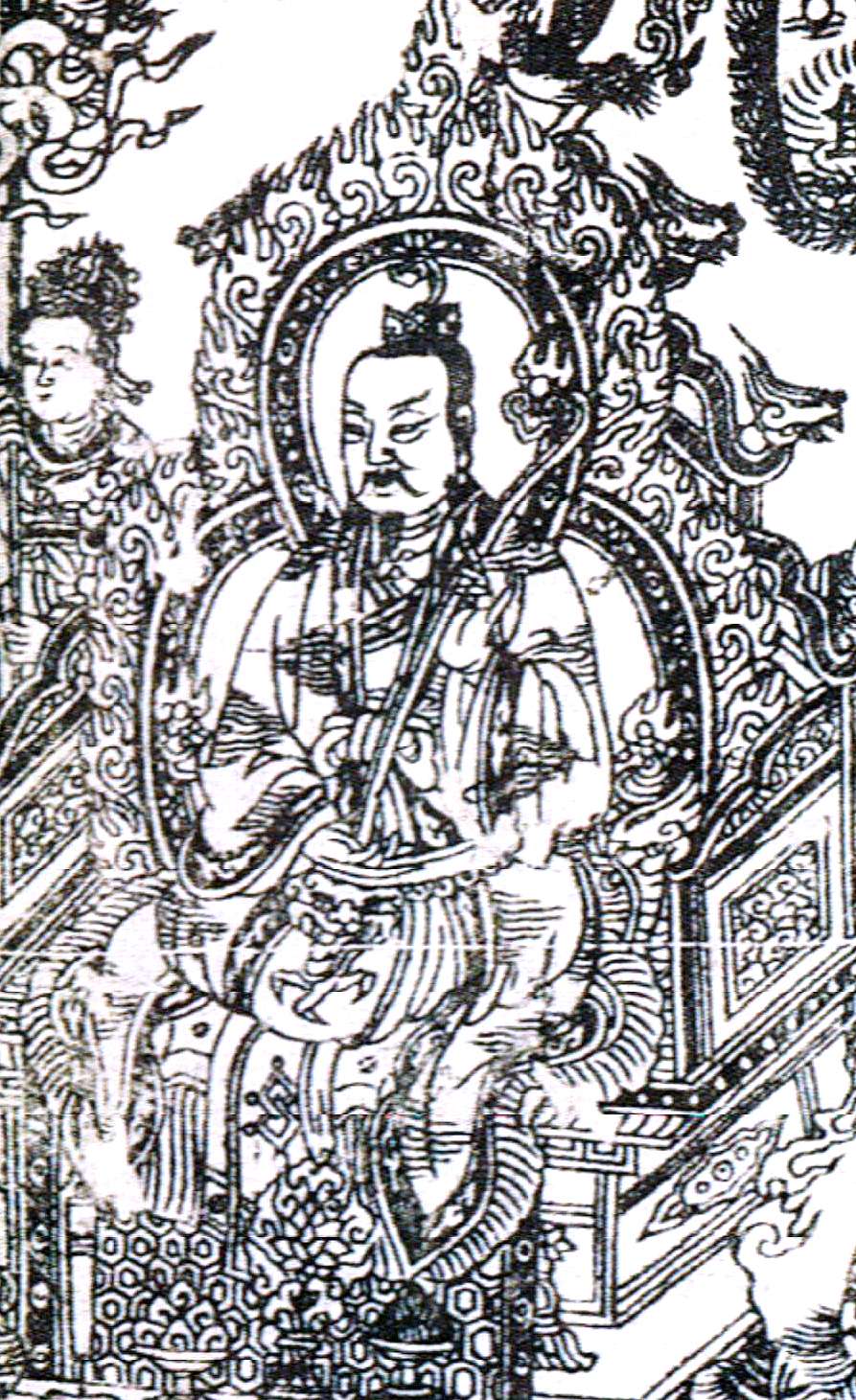
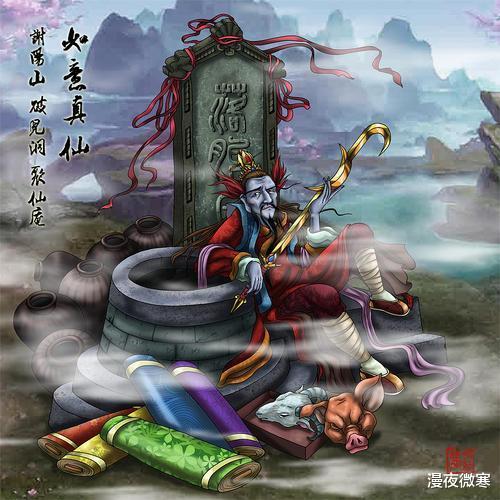
After the defeat of the Single-Horned Buffalo Demon, the pilgrims continue their journey by taking a river ferry. Upon reaching the other side, Tripitaka takes note of the clear water and asks Zhu Bajie to fetch him a bowl full. Both drink from the river, but a short time later they experience horrible abdominal pain, and their stomachs swell as if something was growing inside. They seek help from an old woman at a nearby inn, but she simply laughs and calls her friends to come see the spectacle. Her jovial attitude changes, however, once an enraged Wukong grabs hold and offers to spare her life in exchange for some hot water to calm their stomachs. But she explains it won’t help, for they have drunk from the “Child-and-Mother River” (Zimu he, 子母河) in the Woman Kingdom of Western Liang (Xiliang nuguo, 西梁女國), where the sole female inhabitants, according to custom, only drink the water to become pregnant upon reaching their 20th year. After hearing the news, both Tripitaka and Bajie panic, prompting Monkey and Sha to tease their religious brother, frightening him with the possibility of a painful, unnatural birth or some natal sickness that would threaten the baby. [1] When asked for a cure, the old woman reveals that the only way to end the pregnancy is to bribe the “True Immortal Compliant” (Ruyi zhenxian, 如意真仙) (fig. 4), who lords over the “Abortion Spring” (Luotai quan, 落胎泉) in the “Abbey of Immortal Assembly” (Juxian an, 聚仙庵), formerly known as the “Child Destruction Cave” (Po’er dong, 破兒洞), on the “Male-Undoing Mountain” (Jieyang shan, 解陽山). Wukong travels to the mountain but is forced to fight when the immortal, the Bull Demon King’s brother, attacks him to avenge Red Boy’s subjugation by Guanyin. Though weaker than Monkey, the immortal’s weapon, a “Compliant (or As-you-wish) golden hook” (Ruyi jin gouzi, 如意金鉤子), proves hard to ward off while trying to retrieve the needed water. Wukong ultimately resorts to trickery by luring his foe into battle while Wujing obtains the water. In the end, the immortal is defeated but shown mercy, and the unwanted pregnancies are aborted, being dissolved and passed as fleshy lumps in bowel movements (Wu & Yu, 2012, pp. 31-46). [2]

Fig. 4 – A drawing of the True Immortal Compliant holding his golden hook as he sits next to a well marked “Abortion Spring” (larger version). Artist unknown. The weapon is here depicted as a hooked sword. Bribes of silk, livestock, and alcohol can be seen at the immortal’s feet.

2. Origin

2.1. Hindu Religious Literature

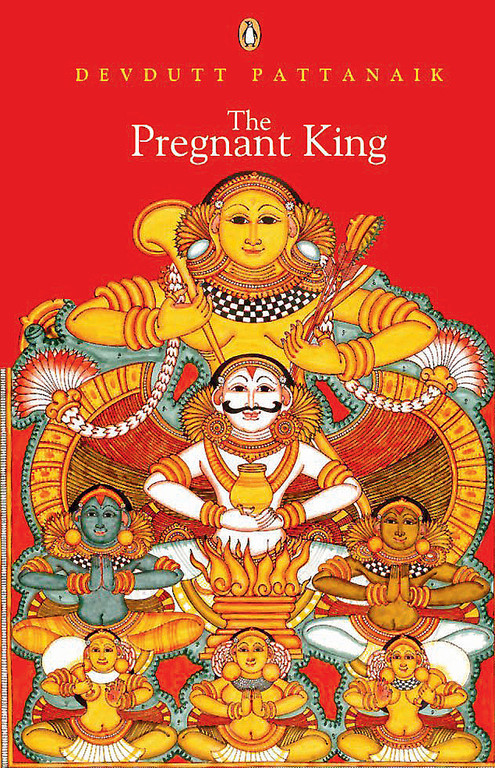
This episode shares similarities with a story about the ancient Indian King Yuvanasva (Sk: युवनाश्व; a.k.a. Yuvanashva or Yuvanaswa) (fig. 5) who becomes pregnant from drinking ritual water. The tale is well known, appearing in Hindu religious texts like the Mahabharata (4th c. BCE to 4th c. CE), the Vishnu Purana (400 BCE to 900 CE) and the Bhagavata Purana (8th to 10th c. CE). [3] The version appearing in the Vana Parva (3rd book) of the Mahabharata reads:

Lomasa said, ‘Hear with attention, O king! how the name of Mandhata belonging to that monarch of mighty soul hath come to be celebrated throughout all the worlds. Yuvanaswa, the ruler of the earth, was sprung from Ikshvaku‘s race. That protector of the earth performed many sacrificial rites noted for magnificent gifts. And the most excellent of all virtuous men performed a thousand times the ceremony of sacrificing a horse. And he also performed other sacrifices of the highest order, wherein he made abundant gifts. But that saintly king had no son. And he of mighty soul and rigid vows made over to his ministers the duties of the state, and became a constant resident of the woods. And he of cultured soul devoted himself to the pursuits enjoined in the sacred writ. And once upon a time, that protector of men, O king! had observed a fast. And he was suffering from the pangs of hunger and his inner soul seemed parched with thirst. And (in this state) he entered the hermitage of Bhrigu. On that very night, O king of kings! the great saint who was the delight of Bhrigu’s race, had officiated in a religious ceremony, with the object that a son might be born to Saudyumni [“Son of Sudyumna”, i.e. Yuvanasva]. O king of kings! at the spot stood a large jar filled with water, consecrated with the recitation of sacred hymns, and which had been previously deposited there. And the water was endued with the virtue that the wife of Saudyumni would by drinking the same, bring forth a god-like son. Those mighty saints had deposited the jar on the altar and had gone to sleep, having been fatigued by keeping up the night. And as Saudyumni passed them by, his palate was dry, and he was suffering greatly from thirst. And the king was very much in need of water to drink. And he entered that hermitage and asked for drink. And becoming fatigued, he cried in feeble voice, proceeding from a parched throat, which resembled the weak inarticulate utterance of a bird. And his voice reached nobody’s ears. Then the king beheld the jar filled with water. And he quickly ran towards it, and having drunk the water, put the jar down. And as the water was cool, and as the king had been suffering greatly from thirst, the draught of water relieved the sagacious monarch and appeased his thirst. Then those saints together with him of ascetic wealth, awoke from sleep; and all of them observed that the water of the jar had gone. Thereupon they met together and began to enquire as to who might have done it. Then Yuvanaswa truthfully admitted that it was his act. Then the revered son of Bhrigu spoke unto him, saying. ‘It was not proper. This water had an occult virtue infused into it, and had been placed there with the object that a son might be born to thee. Having performed severe austerities, I infused the virtue of my religious acts in this water, that a son might be born to thee. O saintly king of mighty valour and physical strength! A son would have been born to thee of exceeding strength and valour, and strengthened by austerities, and who would have sent by his bravery even Indra to the abode of the god of death. It was in this manner, O king! that this water had been prepared by me. By drinking this water, O king, thou hast done what was not at all right. But it is impossible now for us to turn back the accident which hath happened. Surely what thou hast done must have been the fiat of Fate. Since thou, O great king, being a thirst hast drunk water prepared with sacred hymns, and filled with the virtue of my religious labours, thou must bring forth out of thy own body a son of the character described above. To that end we shall perform a sacrifice for thee, of wonderful effect so that, valorous as thou art, thou wilt bring forth a son equal to Indra. Nor with thou experience any trouble on account of the labour pains.’ Then when one hundred years had passed away, a son shining as the sun pierced the left side of the king endowed with a mighty soul, and came forth. And the son was possessed of mighty strength. Nor did Yuvanaswa die—which itself was strange. Then Indra of mighty strength came to pay him a visit. And the deities enquired of the great Indra, ‘What is to be sucked by this boy?’ Then Indra introduced his own forefinger into his mouth. And when the wielder of the thunderbolt said, ‘He will suck me,’ the dwellers of heaven together with Indra christened the boy Mandhata, (literally, Me he shall suck). Then the boy having tasted the forefinger extended by Indra, became possessed of mighty strength, and he grew thirteen cubits, O king. And O great king! the whole of sacred learning together with the holy science of arms, was acquired by that masterful boy, who gained all that knowledge by the simple and unassisted power of his thought. And all at once, the bow celebrated under the name of Ajagava and a number of shafts made of horn, together with an impenetrable coat of mail, came to his possession on the very same day, O scion of Bharata‘s race! And he was placed on the throne by Indra himself and he conquered the three worlds in a righteous way; as Vishnu did by his three strides (Roy, 1884, pp. 382-384).

Both events involve men who quench their thirst with water, not realizing that it has the magic power to bestow pregnancy. Tripitaka and Bajie drink from a river which is specifically used by the inhabitants of the Woman Kingdom to reproduce, while King Yuvanasva drinks ritual water meant to give his wife a son. Additionally, both books state drinking the water is inappropriate, followed by a description of its child-bestowing properties. JTTW reads:

That water your master drank is not the best, for the river is called Child-and-Mother River … Only after reaching her twentieth year would someone from this region dare go and drink that river’s water, for she would feel the pain of conception soon after she took a drink (Wu, & Yu, 2012, p. 39).

你師父吃的那水不好了。那條河喚做子母河 … 我這裡人,但得年登二十歲以上,方敢去吃那河裡水。吃水之後,便覺腹痛有胎。

The Mahabharata reads: “Then the revered son of Bhrigu spoke unto him, saying. ‘It was not proper. This water had an occult virtue infused into it, and had been placed there with the object that a son might be born to thee’” (Roy, 1884, pp. 382-384).

Fig. 5 – King Yuvanasva (center) holding the vessel of ritual water. From the cover of The Pregnant King (2008) by Devdutt Pattanaik (larger version). The book is a reimagining of the king’s story.

2.2. Mahabharata Elements in Journey to the West

The possibility of King Yuvanasva’s story influencing JTTW is quite high as other events from the Mahabharata are known to appear in the novel. For example, Subbaraman (2002) reveals striking similarities between an event from the Adi Parva (1st book) and chapters 47 to 48 of the Chinese classic. In the Mahabharata, the Pandava brothers and their mother Kunti escape assassination and disguise themselves as Brahmins (Hindu priests) traveling the road. They eventually seek shelter in a village plagued by the rakshasa Baka, who offers safety from foreign invaders in exchange for rice, livestock, and a human sacrifice. Those who try to defy this fate risk seeing their entire family eaten along with themselves. The Brahmin home in which the Pandavas stay has been chosen for that year’s sacrifice. Kunti instead sends her son Bhima, the most powerful of the brothers, in place of the householder’s son and daughter. In the end, the warrior kills Baka with his mighty strength. In JTTW, the pilgrims (Buddhist monks) stop for lodging in a village afflicted by the demon Great King of Miraculous Power (Linggan dawang, 靈感大王), who sends clouds and rain in exchange for offerings of livestock and sacrifices of virgin boys and girls. It is impossible to defy this fate as he has memorized the personal details for every inhabitant. The Buddhist home in which the group stays has been chosen for the sacrifice. Wukong and Bajie instead take the place of the respective son and daughter (fig. 6). In the end, the Great King is defeated with the help of Guanyin (Subbaraman, 2002, pp. 11-18).

Furthermore, my own research shows that the tale of Garuda from the Mahabharata influenced the “Peng of Ten Thousand Cloudy Miles” (Yuncheng wanli peng, 雲程萬里鵬), an ancient demon king and spiritual uncle of the Buddha appearing in JTTW chapters 74 to 77.

Fig. 6 – An 1864 woodblock print by Yoshitoshi depicting the battle between Monkey, Bajie, and the Great King of Miraculous Powers (larger version). From the Museum of Fine Arts Boston.

2.3. The Mahabharata in China

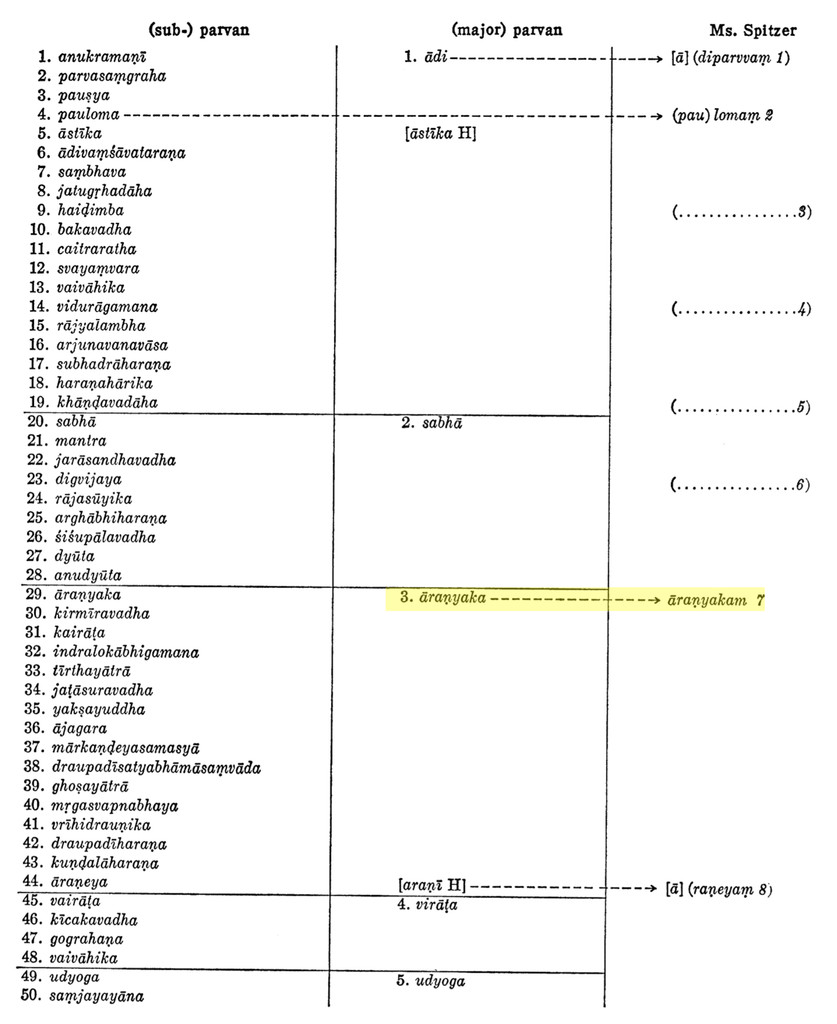
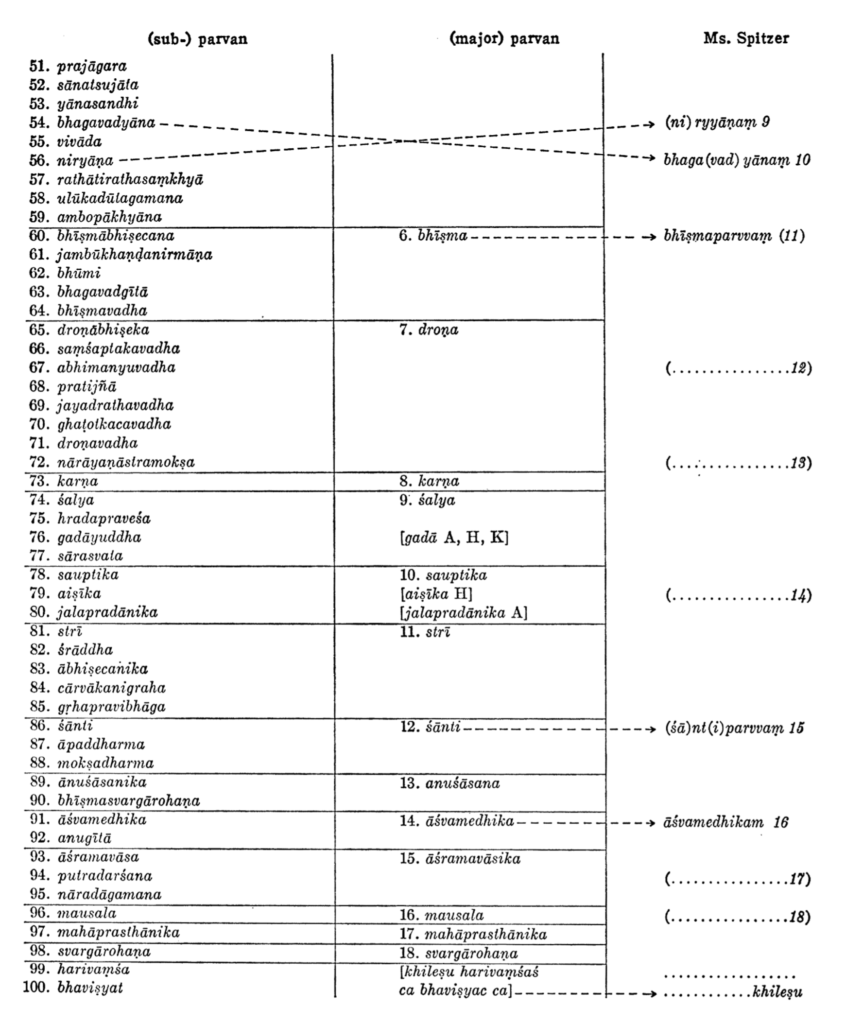
Interestingly, the earliest known list of Mahabharata parvas and sub-parvas was discovered in Kizil in what is now Xinjiang, China. This list appears in the Spitzer Manuscript (c. 200-300 CE), a Hindo-Buddhist philosophical palm-leaf manuscript written in Sanskrit. Schlingloff (1969) compares the list with the known books of the completed epic (fig. 7 and 8), noting the absence of some parvas, which indicates that the Mahabharata was still in a state of development at the time the list was compiled. But it’s important to note that the Vana Parva (a.k.a. Aranya Parva or Aranyaka Parva), the book containing the story of King Yuvanasva, is named in the manuscript (Schlingloff, 1969, p. 336). This suggests that the story of the monarch’s water-induced pregnancy may have been present in China centuries prior to JTTW.

Fig. 7 – Part 1 of a diagram comparing the 100 sub-parvas and 18 parvas of the completed Mahabharata and the Spitzer Manuscript list (larger version). Take note of the highlighted words showing the inclusion of Vana Parva, here called “Aranyakam.” Fig. 8 – Part 2 of the diagram (larger version). From Schlingloff, 1969, pp. 336-337.

3. Conclusion

JTTW chapter 53 tells how Tripitaka and Zhu Bajie become pregnant after drinking magic river water used by the inhabitants of the Woman Kingdom to reproduce. This is similar to a story from Hindu religious literature in which King Yuvanasva becomes pregnant after drinking ritual water meant for his wife. JTTW is known to include story elements from the Mahabharata, which means the version of the monarch’s tale from the Varna Parva (3rd book) likely influenced the Chinese novel. The Varna Parva is named in an early Gupta period list of Mahabharata parvas discovered in what is now Xinjiang, China. This suggests that the story may have been present in the Middle Kingdom centuries prior to JTTW.

Notes:

1) For example, Wukong tells Bajie: “When the time comes, you may have a gaping hole at your armpit and the baby will crawl out” (Wu, & Yu, 2012, p. 35). This likely references ancient Chinese stories of sage-kings splitting the chest, back, or sides of their mothers upon birth, just like Yu the Great and the historical Buddha.

2) I have slightly modified the translation of names in Wu and Yu (2012).

3) See here for the version appearing in the Vishnu Purana. See here for the Bhagavata Purana.

Sources:

Roy, P. C. (1884). The Mahabharata of Krishna-Dwaipayana Vyasa, Translated Into English Prose: Vana Parva. Calcutta: Bharata Press.

Schlingloff, D. (1969). The Oldest Extant Parvan-List of the Mahābhārata. Journal of the American Oriental Society, 89(2), 334-338. doi:10.2307/596517

Subbaraman, R. (2002). Beyond the Question of the Monkey Imposter: Indian Influence on the Chinese Novel The Journey to the West. Sino-Platonic Papers, 114, 1-35. Retrieved from http://www.sino-platonic.org/complete/spp114_journey_to_the_west_monkey.pdf

Wu, C., & Yu, A. C. (2012). The Journey to the West (Vol. 3) (Rev. ed.). Chicago, Illinois: University of Chicago Press.