Archive #49: Journey to the West (西游记): A 60-Volume Lianhuanhua Comic

I recently archived a seven-volume lianhuanhua comic about Sun Wukong battling the famous Eighteen Arhats. Upon learning this, a follower on Twitter asked me if I could locate scans of a 60-volume set that they read when they were younger. Luckily, I found a website selling them for super cheap.

I am archiving the set here in order to document modern day perceptions and depictions of JTTW and its characters.

1. Info

  • Title – Journey to the West (西游记)
    • Adaptation – Zhang Yuzhi (张玉枝)
    • Illustrations – Yan Dong (严东)
    • Editor-in-charge – Chang Shengli (常胜利)
  • Publisher – China Lianhuanhua Publishing House and Distribution (中国连环画出版社出版发行)
  • First edition – November 1997
  • ISBN 7-5061-0827-5

The volume 60 cover reading, “Meeting the Buddhist Patriarch at Spirit Mountain” (Lingshan jian Fozu, 灵山见佛祖) (larger version).

1.1. Reprint

This set is the first of at least two prints, the other coming out in 2008 (ISBN: 7801388461, 9787801388469). See, for example, this Ebay listing (screenshot).

The 2008 boxed set (larger version).

2. Download link:

This is for the 1997 version only.

The comics can be read on Google Drive or downloaded and read on Adobe. However, I’ve had problems reading them on Chrome. Please keep this in mind. It might just be a problem on my end.

https://drive.google.com/drive/folders/1JcS65ckxWZQh462mlqwj5OOzNl4JJAQ7?usp=sharing

Archive #48: The Eighteen Arhats Battle Wukong (十八罗汉斗悟空): A 7-Volume Lianhuanhua Comic

Last updated: 02-28-2025

I was contacted late last year by reader Adelar Eleramo (their JTTW group) looking for more information about a story called The Eighteen Arhats Battle (Sun) Wukong (Shiba luohan dou Wukong, 十八罗汉斗悟空/十八羅漢鬥悟空). A cursory searched turned up this Baidu article, which explained that both a 1982 Chinese opera and a six-volume 1989 lianhuanhua share this title. The respective stories differ, but both draw upon Journey to the West (Xiyouji西遊記, 1592) for inspiration. Regarding the comic, Baidu explains:

[It] tells the story of how the fully enlightened Sun Wukong goes out of his way to stir up trouble with the Eighteen Arhats because he cannot stand the way people celebrate and venerate them. He later reunites with Zhu Bajie to face the Buddhist saints in a battle of wits, courage, and magic, until the two groups finally reconcile.

漫画《十八罗汉斗悟空》描述讲述了修成正果的孙悟空因为看不惯十八罗汉声名显赫受人膜拜而刻意挑起事端,后联合猪八戒一起与十八罗汉斗智斗勇斗法,直至最后心悦诚服地言归于好。

Adelar was kind enough to send me an archive of a seven-volume 2011 adaptation of the original.

I am archiving it here in order to document modern day perceptions and depictions of JTTW and its characters.

1. Info

  • Title – The Eighteen Arhats Battle Wukong (十八罗汉斗悟空)
    • Original – He Hanqiu (何汉秋)
    • Adaptation – Jin Dan (金丹)
    • Editor-in-charge – Rao Zhongwei (饶忠伟)
    • Cover illustrations – Hong Zhe (洪哲), Zhang Zhiwen (张志文), and Dai Rui (戴锐)
    • Illustrations – Dai Rui (戴锐)
    • Planning – Yuhai Cultural Propagation Company (義海文化传播公司)
  • Publisher – Helongjiang Fine Arts Publishing House (黑龙江美术出版社)
  • First edition – August 2011
  • ISBN 978-7-5318-2967-6

Sun battles an Arhat (larger version).

2. Download links

The files are quite large, so I am providing two different download options.

2.1. WordPress

These are slow to load, but you can read them online without needing to first download.

Vol. 1https://journeytothewestresearch.com/wp-content/uploads/2025/02/01大战棋盘阵.戴锐.黑龙江美术出版社.2011.pdf

Vol. 2https://journeytothewestresearch.com/wp-content/uploads/2025/02/02青山龙虎斗.戴锐.黑龙江美术出版社.2011.pdf

Vol. 3https://journeytothewestresearch.com/wp-content/uploads/2025/02/03-两请猪八戒.戴锐.黑龙江美术出版社.2011.pdf

Vol. 4https://journeytothewestresearch.com/wp-content/uploads/2025/02/04围陷流沙河.戴锐.黑龙江美术出版社.2011.pdf

Vol. 5https://journeytothewestresearch.com/wp-content/uploads/2025/02/05火焚罗汉庙.戴锐.黑龙江美术出版社.2011.pdf

Vol. 6https://journeytothewestresearch.com/wp-content/uploads/2025/02/06威震十八湾.戴锐.黑龙江美术出版社.2011.pdf

Vol. 7https://journeytothewestresearch.com/wp-content/uploads/2025/02/07悟空心归正.戴锐.黑龙江美术出版社.2011.pdf

2.2. Google Drive

Google cannot provide an online preview, so you’ll, unfortunately, have to download these to read.

Vol. 1https://drive.google.com/file/d/1G8-KH5M4zCUhHYxRIs_yXeLBhPkqbND4/view?usp=sharing

Vol. 2https://drive.google.com/file/d/1uSPTLofaWglWcayxuDTGWdyxUUijlhbW/view?usp=drive_link

Vol. 3https://drive.google.com/file/d/12ybtR750U3h8lqErSdN2iw5V_x88dkem/view?usp=sharing

Vol. 4https://drive.google.com/file/d/1beRZw_Lx08l3HRv4mW7yh1JAsYUeENdj/view?usp=drive_link

Vol. 5https://drive.google.com/file/d/1PRWW-g9mWb9uS9hi6Wje7qu2eUywFKls/view?usp=sharing

Vol. 6https://drive.google.com/file/d/1Fby7yK_CwOeO5TpwJeiZA4IV2DuFKZ3b/view?usp=sharing

Vol. 7https://drive.google.com/file/d/1khp9Rj2VYUBH4V4EkvgjzWTuzqZg5sx3/view?usp=sharing


Update: 02-28-25

I have uploaded another lianhuanhua comic.

Archive #49: Journey to the West (西游记): A 60-Volume Lianhuanhua Comic

Archive #42 – PDFs of Journey to the West Translations

Note: My blog is not monetized, so I am not making any money from this post. My hope is that the PDFs will make this legendary story more accessible to a wider audience. If you enjoyed the digital versions, please, please, please support the official releases.

Last updated: 04-06-2026

I’m happy to host a number of foreign language translations of the noted Chinese classic Journey to the West (Xiyou ji西遊記, 1592 CE), as well as a precursor and some later unofficial sequels.

1. The Precursor

  • The Story of How Tripitaka of the Great Tang Procures the Scriptures (Datang Sanzang qujing shihua大唐三藏取經詩話, c. late-13th-century)

2. The Original

As of this writing, I don’t yet have a modern Japanese translation. But you can read an original copy of the 1835 translation here.

3. Unofficial Sequels

I will add more languages to this archive as they become available. Please let me know if you have access to other editions.

1. The Precursor

1.1. The Story of How Tripitaka of the Great Tang Procures the Scriptures (Datang Sanzang qujing shihua, 大唐三藏取經詩話, c. late-13th-century)

A. English

This 17-chapter novelette, which likely served as a prompt for oral storytellers, is the earliest known printed edition of the JTTW story cycle. It involves the adventures of Tripitaka and Sun Wukong’s antecedent, the “Monkey Pilgrim” (Hou xingzhe, 猴行者). The tale is translated by Charles S. Wivell.

Archive #37 – The 13th-Century Version of Journey to the West

See also my chapter-by-chapter description and analysis here:

The Story of How Tripitaka of the Great Tang Procures the Scriptures: The Literary Precursor of Journey to the West

2. The Original

2.1. Journey to the West (Xiyou ji)

A. English

A.1. Complete

1) This is a PDF for The Journey to the West (2012 Rev. ed.) translated by Anthony C. Yu.

Archive #11 – PDFs of the Journey to the West 2012 Revised Edition

2) This is a text PDF for Journey to the West (1993/2020) translated by W. J. F. Jenner.

PDF File

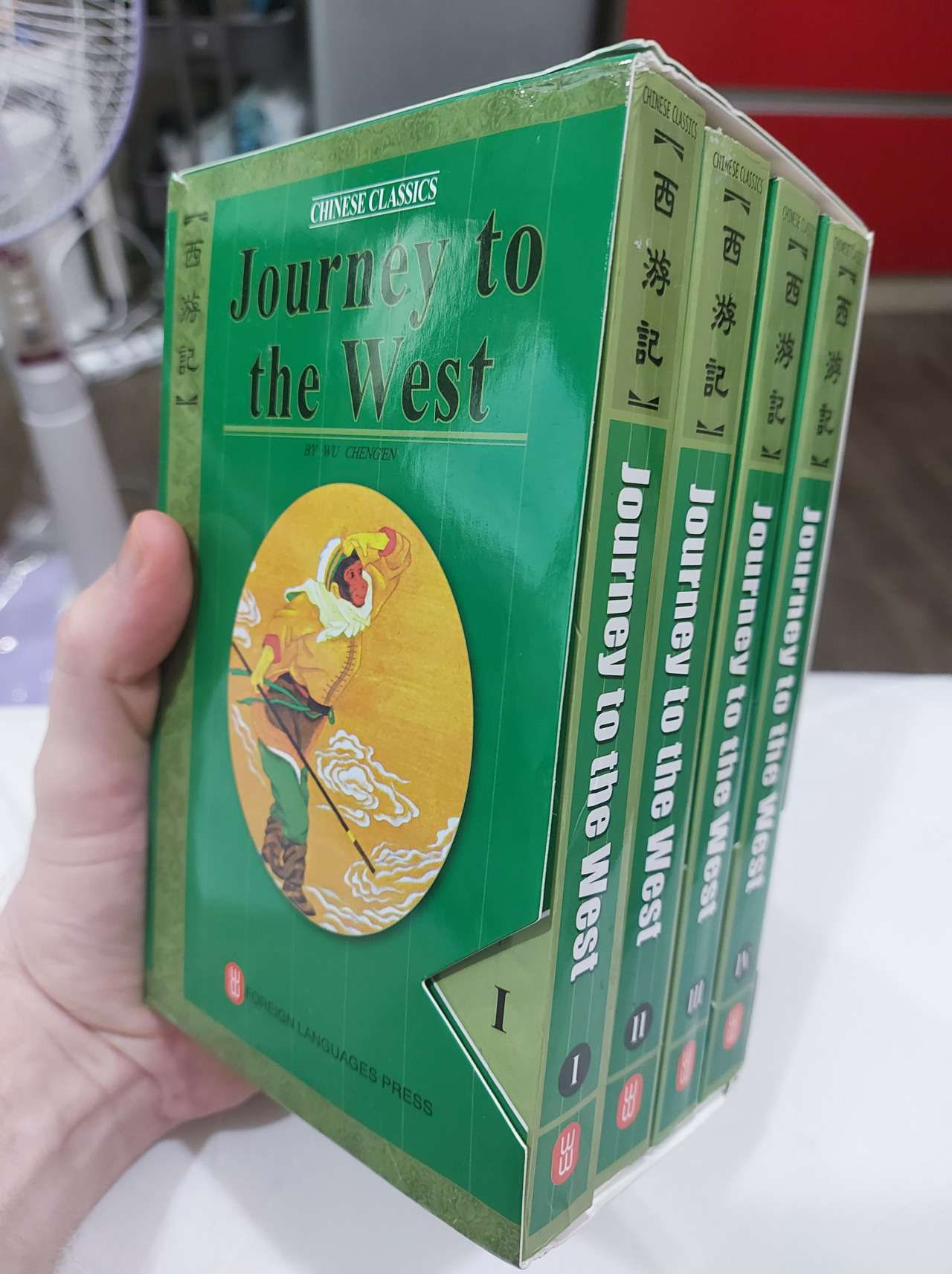
Click to access Wu-Chengen-Journey-to-the-West-4-Volume-Boxed-Set-2003.pdf

The four-volume box set in my collection (larger version).

A.2. Abridged

1) This is a PDF for Monkey (1942/1984) translated by Arthur Waley in 30 chapters (1 to 15, 18 and 19, 22, 37 to 39, 44 to 46, 47 to 49, and 98 to 100). See past book covers here.

PDF File

Click to access Wu-Chengen_-Arthur-Waley-Monkey-Grove-Press-1984.pdf

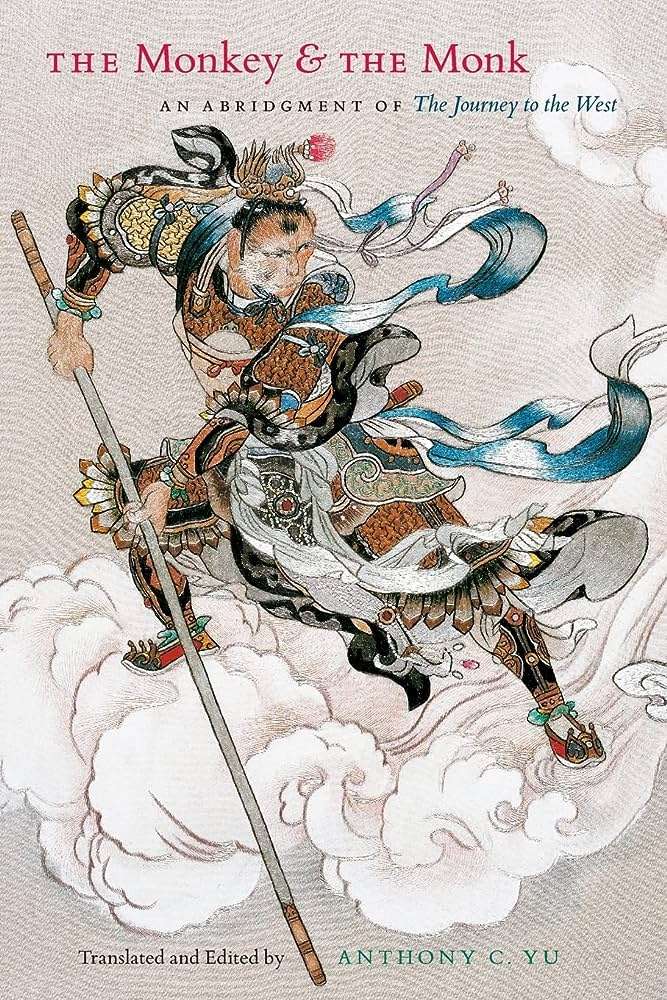
2) This is a PDF for The Monkey and the Monk (2006): An Abridgement of The Journey to the West translated by Anthony C. Yu in 31 chapters (1 to 15, 18 and 19, 22 and 23, 44 to 46, 53 to 55, 57 and 58, 84, and 98 to 100)

PDF File

Click to access Anthony-C.-Yu-The-Monkey-and-the-Monk_-An-Abridgment-of-The-Journey-to-the-West-2006.pdf

The official cover (larger version)

A.3. Audiobook

1) I just learned of “The Fifth Monkey” and their Journey to the West – An Audio Drama Series, which presents a new English translation alongside the original Chinese. They explain:

One reason that led our team to start this audio drama project is to correct some of the mistranslations found in the Yu/Jenner translations. Most of them are very minor and we certainly understand what could have led to those mistakes, but we think it is worth exploring how we can help bring a more accurate presentation of the original text in the English language (source).

The official logo (larger version).

2) YouTuber Sondley has recorded himself reading all 100 chapters of the Jenner edition.

B. French

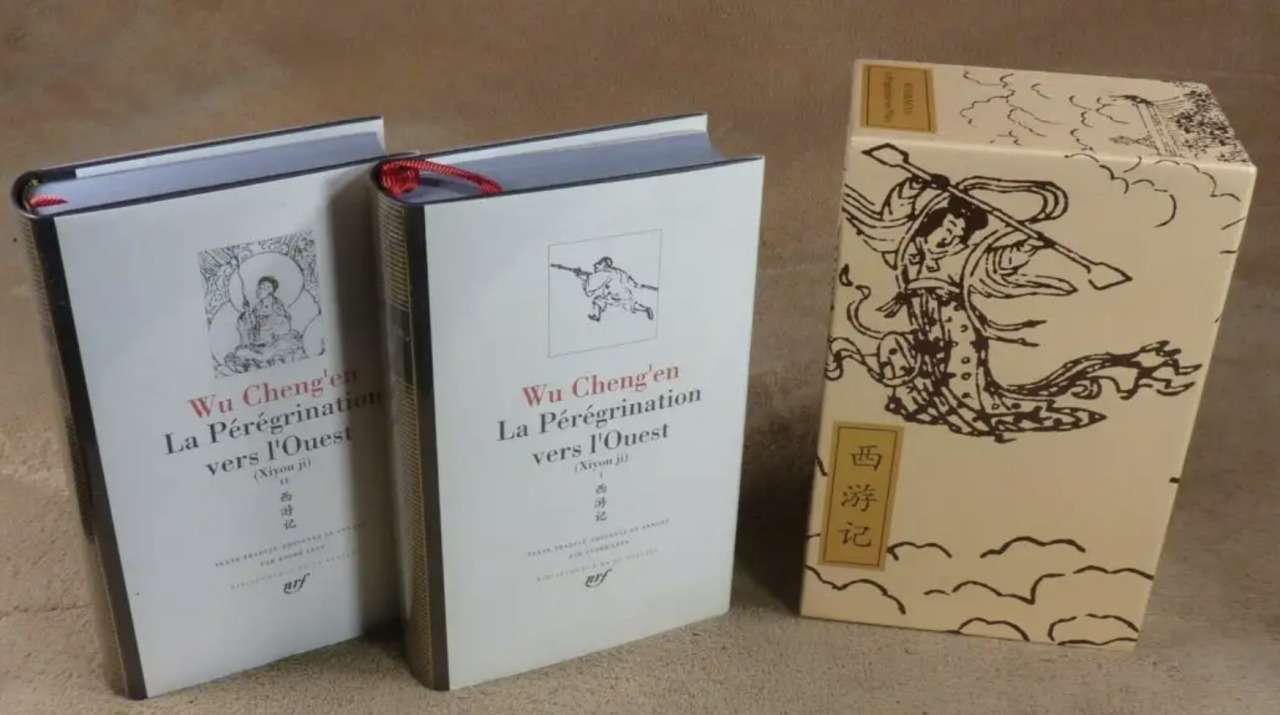
These are PDFs for La Pérégrination vers l’Ouest (Xiyou ji) (1991) translated by André Lévy in 100 chapters. I was told by one French academic that this edition “is one of the best available in Western languages.”

Thank you to arcanananas on Tumbler for volume one, and thank you to jyeet on the Journey to the West discord for volume two.

PDF Files

Vol. 1https://journeytothewestresearch.com/wp-content/uploads/2024/11/La-peregrination-vers-lOuest-v.1.pdf

Vol. 2https://journeytothewestresearch.com/wp-content/uploads/2023/08/French-JTTW-la-peregrination-vers-louest-Vol-2.pdf

The original two-volume boxed edition (larger version). Image found here.

C. German

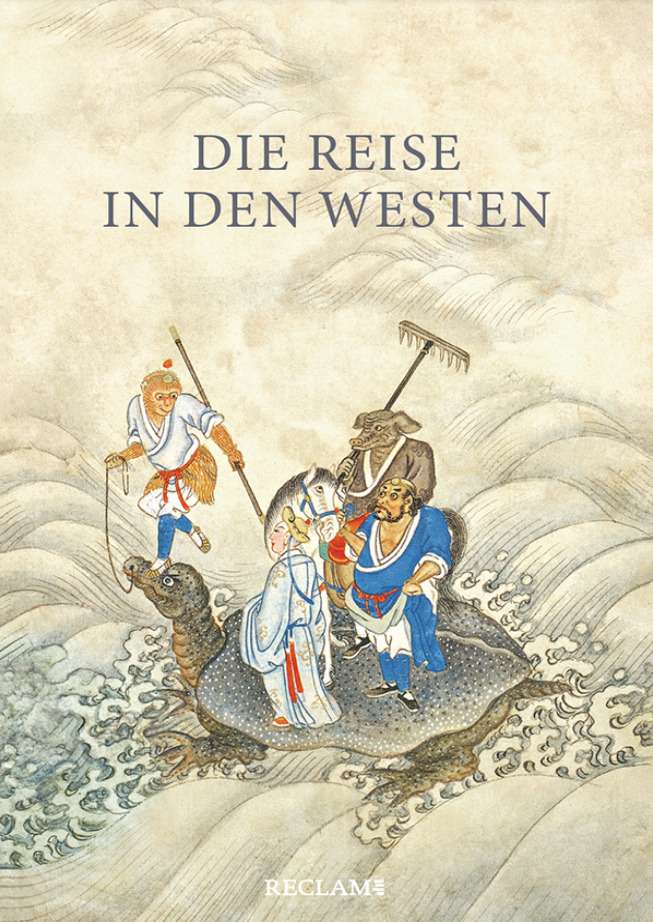
This is a PDF for Die Reise in den Westen. Ein klassischer chinesischer Roman (2016) translated by Eva Lüdi Kong in 100 chapters. It was awarded the Leipzig Book Fair prize in 2017. This version was converted from an ebook.

PDF File

Click to access German-JTTW-Die-Reise-in-den-Westen.pdf

The official cover (larger version)

D. Hungarian

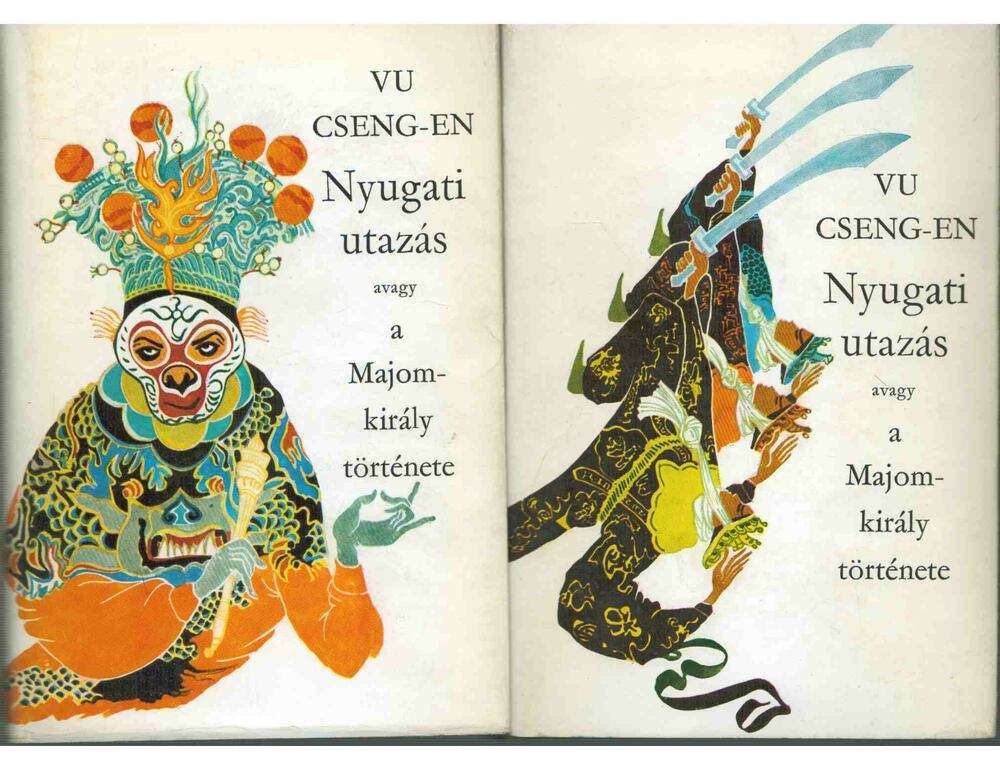
These are text PDFs for Nyugati utazás: avagy a majomkirály története (1969/1980) translated by Barnabás Csongor in two volumes. While the work covers the full 100 chapters, I’ve been told that it deletes the poems and occasionally paraphrases long-winded sections of text.

Thank you to Twitter user Jakabfi Károly for locating the files.

PDF Files

Vol 1https://journeytothewestresearch.com/wp-content/uploads/2023/08/Hungarian-JTTW-Nyugati-Utazas-Vol-1.pdf

Vol 2https://journeytothewestresearch.com/wp-content/uploads/2023/08/Hungarian-JTTW-Nyugati-Utazas-Vol-2.pdf

The official covers for volumes one and two (larger version). Image found here.

E. Italian

[Note 10-19-23: I was asked by the publisher to remove the PDF from the archive. I’m leaving the title here so others will know that an Italian translation exists.]

The Italian text is called Viaggio in occidente (1998/2008). It was translated by Serafino Balduzzi and published in two volumes. It is based on the French edition published in 1991. The work covers all 100 chapters.

F. Polish

This is a PDF for Małpi bunt (1976) translated by Tadeusz Żbikowski. It is a 14 chapter abridgement of the first 20 chapters of the original.

Thank you to Twitter user Friend_Pretend for locating the file.

PDF File

Click to access Polish-JTTW-Malpi-bunt-1976.pdf

The official cover (larger version).

G. Romanian

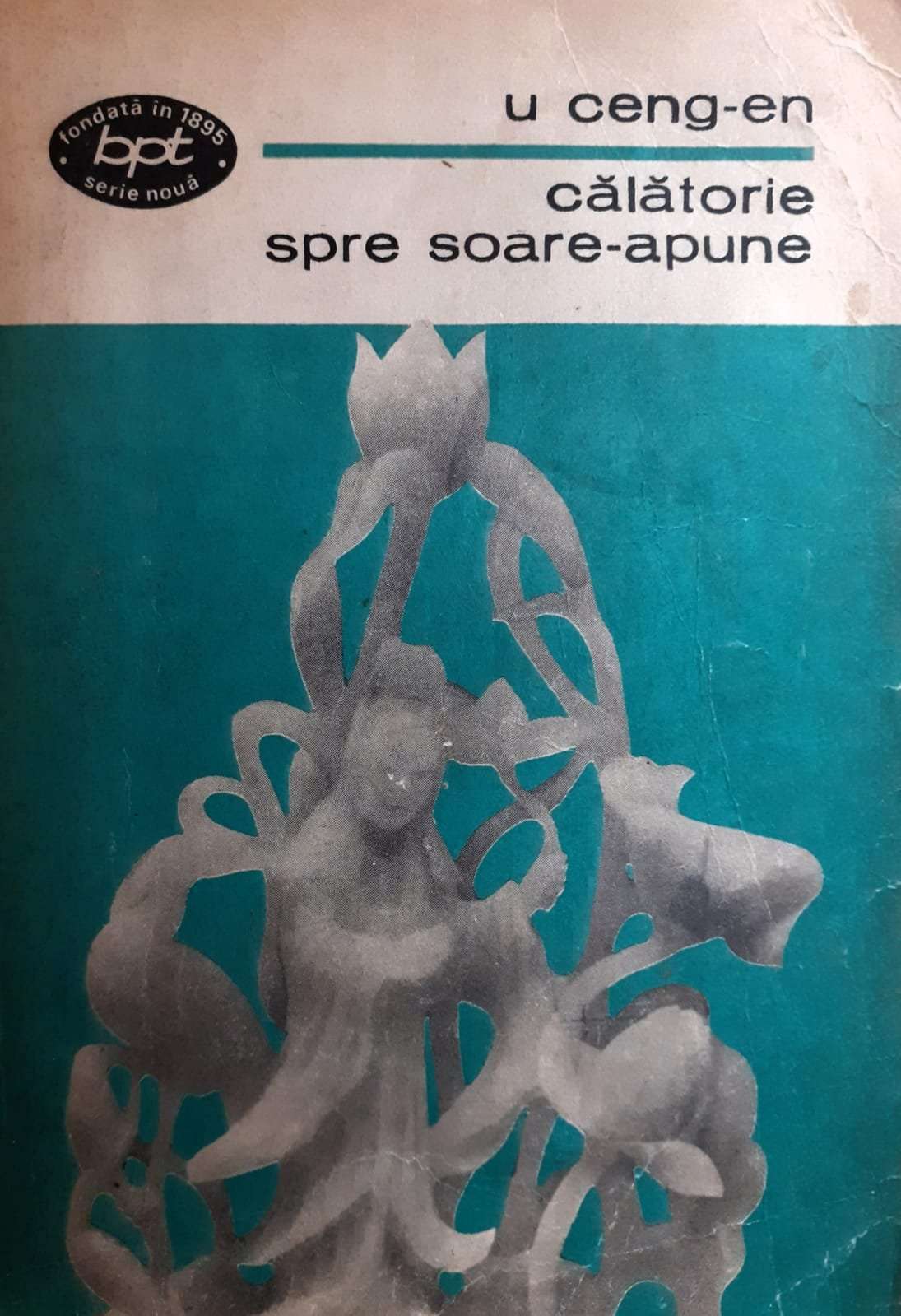
This is a text PDF for Călătorie spre soareapune (1971) translated by Corneliu Rudescu and Fănică N. Gheorghe. It appears to be an abridgment.

Thank you to greencicadarchivist on the Journey to the West discord for locating the file.

PDF File

Click to access Romanian-JTTW-U_Ceng_En_Calatorie_Spre_Soare_Apune_pdf.pdf

The official cover (larger version).

H. Russian

H.1. Complete

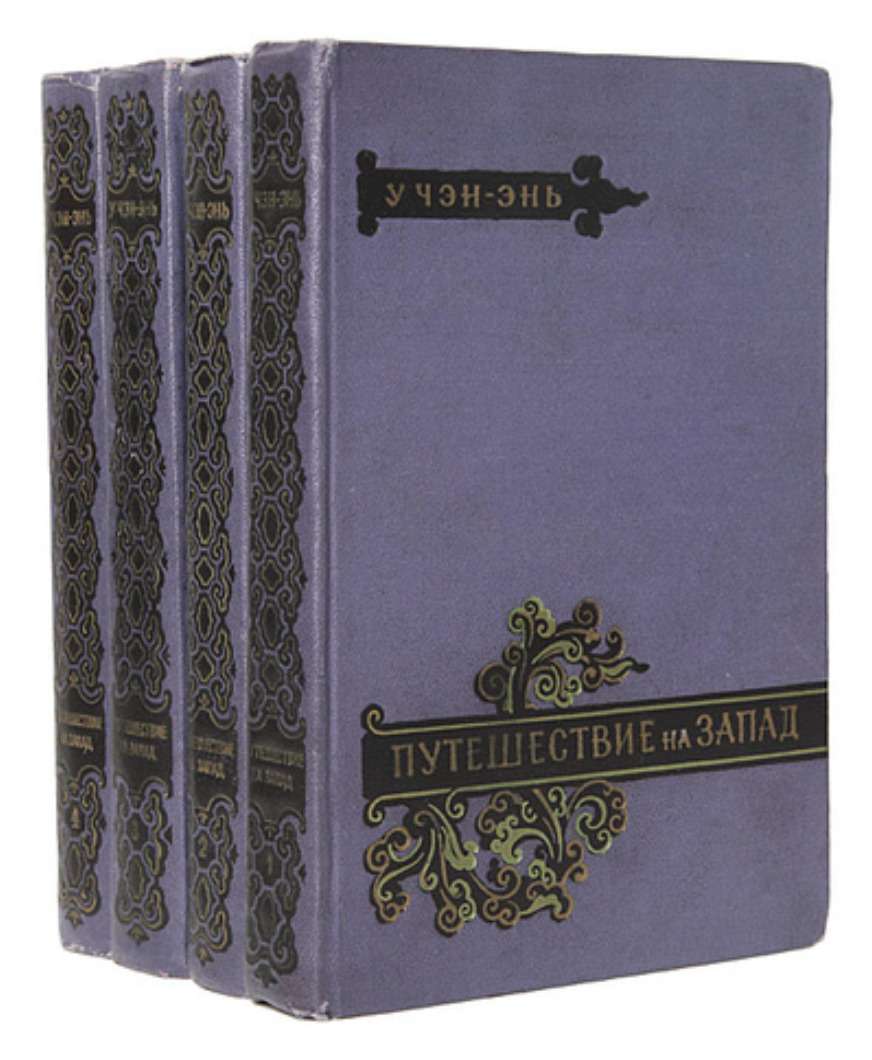
These are PDFs for Путеше́ствие на За́пад (1959) translated by A. Rogachev (vols. 1-2) and V. Kolokolov (vols. 3-4). It covers all 100 chapters.

PDF Files

Vol 1https://journeytothewestresearch.com/wp-content/uploads/2023/08/Russian-JTTW-Puteshestvie_Na_Zapad_T_1_-1959-Vol-1.pdf

Vol. 2https://journeytothewestresearch.com/wp-content/uploads/2023/08/Russian-JTTW-Puteshestvie_Na_Zapad_T_1_-1959-Vol-2.pdf

Vol. 3https://journeytothewestresearch.com/wp-content/uploads/2023/08/Russian-JTTW-Puteshestvie_Na_Zapad_T_1_-1959-Vol-3.pdf

Vol. 4https://journeytothewestresearch.com/wp-content/uploads/2023/08/Russian-JTTW-Puteshestvie_Na_Zapad_T_1_-1959-Vol-4.pdf

The four-volume hardcover edition (larger version).

H.2. Abridged

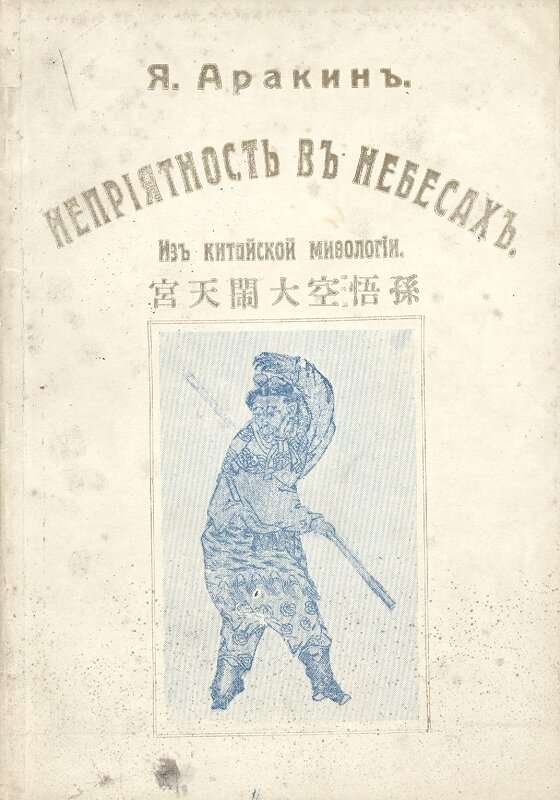
This is a text PDF for Неприятность в небесах. Из китайской мифологии (1926) translated by Yakov Arakin. It is a poetic retelling of the first seven chapters of the novel.

Thank you to Adelar Eleramo for locating the file.

PDF File

Click to access Russian-JTTW-poem-Yakov-Arakin.pdf

The official cover (larger version).

I. Spanish

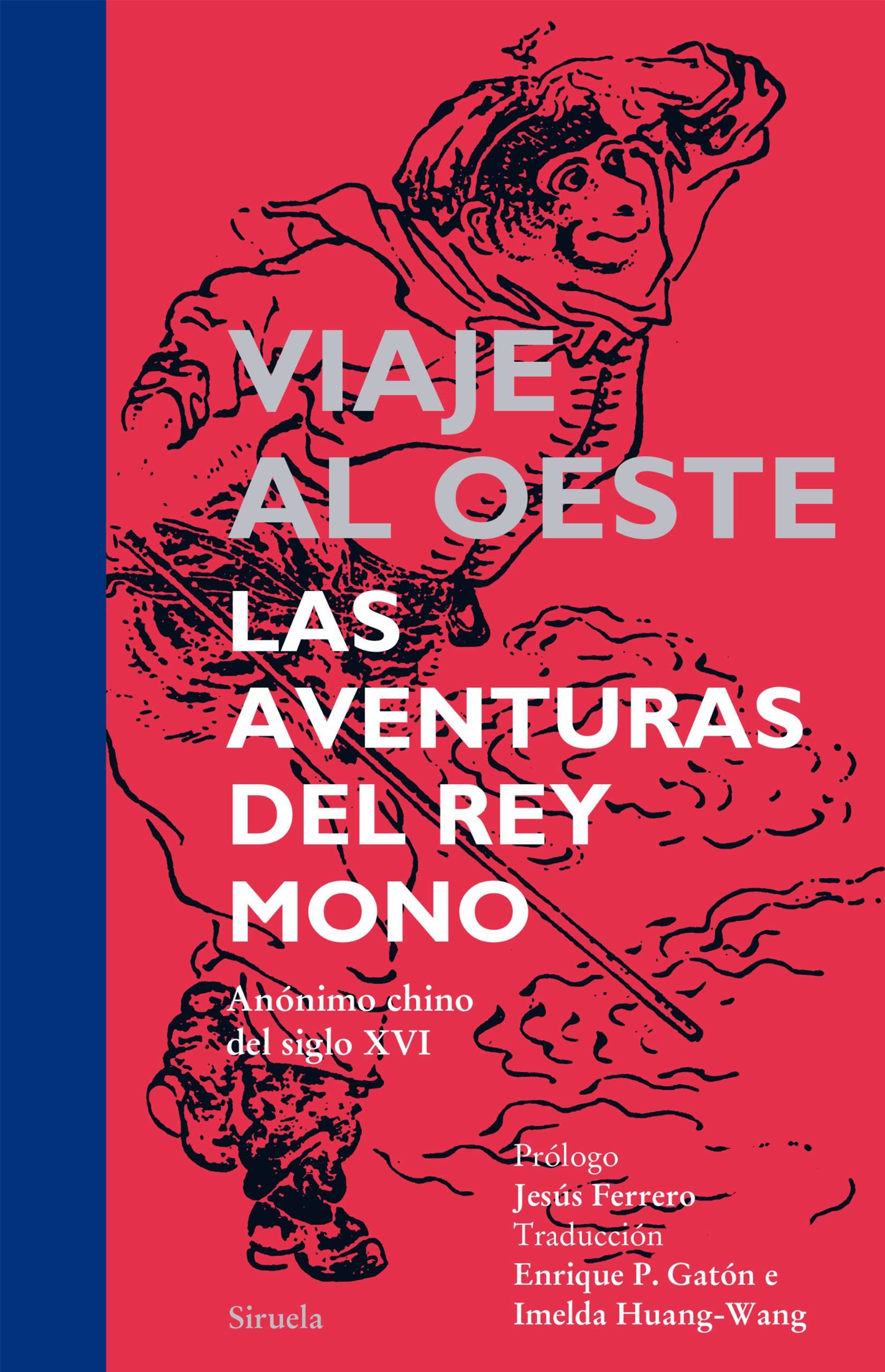
This is a text PDF for Viaje al Oeste: Las aventuras del Rey Mono (2022) translated by Enrique P. Gatón and Imelda Huang-Wang in 100 chapters.

PDF File

Click to access viaje-al-oeste-las-aventuras-del-rey-mono.pdf

The official cover (larger version)

J. Thai

This is a PDF for ไซอิ๋ว (2004/2010). It appears to be based on a four-volume edition translated by one Mr. Tin (นายติ่น) and published from 1906 to 1909. I believe it covers all 100 chapters.

Thank you again to greencicadarchivist for locating the file.

PDF File

Click to access Thai-JTTW-ไซอิ๋ว.pdf

The official cover (larger version)

K. Turkish

This is a PDF for Batı’ya Yolculuk (n.d.). I’m not sure who it was translated by. It appears to be all 100 chapters.

PDF File

Click to access Batiya-Yolculuk.pdf

The official cover (larger version)

L. Vietnamese

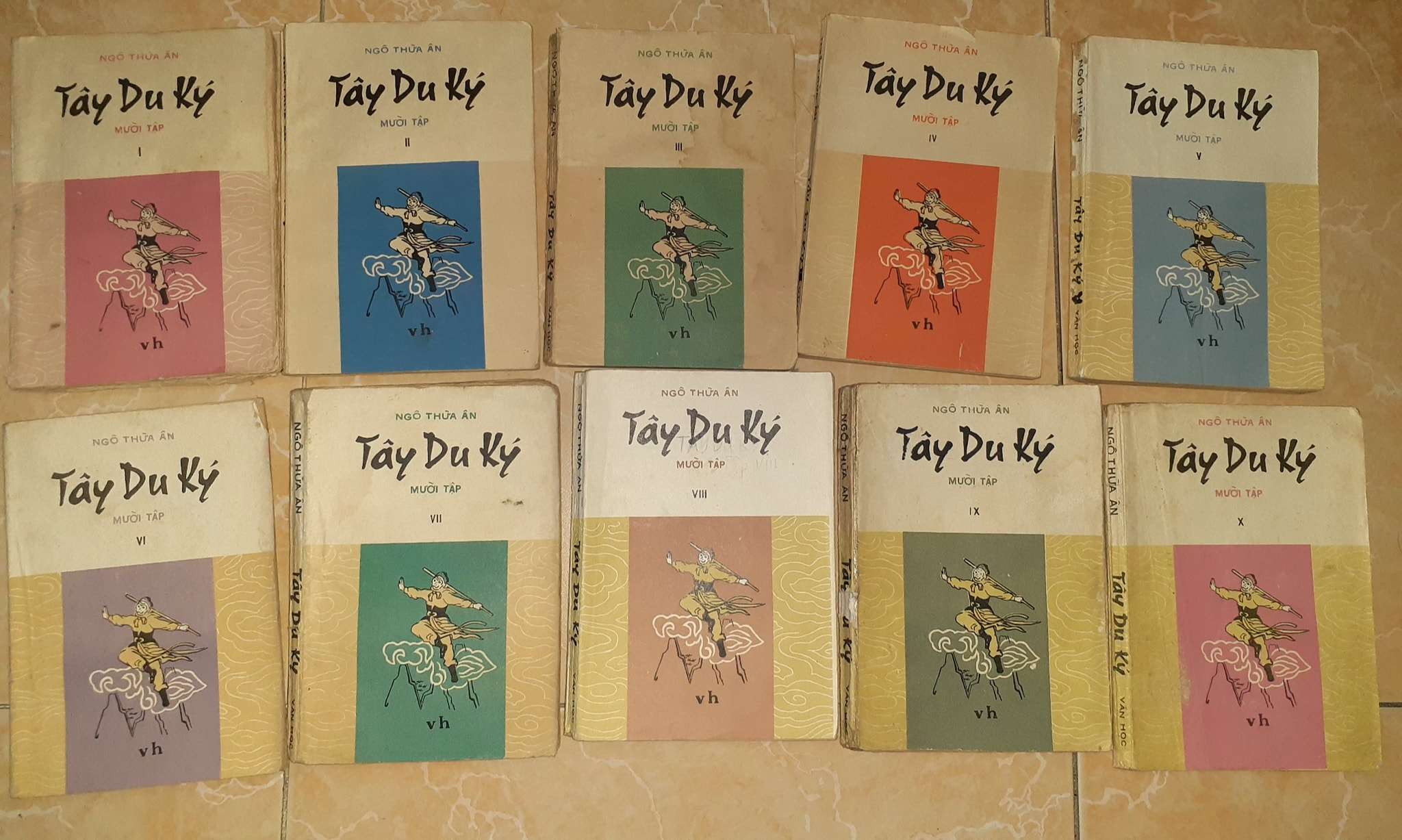
This is a text PDF for Tây Du Ký translated by Như Sơn, Mai Xuân Hải, and Phương Oanh. The 100 chapters were originally split between 10 volumes and published from 1982 to 1988. The volumes were later transcribed and combined to make a single eBook via an online community in 2013 (see here). I have converted it into a PDF.

PDF File

Click to access Vietnamese-JTTW-Tay-Du-Ky.pdf

The covers for the original ten volumes (larger version). Image found here.

3. Unofficial Sequels

3.1. A Supplement to the Journey to the West (Xiyoubu)

A. English

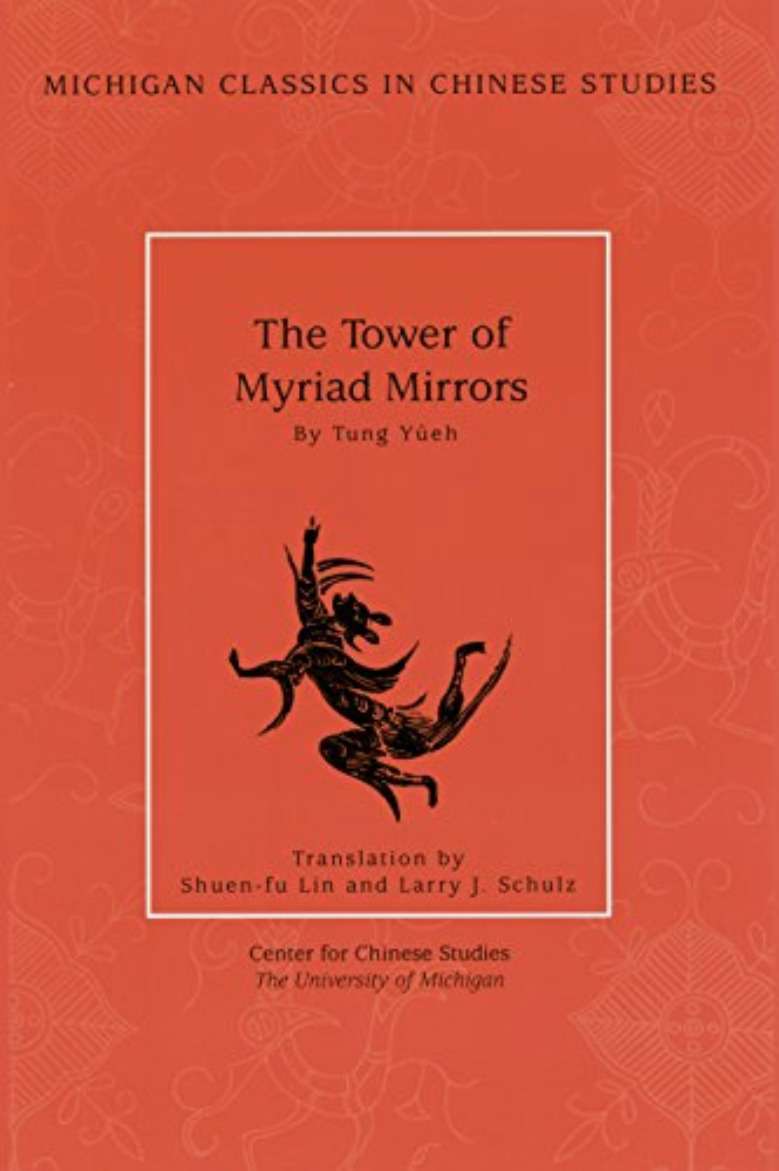
1) This is a PDF for Tower of Myriad Mirrors: A Supplement to Journey to the West (2000) translated by Shuen-fu Lin and Larry J. Schulz. This version was converted from Mobi.

See my previous article on the tale here.

PDF File

Click to access English-Xiyoubu-Lin-Shuen-fu_Dong-Yue-Schulz-Tung-Yueh-The-tower-of-myriad-mirrors_-a-supplement-to-Journey-to-the-West.pdf

The official cover (larger version)

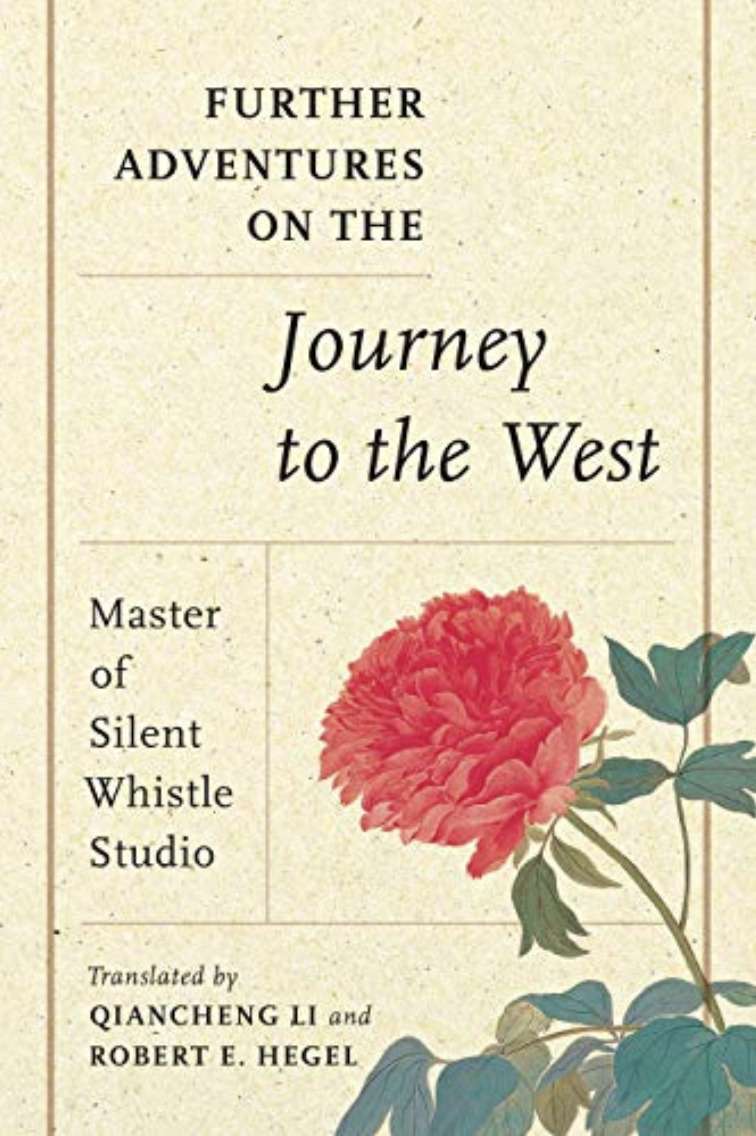
2) This is a PDF for Further Adventures on the Journey to the West – Master of Silent Whistle Studio (2020) translated by Qianchng Li and Robert E. Hegel.

PDF File

Click to access Further-Adventures-on-the-Journey-to-the-West-Master-of-Silent-Whistle-Studio-2020.pdf

The official cover (larger version)

B. Hungarian

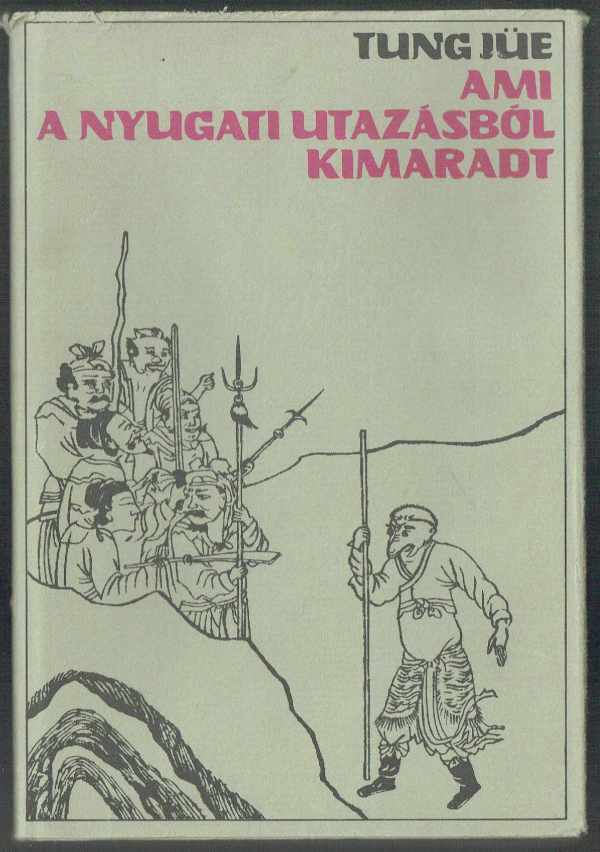
This is a text PDF for Ami a nyugati utazásból kimaradt (1957/1980) translated by Barnabás Csongor.

My thanks again to Twitter user Jakabfi Károly.

PDF File

Click to access Hungarian-Xiyoubu-tung_jue_ami_a_nyugati_utazasbol_kimaradt.pdf

The official cover (larger version).

3.2. Later Journey to the West (Hou Xiyouji, 後西遊記, 17th-century) 

A. Chinese-English

This 41-chapter book has been translated into English with AI by the Chinese Text Project (Ctext). You can READ IT HERE (turn off your VPN for access). The novel does not yet have an official translation.

See my previous articles on the subject here, here, and here.


Update: 08-17-23

I forgot to mention that I have previously archived two other Chinese classics. The first is Creation of the Gods (Fengshen yanyi, 封神演義, c. 1620; a.k.a. Investiture of the Gods), a sort of prequel to JTTW.

Archive #17 – PDFs of Creation of the Gods Library of Chinese Classics Chinese-English Bilingual Edition (Vols. 1-4)

The second is Journey to the South (Nanyouji南遊記, c. 1570s-1580s). This is NOT a direct sequel to JTTW. It instead follows the adventures of a martial god from Chinese folk religion. However, Sun Wukong makes a guest appearance in chapters one and seventeen.

Archive #40 – Journey to the South (Nanyouji) English Translation PDF


Update: 04-06-26

There is also Three Kingdoms (Sanguo yanyi三國演義; lit: “Romance of the Three Kingdoms,” 14th century.).

Archive #52 – PDFs of the Three Kingdoms Foreign Language Press English Translation (Vols. 1-4)

And Outlaws of the Marsh (a.k.a. Water MarginShuihu zhuan, 水滸傳, c. 1400).

Archive #53 – PDFs of Outlaws of the Marsh (a.k.a. Water Margin) Foreign Language Press English Translation (Vols. 1-4)

A Survey of Sun Wukong’s Magic “Immortal Breath” and Its Abilities

Sun Wukong first exhibits the ability to transform his magic hair in chapter two of Journey to the West (Xiyouji, 西遊記, 1592):

Plucking a handful of hairs from his own body and throwing them into his mouth, he chewed them to tiny pieces and then spat them into the air. “Change!” he cried, and they changed at once into two or three hundred little monkeys encircling the combatants on all sides. For you see, when someone acquires the body of an immortal, he can project his spirit, change his form, and perform all kinds of wonders. Since the Monkey King had become accomplished in the Way, every one of the eighty-four thousand hairs on his body could change into whatever shape or substance he desired (Wu & Yu, 2012, vol. 1, p. 129).

拔一把毫毛,丟在口中嚼碎,望空噴去,叫一聲:「變!」即變做三、二百個小猴,週圍攢簇。 原來人得仙體,出神變化無方。不知這猴王自從了道之後,身上有八萬四千毛羽,根根能變,應物隨心。

This tactic of transforming chewed up hairs into dozens, hundreds, or even thousands of monkey clones also appears in chapters 3, 5, 21, 35, 44, 86, and 90 (A & B) (Wu & Yu, 2012, vol. 1, pp. 132, 165, 172, & 409; vol. 2, pp. 138 & 277; vol. 3, p. 332; vol. 4, pp. 164-165, 168, 219, & 221). But these chewed up hairs can also be transformed into other objects, such as sleep-inducing bugs in chapters 5 and 86, as well as seven kinds of hawks in chapter 72 (Wu & Yu, 2012, vol. 1, p. 165; vol. 3, p. 332; vol. 4, p. 168).

But the novel states that Monkey sometimes changes his hair by first blowing on it with his magic “immortal breath” (xianqi, 仙氣). This article will provide a brief survey of this skill and its abilities.

Table of Contents

1. Hair

Explicit mentions of the immortal breath show that it can transform hair into:

  • Ink-soaked brush to write on the Buddha’s hand (ch. 7) (Wu & Yu, 2012, vol. 1, p. 195).
  • Dagger to skin a tiger (ch. 14) (Wu & Yu, 2012, vol. 1, p. 310).
  • Three-ply hemp rope to tie up Zhu Bajie (ch. 19) (Wu & Yu, 2012, vol. 1, p. 385).
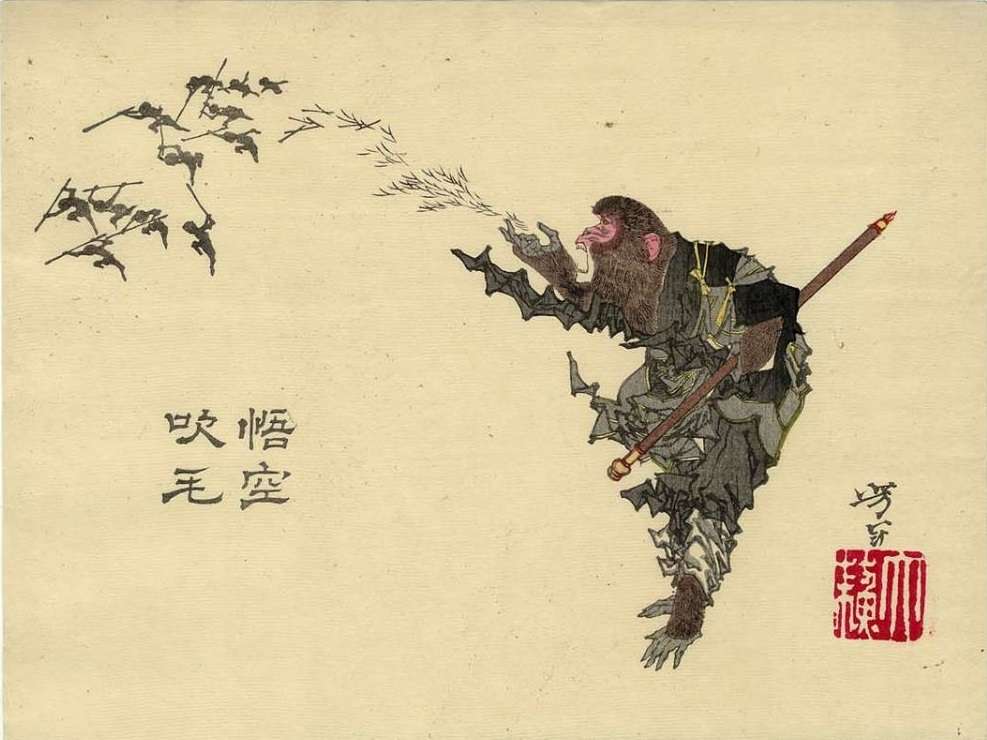
  • Duplicates of the Monkey King (fig. 1) (ch. 25, 27, 45, 73, 77, 84, 85, & 94) (Wu & Yu, 2012, vol. 1, pp. 465; vol. 2, p. 27, 129, & 292; vol. 3, p. 340; vol. 4, pp. 20, 139, 151, & 293).
  • Copper coin to pay for paper (ch. 33) (Wu & Yu, 2012, vol. 2, pp. 117-118).
  • Fake lesser demons (ch. 34) (Wu & Yu, 2012, vol. 2, p. 122).
  • Yellow-gold rope to replace a magical weapon of the same name (ch. 34) (Wu & Yu, 2012, vol. 2, p. 130).
  • Gold-plated, red lacquered box to hold a white jade token (ch. 37) (Wu & Yu, 2012, vol. 2, p. 169).
  • Wrapper to infiltrate a demon’s lair (ch. 41) (Wu & Yu, 2012, vol. 2, pp. 235-236).
  • Yellow hound to carry away a bogus immortal’s decapitated head (ch. 46) (Wu & Yu, 2012, vol. 2, p. 308).
  • Hungry hawk to eat a bogus immortal’s entrails (ch. 46) (Wu & Yu, 2012, vol. 2, p. 310).
  • Group of 30 tigers to scare away monks (ch. 64) (Wu & Yu, 2012, vol. 3, p. 194).
  • Sleep-inducing insects and lice, fleas, and bedbugs (ch. 71 (A & B) & 84) (Wu & Yu, 2012, vol. 3, pp. 303 & 304; vol. 4, p. 139).
  • Gold-headed fly to scare a demon king (ch. 75) (Wu & Yu, 2012, vol. 3, p. 366).
  • Bow drill (comprised of a diamond bit, a bamboo strip, and a cotton string) to drill out of a dangerous magic treasure (ch. 75) (Wu & Yu, 2012, vol. 3, p. 369).
  • Very thin but long rope to climb out of a monster’s stomach (ch. 76) (Wu & Yu, 2012, vol. 4, p. 3).
  • Thirty ropes for tying up bandits (ch. 97) (Wu & Yu, 2012, vol. 4, p. 328).

It should be noted, however, that the novel is very inconsistent regarding this ability. The immortal breath is not always used; Sun often just commands the hair to transform or changes it without saying anything, such as in chapters 4, 33, 34 (A, B, & C), 42, 46, 49, 51, 59, 65, 68, 71, and 74 (Wu & Yu, 2012, vol. 1, p. 156; vol. 2, p. 115, 124-125, 237, 301, 305, & 345-346; vol. 3, p. 13, 120, 216, 269, 305, & 358). The “chewing” and “spitting out” of the hair is another example (see above). But one might argue that spitting requires a build of air in the lungs, so by extension, the immortal breath is being used.

This inconsistency is probably due to the standard 1592 edition of Journey to the West coalescing from independent oral stories developed and told over the centuries (see the late-13th-century version of the story, for example). Therefore, some story tellers likely employed the immortal breath, while others did not.

sc137582 - small

Fig. 1 – “Wukong Blows His Hair” (c. 1882) by Yoshitoshi (larger version).

2. Staff

This immortal breath is also shown capable of transforming the magic iron staff (fig. 2).

  • Steel file to file through a magic golden ring pinning Monkey’s neck to a column (ch. 34) (Wu & Yu, 2012, vol. 2, p. 129).
  • Razor to mutilate two lesser demons (ch. 63) (Wu & Yu, 2012, vol. 3, p. 180).
  • Flag pole to make a pair of magic cymbals stand upright (ch. 65) (Wu & Yu, 2012, vol. 3, p. 216).
  • Seventy forked weapons to cut the threads of supernatural spider webs (ch. 73) (Wu & Yu, 2012, vol. 3, p. 340).
  • Nail to prop open a demon’s mouth while Monkey climbs out of their stomach (ch. 83) (Wu & Yu, 2012, vol. 4, p. 113).
  • Three-pointed drill to make a covert hole in a wardrobe (ch. 84) (Wu & Yu, 2012, vol. 4, p. 139).

As noted above, the novel is inconsistent in this regard. For instance, Monkey changes the staff into a steel drill without blowing on it in chapter 65 (Wu & Yu, 2012, vol. 3, p. 218). Likewise, no breath is used in chapters 46 and 84 when Sun transforms the weapon into razors for shaving heads (Wu & Yu, 2012, vol. 2, p. 305; vol. 4, p. 139).

Fig. 2 – Monkey pointing to the luminous iron pillar that will become his iron staff (larger version). From the Qing-Era Painted, Complete Edition Journey to the West (Qing caihui quanben Xiyouji, 清彩繪全本西遊記).

3. Miscellaneous 

Monkey can also transform items not in contact with his body.

3.1. Clothing Color

For instance, in chapter 46, he changes a Daoist lad’s clothing from a spring onion white robe into a brown monk’s robe (Wu & Yu, 2012, vol. 2, p. 305). 

3.2. Likeness

In chapter 78, Sun transforms Tripitaka into his likeness using a mask made from mud:

Pilgrim, too, had little alternative but to flatten the mud and press it on his own face and, after a little while, succeeded in making an apelike mask. Asking the Tang Monk to stand up but without uttering another word, Pilgrim pasted the mask on his master’s face and recited a magic spell. He then blew his immortal breath onto the mask, crying, “Change!” At once the elder took on the appearance of Pilgrim. He was told to take off his own garments and switch clothes with Pilgrim, who made the magic sign and then recited another spell to change into the form of the Tang Monk (Wu & Yu, 2012, vol. 4, p. 47).

行者沒奈何,將泥撲作一片,往自家臉上一安,做下個猴像的臉子。叫唐僧站起休動,再莫言語。貼在唐僧臉上,念動真言,吹口仙氣,叫:「變!」那長老即變做個行者模樣。脫了他的衣服,以行者的衣服穿上。行者卻將師父的衣服穿了,捻著訣,念個咒語,搖身變作唐僧的嘴臉。

Again, the novel is inconsistent regarding external objects. Sometimes Monkey bights his tongue and spits blood out to change said item, such as in chapter 25 (A & B) (Wu & Yu, 2012, vol. 1, pp. 474-475 & 477; vol. 2, p. 303). [1-2] But, again, one could argue that the immortal breath is used as spitting requires a build-up of air in the lungs.

4. Special Abilities 

The immortal breath (fig. 3) is also shown to have other special abilities.

4.1. Healing

For instance, in chapter 46, Monkey uses it to heal a gaping wound in his stomach:

With a swagger, Pilgrim walked down to the execution site. Leaning himself on a huge pillar, he untied his robe and revealed his stomach. The executioner used a rope and tied his neck to the pillar; down below, another rope strapped his two legs also to the pillar. Then he wielded a sharp dagger and ripped Pilgrim’s chest downward, all the way to his lower abdomen. Pilgrim used both his hands to push open his belly, and then he took out his intestines, which he examined one by one. After a long pause, he put them back inside, coil for coil exactly as before. Grasping the skins of his belly and bringing them together with his hands, he blew his magic breath on his abdomen, crying, “Grow!” At once his belly closed up completely (Wu & Yu, 2012, vol. 2, p. 309).

行者搖搖擺擺,徑至殺場。將身靠著大樁,解開衣帶,露出肚腹。那劊子手將一條繩套在他膊項上,一條繩紮住他腿足,把一口牛耳短刀幌一幌,著肚皮下一割,搠個窟窿。這行者雙手爬開肚腹,拿出腸臟來,一條條理夠多時,依然安在裡面,照舊盤曲。捻著肚皮,吹口仙氣,叫:「長!」依然長合。

4.2. Soul Manipulation

The novel implies that Sun’s immortal breath also has the ability to manipulate souls. For example, in chapter 88, Sun uses it in an arcane ritual designed to bestow three human disciples with super human strength. The pertinent section reads:

In a secluded room behind the Gauze-Drying Pavilion, Pilgrim traced out on the ground a diagram of the Big Dipper. Then he asked the three princes to prostrate themselves inside the diagram and, with eyes closed, exercise the utmost concentration. Behind them he himself recited in silence the true sayings of realized immortality and intoned the words of Dharani as he blew divine breaths into their visceral cavities. Their primordial spirits [yuanshen, 元神] were thus restored to their original abodes …

行者才教三個王子都在暴紗亭後,靜室之間,畫了罡斗。教三人都俯伏在內,一個個瞑目寧神。這裡卻暗暗念動真言,誦動咒語,將仙氣吹入他三人心腹之中,把元神收歸本舍 。。。

The term “primordial spirits” (yuanshen, 元神) is commonly associated with Buddhahood or enlightenment. In Daoism, it is synonymous with the attainment of immortality via the formation of a “Sacred Embryo” (shengtai, 聖胎), which is forged from spiritual energies over long years of self-cultivation (Darga, 2008). This suggests that Monkey’s immortal breath also grants the disciples some form of immortality. You can read about the entire ritual here.

Fig. 3 – A vapor blowing smoke (larger version). I imagine this is what the immortal breath would look like. Image found here. Photographer unknown. 

And in chapter 97, Sun uses the immortal breath to transform an old man’s soul into “ether” for easy transport back to the world of the living:

Pilgrim changed the soul of the squire into ether [qi, 氣] by blowing on him. The ether was stored in his sleeve so that they could leave [Hell] and go back to the world of light together. Astride the clouds, he soon arrived at the Kou house. Eight Rules [Zhu Bajie] was told to pry open the lid of the coffin, and the soul of the squire was pushed into his body. In a moment, he began to breathe once more and revived (Wu & Yu, 2012, vol. 4, p. 339).

將他吹化為氣,掉於衣袖之間,同去幽府,復返陽間。駕雲頭,到了寇家,即喚八戒捎開材蓋,把他魂靈兒推付本身。須臾間,透出氣來活了。

The phrase “immortal breath” (xianqi, 仙氣) is missing in the original Chinese, but the ability’s use is understood as the passage mentions Monkey “blowing” (chui, 吹) on the soul.

V. Conclusion

Various chapters of Journey to the West show that Sun Wukong can use his immortal breath to transform his hair, his magic staff, and items not directly in contact with his body into anything he desires. These range from utilitarian items like files, blades, drills, and ropes to living creatures like insects, birds of prey, dogs, tigers, lesser demons, and even independent copies of himself. It can also change the color and appearance of clothing, as well as magically disguise someone when used in tandem with a mud mask. The skill’s special abilities include healing and soul manipulation. Evidence suggests that it can restore the “primordial spirit,” granting superhuman strength and some form of immortality, as well as transform souls into “ether” for better ease of transport.
The immortal breath, however, is not used consistently throughout the novel. Monkey sometimes chews up and spits out the hair, commands it to change, or simply transforms it without saying anything at all. This inconsistency is likely due to the novel coalescing from independent oral stories developed and told over the centuries.

Notes:

1) Thank you to Irwen Wong for reminding me of this.

2) The second instance of tongue-biting doesn’t mention the word for blood (xie, 血), but it can be understood to be present.

Sources:

Darga, M. (2008). Shengtai. In F. Pregadio (Ed.), The Encyclopedia of Taoism (Vols. 1-2) (pp. 883-884). London: Routledge].

Wu, C., & Yu, A. C. (2012). The Journey to the West (Vols. 1-4). Chicago, Illinois: University of Chicago Press.