The Great Sage Detecting “Ping-Pong” Bottle

Last updated: 06-26-2021

Elliott (1955/1990) describes a curious glass bottle used in the worship of Sun Wukong in Singapore. Filled with “twelve o’clock water” and topped with a consecrated bulbous glass stem, it is said to make a pinging noise to signal the arrival of the monkey god in a home or temple.

Table of Contents

1. Description

Elliott (1955/1990) explains:

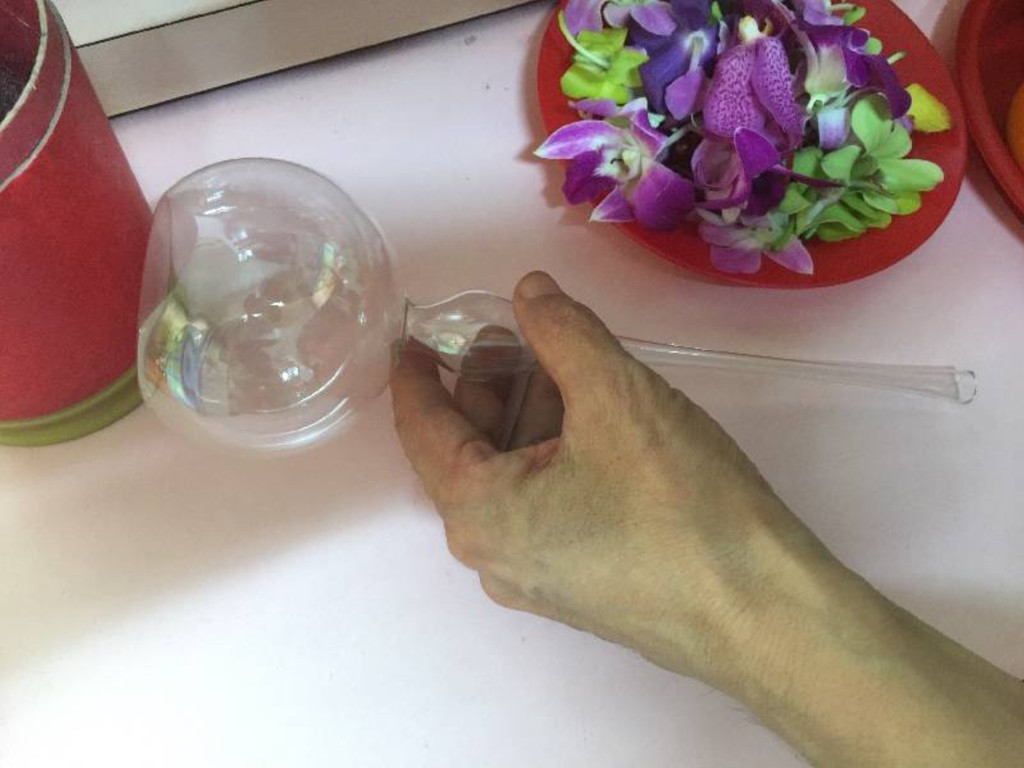
There are, also, sometimes other pieces of apparatus, apart from images, which devotees like to keep in their own homes. An outstanding example is an article of equipment almost exclusively associated with the ‘Great Saint’ [大聖] which goes by the onomatopoeic name of ‘ping-pong’ [乒乓]. It consists of an ordinary bottle filled with ‘twelve o’clock water’, water drawn from a tap or well at midday. Into the neck is fitted a funnel-like piece of glass-ware open at the lower end of the funnel, which dips into the water but completely closes the top [fig. 1 & 2]. Everyday at noon, and sometimes at other hours as well, this apparatus gives off a sudden ‘pinging’ sound, as if bubbles were rising and forcing up the funnel in the bottle’s neck. When this occurs, the shen [神, god] is supposed to be revealing his presence in the temple or the home, and an immediate act of worship must be carried out by the persons there. These ‘ping-pong’ are invariably found in temples associated with the ‘Great Saint’. Devotees will purchase their own funnels and bring them to the temple for the dang-ki [童乩, spirit-medium] to consecrate them with a lick of his blood (p. 58).

Fig. 1 – The ping-pong bottle, a.k.a. “Great Sage bottle” (Dasheng ping, 大聖瓶), fitted with the bulbous stem, which is closed at the top and open at the bottom (larger version). Fig. 2 – A detail of the stem (larger version). Images found on google.

2. Use Outside of Singapore

The device was also used in Hong Kong according to one personal account shared with me:

I believe the apparatus was used not just in Singapore. My mom told me that as a kid in HK in the 1940s/50s, her aunt also had something similar on the altar where she worshipped the [Great] Saint. And when the apparatus made a noise which signified his arrival, they would light up a joss stick.

I don’t know when the bottle was first associated with Sun Wukong, but the above information points to its active use in Asia as far back as the 1950s. It’s my understanding that the bottle is a rarity in modern practice, suggesting that it flourished prior to mid-century.

3. Speculation

Why the bottle was associated with the Great Sage is also a mystery to me, but the significance of twelve o’clock water may provide some clues. Astrological theory associates noon with wu (午), the seventh of twelve earthly branches, which is in turn identified with horses, the heart, fire yang, the summer solstice, and the direction south (Wu & Taylor, 2014, pp. 133-134). Readers may remember that Sun Wukong is appointed the keeper of the heavenly horses (bimawen, 弼馬溫) in chapter four of Journey to the West (Wu & Yu, 2012, pp. 148-149). Additionally, Chinese philosophy considers the heart to be the seat of the mind (xin, 心; a.k.a. “heart-mind”). This is important as Sun is called the “Mind Monkey” (xinyuan, 心猿; a.k.a. “Mind Ape”), which is a Buddho-Daoist concept denoting the disquieted, transient thoughts that keep man trapped in Samsara. Examples include the titles for chapters seven (“From the Eight Trigrams Brazier the Great Sage escapes; Beneath the Five Phases Mountain, Mind Monkey is still”) and fourteen (“Mind Monkey returns to the Right; The Six Robbers vanish from sight”). 

(Before I continue, I must warn that using the 16th-century novel as a source for modern folk religion surely overlooks beliefs that I am not aware of. The above info should, therefore, be considered purely speculative.)

A naturalistic explanation for the pinging noise is air escaping from the bottle due to changes in atmospheric pressure. However, I’d like to speculate on a possible esoteric reason. As mentioned above, noon is identified with fire yang, which is considered the height of yang power. In fact, the hours before wu and after zi (子, midnight) are considered the best time to practice Daoist exlixir cultivation. [1] And since heaven is the embodiment of yang, [2] it’s possible worshipers believe that water collected at noon is infused with strong yang energy, thereby giving it the ability to detect the presence of celestial deities like the Great Sage.


4. Updates

4.1. Significance of the Twelve O’clock Water

Update: 08-11-20

J.D. Martinsen contacted me and noted that “drawing noon water” (da wushi shui, 打午時水) is a common practice in coastal China during the Dragon Boat Festival. The water is apparently known for its demonifugic and medicinal properties. In fact, this custom is even practiced in Taiwan where there is a common saying: “A sip of noon water is better than three years of herbal medicine” (wushi shui yin yi zui, jiao hao buyao chi san nian, 午時水飲一嘴,較好補藥吃三年) (Chen, 2011, p. 210). Therefore, this association with warding malevolent influences/sickness may explain why Sun Wukong is connected with noon water. He is after all the exorcist par excellence, as well as a healer.


4.2. How the Twelve O’clock Water is Captured and Used

Update: 06-23-21

An informant from Singapore, who is the head of a monkey god temple, shared with me some wonderful folk knowledge about the ping-pong bottle. The words below were edited for readability:

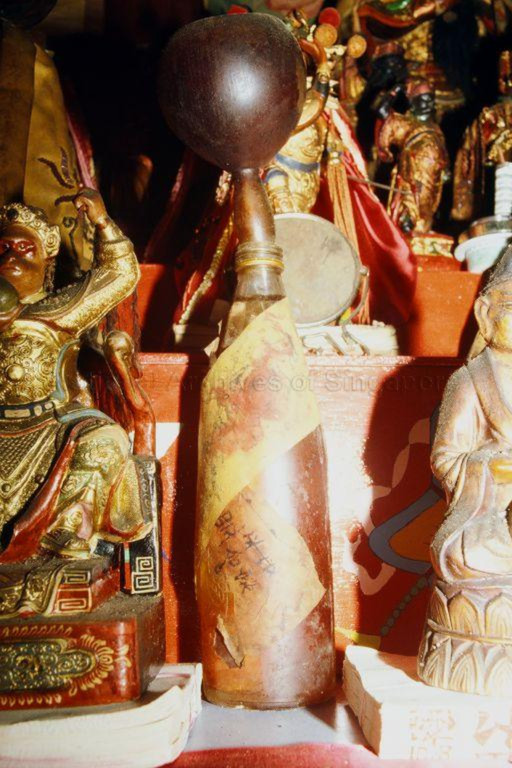
He flies at a high speed which generates high heat and causes the ping pong to sound. The water inside the bottle where you place the ping pong is changed on 五月初五 (端午節) [i.e. the Dragon Boat Festival]. Every year, the replacement water is collected from your rain water. The former water will be used to bathe to purify our well-being. I have poured it into a large pail. And bottle it and give it to devotees to bathe. Talismans are issued when we change the water at noon (fig. 3), we will paste them on the bottle on 端午節. When urgent or dangerous matters happen, we will use the ping pong holy water to ward off bad omens.

My informant told me that some of this knowledge was revealed to him by the monkey god.

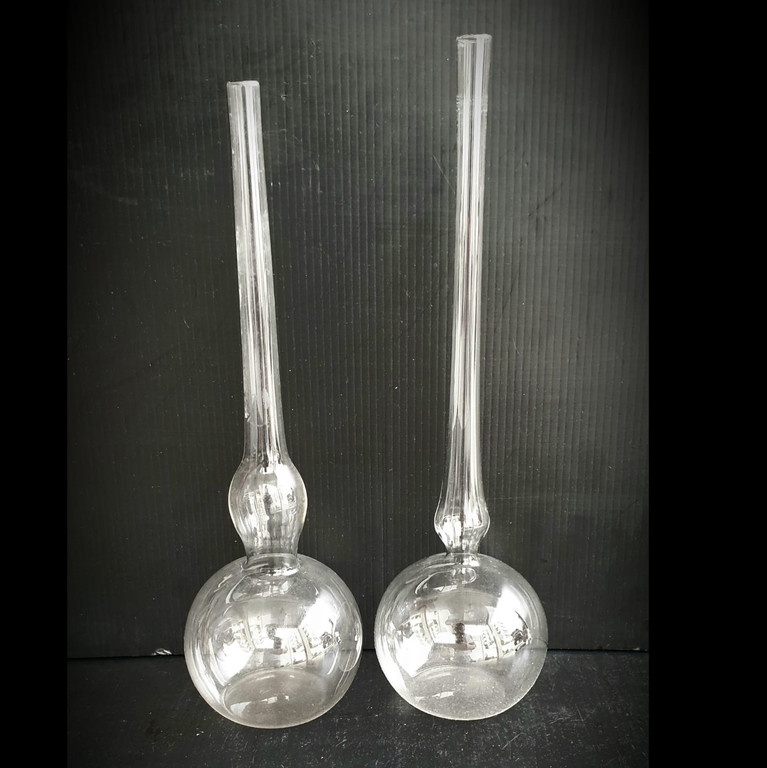
I was also told by a collector-seller that there are different-sized glass stems (fig. 4). Though, he believes that their hand-made nature means that no two are exactly the same. My informant also states that the stems with “larger diameters will sound louder” when the Great Sage arrives.

Fig. 3 – Talismans on a ping-pong bottle (larger version). Photo taken at the Wallich Street “Tai Seng Yah” (Dasheng ye) temple in Singapore during the 1970s. Courtesy of Ronni Pinsler of the BOXS project. Fig. 4 – The different sizes of ping-pong stems (larger version). Photo from a private collector.


4.3. How to Prepare the Ritual Bottle

Update: 06-26-21

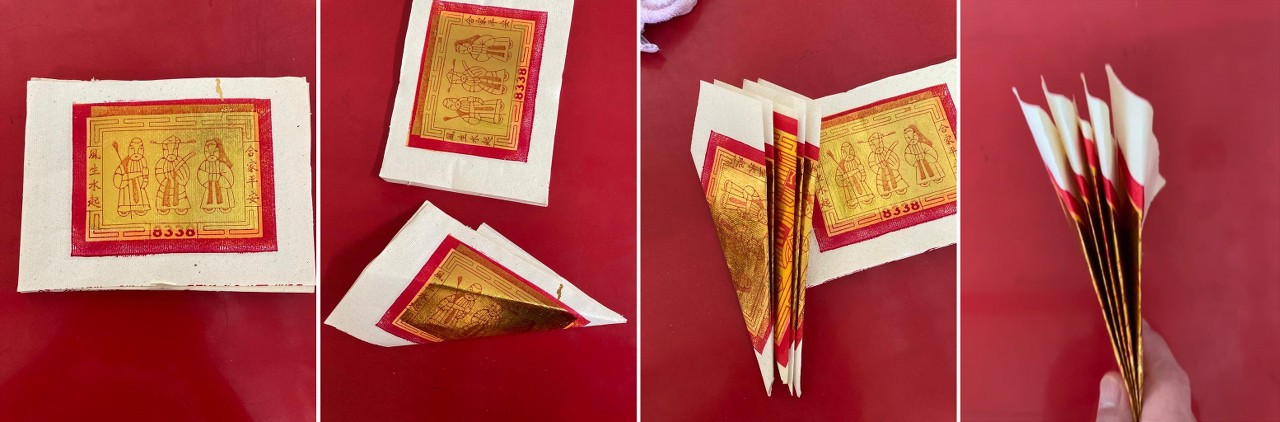
My informant tells me that a beer bottle can be used to hold the ping-pong stem. It must be washed and all labels removed. The preparation for the stem is a little more involved. The stem must be washed along with five kinds of flowers. The types of flowers do not matter, but no white flowers are permitted. Also, slices of green lemon can be included, but no yellow lemons are permitted. This washing must be done on the first or the 15th of the lunar month. The holy water is gathered in a pail between 11am and noon from rain the day before the Dragon Boat Festival, for it is believed that it always rains on this day. This water is poured one index finger length from the rim. This ensures that it will not overflow once the ping-pong stem is inserted. Then triangle-folded joss paper (jin zhi, 金紙) (fig. 5 to 8) is waved three times around the ping-pong (nuo pingpong, 挪乒乓) while prayers are said. Finally, the paper is left atop the ping-pong bulb for a given time. The ping-pong bottle must be placed next to a statue of the Great Sage.

Fig. 5 to 8 – The process of folding the joss paper into triangles (larger version). Photos by my informant.

Notes:

1) This is noted as early as the fourth century CE work Wondrous Record of the Golden Casket on the Spirit Immortals’ Practice of Eating Qi (Shenxian shiqi jin’gui miaolu, 神仙食氣金櫃妙錄) (Kohn, 2008, p. 84).

2) See, for example, Clearly (2003), p. 391.

Sources:

Chen, X. (2011). Taiwan li shi shang de yi min yu she hui yan jiu [The History of Taiwanese Immigration and Social Studies]. Beijing: Jiu zhou chu ban she.

Cleary, T. F. (2003). The Taoist Classics: The Collected Translations of Thomas Cleary, Volume Two. Boston, Mass: Shambhala.

Elliott, A. J. (1990). Chinese Spirit-Medium Cults in Singapore. London: The Athlone Press. (Original work published 1955)

Kohn, L. (2008). Chinese Healing Exercises: The Tradition of Daoyin. Honolulu: University of Hawaiʻi Press.

Wu, C., & Yu, A. C. (2012). The Journey to the West (Vol. 1) (Rev. ed.). Chicago, Illinois: University of Chicago Press.

Wu, Z., & Taylor, W. K. (2014). Heavenly Stems and Earthly Branches – TianGan DiZhi: The Heart of Chinese Wisdom Traditions. London: Jessica Kingsley Publishers.

Monkey and the Summoners of Hell: The Story and Origins of the Heibai Wuchang

Last updated: 05-04-2026

One of the most famous episodes from Journey to the West (Xiyouji西遊記, 1592) happens in chapter three after Sun Wukong returns from the undersea palace with his magic staff and is chosen as lord of the 72 monster kings. Following a lavish banquet in his honor, a drunken Monkey King falls asleep and his soul is dragged to the Chinese underworld by two spirits:

In his sleep the Handsome Monkey King saw two men approach with a summons with the three characters “Sun Wukong” written on it. They walked up to him and, without a word, tied him up with a rope and dragged him off. The soul of the Handsome Monkey King was reeling from side to side. They reached the edge of a city. The Monkey King was gradually coming to himself, when he lifted up his head and suddenly saw above the city an iron sign bearing in large letters the three words “Region of Darkness [You mingjie, 幽冥界].” The Handsome Monkey King at once became fully conscious. “The Region of Darkness is the abode of Yama, King of Death,” he said. “Why am I here?” “Your age in the World of Life has come to an end,” the two men said. “The two of us were given this summons to arrest you.” When the Monkey King heard this, he said, “I, old Monkey himself, have transcended the Three Regions and the Five Phases [1]; hence I am no longer under Yama’s jurisdiction. Why is he so confused that he wants to arrest me?” The two summoners paid scant attention. Yanking and pulling, they were determined to haul him inside. Growing angry, the Monkey King whipped out his treasure. One wave of it turned it into the thickness of a rice bowl; he raised his hand once, and the two summoners were reduced to hash (Wu & Yu, 2012, p. 139).

只見那美猴王睡裡,見兩人拿一張批文,上有「孫悟空」三字,走近身,不容分說,套上繩,就把美猴王的魂靈兒索了去,踉踉蹌蹌,直帶到一座城邊。猴王漸覺酒醒,忽擡頭觀看,那城上有一鐵牌,牌上有三個大字,乃「幽冥界」。美猴王頓然醒悟道:「幽冥界乃閻王所居,何為到此?」那兩人道:「你今陽壽該終,我兩人領批,勾你來也。」猴王聽說,道:「我老孫超出三界之外,不在五行之中,已不伏他管轄,怎麼朦朧,又敢來勾我?」那兩個勾死人,只管扯扯拉拉,定要拖他進去。這猴王惱起性來,耳朵中掣出寶貝,幌一幌,碗來粗細。略舉手,把兩個勾死人打為肉醬。

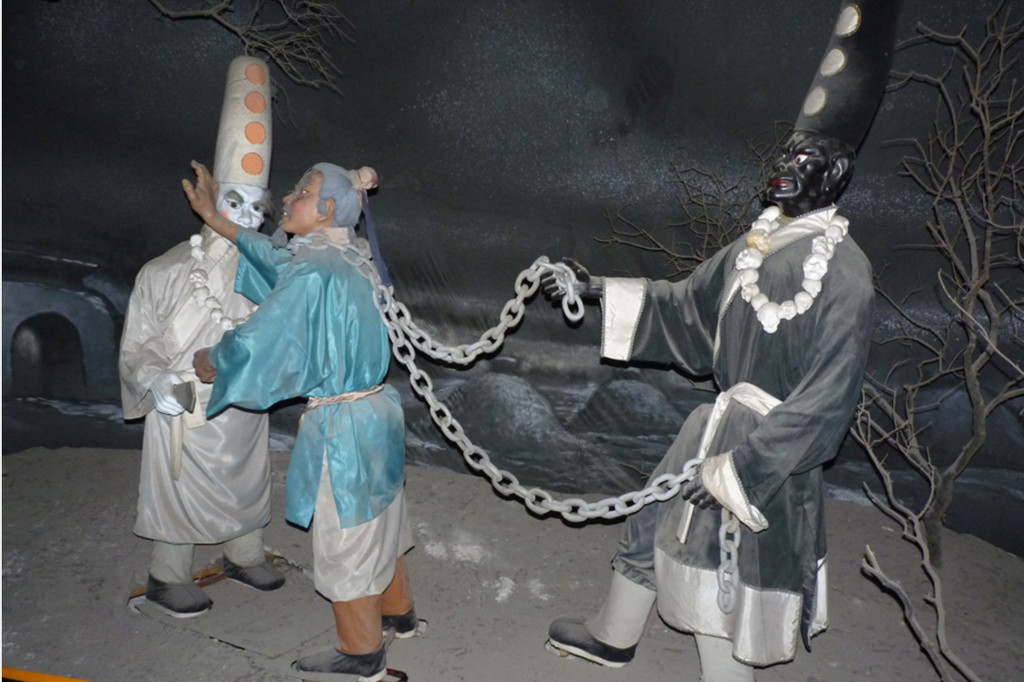
The two unnamed psychopomps are simply referred to in the story as “[those who] arrest the dead” (Gou siren, 勾死人). Modern media sometimes portrays these two wearing contrasting black and white uniforms with tall hats (fig. 1).

Heibai Wuchang summon Wukong - small

Fig. 1 – The summoners taking Sun Wukong’s soul in his sleep (larger version). From episode 7 of the Little Fox ESL Journey to the West series.

Table of Contents

1. The Heibai Wuchang

The specific color-coded deities are known in China, Taiwan, and Southeast Asian countries like Malaysia and Singapore as the Heibai wuchang (黑白無常), or the “Black and White [spirits of] Impermanence.” Tan (2018) describes their mythic background and religious importance:

[A] good deal of importance attaches to the worship in Malaysia and Singapore of Heibai Wuchang … popularly known as Da Er Ye (大二爺, Eldest and Second Uncles). In charge of policing the netherworld and protecting humans from evil, they are believed to be two soldiers of the Tang dynasty, General Xie [謝] and General Fan [范]. The former was tall and was hanged by the enemy, while the latter was shorter and was drowned while fighting enemies. General Xie’s image is that of a tall person with a protruding long tongue; he’s wearing a white shirt, and his high hat has the characters yijian daji ([一見大吉] “big luck on seeing me”) or yijian shengcai ([一見生財] “getting wealth on seeing me”). General Fan’s image has a dark face, and his square hat bears the characters tianxia taiping [天下太平], or “peace in the world.” Also called Qiye (七爺) and Baye (八爺), the two generals are in charge of rewarding good people and punishing evil ones. General Xie is more popular among worshippers; frightening as he is, the Elder Uncle benefits from his association with blessing wealth (p. 58).

Chen (2014) provides a different background for the two, which is commonly told in the southern Chinese city of Fuzhou in Fujian province:

The Seventh Lord (七爺) and Eighth Lord (八爺) are frequently seen and are well-known in Taiwanese religious parades. These two deities were originally two brother-like friends in Fuzhou (福州). One was called Xie Bian (謝必安), and the other one was named Fan Wujiu (范無救; 范無咎). On a rainy day, they had an appointment to meet under the Nan Tai Bridge (南臺橋). Fan Wujiu was short with a dark complexion, but Xie Bian was tall with a light complexion. Fan Wujiu arrived at the meeting place earlier, waited there in spite of the heavy rain, and was drowned. Xie Bian tried to bring umbrellas for Fan Wujiu and was therefore late. When he arrived at the bridge, Fan Wujiu was already dead, so he decided to commit suicide because of his friendship and guilt. According to legends, the Heavenly Emperor (玉皇大帝) was touched by this pair of brother-like friends, and promoted their ghosts to supernatural officers from the underworld. The Seventh Lord is Bai Wuchang (白無常), and the Eighth Lord is Hei Wuchang (黑無常). Their mission is to bring dead people’s ghosts from the ordinary human world to the underworld at the moment of their deaths (p. 220).

Heibai wuchang statues - small

Fig. 2 – A depiction of the spirits taking a soul to the Chinese underworld (larger version). From the Haw Par Villa theme park in Singapore. Original picture from Baike.

Stevens (1997) goes into more detail about their function and veneration:

The pair are despatched on orders from the City God when the due date of a person’s death arrives, to seek out and identify the correct human through the local spiritual official, the Earth God [fig. 3]. They appear before the human and the Tall Demon [the white spirit] announces that the time has come. The Short Demon [the black spirit] binds the soul and drags it before the City God. The Short Demon carries the tablet of authority and the chains to arrest the soul whose due date of death has arrived [fig. 2].

The Tall Demon … receives considerable attention from devotees, often relatives of the very sick, and in a few temples he is provided with cigarettes which are to be seen continually burning having been forced in between his lips. More popularly, his mouth is smeared with a black substance to win his favour and bribe him to keep away. This used to be opium and is still said to be opium, though the substance appears to be more of a sweet sticky mess. In northern and central China, only the Tall Demon is found (p. 173).

tudi_gong_28129

Fig. 3 – A monumental statue of an Earth god in Taiwan (larger version).

2. Origins

The sources above provide two backgrounds for the spirits, historical generals or brother-like friends, all of whom died unnatural deaths. Both origins involve the tall, white figure being hanged, while the short, black figure was drowned. Both of these backgrounds have respective ties to religious beliefs of the Han (206 BCE–220 CE) and Song (960–1279 CE) dynasties. It was common practice during the Han for generals, especially those slain by the enemy, to be deified as gods. This concept of deified mortals carried over into the Song Dynasty when tutelary gods were popular. Those deified were often pious or loyal people who died unnatural deaths. But most importantly, these individuals were deified by the very communities in which they lived, meaning they were worshiped as the protector of the specific locale and its people (Von Glahn, 2004, p. 164).

These tutelary cults find their origin in earth gods (tudishen, 土地神) worshiped as early as the Han. Just like people of the Song worshiped the worthy among their fallen community members, people of the Han worshiped the gods believed to inhabit the very earth on which their communities were established. Considering the dead were buried underground, these earth gods also served the function of “escort[ing] the deceased to the world of the afterlife” (Von Glahn, 2004, p. 165). Remember above that Stevens described the tall and short spirits relying on the local earth god to help locate the correct soul being summoned. Therefore, our spirits appear to be a combination of deified mortals (generals/worthy citizens) and earth gods who escorted the deceased to the afterlife. But there may be more to the story.

Wuchang (無常), or “impermanence”, is the Chinese term for the sanskrit Anitya. This is one of the “Three Marks” (Sk: Trilaksana) of existence in Buddhism, the other two being suffering (Duhkha) and non-self (Anatman) (Buswell & Lopez, 2014, pp. 47-48). The fact Wuchang is associated with these spirits suggests there is an added Buddhist influence. As I’ve written before, the Chinese underworld presented in Journey to the West is an amalgam of local Chinese and foreign Buddhist beliefs. In short, the Chinese Underworld consists of ten courts in which a soul is punished and sent on to the next until their karma is cleansed. The concept of purgatory and the Ten Kings or Judges of hell are products of 7th century Chinese Buddhism. Prior to this, souls of the dead were kept en masse in a sort of Daoist city of the dead. So our two summoners were no doubt absorbed into this new Buddhist worldview. The spirits in effect could be viewed as personifications of Buddhist impermanence.

The contrasting black and white color scheme has at least two origins. One, it may have evolved from the belief that each performed duties at different times. Maspero (1981) writes, “The most famous of [the City God’s] subordinates are Master White (Bai laoye [白老爺]) and Master Black (Hei laoye [黑老爺]), who perceive everything that goes on within the constituency, the former during the day and the latter during the night” (p. 110). Two, it may draw from the dualistic nature of Chinese philosophy. Baptandier (2008) comments their color is a “personification of the yin and yang principles of life” (p. 146).

20180916_131548 - small

Fig. 4 – A wall mural depicting the Ba Jiajiang (Eight Generals), including General Xie (white) with the phrase “Big Luck” (daji, 大吉) on his hat (larger version) and to his left General Fan (black) with a square hat. Taken by the author in Taipei, Taiwan.

3. Influence

Both General Xie (the tall, white spirit) and General Fan (the short, black spirit) figure among the Ba Jiajiang (八家將), or “Eight Generals” (fig. 4). These spirit generals are considered protectors of the City God (as well as other popular folk deities) and destroyers of evil. They consist of our two spirits, two more underworld figures called Generals Gan (甘) and Liu (柳), as well as four other figures known as the Four Seasons (Siji, 四季). These generals are personified during festivals by temple parade dance troupes called Jiajiang (家將). Members paint their faces according to the prescribed wrathful iconography for each general (fig. 5) and perform all sorts of choreographed militaristic dances while wielding weapons (video 1). These performances serve to exorcize evil spirits.

National Akau Mazu’s Cup of Youth Ba-Jia-Jang and Guan-Jang-Shou Competition, Ci Feng Mazu Temple, Pingtung City, Taiwan

Fig. 5 – The facepaint of General Xie, the tall, white spirit. A larger version can be seen on this blog. Original picture by Rich J. Matheson.

The tradition originated in Fuzhou but later spread to Taiwan by the 1870s, making it a rather recent phenomenon (Sutton, 1996).

Video 1 – A Ba Jiajiang performance.


4. Updates

Update: 10-29-2018

Sutton (1996) explains the ceremonial procession of the Eight Generals is modeled after yamen officials making an arrest in dynastic China. In this case, the otherworldly generals would be sent to arrest evil spirits:

The performers seen on the march—excluding the Four Seasons—represent a process, though it is never ritually played out: arrest by yamen underlings. In principle the punishment bearer warns, the messengers search out, the stave bearers pursue, Erye and Daye [the Black and White Spirits] take into custody, and the justices at the rear interrogate and record (p. 215).

In video 1, the man dressed in civilian attire and carrying the strange, yoke-like device on his shoulders (visible at 00:26) is performing the part of the punishment bearer, which I take to mean a symbol of those previously arrested and used as warnings to the evil spirits being pursued.


Update: 10-14-22

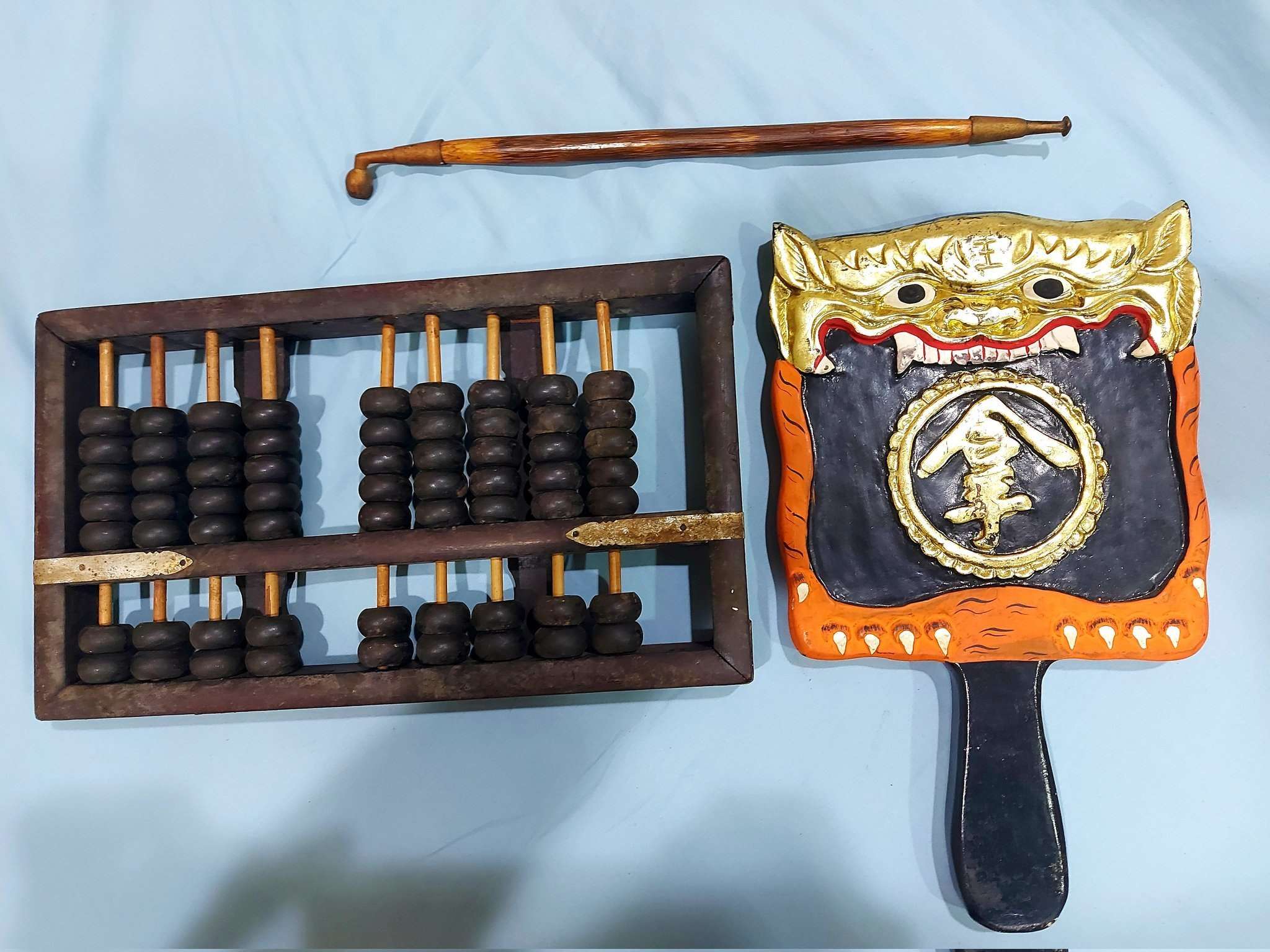
I purchased some ritual items from Singapore previously used by tangki spirit-mediums of the Heibai wuchang. These include an old-school abacus for making arcane calculations, a soul-summoning placard, and a smoking pipe (fig. 6). I feel much cooler now that I have them. My seller-collector friend, from whom I purchased this set, told me that some of the beads are missing from the abacus because they were most likely given to believers as talismans.

Fig. 6 – The ritual items used by Singaporean tangki spirit-mediums of the Heibai wuchang (larger version).


Update: 05-04-26

This is my favorite woodblock print from The Book to Enlightenment of the Journey to the West (Xiyou Zhengdao Shu西遊證道書, 1663), a Daoist commentary on the novel. It shows Monkey’s soul being dragged to hell in his sleep by the Heibai wuchang. The uncles are shown holding the soul-summoning placard and tugging on the chains, respectively (fig. 7).

Fig. 7 – The psychopomps drag Wukong to the Underworld in his sleep (larger version).

Notes:

1) The Three Realms are Heaven, Earth, and Hell, and the Five Phases are the elements of fire, water, earth, metal, and wood. The point being that he is beyond the control of the three realms and the effects of the elements because he has achieved immortality.

Sources

Baptandier, B. (2008). The lady of Linshui: A Chinese female cult. Stanford, Calif: Stanford University Press.

Chen, Y. (2014). Cinematic visualization of spiritual lesbianism in Monkia Treut’s Ghosted: countering essentialist concerns about Li Ang’s literary works In Y. Chen (Ed). New modern Chinese women and gender politics: The centennial of the end of the Qing Dynasty (pp. 210-222).

Maspero, H. (1981). Taoism and Chinese religion. Amherst: University of Massachusetts Press.

Buswell, R., & Lopez, D. (2014). The Princeton Dictionary of Buddhism. Princeton University Press.

Stevens, K. G. (1997). Chinese gods: the unseen world of spirits and demons. London: Collins & Brown.

Sutton, D. S. (1996). Transmission in Popular Religion: The Jiajiang Festival Troupe of Southern Taiwan in Later Imperial China in Shahar, M., & Weller, R. P. (Ed.) Unruly gods: Divinity and society in China (pp. 212-249). Honolulu: University of Hawaiʻi Press.

Tan, C. B. (2018). Chinese religion in Malaysia: Temples and communities. Leiden; Boston: Brill.

Von Glahn, R. (2004). The sinister way: The divine and the demonic in Chinese religious culture. Berkeley: University of California Press.

Wu, C., & Yu, A. C. (2012). The journey to the West: Volumes 1. Chicago, Illinois : University of Chicago Press.

Archive #3 – PDF of Chinese Spirit-Medium Cults in Singapore (1955) by Alan J. A. Elliott

Here I present a PDF of Chinese Spirit-Medium Cults in Singapore (1955/1990) by Alan J. A. Elliott. The book contains a large chapter on the importance of spirit-mediums (Hokkien: Tangki, 童乩; Chinese: Jitong, 乩童; literally: “Divining Child”) in the worship of Sun Wukong. For those unfamiliar with spirit-mediums, I have quoted material from my article linked above:

They are believed to channel [the Great Sage’s] spirit to interact with believers, generally answering their questions, blessing them or their belongings with paper talismans, or prescribing medicine. On special occasions, they also perform a complex self-mortification ceremony […] The ritual serves several purposes. First, hacking, skewering, and poking the body with various weapons is considered a form of self-sacrifice. Second, the weapons that pierce the flesh are believed to imbue the mediums with spiritual power needed in their battle with demonic forces that pervade every corner of daily life. Third, the resulting blood is believed to have demonifugic properties, hence the reason it is smeared on paper talismans and clothing. Overall, the ritual is performed to exorcize evil spirits that cause bad luck and mental and physical illnesses.

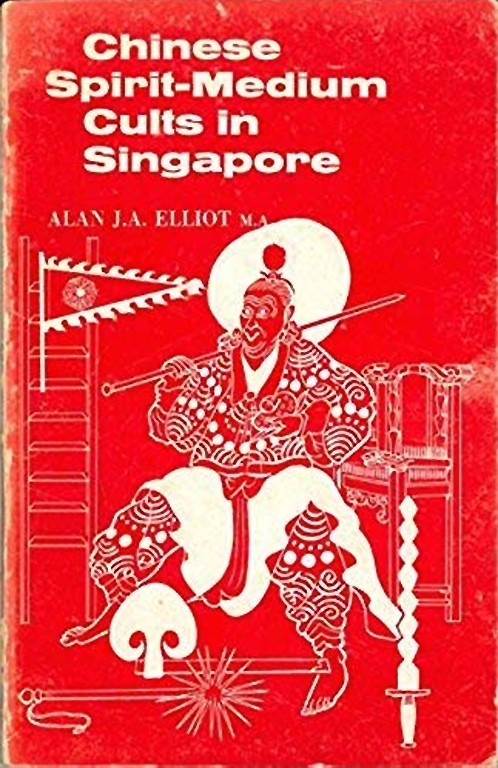
Cover from the 1964 (2nd edition) (larger version). Note the prominence of the Monkey King.

I. Forward from the 1990 Edition

This account of Chinese spirit-medium cults describes in great detail an important aspect of the religion of overseas Chinese in Singapore. It is an historical study, since the field research was carried out over nearly two years in 1950 and 1951. It is historical for two reasons. One is that the highly personalized nature of many of these cults has meant that they are short-lived, emphemeral. The other is that in the forty years since the study was made the life of the Singapore Chinese has changed radically, and many of their ritual practices must have altered accordingly. But at the time this research was carried out, anthropological field studies of Chinese social institutions were rare, and this particular investigation was unique. Most studies of Chinese religion anywhere had been of a literary nature, concerning the ideas and practices of Confucianism, Buddhism, Taoism; very little information was available about how ordinary Chinese conducted their daily ritual affairs.

The significance of this study is not just focused on the past. It has contemporary relevance, and for a field far wider than Singapore alone. For anthropologists, enquiry into spirit-mediumship, shamanism, ecstatic religion, possession, has become a recognised part of the discipline, over a broad ethnographic range. But the general problems involved, of alternative personality, of apparent lack of sensitivity to external physical stimuli, of claims in the name of spirit to knowledge and authority not possessed by the human medium, can attract the attention of psychologists, psychiatrists, and all interested in the obscure and complex workings of the human mind. The issues raised involve ordinary people too, since they show how anxiety, uncertainty, fear, disappointment and greed seek assurance and resolution from some source deemed superhuman, even spiritual. The basic beliefs revealed by this study of Chinese spirit-mediumship are not confined to Chinese.

II. PDF Link


Disclaimer
:

This has been posted for educational purposes. No malicious copyright infringement is intended. Please support the official release.

Citation:

Elliott, A. J. (1990). Chinese Spirit-Medium Cults in Singapore. London: The Athlone Press. (Original work published 1955)

Sun Wukong’s Connection to the Boxer Rebellion

Last updated: 07-10-2020

Did you know that Sun Wukong was among the various martial spirits that the fighters (fig. 1) of the anti-foreign Boxer Rebellion (1899–1901) channeled to gain what they believed to be superhuman fighting ability?

Table of Contents

1. The Historical Ritual

This ritual is described by the German catholic missionary Georg Maria Stenz in his 1907 book Contributions to the Folklore of Southern Shandong (Beiträge zur Volkskunde Süd-Schantungs) (fig. 2).

On any day of the first month, [the possessing spirit of] the monkey is invited [to earth] […] In order to invite the monkey, money is collected to buy incense in the village. On that particular day, four young men, who are not allowed to be … born in the year of the dragon or tiger, are led to any temple or cemetery … There the incense candles are lit and the following prayer is spoken:

一匹馬兩匹馬
請孫大老爺來玩耍
一條龍兩條龍
請孫大老爺下天攻

One horse, two horses.
Great Lord Sun, please come and play.
One dragon, two dragons.
Great Lord Sun, please descend from Heaven and fight.

Then the four fall on their faces and remain in this position for a while. Suddenly someone flops to one side: the [spirit of the] monkey has taken hold and the young man can no longer move himself. After being carried home, lighted incense candles are held under his nose until he jumps up by himself. Once a long saber is put in his hand, he makes a scandalous display accompanied by much fanfare and cymbals. The “possessed” is constantly brandishing the saber in the air and jumping over tables and benches. If one believes the display is too scary, then one lets the incense candles extinguish and the possessed falls immediately as if lifeless to the ground. After some time you call him by his name and he wakes up slowly as if from a deep sleep (Stenz, 1907, pp. 47-49). [1]

Esherick (1987) notes that the term “horse” from the poem was often used by boxers to refer to the possessee (pp. 56 and 62), or the human vessel that spirits command like a rider on a horse. I imagine that both the horses and dragons refer to all four men who volunteer for the ritual.

Fig. 1 – Boxer rebels circa 1900. Originally from Wikimedia commons. Fig. 2 – A map of China showing Shandong province in red. Originally from Wikipedia.


2. Updates

2.1. Fujian Monkey Cult

Update: 05-20-18

I’ve written an article about the origins of Sun Wukong’s cult in Fujian province.

The Sun Wukong Cult in Fujian


2.2. Faith by Boat?

Update: 09-25-18

Today I attended Sun Wukong’s birthday celebration (the 16th day of the 8th lunar month) in Kowloon, Hongkong. I might post an article about this in the future. In the meantime, I wanted to note that, since the worship of the Monkey King appears in so many coastal provinces, it’s possible that his cult spread via sailors and merchants.


2.3. A Similar Modern Folk Ritual

Update: 07-10-20

Elliott (1955/1990) describes a spirit-medium (Hokkien: tangki, 童乩; Mandarin: jitong, 乩童) initiation ceremony in Singapore with similarities to the above ritual. These include a small number of young male volunteers; a temple (where the altar is located); chanting, gongs and drums; and one of the volunteers being possessed by a deity, followed by violent movements. This suggests a widespread tradition of spirit-mediumship using similar methods:

The candidates, who may number five or six, seat themselves in a row in front of the altar. Each is given three small incense sticks to hold. they then have to meditate on the shen [神, “god”] which they wish to invoke … After appropriate cleansing ceremonies have been performed the assistants begin to chant and beat their drums and gongs. The experienced dang-ki who has been asked to participate is standing by and possibly assisting in one or another of the minor duties. This initial stage may last for an hour or two while the candidates sit with their heads bowed, waiting to become possessed … Eventually, some slightly strange effects take place in one or more of the the novices. They may shiver a little, or shake their heads. When the experienced dang-ki sees this, he seats himself in a chair beside them and prepares to enter a trance. Within a few minutes his shen has possessed him. Rising from his chair, he strikes a posture in front of the altar and waits until the novices show further signs of possession. At last one of them begins to get more violent in his movements. His head begins to node up and down, and his body sways from side to side so that assistants have to hold his chair lest it fall over. Here the experienced dang-ki intervenes. He grabs the novice by both hands and tries to drag him to his feet … As soon as the dang-ki and assistants can support him in a standing position, they lean over and try to catch the words he is muttering. From this, or from his bodily movements, they identify the shen that is possessing him. An assistant rushes to the altar and produces the stomacher [2] and other items of apparel appropriate to the shen they have identified. The stomacher is tied across the novice’s chest, and he is dragged up to the offering table, still reluctantly, and in a state bordering on collapse. Here he has charm water blown over him and he is given a drink” (p. 60)

Notes:

1) Adapted from the original German.

2) A stomacher (dudou, 肚兜) is an embroidered bib worn on the tangki’s bare torso. It is a symbol that the tangki is “‘naked’ to the sun,” serving as a reenactment of ancient Shang-period sacrificial rain-making ceremonies (Chan, 2015, p. 5).

Sources:

Chan, M. (2015). Contemporary Daoist Tangki Practice. In Oxford Handbooks Online (pp. 1-19). New York: Oxford University Press.
Retrived from https://ink.library.smu.edu.sg/soss_research/1872

Esherick, J. (1987). The Origins of the Boxer Uprising. Berkeley: University of California Press.

Stenz, G. M. (1907). Beiträge zur Volkskunde Süd-Schantungs [Contributions to the Folklore of Southern Shandong]. Leipzig: R. Voigtländer.