Origin of the Pregnancy Episode in Journey to the West Chapter 53

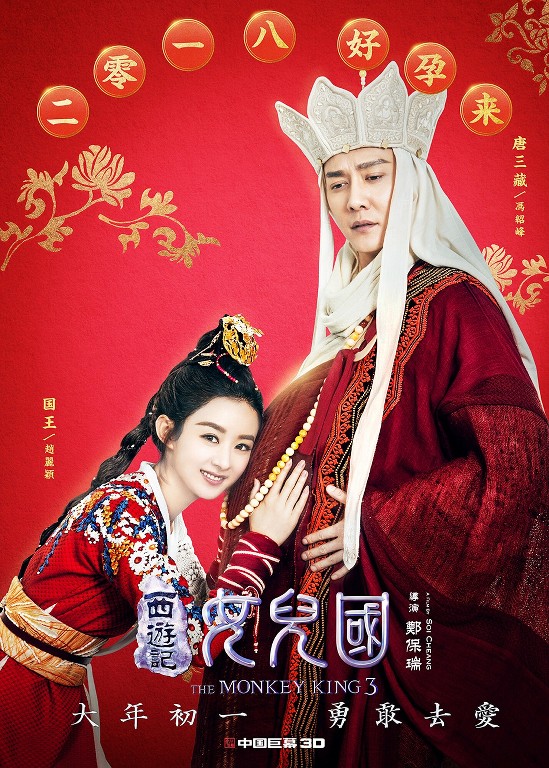
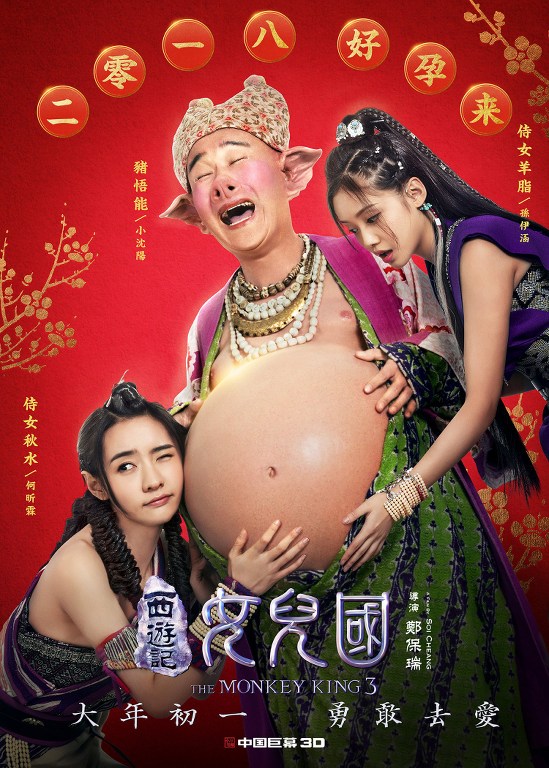
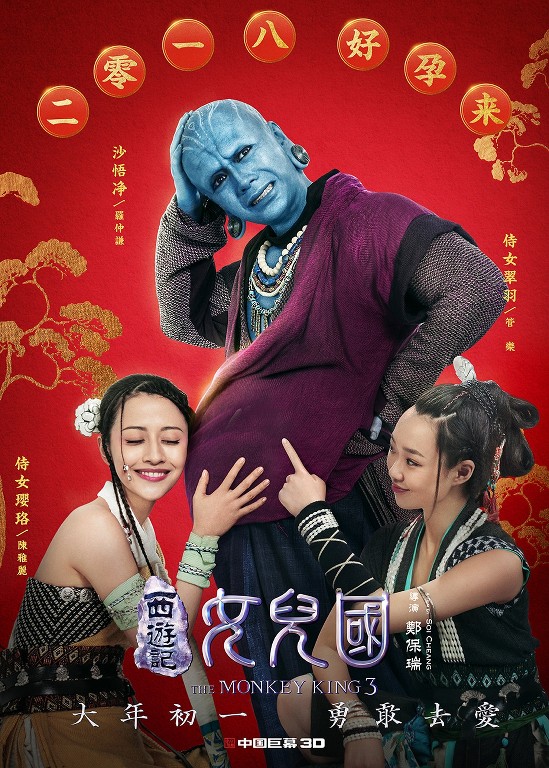
The 2018 film Monkey King 3 (Ch: Xiyouji: Nu’er guo, 西遊記·女兒國; lit: “Journey to the West: Woman Kingdom”) sees the pilgrims enter a magic portal to discover a hidden land peopled by only women. At one point, Tripitaka jumps into a river to retrieve the scattered words of a sentient piece of paper with information revealing how they can escape; and in Sha Wujing’s attempt to save him, both inadvertently swallow water. The resulting splashes also enter the mouth of Zhu Bajie, who is sleeping nearby. Sometime later, all three pilgrims discover that they are pregnant due to drinking from the river (fig. 1-3). The queen of the Woman Kingdom sends Sun Wukong to retrieve magic water to abort the births from a cross-dressing immortal. However, upon his return, Monkey learns that they’ve decided to keep their babies. Despite this, he uses fixing magic to freeze them in place and gives them the water so that nothing will keep the pilgrims from their quest.

The movie is a very loose adaptation of Journey to the West (Xiyouji, 西遊記, 1592; “JTTW” hereafter) chapter 53. In this article, I describe the chapter and suggest that it is based on a story from Hindu religious literature in which an ancient king becomes pregnant from drinking ritual water. I will show that the version appearing in the Mahabharata (Sk: महाभारतम्; 4th c. BCE to 4thvc. CE) likely influenced JTTW as other events from the Hindu epic also appear in the Chinese novel. I will also show that an early Gupta period list of Mahabharata parvas (books) discovered in Xinjiang, China names the parva containing the king’s story, suggesting that the tale may have been present in the Middle Kingdom centuries prior to JTTW.

Fig. 1 – The Monkey King 3 movie poster showing a pregnant Tripitaka and the Woman Kingdom queen (larger version). Fig. 2 – The Zhu Bajie variant (larger version). Fig. 3 – The (beardless) Sha Wujing variant (larger version).

Table of Contents

1. Episode from the Novel

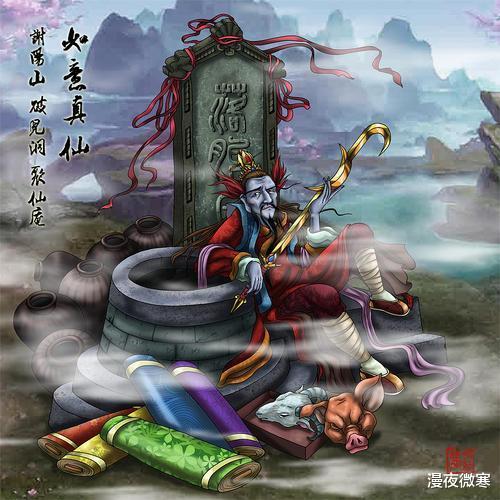
After the defeat of the Single-Horned Buffalo Demon, the pilgrims continue their journey by taking a river ferry. Upon reaching the other side, Tripitaka takes note of the clear water and asks Zhu Bajie to fetch him a bowl full. Both drink from the river, but a short time later they experience horrible abdominal pain, and their stomachs swell as if something was growing inside. They seek help from an old woman at a nearby inn, but she simply laughs and calls her friends to come see the spectacle. Her jovial attitude changes, however, once an enraged Wukong grabs hold and offers to spare her life in exchange for some hot water to calm their stomachs. But she explains it won’t help, for they have drunk from the “Child-and-Mother River” (Zimu he, 子母河) in the Woman Kingdom of Western Liang (Xiliang nuguo, 西梁女國), where the sole female inhabitants, according to custom, only drink the water to become pregnant upon reaching their 20th year. After hearing the news, both Tripitaka and Bajie panic, prompting Monkey and Sha to tease their religious brother, frightening him with the possibility of a painful, unnatural birth or some natal sickness that would threaten the baby. [1] When asked for a cure, the old woman reveals that the only way to end the pregnancy is to bribe the “True Immortal Compliant” (Ruyi zhenxian, 如意真仙) (fig. 4), who lords over the “Abortion Spring” (Luotai quan, 落胎泉) in the “Abbey of Immortal Assembly” (Juxian an, 聚仙庵), formerly known as the “Child Destruction Cave” (Po’er dong, 破兒洞), on the “Male-Undoing Mountain” (Jieyang shan, 解陽山). Wukong travels to the mountain but is forced to fight when the immortal, the Bull Demon King’s brother, attacks him to avenge Red Boy’s subjugation by Guanyin. Though weaker than Monkey, the immortal’s weapon, a “Compliant (or As-you-wish) golden hook” (Ruyi jin gouzi, 如意金鉤子), proves hard to ward off while trying to retrieve the needed water. Wukong ultimately resorts to trickery by luring his foe into battle while Wujing obtains the water. In the end, the immortal is defeated but shown mercy, and the unwanted pregnancies are aborted, being dissolved and passed as fleshy lumps in bowel movements (Wu & Yu, 2012, pp. 31-46). [2]

Fig. 4 – A drawing of the True Immortal Compliant holding his golden hook as he sits next to a well marked “Abortion Spring” (larger version). Artist unknown. The weapon is here depicted as a hooked sword. Bribes of silk, livestock, and alcohol can be seen at the immortal’s feet.

2. Origin

2.1. Hindu Religious Literature

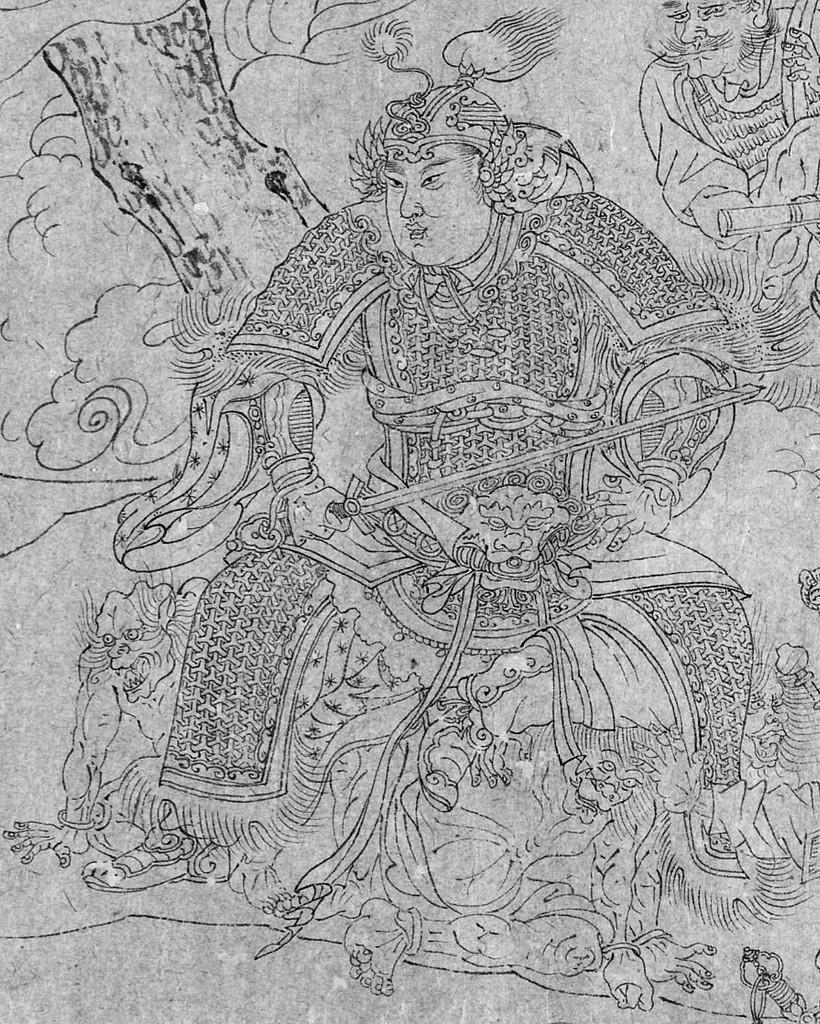
This episode shares similarities with a story about the ancient Indian King Yuvanasva (Sk: युवनाश्व; a.k.a. Yuvanashva or Yuvanaswa) (fig. 5) who becomes pregnant from drinking ritual water. The tale is well known, appearing in Hindu religious texts like the Mahabharata (4th c. BCE to 4th c. CE), the Vishnu Purana (400 BCE to 900 CE) and the Bhagavata Purana (8th to 10th c. CE). [3] The version appearing in the Vana Parva (3rd book) of the Mahabharata reads:

Lomasa said, ‘Hear with attention, O king! how the name of Mandhata belonging to that monarch of mighty soul hath come to be celebrated throughout all the worlds. Yuvanaswa, the ruler of the earth, was sprung from Ikshvaku‘s race. That protector of the earth performed many sacrificial rites noted for magnificent gifts. And the most excellent of all virtuous men performed a thousand times the ceremony of sacrificing a horse. And he also performed other sacrifices of the highest order, wherein he made abundant gifts. But that saintly king had no son. And he of mighty soul and rigid vows made over to his ministers the duties of the state, and became a constant resident of the woods. And he of cultured soul devoted himself to the pursuits enjoined in the sacred writ. And once upon a time, that protector of men, O king! had observed a fast. And he was suffering from the pangs of hunger and his inner soul seemed parched with thirst. And (in this state) he entered the hermitage of Bhrigu. On that very night, O king of kings! the great saint who was the delight of Bhrigu’s race, had officiated in a religious ceremony, with the object that a son might be born to Saudyumni [“Son of Sudyumna”, i.e. Yuvanasva]. O king of kings! at the spot stood a large jar filled with water, consecrated with the recitation of sacred hymns, and which had been previously deposited there. And the water was endued with the virtue that the wife of Saudyumni would by drinking the same, bring forth a god-like son. Those mighty saints had deposited the jar on the altar and had gone to sleep, having been fatigued by keeping up the night. And as Saudyumni passed them by, his palate was dry, and he was suffering greatly from thirst. And the king was very much in need of water to drink. And he entered that hermitage and asked for drink. And becoming fatigued, he cried in feeble voice, proceeding from a parched throat, which resembled the weak inarticulate utterance of a bird. And his voice reached nobody’s ears. Then the king beheld the jar filled with water. And he quickly ran towards it, and having drunk the water, put the jar down. And as the water was cool, and as the king had been suffering greatly from thirst, the draught of water relieved the sagacious monarch and appeased his thirst. Then those saints together with him of ascetic wealth, awoke from sleep; and all of them observed that the water of the jar had gone. Thereupon they met together and began to enquire as to who might have done it. Then Yuvanaswa truthfully admitted that it was his act. Then the revered son of Bhrigu spoke unto him, saying. ‘It was not proper. This water had an occult virtue infused into it, and had been placed there with the object that a son might be born to thee. Having performed severe austerities, I infused the virtue of my religious acts in this water, that a son might be born to thee. O saintly king of mighty valour and physical strength! A son would have been born to thee of exceeding strength and valour, and strengthened by austerities, and who would have sent by his bravery even Indra to the abode of the god of death. It was in this manner, O king! that this water had been prepared by me. By drinking this water, O king, thou hast done what was not at all right. But it is impossible now for us to turn back the accident which hath happened. Surely what thou hast done must have been the fiat of Fate. Since thou, O great king, being a thirst hast drunk water prepared with sacred hymns, and filled with the virtue of my religious labours, thou must bring forth out of thy own body a son of the character described above. To that end we shall perform a sacrifice for thee, of wonderful effect so that, valorous as thou art, thou wilt bring forth a son equal to Indra. Nor with thou experience any trouble on account of the labour pains.’ Then when one hundred years had passed away, a son shining as the sun pierced the left side of the king endowed with a mighty soul, and came forth. And the son was possessed of mighty strength. Nor did Yuvanaswa die—which itself was strange. Then Indra of mighty strength came to pay him a visit. And the deities enquired of the great Indra, ‘What is to be sucked by this boy?’ Then Indra introduced his own forefinger into his mouth. And when the wielder of the thunderbolt said, ‘He will suck me,’ the dwellers of heaven together with Indra christened the boy Mandhata, (literally, Me he shall suck). Then the boy having tasted the forefinger extended by Indra, became possessed of mighty strength, and he grew thirteen cubits, O king. And O great king! the whole of sacred learning together with the holy science of arms, was acquired by that masterful boy, who gained all that knowledge by the simple and unassisted power of his thought. And all at once, the bow celebrated under the name of Ajagava and a number of shafts made of horn, together with an impenetrable coat of mail, came to his possession on the very same day, O scion of Bharata‘s race! And he was placed on the throne by Indra himself and he conquered the three worlds in a righteous way; as Vishnu did by his three strides (Roy, 1884, pp. 382-384).

Both events involve men who quench their thirst with water, not realizing that it has the magic power to bestow pregnancy. Tripitaka and Bajie drink from a river which is specifically used by the inhabitants of the Woman Kingdom to reproduce, while King Yuvanasva drinks ritual water meant to give his wife a son. Additionally, both books state drinking the water is inappropriate, followed by a description of its child-bestowing properties. JTTW reads:

That water your master drank is not the best, for the river is called Child-and-Mother River … Only after reaching her twentieth year would someone from this region dare go and drink that river’s water, for she would feel the pain of conception soon after she took a drink (Wu, & Yu, 2012, p. 39).

你師父吃的那水不好了。那條河喚做子母河 … 我這裡人,但得年登二十歲以上,方敢去吃那河裡水。吃水之後,便覺腹痛有胎。

The Mahabharata reads: “Then the revered son of Bhrigu spoke unto him, saying. ‘It was not proper. This water had an occult virtue infused into it, and had been placed there with the object that a son might be born to thee’” (Roy, 1884, pp. 382-384).

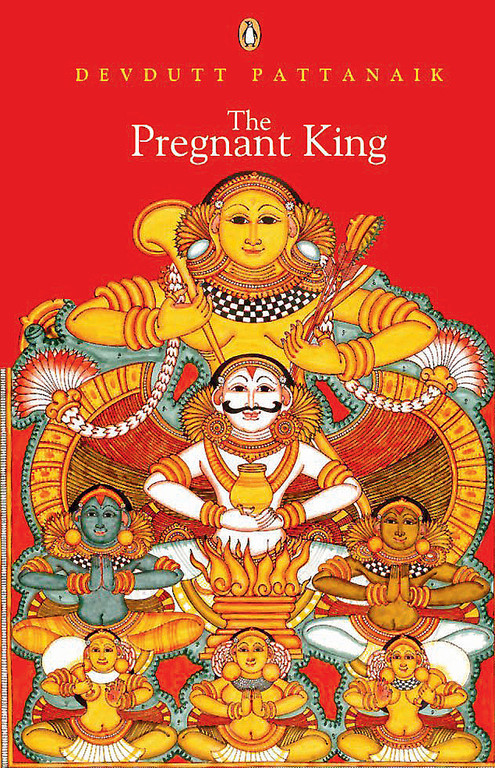
Fig. 5 – King Yuvanasva (center) holding the vessel of ritual water. From the cover of The Pregnant King (2008) by Devdutt Pattanaik (larger version). The book is a reimagining of the king’s story.

2.2. Mahabharata Elements in Journey to the West

The possibility of King Yuvanasva’s story influencing JTTW is quite high as other events from the Mahabharata are known to appear in the novel. For example, Subbaraman (2002) reveals striking similarities between an event from the Adi Parva (1st book) and chapters 47 to 48 of the Chinese classic. In the Mahabharata, the Pandava brothers and their mother Kunti escape assassination and disguise themselves as Brahmins (Hindu priests) traveling the road. They eventually seek shelter in a village plagued by the rakshasa Baka, who offers safety from foreign invaders in exchange for rice, livestock, and a human sacrifice. Those who try to defy this fate risk seeing their entire family eaten along with themselves. The Brahmin home in which the Pandavas stay has been chosen for that year’s sacrifice. Kunti instead sends her son Bhima, the most powerful of the brothers, in place of the householder’s son and daughter. In the end, the warrior kills Baka with his mighty strength. In JTTW, the pilgrims (Buddhist monks) stop for lodging in a village afflicted by the demon Great King of Miraculous Power (Linggan dawang, 靈感大王), who sends clouds and rain in exchange for offerings of livestock and sacrifices of virgin boys and girls. It is impossible to defy this fate as he has memorized the personal details for every inhabitant. The Buddhist home in which the group stays has been chosen for the sacrifice. Wukong and Bajie instead take the place of the respective son and daughter (fig. 6). In the end, the Great King is defeated with the help of Guanyin (Subbaraman, 2002, pp. 11-18).

Furthermore, my own research shows that the tale of Garuda from the Mahabharata influenced the “Peng of Ten Thousand Cloudy Miles” (Yuncheng wanli peng, 雲程萬里鵬), an ancient demon king and spiritual uncle of the Buddha appearing in JTTW chapters 74 to 77.

Fig. 6 – An 1864 woodblock print by Yoshitoshi depicting the battle between Monkey, Bajie, and the Great King of Miraculous Powers (larger version). From the Museum of Fine Arts Boston.

2.3. The Mahabharata in China

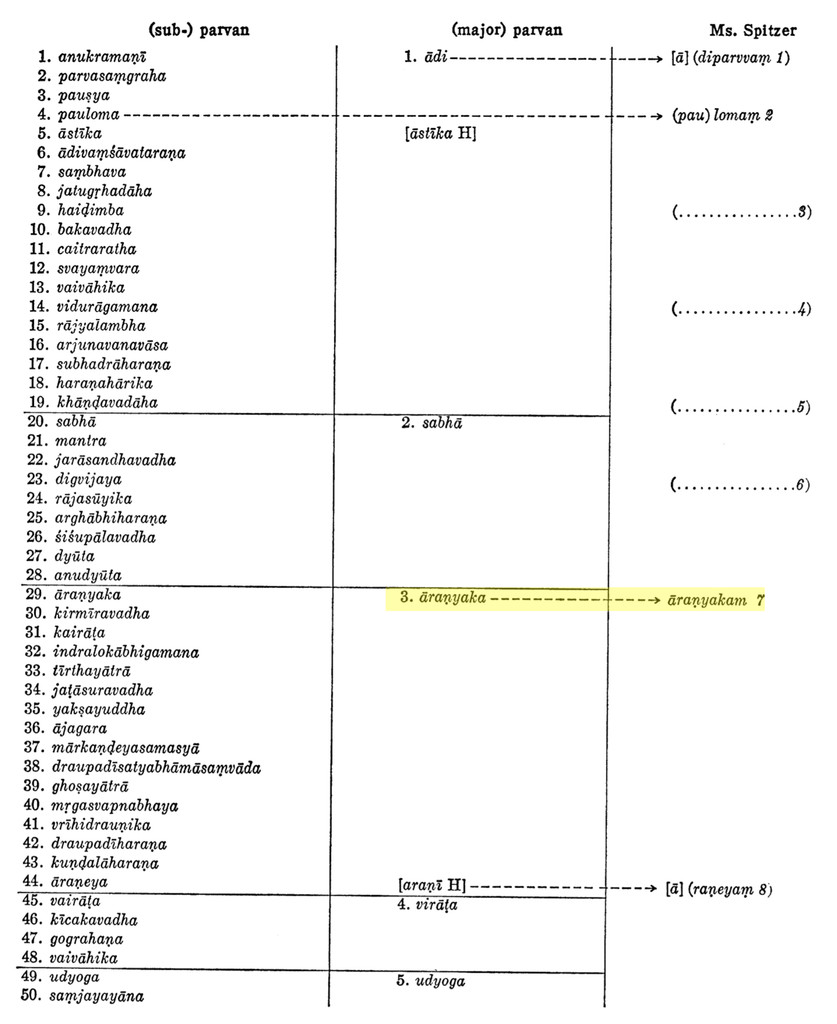
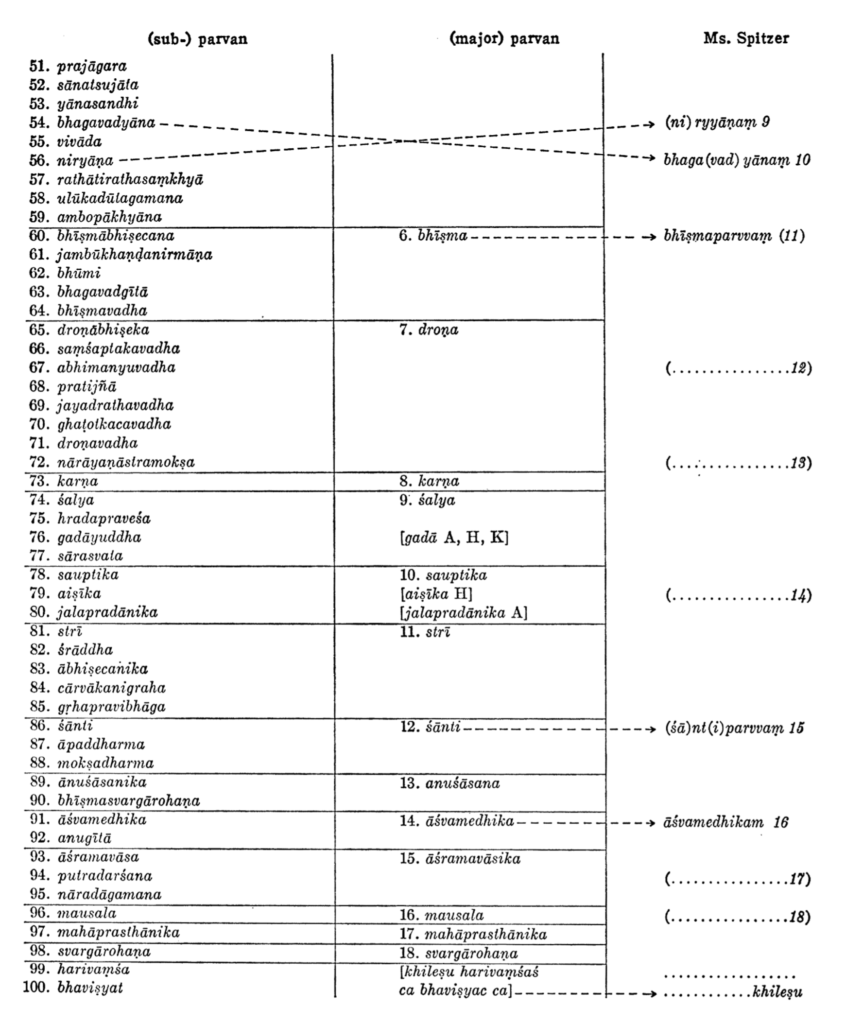
Interestingly, the earliest known list of Mahabharata parvas and sub-parvas was discovered in Kizil in what is now Xinjiang, China. This list appears in the Spitzer Manuscript (c. 200-300 CE), a Hindo-Buddhist philosophical palm-leaf manuscript written in Sanskrit. Schlingloff (1969) compares the list with the known books of the completed epic (fig. 7 and 8), noting the absence of some parvas, which indicates that the Mahabharata was still in a state of development at the time the list was compiled. But it’s important to note that the Vana Parva (a.k.a. Aranya Parva or Aranyaka Parva), the book containing the story of King Yuvanasva, is named in the manuscript (Schlingloff, 1969, p. 336). This suggests that the story of the monarch’s water-induced pregnancy may have been present in China centuries prior to JTTW.

Fig. 7 – Part 1 of a diagram comparing the 100 sub-parvas and 18 parvas of the completed Mahabharata and the Spitzer Manuscript list (larger version). Take note of the highlighted words showing the inclusion of Vana Parva, here called “Aranyakam.” Fig. 8 – Part 2 of the diagram (larger version). From Schlingloff, 1969, pp. 336-337.

3. Conclusion

JTTW chapter 53 tells how Tripitaka and Zhu Bajie become pregnant after drinking magic river water used by the inhabitants of the Woman Kingdom to reproduce. This is similar to a story from Hindu religious literature in which King Yuvanasva becomes pregnant after drinking ritual water meant for his wife. JTTW is known to include story elements from the Mahabharata, which means the version of the monarch’s tale from the Varna Parva (3rd book) likely influenced the Chinese novel. The Varna Parva is named in an early Gupta period list of Mahabharata parvas discovered in what is now Xinjiang, China. This suggests that the story may have been present in the Middle Kingdom centuries prior to JTTW.

Notes:

1) For example, Wukong tells Bajie: “When the time comes, you may have a gaping hole at your armpit and the baby will crawl out” (Wu, & Yu, 2012, p. 35). This likely references ancient Chinese stories of sage-kings splitting the chest, back, or sides of their mothers upon birth, just like Yu the Great and the historical Buddha.

2) I have slightly modified the translation of names in Wu and Yu (2012).

3) See here for the version appearing in the Vishnu Purana. See here for the Bhagavata Purana.

Sources:

Roy, P. C. (1884). The Mahabharata of Krishna-Dwaipayana Vyasa, Translated Into English Prose: Vana Parva. Calcutta: Bharata Press.

Schlingloff, D. (1969). The Oldest Extant Parvan-List of the Mahābhārata. Journal of the American Oriental Society, 89(2), 334-338. doi:10.2307/596517

Subbaraman, R. (2002). Beyond the Question of the Monkey Imposter: Indian Influence on the Chinese Novel The Journey to the West. Sino-Platonic Papers, 114, 1-35. Retrieved from http://www.sino-platonic.org/complete/spp114_journey_to_the_west_monkey.pdf

Wu, C., & Yu, A. C. (2012). The Journey to the West (Vol. 3) (Rev. ed.). Chicago, Illinois: University of Chicago Press.

Parallels Between the Monkey King and the Buddha

Last updated: 06-18-2022

I’ve previously written about the similarities between Sun Wukong and the Water Margin bandit Wu Song. In this article, I would like to explore the similarities shared by the Monkey King and the historical Buddha, Siddhartha Gautama (Ch: Xidaduo Qiaodamo, 悉達多 喬達摩). I know readers are now collectively scratching their heads in confusion and asking, “How in the world are a 6th- to 5th-century BCE Indian philosopher and an immortal monkey spirit from Ming-era Chinese literature similar?” It’s true that the particulars of their stories are different, but I will show that Wukong and the Buddha follow a similar trajectory in their early lives. Both experience a supernatural birth, produce a radiant splendor upon emerging from the womb, spend early years as royalty, feel a sense of shock upon realizing the impermanence of life, set out on a quest to find a means of escaping old age and death, and, finally, achieve this goal through spiritual practices. These similarities suggest that the author-compiler of Journey to the West (Xiyouji, 西遊記, 1592) may have borrowed from the Buddha’s story to make Sun Wukong’s early life more familiar to readers.

For details about the Awakened One’s life, I rely heavily on Acts of the Buddha (Sk: Buddhacarita; Ch: Fo suoxing za, 佛所行讚, 2nd century), a full-length biographical poem that survives thanks to its translation into Chinese from the original Sanskrit (Buswell & Lopez, 2014, p. 150). Information about Monkey will of course come from the standard 1592 edition of the novel.

I. The Parallels

1. Supernatural Birth

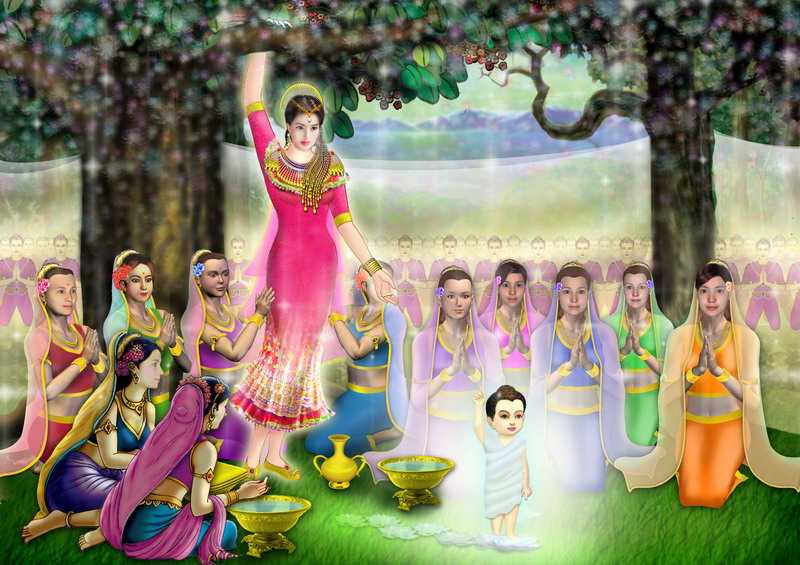
On the day of his birth, the bodhisattva’s mother, Queen Maya, feels the urge to go to the garden of Lumbini. There, following the tradition of sage-kings, the young prince Siddhartha is born from her right side (fig. 1):

Whilst she (thus) religiously observed the rules of a pure discipline, Bodhisattva was born from her right side, (come) to deliver the world, constrained by great pity, without causing his mother pain or anguish. / As king Yu-liu [Aurva] was born from the thigh, as king Pi-t’au [Pruthu] was born from the hand, as king Man-to [Mandhatri] was born from the top of the head, as king Kia-k’ha [Kakshivat] was born from the arm-pit, / So also was Bodhisattva on the day of his birth produced from the right side… (Beal, 1883, pp. 2-3).

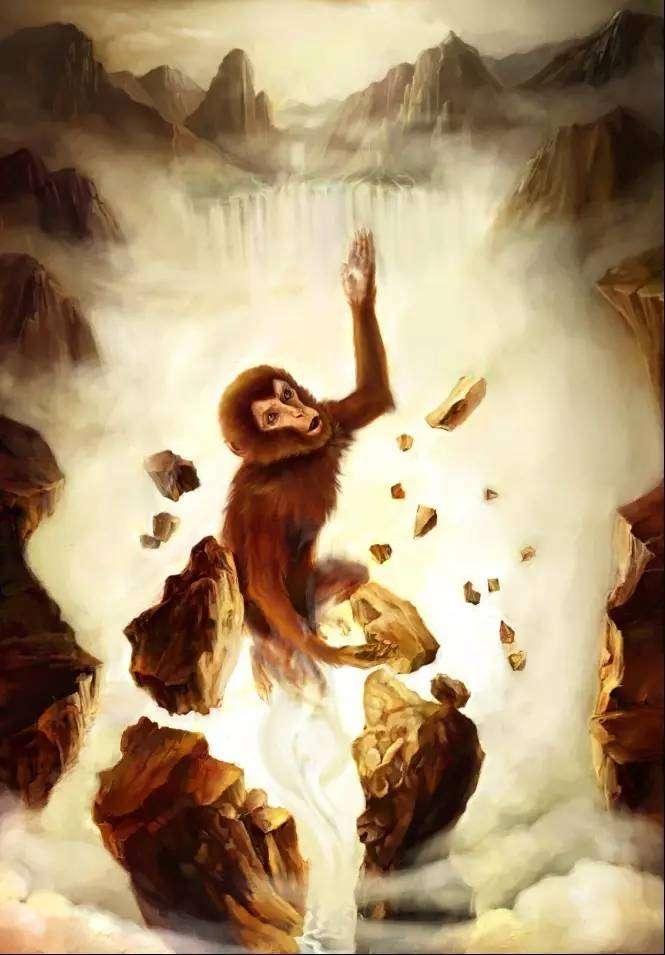
Chapter one of Journey to the West describes how an immortal stone atop the Mountain of Flowers and Fruit (Huaguo shan, 花果山) splits open and gives birth to a stone egg, which is transformed into a stone monkey (shi hou, 石猴) by the elements (fig. 2):

Since the creation of the world, it [the stone] had been nourished for a long period by the seeds of Heaven and Earth and by the essences of the sun and the moon, until, quickened by divine inspiration, it became pregnant with a divine embryo. One day, it split open [benglie, 迸裂], giving birth to a stone egg about the size of a playing ball. Exposed to the wind, it was transformed into a stone monkey endowed with fully developed features and limbs (Wu & Yu, 2012, p. 101) (emphasis mine).

As I’ve previously written, Wukong’s birth is likely based on the sage-king Yu the Great (大禹) and his son Qi (啟, “open”) of Xia, who are stated in various sources to have been born from stone. For example, one 4th-century tale states that Yu’s pregnant wife transformed into stone out of shame for having seen her husband’s shamanic metamorphosis into a bear. Yu ordered the stone to release his son, and it split open to give birth to Qi (Birrell, 1999, p. 123). The emphasis on the stone splitting open is related to ancient Chinese stories of sage-kings splitting the chest, back, or sides of their mothers upon birth, [1] much like the Buddha is born from Queen Maya’s side. For instance, the Genealogical Annals of the Emperors and Kings (Diwang shiji, 帝王世紀, 3rd century) writes:

“While traveling up in the mountains she [Yu’s mother] saw a falling star piercing the Mao region (of the sky). Then in a dream, she received and felt it, so upon swallowing a divine pearl and Job’s Tears, her chest split open and she gave birth to Yu at Stone Knob” (Cook & Luo, 2017, p. 101).

While Yu’s mother is not a stone in this case, his birth is effected by a pearl (a type of stone) and happens in a place named after stone. Such tales establish a link between split births and split stone births, thereby placing the Buddha and Monkey into the same broader birth myth category.

Fig. 1 – A stone carving depicting the birth of Siddhartha from Queen Maya’s side (Gandhara, 2nd to 3rd century) (larger version on Wikipedia). Fig. 2 – Monkey’s birth from stone by Zhang Moyi (larger version). Found on this article.

2. Radiant Splendor

Upon his birth, the Buddha is said to have “shed in every direction the rays of his glory” (fig. 3) (Beal, 1883, p. 3). The source continues to describe this light, as well as the Bodhisattva’s first few moments outside the womb:

His body, nevertheless, was effulgent with light, and like the sun which eclipses the shining of the lamp, so the true gold-like beauty of the Bodhisattva shone forth and was diffused everywhere. / Upright and firm and unconfused in mind, he deliberately took seven steps, the soles of his feet resting evenly upon the ground as he went, his footmarks remained bright as seven stars. / Moving like the lion, king of beasts, and looking earnestly towards the four quarters, penetrating to the centre the principles of truth, he spake thus…” (Beal, 1883, pp. 4-5).

The historical Xuanzang (on whom Tripitaka is based) notes in his travelogue that the Buddha even walks towards the cardinal directions: “After he had been born the Bodhisattva walked seven steps unaided to each of the four quarters … [u]nder each step a large lotus flower sprang up from the earth” (Xuanzang, 1996/2016, p. 158).

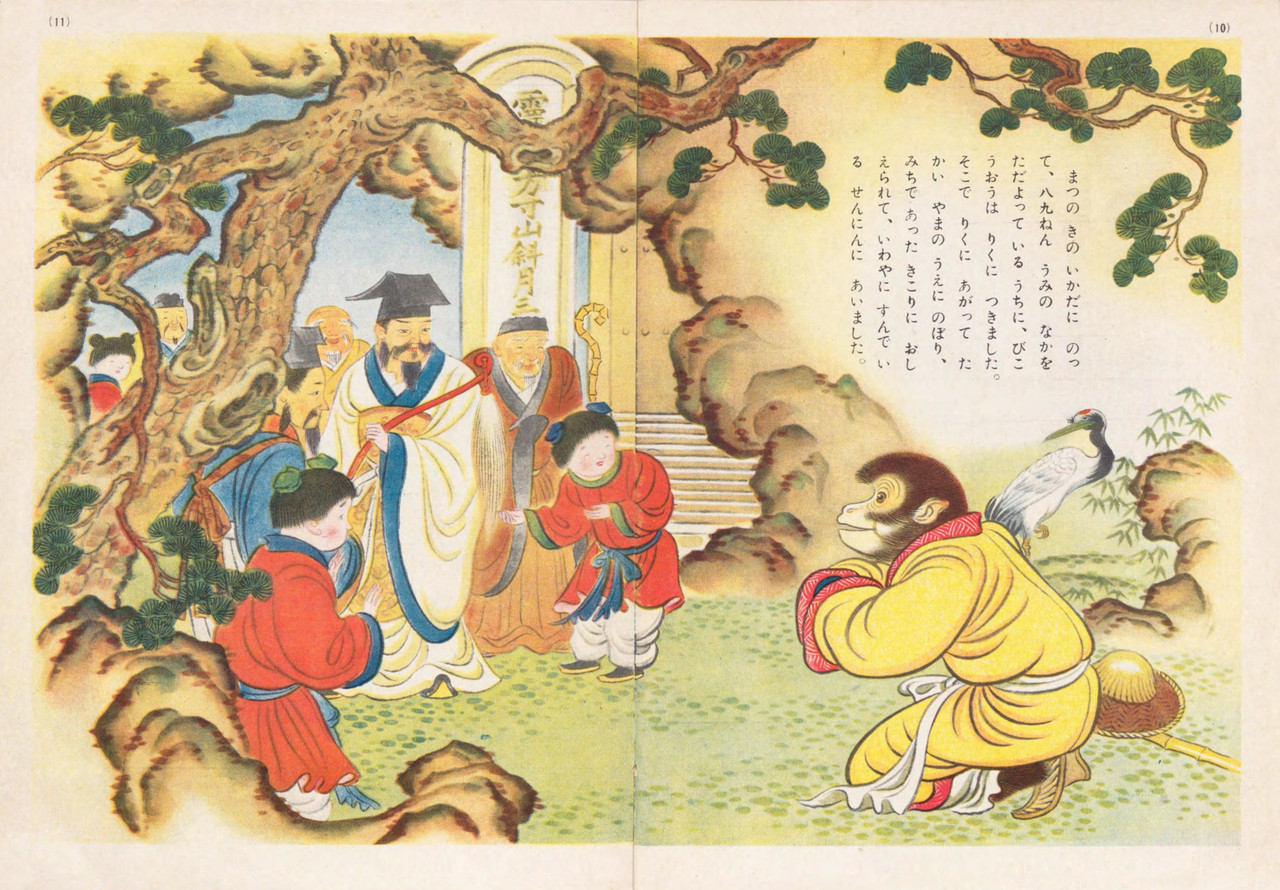
Wukong too produces a great light in every direction: “Having learned at once to climb and run, this monkey also bowed to the four quarters, while two beams of golden light flashed from his eyes to reach even the Palace of the Polestar” (fig. 4) (Wu & Yu, 2012, p. 101).

Therefore, both shine their lights in the four cardinal directions.

Fig. 3 – Baby Buddha producing a radiant splendor upon his birth (larger version). Artist unknown. Found on this article. Fig. 4 – Bright beams of light shine from Wukong’s eyes as he bows to the four directions (larger version). From the Japanese children’s book Son Goku (1939). 

3. Royal Years

Prince Siddhartha (fig. 5) is born into the royal Shakya clan ruled by his father, King Suddhodana (Beal, 1883, p. 1). Shortly after his son’s birth, the king is told by two sages that the new heir is fated to be either a universal monarch or a cosmic sage (Beal, 1883, pp. 8-18). Suddhodana attempts to defy the latter fate by surrounding his son with royal luxury and even finding him a wife with which to have his own son:

‘My son, the prince, having a son born to him, / ‘The affairs of the empire will be handed down in succession, and there will be no end to its righteous government; the prince having begotten a son, will love his son as I love him, / ‘And no longer think about leaving his home as an ascetic, but devote himself to the practice of virtue […] Would that this might lead my son (he prayed) to love his child and not forsake his home; the kings of all countries, whose sons have not yet grown up, / Have prevented them exercising authority in the empire, in order to give their minds relaxation, and for this purpose have provided them with worldly indulgences, so that they may perpetuate the royal seed; / So now the king, having begotten a royal son, indulged him in every sort of pleasure; desiring that he might enjoy these worldly delights, and not wish to wander from his home in search of wisdom (Beal, 1883, pp. 28 and 29).

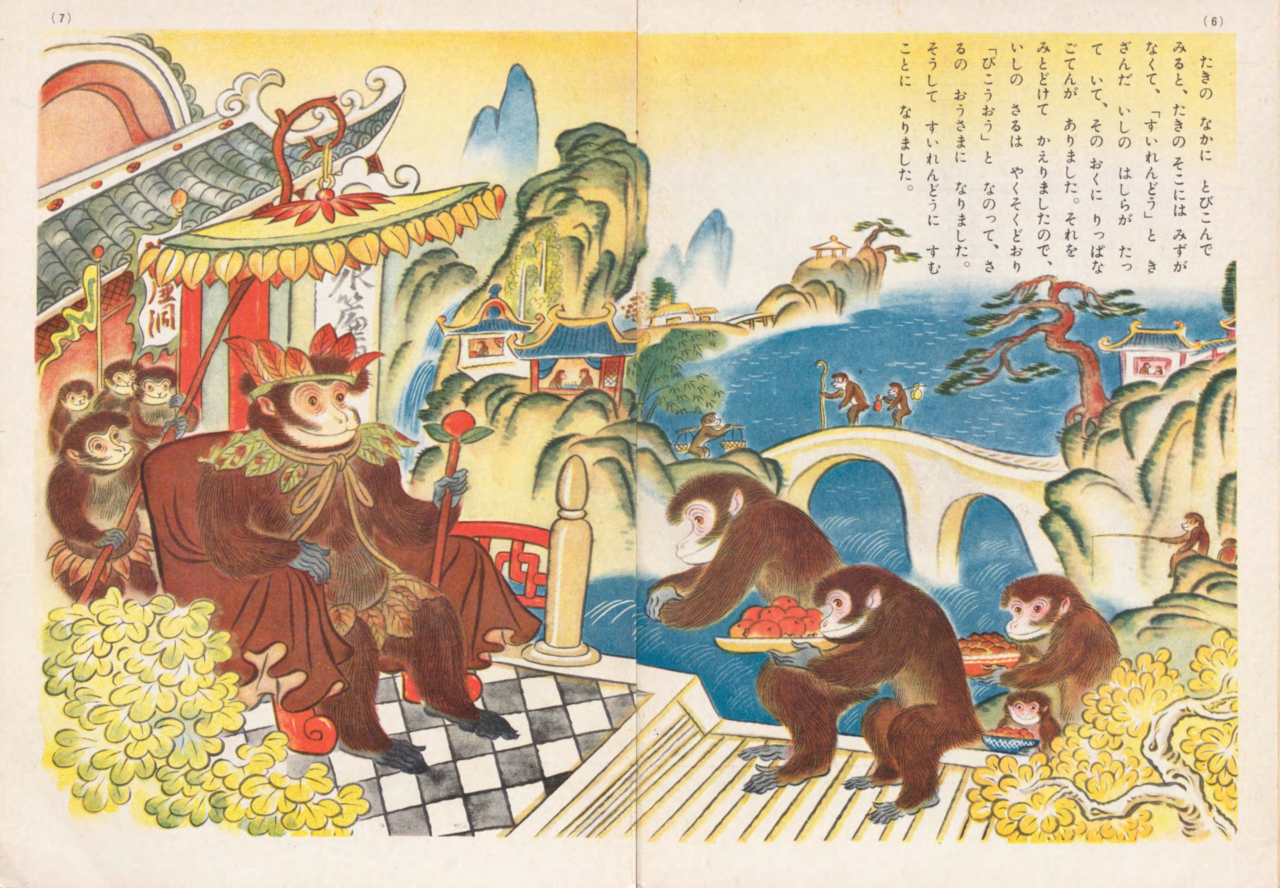
Following his birth, the stone monkey comes to live with a tribe of primates on the Mountain of Flowers and Fruit. One day, the monkeys and apes decide to follow a stream to its source in the mountain and find a beautiful waterfall. They state anyone who can discover what is behind the blanket of water will be proclaimed their king. The stone monkey takes up this challenge by leaping through and discovers the “Cave Heaven of Water-Curtain Cave” (Shuiliandong dongtian, 水簾洞洞天), a grotto paradise with a stone mansion and enough room for all the primates to live. After he emerges victorious,

Each one of them [the primates] then lined up according to rank and age, and, bowing reverently, they intoned, “Long live our great king!” From that moment, the stone monkey ascended the throne of kingship [fig. 6]. He did away with the word “stone” in his name and assumed the title, Handsome Monkey King [Mei hou wang, 美猴王] (Wu & Yu, 2012, p. 105).

The prince is born into a royal clan and yet never rules, while Wukong achieves kinghood through a test of bravery and leads his tribe for over three hundred years (Wu & Yu, 2012, p. 105). Siddhartha’s lack of authority is of course due to his father’s wish that he indulge in worldly pleasures and forget about leaving to become a sage. But birth tales (Sk: jataka) of the Buddha’s past lives do include several incarnations as rulers, even as a monkey king!

Fig. 5 – A stone carving of Prince Siddhartha as a young man (Gandhara, 3rd century) (larger version via the Norton Simon Museum). Fig. 6 – The Stone Monkey sits on his throne (larger version). From Son Goku (1939).

4. Shock at Impermanence

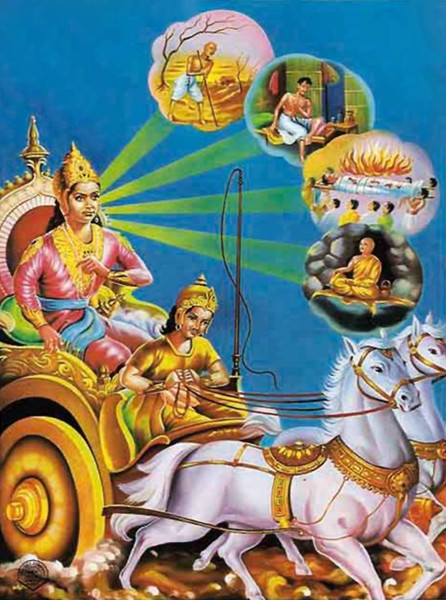
One day, Prince Siddhartha wishes to tour the land outside his personal palace for the first time in his sheltered life. Not wanting his son to see anything unpleasant, King Suddhodana has the path cleared of the old, sick, and poor and decorated with beautiful canopies, banners, and curtains (Beal, 1883, pp. 30-32). But a devaraja intervenes to initiate the first of the “four signs” (Sk: caturnimitta; Ch: sixiang, 四相; i.e. old age, sickness, death, and monasticism) to cause the future Buddha to pursue a spiritual path that will ultimately lead to his enlightenment (fig. 7) (Buswell & Lopez, 2014, pp. 171-172). The devaraja transforms into an extremely elderly man, and upon seeing the sight, Siddhartha is shaken when his chariot driver reveals that he too will suffer this fate:

The prince greatly agitated and moved, asked his charioteer another question and said, ‘Is yonder man the only one afflicted with age, or shall I, and others also, be such as he?’ / The charioteer again replied and said, ‘Your highness also inherits this lot, as time goes on, the form itself is changed, and this must doubtless come, beyond all hindrance: / ‘The youthful form must wear the garb of age, throughout the world, this is the common lot’. Bodhisattva, who had long prepared the foundation of pure and spotless wisdom, / Broadly setting the root of every high quality, with a view to gather large fruit in his present life, hearing these words respecting the sorrow of age, was afflicted in mind, and his hair stood up right. / Just as the roll of the thunder and the storm alarm and put to flight the cattle; so was Bodhisattva affected by the words; shaking with apprehension, he deeply sighed (Beal, 1883, p. 33).

After seeing the sign of sickness (Beal, 1883, pp. 34-35), the prince witnesses the sign of death:

(Once more) he asked, ‘What is this they carry? With streamers and flowers of every choice description, whilst the followers are overwhelmed with grief, tearing their hair and wailing piteously.’ / And now the gods instructing the coachman, he replied and said, ‘This is a “dead man,” all his powers of body destroyed, life departed; his heart without thought, his intellect dispersed; / ‘His spirit gone, his form withered and decayed; stretched out as a dead log; family ties broken—all his friends who once loved him, clad in white cerements, / ‘Now no longer delighting to behold him, remove him to lie in some hollow ditch (tomb).’ The prince hearing the name of death, his heart constrained by painful thoughts, / He asked, ‘Is this the only dead man, or does the world contain like instances?’ Replying thus he said, ‘All, everywhere, the same; he who begins his life must end it likewise; / ‘The strong and lusty and the middle-aged, having a body, cannot but decay (and die).’ The prince now harassed and perplexed in mind; his body bent upon the chariot leaning-board, / With bated breath and struggling accents, stammered thus, ‘Oh worldly men! How fatally deluded! Beholding everywhere the body brought to dust, yet everywhere the more carelessly living; / ‘The heart is neither lifeless wood nor stone, and yet it thinks not “all is vanishing!” (Beal, 1883, pp. 36-37).

After the Monkey King rules the Mountain of Flowers and Fruit for more than three centuries, he tells his children:

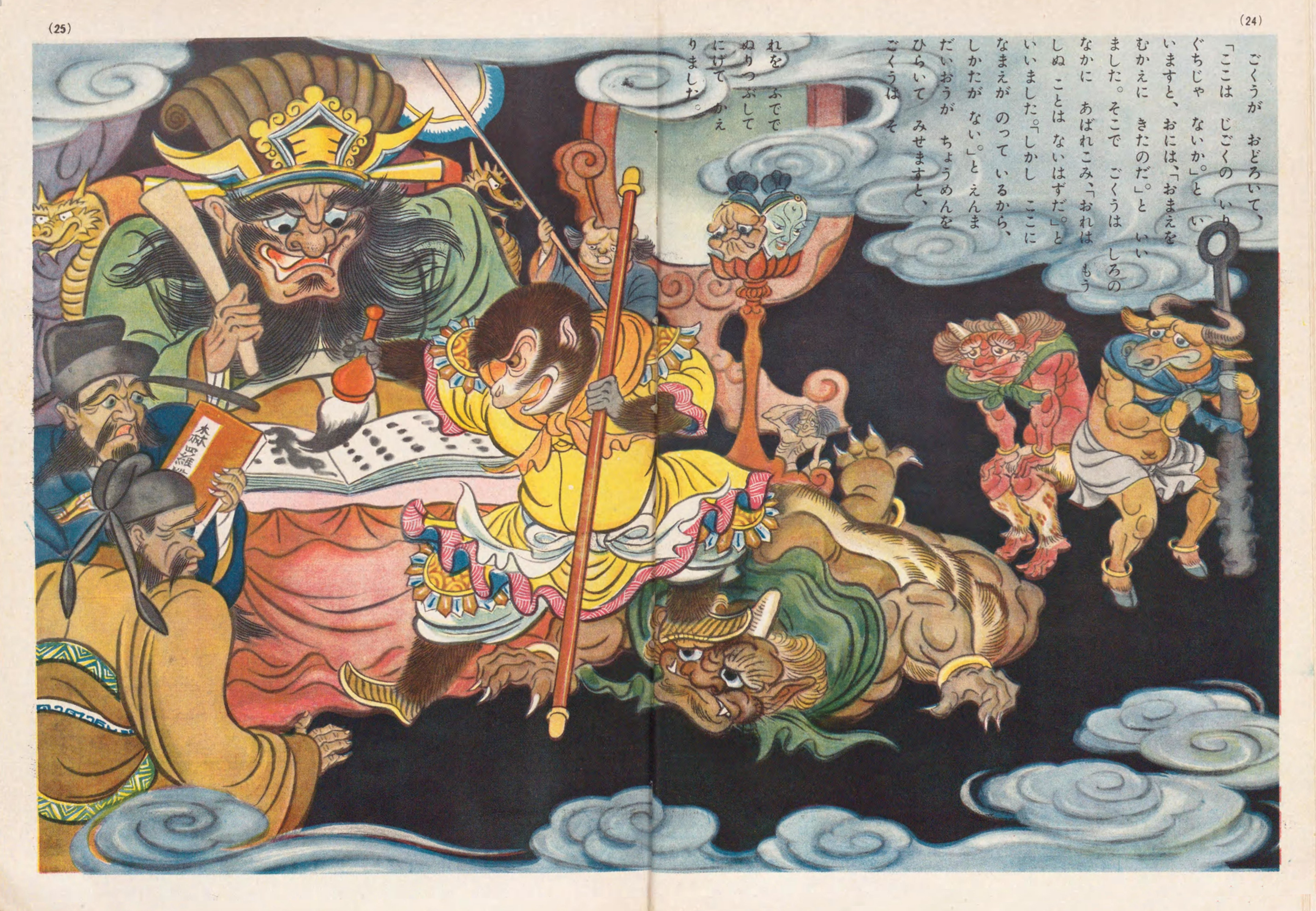
Though we are not subject to the laws of man today, nor need we be threatened by the rule of any bird or beast, old age and physical decay in the future will disclose the secret sovereignty of Yama, King of the Underworld. If we die, shall we not have lived in vain, not being able to rank forever among the Heavenly beings? (Wu & Yu, 2012, p. 106).

The “shock” felt by Prince Siddhartha and the Monkey King upon realizing the impermanence of life is known in Buddhism as Samvega (Ch: yanli, 厭離) (Thanissaro Bhikkhu, n.d.). It’s interesting that Siddhartha is led to the reality of impermanence, while Monkey comes to the conclusion by himself. This is no doubt due to the differences in their lives. King Suddhodana ensures that his son lives a protected life, one free from the woes of the outside world, by surrounding him with luxury and young, beautiful palace attendants. However, Monkey rules the Mountain of Flowers and Fruit for centuries, no doubt witnessing the decline and death of many of his companions, as well as the waning of his own youth. After all, the thought of impermanence would weigh heavy on anyone nearing the end of their life. This conclusion is supported by the fact that, when his soul is taken to hell in chapter three, Monkey learns from the ledgers of life and death that he was fated to die at the age of 342 (fig. 8) (Wu & Yu, 2012, vol. 1, p. 140).

Fig. 7 – Siddhartha experiences the “Four Signs” (larger version). Artist unknown. Fig. 8 – Monkey striking his name from the Book of Life and Death (larger version). From Son Goku (1939).

5. Quest to Overcome Impermanence

Siddhartha is wracked by constant, obsessive thoughts on the dangers of old age, sickness, and death. After venturing out once more and witnessing poor farmers toiling away in the fields, he proclaims on the spot that he will find some way to oppose life’s suffering. At that exact moment, a deva affects the fourth sign by transforming into a monk (sk: bhikshu), who tells the prince:

Depressed and sad at [the] thought of age, disease, and death, I have left my home to seek some way of rescue, but everywhere I find old age, disease, and death, all (things) hasten to decay and there is no permanency; / ‘Therefore I search for the happiness of some thing that decays not, that never perishes, that never knows beginning, that looks with equal mind on enemy and friend, that heeds not wealth nor beauty, / ‘The happiness of one who finds repose alone in solitude, in some unfrequented dell, free from molestation, all thoughts about the world destroyed, dwelling in some lonely hermitage…’ (Beal, 1883, pp. 49-50).

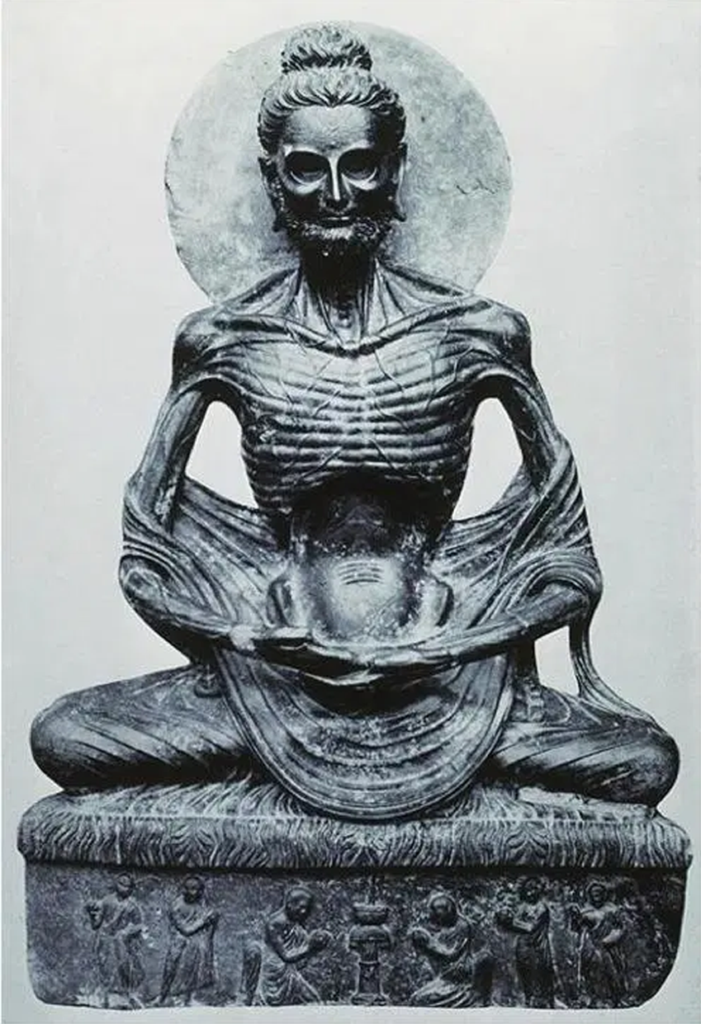
This influences Siddhartha to forsake his royal life to become an ascetic and search for a means of escape from the evils of old age, sickness, and death. Cutting off his topknot, thus severing his royal ties, the future Buddha sets out into the world (Beal, 1883, p. 68). Siddhartha travels the land studying meditation (Sk: dhyana; Ch: chan, 禪) under various sages, pondering concepts of the body, the mind, the soul, and selfhood for years, and even practicing severe austerities that result in the emaciation of his body (fig. 9). But he eventually forsakes these extreme practices, recovering his bodily strength and vowing to achieve perfect enlightenment via meditation beneath a banyan tree (Beal, 1883, pp. 131-147).

When the Monkey King opines the injustice of impermanence, one of his advisors tells him that only three beings live beyond the reach of Yama:

There are, among the five major divisions of all living creatures, only three species that are not subject to Yama, King of the Underworld.” The Monkey King said, “Do you know who they are?” The monkey said, “They are the Buddhas, the immortals, and the holy sages [shensheng, 神聖]; these three alone can avoid the Wheel of Transmigration as well as the process of birth and destruction, and live as long as Heaven and Earth, the mountains and the streams.” “Where do they live?” asked the Monkey King. The monkey said, “They do not live beyond the world of the Jambudvipa, for they dwell within ancient caves on immortal mountains” (Wu & Yu, 2012, p. 107).  

Monkey then pledges to find these great men and women and learn their secret means of escape from Yama’s grasp:

“Tomorrow I shall take leave of you all and go down the mountain. Even if I have to wander with the clouds to the corners of the sea or journey to the distant edges of Heaven, I intend to find these three kinds of people. I will learn from them how to be young forever and escape the calamity inflicted by King Yama” (Wu & Yu, 2012, p. 107).

He sets sail in a makeshift raft and wonders the world for more than ten years, searching the towns and cities of the Jambudvipa continent before sailing to the Western Aparagodaniya continent. There, he is directed to the Cave of the Slanted Moon and Three Stars on the Mountain of Numinous Heart and Elixir Mind (Lingtai fangcun shan, xieyue sanxing dong, 靈台方寸山, 斜月三星洞), an immortal hermitage lorded over by the great Buddho-Daoist Sage Subodhi (Xuputi, 須菩提) (fig. 10). The sage accepts him as a student and gives him the religious name Sun Wukong (孫悟空), or “Monkey Awakened to the Void” (Wu & Yu, 2012, pp. 108-115).

Both tales show that Siddhartha and Monkey set out on their respective quests thanks to outside influences. The devas intervene numerous times to guide the future Buddha’s path to enlightenment, [2] proving that the heavenly realm has a vested interest in his fate. Wukong’s journey is instead influenced by the words of his mortal advisor. In this case, the gods have no interest in the fate of such “creatures from the world below” (Wu & Yu, 2012, p. 102). This, of course, changes once Monkey starts causing havoc throughout the cosmos.

Fig. 9 – A stone carving of the “Fasting Buddha” (Gandhara, 2nd  to 3rd century BCE) (larger version). Fig. 10 – The Monkey King becomes Subhuti’s disciple (larger version). From Son Goku (1939).

6. Achieving a Means of Escape

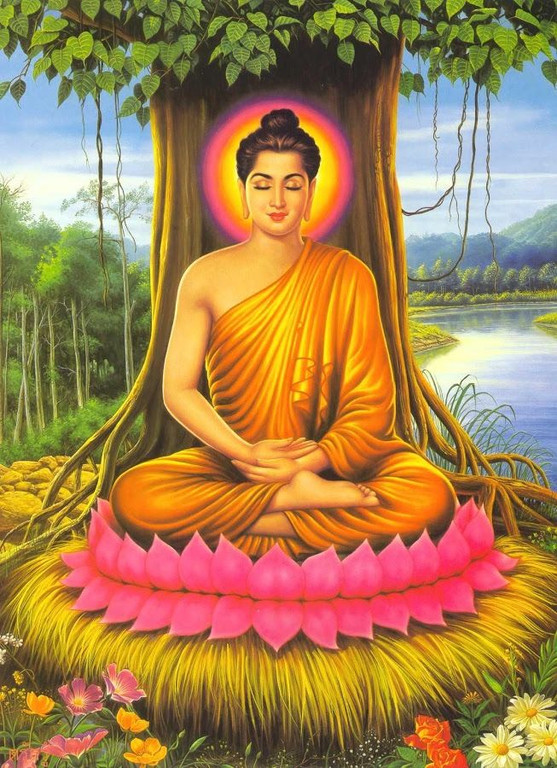
The heavenly demon Mara (Mo, 魔) fears that Siddhartha will achieve enlightenment and help mankind break free from his domain, the illusionary world of Samsara, and so he leads a monstrous army against the great rishi. But the army is rendered powerless by Siddhartha’s supreme focus of mind and burgeoning grasp of reality (Beal, 1883, pp. 147-156). [3] Continuing his meditation further, the rishi perceives his myriad past lives, as well as the karmic punishment of those who covet or perform bad deeds, being tortured in hell or reborn into lower levels of existence, respectively. He then comprehends that suffering arises from clinging, clinging from desire, desire from sensation, sensation from contact, contact from the six senses, and the senses from consciousness. Finally, Siddhartha comes to the realization that breaking each link (e.g. cessation of clinging will end suffering) will stop old age, sickness, and death and ultimately destroy the endless chain of rebirths (Beal, 1883, pp. 156-163). Having achieved perfect enlightenment (fig. 11),

the Buddha then devised for the world’s benefit the eightfold path, right sight, and so on, the only true path for the world to tread. / Thus did he complete the end (destruction) of ‘self,’ as fire goes out for want of grass; thus he had done what he would have men do; he first had found the way of perfect knowledge; / He finished thus the first great lesson (paramartha); entering the great Rishi’s house, the darkness disappeared; light coming on, perfectly silent, all at rest, / He reached at last the exhaustless source of truth (dharma); lustrous with all wisdom the great Rishi sat, perfect in gifts, whilst one convulsive throe shook the wide earth (Beal, 1883, p. 163).

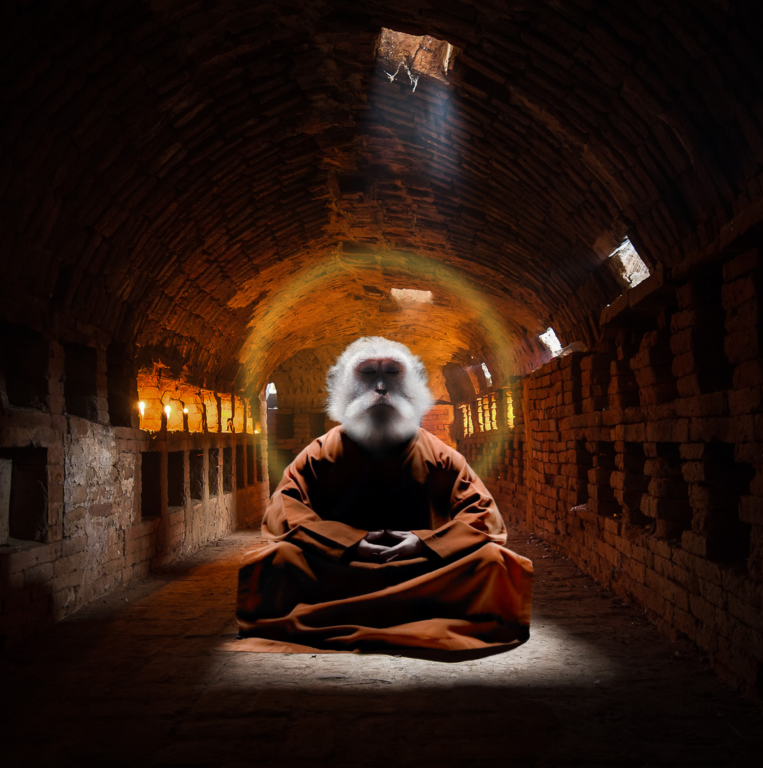
Journey to the West chapter two tells how Wukong serves as a junior monk for seven years before Subodhi takes him as a close disciple. One night, the sage recites to him a poem full of flowery esoteric imagery revealing that the secret to Daoist immortality and Buddhahood is the cultivation of chaste semen (jing, 精), breath (qi, 氣), and spiritual energy (shen, 神). The poem has a profound effect on Monkey, for the novel states: “At that moment, the very origin was disclosed to Wukong, whose mind became spiritualized as blessedness came to him” (Wu & Yu, 2012, p. 120). Following Subodhi’s instructions, Monkey performs breathing exercises after midnight (zi, 子) and before noon (wu, 午), resulting in immortality after three years of dedicated practice (fig. 12). [4] I should note that the book borrows from real Daoist practices but leaves much of the process up to the reader’s imagination. As I explain here, historical methods combined the aforementioned breathing exercises with the circulation of chaste semen and spiritual energy to create a spirit embryo (shengtai, 聖胎), or an immortal spirit that is eventually freed from the mortal shell. But in the case of the novel, Monkey’s practice results in an ageless, adamantine physical body, one capable of lifting even cosmic mountains.

Interestingly, the title of chapter two also refers to Monkey overcoming Mara. It reads: “Fully awoke to Bodhi’s wondrous truths / He cuts off Mara, returns to the root, and joins Primal Spirit” (Wu che puti zhen miao li / Duan Mo gui ben he yuanshen, 悟徹菩提真妙理 / 斷魔歸本合元神) (Wu & Yu, 2012, p. 116). The title freely associates Buddhist and Daoist concepts, such as Mara and the primal spirit. This synthesis is explained by Darga (2008):

Comparing the development of the embryo to the revelation of Buddhahood is typical of neidan texts of the Ming period. For instance, the Xingming guizhi (Principles of Balanced Cultivation of Inner Nature and Vital Force) uses Body of the Law (fashen 法身, dharmakāya) as a synonym for shengtai. The birth of the embryo represents the appearance of the original spirit (yuanshen 元神) or Buddhahood and is understood as enlightenment (p. 884).

The Buddha’s biography goes on for pages about deep philosophical concepts on the self, suffering, and reality, showing that the means of his liberation was of the utmost importance. By contrast, as noted above, Journey to the West leaves little space for Wukong’s method of immortality. In fact, the hard won moment that he breaks free of Yama’s grasp is not even mentioned in the novel! [5] So the author-compiler no doubt felt that Monkey’s subsequent adventures were far more important. This is understandable considering that in material as far back as the Song Dynasty, Monkey is already an ancient immortal at the beginning of the story.

[Note: See the 06-12-22 update below for a seventh parallel.]

Fig. 11 – Siddhartha achieves enlightenment and becomes the Buddha (larger version). Artist unknown. Fig. 12 – Wukong achieves immortality (larger version). Photomanipulation by the author.

II. A Borrowed Story?

So did the author-compiler (AC) of Journey to the West base Monkey’s early life on the Buddha’s story? The many similarities discussed above are very suggestive, but if only there was documented evidence of borrowing from other Buddhist personages. And that’s exactly what is found in chapter two. Shao (2006) explains that Wukong’s spiritual intelligence is based on the sixth Chan Patriarch Huineng (惠能, 638-713):

[Monkey] sets the stage for a striking display of his unusually profound insight when he announces his intentions to become an immortal. This provokes Subhuti to issue him a challenge by refusing to teach him, for he is “some what different from other people.” Monkey may not realize that the master is trying to gauge his spiritual power, but he rises to the occasion with a genuine clarity of vision: “I have a round head pointing to Heaven, and square feet walking on Earth. Similarly, I have nine apertures and four limbs, entrails and cavities. In what way am I different from other people?”

[…]

[W]e may look to Huineng’s story from which Monkey garners meaning. No doubt, Monkey’s inspired cleverness is modeled on Huineng’s reply to Hongren, the fifth patriarch of Chinese Chan Buddhism, in Huineng’s Tanjing (The Platform Sutra). When Huineng announces his intentions to become a Buddha, Hongren pounces upon him with a poignant reminder that he is “from Lingnan,” a “barbarian,” and therefore cannot become a Buddha. Huineng refuses to be intimidated, however. He holds his own with an unparalleled depth of insight about Buddha-nature: There may be “northern and southern men,” but “the Buddha nature fundamentally has no north or south.” Surely Monkey’s phrasing, his unusual insightfulness, and the quickness and aplomb with which he rises to the challenge are reminiscent of Huineng… (pp. 719-720).

Therefore, if the AC borrowed from the life of Huineng, a Buddhist patriarch, then he certainly could have borrowed from the life of the Buddha. I suggest that this was done to make Wukong’s early life more familiar to the reader. 

III. Conclusion

Despite the particulars of their stories being different, the Monkey King and the historical Buddha share six similarities. First, they experience a supernatural birth, both splitting open their mother in the same fashion as ancient Chinese sage-kings. Siddhartha emerges from the side of Queen Maya and Wukong forms from a stone egg birthed by a split rock. Second, they produce a radiant splendor upon their birth. Siddhartha’s body shines as he looks or walks to the four quarters, while beams shoot from Sun’s eyes as he bows to the four quarters. Third, they spend early years as royalty. The prince is born into the royal Shakya clan and Monkey achieves kinghood through a test of bravery. Fourth, they feel a sense of shock upon realizing the impermanence of life. Siddhartha is exposed to the evils of old age, sickness, and death via the “four signs” initiated by heaven. Wukong instead comprehends the fearsome hand of Yama through his observation of time. Fifth, they set out on a quest to find a means of escaping old age and death. The prince travels the land studying meditation and pondering concepts of the body, the mind, the soul, and selfhood. Monkey searches the world for over a decade before he is taken in by the Buddho-Daoist sage Subodhi. Sixth, they achieve their goal through spiritual practices. Siddhartha defeats Mara and achieves perfect enlightenment via intense meditation. Wukong breaks free from Yama/Mara and achieves immortality via Daoist elixir arts. And since the AC borrowed from the life of the Sixth Chan Patriarch Huineng, he likely modeled the Monkey King’s early life on the Buddha to make his story more familiar.


IV. Updates

Update: 06-12-22

I’ve noticed another parallel while reading two modern biographies of the Buddha. 

7. Student Prodigies 

The Prince is said to have had a great aptitude for learning in his youth: “And now he was brought to learn the useful arts, when lo! once instructed (at one hearing) he surpassed his teachers” (Beal, 1883, p. 24). [6] Wukong has the same talent. When Subodhi teaches him the method for the 72 Transformations, he masters them very quickly:

[T]his Monkey King was someone who, knowing one thing, could understand a hundred! He immediately learned the oral formulas and, after working at them and practicing them himself, he mastered all seventy-two transformations (Wu & Yu, vol. 1, p. 122). 


Update: 06-18-22

I’ve written an article that lists a number of surprising parallels shared by Monkey and the Greco-Roman hero Heracles (see section 2).

Parallels Between Sun Wukong and Hercules

Notes:

1) See Cook and Luo (2017) chapter five for more examples of split-births.

2) Other than the “Four Signs,” another example of the devas intervening in Siddhartha’s life takes place shortly after he forsakes the extreme austerities that emaciate his body. He bathes in a holy river but can’t leave the water due to weakness from malnourishment. That’s when a deva pushes down a tree branch, allowing Siddhartha to pull himself to safety (Beal, 1883, p. 144).

3) For example, one passage reads: “Their flying spears, lances, and javelins, stuck fast in space, refusing to descend; the angry thunderdrops and mighty hail, with these, were changed into five-colour’d lotus flowers…” (Beal, 1883, p. 153).

4) The original source says “breathing exercises before the hour of Zi [子, midnight] and after the hour of Wu [午, noon]” (Wu & Yu, 2012, p. 121). However, this is likely a transcription error as Daoist sources cite the opposite, after midnight and before noon (Kohn, 2008, p. 84, for example). Therefore, I have corrected the information.

5) The moment that Monkey achieves immortality is only alluded to in passing:

Suddenly he [Subodhi] asked, “Where’s Wukong?” Wukong drew near and knelt down. “Your pupil’s here,” he said. “What sort of art have you been practicing lately?” the Patriarch asked. “Recently,” Wukong said, “your pupil has begun to apprehend the nature of all things and my foundational knowledge has become firmly established.” “If you have penetrated to the dharma nature to apprehend the origin,” said the Patriarch, “you have, in fact, entered into the divine substance” (Wu & Yu, 2012, p. 121).

6) Nakamura (2000) offers an extremely wordy translation of the above sentence: “When he had passed beyond childhood, he in due time received the initiation ceremony. He mastered in only a few days the various sciences suitable to his standing that [ordinary people] took many years to learn” (p. 90).

Sources:

Beal, S. (Trans.). (1883). The Fo-sho-hing-tsan-king: A Life of Buddha by Asvaghosha Bodhisattva. Oxford: Clarendon Press. Retrieved from https://archive.org/details/foshohingtsankin00asva/mode/2up

Birrell, A. (1999). Chinese Mythology: An introduction. Baltimore: The Johns Hopkins University Press.

Buswell, R. E., & Lopez, D. S. (2014). The Princeton Dictionary of Buddhism. Princeton, NJ: Princeton University Press.

Cook, C. A., & Luo, X. (2017). Birth in Ancient China: A Study of Metaphor and Cultural Identity in Pre-Imperial China. Albany: State University of New York Press.

Cowell, E. B. (Ed.) (1895). The Jātaka, or stories of the Buddhas former births: Vol. 3. Cambridge: Cambridge University Press. Retrieved from https://archive.org/details/cu31924072231073/page/n249/mode/2up

Darga, M. (2008) Shengtai. In F. Pregadio (Ed.), The Encyclopedia of Taoism: Vol 1-2 (pp. 883-884). Longdon: Routledge.

Kohn, L. (2008). Chinese Healing Exercises: The Tradition of Daoyin. Honolulu: University of Hawaiʻi Press.

Nakamura, H. (2000). Gotama Buddha: A Biography Based on the Most Reliable Texts (G. Sekimori, Trans.) (Vols. 1-2). Tokyo: Kosei Publishing Co.

Shao, P. (2006). Huineng, Subhūti, and Monkey’s Religion in “Xiyou ji”The Journal of Asian Studies, 65(4), 713-740. Retrieved from www.jstor.org/stable/25076127.

Thanissaro Bhikkhu (n.d.). Affirming the Truths of the Heart: The Buddhist Teachings on Samvega & Pasada. Retrieved from https://www.dhammatalks.org/books/NobleStrategy/Section0004.html.

Wu, C., & Yu, A. C. (2012). The Journey to the West (Vols. 1-4) (Rev. ed.) Chicago, Ill: University of Chicago Press.

Xuanzang (2016). The Great Tang Dynasty Record of the Western Regions (2nd ed., R. Li, trans.). California: BDK AMerica, Inc. (Original work published 1996)

Archive #18 – Demons, Gods, and Pilgrims: The Demonology of the Hsi-yu Chi (1985)

Campany (1985) discusses methods by which demons of Journey to the West (Xiyouji西遊記, 1592) move up and down the Buddho-Daoist cosmic hierarchy. A PDF of the paper can be accessed in section II below. 

I. Summary

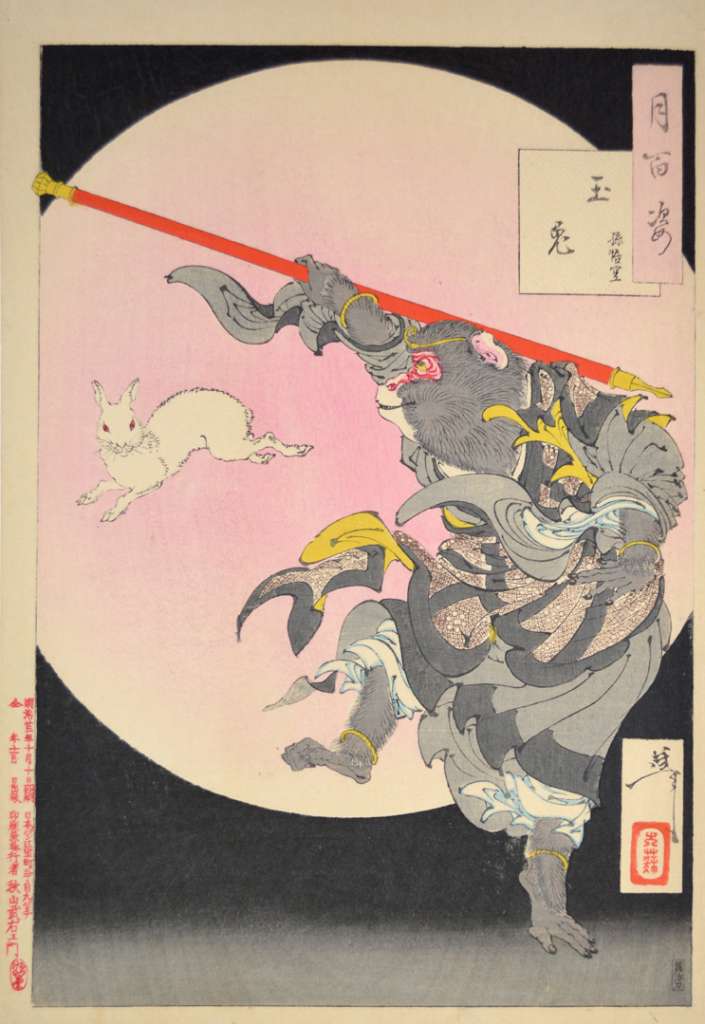
He begins by laying out the formulaic pattern of the episodes in which they appear: 1) a description of the demon’s mountain or aquatic home in poetic verse; 2) the initial encounter during which Tripitaka is tricked by the demon’s magic disguise; 3) the initial battle(s) between the disciples and the demon involving contests of magic and weapons, often described in poetic verse; 4) the battles end in a stalemate or defeat, and in the case of the latter the disciples are held captive in the demon’s stronghold; 5) Sun Wukong searches heaven and earth for the master of the demon, for the evil is usually a renegade celestial animal or protégé; 6) the demon is subdued by their master; and 7) the demon is either reintegrated or added to the cosmic order. An example of the former is the moon goddess’ jade hare (ch. 95) being taken back to heaven (fig. 1). An example of the latter is Red Boy (ch. 40-43) becoming a disciple of Guanyin.

There are two types of powerful demons who are subjugated by their master or an appropriate agent (e.g. a rooster god defeating a centipede demon). The first acquires magic powers via Daoist cultivation and, lacking celestial rank, causes havoc (think of Monkey as a young immortal). It is only through their subjugation and addition to the cosmic order that they achieve higher spiritual status. Apart from Red Boy, another example is the Black Bear spirit (ch. 16-17), who is subdued by Guanyin and installed as the guardian of her magic island. The second, being the most common, is one who previously held heavenly rank and was banished to earth. This exile is the result of breaking a rule, the need to burn off negative Buddhist karma, or because of a deficiency in their Daoist cultivation, requiring that they work their way back up the spiritual hierarchy. All five of the pilgrims fit into this category in one way or another.

Two types of demons are not subjugated by a heavenly master. The first is a lessor animal spirit who acts as a servant or soldier for a demon king. They attach themselves to this “upwardly mobile” demon because their master may aid in their own ascension via secrets of cultivation or the gift of longevity-bestowing food. Prime examples are all the (simian and non-simian) animal spirits who attach themselves to Sun Wukong after he establishes himself as a monster king. Such animal spirits are usually slaughtered after their master is defeated. The second are demons who peacefully cultivate themselves without endangering others. A prime example is the White Turtle of the Heaven-Reaching River (ch. 49 and 99) who cultivates human speech but still requires the intervention of the Buddha to evolve to human form.

Campany (1985) moves onto the hierarchy itself, noting how the level of a being’s attainment in spiritual cultivation does not affect their actual rank. This is because Daoism, Buddhism, and Confucianism are viewed differently in the novel. Demons who cause no harm during their cultivation are left alone, while violent offenders are subjugated and added to the hierarchy. And even if an animal spirit has Daoist powers, they are still considered inferior to humans, for they are born into a lower level of the six Buddhist paths of reincarnation. These spirits, however, can move up the hierarchy based on the amount of Buddhist merit, or “right fruit” (zhengguo, 正果), that they acquire through good deeds. Additionally, the Buddha and Guanyin are generally portrayed as higher in rank than Daoist gods, even the Jade Emperor, due to their “Dharma Power” (fali, 法力). Despite this, Sun Wukong is always quick to point out when a high-ranking god, Buddhist or Daoist, has violated Confucian norms. Therefore, the hierarchy presented in the novel follows the Ming-era syncretic emphasis on mental cultivation (xiu xin, 修心).

Fig. 1 – Yoshitoshi, Jade Rabbit: Sun Wukong, from the series One Hundred Views of the Moon, 1889 (larger version). From the Ronin Gallery.

The novel categorizes all beings as part of heaven, earth, or hell, each representing a realm within the hierarchy. Yet, it presents four ways to move between them: one, temporarily taking the form of a higher-ranking figure (human, immortal, deity, etc.) via magical transformation (hua, 化); two, reincarnating into a higher path (e.g. animal to human); three, attaining immortality via Daoist cultivation (or becoming human and then attaining immortality in the case of animal spirits); and four, being subjugated and added to the cosmic order.

The demons of Journey to the West are paradoxical on two counts: one, such beings are realistic, with detailed descriptions of their appearance, speech, and feelings, and yet they are often reduced to mere illusions brought forth by the unfocused or disquieted mind (Campany (1985) waits to explain this until the end); and two, they are evil from a Western perspective, but not wholly evil from an Eastern perspective. Their ambiguous nature is revealed by the Chinese hanzi used to describe them (e.g. yaojing 妖精; yaoguai, 妖怪), suggesting these beings are “undeveloped” or “bogus” and have yet to complete their cultivation. Additionally, the novel connects the demons and pilgrims with five elemental and yin-yang theory, each with its own creative/destructive or magnetic/repelling forces, suggesting a mutual relationship. This relationship is explained below.

Campany (1985) emphasizes that, while Tripitaka’s disciples are themselves former demons, what separates them from the others is “returning to the right path” (gui zheng, 歸正), or converting to Buddhism. As Daoists, they formerly cultivated the self, but as Buddhists they subsume the self to a larger whole by becoming Tripitaka’s disciples, thereby submitting to Buddhist law and cultivating Buddhist merit through their actions. This differs from demons who attempt to subsume the universe into themselves. They follow heretical practices (waidao, 外道) in pursuit of their continued self-cultivation, many seeking a “short cut” by attempting to eat Tripitaka. They don’t realize that accepting the Buddhist concept of “no self” would free them of their attachment to Daoist cultivation and that the accumulation of Buddhist merit would aid in their ascension through the cosmic hierarchy.

Powerful demons like Monkey who consider themselves greater than the universe would continue down the wrong path without the intervention of their master (or an appropriate agent) intervening to reintegrate or add them to the cosmic order. As Campany (1985) explains: “Submission of self is true cultivation of self” (emphasis in original) (p. 114). Therefore, demons rely on the pilgrims to redirect their cultivation to the right path of subsuming the self to a larger whole. An example is Lady Raksasi at the end of her story cycle.

Likewise, the pilgrims rely on the demons for several reasons: one, they help the pilgrims build Buddhist merit; two, via the concept of “non-duality“, the pilgrims learn there is no difference between themselves and the demons; and three, as mental obstacles, the demons help refine the pilgrim’s spiritual cultivation over the journey. This last point is particularly important as the illusionary nature of demons helps the pilgrims, especially Tripitaka, understand that all reality is empty (kong, 空). This is something that Wukong (悟空, “aware of emptiness”) reminds his master of throughout the quest.

Campany (1985) ends the paper by explaining the first paradox:

We now see that the juxtaposition of realistic descriptions of demons and reductions of them to miasma of the mind serves as a fascinating and entertaining contrapuntal expression of the central theme of the novel, the complementary relation and ultimate identity between illusion and enlightenment. Why do demons almost always appear according to the paradigm sketched in the first part of this paper? Why this repetition, this sameness, if not to underscore the miasmic quality of the demons even as narrative details convince us of their palpable sensory reality? Why do demons put up so stubborn a resistance, if not to impress upon us the arduousness of right cultivation? The consummate artistry with which the author bodies forth in his tale the relation between illusion and reality is itself a vehicle for the perception of this relation (Campany, 1985, p. 115).

II. PDF File


Disclaimer

This has been posted for educational purposes. No malicious copyright infringement is intended. Please support the official release.

Citation

Campany, R. (1985). Demons, Gods, and Pilgrims: The Demonology of the Hsi-yu Chi. Chinese Literature: Essays, Articles, Reviews (CLEAR), 7(1/2), 95-115. doi:10.2307/495195

Wu, C., & Yu, A. C. (2012). Journey to the West (Vol. 1) (Rev. ed.). Chicago: University of Chicago Press.

Sun Wukong’s Curlicue-Style Headband

Last updated: 07-25-2022

My previous article on the origin of Sun Wukong’s golden fillet describes how various forms of media portray him wearing three different styles: 1) a band with blunt ends that meet in the middle of the forehead and curl upwards like scowling eyebrows; 2) a band adorned with an upturned crescent moon shape in the center; and 3) a simple band devoid of decoration (fig. 1). Here, I want to speculate on the origin of the first style, what I call the “curlicue-style headband”.

Fig. 1 – (Left) Style 1 – From the comedy A Chinese Odyssey Part Two: Cinderella (1995). (Center) Style 2 – From the famous 1986 TV show. (Right) Style 3 – From the 2011 TV show (larger version).

I. The Kaiyuan Temple carving

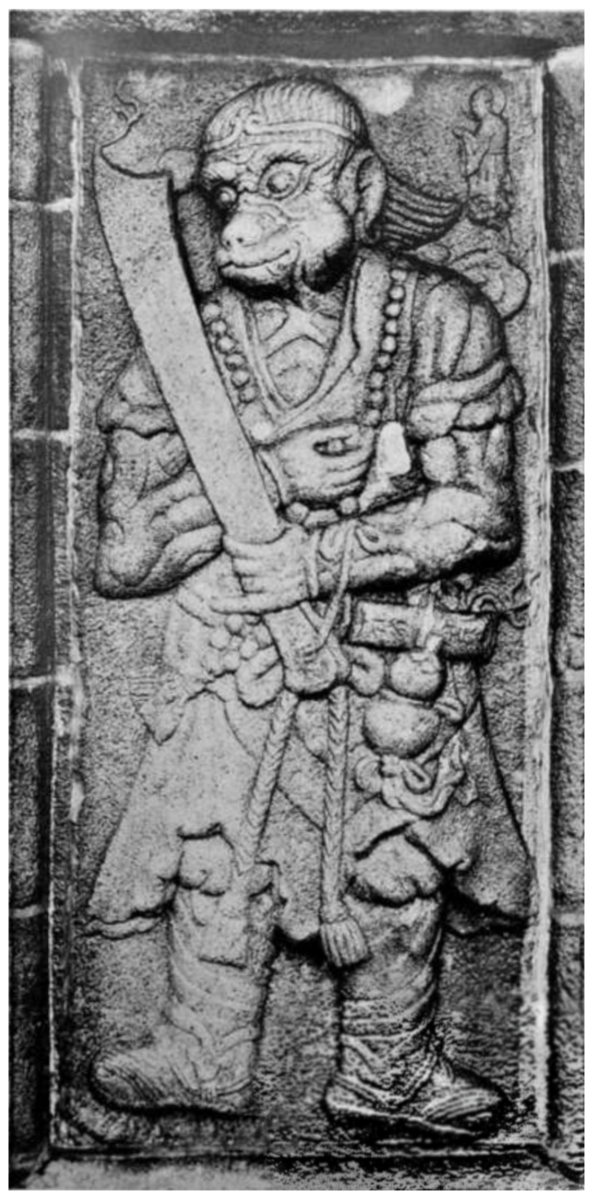
The oldest example of Sun Wukong wearing the curlicue style headband that I am aware of is a nearly life size stone carving from the Western pagoda of Kaiyuan Temple erected in 1237 CE. He is depicted as a muscular, monkey-headed warrior wearing a circlet, earrings, bracelets, a rosary, arm bangles, and anklets (all prescribed ritual items), as well as a monk’s robe and sandals. He wields a broadsword in one hand, while the other thumbs the rosary at his chest. At his waist hangs a calabash gourd and a sutra scroll (fig. 2). Behind his left shoulder can be seen Xuanzang (a.k.a. Tripitaka) ascending to heaven on a cloud, having won a place in paradise thanks to the protection of our hero. In short, Wukong is portrayed as a guardian deity. The significance of this will become clear below.

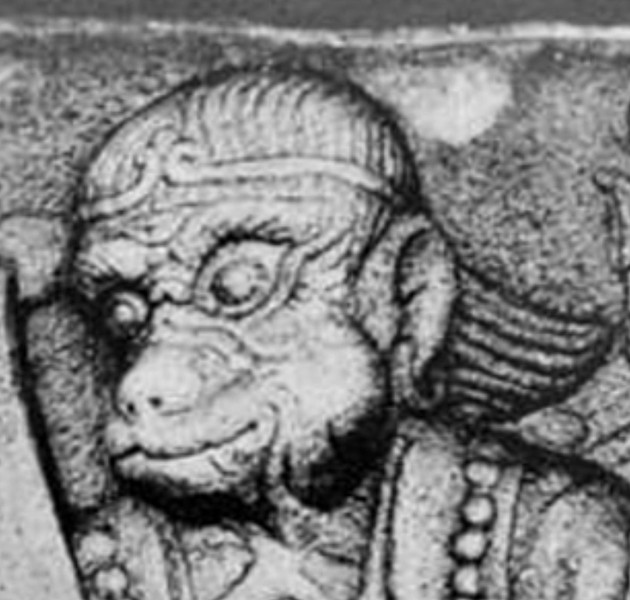
The carving’s headband has a gentle double curlicue topped with a wedge shape (fig. 3). This design appears in Daoist art from the same period.

Fig. 2 – The Kaiyuan Temple pagoda carving (1237) (larger version). Fig. 3 – Detail of the headband (larger version).

II. Ink Treasure of Wu Daozi

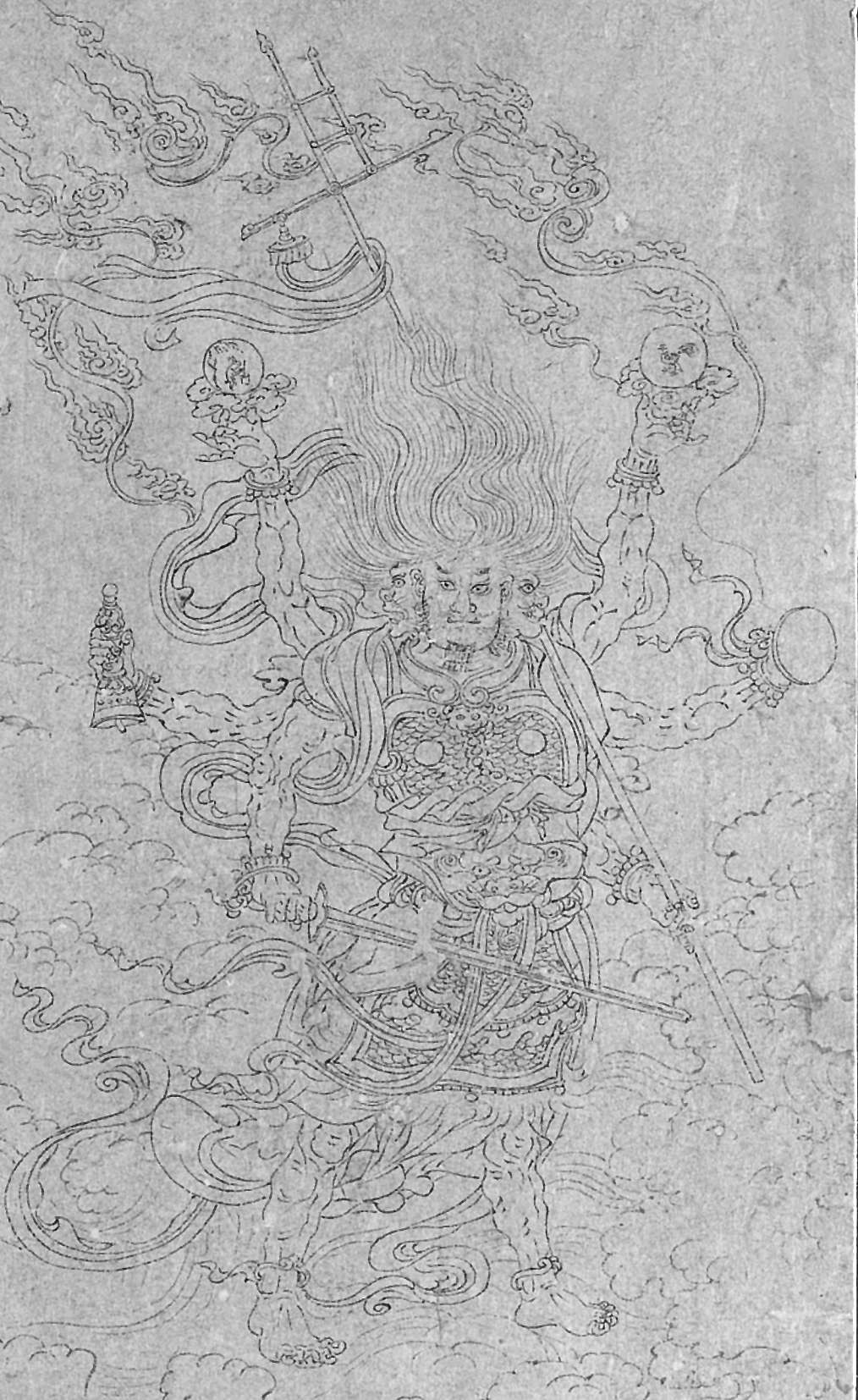
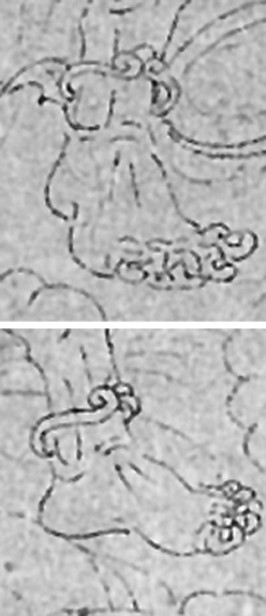
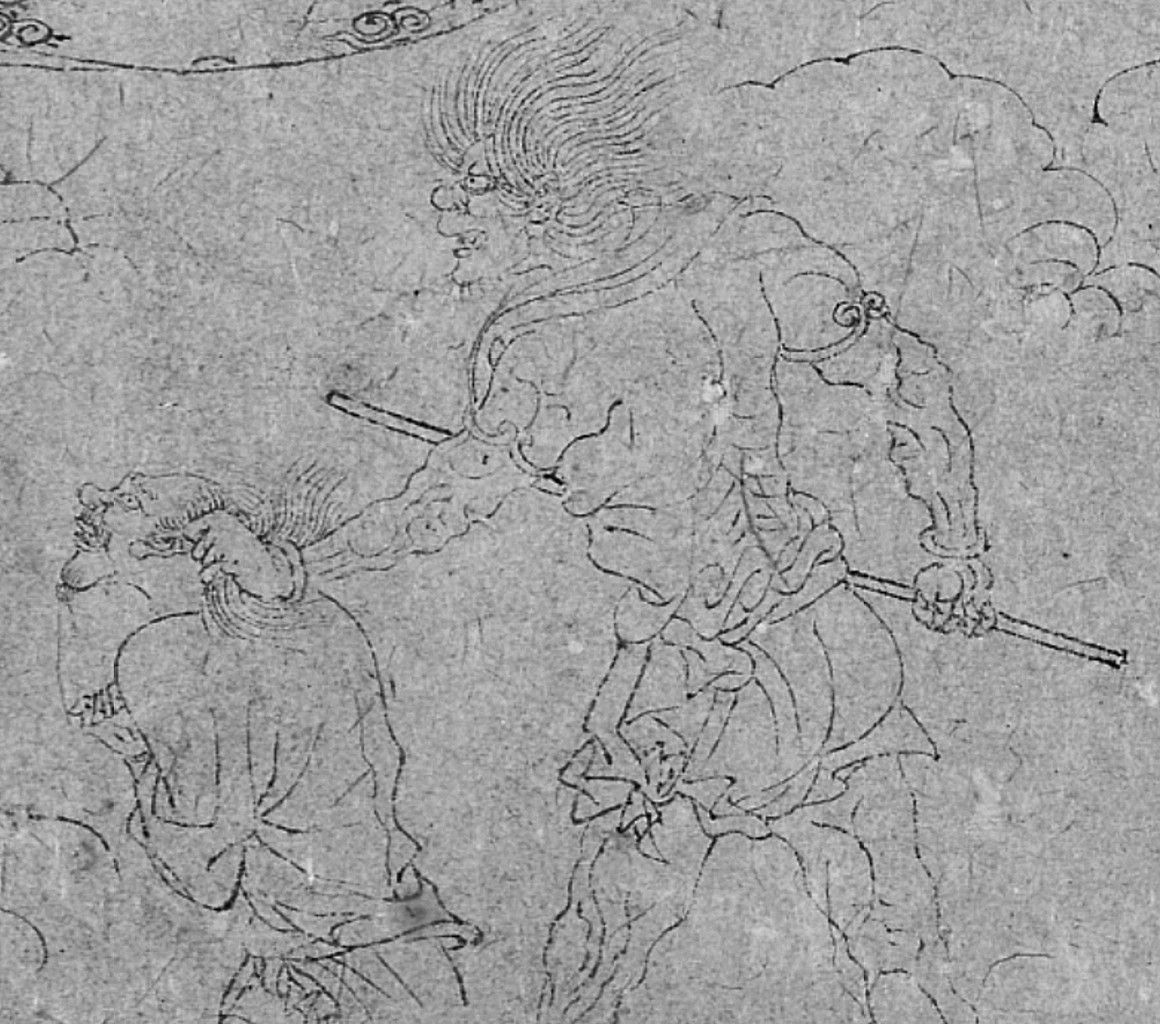
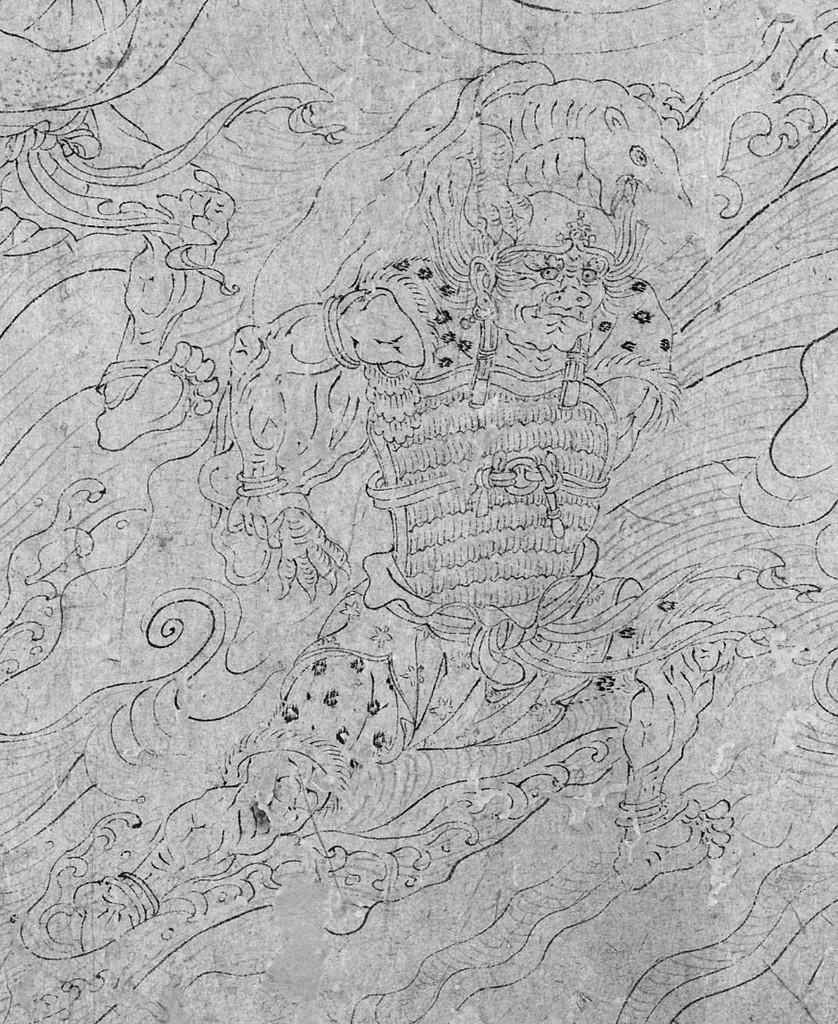
The Ink Treasure of Wu Daozi (Daozi mobao, 道子墨寶) is a collection of 50 ink drawings of the Daoist pantheon attributed to the noted 8th-century artist Wu Daozi but likely produced during the 13th-century. It features many protector/wrathful deities wearing body adornments with this curlicue pattern (with or without the added wedge). There are too many examples to post, so I will choose just three (Fig. 4⁠–⁠9). Please note that, with the exception of the headband and rosary, these figures are wearing the same esoteric ritual items as Monkey (i.e. earrings, bracelets, arm bangles, and anklets).

This shows a clear connection between body adornments with the curlicue pattern and guardian deities.

Fig. 4 – The esoteric protector deity Marshal of Heavenly Reeds, a.k.a. Zhu Bajie’s previous incarnation (larger version). Fig. 5 – Detail of the anklets on his feet (larger version). Note that Heavenly Reed’s necklace also features the curlicue pattern. Fig. 6 – A demonic guardian detaining a soul undergoing judgement in hell (larger version). Fig. 7 – Detail of the bangles on his arms (larger version). Fig. 8 – One of Lord Erlang‘s demonic soldiers helping to clear animal spirits (in this case a turtle) from a mountain river (larger version). Fig. 9 – Detail of his ornate headband with spherical elements, giving it a floral quality (larger version). The images have been enhanced slightly for clarity.

III. Possible origin of the pattern

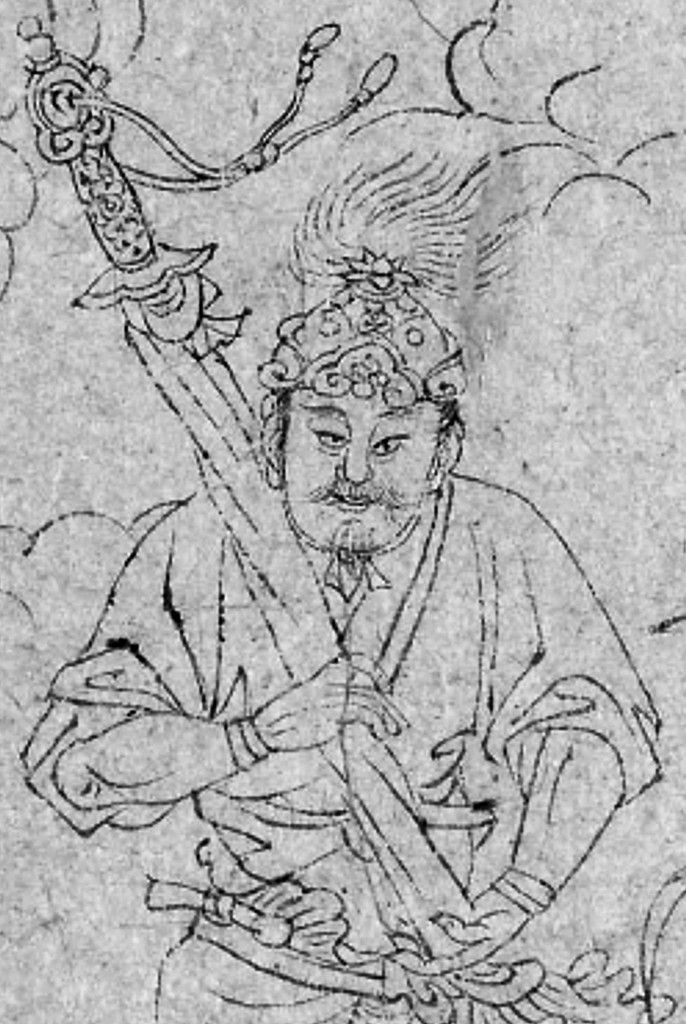
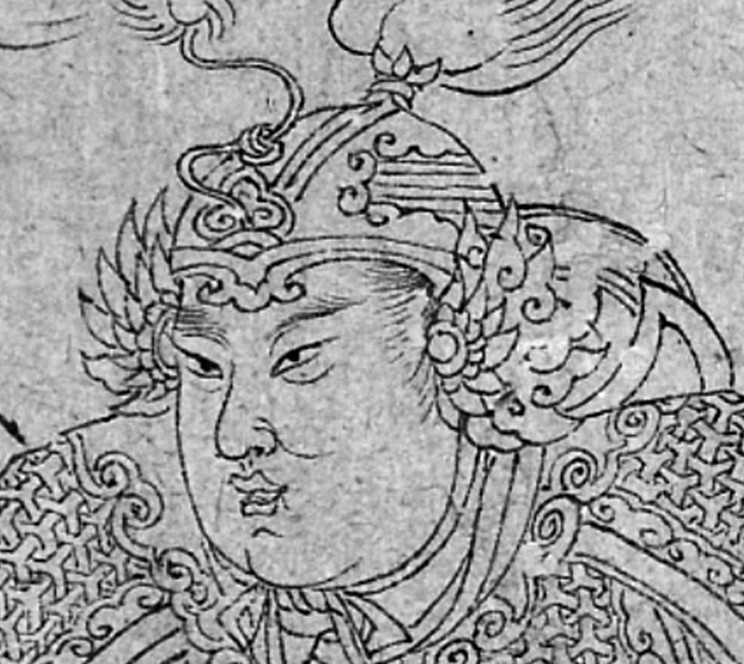
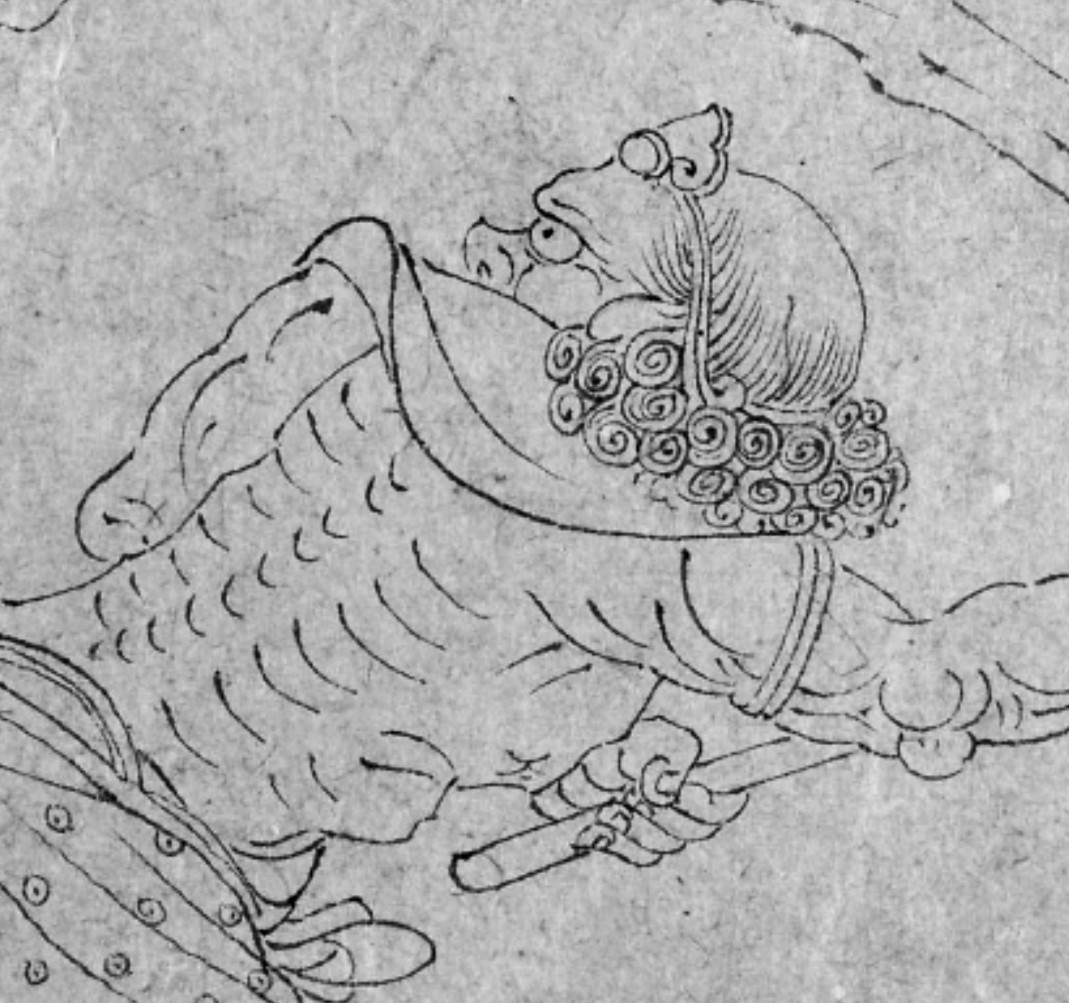
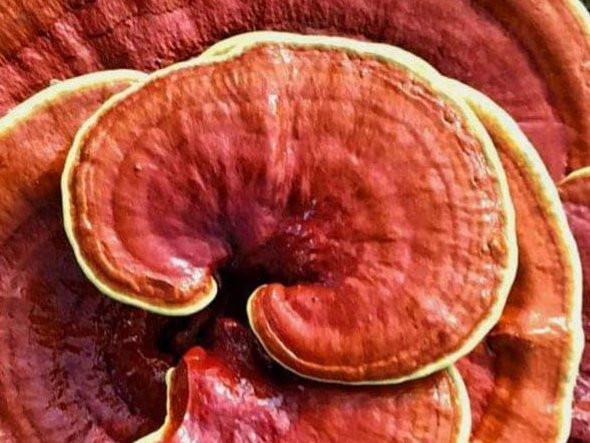
The Ink Treasure of Wu Daozi shows several generals, officials, and guardians wearing headgear with lingzhi mushrooms (靈芝) (fig. 10⁠–⁠13), a real world fungi shaped like a rounded heart with a lacquered reddish-brown appearance (fig. 14). Also known as ruyi (如意, “as-you-wish”),—yes, the same as Wukong’s staff—the mushroom is associated with immortality and magic wish fulfillment in Buddho-Daoist culture. The ruyi pattern (ruyi wen, 如意紋) is a common motif in Chinese art, lining vases, topping S-shaped scepters, appearing as flourishes on traditional style rooftops, repeating endlessly on extravagant silken textiles, etc. (fig. 15⁠–⁠17). It has a familiar double curlicue swirl that reminds one of Monkey’s headband (fig. 18).

Given the fungi’s high standing in religious culture, I could see the lingzhi/ruyi‘s curlicue pattern being associated with the ritual garb of guardian deities since they are the front line of defense against evil influences.

Fig. 10 – A sword bearer (larger version). Fig. 11 – Lord Erlang overseeing his demonic soldiers clearing the mountain and river of animal spirits (larger version). Fig. 12 – Detail of his helmet (larger version). Fig. 13 – One of Erlang’s soldiers driving out animal spirits with fire (larger version). Fig. 14 – A lingzhi mushroom (larger version). Fig. 15 – The Bodhisattva Guanyin holding a ruyi scepter (larger version). Fig. 16 – A marvelous Qianlong-era celadon glaze vase with a ruyi shape (larger version). Note the pattern repeating on the lid and base. Image found here. Fig. 17 – The Ruyi Gate in the Forbidden City. Note the Ruyi elements on the roof (larger version here). Fig. 18 – A comparison of a ruyi pattern and Sun Wukong’s golden headband (larger version).


Update: 01-23-22

I’ve written an article suggesting a mantra for the secret spell that causes the golden fillet to tighten.

The Tightening Spell of Sun Wukong’s Golden Headband


Update: 07-25-22

I’ve written an article that explains the origins of the “crescent-style” headband.

The Monkey King’s Crescent-Style Headband

The Great Sage Detecting “Ping-Pong” Bottle

Last updated: 06-26-2021

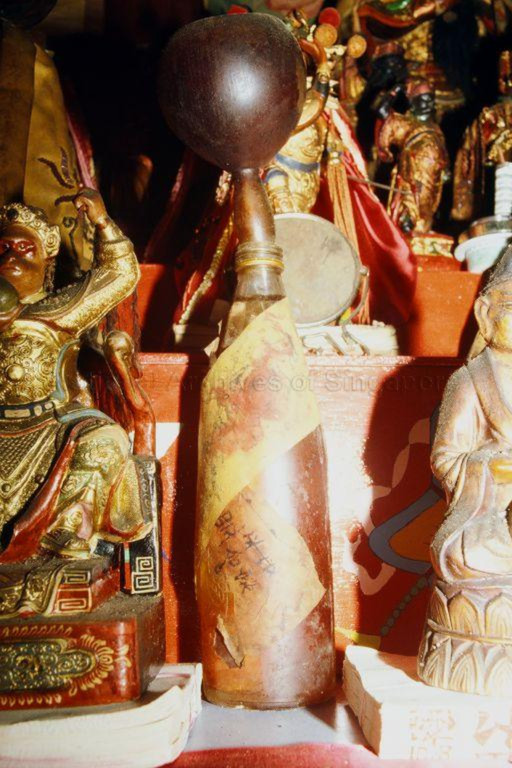
Elliott (1955/1990) describes a curious glass bottle used in the worship of Sun Wukong in Singapore. Filled with “twelve o’clock water” and topped with a consecrated bulbous glass stem, it is said to make a pinging noise to signal the arrival of the monkey god in a home or temple:

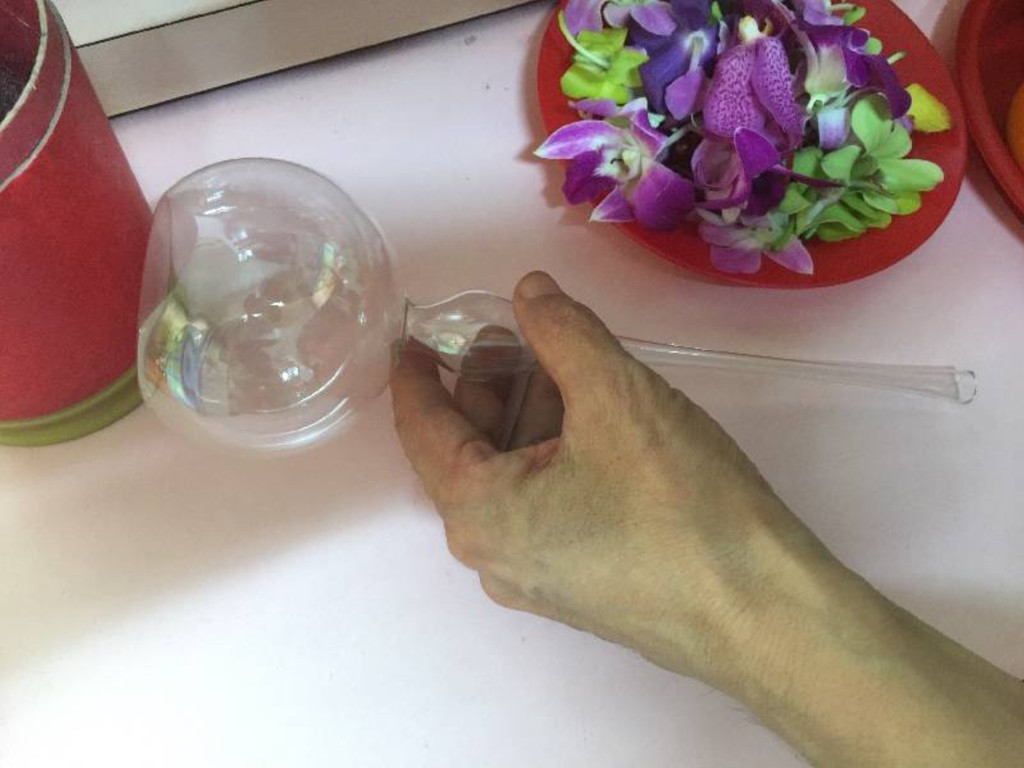
There are, also, sometimes other pieces of apparatus, apart from images, which devotees like to keep in their own homes. An outstanding example is an article of equipment almost exclusively associated with the ‘Great Saint’ [大聖] which goes by the onomatopoeic name of ‘ping-pong’ [乒乓]. It consists of an ordinary bottle filled with ‘twelve o’clock water’, water drawn from a tap or well at midday. Into the neck is fitted a funnel-like piece of glass-ware open at the lower end of the funnel, which dips into the water but completely closes the top [fig. 1 and 2]. Everyday at noon, and sometimes at other hours as well, this apparatus gives off a sudden ‘pinging’ sound, as if bubbles were rising and forcing up the funnel in the bottle’s neck. When this occurs, the shen [神, god] is supposed to be revealing his presence in the temple or the home, and an immediate act of worship must be carried out by the persons there. These ‘ping-pong’ are invariably found in temples associated with the ‘Great Saint’. Devotees will purchase their own funnels and bring them to the temple for the dang-ki [童乩, spirit-medium] to consecrate them with a lick of his blood (p. 58).

Fig. 1 – The ping-pong bottle, a.k.a. “Great Sage bottle” (Dasheng ping, 大聖瓶), fitted with the bulbous stem, which is closed at the top and open at the bottom (larger version). Fig. 2 – A detail of the stem (larger version). Images found on google.

The device was also used in Hong Kong according to one personal account shared with me:

I believe the apparatus was used not just in Singapore. My mom told me that as a kid in HK in the 1940s/50s, her aunt also had something similar on the altar where she worshipped the [Great] Saint. And when the apparatus made a noise which signified his arrival, they would light up a joss stick.

I don’t know when the bottle was first associated with Sun Wukong, but the above information points to its active use in Asia as far back as the 1950s. It’s my understanding that the bottle is a rarity in modern practice, suggesting it flourished prior to mid-century.

Why the bottle was associated with the Great Sage is also a mystery to me. But the significance of twelve o’clock water may provide some clues. Astrological theory associates noon with wu (午), the seventh of twelve earthly branches, which is in turn identified with horses, the heart, fire yang, the summer solstice, and the direction south (Wu & Taylor, 2014, pp. 133-134). Readers may remember that Sun Wukong is appointed the keeper of the heavenly horses (bimawen, 弼馬溫) in chapter four of Journey to the West (Wu & Yu, 2012, pp. 148-149). Additionally, Chinese philosophy considers the heart to be the seat of the mind (xin, 心; alternatively translated “heart-mind”). This is important as Sun is called the “Mind Monkey” (xinyuan, 心猿; alternatively translated “Mind Ape”), which is a Buddho-Daoist concept denoting the disquieted, transient thoughts that keep man trapped in Samsara. Examples include the titles for chapters seven (“From the Eight Trigrams Brazier the Great Sage escapes; Beneath the Five Phases Mountain, Mind Monkey is still”) and fourteen (“Mind Monkey returns to the Right; The Six Robbers vanish from sight”). 

(Before I continue, I must warn that using the 16th-century novel as a source for modern folk religion surely overlooks beliefs that I am not aware of. The above info should therefore be considered purely speculative.)

A naturalistic explanation for the pinging noise is air escaping from the bottle due to changes in atmospheric pressure. However, I’d like to speculate on a possible esoteric reason. As mentioned above, noon is identified with fire yang, which is considered the height of yang power. In fact, the hours before wu and after zi (子, midnight) are considered the best time to practice Daoist exlixir cultivation. [1] And since heaven is the embodiment of yang, [2] it’s possible worshipers believe water collected at noon is infused with strong yang energy, thereby giving it the ability to detect the presence of celestial deities like the Great Sage.


Update: 08-11-20

J.D. Martinsen contacted me and noted that “drawing noon water” (da wushi shui, 打午時水) is a common practice in coastal China during the Dragon Boat Festival. The water is apparently known for its demonifugic and medicinal properties. In fact, this custom is even practiced in Taiwan where there is a common saying: “A sip of noon water is better than three years of herbal medicine” (wushi shui yin yi zui, jiao hao buyao chi san nian, 午時水飲一嘴,較好補藥吃三年) (Chen, 2011, p. 210). Therefore, this association with warding malevolent influences/sickness may explain why Sun Wukong is connected with noon water. He is after all the exorcist par excellence, as well as a healer.


Update: 06-23-21

An informant from Singapore, who is the head of a monkey god temple, shared with me some wonderful folk knowledge about the ping-pong bottle. The words below are gently edited for readability:

He fl[ies] at a high speed which generates high heat [and] causes the ping pong to sound. The water inside the bottle where you place the ping pong [is] changed on 五月初五 (端午節) [i.e. the Dragon Boat Festival]. Every year, the replacement water is collected from your rain water. The former water will [be] use[d] to bath[e] to purify our well-being. I have pour[ed] it into a large [pail]. And bottle it and give [it] to devotees to bath[e]. Talisman[s are] issued [when we change the water at noon] (fig. 3), [we] will paste [them] on the bottle on 端午節. [W]hen urgent or danger[rous] matters [happen], we will use the [ping pong holy] water to ward off bad omen[s].

My informant said some of this knowledge was revealed to him by the monkey god.

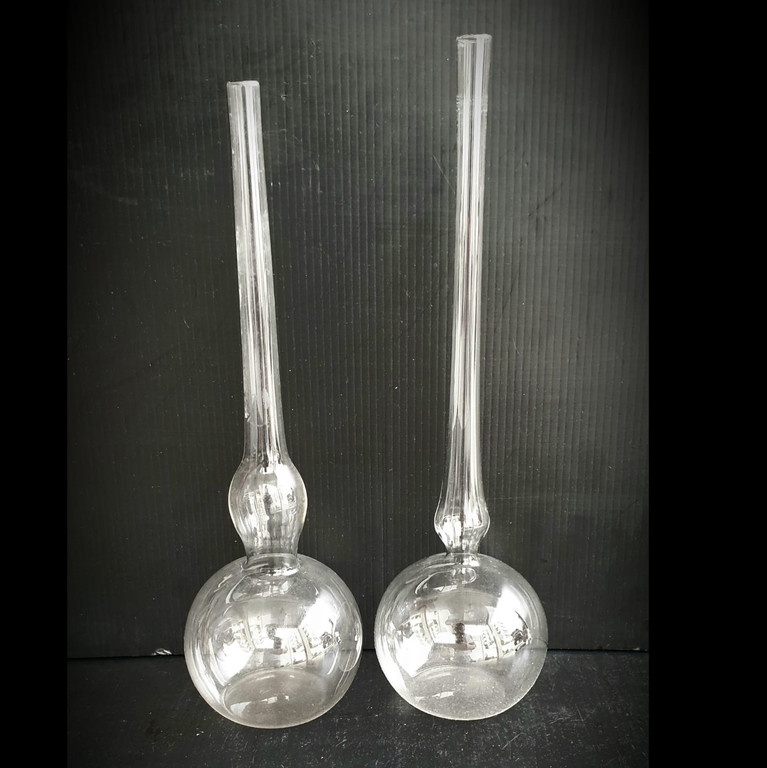
I was also told by a collector-seller that there are different-sized glass stems (fig. 4), though he believes their hand-made nature means no two are exactly the same. My informant states the stems with the “larger diameter will sound louder” when the Great Sage arrives.

Fig. 3 – Talismans on a ping-pong bottle (larger version). Photo taken at the Wallich Street “Tai Seng Yah” (Dasheng ye) temple in Singapore during the 1970s. Courtesy of Ronni Pinsler of the BOXS project. Fig. 4 – The different sizes of ping-pong stems (larger version). Photo from a private collector.


Update: 06-26-21

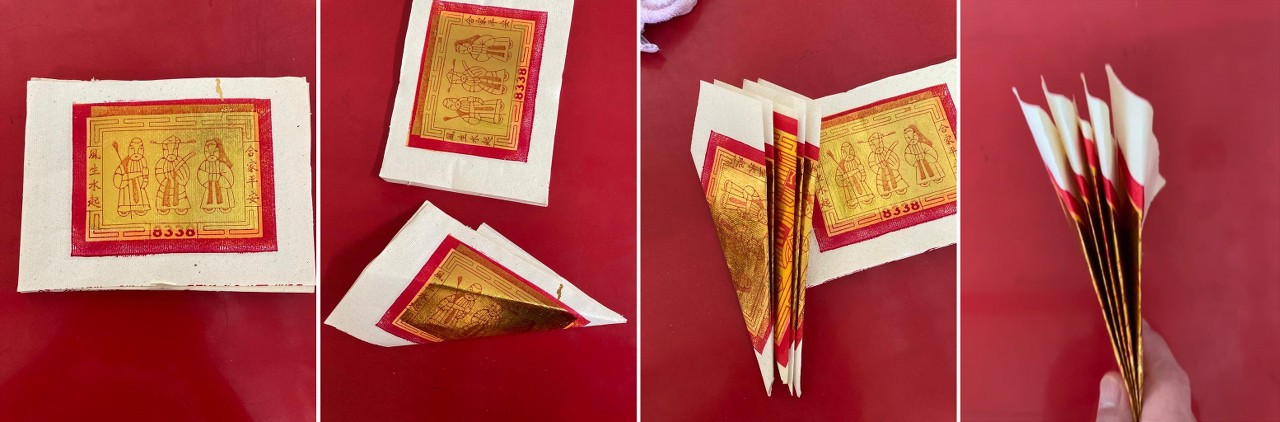
My informant tells me that a beer bottle can be used to hold the pingpong stem. It must be washed and all labels removed. The preparation for the stem is a little more involved. The stem must be washed along with five kinds of flowers. The types of flowers do not matter, but no white flowers are permitted. Also, slices of green lemon can be included, but no yellow lemons are permitted. This washing must be done on the first or the 15th of the lunar month. The holy water is gathered in a pail between 11am and noon from rain the day before the Dragon Boat Festival, for it is believed that it always rains on this day. This water is poured one index finger length from the rim. This ensures it will not overflow once the pingpong stem is inserted. Then triangle-folded joss paper (jin zhi, 金紙) (fig. 5 to 8) is waved three times around the pingpong (nuo pingpong, 挪乒乓) while prayers are said. Finally, the paper is left atop the pingpong bulb for a given time. The pingpong bottle must be placed next to a statue of the Great Sage.

Fig. 5 to 8 – The process of folding the joss paper into triangles (larger version). Photos by my informant.

Notes:

1) This is noted as early as the fourth-century CE work Wondrous Record of the Golden Casket on the Spirit Immortals’ Practice of Eating Qi (Shenxian shiqi jin’gui miaolu, 神仙食氣金櫃妙錄) (Kohn, 2008, p. 84).

2) See, for example, Clearly (2003), p. 391.

Sources:

Chen, X. (2011). Taiwan li shi shang de yi min yu she hui yan jiu [The History of Taiwanese Immigration and Social Studies]. Beijing: Jiu zhou chu ban she.

Cleary, T. F. (2003). The Taoist Classics: The Collected Translations of Thomas Cleary, Volume Two. Boston, Mass: Shambhala.

Elliott, A. J. (1990). Chinese Spirit-Medium Cults in Singapore. London: The Athlone Press. (Original work published 1955)

Kohn, L. (2008). Chinese Healing Exercises: The Tradition of Daoyin. Honolulu: University of Hawaiʻi Press.

Wu, C., & Yu, A. C. (2012). The Journey to the West (Vol. 1) (Rev. ed.). Chicago, Illinois: University of Chicago Press.

Wu, Z., & Taylor, W. K. (2014). Heavenly Stems and Earthly Branches – TianGan DiZhi: The Heart of Chinese Wisdom Traditions. London: Jessica Kingsley Publishers.