Last updated: 07-02-2026
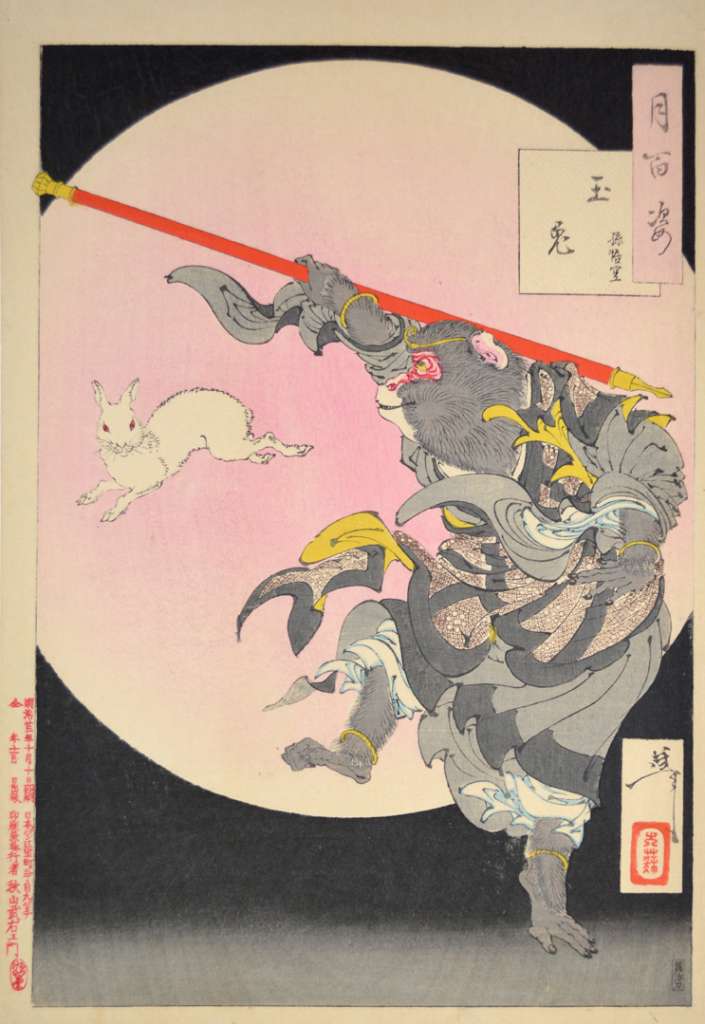
The Monkey King is famed for his multiple categories of immortality in Journey to the West (Xiyouji, 西遊記, 1592; “JTTW” hereafter). These are acquired through spiritual cultivation, redacting underworld ledgers, partaking in celestial foodstuffs, and (at the journey’s end) attaining Buddhahood. But “immortality” in Chinese vernacular literature doesn’t mean “invulnerable to harm.” Despite his great durability, during the journey, Wukong is a “bogus immortal” (yaoxian, 妖仙) who is still susceptible to injury and death because he hasn’t yet achieved Buddha-nature and broken free of the wheel of rebirth. [1] For instance, he briefly dies from thermal shock after being overwhelmed by Red Boy‘s (Honghai’er, 紅孩兒) true samadhi fire (sanmei zhenhuo, 三昧真火) in chapter 41:
His whole body covered by flame and smoke, the Great Sage found the intense heat unbearable and he dove straight into the mountain stream to try to put out the fire. Little did he anticipate that the shock of the cold water was so great that the heat caused by the fire was forced inward into his body and his three hun spirits left his vessel. Alas!
His breath caught in his chest, his tongue and throat grew cold;
His hun spirits fled, his po souls left, and his life was gone! (based on Wu & Yu, 2012, vol. 2, p. 231)這大聖一身煙火,炮燥難禁,徑投於澗水內救火。怎知被冷水一逼,弄得火氣攻心,三魂出舍。可憐氣塞胸堂喉舌冷,魂飛魄散喪殘生。
Luckily, Zhu Bajie resuscitates him by performing a life-saving massage that forces qi from his cinnabar field and circulates it throughout his body (Wu & Yu, 2012, vol. 2, p. 232). [2]
This episode was an accident. But what if someone wanted to kill Monkey for good? How would they do it? Killing him in a one-on-one match would be nearly impossible, for few characters surpass Wukong in strength or fighting ability. I think it’s best that we draw on methods from another famous god and demon novel, Investiture of the Gods (Fengshen yanyi, 封神演義, c. 1620; “Investiture” hereafter), a sort of prequel to JTTW. It centers on a great battle between the falling Shang (c. 1600-1046 BCE) and the rising Zhou (c. 1046–256 BCE) dynasties, both of which are aided by factions of powerful immortals. The story is famous for a number of weapons, traps, and rituals designed to kill divine cultivators.
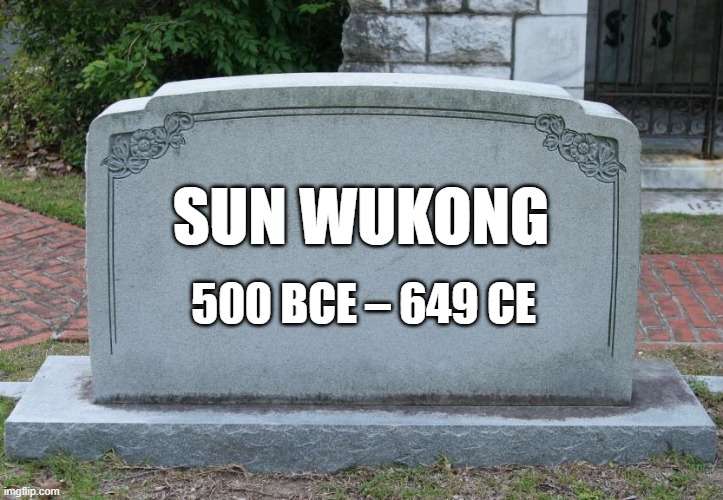
In this article, I would like to describe ten magical array traps (zhen, 陣) and one magic ritual that could possibly kill the Monkey King. The latter is, in my opinion, the best option for ending his life (fig. 1). And the best part is that it can be done from a distance! That way a villain doesn’t have to worry about getting smashed into hamburger or ripped to shreds by an angry monkey immortal. In addition, I will detail this method’s potential for great fanfiction.
Before continuing, I must point out that none of the information from Investiture can be considered JTTW canon. While it contains a host of similar characters (Laozi, Buddha, Nezha, Muzha, Li Jing, Ao Guang, Erlang and his hound, etc.), the novel is a separate work that was published nearly 30 years after JTTW. Look at this piece as a fun “What if?”

Fig. 1 – Monkey’s headstone (larger version).
Table of Contents
- 1. Possible Ways
- 2. The Best Way
- 3. Story Potential
- 4. Conclusion
- 5. Updates
1. Possible Ways
Ch. 44 of Investiture mentions ten magical array traps that rely on primordial energies, destructive elements like wind, thunder, fire, sand, ice, and water, and spiritual attacks to terminate immortals:
- Heavenly Destruction (Tianjue zhen, 天絕陣) – This trap contains primordial energies (xiantian zhi qi, 先天之氣) and the mechanisms of chaos (hundun zhi ji, 混沌之機). It uses three magic pennants (fan, 旛), representing the respective energies of Heaven, Earth, and Man, to turn humans into dust and shatter the limbs of immortals with rolls of thunder.
- Earthly Fury (Dilie zhen, 地烈陣) – This trap uses a magic red pennant that kills intruders with rolls of thunder from above and fire below. It is also said to cut them off from reincarnation.
- Roaring Typhoon (Fenghou zhen, 風吼陣) – This trap uses wind, true samadhi fire, and countless swirling blades formed from primordial energies to kill intruders and render their bodies into a fragrant powder (jifen, 虀粉).
- Frigid Ice (Hanbing zhen, 寒冰陣) – This trap uses jagged, wolf fang-like ice mountains above, sword-like ice blocks below, and wind and thunder in the middle to grind intruders into a fragrant powder.
- Golden Light (Jinguang zhen, 金光陣) – This trap contains the essences of the sun and moon (riyue zhi jing, 日月之精) and the energies of heaven and earth (tiandi zhi qi, 天地之氣). It uses 21 treasure mirrors (baojing, 寶鏡) affixed to wooden polls to kill intruders with golden light that renders (melts?) their bodies into pus and blood.
- Bleeding Blood (Huaxue zhen, 化血陣) – This trap uses thunder and wind powered by primordial energies to blast black sand that kills intruders by rendering their bodies into a bloody mess.
- Vehement Flame (Lieyan zhen, 烈焰陣) – This trap uses true samadhi fire, fire from the sky (meteorites?), and fire from stone (lava?) to kill intruders by turning them into ash.
- Soul-Snatching (Luohun zhen, 落魂陣) – This trap contains the fierce energies of heaven and earth (tiandi liqi, 天地厲氣). It uses a white paper pennant stamped with a talisman seal (fuyin, 符印) to kill intruders by dispersing and eliminating their po and hun spirits.
- Red Water (Hongshui zhen, 紅水陣) – This trap controls the essences of the ninth and tenth heavenly stems (rengui zhi jing, 壬癸之精) (representing water), as well as contains the wonder of the Grand Monad (Tianyi zhi miao, 天乙之妙). It uses three bottle gourds resting on an eight trigrams platform (bagua tai, 八卦臺) to kill intruders by gushing forth an ocean of dangerous, red water, a single drop of which can render their bodies into a bloody mess.
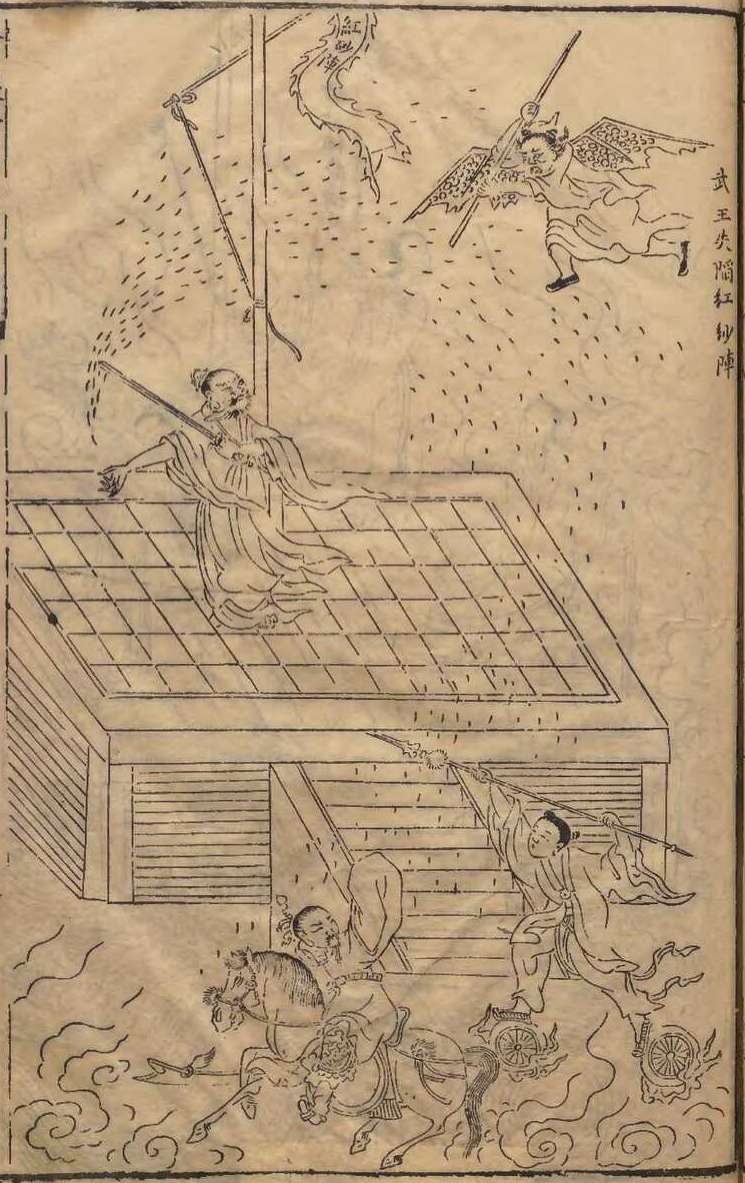
- Red Sand (Hongsha zhen, 紅砂陣/紅沙陣) – This trap controls the energies of Heaven, Earth, and Man. It uses thunder and wind to blast three buckets of red, sword-like sand to kill intruders by rendering their bones into a fragrant powder (fig. 2) (cf. Gu, 2000, vol. 2, pp. 869-873).
I think that Sun Wukong would easily survive many of these traps due to the adamantine nature of his body. [3] But numbers three, seven, and eight might give him some problems. As mentioned in the introduction, his encounter with Red Boy in chapter 41 shows that he is weak against true samadhi fire (Wu & Yu, 2012, vol. 2, p. 231). And of course, having his souls scattered and destroyed would certainly finish him off. Recall in JTTW chapter three how Monkey’s spirit (魂靈兒) is easily reaped by two underworld officers in his heavenly wine-induced slumber (Wu & Yu, 2012, vol. 1, p. 139). This might point to a weakness against spiritual attacks (at least while drunk on heavenly wine, anyway).
However, I think it would be hard to trick Wukong into going inside of these array traps. His “fiery eyes and gold Irises” (huoyan jinjing, 火眼金睛) would certainly notice the dark auras hovering above each one (Gu, 2000, vol. 2, p. 925 and 989, for example).
No, there’s only one sure fire way to kill our hero.

Fig. 2 – A Shang camp immortal working the Red Sand array trap (larger version). The woodblock print omits the three buckets. Image from The Newly Printed, Zhong Bojing Annotated, Investiture of the Gods (Xinke Zhong Bojing xiansheng piping Fengshen yanyi, 新刻鍾伯敬先生批評封神演義, c. 1620). See page 42 of this PDF.
2. The Best Way
Overcoming Monkey’s great power, durability, and speed would require an indirect approach, something that he wouldn’t even be aware of. A secret, spiritual assault from afar is, therefore, the only method that would work, in my opinion. Something like this is described in chapters 48 and 49 of Investiture. But I first need to give some background information as to why the rite is used in the first place.
Grand Preceptor Wen (Wen Taishi, 聞太師) recruits his old friend, the ancient immortal Zhao Gongming (趙公明), in chapter 46 after many of their divine comrades die in battle against Zhou allies (Gu, 2000, vol. 2, p. 935). Zhao is powerful in his own right, claiming to be able to flip Mount Sumeru (Xumi, 須彌) and reverse the course of the sun and moon (cf. Gu, 2000, vol. 2, pp. 945-947). But it’s his command of three holy treasures, namely the “Dragon-Binding Rope” (Fulong suo, 縛龍索), the “Sea-Fixing Mala Beads” (Dinghai zhu, 定海珠), and the “Golden-Scaled Dragon Scissors” (Jinjiao jian, 金蛟剪), [4] that make him a supremely dangerous opponent. The latter two treasures prove in chapter 47 to be especially difficult weapons for Zhou allies to counter.
Therefore, in chapter 48, the immortal Lu Ya (陸壓) devises a plan to secretly attack Zhao’s spirit from a distance. He enlists the help of Jiang Ziya (姜子牙), a Taoist disciple and commander of the Zhou forces, and instructs him how to perform a sympathetic magic ritual from the Book of Fixing the Seventh Posthumous Day Arrow (Ding touqi jianshu, 釘頭七箭書):
Lu Ya opened his flower basket and took out a book stamped with talisman seals and oral formulas. “Using these, you can set up camp and erect a platform on Mount Qi. Make a straw effigy and post a document with the three characters “Zhao Gongming” on its body. Place one lamp above its head and another beneath its feet. Then pray to it three times a day, burning the talismans and pacing the dipper. At noon on the twenty-first day, this poor Taoist (Lu Ya) will come and help you cut his life short.”
Before going to Mount Qi, Ziya secretly sent 3,000 troops, along with Nangong Kuo [南宮适] and Wu Ji [武吉] to find a suitable place to set up camp. After Ziya arrived at camp, Nangong built a platform, arranging it properly and making a straw effigy. He did everything strictly as instructed. Finally Ziya loosened his hair, took a sword, and paced the dipper, reciting charms, burning spells, and praying over and over again before the straw effigy (based on Gu, 2000, vol. 2, p. 967).
子牙領命,前往岐山,暗出三千人馬,又令南宮适、武吉前去安置。子牙後隨軍至岐山,南宮适築起將臺,安排停當,紮一草人,依方製度。子牙披髮仗劍,腳步罡斗,書符結印…
[Three to five days later, Zhao Gongming feels frantic, with a strange burning in his heart.]
[…]
Now let’s speak of Ziya, who prayed until he had expelled the primal spirit [yuanshen, 元神] of Zhao Gongming. The primal spirit was of major importance to an immortal, enabling him to tour freely throughout the eight extremes (the universe). But now that Zhao Gongming had lost his primal spirit, he became drowsy and wanted to sleep all of the time (based on Gu, 2000, p. 973).
且說子牙拜掉了趙公明元神散而不歸,──但神仙以元神為主,遊八極,任逍遙,今一旦被子牙拜去,不覺昏沉,只是要睡。
[Sleeping is said to be uncharacteristic of immortals. This alerts Zhao Gongming’s comrades that he is being spiritually assaulted. After divining the effigy’s location, Wen sends Shang allies to steal it. They are initially successful, but the straw man is eventually recaptured by Zhou forces.]
[…]
[Lu Ya finally arrives as promised to finish the ritual.]
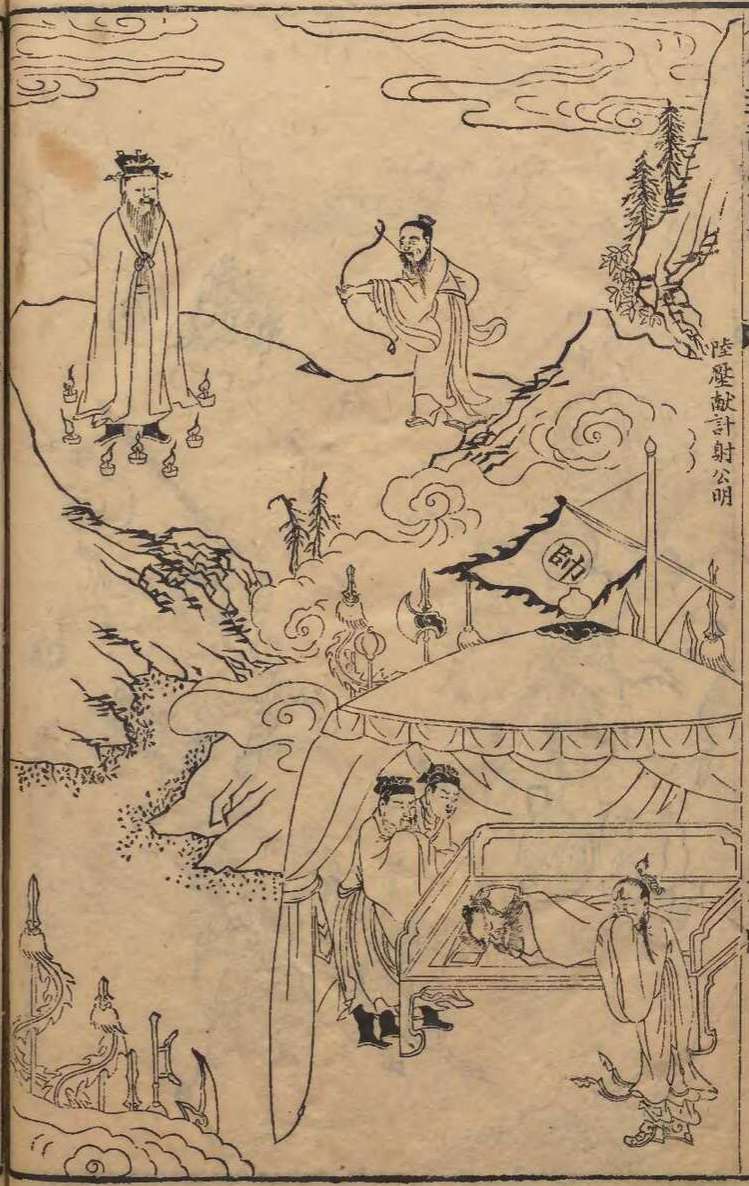
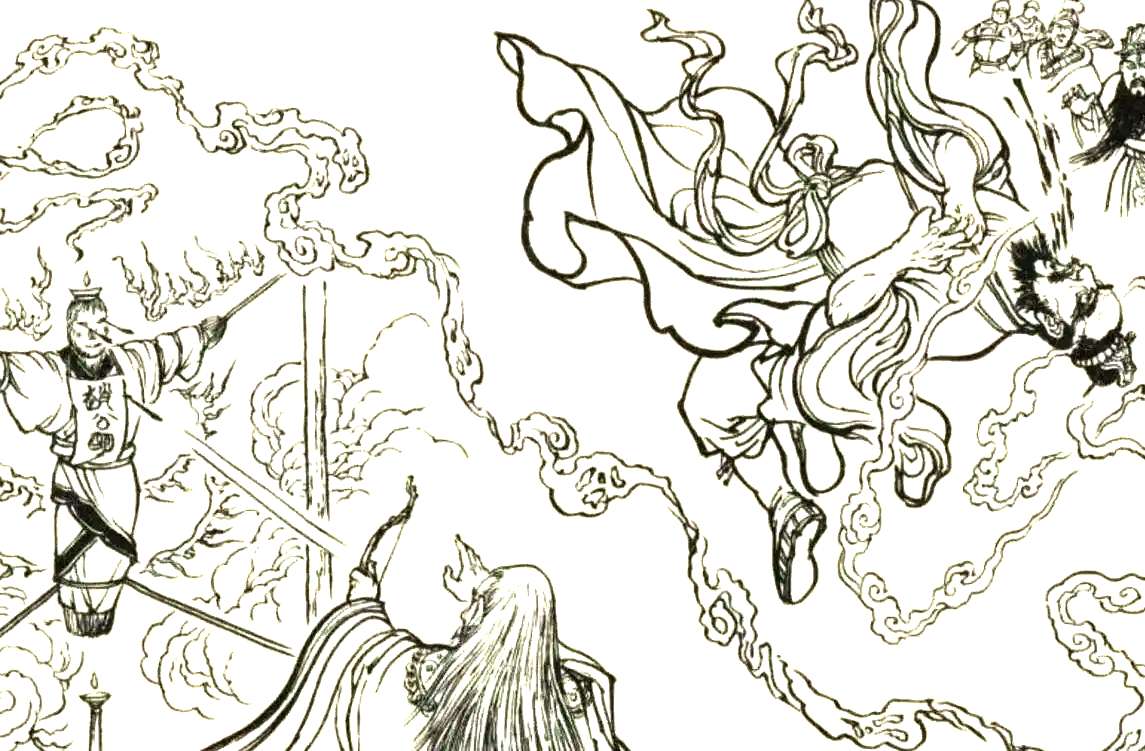
With a smile, Lu Ya opened his flower basket and took out a small mulberry bow and three short peach arrows, which he handed to Ziya. “At noon today, you must shoot the effigy with these arrows,” Lu Ya said. Ziya replied: “Order received!” The two waited in a tent until the astrological official came to report: “Noon time has arrived!” Ziya cleaned his hands, picked up the bow, and then nocked the first arrow. “Shoot his left eye first,” instructed Lu Ya. Ziya did as ordered. As the first arrow hit the left eye of the effigy, Zhao Gongming, lying in the Shang camp, roared in agony and closed his left eye. Grand Preceptor Wen held him in his arms, sobbing as the tears poured down his cheeks. Back at Mount Qi, the second arrow hit the right eye of the effigy, and the third penetrated its heart [fig. 3]. Zhao Gongming died in the Shang camp (based on Gu, 2000, vol. 2, pp. 985-987). [5]
Like Ziya, a bad guy could perform the same ritual to secretly steal Monkey’s primal spirit, tether it to a straw effigy marked “Sun Wukong” (孫悟空), and finally kill our hero with three well-placed peach arrows to the eyes and chest.

Fig. 3 – Jiang Ziya aiming the ritual bow at the straw effigy (larger version). Zhao Gongming can be seen sleeping in the Shang camp below. Woodblock print from The Newly Printed, Zhong Bojing Annotated, Investiture of the Gods (Xinke Zhong Bojing xiansheng piping Fengshen yanyi, 新刻鍾伯敬先生批評封神演義, c. 1620). See page 42 of this PDF.
3. Story Potential
If anyone decided to write their own fanfiction using the method described above, I could see this being a great opportunity for Zhu Bajie (豬八戒) and/or Sha Wujing (沙悟淨) to shine. He/they could be the one(s) searching the cosmos for answers, and upon learning of the rite, desperately racing to find the straw effigy before the ritual is complete. All of this would of course take place while Monkey is sleeping.
I can definitely see Zhu and/or Sha seeking the aid of Guanyin (觀音), who could easily break the ritual. I imagine she would reveal that, “The Great Sage is destined to experience this tribulation…” (or something like that), but she would surely provide them with the location in the end.
Reasons for the villain performing the ritual could include:
- Eliminating Wukong so that they can more easily catch and eat the Tang Monk, thus gaining immortality.
- Absorbing Monkey’s primal spirit in order to gain his immortality and skills.
The latter is my favorite, but the former would work better for the story since the whole point of the ritual is to kill the target. And besides, Monkey’s disembodied spirit is powerful enough to kill the psychopomps sent to reap his soul, as well as bully the judges and officers of hell (Wu & Yu, 2012, vol. 1, pp. 139-141). Now, imagine what it could do to some random demon king and/or cultivator who tried to absorb it!
4. Conclusion
Sun Wukong is famed for his multiple categories of immortality, but he is still susceptible to death and the wheel of rebirth since during the journey, he hasn’t yet achieved Buddha-nature. Killing him in one-on-one combat would be nearly impossible, though, given his great durability and power. However, using methods borrowed from Investiture of the Gods (c. 1620) might work. For instance, chapter 44 mentions ten magical array traps that rely on primordial energies, destructive elements like wind, thunder, fire, sand, ice, and water, and spiritual attacks to terminate immortals. Three of the traps, numbers three, seven, and eight, respectively use true samadhi fire or soul-scattering and destruction to kill divine cultivators. These might give Monkey problems as his soul is easily reaped in his heavenly wine-induced slumber in JTTW chapter three, suggesting that it may be weak against spiritual attacks (at least while drunk), and he is shown to be weak against Red Boy’s true samadhi fire in chapter 41. But I think it would be hard to trick him into entering the traps since his magic eyes would no doubt see the dark auras above them.
The best way to overcome his great power, durability, and speed requires an indirect approach, a secret, spiritual assault from afar. A ritual used in chapters 48 and 49 of Investiture does exactly that. In order to defeat the immortal Zhao Gongming and circumvent his powerful holy treasures, the immortal Lu Ya instructs Zhou army commander Jiang Ziya how to perform a rite from the Book of Fixing the Seventh Posthumous Day Arrow. This involves a bureaucratic ceremony (praying, talisman-burning, and dipper-walking) that slowly steals the immortal’s primal spirit over a 21 day period, tethers it to a straw effigy marked with Zhao’s name, and then kills him by shooting the icon with three peach arrows: two to the eyes and a third to the heart.
A villain wanting to kidnap and eat the Tang Monk for immortality could perform this ritual in order to get Monkey out of the way. This would make for a great story centered on Zhu Bajie and/or Sha Wujing. He/they could frantically search the universe for answers, before racing to find the straw effigy before the rite is complete.
5. Updates
Update: 12-28-23
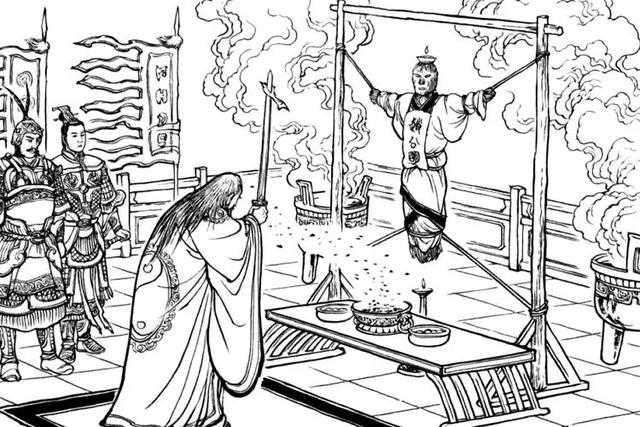
I found two neat drawings portraying Jiang Ziya performing the rite (fig. 4 & 5).

Fig. 4 (top) – Jiang Ziya performing the procedural side of the ritual (larger version). Image found here. Fig. 5 (bottom) – Ziya fires the last arrow, killing Zhao Gongming (larger version). Image found here. They appear to be from the same anonymous lianhuanhua comic book.
Update: 12-29-23
A reader’s comment (below) has prompted me to add more context. Zhao Gongming’s disembodied spirit is not destroyed by the ritual. It is pulled towards the “Terrace of Creation” (Fengshen tai, 封神臺), a magic receptacle of souls, to await his apotheosis at the end of the novel. He is enfeoffed as the “Golden Dragon, Wish-Fulfilling and Righteously Unifying, Dragon-Tiger Mysterious Altar Perfected Lord” (Jinlong ruyi zhengyi longhu xuantan zhenjun, 金龍如意正一龍虎玄壇真君), a god of wealth (cf. Gu, 2000, vol. 4, pp. 2119-2121).
This then raises the question, “What would happen to Wukong’s soul if the ritual was successful? After the death of his body, it would naturally report to the underworld for processing. Remember, Monkey has yet to attain Buddha-Nature, so he is still subject to the wheel of rebirth. I can see him causing trouble down there like he had done in the past, but perhaps Kṣitigarbha (Ch: Dizang, 地藏) would calm his rage and convince him that reincarnation is the right choice. This would lead to a new adventure.
Or, considering that the journey to India would still be underway, and Tripitaka is constantly in danger, heaven might rush to find a new body for Wukong’s spirit to inhabit. This actually happens to a minor character in chapters 11 and 12 of JTTW. The soul of an official’s wife is forced into the body of a recently dead princess to live out the remainder of her allotted lifespan (Wu & Yu, 2012, vol. 1, pp. 268-269).
Another reader suggested a second method from Investiture to kill Monkey (see the comment below):
The Immortal-slaying Flying Knife, also a treasure of Lu Ya’s, might be a good second-contender here. It’s a strange weapon with head and eyes and wings, stored inside a gourd: when released, its eyes shoot out white light that “nails down” an enemy’s true form, and, upon recitation of “Turn around please, precious” (请宝贝转身), will spin and instantly decapitate the target.
Sure, there is the matter of getting it out and saying the magical words before you were reduced to a meat patty, but if the target is already immobilized——like Yuan Hong, FSYY’s own staff-wielding ape with 72 transformations——the Immortal-Slaying Flying Knife will be that final nail in the coffin.
I’ll look into this more and update the page at a later date.
Update: 01-07-24
Lu Ya’s ritual reminds me of a two-step process used in Chinese Folk Religion to activate a religious statue (shenxiang, 神像). Part one is the “entering-spirit” (rushen, 入神) ceremony, which invites a deity’s essence inside. Lin (2020) explains:
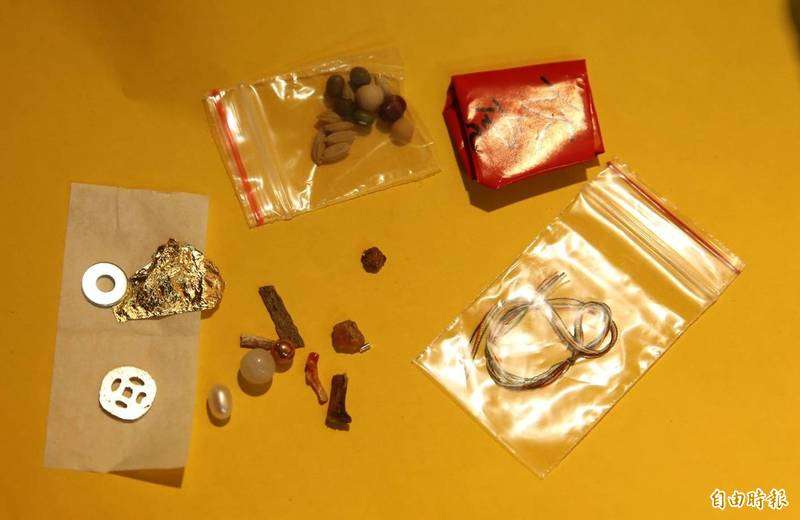
When the carving is complete, the carver chooses an auspicious day to hold the spirit-entering ritual. A cavity at the back of the image is carved out for this rite. The objects placed in this hole include incense ashes (xianghui) or talismans from the root temple, a live hornet, five precious materials (gold, silver, bronze, iron, and tin), five crops (rice, wheat, sesame, and different kinds of beans), and a bundle of five-color threads (red, yellow, blue, black, and white) [fig. 6 & 7] … The worshippers have to prepare fruit and flowers and burn incense to invite the deity to come.
When the auspicious moment arrives, the carver inserts the previously listed items into the cavity and plugs it with a piece of wood. The objects placed in the cavity are important clues regarding how people conceptualize deities. Local inhabitants explained to me that the ashes or talisman symbolizes the spirit of the deity, and the living hornet is to increase the deity’s power. Some people said the five forms of treasure represent the five organs of the deity, whereas others just said they are symbols of the deity’s grandeur. The five crops represent the harvest and the bunch of five-color threads is related to the five spirit-soldier camps (p. 38).
Lu Ya’s ritual essentially treats the straw effigy like an idol that will house a god’s essence. This might explain how the primal spirit of Zhao Gongming (and therefore Sun Wukong) is called to enter the icon.

Fig. 6 (top) – A collection of the talisman, grains, treasures, and colored-threads used in the entering-spirit ceremony (larger version). Fig. 7 (bottom) – A live wasp is retrieved to be added to the necessary ritual items (larger version). Images found here.
Part two is the “eye-opening and dotting” (kaiguang dianyan, 開光點眼) ceremony, which brings the idol to life. Again, I refer to Lin (2020):
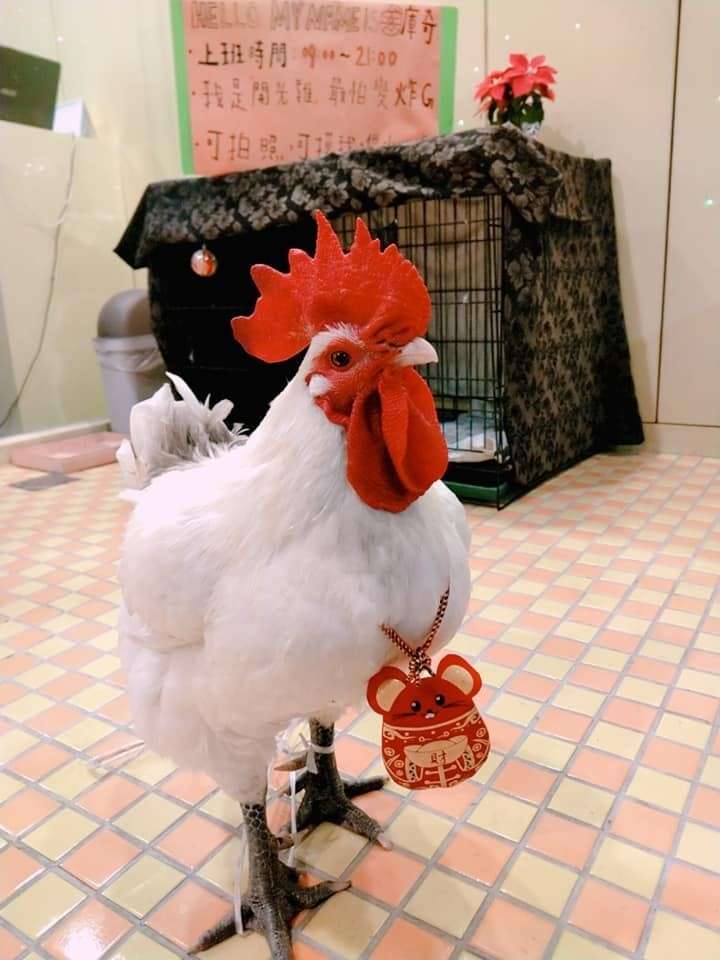
For this ceremony, the carver prepares flowers, fruit, a round mirror, a red brush pen, and a white cock. When the auspicious moment arrives, the mirror is taken outside where the light is sufficient to reflect it into the statue’s eyes. Next, the carver goes back to the altar and uses a knife to cut the cockscomb and smear the blood with the red brush pen. He then starts to chant and to dot the deity with the brush pen. There are many different kinds of chants … but their contents are not very different. The process of dotting usually begins at the center of the forehead and proceeds to the eyes, ears, nose, mouth, heart, navel, feet, toes, fingers, and back [fig. 8-10], as the following chant demonstrates:
First dot the sacred head, second dot the sacred hat,
Third dot the sacred body, then the true and righteous god will occupy the body.
Open the left eye to see heaven.
Open the right eye to see into the earth.
Open the left ear to listen to sounds from all directions.
Open the right ear to hear sounds from far away.
Open the divine nose, to smell fragrant scents.
Open the divine mouth, but not to eat house hold foods.
Open the left hand and the disciples will be prosperous year after year.
Open the right hand and the god will capture ghosts without being asked.
Open the sacred belly and great divine power will come forth.
Open the left foot to step upon the correct path.
Open the right foot to step into the divine carriage.
Open the back so that all people may be enlightened.It can be inferred that in this ceremony, the carver at first draws the natural energy into the statue to enliven it. Then, he uses the blood of a white cock, symbolizing purity, to dot and connect the important parts of the body. This makes the statue like a living person with veins in which blood flows without obstruction (pp. 38-39).
Although Investiture doesn’t mention any of this, I think performing the eye-opening and dotting ceremony would be the final step in making the straw effigy a separate, living embodiment of the Monkey King. The ritual would open the eyes of Wukong’s spiritual double to the cosmos and fill his chest with divine energies in preparation for shooting said targets. This would explain why Zhao Gongming closes his eyes upon each arrow strike (refer back to section II).
Writers wanting to add a certain level of religious authenticity to the fictional Monkey King-killing ritual could have the villain place the talisman, grains, treasures, live wasp, and five colored-threads inside the straw effigy. And then he could chant while simultaneously reflecting sunlight on the face and dotting the eyes and body with a rooster blood-soaked brush. The only major difference between the fictional and religious ceremonies would be that the former’s first step, the entering-spirit ritual, lasts three weeks.

Fig. 8 (top L) – An entering-spirit and eye-opening and dotting kit commonly sold in Taiwan (larger version). Notice how the mirror is rectangular instead of circular. Image found here. Fig. 9 (top R) – A white temple rooster kept as a supply of pure blood (larger version). Don’t worry, nowadays they are only nicked on the comb with a knife. Image found here. Fig. 10 (bottom) – A ritual master uses a circular mirror to shine sunlight into an idol’s eyes while dotting the figure with a blood-soaked brush (larger version). Image found here.
Update: 07-02-26
I’ve just published an article on how to resurrect Tripitaka if he is killed during the quest to India. Consider it a companion piece to this article.
How to Resurrect the Tang Monk if He is Killed During Journey to the West
Notes:
1) Monkey is called a “bogus immortal” by the Jade Emperor (ch. 4), the Buddha (ch. 7), and the Dragon King of the Eastern Sea in (ch. 14) (Wu & Yu, 2012, vol. 1, pp. 147-148, p. 193, and p. 318). This alludes to the fact that he is not yet a true transcendent.
The idea that Wukong is still susceptible to death is based on the Buddho-Taoist philosophy of Southern Quanzhen School Patriarch Zhang Boduan (張伯端, mid to late-980s-1082), which heavily influenced JTTW. Zhang believed that one had to attain both the Taoist elixir and Buddha-Nature in order to be truly immortal. Only then could one rise above death and the endless rounds of rebirth to live forever (Shao, 1997, pp. 80-84). This is why JTTW starts with Monkey achieving immortality in chapter two and ends with him attaining Buddhahood in chapter 100, thereby fulfilling Zhang’s two-step process to true transcendence.
Zhang’s philosophy is reflected in his Writings on Understanding Reality (Wuzhen pian, 悟真篇, 1075). One poem reads:
The elixir is the most precious treasure of the physical body; when cultivated to perfection, the transmutations are endless. One can go on to investigate the true source in the realm of essence, and ascertain the ineffable function of the birthless. Without awaiting another body in the next life, one attains the spiritual capacities of a Buddha in the present; after the Naga Girl achieved this, who since then has been able to follow in her footsteps? (Zhang, Liu, & Cleary, 1987, p. 1481; cf. Shao, 1997, p. 83)
2) It’s interesting to note that Pigsy suggests that Wukong dying isn’t a problem because his 72 changes give him 72 lives (qishi’er tiao xingming, 七十二條性命) (Wu & Yu, 2012, vol. 2, p. 232).
3) For instance, heaven fails to execute Monkey in chapter seven because of his adamantine hide:
They then slashed him with a scimitar, hewed him with an ax, stabbed him with a spear, and hacked him with a sword, but they could not hurt his body in any way. Next, the Star Spirit of the South Pole ordered the various deities of the Fire Department to burn him with fire, but that, too, had little effect. The gods of the Thunder Department were then ordered to strike him with thunderbolts, but not a single one of his hairs was destroyed (Wu & Yu, 2012, vol. 1, p. 188).
… 刀砍斧剁,槍刺劍刳,莫想傷及其身。南斗星奮令火部眾神放火煨燒,亦不能燒著。又著雷部眾神以雷屑釘打,越發不能傷損一毫。
4) Apart from these treasures, Zhao Gongming fights with a hard whip (bian, 鞭), a sword-like metal club with stacked ridges and a pointed end. Gu (2000) incorrectly translates this as “staff” (vol. 2, p. 941).
5) Given the ritual’s association with the number seven (i.e. “Fixing the Seventh Posthumous Day Arrow”), and the fact that it takes 21 days to execute, it seems that one arrow is used for every week that the rite is performed. Remember that there are a total of three: two for the eyes and a third one for the heart.
Sources:
Gu, Z. (2000). Creation of the Gods (Vols. 1-4). Beijing: New World Press.
Lin, W. (2020). Materializing Magic Power: Chinese Popular Religion in Villages and Cities. Netherlands: Brill.
Shao, P. (1997). Monkey and Chinese Scriptural Tradition: A Rereading of the Novel Xiyouji (UMI No. 9818173) [Doctoral dissertation, Washington University]. Available from ProQuest Dissertations and Theses database.
Wu, C., & Yu, A. C. (2012). The Journey to the West (Vols. 1-4) (Rev. ed.). Chicago, Illinois: University of Chicago Press.
Zhang, B., Liu, Y., & Cleary, T. (1987). Understanding Reality: A Taoist Alchemical Classic. Honululu Univ. of Hawaii Press.