Why was Sun Wukong Able to Live 342 Years Prior to his Immortality?

Last updated: 10-26-2024

Someone on reddit recently asked why Sun Wukong was able to live just shy of 400 years before even attaining immortality. I thought this was a good question, so I decided to split off related material from an old piece that I never finished and make a quick article. The short answer is tied to Daoist concepts of fate, and the long answer ultimately explains why Monkey strikes his name from the ledger of life and death in hell.

I. Info from the novel

Here, I would like to quote two early sections from Journey to the West (Xiyouji西遊記, 1592) that refer to Sun Wukong’s age. The first appears in chapter one after he becomes monarch of the primates:

The Handsome Monkey King thus led a flock of gibbons, macaques, and horse-monkeys, some of whom were appointed by him as his ministers, aides, and envoys. They toured the Flower-Fruit Mountain in the morning, and they lived in the Water-Curtain Cave by night. Living in concord and sympathy, they did not mingle with bird or beast but enjoyed their independence in perfect happiness. For such were their activities:

In the spring they gathered flowers for food and drink.
In the summer they went in quest of fruits for sustenance.
In the autumn they amassed taros and chestnuts to ward off time.
In the winter they searched for yellow-sperms to live out the year.

The Handsome Monkey King had enjoyed this insouciant existence for three to five hundred years (emphasis added) when one day, while feasting with the rest of the monkeys, he suddenly grew sad and shed a few tears (based on Wu & Yu, 2012, p. 106).

美猴王領一群猿猴、獼猴、馬猴等,分派了君臣佐使。朝遊花果山,暮宿水簾洞,合契同情,不入飛鳥之叢,不從走獸之類,獨自為王,不勝歡樂。是以:

春採百花為飲食,夏尋諸果作生涯。
秋收芋栗延時節,冬覓黃精度歲華。

美猴王享樂天真,何期有三五百載。一日,與群猴喜宴之間,忽然憂惱,墮下淚來。

And the second appears in chapter three after Monkey is dragged to hell. He bullies underworld officials into giving him his ledger of life and death, in which he learns his exact age and fate:

You see, though this monkey resembled a human being [i.e. his body], he was not listed under the names of men; though he resembled the short-haired creatures [i.e. his fur], he did not dwell in their kingdoms; though he resembled other animals, he was not subject to the unicorn; and though he resembled flying creatures [i.e. his beak-like, protruding face], he was not governed by the phoenix. He had, therefore, a separate ledger, which Wukong examined himself. Under the heading “Soul1350” he found the name Sun Wukong recorded, with the description: “Heaven-born Stone Monkey. Age: three hundred and forty-two years. A good end” (emphasis added) (Wu & Yu, 2012, p. 140).

又看到猴屬之類,原來這猴似人相,不入人名;似臝蟲,不居國界;似走獸,不伏麒麟管;似飛禽,不受鳳凰轄。另有個簿子,悟空親自檢閱,直到那「魂」字一千三百五十號上,方注著孫悟空名字,乃「天產石猴,該壽三百四十二歲,善終」

So why then was he able to live so long?

I. Religious background

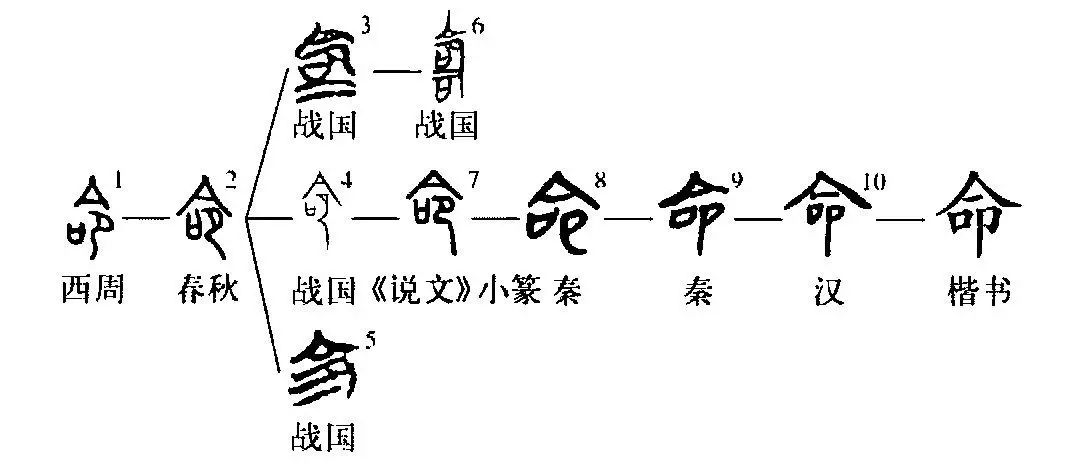
The answer lies in the concept of “pre-allotted lifespans” (ming, 命; a.k.a. “fate”) (fig. 1), which can be traced to weft texts [1] and Grand Purity (Taiqing, 太清) scriptures of the Han dynasty (3rd-c. BCE to 3rd-c. CE). According to 1st to 3rd-century CE commentators, a person’s lifespan and good or bad fortune in life were determined according to whatever combination of “heavenly pneumas” (tianqi, 天氣) and “astral essences” (xingjing, 星精) that they were born under, meaning one’s fate was not handpicked by heaven (Campany, 2005, pp. 131-134). This allotted lifespan was not set in stone, however, for it was subject to subtractions and additions based on one’s bad or good deeds. The deity in charge of this tally system was called the “Director of Allotted Life Spans” (Siming, 司命), and, unlike the underworld officials who provided Monkey with his ledger, he was said to reside in heaven where he regularly received reports on individual human sins by the tutelary Stove god (Zaoshen, 竈神) on the first, fifteenth, and last day of every month. Additionally, he received reports from the three corpses/worms (sanshi, 三尸) inhabiting a person’s body. [2] The more a person sinned, the more points (time) was subtracted, anywhere from almost a year for major offences to just three days for minor offences. Doing good deeds or cheating the system were the only ways to live out the entirety of the allotted lifespan (Campany & Ge, 2002, pp. 47-52).

Evolution of the character ming () (larger version). Image found here.

Ways of “living off the books” included magically disguising clothing or a sword as a body (fig. 2), ritually bribing the gods of life and death with a golden statue to be used as a substitute body, or inserting a fake death certificate into the coffin of a recently deceased grandfather. These methods essentially tricked heaven into thinking that the person had died (Campany, 2005, pp. 134-138; Campany & Ge, 2002, pp. 60). The use of longevity-bestowing elixirs was considered the only true way of breaking free of the allotted lifespan and achieving immortality. Interestingly, the Han-era Scripture on the Elixirs of the Nine Tripods (Jiuding danjing, 九鼎丹經) describes how taking a fired concoction of cinnabar, vinegar, and lacquer for a thousand days straight would result in the “Director of Allotted Life Spans expung[ing] your name from the registers of death, so that you will end only when Heaven and Earth do” (Campany & Ge, 2002, pp. 52).

Fig. 2 – A type of Chinese jian (劍) sword that might be magically disguised to look like a decoy body (larger version). Image found here.

Therefore, we can see that Wukong’s allotted lifespan was 342 years and his birth fell under fortunate cosmic circumstances, for he was born onto an island paradise, served as the king of monkeys, and was destined to have a “good end” (shan zhong, 善終). Monkey had already achieved immortality via Daoist practices prior to being dragged to hell, so he had no need for cheating the system in order to live out the rest of his allotted lifespan. Nor did he need to take an elixir. He was simply so powerful that he could strike his name from the ledgers by force, thereby freeing himself from heaven’s control.

As for the significance of 342, Irwen Wong over at the Journey to the West Library blog has pointed out to me that the numbers add up to nine (3+4+2 = 9), which is an important digit in religious numerology. However, he also suggests that 342 could just be a random number chosen by the author-compiler.


Update: 10-15-24

I was reminded that the max level in the hit video game Black Myth: Wukong (2024) is 342, an obvious reference to Monkey’s lifespan.


Update: 10-26-24

Someone on reddit disagreed with me regarding allotted lifespans. Instead, they suggested that Sun Wukong somehow naturally performs the Daoist breathing exercises that would eventually lead to his immortality, as in he lengthened his life via cultivation practices just like Monkey deduces the 270-year-old Buddhist abbot, “Elder of the Golden Pool” (Jinchi changlao金池長老), did in chapter 17 (Wu & Yu, 2012, vol. 1, p. 356). But this explanation ignores two elements from the novel. One, as mentioned above, the Great Sage’s allotted lifespan of 342 years is clearly recorded in the ledgers of life and death. This is beyond dispute. And two, the book presents cultivated longevity as a crime against heaven. For example, when Sun achieves immortality, the Patriarch Subodhi gives him a warning:

“What you have learned,” said the Patriarch, “is no ordinary magic: you have stolen the creative powers of Heaven and Earth and invaded the dark mysteries of the sun and moon. Your success in perfecting the elixir is something that the gods and the demons cannot countenance. Though your appearance will be preserved and your age lengthened, [heaven will send the three calamities to destroy you]” (Wu & Yu, 2012, vol. 1, p. 121).

祖師道:「此乃非常之道:奪天地之造化,侵日月之玄機;丹成之後,鬼神難容。雖駐顏益壽,但到了五百年後,天降雷災打你,須要見性明心,預先躲避。躲得過,壽與天齊;躲不過,就此絕命。再五百年後,天降火災燒你。這火不是天火,亦不是凡火,喚做『陰火』。自本身湧泉穴下燒起,直透泥垣宮,五臟成灰,四肢皆朽,把千年苦行,俱為虛幻。再五百年,又降風災吹你。這風不是東南西北風,不是和薰金朔風,亦不是花柳松竹風,喚做『贔風』。自顖門中吹入六腑,過丹田,穿九竅,骨肉消疏,其身自解。所以都要躲過。」

The aforementioned calamities are elemental attacks of divine lightening, fire, and wind that are respectively sent every 500 years to kill cultivators for defying their fated age and attaining immortality (Wu & Yu, 2012, vol. 1, pp. 121-122).

This negative view of immortality also extends to the cultivation practices that produce it. Campany (1985) explains that demons are evil in the novel because they try to bypass the natural cosmic hierarchy by using spiritual practices to encapsulate the universe within themselves, while the pilgrims follow the “correct” path by submitting to Buddhism and building Buddhist merit in place of the selfish quest for immortality (pp. 112-113). This is perfectly summed up by the Great Sage’s story trajectory. He was considered a monster until he reformed and became Tripitaka’s disciple.

Having said that, I would like to return to the Golden Pool Elder. It’s important to remember that he learned his life-prolonging techniques from a nearby spirit, and that he was, as Monkey puts it, also a member of the fiend’s “monster’s gang” (yaojing jiedang, 妖精結黨) (Wu & Yu, 2012, vol. 1, p. 356). And when you take into account his willingness to set his own monastery on fire just to murder Tripitaka and attain the monk’s heaven-sent robe (Wu & Yu, 2012, vol. 1, p. 340), the abbot is just as much of a devil as those he congregated with. Therefore, his cultivation falls into the same category as demons, making him an ill-suited example to use.

Notes:

1) The term “Weft texts” draws on a weaving analogy to refer to side texts that compliment or complete existing material.

2) The ancient Chinese believed that the body was inhabited by upwards of ten souls, namely three hun (魂) and seven po (魄) souls. In addition, the body was inhabited by three demonic parasites, the three corpses/worms (sanshi, 三尸), who wanted nothing more than to be rid of their mortal confinement so they’d be free to wander and eat sacrificial offerings left for ghosts. Therefore, they would report the sins of their human vessel to heaven in order to hasten their demise (Campany & Ge, 2002, p. 49, for example).

Monkey’s own three corpses/worms are referenced in chapter 32 when a demon magically calls forth a mountain that crushes our hero:

Exerting his spirit even more, he [the monster] recited another spell and sent up the Tai Mountain to press down on Pilgrim’s head. With this magic of the Tai Mountain Pressing the Head, the Great Sage was overpowered as his strength ebbed and his tendons turned numb; the weight was so great that the spirits of the Three Worms inside his body exploded and blood spouted from his seven apertures [i.e. his eyes, ears, nostrils, and mouth] (Wu & Yu, 2012, vol. 2, pp. 108-109).

又整性情,把真言念動,將一座泰山遣在空中,劈頭壓住行者。那大聖力軟觔麻,遭逢他這泰山下頂之法,只壓得三尸神咋,七竅噴紅。

Sources:

Campany, R. F. (1985). Demons, Gods, and Pilgrims: The Demonology of the Hsi-yu ChiChinese Literature: Essays, Articles, Reviews (CLEAR), 7(1/2), 95-115. doi:10.2307/495195

Campany, R. F., & Ge, H. (2002). To Live as Long as Heaven and Earth: A Translation and Study of Ge Hong’s Traditions of Divine Transcendents. Berkeley: University of California Press.

Campany, R. F. (2005). Living off the Books: Fifty Ways to Dodge Ming in Early Medieval China. In C. Lupke (Ed.), The Magnitude of Ming: Command, Allotment, and Fate in Chinese Culture (pp. 129-150), University of Hawaii Press.

Wu, C., & Yu, A. C. (2012). The Journey to the West (Vols. 1-4) (Rev. ed.). Chicago, Illinois: University of Chicago Press.

Sun Wukong and the Three Heavenly Calamities

Last updated: 11-09-2022

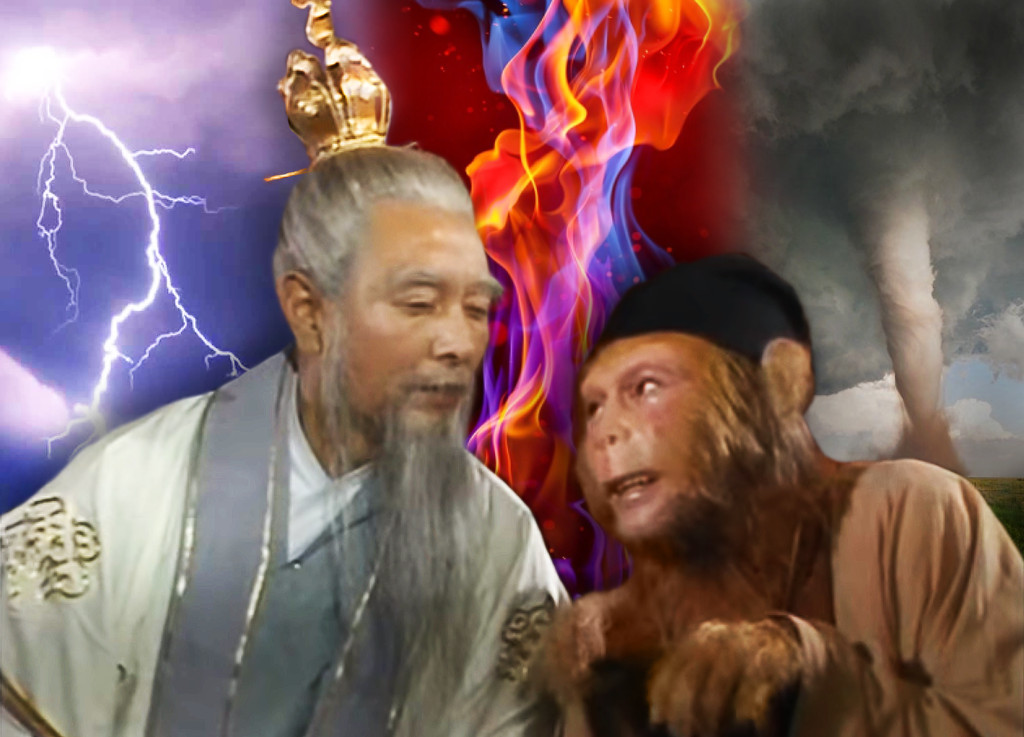
In chapter two of Journey to the West (Xiyouji西遊記, 1592), Master Subodhi warns Sun Wukong that he must protect himself from “Three Calamities” (sanzai lihai, 三災利害) sent by heaven to punish him for achieving immortality and defying his fate (fig. 1). These punishments come every half millennia in the form of destructive elements:

Though your appearance will be preserved and your age lengthened, after five hundred years Heaven will send down the calamity of thunder [leizai, 雷災] to strike you. Hence you must be intelligent and wise enough to avoid it ahead of time. If you can escape it, your age will indeed equal that of Heaven; if not, your life will thus be finished. After another five hundred years Heaven will send down the calamity of fire [huozai, 火災] to burn you. The fire is neither natural nor common fire; its name is the Fire of Yin [yinhuo, 陰火], and it arises from within the soles of your feet to reach even the cavity of your heart, reducing your entrails to ashes and your limbs to utter ruin. The arduous labor of a millennium will then have been made completely superfluous. After another five hundred years the calamity of wind [feng zai, 風災] will be sent to blow at you. It is not the wind from the north, south, east, or west; nor is it one of the winds of four seasons; nor is it the wind of flowers, willows, pines, and bamboos. It is called the Mighty Wind [bifeng, 贔風], and it enters from the top of the skull into the body, passes through the midriff, and penetrates the nine apertures. [1] The bones and the flesh will be dissolved and the body itself will disintegrate. You must therefore avoid all three calamities (Wu & Yu, 2012, pp. 121-122).

These calamities are important because Monkey subsequently learns the 72 transformations in order to escape punishment by hiding under any one of a myriad number of disguises. Therefore, exploring the origins of the three calamities has merit.

Fig. 1 – Master Subodhi tells Sun about the Three Calamities (larger version). Photomanipulation by the author.

I. Origins

The novel likely borrows from a Buddhist cosmological concept called the “Three Calamities” (sanzai, 三災). We first need some background before continuing. Buddhism recognizes a measurement of time called a Kalpa (jie, 劫), which can be many millions or even billions of years long depending on the tradition. Said traditions recognize between four and eighty kalpas (Buswell & Lopez, 2014, p. 409). The total of these respective ranges make up a Mahakalpa (dajie, 大劫), which is divided into four periods of nothingness, creation, subsistence, and finally destruction, each period being between one and twenty kalpas long (Buswell & Lopez, 2014, p. 496). The Three Calamities are responsible for the destruction of each Mahakalpa.

Kloetzli (1983) describes the cyclical destruction of each Mahakalpa by an element:

The destructions are of three kinds: those by fire, those by water and those by wind. […] The destructions succeed one another in the following sequence: seven by fire followed by a destruction by water. This cycle of eight destructions is repeated a total of seven times. This is then followed by seven more destructions by fire, followed by a final by wind. Thus there are 7 x 8 or 56 destructions by fire; 7 by water and a final 64th by wind [fig. 2] (p. 75).

Therefore, the Three Calamities from Journey to the West follow a similar cycle of destructive elements appearing at set time intervals: lightning, fire, and wind every 500 years in place of fire, water, and wind at the end of every Mahakalpa. And instead of destroying the universe, the elements are sent to kill those who have achieved immortality.

X57p0473_01 - small

Fig. 2 – A chart mapping the cyclical destructions by fire, water, and wind. A larger version is available on the CBETA page.

The earliest mention of Buddhism’s Three Calamities in Chinese writing that I know of appears in scroll one of the Pearl Forest of the Dharma Garden (Fayuan zhulin, 法苑珠林), a Chinese Buddhist encyclopedia published in 688. So there was plenty of time between this work and the publishing of Journey to the West in 1592.

II. Influence on Xianxia literature

I was interested to learn that Monkey’s calamities made their way into modern Xianxia (仙侠, “Immortal hero”) literature. For example, the author of the Immortal Mountain wordpress writes:

Heavenly Tribulation (天劫 tiānjié) (重劫 zhòngjié) – in some novels, a trial encountered by cultivators at key points in their cultivation, which they must resist and ultimately transcend. Because immortal cultivation (generally) goes against the Will of Heaven, the Heavens will send down tribulations to oppress high-level cultivators who make progress towards Immortality, often right when they enter a new cultivation stage. This typically takes the form of a lightning storm, with extraordinarily powerful bolts of lightning raining down from the Heavens to strike at the cultivator (source).

The trial by lightning is exactly like the calamity of thunder mentioned by Master Subodhi.

III. Conclusion

Subodhi teaches Monkey the 72 transformations with the expressed purpose of hiding from three calamities (sanzai lihai, 三災利害) of celestial lightening, fire, and wind. They are sent by heaven every 500 years to punish cultivators for defying their fate and achieving immortality. Each was likely influenced by the three calamities (sanzai, 三災) of Buddhist cosmology, which states that the universe is alternately destroyed by fire, water, or wind at the end of every Mahakalpa. Both concepts include destructive elemental forces that appear at given times.

The oldest mention of the original Buddhist calamities that I’m aware of appears in a 7th-century religious encyclopedia titled Pearl Forest of the Dharma Garden (Fayuan zhulin, 法苑珠林).

The literary thunder calamity would later come to influence the “Heavenly Tribulation” (tianjie, 天劫; zhongjie, 重劫) of modern Xianxia literature.


Update: 09-10-2018

The Xianxia translator Deathblade (twitter) was kind enough to direct me to an example of a tribulation from a popular Chinese television show . The scene (video 1) involves a 20,000-year-old child immortal experiencing a trial by lightning. The heavenly bolts tear at his clothing and draw blood, but he survives the ordeal.

Video 1 – Start watching from minute 13:08.

Deathblade also directed me to an example from an online Xianxia novel called I shall Seal the Heavens (Wo yu feng tian, 我欲封天). Chapter 385(!) describes how the anti-hero Meng Hao (孟浩) uses a sentient heavenly treasure to protect himself from powerful bolts of lightning, which instead seek out and kill nearby spiritual cultivators on the cusp of immortality:

The Heavenly Tribulation boomed as one lightning bolt after another shot down onto Meng Hao, who held the meat jelly upraised in his hand to defend himself. The lightning would subsequently disperse into the area around him. Any nearby Cultivators would let out bloodcurdling screams. Soon, the air filled with the sounds of cursing and reviling.

Meng Hao didn’t care. This was something he had learned from Patriarch Reliance. When you con someone and then end up getting cursed by them, you must maintain your cool. It was really a realm unto itself.

Throughout the years, Meng Hao had conned many people, and had refined that skill to the very pinnacle. Therefore, he continued to redirect the descending lightning to the various Cultivators in the three thousand kilometer region.

Wherever he went, he was surrounded by a lake of lightning, along with plaintive cursing. What he left behind was scorched corpses.

To the Cultivators here, it was nothing but a massacre, a slaughter in which no one could do anything to fight back. They couldn’t attack him, nor could they flee as… they were horrified to discover that Meng Hao’ speed was incredible, even if he was being struck by lightning!

(read more here)

The character uses trickery to protect himself from the bolts just like Monkey intended to do with his transformations.


Update: 04-02-2021

As I explained above, Wukong learns the 72 transformations in order to escape the heaven-sent punishments of thunder, fire, and wind. Monkey attains eternal life around his 342nd year when his soul is taken to Hell. He is immortal for over 160 years [2] at the time he’s imprisoned under Five Elements Mountain. This means his 500th year of immortality, the year that the calamity of thunder would be scheduled to strike him, takes place during his imprisonment under the celestial mountain. But this is never described in the story. I assume this is just one of many inconsistencies born from oral storytelling. Although, one could argue that, within the fictional universe, the thunder calamity was voided since Wukong was undergoing punishment at the behest of the Buddha.


Update: 08-29-22

It turns out that punishment by lightning appears in other works of religious vernacular fiction. For example, in The Battle of Wits between Sun and Pang (Sun Pang douzhi yanyi, 孫龐鬥智演義, 1636; a.k.a. The Former and Latter Annals of the Seven KingdomsQianhou qiguo zhi前後七國志):

Sun Bin [孫臏, d. 316 BCE] was overjoyed when he received the Heavenly Book [from the magic White Ape], and hurriedly went back to light the lamp and read it carefully. But during his reading, he felt an eerie, cold wind and heard the rolling of thunder. The Immortal Master Ghost Valley was meditating on the futon when he heard thunder in the air, so he got up and walked immediately to the door of Sun Bin’s room, only to see him reciting the Heavenly Book. When Ghost Valley heard this, he was taken aback. He pushed the door open and went in and said, “I hid this book in the stone box of the prayer cave. I haven’t passed it onto you because your fate has not yet arrived. Where did you get it?

Sun Bin told the story of the white ape. Ghost Valley said: “It turns out that the evil beast stole it and came to you, but unfortunately it was too early. Besides, when you received the Heavenly Book, you didn’t bathe and burn incense, and you didn’t wash your hands or rinse your mouth, thus blaspheming the gods and provoking a great tribulation [da zainan, 大災難] of 100 days.”

Sun Bin’s continence changed. He asked: “Can master save your disciple?”

Ghost Valley said: “If you want me to save you, you must not disobey my nightmare-suppression method.”

Sun Bin said: “I dare not.”

Ghost Valley said: “Due south behind the mountain is an empty stone tomb. You should sleep in the stone tomb with your head to the south and your feet to the north, with 49 grains of raw rice in your mouth. Cover it with your saliva but don’t swallow the grains. You will feel fully nourished. As long as you hide for forty-nine days, you will escape the great tribulation and protect yourself.”

Sun Bin said, “I sincerely receive your instructions.”

Ghost Valley led Sun Bin to the empty tomb at night. Sun complied with his master’s nightmare-suppression method and followed his instructions. A stele was erected in front of the tomb which read: “The Tomb of Sun Bin of the State of Yan” (Wumen xiaoke & Yanshui sanren, 1636).

Another example comes from the Lady of Linshui Pacifies Demons (Linshui pingyao, 臨水平妖, 17th-century). This time, it involves the immortal Lu Dongbin (呂洞賓; a.k.a. Lu Chunyang, 呂純陽) angering Guanyin, who dispatches thunder deities after him. And just like Sun learns the transformations to hide from the calamities, Lu takes the form of a bug to hide from his punishment:

As we take up our tale anew, Guanyin opened wide her eye of wisdom and saw Pure Yang Lü standing on top of the cloud. She cursed him, saying, “A dumb beast like that has no sense of propriety!” Then she sent the Five Thunders (Wu Lei [五雷]) to strike him. The Immortal Ancestor Lü saw them coming and for an instant was helpless with fright. Unable to escape back to his mountain, he hastily fled to Liang Hao’s study. 

He called to Licentiate Liang, “In a moment of distraction, I offended the Heavenly Court, which has dispatched the Five Thunders to strike me. Save me!” As he spoke, the sound of thunder rolled violently. Liang Hao was so frightened that his hands and feet were like ice, and he was unable to reply. Pure Yang Lü said, “If you are willing to rescue me, then that would give this poor Daoist a place to hide.” Liang Hao agreed with alacrity. Pure Yang Lü then turned himself into a tiny insect, ran under Liang Hao’s fingernails, and hid himself. He waited for an hour and three quarters, until the thunder no longer rolled. There was nothing the Five Thunders could do, so they were obliged to go back to the Purple Bamboo Grove [on Guanyin’s mountain], having failed to carry out the Buddha’s [Guanyin’s] orders. At this time, an hour and three quarters having already elapsed, Pure Yang Lü resumed his original form. He thanked Liang Hao and returned to Zhong Mountain, as he did not dare remain in these harrowing circumstances any longer (Fryklund, Lewis, & Baptandier, 2021, p. 6). 


Update: 11-09-22

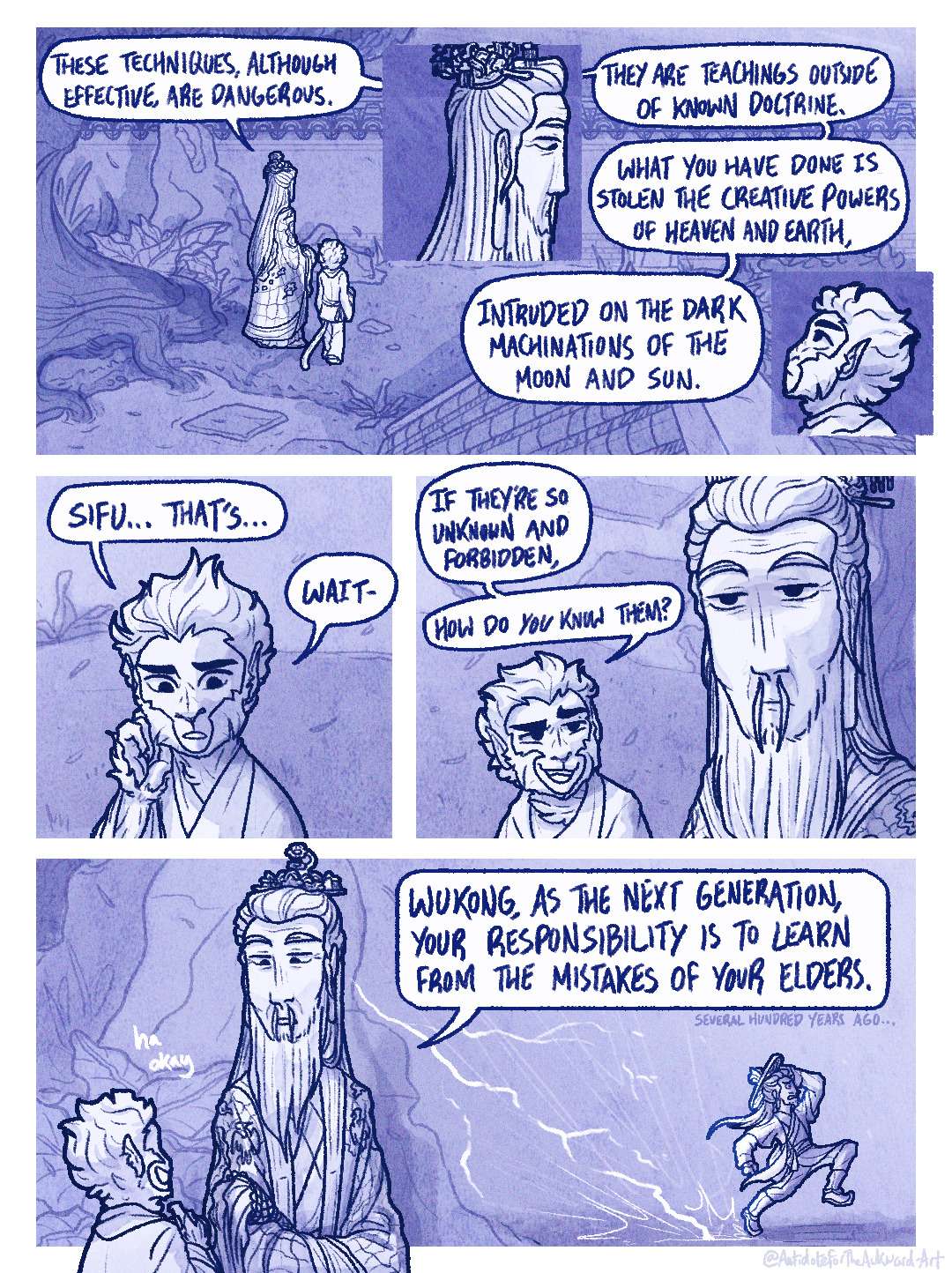
An artist known on Tumblr as “AntidoteForTheAwkward” has posted a wonderful comic (fig. 3) giving a reason for why the Patriarch Subhodi teachers Monkey the 72 transformations in order to avoid the heavenly calamities: personal experience.

Fig. 3 – AntidoteForTheAwkward’s comic (larger version). See the original post here.

Notes:

1) The eyes, ears, nose, mouth, genitals, and anus.

2) Wukong serves in heaven twice: first “for more than ten years” and second “for over a century” (Wu & Yu, 2012, vol. 1, pp. 150 and 166). Then he is punished to 49 days in Laozi’s furnace (Wu & Yu, 2012, vol. 1, p. 189). But the narrative revels “one day in heaven is equal to one year on Earth” (Wu & Yu, 2012, vol. 1, pp. 150 and 167). So this means his turn in the furnace lasts close to fifty years.

Sources:

Buswell, J., & Lopez, D. (2014). The Princeton Dictionary of Buddhism. Princeton, NJ: Princeton University Press.

Fryklund, K. I., Lewis, M. E., & Baptandier, B. (2021). The Lady of Linshui Pacifies Demons: A Seventeenth-Century Novel. Seattle, WA: University of Washington Press.

Kloetzli, R. (1983). Buddhist Cosmology: From Single World System to Pure Land: Science and Theology in the Images of Motion and Light. Oxford: Motilal Books.

Wu, C., & Yu, A. C. (2012). The Journey to the West (Vol. 1) (Rev. ed.). Chicago, Illinois: University of Chicago Press.

Wumen xiaoke, & Yanshui sanren (1636). Qianhou qiguo zhi [Annals of the Seven Kingdoms]. Retrieved from https://ctext.org/wiki.pl?if=gb&chapter=736295#p89