Sun Wukong and Miao Folklore

Last updated: 04-26-21

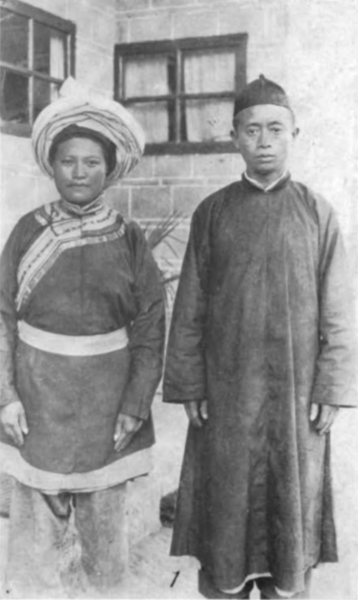
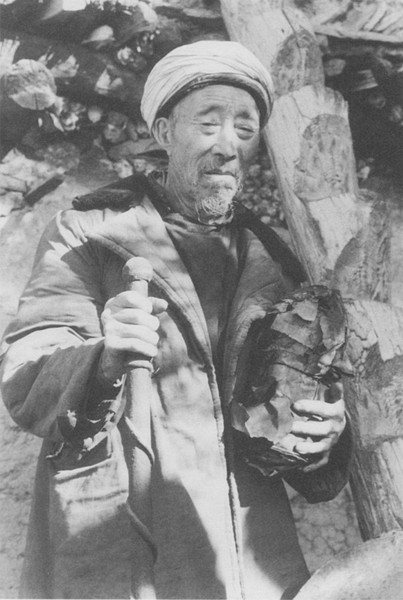
Sun Wukong appears in a body of Buddhist folklore passed on by the Miao ethnic group of Sichuan, also known as the “River Miao” (Chuan Miao, 川苗) or “Old Miao” (Miao: Hmong Bo) (fig. 1). The particular tale is quite different from the popular narrative appearing in Journey to the West (Xiyou ji西遊記, 1592). For example, the unnamed monkey tends to a dragon king’s injury and later escorts a Tang dynasty emperor to India.

Table of Contents

1. Miao Folklore

A Monkey Went Fishing, or Securing Buddhist Sacred Books (97)

The monkey changed into a fisherman and daily went fishing (with a line and hook). He hooked the dragon’s upper lip. When he pulled, the fishhook broke off in the dragon’s upper lip. The dragon’s lip therefore pained him every day. Then every day the dragon king called on his soldiers to go and get a doctor and heal it, but they could not find a doctor.

The monkey daily went to the sand bank to look for his fishhook. One day when he was looking for it two of the dragon king’s soldiers came and asked him, “What are you looking for?” He answered, “I am looking for medicine.” The two soldiers then said, “Old scholar, our old man’s upper lip pains him and he sent us to help him find a doctor. Can you heal him?” The monkey thought, “Probably he has been caught by my fishhook.” He then said, “I can heal it, but I must first look at the injury, then I will give the medicine.” Then the two soldiers invited him to come.

He said, “How can I go since there is so much water?” He had to go down into the water of the stream. The two men then said, “You may get under our fins and close your eyes, and do not open your eyes until we call you.” The monkey wanted to see the dragon, so he closed his two eyes. The two soldiers held him under their fins, and in a short time one of them called him, and he opened his eyes and looked.

When he opened his eyes he had already entered a fine palace. In a little while he heard the soldiers of the dragon king from both sides calling to the dragon king to come and have his wound looked at.

The monkey heard the inside gate resound, “Gu, ga.” He then saw the hands of a big man carrying the dragon king so that he could sit in the chair. Then they requested him to look at the wound. The monkey kowtowed just once to the dragon king and then looked. Then he took a pair of chop sticks and pushed aside the dragon king’s lips, and saw that the fishhook was hooked in the dragon king’s upper lip. Then he took the chopsticks and loosened the fishhook a little. He then asked the dragon king, “Is it any better?” The dragon king answered, “It is a little better.” Then the monkey sat down and rested a little. The dragon king said, “I am afraid that I will die from this illness.”

The monkey said, “You will not die from this sickness. You will certainly recover.” The dragon said, “If you are willing to heal me, I will give you whatever you want.” The monkey then used the chopsticks to push open the lips. Then he seized the fishhook with his chopsticks and with one jerk pulled out the fish book. The lip of the dragon king hurt no longer.

Then the dragon king called to his daughters to entertain the monkey fisherman. The monkey remained there several days. The dragon king was afraid that he [the monkey] was in a hurry and told his soldiers to give him some gold and silver. The monkey said, “I do not want gold and silver. I only want you to permit me to stay here a few days longer.” When the soldiers had reported this to the dragon king, he was glad to have him remain longer. He stayed several months.

One day he was visiting with the women in the palace. The monkey saw a yellow golden club. He then picked it up to play with. He struck with the golden club outside, and the club flew with him to the sea. Then he knew that this club was an ancient golden club. The dragon king did not pursue him.

The monkey lived until the Tang Dynasty, and the Tang Dynasty king wanted to go and get sacred books. But the king could not go himself because the demons and spooks were very numerous along the road. The Tang emperor then sent a messenger to call the monkey to him. The monkey said, “I cannot go. If anybody wants me to go, he must change likenesses with me, and then I will go.”

The Tang emperor himself returned, and for three years sought for a method. One day he came and said to the monkey, “Now I am able to change.” The monkey then requested the Tang emperor to change. The Tang emperor then changed into a big mountain, and the monkey went into the mountain. Then he was unable to come out again. The Tang emperor then said, “Now will you go with me?” The monkey then promised to go with him. Then the Tang emperor lifted aside the written character that had imprisoned him, and then the monkey came out. The monkey then went with the Tang emperor to the western horizon and brought back the sacred books. [79]

[Notes]

79) The Ch’uan Miao said that this is a story about a monkey of some repute, but they did not know his name. It is evidently the monkey god Sen Hou Tzu [Sun houzi, “the monkey Sun”] 孫猴子 or Sen Wu K’ung [Sun Wukong] 孫悟空 (Graham, 1954, p. 211).

2. Story Influences

I suggest that the first three-quarters of the Miao tale draws on the Asian variant of a widely known story cycle in which a fisherman is rewarded for releasing a magic fish (B375.1. Fish returned to the water: grateful, n.d.). This version sees the fisherman release a carp to later discover it was actually the transformed son of a dragon king. He is then rewarded with a magic treasure for his kindness. [1] This cycle is partially played out in another Miao legend in which a fisherman catches a fish, who turns out to be the daughter of the dragon king Ryuang Lan, and later marries her in human form (Graham, 1954, pp. 226-227). In our story, the monkey-turned-fisherman catches the dragon king and then frees him of the hook. He is subsequently rewarded with a prolonged stay in the dragon kingdom and thereafter retrieves the golden club, which is itself a magic treasure.

Fig. 1 (left) – A Miao couple (larger version). She is wearing traditional dress, while he wears that of the Chinese. From Graham, 1954, p. 125. Fig. 2 (right) – Sun Wukong meets the dragon king Ao Guang (larger version). A screenshot from the classic Chinese animation Uproar in Heaven (1961/64).

The Miao story clearly borrows from Journey to the West. The monkey is presented as a shape-shifting immortal, for he changes into a fisherman and lives until the Tang dynasty. His aversion to water in the tale is a common trope throughout the novel, such as when Sun Wukong uses water-propelling magic or relies on others to fight water-based monsters. [2] The golden club is the Monkey King’s “As-you-will” gold-banded staff retrieved from the undersea dragon kingdom. This in turn identifies the dragon king as Ao Guang, the ruler of the Eastern Sea (fig. 2). The unnamed “Tang dynasty emperor,” Tang Taizong in Journey to the West, replaces the monk Tripitaka originally sent to retrieve holy scriptures. The monkey’s imprisonment inside the emperor-turned-mountain is based on Sun’s imprisonment under Five Elements Mountain in the novel, complete with a written amulet weighing the landmass down.

The monarch’s transformation into a mountain is particularly interesting to me, for I don’t recall ever reading any Asian folklore featuring such an event. I know of at least one instance of a hero in ancient European folklore being changed into a mountain as punishment. However, our tale presents the ruler’s transformation as a willing metamorphosis. The Miao consider mountains to be living beings, [3] having “heads, feet, hands, eyes, ears, hearts, breasts, veins, and arteries” (Graham, 1954, p. 9). Therefore, the mountain is a macrocosm of the human body, making the transformation one of degree and not kind. But this portion of the narrative remains a mystery to me as the original intended outcome was “switch[ing] likenesses.” I take this to mean that the monkey would look like the emperor and visa versa. Does this imply that the primate was keen on usurping the throne and the monarch then used his transformation as a deterrent?

3. Monkey Progenitors

The Monkey King’s inclusion in Miao folklore should come as no surprise since monkeys play an important role in their mythology. They believe humans are descended from a pair of monkeys who broke off their tails by accident and eventually evolved human features (Graham, 1954, p. 204). As explained in this article, having a monkey ancestor is a common belief among the various ethnic groups of Tibet and southwestern China. Sun Wukong also appears in the legends of the neighboring (and related) Qiang people of Sichuan.


4. Update

Updated: 04-26-21

Author David Leffman was kind enough to ask his Miao friend of southeast Guizhou about this story. This is their response:

I feel personally that this story is maybe created recently by someone who want to find a reason to give better explanation of her embroidery. In our folk story we have monkey which is smart, used to play prank joke with human being Jiangyang. And Miao don’t have chronology, not even annals, never knew anything about Tang Dynasty which should be aliens for them. And in the history Miao lived away from Han Chinese, almost no contact except those who were called Shu Miao, the cooked ones in west Hunnan and some in east Guizhou, like Sheng Chongwen, the famous writer who grew up in Fenghuang ancient town. Then those Shu Miao may get some influence and confuse those Han Chinese culture as their own.

So it’s possible that the above story is a modern legend influenced by Chinese culture.

Notes:

1) One version appears in the Complete Tale of Guanyin of the Southern Seas (Nanhai Guanyin quanzhuan, 南海觀音全傳), a 16th-century pious novelette detailing Guanyin’s former life as the Princess Miaoshan. After achieving enlightenment, Miaoshan/Guanyin looks to take on disciples. One is a dragon princess (longnu, 龍女) who bestows the Bodhisattva with a magic jewel for saving her brother, a dragon prince who had been caught by a fisherman while transformed into a carp (Idema, 2008, p. 31).

2) The water-propelling magic is first displayed in chapter three when Sun seeks a magic weapon from the underwater dragon kingdom (Wu & Yu, 2012, vol. 1, p. 133). An example of Monkey relying on others to fight a water-based monster happens in chapter 22 when he asks Zhu Bajie to battle Sha Wujing (Wu & Yu, 2012, vol. 1, p. 423).

3) According to Graham (1954), “The Ch’uan Miao regard all things as alive and sentient. The sun, moon, stars, mountains, rivers, rocks, trees, thunder, the echo, the rainbow, homes, fields, plains, recompense or karma, beds, marriage, swords, the harvest, the year…the ceremonial drum, and even the sound of the ceremonial drum are considered to be living things” (p. 9).

Sources:

B375.1. Fish returned to the water: grateful (n.d.). S. Thompson. Motif-index of folk-literature. Retrieved from http://www.ruthenia.ru/folklore/thompson/index.htm.

Graham, D. C. (1954). Songs and Stories of the Chʻuan Miao. Washington: Smithsonian Institution. Retrieved from https://babel.hathitrust.org/cgi/pt?id=inu.39000005872432;view=1up;seq=7

Idema, W. L. (2008). Personal Salvation and Filial Piety: Two Precious Scroll Narratives of Guanyin and her Acolytes. Honolulu: University of Hawaii Press.

Wu, C., & Yu, A. (2012). The Journey to the West (Vols. 1-4) (Rev. ed.). Chicago: University of Chicago Press.

Sun Wukong and the Qiang Ethnic Group of China

Last updated: 08-02-2019

The Qiang (Ch: 羌; Qiangic: Rrmea) ethnic group have been mentioned in Chinese records as far back as the oracle bones of the Shang Dynasty (17th to 11th century BCE). Originally inhabiting the northern reaches of China, these sheepherders and warriors were driven southwest over many centuries of conflict with neighboring ethnic groups, as well as the Chinese. Many Chinese dynasties attempted to assimilate them, but the Qiang have resisted up to the present. Today, they live in western Sichuan near the Tibetan border and are listed among the 56 recognized ethnic groups of China (Yu, 2004, pp. 155-156; Wang, 2002, pp. 133-136).

What’s interesting about the Qiang for the purposes of this blog is that both magic monkeys and heavenly stones, and even Sun Wukong himself, play a part in the people’s religious mythology.

Map of China showing location of Sichuan Province, home to Qiang ethnic group, some of whom worship Sun Wukong

Fig. 1 – A map of China showing the location of Sichuan province in red. Larger version available on wikicommons.

Table of Contents

1. Monkeys and Qiang Shamanism

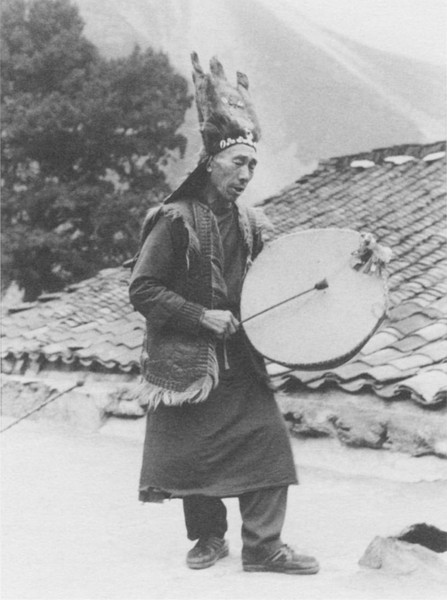
Shamans (Ch: Duan gong, 端公 or Wu, 巫j; Qiangic: Shüpi) are the heart of Qiang religious life. During special ceremonies, they wear three-peaked hats (fig. 2 and 3) made from the fur of golden monkeys (fig. 4), each peak respectively representing the deities of heaven, earth, and shamanism (more on the latter below). [1] These hats are especially worn during exorcisms because the monkeys are considered “the purest of animals, [which stand] in extreme contrast to the vilest of beings—the demons” (Oppitz, 2004, p. 13). There are several legends, with many variants, explaining the origins of the headdress. One version states:

[T]he Qiangs used to have a written language, and their patriarch recorded the scriptures he obtained from the gods and other important writings on human affairs on the bark of birch trees. One day when he took out the pieces of bark to be aired, a mountain sheep came and ate them all. With the help of a golden monkey the patriarch captured the guilty sheep and made its skin into a drum. When he beat on the drum he was able to recall the words written on the birch bark. To prevent future mishaps to these precious documents, he memorized them by heart (Yu, 2004, p. 160).

So, in essence, the hats are worn to commemorate the assistance of the golden monkey. Interestingly, another version replaces the patriarch and golden monkey with Tripitaka and Sun Wukong:

A long time ago, in the Tang period, there was a monk by the name of Tang Seng [唐僧, “Tang Monk”], who undertook a journey to the western skies in the company of a monkey named Sun Wukong, in order to collect sacred scriptures. On their way back, they encountered a sheep ghost who ate all the newly acquired scriptures. The monkey got very angry, killed the sheep ghost, and used its skin to fabricate a drum. Thereupon Tang Seng and the monkey met with the Eighteen Arhats … Listening to their teachings, Tang Seng picked up the sheep-skin drum and repeated all that he heard through their mouths. Since then all shamans use a drum when reciting their knowledge from memory (Oppitz, 2004, p. 23).

Qiang shaman hat and goldn monkey

Fig. 2 (left) – The three-peaked golden monkey skin shaman hat. From the Sichuan University Museum. Larger version on wikipedia. Fig. 3 (center) – A shaman wearing the headdress and playing the ritual sheep skin drum (larger version). Original photograph by Michael Oppitz. From Oppitz, 2004, p. 14. Fig. 4 (right) – A golden monkey with child. Larger version on Wikipedia.

The golden monkey is closely associated with the Qiang’s pantheistic worship of sacred white stones, each one representing the gods of heaven, sun, fire, mountains, rivers, and trees. [2] Yu (2004) provides another legend for the origins of the Shaman’s hat, describing how the monkey is the offspring of the sacred stone and noting parallels with the birth of Sun Wukong:

Another legend depicts the golden monkey as a Prometheus-like figure who stole fire from heaven. The first two attempts failed because the god of wind and the god of rain extinguished the fire, but the monkey succeeded the third time by concealing the fire in a white stone. It is worth noting that in this legend the golden monkey is closely related to the white stone. In the Qiang language, the first syllables in the names of the monkey’s mother and father mean respectively “stone” and “fire.” “This implies that fire is produced by stone and hidden inside the stone, and that the half-human, half-simian golden monkey was an offspring of the union between stone and fire”. The white stone and the golden monkey, as the source of fire and the messenger who brought it to the human world, became the totems of the Qiang people. To commemorate the recovery of the lost scriptures, wearing the monkey hat and playing the sheepskin drum also became an indispensable part of Sacrifice to the Mountain[, a Qiang ceremony]. However, the monkey legend is not particular to the Qiang people. The Yi minority people of northwestern Guizhou province have a nuo drama known as bianren xi (changing-into-people drama) based on a legend that people derived from monkeys. Actors wear monkey masks for this performance. There is also the famous monkey, Sun Wukong, who was born from a stone in the Han Chinese novel Xiyu ji (Journey to the West, 1592) by Wu Chengen (ca. 1506-1582). [3] The novel was first published in 1592, but the monkey lore included in it was of much earlier time (p. 160).

A celestial, stone-born monkey who steals from heaven certainly sounds like the Monkey King. As noted here, stories about Sun Wukong have been circulating in Asia for a millennia. Therefore, it seems only natural that the Qiang’s reverence for heavenly stones and monkeys would lead to some of them worshiping the beloved cultural figure.

Graham (1958) notes that Sun Wukong and Sha Wujing figure among the Chinese patron deities of the “red” shamans (p. 53). [4] What’s interesting is that the red shamans are said to speak a special demon language and use their skills to exorcise demons (p. 54). Therefore, their worship of the Monkey King should come as no surprise considering Sun Wukong is the exorcist par excellence.

As noted above, one of the peaks of the ritual headdress represents the patron deity of shamanism. Known among other names as the Abba mula (“father god”; Ch: Aba muna, 阿爸木纳), this is the title given to the shaman’s main focus of worship. For instance, Sun Wukong is the Abba mula of those who revere him. Most importantly, the chosen deity is further represented by a small bundle that the shaman carries with him and guards jealousy, as it is the source of his knowledge and power. Graham (1958) describes the sacred bundle’s importance, construction, and use:

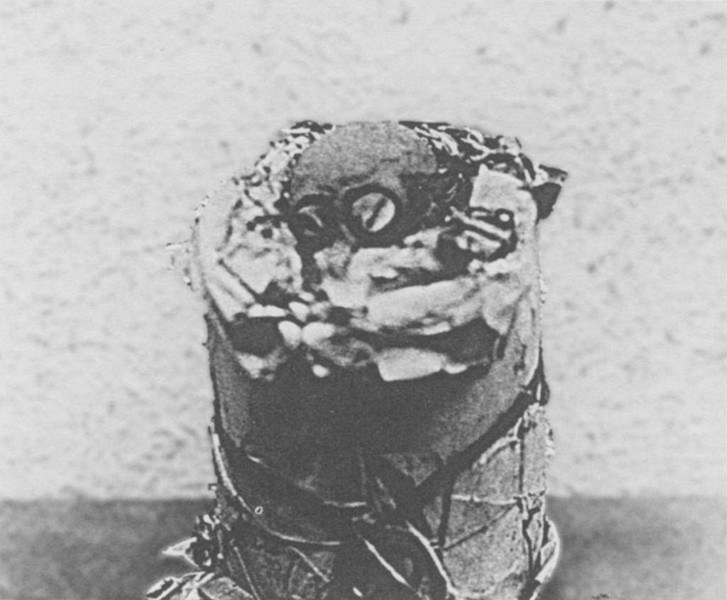
He is the patron or guardian deity and instructor of the Ch’iang priest, and without him the priest could do nothing. It consists of a skull of a golden-haired monkey wrapped in a round bundle of white paper. Its eyes are old cowry shells or large seeds. Inside are also dried pieces of a golden-haired monkey’s lungs, intestines, lips, and fingernails. It is so wrapped that the face of the skull is visible at one end, and the other end is closed [fig. 5 and 6]. After each ceremony in the sacred grove, [5] the priest wraps another sheet of white paper around it, so that it gradually increases in diameter. Some priests will not allow another person to touch his Abba Mula and only the priest worships this god (pp. 51-52).

I mention this because there are no doubt sacred bundles representing Sun Wukong, which are used under his supernatural guidance.

Qiang abba mula bundle and shaman holding one

Fig. 5 (left) – The Abba mula bundle. Note the visible monkey skull with cowry shell eyes (larger version). Original photograph by Wolfgang Wenning. Fig. 6 (right) – A Qiang shaman carry a bundle and sacred cane (larger version). Original photograph by Michael Oppitz. Both images are from Oppitz, 2004, p. 41.

Oppitz (2004) explains that stories alluding to Sun Wukong appear in Qiang pictorial divination books. Furthermore, he suggests that the ritual of wrapping the Abba mula bundle with additional paper represents the lost written knowledge saved by the Monkey King / golden monkey, which is now passed on orally.

In Qiang divination books the monkey features in various passages. In one book the picture of a monkey alludes to a story in which he destroys a heavenly palace; another book addresses a monkey’s trip to a western land, where he acquires written texts. In both cases the monkey Sun Wukong of popular literature and protagonist of the novel Xi yu ji, who escorts the Tang pilgrim Xuanzang, stands as the model. This character’s association with the acquisition of books and the role a golden-haired monkey plays in a Qiang myth as the inventor of the drum replacing the lost scriptures, suggests that the paper which is wrapped around the venerated monkey skull may also be interpreted as a hint to the conflict between scriptural versus oral tradition at the intersection of which the monkey stands as a mediator (p. 42).

2. Monkeys and the Qiang and Tibetan Origin Myths

Called “Mutsitsu and Tugantsu” (Ch: Mujiezhu yu Douanzhu, 木姐珠與斗安珠), the Qiang origin myth centers around the romance of Mutsitsu, the daughter of the supreme god Abamubi (or Mubita), and the earthbound monkey Tugantsu. The latter saves the goddess from a ferocious tiger when she visits the mortal world and both instantly fall in love. She brings him to the celestial realm, where Abamubi only agrees to their marriage if Tugantsu can successfully complete a series of impossible herculean tasks. These include falling the trees of ninety-nine mountains, burning the trees, and using the arable land to plant a crop of corn (other sources say grain); but each time Mutsitsu secretly enlists the aid of fellow gods to insure the tasks are completed on time. During the burning of the forest, Tugantsu’s fur is singed, revealing him to be a handsome man. In the end, the supreme god agrees to their marriage and Mutsitsu and Tugantsu become the progenitors of mankind. [6]

Academia Sinica (n.d.) comments that some Qiang communities who revere Chinese gods often equate Abamubi with the Jade Emperor of Daoism and Tugantsu with Sun Wukong. I find this especially fascinating as the Monkey King then becomes a sacred protoplast.

Tibetan origin myth painting - Monkey and Ogress - small

Fig. 7 – A modern painting showing the monkey and rock ogress of Tibetan myth (larger version). Original from Wikipedia.

In addition, Academia Sinica (n.d.) explains that this “monkey transforming into human” motif (i.e. Tugantsu becoming a man) has similarities with Tibetan mythology, for the Qiang live in close proximity to the people of Tibet. This refers to the Tibetan origin myth in which the Bodhisattvas Avalokitesvara (the Indo-Tibetan variant of Guanyin) and Tara are respectively reborn on earth as a monkey and his wife, a rock ogress (fig. 7). (Again, the association between the monkey and rock reminds one of Sun Wukong.) The union produces six half-human half-monkey children, from which originate the six original tribes of Tibet. These children and their offspring eventually evolve human features (Stein, 1972, pp. 37 and 46).

3. Conclusion

The religious mythology of the Qiang ethnic group of China pays reverence to both heavenly monkeys and sacred stones. Examples include stories about a golden monkey born from a stone who both bestows fire on man and creates the sheepskin drum needed to recover lost scriptural knowledge. Qiang communities that revere Chinese deities often replace the golden monkey with Sun Wukong, no doubt due to his birth mirroring the former’s origins. The same holds true for the Qiang origin myth in which a goddess and monkey-turned-man become the progenitors of mankind. The Monkey King is sometimes equated with the father, transforming him from a literary character and cultural figure into a sacred protoplast. Interestingly, the monkey-rock and monkey-to-man motifs have connections to a wider myth cycle present in Tibet.

Some shamans (Qiangic: Shüpi) specializing in exorcism worship our hero as their patron deity, or Abba mula (“father god”). Such deities are given form as a bundled monkey skull successively wrapped in white paper. This sacred object is considered the source of the shaman’s power. It’s possible that the wrapping paper references the lost scriptural knowledge that Sun Wukong/the golden monkey helped recover.

To my knowledge, most of what has been written about the Qiang, and by extension their connection with Sun Wukong, was collected by ethnographers during the 20th and 21st centuries. Considering that the Qiang have no written language (hence the importance of oral knowledge), it’s impossible to say how far back this connection goes. But as noted in this article, the Monkey King has been worshiped by the Chinese since at least the 17th century, so the Qiang reverence for Sun Wukong could also be centuries old.


4. Updates

4.1. Other Sun Wukong Ethnic Folklore

Update: 04-19-19

Sun Wukong also appears in the folklore of the neighboring (and related) Miao ethnic group. The Miao also believe man derives from monkeys.

Sun Wukong and Miao Folklore


4.2. Tibetan Monkey King Myth

Update: 08-02-19

Rockhill (1891) provides a complete translation of the Tibetan monkey-ogress origin myth taken from the Mani Kambum (12th to 13th century), a collection of Tibetan Buddhist texts centered around Avalokitesvara. [7] The translation is too long to transcribe here, so I have made a PDF of the relevant pages. It’s interesting to note that the Bodhisattva Hilumandju, the protagonist, is a monkey king with magic powers.

Archive link

Click to access the-land-of-the-lamas-notes-of-a-journey-through-china-mongolia-and-tibet-1891-by-william-woodville-rockhill-rock-ogress-and-a-monkey-info-pages-extracted.pdf

Hilumandju and Hanumanji are quite similar, as noted by other writers (Chattopadhyaya & Chimpa, 2011, p. 152). The Tibetologist Per K. Sørensen notes that “the idea of an ape-gestalt in this myth is directly associated with or inspired by the ape-king … and champion … Ha-lu ma-da = Hanümän, the resourceful figure and protagonist known from Välmlki’s Rämäyana, a tale of considerable popularity already in the dynastic period in Tibet” (Bsod-nams-rgyal-mtshan & Sørensen, 1994, p. 127, n. 329).

Additionally, the Chinese of Sichuan also have stories regarding primates fathering human children. A body of Han and Tang dynasty tales that heavily influenced the creation of Sun Wukong describes magic white apes (baiyuan, 白猿) kidnapping and impregnating young woman. One example appears in both Zhang Hua’s Encyclopedic Records of Things (Bowuzhi, 博物志, c. 290) and the Records of Spirits (Soushenji, 搜神記, c. 340):

In the high mountains of southwestern Shu [Sichuan and Tibet] there is an animal resembling the monkey. It is seven feet in height, it can imitate the ways of human beings and is able to run fast in pursuit of them. It is named Jia-guo 猳國 or Ma-hua 馬化; some call it Jue 貜. It watches out for young women travelling on the road and seizes and bears them away without anyone being aware of it. If travelers are due to pass in its vicinity they lead one another by a long robe, but even this fails to avert disaster. The beast is able to distinguish between the smell of men and women and can thus pick out the women and leave the men. Having abducted a man’s wife or daughter it makes her its own wife. Women that fail to bear its children can never return for the rest of their lives, and after ten years they come to resemble the beast in appearance, their minds become confused, and they no longer think of return. Those that bear sons return to their homes with the infants in their arms. The sons are all like men in appearance. If any refuse to rear them, the mothers die. So the women go in fear of the beast, and none dares refuse to bring up her son. Grown up, the sons are no different from men, and they all take the surname Yang 楊, which is why there are so many people by that name now in the south west of Shu: they are mostly descended from the Jia-guo or Ma-hua (Wu, 1987, pp. 91-92).

I find the last part fascinating because it states that the inhabitants of the Sichuan-Tibet region were fathered by the ape. This recalls the Tibetan, Qiang, and Miao tales of humans descending from monkeys. It also suggests that the aforementioned ethnic stories about a primate progenitor stretch back to the early part of the first millennium.

Notes:

1) Graham (1958) notes that the headdress is one of eleven sacred implements of the Qiang shaman. He provides a detailed description of the hat’s significance.

This is made of a golden-haired monkey skin and is believed to be very efficacious, greatly adding to the dignity and potency of the priest and his ceremonies. The eyes and ears of the monkey are left on, and the tail is sewed on at the back. The eyes enable the hat to see and the ears to hear, and add to the efficiency of the hat. The tail also adds to its efficiency. The front of the hat is ornamented with old cowry shells arranged in ornamental designs, one or two polished white bones that are said to be the kneecaps of tigers, and sometimes with carved sea shells. These ornaments improve the looks of the hat and also add to its efficiency. Other ornaments believed to add efficiency when used are two cloth pennants, one or two small circular brass mirrors, and one or two small brass horse bells much like sleigh bells, on which the Chinese character wang 王 meaning king is carved. Near Wen-ch’uan the priests sometimes assist the magistrate in praying for rain and in turn are presented with a small, thin silver plaque to be worn on the hat, on which is stamped the Chinese word shang 賞, or “reward.” This plaque also adds dignity and efficiency (pp. 55-56).

2) The Qiang reverence for these stones is tied to the aforementioned conflict with neighboring tribes. For example, legend states that the great heavenly ancestor of the Qiang sent them three white stones to aid in their battle with a neighboring tribe, transforming them into mountains from which weapons were made. Another legend claims that these stones help the Qiang make fire (Yu, 2004, pp. 156-157). These white stones often appear on buildings (both temples and houses), walls, altars, and graves in Qiang society (Graham, 1958, p. 103).

3) The original paper reads, “(Journey to the West, 1982)…” I have corrected the typo.

4) The colors red, white, and black signify the class of magic (good vs. dark), though, shamans often inhabit all three roles (Graham, 1958, p. 54).

5) Sacred groves are home to a village’s temple and white stone altar, where many rituals are performed at night and in the early morning (Graham, 1958, p. 64).

6) A Chinese version of the tale can be read here. This forum has scans of an illustrated bilingual book presenting a different version of the tale.

7) Another version of the tale appears in The Mirror Illuminating the Royal Genealogies (Rgyal rabs gsal ba’i me long, 14th century). An annotated translation can be read in Bsod-nams-rgyal-mtshan & Sørensen, 1994, pp. 125-133.

Sources:

Academia Sinica. (n.d.). A Brief Introduction to the Qiang People – Religion. Retrieved from http://ethno.ihp.sinica.edu.tw/en/southwest/main_QI-04.html

Bsod-nams-rgyal-mtshan, & Sørensen, P. K. (1994). The mirror illuminating the royal genealogies: Tibetan buddhist historiography : an annotated translation of the XIVth century Tibetan chronicle: rGyal-rabs gsal-ba’i me-long. Wiesbaden: Harrassowitz.

Chattopadhyaya, A., & Chimpa. (2011). Atīśa and Tibet: Life and works of Dīpaṃkara Śrījñāna (alias Atīśa) in relation to the history and religion of Tibet, with Tibetan sources. Delhi: Motilal Banarsidass Publishers.

Graham, D. C. (1958). The customs and religion of the Ch’iang. Washington: Smithsonian Institution. Retrieved from https://repository.si.edu/bitstream/handle/10088/22946/SMC_135_Graham_1958_1_1-110.pdf?sequence=1&isAllowed=y

Oppitz, M. (2004). Ritual objects of the Qiang shamans. Res: Anthropology and aesthetics, 45, 10-46. Retrieved from https://www.journals.uchicago.edu/doi/pdfplus/10.1086/RESv45n1ms20167620

Rockhill, W. W. (1891). The land of the lamas: Notes of a journey through China, Mongolia and Tibet with maps and illustrations. New York: Century Co.

Stein, R. A. (1972). Tibetan civilization. Stanford, Calif: Stanford University Press.

Wang, M. (2002). Searching for Qiang culture in the first half of the twentieth century. Inner Asia, 4(1), 131-148. Retrieved from http://www.jstor.org/stable/23615428

Wu, H. (1987). The earliest pictorial representations of ape tales: An interdisciplinary study of early Chinese narrative art and literature. T’oung Pao LXXIII, pp. 86-112.

Yu, S. (2004). Sacrifice to the Mountain: A Ritual Performance of the Qiang Minority People in China. TDR 48(4), 155-166. Retrieved from http://www.jstor.org/stable/4488600

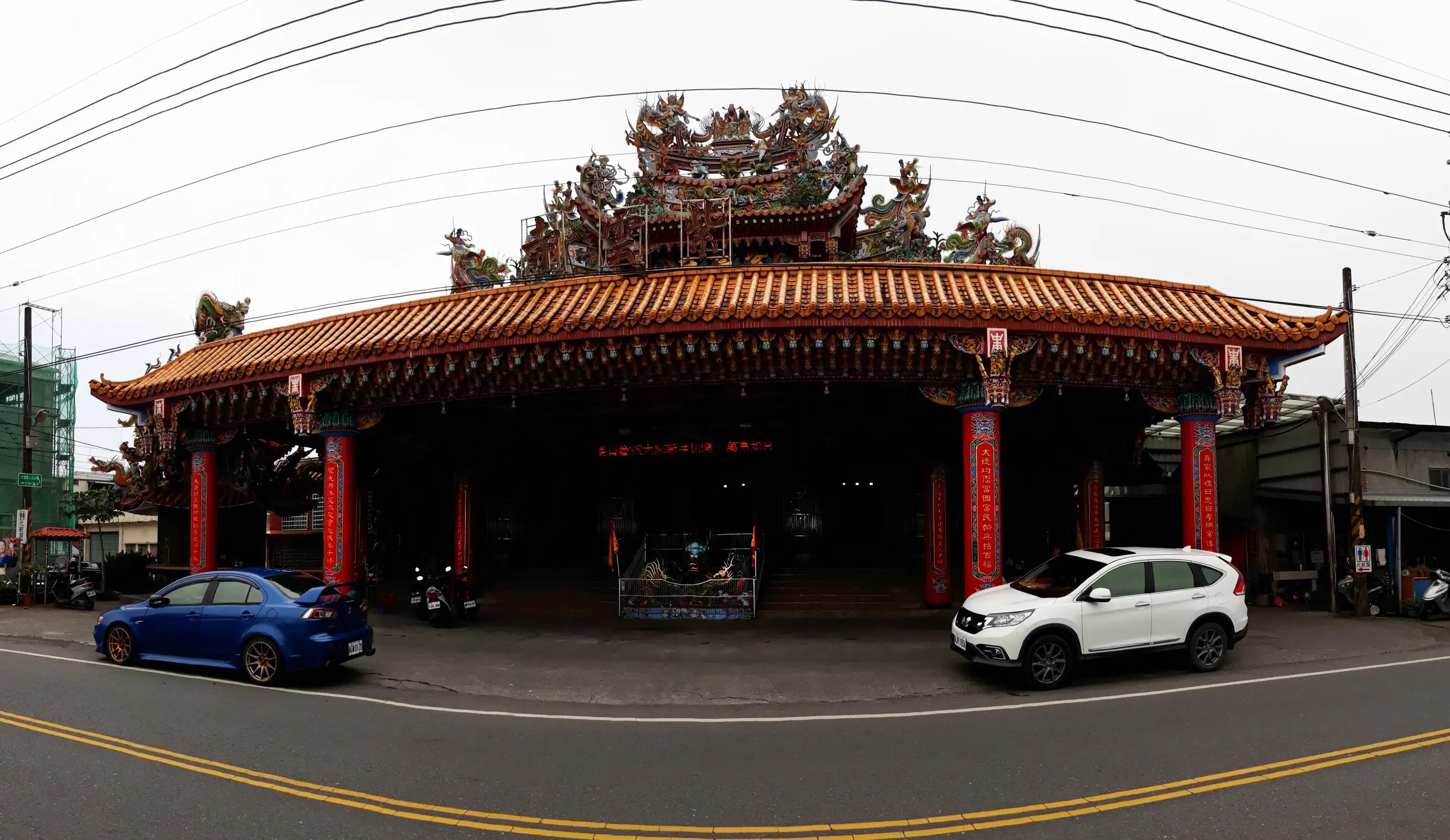
The Great Sage Purple Cloud Temple of Yilan, Taiwan: A Photo Essay

I recently visited another Great Sage temple, this time the Wujian Purple Cloud Temple (Wujian Ziyu si, 五間紫雲寺) of Yilan (宜蘭), Taiwan. The temple was bustling with people during the Chinese New Year celebrations, so I didn’t have time to ask many questions. This entry will serve more as a picture essay until I return to conduct proper research.

1. History

Legend has it that around 1899 a man found a monkey-shaped stone and enshrined it in a thatched shed. This was eventually converted to a temple a few years later. It was destroyed by a typhoon in 1960 but subsequently rebuilt. The temple appears to recognize a trinity, with countless monkey soldiers beneath them. The Great Sage has two aspects: the “Martial Great Sage” (Wu Dasheng, 武大聖) (standing statues), who exorcises evil, and the “Civil Great Sage” (Wen Dasheng, 文大聖) (seated statues), who insures the safety of people and animals.

2. How to get there

(Note: Always consult google if you are directionally challenged like myself)

Address: No. 449, Section 3, Dafu Road, Zhuangwei Township, Yilan County, Taiwan, 263

I took bus #1571 (google calls it #1571A) from gate 15 of the Taiwan City Hall Bus Station. This heads towards the Yilan Bus Station. (If you plan to take this route, please note that buses headed to different areas of Yilan will board from this gate. So pay very close attention to the calls of the bus station attendant. For example, they called “Jiaoxi” (礁溪) (bus #1572), a small township in Yilan, and those waiting for another destination had to stand off to the side while those from different sections of the line made their way to the front. If you aren’t careful, you might end up on the wrong bus.) My destination was the first stop, the Zhuangwei (壯圍) bus stop, a small shelter by an overpass. My short walk to the temple took me passed rows of flooded rice fields and small patches of buildings.

(Click images for larger versions)

1

Gate 15 at the Taiwan City Hall Bus Station.

2

The Zhuangwei bus stop shelter (as seen from the opposite outgoing bus stop).

1a - Map to Purple Cloud Temple

The route map from the Zhuangwei bus stop to the temple.

4
5

Random rice fields along Gonglao Road (see map).

6

A panorama of a rice field next to Lane 423, Sect. 3, Dafu Road (see map). 

3. The Outside

The temple is located on the side of a busy road. It appears almost out of nowhere since the face of the holy structure is in line with the buildings on either side. The first thing that caught my eye was the highly ornate roof of the furnace covered in mythical creatures, divine heroes, and gods, features typical of South Chinese and Taiwanese temple architecture. Each face of the hexagonal body was covered with beautiful carvings on black marble, two of which included the pilgrims from Journey to the West.

7

The furnace visible on the left side of the temple (as seen from the road).

8
9
10
11

A marble carving of Guanyin, the White Dragon Horse, Monkey, and Tripitaka.

12

A detail of Monkey.

13

Monkey, Sha Wujing, Tripitaka on the White Dragon Horse, and Zhu Bajie.

14

A detail of the group.

The front of the temple houses an ornate statue of three brightly colored dragons enclosed in a fence. Looking up, I noticed beautiful hand-painted dragons and Qilin on the ceiling, along with paintings of events from Chinese mythology and Journey to the West on the cross beams. Walking towards one of the five entrances, I noticed the facade was covered in highly detailed stone carvings, some depicting events from the novel.

15

The front of the Purple Cloud Temple.

17
18

The front of the temple. Three of the five entrances are visible behind the dragons.

19

A detail of the three dragon statues.

20

Five hand-painted dragons on the ceiling. The Eight Immortals grace the crossbeam below. 

21

A pair of Qilin on the ceiling. The cross beam below portrays an event from Prince Nezha‘s life.

22

Zhu Bajie protecting his master from the ogre that will become Sha Wujing.

23

Monkey escaping from Laozi’s furnace.

24 - BW

A stone carving on the facade showing Monkey (top right), Zhu bajie (top center right), and Sha Wujing (center left) battling a monster (top left). The image has been enhanced for clarity.

25 - BW

Monkey (center) battling the heavenly army. Enhanced for clarity. 

26 - BW

Monkey (center) leaping from Laozi’s furnace. Enhanced for clarity. Apologies for the blur. 

28 - BW

A detail of Monkey leaping.

29 - BW

The Great Sage (top center) and his monkey army battling heaven. Enhanced for clarity. These are just a few of the many carvings covering the temple facade. 

4. The Inside

The interior hall is wide yet shallow in depth and split between three altars, Folk religion to the right, the Great Sage in the Center, and Daoist to the left. I must admit in my zeal to photograph anything Monkey-related, I completely forgot to take pictures of the other two sections. This online image shows the folk section includes Mazu, Budai, and other deities. This image shows the Daoist section includes the Jade emperor, the Earth god, and others. Surprisingly, the incense burner in front of the main entrance was not marked with the name of the Great Sage (unlike what I’ve seen at other such temples) but that of the Jade Emperor, 玉皇上帝 (Yuhuang shangdi).

30

The main hall.

20190206_123034

The incense burner bearing the name of the Jade Emperor (visible from the hall looking out the main door).

Upon entering the right side of the main hall, the first thing that caught my eye was a large wooden sculpture of a tree-bound monkey holding onto a branch with one hand and a pair of peaches in the other. Immediately behind him was a stone carving of a vague monkey with two children. (I’m not sure of the ritual importance of either statue. I’ll report on this later. However, I will say the stone statue recalls Sun Wukong’s origins as a stone monkey.) Next to both statues is one of two cylindrical towers, one positioned on each end of the hall. Each is topped by a Great Sage statue and the towers themselves are comprised of hundreds of small compartments, each filled with a small Great Sage figure. These represent a donor who has given money to the temple.

31

The wooden monkey statue.

32

A detail of the monkey holding peaches.

33

The stone monkey with children.

34

The tower of donor Great Sages.

35

The Great Sage topping each tower. He holds a fly whisk in one hand and a peach of immortality in the other.

36

The many compartments.

37

A mini Great Sage donor figure. He sits on a throne with his staff held over head in one hand and a calabash gourd held to his front in the other. 

4.1. The Great Sage Altar

The central offering table to the Great Sage was covered in all sorts of fruits, candies, and flowers. Also included were an incense burner, offerings of wine, and a pair of crescent moon-shaped wooden blocks. These blocks are used in tandem with fortune sticks and oracles revealed on slips of paper, all of which are housed in a metal cylinder to the left of the table (see section three of this article on how these items are used).

39
38

The table laden with offerings. Take note of the young woman praying to the Great Sage. She told me that she was from Vietnam and that Monkey was not a common deity there.

40

The incense burner (back center), tea offerings (three cups visible in the center) and wooden blocks (front right).

41

The metal cylinder housing the fortune sticks (top), with the corresponding oracles located in each of the surrounding drawers.

Like in other parts of Taiwan and Singapore, this temple appears to recognize a plethora of Great Sages, from a holy trinity to an army of soldier monkeys. (I don’t yet know their individual names. I will report on this later.) All of the Great Sage figures are portrayed with golden armor, red-painted humanoid faces, golden fillets, and long, dark hair. The headband and long hair are no doubt influenced by depictions of Military Monks (Wuseng, 武僧) from Chinese opera (Bonds, 2008, pp. 177-178 and 328). Red face paint is also associated with such characters (Bonds, 2008, p. 211). While the red paint of the statues references the red faces of macaque monkeys, it definitely plays into the military monk personna. Portraying Monkey as such defines him as a divine warrior and a guardian deity.

Military Monk - Beijing Opera (Bonds, 2008)

A military monk from a modern Beijing Opera production (Bonds, 2008, p. 178).

I was pleasantly surprised to see statues of Zhu Bajie appear among the Great Sage’s army. It’s quite appropriate given this is the year of the pig according to the Chinese zodiac. Also included were statues of Ksitigarbha and Nezha.

42

The three main Great Sages visible in front of the ornate dragon statue. Note the long hair.

43

Statues of Zhu Bajie among Monkey’s soldiers.

44

More soldier monkeys. Take note of the Ksitigarbha (front right).

45

Nezha figures mixed in with the monkey soldiers (left).

46

This soldier monkey holds a calabash gourd at the ready.

47

More Nezha figures among the soldiers (right).

I have more pictures of the interior but I’ll leave those for a later article. Lastly, I want to share one of the temple flags stationed opposite the main building.

z

(Left) “Great Sage Equaling Heaven”. (Right) “(Yi)lan Wujian Purple Cloud Temple”.

Sources:

Bonds, A. B. (2008). Beijing Opera Costumes: The Visual Communication of Character and Culture. Honolulu: University of Hawai’i Press.

The Monkey King’s Cosmic Body

Last updated: 04-04-2024

Sun Wukong is known for his limitless shape-changing powers, capable of taking the form of anything from gods, monsters, and humans to animals, insects, and even inanimate objects like buildings. But his most powerful transformation, that of a cosmic giant, is displayed only three times in the novel. It is used mostly in defense against other powerful characters, namely the god Erlang and the Bull Demon King. In this article, I will introduce the ancient astral-geographical term used to describe this phenomenon, associate the transformation with a divine giant from Chinese mythology, and explore possible ties to Hindu mythology.

Table of Contents

1. Episodes from the Novel

1.1. Chapter 3

The first instance takes place in chapter three after Monkey returns from the Dragon King’s undersea palace with his new weapon. The form is used to show off his magical abilities for his children (fig. 1):

Grasping the treasure [iron staff] in his hands, he began to perform the magic of cosmic imitation (emphasis added). Bending over, he cried, “Grow!” and at once grew to be ten thousand-zhang [104,300 ft or 31,800 m]-tall, [1] with a head like the Tai Mountain and a chest like a rugged peak, eyes like lightning and a mouth like a blood bowl, and teeth like swords and halberds. The rod in his hands was of such a size that its top reached the thirty-third Heaven and its bottom the eighteenth layer of Hell (based on Wu & Yu, 2012, vol. 1, p. 138). 

將寶貝揝在手中,使一個法天像地的神通,把腰一躬,叫聲:「長!」他就長的高萬丈,頭如泰山,腰如峻嶺,眼如閃電,口似血盆,牙如劍戟;手中那棒,上抵三十三天,下至十八層地獄。

Fig. 1 – Monkey performs the cosmic transformation for his children (larger version). A page from Chen Huiguan’s Newly Illustrated and Complete Journey to the West (Chen Huiguan xinhui quanben xiyouji, 陈惠冠新绘全本西游记, 2001). Image found here.

1.2. Chapter 6

The second takes place in chapter six during his battle with Erlang Shen. The form is used this time in response to the god’s own cosmic transformation.

The Immortal Master [Erlang] fought the Great Sage for more than three hundred rounds, but the result could still not be determined. The Immortal Master, therefore, summoned all of his magic powers; with a shake he made his body a ten thousand zhang tall. Holding with both hands the divine lance of three points and two blades like the peaks that cap the Hua Mountain, this green-faced, sabre-toothed figure with scarlet hair aimed a violent blow at the head of the Great Sage. But the Great Sage also exerted his magical power and changed himself into a figure having the features and height of Erlang. He wielded a compliant golden-hooped rod that resembled the Heaven-supporting pillar on top of Mount Kunlun to oppose the god Erlang (based on Wu & Yu, 2012, vol. 1, p. 181).

真君與大聖鬥經三百餘合,不知勝負。那真君抖擻神威,搖身一變,變得身高萬丈,兩隻手舉著三尖兩刃神鋒,好便似華山頂上之峰,青臉獠牙,朱紅頭髮,惡狠狠,望大聖著頭就砍。這大聖也使神通,變得與二郎身軀一樣,嘴臉一般,舉一條如意金箍棒,卻就是崑崙頂上擎天之柱,抵住二郎神。

[…]

Now we were telling you about the Immortal Master and the Great Sage, who had changed themselves into forms which imitated Heaven and Earth (emphasis added) (based on Wu & Yu, 2012, vol. 1, p. 182).

卻說真君與大聖變做法天象地的規模

1.3. Chapter 61

The third takes place in chapter sixty-one during Sun’s battle with the Bull Demon King (fig. 2). Again, the form is used in response to another powerful character’s transformation.

With a loud guffaw, the Bull King then revealed his original form of a gigantic white bull, with a head like a rugged mountain and eyes like bolts of lightning. The two horns were like two iron pagodas, and his teeth were like rows of sharp daggers. From head to toe, he measured more than ten thousand-plus zhang [10,430 ft or 3,179.06 m], while his height from hoof to neck was about eight hundred zhang [8,344 ft or 2,543.25 m]. [2]

“Wretched ape!” he roared at Pilgrim [Monkey]. “What will you do with me now?” Pilgrim also changed back to his true form; yanking out his golden-hooped rod, he bent his back and then straightened out, crying, “Grow!” At once he grew to a height of ten thousand zhang, with a head like Mount Tai, eyes like the sun and moon, a mouth like a bloody pound, and teeth like doors (based on Wu & Yu, 2012, vol. 3, p. 157).

牛王嘻嘻的笑了一笑,現出原身:一隻大白牛,頭如峻嶺,眼若閃光,兩隻角似兩座鐵塔,牙排利刃,連頭至尾有千餘丈長短,自蹄至背有八百丈高下。對行者高叫道:「潑猢猻!你如今將奈我何?」行者也就現了原身,抽出金箍棒來,把腰一躬,喝聲叫:「長!」長得身高萬丈,頭如泰山,眼如日月,口似血池,牙似門扇

[…]

[After Zhu Bajie returns from exterminating all of the demons in the Bull King’s cave] “You have achieved great merit, Worthy Brother,” said Pilgrim. “Congratulations! Old Monkey has waged in vain a contest of transformation with him [the Bull King], for I have not yet achieved victory. He finally changed into the biggest possible white bull, and therefore assumed the appearance that imitated Heaven and Earth” (emphasis added) (based on Wu & Yu, 2012, vol. 3, p. 158). 

行者道:「賢弟有功,可喜,可喜。老孫空與那老牛賭變化,未曾得勝。他變做無大不大的白牛,我變了法天象地的身量。

Fig. 2 – Monkey vs the Bull King, both in their cosmic transformations (larger version). An 1833 woodblock print by Yashima Gakutei. Photo by Prof. Vincent Durand-Dastès of the ‏National Institute for Oriental Languages and Civilizations. With permission. 

2. Ties to Ancient Chinese Astral-Geography and Mythology

The exact word used each time to describe Sun’s modus for attaining his cosmic form is Fatian Xiangdi (法天像(象)地), or the “method of modeling Heaven on Earth.” This is actually related to ancient Pre-Qin and Han concepts of astral-geography later used in the construction of imperial Chinese cities. The ancient Chinese viewed the heavens as a complex system of seven star units set in four cardinal sections, making up the Twenty-Eight Lunar Mansions, all of which enclosed and revolved around a central star ruled by one of two supreme gods, Shangdi or Taiyi. Known as the “Purple Palace Enclosure” (Ziweiyuan, 紫微垣), this bound star system was the heavenly abode from which the supreme god oversaw reality, while the surrounding stars represented his civil and military officials and even outlying areas, such as dwellings and a marketplace. The Chinese emperor, commonly called the Son of Heaven, was considered the earthly counterpart of the great god, serving as the mediator between the will of heaven and the needs of man. Therefore, architects often modeled imperial cities on these celestial patterns, placing the emperor at the center surrounded by outer layers of courts, residential quarters, markets, and streets (Chan, 2008, pp. 8-19).

The arcane-sounding Fatian Xiangdi term was no doubt chosen simply because Monkey’s magic body mirrors the vastness of the cosmos (both heaven and earth), not that it borrowed particular celestial patterns like earthly architects. Interestingly, though, legend states the ancient Yuan capital of Dadu was modeled on the magic body of the child god Prince Nezha, who also appears in Journey to the West. [3]

The novel likens aspects of Sun’s cosmic form to earthly features and celestial bodies. This resembles stories of the ancient god Pangu (盤古) (fig. 3), the first being born into primordial chaos who slaved to separate heaven from earth, cleaving one from the other and forcing them apart. Stevens (1997) writes this monumental task took its toll on the titan:

He died as the task was reaching a climax and his body became features of the Earth. His head became the mountains, his breath the wind and clouds; his voice became thunder, his left eye the sun and his right eye the moon, and his four limbs became the four quarters of the Earth. His blood ran as rivers, his veins and muscles were the strata of the rocks, and his flesh the soil. His skin sprouted and became vegetable patches, forests and paddy fields, while his bones and teeth became the minerals. His sweat became the rain and to complete creation humanity sprang from the parasites on his body (p. 54).

Monkey in a way becomes a living embodiment of the divine giant because he too is described as having a head like a mountain, eyes like the sun and moon, and a mouth like a large body of liquid, which also happens to be blood.

Fig. 3 – A modern (metal?) relief simultaneously symbolizing Pangu’s separation of heaven and earth and the decay of his body into earthly features and celestial bodies (larger version). Take note of the eye-like sun. Found on this news article about the god.

Giant characters were obviously not a new concept to Chinese literature by the Ming. An earlier example comes to us from The Story of How Tripitaka of the Great Tang Procures the Scriptures, the thirteenth-century precursor of Journey to the West. Chapter six sees Monkey transform his golden-ringed monk’s staff “into a gigantic Yakşa whose head touched the sky and whose feet straddled the earth. In his hands he grasped a demon-subduing cudgel. His body was blue as indigo, his hair red as cinnabar” (Wivell, 1994, p. 1189) (fig. 4). This line simultaneously predicts Sun’s goliath form and blunt weapon (that touches heaven and earth like the head and feet of the yaksha) and Erlang’s monstrous appearance (i.e. his green skin and red hair).

Fig. 4 – A guardian yaksha statue, Bangkok, Thailand (larger version). Take note of the large stature, blue skin, and club. Found on this article.

3. Possible Ties to Hindu Mythology

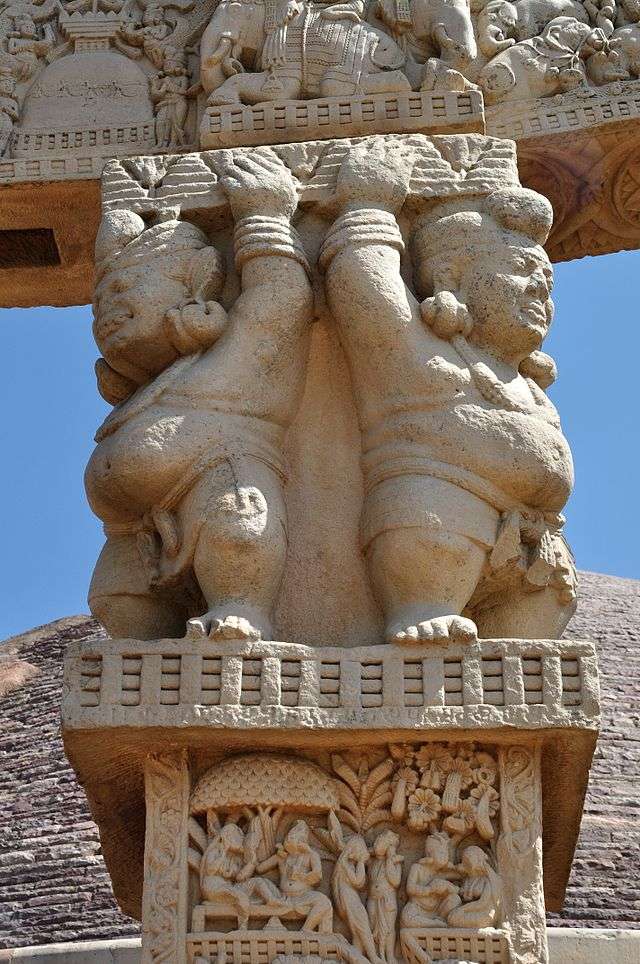
Yakşas or Yakshas (Ch: Yecha, 夜叉) appear in Hindu, Jain, and Buddhist scriptures as the assistants or protectors of divine beings. They are possessed of great magical powers and can do anything from flying to shape-changing (Dalal, 2014, p. 470; Buswell & Lopez, 2014, p. 1018). These nature spirits are often depicted in early religious art as portly dwarves (fig. 5), an element of iconography that they share with Vamana, the fifth avatar of the supreme deva Vishnu. This connection is important because the avatar is celebrated for his ability to eclipse the universe. According to Hindu mythology, Vishnu takes the form of the dwarf Brahmin when a benevolent asura named Mahabali wrestles control of the cosmos from the gods. Vamana visits the king during a great sacrifice, during which the asura grants gifts, and humbly requests only as much land as he can cover in three strides. But when his wish is granted, the deceptively small priest grows to cosmic proportions, “mightily waxing, swelling in every limb, with his first stride stepp[ing] beyond the sun and moon, with his second reach[ing] the limits of the universe, and with his third return[ing] to set his foot on the head of the conquered foe” (Zimmer & Campbell, 1992/1946, p. 132). With his feat (pun intended), Vishnu regains control of heaven (step one) and earth (step two), while simultaneously banishing the asura to the underworld (step three) (Dalal, 2014, p. 442).

Fig. 5 – A detail of chubby Yakshas from the western gateway of Stupa 1 at Sanchi (1st-cent.) (larger version). Image from here.

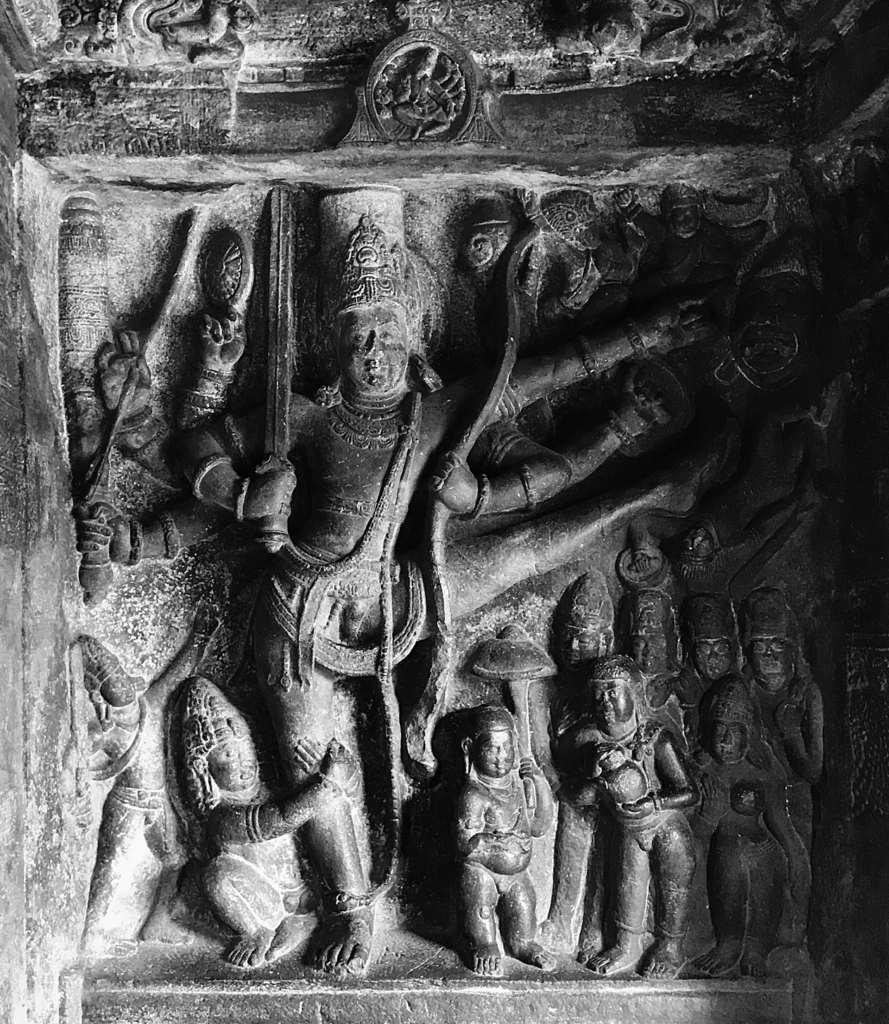
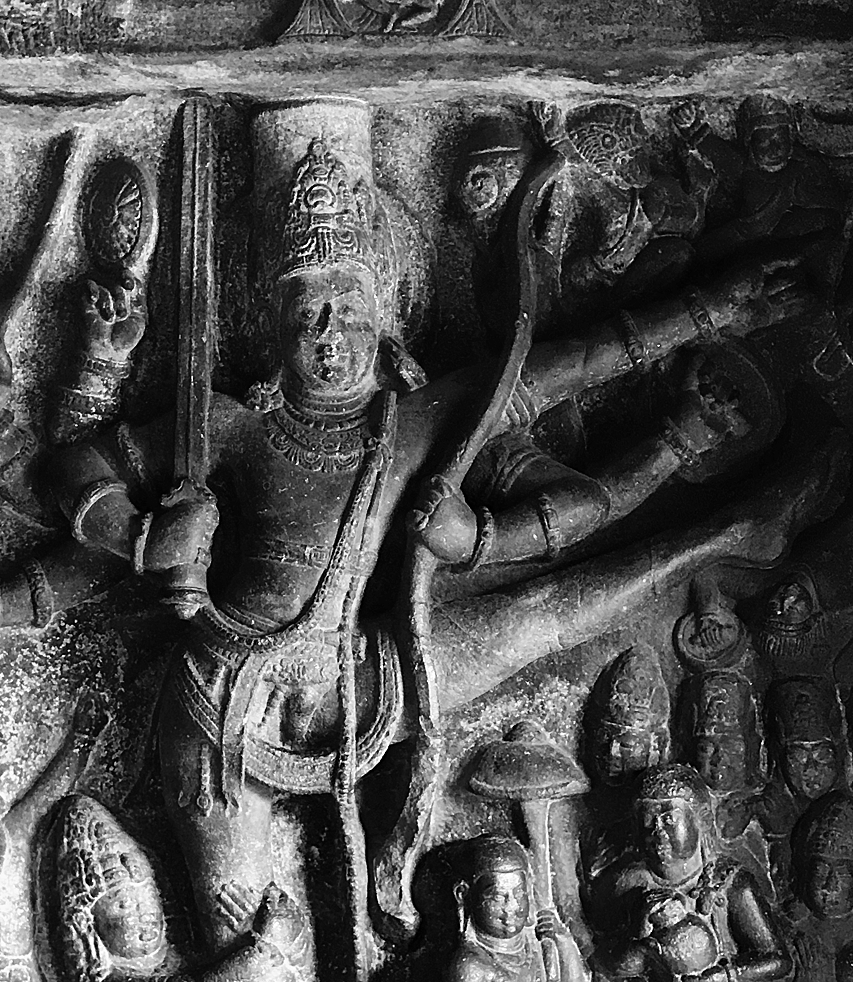
The noted art historian Heinrich Zimmer comments sculptures based on this story fall under a category of representationally kinetic art that he calls the “Phenomenon of Expanding Form” (Zimmer & Campbell, 1992/1946, p. 130). One cited example is the Trivikrama Vishnu (lit: “three steps” Vishnu), a sixth-century Badami cave number two relief (fig. 6) which presents a continuous narrative of the dwarf (fig. 7) growing to become the cosmic giant, the latter’s leg kicking high above his waist (fig. 8), symbolizing his mighty, universe-spanning strides. Though the piece is carved in stone, the dynamic nature of the composition gives it a feeling of swelling energy (Zimmer & Campbell, 1992/1946, p. 132).

The carving portrays the cosmic giant holding all manner of weapons, including a club, a sword, a bow, and a chakram, all of which are attributes of Vishnu (Dalal, 2014, p. 460).

badami vamana carving (total for blog)

Fig. 6 – The Trivikrama Vishnu relief carving of Vamana’s story, Badami cave number two (sixth-cent.) (larger version). Fig. 7 – A detail of the dwarf Brahmin holding a parasol (larger version). Fig. 8 – A detail of the cosmic giant holding celestial weapons and taking a supernaturally large stride (larger version). Adapted from this image.

The close association of the Yaksha and Vamana with a short, chubby body and shape-changing powers no doubt influenced the former to take on the latter’s ability to grow to huge proportions. In addition, after being absorbed into Buddhism, Yakshas are portrayed in scripture as divine warriors wielding clubs in defense of the dharma. Two prominent examples are Kubera (a.k.a. Vaisravana) and Vajrapani, both of whom are touted as the yaksha commander (Lutgendorf, 2007, p. 42; Buswell & Lopez, 2014, pp. 449 and 955). This surely influenced the later Chinese image of yakshas as club-wielding titans, such as the cited example from The Story. In turn, this and related material could have easily influenced the cosmic transformations of Monkey and other characters and their weapons from Journey to the West.

4. Conclusion

The novel describes Monkey taking on a giant cosmic form in chapters three, six, and sixty-one, the first time showing off his magic powers to his children and the second and third in response to the respective titanic transformations of Erlang and the Bull King. The magical spell used to achieve this form, titled Fatian Xiangdi (the “Method of modeling Heaven on Earth”), is based on ancient Pre-Qin and Han concepts of astral-geography later used in the construction of imperial Chinese cities. The idea of Sun’s body parts mirroring aspects of heaven and earth recalls the myth of the primordial god Pangu, whose body parts became the very building blocks of the cosmos after his death.

The cited episodes demonstrate that the characters involved transform both their bodies and weapons. Apart from being described as a 104,300-foot (31,800 m)-tall juggernaut with a head like Mt. Tai, Monkey’s staff is said to inhabit the upper and lowermost reaches of the universe (“its top reached the thirty-third Heaven and its bottom the eighteenth layer of Hell”) or that it resembles “the Heaven-supporting pillar on top of Mount Kunlun.” Likewise, Erlang’s three-pointed polearm is said to resemble “the peaks that cap the Hua Mountain.” Such transformations are predicted, for example, by an episode in the thirteenth-century precursor of Journey to the West in which Sun changes a monk’s staff into a gigantic Yaksha wielding a club.

While Yakshas are portrayed in early South Asian religious art as chubby dwarves, they most likely gained the ability to grow to enormous sizes thanks to iconographic similarities to Vamana, the fifth avatar of Vishnu famed for traversing the cosmos in three mighty steps. One sixth-century stone carving of the story portrays the dwarf-turned-cosmic giant wielding all sorts of celestial weapons. Additionally, Buddhist scriptures would come to portray yakshas as club-wielding warriors. Therefore, we can see how Monkey’s cosmic transformation could have ultimately been influenced by Hindu and Buddhist religious material.


5. Updates

Update: 10-17-21

Monkey also takes on his cosmic form in chapter 97. The episode calls it his “huge magic body” (da fa shen, 大法身). Read here for more information.

Watch Your Step: The Influence of Journey to the West on the “Ashiarai Yashiki” Yokai Story of Edo-Period Japan


Update: 08-06-22

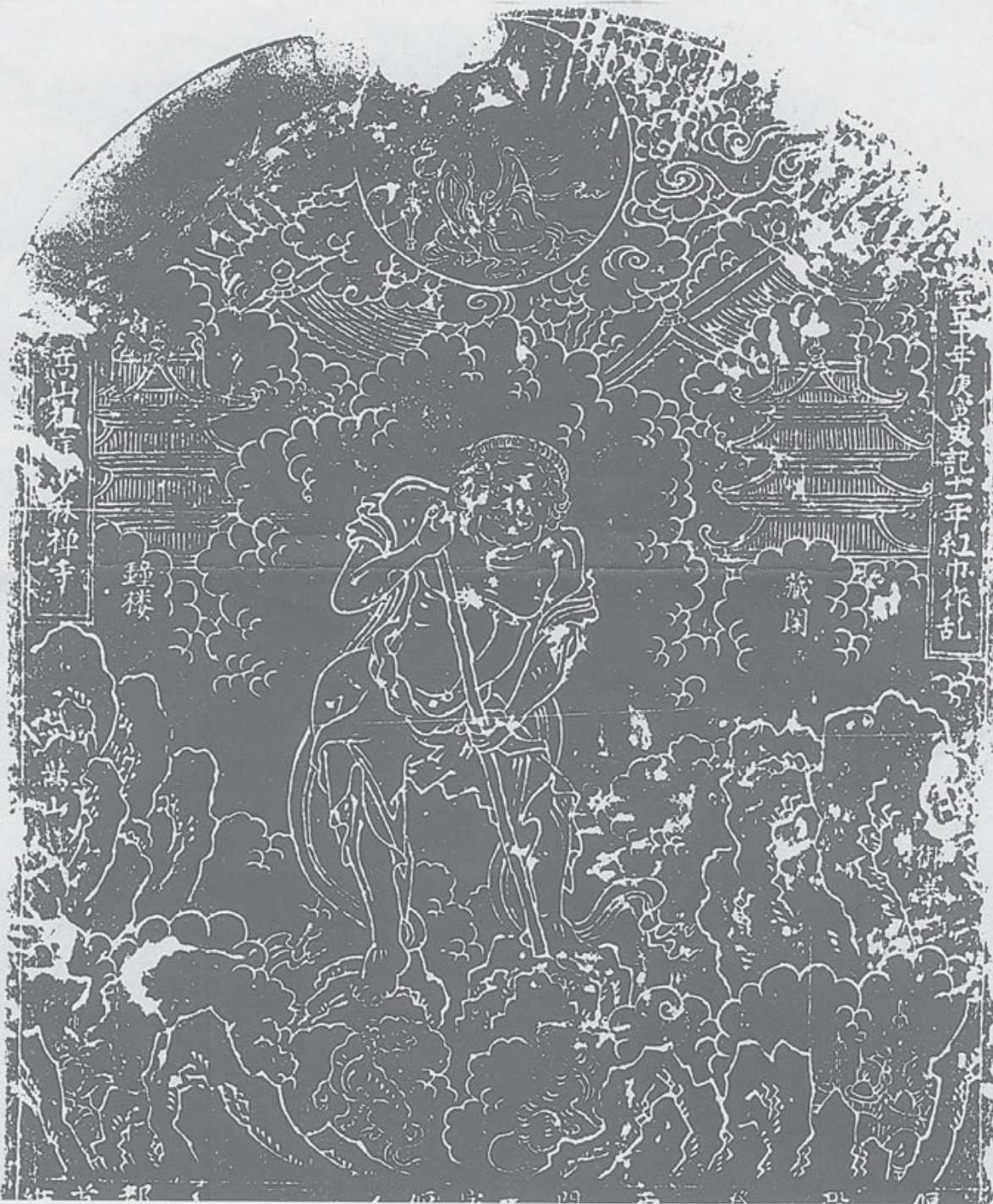
Sun Wukong’s cosmic body likely influenced Shaolin Monastery myth. The yaksha-bodhisattva Vajrapāni was historically worshiped as the progenitor of their famous staff method. A stele erected by Shaolin abbot Wenzai in 1517 shows that the deity’s vajra-club had been changed to a Chinese staff (fig. 9) (Shahar, 2008, p. 84). Vajrapāni’s Yaksha-like Nārāyana (Naluoyan(tian), 那羅延(天)) form was eventually equated with one of the four staff-wielding “Kimnara Kings” from the Lotus Sutra in 1575. His name was thus changed from Nārāyana to “Kimnara King” (Jinnaluo, 緊那羅) (Shahar, 2008, p. 87). One version of the story about his creation of the staff method takes place during the Yuan Dynasty‘s Red Turban Rebellion. Bandits lay siege to the monastery, but it is saved by a lowly kitchen worker wielding a long fire poker as a makeshift staff. He leaps into the oven and emerges as a monstrous giant tall enough to straddle both Mount Song and the imperial fort atop Mount Shaoshi, which are five miles (8.046 km) apart. The bandits flee when they behold this staff-wielding titan. The Shaolin monks later realize that the kitchen worker was none other than the Kimnara King in disguise (Shahar, 2008, pp. 87-88). Shahar (2008) suggests that mythical elements of the story were borrowed from the Monkey King’s adventures. He compares the worker’s transformation in the stove with Sun’s time in Laozi’s Eight Trigrams furnace (Bagua lu八卦爐), their use of the staff, and the fact that Monkey and his weapon can both grow to gigantic proportions (Shahar, 2008, p. 109). [4]

The aforementioned stele was erected in 1517, showing that Monkey’s cosmic body predates the standard 1592 edition of the novel.

Fig. 4 – The 1517 Shaolin stele showing a titanic Vajrapāni defending the monastery from rebels (larger version). From Shahar, 2008, p. 84.


Update: 04-04-24

In chapter 14, Sun Wukong lists a number of his powers, including the ability to grow as big as the cosmos:

“I, old Monkey, possess the ability to subdue dragons and tame tigers, and the power to overturn rivers and stir up oceans. I can look at a person’s countenance and discern his character; I can listen merely to sounds and discover the truth. If I want to be big, I can fill the universe; if I want to be small, I can be smaller than a piece of hair (emphasis added). In sum, I have boundless ways of transformation and incalculable means of becoming visible or invisible (Wu & Yu, 2012, vol. 1, p. 311).

我老孫頗有降龍伏虎的手段,翻江攪海的神通;見貌辨色,聆音察理;大之則量於宇宙,小之則攝於毫毛;變化無端,隱顯莫測

This might imply that the aforementioned “ten thousand zhang” (wanzhang, 萬丈; 104,300 ft or 31,800 m) number is instead meant to be a metaphor for a much larger height, one that would fill the universe.

Notes:

1) Here, Anthony C. Yu’s English translation says Monkey grows to be “ten thousand feet tall.” However, the original Chinese source reads “萬丈” (wanzhang), wan meaning 10,000 and zhang being a measure designating ten Chinese feet (10,000 x 10 = 100,000). Therefore, I have changed the source to read “ten thousand zhang.

2) Yu’s translation reads “eight hundred.” But, again, the original source is different. It reads “八百丈” (babai zhang), or 800 x 10 Chinese feet = 8,000. This makes more sense as he is said to be 10,000-plus feet long.

3) While the city is square, it has eleven gates, which legend states correspond to the three heads, six arms, and two legs of the god. For more information, see Chan (2008).

4) Yes, this information comes from Wikipedia, but I’m the one who originally added it under the screenname “Ghostexorcist.” See this edit history, for example.

Sources:

Chan, H. (2008). Legends of the Building of Old Peking. Seattle: University of Washington Press.

Dalal, R. (2014). Hinduism: An Alphabetical Guide. New Delhi, India: Penguin Books.

Lutgendorf, P. (2007). Hanuman’s Tale: The Messages of a Divine Monkey. Oxford: Oxford University Press.

Buswell, R., & Lopez, D. (2014). The Princeton Dictionary of Buddhism. Princeton University Press.

Shahar, M. (2008). The Shaolin Monastery: History, Religion, and the Chinese Martial Arts. Honolulu: University of Hawai’i Press.

Stevens, K. G. (1997). Chinese Gods: The Unseen World of Spirits and Demons. London: Collins & Brown.

Wivell, C.S. (1994). The Story of how the Monk Tripitaka of the Great Country of T’ang brought back the Sūtras. In Mair, Victor H. The Columbia Anthology of Traditional Chinese Literature (pp. 1181-1207). New York: Columbia University Press.

Wu, C., & Yu, A. C. (2012). The Journey to the West (Vols. 1-4) (Rev. ed.). Chicago, Illinois: University of Chicago Press.

Zimmer, H. R., & Campbell, J. (1992). Myths and Symbols in Indian Art and Civilization. Princeton, New Jersey: Princeton University Press. (Original work published 1946)

Archive #8 – The Pig and the Prostitute: The Cult of Zhu Bajie in Modern Taiwan

I’ve previously written about Zhu Bajie‘s worship in Taiwan as the god of prostitutes and the hospitality industry. Now, a new paper has been published by Prof. Ben Brose (University of Michigan) that takes a more in-depth look at the phenomenon.

Abstract

Before the publication of the famous Chinese novel The Journey to the West, the central characters of the narrative—the Tang Monk, the monkey Sun Wukong, the pig Zhu Bajie, and the monk Sha—were venerated as deities. These same figures continue to be invoked today in a range of rituals throughout the Chinese world. This article focuses on the cult of Zhu Bajie in modern Taiwan. As a “licentious” spirit known for his voracious appetite and irrepressible libido, Zhu Bajie has attracted devotees from among Taiwan’s “special professions,” namely masseuses, hostesses, and sex workers [fig. 1]. Unable to turn to conventional, ethically demanding deities for assistance, purveyors of illicit goods and services make offerings to spirits like Zhu Bajie who they hope will be more sympathetic to their needs. In this way, Zhu Bajie, a figure familiar from children’s books, cartoons, and blockbuster movies, has also become a patron saint of prostitutes.

Paper link

Click to access the-pig-and-the-prostitute-the-cult-of-zhu-bajie-in-modern-taiwan.pdf

zhu bajie prostitute - 2

Fig. – An altar statue (shenxiang, 神像) of Zhu Bajie holding a nude woman (larger version).

Disclaimer

Prof. Brose was kind enough to give me permission to post the article. However, in the event that the hosting journal requests I pull the article, I will do so when asked. This has been posted for educational purposes. No copyright infringement is intended.

Citation

Brose, B. (2018). The pig and the prostitute: The cult of Zhu Bajie in modern Taiwan. Journal of Chinese Religions, 46 (2), pp. 167-196, DOI:
10.1080/0737769X.2018.1507091